We rented Il Nido because we thought other people wouldn’t like it. Small and basic, without internet, the property was supposedly beside a beautiful national park famous for its coastline and migratory birds. The online picture suggested it was pressed up against one of those concrete pillars (common around Sicily) supporting a deserted and rotting motorway flyover. I was writing a thriller with mafia connections. My partner wanted to scrape off six months of fumes from her new job in London. Our daughter needed fun.
“This is a bomb,” said the hostess, opening a cupboard under the sink. “You turn it anticlockwise to go off.”
“Not bomb, bombola,” whispered my partner. “It’s the gas canister, for the stove.”
From outside in the driving rain came the sounds of traffic and sodden animals – frogs and a goose, always in that order: frog croak, goose quack; frog croak, goose quack.
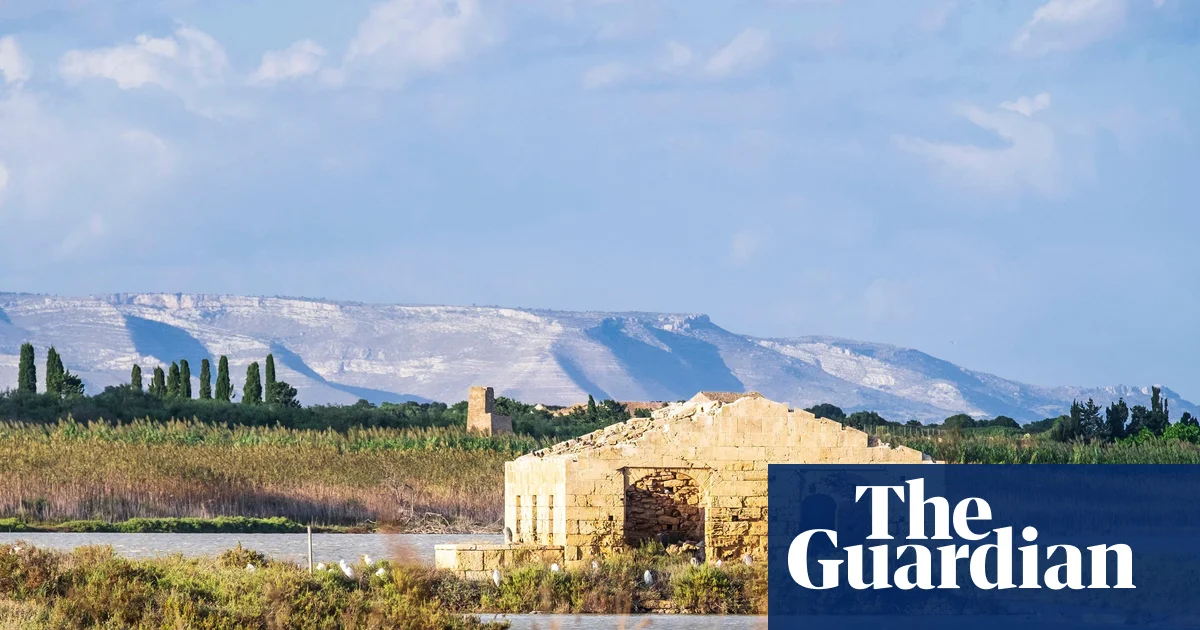
We woke up on the Saturday to the first sunshine in six months. The roar we had thought was traffic was the crash of waves. The sound of a goose eating a lot of frogs in quick succession turned out, in fact, to be the call of wild flamingos. We were, just as our hostess had promised, in a tumbledown farmstead – what Sicilians call a baglio – among the shimmering lemon groves, on the edge of the Vendicari nature reserve; and it was glorious.
A baglio is more specifically a fortified group of buildings around a central courtyard, the stone barn equivalent of “circling the wagons” in America. In the 19th century, armed gangs roamed the fields of south-east Sicily. Isolated farms were attractive targets because they stored a whole year’s crop – grain, olives, wine, tools, animals. The two barns opposite our building were caved in, the stone courtyard was more a sunken boulder. In one corner, a vast cluster of poppies and marigolds billowed in merry defiance. On top of a collapsed roof was a starling with 17 voices, including one that sounded like a falling bombola, tossed over the wall by a bandit, and another that suggested a laughing computer.
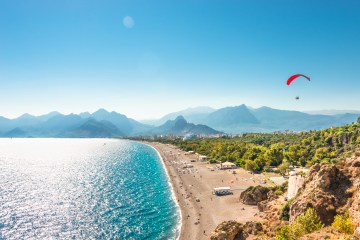
Calamosche beach. Photograph: Andrea Izzotti/Getty Images/iStockphoto
Vendicari is small, but it is one of the most important wetland nature reserves in Sicily. In the 1970s, the owners of an asphalt and petroleum company wanted to build an oil refinery here. The local officials, looking across the valley from their glorious baroque buildings in Noto, approved the plan. They hadn’t reckoned on the force of Bruno Ragonese, a local eccentric who kept 20 abandoned dogs as pets, and wasn’t even Sicilian: he was an immigrant from Libya. He strode out to the site, gathered evidence on migratory birds, built local environmental groups into a powerful alliance and, brilliantly, argued that since these birds were migrating (as he had done) from Africa to Europe, this was a much bigger issue than a wallet-stuffer for the Noto politicians – it was an international scandal.
Next came the property developers. Again, the Noto councillors patted their pockets. And again the extraordinary young man swung into action. No, replacing the drained wetlands with fake ponds did not constitute “sympathetic, environmental building”. No, migratory birds wouldn’t be perfectly happy on a smaller patch of land in a cheaper sector – they weren’t social housing tenants. Yes, this is the head of Ramsar (the organisation upholding an international environmental treaty protecting wetlands) on the phone wanting to know why you plan to destroy one of Europe’s essential marshlands.
The nature reserve was established in 1984.
For a piffling €7 a day for a whole family or €3.50 for adults, the entire park is yours. After a breakfast of fresh ricotta, honey and local oranges (all from a Coop: these shops look just as plain as the UK Co-ops, but equal the best London delicatessens for good things), we started our visit on Calamosche beach. With juniper bushes, wild irises, tumbling cacti and the lilting flight of hoopoes, it is a blissful stretch of sand sloping into gentle waves. On the left, the rocks lead up to the Grotta di Calamosche, a cave with a tree growing inside. From there, the exquisite view looks almost solid, as if sealed by light.
It is easy to walk the length of Vendicari in two hours, from the ruins of Eloro, a seventh-century BC Greek colony, past the flamingos, to the eerie modern remains of a tuna-canning factory, where the oil refinery was going to be. For hundreds of years, until 1944, tuna were caught here by a brutal method of netting and trapping called mattazana, literally “the slaughter”. Now roofless, with staring windows and only a crowd of thin pillars remaining, this Colosseum for fish feels as ancient as Rome.
“Did you know flamingos are pink because they eat shrimp?” said my daughter, interrupting my pleasantly gloomy mood thinking about time, loss and tins of fish.
I did not, and I don’t believe it. There’s only so much silliness from nature that I’m prepared to accept. “And what colour are flamingos that don’t eat shrimp?” I said, in a superior tone.
“No colour. The world is full of invisible flamingos.”
Flamingos in Vendicari. Photograph: Lee Dalton/Alamy
The two lakes at the heart of the reserve were thick with these fantastical birds, gabbling and scooping at the water, and coming in to land like badly piloted pink planes.
I retorted with science. “Those tiny buildings?” I pointed towards ancient Syracuse, glimmering in the distance. “Birthplace of Archimedes, one of the greatest mathematicians of all time, inventor of … No, don’t look it up on your phone – phones are banned!”
But it was too late. She had captured another flash of internet. “Hey! There’s an H&M in Syracuse. Let’s go!”
The path around the reserve does not entirely encircle it. You set off left, walk for 5 miles (8km), then half a mile before you get to your ruined farmhouse home, your way is blocked by a private lemon grove. You must not go through it. You are not allowed through it.
We went through it. It was lovely.
In this part of Sicily, lemons are so plentiful and the trees so giving, that you feel the fruit is being forced on you by nature, Breughel fashion; it would be rude not to accept. Of course, you must not add theft to trespass. But I thoroughly recommend you buy some from the farmer: they are delicious. Organic, bloated, dazzling growths of oily yellow, I think they are the famous Femminello Siracusano lemons. Because local regulations forbid the use of wax or pesticides, every part is edible.
After the lemon grove came a path of marigolds, as tall as my shoulder, and wild fennel, above my head. We arrived home at sunset, where we cooked tagliatelle al limone rubato on the bits of the stove that did work, and ate it overlooking Syracuse and its H&M, with three invisible flamingos for company. Here’s the recipe:
Pasta al limone rubato
Lardo or bacon, as much as you want 1 lemon, zest and juice Scrubland herbs thyme, oregano or whatever you can find. Fennel is good Pasta, perhaps tagliatelle Parmesan cheese, lots
Fry the lardo, add the lemon zest, herbs, a little pasta cooking water, and stir. Add pasta. Mix in grated cheese and lemon juice until it tastes nice. Serve under cover of darkness.
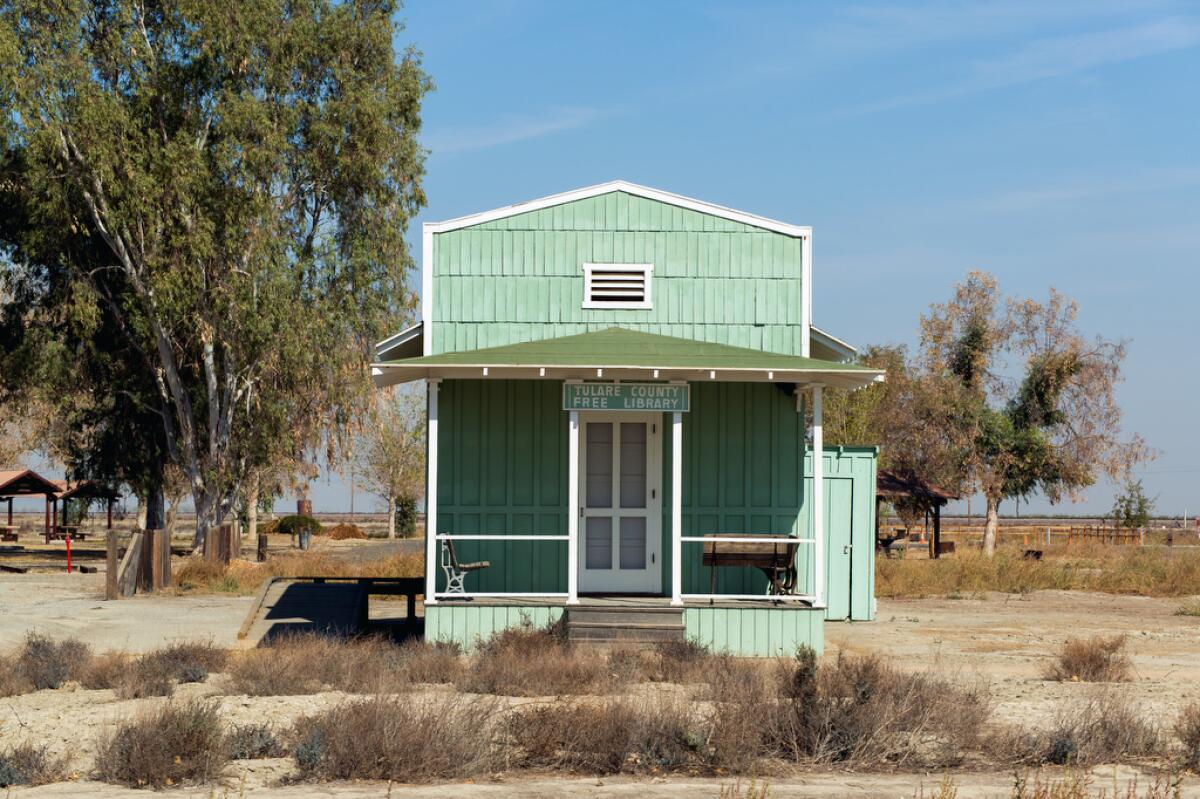
From now through July 6, residents and tourists alike can download the California State Parks Historian Passport for free, allowing them access to more than 30 state historic parks across the state through the end of 2026.
Gov. Gavin Newsom announced the initiative Wednesday in honor of both Juneteenth and the the 250th anniversary of the signing of the Declaration of Independence.
“California’s state historic parks preserve some of our nation’s most powerful and meaningful stories, and I’m proud to live in a state that celebrates diversity to connect more people with those stories through this limited-time free pass,” California State Parks director Armando Quintero said in a statement. “I hope the free Historian Passport introduces more Californians to the state’s historic gems and sparks a curiosity and thirst for knowledge that leads to many return visits.”
The pass typically costs $50 and allows unlimited entry for up to four people to state historic parks and museums that charge a per-person admission fee or a vehicle day-use fee.
Historic parks in and around L.A. County that accept the Historian Passport include:
To download a free pass, visit ReserveCalifornia.com and click “Passes” in the upper main menu. From here, you’ll be prompted to either create a new account or log into your existing account. Once logged in, you can use the dropdown menu on the page to select “Special Edition Historian Passport 2026 – $0.00.” You can then check out with your pass and will quickly have it added to your list of passes within your account.
Leaders with the California State Parks Foundation and the California State Railroad Museum Foundation, which helped finance the initiative, said they hope the free Historian pass opens up access to more people to see our public lands.
“California state parks help us understand the history of California, the United States, and the ongoing work of building a more inclusive democracy,” said Rachel Norton, executive director of California State Parks Foundation. “The special edition Historian Passport is a great opportunity to explore state parks for free. We hope access to the Historian Passport encourages more Californians to visit a historic state park and learn about, and reflect on, our shared history.”
MOLLIE’S is the brand that’s making budget travel chic.
There’s only one problem with its new Manchester site… it’s so fun that you won’t want to leave. So here’s everything you need to know about staying there.
Sign up for the Travel newsletter
Thank you!
There are several room styles including bunks and doublesCredit: Unknown
Where is Mollie’s Manchester?
Unlike its two sister hotels in Oxfordshire and Bristol – both of which sit roadside and a short drive from the main hub of the city – the Manchester joint is slap bang in the city centre, close to the upmarket Deansgate area.
It’s a 15 or so minute walk from Manchester Piccadilly train station.
What’s it like?
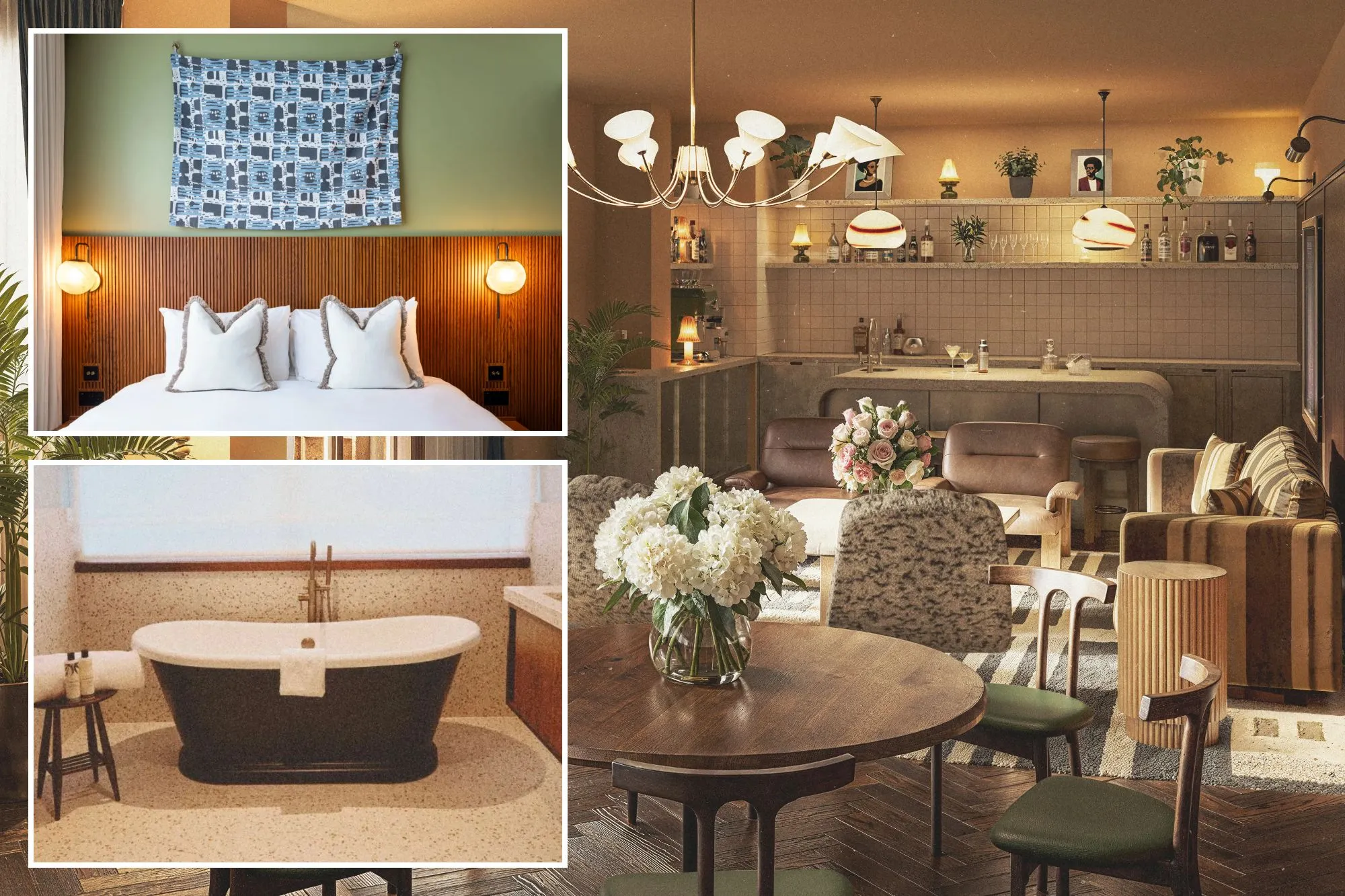
This is the first hotel in the budget-luxe chain not to operate as a motel and has a slightly more sophisticated feel to it.
You’ll likely spot locals popping in for coffee on their way to the shops, or mooching about in the very stylish lobby-cum-cafe where the atmosphere is reminiscent of a cool, unstuffy members club.
All have the exact same Scandi-esque look no matter which county you’re staying in – think light wooden panels and eccentric lamps.
The Manchester hotel features a couple of roomier options like the Studio, which comes with a lounge and freestanding tub, and several giant suites that boast a proper kitchen and living room plus an in-room Peloton bike.
Other options include doubles, twins and four-person bunk rooms.
Mollie’s diner serves American grub including fricklesCredit: Supplied
What is there to eat and drink?
The American-style motel theme runs strong in the kitchen, with a knock-out menu of burgers, hot dogs and milkshakes at the onsite diner.
Dishes are filling so make sure to come hungry.
I tried the frickles – fried pickles – which came with a zingy dipping sauce and reminded me of the ones I ate in America’s Deep South.
Brekkie is a similar affair: pancakes stacked high and dripping in maple syrup and fry-ups that are piled with some of the best hash browns I’ve ever eaten – fluffy inside, wonderfully crispy on the outside.
What else is there to do?
The hotel has a cool, unstuffy members club feel to itCredit: Supplied
Don’t forget to book yourself into the downstairs cocktail bar where the atmosphere is sexy and sultry.
Studio IV rather accurately describes itself as a “lively living room” – plush velvet sofas are framed around a stage where DJs and jazz musicians perform.
It’s got somewhat of a secret speakeasy vibe to it, with dark corners to cosy up in and space for people to boogie.
The cocktails are very fun and staff are extremely attentive.
How much is Mollie’s Manchester?
Rooms cost from £90 per night.
Rooms are well decorated in a Scandi styleCredit: Supplied
Is it family friendly?
Yes, very much so.
There are plenty of adjoining rooms with twin and double options, as well as bunk rooms that are great for families with more than two kids.
There’s a children’s menu at the diner and games in the lobby that kids will love
Is there access for guests with disabilities?
Yes there are accessible rooms and toilets in the public areas, as well as lifts to all floors.
Passengers wait to drop their luggage while traveling during the holiday season at Ronald Reagan National Airport in Washington, D.C., on December 22. The airport is scheduled to close for most of July 4 to accommodate events celebrating Independence Day in the capital. File Photo by Bonnie Cash/UPI | License Photo
June 17 (UPI) — Officials at Ronald Reagan Washington National Airport announced Tuesday that the airport is scheduled to be closed for much of July 4 amid a predicted record-breaking week of travel for the holiday.
There are no scheduled flights to or from the airport after noon on July 4, the Metropolitan Washington Airports Authority announced in a release. The day before will also have no flights for several hours in the early afternoon.
The MWAA said the schedule disruption is to accommodate Independence Day celebrations coinciding with the country’s 250th birthday.
“Many events will include downtown flyovers or other aerial displays such as fireworks or parachute jumps, which will affect flights periodically at Reagan National,” the agency said.
Airport officials expected flight operations to return to normal July 5.
AAA projected Tuesday that a record-breaking 72.2 million Americans will travel at least 50 miles away from home to mark Independence Day between June 27 and July 5. That’s up from 71.8 million in 2025.
Stacey Barber, vice president of AAA Travel, said traveling for the July 4th holiday “is tradition.”
“The 9-day travel forecast includes travelers who are vacationing all week and people just getting away for the long holiday weekend,” Barber said. “While the overall number of Independence Day travelers appears to be plateauing, we’re still expecting record volumes this year.”
Among those traveling for the holiday, AAA projected the vast majority — 61.4 million — will do so by car, 5.85 million by air and 4.93 million by other modes of transportation such as bus, train or cruise.
The Top 10 domestic destinations for the holiday week are Seattle; Orlando, Fla.; Anchorage, Alaska; Miami; New York City; Chicago; Fort Lauderdale, Fla.; Fairbanks, Alaska; Denver; and Boston. The Top 10 international destinations are Vancouver, Canada; Rome; Dublin; Paris; London; Calgary, Canada; Reykjavik, Iceland; Amsterdam; Athens; and Barcelona, Spain.
President Donald Trump and UFC CEO Dana White stand in the octagon after the UFC Freedom 250 event on the South Lawn of the White House in Washington, on June 14, 2026. Photo by Bonnie Cash/UPI | License Photo
AN ABANDONED airport home to one of the UK’s longest runways is set to reopen as early as next year.
Commercial passenger flights at the airfield are expected to restart sometime in the next two years.
Sign up for the Travel newsletter
Thank you!
An abandoned UK airport is set to reopen as soon as this yearCredit: AlamyDoncaster Sheffield Airport previously closed in 2022 for financial reasons, but has been undergoing a major redevelopmentCredit: Alamy
The site was previously considered no longer financially sustainable and since closing has remained abandoned and partially derelict.
During this time, regional developers have been pushing for a major overhaul of the former transport hub, costing around £160 million through a public-funded reopening programme.
The proposals have received the support of local councils, and the site is projected to resume cargo operations as early as this year, with passenger flights slated to resume in late 2027 or early 2028.
The airfield also boasts one of the UK’s longest runways, measuring 1.8miles and once operational again, will be the eighth longest commercial runway in England.
The longest runway can be found at London Heathrow, measuring 2.4miles, and runs parallel with the second longest runway also found at the airport, measuring 2.2miles.
Executive director for Airport Operations at FlyDoncaster, Simon Hinchley, said: “As we work towards re-opening Doncaster Sheffield Airport, our focus is firmly on building a safe, efficient and operationally robust airport that is ready to serve a broad range of users from day one.”
Airlines such as TUI and Wizz Air used to be found at Doncaster Sheffield Airport, but currently it has not been confirmed who will be flying to and from the transport hub.
The airport is also keen to showcase the region, having independent vendors on-site rather than larger chains.
The airport will be kitted out with the latest technology and security lanes and systems are expected to move as their original location was in an unideal area of the site.
A project of this size has previously been described as transformative for the area.
The South Yorkshire Mayoral Combined Authority, which is one of the backers on the project, previously stated their rationale for investing in the development.
They said: “Doncaster Sheffield Airport closed in November 2022, leaving South Yorkshire one of the largest UK city regions without an international aviation presence.
“South Yorkshire’s Mayor, Oliver Coppard, and Council Leaders have taken a historic decision to reopen Doncaster Sheffield Airport, approving a £160 million funding package that will see commercial flights return to the region.”
Doncaster Sheffield Airport first opened in 1915, and operated as a Royal Flying Corps airfield in the First World War.
The transport hub then served as an RAF base before being transformed into a commercial airport in 2005.
The airport was previously called Robin Hood Airport, referencing the folklore of the region.
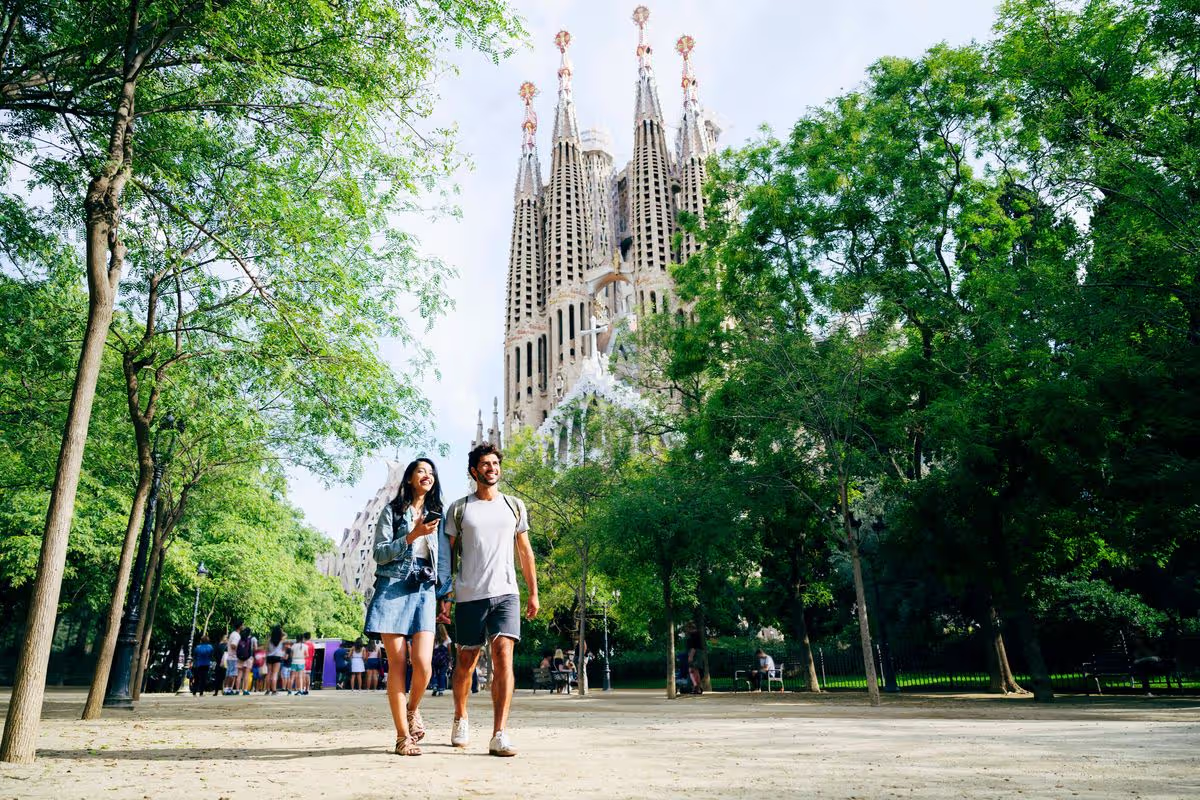
A couple who booked a trip to Barcelona shared their ‘expectations’ of the city, but soon discovered the ‘reality’ was vastly different from what they’d imagined
The couple was left by the disappointing ‘reality’ of Barcelona (stock image)(Image: JohnnyGreig via Getty Images)
Barcelona, the capital of Catalonia in northeastern parts of Spain, is a popular for Brits looking for a weekend break or a summer escape, thanks to its mix of buzzing city life, Mediterranean coastline, and world-famous architecture. And it’s not only Brits who are drawn to the Spanish city, as it welcomed around 16 million tourists last year alone, a 2.9 per cent rise from 2024.
But officials in the city have warned that tourism levels have resulted in residents being priced out due to the number of homes being converted into holiday lets. In a bid to tackle the problem, the city ramped up its tourism tax in April 2026, with a charge of up to £10.91 (€12.50) per night for holiday rentals, up from £5.45 (€6.25) previously.
Yet this doesn’t appear to have deterred visitors, as countless holidaymakers regularly flock to social media platforms like TikTok to share their experiences in Barcelona.
In a recent clip, they revealed how their dream vision of Barcelona had been ‘ruined’ because of the sheer amount of roadworks under way during their stay.
Content cannot be displayed without consent
The pair kicked off by outlining their ‘expectations’ for the trip. This included soaking up the stunning architecture across the city, enjoying sangrias, and people-watching while strolling along the lively streets.
And Lara went on to reveal the ‘reality’ of a trip to Barcelona, which featured an abundance of roadworks, building sites, and makeshift pedestrian routes flanked by wire fencing, all making way for construction projects taking place on the pavements and roads.
“Would you still visit Barcelona right now?” Lara and Laurens asked viewers in the caption of the video.
Lara wasn’t alone in her observations either, as viewers quickly descended on the comments section to share their own experiences of visiting the beloved Spanish city. “This! And every single water fountain was turned off when we went,” one person shared.
A second viewer chimed in: “Yep! I was there recently and tons of construction going on!” Another added: “Pffff no nice. I hope you can enjoy your travel.”
Not everyone agreed, however, with one person pointing out: “That’s ONE street.” Another echoed the sentiment, writing: “It’s just one street by the market! Everything else is great!”
“I’m here right now. It’s a beautiful city. All cities have construction here and there,” one further commenter remarked.
“How dare cities upgrade their infrastructure while you’re on vacation!” someone else wrote.
Lara was quick to respond, saying: “Haha no it’s great that they’re doing it. It was just a lot on the same time. Still love Barcelona.”
IF you haven’t booked yourself a summer holiday yet, or you’re desperate to upgrade your battered old suitcases…you’re in luck.
Top travel brands like Expedia, Eastpak, and On the Beach have launched massive summer sales – and we’ve rounded up the top deals.
Sign up for the Travel newsletter
Thank you!
On the Beach are offering holidays at The Villamarina Club hotel in Salou £385pp – saving £107Credit: On The BeachThe Eastpak TRANVERZ M suitcase is down to £99 from its full price of £165Credit: Eastpak
These companies have slashed prices on everything from plane essentials to entire package holidays.
We’ve scoured their websites to find the biggest discounts so you don’t have to.
Here are the top online travel deals you can snap up right now.
Eastpak Luggage Summer Sale – up to 50% off
Need a big, durable suitcase with heaps of packing room inside? Eastpak if your best bet.
Here’s a selection of some of the top deals we could find
Packing cubes – 38% off
This eight peice packing cubes set is on sale for under a tenner at AmazonCredit: Amazon
If you haven’t started using packing cubes yet, now’s the time.
This eight piece set on Amazon is down 38% to £9.95, so you can grab yourself a full kit for under a tenner.
Rolling clothes into these cubes can save on luggage space, plus the kit comes with a dedicated toiletries bag and wet bag for swimwear – all are waterproof.
Not only can they save room in your suitcase, but they’ll save you time, too.
We all know that feeling of rummaging through a huge disorganised pile on the hotel room floor to find what you need.
Save yourself the hassle and keep things organised.
Amazon Travel Packing Cubes – £15.99 NOW £9.95
On the Beach holiday deals – £££ off + kids go free
You can bag a week-long holiday at the 5-star Royal Atlantis Icon in Turkey for £525ppCredit: Expedia
On the Beach have a huge number of package holidays on sale, with destinations ranging from Spain and Greece to Florida.
These holidays include flights and accommodation, and are currently up to hundreds of pounds off full price.
Some of the best deals include a week-long stay in Albufeira for £250pp at the Muthu Balaia Sol hotel, which even has a kids stay free offer.
There’s also a week-long stay at the Villamarina Club hotel in Salou for £385pp, which also offers free kids’ places. This holiday is currently £107 off.
Other holiday deals in the sale include:
Browse their top deals page for more holiday deals.
Noise reduction earplugs – 80% off
These Amazon earplugs are on sale at 80% off full price – you can bag them for £9.99Credit: Amazon
If you’re tired of jamming cheap foam plugs into your ears – wondering if you’re doing actual damage to your ear canals – it’s time for an upgrade.
These Amazon earplugs are currently on sale for a massive 80% off, down from £49.99 to £9.99.
These soft and flexible earplugs are designed to mould perfectly into the ear – much comfier than the free pairs, which also don’t really block any noise.
In fact, these earplugs also provide 40% stronger sound isolation than regular foam alternatives, helping you enjoy the silence and sleep soundly.
Plus these plugs are specifically designed ‘to Block Snoring & Partner’s Noise,’ a saviour if you travel with a loud sleeper.
Amazon FIKSFA Ear Plugs – £49.99 NOW £9.99
Memory foam travel pillow – 20% off
This memory foam travel pillow is moulded to fit perfectly around your neckCredit: Amazon
Gone are the days of trying to get comfortable leaning against the plane window. Or worse, craning your head down onto your shoulder, leading to interrupted sleep and neck pain.
Travel pillows are a must for long haul flights – but not all of them are built the same.
This memory foam neck pillow from Amazon is ergonomically designed to cradle your neck perfectly.
Plus it even comes with ear plugs and an eye mask for optimum sleep, as well as a travel bag to keep it safe and clean.
It’s currently on sale, down 20% to £11.89. Skip the inflated airport prices and grab yourself a deal – and a better night’s sleep, too.
A sunny island with beautiful beaches, cosy pubs and an easy drive from the UK ticked all of the boxes for a recent family holiday
16:02, 17 Jun 2026Updated 16:15, 17 Jun 2026
(Image: Supplied)
I bet you – like me – have often dreamt of that perfect holiday destination that has it all within easy reach.
Good weather, a beach, great eating spots, cosy pubs, picturesque streets to potter around plus a hefty dose of history to keep the grey matter ticking over.
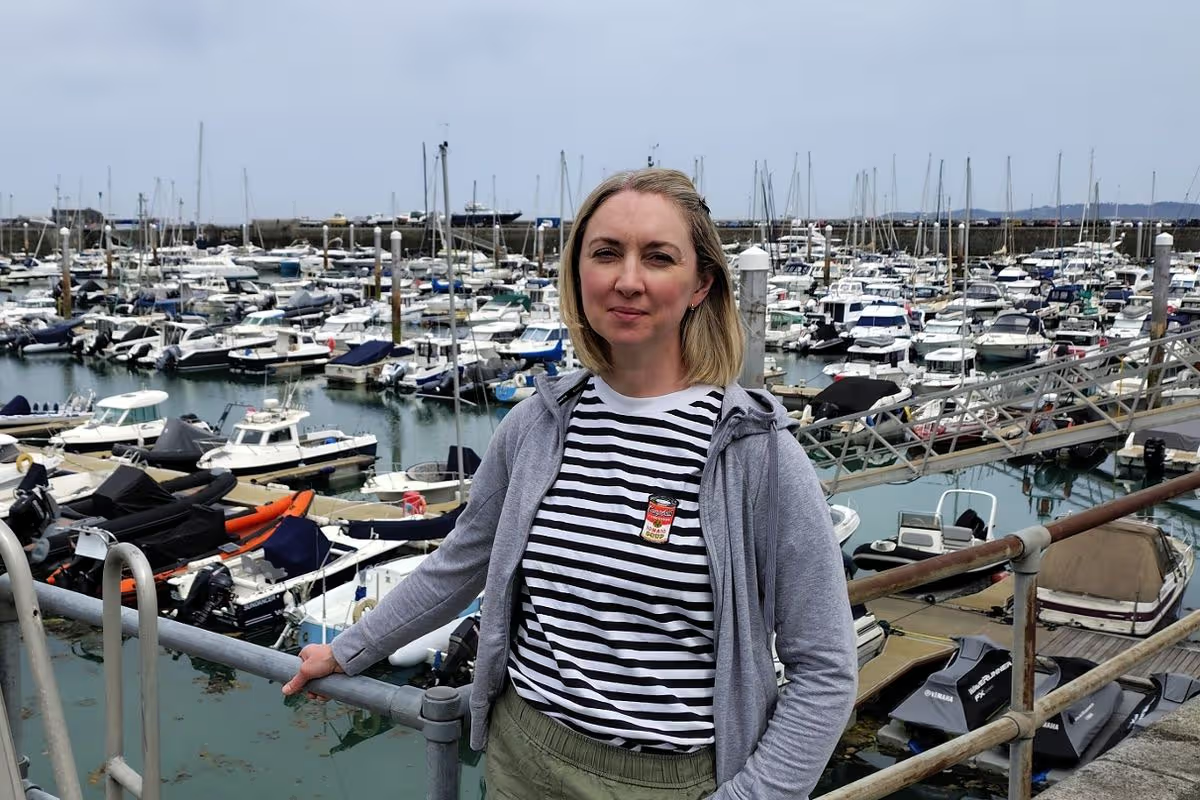
Sounds impossible. But I think I’ve found it and it’s St Peter Port on the tiny Channel Island of Guernsey.
With a population of nearly 20,000, St Peter Port could hardly describe itself as a city but it is the biggest town and main centre of Guernsey.
Thanks to generous tax allowances for residents, some quarters of the harbour town have a Canary Wharf vibe (plus seaside finance bros) but cast your gaze away from that and you will be met with nothing but bunting, cute cobbled shopping streets and harbour-front eating and drinking spots.
Guernsey has that hugely familiar British feel, with an ever so slightly French twist. There’s an M&S Food Hall but you can’t use your Sparks card (‘different franchise’ I am told) and even a Sports Direct. But beyond that you can feast every night on fresh crab, lobster and fish and you simply must find an excuse to indulge in some of the dairy produce the famous Guernsey cows produce.
Visiting St Peter Port as a family of four we were overwhelmed with options. Being history buffs we were in our element.
Guernsey was occupied by Nazi Germany for most of the Second World War, from June 1940 to May 1945. Across the island, and in St Peter Port in particular, there is a huge amount to see and learn relating to that time.
If you spend a day on foot in St Peter Port, you can start with a ride on the Petit Train, which departs at regular intervals from the Albert Pier and gives you a chance to get your bearings around the steep and winding streets.
From the pier it’s around a 20 minute walk to the top of town where you must visit the German Naval Signals HQ. This is the top-rated attraction in the town and my kids – 10 and 14 – were unanimous it was their top sight for the week we spent in Guernsey. Entry is just £13 for a family.
Invisible from the street and air, this perfectly-preserved underground bunker was the centre for all German naval signals during WWII.
Restored using many of the original fittings and based on advice from the former Naval Signals Officer himself, a visit here was undoubtedly brought to life for us by the extremely knowledgeable member of staff – or private tour guide as he became.
You can see where signals were received, where officers slept and even where they went to the toilet. Then before you know it, it’s out back onto the street and you can barely find where you just were.
Walking back into town, the Guernsey Museum at Candie is worth a look to give you the fascinating history of life in times gone by on the island. Surrounded by the lush Candie Gardens, a picnic here is ideal, overlooking the scenic harbour.
Back down at the harbour the world is your oyster. A trip to the beach might be on the cards (but watch out for the high and very quick tides!) or if you’re into your sea swimming, you can take a dip in one of the uber stylish La Valette seawater bathing pools.
We didn’t try them ourselves on this trip, but there are four pools to swim in, each with a changing area and a cafe and toilets by the ladies’ and children’s pool (anyone can swim in any of the pools).
Our reason to pass by the pools was for our next historical stop-off – the La Valette Underground Military Museum. We visited during the May heatwave and the cool cave of this treasure trove was extremely welcome.
The tunnels were originally built as a fuel storage facility for German U-boats during the occupation and are fascinating in themselves as an architectural phenomenon. They are now used to house a vast range of exhibits from Guernsey’s military history, including a truck used in the film Indiana Jones and the Last Crusade.
Family entry costs under £30 and opened our eyes to precisely what the Guernseymen and women went through during the difficult period of Occupation in WWII. All of this is probably more than enough for one day but there is much more to see.
The jewel in St Peter Port’s crown is Castle Cornet, which has sat on a spur guarding the harbour for 800 years.
Time your visit to catch the firing of the cannon by period uniformed soliders at midday, then explore the brick alleyways, high walls, four period gardens and four museums on site. That’s before I’ve even mentioned the stunning views out to the islands of Herm, Sark and Jethou.
Another fantastic way to get under the skin of St Peter Port and Guernsey is by taking a guided walk.
We were lucky enough to join Elizabeth Gardener-Wheeler of Guided Guernsey on a clifftop walk from the stunning Fermain Bay back to St Peter Port. What Elizabeth didn’t know about life on Guernsey probably isn’t worth mentioning but her stories really brought our trip to life. From the bomb found in bluebell woods, to the private steep bathing steps for the former Governor of Guernsey, you will discover some truly hidden gems.
Of course we all enjoyed noseying at the seaview, premium properties – many of them thatched – along our walk too.
For our evening meal, we dined slightly out of town (ok, a five minute drive…) at Nineteen Bar and Grill, situated on the St Pierre Park Hotel, Spa and Golf Resort.
It’s ideal for a family trip because you can combine your meal with a quick round of Pirate Bay Adventure Golf – a notch above your usual crazy golf thanks to real-life rafts on pools of water…
The food here was excellent with a huge choice from fresh local produce like the Guernsey crab salad which I enjoyed, over to the classic burgers, pizzas and steaks. Everyone in the family was happy.
If you buy a museum Discovery pass, you can visit Castle Cornet, Guernsey Museum, Fort Grey Shipwreck Museum and the German Naval Signals Headquarters for just £24 per named adult with all accompanying children going free. The pass is valid for 12 months’ unlimited access.
We travelled to Guernsey with Brittany Ferries from Portsmouth on their overnight service, staying in a cabin with breakfast on arrival.
While on the island, we stayed for the week at the wonderful, family run, La Bailloterie campsite. Sparkling clean showers and toilets, plus fresh pastries can be ordered for breakfast every day. If camping is not your thing, the site offers safari tents and wooden cabins too.
Book the holiday
Brittany Ferries offers Poole-Guernsey routes from £374 in July and £405 in August, based on two adults and two children travelling in a standard car on a Super Saver ticket. Find out more and book at brittany-ferries.co.uk.
There’s nothing better than heading to a pub garden during the balmy UK weather, and the top nine have been named – and they’re the purrfect spots for you and your beloved dog
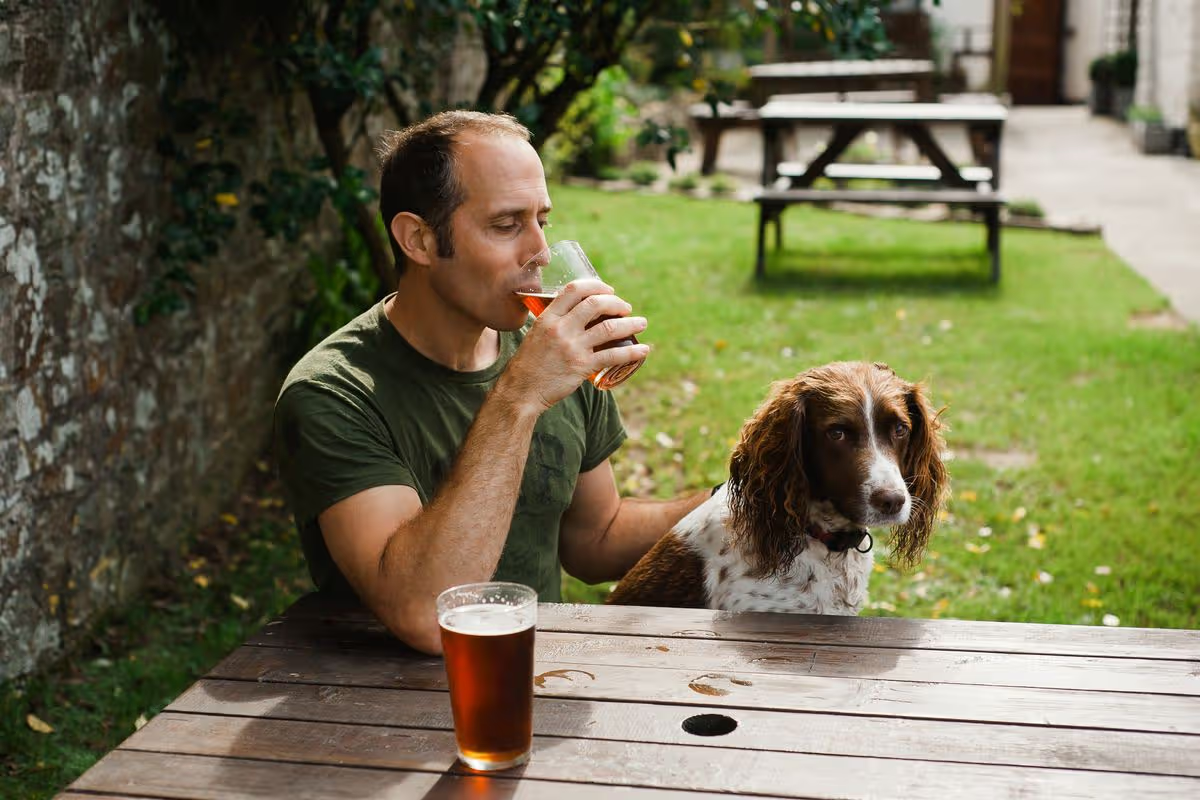
The best dog-friendly pubs with beer gardens in the UK have been named – does your local make the list?(Image: Getty Images/Stock Image)
The UK’s best dog-friendly pubs with beer gardens have been named, and it comes at the perfect time ahead of a period of intense rays.
The UK is set to bask in balmy weather this week, with temperatures reaching a blistering 30C in some regions as we edge closer to the official start of summer. Set to be a scorcher, sitting in a beautiful pub garden under shade with your pooch and a refreshing pint in hand might just be the perfect way to enjoy the sun-soaked weather.
In a bid to help Brits find that sought-after beer garden, CAMRA, the UK’s Campaign for Real Ale, has revealed the top nine dog-friendly pubs with beer gardens across the UK, all of which serve up that desirable cask beer. From their Pub of the Year winners and Good Beer Guide participants, these are undoubtedly some of the best pubs to visit during the summer months, and they’re dotted across the nation.
First on their list is Tamworth Tap in the market town of Tamworth, Staffordshire, just 30 minutes from Birmingham. It boasts an historic courtyard beer terrace with sweeping views of Tamworth Castle and additional seating at the front, so you’ll rarely be short of a seat.
It’s dog-friendly until 7pm on Friday and Saturday, providing more than enough time to enjoy it’s pictursque views over a pint from the Tamworth Brewing Company. It was named Pub of the Year in 2022, 2023 and 2025, and was also featured in the Good Beer Guide this year.
The Bailey Head in the market town of Oswestry in Shropshire, named after the nearby remains of Oswestry Castle, also featured among the top nine. It offers a pavement garden at the front of the pub, proving to be the perfect people-watching spot, and has ever-changing beers to suit every punter’s taste.
It was named Pub of the Year in 2024 and featured in the Good Beer Guide for 2026, earning well-deserved recognition and a reputation as a beloved public house in the area.
Nestled in the small village of Aldworth is the Bell Inn, and while it was named Pub of the Year back in 1990 and again in 2019, it has still earned a position on CAMRA’s list. In a Grade-II listed building, it has traditional pub interiors and a sprawling back garden with picnic benches and further seating situated at the front.
The Travellers Rest in the village of Skeeby is another pub worth noting during the summer months. Featured in the Good Beer Guide 2026 and Highly Commended in the Pub Saving Awards 2023, the pub was brought back to life after being closed for 15 years, and offers a serene garden room and spacious garden with a selection of local cask beers.
For those living in London, the Antwerp Arms in Tottenham might be your next best pub, thanks to its Georgian building and charming beer garden that is a favourite among locals. It’s another featured in the Good Beer Guide this year, and serves up local beers from Redemption Brewery.
But with nine charming pubs to choose from on CAMRA’s list, there are plenty of choices, whatever your preference, and of course, your furry friend can tag along too.
Top 10 dog-friendly pubs with beer gardens
Tamworth Tap, Tamworth
Bailey Head, Oswestry
Bell Inn, Aldworth
The Travellers Rest, Skeeby
Antwerp Arms, Tottenham
Miner’s Arms, Hundall
Village Inn, Arrochar
The Volunteer Arms (Staggs), Musselburgh
Rhos yr Hafod Inn, Cross Inn (Llanon)
Do you have a travel story to share? Email webtravel@reachplc.com
Fans of the classic cocktail, which has seen a huge resurgence in popularity in recent years, should head to this sunny city where you can enjoy a glass of the summery orange drink for just one Euro
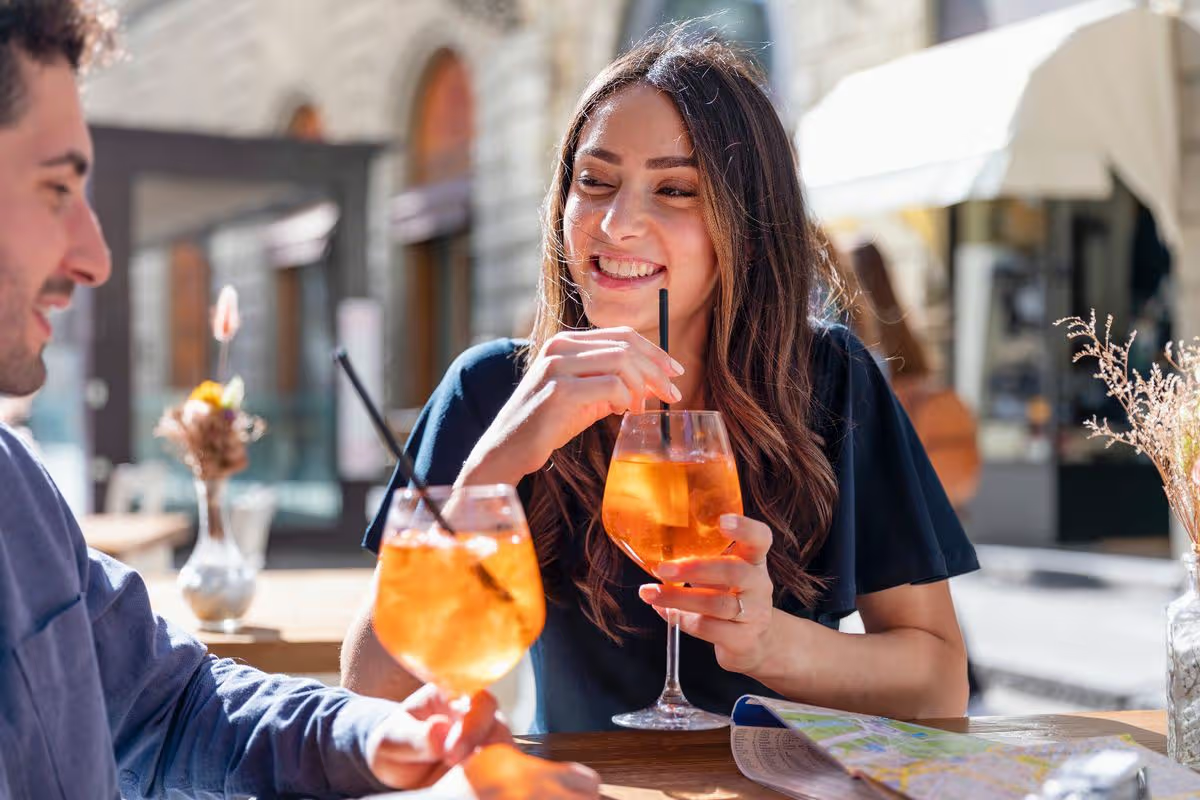
The Aperol Spritz has become one of the most popular cocktails on holiday(Image: Getty Images/Westend61)
Head to the Mediterranean during the summer months and you’ll often see tables laden with oversized glasses of Aperol Spritz. The iconic orange cocktail has become a holiday staple, whether it’s served at a pavement café in a cobblestoned old town, or a beachfront bar with plastic chairs.
But like many so aspects of holidays, the price has been steadily rising in popular resorts, turning it into a costly treat. However, there are still places where you can pick up an inexpensive cocktail, and one city has been named the cheapest spot to enjoy an ice cold Aperol.
Travel money provider eurochange has put together an Aperol Spritz index, tracking the top ten cheapest destinations in Europe where you can enjoy this summery cocktail without worrying about your bar bill, and luckily the least expensive spot is just a three-hour flight from the UK.
According to the research, Naples in Italy is the cheapest place to order your Aperol with the average cost coming in at €2 (approximately £1.73), but one bar is famous for serving these sunset cocktails for just one Euro (approximately 86p). Don’t expect a fancy cocktail bar if you visit Cammarota Spritz as it consists of tables crammed into an alleyway and drinks served in plastic cups, but the lively atmosphere has seen it receive a raft of positive reviews, with one saying it was: “Our favourite bar in Naples, no messing about with ‘drink-in’ or ‘takeaway’ prices, no service charges, just good cheap Spritz.”
And after a few Euro spritzes, you may find yourself craving another Napoli staple; the city is the birthplace of modern pizza, and you’ll find plenty of hole-in-the-wall places where you can pick up a slice. A popular late-night snack is pizza al portafoglio, also known as ‘wallet pizza’ as it comes folded and served in paper so you can devour it while walking back to your hotel.
Naples is ideal for as a spring or autumn city break, offering about 210 sunny days a year, so you can enjoy the winding historic streets and visit attractions such as Museo Cappella Sansevero, home of the stunning marble Veiled Christ statue.
Explore the city’s ancient sites at Napoli Sotterranea – underground Naples – taking you through an extensive network of streets and squares built under the surface by Romans and Greeks. Pass throw the narrow tunnels of the aqueduct, see old air raid shelters from World War 2, and climb through a hatch into the ancient Roman theatre of Neapolis.
Naples also has a variety of beaches, including some small stretches of sand on the outskirts of the city. These urban beaches can be small and busy during heatwaves, but they’re perfect for when you simply want a quick dip in the Med.
You can also take buses further down the coast for a day at a beach club or a public beach. Close to Naples you’ll find Gaiola Beach, famous for its islets that rise from the sea that can be crossed by bridge. Or the craggy coastline of Scoglione Marechiaro, famous for its turquoise waters.
Have a story you want to share? Email us at webtravel@reachplc.com
IT’S heating up this weekend with highs of 30C in the UK – perfect weather for a trip to the beach.
With help from Trainline, Sun Travel has found 12 of the best seaside towns and villages where local train stations are minutes from the coast.
Sign up for the Travel newsletter
Thank you!
There are plenty of seaside towns with train stations minutes from the beachCredit: AlamyThe trainline at Dawlish even runs along the sandCredit: Alamy
Cleethorpes, Lincolnshire
Cleethorpes Pier is where you’ll find the biggest fish and chip shop in the UKCredit: Alamy
Trainline has called Cleethorpes “one of the strongest fits for a beach-by-train escape.”
“Step off the train and you’re moments from Central Prom Beach fish and chips, arcades and all the ingredients of a classic British seaside day out.”
Luckily there’s a big beer garden to make up for the small inside space.
It’s a five-minute walk from Cleethorpes Station to Central Prom Beach.
Margate, Kent
Margate’s beach is minutes from the station as is its town filled with cafes and barsCredit: Alamy
Kent has lots of beautiful seaside towns, and Margate has previously been voted as one of the best with the ‘coolest neighbourhoods’.
It has a sweeping sandy beach, plenty of ice cream parlours, chippies, cosy cafes and bars.
Make sure to check out Little Swift which serves up tasty iced cocktails.
Not to mention you can hop on the rides at Dreamland which is one of the UK’s oldest theme parks.
Best of all, the station at Margate is a six-minute walk to the beach.
St Ives, Cornwall
Porthminster Beach in St Ives has bright blue watersCredit: Alamy
At the very tip of Cornwall is St Ives where you can be off the train and on the beach in under five minutes.
Porthminster Beach has golden sand and bright blue waters and views of St Ives Bay.
It’s ideal for families taking a paddle and building sandcastles in the sunshine.
On the sands there’s also an outdoor kitchen for takeaways, Gin & Cocktail Bar and a beach shop.
In the town of St Ives head to the likes of Fore Street, the High Street and Chapel Street for independent shops, bakeries, cafes and galleries.
St Ives station to Porthminster Beach is a 4-minute walk.
Barry Island, Wales
Barry Island has its own pleasure park a beach and is minutes from the train stationCredit: Alamy
Barry Island might be known as the home of BBC‘s Gavin and Stacey, but it’s also an ideal spot for those looking for a weekend beach break.
Whitmore Bay is a crescent-shaped bay of golden sand where families can go swimming, paddling and rock pooling at low tide.
On the promenade, there are a range of bustling cafes, fish and chip shops and amusement arcades.
Visitors have to check out Barry Island Pleasure Park too which has a rollercoaster, log flume, dodgems and waltzers.
From Barry Island station, it’s a six-minute walk to the beach.
Torquay, Devon
The English Riviera has beautiful beaches and easily accessible by railCredit: Alamy
If you fancy a trip to Devon without the hassle of driving and parking, you can take the train and be at Torre Abbey Sands in less than 15-minutes.
It’s Torquay’s main beach on the English Riviera with a sloping sandy beach with shallow waters – ideal for splashing about in on a hot day.
Travel Reporter Cyann Fielding who hails from Devon said: “Torquay Train Station might be small but it could not be in a better place to explore Torquay seafront, also known as the Queen of the English Riviera.
“The station is right next to The Grand Hotel, in case you want to make your stay in the area longer.
“Around two minutes from the station you’ll reach Torquay Beach and Torre Abbey Sands – a vast stretch of red-sand beach, ideal for swimming and kayaking.
“Right by the beach there are a number of restaurants, bars and fish and chip spots too that are great.
“My recommendation? Pier Point fish and chips, about five minutes walking from the beach – it has regularly been named one the best fish and chip shop in the UK.”
From Torquay Railway Station, it’s a 12-minute walk to Torre Abbey Sands.
Dawlish, Devon
Dawlish is a seaside village where you get incredible views from the railway lineCredit: Alamy
Trainline suggests the seaside town of Dawlish as a ‘beach-by-train’ escape which started before you even get there as the railway runs right along the seafront.
It added: “Dawlish a brilliant choice for travellers who want the journey itself to feel part of the day out, with sea views before you’ve even left the train.”
The seaside town has a shingle beach located steps from the town centre so it makes for an ideal daytrip.
Dawlish Station is a two-minute walk to Dawlish Town Beach.
Whitby, Yorkshire
Whitby is one of the prettiest seaside town and West Cliff Beach is close to the stationCredit: Alamy
Whitby is known as one of the prettiest seaside towns in the UK thanks to its stacked fishing cottages and sweeping beach all split by the River Esk.
West Cliff Beach is where most families will go for classic bucket and spade fun, for those looking for a quieter escape, head to Tate Hill which is a quieter spot near the harbour
You can get a takeaway cod and chips, haddock and chips or scampi and chips all for £13.50 each.
From Whitby Station to Whitby Beach is a 12-minute walk.
Normans Bay, East Sussex
Normans Bay sits between Bexhill-on-Sea and EastbourneCredit: Alamy
If you want to try and avoid the crowds, Normans Bay could be it.
The quiet fishing village sits between Bexhill-on-Sea and Eastbourne with a dog-friendly shingle-and-sand beach and historical Martello towers.
Trainline said: “Normans Bay is one for travellers who like their beaches a little more under-the-radar and yet it has its own station.
“The station is just a couple of minutes from the shoreline, with expansive views across the Channel and a quieter, more traditional feel.
“Nestled between Eastbourne and Hastings, it’s close enough for a day trip from London but feels far removed from the busier resort towns nearby.”
From Normans Bay Station to Normans Bay Beach it’s a two-minute walk.
Tenby, Wales
Tenby in Wales has four pretty beaches to choose fromCredit: Alamy
Tenby is considered one of the prettiest seaside towns in the country with its multi-coloured houses and four sandy beaches.
The two main ones, North and South, are at either end of the town while Harbour andCastle Beachis the nearest to the town centre.
The closest to the train station is North Beach which is long sandy stretch with cliffs on one side and harbour on the other.
Head down the road to Harbour Beach to see St Julian’s Church an old fisherman’s chapel built in 1878.
From Tenby Station it’s a 10-minute walk to Tenby North Beach.
Weymouth, Dorset
Weymouth in Dorset is a ‘classic bucket-and-spade’ destinationCredit: Alamy
You can’t go wrong with a trip to Weymouth in Dorset.
Trainline described it as a “classic bucket-and-spade destination, with a sweeping sandy beach, Georgian seafront and traditional harbour.”
And to make it even better, the station is only a few minutes from the promenade.
Last year, Weymouth Beach was named one of the ‘best in Europe’ thanks to its ‘shallow, safe waters’ and family-friendly activities like donkey rides and pedalo hire.
Walk along the prom to see the Jubilee Clock Tower or hop onboard the Land Train to see the sights.
From Weymouth Station to Weymouth Beach it’s a 4-minute walk.
Blackpool, Lancashire
Blackpool is the ideal destination for a fun-packed daytripCredit: Alamy
Of course, we can’t forget Blackpool as a destination that can easily be reached by train – in fact it’s 100 yards from the station to the South Promenade.
Trainline said: “For a full-throttle seaside day out, Blackpool Pleasure Beach station puts visitors close to the action.
“The station is just yards from the Pleasure Beach entrance and close to South Promenade, making it a handy choice for rollercoasters, arcades, seafront strolls and classic Blackpool fun.”
From Blackpool Pleasure Beach Station it’s just a few minutes to the South Promenade.
Shoeburyness, Essex
Shoeburyness’ East Beach is a five-minute walk from the stationCredit: Alamy
You can’t forget about the Essex coastline when it comes to beaches as it has some lovely spots, like Shoeburyness.
Trainline said: “For travellers heading to Southend-on-Sea, Shoeburyness offers a quieter alternative to the main seafront.
“East Beach is only a short walk from the station and has a more relaxed, open feel, with grassy areas, beach huts and views across the Thames Estuary.”
The walk from Shoeburyness Station to East Beach takes 5-minutes.
Sajjad Motamed, UK Country Manager, Trainline said: “Across the UK, there are brilliant coastal towns and beaches where travellers can step off the platform and be on the sand, promenade or sea wall within 5 minutes’ walk – no traffic, no parking stress and no long walk with beach bags in tow.
“Whether it’s the dramatic sea views at Dawlish, the turquoise waters of St Ives and Carbis Bay, or classic seaside favourites like Margate, Weymouth and Cleethorpes, travelling by train can make a day at the coast feel simpler, easier and more enjoyable from the very start.”
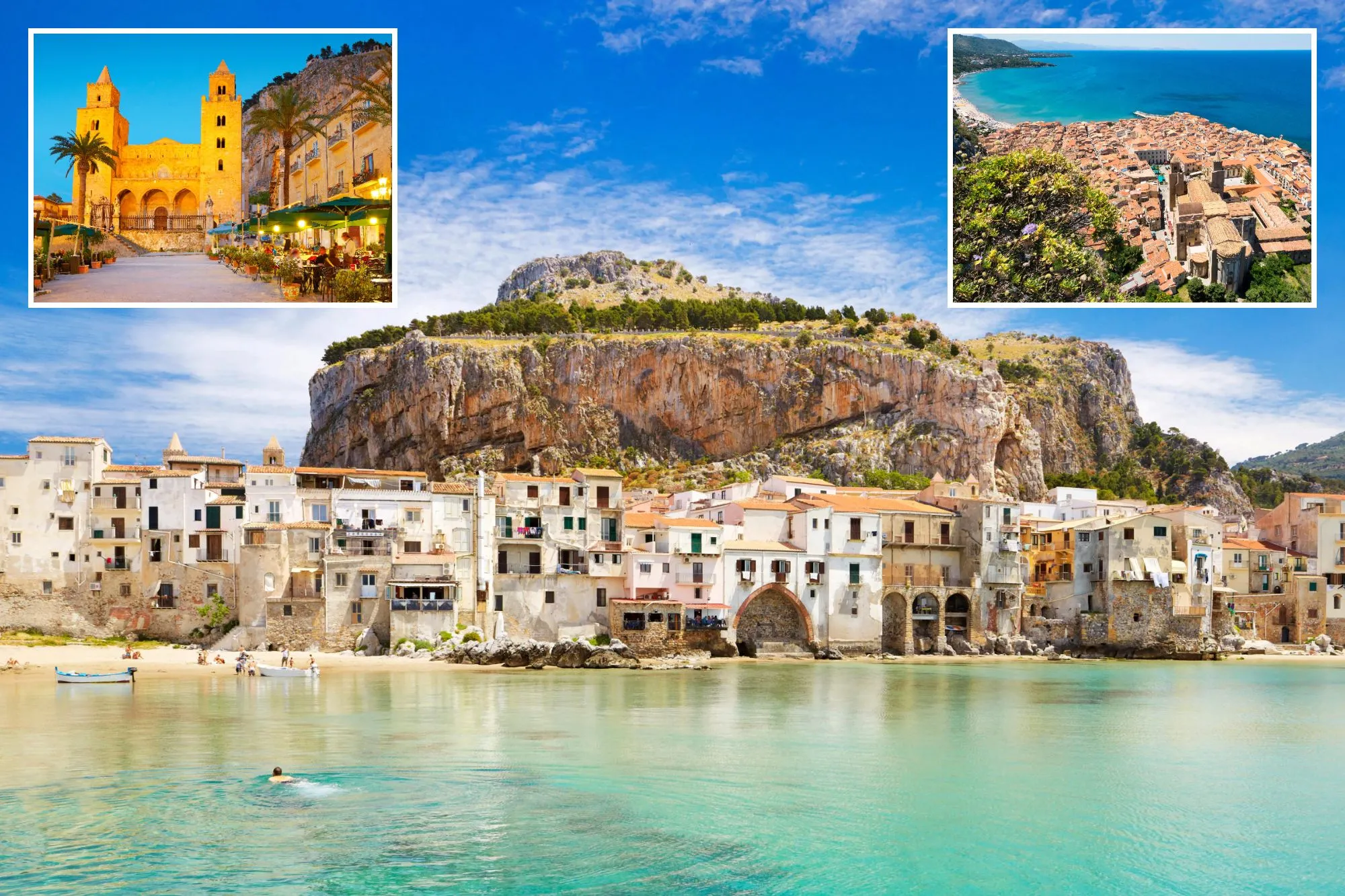
OUR Spotlight On column takes an in-depth look at the best things to see and do in popular holiday destinations, as well as shining a light on some lesser-known spots.
This week we’re highlighting the best of the Sicilian coastal resort of Cefalu.
Sign up for the Travel newsletter
Thank you!
We’re talking all things Cefalu, a resort in SicilyCredit: Alamy
The Sun’s Head Of Travel, Lisa Minot said: “The seaside town ofCefaluis perfect for a weekend break.
“You can spend several happy hours wandering along the promenade by the wide, sandy beach and into the old town, passing the many shops and restaurants in the tiny alleyways.
“We couldn’t resist taking our obligatory Instagram shots at medieval sea gate Porta Pescara, before wandering past the quirky Lavatoio Medievale — an ancient wash house fed by a river that falls into the sea.
“The 12th-century cathedral with its soaring twin towers and elaborate Byzantine mosaics is well worth a visit, with a reviving drink in the square below it just as delightful.
“The Porta Ossuna restaurant and pizzeria is perfect for a lunch on the seafront, we had a table right above the beach for us to enjoy the freshest of salads with burrata and prawns.”
MUST SEE/DO
While its broad, sandy beaches are an obvious draw, the winding cobbled streets of this medieval gem are a major part of its charm.
And all roads lead to the cathedral, the Duomo di Cefalu – a masterpiece of Arab-Norman architecture.
Don’t miss the 12th century Byzantine mosaics inside but for a real behind-the-scenes look, pre-book the Red Itinerary (£11.30) that includes the chance to climb the Norman towers for a fantastic view over the Piazza del Duomo.
Just off the Via Vittorio Emanuele is a quirky piece of history – a medieval laundry where local women washed clothes for centuries on stepped stones, fed by a natural spring.
HIDDEN GEM
The main beach can get crowded in summer but a little effort – and a 20minute walk east – and the Spiaggia di Kalura is a quieter pebble cove with crystal-clear water and dramatic rock formations, perfect for snorkelling.
For fabulous sunset views of Cefalu itself and its dramatic cliff-face backdrop head to the village of Sant’ Ambrogio which offers a snapshot of Sicilian village life without the crowds.
The island has some quiet beaches if you know where to lookCredit: Alamy
BEST VIEW
It takes a little effort and is best completed early in the day or later in the afternoon in the summer.
But it’s so worth the climb to the top of La Rocca – a huge limestone cliff that looms 268 metres over the town.
It’s a 45minute hike to the top where you’ll find the Temple of Diana, a megalithic structure from the 9th century BC as well as the ruins of a Norman castle.
It also offers fabulous views over the city and the sparkling Mediterranean beyond.
RATED RESTAURANT
It’s hard to get a bad meal in Cefalu with hundreds to choose from in the winding alleys.
Also ideal for dining by the sea, Lo Scoglio Ubriaco is perched over the sea and is a must for seafood pastas.
And for stand-out pasta dishes, try Pasta e Pasti, legendary for its handmade offerings – go for the Pasta alla Norma or anything made with local pistachios.
It’s nearly impossible to find bad food on the islandCredit: Alamy
BEST BAR
For sunset sips, head to the Jureka Wine Bar on Via Giudecca. There’s a wide choice of tipples with cocktails starting from £9.50.
And for fabulous views over La Rocca and the whole the town, head to the rooftop bar Dokeio at the Hotel La Giara with its multiple roof terraces and late night music.
For day drinking by the Med waves, head to the Bordomari Sea Lounge Bar with great views and cocktails from £9.
HOTEL PICK
Beach babes will love the 4* Astro Suite Hotel, right on Cefalu’s sands and with panoramic sea views.
It’s just a short walk from the historic centre and features an elevated terrace with pool and loungers as well as rooms with balconies, sea views and kitchenettes.
Six nights’ B&B is from £934 including flights from Stansted. See tui.co.uk.
EUROPE’S largest funfair is returning to the UK this weekend, as the huge stretch of rides comes back for its 144th year.
Over 400 spectacular attractions will be on offer for all the family, including a new record-breaking ride for the ultimate thrillseekers.
Sign up for the Travel newsletter
Thank you!
The Hoppings is back for another year, as the summer funfair hits Newcastle’s Town MoorCredit: Get into NewcastleThe funfair spans over half a mile in the city centre, making it the biggest in EuropeCredit: Get into Newcastle
The Hoppings is back for its 144th year this weekend, as Newcastle’s Town Moor anticipates the return of Europe’s biggest funfair.
Located at the heart of the city centre, the funfair offers over 400 attractions and rides for thrillseekers and families alike – from the giant ferris wheel, to the classic helter skelter.
Despite occupying a smaller space than previous years, due to drainage works on the Moor, the fair still keeps all its excitement, and visitors can expect to see a jam-packed line-up.
After centuries of history, and a deep-rooted sense of North East nostalgia the fair evokes, generations of Geordie families love returning to The Hoppings year after year.
The fair includes a whole host of classic rides, and brand-new thrillseeking funCredit: AlamyJGA1A6 Hook-a-duck, The Hoppings, Town Moor, Newcastle upon TyneCredit: Alamy
This year, the fair has unveiled a whole host of adrenaline-pumping rides, including the return of fan-favourites Atmosfear and Extreme.
The stage has been set for the arrival of a record-breaking high-flying experience with the launch of the brand-new Elevate85 attraction.
Climbing up to 80metres, this drop tower with flying chairs has been hailed as “the world’s highest travelling ride” – only 10metres shorter than London’s Big Ben.
Foodies have another reason to celebrate with a brand-new Spud Bros stall joining the line-up, only weeks after the launch of its popular North Tyneside store.
The fair has spent the last week in June on the Town Moor since 1882Credit: AlamyThe Hoppings typically attracts 500,000 visitors every yearCredit: Alamy
The daily line-up also includes a Live Lounge stage with country, rock, and pop music, alongside delicious treats on offer from the Feast Street food village.
The arrival of the Hoppings in the last week of June is a fixture of the Geordie calendar, and has been since 1882.
Opening on the Town Moor over a century-and-a-half ago, the fair was initially marketed as a tee-total event to counteract the boozy activities of Newcastle Race Week.
Its initial form included traditional amusements and roundabouts, as well as kite-flying contests and military shows – a step away from its current form.
The Hoppings has evolved to represent the warmth and welcoming nature of Geordies themselves, and shows a city beyond bustling nightlife and football passion.
Now, the fair attracts over half a million annual visitors to indulge in the vibrant lights, exhilirating rides, and all the fun of the fair.
For those wanting to visit Newcastle, The Hoppings is the perfect starting point for organising a tour, with the city centre situated a 30-minute walk away from the Town Moor.
From there, a walk along the Quayside to see the famous Tyne Bridge, The Glasshouse and River Tyne is a must, with foodstalls often lining the streets on weekends.
Newcastle city centre offers lovely views and exciting shopping experiencesCredit: AlamyTynemouth Longsands, only a 30-minute commute away, is one of Britain’s best beachesCredit: Alamy
Newcastle, and surrounding North East towns, are incredibly well-connected with the Tyne and Wear Metro, with 60 stations and two separate lines.
Many may not know that the city has some of the best coastlines in the UK – travel 30 minutes east on the Metro and visit Tynemouth Longsands and enjoy the scenic views from the coastal villages.
Entry to The Hoppings is completely free this year, with standard ride prices ranging from just £3 to £5 and high-thrill attractions costing slightly more.
The Hoppings is returning for its 10-day bonanza between June 19 and June 28, running from 2pm to 11pm on weekdays, and 1pm to 11pm on weekends.
FOOTBALL fans better strap in as there is a huge new attraction themed all around the sport landing in Europe.
Viva Mundo is a new football-inspired theme park in Santarém, Portugal, due to open in time for the next World Cup in 2030 – which will be hosted by Portugal, alongside Spain and Morocco.
Sign up for the Travel newsletter
Thank you!
A new football theme park is planned for EuropeCredit: YouTube/Viva MundoThe theme park called Viva Mundo, will be split into six main areasCredit: YouTube/Viva Mundo
The attraction won’t be themed around specific clubs but rather a love for the sport.
The theme park, which is expected to cost £389million, released a video this week showing potential rides and attractions that could feature at the park.
The video shows the park could include a Vegas-like sphere, a 4D cinema experience and even a water obstacle course.
Across Viva Mundo there will be 28 attractions in total.
Football fans can expect a fan zone, as well as 28 attractionsCredit: YouTube/Viva MundoAttractions include a dual rollercoaster where families can race alongside each otherCredit: YouTube/Viva MundoThere will also be a rollercoaster that launches riders at high speedCredit: YouTube/Viva Mundo
There will be rollercoasters including a dual rollercoaster, where families can race against each other and another that will launch riders at high speed.
Other rides will include a log flume and rapids as well as a drop tower.
According to Local Online, the theme park will be split up into six different areas – the entrance, the ‘Memory’, ‘Flavours’, ‘Fans’, the ‘Spectacle’ and ‘Football World’.
The Welcome Gate area will be where visitors enter the theme park, then Memory will be where they can visit a shop and museum, showcasing the sport’s history as well as iconic memorabilia from around the world.
Other attractions at the park include areas for younger kidsCredit: YouTube/Viva MundoAnd there could be a Vegas-like sphereCredit: YouTube/Viva Mundo
In the Flavours area, fans will be able to grab a bite to eat with several different restaurants with food from around the world.
As for the Fan Zone, the area will replicate the energy of a stadium on a match day, with virtual reality experiences for fans.
In the Spectacle area, fans can expect a 4,000 seat arena for live concerts and performances.
And last but not least will be Football World, located around a central lake and divided into sub-zones that include: Passion – a tribute neighbourhood; Glory – a area dedicated to football legends with trophies; and Fantasy – a playground-like area for younger fans.
The park is due to open in time for the 2030 FIFA World CupCredit: YouTube/Viva Mundo
And visitors won’t need to stay outside of the park as there will also be a 300-room themed hotel onsite.
The park is planned to open on April 29, 2030, which would be in time for the 2030 FIFA World Cup, which Portugal is due to co-host alongside Morocco and Spain.
The park will be 40 minutes from Lisbon and an hour and a half from Porto.
Santarem, where the theme park will be located, is a historic city worth exploring in its own right.
And it will be just 40 minutes from LisbonCredit: YouTube/Viva Mundo
Dubbed the ‘Gothic capital’of Portugal, the city boasts fascinating architecture as well as amazing views of the Tagus River.
One spot to not miss is the Portas do Sol Gardens, which is the city’s old castle.
The park expects to welcome between one and 1.5million visitors a year when open, according The Portugal News.
BRITS are jetting away in record numbers, but landing abroad to a shock mobile phone bill can instantly ruin your holiday vibe.
Thankfully, savvy travelers are dumping traditional setups for a clever digital alternative powered by Swiss tech pioneer Yesim.
Sign up for the Travel newsletter
Thank you!
eSIMs make staying connected while abroad easy aaaffordable
Yesim eSIM – claim exclusive 15% discount with code: GETYESIM15
Why is traditional roaming outdated?
Ever since Brexit, major UK mobile providers have reintroduced painful daily fees just to use your standard phone data in Europe.
Big networks like EE and Vodafone hit travellers with charges up to £2.75 a day, which easily scales up to nearly £100 for a family holiday in Spain.
Worse still, traditional roaming ties your phone to a single local network provider, meaning your data speeds will completely tank if that specific partner has weak signal.
You also face the terrifying risk of automatic out-of-bundle charges if you accidentally slip past your hidden data allowance while streaming or video calling.
What are travel eSIMs and how do they work?
An eSIM is a clever digital microchip already baked directly into modern iPhones, Samsung Galaxies, and Google Pixel devices.
While the physical chip is built into your phone, a travel eSIM is a dedicated service that lets you download a cheap, temporary data profile over the air.
You simply install the profile at home while having a cuppa, and the internet connection automatically kicks in the very second your flight lands abroad.
Best of all, your primary UK SIM card stays completely active in parallel, meaning you can still receive emergency calls and crucial banking verification texts on your usual number.
What is Yesim, and how does it work?
Swiss tech brand Yesim is an industry pioneer making mobile connectivity a seamless, budget-friendly digital service.
Operating for seven years with over 800 partner operators, Yesim provide unstoppable coverage across 200 world destinations.
However, two terms are often confused in the market, and understanding the difference matters.
What is an eSIM?
An eSIM is simply the hardware: a microchip built into modern smartphones that allows profiles to be downloaded remotely, but it doesn’t guarantee lower prices or reliable connections abroad.
What is a travel eSIM?
A Travel eSIM, however, is the complete service ecosystem built around that chip.
It provides an app for choosing plans, 24/7 customer support, automatic connection to the strongest network, and transparent, fixed pricing.
That service layer is what you are actually paying for.
Why choose Yesim?
Yesim delivers that exact ecosystem, offering tailored data options for every holiday style, backed by multi-lingual support with a rapid six-minute average response time.
First-time users can even test the network with a 500MB trial plan for just £0.45.
To get started, check your phone’s compatibility on their website and install the profile via the app.
Sun readers can score an exclusive 15% discount right now by using the promo code GETYESIM15 – claim here
Why you should consider a travel eSim for your next trip?
Unlike network providers that lock you into one signal, travel eSIMs like Yesim seamlessly switch in the background to whatever local network is strongest.
They offer total cash predictability by forcing you to look at the exact data limit, pricing, and expiry period before you spend a single penny.
Whether you need a quick 5GB chunk for a week in Turkey, or a Global Package (80+ countries) or Global Plus Package (140+ countries) for backpacking across South America, you choose a plan tailored perfectly to your trip.
For trips with unpredictable routes, the Pay & Fly plan offers a flexible pay-as-you-go model available in more than 170 countries.
You can even safely use your smartphone as a personal hotspot to share the internet with your tablet, laptop, or the rest of the family.
The Yesim app utilises switchless connection technology to automatically connect to the strongest network from over 800 partner operators globally.
The brand’s Multiple eSIMs feature allows you to manage connectivity for several devices from a single account.
The main app owner can share eSIM profiles with family members or colleagues without needing to install the app on every device.
easyJet issued a new alert on Tuesday(Image: e55evu via Getty Images)
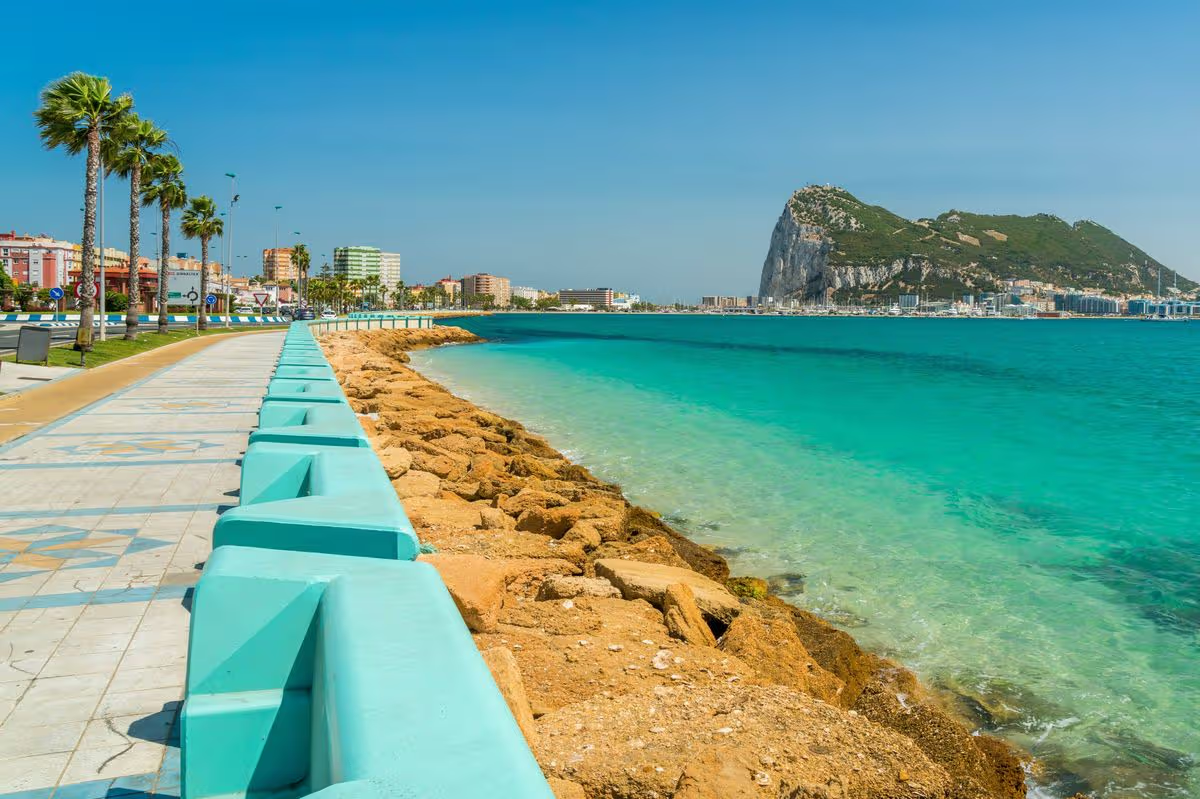
Holidaymakers bound for a popular destination have been cautioned about extended airport queues and advised to factor in additional time when travelling.
easyJet issued a fresh alert to British passengers on Tuesday, June 16, warning them about substantial changes at the border that could throw travel plans into disarray. The airline updated its official guidance following the gradual introduction of stringent new security measures and evolving border rules.
Brits are also being reminded about the length of time they’re permitted to remain in the Schengen Area, following rule changes that have been introduced post-Brexit. easyJet’s ‘important updates’ message is aimed specifically at those flying to and from Gibraltar.
The alert explains: “EES border checks may be carried out for both arrivals and departures at Gibraltar Airport, which could result in longer waiting times when entering or leaving the country. Please allow extra time when planning both legs of your journey.”
The travel operator goes on to clarify that UK nationals can still visit Gibraltar visa-free for brief stays. The update continues: “For non-EU nationals, including UK nationals travelling visa-free, time spent in Gibraltar now counts towards the 90-day Schengen allowance.”
Additional guidance on Gov.uk clarifies that British passport holders are permitted to stay for no more than 90 days in any 180-day period across the following countries – Austria, Belgium, Bulgaria, Croatia, Czechia, Denmark, Estonia, Finland, France, Germany, Greece, Hungary, Iceland, Italy, Latvia, Liechtenstein, Lithuania, Luxembourg, Malta, Netherlands, Norway, Poland, Portugal, Romania, Slovakia, Slovenia, Spain, Sweden, and Switzerland.
easyJet’s alert adds: “Non-EU / Third-Country nationals may require a Schengen visa to enter Gibraltar and should check visa/entry requirements before travelling.”
It’s Friday afternoon in North Hollywood and Ziggy Marley is perched on a stool inside his newly built Rebel Lion Studio, tucked in one of the neighborhood’s creative enclaves.
The nine-time Grammy winner is surrounded by a collection of lion figurines, guitars, traditional hand drums and a piano. Along the walls hang two replicas of backdrops his legendary father, Bob Marley, used on tour in the 1970s. The murals, depicting Rastafari icons and Haile Selassie I and Marcus Garvey, were featured in the 2024 biopic “Bob Marley: One Love.”
“These are what we used as the backdrop for the concert scenes. Them spiritual to me,” Marley says in patois as the smell of palo santo dances around the rehearsal space.
Music has been both an inheritance and lifelong pursuit for Marley. From sitting in studio sessions with his father as a child to building a five-decade career of his own, he has remained a curious student of the craft, one willing to challenge convention in search of a deeper meaning. That spirit is evident on “Brightside,” his ninth solo album, which was released on vinyl on April 18 (Record Store Day) and May 1 on streaming.
Rather than recording the eight-track project in 440 Hz, the standard tuning frequency for most modern music, he opted for 432 Hz, a tuning some musicians and theorists believe creates a warmer, more meditative listening experience. He also slowed down his songwriting process, giving each lyric room to carry its message of hope through turbulent times. The album, which may be his most personal yet, also features “Many Mourn for Bob,” the first song he has written directly about his late father.
“I think it shows the next stage that I probably am in,” says Marley, adding that he felt connected to his father on a spiritual level. “We took another step in the relationship, to another place that it’s never been before.”
Ziggy Marley is bringing his “Brightside” tour to the Hollywood Bowl on June 21 alongside reggae star Burning Spear.
(Dania Maxwell / For The Times)
He adds, “When I was doing the song, it kind of came to me like this song could’ve been my father’s song. It could’ve been a song that he wrote.”
The reflective nature of “Brightside” arrives at another pivotal time in Marley’s career. This year marks the 20th anniversary of “Love Is My Religion,” the Grammy-winning album that launched his solo career and crystallized a personal philosophy he still carries today. He is also set to release his sixth children’s book, “True to Myself,” in September.
As we wrap up our conversation, Marley has only a few minutes before Rebel Lion Studio shifts back into work mode. Within minutes, bandmates, background singers and production crew members begin funneling into the space, hauling in stacks of equipment as promotion and preparations continue the “Brightside” tour, which stops at the Hollywood Bowl on June 21.
This interview has been lightly edited for length and clarity.
You recorded your latest album, “Brightside,” here at Rebel Lion Studio, which you designed and built from the ground up. Can you take me back to the beginning of that process and why you wanted to do it?
I grew up around my father and my mother as growing musicians trying to succeed and there was one thing I kept hearing over and over throughout my life: independence. Their whole mission was to be independent. I saw them work and I saw my father build a studio. I saw him have a space where he can do more music and control his own time. That was a dream of mine for a long time, ever since I started doing music because usually we use other people’s studios. I couldn’t have this in my house. It’s too much. It’s a dream come true.
We’re surrounded by two beautiful murals. Is there a particular item that is personal to you?
The murals are replicas of my father’s backdrops that they used. The original artwork is by Neville Garrick, but he helped us re-create them for the Bob Marley movie. These are the murals we used as the backdrop for the concert scenes. They are spiritual to me cause that’s Haile Selassie and Marcus Garvey, two very important beings for us. Inspirational.
On “Brightside,” Ziggy Marley dedicated a song to his father, Bob Marley, for the first time in his career.
(Dania Maxwell / For The Times)
“Brightside” is your ninth solo album. What mindset were you in emotionally and spiritually when you started working on it?
I never thought about making an album, I was just writing songs. You just tap into things in your subconscious that are waiting to become music, I feel like. Then when the time comes for writing songs, the time comes. It’s like a season. Like you have blueberry or orange season. So there’s a season for me when I write songs. Then you say, “All right, let’s make an album then.” But you don’t think about an album before. It’s just an expression or a feeling just to make music, not for any reason but to make it. It happened over a period of years. Ideas and experiences that eventually come out. But closer to the time I [made] the album, I remember writing some of the later songs like “Why Let the World.” It was a song that I wrote because I was feeling down and everything that was happening in the world and the country. Just so much negativity and I just felt like I needed to take a break from it. To recharge yourself. We cannot fight every day. We need to take a break and then get back to it. I needed to teach myself to take some time. It was more of a mental thing than an emotional thing. Stuff I deal with my father, personal life and stuff with my spirituality and my faith. So there’s a lot of me in this record.
“Many Mourn for Bob” is the first song you’ve explicitly written about your father. Your brother, Stephen, is also on the vocals. What surprised you emotionally once that song was finished?
I’m not sure I thought about it like that. The experience of expressing that emotion, it’s a spiritual experience. I think it shows the next stage that I probably am in and even my relationship with my father on that spiritual level. It’s a different place. We took another step in the relationship, to another place that it’s never been before. When I was doing the song, it kind of came to me like this song could’ve been my father’s song. It could’ve been a song that he wrote. That’s how I felt about it. This is partly his song. It’s me and him making this song. This song is his song too.
How has your relationship with grief changed over the years?
It’s more of a comrade, understanding, empathy and having the maturity and the experience to understand what he went through as a man, as a human being. I think that’s what it is, really. A better understanding of what he went through, not the glory. The pain, the mental and emotional state. You’re more than just an idol. You’re more than just a legend. You’re more than just a father. To go deeper than that, so that’s the next level.
Yeah, the skit you used of him saying “I’m just a man from the ghetto” on the song really summarizes that.
That’s the real him. That’s him right there. Even in the tone of his voice, you can hear the real Robert coming out.
Another standout song from the album is “Racism Is a Killa.” One thing that you do well is having a heavy topic, but finding a way to still make it feel hopeful and joyful. Why was it important for you to approach the track this way rather than from a place of anger, heaviness or sounding preachy?
I think it started out preachy and angry, but over time, it kind of evolved and I kind of evolved too ‘cause my own evolution is represented in the music. And you know something, doing that song helped me evolve because I had to think about it differently without the anger. The song made me do that. Like how else can I approach this? It’s inspiration that causes these things. It’s not an intellectual thing. I didn’t do that intellectually. Like over time, something just started coming out of me. I never really thought about it before, but I can see it now.
In the video, which features your daughter, Zuri, you referred to the condition as “Racismosis” in the video and sang about how it can be cured.
It’s kind of like a sickness, a disease. It’s a virus. We can minimize the virus and stop the disease. It’s true. Racism is a killa. This virus can kill ya. Literally kill ya. Spirtually kill ya. Emotionally kill ya. Mentally kill ya. It kill ya in different ways. It kills the victim and it kills the person perpetrating it. It’s killing everyone, but we can cure it though. It starts with the children. I have a friend of mine who said, “Yo, my little son loves this song. He doesn’t want to stop. He says ‘Put on “Racism is a Killa.”’ So that’s where the antidote is starting. The minds of the children. The music with a conscious message gives them the right consciousness that they grow up with. That is how we take our time and lower the spread of the virus.
You recently released an alternate version for “Racism Is a Killa” with Big Boi. How did that collaboration come together and what excited you about working with him?
I’ve loved Big Boi and Outkast from a long time ago. He’s a legend and a strong voice. There’s different layers to it and I feel like Big Boi took it to that other layer. So yeah, we just love Big Boi and I’m going to jump on something he does. [Laughs]
I’d be remiss if I didn’t ask your approach for your album and how you swapped the typical 440 Hz for 432 Hz. Do you remember the first time you heard the music played back that way?
It’s a long journey because for most of my life in music, I’ve tried to be a student. I’ve tried to keep an open mind and learn more and more. With this album, there’s an inspirational side of music and that’s where I lean into most of the time, but as I grew up, I started to understand there’s also a science too. It’s also mathematics. The universe, it’s all mathematics and science, and I shouldn’t shun the science of music just because I think the inspiration is all it should be. I think a part of that was learning that for myself and opening up and saying, “Yo, let me put some science into this.” Frequency. What does frequency do to people? Frequency affects people. Frequency is a weapon. It’s a tool. I’m sure the army has some kind of frequency thing. So frequency is powerful. I wanted to try something different anyway. I want to be different. I want my frequency to be different from the majority of frequencies that’s being played out there, because it’s fun for me to be different.
When I was working on the demos, I was like “Let me try this 432 Hz thing” and I like how it feels for me personally, how I sing on the frequencies. It resonates differently and makes me feel different. We did it and it felt good, and we did it live, and from my point of view, I felt a different energy with the audience too. So all of those experiments led me to the final conclusion to say, “Yeah, let me do the record in 432.” It’s really nice vibes, which the world needs a different frequency. We can use it.
This year marks the 20th anniversary of “Love Is My Religion,” your first solo Grammy-winning album. When you think back to that era of your life, who was Ziggy back then?
A lot was changing because I moved to L.A. during that time.
You got married around that time too, right?
Yeah. I don’t really fight change. I just try to navigate them and figure them out cause sometimes change is hard. There was a lot of change living here, moving around, trying to find a place, music, but then it’s like we are continuously updating ourselves. I’m continually updating. You know how you update your OS. I’m updating my OS. My operating system is being updated throughout my experience in life. There’s always something else out there for me to evolve to. So during that period of my life, “Love Is My Religion” came to me when someone asked me, “What religion are you?” And I just said “Love is my religion.” I never thought about it before, never contemplated it, never even thought of those words together before in my life, and they just came out to me that day. So the album represents a time in my life when I realized there’s a spiritual awakening that I had. “Love Is My Religion” is a spiritual awakening. That’s my thing. That’s who I am. That’s why it’s a milestone.
“If you think you’re going to change this world with music and you’re trying to send a message out there, you have to speak to children,” Ziggy Marley says.
(Dania Maxwell / For The Times)
You’re kicking off the “Brightside” tour this month, which includes a stop at the Hollywood Bowl. What are you most excited about when it comes to bringing this album to people for the first time live?
I’m excited about playing the music. I think it’s about the music. These new songs, they vibrate very highly for me and I’m excited about experiencing and expressing that. And also kind of not doing it for the audience. I don’t want to do it for the audience. I want the audience to experience what I’m experiencing, what I’m expressing. I want them to feel me. I don’t want them to be like “Hey look at me.” [Laughs] There’s still connectivity going on, but I want them to feel the songs the real way. That’s what I’m excited about for people to feel it the way that I feel it.
You even posted the lyrics and told fans to get to practicing, so they can really understand the message.
Yeah. Just reading them for me, I really like the writing I did on this. I also took some time with this too. I was saying to someone that I developed a deeper relationship with the lyrics and the words than I did before. My relationship with the words here are very mature. I feel good about it. That’s why I want people to know the words because words are very important. Words are very important. If you know the words you get a deeper understanding of what I’m talking about and what I’m feeling.
After nearly 50 years of making music, Ziggy Marley built his own studio in North Hollywood called Rebel Lion Studio. He plans to turn it into a multipurpose creative space.
(Dania Maxwell / For The Times)
Look on the bright side is a phrase that people say often, but what do those words mean to you right now?
Sometimes we can get in a place [where] we can’t see the other side of things because we’re so caught up in that one place. Like the cliché, there’s two sides to a story, ya know? The universe is always yin and yang, but there’s always another side of things. But I feel like the way we are being programmed in a way through media and everything, it’s like there’s only one side. Everything is like this, there’s nothing else going on over there that we need to see, we only need to see this. This is all that’s going on in the world. There’s nothing good, there’s nothing nice, there’s no good people, there’s no love. So it’s a realization too. A realization that there’s the other side. Never get to that place where we think it’s just that side alone because we get so much of it. It’s a reminder, I think, for us like “Come on guys.” The thing about it too, sometimes you can feel like — even for me — some people say, “Hey look on the bright side,” some people find that like “Why are you happy? Why you so chirpy?” [Laughs]
That’s true.
I’m proud that I’m on the bright side. I’m living on the bright side, I don’t care. You don’t like me because I’m living on the bright side? You want me to be like you, you want me just live on the dark side with you, right? So it’s like a proudness of being positive and having that outlook in life, and not feeling like you have to [fall to] peer pressure. More positivity in life, not just the negativity. I’m confident in that too. So it’s kind of like that too, you know, like being proud, lifting up that side of me. Yeah, I’m happy to be living on the bright side.
The airline shared an update for passengers in a post on social media
The airline posted an update for passengers(Image: Getty)
Ryanair has shared a ‘fuel update’ for passengers. The airline shared the news on social media, explaining that it is making changes to flights. Posting on YouTube, Ryanair shared an overview of its plans to improve flights over the coming years.
The video was titled: “Pathway to net zero carbon emissions goal.” As part of the changes, the airline said flights will produce less noise and require less fuel, among other benefits. Ryanair describes itself as Europe’s largest airline group.
In the post, Ryanair told customers: “We’ve developed a pathway to achieve our net-zero carbon emissions goal by 2050, which aligns with the Paris Agreement and the aviation industry’s Destination 2050 initiative. Ryanair’s pathway aims to show incremental progress in decarbonising in line with EU climate targets are possible.”
In the video, the airline highlighted key areas of change. Ryanair started by discussing the benefits of new technology, such as 210 ‘game-changer’ aircraft, which deliver 16% less fuel usage and 40% less noise.
Ryanair also shared how sustainable aviation fuel can reduce lifecycle emissions by 80%. As well as how measures, such as single-engine taxiing and dynamic flight planning, can improve efficiency.
On its website, Ryanair shared further details for passengers interested in its plans. The airline said 32% of its carbon-emission reduction targets would come from technological and operational improvements, 34% from increased use of sustainable aviation fuel, 10% from the Single European Sky initiative, and 24% from offsetting and similar measures.
Ryanair’s website says: “We have teamed up with Trinity College Dublin to put in place a number of innovative actions to accelerate the use of sustainable aviation fuel (SAF). By appointing best-in class researchers, we’ll achieve our goal of powering 12.5% of our flights with SAF by 2030.”
Destination 2050 describes itself as an industry alliance committed to climate-neutral European aviation. The website says: “We believe that together, policy-makers and the industry we can make net zero CO2 emissions happen by 2050. European aviation is committed to play its part and ensure that air transport can continue to grow sustainably in the future.
“By 2030, net CO2 emissions from intra-European flights would be reduced by 55% compared to 1990 levels through a combination of fleet renewal, sustainable aviation fuel (SAF), operational improvements and the EU Emissions Trading System (ETS) –in line with the new EU climate goal for 2030.”
Why is CO2 bad for the environment?
Carbon dioxide (CO2) is a greenhouse gas that holds heat in the Earth’s atmosphere. Although it is essential for maintaining the planet’s warmth, human actions have led to a significant increase in its levels, intensifying the greenhouse effect and causing global warming, severe weather events, and ocean acidification.
This method of transport is a cheap and easy way to get around the city, but it has caused hundreds of accidents in the past year. Now there are calls for a ban across the European Union
The city is clamping down on the method of transport(Image: Getty Images)
A European city has banned a mode of transport that’s popular with tourists on day trips, after a huge number of accidents were reported in the past year alone.
Brussels will rid its streets of shared e-scooters as of January 2027, with authorities in the Brussels-Capital Region announcing the move last week. Currently, the Belgian capital has two remaining scooter operators offering shared e-scooters, Bolt and Dott, and once their licences expire at the end of 2026, they will not be renewed, according to the Brussels Times.
Authorities voiced their safety concerns around the use of e-scooters and the nuisance they can cause to local residents. The move means Brussels follows other European cities who’ve removed shared e-scooters, including Paris, Madrid, and Prague.
Brussels mobility minister Elke Van den Brandt and minister-president Boris Dilliès made a shared statement about the ban, calling shared e-scooters a “growing nuisance to other road users”, and pointing out that 666 accidents involved e-scooters in 2025, a year on year increase of 26%.
They also highlighted that rental scooters were often used for criminal purposes, and were involved in the cases of 25 shootings in Brussels last year.
Boris Dilliès said: “The decision to exclude self-service scooters from the Brussels urban landscape is part of a clear and consistent policy. Often synonymous with disorder, self-service scooters are a source of nuisance, cause serious injuries, clutter the streets and are, unfortunately, increasingly being used by organised criminals. Self-service bicycles, on the other hand, remain for us an essential part of a mobility policy.”
However, in a statement, e-scooter rental firm Bolt argued: “When scooters are the subject of public debate, whether regarding road safety or parking, private and shared scooters are almost always lumped together, even though they are fundamentally different.
“Banning [shared scooters] will not stop people from getting around. It will drive users towards private, unregulated, untraceable and genuinely dangerous scooters, or towards more polluting modes of transport. Neither of these scenarios serves Brussels’ objectives regarding safety, congestion or the climate.”
Since the ban was announced in Brussels, the Benelux Union, a partnership between Belgium, the Netherlands, and Luxembourg, has called for the European Commission to create a single framework for all EU countries, which could make it easier for other countries to make their own regulations.
Benelux pointed out there are inconsistent safety standards among member states, and not all vehicles on the market were safe and suitable to be used on public roads. The lack of guidelines also make it difficult to prevent unsafe vehicles from being put out for hire.
The UK has banned privately owned e-scooters from public roads and pavements, meaning the only legal place to ride your own e-scooter is on private land. There are a handful of legal rental schemes in some areas of London, Birmingham, and other cities, with strict criteria such as limiting the e-scooters to 12.5mph, banning riders under 18, and requiring a provisional licence to hire one.
Have a story you want to share? Email us at webtravel@reachplc.com
Hannah and her daughters, Molly (6) and Poppy (2) enjoyed their stay at Club Med, Bodrum
As a mum to a six year old and a two year old, I love an all inclusive hotel. There’s plenty of food options, and I don’t groan every time one of my children tips their drink into the sand. But they’re often pretty big, and pretty expensive. So when I checked into Club Med in Bodrum, I was quickly won over.
While it’s quite large, with 242 rooms on the pretty hillside site, it still manages to feel boutique and exclusive. A high return rate, plenty of the guests we met were on their second or third visits. One, an elderly Belgian man on holiday with his wife, was on his seventh. “It’s just perfect,” he told me. Why would we go anywhere else? And I have to say I agree. Here’s why…
The rooms
There are three different room types at Club Med, Bodrum: superior, family deluxe and suites. As a family of four, we were given a deluxe, which was split over two floors. There were two single beds downstairs and a king upstairs, in a large living space that doubled as a living room.
There were two bathrooms and a spacious balcony with chairs for lounging that looked out over the archery courts below. As far as decor goes, it was simple – white walls, minimal accessories. Functional for a family who would be spending most of their time on the beach. Beds were comfy, and a cot was provided. The whole thing was immaculately clean and the thread count was high. It was an ideal base to set up camp for the week.
The food
While in Bodrum, we ate a lot of our meals out, but the ones we enjoyed at the hotel were very good indeed. The hotel’s main buffet restaurant, La Terrasse, is at the top of the site, with stunning breezy terraces overlooking the sea, all draped in purple flowers. The view, it has to be said, is breathtaking. The scenery served up is almost as good as the eggs.
Breakfast is varied, with omelettes made to order, a bakery, cereals and salads. A juice bar serves up brightly coloured drinks, and there’s a fruit station with enough bananas to keep my kids happy all day. Coffee is best sourced at the bar, which does a great flat white with fresh beans. Throughout the day, delicious picky snacks like olives and flatbread are served at the beach bar, and to the delight of the little ones, fresh watermelon was delivered to them on the sand.
La Terrasse opens once more for lunch and dinner, with a banquet of options for all tastes and palates, from grilled prawns to pizza. There were even snails one night – a nod to Club Med’s French brand heritage. A gentle theme runs each night, say Mexican, Chinese, and so on. And there’s plenty of Turkish treats to delight too. Once a week, a white party takes over the pool area and guests are all given light-up crowns to wear as they dine. My six year old absolutely loved this – as did I. Down the mountainside, the a la carte Halikarnas restaurant provides a more intimate, upmarket setting, with incredible seafood and meat options.
The activities
While Club Med isn’t specifically a family hotel, and in fact most of the guests we met during our stay were friends or couples, it really does welcome children with open arms. Staff remember names and drinks orders, and a fuss is made of young guests wherever they go. The pool area is large and luxurious, with plenty of sunloungers, many of which are set under the shade of surrounding trees, and there’s a little baby pool for paddlers too.
Elsewhere, there’s a small playground set down a shady path and activities like archery and beach fit to keep everyone occupied when on a break from the beach. A complimentary twice-daily boat trip, which leaves from the hotel pier at 10am and 3pm each day to tour the beautiful coastline, lets the little ones on with lifejackets.
The beach
At the foot of the hill lies the jewel in Club Med’s crown – its pristine, private, beach. Set in a long bay, ensuring calm, safe water, it can be accessed via stairs or a lift, with a regular supply of buggies taking guests up and down the hill to reach it. Once at the shore, turning left takes you to a section of Bali beds set over the waves on the rocky cliffs, with some more to be found on a wooden pier.
We, however, turned right – to the main stretch of beach. With more than enough sunbeds, each with a generous umbrella for shade, there’s no jostling required. The beach is cleaned daily and the water is crystal clear. It’s paradisical. Little fish came to say hello as we built sandcastles by the water’s edge. The perfect place to wile away the day.
The surrounding area
If you can bear to leave Club Med Bodrum, there is plenty to explore nearby. A trip to Bodrum castle is a must to wander through the historic fortress. Built by the Knights of St John, it now houses one of the world’s most important collections of ancient shipwrecks and relics. There are a flock of friendly peacocks in residence too, which I have to say were the highlight for both my girls.
Elsewhere, Bodrum Antik Tiyatrosu (Bodrum Antique Theatre) is a remarkably preserved 4th-century BC Greco-Roman amphitheatre carved into the slopes of Mount Göktepe. Overlooking the city and the Aegean Sea, it stands as one of Anatolia’s oldest surviving theatres. Later, a walk up to the 18th-century windmills between Bodrum and Gümbet then provided sweeping views, and we headed down to the glamorous Bodrum marina to dine by the water at Liman Koftescisi, a renowned Turkish restaurant. The meatballs with aubergine were divine.
For those who love wine, Bodrum is abundant. Karnas Vineyards is a family-owned, boutique winery and agricultural estate located in the Karaova region of the Bodrum peninsula. Spanning over 20 hectares, it is famous for being the first vineyard to plant the Zinfandel grape variety in Turkey, producing award-winning wines using sustainable and traditional techniques. Featured in the Michelin Guide, the vineyard features a terrace restaurant serving local, farm-to-fork meals made from ingredients grown on-site or by local farmers.
And just down the road, Mehmet Vuran is the owner and winemaker at Garova in the Karaova Valley of Bodrum. A visit to his estate is as much of a delight for children as it is for the grown ups thanks to a menagerie of animals, with cows, chickens and baby chickens running around. As the golden sun dipped behind the horizon, as our visit to Bodrum drew to a close, we toasted to our return.
*For more on planning a trip to Türkiye, see Go Türkiye
Getting there
Without Flights: Seven nights all-inclusive stay at Club Med Bodrum, Palmiye, Turkey from £2,490 (based on a family of four). Price based on departure date 06.06.26. Book now at www.clubmed.co.uk/r/bodrum/y or call 03453 676767
London Flights: Seven nights all-inclusive stay at Club Med Bodrum, Palmiye, Turkey from £4,014 (based on a family of four). Price based on departure date 06.06.26. Book now at www.clubmed.co.uk/r/bodrum/y or call 03453 676767
Sipping coffee in a grand square at one of Europe’s oldest cafe’s, Lucy Williamson discovers a Mediterranean escape that manages to be a city break, beach holiday, and history lesson all at once
09:30, 17 Jun 2026Updated 09:30, 17 Jun 2026
Malta: The Ultimate Lazy Traveler’s Weekend Guide
A spa day in the UK can easily set you back £150 before you’ve even ordered lunch. So when I found myself sipping coffee in a grand Maltese square at one of Europe’s oldest cafes, watching the morning sun bounce off honey-coloured limestone buildings after a £40 flight from London, I couldn’t help feeling I’d stumbled across one of Europe’s best-value city breaks.
Malta has long been a favourite with British travellers. Yet somehow it still feels slightly overlooked when conversations turn to weekend escapes. People talk about Lisbon, Barcelona and Rome. Meanwhile, sitting in the middle of the Mediterranean, Malta quietly enjoys more than 300 days of sunshine a year; making it one of the sunniest in Europe.
I spent three days there for a spontaneous solo trip and quickly realised Malta has cracked something many destinations haven’t. It manages to be a city break, a beach break and a history lesson all at once, without requiring military-grade holiday planning.
The first thing working in Malta’s favour is its size. This is not a destination where you’ll spend half your holiday staring at Google Maps, wondering whether the slightly disappointing mural is really worth a 45-minute metro journey and an existential crisis in the heat. Most places are close together. The capital city, Valletta, is wonderfully walkable.
Do you have a travel story to share? Email webtravel@reachplc.com
Things to do
If you stay in neighbouring Sliema, as I did at the Preluna Hotel (about £200 for two nights, includes its own beach club) accommodation is often cheaper than inside the capital itself. And the short ferry across to Valetta costs just a few euros. It glides over the water toward a city that looks like an enormous sandcastle built by a giant child who grew up to become an architect.
Many of the highlights cost nothing. The Upper Barrakka Gardens offer some of the finest views in the Mediterranean. Down below, crowds gather for the Saluting Battery (every day at 12pm and 4pm) where cannons are still fired in a tradition dating back centuries. Men in historical uniforms are responsible for the blasts which are to let everyone know what time it is. I loved it, but it seems an incredibly loud and dramatic alternative to just looking at your phone.
Jokes aside, it is an impressive tradition, although you only need to forget it’s happening once to understand why locals still flinch.
You also cannot miss the staggering Baroque interior of St John’s Co-Cathedral (€15 for adults) a church so violently covered in 24-carat gold leaf that it looks like the inside of a divine Ferrero Rocher.
Elsewhere, the city’s streets themselves do much of the heavy lifting. Ornate balconies lean over narrow lanes while laundry flutters overhead on washing lines. It is a deeply moving reminder that even though Valletta was built by the Knights of St John to defend European civilization from the Ottoman Empire, your romantic view of a historic fortress city is occasionally interrupted by a pair of massive beige knickers blowing in the wind.
Locals treat the sea like a public swimming pool that happens to have excellent views. Rocky platforms replace sand. Towels appear. People jump straight into the Mediterranean without the usual British negotiation involving sunbeds, parasols and passive aggressive towel placement.
No one seems to be running a system. It works anyway.
British nostalgia with better weather
Malta occasionally feels like Britain left something behind and never quite bothered to come back for it.
The island was part of the British Empire for more than 150 years, and the influence is still visible in ways that feel slightly surreal. English is an official language. Red phone boxes still stand in corners like they are waiting for a call that will never come.
I wandered into the local branch of Marks and Spencer to check on the progress of British civilization. I can confirm they did not have any picky bits in the Malta store; the traditional British tapas. But they did have tinnies – the traditional fuel for a British explorer. A Monsoon sits nearby. Even a copy of that day’s Daily Mirror at the local newsagent’s.
Where to eat
That blend of influences extends to the food scene. Malta borrows happily from Italy, North Africa and Britain, creating a character all of its own.
One street that perfectly captures the atmosphere is St Lucia Street. By day, it’s an attractive stepped lane. By night, it transforms into one of Valletta’s most buzzy dining spots, with tables cascading down the stone steps like a very tasty avalanche. I spent my second evening at Taste nursing an Aperol Spritz and a plate of rigatoni, which seemed to accidentally on purpose precede a huge tiramisu (€25 bill).
One of Europe’s oldest cafes
For a deeper glimpse into Malta’s past, I found myself at Caffe Cordina, one of Europe’s oldest cafés and one of Valletta’s most enduring institutions.
You will have to resist the temptation to just wander into the air-conditioned void of Starbucks just down the road for some whipped cream and regret. Keep walking, because you will be rewarded with an establishment that has spent nearly two centuries serving Maltese society.
The family’s story began in 1837, when their ancestors arrived from Italy and sold nougat from a donkey cart. They eventually opened a small shop that was destroyed by a German bomb during the Second World War. Yet, as the current owner, Luca Cordina, told me, that bomb was ironically “the best thing that ever happened to us”. It forced his grandfather, Cesare, to take out a bank loan, pivot, and establish the café in its current Valletta location in 1944.
It was a massive gamble. “My grandfather’s friends actually questioned him about the decision, calling him crazy,” Luca explained, noting that the bustling square we see today was little more than a garden at the time. But Cesare believed in the location when very few people did. His response to the doubters was simple: “When the sun rises, it warms everyone”.
That warmth has since attracted a staggering mix of patrons, hosting everyone from Queen Elizabeth II and King Charles to the 1984 Italian national football team. The café inspires just as much loyalty from its staff as its customers, with one employee noted to still be working the floor at 76 years old.
I had a coffee and a traditional ricotta pastizzi (€5.70 bill) and watched the world go by – stunning.
‘The Silent City’
My other favourite lunch spot was in Mdina, the former capital and one of the most atmospheric places on the island.
Game of Thrones fans will recognise parts of it immediately. Everyone else will spend the visit walking past groups who are absolutely certain they are standing exactly where something important happened and are more than willing to explain it in detail whether you asked or not.
It is known as the Silent City because it is incredibly quiet, which is a nice change from London, where the soundtrack is the incessant beeping of a stolen Lime bike.
That wonderful silence was much enjoyed on the roof terrace of the family-run cafe – Fontanella Tea Garden – which is built into the city wall and offers one of the best panoramic views around (Pizza + coffee came to €19).
Mdina is completely enclosed within ancient walls to stop medieval enemies from entering, though it seems they let any old person in these days – especially if you are wearing shorts and carrying a bottle of Fanta Lemon.
The verdict
Three days felt about right. Long enough to see Valletta, Mdina and the coastline without rushing. Short enough that it never drifted into routine. May was an ideal time to go – still warm, not baking, and a little quieter.
Malta works best for couples or solo travellers (like me on this occasion!) who like variety without effort. You get history, sea swims, good food and a walkable city without needing to plan your day around transport logistics or opening times.
Flights from London can be found for around £40 one way. I flew from Luton and returned to Gatwick using Avios points via British Airways, which made the trip back feel particularly smug.
By the time I got home, I’d spent less than many people pay for a day wrapped in a fluffy robe somewhere in the Home Counties.
The cost
Flight from London to Malta (one-way): £40
Preluna Hotel, Sliema (2 nights): £200
St John’s Co-Cathedral entry: €15
Dinner at Taste (Aperol Spritz, rigatoni, tiramisu): €25
Coffee and ricotta pastizzi at Caffe Cordina: €5.70
Pizza and coffee at Fontanella Tea Garden: €19
Sliema–Valletta ferry: €5
Return flight: Not included (paid using Avios points via British Airways) – would have been about £80
The Retirement Abroad Index 2026 has ranked 20 countries across five key areas including healthcare, cost of living and visa accessibility – and the results may surprise you.
The place you want to retire may be about to change(Image: Getty)
While you might be drawn to these sunny spots for a holiday, have you ever considered they could be the perfect place to spend your retirement?
As Brits approach retirement age, plenty contemplate purchasing a property in well-loved retirement havens such as Spain and France, but there are warmer, more affordable locations that could offer greater advantages, according to the latest figures.
The Expatriate Group, a specialist provider of international health insurance serving expats and retirees globally, has published The Retirement Abroad Index for 2026. The study assessed 20 countries, evaluating them across five crucial categories, including healthcare, visa accessibility, health insurance requirements, cost of living, and community and integration.
Drawing from these essential factors, it’s evident which destinations emerged as frontrunners for retirees and which have fallen in the rankings, with some surprising contenders.
Lee Gerry, director of Expatriate Group, said: “Retiring abroad has never been more achievable, but the decisions that matter most – healthcare access, visa routes, and the reality of day-to-day costs – are often the least well understood.”
“This index is designed to cut through the noise and give people an honest, data-led picture of where the real opportunities are.”
The top destination for retirement, according to the index, was the Philippines, with a Special Resident Retiree’s Visa that ranks among the most accessible globally. It requires a fixed deposit of roughly £11,000 for those receiving a pension.
What’s more, it achieved impressive marks for affordability and anticipated integration, which, combined with its tranquil beaches and stunning scenery, makes it an idyllic spot to enjoy your retirement years.
The second choice is perhaps less of a shock, as it’s certainly more familiar to Brits, though still not typically considered the top pick: Thailand.
The nation boasts several well-established and vibrant cities, each providing a flavour of its rich culture, but most prominently, Bangkok, Chiang Mai and Phuket all feature internationally recognised private hospital networks.
Thailand secured a perfect 20 out of 20 on the scoring index, excelling in the healthcare category alongside Spain and France. Regarding visas, their Non-Immigrant O-A Visa demands coverage of at least $100,000, approximately £74,000, per policy, per year, as a visa requirement.
The third country, which may surprise some retirees, is Colombia, offering one of the most straightforward retirement visa routes among the 20 destinations and, remarkably, achieving a cost of living score of 18 out of 20.
According to their findings, the report indicates a retired couple can generally enjoy a comfortable lifestyle in Medellín, the capital of Colombia, on roughly £1,000 to £1,500 per month. In contrast to most British cities, it boasts reliably warm weather and possesses a lively atmosphere that’s difficult to match elsewhere.
Portugal emerged as the first European nation to feature on the list as an ideal spot to spend your golden years, claiming fourth place. Joint fifth went to Sri Lanka and South Africa, while Malaysia and the UAE shared sixth position, before Mexico secured a solid seventh spot.
While Spain continues to be among the most favoured destinations for British retirees, it didn’t appear until eighth on the list, achieving 18 out of 20 for healthcare, though it was let down by the cost of living and visa complications.
It also shares eighth place with Indonesia, which is cherished for its relaxed way of life and renowned for its strong emphasis on wellness culture. Packed with stunning beaches and particularly attracting visitors to Bali, it has climbed to the top of countless people’s bucket lists as a must-visit destination.
Coming in at number nine is Panama, followed by Qatar. Panama has made headlines in recent years for its ‘Pensionado’ programme, which offers a generous range of discounts designed to make retirement far more affordable.
The scheme also requires retirees to demonstrate a lifetime income of just £738 or so per month, with an extra £184 for each dependant.
Due to several countries sharing identical scores, the top 10 is actually made up of 13 nations in total. These are: