Travel Tips

UK family escapes £3,000 UK bills for £690 Greek island life

Renae Wąsik was fed up with the UK’s grey skies and spiralling cost of living

When the sodden winters, soaring costs and relentless gloom of British existence finally overwhelmed her, Renae Wąsik realised she’d reached breaking point. “I felt like I was going crazy,” reveals the 43-year-old PR executive.

“Grey skies make me feel sad, bleak and trapped. I didn’t want my baby growing up in that.”

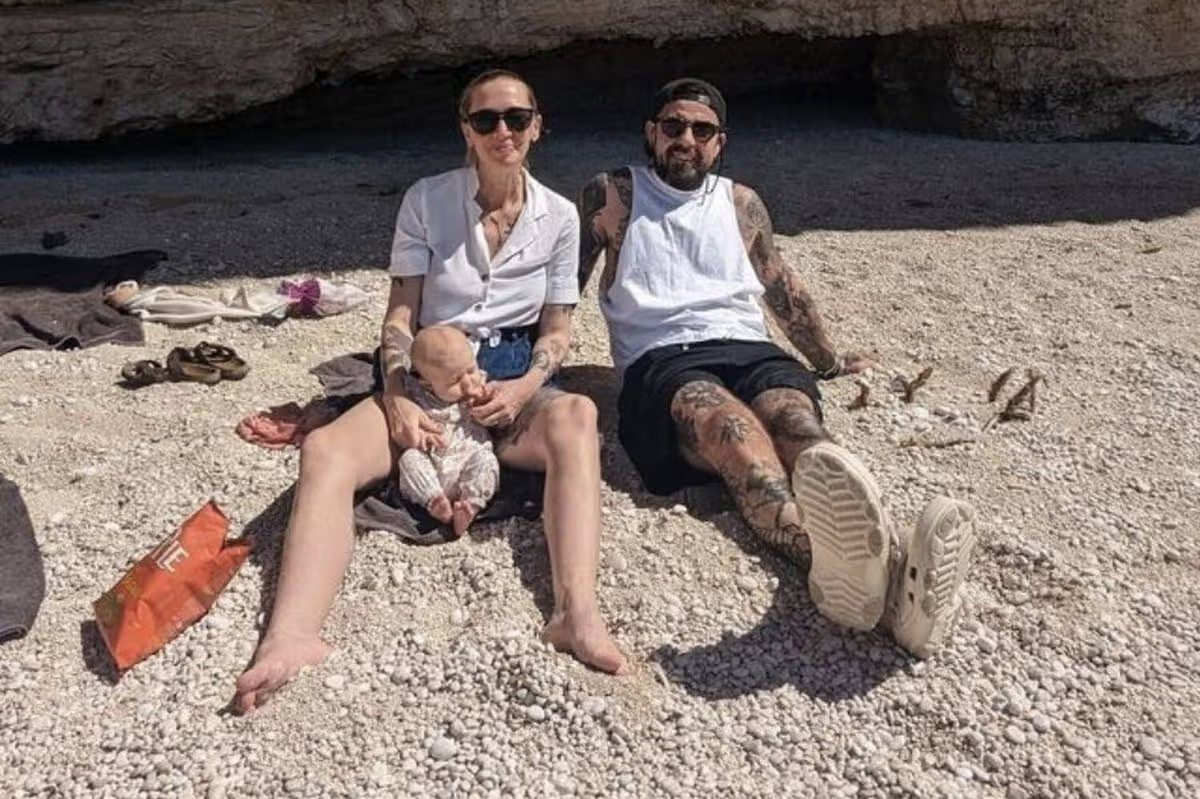
Therefore, in November 2025, Renae and her partner Pawel decided jointly to abandon their existence in Welwyn Garden City, Hertfordshire, relocating with their two-year-old daughter, Rocca, to an obscure village unknown to most Britons: Vasiliki, situated on the Greek island of Lefkada, nestled between Corfu and Kefalonia. Within months, she claims the transformation has been revolutionary.

“In the UK, we were paying close to £3,000 a month just to live, that covered rent, council tax and utilities, for a suburban home with a tiny garden,” she explains. “It was wet, miserable and exhausting. Now we’re renting an off-season Airbnb for €800 (£690) a month, I can walk to the sea, and I wake up feeling free.”

Renae, who established The Atticism PR and Brand Development, has cultivated a thriving career spanning more than 20 years and frequently documents her fresh lifestyle on TikTok, where her content has accumulated more than half a million likes, though not everyone has celebrated her relocation. Whilst certain followers fantasise about emulating her journey, others have branded her ‘privileged’, ‘out of touch’, or even accused her of ‘stealing housing from locals’.

Renae refuses to accept such criticism. “People say it’s ‘not that easy’ to live and work overseas, and they’re right,” she explains.

“It’s not easy. But it’s also not impossible. If it’s truly your goal, you’ll work for it. Nothing falls in your lap.”

She also rejects the notion that she’s taking more than she contributes. “We’ve been really conscious about contributing,” she insists.

“I work in PR and I help get the island press exposure for free. Pawel is a painter and decorator and has been helping locals who are desperate for skilled labour. We’re living in an off-season Airbnb that sits empty all winter, and when we build our house, we’ll hire local trades. This isn’t a ‘take, take, take’ situation.”

The emotional transformation, she reveals, was instantaneous. “The moment we arrived, my husband and I looked at each other and said, ‘Oh my God, we escaped’,” she recalled.

“The UK feels like a rat wheel. You work to live, and by the weekend you’re so exhausted you just want to order Deliveroo, which is so expensive you have to work even more. Here, the pressure just lifted.”

She portrays Britain as suffocating. “The sky feels low. Everything feels heavy. Here, I see the sea and sky every single day. There’s space. I feel calm. I can breathe again,” she adds.

Renae is keen to emphasise that Greek island living isn’t some picture-perfect postcard fantasy. “If you’ve done Santorini or Mykonos and think that’s real life, you’re in for a shock,” she warns.

“It rains, a lot. There’s no food convenience. I’ve lost three kilos because I can’t just snack whenever I want. Sometimes I honestly can’t look at another courgette.”

But she shrugs. “I sacrifice convenience for peace.”

One surprising element that also swayed her choice to quit Britain was a series of utterly exasperating encounters with the NHS, which eventually drove her to pursue treatment overseas. “I’ve had some useless experiences,” she says bluntly.

“I was once told I might have breast cancer and then had to wait six weeks for a scan. Later, they said one of my breast implants had capsulated and they’d remove just one.”

When she requested both to be taken out, even offering to pay, she was turned down. “They said they’d take one out, sew me up, and I’d have to sort the other privately later,” she says. “It was insane.”

Instead, she travelled to Turkey, where a consultant found both implants were faulty. “I was lucky I went,” she says.

“The NHS has potential, but the system is chaotic. I’ve had blood tests lost, appointments messed up, they even accidentally deleted my daughter from the surgery system while she had a 40-degree fever and refused to see us. It’s just been a mess.”

For Rocca, the relocation has been life-changing. “The outdoors!” Renae beams.

“Sunshine, even in December. She’s not stuck inside watching TV, she’s climbing rocks, playing with water, exploring. And she’s seen here.”

In Greece, she explains, youngsters are genuinely welcomed. “In restaurants, staff greet her, make a fuss, talk to her. It took months for her to get used to it. In the UK, she was mostly ignored.”

Their routine now moves at a completely different rhythm. “We wake up without alarms. Coffee in bed. We work until lunchtime while Rocca plays outside painting or in her sandpit,” she explains.

“Lunch is simple, most days are spinach pies or salad. Then we explore: beaches, neighbouring towns, counting cats.”

The evenings are leisurely and sociable. “We cook early, eat around 5pm, maybe take a walk or read. It’s relaxed and peaceful.”

And this isn’t just a short-term experiment. “Oh yes, this is forever,” Renae confirms.

“We’ve bought a 4,600-square-metre plot of land overlooking the sea for less than the price of a one-bedroom flat in Bedfordshire. We’ll build our home here.”

From late March onwards, the family will settle into a two-bedroom property for €500 (£430) monthly, within easy reach of ferries, beaches, a marina and freshly caught seafood, complete with a balcony laden with orange, lemon and mandarin trees.

“Our neighbour gives us all the olive oil we need, and we’ll help him with the harvest,” she beams. “Everyone helps everyone. It’s a real community.”

Renae continues to return to Britain for work commitments and visits with her two older daughters, aged 22 and 23, but the UK is no longer where she calls home. “I’ll always come back,” she says. “But this, this is where we’re building our life.”

And for those observing from a dreary British settee, questioning whether it’s achievable? “I’m not saying everyone should do it,” she says. “I’m saying I did, and I’m finally happy.”
Source link

EasyJet, Jet2 and BA cabin bag rules as big Ryanair change kicks in ahead of half term

Avoid paying a massive fee at the airport gates by checking your cabin bag size before you fly. With half term on the way, here’s the latest sizing regulations for some of the most popular airlines

One thing that often catches passengers out when flying on budget airlines is cabin baggage allowances. On busy flights, it’s common to see the dreaded bag sizer coming out, and being over just a centimetre can mean you end up paying a massive fee to check your bag at the gate.

To make things even more confusing, cabin bag size allowances change all the time, so even if you’re a frequent flyer, you can get caught out. It’s always best to check the size of the cabin bag that’s included with your ticket just before you go, so you can avoid hassle at the gates.

It’s also much cheaper to pay for extra bags when you book your flight, not once you’re at the airport, so always make sure you’ve booked the amount you need in advance.

Cabin bag allowances by airline

READ MORE: Jet2 makes major flight change for July, August and SeptemberREAD MORE: Woman living in the Grand Canyon shares reality of remote life with 1 drawback

Ryanair

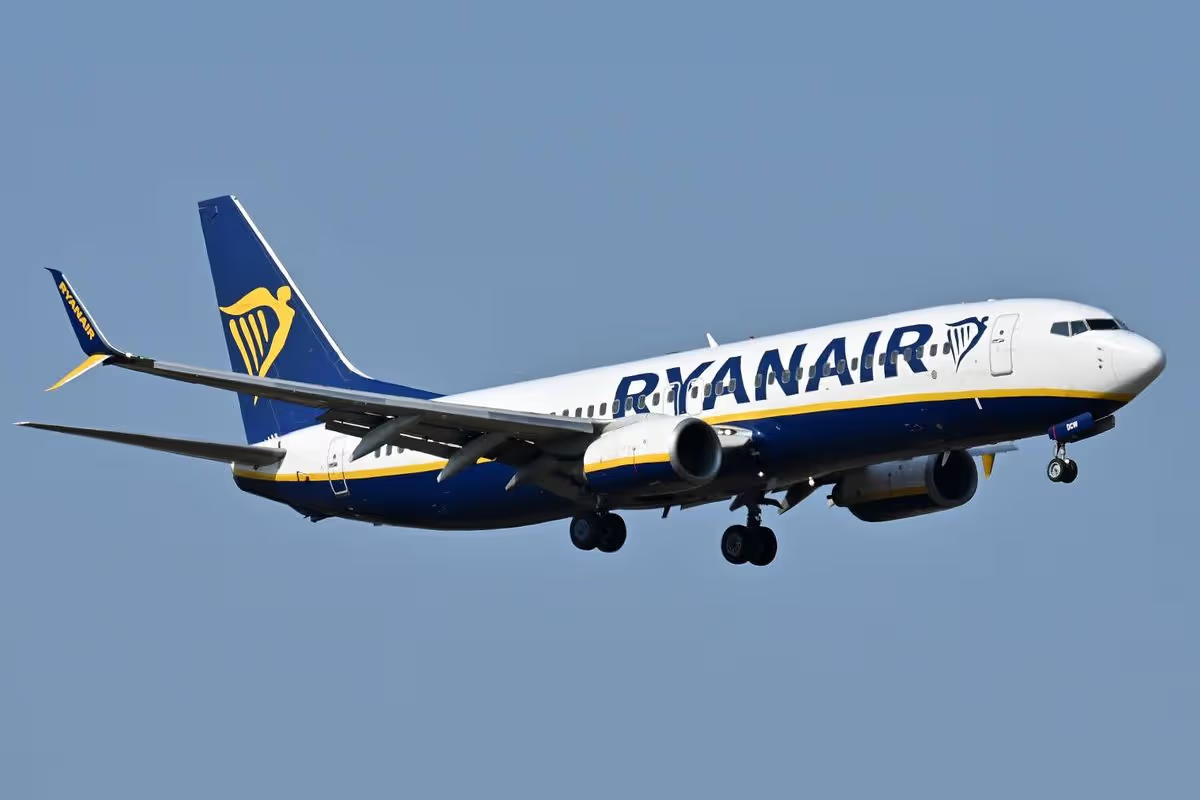
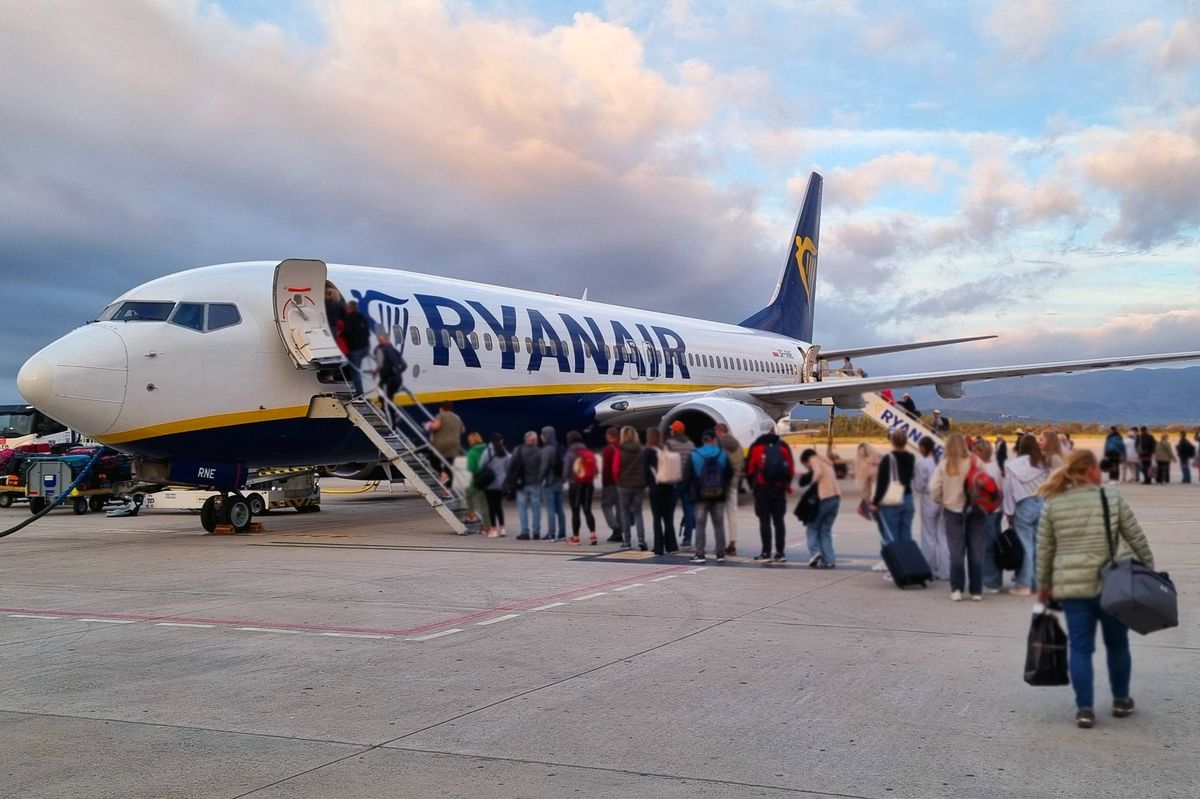
Ryanair is notorious for strictly enforcing cabin baggage sizes, and if you’re taking a bag on board, you should make sure you get the tape measure out and check the dimensions before you head to the airport.

However, there’s good news for Ryanair passengers: the free underseat bag included in its basic fare can now be slightly larger. Previously, this small bag had to fit in a sizer with the dimensions of 40 x 25 x 20 cm, but since summer 2025 it can now be up to 40 x 30 x 20 cm. These free bags need to fit under the seat in front of you, and usually people bring a handbag, laptop bag, or small rucksack.

Technically, there’s no weight limit on these small bags, as long as they fit under the seat, but passengers will need to be able to carry and handle them, and an excessively heavy bag could be noticed by flight attendants.

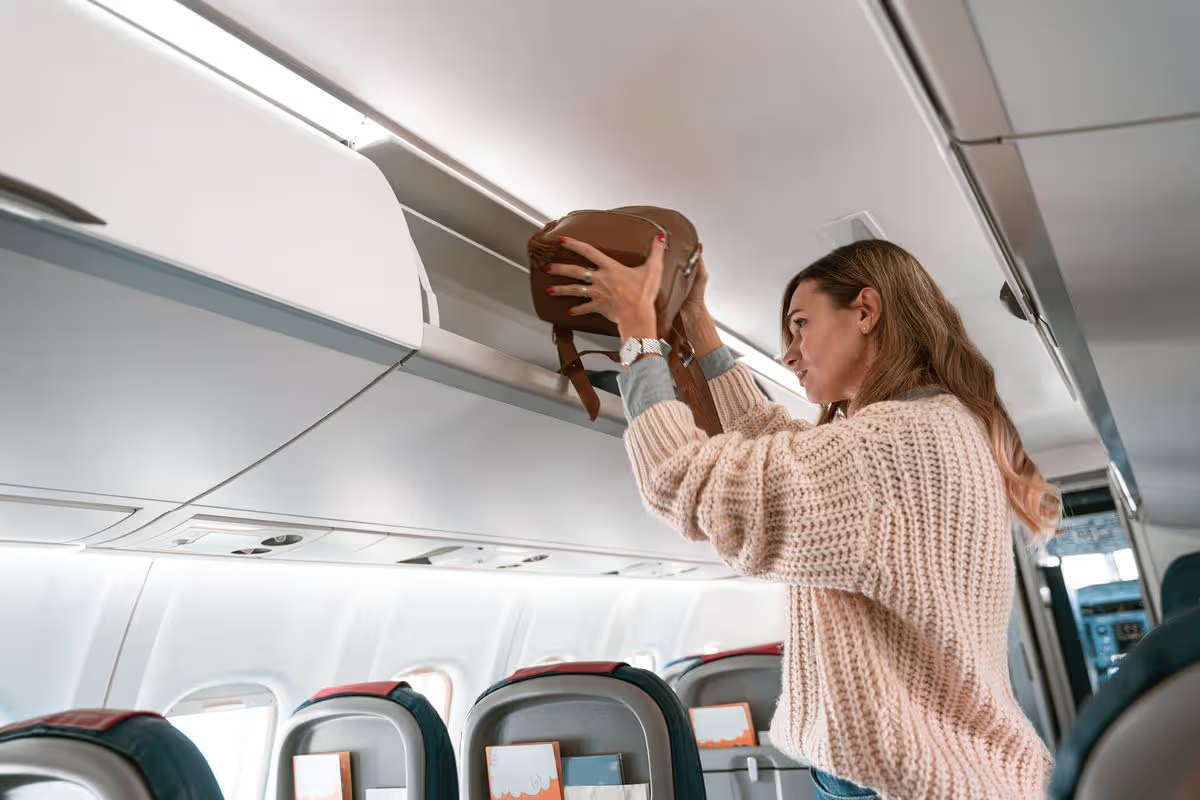
Passengers can also pay to bring a second cabin bag of up to 55 x 40 x 20cm onboard with them, and this bag has a weight limit of 10KG. Passengers will need to lift this bag into the overhead locker above them, so bear this in mind when packing. If you prefer to check a bag, you can add a 10KG, 20KG, or 23KG bag to the hold. Prices vary depending on route and availability.

EasyJet

Budget airline easyJet is also known for strictly monitoring bag sizes, and you’ll see lots of orange sizers around the airport so you can check whether your luggage will fit. However, it’s best to measure bags at home when they’re packed so you can adjust accordingly.

Everyone who flies with easyJet gets one small underseat cabin bag included in the price. This can be up to 45 x 36 x 20 cm in size, and easyJet states it can’t exceed 15KG in weight.

Customers also have the option to book a second cabin bag of 56 x 45 x 25 cm maximum, including handles and wheels. As a bonus, if you book a second bag, you get speedy boarding included. When booking your flight, you also have the option to pay for up to three checked bags of 15KG, 23KG, or a whopping 32KG. Some airports offer a twilight bag drop for passengers on early flights, meaning you can check your luggage the night before heading off and head straight for security in the morning.

Jet2

Whether you’ve booked a package holiday with Jet2, or just a flight, cabin baggage allowances are the same. You get a small bag of 40 x 30 x 20cm, which must fit under the seat, and the price also includes a 10KG piece of hand luggage of up to 56cm x 45cm x 25cm. Again, you must ensure measurements include handles, wheels, and other fixtures.

Package holidays include 22KG of checked baggage, but if you’ve only booked a flight, you can still add a checked bag for a fee. Passengers can buy up to three bags of 22KG in weight, perfect for those who don’t like to travel light.

Families travelling with young kids can also bring a collapsible pushchair, car seat, and/or travel cot free of charge.

British Airways

British Airways (BA)’s economy basic fare includes a handbag and a cabin bag. The former can be up to 40 x 30 x 15cm in size and needs to easily fit under the seat in front, while cabin bags can be up to 56 x 45 x 25cm in size. However, BA can only guarantee that the smaller item will be allowed on board. If there’s not enough space in the overhead locker, your cabin bag may need to go in the hold.

BA also offers a range of options for checked bags, depending on the flight route you take and which classes are available. Economy with checked bag includes a 23KG bag in the hold, and unlike most airlines, BA put a size restriction on these checked bags of 90 x 75 x 43cm. Those lucky enough to fly business or first class get much bigger allowances.

READ MORE: Stay overnight at Alton Towers, Chessington or Legoland and get year’s free entry to top theme parksREAD MORE: PAW Patrol land first look as Chessington seeks children to test rides

TUI

If you’ve booked a flight only on TUI Airways, you’ll get a piece of hand luggage of up to 10KG in weight for free, and this can measure up to 55 x 40 x 20 cm. You can also bring a small personal item like a handbag or laptop bag of up to 40 x 30 x 20cm that’s placed under the seat in front of you. TUI emphasises that passengers must be able to lift their hand luggage into overhead storage compartments themselves.

Customers can also add a checked bag when booking their flight, with prices depending on the route and availability. However, if you book a package holiday through TUI and are flying with its airline, then 20KG of checked luggage is included. Some holiday types, such as TUI BLUE or cruises, have a 25KG allowance, so it’s worth checking your booking confirmation before you go.

Have a story you want to share? Email us at webtravel@reachplc.com

Source link

Ryanair tells all plane passengers to stop packing 1 toiletry in hand luggage

Ryanair has told passengers to stop packing a popular toiletry in their hand luggage. If you make the mistake, it could cause a few problems at airport security

There’s nothing like jetting off to a hot location during the winter months, but you need to ensure you pack your belongings in the right cases. In fact, airline Ryanair has told passengers they need to avoid placing a popular toiletry in their hand luggage if they want to travel through airport security with ease.

It’s worth paying attention to as, if you fail to follow the expert advice, it could land you in a spot of bother. In fact, it was recently brought up on Reddit after a traveller was left a little confused about the rules as to what he could carry in his hand luggage.

This isn’t the first time vital air travel information has been brought to people’s attention either. Back in December, a travel expert also shared the airport rule that all passengers should follow.

On Reddit, a social media user posted: “I recently started using safety razors and I was wondering if I could carry mine with one blade inside or a packet of blades. I don’t have a checked bag, only the carry-on.

“Previously I was always able to bring disposable razors with the blades stored in the plastic compartment. In the General terms & Conditions, Ryanair says safety razors are allowed but, I asked the support and, even though he wasn’t anywhere specific to answer my query, he said that sharp objects are not allowed.

“So, if I bring the safety razor with me with a blade in it, the worst that can happen is they are just going to remove the razor and give me the head/handle (enclosure thing) back?”

The question got a lot of people talking, as one person replied: “Safety razor will be fine. Really comes more down to the airport you are going through, not the airline, and even then it also comes down to the individual person you deal with.”

Another added: “OP (original poster) is not asking about safety razors per se. He’s asking about the blades, which are definitely prohibited items. Someone intent on causing harm could quite easily unscrew the razor and use the blade or spare blades as weapons.”

A third also replied: “NO, you cannot. Razor blades, including straight razor blades and replacement blades, are prohibited items because they could be used as weapons.

“However, as you said, fixed cartridge razors (disposable razors) generally are allowed in carry-on luggage. Safety razors (with blades in a plastic head) also are usually permitted in carry-on luggage. But NOT the type where you can unscrew the head and extract the blade.”

If you usually carry razors with you when you travel, which a lot of people do, it turns out there are some rules you need to follow. All you need to know is detailed on the Ryanair website.

What does Ryanair say?

The website reads: “The following items must not be carried on board, but may be carried as part of your checked baggage. Objects with a sharp point or sharp edge capable of being used to cause serious injury, including razors and razor blades (except safety or disposable razors with enclosed blades and razor heads held in plastic compartments).”

It also detailed all the other items that are banned in carry-on luggage. While each airline may differ slightly when it comes to its regulations, generally there are some rules you should follow.

Even though all razors aren’t banned in carry-on luggage, certain types are prohibited. Some airlines allow disposable razors, cartridge razors and electric shavers/epilators to be carried in hand luggage.

However, traditional safety razors, straight razors and loose razor blades are usually not allowed in the cabin and must be packed in checked luggage. This is due to the fact that they are so sharp.

If deemed dangerous, security can confiscate them and the mistake could see you facing delays at the airport. In a nutshell, it’s a packing mistake that’s really not worth making.

Source link

‘Enchanted’ UK garden with poison plants, cherry blossoms and treetop walkways

Alnwick Garden in Northumberland is a stunning family attraction just 40 minutes from Newcastle with treetop walkways, 100 deadly plants behind locked gates, beautiful cherry blossoms and a miniature castle for kids

In the heart of Northumberland, lies an enchanting modern garden complete with elevated walkways, its very own toxic plant collection and soaring delphiniums.

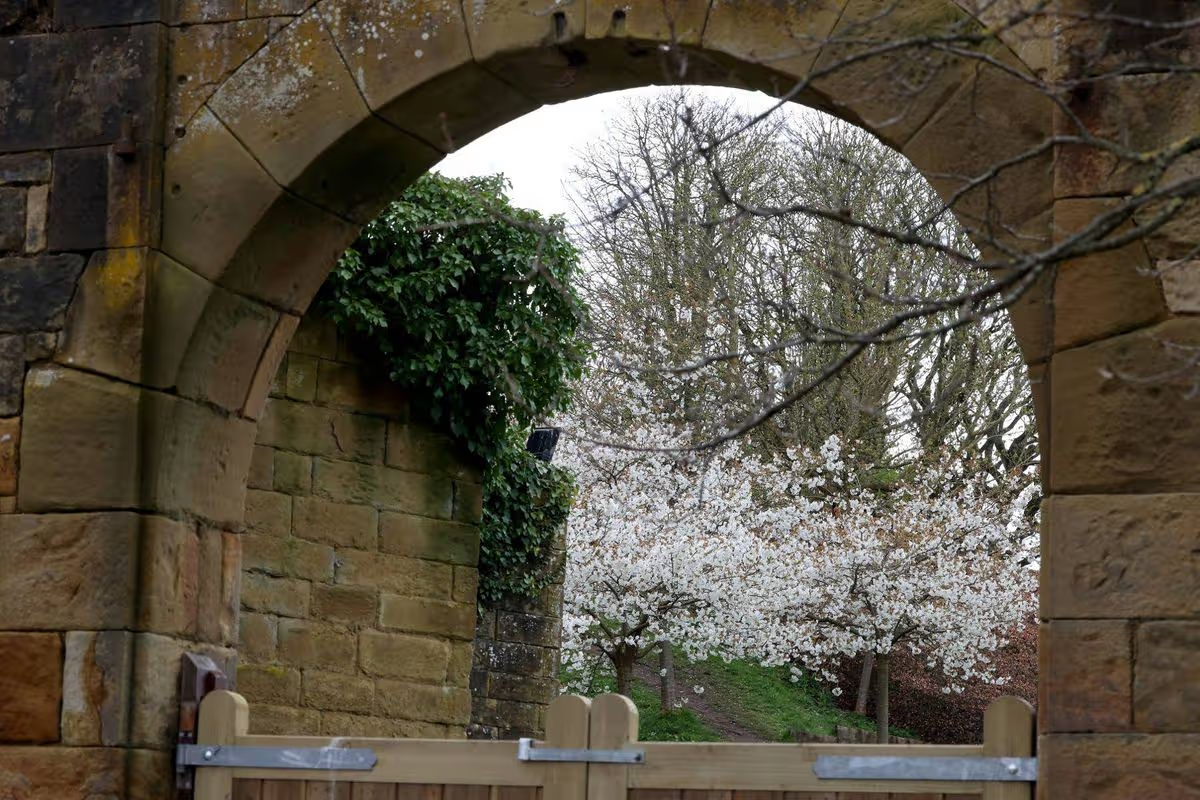
During springtime, Alnwick Garden bursts with a canopy of gorgeous cherry blossoms – and children can swing amongst the petals on charming wooden twin-seat swings. The Japanese Cherry Orchard springs to life with all of its magnificent 326 Taihaku cherry trees. Yet the spectacle continues during the chillier months. In October the same trees’ foliage transforms to a stunning rich bronze shade, according to Visit Northumberland.

The garden, brimming with vibrant patches of colour, was conceived through the Duchess of Northumberland’s vision of a breathtaking landscape garden featuring interactive water displays and a genuinely distinctive miniature fortress for youngsters, reports Chronicle Live.

Created by Jacques and Peter Wirtz, the Grand Cascade forms the garden’s centrepiece with water cascading through the multi-level fountains.

Nevertheless, if you wander to the garden’s edges, there’s additional treasure to uncover, including the Rose Garden, the Serpent Garden and the Poisonous Garden.

For those undaunted by altitude – there’s also a 200-metre long, raised timber pathway snaking through a grove of lime trees. Forming part of one of the globe’s largest wooden treehouses, the construction boasts unstable bridges and rope passages.

Beyond secured wrought iron gates sits the garden housing more than 100 hazardous plants including poisonous and narcotic varieties. Access to the garden is restricted to private guided tours only – which inform visitors about the sinister aspects of horticulture.

A brief stroll from the main garden leads to Lilidorei- an enchanting immersive village offering numerous activities for children including Elf story time, according to Lilidorei’s website.

The 26-metre play structure features bridges, ladders, swings and towers plus six different slides – sufficient to entertain youngsters for hours.

Kelly B said on Trip Advisor: ” What made the visit still worth it was Lilidorei (I’ve written a separate review for that) and the Poison Garden.

“The Poison Garden is completely fenced in and you can only go inside during a guided tour (free with garden admission). I timed it just right and was able to join a tour shortly after they started. I’m not sure what her name was, but we had an excellent guide. We got to see the plants and hear about how they were poisonous.

“The guide had pictures to show us of what they look like blooming. A few of the plants were even in cages for safety reasons. We got to hear some stories of murderers who used the poisons to kill their victims, some fairly recently. It was a fascinating tour.”

Best Northumberland holiday cottage deals

Sykes Cottages

From £38 per night

Sykes Cottages

See the deals

Northumberland is famed for its rugged coastline, ancient castles and unspoiled natural beauty. Sykes Cottages has a range of places to stay starting from £38 per night

Source link

British expat in Benidorm issues important advice to anyone holidaying in Spain

A Brit in Benidorm has given important advice to anyone who may be crossing the road when they’re in Spain, sharing things to look out for and why you should always be vigilant

A British expat in Benidorm has given some travel advice to people crossing roads in Spain, saying that he sees “so many people getting this wrong”. Wherever you are in the world, it’s important that you’re aware of your surroundings at all times and cross the road safely – even if you’re on holiday. We all had it drilled into us from being young that you’re supposed to stop, look both ways, and listen before stepping off the curb.

However, Frank, who lives in Benidorm, has expressed his concern that people who have come from the UK are not crossing properly, and it’s putting them at serious risk.

He said that he’d noticed people who are from the UK looking in the wrong direction, reminding people that they need to “look left” rather than right in order not to get run over.

TikToker @frankthestagman said: “A lot of people look the wrong way, and that can cause problems. And then of course, when you’re crossing the other way, you’re looking the other way”.

Content cannot be displayed without consent

Frank said that “if you’re not sure,” you need to “look both ways” and then “nothing’s going to happen” when you’re crossing the road.

“The other thing as well is it’s really sad because sometimes you’ll see people crossing the road, they don’t quite understand that when they’re crossing over, you know, sometimes there’s people in the middle of the road, and you get Spanish drivers, or drivers here in Spain, and what they’ll end up doing is honking at them and all that. A bit unfair, but it is what it is,” Frank continued.

He urged Brits not to “wave your arms round arguing” and just focus on crossing the road safely to “get where you’re going”.

Frank warned that sometimes “the traffic will speed up” when someone is crossing, labelling it as “a bit unfair,” but people need to just ensure that they’re being as careful as possible.

He also said that if you’re a driver in Spain, don’t necessarily expect a thank you if you let people cross. While people from the UK are overtly polite, Frank said, sometimes Spanish people cross the road without ‘letting on’.

Frank reckons that you can always spot a Brit or someone from Ireland because they’ll give a thumbs up and a “cheers” when you’ve been let across the road.

In the comments, someone said: “I actually love the Spanish pedestrian crossings cos they actually have the countdown to when the lights are changing”.

How do you cross the road as a Brit in Benidorm?

Your first look should be to your left, not your right, because that’s where traffic will be coming from. It’s easy to forget this, especially on quieter streets or when you’re distracted, so make a conscious effort to pause and look left first.

Pedestrian crossings in Spain are usually marked by white zebra stripes, much like in the UK, but the rules and driver behaviour can be quite different. In the UK, drivers are generally required to stop for pedestrians waiting at zebra crossings, and most do so reliably. In Spain, while the law also requires drivers to yield to pedestrians at marked crossings, in practice, drivers may not always stop unless you are clearly about to step onto the crossing, or already on it.

You might notice that Spanish pedestrians often assertively step onto the crossing to signal their intention to cross, rather than waiting for cars to stop first. As a Brit, you might be used to waiting until every car has stopped, but in Spain, you sometimes need to show your intention more clearly. However, always make eye contact with approaching drivers to ensure they’ve seen you, and never assume they will stop automatically.


Source link

Cheapest time to book a holiday in 2026 – down to the exact minute

Travel expert claims to have found the best time to book holidays in 2026 after analysing pricing data – and it could save you up to 60%

Booking a getaway is thrilling, but when planning our escapes we’re always keen to ensure we’re securing the best deal possible. Nowadays, many holidaymakers turn to online platforms to arrange trips overseas instead of visiting traditional travel agents.

This has afforded travellers greater freedom to make reservations at any hour. Yet an expert has cautioned that prices for identical holidays can fluctuate depending on what time of day you book.

The amount you fork out for your break could hinge entirely on when you hit that booking button.

Travel guru Rob.onthebeach shares his insider tips on social media, and reckons he’s discovered the most economical time to reserve a holiday in 2026.

Rob has scrutinised data daily to pinpoint the cheapest and priciest booking windows, right down to the exact minute, reports the Express.

Based on Rob’s findings, the most costly period to book a holiday falls between 9am and 10am. He elaborated: “Booking in those hours came in 30% more expensive than the cheapest hour of the day”.

Content cannot be displayed without consent

Disclosing the most budget-friendly slot, Rob revealed it’s actually in the early hours. The window between 4am and 5am emerged as the optimal time to bag a bargain.

Rob explained: “Overnight, airline pricing systems basically reset. The interest and the demand from the day before all drops off, prices return closer to their base level, then as the day goes on more searches, more clicks, more people just having a look, and prices start to creep back up again.”

The expert conceded that most of us wouldn’t fancy setting our alarms for 4am just to secure a getaway, so he also identified the optimal booking window during reasonable hours.

He discovered that late evening – roughly between 8pm and 10pm – proves “noticeably” more economical than the morning price surge.

Yet if you’re truly after a steal, Rob pinpointed the precise moment that delivered the lowest costs. Rob disclosed: “The cheapest, single minute to book a holiday is 2:48am.

“Booking at that exact moment came out 60% cheaper.”

Despite his research, Rob cautioned that reserving at 2:48am won’t render every single holiday “automatically 60% cheaper”.

He continued: “But the pattern is really clear, if you really want to save money on your holiday, the early hours beat the office hours every time.”

Source link

Holiday hacks that are a ‘waste of time’ and don’t actually save money

Many money saving travel hacks are trotted out year after year, but do they really save money? Travel specialists have weighed in on some of the most common tips that are often repeated

January and February are peak times for booking holidays, and at this time of year you’ll often see lists of travel tips that claim you can save money by following certain ‘hacks’.

But do they really work? The travel insurance team at Tiger.co.uk has shed light on five travel hacks that are shared pretty much every year, but may end up being a waste of your time. Luckily, the team has also revealed some practical tips to save money that can actually help holidaymakers slash their travel costs.

1. Using incognito mode when booking

Some money saving sites will tell you to use incognito mode when you make a booking, claiming this can lead to cheaper fares. This is based on the assumption that if you make repeated searches, the airline or travel provider will take your history into account and raise the fares.

However, Tiger explained that flight pricing algorithms are much more sophisticated than that, and while fare prices do change over time, this is based on demand, availability, and pricing, rather than what’s in your search history. An article in Quartz backs up this theory, citing studies that have shown there’s very little effect on the overall cost.

Many airlines offer different fare classes even within economy, and once one type of fare sells out, it’ll automatically move to the next, higher-priced one. This is more likely to explain why a fare has jumped up in price the second time you search.

2. Booking flights during the night

In the early days of internet travel booking, airlines used to update their fares manually overnight. Savvy travellers could set an alarm for first thing in the morning to save money on their flights.

Nowadays, airline websites are much more sophisticated and update prices 24/7, meaning its unlikely to make a difference whether you book during the day or night. However, this outdated travel hack still gets repeated now and again.

3. Booking last-minute gets you the best deals

Travelling at the last minute used to be a great way to bag bargain holidays. If you’re not fussy about your destination and flexible on dates, there are still cheap package holidays to be found, though they seem to be getting harder to find.

However, Tiger says that if you’re looking for cheap flights, planning ahead is a better option. Fares often increase as the departure date approaches and seats become scarcer. Try using Skyscanner or a similar flight comparison site with a price tracker to alert you when fares to your destination drop.

4. Only looking at budget airlines

Budget airlines often appear the cheapest because they offer impressive headline fares, but once priced up, a budget carrier might not be the best option for saving cash.

Once you’ve added the basics, such as baggage and paid to select your seat, you may find the cost is comparable to standard airlines where these extras are included. Always look at the total cost for a true comparison.

5. Always book a return

In the past, travellers were always advised to book return tickets as it worked out cheaper. But nowadays, with flight comparison tools available, it’s easier than ever to compare return fares on the same airline versus buying two singles with different carriers. Mixing and matching could save you money and often makes it more convenient to book a flight time that suits you.

Have a story you want to share? Email us at webtravel@reachplc.com

Source link

Ryanair tells all passengers to stop packing 1 item in hand luggage from January

Ryanair has told all passengers to stop putting a popular item in their hand luggage from January. It turns out, it should never be stored there and could cause problems at security

With the UK being so wet and dreary at this time of year, it’s no wonder people dream of escaping to other parts of the world, but there are some things you need to know if you’re preparing to hop on a plane. When it comes to packing, there are some important rules you need to follow to ensure your airport experience goes smoothly.

According to Ryanair, certain items should never be packed in your hand luggage, and one of them is super popular at this time of year. From January, you may want to think a little more about how you’re preparing to travel.

The thought of jetting off abroad may be lovely, but air travel comes with its stresses. There are some key guidelines you need to follow when it comes to your hand luggage.

Previously, the topic came up on Reddit when a social media user asked: “Looking for a trekking pole to buy. Which kind of pole (collapsible/telescopic) would be better so that it could be brought as a carry-on bag on Ryanair/Iberia?”

It got a lot of people talking, and they were quick to point out an essential piece of information, and it’s worth noting if you’re planning on going skiing any time soon. One person replied: “I don’t think it really matters what airline you fly. You have to get past security with them, and they are usually not allowed.”

Another wrote: “You will always be taking a risk unless you put them in a checked bag.” A third also replied: “Trekking poles are not allowed in your carry-on. This rule is not always enforced, but that is the rule.

“One time I flew to a location with my poles in my carry-on, but they wouldn’t let me on the flight to come back with those same poles in my carry-on (same airline).”

However, according to Ryanair, this isn’t the only thing you need to be aware of. If you’re going skiing any time from January, you need to stop packing poles in your carry-on luggage too.

What does Ryanair say?

According to the airline, various items are prohibited in carry-on luggage, and all of these are detailed on the website. However, when it comes to poles, it offers specific advice.

It reads: “The following items must not be carried on board, but may be carried as part of your checked baggage. Objects with a sharp point or sharp edge capable of being used to cause serious injury.”

Ski poles and hiking poles feature in the list, so it’s important you don’t take them in your hand luggage. Generally, they need to be checked in, as they are deemed too sharp to carry through airport security.

Due to their length and sharp tips, they are considered potential weapons. While some travellers may find success with collapsible poles tucked away, security agents typically require them to be checked.

Though some airline guidelines may differ, the safest option is to put them in your checked luggage. This will help avoid any problems or delays at airport security.

If you opt to try and take them through, you risk having to surrender them at airport security. It’s a gamble that’s really not worth taking when you travel.

Source link

Cruise packing mistake as passengers warned 1 common item in luggage will be confiscated

Travel enthusiast Laurie has warned cruise passengers about one common item that will be taken from you at boarding as it poses a big fire risk if you use it onboard the ship

Whilst packing may not be the most thrilling aspect of a holiday, it certainly builds anticipation as you decide what essentials to take along on your travels.

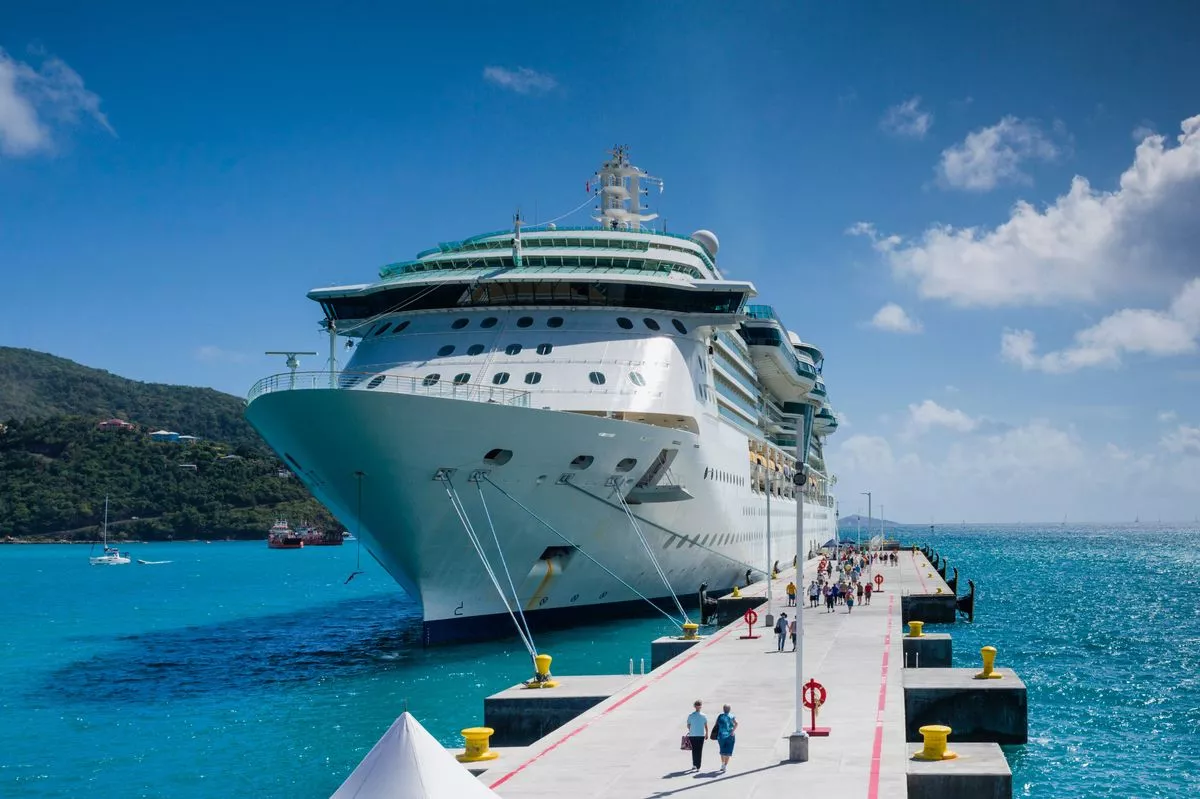
For those embarking on a cruise in particular, it’s crucial to familiarise yourself with the varying regulations each cruise line enforces to ensure passenger safety whilst at sea. Typically, this involves each vessel maintaining a list of forbidden items that passengers are not allowed to bring aboard.

To help fellow holidaymakers in knowing what to leave behind, travel enthusiast Laurie – who goes by ‘traveltipsbylaurie’ on Instagram where she boasts 312,000 followers – has shared her expert advice on cruise packing.

In a recent video, she highlighted one specific item that’s banned from all cruise ships and will be confiscated upon boarding due to the risks associated with it.

“Do not get kicked off your ship by doing this one travel tip for the electronics that you bring to the ship,” Laurie warned at the beginning of her clip. “Just save yourself the stress by doing this one travel tip.”

Content cannot be displayed without consent

“In our room with two twin beds, there is only one outlet section on one side, so get a powerstrip that is non-surge protecting, this one’s from Amazon,” she told viewers.

In the caption accompanying her post, she clarified that standard power strip towers or extension leads won’t make it past cruise ship security as staff will seize them as soon as you board.

The reason? Their surge protection elements pose a substantial fire risk. Cruise vessels operate on different electrical systems to residential properties, and when surge protectors interact with the ship’s power network, they can trigger overheating, flip circuit breakers, and create genuine safety concerns.

That said, you’re permitted to bring aboard a “non surge protector” power strip, which typically gets the green light on cruise ships. Multi-port USB chargers (without high-voltage sockets) generally pass muster too.

But, it’s wise to double-check with your specific cruise line before you embark, so you know what the rules are beforehand.

Should your power strip be confiscated when you step onto the vessel, crew members will tag it and ensure its return when you disembark.

The comments section quickly filled with responses, as numerous people were caught off guard by this stringent cruise ship policy.

“Oh I had no idea,” one individual remarked.

Another shared: “I brought one a few years ago and it was taken right away. I got it as I exited the cruise ship. You are absolutely right!!!”.

A third person said: “Royal [Caribbean] doesn’t allow any power plugs with a cord. They are only allowing non surge protectors that plug directly in. I thought Celebrity (owned by same company) had been doing this, too.”

Source link