Passport holders have been told to act in April if they want to avoid spending more money. Failing to do so could lead to people facing more expensive travel fees this summer
09:35, 03 Apr 2026Updated 09:36, 03 Apr 2026
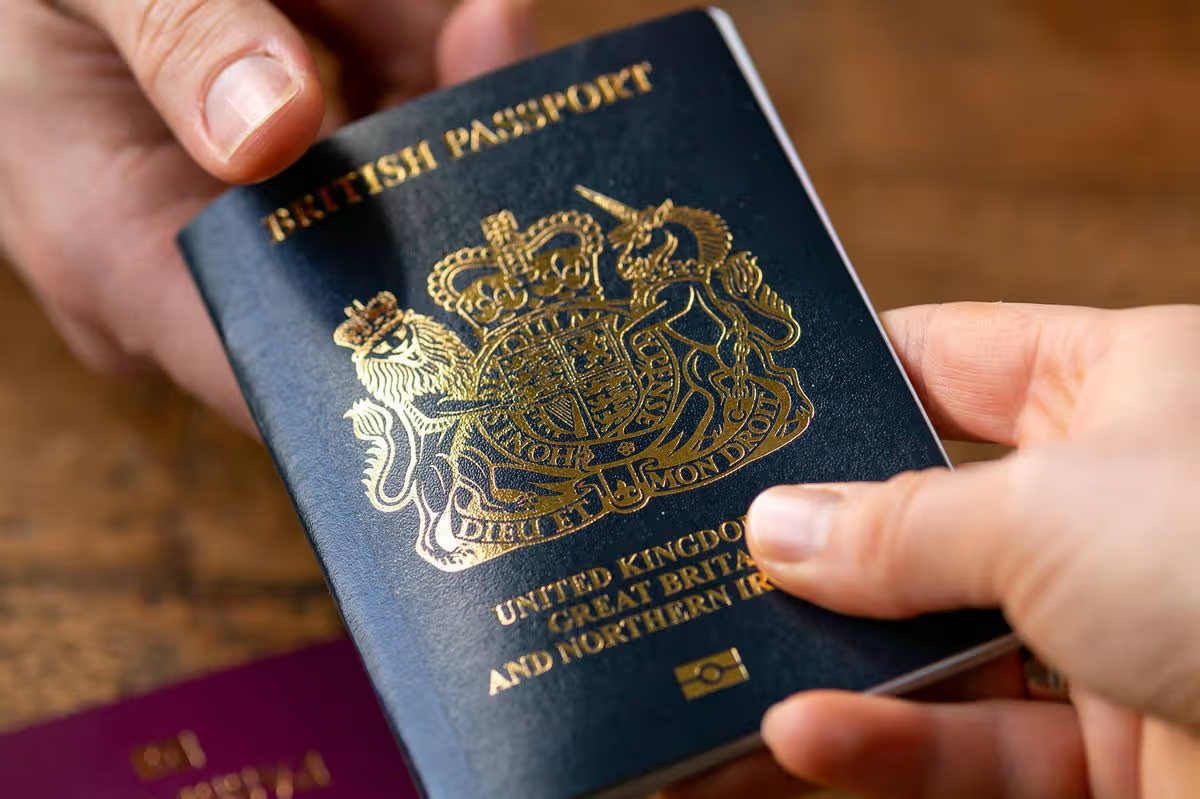
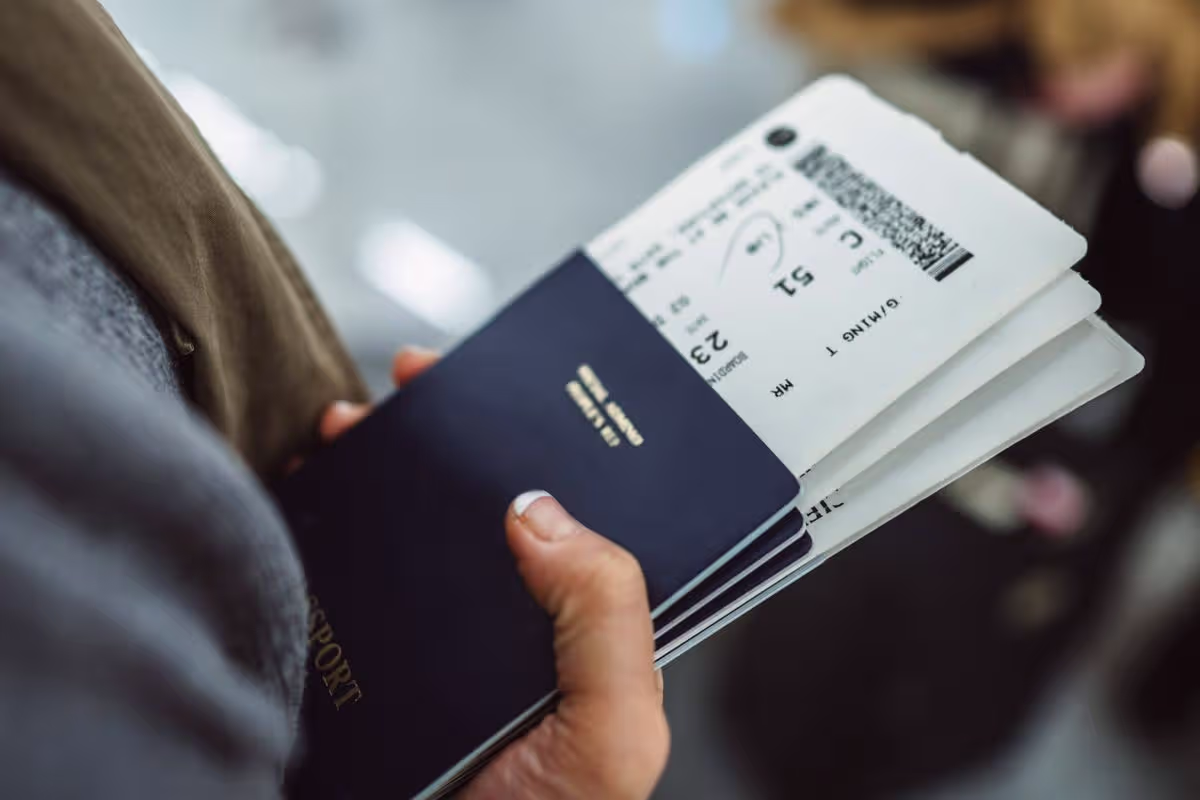
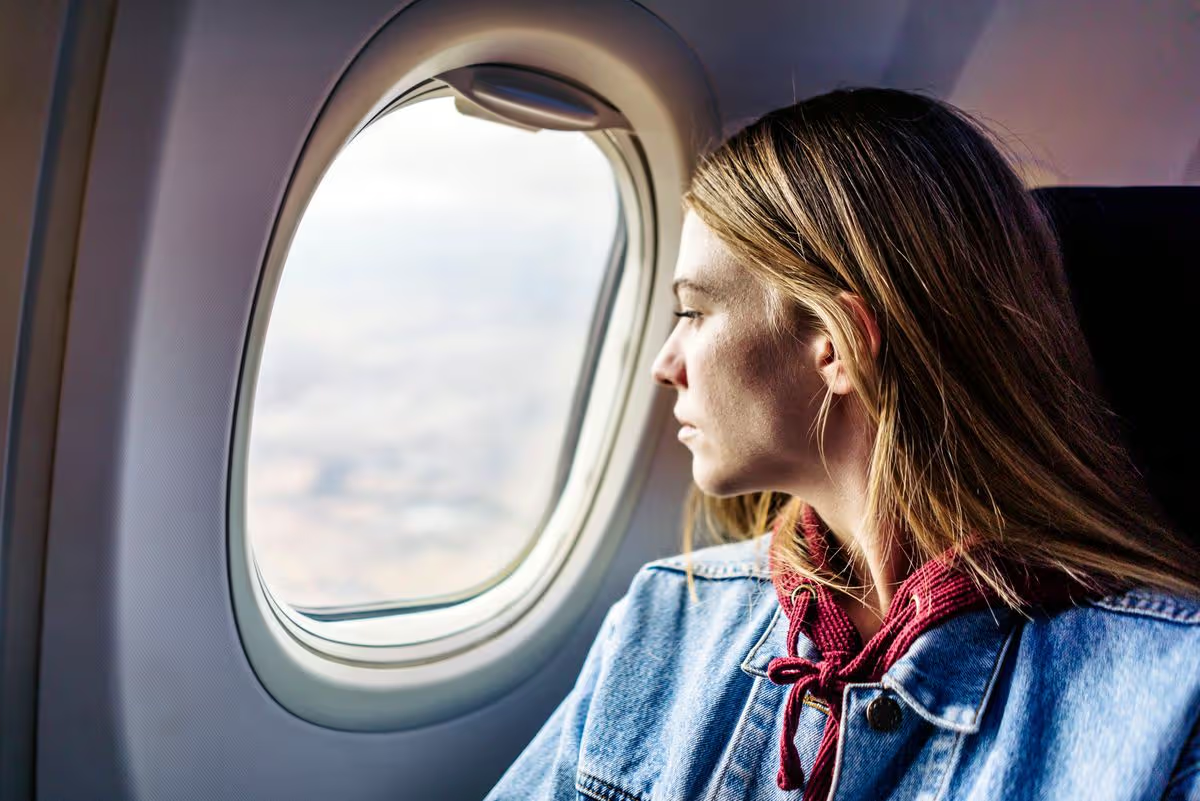
Passport holders have been urged to act this month (stock image)(Image: Maksims Grigorjevs via Getty Images)
UK passport holders are being urged to take action in April as a costly change is about to come into effect. Whether you’re planning a holiday now or in the future, it’s essential you take note if you want to sidestep a heftier bill.
This is because a change coming into force from April 8 could affect how much you’re forking out to travel. Acting before this deadline could mean you’re able to board a flight at a cheaper rate, which is welcome news when virtually everything else seems to be getting pricier by the day.
The advice was recently brought to the public’s attention by Simi, known as Miss Personal Finance on TikTok, where she laid out everything people need to be aware of. She regularly shares a wealth of useful money saving tips online.
In the clip, Simi said: “From April 8, the cost of getting a passport in the UK is set to increase by 8%. This means that an adult online passport will be going over the value of £100 for the first time.
“The UK Home Office stated that the increase of these costs is to reduce reliance on taxation funding, while covering the cost to produce the passports.”
Content cannot be displayed without consent
Following the video, viewers claimed “everything is going up”; nevertheless, those who fail to act promptly when renewing their passports will find themselves facing steeper fees to travel.
According to the UK Government website, there are several key points to be aware of.
These include:
The price for a standard online application made from within the UK will rise from £94.50 to £102 for adults and from £61.50 to £66.50 for children
As well as this, postal applications will rise from £107 to £115.50 for adults and from £74 to £80 for children
The fee for a premium service (one day) application made from within the UK will jump from £222 to £239.50
There will also be changes to prices for overseas applications which are detailed on the website
Why is it happening?
According to the government website, there are several reasons behind the fee increases. It explains: “The new fees will help the Home Office to continue to move towards a system that meets its costs through those who use it, reducing reliance on funding from general taxation.
“The government does not make any profit from the cost of passport applications. The fees contribute to the cost of processing passport applications, consular support overseas, including for lost or stolen passports and the cost of processing British citizens at UK borders.”
If you need to renew your passport, applicants have been urged to apply well in advance of any travel plans. You can complete this online.
In 2025, where no additional information was needed, it’s reported 99.7% of standard applications from the UK were completed within three weeks or less.
Choosing the right seat on the plane can determine a lot for your overall flight experience, and a travel expert has revealed exactly why you should avoid booking 11A
You might want to think carefully about choosing your seat on the plane(Image: Getty Images/Stock Image)
We all have a preferred window or aisle seat when flying, but one travel expert has revealed the exact seat you should always avoid.
Choosing the right seat on a plane can certainly come with its bonuses. Whether that’s more legroom, closer to the bathrooms, being the first row to be served refreshments, or a quieter spot near the back, away from babies. Yet some seats can be a disadvantage.
Window seats are popular among travellers, particularly for those wanting to enjoy the view during take-off or landing, for a little more privacy, or to take a little snooze against the cabin. One favoured window seat on planes has been 11A, due to its positioning near or over the wing, which is thought to offer less disruption from turbulence.
While it may sound appealing, 11A might not be as relaxing as it sounds. Andrea Platania, operations manager at airport transfer platform Transfeero, said that this specific seat often leaves passengers disappointed.
“Seat 11A might sound ideal because it’s by the window, but it can quickly become frustrating, especially on anything longer than a short hop,” the travel expert said. “You’re quite far from the toilets, which isn’t ideal, and getting in and out of that seat can be awkward.”
Andrea also explained that this seat can prove tricky for those who want to move around and stretch during the flight. “If you’re in 11A, you’re relying on the people next to you to move every time you want to get up. That might be fine once or twice, but over a longer journey it becomes inconvenient very quickly.”
It’s a seat that can also feel a little cut off from the rest of the cabin. “You’re not close to the aisle, so you don’t have that easy access, and you’re not in a premium position either. It ends up being a seat that looks better when you book it than it feels when you sit in it,” he outlined.
But that’s not the only seat you might want to think twice about booking. The expert said that seats 11A and 11F are among the “least rewarding seats” on a flight.
“Seats like 11A and 11F are often overlooked when people are booking, but they’re right in that middle section of the aircraft where you lose a lot of the small conveniences. They don’t seem bad on paper, but in practice, they’re some of the least rewarding seats to be in, Andrea said.
Yet one of the biggest disadvantages of these seats is during food and drink service. “On most short and mid-haul flights, cabin crew will begin service from both the front and the back of the plane, then work their way towards the centre. If you’re sitting in rows like 11, you’re effectively last in line from both directions.”
It can become even more of a drawback during busy flights. He said: “Passengers in seats like 11A and 11F are far more likely to find that popular snacks, meals, or even drinks have already run out by the time the trolley reaches them. It’s something people don’t think about when booking, but it becomes very obvious once you’re in the air.”
If that wasn’t enough to deter you from seats 11A and 11F, Andrea noted that they are inconveniently positioned on board. “You’re not particularly close to the toilets, and you’re not near the exits either, so you don’t get the benefit of convenience in either direction.
“You’re just in that middle zone where everything takes a bit longer.” So next time you book your plane seat, have a think about where you’d rather sit, whether that’s to ensure you’re one of the first to be served your meal or somewhere to ensure little disruption during your flight.
Do you have a travel story to share? Email webtravel@reachplc.com
You could find huge savings on your next flight by following three tips from a former flight attendant – including booking your trip on a certain day of the week
Booking at certain times could get you a better deal on your flight (stock photo)(Image: mihailomilovanovic via Getty Images)
The day you choose to book your flights can influence the price you pay. Holidays can become costly rapidly if you’re unaware of how to hunt for the best bargains, including your destination, accommodation, and which flight to select. Securing the finest deals can be challenging, and it can hinge on seemingly arbitrary factors, such as when you browse.
According to a former flight attendant, there are some straightforward steps you can take to cut costs on your next plane ticket. Bianca, who has been sharing travel tips online since departing her flight attendant role three years ago, posted a video on social media in which she encouraged travellers to capitalise on several flight hacks, including booking flights on particular days of the week, and even which time of day is optimal.
She said: “Do not book another flight until you do these things.”
1. Book flights on particular days
Bianca explained it doesn’t matter which day of the week you actually fly, but you should purchase your tickets on a Tuesday, Wednesday, or Saturday. She maintained airlines frequently offer superior deals or more affordable seats on those days, irrespective of which day you’re actually intending to travel.
Content cannot be displayed without consent
She said: “Book your flights only on a Tuesday, a Wednesday, or a Saturday. I mean book your flights on those days. Which means you’re going to sit down on one of those days and you’re going to book your flight. The flight can be on any day, but you’re going to book it on those days. They’re cheaper [and have] better deals.”
2. Always use incognito mode
The former flight attendant implored everyone to utilise incognito mode on their web browser, or to employ a virtual private network (VPN) to keep their browsing data concealed from the website they’re using to arrange their flights. This could help secure a more economical deal on your flights – though that’s not always guaranteed.
She said: “You’re going to use a VPN or incognito mode, depending on what device you have and depending how well it works on your device. If incognito mode does not do enough, then get a VPN.
“You generally just don’t want your demographic to show where you are when you’re going to buy a flight. Because they [websites] will literally rack up the prices of flights based on where you live. I know it’s crazy, but they do it.”
3. Book flights in the morning
If you’re after the best bargains on flights, you’ll need to rise early – or stay up late. Bianca maintains that, alongside booking flights on Tuesdays, Wednesdays, and Saturdays, you should also attempt to purchase your tickets between 3am and 4am.
She explained: “Three or four in the morning, if you’re a night owl, this is all for you. This is the best time to book your flights. [There are] cheaper deals [because] flights drop in the middle of the night. I’m telling you, it’s the best time.”
Commenters on Bianca’s post expressed gratitude for her tips, with many stating they’d be implementing them to obtain a more affordable flight for their forthcoming summer holidays.
One person said: “Okay, I’m going to travel.”
Another commented: “Thank you, sis! This is good.”
A third endorsed the advice, stating: “Yup, I bought my flight to LA in the middle of the night and paid $150 (£112) round trip.”
As you begin to book seats on flights for the trips ahead of you this summer, there’s something you may want to consider when it comes to the most fuss-free flight
If you end up with one of these seats you might want to reconsider (Image: Getty Images)
Ahead of your big holidays this year you may be starting to look at your flights, or maybe you’re checking in and choosing your seats last minute; either way, you might want to hear this.
Most planes have a handful of seats that tend be located in the same place. Some with extra leg room, others with less, some in between windows, and some even on their own. Those boarding these flights and helping to keep everything streamlined know no more about those inside of those planes than anyone else.
That’s why it would be smart to consider this key piece of seat advice from Andrea Platania, operations manager at the airport transfer platform Transfeero. According to the firm’s onboard knowledge, there are a handful of seats that passengers continuously regret going for, and it may not be the ones that have even crossed your mind.
Seat 30F is a clear seat to avoid booking on a standard aircraft, along with 30E, as these tend to be located close to the toilets. In turn, the area tends to see a lot more disruption as people queue in the aisle or pass the seat to go in and out of the toilet.
He explained: “It’s not just about proximity, it’s about the constant movement around you.” He further claimed that these areas can quickly become gathering points during flights.
The expert shared: “The toilet doors opening and closing, people chatting as they wait, and general foot traffic all add up. If you’re hoping for a quiet, relaxed journey, these seats make that much harder.”
While these are notoriously standout bad seats, the specifics don’t quite stop there, especially in the 30 zone. Typically, seats 30A and 30F can’t be reclined as much as others.
This is worth noting for those particularly long journeys of yours, such as longer-haul flights. Andra suggested: “If you’re on a flight where you’re hoping to rest or even just sit comfortably, not being able to recline makes a big difference.” You end up feeling much more tired by the time you land.”
Adding to the already growing list of reasons as to why you might want to avoid these seats is time. If you’re a quick traveller, you have a short transfer time, you’ve got another flight to catch, or you just like to be efficient, you will not be cutting time by sitting in these seats.
These seats typically are some of the very last to leave the aircraft, according to the expert. Passengers in these rows often are left waiting longer as they have to allow time for almost everyone to disembark.
“It might not sound like a big deal, but when you’re eager to get off or have a connection to catch, it can feel like a long delay,” Andra said.
A ribbon may seem like the easy choice to help you find your bag among a sea of luggage, but one airport worker says there’s a reason why this hack isn’t recommended. Here’s what you can do instead.
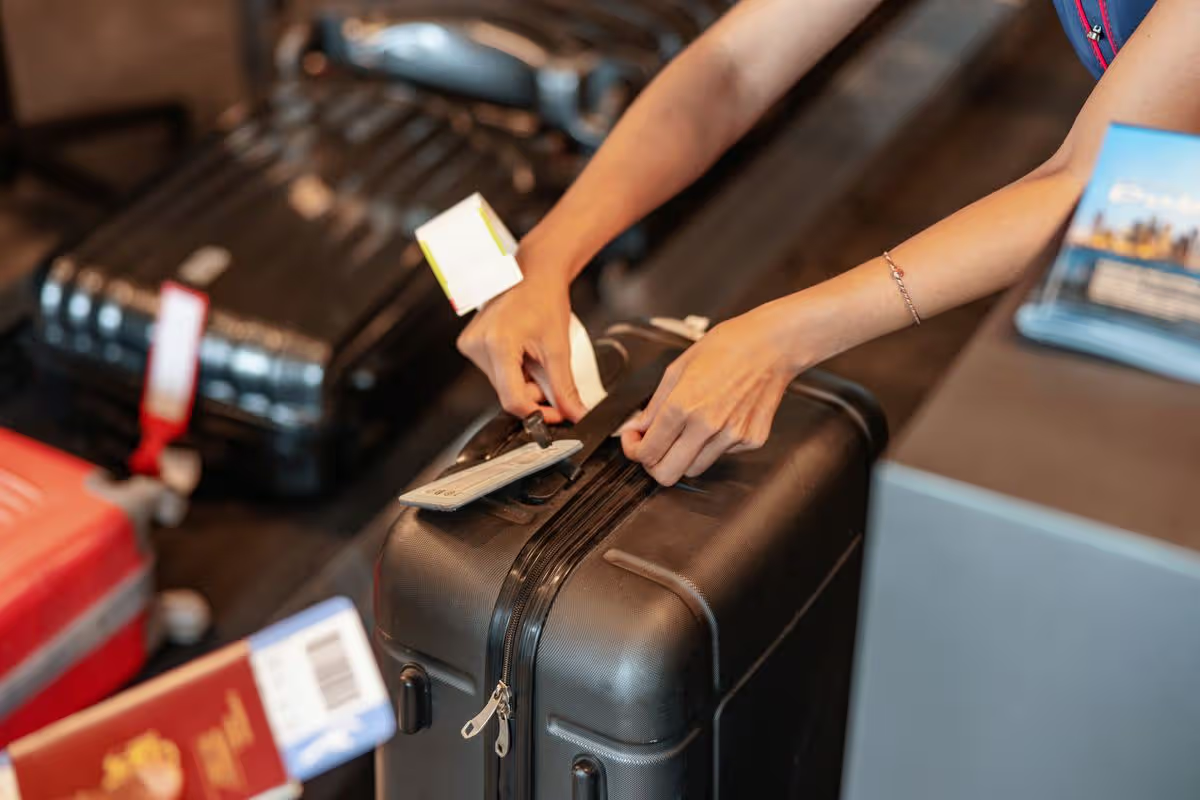
This common hack can cause issues with your bags(Image: Getty Images)
If you were to rank the most stressful parts of flying, then finding your luggage at the carousel would no doubt come near the top.
You wait and wait for the luggage belt to start up, and once it does, there’s a huge rush of people grabbing their cases, many of which look strikingly similar. That’s why there are so many hacks out there to help you ensure your suitcase stands out from the dozens of others on the conveyor.
A common hack is to take a colourful piece of ribbon and tie it around a handle, which means when it’s coming down the belt, you can spot it among the other similarly coloured cases.
However, according to one airport worker, using this hack with ribbon, string, or any other dangly item could be a bad idea, and could even delay your luggage pickup even further.
John, who works at Dublin Airport, previously spoke to RSVPLiveabout why travellers should avoid the hack, saying: “Ribbons that people tie onto their suitcases to help identify them can cause issues with the bag being scanned in the baggage hall.
“If the bag can’t be scanned automatically it can end up in manual processing, which could mean your bag doesn’t make it to the flight”.
As well as interfering with scanning systems, ribbons and other items can also get stuck in the conveyor belt’s machinery, which means the entire carousel could automatically come to a stop, delaying everybody’s bags.
Old airline stickers and tags from previous flights can also cause issues according to John. Machines may not know which barcode to scan, causing delays, or it could even mean your luggage is sent to the wrong destination.
If you want to personalise your case to make it stand out from the crowd, use a colourful luggage strap, add some coloured tape around a handle, or add a distinctive sticker so you can spot it on the carousel.
Luggage covers are another option for checked bags. These covers slip over your suitcase and are available in bright colours and prints, or even personalised options. As a bonus, these covers can help to protect the exterior of your case from damage when being handled. You can also opt for waterproof covers, so if your luggage is left on a trolley in the rain or is close to a leak, the contents won’t be damaged.
Airport workers have also warned that the colour of the case that you choose is important. Black suitcases are the most common choice for travellers, but they’re the most likely to be lost or stolen.
Finding a black suitcase can also be incredibly difficult. Many lost property offices will be full of suitcases of the exact same type and colour, making it less likely you’ll be reunited with your bag.
Have a story you want to share? Email us at webtravel@reachplc.com
Millions of pieces of luggage are lost of delayed each year, and you may be wondering where the items that can’t be returned to their owners end up. At one facility, they’ve seen all the weird and wonderful things that get left behind
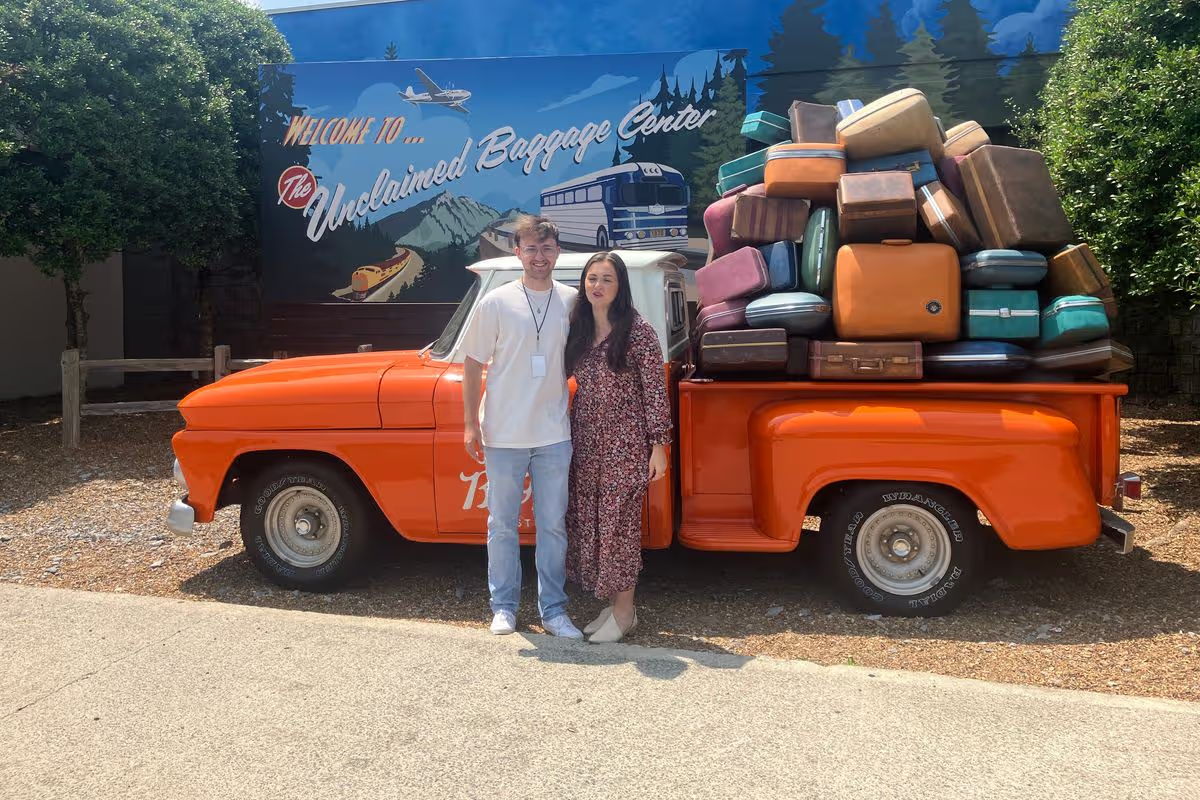
Sonni Hood and her cousin Adam outside the shop
When you check your bag into the hold, there’s always the risk that you are waving it off for good. Despite technology improving at tracking our luggage, some bags seemingly disappear into the void, never to be seen again.
Lost or unclaimed luggage that can’t be reunited with its owner is sometimes sold to companies that auction it off. And if you lose your luggage in the USA, it may well end up at the Unclaimed Baggage warehouse in Scottsboro, Alabama. This vast facility resembles a huge charity shop, but instead of donations, it sells items that airlines have been unable to return to their owners. It even has agreements with some airlines to buy their unclaimed luggage.
While most unclaimed bags contain little more than dirty laundry, the facility has in the past seen suitcases full of fascinating items, leading it to release an annual Found Report. This shows some of the weird and wonderful items they’ve found in cases, the most valuable, and the most common things people lose.
“We don’t sell anything that has had skin to skin contact,” explained public relations manager Sonni Hood, who works at the shop alongside her cousin Adam. That means sex toys are thrown away, as are diaries, human ashes, used make-up and guns.
“We go through everything to ensure there’s nothing harmful, dangerous or too embarrassing inside,” Sonni continues. “Thrifts stores are full of things people want to throw away, but these are things people liked so much they wanted to take away with them on holiday.”
The weirdest find for 2026? There are some odd ones on the list, from a bionic knee to a didgeridoo, but coming in at number one was a fully assembled robot. It’s not clear what the robot was used for, though the team says it looks advanced enough to be a research project. One suitcase contained a giant stuffed goose, a frog-shaped handbag, and an entire fake skeleton.
Some valuable items have also turned up at the facility. In 2026, the most expensive item was a pair of diamond earrings valued at $43,000 (around £32,000). Rolexes, expensive camera equipment, and designer bags were among the most expensive finds.
The report also gave a breakdown of the most common items found in lost luggage. At the top of the list was men’s t-shirts, and over 200,000 found their way to Unclaimed Baggage in 2026. 128,000 pairs of trousers were found, and over 57,000 pieces of jewellery.
Fashion finds included a stunning beauty pageant outfit from a Miss Dakota competition and a lynx fur coat, while international finds included a Tibetan singing bowl and African masks. Historic items included a 1945 army magazine with a cover story on the occupation of Japan and a nuclear radiation detector.
The report also includes some interesting stories about things they’ve bought and sold, such as the time the team opened a suitcase to find it packed entirely with rat poison. An item covered in bubble wrap in the bargain basement was sold for just $2.99 (about £2.25), only to turn out to be a 1930s art deco statue worth nearly £1,500.
Previous years have also seen some unusual finds, such as a jar of whiskey containing an entire preserved rattlesnake and an old French book with instructions for performing exorcisms.
One extremely heavy bag had the team excited, until they opened it and found it was simply full of rocks. Whether it was a collection for a geologist or simply someone making the most of their baggage weight allowance, we shall never know.
Have a story you want to share? Email us at webtravel@reachplc.com
I stayed in a chocolate themed hotel suite that was full of delicious treats – but what surprised me the most wasn’t the edible chocolate in the bathroom.
This article contains affiliate links, we will receive a commission on any sales we generate from it. Learn more
I stayed in a chocolate hotel room
Hidden away, just an hour from the UK, is a hotel suite completely draped in chocolate. This is accommodation that money simply cannot buy, but no, you don’t need a golden ticket – you merely have to be the world’s kindest person.
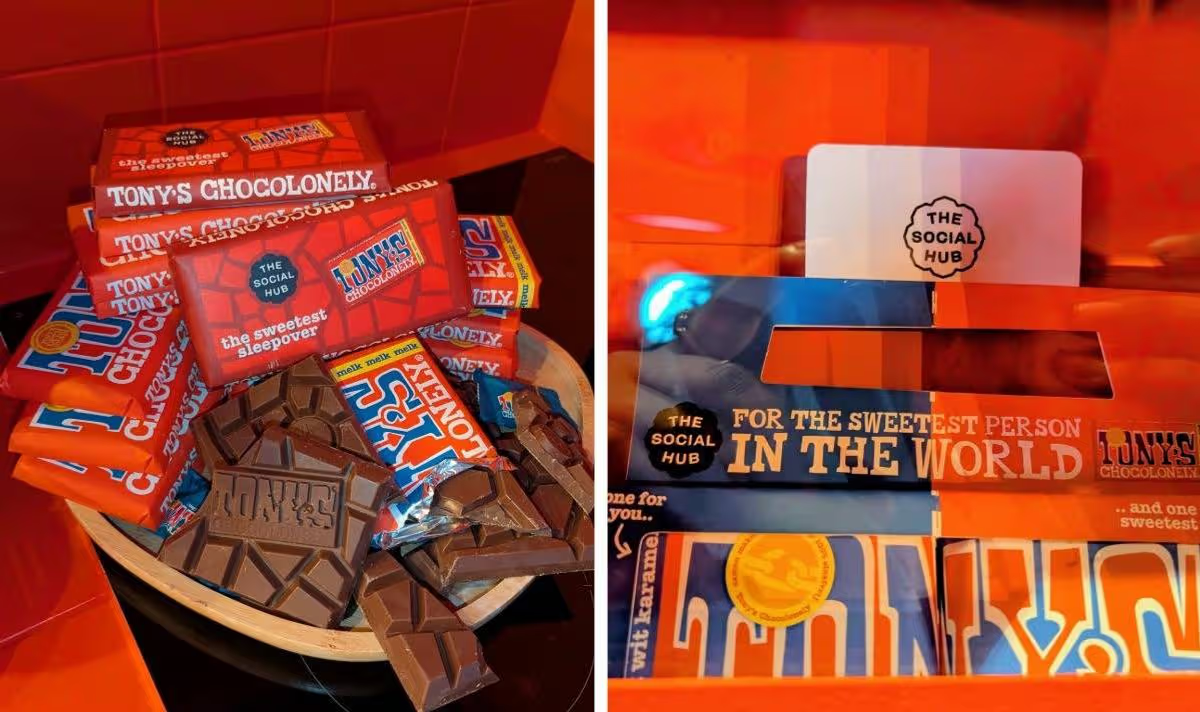
Tony’s Chocolonely has teamed up with the Social Hub in Amsterdam to offer a select few people an overnight stay in this extraordinary, chocolate-themed room. And I was fortunate enough to become the first guest to experience it.
From the cupboards and shelves brimming with chocolate, the overwhelming chocolate aroma, and the inspirational messages scattered throughout, this suite was a remarkable space I won’t forget in a hurry.
However, it wasn’t just the edible chocolate in the bathroom that surprised me the most: it was the deeper meaning behind the competition.
What to expect
I stepped into the room through enormous red curtains to find a personal bartender, who prepared a beverage of my choosing. I opted for the Salted Caramel Espresso Martini, which was incredibly tasty and decadent. The bartender was welcoming, considerate and engaging.
I was then given free rein to discover the suite’s three spaces: the principal red one, a concealed blue room, and an upstairs monochrome room.
Each space conveyed its own theme and function: the red for community and connection, the blue for self-reflection, and the black and white for gratitude and recognition.
In the red room, I discovered a self-contained kitchen featuring a functioning hob, coffee maker, sink, microwave, a create-your-own ice-cream sundae station, a well-stocked fridge containing various beverages, and (crucially) cabinets brimming with chocolate.
Every visitor receives a shelf packed with chocolate which they can take away, to share with the loveliest people in their lives (or someone less lovely, should they wish). Messages about kindness and connection were dotted throughout. There was even a chocolate Jenga available with questions printed on the wrappers.
The blue room features a fortune slot machine, which requires finding tokens scattered around the suite to operate. Within it, you can collect chocolates and discover self-reflective questions. I invited my brother along, who was posed the question: “What’s one belief you have changed your mind about?”
He answered: “That I’m not good enough.” This wasn’t something I anticipated him revealing or knew he’d struggled with, because to me, my older brother is nothing short of perfect.
Finally, we entered the black-and-white room, where visitors can leave a message of kindness for the team or the following guest. Charlie Ayres, head of brand at The Social Hub, commented: “We wanted every part of the room to spark togetherness and encourage kindness, using chocolate to create opportunities to share, interact and above all, be sweet to one another.
“This is a one-off, limited experience designed to celebrate some of the world’s sweetest people, while also telling a more important story. Through our partnership with Tony’s Chocolonely, we hope to spark conversation around exploitation in the chocolate industry, showing how experiences can be both joyful and meaningful.”
My night in the chocolate ‘red room’
The red room, along with the black and white room, was our accommodation for the evening, and the space is, quite frankly, enchanting.
Upon entering, I was met with a delightful chocolate aroma that wasn’t overly sweet but rather nutty and creamy. Everything appears extraordinary, and just when you think you’ve discovered all the chocolate, you open a new cupboard or area, and there’s even more.
The bed felt like sinking into a cloud, complete with a soft mattress and a thick duvet. Personally, I would have preferred the room to be a tad warmer, as it was a large area with only air conditioning and no heating.
However, there were ample blankets available, which kept me snug and warm. One minor issue was the television, which we couldn’t seem to get working, but this encouraged my brother and me to continue conversing.
I awoke feeling incredibly refreshed. We indulged ourselves with a scrumptious sundae before receiving a heartwarming and delightful wake-up call that encouraged us to share the kindness we’d experienced with the wider world.
Reflecting on his time there following the visit, my brother remarked: “Sweetness and warmth even down to the scent wafting throughout the rooms. It had a spacious bathroom, a comfortable bed and an abundance of chocolate as a treat at hand, anywhere you looked. Thought and caring touches sprinkled throughout promoting mindfulness and a reminder that peace doesn’t happen in a vacuum.”
The chocolate-themed room will remain available for the next three days. Enthusiasts in Amsterdam can also visit the space on March 29 from 1 pm.
The message
When the world requires a touch of kindness, this partnership seeks to inspire people to engage with family, friends, and even complete strangers, and to appreciate the significance of making decisions that benefit those in their community.
Trix van der Vleuten, chief marketing officer at The Social Hub, explained: “The world feels increasingly divided. We’re more digitally connected than ever, yet loneliness is rising. We wanted to come together with Tony’s to showcase that sweetness, simple, human kindness, matters more than ever, and that people can enjoy our products while positively impacting society.”
Through this launch, Tony’s Chocolonely aims to spotlight its commitment to aiding approximately 40,000 cocoa farmers in achieving a sustainable income. The firm’s head of global brand and communications, Sadira E. Furlow, stated that the brand’s goal is to eradicate exploitation within the cocoa industry by demonstrating that chocolate can be produced more ethically.
A woman who found a secret compartment in a plane toilet was left gobsmacked by what she found inside – as some said other public toilets should do the same
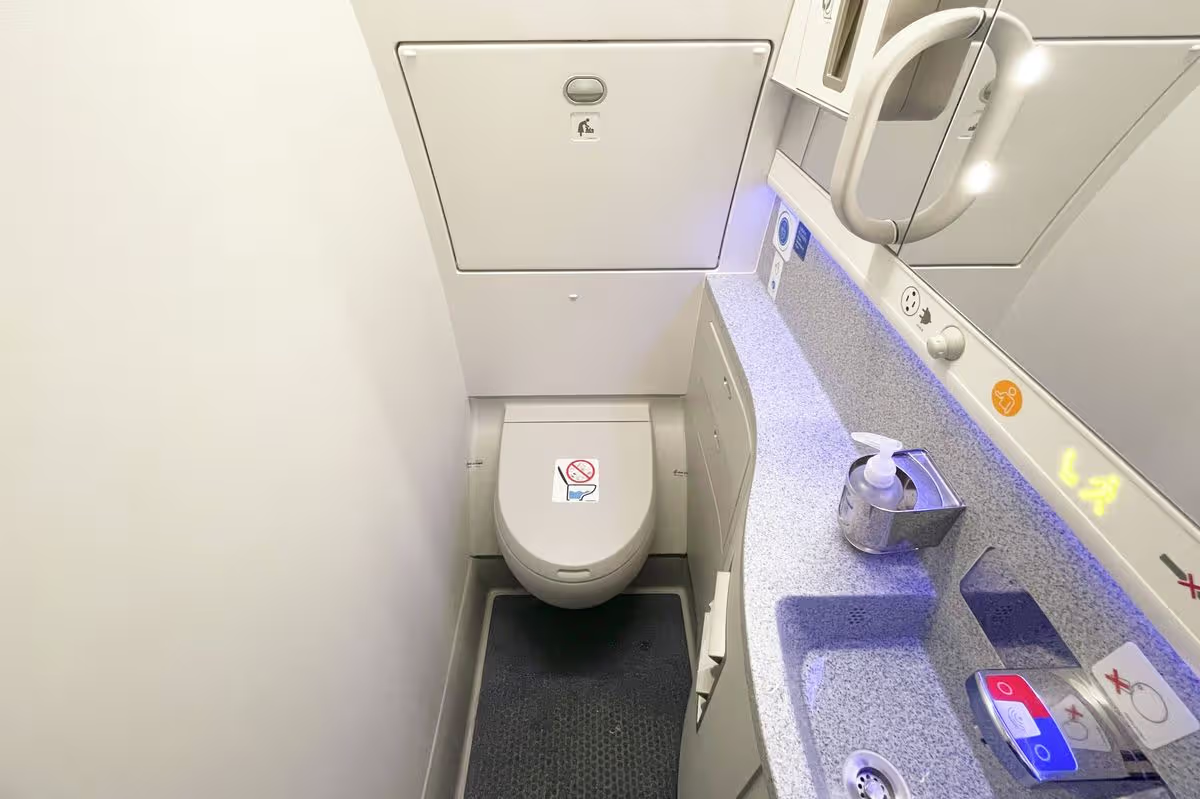
The woman found something amazing in the plane bathroom (stock photo)(Image: kool99 via Getty Images)
Your next flight might be concealing some vital items in a “secret compartment” within the toilet. We’re all aware that air travel can be an uncomfortable affair. You’re squeezed onto an aircraft alongside a host of strangers and informed you can only bring a small bag containing all your essentials – and you’re likely to overlook something important.
While nothing will truly enhance the experience unless you splash out thousands of pounds for first class, one woman on social media has revealed that a hidden door in the bathroom could hold something which at least makes the journey tolerable for some passengers.
Rhonda Abdalla, from Florida, US, was travelling on a Southwest Airlines service from Tampa to Houston, Texas, en route to Las Vegas, when she unexpectedly started her period. She consulted a flight attendant who pointed her towards a small compartment in the aircraft toilet, which was stocked with tampons and sanitary towels.
The woman admitted she had no clue the compartment existed, and suspected other women would be equally unaware, so she turned to Threads to share the discovery and spread awareness.
She posted: “I’m a girls’ girl, so I have to share. Ladies! Did you know there’s a secret compartment in the airplane bathroom that has tampons and pads if you need them?! Because nobody wants to be caught off guard at 35,000 feet.”
Speaking to Newsweek, Rhonda revealed the flight attendant instructed her to take as many tampons as required, and even thoughtfully disclosed she had additional supplies if the stock in the lavatory proved insufficient.
Rhonda detailed that whilst the compartment does feature a sign indicating it can be opened, it “isn’t very noticeable”, so she believes she never would have considered looking there had the flight attendant not informed her about it.
Southwest Airlines has confirmed that sanitary products are something they ensure are stocked on all aircraft for any passenger who might require one urgently.
They told Newsweek: “Sanitary products are available on all Southwest aeroplanes in all lavatories. These items are supplied in case a customer needs one. Whilst we do supply them, they are not a relatively high-use item.”
Both flight attendants and passengers have reacted to Rhonda’s social media post, with numerous people expressing gratitude for her sharing the information, whilst others mentioned they always carry spare tampons for circumstances like hers.
One flight attendant commented: “The amount of times someone has come up to me in tears because on top of a stressful travel day, they started their period and all their products are in their checked bag. Baby, I got you. Tampons, chocolate and a glass of wine will be brought to your tray table immediately.”
Another contributed: “And if you don’t find them in the lavatory, ask a flight attendant. We always have some on board!” One grateful passenger responded: “That’s actually a really useful travel tip! Appreciate you sharing that with everyone.”
Rhonda later expressed her satisfaction at the positive feedback to her post, as she believes it’s important for everyone to be aware of the resources available to them when needed.
She stated: “The response has been really positive, and I’m glad it’s helping spread awareness. Getting your period mid‐flight is already stressful, so knowing there are resources available makes a big difference.”
However, it’s worth noting that some airlines may not stock sanitary products in their lavatories. You can always enquire with a flight attendant who may be able to assist, but it’s advisable to always carry a few emergency tampons or pads – either for your own use or to help someone else in need.
The Foreign Office has updated travel guidance warning Brits heading to popular destinations to expect potential flight disruptions
Nicola Roy Multimedia content creator
13:02, 21 Mar 2026
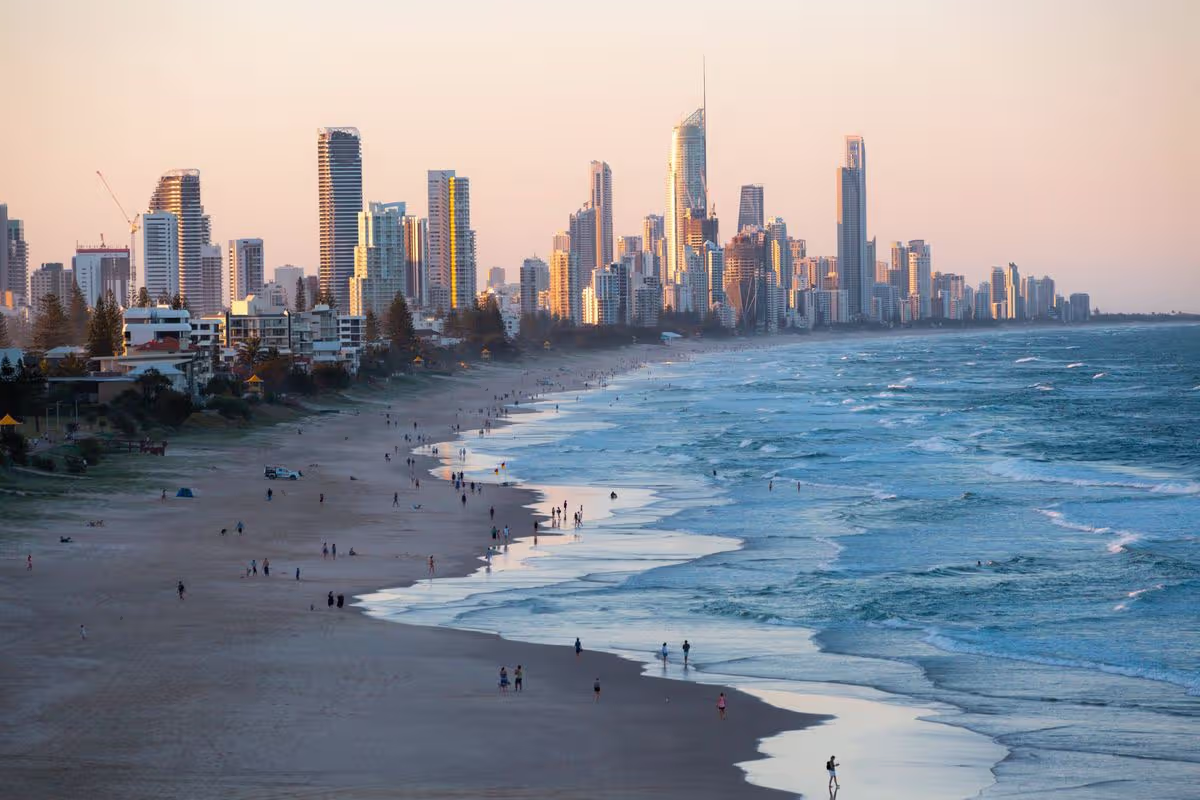
Australia is a hugely popular destination for Brits(Image: Kieran Stone via Getty Images)
This week, British travellers heading overseas have been warned that their holiday plans could face disruption.
The UK Foreign, Commonwealth and Development Office (FCDO), the government department responsible for issuing travel guidance to ensure public safety, has updated its advice for several popular tourist destinations.
The continuing tensions in the Middle East mean delays and other forms of disruption are likely, even for those not travelling to the region itself. The FCDO sometimes advises against all travel to particular countries.
While these destinations don’t fall into that bracket, it remains crucial to follow the guidance.
The update states: “Escalation in the Middle East has caused widespread travel disruption, including airspace closures, delayed and cancelled flights.
“Your travel plans may be affected, even if your destination is not in the Middle East.”
The FCDO has issued this update for countries including Australia, New Zealand and Thailand this week. Before departing, travellers are advised to review the guidance for any countries or territories they’ll be passing through, reports the Express.
It’s also recommended that you check the latest information from your airline or tour operator before setting off.
Additionally, reviewing your travel insurance policy beforehand can be beneficial, just to confirm what’s covered if your arrangements are disrupted.
The FCDO added: “Monitor local and international media for the latest information and sign up for travel advice email alerts.”
Ignoring advice from the FDCO could potentially render your travel insurance null and void, so it’s crucial to check over the details before you take off.
Your insurance should cover your planned itinerary, activities and any emergency expenses.
Certain types of snacks can make your flight experience very uncomfortable.
Nicola Roy Multimedia content creator
12:06, 21 Mar 2026
Many plane travellers will grab a snack at the airport before boarding (Image: EvgeniyShkolenko via Getty Images)
Anyone planning to jet off this Easter or beyond is being advised to steer clear of a very common airport snack before boarding. Plane food isn’t everyone’s cup of tea, and it’s not always on offer during shorter flights, so grabbing something beforehand is vital.
However, travel experts at Ski Vertigo have warned that one particular type of food can make lengthy flights feel even more drawn-out, causing a lot of discomfort. They say the main culprit is the “grab-and-go” salty snack many travellers purchase at the gate, such as pretzels, crisps or salted nuts, as it can leave passengers feeling bloated, thirsty and uncomfortable once the cabin doors shut. Aircraft cabins are extremely dry, which can worsen dehydration.
Low humidity at cruising altitude can leave you feeling dried out, which is why water is frequently the best option in the air. But salty snacks can make matters worse, since foods packed with sodium can prompt the body to retain fluid, contributing to puffiness and swelling – especially in the feet and ankles during longer journeys.
That “tight shoes” sensation is typical after remaining still for hours, but what you eat can influence how uncomfortable it becomes. NHS guidance related to swelling often highlights reducing salt intake as part of managing fluid retention.
Alex Dyer, Head of customer success at Ski Vertigo, said: “People buy a salty snack because it’s quick and it feels harmless, but on a flight it can leave you chasing water and feeling heavy. If you already get puffy ankles or feel rough when you fly, it is worth skipping it.”
Airports also promote last-minute purchases, and salty snacks are dotted everywhere near the checkouts. A packet eaten just before boarding is more likely to take effect when you’re buckled into your seat with limited opportunity to move about, especially if the seatbelt sign is illuminated, reports the Express.
Experts say the key thing is to drink water before and throughout the flight, and reduce caffeine and alcohol where possible, as dehydration can make travel feel more difficult.
For passengers wanting something to snack on, the experts recommend opting for choices that aren’t as salty, like a banana or a cereal bar. Checking the label can be useful, because many ‘snack size’ products are still packed with salt.
The professionals added that the aim is not to ban treats, but to steer clear of the type that makes the cabin feel more uncomfortable, adding: “If you want the easiest flight, skip the salty snack before take-off, choose a sealed drink, and you will usually feel better by the time you land.”
Former Ryanair flight attendant Eleanor has shared her top seating recommendations for passengers, including the best rows for extra space and which seats to avoid on your next flight
Liam McInerney Content Editor
07:00, 19 Mar 2026
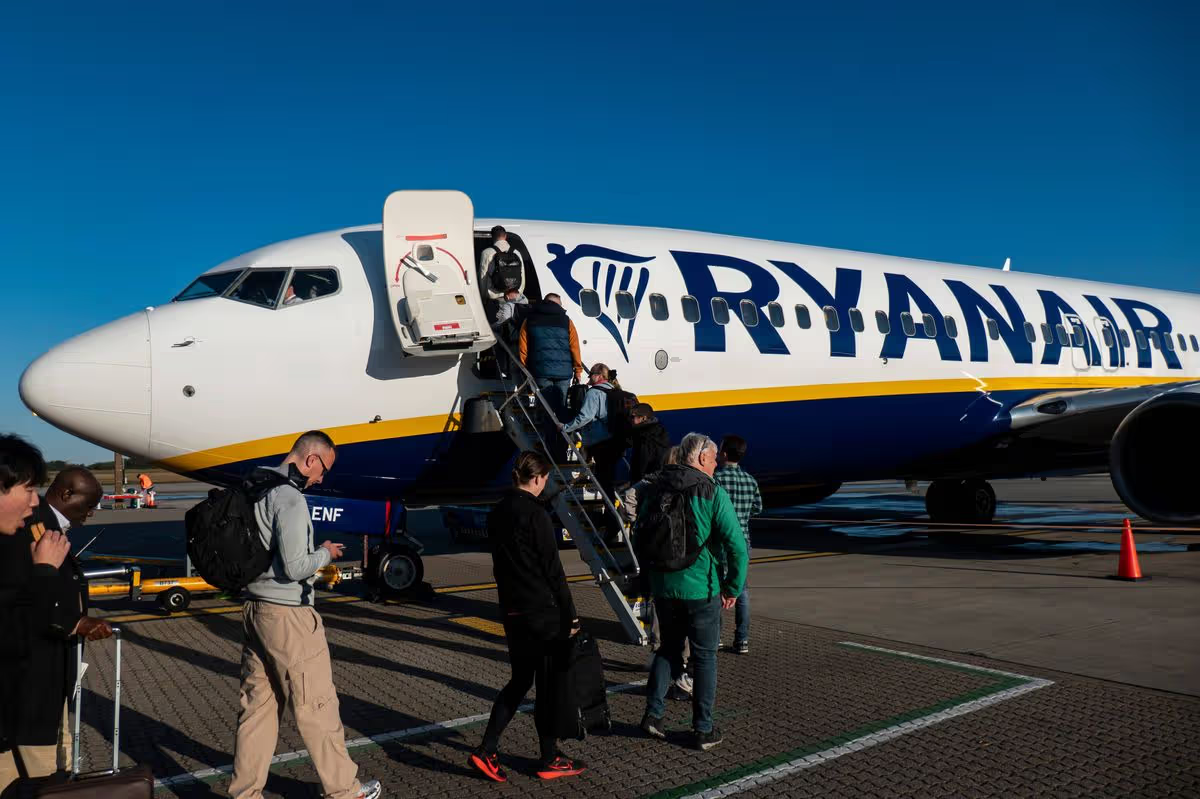
Ryanair passengers have been urged to book two specific rows (stock) (Image: NurPhoto, NurPhoto via Getty Images)
When reserving a flight with Ryanair, many of us will steer clear of selecting our own seat, primarily due to the extra charge. However, a former cabin crew member with the budget carrier has identified the best row to reserve if you’re seeking optimal space and comfort for a specific journey.
Eleanor was based in Marseille, France, and logged countless hours traversing the globe alongside her cabin crew colleagues. She has now highlighted the seats that could enhance your trip considerably.
Speaking to us about her top travel tips, she explained: “I would say usually it’s better to sit at the emergency exits in the middle of the aircraft, usually around row 17 for safety reasons.
“You have more space and also because children under 16 can’t sit at the emergency exits and infants under two can’t even be in the two rows before and ahead of the emergency exits. So these and row 1 are basically the only seats where you can be sure you won’t be spending your flight with crying babies next to you.”
Nevertheless, while row 17 might be the most tranquil, according to Eleanor, there are particular seats passengers may also want to steer clear of.
The content creator, 25, revealed to us: “I can only say to avoid 11A. That’s supposed to be a window seat – but it doesn’t have a window! You won’t be able to see outside.”
This seat has previously been labelled “Europe’s most hated” because it’s notorious for being the sole ‘A’ seat on a Boeing 747 that lacks a window to peer through. And having urged travellers to reserve row 17, she also pointed out the row that might be worth avoiding.
She elaborated: “Also avoid row 32 on the 737 MAX, an aircraft that Ryanair has only in some bases. That has emergency exits at the wings, and a crew seat near them that faces the passengers.
“So, if you sit in that row, you’ll have the flight attendant stare at you during take off and landing, and you’ll have to move every time they have to pass. It was very uncomfortable as a flight attendant, I imagine it is as a passenger also.”
She emphasised that securing your seat on Ryanair wasn’t absolutely critical, especially since flights are generally brief and there’s no complimentary meal service, which means your location won’t determine whether you’re served first or last, as it might on other carriers.
The Italian ex-Ryanair employee said it ultimately boiled down to individual preference but she did provide one final recommendation.
She stated: “Another thing I can say is to avoid sitting at the rear of the aircraft, mostly because sometimes, although not often with Ryanair, only in some airports, you will have a bridge from the front and you’ll be the last one to disembark if you’re sitting at the back.
“And also because in case of ditching (controlled emergency landing onto water), that’s the first part that goes in the water, and you won’t be able to open the doors at the back, so you’re less likely to make it in case of a landing in water.”
The country welcomed 400,000 Brits in 2025, and now the government has updated its travel advice for the country and have highlighted some issues that tourists visiting the area might face
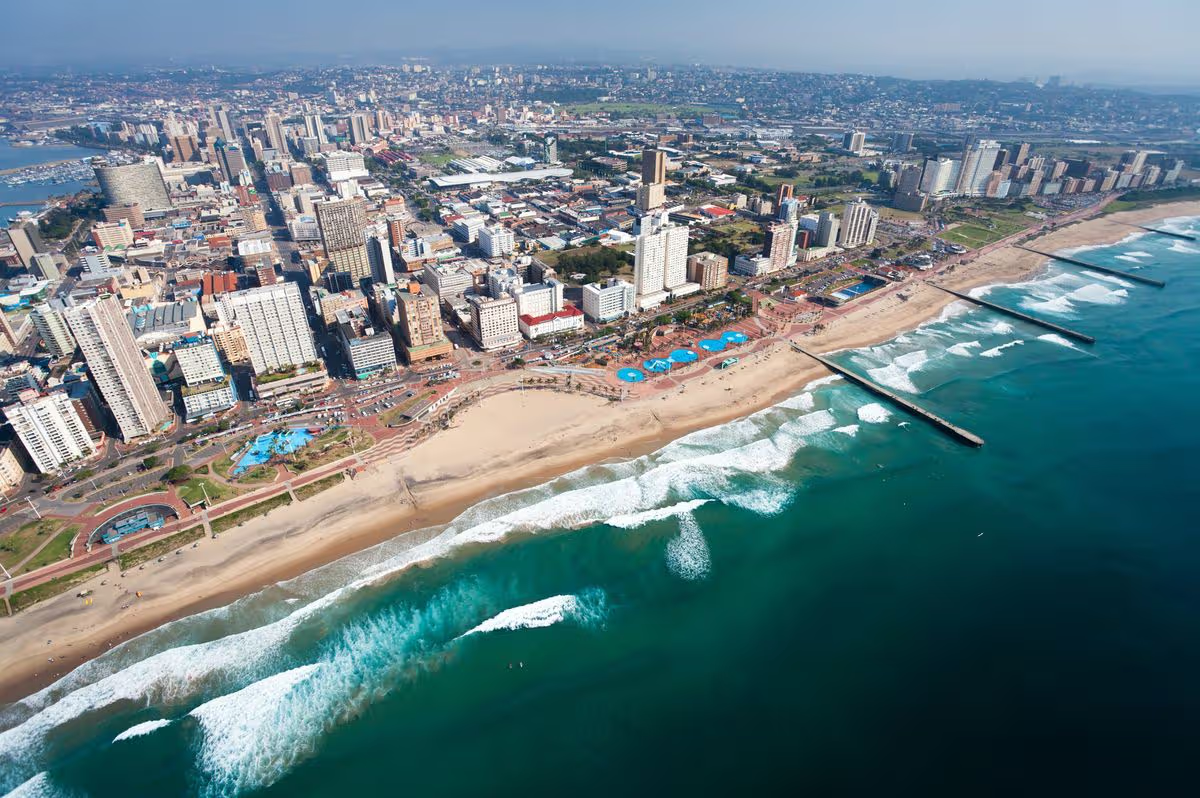
400,000 Brits visited this beautiful country last year(Image: Getty Images/iStockphoto)
The Foreign, Commonwealth and Development Office (FCDO) has issued a travel warning for a destination that’s popular with Brits and updated some of its advice for those visiting the country. This included a stark warning about a particular tourist attraction that has become increasingly dangerous.
South Africa saw 400,000 visitors arrive from the UK in the past year alone, and the FCDO has previously said it is ‘likely’ that terrorists could try to carry out attacks such as a ‘lone actor’ attacking public spaces including tourist sites. Its advice for tourists is to: “Stay aware of your surroundings, keep up to date with local media reports and follow the advice of local authorities.”
However, it’s worth noting that many countries have similar advice around terror attacks, and that the FCDO is careful to state that “No travel can be guaranteed safe.” Recently, the FCDO updated the advice for those visiting South Africa to add some new warnings on fraud and scams and other risks.
It reiterated: “Be alert to the risk of scams, including through business or job opportunities, visa services or offers of romance and friendships, including on dating apps. Do not meet up with or send money to someone you do not know or have not met in person.”
It warned of the risks of common scams like card skimming and confidence tricks, and said there had been an increase in cybercrime and internet scamming. The FCDO also updated its advice about nightlife and dating, saying: “Criminals use dating apps to rob, rape or sexually assault victims. Be cautious using dating apps and meet in well-lit, public places. Always tell friends or family your plans.
“Be wary when dealing with strangers who offer free drinks, rides or unexpected personal attention. There have been instances of drink spiking involving robbery and sexual assault with both male and female victims. If you think your drink has been spiked, seek immediate medical help and contact the police.”
The FCDO has also offered advice for those planning to hire a car in South Africa and said that visiting Brits should drive carefully. It added: “Driving standards vary in South Africa. Fatal road accidents are common, particularly around weekends and major public holidays.” Brits should also make themselves familiar with local rules and etiquette such as speed limits and overtaking.
Another section of the page that was update gave specific advice about Table Mountain National Park. The area is a popular tourist attraction for hikers and cyclists, and has many unique plants and trees that can’t be found anywhere else in the world. However, the FCDO says: “There have been recent violent attacks and muggings against hikers and foreign tourists in Table Mountain National Park, including on Lion’s Head and Signal Hill.”
It gave some advice to people planning a trip to the national park, advising them to avoid quieter areas, especially during early mornings and evenings when there won’t be many fellow hikers around. Visitors should stay on busy, marked trails, and visit during peak times such as weekends.
Finally, the FCDO advised people not to hike alone in the area.
Anyone planning a trip to South Africa in the near future should ensure they check the FCDO advice page before they leave, and sign up for e-mail alerts so they can be notified when any changes are made.
Have a story you want to share? Email us at webtravel@reachplc.com
Spain is one of the most popular holiday destinations for Brits, but stricter rules have been introduced in hotspots including vaping bans, dress codes and driving restrictions – here’s what you need to know
Spain is a popular destination for many Brits to go to(Image: fhm via Getty Images)
Spain remains one of the most popular holiday destinations for Brits, but in recent years, problems associated with excessive drinking and overtourism have prompted numerous hotspots – including the Canary Islands and Balearic Islands – to introduce tougher regulations for tourists.
From new measures to prevent people hogging sunbeds for hours on end, fresh vaping restrictions to even a regulation nicknamed the ‘bikini ban’, British holidaymakers should pay attention before their next trip; in certain instances, breaking the rules could result in a substantial fine.
To help you out, we’ve compiled some of the most significant regulations and recent updates to be aware of before your next Spanish break.
Vaping fines
Spain continues its clampdown on vaping, and the penalties for vaping in prohibited areas are just as severe as those for smoking. In 2025, the country brought in an outdoor smoking ban, which covers all manner of public areas, from restaurant and bar terraces to beaches
The prohibition includes smoking, vaping, shisha, any heated tobacco products, and nicotine pouches, with fines ranging between €30 to €2,000 (approximately £26 and £1,700), though for a first offence, it’s more likely to be towards the lower end. Watch out for signage before you take a drag of your vape.
Footwear restrictions
Planning to hire a car in Spain?
Think carefully about your footwear choice in the morning. If temperatures soar and you’re contemplating a pleasant coastal drive, you might be inclined to slip on flip-flops or slides, but this decision could land you with a substantial fine.
Spanish driving regulations demand footwear that permits ‘free movement’ to operate the pedals correctly, which excludes items such as flip-flops and sandals, high heels, wedges, or even going barefoot. Police officers can impose fines ranging from €80 to €200 (approximately £69 to £172) if they believe you lack proper control of your vehicle.
Therefore, if you’re organising a Spanish road trip, remember to pack some practical shoes to switch into.
Dress codes and ‘bikini bans’
Whilst in a Spanish seaside resort, it’s fairly typical to spot men wandering about topless or women sporting bikinis travelling to and from the beach. Nevertheless, certain Spanish destinations have grown weary of such displays and have introduced stringent regulations compelling holidaymakers to cover up when away from a beach or poolside.
The Foreign, Commonwealth and Development Office’s (FCDO) travel guidance for Spain notes: “In some parts of Spain, it’s illegal to be in the street wearing only a bikini or swimming shorts. Being bare-chested is also illegal in some areas in Spain. You could be fined if you’re caught wearing swimwear on the seafront promenade or adjacent streets.”
Penalties can reach up to €500 in certain areas, approximately £430. Spain isn’t the only country where you’ll encounter rules like these – certain parts of Italy have also brought in similar measures after residents grew tired of holidaymakers wandering around town or attempting to enter restaurants in their swimwear.
Alcohol crackdowns and bans
For countless holidaymakers, a trip to Spain wouldn’t be complete without a sangria or two. However, let’s be honest, Brits frequently take things too far when overseas, and in some regions, exhausted by intoxicated tourists, stringent crackdowns and prohibitions have been put in place.
In the Balearic Islands, particularly around Magaluf and Playa de Palma in Majorca, and San Antonio in Ibiza, there are now prohibitions on happy hours, all-you-can drink promotions, pub crawls, and party boat excursions. Some all-inclusive hotels in Majorca also cap daily drinks at six; three at lunchtime and three at dinner to prevent binge drinking and antisocial behaviour.
Particular resorts on both the mainland and the islands are taking action against people drinking on the street, as well as illegal parties being hosted in villas and private properties.
The FCDO also warns: “Hotels and other establishments will evict you if you behave dangerously on balconies. You could also get a fine.”
Reserving sunbeds
Bagging sunbeds with a towel remains a prevalent practice among British holidaymakers, despite its potential to irk other tourists, but some beaches are taking a stand against the habit by imposing fines. In a resort near Valencia, two retirees were slapped with a £250 fine for reserving sunbeds by laying down towels before 8am to secure a prime beachfront spot.
Whilst it’s unlikely to result in a fine, numerous Spanish hotels have taken action against sunbed monopolisers by confiscating their belongings or handing out warning cards if sunbeds are left unoccupied for a specified period.
Travelling with kids can be expensive, even if you stay within the UK, but changing your travel dates could potentially save you hundreds of pounds – according to Expedia some dates could be the key to nabbing bargains
This article contains affiliate links, we will receive a commission on any sales we generate from it. Learn more
Here’s what you need to know ahead of the summer holidays(Image: Jacob Wackerhausen via Getty Images)
When you have kids, it feels like the days of cheap holidays are over, especially once they hit school age. Holidays can take a lot more planning and careful budgeting.
However, travel booking site Expedia has given parents a hand, putting together data that shows the cheapest exact dates to travel as a family, as well as the peak travel dates to avoid. Melanie Fish, spokesperson for Expedia Group Brands said: “Using the right dates to dodge peak travel times is a great money‑saving hack, especially when paired with booking everything you need for your trip on Expedia for a hassle‑free holiday.”
It also revealed some up and coming destinations for spring that are seeing a surge in searches, potentially making them popular places for a spring break. These include Conwy, Tenby, and the Cotswolds, all classic family holiday staycation spots.
As you may expect, late-March and early-April are expensive times to travel as parents try to get some time away for the Easter holidays. For domestic travel, the most expensive dates are between May 23 and 31, which is half-term in most schools across the UK. The most expensive dates for international travel were revealed as April 5 and May 23, again both coinciding with school holidays.
The busiest dates for staycations were found to be March 6 and 27, while for international travel, you can expect packed airports and ferry ports on April 2 and 3. If you’re someone who prefers to avoid the crowds and traffic, it’s best to rethink booking a departure on these dates.
When it comes to the cheapest dates, for domestic travel these fall on March 1 and 2, early in the spring, as it’s before the main tourist season kicks off in most staycation spots.
For international travel, the cheapest departure dates include March 2 and April 27. Unfortunately, these do fall outside of school holiday dates, but some parents may be tempted to book a break anyway. However, it’s worth making sure you research school holiday fines before you pull the kids out of school, as a family of four could rack up a £320 bill even for a first offence.
The quietest times to travel also fall outside of school holidays: April 28 and May 31. However, if your school has a later May half-term or inset days tacked onto the holiday, then going slightly later could cut the cost of a break later in the month. Choose flexible dates when searching for flights or holidays to see how much you could save by departing a few days later.
If you’re in a particularly strict area for school holiday fines, don’t worry, shifting your dates within the school holidays can also cut costs. For example, the cheapest dates to book in the six week summer holidays tend to be closer to the end of the holiday, as most people want to go away as soon as school finishes. By opting for a late-August rather than mid-July break you could save hundreds and still be back in time for school.
Have a story you want to share? Email us at webtravel@reachplc.com
Passport holders have been urged to avoid wearing a common item of clothing when flying. When travelling on planes, there are certain items you should never wear
10:09, 14 Mar 2026Updated 10:12, 14 Mar 2026
Passport holders have been told to stop wearing the item (stock image)(Image: Images By Tang Ming Tung via Getty Images)
You might be surprised to learn that your choice of attire can significantly influence both your travel experience and your safety. That’s why travellers are being urged to refrain from wearing this specific item when embarking on a flight in future, and it’s advice everyone would do well to heed.
Polly Ann enumerates several garments she personally avoids, but one stands out as crucial from a travel safety perspective. It could have serious implications in the event of an emergency.
She divulged what people need to know in a frank post. It’s advice worth heeding, as it could greatly affect your travel experience.
Imparting wisdom to passport holders, she stated: “Things never to wear on a plane. Open-toed shoes.
“Sandals and open-toed footwear are discouraged because aircraft floors and bathrooms aren’t very clean and they don’t protect your feet in case of an emergency.
“Offensive clothing. Anything with profanity, lewd graphics or offensive messaging could lead to being asked to change or even denied boarding under some airline dress codes.”
She proceeds to mention several other items she’d steer clear of but, regarding safety, footwear is particularly crucial. Whilst they’re not typically prohibited on aircraft, travellers are actually discouraged from wearing sandals.
There are several reasons why it’s advisable to avoid them when flying. You might never have considered they can actually present hazards.
Why should they be avoided?
Experts generally recommend passengers avoid wearing sandals or open-toed footwear on flights due to safety risks during an emergency evacuation, the possibility of foot injuries from falling objects and hygiene issues.
If you do choose to wear them, it’s recommended you also wear socks. There are multiple reasons behind this guidance.
During an emergency, such as an evacuation, sandals can slip off, making it challenging to run or walk across harsh surfaces like tarmac, broken glass or wreckage. Additionally, aircraft floors are frequently dirty and chilly, meaning wearing sandals leaves your feet vulnerable to bacteria.
Aeroplanes are typically cold, and feet have a tendency to swell during lengthy flights, rendering the footwear increasingly uncomfortable. You may also be required to remove sandals at security checkpoints, which could extend your time getting through the airport.
Hence, it’s simpler all around if you refrain from wearing them. There are a few reasons why they could land you in a bit of trouble.
The discount retailer is selling an affordable bag that could be used for multiple travel destinations
Home Bargains is selling a versatile bag (stock photo)(Image: Getty)
Home Bargains is selling a ‘durable’ backpack that’s said to be ‘perfect for city travel’. The bag could therefore impress a range of shoppers. It could be just the ticket for commuters looking for a bag that will survive the journey to work. It could also impress travel fans who spend their weekends exploring new cities or catching the train to the countryside.
The discount retailer is selling the Salisburys PU Leather Rucksack for £9.99 online and in stores. Shoppers can choose between two colours when shopping online, as Home Bargains offers the bag in purple and cream.
Showcasing the rucksack, the bargain chain wrote: “Discover the Salisburys PU Leather Rucksack in vibrant purple – a lightweight, stylish companion perfect for city travel with multiple zipped compartments and a durable, fully lined interior.” The description notes that the ‘stylish bag’ measures approximately H58 x W28 x D14.5cm.
Sharing more information about the brand, the retailer added: “Salisburys presents its broadest line-up of tried and tested luggage solutions with contemporary features to help the modern tourist navigate the hurdles of the twenty-first century travel.
“Salisburys PU Leather range gifts you with all the necessities for modern-day commuter/city travel in a lightweight yet durable form. A clean modern design and durable materials that have been tested to protect your possessions from the testing environments that your luggage may encounter.”
The product description explains: “Travel light and in style with the Salisburys Carry-On Cabin Lightweight Backpack in sleek black! Perfect for your adventures, this spacious yet compact backpack is designed for easy packing and effortless carrying.”
Meanwhile, the weekend bag might be the better pick for people travelling for one or two nights, who want the lightest luggage they can find. The description says: “Meet the Salisburys Weekend Bag, your ultimate travel companion! With its spacious design, handy trolley sleeve, and a zip-off bottom for easy packing, this stylish bag is perfect for weekend getaways or short trips.”
Another option for travellers could be the £9.99 Light Luggage Carry-On Cabin Luggage Wheeled Bag. The product description reads: “Travel light and breeze through the airport with the Light Luggage Carry-On Cabin Luggage Wheeled Bag!
“Its lightweight design, easy-glide wheels, and handy pockets mean you’ll skip the queues and arrive in style—just try not to look too smug!” While some shoppers prefer bags over cases, the added wheels could be helpful for people who don’t want to carry a bag but still need compact luggage.
Whether it’s a long-haul flight or a weekend city break, there’s one item I always ensure I pack, and it’s an absolute game-changer for feeling refreshed, and it costs just £3
I won’t fly anywhere without making sure I have one item in my hand luggage (Image: Amy Jones)
Before jetting off abroad, there are a few essentials I always make sure I pack, and there’s one particular item I can’t go without. While I thought it was pretty common, it turns out not everyone does, and I guarantee it’s a game-changer for feeling fresh after a flight.
Packing my hand luggage ahead of a flight, or any trip for that matter, has become something of a ritual. I’ll lay everything out on my bed, deciding between what is essential and what I can go without (in a bid to save space), tick everything off my mental checklist, and then stuff it neatly into my bag.
My noise-cancelling headphones are often top of the list, followed by my eye mask, my reusable water bottle, hydration tablets and a handful of skincare products, so I can feel somewhat restored, particularly after a long flight. Yet, nestled among my bag and packed alongside everything else is my toothbrush and toothpaste.
After every flight, without fail, I will brush my teeth. Whether that’s on the aeroplane or in the airport bathroom, it’s a lifesaver for feeling refreshed after a flight. And if I ever forget it, I’m a little out of sorts.
Aside from a simple skincare routine to level out the dryness, I guarantee that brushing your teeth before landing will leave you feeling like a new person. And if you’re concerned about using tap water on an aeroplane to brush your teeth, simply go to the bathroom and use bottled water.
I know it’s not glamorous, and I know there are other ways to leave feeling refreshed, but this small everyday item can really do wonders. Plus, there’s nothing worse than walking around worried that you have bad breath, and sometimes chewing gum just doesn’t quite cut it, especially after a long flight, and those G&Ts or red wines.
What’s more, it will barely take up any space in your hand luggage, as nifty travel toothbrushes are available on Amazon. Instead of packing my electric toothbrush, which is a bit unnecessary for a flight, I take a portable bamboo toothbrush that folds into a cylinder case, reducing it to half its size.
Not only does it ensure the toothbrush remains clean, but it also attaches the toothbrush head to the case, creating a standard-sized toothbrush. Plus, it’s good for the environment as it’s made from bamboo rather than plastic.
A pack of two portable bamboo toothbrushes is available from Amazon for £5.99, or just over £3 each. The travel toothbrushes are also handy for any trip, whether that’s a festival, a weekend away, or just having a spare in your bag whenever you want to clean your gnashers. (Boots also offers Bamboo toothbrushes from £3 ).
To accompany my travel toothbrush, I always pack a mini tube of toothpaste to save extra space. I often grab these from my local dentist, but they’re available at various shops, so it really couldn’t be easier to stay refreshed after your flight.
Do you have a travel story to share? Email webtravel@reachplc.com
A warning about ‘additional information about existing entry requirements’ has been issued
People travelling to the US have been issued fresh advice
The Foreign, Commonwealth and Development Office (FCDO) has released new travel guidance for the USA. The update was released earlier today (Friday, March 13).
The FCDO explained that the amendment pertains to ‘additional information about existing entry requirements and new information on possible travel disruption’. It was posted on the official ‘Foreign travel advice’ page.
The most recent advice also encompasses American Samoa, Guam, Northern Mariana Islands, Puerto Rico, and United States Virgin Islands. The website states: “There could be longer than usual queues at some US airports due to a partial US government shutdown. Check with your travel provider, departure airport or airline for the latest guidance.
“You must have the correct approval prior to travel. This will be either a valid US visa or Electronic System for Travel Authorisation (ESTA), depending on your personal circumstances and purpose of travel.
“US authorities enforce entry rules strictly. If you do not have the correct immigration status, or if you breach the terms of your entry, there is a risk you may be detained, refused entry, or removed (deported). Overstaying your permitted time in the US can also lead to detention and future bans on re-entry.
“A valid ESTA or visa does not guarantee you will be allowed to enter the US. Authorities may refuse you entry if, for example, they believe you do not plan to stay longer than permitted or have provided inaccurate or incomplete information. The US may change the conditions to travel to the US at any time without prior notice.”
The US is set to co-host the World Cup later this year, with the tournament running from 11 June to 19 July. If you’re planning a trip to the US during this period, check out the World Cup page for additional details. Further advisories include ensuring your passport is valid for the duration of your intended stay.
If your journey involves transiting through another country en route to or from the US, make sure to verify the entry requirements for that nation. Many countries only permit entry if your passport has at least six months’ validity remaining.
To gain entry or transit through the US, you’ll need either an Electronic System for Travel Authorisation (ESTA) or a visa. More information on visas can be found on the US State Department’s website.
Travellers whose gender on their passport differs from their birth-recorded sex should seek further advice from the US Embassy or a consulate in the UK.
Officials may request to examine your electronic devices, emails, text messages, and social media activity. Refusal could result in delayed or denied entry.
More information on electronic device searches can be found on the US Customs and Border Protection website.
As a travel journalist, I am away a lot, and there’s one £9 bag makes me feel like one of those super-organised people that can pack light
This article contains affiliate links, we will receive a commission on any sales we generate from it. Learn more
One item has made packing for trips so much easier(Image: Natalie King)
Despite travelling a lot for work, and fun, I’ve never mastered the art of packing light. I do not have a chic capsule wardrobe for city breaks, and I like to test those budget airline baggage capacities to their fullest.
As a perimenopausal woman, my carefree days of chucking a couple of lipsticks and a few makeup remover pads in a bag are also way behind me. When I go away for the night I need my skincare products, magnesium and collagen supplements, and industrial amounts of makeup, which arguably, are not making a huge amount of difference. A teeny tiny makeup bag is not going to do the job.
Last year, I stumbled across a toiletries bag on Amazon that has since become my favourite thing to take on trips, and at just £8.99 it’s something I’ve recommended to anyone I speak to who’s heading abroad. The Chakipee Travel Hanging Toiletry Bag looks just like an ordinary makeup bag on the outside. I bought the medium size, which measures 26x17x9cm, and when it arrived, I was sceptical about how much it would fit.
I don’t know what sorcery the manufacturers have used, but I can fit a surprising amount into this bag. I’ve managed to squeeze full size shampoo bottles into the big pockets, plus it has some smaller compartments for things like my toothbrush, contact lenses, and small stuff I don’t want to lose.
But perhaps the handiest feature is that it unfolds and can be hung up on a hook. While I’d love to pretend that my job always involves luxury travel to hotels with huge marble bathrooms, the truth is, I often stay in budget hotels where the bathroom is roughly the size of a postage stamp. If you are staying somewhere with zero bathroom counter space, just hang the bag from a spot such as a shower rail and you can easily access your products.
I’ve managed to fit a week’s worth of supplements and skincare products into the bag for longer trips, and as the ultimate test, once managed to do an everything shower in the tiny ensuite of a ferry cabin by hanging this bag on the door.
The only time the bag doesn’t come with me is if I’m travelling with hand luggage only, as annoyingly, the 100ml liquid rules are still in place at many airports. In general, the product reviews for the organiser are positive, with lots of people praising it for having plenty of pockets and compartments. A couple of reviews have complained about broken zips., but so far, I haven’t had that issue and have found it to be good quality.
If you’re looking for a bag solely for makeup then the Charlotte Tilbury Pillow Talk Makeup Bag also comes with some glowing recommendations. It also has a Tardis-like interior that can fit in full sized products, yet is compact when zipped up. One review says it offers: “Lots more room than I was expecting, can fit all my products in and love that I can organise things in the separate sections.”
If you’re travelling with hand luggage only, then Charlotte Tilbury also has lots of travel size skincare and makeup products that will ensure you don’t break the 100ml rules. Its Beauty Check-in Kit is currently on sale for £72 and includes a mini lip kit, powder, and setting spray that are just the right size for a week away.
Have a story you want to share? Email us at webtravel@reachplc.com