transiting

Yemen’s Houthis deny plan to charge ships transiting Red Sea | Houthis News

Houthis say Red Sea route remains free to use, pushing back on report of new shipping fees.

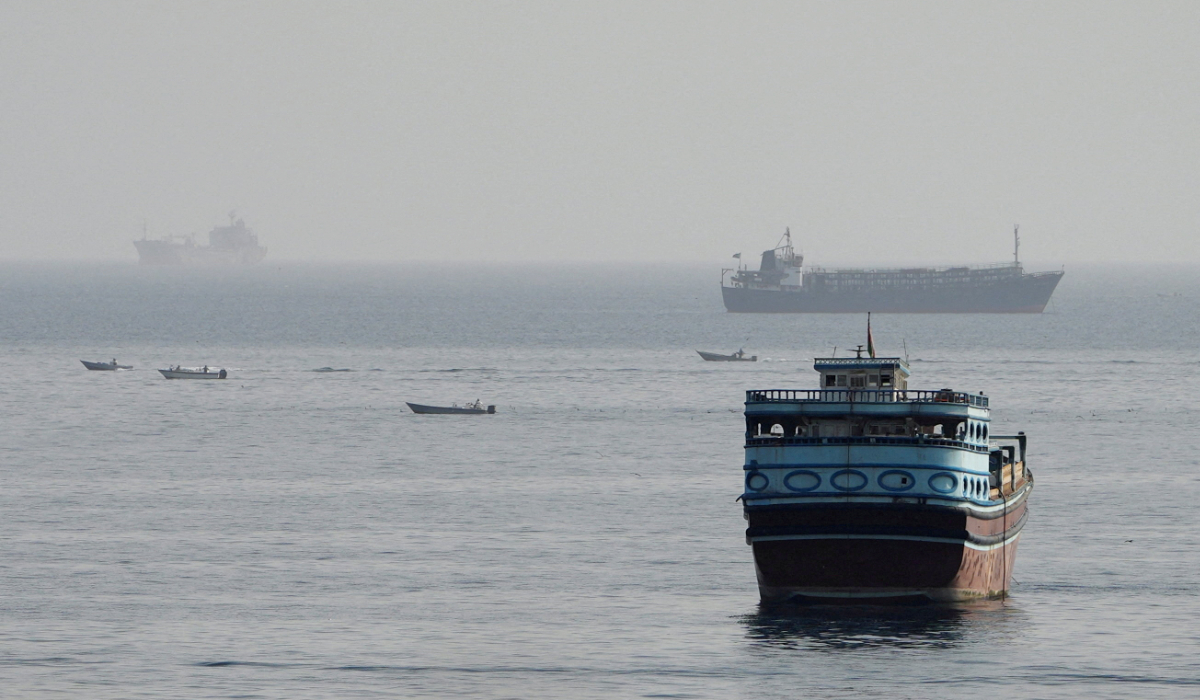
Yemen’s Houthi rebels have denied planning to charge ships for passing through the Red Sea, saying passage through the waterway remains free.

The denial came in a statement issued Saturday by the Houthi-run Humanitarian Operations Coordination Center (HOCC), which oversees vessel movement through the Bab al-Mandeb Strait. It said its “safe transit service” was voluntary and free of charge, adding that anyone demanding payment for passage did not represent Yemen or the HOCC. It urged shipping companies not to make payments or share information with unauthorised parties.

Recommended Stories

list of 3 itemsend of list

The statement follows a Reuters news agency report on Wednesday, citing regional sources, that the Iran-aligned Houthis were considering imposing fees on ships transiting the strait – a week after the group declared a maritime blockade on Saudi Arabia. Those sources said the idea was raised with Iranian officials during a Houthi visit to Tehran earlier in July, with Iranian advisers reportedly helping set up an authority to regulate the fees.

The Bab al-Mandeb Strait is a vital chokepoint linking the Red Sea to the Gulf of Aden, used by ships carrying oil and other cargo between Asia, Europe and the Middle East. Any fee on passage would echo Iran’s own efforts to charge ships transiting the Strait of Hormuz, which has been largely shut since the US-Israel war on Iran began earlier this year.

Yemen’s foreign minister-designate, Afrah al-Zouba, said on Tuesday that the Houthis were seeking to “copy the Iranian model”.

A toll on Bab al-Mandeb would hit Saudi Arabia especially hard, since the kingdom has increasingly relied on the strait as an alternative export route while Hormuz remains disrupted.

The Houthis have waged a long campaign against Red Sea shipping, beginning in 2023 after the start of Israel’s genocidal war on Gaza, and only pausing attacks after a ceasefire last October. A United Nations expert report found that the group may have collected significant informal fees from shipping agents in 2024, though this was never independently verified. Traffic through the strait has still not recovered to pre-2023 levels.

In response to the renewed threat, Saudi Arabia this week announced a 14-nation maritime coalition aimed at protecting freedom of navigation through the Bab al-Mandeb Strait, the Red Sea and the Gulf of Aden.

Source link

Vessel struck transiting Hormuz; U.N. pauses evacuation operation

June 25 (UPI) — A cargo vessel in the Strait of Hormuz was attacked Thursday, prompting officials to halt the evacuation of sailors stranded in the chokepoint by the war.

It was unclear who attacked the cargo ship. According to the British navy’s United Kingdom Maritime Trade Operations office, the vessel was struck on its starboard side by an unknown projectile at about 5:40 p.m. local time. It was about 7 1/2 nautical miles southeast of Dahit, Oman, when it was attacked, it said.

The vessel’s bridge sustained damage, but no casualties or environmental impact were reported.

Following the attack, the United Nations’ International Maritime Organization paused its evacuation operation in the Strait of Hormuz.

“I have decided to temporarily pause its implementation in order to reconfirm that the necessary safety guarantees continue to be in place for the ships on our evacuation list and all those in the region,” IMO Secretary-General Arsenio Dominguez said in a statement.

The war, which began Feb. 28, left some 11,000 sailors stranded in and around the Strait of Hormuz, a vital energy shipping route. The IMO announced the evacuation operation Tuesday, after the United States and Iran agreed to a Memorandum of Understanding that seeks to pave a path to ending the war.

Under the U.N. plan, a number of vessels have already been evacuated.

The vessel struck Thursday was not transiting the Hormuz under the IMO’s evacuation framework, the U.N. agency said.

Though it unclear who was responsible for the attack, the Iran’s U.S.-sanctioned Persian Gulf Strait Authority, newly created by Tehran to oversee and manage the strait, issued an advisory Thursday, stating it is not responsible for the protection of vessels transiting “outside designated routes.”

“Any consequences arising from unauthorized routing shall be the sole responsibility of the vessel owner, charterer and master,” it said.

Control of the strait has been a focus of ongoing U.S. efforts to end the war.

Iran effectively closed the strait after being attacked Feb. 28, causing energy prices to surge and threatened nations with worsening energy crises.

Since then, Iran has attempted to maintain control of the strait and has sought to impose fees on ships that transit it.

The United States is seeking to secure free maritime travel through the strait as part of the MOU. U.S. Secretary of State Marco Rubio is currently in the Middle East trying to sell the MOU to allied nations.

However, the Institute for the Study of War said in a report Thursday night that Iran’s alleged attacks and threats directed at vessels in the strait “advance its objective of establishing control over the waterway” as well as “undermine international efforts to guarantee safe passage through the Strait of Hormuz.”

“Iran is using military threats and economic incentives to try to convince Gulf states to support its efforts to control the strait, but the Gulf states appear to be resisting Iranian pressure at present,” it said.

Source link