training

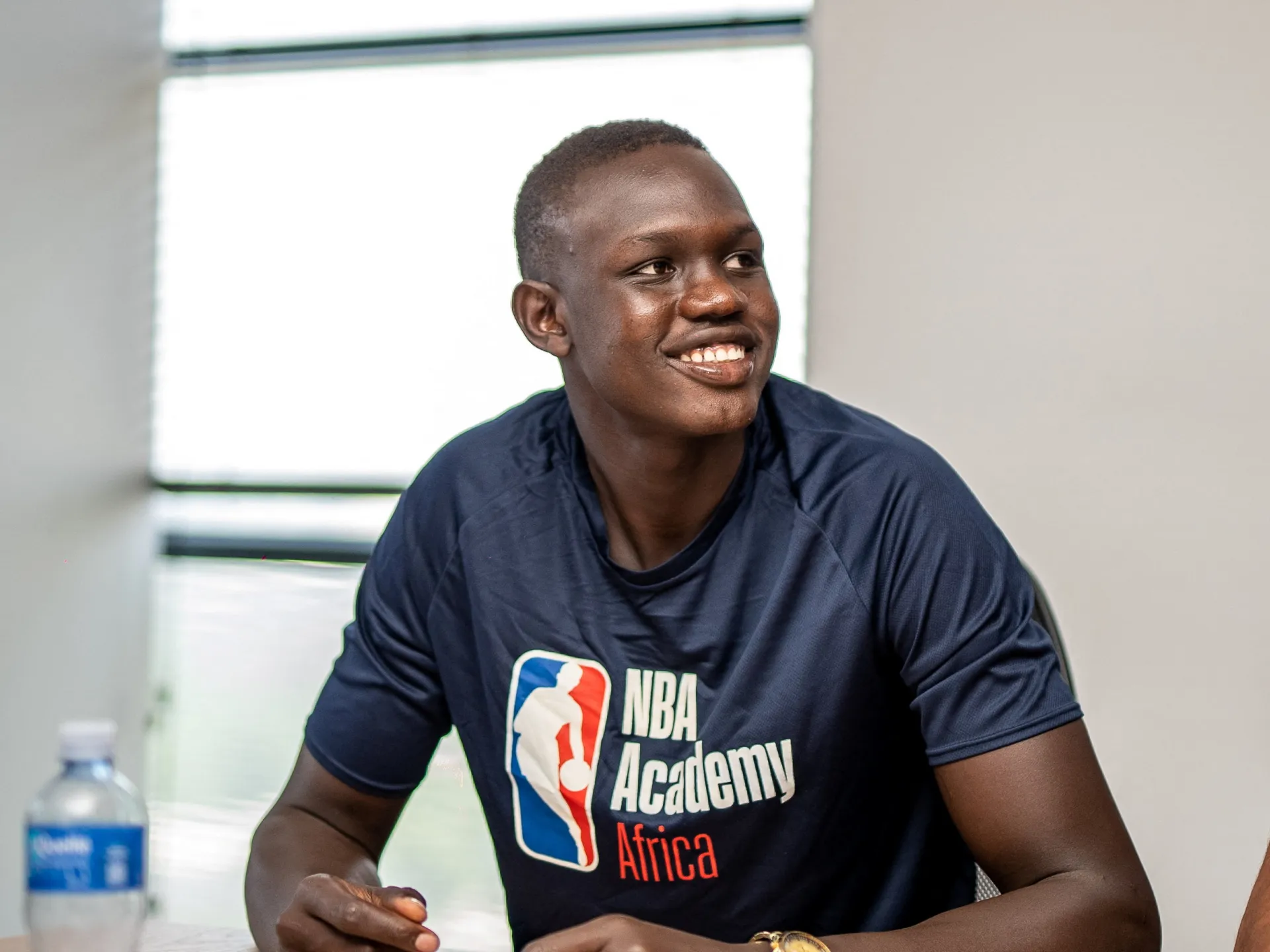
Daniel Wiffen: Olympic gold medallist Wiffen moves training base from California to Dublin

Wiffen said that he was “already planning” on moving to Dublin even before the Irish Open.

He had targeted a time of seven minutes 42 seconds in the 800m, but came in at 7:58.08 on his way to winning gold in Bangor and also said his performance in the 1500m was “confirmation in my head that I wasn’t in the shape I wanted to be in” and that he should switch to Dublin.

“In 1500m I got to the 1000m mark in a second off PB [personal best] pace and I could feel it fading and it was all down to the training,” he added.

“I wasn’t doing the right type of work I used to do, so when it came to the decision, I sat down with Andy Reid [National Performance Director at Swim Ireland] and talked to him. We had talked of the back-up plan if California didn’t work when he was first appointed, so this was already in the thinking.”

Reflecting on his time in California, Wiffen was critical of the training in the US and says he “feels a lot fitter” since he started training in Dublin.

“In California it felt like you kind of didn’t know what you were doing. You were having to push yourself, there wasn’t much guidance or criticising technique.

“They didn’t want to mess up the Olympic champion is what I felt. They were trying to do what they wanted to do, not what’s good for me.”

Wiffen is now gearing up for a big summer with the Commonwealth Games and European Championships on the horizon and hopes a solid block of training in his new surroundings can get him up to speed to break more records.

“I don’t know how fast I’m going to be in the summer, but I have two benchmark meets before that I can compare to other years.

“I need to see how those go and how the training works. I have eyes on the world record in the summer, but if not I need to readjust some things.”

Source link

Romelu Lukaku holds clear-the-air talks with Napoli after training absence

However, he returned to Naples to hold what have been described as “calm, collaborative and constructive” talks with his club. The discussions also included his agent Federico Pastorello and Napoli sporting director Giovanni Manna.

The talks are understood to have led to an amicable solution, with sources insisting the matter is now closed.

During the discussions, Lukaku updated Napoli on his recovery. It is hoped the striker will be available for selection in about two weeks.

Source link

Prep talk: Mt. SAC Relays to feature Servite, Rosary relay teams

After record-setting performances in the 4×100 relays last weekend at the Arcadia Invitational, the Servite and Rosary relay teams will try to do it again on Saturday at the Mt. SAC Relays at Mt. San Antonio College.

The Servite relay team of sophomores Jace Wells, Jorden Wells and Kamil Pelovello and junior Benjamin Harris ran it in 39.70 seconds at Arcadia, the fastest in state history.

Rosary, which is the sister school for Servite, featured sophomore Tra’via Flournoy, senior Justine Wilson, junior Pfeiffer Lee and sophomore Maliyah Collins running 44.23, breaking Long Beach Poly’s 22-year-old state record of 44.50.

Coach Brandon Thomas works with both teams and said he wanted to support the track community by having both participate.

Defending state high jump champion JJ Harel will compete in his specialty after winning at Arcadia with a mark of 6 feet, 9 inches. He’s still only a few weeks into training because of a previous injury.

This is a daily look at the positive happenings in high school sports. To submit any news, please email eric.sondheimer@latimes.com.

Source link

ICE went on a hiring spree. Sterling credentials were not required, AP investigation finds

Their backgrounds stand out. And not in a good way.

Two bankruptcies and six law enforcement jobs in three years. An allegation of lying in a police report to justify a felony charge against an innocent woman — an incident that led to a $75,000 settlement and criticism of his integrity. A third job candidate once failed to graduate from a police academy, then lasted only three weeks in his only job as a police officer.

Their common bond: All were hired recently by U.S. Immigration and Customs Enforcement during an unprecedented hiring spree — 12,000 new officers and special agents to double its force — after the agency received a $75-billion windfall from Congress to enact President Trump’s mass deportation campaign.

The president put a premium on swift action, and for ICE that meant rapid-fire recruitment and hiring, which in turn led to new employees with questionable qualifications. Their backgrounds and training have come under scrutiny after numerous high-profile incidents in which ICE agents used excessive force.

“If vetting is not done well and it’s done too quickly, you have higher risk of increased liability to the agency because of bad actions, abuse of power and the lack of ability to properly carry out the mission because people don’t know what they are doing,” said Claire Trickler-McNulty, who served as an ICE official during the Obama, first Trump and Biden administrations.

The agency has said the majority of new hires are police and military veterans. But evidence is mounting that applicants with questionable histories were either not fully vetted before they were brought on or were hired in spite of their past, an investigation by the Associated Press found.

ICE’s acting director, Todd Lyons, said during a congressional hearing in February that he was proud of the hiring campaign, which drew more than 220,000 applications. “This expansion of a well-trained and well-vetted workforce will help further ICE’s ability to execute the president’s and secretary’s bold agenda,” he said.

Unlike many local law enforcement agencies, ICE said it shields the identity of employees to protect them from harassment, making a full accounting of the new hires impossible.

The AP focused on more than 40 officers who recently made public their new jobs as ICE officers on LinkedIn pages, using public records to check their backgrounds. All but one were male.

While most of them had conventional qualifications as former correctional officers, security guards, military veterans and police officers, it’s unclear how many should have potentially been disqualified because AP did not have access to their full personnel files. But several had histories of unpaid debts that resulted in legal action, two had filed for bankruptcy and three others had faced lawsuits that alleged misconduct in prior law enforcement jobs, the AP found.

Marshall Jones, an expert on police recruiting at the Florida Institute of Technology, said it’s hard to get a full picture of ICE’s new employee pool without more data. But he said ICE has likely hired some “less than ideal candidates” who meet minimum requirements but would be passed over in a normal hiring cycle.

“If you’re hiring hundreds or thousands of people, even with the best of background processes, there are going to be outliers,” he said. “The question is, are these normal outliers from human beings doing things, or is there a systemic challenge in properly vetting folks if there are issues?”

DHS says ‘vetting is an ongoing process’

The Department of Homeland Security, ICE’s parent agency, did not answer questions about specific hiring decisions. But it acknowledged some applicants received “tentative selection letters” and offers to begin working on a temporary status before they had been subjected to full background checks.

“ICE is committed to ensuring its law enforcement personnel are held to the highest standards and rigorously vets them throughout the hiring process,” the department said. “Vetting is an ongoing process, not a one-time occurrence.”

The process includes reviewing their criminal histories and credit scores and conducting background investigations that include interviewing prior employers and other associates, which can take weeks. But the deluge of hires has strained the agency, which promised signing bonuses of up to $50,000 and advertised that college degrees were not required.

An internal memo, first reported by Reuters in February, told ICE supervisors that if they receive “derogatory information about a newly hired employee’s conduct” they should refer the allegations to an internal affairs unit for investigation. Such information could include the employees’ termination or forced resignations, the memo said.

Two bankruptcies, six jobs before ICE hired him

Among the new hires is Carmine Gurliacci, 46, who resigned as a police officer in Richmond Hill, Ga., to join ICE in Atlanta in December, according to a resignation letter obtained by AP.

He filed for bankruptcy in 2022, saying he had no income and had been unemployed for two years after moving from New York to Georgia, court filings show. He said he was living with a friend and doing chores in exchange for housing, listing tens of thousands of dollars of unpaid loans, bills, child support and other debts. He also had filed for bankruptcy in 2013 in New York, when he listed $95,000 in liabilities, records show.

Serious financial problems are “a pretty big red flag” because they might make employees susceptible to bribes or extortion, which have been problems at ICE, Trickler-McNulty said.

After his 2022 bankruptcy petition was approved, Gurliacci rejoined the work force, hopping to six Georgia law enforcement agencies within three years, each time resigning before moving on, records obtained by AP show.

He left one campus security job in 2023, citing “unforeseen personal issues that render me unable to fulfill my duties,” a resignation letter shows. But he then began working for the Butts County Sheriff’s Office soon after.

He lasted months there before moving to the Chatham County Sheriff’s Office, where he quit after two months on the job, records show. The federal government recently obtained his Chatham County personnel file as part of a background check, two months after he started at ICE.

Reached by phone, Gurliacci told a reporter he would call back. He never did and did not respond to follow-up messages.

Critic says new ICE hire ‘abuses his power’

Another new hire is Andrew Penland, 29, who joined ICE after resigning in December as a sheriff’s deputy in Greenwood County, Kansas.

Penland had spent most of his career as a deputy in Bourbon County, Kansas, but left last year after facing a lawsuit alleging he arrested a woman on false allegations in 2022. The county’s insurer paid $75,000 to settle the case, the agreement shows.

The woman, June Bench, recounted in an interview what happened. One of her neighbors, a county official, claimed Bench had purposely made a wide turn and nearly hit him with her car.

Penland responded to the property. Body camera video shows he urged the neighbor to press charges and told the man Bench would go to jail but he would not have to testify in court because it would get resolved through a plea.

Bench denied the allegation and said it was part of a personal dispute. But Penland arrested her on a felony assault charge, took her to jail and seized her car. Penland wrote in a report that he watched surveillance video showing her neighbor jumping out of the way of her speeding car.

It took a week for Bench to get out of jail and more than a year to defeat the charge, which was dismissed for lack of evidence. When she obtained the video Penland cited as proof, it showed her car appearing to make a routine turn and no near-collision with the neighbor.

Bench said she was outraged to learn Penland had been hired by ICE.

“That’s scary to me. He abuses his power,” she said.

After being reached for comment, Penland deactivated his LinkedIn account and alerted ICE to the inquiry but did not respond to AP.

New hire struggled at police academy

A third new ICE hire, Antonio Barrett, initially failed to graduate from a Colorado law enforcement academy in 2020, one of two students who did not “complete portions of the academy” and received “an incomplete grade,” an email obtained by AP shows.

He finished the program after a community college arranged a special one-day training and test for him, and landed a job at the police department in La Junta, Colo., in July 2020. But he worked only three weeks before resigning and never worked in local policing again.

Previously, Barrett worked as a corrections officer at a Colorado prison.

He was accused in a lawsuit of excessive force for inflicting pain on a handcuffed inmate when he and another colleague forcibly removed the man from a wheelchair in 2017. But state officials argued their actions were not excessive and a court agreed, dismissing the case.

Barrett didn’t respond to a message seeking comment.

Ex-ICE instructor says training is inadequate

ICE has denied removing any training requirements, saying new recruits receive 56 days of training and 28 days of on-the-job training. The agency said that most of the new officers have already completed law enforcement academies.

But former ICE academy instructor Ryan Schwank testified in February that agency leaders cut training on the use of force, firearms safety and the rights of protesters. He said the new recruits include some as young as 18 who lack college degrees and whose primary language is not English.

“We’re not giving them the training to know when they’re being asked to do something that they’re not supposed to do, something illegal or wrong,” he said.

Foley writes for the Associated Press.

Source link

Arsenal’s Declan Rice and Gabriel return to training before Champions League tie against Sporting

Arsenal’s Declan Rice and Gabriel have trained before Tuesday’s Champions League quarter-final with Sporting.

Midfielder Rice, 27, left the England squad following a medical assessment during March’s international break and missed Saturday’s FA Cup quarter-final loss to Southampton.

Brazil defender Gabriel, meanwhile, was forced off with a knee issue after taking a knock during the defeat on the south coast.

Both players were involved in first-team training at the club’s London Colney base on Monday before Mikel Arteta’s side travel to Lisbon for the first leg.

Belgian winger Leandro Trossard also returned to training but Bukayo Saka was not involved after he also left the England camp early.

Source link

Get ready for excitement at Arcadia Invitational with arrival of Quincy Wilson

This is the weekend high school track and field takes center stage in Southern California. Quincy Wilson, who won a gold medal at the age of 16 at the 2024 Olympic Games, is coming from Maryland to compete in the 400 and two relays at the Arcadia Invitational at Arcadia High on Saturday.

“I’m so fired up,” Servite coach Brandon Thomas said.

And Thomas isn’t running.

Servite’s 4×100 and 4×400 relay teams will have to deal with Bullis High and Wilson running the anchor leg in races that should have fans standing on their feet while listening to the oohs and aahs.

“From a competitive standpoint, they’re excited to compete against the country’s best,” Thomas said.

Servite’s 4×100 relay team sent a message on Saturday, becoming the first to break 40 seconds in California history, winning in 39.82 at Trabuco Hills.

It’s all a perfect setup, from the atmosphere to the stiff competition, to prepare for next month’s section and state championships.

There’s two Loyola High athletes, sprinter Zion Phelps and 400 runner Ejam Yohannes, who hope to use Arcadia as a springboard to continue their early success this season.

Zion Phelps of Loyola edges Emmanuel Pullins of Sherman Oaks Notre Dame in the 100 meters on Tuesday.

Zion Phelps of Loyola edges Emmanuel Pullins of Sherman Oaks Notre Dame in the 100 meters on Tuesday, winning in 10.56 seconds. Pullins rans 10.59.

(Craig Weston)

Phelps is in his first year of track after being a defensive back and receiver for the football team. He and Loyola’s new coach, Sharaud Moore, were having conversions during the fall.

“He swore up and down he was the fastest kid in the school,” Moore said. “Yeah, put your money where your mouth is.”

Said Phelps: “I told him, ‘Just wait.’ I knew I had that speed and wanted to prove it.”

He ran a wind-aided 100-meter time of 10.39 seconds this spring. Last week in a Mission League dual meet against Sherman Oaks Notre Dame, he won with a time of 10.56.

Said Moore: “I was his harshest critic on the field.“We’re going back and forth and he was right. He’s s really fast.”

Showing his speed is legitimate will help with his football recruiting going into his senior year in the fall.

“Definitely this year has pushed my recruitment out there with my track times,” Phelps said. “I wanted to show the. I’m dedicated to this and being a multi-sport athlete. It will translate a lot.”

Yohannes, set to face Wilson in the 400, has an equally compelling story. He never played organized sports until joining the track team as a freshman. His parents came here from the small African country of Eritrea. His first name is Ethiopian.

He ran the 400 in 52.48 seconds as a freshman, focused more on having fun. Sophomore season he dropped to 50.75 and said to himself, “Wow, I’m fast.” He started getting serious.

“Now I wanted to be better,” he said.

An injury in January of last year didn’t let him get the foundation to run as fast as he hoped. He dropped to 47.69. Then Moore became coach, and Yohannes finally put in months of training to build a foundation.

“He comes in and kills me,” Yohannes said.

Then came the reward — 46.11 on March 21. In his final tuneup on Saturday, he ran 47.17 at the Red Rock Running Invitational.

“He’s a student and studies racing, training, race plans, athletes, programs,” Moore said.

As for facing Wilson, Yohannes’ attitude is bring him on.

“I’m excited to go out there,” he said. “It’s great competition. If I don’t believe I can win, nobody else can. If I don’t believe in myself, it’s over. I’m going to give my best. I might be crazy to saying this, but I think I have chance. He’s world class already in high school. He’s top of the line talent, It’s whoever wins on that given day. This is going to be unreal pressure knowing if I win, my name is out there. That puts me on the map. I can dream.”


Source link

Daniel Wiffen: Olympic gold medallist open to changing training base after Irish Open

Wiffen said he is expecting “to swim the best ever so I don’t have to make a decision” across the 200m, 400m, 800m and 1500m events he will be competing in, despite his recent lack of competitive action.

He outlined his goals as swimming the 400m around 4.33 seconds, the 800m below 7.42 seconds and the 1500m under 14.40 to assess whether his time spent in California has been successful.

The County Armagh man also cited Dublin as a potential future base if he does decide to move, but emphasised that doing so would be heavily dependant on his performances in Bangor.

“If I’m around those times, under or around PB, then that’s great. That obviously means the training is working, and if it doesn’t work then I [have to figure out] what I’m going do after,” he added.

“I’m thinking of coming back to Dublin if it doesn’t go well, but, we have to see. If I swim lights out in Bangor, then my decisions obviously can’t have been made.”

Wiffen also explained the main differences he has encounter between training in England and in the US, where they use yardage instead of metres.

“The training is just quite different and, even though I don’t swim a lot of yards, I just think being in America is fun. There’s quite a lot of distractions, and it’s a good lifestyle but, it’s not the same as what Loughborough was like,” he said.

“[It was] all about grind, very similar weather to Ireland and I love swimming in the rain and when the weather is dull. When you’re in the sun everything becomes a lot harder and the motivation becomes a lot harder.

“When I’m swimming in California, my motivation is I’m with a really good training group and everybody’s pushing each other, where as in Loughborough, I feel like it was more self-motivation, I was getting there because I wanted to win.

“I wanted to do all these things where I feel like another group is kind of pushing me to swim fast, which I like, but I think I want a bit of the self-motivation back, so we’ll have to see how the next week goes.”

Source link

F-35 Crashes In The Nevada Test And Training Range Complex (Updated)

An F-35 crashed in the Nevada Test and Training Range in Southern Nevada. The pilot ejected and is reportedly safe after sustaining only minor injuries.

According to KSNV News 3, “The U.S. military is searching for a pilot who had to eject from an aircraft over Southern Nevada on Tuesday, sources tell News 3… The aircraft reported trouble maneuvering around noon, according to sources.” The outlet subsequently reported that the pilot was found in good condition.

UPDATE: Nellis Air Force Base tells News 3 the pilot is safe, having reported minor injuries. An F-35 from Nellis AFB crashed north of Las Vegas, and emergency responders are on scene.https://t.co/KNlxePnBRm

— KSNV News 3 Las Vegas (@News3LV) March 31, 2026

TWZ has reached out to Creech AFB and Nellis AFB for more information. We will update this post as we find out more.

UPDATE: 5:24pm EST—

We have now gotten a statement from the 57th Wing at Nellis AFB (the range complex falls under the installation’s command). We now know the F-35 that was lost was based out of Nellis. F-35s are major tenants of the base, for weapons tests and tactics development tasks and aggressor duties, and visiting F-35s frequent the base for training and exercises. The statement reads:

An F-35 from Nellis AFB crashed north of Las Vegas today. The incident occurred approximately 25 miles northeast of Indian Springs, Nevada, within the controlled airspace and restricted federal property of the Nevada Test & Training Range.

Emergency responders are on-scene and there is no impact to populated areas. The pilot is safe and being treated for minor injuries. The safety of our personnel and the community remain our top priority.

We will provide additional information as it becomes available.

Contact the author: Tyler@twz.com

Tyler’s passion is the study of military technology, strategy, and foreign policy and he has fostered a dominant voice on those topics in the defense media space. He was the creator of the hugely popular defense site Foxtrot Alpha before developing The War Zone.


Source link

MV-75 Tiltrotor Already Part Of Army Officer Training, General Says

With fielding of the Army’s highly anticipated MV-75 Future Long Range Assault tiltrotor aircraft not set to begin until next year under an incredibly aggressive schedule, the service is already building plans for the aircraft into training for mid-grade officers and putting soldiers through recently installed full-size simulators, officials said Tuesday.

Speaking to reporters at the Association of the United States Army’s Global Force Symposium in Huntsville, Alabama, Gen. David Hodne, head of U.S. Army Transformation and Training Command, said that while some soldiers with special operations backgrounds had already experienced V-22 Osprey operations through work with other services, the Army Aviation Center of Excellence (AVCOE) was working to further socialize what the service is promoting as a radically different capability.

“[AVCOE Commander Maj. Gen. Claire Gill is] already introducing MV-75 planning factors into the Captains Career Course,” Hodne said, referring to a 21-week professional training program designed for officers with between four and seven years of service and split between general leadership principles and technical proficiency. “[You have] twice the range, twice the speed. So getting officers talking about that capability is the start.”

A rendering of an MV-75 launching drones. (Bell)

Army officials took delivery of two MV-75 FLRAA “virtual prototypes (VPs)” in June and July of last year at Redstone Arsenal and Fort Rucker, Alabama. Based on digital twins of the aircraft, the simulators highlight “the transformational power of digital engineering,” Brig. Gen. David Phillips, Program Executive Officer for Army Aviation, said last year.

“The VP replicates the cockpit design, mission software, and flight dynamics models of the MV-75; it allows RTC XPs to continue developing tiltrotor experience to prepare for future flight test activities,” Army officials said in a February release. “Additionally, the RTC team actively uses the VP to expose aviators to tiltrotor unique considerations, whether in the context of training and tactics development, Special User Evaluations (SUEs) or VIP demonstrations.”

With Gill at the helm for MV-75 integration, Mohan said the simulators will be a valuable familiarization tool.

“In terms of developing the right instructor base that can integrate this capability, he already has the capability to start that, with one of the simulators that’s already at Fort Rucker,” Mohan said.

Brent Ingraham, assistant secretary of the Army, described these early-delivery digital prototypes as critical to the service’s modernized fielding approach.

“That allows soldiers to get in, start the training, do a lot of the stuff up front, figure out all of the procedures and how they will execute the mission, right?” he said. “A lot of the stuff is being done now ahead of the first flight even occurring.”

Soldiers gaining hands-on experience with the future of Army aviation, learning to operate the MV-75 through an immersive Virtual Prototype at Redstone Arsenal.
Soldiers gaining hands-on experience with the future of Army aviation, learning to operate the MV-75 through an immersive Virtual Prototype at Redstone Arsenal. (US Army) Matthew Ryan

Additional training on advanced composites is also beginning, according to Lt. Gen. Chris Mohan, head of U.S. Army Materiel Command, so soldiers can become proficient at skin and structural repair, “as well as all the digital engineering that goes into the integration end of a truly digitally engineered platform.”

During the roundtable, Army Under Secretary Mike Obadal pushed back on a reporter’s question about the service having to contend with the reputation of tiltrotor aircraft for “catching fire and falling out of the sky” as it sought to make its new tiltrotor a keystone for future Army aviation operations. The question referred to the V-22 Osprey, which entered service in 2007 and has sustained multiple deadly mishaps unique to its design, such as the ability of the prop-rotors to churn up brownout conditions during landing; “vortex ring state,” a condition in which the Osprey faces rapid descent into its own downwash; and most recently, a gearbox issue linked to a fatal 2022 crash that led to widespread flight restrictions.

An Osprey landing on an Amphibious Assault Ship. (USN)

But the Army has maintained that MV-75 is entirely a different aircraft and that the “1980s technology” that bedeviled the Osprey is nowhere to be found in the new Valor.

“I think we have to be very careful about making sweeping statements about tiltrotor technology, and especially when you look at what [manufacturers] Bell-Textron and the Army are doing, because it is the most advanced manufacturing and digital backbone that exists,” Obadal said. “So General Electric creates the digital backbone for all of the intercontinental airliners that Boeing makes, the 777 [and] 787, and they’re applying that experience and technology to our MV-75.”

The MV-75 design has the rotors rotate between forward and vertical flight modes independent of the engine nacelles, rather than the entire nacelles rotating, which occurs on the V-22, “dramatically reduces the technical complexity” of the plane, he said, while the digital systems and controls give it cutting-edge reliability.

“From a technical perspective, it’s far more advanced than anything that exists in the military inventory, because of its fly-by-wire systems and its digital backbone,” Obadal said.

Pictured is the Bell V-280 Valor developed for the Army's Joint Multi-Role Technical Demonstrator program as a pre-cursor to the Future Long Range Assault Aircraft. On 5 December 2022, Bell was chosen to develop the MV-75 FLRAA (Photos courtesy of Bell)
Pictured is the Bell V-280 Valor developed for the Army’s Joint Multi-Role Technical Demonstrator program as a pre-cursor to the Future Long Range Assault Aircraft. On 5 December 2022, Bell was chosen to develop the MV-75 FLRAA (Photos courtesy of Bell) Matthew Ryan

Regarding cultural comfort-building with a tiltrotor aircraft given the V-22’s mixed reputation, Obadal said it was a nonissue.

“When I talk to [soldiers] about it, they say they want to fly it, and so do I,” he said.

In January, the Army confirmed to The War Zone that it planned to accelerate its timeline for the MV-75 by multiple years, fielding the first planes in 2027 versus 2031. The impetus came from Army Chief of Staff Gen. Randy George, who emphasized that the service needed the MV-75’s speed and range “very quickly,” especially due to the operational demands of the vast Pacific, and couldn’t wait until the next decade to integrate it.

Contact the editor: Tyler@twz.com

Source link

Most dangerous airports in European holiday hotspots where pilots need extra training

Some airports can be very challenging to land at

Jetting off on holiday should be an exciting occasion, however some European holiday hotspots require landing at challenging airports. Four popular European destinations have been ranked among the most dangerous airports in the world.

While many planes take off and land safely at the airports every day, pilots need to be aware of the dangers. It could be tricky runways, weather changes or challenging terrain.

As a result, the pilots undergo specialist training to safely land at these airports. This can be done through ground training, a simulator and in the air.

The European Union Aviation Safety Agency (EASA) ensures safety across the entire continent, with high standards at airports. The majority of airports in Europe are category A, which requires standard training.

Category B airports have “slightly out of the ordinary” features, while category C requires specialist training. Here are some of Europe’s most challenging destinations.

Innsbruck Airport, Austria

Many people head to Innsbruck to take in the stunning Austrian Alps, yet the mountains pose a challenge for pilots. It has been reported that only captains are permitted to land planes at Innsbruck Airport, which is deep in a valley.

The challenging manoeuvre to land in the valley is often made harder by low-level wind. Depending on the weather conditions, the pilot may need to make a tight turn during the approach. There’s also a limited possibility for a missed approach due to the mountains surrounding the airport.

Gibraltar International Airport, Gibraltar

Gibraltar has a rather unusual airport setup as a main road crosses the airport. Traffic is stopped around 15 times a day to let planes land and take off.

For pilots, the challenges come due to abnormal wind effects, turbulence and wind due to the famous Rock of Gibraltar. Diversions and go-arounds are common, with some flights even abandoning attempting to land.

Cristiano Ronaldo Airport, Madeira

Madeira’s runway may look rather precarious due to it being a bridge right by the water. However, it has actually helped to improve safety at the airport.

To land at the island, pilots need special training in order to be granted permission. Experienced pilots have to cross mountains and exposed coastlines before lining up perfectly with the narrow runway while often facing high winds.

Sadly, a fatal accident occurred in 1977 when 131 of the 164 people on a plane died when it fell off at the end of the runway. The accident led to the construction of the runway extension bridge.

Courchevel Airport, France

The airport in the French Alps is often ranked as one of the most dangerous in the world. It has the world’s shortest runway and is the highest tarmacked runway in Europe.

Courchevel Airport is 6,588ft (2,008m) above sea level and its runway is just 1,762 ft (537m) long. Only small aircrafts and helicopters are allowed to land there.

To add to the difficulty, the runway doesn’t have lighting systems, and the area is often battered by extreme weather conditions in the autumn and winter.

Source link

How did Shohei Ohtani pitch in his first spring training outing?

p]:text-cms-story-body-color-text clearfix”>

A sparse crowd braved the heat, which was approaching 100 degrees when Dodgers right-hander Shohei Ohtani walked off the mound at Camelback Ranch. But those who did were treated to a dominant pitching performance from the four-time MVP in his first start of spring training.

They repaid the favor with a standing ovation.

Ohtani limited the San Francisco Giants to one hit and overshot the innings goal manager Dave Roberts laid out Wednesday morning by pitching to one batter in the fifth inning. Ohtani didn’t give up a run in those 4 ⅓ innings, and the only other blemishes on the performance were a pair of walks and a hit batter.

“I was pretty happy with the pitch count today,” Ohtani said through interpreter Will Ireton. “In terms of the next outing, I do want to be better at executing in two-strike counts. I just didn’t finish off hitters as much as I wanted to.”

Ohtani is scheduled to make a start in the Freeway Series against the Angels before his first start of the season. If the rest of spring training goes smoothly, Roberts said he expects Ohtani to be ready to throw about five innings in his first regular-season start.

At that length, the Dodgers won’t need to designate long relievers to piggyback Ohtani’s starts. But Roberts stressed the importance of still carrying relievers who can throw multiple innings as the starters continue to build up early in the season.

“Once the season starts you’ve got to see how he’s feeling, how his stuff looks, how he’s throwing the baseball,” Roberts said after the Dodgers’ 5-1 win that was stopped after the eighth inning due to the heat.

Most of Ohtani’s build-up has taken place outside of competition, as he balanced playing in the World Baseball Classic for Team Japan as a position player, and addressing pitching on the side. By last week, he’d ramped up to a four-inning live batting practice session against his teammates on the national team in Miami.

“It actually didn’t feel like it was my first spring training outing,” Ohtani said. “I do see this as more of an extension of a live BP situation. So it didn’t feel too bad going into this game.”

Ohtani didn’t hit on Wednesday. With the heat and his unique spring, the team wanted to let him focus on pitching. He’s expected to be the designated hitter in Cactus League play Friday.

“In terms of the hitting, it did help that I played in an atmosphere that was pretty intense and competitive,” Ohtani said. “So the fact that I had to get things going earlier in the offseason maybe was the only thing that really affected my preparation. But I think it helped me more so than it hurt me, as I played through these meaningful games in the World Baseball Classic.”

Ohtani used a wide range of his arsenal Friday, landing an especially effective curveball for a called third strike against Heliot Ramos in the fourth inning.

“Never really surprised with him,” catcher Dalton Rushing said. “Everyone knows what he’s capable of. Everyone knows his main goal when he goes out there. He expects perfection every single time. And I think he was very, very close to it today.”

Source link

How Mookie Betts embraced Yoshinobu Yamamoto’s training methods

p]:text-cms-story-body-color-text clearfix”>

After a few days away, Dodgers shortstop Mookie Betts returned to Camelback Ranch over the weekend, now a father of three after his wife, Brianna, gave birth.

The 33-year-old Betts said earlier in camp he was looking to ease into spring training ahead of his 13th major league season in an effort to turn the page from a career-worst statistical year in 2025. There have been encouraging signs as he’s hitting .316 in Cactus League play, which includes a home run in Sunday’s split-squad win over the Chicago Cubs.

“I just want to get better,” Betts said. “I’m not content with being where I’m at. I want to continue to get better in life and everything, and you know, be able to kind of teach my son how to be great. You know, I’ve got to go through it first. When you’re open-minded, there’s endless possibilities.”

Betts kept an open mind when he first learned of teammate Yoshinobu Yamamoto’s unique workout routine, which includes javelin throwing, yoga, and working with personal trainer Osamu Yada. Betts credits his improved defense at shortstop to the new training methods that he’s adopted.

“I’m not fully in his whole routine,” Betts said of Yada, who is often referred to as Yada Sensei. “But I wake up every morning and do my stretch routine that Sensei showed me, throwing the javelins every day. I think throwing javelins is the reason why I can make a play in the hole like that and throw it in the air on a line. I’m really grateful for Yoshi and Sensei, because they have definitely changed my perspective, changed my life, changed my game.”

Betts graded as a below-average defender in his first season at the shortstop position in 2024, posting a minus-6 in Defensive Runs Saved and a minus-3 in Outs Above Average. Last season, he saw a sizable improvement, leading MLB shortstops in DRS (+17) and placing in the top-third in OAA (+6).

It wasn’t hard for Betts to look at Yamamoto and think that the Japanese superstar may have been onto something.

“So I mean, Yoshi came over and [got] $300 million, and he hadn’t even thrown a pitch over here,” Betts said. “So, I’m pretty sure he does something right.”

Betts has yet to see the workouts translate offensively, but expects that to come in due time.

“He said eventually I’ll feel where it helps me hitting, but I haven’t gotten to that point yet,” Betts said. “I think he should be back, so you’ll see us back working, and eventually I’ll get it, but he said it will take a little time.”

In the meantime, Betts believes he’s found an easy fix that should return him to the MVP-caliber player he had been for close to a decade. Betts says he lost 10 mph in bat speed last season.

“I think the most important part is now that I think I’m 178 [pounds] now, almost 180 [pounds], so I’m able to just have speed,” Betts said. “When I lost all the weight, I was down 10 mph in speed. You’ve got guys throwing 100 mph with a slow bat, it’s going to be hard to do. It’s not an excuse, but it’s a fact. So, now I’ve got my speed back, I don’t have to hurry up and make decisions so fast.”

Said Dodgers manager Dave Roberts: “I like where he’s at physically. He looks stronger.”

A stomach illness prompted Betts to lose 15 to 20 pounds . last spring, putting him behind the eight-ball, and he never quite caught up after that.

“[I was] down 10 mph in bat speed,” Betts said. “Do you know how hard it is for somebody that weighs 160 lbs. to gain bat speed, to gain strength and play a game all at the same time during the season? It’s tough to do. I tried it. I failed at it. But we’re in a new spot now, and we’ll try to stay here.”

Source link

Blake Snell throws his first bullpen session of spring training

p]:text-cms-story-body-color-text clearfix”>

Unable to ramp up through the first month of spring training because of lingering shoulder soreness, Dodgers left-hander Blake Snell took a step toward readiness Thursday, throwing his first bullpen session.

Two hours before Thursday night’s Cactus League game, Snell threw off the mound in front of a group of reporters and fans at Camelback Ranch. Snell threw 15 pitches — all fastballs — sitting between 87 to 89 mph.

“I feel good,” Snell said after his bullpen. “I was very excited to throw off the mound again and pitch. I’ve been looking forward to this for a while. This being like the first one where I actually could have the catcher down. I was still limited to what I could throw. I was throwing 87 to 89 [mph]. It felt effortless, easy, could command the ball, so [I’m] happy with that. [I’m] just happy to continue to grow and get better.”

The two-time Cy Young Award winner says he’s targeting an April return, and that he’s hoping to get back faster than initially expected.

“I want to pitch in April,” Snell said. “That’s my goal. So, I’ve kind of been the one pushing it, and they’re being more cautious. I think we’re just talking a little back and forth, but I think them seeing me throw a pen today, hopefully that just gives them more confidence to keep it going. I think we won’t really know until I throw a live [batting practice], I think that’s when we’ll really know. How do I recover from that? How do I feel? And then that will be like, ‘OK, let’s get him into games.’ That’s what I would envision. I’m not the front office or Dave, but that’s what I would think.”

Dodgers manager Dave Roberts, however, isn’t ready to give a timetable for Snell’s return.

“I think honestly, to think about when he’s going to come back, we’re just a ways away from even really having that conversation,” Roberts said, noting that six weeks is “the floor” when you also account for a potential rehab assignment.

Thanks to the depth of their pitching staff, the Dodgers can afford to be patient with building up Snell. Right-handers Emmet Sheehan and River Ryan, along with left-hander Justin Wrobleski, are all possibilities for starting assignments early in the season.

“We still need him to pitch, and I know he understands that,” Roberts said of Snell. “But we do have the luxury of trying to err on the side of caution. … We are certainly better when he’s pitching for us, when he’s active.”

Snell, for his part, is thankful to be throwing again without shoulder pain.

“The whole offseason, I mean, every throw kind of hurt,” Snell said. “It was just every throw, I could feel my shoulder. It was just cranky and I couldn’t get it going. And I thought I was doing everything I needed to, and I believe I was, and ultimately, I’m feeling better.”

Source link