
But there’s so much more to love about a quick, easy train journey that promises the chance to enjoy some festive fun with continental flair and fabulous food.
Sign up for the Travel newsletter
Thank you!
The Sun’s Lisa Minot and Kara Godfrey took to the Eurostar this month to check out Lille and Brussels – and their Christmas marketsCredit: Getty Images
Step aboard the Eurostar from London St Pancras and just one hour and 24 minutes later you could be in Lille – then 30 minutes farther and the delights of Brussels await.
With fares from £39 each way if booked in advance, it’s the perfect way to sprinkle some magic on your festive season.
So Lisa Minot and Kara Godfrey took to the Eurostar this month to check out the cities – and their Christmas markets.
Lisa in Lille
Lille’s Old Town and Place Rihour sparkle with 90 festive chalets, charming shops, and hearty French fare for a perfect quick Christmas getawayCredit: Supplied
WITH beautifully decorated stores in Lille’s Old Town, a fabulous Ferris Wheel in the Grand Place and a charming Christmas market on Place Rihour featuring 90 wooden chalets, Lille is a great place to hop over to for a quick festive break.
With a compact city centre and oodles of lovely independent shops, Lille also promises hearty French fare in its traditional ‘estaminet’ restaurants to keep you fuelled.
BEST SNACK
COME hungry to the Christmas Market as there are endless stalls offering hearty snacks.
From baguettes to paninis and oysters, caviar and salmon as well as waffles and crepes, there’s a huge amount of choice.
But for a French speciality, it has to be the aligot. A truly indulgent dish of ultra-creamy mashed potatoes mixed with garlic, butter, cream and gooey cheese, a generous portion costs just £8.70.
Or perhaps go for the traditional Savoie dish of tartiflette — slices of potato with onions, bacon and reblochon cheese.
BEST DRINK
YOU’LL find mulled wine everywhere. This is France, after all!
In the Christmas Market, a large cup costs seven euros but you’ll get two euros back when you return the eco-friendly cups, so a warming drink will set you back just £4.40.
At the traditional Lille estaminet restaurant, Au Vieux de la Vieille, your mulled wine comes with a shot of Amaretto on the side for a nutty alternative and costs £5.70.
BEST VIEW
ADMIRE the festive lights around the streets of Lille from high above on the Ferris Wheel, at the centre of the Grand Place.
Soaring 164ft into the air in the gondolas gives you a fabulous view of the city and beyond. Book ahead to avoid the queues.
Sunset is a perfect time to take in the views with the lights of the town and market a delight.
Prices start from £6.10 for adults and £4.40 for children. See lagrande rouedelille.com.
For those without a head for heights, you can also get a fantastic view from the balcony of the City Hall’s Belfry — getting there involves climbing up 109 steps.
BEST SHOPPING
Travel Editor Lisa Minot enjoys a festive drink in LilleCredit: Supplied
LILLE’S compact, cobbled old town is a delight for shopaholics. There are plenty of independent gift stores as well as lots of options for clothes and shoes.
To bring back a reminder of your stay, head to the legendary Meert — famed for being one of the oldest pastry shops in the world.
The ornate building is even more festive at Christmas and it’s the perfect place to pick up one of their signature waffles, from a recipe first invented in the 1840s.
You can also buy a huge range of cakes, chocolates and a variety of exotic tea blends. The tea room is a delight. Just be sure to book in advance.
BEST RESTAURANT
FOR a relaxed but sophisticated dinner with a fantastic view, head to Nu, close to the train station. This rooftop restaurant and bar is fabulously festively decorated at Christmas but it’s the food that is undoubtedly the star of the show.
As well as a selection of tapas-style dishes starting from £7.90, there’s a host of French classics.
We enjoyed a decadent lobster dish and a delicious seared tuna finished with a cafe gourmand — where your cup comes with a selection of their best desserts.
For truly authentic dishes from the North of France, head to Estaminet Au Vieux de la Vielle.
Booking is essential at this tiny, historic restaurant and locals flock here for carbonnade flamande, where chunks of beef are cooked in beer and spices.
Also amazing was the Welsh au maroilles — beer-soaked bread topped with ham and then drenched in melty maroilles cheese. Come hungry!
BEST HOTEL
HOTEL l’Arbre Voyageur is ideal for a weekend break — just an eight minute stroll from the train station.
The 4H hotel has 48 rooms with comfy beds and L’Occitane toiletries.
With two restaurants and its own patisserie, food is top notch. Rooms are from £143 per night, with breakfast. See hotelarbrevoyageur.com.
Kara in Brussels
Brussels’ Winter Wonders Christmas Market dazzles with 250+ stalls, a Ferris wheel, ice rink, curling, and a spectacular light show in the Grand-PlaceCredit: Alexander Spatari
WITH more than 250 stalls and chalets to browse, the Christmas Markets in Brussels are certainly an extravaganza.
Called the Winter Wonders, this also includes the popular Ferris Wheel, an ice skating and curling rink and the huge light show in the Grand Place.
The largest section is in Marché aux Poissons, where you will find 200 of the stalls. It runs until January 4, so you have more than enough time to fit in a quick weekend trip.
BEST SNACK
IF you spot a long queue, it’s most likely outside Fritland. Right next to the Christmas markets, the much-loved shop has been serving up huge portions of chips since 1978 (from £3).
There are many sauces to choose from, with the tomatoey Dallas tasting delightfully zingy.
If you need something sweet afterwards, the other busy spot is the stunning Maison Dandoy, where you’ll find some of the city’s best waffles.
Even with the rich Speculoos spread slathered on top, the waffles are so light they are easy to eat even on a full stomach.
BEST DRINK
Deputy Travel Editor Kara Godfrey gets into the Christmas spirit in BrusselsCredit: Supplied
YOU can’t go wrong with a mulled wine, or gluhwein, which can be found throughout the markets.
A glass will set you back around £4.30, although keep an extra 90p if you don’t have your own cup.
It is the right amount of sweetness and warmth to keep you cosy in the chilly winter weather.
Not a wine fan? Most of the stalls also sell hot chocolate.
BEST VIEW
FOR some of the best vistas across the city, you can’t beat the Ferris Wheel.
With tickets around £8.70, the ten-minute trip is stunning both during the day and with the twinkling lights at night.
But if you want a secret way to see the picturesque Grand Place light show without the crowds, keep an eye out for the Christmas Fairies door.
Walk through a fairy light tunnel, up a winding staircase and past Santa to grab your spot at the window overlooking the huge tree that lights up every hour.
Ahead of one of the busiest times to travel, the National Rail has issued a warning and outlined some of the changes that could impact your train journey during the festive season
Changes are expected on a number of train services during the festive season(Image: Getty Images)
Train travel changes to be aware of between Christmas and New Year
Plan and check your journey before you travel
There will be no National Rail services running on Christmas Day
Most train operators will not be in service on Boxing Day. However, there will be very limited services on some train operators, including Chiltern Railways, London Overground, Merseyrail, ScotRail, Southern and Stansted Express
Timetables could be subject to change during the festive period, including late-notice changes, which runs from Tuesday, 23 December, until Friday, 2 January
No trains will run to or from London Liverpool Street station from Saturday, 27 December, to Thursday, 1 January
No trains will run to or from London Waterloo Station or Vauxhall on Saturday, 27 December, and Sunday, 28 December
Bus replacements will be in operation between Milton Keynes Central and Rugby/Northampton from Saturday, 27 December to Sunday, 4 January
There will be an amended service between Preston and Carlisle from Wednesday, 31 December to Thursday, 15 January
Bus replacements will be in operation between Carlisle and Lockerbie from Thursday, 1 January, to Wednesday, 7 January
An amended service will be in place between Leeds and York from Saturday, 27 December, to Friday, 2 January
No trains will run between Cambridge and Cambridge North, Bury St Edmunds, and Stansted Airport from Saturday, 27 December, to Sunday, 4 January
Bus services will replace trains between Dalmuir and Balloch/Helensburgh from Saturday, 27 December, until Wednesday, 31 December
National Rail stated that there will be “lots of planned essential engineering works and upgrades taking place as Network Rail works to improve the railway” over Christmas and the New Year. This may result in changes to train timetables, so it’s best to check your journey before setting off.
A HISTORIC English train station is set to close this Sunday – and it won’t reopen for another two years.
A new, modernised station will re-open 200 metres west from its current location.
Sign up for the Travel newsletter
Thank you!
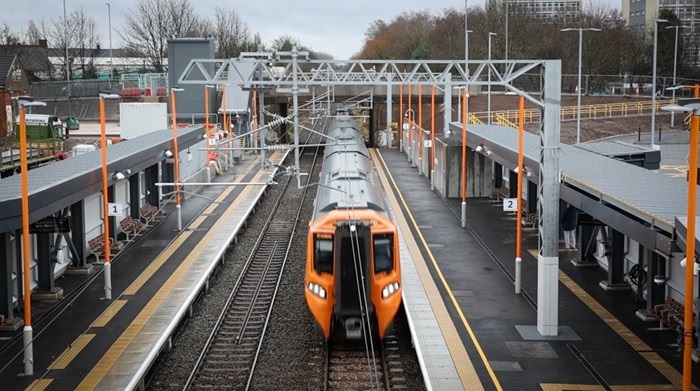
Ravensthorpe station will be shutting down from Sunday, December 14 until the summer of 2028Credit: NETWORK RAIL
Ravensthorpe station, near Dewsbury, will be shutting down from Sunday, December 14 until the summer of 2028.
Passengers traveling between Ravensthorpe and Dewsbury will be offered a rail replacement bus service during the closure, but should plan their journeys.
The new Ravensthorpe station will have a footbridge with lifts for step-free access, along with a new forecourt and drop-off facilities.
The revamped forecourt will make it easier for cars to drop off passengers, while a longer island platform means larger trains and more seats for commuters.
The project is part of the massive Transpennine Route Upgrade (TRU) which is tasked with rebuilding huge chunks of the northern rail network.
Engineers are putting in a new four-track railway through the old and new station sites, plus a brand-new Baker Viaduct.
Once finished, it’ll let faster trains overtake slower ones, cutting journey times between Manchester, Leeds and York.
Overhead line equipment will also be installed throughout the area which will power greener, electric trains in the future.
Ravensthorpe is a village and civil parish in West Northamptonshire in England.
The village has a single shop, a pub (the Chequers), a playing field, a small park and a woodland maintained by the Woodland Trust.
Andrew Campbell, TRU Sponsor, said: “The upcoming closure of Ravensthorpe station marks the beginning of an important phase for the programme, as work intensifies until summer 2028.
“The station area, known as Ravensthorpe triangle, has already seen a great deal of progress, and is currently one of the biggest civil-engineering sites in the North.
“Work already underway includes the installation of concrete beams to form the new Calder Road bridge and the installation of piers for the new Baker Viaduct.
“Both of which are helping enable major track realignment work for more reliable, smoother journeys across the Pennines.
“We’d like to thank the local community for their understanding as we deliver a modernised Ravensthorpe station which will support better rail travel across the region.”
If you’re planning to travel with children and parents this holiday season, may the grace of whatever god you believe in descend upon you with alacrity. May you never grow weary, frustrated or borderline psychotic when your 80-something mom questions your every decision moments after you make it, or when your child loses that wildly overpriced souvenir hours after you finally agree to buy it.
But let’s be real: Being on vacation with a parent and child requires many coping mechanisms that aren’t obvious before you’re deep into the experience. As the sandwich-generation adult responsible for your multigenerational holiday, you need to be part tour director, part therapist and part life coach to everyone counting on you for a vacation of a lifetime.
I know, because earlier this year I spent three weeks in Austria, Switzerland and southern Bavaria with my 81-year-old mother and grade-school daughter. This was a vacation that we’ll each remember, always. It was that good. But it wasn’t easy.
And it required a lot of preparatory work and patience. Here are my Top 10 lessons learned, for anyone who plans to soon or someday travel with a child and an older parent.
No. 1: Think of yourself as an expedition leader and master every logistical detail
For my daughter’s sake, I never left our hotel or Airbnb without a full water bottle and a hard-boiled egg or two from the breakfast buffet. Or a couple oranges or other fruit that wouldn’t get crushed at the bottom of a backpack. Nothing is fun on vacation if your kid gets “hangry.”
The calculation for a parent is different. Because my mom wasn’t interested in managing more than her own aches and pains, I knew I had to be in charge of every move every day, from getting to sites to negotiating purchases to finding places to eat and managing the heat and everyone’s daily moods and energy levels.
No. 2: Create an itinerary that suits your parent’s and child’s needs and personalities
You probably know your parent’s tolerances for everything from how much he or she wants to do to how regularly they need a food or rest break to how much time they need to get up and out the door each day. Some activities that your kid has her heart set on aren’t realistic for an older parent.
In Switzerland, for example, my daughter really, really wanted to go tubing at the top of Jungfraujoch, a massive glacier 10,000 feet above sea level near Interlaken. So she and I trekked to and played in the snow for an hour while my mom had coffee at a glaciertop restaurant.
Similar to how marathoners manage a race, multigenerational family vacations tend to have fast parts and slower parts, based on how draining (or rejuvenating) the previous day was. Monitor parent and child end-of-day energy (or exhaustion) levels. They’re a good indication of how ambitious you should be the following day.
For instance, after a long day of train travel, from Vienna to Interlaken or from Interlaken to Bavaria, I made sure the next day was free of any grand excursion or event. To recharge personal batteries, everyone needs to have their coffees, or play on a playground, or feel the sun on their faces, and spend time not being scheduled.
No. 3: Give your parent and child an idea of what to expect, and ask their opinion
What works for children often works for older parents: Clearly explain well ahead of time what they should expect from the daily vacation experience.
The lovely part of traveling with parents is that, unlike young children, they often have informed, realistic opinions about what they want and don’t want from the experience writ large and on a daily basis. Ask them: What do you want out of this vacation?
For my daughter, who was excited to see Neuschwanstein Castle in Bavaria — the one that is said to have inspired the Disneyworld facsimile — the key piece of advance intelligence I gave her was that we’d be spending three to four hours on our feet with a tour guide.
That helped her pre-set her patience for a lot of continuous listening.
No. 4: Adjust on the fly
As the quote attributed to Mike Tyson goes: Everyone has a plan until they get punched in the nose. On vacation, the punch will be figurative: You miss a train, are too tired to visit that must-see exhibit or natural wonder, or don’t like your hotel or resort as much as you thought you would.
Be willing to adjust your plans based on what will make your parent and child happy and willing to pivot when necessary.
When the June heat in Vienna became a little too much for my mom, we agreed to cut out the walk through an ornate Hapsburg garden and go to lunch somewhere with air-conditioning.
While my mom nursed her post-prandial local beer, my kid and I went for a leisurely stroll through a nearby park. The definition of a vacation win-win.
No. 5: Identify your aging parent’s individual ‘kryptonite’ — e.g., heat, distance, foreign languages or big crowds
For my mom, extreme heat is a major barrier to her ability and desire to venture out of an air-conditioned hotel room. If the temperature is cool, my mom will walk until the hounds of hell stop her, no matter how much pain she’s in; she equates taking a short taxi ride as a moral failure. But if the temperature rises above, say, 75, she wilts within minutes.
So, I checked the weather forecasts and planned strategically.
No. 6: Calibrate daily walking distances and stairs to match your kid’s and parent’s tolerances
Think realistically about exactly how long a walk, how many stairs up and — especially important for older parents! — stairs down.
I carried a small lightweight camping stool in my backpack every day, in case my mom needed to sit with no bench in sight. We used it only once … for my daughter, during the four-hour Bavarian castle tour. (My mom refused to sit down, saying she might not be able to get up again.)
Pro tip: If you’ll be traveling by train, beware the unexpected challenge of many, many stairs at the stations. There may also be stairs up and down a medieval castle tour, where people behind you may grow impatient with an older person’s slow pace. Think about whether to put your parent and child at the back of your tour group during long stair climbs and descents.
No. 7: Diffuse inevitable inter-generational friction and frustration
At some point in your journey, Mom, Dad or child will be as fed up with you as you are with them. Perhaps more so. Usually, it’s the small things that, repeated daily, push family members traveling together to a point of needing to blow off some steam.
Plan regular “steam valve” times when you let your loved ones express whatever is on their mind. (Who knows, maybe it’ll be pure gratitude … but probably it will be a gripe you’re rather familiar with.) It’s like couples therapy sessions, except the “couple” is parent and child on a vacation together. Let them speak their truth, and accept it with a mature, “Thank you for letting me know.”
On our trip, my mom and I made each other howl with laughter by doing imitations of each other. She made fun of my haranguing her for carrying her own luggage off trains, and I poked fun at her for habitually asking whether we were on the right train.
We did this over half-liters of beer, which didn’t hurt.
My daughter added her laugh-out-loud imitations of me being overly bossy or short-tempered, and her grandma’s habit of asking whether we were on the right train and sitting in the right seats.
No. 8: Expect to be exhausted by all the daily planning and guiding
You’re going to be doing the work of two people, caring for your parent and child on a vacation — as well as yourself. That is an hourly emotional and physical load you’ll need to monitor and manage.
Anticipate that tour-leader stress, and give yourself regular off-ramps from it. Maybe it’s a night off that you spend on your own while Dad or Mom stays in the room with your kid, watching cat videos on the iPad. Maybe it’s sleeping in for once, and having morning coffee by yourself.
Like they say on airplanes, put on your own oxygen mask before helping others with theirs.
No. 9: Don’t expect every day to be a thrill or feel like a postcard
Every day of your multigenerational vacation probably won’t be as rejuvenating as you perhaps had hoped. As I told my mom and daughter before our trip: Some days will feel like the best ever; other days not so much. Expect to feel the minor let-downs along with the surprising delights.
No. 10: Offer encouragement regularly (and especially on hard days)
Whether directed at a child or octogenarian parent, a few artfully supportive words from you — “You’re doing such a great job,” “You’re so strong for your age!” or my psy-ops favorite: “Gosh, I think I’m complaining more than either of you are” — will help keep them going through a rough patch.
During the first few days in Vienna, for example, I praised my daughter for holding my mom’s hand while crossing streets or walking over tram tracks. She never missed another opportunity to look out for her Grandma.
Likewise, when my mom’s hip began hurting after two miles of walking, I made the conscious decision to announce, rather loudly on the street, “You’re doing great, Mom!” She said nothing, but I knew she heard me. And she made it back to the hotel.
Think about what words of encouragement from someone else would make you feel great (e.g., “You’re doing an incredible job managing this trip for your mom!”) and do that for them.
And never, ever forget: You’re making big memories for you and your loved ones.
We were well into our journey from Los Angeles to Chicago, surrounded by cornfields and grain elevators, when the train halted and a voice rang out.
“All right, folks,” said a man on the PA system. “We’ve come to a stop in what appears to be the middle of nowhere.”
To a traveler in a hurry, this is the stuff of nightmares. To a seasoned passenger on the L.A.-Chicago train known as Amtrak’s Southwest Chief, it’s just another day.
Share via
When you board an American long-distance train in 2025, you are trading the airport routine for entry into a locomotive-driven realm where there is neither TSA nor WiFi. And AI might as well stand for aged infrastructure.
There will be delays, often because of passing freight trains. But in the bargain, you are freeing yourself from worry about aerodynamics or the chronic shortage of U.S. air traffic controllers and gaining access to ground-level scenery and idle hours.
You’re also joining a modest trend. Even before this fall’s bout of flight cancellations during the government shutdown, Amtrak had set records for passengers and revenue in fiscal 2024, then again in 2025. Ridership on the Southwest Chief rose 12.6% in the last year. Amtrak’s long-distance trains haven’t caught up with their pre-pandemic numbers yet, but we seem to like them a little more lately.
Passengers board the Southwest Chief at Los Angeles Union Station.
(Christopher Reynolds / Los Angeles Times)
To learn why, I boarded the Southwest Chief at Los Angeles Union Station on a recent Monday afternoon. I was ready to see a few desert sunsets from the Sightseer Lounge and hear what people say when they have the time to chat with a stranger IRL.
Before long, I had been party to conversations about fear of flying, doctors in Tijuana, how to make beef jerky and how to sleep in a moving metal box. I’d also heard these sentences:
“I like watching the country go by. I draw and I paint,” said passenger Nancy Roeder.
“I’m a fourth-generation model railroader,” said William Angus.
“I’m not going to lie to you. I took his life.”
This last comment came from a fellow traveler, ruefully disclosing an act of self-defense many years ago. No proof was offered, but I believed it. I also found the teller of the story (whom I won’t name) to be good company, thoughtful and generous.
In other words, on a two-day train, you meet people and hear things that you might not on a four-hour flight.
What Paul Theroux wrote 50 years ago in “The Great Railway Bazaar” is still true: “Anything is possible on a train: a great meal, a binge, a visit from card players, an intrigue, a good night’s sleep, and strangers’ monologues framed like Russian short stories.”
Flagstaff by dawn
Passengers relax in the Sightseer Lounge on Amtrak’s Southwest Chief.
(Christopher Reynolds / Los Angeles Times)
There’s one Southwest Chief departure from Los Angeles every day (and one from Chicago). If everything goes right, the 2,265-mile, 32-stop trip takes about 43 hours.
But only a rookie would count on that. About 60% of the time, the Southwest Chief arrives at least 15 minutes late.
For much of its route through Arizona, the route is flanked by old Route 66 and other lonely desert roads.
(Christopher Reynolds / Los Angeles Times)
Back in 1936, when the Atchison, Topeka & Santa Fe Railway introduced Southwest Super Chief service between Los Angeles and Chicago, this was a roughly 40-hour journey. The passenger list included plenty of show-biz people and the first stop was in Pasadena.
Nowadays, the Southwest Chief is run by Amtrak (which gets government funding but operates independently enough to be unaffected by recent government shutdowns). There are not so many show-biz people now, not as many frills. Instead of Pasadena, its first stop after Los Angeles is Fullerton, followed by a bend to the northeast. By the time I arrived in the dining car for my first dinner aboard, we were nearing Barstow.
“This way, young man,” lied the server winningly as he steered me to a table. (I am 65. In the dining car, every traveler, no matter how aged, gets greeted as a young man or young lady.)
Since booths hold four people, dining car stewards like Chuck Jones manage the delicate task of putting travelers together. Through PA announcements and whispers in the aisles, he encouraged us to introduce ourselves and keep phones off tables.
He also suggested we steer clear of politics — a tall order when traveling through a government shutdown from a city the president had just called “lawless” to one he had just called “the worst and most dangerous city in the world.”
Surprise: Almost everyone complied.
Over the course of six dining car meals as a solo traveler, I heard no political disagreements and met travelers from their 20s to their 80s.
Claudette Toth, a senior from Massachusetts, estimated that she’d only flown three or four times in her life. William Angus, a 24-year-old returning to Chicago from a pilgrimage to the San Diego Model Railroad Museum told of how much he loved running a 1/87 scale model of the Bakersfield-Mojave rail system, re-enacting operations from February 1953.
Ernie Haecker, of Sante Fe and New York, is a regular on Amtrak’s Southwest Chief train between Los Angeles and Chicago.
(Christopher Reynolds / Los Angeles Times)
As Angus spoke, Ernie Haecker, a longtime train lover, nodded in understanding, grinning beneath a handlebar mustache. Haecker, 77, an audiologist, told us he takes the train every six weeks, splitting time between Santa Fe and New York. After so many trips, he knows the crew, knows where the train will pause long enough for him to shave, knows he can count on chatting with “a whole panoply of folks every time.” He even knew the spot in Illinois where the train would switch from one old company’s tracks to another’s.
“We just left the old Santa Fe,” he would say when the moment came. “Now we’re on Burlington.”
My dinner on the first night was another happy surprise — a fairly tender and flavorful flat iron steak. There was a vase holding flowers at every table, along with white tablecloth.
A meal is served in the dining car.
(Christopher Reynolds / Los Angeles Times)
Still, nobody should expect a Michelin-star meal in an Amtrak dining car. It’s common for servers to bring out dessert before the main dish (to avoid running behind later) and at one meal, someone forgot my order and I had to start over half an hour later.
By the time we crossed into Arizona that first night, I was back in my roomette nodding off, lulled like a baby atop a washing machine.
We were near Flagstaff when I blinked awake, glad to catch sight of the sunrise and grateful to have a sleeping area of my own.
Arizona sprawl and the Amtrak class system
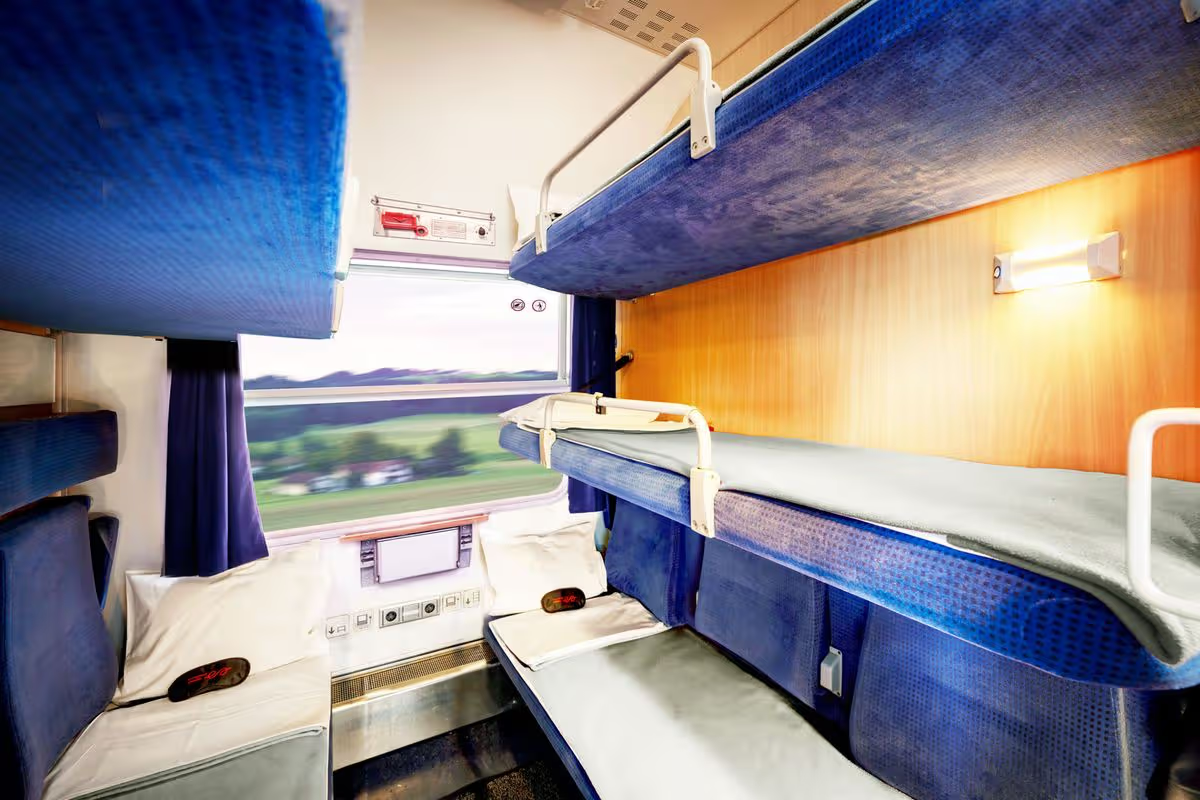
Roomettes measure about 23 square feet.
(Christopher Reynolds / Los Angeles Times)
Of the three ways you can travel long-distance on Amtrak, the fanciest option is a private room that’s about 50 square feet (including private bath). The cost — about $3,200 for a couple, one way, when I booked — includes meals in the dining cars. (Family rooms, which hold four people but share bathrooms, cost about the same. All rates fluctuate by season and demand.)
That was too pricey for me and my expense account, so I booked a roomette. The roomettes are about half the size of a private room, with dining-car access and upper and lower berths that allow two travelers to lie flat (or one to spread out). These share toilets and showers. This cost me $809. (For a couple, the tab would have been $1,112.)
The third option was coach class, which means sleeping in your seat. It’s a sensible choice if you’re traveling only a portion of the route, and it’s what I did when traveling this route as a college student 45 years ago.
I was intrigued to see that coach fares start at $198 — only a bit more than the starting price for a flight. But no, not intrigued enough.
As a coach passenger, you don’t get access to the dining car (unless there’s room and you’re willing to pay $20-$45 for a meal). Instead, you bring food, buy snacks in the cafe car below the Sightseer Lounge or, if truly desperate, try to arrange a restaurant delivery to an upcoming fresh-air stop.
Fortunately, all classes get access to the Sightseer Lounge, where armchairs and couches face big windows. I’ve heard of lounges getting pretty crowded and ripe on heavily booked trips, but our trained seemed less than half-full. A few coach passengers dozed in the lounge overnight (which is officially forbidden) and nobody seemed bothered.
That first morning, with coffee in hand, I tiptoed into the lounge, sank into an armchair and watched the desert sprawl while wispy clouds clung to the horizon under a brightening sky.
This postcard (or rather Instagram) moment came somewhere between Winslow and Holbrook. I’m told the scenery is more dramatic on the Coast Starlight (from Los Angeles to Seattle) and the California Zephyr (from Emeryville through the Rockies to Chicago). But this comes down to taste. If you like deserts, the Chief is hard to beat. (Though no matter the route, if you like photography, the train is a challenge: no open windows, so you’re always shooting exteriors through glass.)
As Arizona yielded to New Mexico, the dirt seemed to get redder and the ridges rose to form buttes. Along rivers and creeks, bright yellow cottonwood trees congregated in bursts of yellow. Occasionally we’d glimpse small towns and timeworn roadside attractions — a reminder that Old Route 66 basically follows Southwest Chief’s path between the West Coast and Albuquerque, N.M.
Amish in transit, elk at sunset
Travelers head toward seats at Chicago Union Station.
(Christopher Reynolds / Los Angeles Times)
“Living in L.A., you forget all this space,” said Kim Rinauro, a nurse from Los Feliz. “When you come out and see how vast this is, it really gives you a different perspective.”
“America is so ginormous,” said Jeanine Bass, a softball coach from Costa Mesa who was on her way to see family in upstate New York.
Meanwhile, one end of the observation car had been filled by several women in white bonnets, joined by men with straw hats, footlong beards and no mustaches. Occasionally I’d hear a sort of clapping sound. Amish families. Playing dominoes.
Amish travelers have been using this route for decades, one of the men told me, on their way to and from doctors in Tijuana. Seeking medical treatment that’s more affordable and easier to schedule than in the U.S., they take trains to Southern California, then continue overland across the border.
Just before we made a 45-minute stop at the station, which is surrounded by a grim neighborhood, an Amtrak staffer took the microphone to sternly address the coach-class travelers.
“Coaches: No alcohol,” she said. “If you bring alcohol, you can stay and spend all night here with the transients.” For those in rooms and roomettes, she continued, booze in private rooms is OK, but not in public spaces.
Farther into New Mexico, we passed the other Southwest Chief train, carrying passengers west.
Between Raton, N.M., and Trinidad, Colo., amid a gaudy sunset, we crept past a herd of elk, then plunged into a tunnel. Emerging, we caught a last bit of sunset, some of the most gorgeous miles of the trip.
Yet this, I learned later, is the part of the trip that Amtrak’s chief executive tried to replace with bus service in 2018. The effort failed and that executive is no longer in the job. But the battles in Washington over Amtrak funding and mission never end, which is why so many cars, like the Superliners on the Southwest Chief, were built between 1979 and 1996. Amtrak leaders have set a goal of replacing their older long-distance cars by 2032.
Speaking of hardware: Eventually I tried the shower. It didn’t go well. First, I saw that someone had stolen the shampoo dispenser. Then I couldn’t find a way to cool the scalding-hot water. I stood as far back as I could in the snug compartment and grimaced my way through it.
Missouri, Iowa and Illinois: The final miles
The concourse at Chicago Union Station is grand but quiet.
(Christopher Reynolds / Los Angeles Times)
On arrival day, I woke just as we reached the station in Kansas City, another gritty neighborhood along the tracks. Our news feeds were filled with fresh reports of nationwide flight delays because of the government shutdown.
Soon we were crossing the Missouri River, roaring through forest and skirting naked farmland where this year’s corn crop had just been cut. Then came Fort Madison, Iowa; the Mississippi River and the beginnings of Illinois. Water towers and grain elevators.
I zipped my bags shut, tipped the roomette attendant and dining car team. Soon I’d be stretching my legs at the Art Institute of Chicago, walking Millennium Park and along the Chicago River, checking out the skyline from Navy Pier.
We pulled into Union Station within an hour of our target time.
Was it a perfect trip? No. But it was full of humanity, scenery and comforting clangs and rumbles. I even liked the lurching way you had to walk down the corridors, adjusting balance as the train shifts. And then, to step off the train after two days into a brisk Chicago afternoon, 2,265 miles from home, having never left the ground? That’s almost magic.
Tracks dominate the view from the last car on the train.
Train services between Surrey and London were disrupted by an emergency incident and all power to the track needed to be switched off in the affected area, causing major delays.
THE I’m A Celeb campmates have been tucking into camel, even gnawing on the odd hoof or two.
Well, I suppose there’s enough of the beasts Down Under, with 1.2million roaming the wild.
Sign up for the Travel newsletter
Thank you!
Australia’s Ghan train runs for 1,850 miles between Adelaide and DarwinCredit: SuppliedUluru, formerly known as Ayers RockCredit: Francesco Riccardo IacominoThe tropical city of DarwinCredit: Getty
As hosts Ant and Dec told the reality contestants, there are more of the grumpy humps in Australia than in any other country in the world.
They are regarded as a menace there, destroying vegetation and fouling waterholes, but they were once treasured by Afghan traders.
They used them to carry goods across the outback — and the desert trail they used became the route of the famous tourist train, The Ghan, named in honour of the cameleers.
The 2,540ft-long train (that’s 77 London buses lined up) has 36 carriages and trundles along for 1,850 miles between Adelaide in South Australia to Darwin in the Northern Territory.
It’s an amazing bucket-list trip — which my husband and I went on through Journey Beyond.
You can book two or three-night breaks with off-train experiences, do the marathon trip in reverse or go halfway to the town of Alice Springs.
Alice, the spiritual home of the Aboriginal people, is the gateway to the majestic MacDonnell ranges and the breathtaking phenomenon Uluru, or Ayers Rock.
My adventure began by taking Journey Beyond’s overland service from Melbourne to Adelaide, a comfortable ten-hour journey.
It got me into practice for 54 hours on The Ghan.
Uluru was our target, so we split the trip and hopped off at Alice, boarding a four-wheel coach to join an Outback Spirit tour.
For the next eight days, brilliant guides Glenn and Colin brought the area’s history to life through sensational sights, stories and songs.
Our group was a bit like the I’m A Celeb campmates — a bunch of all ages with bossy leaders and faithful followers.
We bonded on our first night, while tucking into juicy steaks and salmon and singing along to Waltzing Matilda at the Original Outback Bush Barbie.
We were up early the next day to visit nearby Simpsons Gap, where the blue sky peeps through rocks, creating beautiful reflections in the nearby watering hole, home to black-footed wallabies.
Alice to Uluru is about 300 miles so we broke the drive at Kings Canyon Resort.
Time for another early morning walk.
And the witchetty grub — often gulped down on I’m A Celeb, which has its final tonight — made an appearance. Fortunately, no Bushtucker Trial
But I chose not to do the 500 uneven steps to the top of the 330ft high canyon followed by four miles round the rim.
Instead, I opted for one-and-a-half miles through the creek on the canyon floor.
In true Bear Grylls style, we learned about bushtucker and medicines used for healing, at the Karrke Aboriginal Cultural Experience.
And the witchetty grub — often gulped down on I’m A Celeb, which has its final tonight — made an appearance. Fortunately, no Bushtucker Trial.
Finally it was time for Uluru itself.
The giant sandstone monolith rising from the scorched earth is staggering in size. At 1,142ft it’s taller than The Shard and twice as old as the dinosaurs.
Trisha Harbord beside the GhanCredit: SuppliedA waterhole in West MacDonnell RangesCredit: GettyA wild camel by a road in the outbackCredit: Getty
What’s even more incredible, is that there’s another one and a half miles underground.
The name change from Ayers Rock was made in 2002 to show respect for the Anangu people and acknowledge their ownership of land.
Six years ago, visitors were banned from clambering up it.
But you can still walk or cycle round it, touch it in places, go into caves and peer through others to see Aboriginal rock art.
Besides Alice, The Ghan made two stop-offs.
The first was in Marla for a spectacular outback sunrise, accompanied by a bacon butty and coffee.
After a full-on expedition, we relaxed in 30C temperatures by the pool at the lovely Doubletree by Hilton Hotel Esplanade
And then in Katherine for a tranquil boat tour through the gorge to see crocodiles and rock art before The Ghan finally reached Darwin.
After a full-on expedition, we relaxed in 30C temperatures by the pool at the lovely Doubletree by Hilton Hotel Esplanade.
We explored the tropical city on the Timor Sea by taking the hop-on, hop-off Big Bus and visiting its brilliant museum and art gallery.
We also went to Mindil Beach market and the bustling waterfront.
But it was soon time to swap a train for a plane and head home.
Like the cameleers, our Australian outback adventure had, sadly, come and Ghan.
GO: AUSTRALIA
GETTING THERE: One-way fare from Heathrow to Melbourne from around £600 and returning from Darwin from £465.
BRITAIN’S quietest railway station has been revealed – and it has two trains a day.
The 175-year-old station had 68 visits in the year to the end of March 2025.
Sign up for the Travel newsletter
Thank you!
Elton and Orston station, Lincolnshire the quietest in Britain, with only two trains a dayCredit: GettyThe station had 68 entries and exits in 2024/25
Elton and Orston station, Lincolnshire, on the East Midlands Railway, network was the ninth least used station in 2024, according to the Office of Rail and Road (ORR).
The station is served by one train per day in each direction between Mondays and Saturdays.
On weekdays, one train stops on the way to Nottingham at 7.04pm and a second travels back to Skegness at 5.12pm.
The trains run at 5.57am and 5.10pm on Saturdays and no trains run on Sundays.
The lonely station is unstaffed and has no seating area of toilet.
The stop goes back to July 1850 following the implementation of the first passenger trains on the then Ambergate, Nottingham, Boston and Eastern Junction Railway.
In 1855 Great Northern Railway took over and a master’s lodge and ticket office were constructed.
Diesel units then replaced the older stream trains in 1967 and the only building still standing is a small brick-built shelter from the 1980s.
Elton and Orston’s page on the East Midlands Railway website says: “This station is served by a very sparse train service, currently only one train a day in each direction.
“The nearest stations with a more frequent service are Bottesford or Asklockton. This station has Barrow or Level crossing. We do not recommend that you use it without assistance.”
Other lonely stations from 2024/35 include Shippea Hill in Cambridgeshire (76 entries and exits) and Ince and Elton in Cheshire (98).
Last year’s least used station, Denton in Manchester currently sits at fourth after the number of entrances and exits remarkably doubled.
Despite minimal footfall, railway stations are often kept open as it is easier than obtaining permission to close a stop.
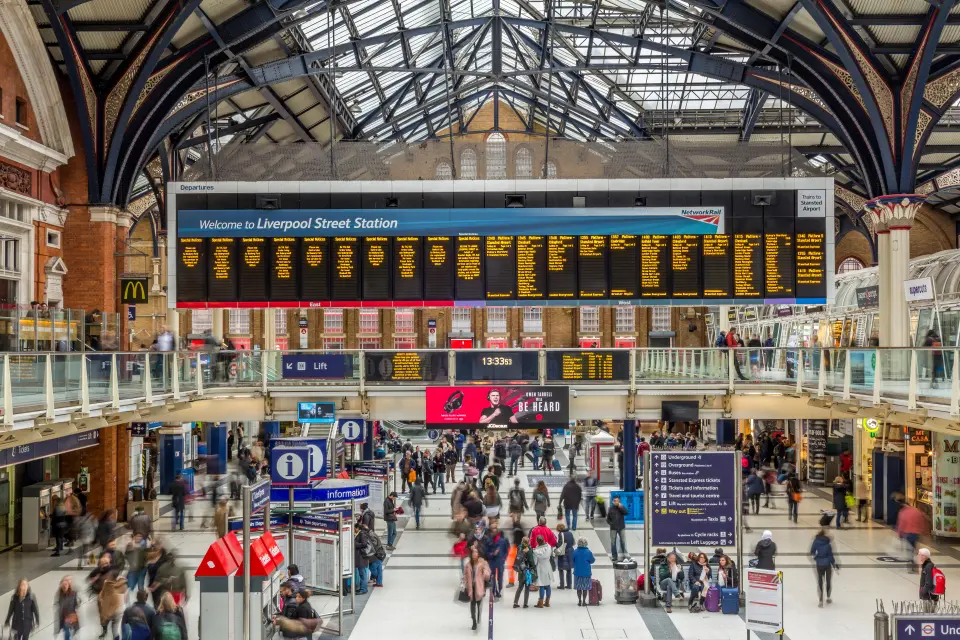
Britain’s busiest station, for the third year in a row, was LondonLiverpool Street beating out other London hotspot’s of Paddington, Waterloo and Tottenham Court Road.
The estimated number of entries and exits for the station was 98million, up 3.7 per cent from 94.5million.
London Waterloo was close behind with 70.4million entries and exits, up from number four in the 2023-24 rankings.
Until the opening of the Elizabeth Line, Waterloo claimed the title for all but one of the 18 years up to and including 2021/22.
Paddington was third with 69.9million entries and exits while Tottenham Court Road came fourth on 68.1million.
London Bridge was in fifth place with 54.7million, just in front of other major London stations – Victoria on 53.8million, Stratford on 51.5million and Farringdon on 50.2million.
Rounding out the all London top 10 was Bond Street with 42.8million and Euston on 40.2million.
Outside London, was Birmingham New Street (36.6million), Manchester Piccadilly (27.4million) and Leeds (27.3million).
In Scotland, Glasgow Central topped the table with 25.3million entries and exits ahead of the capital’s station, Edinburgh Waverley (22.8million).
Cardiff Central was the clear winner in Wales (12.5million) with Newport in second with 2.8million.
All of this adds toa total of 1.73billion passenger journeys that were made in the year to the end of March. This is up 7 per cent from 1.61billion the year before, say the ORR.
The station is 175 years oldCredit: GettyThe UK’s busiest station, Liverpool Street StationCredit: John McAslan + Partners
Feras Alshaker, director of planning and performance at the ORR, said: “This year’s statistics show rail usage continuing to grow around the country, and we’re also seeing the sustained impact of major investment, particularly the Elizabeth line.
“These insights are vital in understanding how travel patterns are changing and in planning a network that meets passenger needs.”
The ORR said their estimates of entries and exits mostly come from ‘Lennon’, the rail industry’s ticketing and revenue system, with some additional local ticketing data.
The regulator added that recent methodology improvements such as adding in ticket sales previously not available and having a better allocation of journeys to specific stations, means yearly totals are not always comparable over time.
The 5 quietest stations
The least used stations by entries and exits
Elton and Orston station, 68
Shippea Hill in Cambridgeshire, 76
Ince and Elton in Cheshire, 98
Denton in Manchester 100
Reddish South, Greater Manchester, 102
Paddington was one of the busiest stations last yearCredit: Terry McGourty – Commissioned by The Sun
WALES’ busiest train station is set to undergo a major renovation, starting next year.
Cardiff Central train station, which sees around 12million passengers a year, is set to undergo a £140million project that aims to increase the overall capacity of the station.
Sign up for the Travel newsletter
Thank you!
Cardiff Central train station is getting a massive upgradeCredit: Transport for WalesWork on the project will start next springCredit: Transport for Wales
The project has been given the green light, with work set to get underway in spring 2026.
Then the majority of the work will be completed by 2029.
Once completed, the station will have a larger concourse, new entrance and improved links between the rest of Wales and the wider UK.
Plans also include enhanced ticket gates, better access around the station, improved waiting areas and shops and more cycle storage areas.
It is hoped that the improvements will limit overcrowding at the station.
Previously, Weston Williamson + Partners (WWP) design director and project lead Phil Turner confirmed that they would be “acknowledging the historical fabric of the city whilst bringing it into the present day, and future-proofing the station for generations to come”.
The UK government is contributing £77.8million to the project and then £40million is being contributed by Cardiff Capital Region City Deal and £21million from the Welsh Government.
Overall, the project is part of a wider £445million investment from the Department for Transport that will improve rail infrastructure across the whole of Wales.
Heidi Alexander, Secretary of State for Transport, said: “The improvements to Cardiff Central will transform the experience of the millions of passengers who use the station every year, welcoming people through a spacious, modern station befitting the city it serves.
“Not only will this improve experiences for passengers, but it will also improve capacity in the station and unlock connectivity with the rest of Wales and beyond – supporting jobs and helping to kickstart economic growth.”
Jo Stevens, Secretary of State for Wales, said: “The UK government is investing in improving rail services in Wales with new stations, faster trains and more services connecting people with the well-paid jobs we are creating across the country and driving our economic growth.
“Our contribution to the funding of the redevelopment of Cardiff Central Station is a key part of this programme and will see Wales’s biggest station transformed to improve the experience of passengers by alleviating congestion and making the station more accessible.”
Alexia Course, Chief Commercial Officer at Transport for Wales, said: “Working with our design and build contractor, we can now move forward with the start of construction works next year.”
Cardiff Central originally opened in 1850 and was nearly completely rebuilt in the 1930s.
It is then expected to be completed by 2029Credit: Transport for WalesThere will be a wider concourse as well as new shops and seating areasCredit: Transport for Wales
British Rail then renamed the station Cardiff Central in 1973.
The station features an Art Deco symmetrical grand entrance, which was built between 1931 and 1934.
And the station currently features a main concourse with ticket offices and machines, an information desk and some shops such as Marks & Spencer and WHSmith.
The station also has a first class lounge, which is the only one in Wales.
NEW plans have revealed the massive overhaul of a busy London train station
Originally submitted back in 2023 by Network Rail and ACME, a new name is in the mix claiming their redesign of the London landmark will be half the cost and half the price of the other plans.
Sign up for the Travel newsletter
Thank you!
An architect firm has new designs for London Liverpool StreetCredit: John McAslan + PartnersThey claim it will be cheaper to do and take less time to complete than other plansCredit: John McAslan + Partners
It would also allow for the listed parts of the building to stay intact.
Other improvements would be to accessibility as well as new walkways, offices and it would allow room for more capacity within the station.
Plans also claim that the design would be much cheaper at half the cost of the current ACME scheme – which is estimated to be £1.2billion.
And they’ve said it would be completed in half the time too – from eight to four years.
John McAslan, founder of JMP, said: “At Liverpool Street Station we seek to embrace the past, present and future in a way that celebrates transportarchitecture by retaining and protecting the station’s historic fabric and also future-proofs it – an approach we adopted at King’s Cross Station.
“Our approach is phasable and will ensure Liverpool Street Station remains operational with minimal disruption during its construction period.”
Meanwhile Network Rail and ACME have also submitted plansCredit: ACMEThe new designs are focused on more space and amenities for travellers
A decision on the upgrades will be made by The City of London Corporation and is expected next year.
Meanwhile, Network Rail and ACME claim their application will redevelop Britain’s busiest station to make it “fit for thefuture“.
The revised scheme features amendments including reducing the size of the office block above the station and realigning the building to avoid interfering with the Grade II listed hotel next door.
The renders reveal that the entrances have been redesigned, as has the landscaping and benches around the Kindertransport statue.
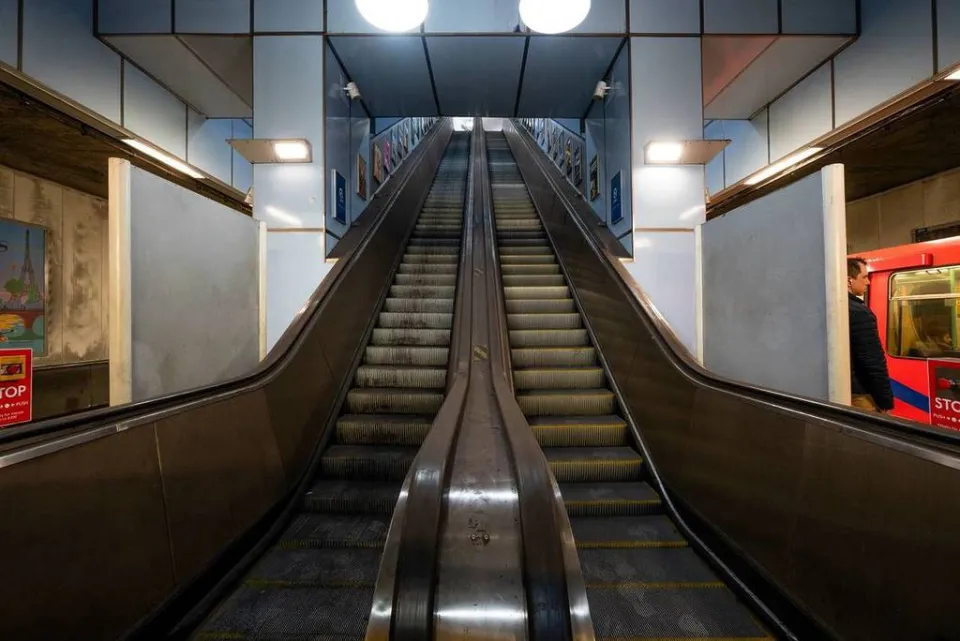
Details to transform Liverpool Street station include eight new lifts and increasing the number of escalators from four to 10.
The concourse will increase to help with the issue of over-crowding, the creation of step-free access across the station and London Underground.
There will be additional ticket barriers, toilets and family facilities.
New entrances on Liverpool Street, Bishopsgate and Exchange Square will be created. There will be better signage throughout the area which will make buses easier to find, and cycling storage will be added.
A new pedestrian route is set to be built up to Exchange Square and inside will be more cafes, restaurants and shops.
Friedrich Ludewig, Founding Director, ACME said: “We have embraced the challenge to design new entrances reflecting its position as the UK’s busiest train station, and roof structures that speak to the original 1875 structures and the 1990s extension.
He added that “Liverpool Street station will become the world-class transport hub that the City of London and all Londoners deserve”.
This small English train station named best in the UK is getting a £1million upgrade…
Penrith Station inCumbria,England, operated by Avanti West Coast, has just been named the best small station in the UK by the National Rail Awards 2025.
Plans include improving the station’s concourse and buildings, as well as the station house which sits on the concourse.
Currently disused rooms will also be refurbished and there will be new shops on one of the platforms.
The project also aims to create 12 new jobs and two new businesses for the town.
Currently, works on the station are expected to be finished mid-2026.
Network Rail is also planning to replace Clifton Bridge, which is near Penrith Station, in 2026.
The bridge is nearly 60-years-old and takes trains over the M6, but currently only one train can go over the bridge at a time causing delays to services.
Another project – ‘Connecting Penrith’ – will eventually connect Penrith station to Keswick and the wider Lakes allowing passengers to access more local leisure destinations.
And in the future, new ticketing could be introduced such as meet and greet cycle hire options.
A travel expert has shown how a perfectly legal train booking method called ticket splitting helped her save significant money on a journey from London to Manchester
If soaring rail fares have driven you towards lengthy car journeys and packed coaches, one travel expert claims there’s a completely legal method to pay significantly less for both short and long trips across Britain.
Amy Doherty, a travel expert at Travel by Luxe who frequently shares money-saving tips for British travellers, says she has discovered a technique that can “beat the system” without breaking any rules. She explains the secret lies in something known as train splitting.
“You’re essentially buying two or more tickets that cover your whole trip, and bizarrely, this often works out cheaper than buying one straightforward ticket from A to B,” said Amy.
Amy insists the process is far simpler than most people think. “A few years ago, you had to manually check every stop the train passed through to find savings. Now, most major booking platforms do it for you. They scan thousands of fare combinations and bring up the cheapest. It’s honestly one of the simplest ways to save money on train travel.”
To demonstrate its effectiveness, she recently tested it using an actual journey from London Euston to Manchester Piccadilly, one of Britain’s busiest long-distance routes.
Amy explained: “A direct ticket from London to Manchester can easily cost around £90 for a standard single if you book late. But by splitting the journey at Milton Keynes Central, the price dropped dramatically.
“I booked a standard ticket from London to Milton Keynes, and then another from Milton Keynes to Manchester. The total came in at £65 instead of £90. Exact same journey, same day, same destination… but £25 cheaper.”
Whilst some passengers simply use split tickets to cut the basic fare, Amy revealed an even cleverer approach: dividing your journey between standard and first class.
“What the booking apps don’t always highlight is when you could upgrade part of your trip to first class, and still save money overall. That’s the real magic of this hack. Sometimes the first-class fare for a shorter section of the route is incredibly cheap. If you combine that with a standard ticket for the first leg, you can travel in serious comfort without paying a premium.”
Using the Manchester example, she explains: “I went through every stop the train passed. On this route, Milton Keynes offered the perfect balance. A standard fare into Milton Keynes can be reasonable, and first-class advance fares from Milton Keynes up to Manchester can be surprisingly low if you book ahead. It meant I could upgrade to first class for the second half of the trip without blowing the budget.”
In Amy’s situation, the direct first-class ticket from London to Manchester on the same day was over £150. However, by splitting the fare, she managed to secure the standard-plus-first-class combination for around £80, saving roughly £70 overall, whilst still enjoying the benefits.
She adds: “This isn’t always the case, but it happens more often than people think. British rail pricing is unpredictable at the best of times, and that inconsistency actually creates opportunities.”
Amy also revealed that occasionally this method means hanging around briefly at the changeover station. “For the Manchester trip, we ended up waiting about 40 minutes at Milton Keynes because the earlier train into the station was cheaper and quicker. That little pause saved enough money to feel well worth it, and Milton Keynes has plenty of places to grab a coffee while you wait.”
How to save money with train splitting
First, check how much the full first-class ticket would cost. That gives you your baseline.
Next, examine every potential stopping point along the route. On certain lines there are two distinct train services, an express service and a stopping service, so you’ll need to review both.
After that, start searching individual single fares between your starting point and each of those stops, checking the standard price and the first-class price for each section.” Amy says she frequently uses booking platforms that display standard and first-class prices together, because “it becomes so obvious where the sweet spot is.”
When you identify that “cheap first-class leg”, she says, the choice is straightforward. “If the numbers work out, book it. You can often treat yourself to a proper comfy ride for less than the cost of a single standard ticket for the whole journey.”