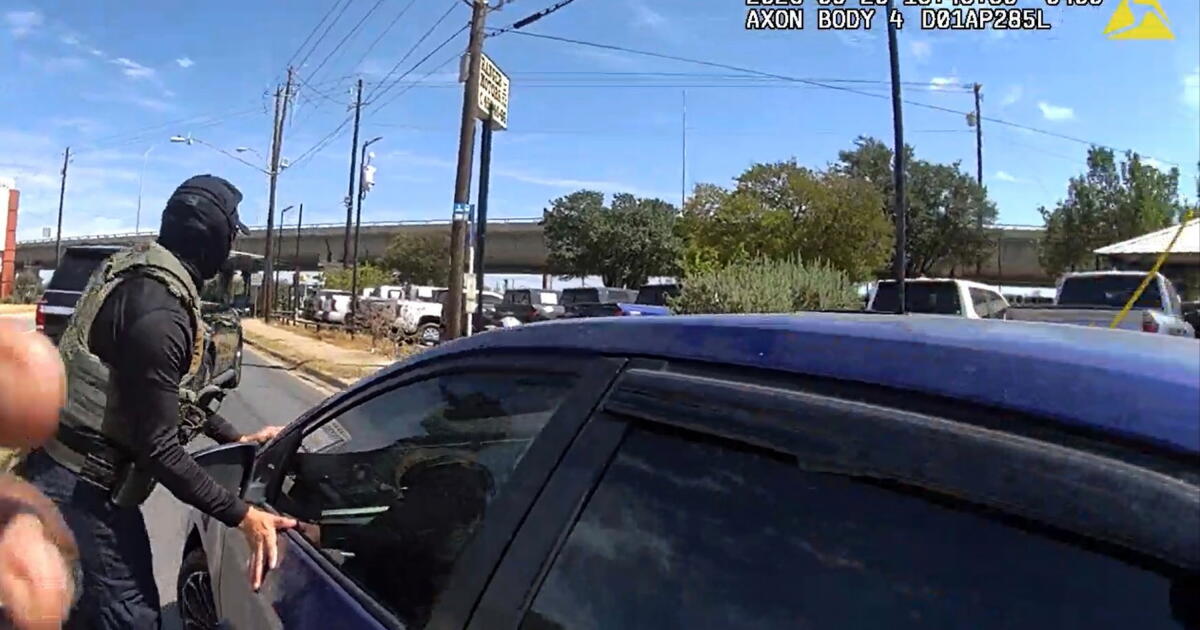
traffic stop

Thousands of complaints, few punished: LAPD faces racial bias claims

Over the past decade, the LAPD has received thousands of complaints accusing officers of targeting people solely because of their race, ethnicity or other form of outward appearance.

Only one has been fired for it.

The now-former officer, Edgar Garcia Cancino, was part of a San Fernando Valley anti-gang unit whose members were alleged to have improperly pulled over and searched hundreds of motorists. Cancino has appealed his termination, arguing that other officers in his unit carried out more of the problematic stops. He claimed the department sought to make an example of him because he refused to implicate his superiors in wrongdoing.

Accusations of racial profiling have long plagued the department, alienating generations of Black and brown Angelenos. Known within the LAPD as “biased policing,” such complaints have persisted despite repeated attempts to enact reform. But the question of how commonly profiling occurs in the LAPD remains a topic of pointed debate.

Years of studies by researchers and reporting by The Times and other news outlets have found Blacks and Latinos in L.A. are subjected to stops, frisks, searches and arrests at significantly higher rates than whites, regardless of whether they live in high-crime neighborhoods. Past LAPD chiefs have acknowledged isolated cases of profiling may occur. At the same time, they have denied that there is a widespread, systemic problem.

An internal LAPD investigation of Cancino’s Mission Division gang squad uncovered an “overwhelming pattern of intentional policy violations,” according to a summary of the case file reviewed by The Times.

Police investigators said in the case file that they identified hundreds of stops that were not properly documented, along with failures by the officers to active their body and dashboard cameras.

The allegations against Cancino largely hinged on two stops, according to his attorney. In May 2023, Cancino and his partner pulled over a man for allegedly speeding and having tinted windows, said his attorney, Nicole Castronovo. The vehicle’s registration turned out to be expired, Castronovo said, but the driver was allowed to leave without a citation after the officers searched his vehicle and found nothing incriminating.

When interviewed about the incident later, according to Castronovo, the motorist told police investigators that Cancino had stopped him because ”I looked like a G,” or gangster.

A few months later, the attorney said, Cancino was involved in another questionable stop, this time of a pedestrian who also later lodged a complaint alleging he was profiled.

Castronovo denied that Cancino had unfairly targeted anyone while on the job, saying he is a proud Latino who joined the force out of a desire to give back to the city where he grew up. She argued that the department’s investigators cherry-picked cases involving Cancino while ignoring similar behavior by other Mission cops.

“They have set up a system where it’s virtually impossible to sustain a biased policing complaint against an officer,” she said. “And then they turn around and weaponized” it against Cancino.

The probe’s findings were presented to LAPD leadership, who recommended that Cancino be fired and sent to a disciplinary hearing.

Castronovo argued in an appeal that her client and another fired Mission officer, Kim Lobos, had been denied a fair disciplinary hearing because both were initially represented by a lawyer appointed by the police union who had a conflict of interest. According to Castronovo, the union attorney also represented other Mission officers who agreed to testify against Cancino and Lobos. A Los Angeles County judge ultimately rejected their appeal.

Only one other LAPD officer prior to Cancino was fired for alleged racial profiling, a case that occurred in 2011.

According to the California Department of Justice, 4,878 allegations of bias were brought against LAPD officers from 2016 to 2025. Of those, only three were sustained.

The department’s rates mirror those of most other law enforcement agencies across the state. The Los Angeles Sheriff’s Department, which received roughly 10% fewer complaints over than span, has sustained six racial bias allegations against deputies.

Defenders of the Police Department note that any member of the public is allowed to submit a complaint regardless of whether there is supporting evidence, which leads to a high number of allegations that cannot be proven. Others note that the presence of body-worn cameras has helped disprove frivolous claims filed by criminal suspects or others who have an ax to grind with the department.

A report released last year by the advocacy group Catalyst California found that in 2025, Black motorists accounted for nearly a third of all stops for minor traffic violations, even though they make up roughly 8% of the city’s population. The same report found that Latinos, who are about 47% of L.A.’s population, were pulled over in 58% of all traffic stops.

Latino people are up to four times more likely to be subjected to “consent” searches, and Black people up to three times as likely, according to the Catalyst study. Fewer than 1 in 10 of those stops resulted in seizures of guns or drugs, the report said.

LAPD officials have pushed back on the findings, saying there is no established methodology for analyzing racial profiling data. Many factors affect the racial and ethnic patterns of traffic stops — from the predominant race of the neighborhood in which the stop was made or whether the stop resulted in an arrest and conviction — all of which must be considered when interpreting raw data, officials say.

In May, the Los Angeles City Council voted in favor of limiting the use of “pretextual” stops, in which police use a broken taillight or another minor equipment violation as justification to pull someone over in order to investigate whether a more serious crime has occurred. Activists and some council members said they wanted to ban a controversial tactic that enabled racial discrimination. The measure urges the Police Commission, which is responsible for LAPD policy changes, to take up the issue this year.

The LAPD’s unwillingness to acknowledge officer biases and hand down punishment when warranted serves only to drive a wedge between the community and the department, said Peter Bibring, a civil rights and police practices attorney.

“The department, year after year after year, is saying, ‘Nope this never happens, this never happens,’” Bibring said. “Then the community doesn’t feel like the department is recognizing these legitimate problems and responding to their concerns.”

During a deposition for a racial profiling lawsuit filed over a 2019 traffic stop, an LAPD official was asked what evidence it would take to get someone fired.

The attorney for the plaintiff, a Black man who sued claiming he was pulled over by three gang officers who handcuffed him and allegedly searched his vehicle without probable cause, asked: “If you found out that a given officer had pulled over 2,000 people in the last year, and all 2,000 of them were Black, would you have enough information, sitting here today, to determine whether or not that data alone indicated that the officer was engaged in biased policing?”

The LAPD official’s response, according to the deposition transcript: “No.”

Jim Willis, a former LAPD detective who later worked for the L.A. Police Commission’s inspector general’s office, pointed to past audits that found serious shortcomings in the department’s investigations of racial bias complaints. Furthermore, he said, many people who are affected never file claims because they don’t understand laws around consent searches — or they are just relieved when officers let them go.

Even when someone bothers to file a complaint, Willis said, it’s difficult to gather enough evidence from a brief interaction to prove an officer made a traffic stop solely because of race. If there was a minor traffic infraction or other probable cause to make a stop, proving their motive requires them to confess to acting with intent to discriminate, Willis said.

That’s why most claims are dismissed by LAPD investigators, he said, “unless, you caught somebody on their body-worn video saying, ‘Hey tonight we’re going out and we’re (pulling over) brothers.’”

Source link

ICE should do traffic stops despite recent shootings, Trump says, seeming to oppose new suspension

The Immigration and Customs Enforcement agency should continue vehicle stops after recent fatal shootings, President Trump said on Wednesday, seeming to oppose a new suspension of the practice used as part of his immigration crackdown.

ICE is “doing a GREAT job, one that has to be done,” Trump wrote on his social media site.

The Republican president said that to remove criminals he claims were let into the country under the previous Democratic administration “we must be strong, tough, and smart, and we CANNOT give up one of ICE’s most important and effective Crime Fighting tools, THE TRAFFIC STOP!” Trump said, “Once we do, we are playing right into the criminal’s hands.”

Trump administration officials have told Immigration and Customs Enforcement officers to suspend most vehicle stops after two deadly shootings within a week, people familiar with the decision said Tuesday.

The suspension was ordered after an ICE officer shot and killed a Colombian driver Monday in Maine and a week after another officer shot and killed a motorist in Houston, renewing criticism of the agency’s enforcement tactics that were widely condemned last winter after the killings of Alex Pretti and Renee Good in Minnesota.

In Florida on Tuesday, a third man in roughly a week died during an encounter with immigration officers. This time, a 28-year-old man was killed after he was hit by a tractor trailer while running from immigration and other federal officers, authorities said.

It’s a narrative that has been repeated again and again since the Trump administration’s immigration crackdown began, with federal officers confronting drivers and then saying they opened fire when the drivers’ vehicles became a danger. That’s despite decades of warnings from policing experts that shooting into moving cars presents a danger of its own and should almost always be avoided.

At least 10 people have been killed during immigration operations since the start of the Trump administration’s mass deportation campaign. At least four of those deaths involved people in vehicles, including the one last week in Houston, a trend so troubling that U.S. Sen. Susan Collins, R-Maine, said Tuesday that she had urged Department of Homeland Security Secretary Markwayne Mullin “to cease all non-urgent vehicle stops.”

John Sandweg, who was acting director at ICE, which is part of DHS, during President Obama’s Democratic administration, estimated recently that there have been roughly 18 traffic stop shootings during the Trump immigration crackdown.

The office of Maine Sen. Angus King, an independent who caucuses with Democrats, was told by DHS that ICE was suspending traffic stops, office spokesperson Matthew Felling said.

ICE, which has been under pressure to beef up arrest and deportation numbers, often says people it’s trying to arrest are increasingly resistant to leaving their homes. ICE officers blame immigration advocates who advise immigrants to stay in their homes unless ICE produces a warrant signed by an independent judge instead of the administrative warrants the agency generally uses that are signed by another ICE officer. So, ICE officers say, they’re forced to find other areas in which to make arrests.

Shooting angers Maine

Hundreds of people in Maine protested Tuesday over the fatal shooting of Johan Sebastián Durán Guerrero, a 25-year-old Colombian national. Advocacy groups said Guerrero, who had a wife and a young daughter, was authorized to work in the United States.

DHS said Monday that an officer, “fearing for public safety,” shot and killed Durán Guerrero while officers were watching the home of someone they believed was in the U.S. illegally and facing a final order of removal from the country. It said in a post on X that when ICE tried to stop a car driven by someone who came from the home, the person attempted to flee in the vehicle and the officer fired.

That was a shift from how King earlier described the encounter, when he said Mullin told him the officer opened fire after the man tried to use his vehicle as a weapon. King said Mullin told him the officers were trying to serve an arrest warrant but not for the man who was shot.

In a scathing post on X, outgoing Colombian President Gustavo Petro called the shooting a targeted killing “at the hands of the U.S. government.”

Petro, who has openly quarreled with Trump, urged Trump to provide an explanation and accused ICE officers of treating Durán Guerrero as “an inferior being without rights.”

In Wednesday’s social media post, Trump told ICE to be “judicious, fair and smart, and go back and do your very important job.”

Maine’s congressional delegation on Tuesday demanded a “comprehensive, transparent, and expedited investigation.”

Questions surround the shooting

Photos showed bullet holes in Durán Guerrero’s car windshield, but the officers involved in the shooting didn’t have body cameras, leaving many questions. Among them are how close the officer was to the vehicle when shooting, whether officers told Durán Guerrero to stop and why ICE believes he had put the public in danger.

Border czar Tom Homan told reporters Tuesday that the investigation needs to play out and that officers will be held accountable if they are found to have acted inappropriately or illegally.

Maine’s attorney general’s office, which said it is working with federal agencies to investigate, said initial statements suggest the driver was trying to flee in the direction of the officer, whose name hasn’t been released and who was placed on leave.

Collins said Mullin told her the DHS inspector general is investigating in cooperation with the FBI.

Democrats seeking to unseat Collins in November have sought to connect her with ICE’s methods, which have drawn public scrutiny and derision. Collins later said in a statement that although ICE needs to improve, eliminating the agency would make the nation less safe.

Maine Secretary of State Shenna Bellows, a Democrat who is vying for Collins’ seat, called the ICE officers at the shooting “thugs” during a vigil Tuesday in Lewiston.

Superville, Whittle, Brook, Santana and Sisak write for the Associated Press.

Source link

City Council moves to limit traffic stops; LAPD policy not changing

The Los Angeles City Council on Wednesday voted in favor of new restrictions on so-called “pretextual” traffic stops, signaling a growing impatience with the Police Commission’s failure to rein in a controversial LAPD tactic that critics say enables racial discrimination.

The vote requests that the department’s all-civilian watchdog adopt new guidelines similar to San Francisco, which bars police officers from pulling people over for broken taillights and other minor equipment violations unless there is a safety threat.

“Board of Police Commissioners: Get this done; we’re watching, no excuses,” said Councilmember Imelda Padilla, who shared stories of her late father being stopped by police with no explanation. “This is what this generation wants.”

If the new policy were adopted, LAPD officers would be prohibited from stopping motorists, bicyclists or pedestrians for minor violations “except in cases where the violation poses a significant and imminent safety risk.”

The unanimous vote followed sometimes emotional testimony at a City Council meeting from Angelenos about how their lives had been shaken by discriminatory traffic stops and searches.

Several speakers pointed to a growing body of research showing that minor stops disproportionately affect Black and brown motorists and do little to combat violent crime while eroding public trust. In recent years, there have been several high-profile traffic stops that resulted in officers or drivers being killed.

The current LAPD policy, in place since 2022, requires officers to record themselves on their body-worn cameras stating the reasons for suspecting a more serious crime had occurred when making a stop for a minor infraction.

The measure passed Wednesday stops short of a categorical ban that some have sought, but was still met with cautious optimism by traffic safety reformers.

“It helps place the city of Los Angeles on a path of ending racial profiling by LAPD,” said Chauncee Smith, of Catalyst California, a group that advocates for racial justice.

Smith’s group recently released a report that said such stops have continued to disproportionately affect Black and Latino drivers.

Smith said the new policy advanced by the City Council represents “a more formal, explicit prohibition,” adding that he hopes the Police Commission will ultimately give officers even less discretion in deciding when to make stops.

In a brief statement after the vote, Mayor Karen Bass thanked Harris-Dawson for his “leadership and dedication in moving this updated policy forward.”

“I will work closely with the Police Commission and Chief [Jim] McDonnell to implement it and to provide officers with appropriate training,” Bass said.

Any changes to the policy will probably draw strong challenges from within the LAPD and the Los Angeles Police Protective League, the powerful union that represents the city’s rank-and-file officers.

McDonnell has publicly defended the stops as an essential law enforcement tool in the department’s fight against guns, gangs and drugs. He and some transportation safety advocates have argued that persistent traffic deaths — road fatalities have in recent years outpaced the number of homicides — indicate the city needs to crack down harder on reckless driving.

The proposed change comes against the backdrop of a broader effort by city leaders to wrest greater oversight of the LAPD from the Police Commission. A spokesperson for the civilian body said it would evaluate how to proceed.

“The Board intends to place this item on a forthcoming agenda to enable a full and transparent discussion of the Department’s pretextual stop policy, which will include the recommendations from the City Council,” the statement said.

McDonnell did not respond to a request for comment.

The vote was the latest move in a broader push to remove police officers from traffic enforcement. Some advocates have argued that more punitive approaches that prioritize arrests and traffic citations do little to keep city streets safe; instead, they argue the city should invest in unarmed civilian workers and speed bumps, roundabouts and other street modifications that could help curb unsafe driving.

Adrienna Wong, a senior attorney with the American Civil Liberties Union, said Wednesday’s vote showed city leaders taking action on an issue that was personal to them.

“I think what you saw today in council was the council members have lived experiences and are hearing from their constituents and are voting to represent their constituents in a way that the Police Commission has not,” she said.

Source link