traders

Why is Kenya cracking down on foreign traders and small retailers? | Business and Economy News

Kenya is beginning a crackdown on foreign nationals operating small retail shops and engaging in hawking, after President William Ruto directed authorities to shut down such businesses from September 7.

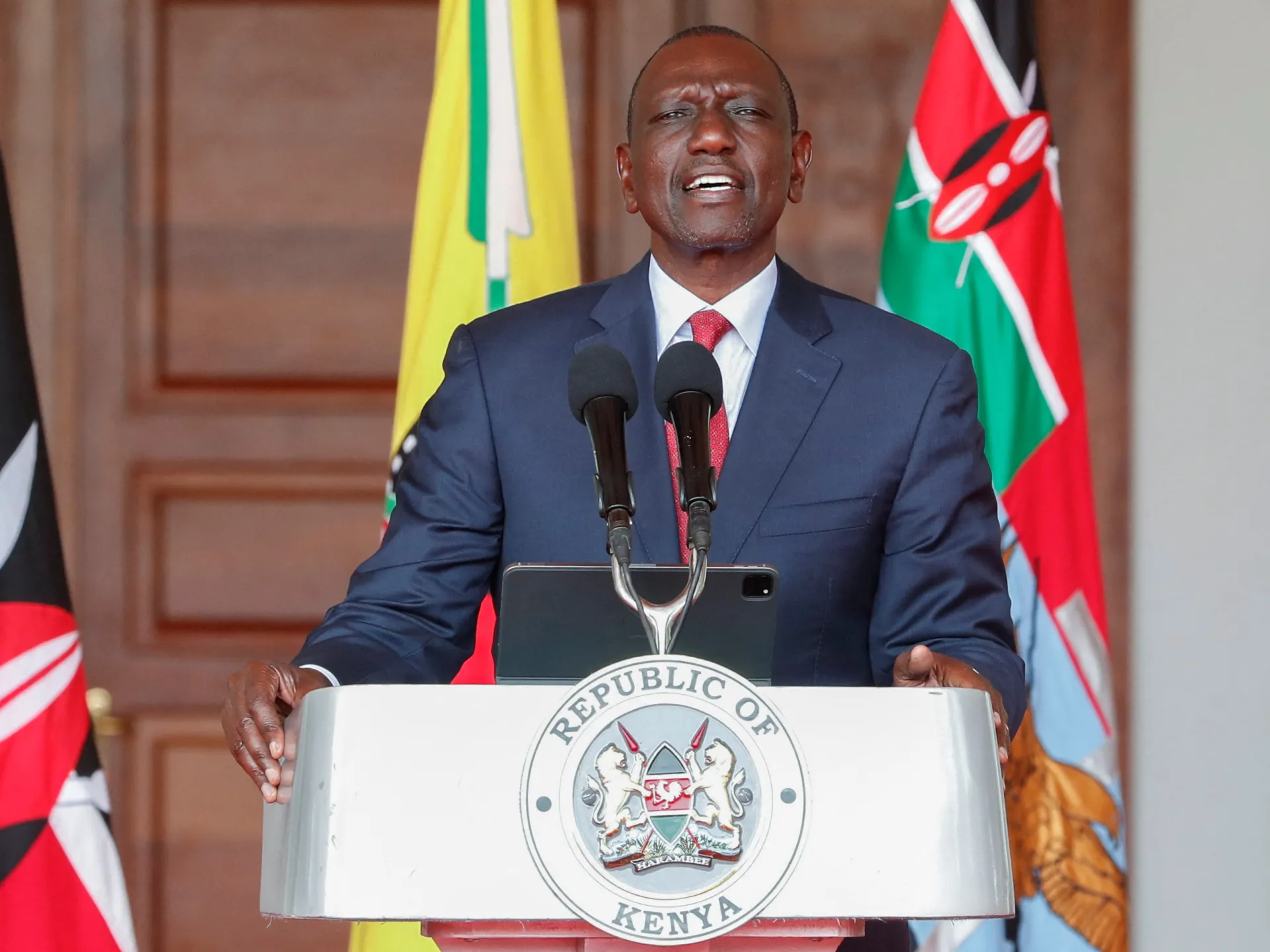
Ruto made the announcement on September 2 while addressing micro, small and medium-sized enterprise (MSME) traders at State House in Nairobi.

He said foreigners should not compete with Kenyans in businesses such as hawking and small retail, while foreign investment was welcome in activities requiring greater capital and investment.

What is Kenya doing?

Ruto directed authorities to begin shutting down small businesses operated by foreign nationals from September 7, saying hawking and small-scale retail should be reserved for Kenyans.

He said the government would take administrative action while the Parliament of Kenya considers the proposed Local Content Bill, 2025.

He also directed National Assembly Majority Leader Kimani Ichung’wah and Trade Cabinet Secretary Lee Kinyanjui to accelerate the bill’s passage through Parliament.

Why is Kenya moving against foreign traders and small retailers?

Hesbon Hansen Owilla, a professor at Aga Khan University in Nairobi, said the policy would help protect Kenyan traders.

“Yes, this is the best way to protect Kenyan small businesses and traders,” he told Al Jazeera. “Kenya is trying to bring in only investors who are bringing capital that can spur economic development by creating jobs rather than allow small-time foreign traders who only stifle Kenyan small traders while enjoying the robust infrastructure that Kenya has built and social securities.”

“It’s like expatriates. A country cannot allow expatriates in for jobs locals have expertise in,” he said.

The proposed Local Content Bill, 2025, would require foreign companies to increase local sourcing and employment, among other measures.

The bill is still being considered by Parliament and has not yet been enacted into law.

What businesses and traders are affected?

The directive is aimed at foreign nationals operating small retail shops and engaging in hawking. Ruto specifically referred to hawking and small shops when announcing the crackdown.

Kenya’s broader micro, small and medium-sized enterprise (MSME) sector covers a wider range of businesses. The government has not publicly provided a comprehensive list of all businesses covered by the September 7 directive or an estimate of how many foreign nationals will be affected.

Ruto also directed Ichung’wah to engage the State Department for Immigration’s principal secretary and establish the requirements governing permits issued to foreign investors and traders. It is therefore not yet clear how the directive will apply to foreign nationals who already hold permits to conduct business in Kenya.

Foreign Affairs Principal Secretary Korir Sing’Oei said on September 6 that foreign nationals who meet Kenya’s legal requirements, including holding the necessary work permits and licences, remain legally protected to operate businesses in the country. He said Ruto’s remarks had been taken out of context and were made in the context of the Local Content Bill, 2025.

How significant is foreign investment in Kenya?

Kenya’s 2024 Foreign Investment Survey, the latest such survey published by the Kenya National Bureau of Statistics (KNBS), put the country’s stock of foreign direct investment at  1.458 trillion Kenyan shillings ($11.27bn) at the end of 2023, up 8.5 percent from 1.343 trillion Kenyan shillings ($10.4bn) at the end of 2022.

These figures cover foreign investment across the Kenyan economy and are not limited to the small-scale trading activities targeted by Ruto’s directive.

Surveyed foreign-invested enterprises employed 224,769 people in June 2024, including 221,267 Kenyan employees. Foreign employees accounted for 1.6 percent of the workforce in those enterprises.

What is the Tata Chemicals case?

The Tata Chemicals dispute is separate from the small-business crackdown.

Tata Chemicals Magadi operates a soda ash business at Lake Magadi in Kajiado County. On July 28, the Kenyan government suspended the company’s mining operations, citing alleged compliance issues under the country’s mining laws. The suspension also affected its soda ash exports.

On September 3, Ruto said he had ordered Tata Chemicals to leave Kenya, saying the company had not provided sufficient benefits to the local community in Kajiado County. He said the government would bring in two new companies to establish glass and chemical manufacturing facilities in the area.

Tata Chemicals said it had submitted the information requested by Kenyan authorities and was awaiting further communication. The company has said it complied with regulatory requirements and remained committed to resolving the matter through legal and regulatory channels.

The Tata dispute concerns the company’s soda ash operations at Lake Magadi. This is separate from the directive targeting foreign nationals operating small retail businesses and hawking.

What does this mean for foreign investment?

International business consultant and Sols Inclinations Ltd Managing Director Solomon Kinyanjui said the distinction was not between welcoming foreign investment and rejecting it, but between foreign capital that complements Kenyan enterprise and activity that displaces it.

“The issue is not whether foreign capital is welcome, but what role it should play in Kenya’s economy,” he told Al Jazeera. “Foreign investment should complement Kenyan enterprise, not substitute for economic activities Kenyans can competitively undertake themselves.”

He said the stronger case for foreign investment was where it brought capital, technology, skills, industrial capacity and access to export markets, but warned that the government needed to draw the boundary clearly and apply its rules predictably.

Hafsa Abdiwahab Sheikh, a journalist, said the policy could have both benefits and costs depending on how it is implemented.

“The policy could create more jobs for Kenyans and encourage skills transfer, while helping protect local employment,” she told Al Jazeera.

“However, if implemented unpredictably, it may discourage foreign investment and increase business costs, leading to higher prices. It could also affect relations with foreign communities if foreigners are blamed for unemployment.”
Source link

Police fire teargas at Kenyan traders protesting higher taxes on imports | Protests

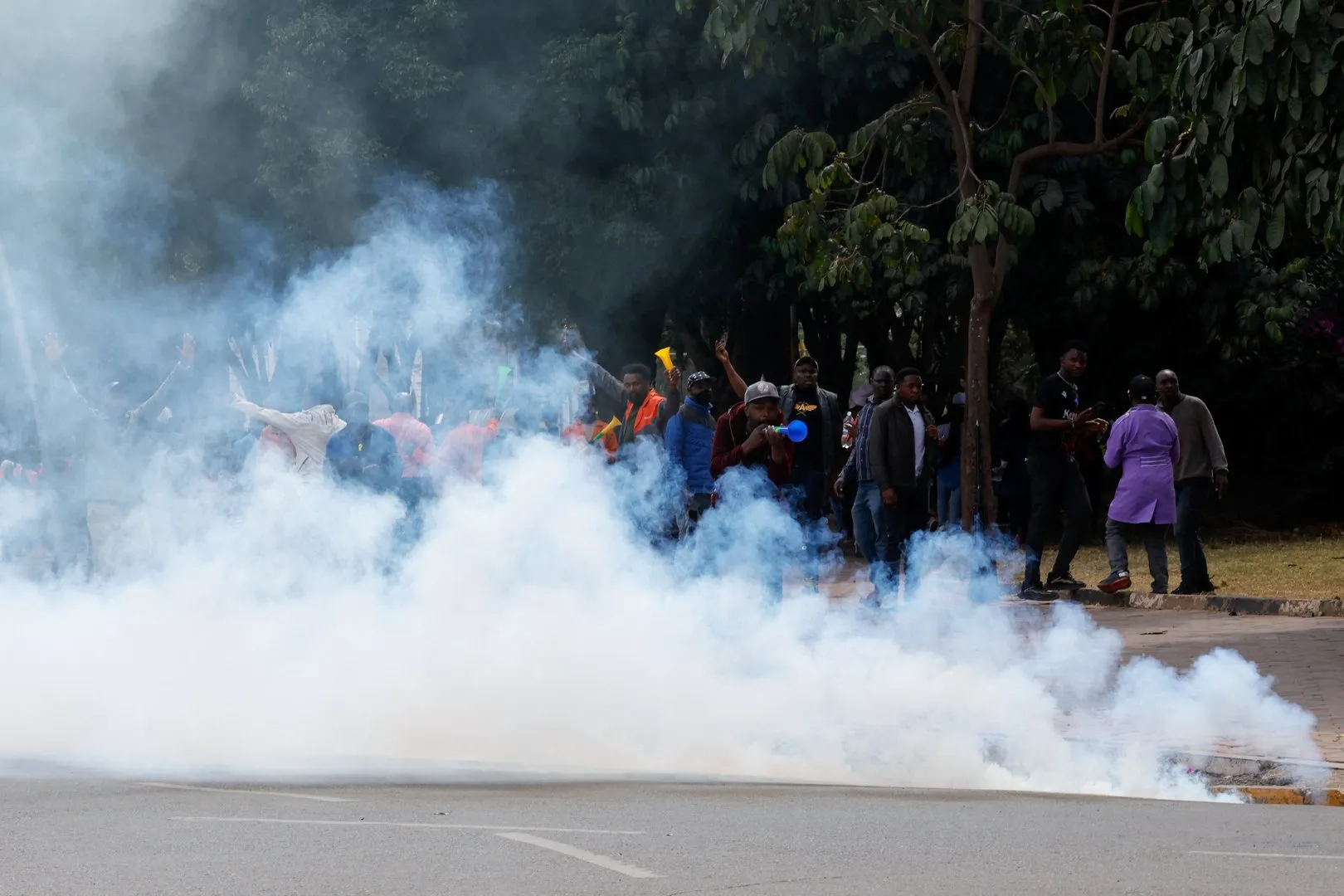
Kenyan police fired teargas at traders in the capital Nairobi on Friday, during a protest against higher taxes on imports introduced by the government. The new tax rules raise the minimum import fee for a shipping container by nearly 30 percent.

Source link

Closure of al-Makha port leaves workers and traders fearing for the future | Conflict News

Taiz, Yemen – Mohammed Al-Homaidi, a labourer in his 30s, has been working at the al-Makha (Mocha) port in western Yemen since its reopening in 2021.

Even though he was reliant on a daily wage, his earnings provided a decent standard of living for his family.

Recommended Stories

list of 4 itemsend of list

But things changed on August 9, when the Red Sea port was targeted by Houthi attacks that killed at least seven people.

With the conflict between the Yemeni government and Houthi forces escalating after a long-standing truce collapsed last month, finding daily work was no longer his priority, but his safety.

“It was around 12:30pm when the explosions [were heard] at the seaport, which was full of workers at the time. I couldn’t understand what was happening, and we couldn’t flee because the explosions were continuous,” Al-Homaidi told Al Jazeera. “After about an hour and a half, I ran outside the port and didn’t stop until I reached home.”

Thirty more people were injured in the barrage of Houthi drone and missile strikes that targeted the port and surrounding areas.

Houthi forces have continued to target the port and surrounding areas on a near-daily basis, resulting in dozens of deaths and injuries.

On August 11, the Houthis targeted a vessel at al-Makha port, killing three Pakistani crew members and injuring eight other seamen.

Three days later, the Houthis targeted two cargo ships at the Red Sea port, damaging the facility’s remaining infrastructure.

Due to the repeated Houthi attacks, operations were suspended last Friday to avoid putting the port’s 1,500 workers’ lives in danger.

For Al-Homaidi and other workers whose salaries were dependent on their daily labour, the port’s closure means a new struggle to put bread on the table.

“I am happy that we are safe at home today, but we are jobless now because we rely on daily wages,” Al-Homaidi said. “I don’t have any savings, and our food at home is running out. How can I provide basic needs for my family?”

Life beyond the seaport

Al-Homaidi also has experience working in al-Makha’s other major industry: fishing. But dangerous attacks around the Red Sea mean this is not an option for him and his colleagues at the port either.

Local fishermen have been ordered by local authorities not to go out to sea until further notice – but with money running low, a group of fishermen still ventured out on August 11. Their families are continuing to desperately search for them after they failed to return home.

With near-daily Houthi attacks on al-Makha, public beaches, parks, the coastal walkway and other areas have also been closed.

Families avoid going outside due to the threats of Houthi drones and missiles, and a strict nightly curfew for motorcycles is in place from 11pm to 6am.

Compounding the community’s suffering is a complete blackout of landline and mobile communications. Residents who can afford it use Starlink satellite internet. But for most Yemenis in al-Makha, there is no way to reach the outside world.

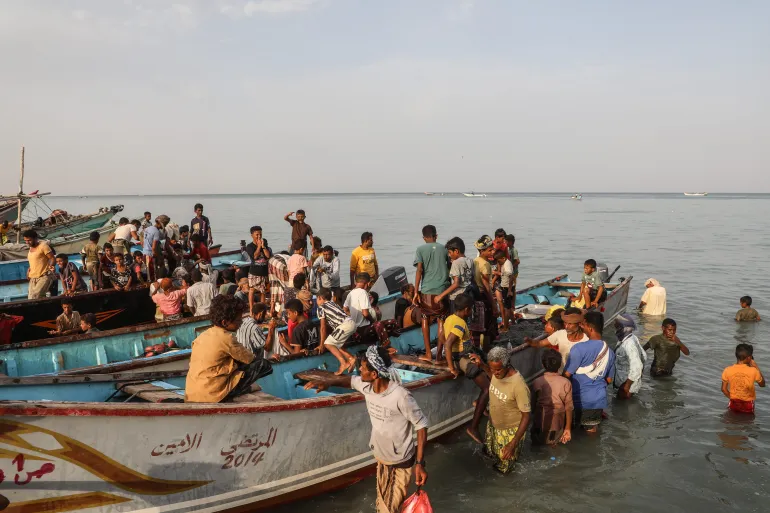
Houthi attacks have stopped fishermen in al-Makha from going out to sea
Houthi attacks have stopped fishermen in al-Makha from going out to sea [File: Al Jazeera]

Back to square one

Abdulmalik Al-Sharabi, director of al-Makha port, confirmed to Al Jazeera that repeated Houthi attacks have forced the port to halt operations. At least six merchant vessels carrying commercial cargo have been struck since the most recent bout of violence, resulting in casualties among civilians and seamen.

“More than 1,500 port workers lost their jobs, while 16 were killed and 22 injured as a result of the Houthi attacks,” Al-Sharabi told Al Jazeera English.

Missile strikes have specifically targeted civilian infrastructure at the port and in surrounding areas, he said.

“The attacks targeted commercial and service areas, workshops, equipment, and the port pier, destroying it to the point that it ceased operations,” Al-Sharabi noted.

Operations across 30 shipping and customs clearance agencies have ground to a halt, affecting workers.

The port, which was closed between 2015 and 2021, serves as an economic lifeline for Taiz governorate as well as other Yemeni economic hubs such as Lahj, Hodeidah and Ibb. With it now closed, traders there will be forced to route imports via the port of Aden, driving up logistics costs.

“We were happy to have a seaport with such operational capacity, but today we are back to square one,” Al-Sharabi said.


Fishermen and traders are worried for their future in al-Makha, where 1,500 have lost jobs after Houthi attacks killed 16 fishermen and forced the port to shut down
Fishermen and traders are worried for their future in al-Makha, where 1,500 have lost jobs after Houthi attacks killed 16 fishermen and forced the port to shut down [File: Al Jazeera]

No money, no food

Abdulraoof Abdullah, a fisherman in his 50s from al-Makha, has no source of income for his eight family members other than the fish he caught in the Red Sea. Due to the instability off al-Makha’s coast, he has not been out to sea since August 11.

“We are out of work now, and our homes are almost empty of food. We try to secure meals each day either by going into debt or asking friends for help,” he told Al Jazeera English.

With the port closed and food imports reduced, Abdullah said he expects prices to rise in the market, and he has no choice “but to pray to Allah.”

“We don’t have money to buy food for today, so how could we possibly have money to stockpile food?” he added.

“Most residents in Makha are fishermen, and we are currently out of work,” Abdullah said. “When we have jobs, we can buy food; otherwise, we will have to displace to another area where we can find work to support our families.”

Trading woes

Rashad, a local trader in al-Makha who preferred to be identified only by his first name, was importing goods through shipping agencies at the port since 2021. Given that his warehouses are just a few kilometres from the port, this was by far the cheapest option.

“Our goods are currently held up in Djibouti, and shipping costs have surged due to ongoing tension in the Red Sea,” Rashad told Al Jazeera. “Furthermore, we were just informed that our cargo will now be redirected to Aden, meaning we will have to pay significantly more for overland transport from Aden to al-Makha.”

With the warehouses still stocked with food from earlier orders, prices have not yet risen. But if the port remains closed, traders will be forced to increase prices on future shipments arriving via Aden.

“I am a resident of al-Makha before I am a trader. Any price increase directly impacts my family and neighbours – something I desperately want to avoid. But unless al-Makha seaport reopens soon, price hikes will be inevitable,” he added.

Although Rashad didn’t have any cargo on the ships that were recently hit in Houthi attacks, he said he feels empathy for other traders who suffered financial losses.

“Some people assume traders are financially comfortable, but we are in a state of constant worry. We track our shipments for months until they safely reach our warehouses,” he said.

“No one can imagine the devastation felt by traders who lost everything at al-Makha port. The harsh reality of this war has impacted every single Yemeni, and we are no exception.”

Source link

Oil prices rise as traders assess US-Iran talks on Strait of Hormuz deal

Published on

Oil prices rose in early trading on Monday as market participants weighed mixed signals from the US and Iran, with concerns that a deal to reopen the Strait of Hormuz could take longer to materialise.


ADVERTISEMENT


ADVERTISEMENT

Futures for international benchmark Brent crude for October delivery gained 1.04% to $84.42 a barrel, while US West Texas Intermediate futures for September advanced 0.83% to $78.83 a barrel.

Iran’s Revolutionary Guards insisted on Sunday that they would not reopen the Strait of Hormuz until the US complied with a list of demands.

Tehran insists on retaining control of the waterway – through which a fifth of world oil and LNG pass – after the war and wants to charge tolls for passage, which Washington has pushed back against.

Attacks in the strait, which was free to transit before the war, led to the collapse of an April ceasefire, and mediators have urged both sides to return to the terms of a subsequent June memorandum that set out a path for peace talks.

Iran on Saturday released a list of conditions for reopening the strait, including an end to the war on all fronts, the lifting of a US counterblockade of Iranian ports, the end of sanctions, the release of frozen assets and compensation for wartime damage, the Tasnim news agency reported.

Those conditions echoed the terms of the June agreement, which included a provision to create a $300 billion reconstruction fund for Iran.

Iran’s Revolutionary Guards said on Sunday that their strategy was to maintain their blockade “until the enemy accepts all our conditions… the strait is now actually a theatre of war for us and not just a waterway”.

For his part, US President Donald Trump said in an interview: “We are low-keying it.”

“We are only semi-negotiating with them,” he was quoted as saying. “We are just watching Iran with its huge inflation and the fact they have no money.”

“It will work out,” he added. “It’s like a chess game.”

Additional sources • AFP

Source link