tourist

Exact date of Spanish islands protests revealed as ‘kill a tourist’ graffiti spotted

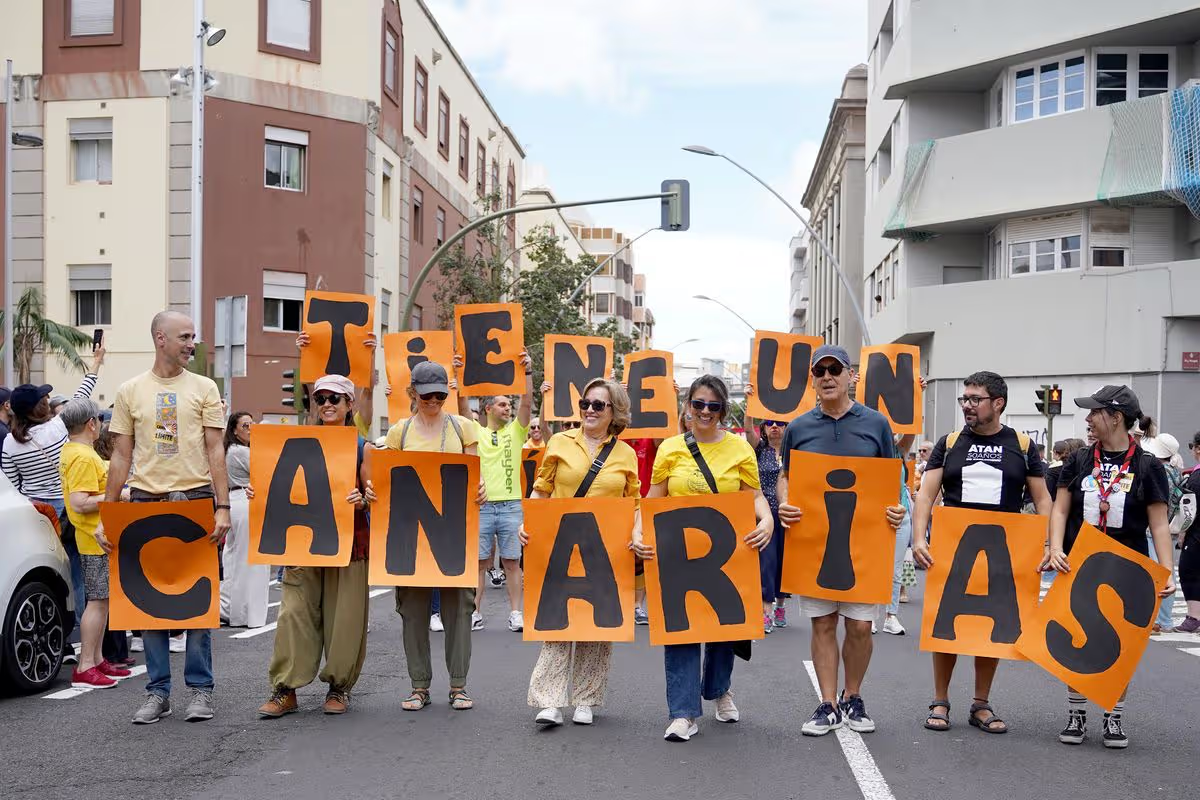
Brits heading to popular Spanish islands this summer may find themselves at the heart of anti-tourism protests, with a pressure group insisting that there will be a “historic turnout”

Spain’s anti-tourism protests could escalate this summer, as pressure group Menys Turisme Més Vida (Less Tourism More Life) announced plans for a major demonstration that it expects to have a “historic turnout”.

The news comes as sites in the Canary Islands have been daubed with anti-tourist graffiti, including reports from local news outlet Canarian Weekly of a ‘kill a tourist’ slogan being spotted in Tenerife. The graffiti was spotted by two expats hiking in Punta del Hidalgo, who then claimed they saw further disturbing graffiti during a walk to Bollullo Beach on the island’s north coast.

In a separate incident last week, five estate agents in Majorca with international names were daubed with graffiti including ‘guilty’ and ‘Guiris out!’ in an overnight attack. Guiri is a derogatory Spanish term used for tourists from Northern Europe.

Menys Turisme Més Vida announced a protest in Palma, a popular destination for Brits on the island of Majorca on July 26, which coincides with the start of the busiest school holiday season. Meanwhile there are protests planned in Menorca on June 13 with a similar anti-tourism sentiment.

In a statement on its website, the group said: “️We consider that the demands expressed during previous mobilisations have been ignored while problems such as the housing access crisis, tourist saturation, the destruction of the territory, the precariousness of living conditions and the pressure on public resources and services continue to worsen.

“Under the slogan ‘Majorca at the limit’, the call aims to once again demonstrate the strength of existing social unrest in the face of an economic model that continues to break tourism records while the living conditions of a growing part of the resident population worsen.”, it added.

The group claims that the protest has the support of 53 social , environmental, trade union, neighbourhood and cultural groups on the island, which sees nearly 13 million tourists annually, with Brits the second-largest percentage after Germany.

Majorca saw protests last June that organisers claim were attended by 30,000 people, although varying reports claim numbers from 5,000 to 8,000. This included reports of some people sitting on terraces being harassed by protestors. Another notable protest took place in Barcelona on June 15, 2025, in which smoke devices were used and tourists soaked with water pistols.

While there have been reports of a tourist slowdown in the Balearics and Canaries, anti-tourism protests do not seem to have a massive impact on visitor numbers. In April, the Canaries saw a drop in visitors of 8.3% compared to the year before, but this meant 1.2 million foreign tourists still visited the islands. It was also the first drop seen on the volcanic archipelago since the pandemic.

Over Easter, the Balearics reported a fall of nearly 20% in in-person tourist spending by card, despite an overall increase in spending across Spain as a whole, suggesting visitors were choosing to spend their money elsewhere.

Have a story you want to share? Email us at webtravel@reachplc.com
Source link

5 European tourist spots where Brits are being charged more since Brexit

It’s the time of year where Brits flock to the continent to explore its cultural delights, but many will find that in addition to longer queues at passport control, they could paying more to visit top attractions

Exploring Europe has become a lot trickier, and more expensive, since Brexit. From 90-day restrictions to the new Entry/Exit System (EES) that non-EU residents need to go through, the days of carefree hopping across the continent are over.

In the latest blow to Brits, some of Europe’s top tourist attractions have also started two-tier pricing schemes for EU and non-EU residents, meaning not only are we relegated to the longer queues at airports, on arrival we’ll also pay more to experience the country when we arrive.

Here are some tourist spots where you’ll need to pay more if you don’t have an EU passport.

1. The Louvre

According to a report by Which?, visitors to the Louvre, one of the most popular tourist attractions in Paris, face a two-tier pricing system. The museum increased its prices last year, from €22 to €32 (around £19 to £27), for anyone from outside the European Economic Area (EEA). So, visitors from any of the 27 EU countries, or Iceland, Liechtenstein or Norway, will pay €10 (about £8.64) less than British tourists.

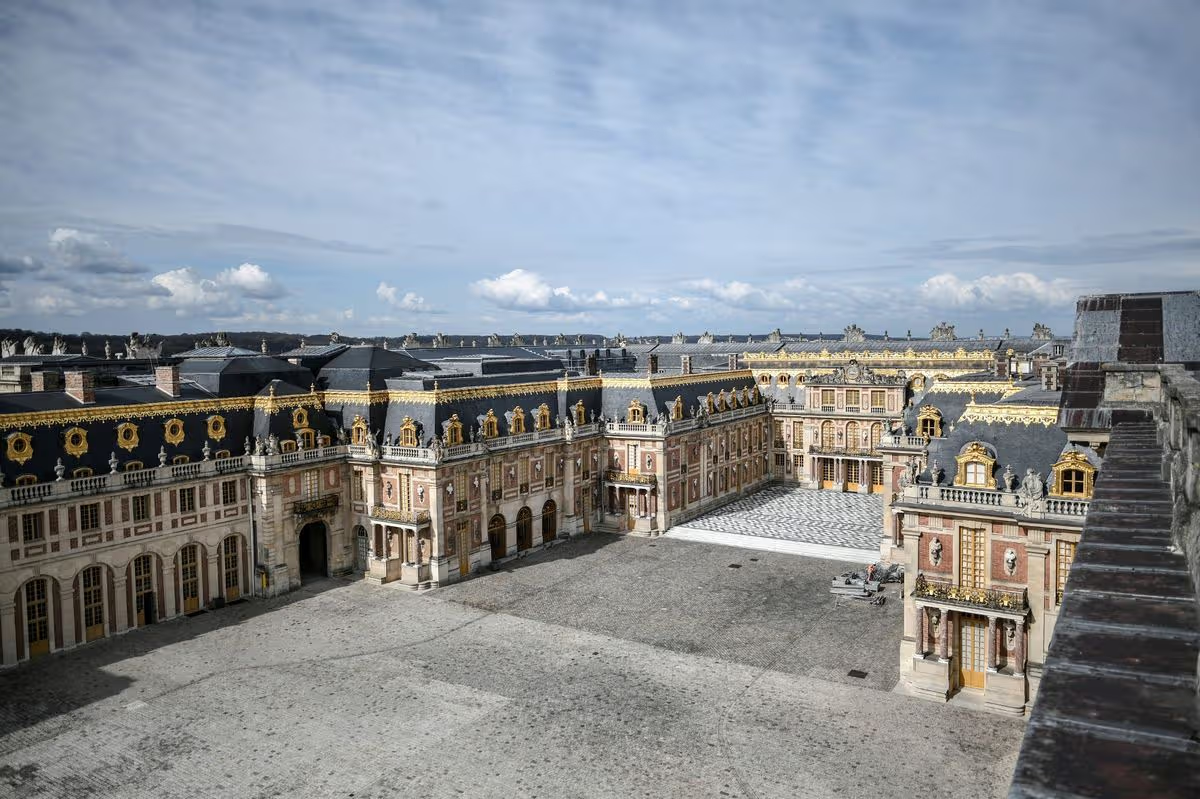
Other Paris attractions such as the Palace of Versailles and Sainte-Chapelle have also introduced dual pricing depending on nationality. British visitors to the historic château in Versailles will pay €3 more for their tickets (about £2.50).

2. Teide National Park

Tourists visiting Teide National Park, the largest of its kind in the Canary Islands, will need to pay for a permit to walk its most popular trails. This recently introduced fee runs from €10 to €25 (approx. £8.64 to £21.50) depending on where you go and whether you take a guide. Tenerife residents don’t pay this charge, and people who live on other Canary Islands get heavy discount.

It’s not the only Canary Islands attraction to offer deep discounts for those who live on the archipelago. For example, a visit to Siam Park, a sprawling waterpark in Tenerife is around €44 for a standard adult ticket, about £38, but half the price if you live on one of the local islands.

3. Acropolis of Athens

Hoping to take the kids to see the iconic Acropolis of Athens? if they’re British passport holders you’ll need to fork out more. While EU residents up to the age of 25 can visit the Acropolis for free, non-EU kids from the age of six to 25 will need to pay €10. Older adults also get fewer discounts if they’re from outside the EU. While seniors over 65 from the EU can pay a reduced €10 entry fee, Brits of the same age pay the full price of €20 (about £17.25).

4. The Royal Palace of Madrid

The Royal Palace of Madrid offers free hours between Monday to Thursday, from 4 pm to 6 pm from October to March, and from 5pm to 7pm from April to September, but these are only available to citizens of the European Union and Latin American citizens holding proof of nationality. Brits who want to visit the official residence of the Spanish royal family will need to pay nearly €25, although there are half-price tickets for younger people.

5. Pompeii and the Colosseum

Young people hoping to explore Italy’s state museums such as Pompeii and the Colosseum will pay more if they’re from non-EU countries. Many Italian attractions offer heavy discounts for young people up to the age of 25, bringing the cost of tickets down to under £2 in some cases. But these aren’t available to British passport holders.

Elsewhere in Italy, visitors to Rome will now need to pay for access the lower basin and steps of the iconic Trevi Fountain. As of February, visitors need to pay €2 to get close to the popular sightseeing spot, although locals can still enjoy it for free.

Have a story you want to share? Email us at webtravel@reachplc.com

Source link