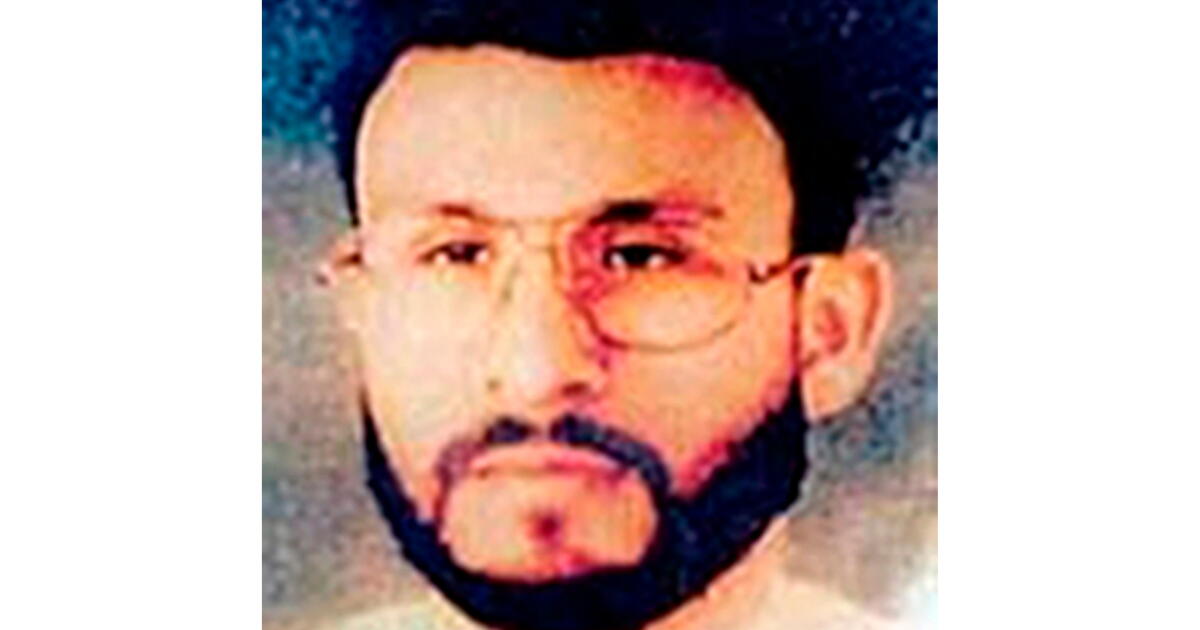
FT. MEADE, Md. — A man initially accused of being a high-profile Al Qaeda figure and who was tortured in CIA custody appeared Thursday at a hearing to review his detention at the U.S. military prison at Guantanamo Bay, Cuba, where he has been held for 20 years without charges.
A U.S. government official said Abu Zubaydah, who wore a neatly trimmed beard and glasses, had “probably” served as one of Osama bin Laden’s most trusted facilitators. The roughly 20-minute hearing offered rare visibility into the secretive military court proceedings of a suspect who had been tortured at CIA black sites during the U.S. war on terrorism and whose case still has not been resolved 25 years after the attacks of Sept. 11, 2001.
Zubaydah’s unidentified government-assigned representative and his private attorney, Annika Conrad, both acknowledged he had known Bin Laden, the 9/11 mastermind. But they said Zubaydah was never a member of the militant group that Bin Laden founded.
Conrad argued that Zubaydah poses no security threat to the United States and that it can no longer justify his detention. She said Zubaydah should be approved for transfer out of Guantanamo, which would kick off a multiyear process that includes finding a country to accept him.
Lawyer describes lasting injuries from torture and says Zubaydah could be monitored if released
Conrad said Zubaydah is prepared to accept a range of security measures, including continuous monitoring. Conrad said he has the financial and personal support of his family, has rejected any extremist views “and simply wants to live a life of peace.”
She also argued that a chief military prosecutor for U.S. military commissions, which oversees the 15 men still held at Guantanamo Bay, has said it is unlikely that Zubaydah will be charged. The Office of Military Commissions declined to comment.
Zubaydah’s attorney said the most the government can offer is a “probable association” to Bin Laden after more than two decades and noted that Zubaydah declined a direct request from Bin Laden to work for Al Qaeda.
Conrad also cited the torture that Zubaydah experienced, describing him as “a greatly injured man” who lost his left eye and his ability to write in English and “frequently struggles to recall words.”
Zubaydah’s detention is being reviewed by a U.S. government panel of senior defense, intelligence and homeland security officials. The Periodic Review Board was created under the Obama administration to evaluate prisoners and determine whether they could be released without posing a threat to national security.
The review panel did not immediately decide on the case
The review panel issued no immediate ruling Thursday. A live video feed of the unclassified portion of his hearing at Guantanamo was made available to reporters at Ft. Meade, an Army base in Maryland.
Detainees are not permitted to speak at their review hearings, and Zubaydah sat in silence next to his attorney and the government representative. Dressed in a gray suit jacket and patterned gray tie, he often pressed his left index finger to his left temple or fidgeted with something in his hands. A worn-looking book sat in front of him.
Zubaydah’s lawyers, Conrad and Ahmed Almudallal, said in a statement before the hearing that he may never face charges.
“For the first time in over two decades, the military’s chief prosecutor believes it is unlikely our client will ever be charged,” the attorneys said. “This is a major change in circumstances that warrants he be cleared for transfer.”
Almudallal and Conrad said Zubaydah has “no intent to engage in violence against the United States in the future.”
“Now, at 55 years old, he’s eager to reconnect with his family and live out the rest of his days as a free person,” they said. “Twenty-four years in prison plus being ‘patient zero’ in the U.S. government’s torture program has been punishment enough.”
He was first in the CIA’s ‘enhanced interrogation’ program after 9/11
Zubaydah was thought to be a high-ranking member of Al Qaeda when he was captured in Pakistan in 2002. A Palestinian born in Saudi Arabia, Zubaydah was tortured abroad before being transferred to Guantanamo in 2006.
The U.S. later dropped the claim that Zubaydah was one of the most senior figures in Al Qaeda, although it has continued to regard him as a security risk. Zubaydah’s lawyers have repeatedly said over the years that he was not an Al Qaeda member and point to waterboarding and other harsh treatment he experienced in the early 2000s.
Zubaydah was the first person in the CIA’s detention and interrogation program after 9/11 and subjected to what is now widely viewed as torture. He was held at CIA black sites in Poland and Lithuania, according to the European Court of Human Rights.
Zubaydah was waterboarded more than 80 times in a month at one point and confined over 11 days in a coffin-size box, among a raft of other mistreatment, a Senate report found.
In 2022, the Supreme Court dismissed a lawsuit by Zubaydah, who was seeking testimony from two former CIA contractors as part of an investigation into his treatment when he was held in Poland. The court rejected his case because the government said it would expose state secrets, despite much of the information having been widely reported.
In January, a lawyer for Zubaydah said the British government had agreed to pay a “substantial sum” to settle a lawsuit that said U.K. intelligence agencies were complicit in his torture. Attorney Helen Duffy said the confidential settlement was symbolically and practically significant for the “intolerable suffering” that Zubaydah endured.
A British parliamentary committee found in 2018 that U.K. security and intelligence services were aware Zubaydah was being tortured but continued to provide questions for the CIA to ask him without seeking assurances of his condition.
Finley writes for the Associated Press.