top news

Ukrainian military says it struck Russian oil depots, weapons sites

Ukrainian President Volodymyr Zelenskyy arrives at No.10 Downing Street in London on March 17. On Monday, Ukrainian forces said they attacked several Russian locations overnight, including multiple oil depots. File Photo by Hugo Philpott/UPI | License Photo

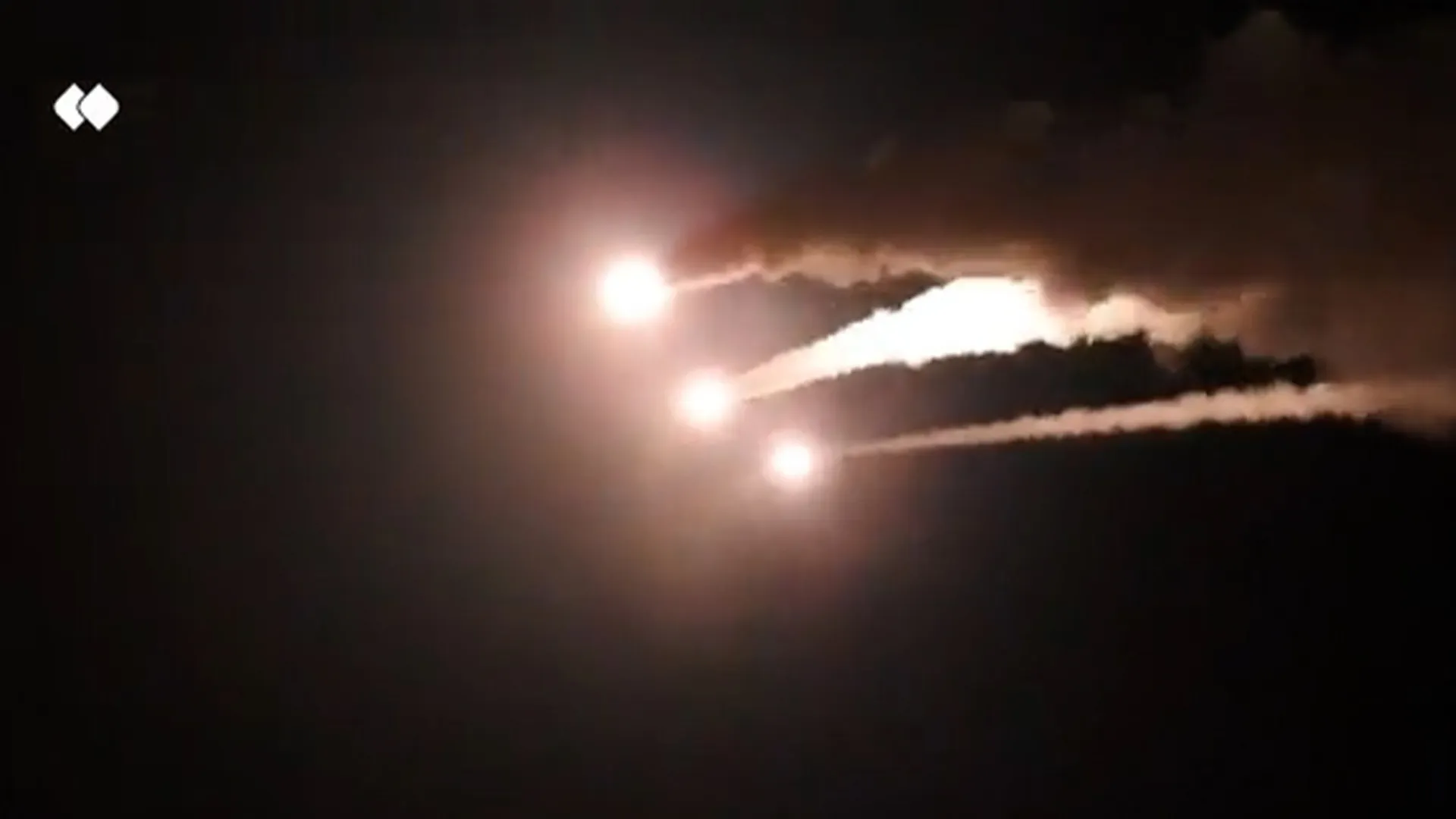
June 8 (UPI) — Ukrainian forces struck oil depots in Russian-occupied Crimea as well as other command and ammunition locations in Russia, the Ukrainian military said.

The strikes took place late Sunday, the general staff of Ukraine‘s military said in a Facebook post Monday, according to a translation by Ukrinform.

The Grushevaya oil depot in Krasnodar Krai and the Feodosia and Semikolodezyanskaya oil depots in Crimea were among the targets hit during the attacks, The Kyiv Independent and Ukrinform reported. Ukraine also struck the Krasny Line Production Dispatch Station in Volgograd oblast, which supplies oil to the Volgograd refinery and the Sheskharis export terminal.

Ukrainska Pravda reported that the Grushevaya oil depot is one of the largest oil storage facilities in the Caucasus, holding between 1.3 tons to 1.5 tons of petroleum. The site is used to store and transport oil for maritime export and generates a large amount of revenue for Russia.

There were large fires and billowing smoke reported at the oil depots said to be hit.

The strikes hit Russian drone command posts in various locations in Zaporizhzhia, Donetsk and Kursk oblasts. The military also said it hit areas with concentrations of Russian personnel in Donetsk, Zaporizhizhia and Sumy oblasts.

The Russian military said it struck down 310 Ukrainian drones overnight throughout Russia, Crimea, and the Black and Azov Seas.

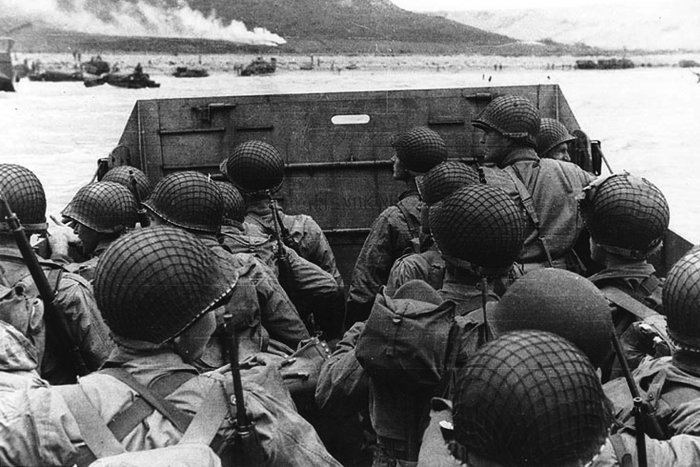
Troops in landing craft approach Omaha Beach on D-Day in Normandy, France, on June 6, 1944. D-Day was the largest seaborne invasion in history and turned the tide of World War II. Photo by UPI | License Photo

Source link

How extreme weather and heat could affect players at World Cup 2026 | World Cup 2026

Sweaty, shirtless football players lying on the pitch have seldom raised eyebrows as they did last week when photographs of European players struggling to train in the heat sparked concerns over sweltering US summer temperatures at the World Cup.

Scientists have long cautioned that extreme heat could disrupt sporting events. Last month, climate experts warned that one in four World Cup games could be played in very hot conditions, affecting fans and players alike.

Recommended Stories

list of 4 itemsend of list

Those warnings materialised last week; social media was abuzz with sunburnt players — mostly from European teams used to cooler climates — dousing themselves with water to cool off. Norway’s team even opted to wear ice collars around their necks during the friendly against Morocco.

But England captain Harry Kane quickly dismissed speculation over how much the heat would affect players, saying it “won’t be a factor”, thanks to his team’s World Cup training regimen.

So, how much will higher temperatures actually affect players at the World Cup? Al Jazeera takes a look.

What have experts said about heat during World Cup matches?

Th 2026 World Cup could be the hottest on record since the tournament began in 1930 due to a sharp rise in global temperatures, explained Al Jazeera weather presenter Everton Fox.

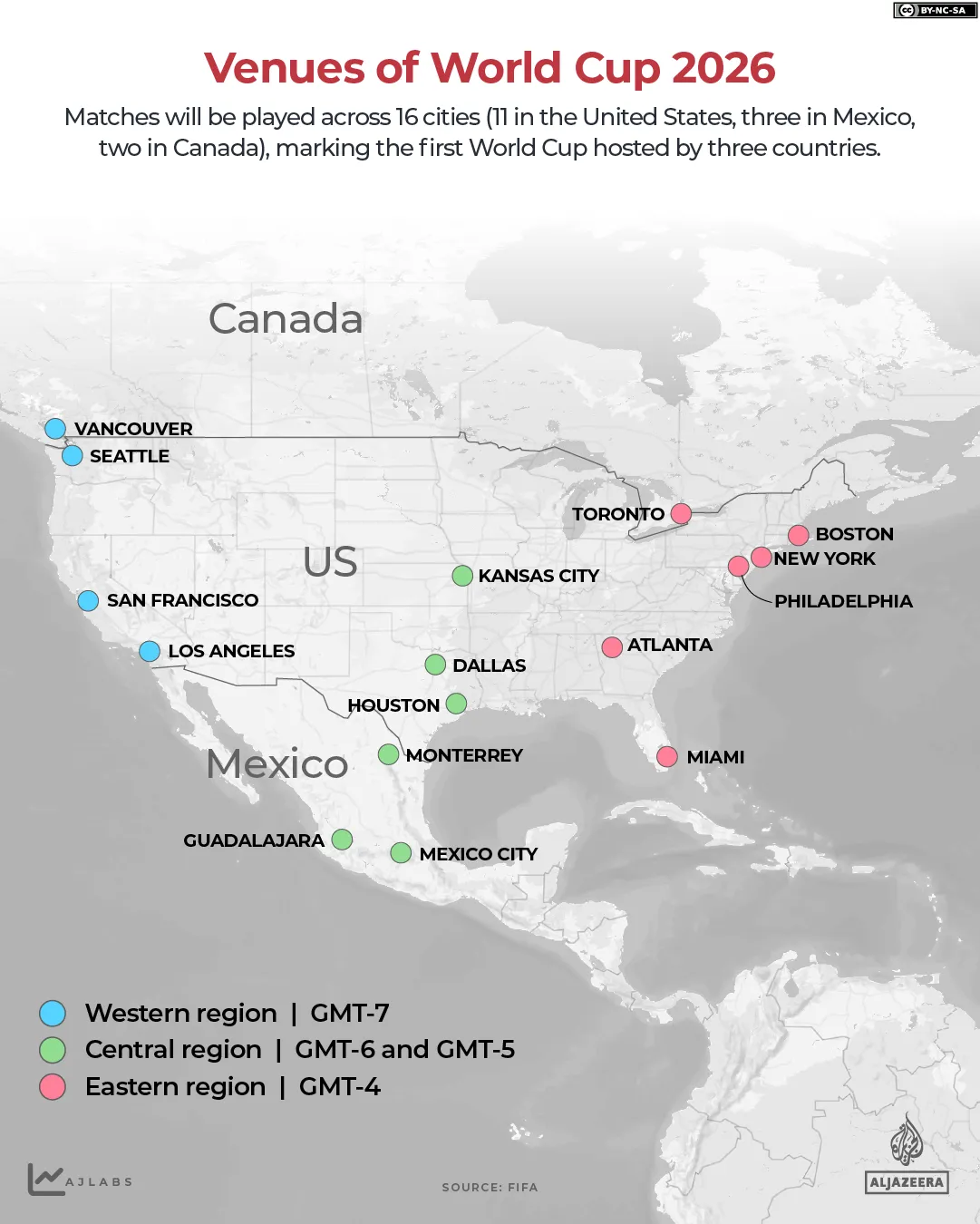
“Around half a dozen of the venues are prone to extreme heat; places like Dallas, Houston, Miami and the Mexican venues are all likely to swelter,” Fox said.

Daytime temperatures there are expected to average 28C, though the stadiums in Dallas, Houston and Atlanta have air conditioning.

Approximately 26 of the 104 matches could reach at least 26C in the Wet Bulb Globe Temperature (WBGT) index — which measures how effectively the body can cool itself — while five games are expected to be played in conditions of 28C WB or higher, according to World Weather Attribution (WWA), a network of climate scientists.

Of those 26 matches, 17 will be played in stadiums with cooling systems, reducing risks for players and fans.

But more than a third of the games with a one in 10 chance of exceeding 26C will be in venues without air conditioning.

How do hotter temperatures impact athletes’ performance?

Heat stress due to increased humidity, exposure to solar radiation and the effects of wind speed will impact players running around in direct sunlight, Fox said.

“All this makes it harder for the body to cool down as it becomes harder for sweat to evaporate as quickly,” said Fox, a senior meteorologist with more than 30 years of experience.

Physical performance coach Raiyan Abbasi explained that, although the body sweats to achieve thermoregulation – a process that allows the body to maintain its core internal temperature – excessive sweating due to heat could lead to dehydration, cramps and increased fatigue.

Are athletes used to such high temperatures?

“Yes, the majority of athletes will know how to deal with this kind of heat since they’re elite players training and competing in various conditions,” said Abbasi, who has worked as a physical performance coach for British clubs Swansea and West Ham, as well as the Pakistan national side.

Teams will have a performance coach and medical staff to make sure players are ready for the tournament, including through acclimatisation, Abbasi explained – echoing what Kane said over the weekend after his side beat New Zealand 1-0 in Tampa, Florida, where temperatures soared beyond 30C.

INTERACTIVE-Football FIFA Venues of World Cup 2026-1776670771

Do athletes from hotter nations have an advantage?

World Cup nations whose players train in hotter climates may have a slight advantage when it comes to adjusting to high temperatures in the US.

“But essentially, countries that prepare and perform well can minimise that difference,” Abbasi said, adding that heat can be used positively too.

“Heat is a significant factor in creating good athletes; one way to improve athletic capabilities is to train in the heat.

“It can make big adaptations in your body to improve body temperature.”

Could the World Cup have been held before or after summer in the US?

Fox noted that international tournaments are traditionally in the European domestic off season, which is when the 2026 World Cup is being held.

“Ideally, US weather is most conducive in the spring and autumn, but you’d then be looking at the tornado season in spring and hurricane late summer through autumn before you even begin to think about their domestic sports which locals have more interest in,” Fox said.

What measures has FIFA taken for players and fans?

FIFA said it has carried out heat-risk planning, with measures including three-minute hydration breaks in each half of games, cooling infrastructure for fans and players, adapted work-rest cycles, and enhanced medical readiness that scale according to real-time conditions.

“The hydration breaks probably need to be longer to gain full benefit, but then you risk turning it into a game of four quarters,” Fox said jokingly, although he argued that FIFA could have confined games to northern parts of the US and Canada.

FIFA has also delayed kickoff times for some matches to start outside the hottest afternoon hours.

Source link

Meta to take legal action against Israeli spyware company NSO | Cybersecurity News

WhatsApp disrupted phishing attempts linked to NSO, blacklisted by the US for security concerns.

Meta has said it is ⁠filing a federal US ⁠court contempt order against Israeli spyware firm NSO Group for violating a permanent injunction that barred it from ever ⁠targeting WhatsApp and its users.

The company said on Monday that its WhatsApp messaging service disrupted new spear phishing attempts linked to NSO, an ⁠entity blacklisted by the United States government for engaging in activities that are contrary to national security or foreign policy interests.

Recommended Stories

list of 3 itemsend of list

These attempts were similar to previous “1-click phishing campaigns”, aimed to trick users into clicking ‌malicious links and direct them to external websites, Meta said in a blogpost.

A “1-click” is a type of cyberattack where a single click on a malicious link or attachment is sufficient to compromise a victim’s device or account, without requiring them to enter their credentials.

Meta said WhatsApp took down test accounts ⁠and groups created by NSO on its platform. ⁠NSO did not immediately respond to a Reuters request for comment.

Last year, a US court ordered NSO to stop targeting Meta’s WhatsApp, a development the spyware ⁠company warned could put it out of business.

While the ruling significantly reduced the punitive damages NSO ⁠owed Meta to $4m from an ⁠initial $167m, the injunction itself was seen as a substantial challenge for the company, which faces ongoing accusations of enabling human rights abuses through its Pegasus hacking tool.

Meta ‌said on Monday that last month it was joined by 12 prominent civil rights organisations, a coalition of security researchers, privacy advocates ‌and ‌digital rights experts, who filed their amicus briefs to fight NSO’s appeal against the permanent injunction.

Source link

6 hospitalized in mass stabbing incident at New York’s Penn Station

June 7 (UPI) — Five people were injured and a suspect is in custody after a mass stabbing incident at New York City’s Penn Station, officials said.

New York Police Department, Fire Department of New York and Amtrak officials confirmed to local media that five were hospitalized in the aftermath of the stabbings, which happened at around 7 p.m. EDT.

Officials said one those who were attacked was seriously injured, two were injured less seriously and two others suffered minor injuries. All were taken to a nearby hospital. officials said.

A sixth person was taken to another hospital and officials did not share details about the person’s condition.

Law enforcement sources told amNewYork a male suspect allegedly attacked passersby with a sharp object before police subdued him.

Witnesses said Penn Station and the area surrounding 33rd Street and Seventh Avenue in Manhattan were crowded with ambulances and police cars after the stabbing.

The incident came at a tense moment in the city as New York prepares for the appearance of President Donald Trump at Game 3 of the NBA Finals in the adjacent Madison Square Garden on Monday.

Trump’s presence is expected to generate a massive security presence around Penn Station, including the cancellation of a scheduled watch party in the streets outside of the arena.

The New York Knicks are hosting the San Antonio Spurs in the NBA Finals.

Source link

Britain gives tech firms 3 months to stop nude images on child phones

British Prime Minister Keir Starmer threw down the gauntlet to tech firms on Monday at London Tech Week at Olympia in west London, threatening to legislate unless they act to block children using their phones to shoot, share or view naked images. Photo by Carlos Jasso/EPA

June 8 (UPI) — British Prime Minister Keir Starmer issued an ultimatum on Monday to tech companies, including Apple and Google, to prevent explicit images from being taken or viewed on children’s mobile phones within three months or face legislation compelling them to comply.

Speaking at the London Tech Week show, Starmer said the initiative, requiring operating system developers to enable nudity-detection software or other technical fixes, was a global first that would make Britain the first country where children would not be able to shoot, share or view naked images.

“For too long, people have been told that [children sharing explicit images] is simply the price of modern tech — that nothing could be done. That government is powerless. That parents just have to accept it,” said Starmer.

“I reject that completely because tech should adapt to the needs of society, not the other way round. If we are serious about unlocking the opportunities that tech can bring then we must also be serious about preventing those who want to abuse it — the online predators.

“That is why today, I am calling for tech companies operating in this country to introduce vice controls that prevent children from sending and receiving sexually explicit images. Because this is not an impossible challenge. If they choose not, then we will act and we will change the law,” he added.

Adult phone users are exempted from the changes, but will be required to complete an age-verification process to prove they are over the age of 18.

The phone companies have until September to make the change or legislation will be introduced to Parliament requiring the appropriate software is installed on all phones and tablets sold in the four countries of the United Kingdom.

Starmer’s move came four weeks after Minister for Safeguarding and Violence Against Women and Girls Jess Phillips resigned, citing his failure to act on her recommendations to remove the ability for children to take explicit photos of themselves or others.

The government dismissed criticism from advocates of privacy and the right to expression, accusing it of trampling on people’s democratic freedoms.

“The government mandating that all phones in Britain require ID and surveillance software is a crossing of the Rubicon that would make the U.K. one of the most authoritarian internet regimes in the world,” said Big Brother Watch director Silkie Carlo.

Silkie warned it also raised the specter of spyware in the pocket of every person with a phone that would end up being “exploited for other purposes before long.”

Home Secretary Shabana Mahmood said the government’s motivation was stopping the coercion and sextortion of children and that it was not interested in “surveilling or policing” people’s phones.

“There is no reporting, no data collection, no monitoring, and no images leaving the device,” she explained.

The leader of the Conservative opposition Kemi Badenoch questioned how it would be achieved and said the approach was piecemeal, saying there needed to be a total ban that included social media for children younger than 16.

The BBC’s science team said the technical hurdles were considerable because so much of the child sexual abuse material was shared via encrypted apps such as WhatsApp, Signal and Discord, where the content being sent cannot currently be detected.

In April, the government announced it will pass legislation banning children from using smartphones in schools in England. The law will only apply to England because education policy is devolved to the parliaments and assemblies of the other countries of the United Kingdom — Scotland, Wales and Northern Ireland.

The law, an amendment to the government’s flagship education and child well-being bill, formalizes what is already policy in many schools but introduces a “clear legal requirement” that would empower them to enforce it — including removing phones from children before class.

The government is currently also running a public consultation on whether to implement an Australia-style ban on social media for children younger than 16 and a separate initiative to develop screen-time guidance for children older than 5, including the minimum age at which a child should be given first phone and how much time they should be on it.

Troops in landing craft approach Omaha Beach on D-Day in Normandy, France, on June 6, 1944. D-Day was the largest seaborne invasion in history and turned the tide of World War II. Photo by UPI | License Photo

Source link

KOSPI crashes over 8 pct on tech hemorrhage, U.S. rate woes; won rises after verbal intervention

This photo, taken Monday, shows the trading room of Hana Bank in Seoul as South Korean stocks dropped more than 8 percent on concerns over AI profitability and fears over a possible rate hike by the U.S. Fed. Photo by Yonhap

South Korean stocks nosedived more than 8 percent Monday, extending their losing streak to a third consecutive session, as investors dumped market heavyweights on renewed woes over artificial intelligence (AI) profitability and concerns over a possible hawkish pivot of the U.S. Federal Reserve.

The local currency rose against the U.S. dollar after opening at a 17-year low, in the face of verbal intervention by financial authorities.

The benchmark Korea Composite Stock Price Index (KOSPI) plunged 676.18 points, or 8.29 percent, to close at 7,484.41, after falling as low as 7,442.73. The secondary KOSDAQ index sank more than 9 percent to end at 911.39.

The KOSPI’s trade volume was heavy at 448.3 million shares worth 47.8 trillion won (US$31.2 billion), with losers sharply outnumbering winners 873 to 42. Foreigners and institutions dumped local shares worth 355.5 billion won and 1.6 trillion won, respectively, while retail investors scooped up 1.76 trillion won.

The Monday crash was largely anticipated on sharp losses on Wall Street last week, fueled by semiconductor shares’ biggest daily percentage drop since March 2020 and fears over a possible rate hike by the Fed sparked by a hotter-than-expected U.S. jobs report for May.

The Dow Jones Industrial Average closed 1.35 percent lower Friday (local time), while the S&P 500 dipped 2.64 percent and the tech-heavy Nasdaq composite slid 4.18 percent.

Major U.S. chip shares sharply lost ground, with Nvidia slumping 6.2 percent, Broadcom contracting 7.92 percent and Micron shooting down 13.25 percent.

The Korea Exchange (KRX) had activated a circuit breaker for the KOSPI about three minutes after opening, halting trading for 20 minutes, and implemented a consecutive sell-side sidecar at around 9:34 a.m.

The KRX had also issued a sell-side sidecar for the secondary KOSDAQ market about six minutes after opening, suspending trading for five minutes, and activated a circuit breaker for the index later in the day after the KOSDAQ fell by more than 8 percent.

“Today’s pullback appears to be driven not by the weakening of market fundamentals, but by profit-taking sentiment among investors, mainly targeted at the semiconductor sector, as the market reacted more sensitively to negative developments after an extended rally of chip shares,” a report by Samsung Securities said.

The KOSPI has been one of the best performing stock indexes across the world in recent months, surging to near the unprecedented 9,000-point mark on Tuesday last week from the 5,000-point level earlier this year, mainly driven by major semiconductor shares, including Samsung Electronics and SK hynix.

“There is a lot at stake in this week’s financial market, with U.S. inflation data, treasury yields and the ongoing debate over the sustainability of AI-related investment all unfolding simultaneously,” said Seo Sang-young, an analyst at Mirae Asset Securities.

Han Ji-young, a researcher at Kiwoom Securities, also anticipated a “challenging” week for the KOSPI, noting that the release of the U.S. Consumer Price Index for May, the SpaceX listing and Oracle’s earnings results planned for this week may weigh on the market.

Market analysts also said news that Iran and Israel traded strikes dampened investors’ risk appetite, dimming hopes for peace in the Middle East.

Market top-cap Samsung Electronics slid 10.18 percent to 295,500 won, while its chipmaking rival SK hynix dipped 7.68 percent to 1.91 million won.

AI investment firm SK Square nosedived 11.13 percent to 1.12 million won.

Samsung Life Insurance lost 8.97 percent to 375,500 won, and Samsung C&T plunged 11.29 percent to 408,500 won.

Top automaker Hyundai Motor plummeted 8.71 percent to 639,000 won, and its auto parts making affiliate Hyundai Mobis shot down 12.2 percent to 612,000 won.

Leading battery maker LG Energy Solution pulled back 6.16 percent, and its smaller rival Samsung SDI sank 11.44 percent.

Home appliances maker LG Electronics slipped 11.55 percent to 268,000 won, while power plant manufacturer Doosan Enerbility shed 10.25 percent to 85,800 won.

Internet portal operator Naver was among the few winners, jumping 9.2 percent on news that the company is conducting a joint project with U.S. AI chip giant Nvidia to build a massive global AI factory and the nomination of Han Seong-sook, former chief executive officer (CEO) of Naver and incumbent minister of small and medium-sized enterprises (SMEs), as South Korea’s new prime minister.

SK Networks surged 30 percent to 14,170 won on SK Group and Nvidia’s announcement of a broader partnership for AI infrastructure.

The Korean won was quoted at 1,535.0 won against the U.S. dollar at 3:30 p.m., up 4.1 won from the previous session, after opening at 1,555.2 won, the lowest mark since March 6, 2009, when the global markets were in a financial crisis.

The local currency turned higher after financial authorities vowed stern action against excessive volatility and one-sided movements in the foreign exchange market.

Bond prices, which move inversely to yields, closed lower. The yield on three-year Treasurys added 5.8 basis points to 3.940 percent, and the return on the benchmark five-year government bonds gained 7 basis points to 4.190 percent.

Copyright (c) Yonhap News Agency prohibits its content from being redistributed or reprinted without consent, and forbids the content from being learned and used by artificial intelligence systems.
Source link

Iran war day 101: Tensions escalate as Iran and Israel trade air attacks | US-Israel war on Iran News

Tensions have escalated between Iran and Israel while ongoing diplomatic efforts have failed to yield a lasting peace deal.

Iran and Israel were on Monday locked in tit-for-tat missile attacks, as the fragile ceasefire that has held in place since April 8 appeared closer to collapse than at any point in the past seven weeks.

These escalating hostilities between Iran and Israel come as the United States-Israel war on Iran enters its 101st day on Monday.

Here is what is happening:

In Iran

  • Explosions heard in Iran: Iran’s IRNA news agency reported that at least “two powerful explosions” were heard in Tehran and at least three in the city of Isfahan. The broadcaster also reported that explosions were heard in Tabriz. The Israeli military had said it “attacked military targets” in western and central Iran.
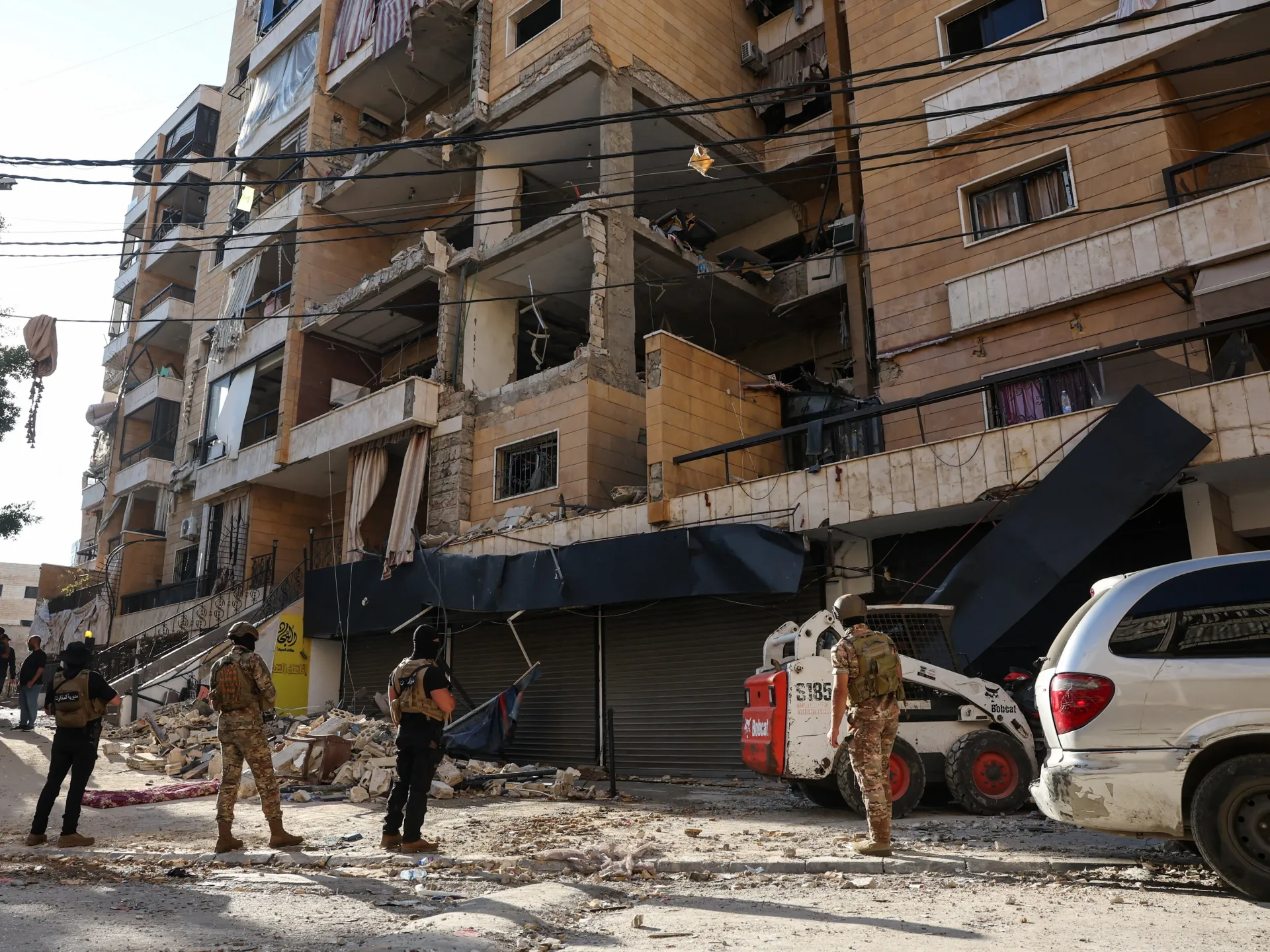
  • Power plant in Mahshahr attacked: A security officer in the southwestern Khuzestan governorate told the Fars news agency that Israeli forces have attacked the Karun Petrochemical Company in the city of Mahshahr. The Israeli army confirmed striking the petrochemical plant. The Mahshahr Petrochemical Special Economic Zone announced that its workers have evacuated the site following the Israeli strike.
  • Iran denies attacking base in Saudi Arabia: Responding to reports of an explosion at the Al-Kharj airbase in Saudi Arabia, Iran’s IRIB broadcaster cited a military official as saying that “Iran has not fired any shots.”
  • Red Crescent on standby: The Iranian Red Crescent says it is standing by to respond to any fallout from Israel’s attacks across the country this morning.

In Israel

  • Security cabinet meeting: Israeli Prime Minister Benjamin Netanyahu will convene a security cabinet meeting at 11am local time (08:00 GMT) amid escalating hostilities with Iran, according to multiple Israeli media reports.
  • The Israeli military issued a series of alerts starting Sunday over waves of missiles launched from Iran towards Israeli territory.
  • Iran’s Islamic Revolutionary Guard Corps (IRGC) said on Monday that they launched attacks against Israel’s Nevatim and Tel Nof airbases as a response to attacks on radar sites within Iran, the Fars news agency reported.
  • Israel’s Channel 12 broadcaster and Ynet News said a missile fired from Yemen was intercepted.

In the US

  • The US State Department issued a security alert for citizens in Jordan over reports of projectiles in the country’s airspace – presumably missiles fired by Israel towards Iran, or by Iran towards Israel.
  • Democratic Senator Chris Murphy said Israel’s latest attack on Iran “compounds” the “humiliation” for US President Donald Trump, as it comes after the US president reportedly told Netanyahu not to retaliate to Iran’s missiles fired at northern Israel.

In Lebanon

  • Explosions were heard in the Lebanese capital Beirut early on Monday, but these were likely rocket interceptions, Al Jazeera’s Zeina Khodr reported from Beirut.
  • On Sunday, Israel had hit the suburbs of Beirut, in attacks that Iran described as crossing a red line in terms of violating a ceasefire between Lebanon and Israel. Iran then said its decision to hit northern Israel was in response to these attacks near Beirut.

War diplomacy

  • Israel defends attacks on Iran: The Israeli ambassador to the US, Yechiel Leiter, defended the attacks on Iran, saying “no self-respecting country” would tolerate Iran’s missile launches against Israel.
  • Canada expresses concern: Canada’s Foreign Ministry has expressed concern about the resumption of conflict between Iran and Israel, saying it jeopardises the ongoing negotiations and “the prospects for peace”.
  • Saudi-Qatari foreign ministers speak: Saudi Foreign Minister Prince Faisal bin Farhan Al Saud spoke by phone with his Qatari counterpart, Sheikh Mohammed bin Abdulrahman bin Jassim Al Thani, the Saudi Foreign Ministry said.
  • Qatari-Iranian foreign ministers speak: The Qatari foreign minister, who is also the country’s prime minister, spoke by phone with Iranian Foreign Minister Abbas Araghchi about mediation efforts between Iran and the US, as well as the latest developments in Lebanon, according to a Qatari statement.

Source link

5 hospitalized in mass stabbing incident at New York’s Penn Station

June 7 (UPI) — Five people were injured and a suspect is in custody after a mass stabbing incident at New York City’s Penn Station, officials said.

New York Police Department, Fire Department of New York and Amtrak officials confirmed to local media that five were hospitalized in the aftermath of the stabbings, which happened at around 7 p.m. EDT.

Officials said one those who were attacked was seriously injured, two were injured less seriously and two others suffered minor injuries. All were taken to a nearby hospital. officials said.

Law enforcement sources told amNewYork a male suspect allegedly attacked passersby with a sharp object before police subdued him.

Witnesses said Penn Station and the area surrounding 33rd Street and Seventh Avenue in Manhattan were crowded with ambulances and police cars after the stabbing.

The incident came at a tense moment in the city as New York prepares for the appearance of President Donald Trump at Game 3 of the NBA Finals in the adjacent Madison Square Garden on Monday.

Trump’s presence is expected to generate a massive security presence around Penn Station, including the cancelation of a scheduled watch party in the streets outside of the arena.

The New York Knicks are hosting the San Antonio Spurs in the NBA Finals.

Source link

IDF confirms airstrikes against targets in western and central Iran

1 of 2 | A woman holds a photo depicting late Supreme Leader Ayatollah Ali Khamenei as people gather during a rally following Iran’s attack on Israel in Tehran on Sunday. The Israeli military confirmed it struck “military targets” in western and central Iran early Monday local time. Photo by Abedin Taherkenareh/EPA

June 7 (UPI) — The Israel Defense Forces confirmed it struck military targets in western and central Iran on Monday in retaliation for a wave of airstrikes launched against the Jewish state by Tehran hours earlier.

“A short while ago, the Israeli Air Force struck military targets belonging to the Iranian terror regime in western and central Iran. Details to follow,” the IDF said in a post on Telegram as a fragile cease-fire in the Iran War continued to unravel.

Iran’s Islamic Revolutionary Guard Corps, meanwhile, confirmed the attack, according to the semi-official Mehr News Agency.

“The Zionist enemy has attacked targets on our country’s soil using air-launched ballistic missiles,” the IRGC said.

Official Iranian media also said residents in neighboring Iraq heard explosions in parts in the capital Baghdad while unidentified objects were seen over the Iraqi city and in Beirut.

The strikes against Iran came just hours after the Islamic regime lobbed missiles into northern Israel for the first time since the beginning of the cease-fire, which came into effect on April 8.

Tehran said those strikes were in response to Israeli bombings targeting Hezbollah in Lebanon.

The Iranian missiles, which the IDF said had been intercepted, were the first direct attack on Israel since the cease-fire.

The attacks follow an announcement on Sunday that Israel had launched strikes at alleged Hezbollah targets in Beirut — attacks which it has continued throughout the cease-fire — and some of which have been in suburban neighborhoods.

U.S. President Donald Trump, who reportedly has been briefed on Iran’s actions, told Iran “that’s enough, get back to the table” for peace negotiations, Fox News reported.

“The Israeli army must stop its attacks on southern Lebanon and the suburbs, and if it expands its attacks to that region or responds to Iran’s action, it will face more devastating and regrettable blows,” General Ali Abdollahi, head of Iran’s Khatam al-Anbiya command, said in a statement.

Trump has reportedly also told Israeli Prime Minister Benjamin Netanyahu to hold back after the Iranian strikes, which Netanyahu agreed to on the condition that Hezbollah — which is funded by the Iranian regime — not launch strikes into northern Israel from Lebanon.

The United States and Iran have been negotiating an end the war for more than a month, as a cease-fire has mostly held but the Strait of Hormuz remains blocked, preventing the shipment of oil and other products from the Middle East.

President Donald Trump discusses renovations to the Lincoln Reflecting Pool and makes an announcement on coal in the Oval Office at the White House on Thursday. Photo by Samuel Corum/UPI | License Photo

Source link

Damage assessments underway in Philippines after 7.8 magnitude quake

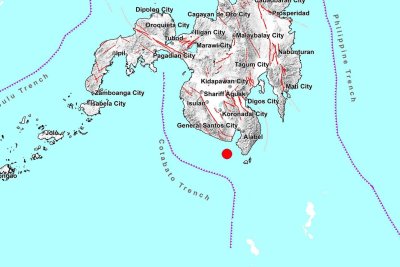
A major 7.8 magnitude earthquake struck off the coast of the southern Philippines island of Mindanao early Monday. Damage and casualties were still being assessed. Image courtesy Philippine Institute of Volcanology and Seismology

June 7 (UPI) — Emergency officials said damage assessments were underway early Monday in the Philippines after a magnitude 7.8 earthquake jolted Sarangani province in the southern island of Minanao.

The powerful quake came at 7:37 a.m. local time and was centered about 20 miles west of of the town of Maasim at a depth of 20 miles.

The Office of Civil Defense received early reports of major damage to infrastructure in the area although no official verification of casualties had yet been received.

“There are reports of major damage in various infrastructure,” agency officials told reporters. “Electricity and communications are affected as well. Evacuation is also ongoing in affected coastal areas.”

Most of the affected areas are in Zamboanga Peninsula, Davao Region, Soccsksargen, and the Bangsamoro Autonomous Region in Muslim Mindanao.

The Pacific Tsunami Warning Center issued warnings that waves of up to 10 feet were possible in some areas of the Philippines while waves up to 3 feet could strike parts of Malaysia and Indonesia.

No danger of tsunamis was imminent for the coasts of the United States or Canada, the center said.

Philippines President Bongbong Marcos said he has instructed all relevant government agencies to “act immediately,” including setting up evacuation centers and assessing damage to roads, bridges and critical infrastructure.

Marcos also ordered the suspension of classes in all levels across affected areas in Mindanao until further notice, adding, “The safety of our children comes first.

“Please heed the tsunami warning,” he urged. “Move to higher ground now. Do not wait. Your life is more important than anything left behind.”

Source link

Iran losing patience with Israel and US over ceasefire violations | US-Israel war on Iran

NewsFeed

On the 100th day of the US-Israeli war on Iran, Al Jazeera’s Mohamed Vall explains how Tehran’s patience has reached its limit with the continuous violations of the ‘ceasefire’. Iran fired missiles at Israel after Israel attacked Beirut on Sunday.

Source link

Iran and Israel trade threats after Tehran launches missiles | US-Israel war on Iran News

NewsFeed

Iran and Israel exchanged threats after Tehran launched missiles towards Israel in response to Israeli strikes on Beirut’s southern suburbs. Israel vowed to deepen attacks on Lebanon, while Iran warned of further action if the strikes continue.

Source link

South Korean president orders probe into election agency

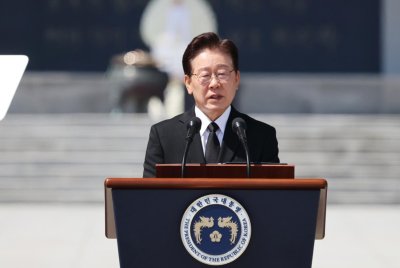
South Korean President Lee Jae-myung delivers his speech during a ceremony marking the country’s 71st Memorial Day to commemorate veterans and independence activists at the National Cemetery in Seoul, South Korea, 06 June 2026. Photo by KIM HONG-JI / EPA

June 7 (Asia Today) — President Lee Jae-myung sharply criticized the National Election Commission on Sunday over allegations that voting rights were violated during South Korea’s June 3 local elections.

Lee called on the National Assembly to conduct a parliamentary inquiry and ordered the administration to create a joint investigation team involving prosecutors and police.

“The National Election Commission caused serious disruption to the people’s exercise of voting rights during the June 3 local elections,” Lee wrote on Facebook. “The incident itself is difficult to understand, but its response afterward and explanation to the public were also insufficient.”

Lee said the right to vote is a constitutional right that must not be restricted or infringed upon for any reason.

“This is a grave matter that damaged the foundation of popular sovereignty,” he said. “As one citizen and as the president responsible for the government, I express deep regret.”

Lee asked lawmakers to quickly pursue a parliamentary inquiry to determine the facts and prepare measures to prevent a recurrence.

He also called for discussions on fundamental institutional reforms of the election commission.

“The government will also consider every possible measure at the administrative level, given the seriousness of the matter,” Lee said. “I have instructed the creation of a joint investigation team involving prosecutors and police to clarify responsibility and thoroughly determine the full circumstances of the case.”

Lee noted that the commission is an independent institution and said its independence comes with major responsibilities.

“The chairperson of the National Election Commission is regarded as one of the five highest constitutional officeholders because the commission is an independent institution with corresponding authority, duties and responsibility, just like the executive, legislative and judicial branches,” Lee said.

“The more independent an institution is, the more important public trust becomes,” he said. “An independent institution that has lost public trust has no reason to exist.”

Lee urged the commission to conduct a fundamental review of its organization and election management system. He said the commission should take the incident seriously and show a strong commitment to reform at a level the public can trust.

— Reported by Asia Today; translated by UPI

© Asia Today. Unauthorized reproduction or redistribution prohibited.

Original Korean report: https://www.asiatoday.co.kr/kn/view.php?key=20260607010002243

Source link

Videos show missiles launched from Iran into Israel | US-Israel war on Iran

NewsFeed

Iranian media has released video showing missiles being launched towards Israel, while videos captured incoming missiles making impact in northern Israel. Iran says it’s a response to Israel attacking Beirut in violation of a US-brokered ceasefire in Lebanon.

Source link

Pope Leo draws 1M people in Madrid for open-air mass

Pope Leo XIV greets the people from the popemobile after presiding over the meeting “Weaving networks with the world of Culture, Education, Business and Sport,” at the Movistar Arena in Madrid on Sunday. Photo by Fernando Villar/EPA

June 7 (UPI) — Pope Leo drew more than 1 million people to an open-air mass in Madrid on Sunday morning to start his week-long visit to Spain.

The mass, to celebrate the feast of Corpus Christi, was held in the Plaza de Cibeles and saw the Pontiff ride through the 1.2 million strong crowd that overflowed into nearby streets to the stage where he performed mass, The Guardian and The BBC reported.

Pope Leo arrived in Madrid on Saturday to start the visit, the first time in 15 years that a Pope has spent time in Spain, and was greeted with fanfare and Spanish King Felipe VI and Queen Letizia.

Along with the mass, Pope Leo had plans on Sunday to meet with the members of the Order of St. Augustine and attend a gathering of Spanish representatives of the country’s culture, arts, business and sports.

Among remarks in Pope Leo’s sermon, he told those in attendance that, like God, they should work to help “the poor, the downtrodden, those who are alone and forsaken,” adding that religion remains “a school of faith from which” they can draw in their daily lives.

The large crowd on Sunday morning followed the Pope addressing between 500,000 and 600,000 people on Saturday night at a prayer vigil — and saw him address younger people in the crowd with the “6-7” hand gesture that has gone viral online.

Monday, the Pope is expected to address the gridlocked Spanish parliament, where his comments likely will address the type of political polarization in Spain and many other nations right now.

On Thursday, Pope Leo has plans to visit the Canary Islands, a landing spot for people looking to migrate to Spain.

President Donald Trump discusses renovations to the Lincoln Reflecting Pool and makes an announcement on coal in the Oval Office at the White House on Thursday. Photo by Samuel Corum/UPI | License Photo

Source link

Alexander Zverev wins French Open to claim first Grand Slam title | Tennis

Alexander Zverev has finally secured his maiden Grand Slam title with a dramatic five-set victory over Italy’s Flavio Cobolli in the French Open final on Sunday.

The second seed became the first German man to win a major tournament since Boris Becker at the 1996 Australian Open with a 6-1, 4-6, 6-4, 6-7 (5/7), 6-1 victory after four hours and 16 minutes.

Recommended Stories

list of 4 itemsend of list

“This court is so special to me in so many ways… but now finally, it’s a happy end,” said Zverev, who suffered a season-ending ankle injury in the 2022 semifinal against Rafael Nadal on Court Philippe-Chatrier, where he was also edged out in five sets by Carlos Alcaraz in the 2024 final.

It was Zverev’s fourth Grand Slam final and second at Roland-Garros after some heartbreaking near misses in his career.

“We’ve been through losses, we’ve been losers at times as well in the most important moments,” he said during the trophy presentation, turning to his team.

“But at the end of the day, we’re Grand Slam champions now, and that’s what counts.”

Cobolli, the 10th seed, was bidding to become the first Italian man since Adriano Panatta to win the French Open in 50 years.

The 24-year-old had never even played a Slam semifinal before, let alone a final, after his last-four opponent Matteo Arnaldi withdrew from the tournament due to illness.

“It’s not easy for me to talk right now,” said Cobolli after receiving his runner-up trophy from Panatta, before addressing Zverev.

“I’m happy for you, but I’m also sad because I was close and I feel it. So now you’ve achieved your dream, let me win the next time.”

Both players appeared to struggle with nerves at various points in the match, especially Cobolli during an error-strewn first set.

But Zverev’s greater experience showed in a deciding set that was far tenser than the scoreline suggested, as he managed to get over the line.

The 29-year-old was handed a golden opportunity to break his Grand Slam duck by the injury-enforced absence of reigning champion Alcaraz and surprise early exits for Jannik Sinner and Novak Djokovic.

The world number three was not always in control, making 54 unforced errors, but did enough to finally shed the tag of being one of the best players to have never won a major.

Zverev had previously also lost in six Slam quarterfinals and seven semifinals, alongside his three final defeats.

The most agonising miss of all was his first major final, when he blew a two-set lead and failed to serve for the championship against Dominic Thiem at the 2020 US Open.

The now-retired Thiem was watching on from the stands at Roland-Garros as Zverev belatedly put the memories of that match to bed six years later.

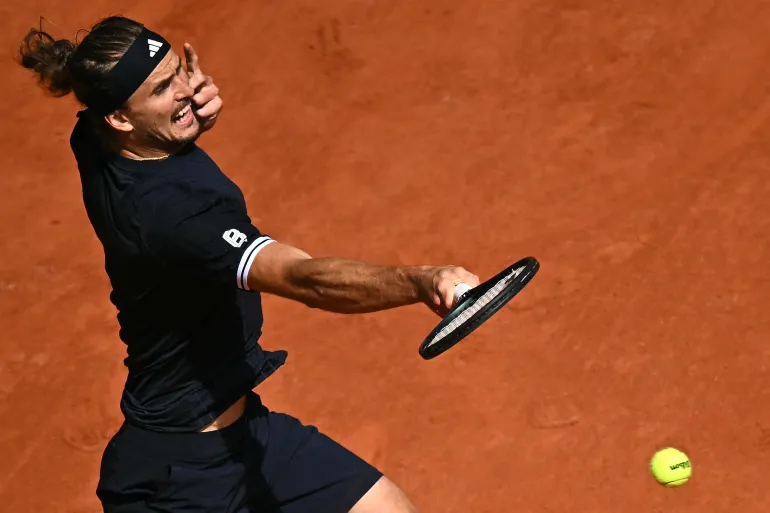
Alexander ‌Zverev in action.
Alexander Zverev plays a forehand return to Italy’s Flavio Cobolli during the final [Julien de Rosa/AFP]

Cobolli’s nervy start

Cobolli made a nervy start and appeared to be struggling to deal with the occasion as the first set quickly got away from him in 39 minutes and he made 16 unforced errors.

He managed to settle into the match with three successive holds of serve in the second set, and then made his move out of nowhere to break in the seventh game.

Zverev had been completely untroubled on serve previously, but produced a scrappy game featuring two double-faults and a wild forehand on break point before turning to gesticulate angrily towards his coaching staff.

Cobolli started to grow in confidence and served out the set to breathe life into the final.

A higher-quality third set disappeared from Cobolli’s grasp in the 10th game, though, as from 30-0 up, he lost four points in a row, including a poor forehand that flew well wide on set point.

The world number 14, who will climb into the top 10 for the first time next week, hit straight back with a break in the opening game of the fourth set.

He could not pull away in the set, though, as both players ended up being broken twice, including Cobolli when he served for it at 5-4.

But the Italian rallied himself to push it into a tie-break, which he took to force a decider with a blistering forehand winner on his second set point.

Following a delay before the start of the final act after Cobolli left the court, Zverev struck first blood with a break in the first game.

Cobolli’s hopes were finally all but extinguished when he missed a break-back point and then dropped serve again to slip 3-0 down.

Zverev staved off three more break points in the fourth game and eased to victory from there, falling to the clay in celebration after Cobolli shanked an overhead on his second championship point.

Alexander ‌Zverev and Flavio Cobolli react.
Flavio Cobolli and Alexander Zverev embrace at the end of their five-set thriller [Dimitar Dilkoff/AFP]

Source link

OPEC to increase oil output amid continued closure of Strait of Hormuz

OPEC on Sunday announced that its member nations will increase oil production by nearly 200,000 barrels per day in July, despite the Strait of Hormuz remaining closed and it being very difficult to ship it anywhere out of the Middle East. Photo by Ismael Mohamad/UPI | License Photo

June 7 (UPI) — The Organization of the Petroleum Exporting Countries on Sunday agreed to increase production by nearly 200,000 barrels per day despite the Strait of Hormuz remaining closed, making it near-impossible to ship any of it.

Ordinarily, OPEC increasing oil production among the group of nations that comprise it would lower its cost, but experts have called the move largely symbolic because of the ongoing war in Iran, The New York Times and Wall Street Journal reported.

The Strait of Hormuz, which 20% of the world’s oil supply ordinarily would pass through daily, has been closed since early in the war as part of Iran’s effort to counter the war launched by the United States and Israel in February.

The OPEC members that agreed to the 188,000-barrel increase for July — the fourth month in a row that the group is increasing production — include Saudi Arabia, Russia, Iraq, Kuwait, Algeria, Kazakhstan and Oman.

The countries agreed to the increase as part of the group’s “commitment to support oil market stability” and said the latest production increase would also allow the participating nations to “accelerate their compensation,” OPEC said in a statement.

“The countries will continue to closely monitor and assess market conditions, and in their continuous efforts to support market stability, they reaffirmed the importance of a cautious approach,” the group said in the statement.

The Trump administration continues to negotiate an end to the war that would lead to the reopening of the Strait, in addition to working to limit Iran’s ability to build a nuclear weapon, amid a shaky weeks-long cease-fire.

President Donald Trump discusses renovations to the Lincoln Reflecting Pool and makes an announcement on coal in the Oval Office at the White House on Thursday. Photo by Samuel Corum/UPI | License Photo

Source link

Bolivia’s legislature passes law allowing use of troops against protesters | Protests News

New law grants president power to use military to clear roadblocks set up amid weeks of anti-government demonstrations.

Bolivia’s legislature has passed a law granting President Rodrigo Paz the authority to use the military to clear roadblocks set up by antigovernment protesters.

The legislation passed in Bolivia’s Chamber of Deputies on Sunday following an overnight debate. It had previously been approved by the Senate and was expected to be signed into law by Paz.

Recommended Stories

list of 3 itemsend of list

“This law is hereby passed,” announced Roberto Castro, President of the Chamber of Deputies.

The military has so far only been used in support roles for anti-riot police during weeks of demonstrations calling for Paz, the centre-right leader backed by the US, to step down.

About 100 roadblocks have been set up across the country in recent weeks. Authorities have said the road blockades have led to food and medicine shortages.

On Saturday, dozens of riot police backed by military vehicles fired tear gas as they attempted to clear a road in the town of San Julian.

Protesters threw stones and burned tyres to try to halt the police advance, said an AFP reporter at the scene.

The new law would allow soldiers to use force against protesters, and also grants them a “presumption of legality” in conflict situations. That means their actions will be deemed lawful unless proven otherwise.

It comes after Bolivia’s legislature voted last month to repeal a 2020 law that restricts the use of the military to crack down on protests.

Farmers, miners and transportation unions have been among those leading the protests. The demonstrations come amid widespread unrest over rising inflation, low wages and Paz’s move to abolish fuel subsidies.

Paz, who was elected last year, has charted a course as a pro-business leader, vowing to guide the country through an ongoing economic crisis.

He has received the backing of the US, with the administration of the US President Donald Trump’s so-called “Shield of the Americas” regional coalition vowing support during protests..

“We stand with Paz’s democratic government as it fights back against attempts to drag Bolivia backwards through cynical efforts to prevent the delivery of food, medicine and other vital supplies to the Bolivian people through fake road blockades,” said the alliance members, who have vowed to take a militaristic response to crime in Latin America

Source link