ton

Abhishek Sharma hits ton as India beat New Zealand by 6 wickets in 3rd T20 | Cricket

The opening pair put on 133-run partnership as India chased down 199 to wrap up the five-match T20I series.

An aggressive partnership between Abhishek Sharma and Vaibhav Sooryavanshi propelled India to a six-wicket win and a series victory over New Zealand in Wellington.

India sewed up the five-match Twenty20 International (T20I) series on Tuesday with two games to spare, chasing down New Zealand’s total of 198 in just 13.2 overs, with Abhishek blasting 113 and Sooryavanshi 45.

The opening pair’s 133-run partnership in just 7.1 overs obliterated the New Zealand bowling attack with one of the most destructive partnerships in T20I history.

Jacob Duffy’s first over went for 26 runs, and the openers never let up.

Abhishek hit nine fours and 11 sixes in his 38-ball knock, receiving a standing ovation when he eventually fell to the bowling of Kyle Jamieson.

By that stage, India had reached 178-2 in just 10 overs.

India's Abhishek Sharma (L) bumps gloves with teammate Vaibhav Sooryavanshi during the 3rd T20 cricket match between New Zealand and India at the HNRY Stadium in Wellington on October 27, 2026. (Photo by Marty MELVILLE / AFP)
Abhishek Sharma and Vaibhav Sooryavanshi shared a stunning opening partnership [Marty Melville/AFP]

“The key was pretty simple: Vaibhav and I enjoyed our time,” Abhishek said of their partnership.

“When we were fielding, we saw there was some extra bounce. Vaibhav started off well, and we took the momentum from there.”

Sooryavanshi was promoted to open alongside Abhishek after batting at number three in the second T20I, hitting four fours and four sixes in his 19-ball innings.

“Getting 100 in five overs – I have not seen that before at the international level,” India captain Shreyas Iyer said.

“Credit where it is due, the way they played was exceptional.”

India won the toss for the third time in three matches and again elected to bowl.

Bhuvneshwar Kumar and Arshdeep Singh extracted prodigious seam from the pitch, beating the outside edge of New Zealand openers Tim Seifert and Finn Allen.

Seifert was removed top-edging Singh for two, before Daryl Mitchell joined Allen and combined for an 86-run partnership.

Mitchell was quick to assess the conditions and moved around the crease to counteract the seam movement.

He seized on any short deliveries with powerful strikes to the short square boundaries, hitting five fours and five sixes on his way to 89 from 52 balls.

Allen made 40 from 25 balls before departing, and Mitchell found another powerful partner in Bevon Jacobs, who hit an unbeaten 39 from 23 deliveries.

The fourth T20I is at Auckland’s Eden Park on Friday.

India's Naman Dhir (L) is congratulated by New Zealand's captain Mitchell Santner after their win during the third T20i cricket match between New Zealand and India at the Hnry Stadium in Wellington on October 27, 2026. (Photo by Marty MELVILLE / AFP)
New Zealand captain Mitchell Santner congratulates India’s Naman Dhir [Marty Melville/AFP]

Source link

Bipartisan group of senators calls for Trump to reverse its Russian diesel plan

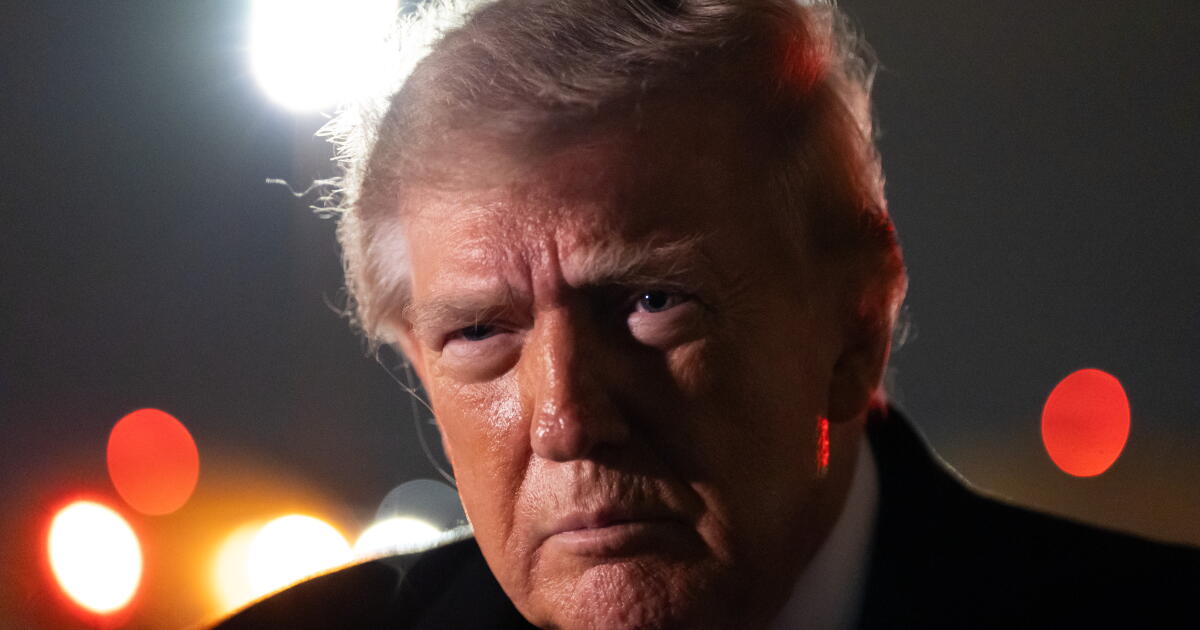
A bipartisan group of six senators — four of them Republicans — called Sunday for the Trump administration to “immediately reverse course” on a plan to purchase diesel from Russia as part of an effort to lower high fuel prices.

President Trump shocked lawmakers when he announced on social media Friday that he had struck a deal with Russian President Vladimir Putin in a phone call. He said Russia will immediately supply more than 300,000 tons of diesel to the American and global market, followed by an additional 500,000 tons in November and 1 million tons “immediately thereafter.” Russia will deliver an additional 3 million tons “within a short period of time” after that, he wrote.

Four Republican senators and two Democratic senators signed onto the statement released Sunday protesting the deal. They said the administration failed to consult with Congress or submit any explanation to justify its decision as required by statute.

“The United States should not provide Putin with a financial lifeline while Russia continues to kill Ukrainian civilians. The Administration must immediately reverse course,” they wrote.

The Republican senators who signed onto the statement are Sens. Susan Collins of Maine, Lisa Murkowski of Alaska, Thom Tillis of North Carolina and John Curtis of Utah. The Democratic senators are Sens. Jeanne Shaheen of New Hampshire and Richard Blumenthal of Connecticut.

Tillis, in an interview that aired Sunday on NBC’s “Meet the Press,” said there’s a legitimate case for saying the president is not following the law if the administration goes through with its diesel purchase plan.

“We were very clear that Russia is the aggressor. Russia is the one who can end this war by backing out of territory that they occupied,” Tillis said.

Trump’s announcement came just a few weeks after Congress passed legislation that directed Trump to impose substantial tariffs on the top importers of Russian oil or natural gas, with an exception for countries that import less than 15% of Russia’s natural gas exports and have taken significant steps to reduce those imports.

The congressional effort was aimed at cutting the flow of money Russia receives from oil and gas sales to finance its war against Ukraine.

The lawmakers also noted that Congress explicitly banned Russia energy imports in 2022 — after Russia’s full-scale invasion of Ukraine — to prevent the United States from financing the war.

“Congress was clear: the U.S. should not import oil from Russia until it ends its aggression against Ukraine and ceases threats against our NATO Allies,” the six lawmakers wrote in their statement. “President Trump’s decision to allow Russian diesel imports to the U.S. runs directly counter to that law.”

Sen. John Barrasso (R-Wyo.), when asked whether the president’s action would be in violation of U.S. law, said Trump is focused on reducing the cost of energy.

“The president is balancing and has to make tough decisions,” Barrasso said on CBS’ “Face the Nation.”

He also encouraged Trump to enforce the sanctions law that Congress passed last month.

“This is just another point of leverage for the president to use against Putin in an effort to get a long-term solution in that part of the world,” Barrasso said.

Trump has recently sought to blame record U.S. diesel prices on Ukraine rather than the U.S.-led war in Iran, which has elevated world energy prices.

Freking writes for the Associated Press.

Source link

Trump strikes deal with Putin for Russian diesel

Michelle L. Price and Collin Binkley

President Trump said that he has struck a deal to obtain diesel from Russia, a stunning reversal of years of U.S. pressure on Moscow over its war with Ukraine and an attempt to address high fuel prices ahead of the U.S. midterm elections.

Trump said on social media on Friday that he struck the deal with Russian President Vladimir Putin in a phone call in which he was expected to discuss a suspected case of plague in Russia. Instead, Trump announced that Russia will immediately supply more than 300,000 tons of diesel, followed by an additional 500,000 tons in November and 1 million tons “immediately thereafter.” Russia will deliver another 3 million tons “within a short period of time” after that, he wrote.

Trump’s shocking announcement comes after he signed a sweeping Russia sanctions law last month that aimed at clamping down on Russia’s energy economy, among other areas, that fuel its war against Ukraine.

His move casts doubt on the likelihood of the White House imposing sanctions on Russia this month, given that a bipartisan law passed by Congress directs the administration to target the top importers of Russian oil and gas.

Trump, in his announcement, did not address the sanctions or Russia’s war but said, “Lower prices for Americans, especially our Great Farmers, Ranchers, and Truckers, is my Greatest Priority.”

The White House did not immediately respond to questions about who was paying for the diesel from Russia and when the fuel being supplied under the agreement would become available. It also did not clarify whether subsequent supplies of Russian diesel set to come next month would be supplied prior to Election Day on Nov. 3.

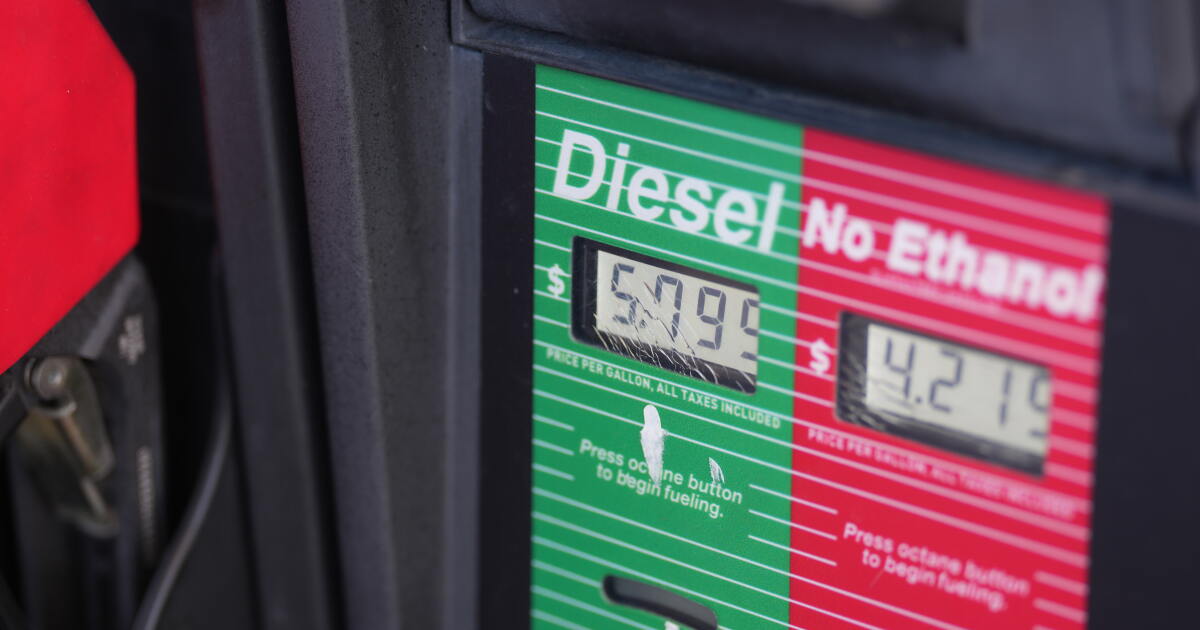
Gas prices globally have surged as the war in Iran upends the energy sector. The national average for a gallon of diesel in the U.S. was $6.23 on Friday, according to AAA, after hitting a record $6.52 on Sept. 22.

Russian presidential envoy Kirill Dmitriev reposted the Treasury Department’s announcement on X Friday and said that “Russia-US cooperation on diesel and energy will benefit the world.”

Rep. Don Beyer, the senior House Democrat on the Joint Economic Committee, called Trump’s announcement, “infuriating.”

“This is what we warned anyone who would listen: Trump isn’t the slightest bit trustworthy when it comes to Russia,” Beyer said in a statement on X. “Giving him expanded tariff powers in hopes he would use them to help Ukraine was a mistake. Now he’s lifting sanctions on Russian fossil fuels.”

The law Trump signed last month envisions sanctions on Russian officials, banks and a shadow fleet of tankers and bans all new U.S. investment in Russia and the handling of sovereign debt.

It also directed Trump to impose tariffs of up to 100% on the top five importers of Russian oil or natural gas, with an exception for countries that import less than 15% of Russia’s natural gas exports and have taken significant steps to reduce those imports.

The U.S. has not imported Russian oil or gas since 2022, when the Biden administration banned them because of Moscow’s invasion of Ukraine, according to the U.S. Energy Information Administration.

Shortly after Trump made the announcement, the Treasury Department said it was immediately issuing a temporary license allowing Russian diesel to be supplied to the global market.

This is the latest in several licenses the U.S. Treasury has issued regarding Russian fuel shipments since the start of the Iran war earlier this year. But it is the first such license to ease sanctions on diesel for a period lasting longer than the standard 30-day window since the start of the Ukraine war.

The new so-called general license means U.S. sanctions will not apply until April 2027 on deliveries of Russian diesel that has been loaded onto tankers as of Friday. The department extended similar easing of sanctions in March and April even though Treasury Secretary Scott Bessent had ruled out such a move earlier in the year.

The extensions continue to underscore how the fallout from the Iran war has boosted Moscow’s ability to profit from its energy exports, which had been restrained by the U.S. and other allies since the invasion of Ukraine.

Price and Binkley write for the Associated Press. AP writer Will Weissert in Washington and Farnoush Amiri in New York contributed to this report.

Source link