
HARTSVILLE, S.C. — Rachel Minus is not impressed by the Democratic presidential candidates. They’re just recycling tired talking points for African American voters like her, she said — with one curious exception.
The South Carolina millennial is all in for Tom Steyer, a Bay Area billionaire who’s been caricatured by critics as the definition of a rich, entitled white guy.
“I get the feeling he cares about us,” Minus said, as she waited for Steyer to take the stage here at the Jerusalem Baptist Church, a black congregation dating to the late 1800s. “The other candidates say things that are lip service. We have seen it year after year with the Democratic Party. So when they keep repeating the same talking points, you listen to it and it falls on deaf ears. He’s genuine.”
That sentiment is especially significant in a state where about 3 in 5 Democratic voters in the presidential primary four years ago were African Americans. Steyer’s aggressive spending here and in Nevada bought enough support in state polls to allow the former hedge-fund manager to qualify for last week’s nationally televised Democratic debate, much to the annoyance of some rivals and a chorus on social media.
As a campaigner, his personal politicking is uneven and he is prone to rambling. His one viral moment came when Steyer was caught on camera post-debate, awkwardly trying to greet rivals Bernie Sanders, the Vermont senator, and Massachusetts Sen. Elizabeth Warren even as the two were in the middle of a heated, private exchange.
“You got caught in the crossfire!” Congresswoman Alma Adams joked at a news conference Saturday morning next door in Charlotte, N.C. (The event was about Steyer’s plan for investment in historically black colleges and universities, but the two never got around to talking about the endorsement or the policy details.)
Steyer knows something about organizing in minority communities. In the years before running for president, he built a national advocacy machine that galvanized community activists, registered young voters and persuaded Californians to raise billions in taxes — all to advance the causes of social justice, action against climate change and affordable healthcare.
Although Washington insiders generally dismiss his recent momentum as likely to be short-lived, some of this area’s political denizens aren’t so sure.
“People are saying, ‘This guy, maybe we ought to look at him,’” said Bruce Ransom, a political science professor at Clemson University. “Is it enough to prevail in February? Doubtful. But if the candidates come into the election here all bunched up and he has an established foothold, then who knows?”
A recent Fox News poll showed that Steyer has moved into second place in South Carolina, with 15% support among likely Democratic primary voters. While that’s 21 percentage points behind former Vice President Joe Biden, Steyer is running a “high-tech, high-touch” campaign, said Antjuan Seawright, a South Carolina political strategist unaffiliated in the race. “He’s got some soldiers on the field who know how to do war in South Carolina.”
Ninety percent of the campaign’s nearly 100 organizers are from South Carolina. They are in all of the state’s 46 counties, and more than half are organizing neighborhoods within 10 miles of where they were born. “Instead of bringing in folks from other states who need to learn the lay of land, our team is literally organizing their friends, their family and their neighbors,” said Brandon Upson, Steyer’s national organizing director.
Columbia Mayor Steve Benjamin, a national co-chair of rival Michael R. Bloomberg’s campaign, said he’s received more mail from Steyer than all the other candidates combined. (Bloomberg made a strategic decision to not compete in South Carolina, focusing his campaign instead on bigger states that vote later.)
At events in both North and South Carolina over the weekend, Steyer told diverse crowds that the media has gotten him all wrong. “I know that when I’m described in the press, I’m often described as a rich person or a billionaire,” Steyer told black leaders in Charlotte. “I think I’m a different person from that two-dimensional stereotype.”
He talked of his mother’s work as a tutor in a Brooklyn detention center. He stressed the community bank in Oakland that he ran with wife Kat Taylor, who puzzled some attendees at Steyer’s events by abruptly bursting into song, sometimes Billy Joel’s “Summer, Highland Falls,” when she introduced him. At every stop, he talked of the urgency of reparations for descendants of enslaved people. Steyer is not the only candidate emphasizing issues of race but he is doing so most persistently in South Carolina.
The anger Steyer seems to instill among President Trump’s supporters in inland South Carolina so intrigued Democrat Paula Wise, an African American insurance company employee, that she came to see him over the weekend. “It tells me this is somebody I really need to look at,” she quipped.
Not one of the many Democratic voters interviewed in the state were troubled by Steyer’s use of his deep bank account to gain traction.
“It is like a knife,” said Shalon Jordan, 40, a tax preparer in Hartsville. “You can use the knife to hurt somebody. Or you can make a great meal. If he is going to make a great meal with his billions, then that is a good thing.”
Supporters talk openly about the transactional nature of politics. As Johnnie Cordero, the head of the Democratic Black Caucus of South Carolina, announced his endorsement in Florence, he praised the hiring Steyer has done — from the Democratic Black Caucus of South Carolina.
“Part of what makes you a serious candidate for African Americans in South Carolina is the fact that you put your money where your mouth is,” Cordero said. “Why is it alright for a billionaire donor to support the Democratic Party, but that same billionaire donor cannot put his money where his mouth is and support a campaign for himself?”
Steyer raised the topic of his hedge-fund fortune only to press his case that he, as a financial titan, can best call out Trump as a fraud. And he distinguished himself from the other billionaire in the race, former New York Mayor Bloomberg.
“We have totally different backgrounds and experiences,” Steyer said as his campaign bus rolled through rural South Carolina. “If someone as rich as Bloomberg wants to represent Democrats … he especially needs to embrace a wealth tax.” Bloomberg, whose fortune dwarfs that of Steyer, says rich people should pay higher taxes, but he has pilloried wealth-tax proposals as Venezuelan-style socialism.
Both Steyer and Bloomberg emphasize the “climate emergency” more than other candidates. After a spate of natural disasters in the South, the issue seems to be catching on for Steyer. “Four years ago that may not have resonated here,” said Benjamin, the Columbia mayor. “Now it resonates a lot. We have seen several years of what were supposed to be ‘once in a lifetime’ events.”
Sen. Bernie Sanders, left, and Tom Steyer at a Martin Luther King Jr. Day event in Columbia, S.C.
(Sean Rayford / Getty Images)
Steyer is betting that his money will enable him to outlast Biden, who enjoys the most support among African American voters of any Democratic candidate, and that a weak showing by the former vice president in Iowa or New Hampshire, the first states to vote, will weaken Biden’s base of support in the South.
It’s a long-shot gamble, but Steyer takes encouragement from voters like Wes Simmons, a 64-year-old business consultant who was among the roughly 200 people in Charlotte who came to hear him Friday night.
“Biden is showing his age,” Simmons said. “He is not as sharp, not as quick. And Trump is a mean-spirited campaigner. There are folks wondering, what is the alternative? What else is out there?”
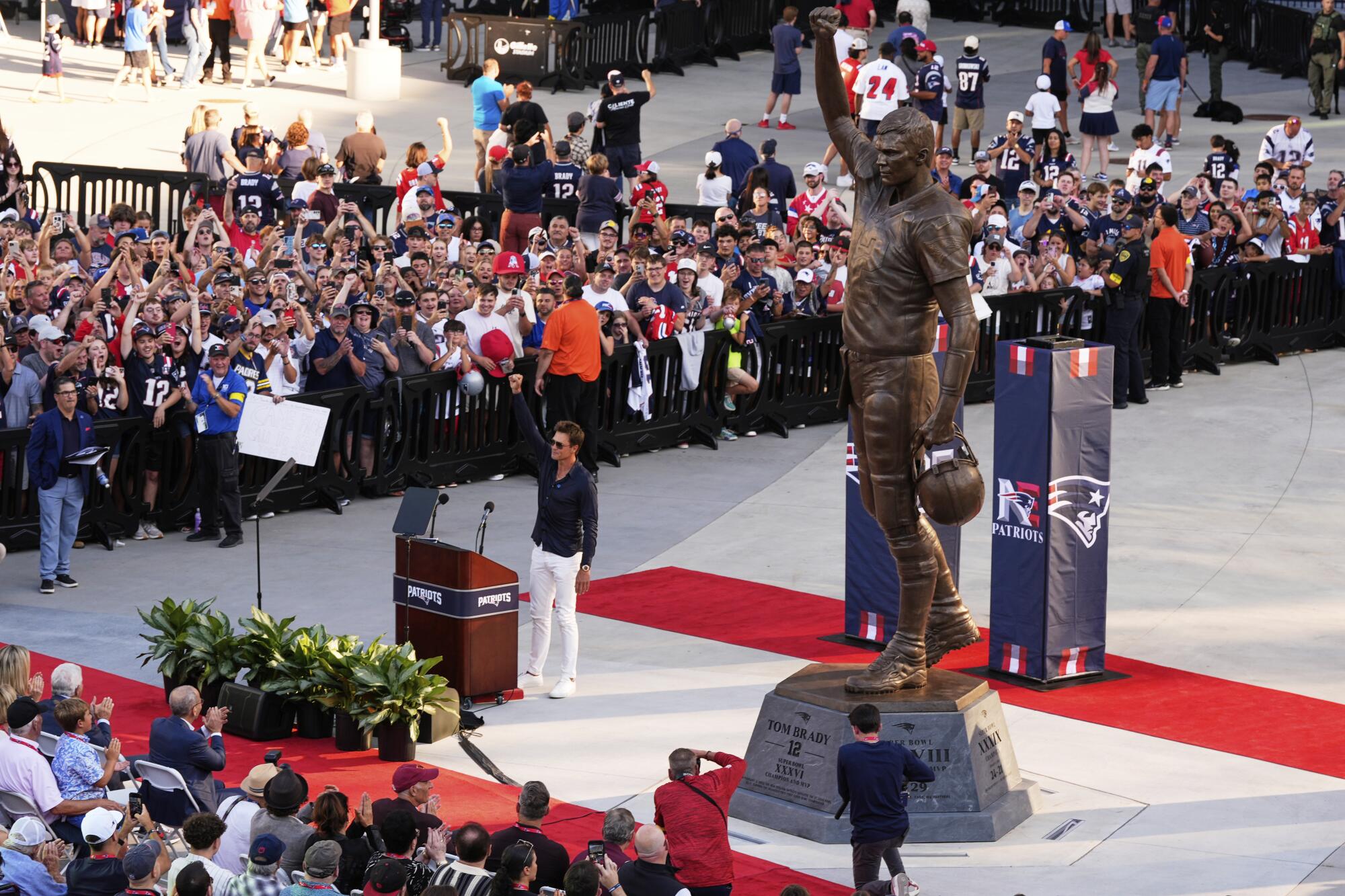
Tom Brady‘s return to the football field will take place on U.S. soil.
Right here in Los Angeles, to be specific.
The Fanatics Flag Football Classic, featuring Brady and a slew of other NFL stars and athletes, will take place March 21 at BMO Stadium, the venue that is also slated to host flag football during the 2028 Summer Olympics.
The event was originally scheduled to take place on the same date, but at a location more than 8,000 miles away at Kingdom Arena in Riyadh, Saudia Arabia.
No official reason for the relocation has been given, although the move was made amid increased tensions in the Middle East after the United States and Israel began military strikes against Iran this month. Last week, Iran used two drones to strike the U.S. Embassy in Riyadh, Saudi Arabia’s capital city.
The event will feature three 12-player teams. Brady, the retired seven-time Super Bowl champion and minority owner of the Las Vegas Raiders, and Philadelphia Eagles quarterback Jalen Hurts will co-captain the Founders FFC team, which will be coached by Denver Broncos’ Sean Payton.
A second team, Wildcats FFC, will be co-captained by Cincinnati Bengals quarterback Joe Burrow and Washington Commanders quarterback Jayden Daniels, with San Francisco 49ers’ Kyle Shanahan coaching. During a March 18 draft, the two teams will be built from a pool of athletes that include Philadelphia Eagles running back Saquon Barkley, Cleveland Browns defensive end Myles Garrett, former Rams receiver Odell Beckham Jr., four-time Super Bowl-winning tight end Rob Gronkowski and WWE star Logan Paul.
The third team in the event is the U.S. national flag football team, the reigning IFAF flag football world champion coached by Jorge Cascudo and captained by Aamir Brown and Darrell “Housh” Doucette.
Northern California Rep. Kevin Kiley (R-Rocklin), whose congressional district was carved up in the redistricting ballot measures approved by voters last year, announced Monday that he would not challenge fellow Republican Rep. Tom McClintock of Elk Grove. Instead, he plans to run in the Democratic-leaning district where he resides.
“It’s true that I was fully prepared to run in [McClintock’s district], having tested the waters and with polls showing a favorable outlook in a ‘safe’ district. But doing what’s easy and what’s right are often not the same,” Kiley posted on the social media site X. “And at the end of the day, as much as I love the communities in [that] District that I represent now – and as excited as I was about the new ones – seeking office in a district that doesn’t include my hometown didn’t feel right.”
Kiley, 41, currently represents a congressional district that spans Lake Tahoe to Sacramento. He did not respond to requests for comment.
But after California voters in November passed Proposition 50 — a ballot measure to redraw the state’s congressional districts in an effort to counter Trump’s moves to increase the numbers of Republicans in Congress — Kiley’s district was sliced up into other districts.
As the filing deadline approaches, Kiley pondered his path forward in a decision that was compared by political insiders to the reality television show “The Bachelor.” Who would receive the final rose? McClintock’s new sprawling congressional district includes swaths of gold country, the Central Valley and Death Valley. The district Kiley opted to run in includes the city of Sacramento and the suburbs of Roseville and Rocklin in Placer County.
Kiley was facing headwinds because of the Republican institutional support that lined up behind McClintock, 69, who has been in Congress since 2009 and served in the state Legislature for 26 years previously. President Trump, the California Republican Party and the Club for Growth’s political action committee are among the people and groups who have endorsed McClintock.
Conservative strategist Jon Fleischman, a former executive director of the state GOP, said he was thrilled by Kiley’s decision, which avoids a divisive intraparty battle.
“If you open up the dictionary and look for the word conservative, it’s a photo of Tom McClintock. He is the ideological leader of conservatives, not only in California but in Congress for many, many years,” Fleischman said, adding that the endorsements for McClintock purposefully came because Kiley was considering challenging him.
Kiley, who grew up near Sacramento, attended Harvard University and Yale Law School. A former Teach for America member, he served in the state Assembly for six years before being elected to Congress in 2022 with Trump’s backing. But he has bucked the president, notably on tariffs. He also unsuccessfully ran to replace Gov. Gavin Newsom during the 2021 recall, and has been a constant critic of the governor.
Kiley is now running in a Sacramento-area district represented by Rep. Ami Bera (D-Elk Grove). Democrats in the newly drawn district had a nearly 9-point voter registration edge in 2024. Bera is now running in the new version of Kiley’s district.
In Kiley’s new race, his top rival is Dr. Richard Pan of Sacramento, a former state senator and staunch supporter of vaccinations.
“Kevin Kiley can try to rebrand himself, but voters know his extreme record,” Pan said in a statement. “He has stood with Donald Trump 98% of the time and was named a ‘MAGA Champion.’ The people of this district deserve better than political opportunism disguised as moderation. This race is about who will actually fight for healthcare, public health, and working families. I’ve done that my entire career. Kevin Kiley has not.”
Wait, Zendaya and Tom Holland got married and we missed it? That’s what the “Euphoria” star’s longtime stylist said on the red carpet Sunday.
“The wedding’s already happened, you missed it,” Law Roach told “Access Hollywood” in a singsong voice at the Actor Awards, adding, “It’s very true,” after the shocked reporter asked if he was being truthful.
He said the same thing almost word for word to an “Entertainment Tonight” correspondent who took the news completely — almost dismissively? — in stride.
Holland and Zendaya, who co-starred as Peter Parker and MJ in three “Spider-Man” movies, have known each other since 2016 and confirmed in 2021 that they were romantically involved as well.
Eagle-eyed fans may have suspected the two had tied the knot a few weeks back after Zendaya stepped out Feb. 18 with a plain gold band on her left ring finger in place of her engagement diamond. That big ol’ sparkler had been on the scene since early last year, debuting publicly at the 2025 Golden Globe Awards a year ago January.
At that awards show, when former Times columnist Amy Kaufman — then recently engaged herself — asked the “Dune” actor flat-out if she was engaged, Zendaya flashed her ring, smiled coyly and shrugged her shoulders. That was way more of a “yes” than in 2023 when she shut down engagement rumors after posting a selfie wearing a pearl ring on her left hand and a black Golden State Warriors hat on her head.
“I posted it for my hat. Not for the ring on my right finger, you guys,” she said and laughed in the video that circulated on X and Instagram. “Seriously, you think that’s how I would drop the news? What?”
We didn’t think any wedding news would come via her stylist either, no matter how long the two friends have been working together. Though Zendaya might have been chuckling a bit when she posted a “Save the Date” message on social media three weeks ago to promote her upcoming movie “The Drama.”
Zendaya explained her approach to privacy in a 2023 Elle interview, saying she “can’t not be a person and live my life and love the person I love.”
“But also, I do have control over what I choose to share. It’s about protecting the peace and letting things be your own but also not being afraid to exist. You can’t hide. That’s not fun, either. I am navigating it more than ever now.”
Yes, we reached out to the notoriously private couple’s representatives. No, they did not get back to us immediately to confirm the news or offer any details. Are you surprised? We are not.
When Tom Steyer was running a hedge fund in 2000, he wrote a letter telling some wealthy investors their money would soon flow through an offshore company that would shield their gains from U.S. taxes.
It was routine in finance, but could prove toxic in politics.
Now that the San Francisco billionaire has joined the crowd of Democrats running for president, much of what he did to build his personal fortune, including a stint at Goldman Sachs in the 1980s, could turn off voters. His fund’s investments in coal mining and private prisons are two of the biggest hazards.
Part of Steyer’s challenge is timing. Wall Street’s reputation is in tatters in the aftermath of the Great Recession. Many Democrats are upset about growing income inequality. And billionaires — President Trump first among them — are routinely demonized by the party’s left wing.
Steyer is the founder of Farallon Capital Management, one of America’s largest hedge funds, the high-risk investment pools for big investors. He left Farallon in 2012 after running the San Francisco firm for 26 years.
He did not mention his experience there when asked by The Times what qualified him to serve as president. He focused instead on his work fighting climate change and big corporations over the last decade.
Attacks by Steyer’s opponents have been mild so far, but that will change if he starts gaining support.
“He will have to answer for his involvement in anti-climate-control activities, his relationship to the coal industry, and his relationship to Wall Street, which young people particularly find abhorrent,” said Democratic ad maker Hank Sheinkopf, who is unaligned in the presidential race.
“In a political campaign, there is no past tense and there is no future tense. Everything in your life you’ve ever done, thought of and said is in present tense.”
In written responses to questions sent by email, Steyer expressed remorse over some of Farallon’s investments.
A key liability is Farallon’s 2005 investment of $34 million in Corrections Corp. of America, which runs migrant detention centers on the U.S.-Mexico border for U.S. Immigration and Customs Enforcement. Many of the roughly two dozen Democrats in the presidential race have denounced profits from incarceration as immoral.
“I deeply regret that Farallon made that investment, and I personally ordered the investment in CCA to be sold because it did not accord with my values then or now,” Steyer said.
More troublesome for Steyer’s public image is the fund’s history of investing in fossil fuel projects, including a giant coal mine in Australia that generates vast quantities of carbon emissions.
The owners overcame protests by environmentalists and won permission to clear 3,700 acres of forest that served as a koala habitat and mine 12 million tons of coal per year. Steyer’s critics have long seen his past personal stake in coal mining as hypocritical.
The hedge fund led by Tom Steyer invested in an Australian coal mine that drew protesters in Sydney.
(Saleed Khan / AFP/Getty Images)
“If you’re running as a liberal, idealistic candidate, as Tom Steyer is, it’s a serious problem when the story you’re trying to tell uses words like private prisons and coal,” said Jessica Levinson, a Loyola Law School professor. “It just goes directly against the rainbows and sunshine and clean air and better tomorrow narrative he’s trying to paint.”
Steyer said he left Farallon in part because of its holdings in fossil fuels. “I wish I’d made the move away from fossil fuels sooner,” he said.
Steyer, 62, muscled his way onto the public stage by becoming one of the Democratic Party’s top donors over the last decade. He put $74 million into the 2018 midterm election. He has carefully crafted his political profile around his spending to promote liberal causes, most visibly the fight against global warming and the drive to impeach President Trump.
Some of Steyer’s record has yielded bad publicity over the years as he weighed runs for elected office in California. But his entry into the presidential race on Tuesday and his vow to spend $100 million of his own money on his campaign will draw fresh scrutiny to the means he used to amass what Forbes estimates to be his net worth of $1.6 billion.
Steyer, who grew up on Manhattan’s East Side, started his career on Wall Street in the late 1970s at Morgan Stanley and worked later on mergers and acquisitions at Goldman Sachs. In 1986, he opened Farallon, which grew from $9 million to $36 billion on his watch, according to Steyer.
Some Democrats say Steyer has atoned for his sins. RL Miller, chairwoman of the state Democratic Party’s environmental caucus, was perplexed by his candidacy and said his money would be better spent advancing other Democrats.
“I do feel he has demonstrated substantial good faith in that yes, he made a lot of money from bad places, but he’s been very, very open about the fact that he’s turned over a new leaf and is no longer taking money from those bad places and is instead spending to do good,” Miller said.
The business records of wealthy candidates are often weaponized by rivals. Former President Obama cast GOP challenger Mitt Romney in 2012 as a ruthless plutocrat who made millions of dollars on corporate takeovers that put thousands of Americans out of work. Romney co-founded Bain Capital, a private equity firm.
Mitt Romney’s career running a private equity firm was criticized by President Obama in the 2012 presidential campaign.
(Erik S. Lesser / EPA-Shutterstock)
Gray Davis won California’s Democratic primary for governor in 1998 after portraying rival Al Checchi as a tycoon who pillaged Northwest Airlines, firing thousands and forcing thousands more to take pay cuts.
“When these wealthy, self-financing first-time candidates want to throw their hat in the ring, whether they’re Democrat or Republican, they have to be prepared for a complete drill-down on how it is they made those millions of dollars,” said Garry South, who was Davis’ chief strategist.
As for Steyer, South said, “It’s pretty hard for me to see a billionaire on the Democratic side credibly take on the whole issue of wealth inequality.”
Within hours of Steyer’s announcement, two of his opponents took shots at him.
“I’m a bit tired of seeing billionaires trying to buy political power,” Sen. Bernie Sanders of Vermont told MSNBC.
Sen. Elizabeth Warren of Massachusetts, who is competing with Sanders for progressive voters, tweeted, “The Democratic primary should not be decided by billionaires, whether they’re funding super PACs or funding themselves.”
In an email seeking donations on Thursday, she said, “We need our candidates to compete to have the best ideas — not just to write themselves the biggest checks.”
Sen. Elizabeth Warren says the Democratic presidential primary should not be decided by billionaires.
(Brynn Anderson / Associated Press)
Both Sanders and Warren, who frequently rail at what they see as unfair advantages for the super-rich, have declined to take money from Wall Street donors.
Steyer’s wealth will enable him to run more television ads than most of his opponents can afford. He is already spending $1.4 million on advertising over the next two weeks on national cable news networks and in the first four states to hold a primary or caucus.
“Maybe he feels he can overwhelm these questions by spending a lot of money telling his story the way he wants to tell it,” said David Axelrod, the architect of Obama’s campaigns. “The problem is in the presidential race, the coverage is so intense and social media such a big piece of that, these kinds of vulnerabilities get shared virally very readily, and I’m not sure you can overwhelm that, even with hundreds of millions of dollars.”
Steyer could also face questions about spending that much money on himself. “Does all that spending help in the end of the day or does it become an emblem of excess and self-aggrandizement?” Axelrod said.
Asked about his letter to Farallon investors on the British Virgin Islands company that was going to help them avoid federal taxes, Steyer did not address his past actions, but called for new taxes on the rich to reduce inequality.
“I use no offshore tax havens and pay all U.S. taxes in full,” he said. “I believe we should have a much simpler and fairer tax code and get rid of all loopholes.”
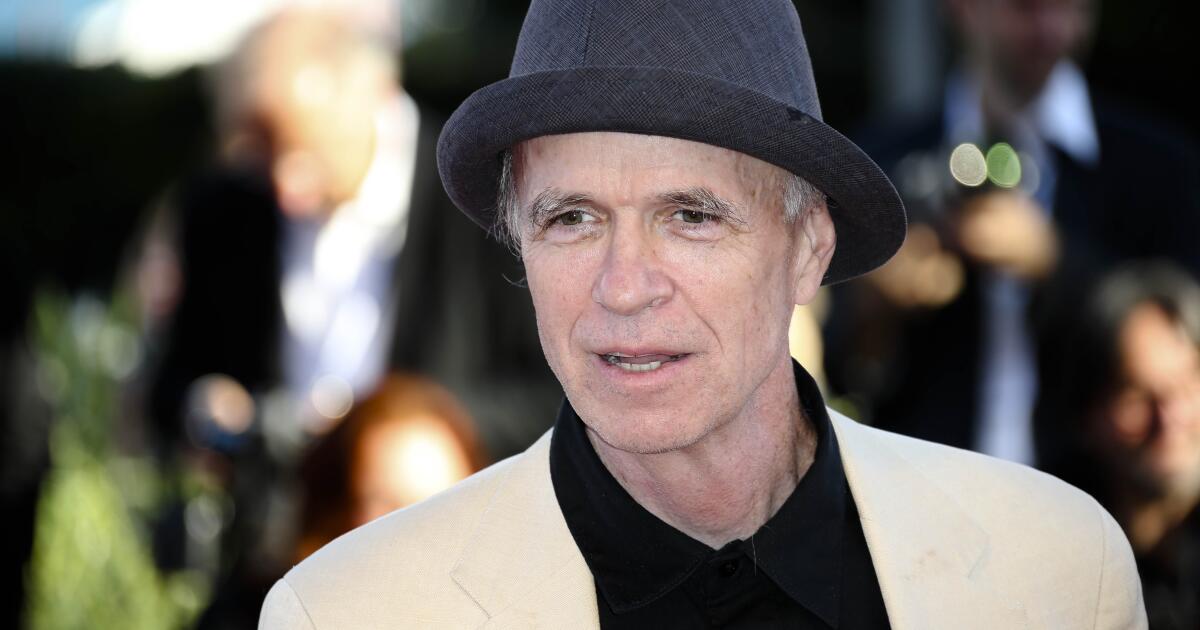
Tom Noonan, a character actor and filmmaker known for playing villains in “Manhunter” and “The Last Action Hero,” died on Valentine’s Day. He was 74.
The death was confirmed by Fred Dekker, director of “The Monster Squad,” who wrote on Facebook, “Tom’s indelible performance as Frankenstein … is a highlight of my modest filmography.”
Noonan had a nearly 40-year career on TV and in film, making his mark with a role in “Manhunter,” the 1986 movie based on a Thomas Harris novel.
In “Manhunter,” which starred William Peterson of “CSI: Crime Scene Investigation” as an FBI agent and “Succession” star Brian Cox as Dr. Hannibal Lecter, Noonan played Francis Dolarhyde, the serial killer also known as the Tooth Fairy. It was a performance that “knocked out” Dekker, who then pursued Noonan for “Monster Squad.”
Playing a killer wasn’t unusual for Noonan, who stood 6-foot-5 or 6-foot-6, depending on who you trust. On a 2013 episode of TV’s “The Blacklist,” he played “the Stewmaker,” a man with a taste for dissolving human bodies in acid. In the 1993 comedy “The Last Action Hero” he was the Ripper, a fictional nemesis who comes to life in the high-concept film-within-a-film starring Arnold Schwarzenegger as action star Jack Slater.
Born in Greenwich, Conn., on April 12, 1951, Noonan was raised by his math-teacher mother Rita and a large extended family after the death of his father, John Ford Noonan Sr. He went to school at Yale Drama and later founded New York’s Paradise Factory theater with Jack Kruger at the site of the Paradise Ice Cream Factory, where the ice cream cone was invented. The two built a theater and rehearsal rooms where the condemned building stood.
Paradise Factory now bills itself as “bringing the rigor of theatrical discipline to the process of cinematic art, and bringing the intimacy and immediacy of the cinema into theatrical performance art.”
“I wish I had more success as an actor,” the New York-based actor told The Times with a dash of melancholy in 2015. “I think people call me because they’re channel surfing late at night and they see me in a movie on cable.”
In that story, about the actor and his friend and collaborator Charlie Kaufman and Kaufman’s stop-motion animation film “Anomalisa,” a Times staff writer described Noonan: “Like Kaufman, he has a dark worldview, an idiosyncratic sensibility, blackly comic thoughts and, at times, an endearing crankiness.”
In “Anomalisa,” Noonan was credited with playing “Everyone Else” — and that wasn’t an exaggeration. Jennifer Jason Leigh and David Thewlis played the leads; Noonan voiced more than 40 other roles in the film.
“Even I can’t tell if it’s me sometimes,” he told The Times in 2015 about the extensive studio-recording process. “I mean, I recognize the voice, but I’m not sure where it came from.”
“My first TV interview was with Tom Noonan for a local NYC show called MIDDAY(?),” actor Jerry O’Connell wrote early Wednesday on Instagram, including a blurry image of them on the show’s set. “I was so nervous. Tom was so kind. I saw him in every (NYC) play he was in after. He bought my brother and I tickets to Eddie Murphy’s RAW (we were too young to purchase). Btw, on this episode, I was talking about a movie about to come out (Stand By Me) and Mr. Noonan was talking about his movie (Manhunter). Rest In Peace LEGEND.”
Noonan appeared in the famous 1980 flop “Heaven’s Gate” and cast a creepy gothic shadow decades later in “The House of the Devil” (2009). He was a ghoulish host of a late-night television horror program in the 2005 vampire movie “The Roost,” then played a wagon-train missionary in the 2007 western “Seraphim Falls.”
In 18 episodes of the series “Hell on Wheels,” which ran for five seasons on AMC, he was the Rev. Nathaniel Cole. Other TV credits included episodes of Fox’s “The X-Files,” HBO’s “The Leftovers,” CBS’ “CSI: Crime Scene Investigation” and the Louis C.K. series “Louie” (FX) and “Horace and Pete.”
Noonan’s half-dozen directing credits include the 1994 film “What Happened Was …,” which was produced as a play, then became a movie and then won the Sundance Grand Jury Prize for dramatic feature. In addition to writing and directing the movie, Noonan played the lead male role opposite actor Karen Sillas. Noonan also won Sundance’s Waldo Salt screenwriting award for the script.
The next year, his feature “The Wife” — a dark comedy once again written, directed by and starring Noonan — was a nominee for the same Sundance Grand Jury Prize. Described by the New York Times as a “bleakly funny evisceration of modern marriage,” the movie co-starred Karen Young, who was Noonan’s wife from 1992 to 1999.
And Noonan’s 2015 movie “The Shape of Something Squashed” was born out of confusion and some despair after his agent called him with what initially looked like a part in one of the “Mockingjay” installments of “The Hunger Games” franchise. When he got the script, though, he saw only one role for someone his age, and that job — playing President Snow — already belonged to Donald Sutherland.
Turns out there never had been a part in the offing. Sutherland was just busy, and Jennifer Lawrence and the rest of the “Hunger Games” cast needed someone to rehearse with them for a week.
After recovering from a brief emotional tailspin, Noonan knocked out the script for “The Shape of Something Squashed” — then directed and acted in the film.
He was preceded in death by his older brother, “A Coupla White Chicks Sitting Around Talking” playwright John Ford Noonan Jr., who died in 2018 at age 77.
Former Times staff writer Steve Zeitchik contributed to this report.
I’ve never dined at local celebrity chef restaurants on my doorstep, including The Fat Duck and The Hand and Flowers, due to the expensive menu prices.
I live near Michelin-star restaurants but locals like me can’t afford them(Image: Alla Tsyganova via Getty Images)
I live mere minutes away from some of the finest eateries in the region, arguably amongst Britain’s best. This encompasses Tom Kerridge’s The Hand and Flowers and Heston Blumenthal’s establishments, yet I’ve remarkably never visited any of them.
Whilst it’s enticing to have such celebrated venues practically on my doorstep, they’re renowned for being rather expensive and upmarket.
Countless diners will journey considerable distances to reach these establishments and boozers, whilst locals such as myself have never crossed their thresholds. The Fat Duck, situated in Bray, Berkshire, is a haute cuisine restaurant owned by Heston Blumenthal.
It boasts three Michelin stars, having maintained them for a 21st successive year as of February 2025, and remains acknowledged as a premier gastronomic destination under the chef.
Marking its 30th anniversary, The Journey menu provides the most comprehensive voyage into “Hestonland and the gastronomic delights that await”. It showcases creations including Bacon & Egg Cereal, Hot & Iced Tea, Beef Royal, Tonic of Botanics and Cheese & Grapes amongst others, reports the Express.
Diners can experience this menu for an eye-watering £350.
Despite residing in and around Bray throughout my existence, there aren’t numerous locals who could manage to eat at The Fat Duck.
The village also houses The Hinds Head, which possesses a Michelin star and belongs to Heston Blumenthal. It’s more reasonably priced, naturally, than The Fat Duck, though still approximately £30 for fish and chips.
A portion of chips alone costs £9, whilst some bay buttered carrots as an accompaniment runs to £7. Nevertheless, it boasts glowing testimonials on TripAdvisor, with one diner visiting earlier this month claiming the dish and chips “didn’t disappoint”.
Another said: “The whole experience was flawless, we have never eaten better food, they listened and remembered my wife’s birthday. If you go, make sure you order the bread and butter with beef dripping sauce. This was outstanding.”
Tom Kerridge also runs a fine dining establishment, a brief journey from Heston’s, The Hand and Flowers, situated in Marlow. It became the first boozer in Britain to receive two Michelin stars.
The chef additionally operates The Coach Marlow, which presents beautifully elevated British gastropub favourites.
The Hand and Flowers maintains two Michelin stars and the establishment sources the finest available produce from independent butchers, fishmongers and greengrocers.
Whilst it comes at a premium, the venue currently offers a midweek lunch promotion where diners can enjoy £25 for two courses, or £32.50 for three from a fixed lunch selection.
Its signature menu is priced at £85 for three courses, Monday to Friday exclusively, or its tasting menu costs a substantial £195 per head. Dishes on the tasting menu feature Cornish halibut, a 30-day-aged beef fillet, and a vanilla crème brûlée for afters.
The menu selections sound mouthwatering, but they come with a hefty price tag.
On Sundays, patrons can also experience the venue’s Sunday lunch offering for £195 per person. The establishment boasts excellent feedback, though one reviewer suggests it ought to be impressive given what it costs.
Another patron praised: “Great night, staff and service, warm atmosphere, the food was out of this world.”
A third customer noted: “It has a fine choice of drinks from well-presented cocktails, beer and fine wines.”
So, whilst all three upmarket venues enjoy glowing testimonials, there’s considerable availability, which might be attributed to the price point.
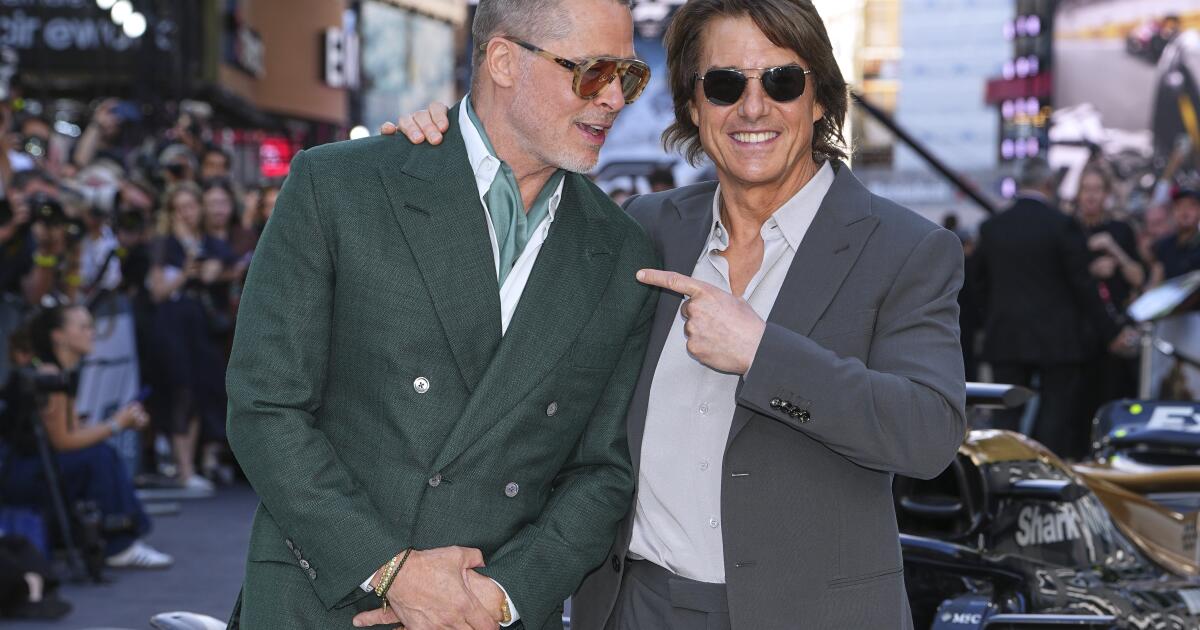
A viral AI-generated video of actors Brad Pitt and Tom Cruise fighting atop a building is causing a stir online.
The 15-second video comes from the latest AI video-generation platform, Seedance 2.0. The platform was launched this week by its owner, ByteDance, the same Chinese parent that oversees TikTok. As the video circulates online, the Motion Picture Assn. and other industry stakeholders have called out the video for its unauthorized use of copyrighted works.
Charles Rivkin, chief executive of the Motion Picture Assn., wrote in a statement that the company “should immediately cease its infringing activity.”
“In a single day, the Chinese AI service Seedance 2.0 has engaged in unauthorized use of U.S. copyrighted works on a massive scale,” wrote Rivkin. “By launching a service that operates without meaningful safeguards against infringement, ByteDance is disregarding well-established copyright law that protects the rights of creators and underpins millions of American jobs.”
Rhett Reese, writer-producer of movies such as the “Deadpool” trilogy and “Zombieland,” responded to Robinson’s post, writing, “I hate to say it. It’s likely over for us.”
He goes on to say that soon people will be able to sit at a computer and create a movie “indistinguishable from what Hollywood now releases.” Reese says he’s fearful of losing his job as increasingly powerful AI tools advance into creative fields.
“I was blown away by the Pitt v Cruise video because it is so professional. That’s exactly why I’m scared,” wrote Reese on X. “My glass half empty view is that Hollywood is about to be revolutionized/decimated.”
Reese isn’t alone in thinking AI could potentially “decimate” Hollywood and take away jobs. Creating protections against AI was one of the main reasons both SAG-AFTRA and the Writers Guild went on strike in 2023. But some members argue that those measures — now nearly three years old — did not go far enough.
As SAG-AFTRA reentered contract negotiations with the studios earlier this week, AI is still one of the union’s highest priorities. It’s expected that the actors union could propose what has been called the Tilly tax, a fee that studios would have to pay to the union in exchange for using an AI-generated actor — a response to the introduction of Hollywood’s first AI actor, Tilly Norwood.
In a statement to The Times, SAG-AFTRA confirmed that the union stands with the studios in “condemning the blatant infringement” from Seedance 2.0, as video includes “unauthorized use of our members’ voices and likenesses.”
“This is unacceptable and undercuts the ability of human talent to earn a livelihood. Seedance 2.0 disregards law, ethics, industry standards and basic principles of consent,” wrote a spokesperson from SAG-AFTRA. “Responsible A.I. development demands responsibility, and that is nonexistent here.”