The Palestinian presidency calls the decision a ‘dangerous’ Israeli ‘attempt to legalize settlement expansion’.
Published On 8 Feb 20268 Feb 2026
Share
Israel’s security cabinet has approved new rules aimed at strengthening Israeli control over the occupied West Bank, according to local media reports, drawing condemnation from Palestinian authorities.
The Palestinian presidency, in a statement on Sunday, called the decision “dangerous” and an “open Israeli attempt to legalize settlement expansion” and land confiscation. The office of President Mahmoud Abbas called for the United States and the United Nations Security Council to intervene immediately.
Recommended Stories
list of 3 itemsend of list
Jordan’s Ministry of Foreign Affairs also condemned the decision, which it said was “aimed at imposing illegal Israeli sovereignty” and entrenching settlements.
The Hamas group called on Palestinians in the West Bank to “intensify the confrontation with the occupation and its settlers.”
The rules will make it easier for Israeli settlers to buy land in the occupied West Bank and give Israeli officials stronger powers to enforce laws on Palestinians in the area, Israeli media reported.
The West Bank is among the areas that Palestinians seek for a future independent state, along with Gaza and occupied East Jerusalem. Much of the West Bank is under direct Israeli military control, with extremely limited Palestinian self-rule in some areas, governed by the Western-backed Palestinian Authority (PA).
According to the Israeli news outlets Ynet and Haaretz, the new steps include removing rules that stopped private Jewish individuals from buying land in the occupied West Bank.
The measures also include allowing Israeli authorities to take charge of managing some religious sites, and increasing Israeli supervision and enforcement in areas run by the PA, according to the media reports.
The office of far-right Israeli Minister of Finance Bezalel Smotrich, in a statement said “we will continue to bury the idea of a Palestinian state”.
Palestinian Vice President Hussein Al-Sheikh said the reports about expected Israeli steps to increase annexation and create new facts on the ground in the occupied West Bank are a total violation of all signed and binding agreements, a serious escalation, and a violation of international law, the Palestinian news agency Wafa reported.
He emphasised that these unilateral measures aim to eliminate any political prospects, obliterate the two-state solution, and drag the entire region into further tension and instability.
The reports come three days before Prime Minister Benjamin Netanyahu is scheduled to meet US President Donald Trump in Washington, DC.
Tehran, Iran – Iran’s President Masoud Pezeshkian has called on the United States to respect his country as the two nations look ahead to another round of nuclear negotiations next week following mediated discussions in Oman.
“Our reasoning on the nuclear issue is based on rights stipulated in the Non-Proliferation Treaty,” he wrote in a post on X on Sunday. “The Iranian nation has always responded to respect with respect, but cannot withstand the language of force”.
Recommended Stories
list of 3 itemsend of list
Pezeshkian described the indirect talks held in Oman on Friday as a “step forward” and said his administration favours dialogue.
Iranian officials are highlighting sovereignty and independence and are signalling eagerness for nuclear-only negotiations,while rejecting a military build-up in the region by the US.
Speaking at a forum hosted by the Ministry of Foreign Affairs in Tehran, the country’s chief diplomat Abbas Araghchi pointed out that the Islamic Republic has always emphasised independence since overthrowing US-backed Mohammad Reza Shah Pahlavi in a 1979 revolution.
“Before the revolution, the people did not believe their establishment to have possessed true independence,” Araghchi said.
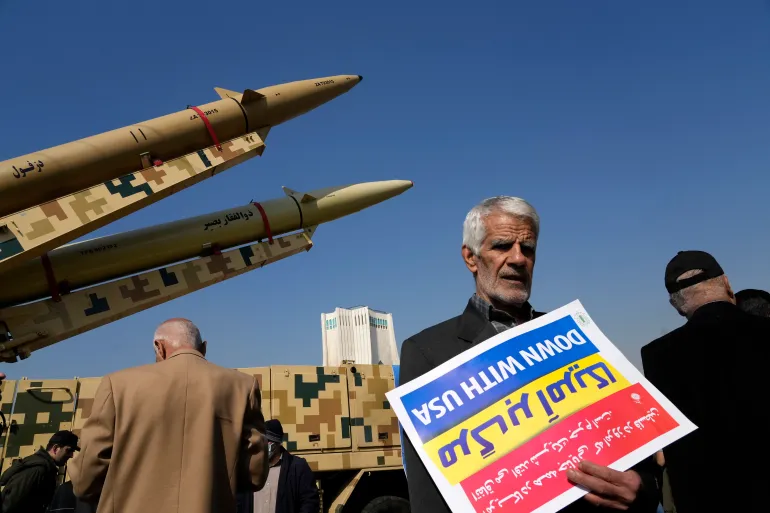
The messaging comes as the anniversary of the revolution approaches on Wednesday, when state-organised demonstrations have been planned across the country. Iranian authorities have in previous years exhibited military equipment, including ballistic missiles, during the rallies.
A man carries an anti-US placard upside down in front of the Iranian-made missiles displayed in the annual rally commemorating Iran’s 1979 Islamic Revolution in Tehran, February 11, 2024 [File: Vahid Salemi/AP]
Araghchi said during the event in the capital that Iran is unwilling to forego nuclear enrichment for civilian use even if it leads to more military attacks by the US and Israel, “because no one has the right to tell us what we must have and must not have”.
However, the diplomat added that he told US envoys Steve Witkoff and Jared Kushner in Muscat on Friday that “there is no way but negotiations”. He said China and Russia have also been informed of the content of the talks.
“Being afraid is lethal poison in this situation,” Araghchi said about Washington amassing what US President Donald Trump has called a “beautiful armada” near Iran’s waters.
“While being prepared, we genuinely have no desire to see the outbreak of a regional war,” Major General Abdolrahim Mousavi told a gathering of air force and air defence commanders and personnel.
“Even though aggressors will be the target of the flames of regional war, this will push back the advancement and development of the region by years, and its repercussions will be borne by the warmongers in the US and the Zionist regime,” he said in reference to Israel.
According to Mousavi, Iran “has the necessary power and preparedness for a long-term war with the US”.
But many average Iranians are left in limbo without much hope that the talks with the US will lead to results, including for the country’s heavily declining economy.
“I was 20 when the first negotiations with the West over Iran’s nuclear programme were held about 23 years ago,” Saman, who works at a small private investment firm in Tehran, told Al Jazeera.
“Our best years are behind us. But it’s even more sad to think that some of the youth who were born at the start of the negotiations were killed on the streets during the protests last month with many hopes and dreams.”
‘They never returned’
Iran is witnessing tense time and threats of a massive US military strike. But the Islamic Republic has not overcome anti-government protests that shook the nation, denouncing the collapse of the national currency, soaring prices and economic hardship.
State television continues to broadcast confessions of Iranians arrested during the nationwide protests, many of whom are accused by the state of working in line with the interests of foreign powers.
In a report aired late on Saturday, a woman and multiple men with blurred-out faces and in handcuffs could be seen saying they were led by a man who allegedly received weapons and money from Mossad operatives in neighbouring Iraq’s Erbil.
“He only wanted more people to die; he shot at everyone,” one of the confessing men said about what allegedly transpired during unrest in the Tehranpars district in the eastern part of the capital, backing the state’s claim that “terrorists” are responsible for all deaths.
Iranian authorities have accused the US, Israel and European countries of instigating the protests.
But international human rights organisations and foreign-based opposition groups accuse state forces of being behind the unprecedented killings during the protests, which were carried out mostly on the nights of January 8 and 9.
The Iranian government claims 3,117 people were killed, but the US-based Human Rights Activists News Agency (HRANA) says it has documented nearly 7,000 fatalities and is investigating more than 11,600 cases. The United Nations special rapporteur on Iran, Mati Sato, said more than 20,000 may have been killed as information trickles out despite heavy internet filtering.
Al Jazeera cannot independently verify these figures.
Amid numerous reports that dozens of medical staff were arrested for treating wounded protesters and remain incarcerated in harsh conditions, Iran’s judiciary issued a rejection of the allegations late Saturday. It claimed that only “a limited number of medical personnel were arrested for participating in riots and playing a role in the field”.
A large number of schoolchildren and university students were also reportedly among tens of thousands arrested during and in the aftermath of the nationwide protests. The Ministry of Education claimed last week that it did not know how many schoolchildren were arrested, but could confirm that all have since been released.
The Coordinating Council of Iranian Teachers’ Trade Associations on Sunday released the four-minute video below, titled “200 empty school desks”, which shows the schoolchildren and teenagers confirmed killed during the protests. Many were accompanied by their parents when killed.
One month after the killings, countless families are left grieving and continue to release videos commemorating their loved ones online.
A message on Instagram calling on the international community to keep talking about the people of Iran has now been shared more than 1.5 million times.
“One month ago today, thousands woke up and ate breakfast for the last time without knowing it, and kissed their mother for the last time without knowing it,” the message reads. “They lived for the last time and never returned.”
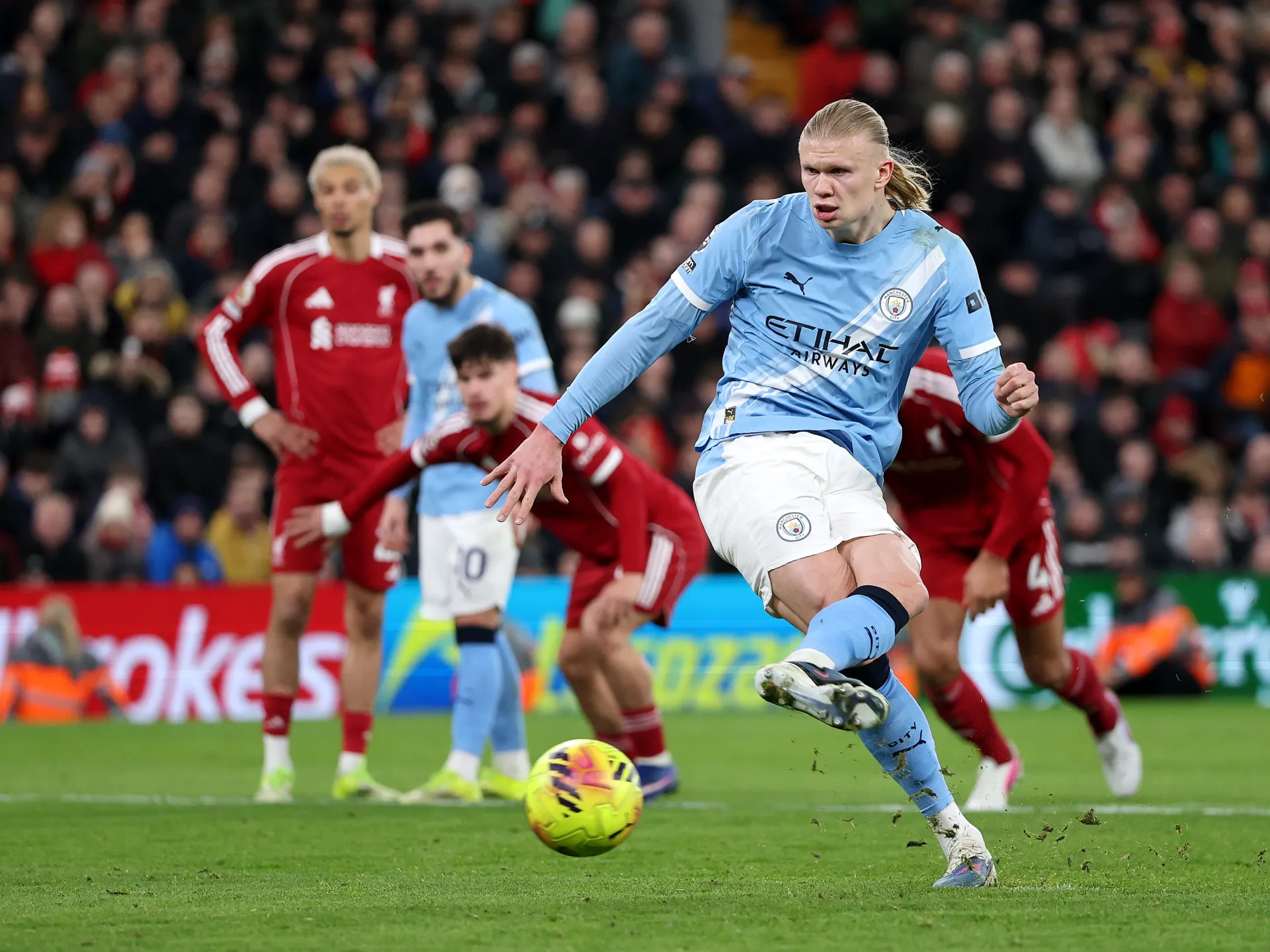
Erling Haaland’s penalty in second-half stoppage time kept Manchester City’s Premier League title challenge alive with a chaotic 2-1 win away at Liverpool.
Haaland’s spot kick sealed a comeback victory for Pep Guardiola’s team in an explosive football game at Anfield on Sunday and brought the gap on first-place Arsenal back to six points.
Recommended Stories
list of 4 itemsend of list
City’s title prospects looked in dire shape when Dominik Szoboszlai crashed a stunning long-range free kick in off the post in the 74th minute.
And even when Bernardo Silva equalised 10 minutes later, second-place City was still looking at ending the match eight points adrift of the leader.
But Haaland sent the away fans wild by firing into the bottom corner from the spot in the 93rd after Liverpool goalkeeper Alisson brought down Matheus Nunes in the box.
Then City substitute Rayan Cherki scored from the halfway line – only for VAR to overrule it and send off Szoboszlai for a foul on Haaland in the process of the ball crossing the line.
These two clubs have combined to win the last eight titles in English football’s Premier League. But both showed the flaws that have opened the door for Arsenal to potentially end their long wait to be crowned champions once again.
Haaland has scored just once from open play in his last 13 games, and an uncharacteristic lack of confidence from the Norwegian showed with the best chance of the first half inside the opening two minutes.
Silva’s clever pass split the Liverpool defence, but Haaland’s shot lacked conviction under pressure from Milos Kerkez, and Alisson Becker was able to save low to his left.
Haaland hooked another effort straight at Alisson among 10 first-half City attempts without a breakthrough.
Second-half slumps have been a consistent feature of City’s season, and the visitors again faded in the second period until a late flurry saved their title challenge.
Hugo Ekitike should have opened the scoring when he completely miscued his header just before the hour mark after a lightning-fast Liverpool break.
Marc Guehi was fortunate to escape with just a yellow card when he dragged down Mo Salah just outside the box.
But it was City who were left fuming at the award of the free kick that led to the opener when Ryan Gravenberch went down under minimal contact.
Szoboszlai scored the only goal with an outrageous free kick when Arsenal visited Anfield in August and produced another stunning strike that clipped the inside of the post before finding the net.
However, the Hungarian went from hero to villain when City levelled six minutes from time.
Szoboszlai played Silva onside as he slid in to volley home Haaland’s header for City’s first second-half goal in the Premier League this year.
Alisson then wiped out Matheus Nunes to concede a penalty and Haaland kept his cool from the spot to put City in front.
Pep Guardiola’s men still needed a stunning save from Gianluigi Donnarumma to tip behind Alexis Mac Allister’s deflected shot.
With Alisson remaining forward from the resulting corner, the Liverpool goal was open when Cherki took aim from the halfway line to roll the ball into an empty net.
However, Haaland and Szoboszlai’s grappling as the ball trickled towards the goal saw the strike ruled out, with a free kick awarded to City instead, and the Liverpool player given his marching orders.
Silva, who was named player of the match, told Sky Sports that it was a vital win for City.
“I feel the whole team knew before the game if we lost it then the title race was probably over. We felt like we needed to win,” he said.
“The hope is there, and we are going to fight until the end. We need to keep doing our job that we haven’t lately.”
Liverpool boss Arne Slot said he was disappointed not to come away with a result and claimed that several key decisions had gone against his side.
“You cannot compare this game with three or four months ago. We have improved so much – but we need to improve the results,” he told Sky.
“So many times this year we haven’t got what I think we deserve, and this is another time.”
Palace end dire run at Brighton
Earlier on Sunday, Crystal Palace ended a 12-game winless run in all competitions by beating rival Brighton 1-0.
Ismaila Sarr scored the only goal of the match at the Amex Stadium to move Palace nine points clear of the relegation zone and leapfrog Brighton into 13th place.
“It was an unbelievable atmosphere and what a way to start my Palace career, a win in a derby,” said Palace’s record signing Jorgen Strand Larsen, who joined from Wolves on deadline day. “It was really important to win, as there has been a run without wins before I joined.
“This is the most intense game I have ever played, so I’m tired now, but it is worth it.”
Sarr’s winner came after running through in the 61st minute and firing past goalkeeper Bart Verburggen. It was his second goal in as many games and his 10th of the season.
Prime Minister Giorgia Meloni slams anti-Olympics protesters as ‘enemies of Italy and Italians’.
Published On 8 Feb 20268 Feb 2026
Share
Italian Prime Minister Giorgia Meloni has condemned anti-Olympics protesters as “enemies of Italy and Italians” after violence on the fringes of rallies in Milan and the alleged sabotage of train infrastructure.
The International Olympic Committee (IOC) also joined the criticism on Sunday, condemning violence linked to the protests in Milan on Saturday, stating such behaviour has no place at the Games.
Recommended Stories
list of 4 itemsend of list
The incidents happened on the first full day of competition in the Winter Games that Milan is hosting along with the Alpine town of Cortina d’Ampezzo.
Meloni praised thousands of Italians who are working to keep the Games running smoothly, many of whom are volunteers.
“Then there are those who are enemies of Italy and Italians. The protesters demonstrate ‘against the Olympics,’ causing these images to end up on televisions around the world. After others cut the railway cables to prevent the trains from leaving,” the prime minister wrote in a statement on Facebook on Sunday.
The Italian Transport Ministry said that an investigation into suspected “terrorism” had been launched after the railway sabotage near the city of Bologna on Saturday and that those responsible would face a multimillion-euro damages claim.
Thousands of people took to the streets in Milan on Saturday to protest against the Olympics’ environmental and social consequences, including concerns over excessive public spending and ecological damage.
The march, which began peacefully, turned tense when some protesters set off smoke bombs and firecrackers near Olympic venues. Milan police responded with tear gas and water cannons to disperse the crowds, leading to clashes in areas close to the Olympic Village and a nearby highway.
International Olympic Committee spokesperson Mark Adams told reporters on Sunday that peaceful protest is legitimate, but “we draw a line at violence”, which “has no place at the Olympic Games”.
Separately, protesters have also rallied against Israel’s participation in the games and against US Immigration and Customs Enforcement, or ICE, which has deployed agents to provide security to the US delegation at the Games.
During Friday’s opening ceremony, Israel’s small delegation marched into Milan’s San Siro Stadium to a smattering of “boos” from the crowds. The four Israeli athletes, waving their national flag and smiling, saw the jeers quickly drowned out by the loud music and overall festive atmosphere.
United States Vice President JD Vance and his wife, Second Lady Usha Vance, received a similar hostile reception when they appeared on the stadium’s big screen.
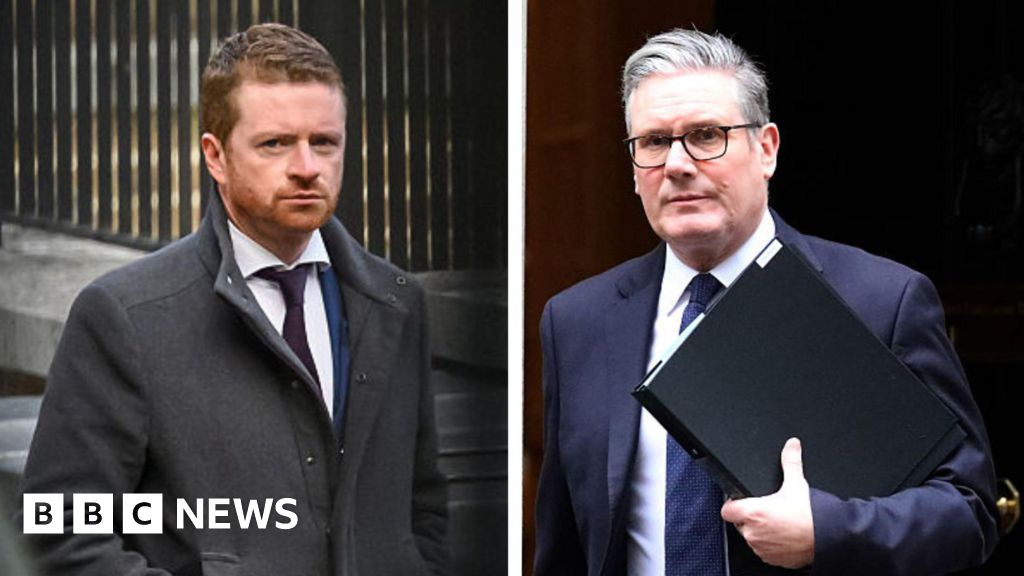
British Prime Minister Keir Starmer’s chief of staff has quit over the appointment of Peter Mandelson as ambassador to the United States after files revealed the extent of Mandelson’s relationship with the late sex offender Jeffrey Epstein.
“After careful reflection, I have decided to resign from the government. The decision to appoint Peter Mandelson was wrong. He has damaged our party, our country and trust in politics itself,” Starmer’s top aide Morgan McSweeney said in a statement on Sunday.
Recommended Stories
list of 3 itemsend of list
“I advised the Prime Minister to make that appointment and I take full responsibility for that advice,” he added.
Labour members of parliament had called for McSweeney’s resignation after new evidence about Mandelson’s relationship with Epstein was revealed in the latest tranche of documents and photos from the investigation into the American financier were released by the US Department of Justice. The lawmakers blamed McSweeney for the appointment of Mandelson and the damage caused by the publication of the crude exchanges between him and Epstein.
McSweeney, 48, who was a protege and friend of Mandelson, was accused by some Labour lawmakers and his political opponents of failing to ensure that there were proper background checks when the ambassador was appointed.
In a statement on Sunday, Starmer said it had been “an honour” to work with McSweeney, who had held the role of chief of staff since October 2024.
Mandelson’s payout
Mandelson was sacked by Starmer in September over his friendship with Epstein and last week also quit the Labour Party and House of Lords, the upper chamber of the UK Parliament. The Foreign and Commonwealth Office said it is reviewing an exit payment made to him after he was fired.
Mandelson, a pivotal figure in British politics and the Labour Party for decades, received an estimated payout of between 38,750 pounds and 55,000 pounds ($52,000 to $74,000) after only seven months in the job, according to a report in the Sunday Times newspaper.
Documents released on January 30 by the US Justice Department appeared to show that Mandelson had also allegedly leaked confidential UK government information to Epstein when he was a British minister, including during the 2008 financial crisis.
The Foreign Office said in a statement that it has launched a review into Mandelson’s severance payment “in light of further information that has now been revealed and the ongoing police investigation”.
Mandelson’s lawyers have said he “regrets, and will regret until his dying day, that he believed Epstein’s lies about his criminality”.
“Lord Mandelson did not discover the truth about Epstein until after his death in 2019,” said a spokesperson for the law firm Mishcon de Reya, which represents Mandelson.
“He is profoundly sorry that powerless and vulnerable women and girls were not given the protection they deserved,” the law firm added.
Starmer’s political future in peril?
The departure of McSweeney has thrown the future direction of the government into doubt, less than two years after the Labour Party won one of the largest parliamentary majorities in modern British history.
With polls showing Starmer is already hugely unpopular with voters, some in his own party are openly questioning his judgement and future, and it remains to be seen whether McSweeney’s exit will be enough to silence his critics.
Cabinet minister Pat McFadden earlier insisted Starmer should remain in office despite his “terrible mistake” in appointing Mandelson.
The close Starmer ally told broadcasters the party should stick with the prime minister.
“He [Starmer] should be realistic and accept that this has been a terrible story, that this appointment was a terrible mistake,” McFadden, the work and pensions secretary, told BBC television.
He said the real blame lay “squarely with Peter Mandelson”, who put himself forward for the job despite knowing the extent of his relationship with Epstein.
But according to a report by the Sunday Telegraph, Starmer’s deputy, David Lammy, has become the first cabinet minister to appear to distance himself from Starmer.
The deputy prime minister had not been in favour of appointing Mandelson due to his known links to Epstein, the report quoted friends of Lammy as saying.
Leqaa Kordia, a 33-year-old Palestinian woman detained in the United States by the Immigration and Customs Enforcement (ICE) agency since March, has been rushed to a hospital after a medical episode, according to media reports.
Kordia is being held in Texas after being detained as part of US President Donald Trump’s crackdown on pro-Palestine protests on college campuses across the country.
Her legal team said she was targeted for her protest against Israel’s genocidal war in Gaza near Columbia University in New York in 2024, but the federal government said she was arrested for allegedly overstaying her student visa.
Since her hospitalisation on Friday, Kordia’s legal team and family said they have not been able to speak with her and do not know her whereabouts.
Here is everything we know about Kordia and why she continues to remain in detention:
Who is Kordia?
Kordia grew up in the occupied West Bank city of Ramallah before coming to the US in 2016. She arrived on a visitor’s visa, staying with her mother, a US citizen, in Paterson, New Jersey, home to one of the largest Arab communities in the country.
She later transitioned from a tourist visa to a student visa, according to her habeas corpus petition.
After her mother applied for Kordia to remain in the US as the relative of a citizen, her green card application was approved in 2021. However, she received incorrect advice from a teacher that led to her student visa expiring in 2022, according to her lawyers.
Before her arrest, Kordia worked as a server at a Middle Eastern restaurant on Palestine Way in New Jersey and helped to care for her autistic half-brother.
Kordia was moved to protest against Israel’s war due to personal loss. Since the start of the war in October 2023, Kordia said, more than 200 of her relatives have been killed.
Israel has killed more than 71,000 Palestinians in Gaza and wounded more than 170,000 in a war that human rights groups, a United Nations commission and a growing number of scholars said amounts to genocide. Since a “ceasefire” began in October, Israel has killed more than 500 Palestinians and continues to impose curbs on the entry of aid into Gaza.
If deported, Kordia would be handed over to the Israeli government.
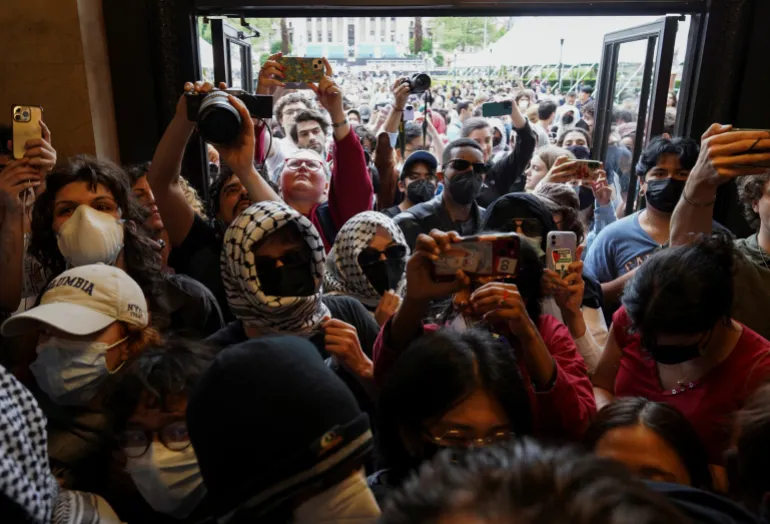
Pro-Palestinian protesters take over Butler Library on the campus of Columbia University on May 7, 2025 [Ryan Murphy/Reuters]
Why was Kordia arrested?
She was first arrested in April 2024 during a protest outside the gates of Columbia University, but the case was soon dropped.
On March 13, 2025, Kordia showed up at the ICE headquarters in Newark, New Jersey, for what she believed to be routine immigration questions. She was detained there, “thrown into an unmarked van and sent 1,500 miles [more than 2,400km] away”, Kordia wrote in the USA Today newspaper last month.
Kordia was neither a student at Columbia University nor a part of political circles.
“Though I was not a student, I felt compelled to participate. After all, Israel, with the backing of the United States, has laid waste to Gaza, forcibly displacing my family, killing nearly 200 of my relatives,” she wrote in USA Today.
Today, Kordia is the only person who remains in detention from the Columbia campus demonstrations. She has been held at Prairieland Detention Center in Alvarado, Texas.
A leader of the protests, Mahmoud Khalil, a Palestinian student with Algerian citizenship and a US green card, and others have been released. Khalil, however, is still in a legal battle to remain in the US with his American wife and child. Last month, an appeals court panel dismissed a lawsuit Khalil filed challenging his detention and deportation order. The judges concluded that the federal court that ordered Khalil’s release last year lacked jurisdiction over the matter.
Lawyers for Leqaa Kordia, second from right, say she’s been targeted by US immigration enforcement because she participated in pro-Palestinian protests [File: Craig Ruttle/AP Photo]
What are the charges against Kordia?
The US government has called Kordia’s money transfers to relatives in the Middle East evidence of possible ties to “terrorists”.
Kordia’s lawyers have continuously argued for her release, saying she was targeted by federal officials for her participation in pro-Palestinian protests.
The federal government has maintained that the case against Kordia is of overstaying a student visa.
“Her arrest had nothing to do with her radical activities,” the Department of Homeland Security said in April. “Kordia was arrested for immigration violations due to having overstayed her F-1 student visa, which had been terminated on January 26, 2022, for lack of attendance.”
Writing in USA Today last month, Kordia said she does not consider herself either a leader or an activist.
“I am a devout Muslim who is deeply committed to my faith and community. I’m a Palestinian woman who enjoys playing the oud, making pottery and hiking,” Kordia wrote. “Speaking out against what rights groups and experts have called a genocide is my moral duty and – I thought – a constitutionally protected right for all in this country. Except, it seems, when that speech defends Palestinian life.”
An immigration judge has called for Kordia’s release twice. However, it has been repeatedly blocked through a series of procedural and administrative moves.
“[The] Trump administration has exploited rarely used procedural loopholes to keep me confined, a practice now being challenged in federal district courts across the country, with many finding the practice unconstitutional,” Kordia wrote.
Demonstrators march after the arrest of Palestinian student protester Mahmoud Khalil at Columbia University on March 10, 2025 [Jeenah Moon/Reuters]
How has Kordia lived in ICE detention?
Since Kordia was moved to the ICE detention facility in Alvarado in March, she has been facing a range of issues, from sleeping on a bare mattress on the floor to being denied religious accommodations, including halal meals.
“Inside the ICE facility where I’m being held, conditions are filthy, overcrowded and inhumane,” Kordia wrote in her piece for USA Today. “For months, I slept in a plastic shell, known as a ‘boat,’ surrounded by cockroaches and only a thin blanket. Privacy does not exist here.”
Last year, when Kordia’s cousin Hamzah Abushaban visited her a week after her arrest, he told The Associated Press news agency in an interview that he was taken aback by the dark circles under her eyes and her state of confusion.
“One of the first things she asked me was why she was there,” Abushaban said. “She cried a lot. She looked like death.”
Rights groups and some Democratic Party leaders have called her a “political prisoner”, condemning the way her case has proceeded.
State Representative Salman Bhojani said the conditions at the detention facility were “suffocating”.
Kordia’s dorm, he said, had 60 mattresses crammed into a space designed for 20 women.
“She does not even have clothing that fully covers her body. Community organizations have tried to provide more appropriate clothing and have been turned away,” Bhojani said. “Male staff enter the dorm at any time, leaving her body exposed in violation of her religious obligations.”
Calling for her release, Amnesty International noted that ICE has “repeatedly violated” Kordia’s religious rights. “She has been served almost no halal meals, forcing her to eat food that doesn’t meet her dietary requirements and causing significant weight loss,” the human rights group said in a statement.
“During Ramadan, staff refused to let her save food for when she could break her fast, forcing her either to go hungry or to break her fast early,” Amnesty said. “She has not been provided with clothing suitable for prayer or a clean prayer space.”
People participate in a protest organised by Columbia University students and professors against President Donald Trump’s immigration policies and demand that the school establish itself as a sanctuary campus [File: Amr Alfiky/Reuters]
Why was Kordia hospitalised?
On Friday, Abushaban said he heard about Kordia’s hospitalisation in the morning from a person formerly detained with his cousin.
Kordia had fallen, hit her head and suffered a seizure in a bathroom at the Prairieland Detention Center, he told The Dallas Morning News newspaper.
In a statement on Saturday, Kordia’s attorneys and family members demanded answers from the Department of Homeland Security and Prairieland Detention Center regarding her health and whereabouts.
“[Kordia] was reportedly hospitalised yesterday morning after fainting and having a seizure at the Prairieland Detention Center,” the statement said, adding: “Neither her legal team nor family have been provided answers about where she has been hospitalised, the specifics of her health status, and whether and how ICE will ensure her health upon discharge from the undisclosed, off-site hospital.”
“We have since learned that she is expected to spend another night there, but we still have not been able to speak with her directly or have any confirmation of what brought her to the hospital in the first place,” the statement said.
The family members told US media that they called all hospitals in the vicinity but could not locate Kordia.
Students protest outside Columbia University on the two-year anniversary of the October 7, 2023, Hamas-led attacks on Israel and start of Israel’s war on Gaza [File: Ryan Murphy/Reuters]
What were the Columbia protests about?
In 2024, pro-Palestinian student encampments at Columbia University helped ignite a global movement against Israel’s genocidal war on Gaza.
The protest sites, however, were broken up after Columbia University allowed hundreds of New York City police officers on campus, leading to dozens of arrests.
The student protesters demanded an end to Israel’s war in Gaza and the university’s divestment from companies linked to the Israeli military.
Columbia University imposed severe punishments, including expulsion and revocation of academic degrees, on dozens of students who participated in the protests. University President Nemat “Minouche” Shafik, who was criticised for the handling of the student protests, stepped down.
The protests also put Columbia at odds with the Trump administration, whose officials alleged anti-Semitism on campus. Campaigners said the campus crackdown violated US free speech rights.
Trump also cancelled millions of dollars in federal funding for the university, accusing it of failing to protect Jewish students. Later, Columbia settled and agreed to pay $200m to the government over three years. In exchange, the Trump administration agreed to return parts of the $400m in grants it froze or terminated.
Sanae Takaichi’s Liberal Democratic Party and coalition partner could secure as many as 366 of the 465 seats in the lower house, according to public broadcaster NHK.
Japanese Prime Minister Sanae Takaichi’s party is set to win 274 to 328 of the 465 seats in Japan’s lower house of parliament, well above the 233 needed for a majority, according to exit polls published by public broadcaster NHK.
Together with its coalition partner, the Japan Innovation Party, known as Ishin, Takaichi’s Liberal Democratic Party (LDP) could secure as many as 366 of the 465 seats in the more-powerful lower house in Sunday’s election, according to NHK.
Recommended Stories
list of 3 itemsend of list
“We have consistently stressed the importance of responsible and proactive fiscal policy,” Takaichi told reporters after media projections showed her party triumphing in the snap lower house election.
“We will prioritise the sustainability of fiscal policy. We will ensure necessary investments.”
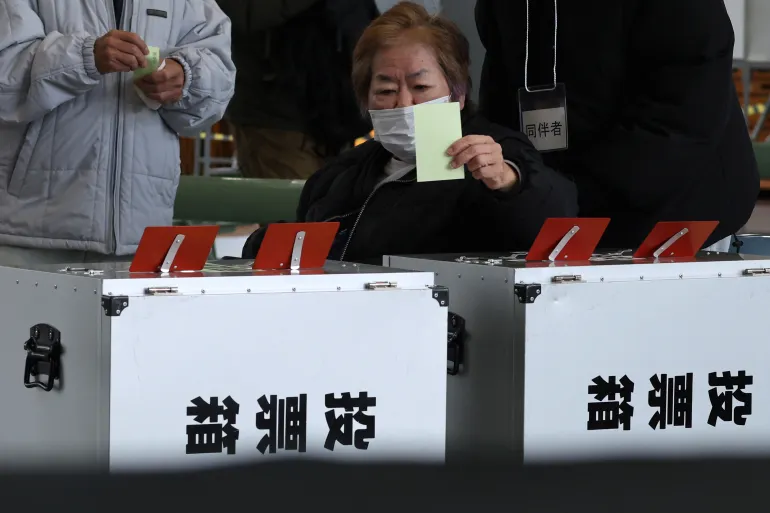
A voter casts her ballot at the polls on February 8, 2026 in Osaka, Japan [Buddhika Weerasinghe/Getty Images]
While Takaichi is hugely popular, the ruling LDP, which has governed Japan for most of the last seven decades, has struggled due to funding and religious scandals. The PM called Sunday’s snap elections only after three months, in hopes of turning the party’s political fortunes.
However, Takaichi’s election promise to suspend the eight percent sales tax on food to help households cope with rising prices has spooked investors, who are concerned about how the nation with the heaviest debt burden among advanced economies will fund the plan.
Nevertheless, residents trudged through winter weather to cast their ballots with record snowfall in parts of the country snarling traffic and requiring some polling stations to close early.
“It feels like she’s creating a sense of direction – like the whole country pulling together and moving forward. That really resonates with me,” Kazushige Cho, 54, told Reuters news agency.
Meanwhile, Niigata resident Mineko Mori, 74, padding through the snow with her dog, said she worried that Takaichi’s tax cuts could saddle future generations with an even bigger burden.
‘She can push any legislation’
Craig Mark, a lecturer at Hosei University, says Takaichi’s apparent success in early election results likely gives the LDP the ability to “override the opposition parties”.
“Essentially, she can push through any legislation she wants, whether it’s the record budget that was recently approved or defence spending,” Mark told Al Jazeera from the capital Tokyo.
It is also the “greatest chance” for Takaichi to change the country’s image as a pacifist nation, he added. Japan’s post-World War II constitution does not officially recognise the military, and limits it to nominally self-defensive capabilities.
The head of Japan’s top business lobby, Keidanren, welcomed the result as restoring political stability.
“Japan’s economy is now at a critical juncture for achieving sustainable and strong growth,” Yoshinobu Tsutsui said.
China tensions
China will also be keeping a close eye on the results.
Weeks after taking office, Takaichi touched off the biggest dispute with China in over a decade by publicly outlining how Tokyo might respond to a Chinese attack on Taiwan.
A strong mandate could accelerate her plans to bolster military defence, which Beijing has cast as an attempt to revive Japan’s militaristic past.
“Beijing will not welcome Takaichi’s victory,” said David Boling, principal at the Asia Group, a firm that advises companies on geopolitical risk.
“China now faces the reality that she is firmly in place – and that its efforts to isolate her completely failed.”
Lokesh Bam’s late heroics with the bat are not enough as Nepal are beaten by two-time champions in their Group C match in Mumbai.
Published On 8 Feb 20268 Feb 2026
Share
Nepal were left heartbroken after they came agonisingly close to pulling off a massive T20 World Cup upset against England but fell short by four runs as the two-time champions won the Group C match in Mumbai.
Lokesh Bam’s heroics with the bat – 39 runs off 20 balls – were not enough to see Nepal over the line at the Wankhede Stadium, which was packed with Nepalese fans on Sunday.
Recommended Stories
list of 4 itemsend of list
Nepal finished on 180-6, handing England a nervy win to kick off their campaign in the controversy-hit cricket tournament.
When England’s captain Harry Brook (53) and teammate Jacob Bethell (55) hit fifties to power England to 184-7, they seemingly did enough to take the match out of Nepal’s reach.
But Rohit Paudel produced a captain’s innings of his own as he, alongside star all-rounder Dipendra Singh Airee, put Nepal on course for a shock win.
The pair’s departure slowed down Nepal’s progress, but Lokesh resumed the big hitting against some wayward bowling by England’s seamers.
Needing 10 off the last over, the Rhinos were unable to get Sam Curran’s accurate bowling over the boundary and could only score six runs.
The Rhinos’ fans, hundreds of whom had travelled from across the border, were left disheartened.
Earlier, electing to bat at the Wankhede Stadium, England slumped to 57-3 in the seventh over to find themselves in a spot of bother.
Sher Malla struck with the first ball on his World Cup debut, dismissing Phil Salt for one, and the pressure mounted on England after Jos Buttler and Tom Banton fell in quick succession.
Bethell had no problem adjusting to the nature of the track, where other batters found shot-making difficult. He and Brook combined in a 71-run partnership during their 45-ball collaboration to rebuild their innings.
Airee (44) and skipper Paudel (39) kept Nepal in the hunt with a stand of 82 from 54 balls.
Curran brought relief to the English camp when he had Airee caught in the deep and Paudel also departed soon afterwards.
Bam hit Jofra Archer for back-to-back sixes to turn the match on its head.
With Nepal needing 10 runs off the last over from Curran, Bam needed to hit the last ball for a six, but he managed only one as England heaved a huge sigh of relief.
Skiing icon Vonn cried in anguish and pain after her awful fall high up the course days after sustaining an ACL injury.
Published On 8 Feb 20268 Feb 2026
Share
Lindsey Vonn’s Winter Olympic dream ended in screams of pain after she crashed out of the women’s downhill, failing in her audacious bid to medal in her favoured discipline at the Milan-Cortina Games.
Vonn’s United States (USA) teammate and world champion Breezy Johnson won the race to claim gold on Sunday.
Germany’s Emma Aicher took the silver medal, 0.04 of a second slower, and Italy’s home favourite Sofia Goggia had to settle for bronze, according to provisional results.
Johnson’s Olympic title, on Cortina d’Ampezzo’s sunlit Olimpia delle Tofane piste, came exactly a year after she won world championship gold at Saalbach, Austria.
American star Vonn had been trying to claim her fourth Olympic medal despite suffering a ruptured anterior cruciate ligament in her left knee just over a week ago, but her race ended early in Cortina d’Ampezzo.
She cried in anguish and pain after her awful fall high up the course, medical staff surrounding the distraught 41-year-old on the Olimpia delle Tofane piste where she has enjoyed much success in the past.
The 2010 Olympic downhill champion hit the firm snow face first after just 13 seconds of her descent. She then rolled down the slope with her skis still attached, which could likely cause further serious damage to her knee.
Vonn’s Olympic dream now lies in tatters after her brave effort to achieve the seemingly impossible, an attempt which ended with her being taken away in a helicopter as fans in the stands saluted her with loud applause.
One of world sport’s most recognisable faces and an alpine skiing icon, Vonn has insisted that she could not only compete but win against the world’s best women skiers, some of whom like Aicher are nearly half her age.
Vonn said ahead of the Games that she was planning on also competing in the team combined event on Tuesday and the super-G two days later.
But that now looks unlikely, a potential long lay-off perhaps heralding the end of her comeback to skiing in her early 40s.
Vonn retired in 2019 but returned to competition in November 2024 following surgery to partially replace her right knee to end persistent pain.
Vonn had finished on the podium in every previous World Cup downhill race this season, including two victories in St Moritz and Zauchensee, and claimed two more top-three finishes in the super-G.
But retirement looms for Vonn following a disastrous end to one of the biggest stories of the Winter Olympics.
Tommy Freeman is rapidly approaching world-class status.
The package that he brings to Test rugby – the pace, size, aerial ability and appetite for the ball – is pretty special.
He was a starter for the British and Irish Lions in all three Tests against Australia in the summer and he is inked into this England team as one of those who will always have a place when fit.
However, there is a question over which number Borthwick will write next to Freeman’s name.
This was Freeman’s 23rd England appearance but only his third as a centre.
Considering that relatively paltry midfield experience, he was pretty damn good against Wales.
He hit superb lines, either hitting the ball up bravely into the heart of Wales defence or acting as a decoy, and worked instinctively with Northampton team-mate Fraser Dingwall inside him at 12.
They are turning into a dangerous and cohesive pairing – and England have been crying out for a midfield combination with those qualities for ages.
Where once the supply of centres was quite low, there are now a bunch of alternatives.
Ollie Lawrence, who is working his way back from a minor knee injury, may be available for Scotland. Max Ojomoh was very impressive against Argentina in the autumn. Seb Atkinson has credit in the bank from his performances on the summer tour of Argentina.
It means England can mix and match according to the opposition.
Do they want a punch in midfield or the ability to distribute quickly into wide channels? Gas around the outside or the ability to probe behind with kicks?
The ability to change tactics with different midfield selection is very, very exciting.
South Africa – the gold standard for everyone in world rugby at the moment – have the same.
The mix of Damian de Allende, Jesse Kriel, Canan Moodie, Damian Willemse and even Andre Esterhuizen gives them different ways of playing.
That adaptability is a fantastic attribute for any team.
The far right’s score will be watched closely, with the vote being held as heavy storms continue to lash the country.
Published On 8 Feb 20268 Feb 2026
Share
Polls have opened in the second round of Portugal’s elections, viewed as a high-stakes choice between the socialists and a resurgent far right.
Voting began at 9am local time (08:00 GMT) on Sunday for the presidential election, with 11 million voters at home and abroad eligible to cast their ballots.
Recommended Stories
list of 3 itemsend of list
Voters are set to choose between the Socialist Party leader, Antonio Jose Seguro, and Andre Ventura, leader of the nationalist party Chega, which means “enough” in Portuguese.
Exit polls are expected by about 9pm local time (20:00 GMT).
Seguro, 63, secured 31.1 percent of the vote in the first round, while outspoken far-right leader Ventura won 23.5 percent.
While Ventura is almost certain to be beaten by Seguro, the far right’s score will be watched closely.
Sunday’s vote will decide who takes on the emblematic, but largely ceremonial, role of the president.
The vote is taking place as heavy storms continue to lash the country. Despite an improvement in the weather overnight from Saturday to Sunday, at least 14 of the most affected constituencies have postponed voting for nearly 32,000 people by one week.
The storms have killed at least five people, triggered flooding, and caused damage estimated at 4 billion euros ($4.7bn).
But Ventura’s call to postpone the whole vote has been rejected.
Prime Minister Luis Montenegro said the storms had caused a “devastating crisis” but that the threats to voting could be overcome.
The last presidential election went ahead five years ago despite the coronavirus pandemic, outgoing President Marcelo Rebelo de Sousa told Ventura on Friday.
Palestinian medics say several of the 54 bodies were found to be mutilated and showed extensive signs of abuse.
Published On 8 Feb 20268 Feb 2026
Share
Israel has returned dozens of Palestinian bodies and human remains to Gaza without providing any information about their identities or how they were killed, according to Palestinian medical officials.
The remains arrived at al-Shifa Hospital in Gaza City on Wednesday in plain white bags and are now being examined by forensic teams in an effort to identify them and provide answers to grieving families.
Recommended Stories
list of 4 itemsend of list
“The bags carry the weight of lives lost. Now they’re undergoing examination, prolonging the grief of families desperate for closure,” Al Jazeera’s Ibrahim al-Khalili reported from al-Shifa Hospital on Saturday.
Palestinian medics say several bodies were mutilated.
“The International Committee of the Red Cross handed over 120 body bags containing 54 bodies as well as skull samples placed in 66 separate bags,” forensic official Omar Suleiman told Al Jazeera.
Previous exchanges of Palestinian prisoners’ bodies have revealed extensive signs of abuse, with many showing indications of torture, mutilation and execution.
In November, the rights group Physicians for Human Rights-Israel released a report saying at least 94 Palestinian detainees have died in Israeli custody, citing causes including torture, medical neglect, malnutrition and physical assault.
The group said the actual toll could be significantly higher.
‘Missing for 10 months’
For many Palestinians, the search for missing relatives has shifted from streets and rubble to computer screens and improvised identification centres.
At al-Shifa, Shadi al-Fayoumi scrolled through blurred and graphic images, hoping to spot anything recognisable that might tell him what happened to his brothers.
“My brothers have been missing for 10 months. They disappeared in the Tuffah neighbourhood,” al-Fayoumi, whose brothers remain missing, told Al Jazeera.
“I went to al-Shifa Medical Complex, where we were told there were bodies we could try to identify. However, the images were unclear and lacked discernible features. How are we expected to identify them under these conditions?”
According to al-Fayoumi, his brothers had gone in search of food and water during the peak of the famine last year but never returned.
“We contacted multiple institutions, but none was willing to help or provide reliable information,” al-Fayoumi added.
Al Jazeera’s al-Khalili said al-Fayoumi’s mother has been “inconsolable”.
“His brothers’ children are silent, unwilling to voice their worst fears. Israeli forces hand over the bodies of Palestinians with little regard for human dignity,” he added.
“There is no information on how they died or how long they were held, leaving Palestinians with not only their grief but unanswered questions.”
The first round of Iran-US talks in Muscat produced no breakthrough. The next few weeks will determine whether they laid foundations or merely bought time before escalation.
When Iranian and American negotiators concluded several hours of talks in Muscat on February 6, publicly, neither side signalled any shift from its opening position. Iran insisted the discussions focus exclusively on the nuclear file. The United States arrived seeking a comprehensive framework that would also cover ballistic missiles, regional armed groups, and more broadly, issues Washington has raised publicly, including human rights concerns. Neither prevailed. Both agreed to meet again.
On the surface, this looks like a non-event. It was not.
The Muscat round was the first high-level diplomatic engagement between the two countries since the joint US-Israeli strikes on Iranian nuclear facilities in June 2025, an escalation that Iran later said killed more than 1,000 people and involved strikes on three nuclear sites. That the two sides returned to the same palace near Muscat’s airport where previous rounds were held in 2025, and agreed to return again is significant.
But continuation is not progress. The distance between what happened in Muscat and what a deal requires remains vast.
Diplomacy conducted under military escort
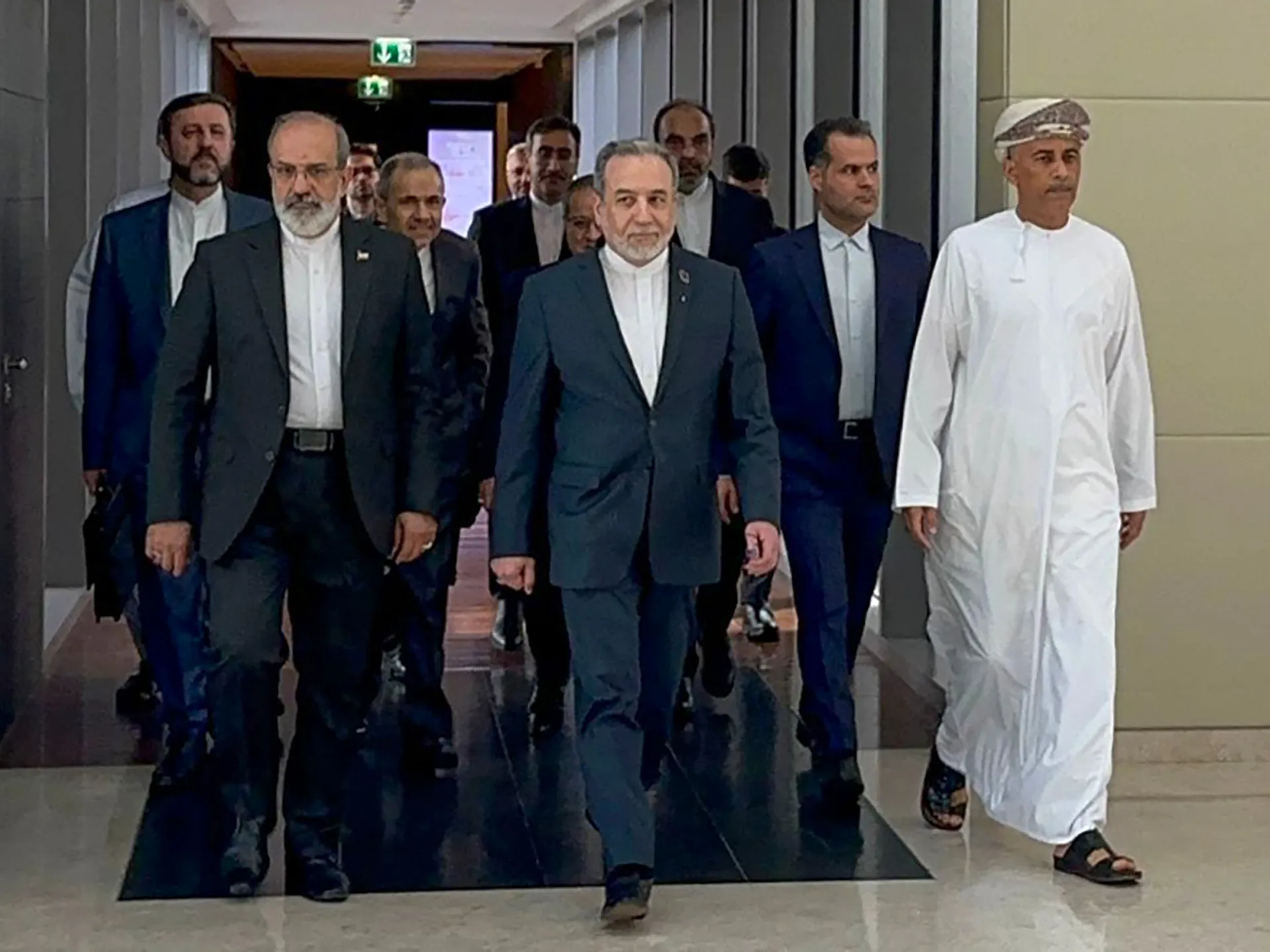
The most striking feature of the Muscat round was not what was said, but who sat in the room. The American delegation was led by Special Envoy Steve Witkoff and Jared Kushner, President Trump’s son-in-law. It also included, for the first time, Admiral Brad Cooper, the commander of US Central Command, in full dress uniform.
His presence at the negotiating table was not incidental. It was a signal. The USS Abraham Lincoln carrier strike group was operating in the Arabian Sea as the talks unfolded, and days earlier, US forces had shot down an Iranian drone that approached the carrier.
An Iranian diplomatic source told the Reuters news agency that Cooper’s presence “endangered” the talks. Another, quoted by Al-Araby TV, warned that “negotiations taking place under threat” could impose strategic costs rather than advance them. For Tehran, the message was unmistakable: This was diplomacy conducted in the shadow of force, not as an alternative to it.
Washington, for its part, sees this as leverage. President Trump, speaking on board Air Force One after the talks, described them as “very good” and said Iran wants a deal “very badly”, adding: “They know the consequences if they don’t. They don’t make a deal; the consequences are very steep.”
This is diplomacy framed as an ultimatum. It may create urgency. It is unlikely to create trust, and trust is what this process most desperately needs.
The structural problem
The US withdrew from the 2015 Joint Comprehensive Plan of Action (JCPOA) in 2018, despite international verification that Iran was meeting its obligations. That decision shattered Iranian confidence in the durability of US commitments. Tehran’s subsequent incremental breaches of the agreement, steadily increasing enrichment levels from 2019 onwards, weakened its credibility, in turn.
This mutual distrust is not a negotiating obstacle that can be resolved with creative diplomacy alone. It is the defining condition under which any agreement must be built. The US has the capacity to impose enormous economic and military costs on Iran. But power does not automatically produce compliance. For commitments to hold, Iran must believe concessions will bring relief rather than new demands. That belief has been badly damaged.
Consider the sequence of events surrounding the Muscat round itself. Hours after the talks concluded, the US State Department announced new sanctions targeting 14 shadow fleet vessels involved in transporting Iranian petroleum, alongside penalties on 15 entities and two individuals. The Treasury Department framed the action as part of the administration’s “maximum pressure” campaign. Whether preplanned or timed for effect, the message was clear: Washington intends to negotiate and squeeze simultaneously.
For Tehran, which has consistently demanded that sanctions relief be the starting point for progress, this sequencing confirms precisely the pattern it fears. Iranian Foreign Minister Abbas Araghchi identified this dynamic explicitly, telling Iranian state television that “the mistrust that has developed is a serious challenge facing the negotiations.”
What actually happened in Muscat
Beneath the competing narratives, the outlines of the substantive discussion have begun to emerge. Iran reportedly rejected a US demand for “zero enrichment”, a maximalist position it was never going to accept in a first meeting. The two sides instead discussed the dilution of Iran’s existing uranium stockpile, a more technical and potentially more productive avenue.
Meanwhile, Al Jazeera reported that diplomats from Egypt, Turkiye and Qatar had separately offered Iran a framework proposal: Halt enrichment for three years, transfer highly enriched uranium out of the country, and pledge not to initiate the use of ballistic missiles. Russia had reportedly signalled willingness to receive the uranium. Tehran has signalled both the enrichment halt and uranium transfer would be nonstarters.
Perhaps the most important development was the least visible. According to Axios, Witkoff and Kushner met directly with Araghchi during the talks, breaking from the strictly indirect format that Iran had demanded for most of last year’s rounds of negotiations. Iran had previously insisted on communicating with the US only through Omani intermediaries. Crossing that barrier, even partially, suggests both sides recognise the limits of indirect talks once bargaining becomes technical.
Oman’s framing was arguably the most honest assessment of the day. Foreign Minister Badr al-Busaidi described the talks as aimed at establishing “appropriate conditions for the resumption of diplomatic and technical negotiations”.
What the next few weeks will decide
Trump said a second round of talks would take place soon. Both sides indicated to Axios that further meetings were expected within days. The compressed timeline is notable. During last year’s rounds, weeks separated each session. The pace suggests Washington believes the diplomatic window is narrowing, and Tehran is at least willing to test that claim.
Several tests will show whether urgency produces substance or merely speed.
First, the scope question. The fundamental dispute over what the talks are about remains unresolved. Iran won the first procedural battle: The venue moved from Turkiye to Oman, regional observers were excluded, and Araghchi claims only nuclear issues were discussed. Secretary of State Marco Rubio said before the talks that the agenda needed to include “all those issues”. If the second round begins with the same fight over scope, it will signal that even the basics remain unsettled.
Second, Iran’s enrichment posture. Before the June 2025 war, Iran had been enriching uranium to 60 percent purity, a short technical step from weapons-grade. Tehran has said enrichment stopped following the strikes. But Iran has also conditioned International Atomic Energy Agency inspections of the bombed sites on new inspection arrangements, raising concerns among non-proliferation experts. Conversely, reports of enrichment resumption or acceleration would likely end the diplomatic track.
Third, the military environment. The US naval build-up in the Arabian Sea is not decorative. The drone shootdown near the Abraham Lincoln and Iran’s attempted interception of a US-flagged vessel in the Strait of Hormuz in the days before the talks show how quickly signalling can slide into miscalculation. Whether the carrier group is reinforced, maintained or gradually drawn down in the coming weeks will reveal more about Washington’s assessment of diplomacy than any press statement.
Fourth, the sanctions rhythm. The same-day announcement of shadow fleet sanctions establishes a pattern. If Washington continues to layer new economic penalties between rounds of talks, Tehran will treat it as evidence that diplomacy is performance rather than process.
Fifth, backchannel activity. The most consequential diplomacy over the next few weeks may not occur in formal settings. Oman, Qatar, Egypt and Turkiye have been working behind the scenes to sustain dialogue. If those intermediary contacts remain active, space for de-escalation persists. If they fall silent, the margin for error narrows.
A managed deadlock is not a strategy
The most probable short-term outcome remains neither breakthrough nor war, but a managed deadlock in which both sides maintain maximal public positions while avoiding steps that would make future talks impossible. In practice, this is a pause sustained by caution rather than a settlement anchored in confidence.
For the broader region, the distinction matters urgently. Gulf states have no interest in becoming staging grounds for escalation. Public statements across the region have consistently emphasised de-escalation, restraint and conflict avoidance. But regional actors can facilitate, host and encourage; they cannot impose terms on either Washington or Tehran.
The Muscat talks did not fail. Neither did they succeed. They established that a channel exists, that both sides are willing to use it, and that direct contact between senior officials is possible.
But a channel is not a plan. The absence of war is not the presence of a deal. The period between Muscat and whatever comes next is a window in which miscalculation remains close to the surface, sustained only by the assumption that both sides are reading each other’s signals correctly.
The next round of talks will not produce an agreement. But it may show whether the two sides are building a floor beneath the standoff or simply postponing the moment when that floor gives way.
The views expressed in this article are the author’s own and do not necessarily reflect Al Jazeera’s editorial stance.
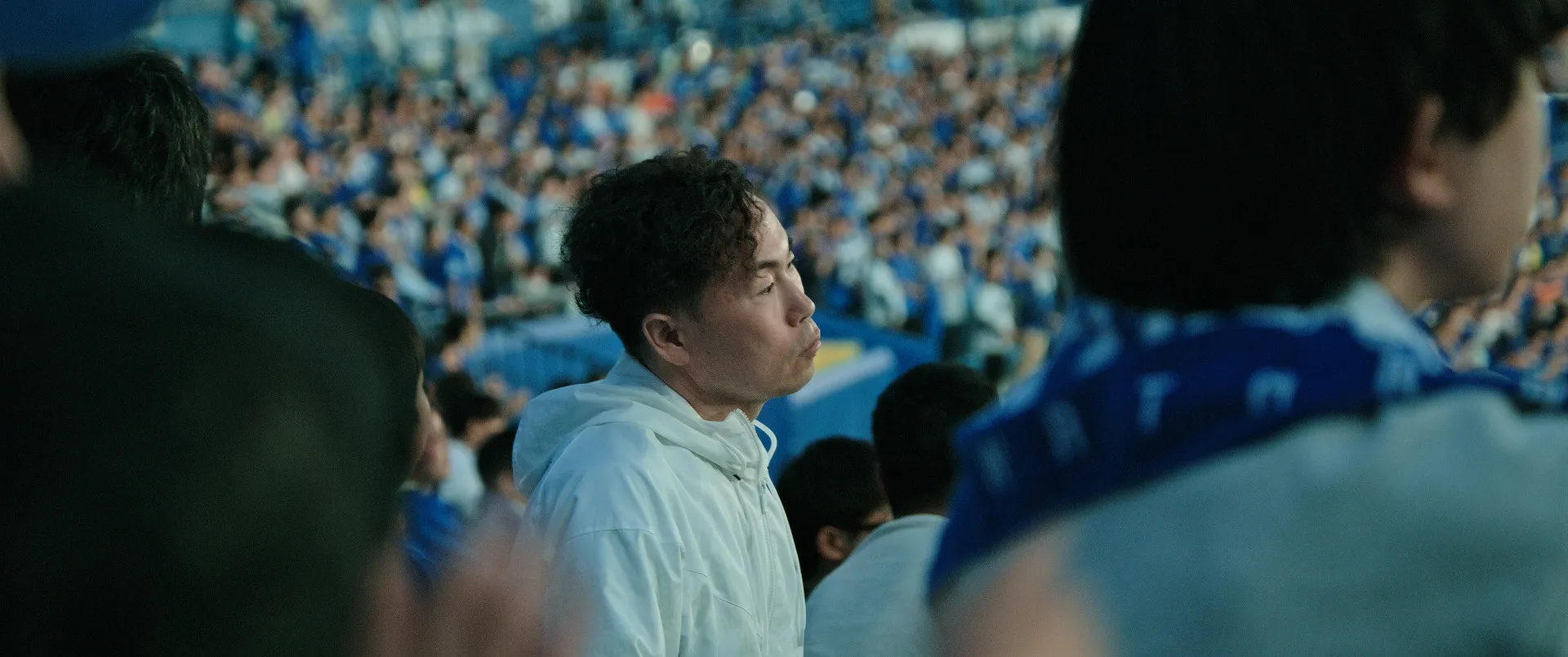
Struggling with loneliness, people in Japan use an online chat service for mental health support and social connection.
Loneliness is a growing epidemic worldwide, but in Japan, it has become particularly severe as the pressures of modern life increasingly isolate individuals from their communities.
A Place for You is a mental health hotline where dedicated volunteers provide critical support to thousands in need every day. Two people who are struggling to find meaning in their lives turn to the online chat service as they seek connection. As they become aware of their need for human bonds, they embark on a journey of healing and renewal.
Dear Tomorrow is a documentary film by Kaspar Astrup Schroder.
The oldest road remains a popular National Trail for walkers, cyclists and horse riders exploring 5,000 years of history
The road is still popular(Image: krzych-34 via Getty Images)
Britain’s oldest road boasts an incredible 5,000-year history and continues to attract travellers to this day. The Ridgeway is widely acknowledged as the nation’s most ancient route, and even ranks amongst the world’s oldest roads.
Stretching 87 miles from Avebury in Wiltshire to Ivinghoe Beacon in Buckinghamshire, this historic elevated pathway has served countless generations, from prehistoric times through Roman, Saxon and medieval periods. Whilst much of The Ridgeway is now off-road, it remains a beloved public trail.
Travellers along the route can discover Neolithic long barrows, Bronze Age round barrows, Iron Age hillforts and admire striking white chalk figures carved into the hillsides.
These days, visitors can tackle the route on foot, by bicycle or on horseback. For those wanting to complete the entire distance, it’s achievable in under a week.
As one of Britain’s shorter National Trails, The Ridgeway frequently serves as an ideal starting point for newcomers to long-distance walking. At a pace of 15 miles daily, walkers can finish it in six days, reports the Express.
Numerous campsites dot the route, alongside B&Bs and lodges for overnight stays.
The trail begins in Avebury and heads in a north-easterly direction.
According to National Trail: “West of the River Thames, The Ridgeway is a broad track passing through the North Wessex Downs Area of Outstanding Natural Beauty (AONB) and is often quite a distance from villages or towns.”
They added: “East of the Thames, The Ridgeway travels through the more wooded and intimate hills and valleys of the Chilterns AONB where, as well as further archaeological treasures, there are several nature reserves rich in the wildlife found in chalk grassland habitats.
“In the Chilterns, The Ridgeway goes close to or through several villages and small towns where refreshments and other facilities are easily available.”
Walkers can experience the Ridgeway throughout the year, though spring to autumn offers the finest views, weather and wildlife spotting opportunities.
Those tackling the trail in May are frequently treated to a spectacular bluebell carpet across the Chiltern woodlands.
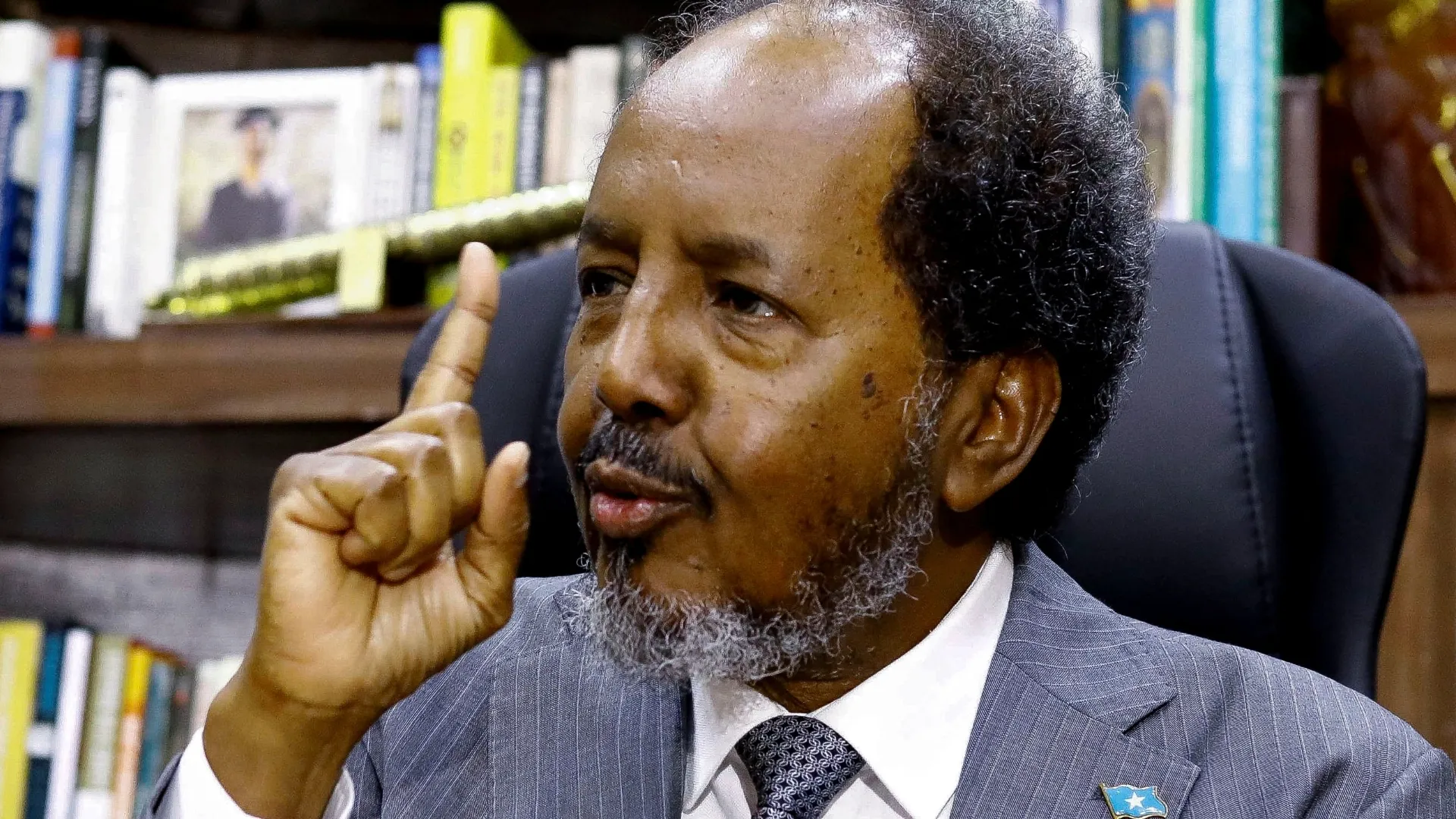
Somalian President Hassan Sheikh Mohamud has slammed Israel’s “interference” in his country, saying its recognition of the breakaway region of Somaliland has further increased instability and weakened international order.
In an exclusive interview with Al Jazeera broadcast on Saturday, Mohamud said Somalia “will never allow” the establishment of an Israeli base in Somaliland and will “confront” any such move.
Recommended Stories
list of 3 itemsend of list
He also warned that the proposed Israeli base could be used as a springboard to attack neighbouring countries.
Mohamud’s comments came amid a regional outcry over Israeli Prime Minister Benjamin Netanyahu’s decision in December to recognise Somaliland, a breakaway part of Somalia comprising the northwestern portion of what was once the British Protectorate.
The territory sits astride one of the world’s most critical maritime choke routes, flanked by multiple conflicts in the Horn of Africa and the Middle East.
Israel’s move made it the first country in the world to recognise Somaliland as an independent state and came months after The Associated Press news agency reported that Israeli officials had contacted parties in Somaliland to discuss using the territory for forcibly displacing Palestinians amid Israel’s genocidal war on Gaza.
Israel and Somaliland have denied the claims, but a Somaliland official from the country’s Ministry of Foreign Affairs and International Cooperation told Israel’s Channel 12 in January that an Israeli military base is “on the table and being discussed”, though its establishment depends on the terms.
Somalia has denounced Israel’s move as an attack on its territorial integrity and unity, a position backed by most African and Arab leaders, and urged Netanyahu to withdraw the recognition.
But Somaliland’s leader, Abdirahman Mohamed Abdullahi, known as Cirro, has welcomed Israel’s diplomatic move, praising Netanyahu for his “leadership and commitment to promoting stability and peace” in the region.
‘We will defend ourselves’
In his interview with Al Jazeera, Mohamud described Israel’s diplomatic manoeuvre as a “reckless, fundamentally wrong and illegal action under international law”.
He also pledged to fight back against any Israeli military presence in Somaliland.
“We will fight in our capacity. Of course, we will defend ourselves,” he said. “And that means that we will confront any Israeli forces coming in, because we are against that and we will never allow that.”
The Israeli recognition represents a dramatic shift in Somaliland’s fortunes after years of diplomatic isolation.
The region seceded from Somalia during a brutal civil war that followed decades under the hardline government of Siad Barre, whose forces devastated the north. While large parts of Somalia descended into chaos, Somaliland stabilised by the late 1990s.
Somaliland has since developed a distinct political identity, with its own currency, flag and parliament. But its eastern regions remain disputed by communities that do not back the separatist programme in the capital, Hargeisa.
In recent years, Somaliland developed ties with the United Arab Emirates – a signatory to the Abraham Accords with Israel – and Taiwan as it sought international acceptance.
In his interview, Mohamud said Israel’s move “interfering with Somalia’s sovereign and territorial integrity” also “undermines stability, security and trade in a way that affects the whole of Africa, the Red Sea and the wider world”.
He added that Israel’s deadly use of force against Palestinians in Gaza cannot be separated from what is happening in Somaliland, adding that it reflects the weakening of the foundations of global governance.
“Key among the global concerns is the weakening of the established rules-based international order. That order is not intact any more,” Mohamud said.
He warned that institutions created after World War II “are under grave threat”, as “the mighty is right” increasingly replaces adherence to international law.
The United States, meanwhile, has yet to signal a major shift on the question of Somaliland.
But in August, US President Donald Trump – who has previously lobbed insults at Somalia and Mohamud – suggested he was preparing to move on the issue when asked about Somaliland during a White House news conference.
“Another complex one, but we’re working on that one – Somaliland,” he said.
These are the key developments from day 1,445 of Russia’s war on Ukraine.
Published On 8 Feb 20268 Feb 2026
Share
Here is where things stand on Sunday, February 8:
Fighting
Russian forces launched more than 400 drones and about 40 missiles in an overnight attack on Ukraine on Saturday, targeting the country’s power grid, generation facilities and distribution substations, according to Ukrainian President Volodymyr Zelenskyy.
Ukrainian Minister of Energy Denys Shmyhal said two thermal power stations in Ukraine’s western regions were hit, and electricity distribution lines were also targeted.
Zelenskyy said more than 1,000 apartment buildings remain without heating in bitterly cold temperatures in the capital, Kyiv, due to the attacks.
The Ukrainian president criticised Moscow’s targeting of energy infrastructure, saying Russia must be deprived of the ability to use the cold winter weather as leverage against Kyiv. “Every day, Russia could choose real diplomacy, but it chooses new strikes,” he said.
Poland suspended operations at the Lublin and Rzeszow airports near the border with Ukraine on Saturday following the Russian strikes. Polish authorities later said there had been no violation of the country’s airspace and reopened the two airports.
The International Atomic Energy Agency said on X that Ukrainian nuclear power plants have reduced output due to the renewed military activity that affected electrical substations and disconnected some power lines.
Ukrainian military and security officials said that Kyiv struck an oil depot in Russia’s Saratov region and a plant that makes missile fuel components in the Tver region in western Russia.
Ukrainian forces also launched a strike on Russia’s Bryansk region, according to the governor there, using long-range Neptune missiles and HIMARS rocket systems. The attacks wounded two people and disrupted power in seven municipalities, the official said.
The Russian TASS news agency said another Ukrainian missile attack on the border region of Belgorod caused power outages at several water supply facilities, and that experts are “investigating the extent of the outage”.
The Russian Defence Ministry said its troops captured the village of Chuhunivka in Ukraine’s eastern Kharkiv region, the state news agency RIA Novosti reported.
Peace talks
Zelenskyy said the United States has given Moscow and Kyiv a deadline of June to reach an agreement on ending the war, after the two countries held two days of talks in Abu Dhabi this week.
Zelenskyy said Washington has proposed talks in Miami in a week, and that Kyiv has agreed.
The US also asked Russia and Ukraine to agree to a new ceasefire covering strikes on energy infrastructure as a de-escalation step during the talks, Zelenskyy said. He added that Kyiv was ready to stop attacks on Russian oil facilities and other energy infrastructure, but Moscow has yet to agree.
The Ukrainian leader said he had reports from Ukrainian intelligence services on discussions in which Russian envoy Kirill Dmitriev had proposed US-Russian cooperation deals worth as much as $12 trillion. Any such agreements between Moscow and Washington must not violate Ukraine’s constitution, Zelenskyy said.
Zelenskyy added that Ukraine and Russia remain far apart in the discussions about territory. He said the US was proposing a free economic zone in Ukraine’s Donetsk region, which Russia mostly occupies, but that neither Ukraine nor Russia was thrilled by this idea.
Earlier, the Ukrainian leader met his negotiating team in Kyiv and said Ukraine “needs results” that ensure “effective security guarantees” for the country.
Kremlin spokesman Dmitry Peskov told reporters in Moscow that a third round of talks aimed at ending Russia’s war on Ukraine should take place “soon”. But he said there is no fixed date yet.
Politics and security
Ukrainian Minister of Foreign Affairs Abdrii Sybiha said Kyiv supports a call for a ceasefire during the Winter Olympic Games after Italy and Pope Leo urged world leaders to use the Milano Cortina games to further peace.
The Russian newspaper Kommersant reported that two suspects in the attempted assassination of top Russian military intelligence official General Vladimir Alexeyev “will soon be interrogated”. It cited a source close to the investigation.
Alexeyev, the deputy head of the GRU, Russia’s military intelligence arm, was shot in his Moscow apartment building and rushed to hospital on Friday. He underwent successful surgery and regained consciousness on Saturday, but remained under medical supervision, Kommersant added.
Russian Minister of Foreign Affairs Sergey Lavrov accused Ukraine of being behind the assassination attempt, which he said – without providing evidence – was designed to sabotage peace talks.
US President Donald Trump has signed an executive order rescinding a punitive 25 percent duty on all imports from India over its purchases of Russian oil, the White House said. The two nations earlier announced a trade deal slashing US tariffs on Indian goods to 18 percent from 50 percent in exchange for India halting Russian oil purchases and lowering trade barriers.
Volunteer Marat Darmenov serves free hot food to Kyiv residents during a blackout caused by Russia’s regular air attacks on the country’s energy system, in Kyiv on Saturday [Sergei Grits/AP]
Bryan Mbeumo and Bruno Fernandes score for United while Spurs captain Christian Romero sees red for a wild challenge.
Manchester United profited from Tottenham captain Cristian Romero’s red card to stretch their perfect start under Michael Carrick to four games, with a 2-0 win at Old Trafford in the Premier League.
Goals from Bryan Mbeumo and Bruno Fernandes on Saturday ended an eight-game winless run against Spurs for the Red Devils, who cemented their position in the Premier League’s top four.
Recommended Stories
list of 4 itemsend of list
United close to within two points of third-placed Aston Villa and open up a five-point cushion over Liverpool in sixth.
A place in the top five is likely to secure a spot in next season’s Champions League due to the strong performance of English sides in European competition.
Spurs’ hopes of qualifying for the Champions League through their league position have long since disappeared, as another damaging defeat for Thomas Frank leaves Tottenham in 14th.
But there could be lasting consequences for Romero after his ill-discipline cost his side just days after a social media outburst aimed at the club’s hierarchy.
Frank said the Argentinian international had been “dealt with internally” after he described Tottenham’s threadbare squad as “disgraceful” following the closure of the transfer window.
Romero’s future as skipper had already been called into question, and the 27-year-old will now be suspended for four matches after his second red card of the season and sixth of his Spurs career.
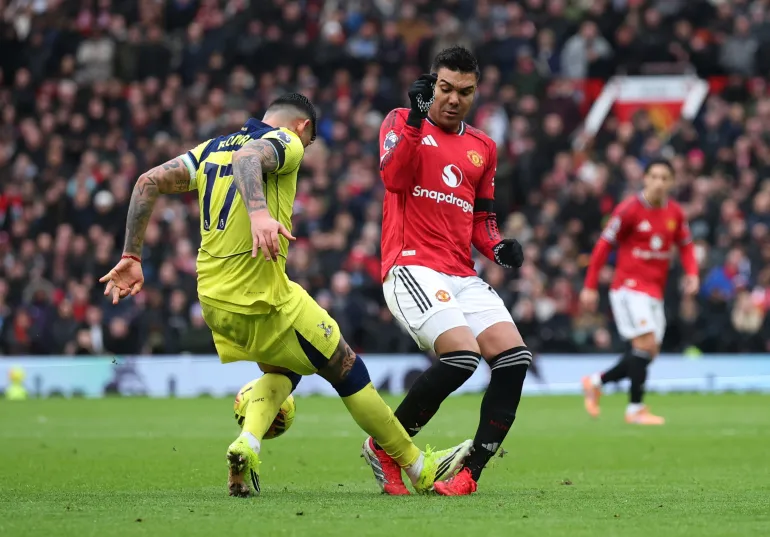
The centre-back lunged in to catch Casemiro on the ankle on 29 minutes after playing himself into trouble just outside the Tottenham box.
Romero is sent off after a wild challenge on Casemiro [Phil Noble/Reuters]
United had been the better side during the opening half hour, even against 11 men, and made their numerical advantage count.
Mbeumo stroked into the bottom corner for his third goal in four games since Carrick took charge, after a clever corner involving Fernandes and Kobbie Mainoo freed the Cameroon international at the edge of the box.
Amad Diallo and Matheus Cunha had goals ruled out for offside as the home side dominated but had to wait until nine minutes from time to make the points safe.
Fernandes showed Romero how to lead from the front with another fine individual display.
The United captain prodded in Diogo Dalot’s cross at the back post for his 200th goal or assist in 314 games for the club.
Carrick said before the game that United cannot afford to rush their choice of a new permanent manager.
But the former midfielder, who enjoyed a stellar playing career at Old Trafford, is making his case for that job as he continues overseeing United’s stunning turnaround in fortunes since the departure of Ruben Amorim last month.
Fernandes had plenty of praise for Carrick in a post-match interview with TNT Sports.
“The energy is different because we are winning games and when you win games, everything is brighter,” Fernandes said.
“Michael came in with the right idea of giving the players more responsibility and freedom to make decisions on the pitch. I was always sure Michael could be a great manager, and he is showing that.”
Meanwhile, it is now two Premier League wins in 16 for Frank and his Spurs side.
“I think the first 30 minutes were a good away performance,” Frank told TNT Sports after the game.
“I’m very proud of the players, the resilience, staying in the game, mentality [to] still be a threat at times, to try to create something. Very proud of them.”
Spurs keeper Guglielmo Vicario told TNT Sports that Romero had apologised to his teammates for the sending off.
“Yeah, of course, he’s disappointed, because he knows that this card could have been avoidable, and so he apologised,” he said.
“He made his mistake, but we know the player he is, and he’ll be back for sure, stronger, and he’s going to help us massively.”
No single party is expected to secure a clear majority in Sunday’s vote, raising the spectre of political instability.
Published On 8 Feb 20268 Feb 2026
Share
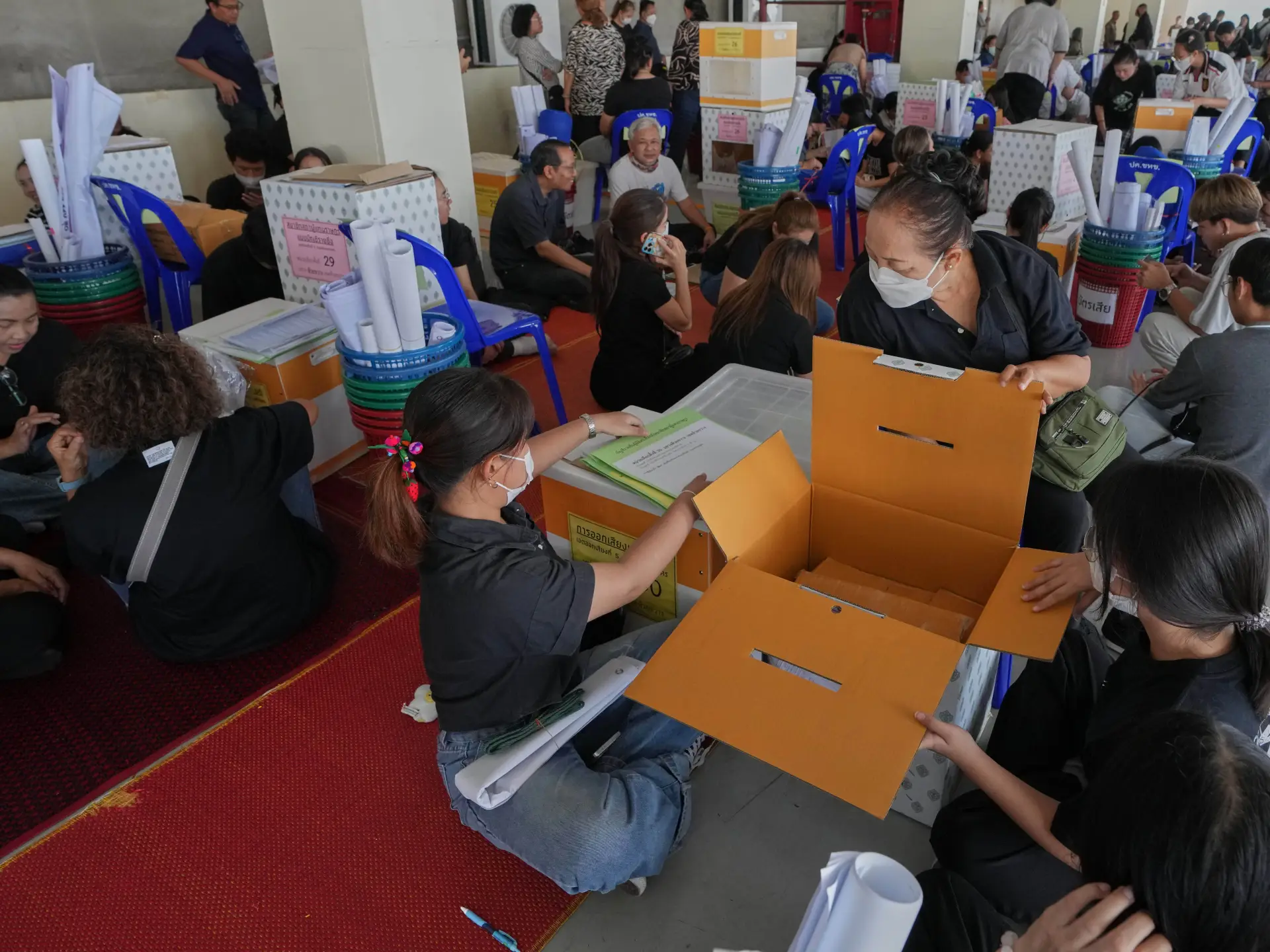
Polls have opened in Thailand in a closely watched general election, with progressive reformers, military-backed conservatives and populist forces vying for control.
Polling stations opened at 8am local time (01:00 GMT) on Sunday and were set to close at 5pm (10:00 GMT).
Recommended Stories
list of 4 itemsend of list
More than 2.2 million voters had already cast ballots during an early voting period that began on February 1, according to the Election Commission.
The battle for support from Thailand’s 53 million registered voters comes against a backdrop of slow economic growth and heightened nationalist sentiment.
While more than 50 parties are contesting the polls, only three – the People’s Party, Bhumjaithai, and Pheu Thai – have the nationwide organisation and popularity to gain a winning mandate.
With 500 parliamentary seats at stake and surveys consistently showing no party likely to win an outright majority, coalition negotiations appear inevitable. A simple majority of elected lawmakers will select the next prime minister.
The progressive People’s Party, led by Natthaphong Ruengpanyawut, is favoured to win the most seats. But the party’s reformist platform, which includes promises to curb the influence of the military and the courts, as well as breaking up economic polices, remains unpalatable to its rivals, who may freeze it out by joining forces to form a government.
The party is the successor to the Move Forward Party, which won the most seats in the House of Representatives in 2023, but was blocked from power by a military appointed Senate and later dissolved by the Constitutional Court over its call to reform Thailand’s strict royal insult laws.
The Bhumjaithai, headed by caretaker Prime Minister Anutin Charnvirakul, is seen as the main defender and preferred choice of the royalist-military establishment.
Anutin has only been the prime minister since last September, after serving in the Cabinet of former Prime Minister Paetongtarn Shinawatra, who was forced out of office for an ethics violation regarding the mishandling of relations with Cambodia. Anutin dissolved parliament in December to call a new election after he was threatened with a no-confidence vote.
He has centred his campaign on economic stimulus and national security, tapping into nationalist fervour stoked by deadly border clashes with neighbouring Cambodia.
The third major contender, Pheu Thai, represents the latest incarnation of political movements backed by jailed former Prime Minister Thaksin Shinawatra, and trades on the populist policies of the Thai Rak Thai party, which held power from 2001 until 2006, when it was ousted by a military coup.
The party has campaigned on economic revival and populist pledges like cash handouts, nominating Thaksin’s nephew, Yodchanan Wongsawat, as its lead candidate for prime minister.
Sunday’s voting also includes a referendum asking voters whether Thailand should replace its 2017 military-drafted constitution.
Pro-democracy groups view a new charter as a critical step towards reducing the influence of unelected institutions, such as the military and judiciary, while conservatives warn that it could lead to instability.