
Out on the water, paddling across the straits between two small rocky islands, the dusk fades and the stars appear. Jennie has done her best to coach me in local geography before darkness, showing me the map with its patchwork of islands and bays, and describing the shape of each landmark. All to no avail. I’m more than happy to be lost at sea, leaning back in my kayak to gaze at the constellations, occasionally checking that the red light on the stern of her kayak is still visible ahead. We stop in the sheltered lee of an island and hear a hoot. “Eurasian eagle owl,” says Jennie. “They nest here.” Then she switches off all the lights. “Let’s paddle slowly close to shore. Watch what happens.”
As soon as we move, the sea flickers into life, every paddle stroke triggering thrilling trails of cold, blue sparkles. When we stop, I slap my hand on the surface and the sea is momentarily electrified into a nebulous neural network of light, like some great salty brain figuring out this alien intrusion. Below that, squadrons of jellyfish pulse their own spectral contribution.
“When I was a child,” Jennie whispers (we are both whispering), “there was no light pollution. We would throw stones from the shore to see what we called ‘sea fire’.” I spend a pointless few minutes attempting to photograph this elusive bioluminescence, then relax and simply enjoy it. Travel should broaden the mind, not the iCloud.
We are in the maze of deserted islands off Hälsö (population: 569), one of 10 inhabited islands in Sweden’s northern Gothenburg archipelago. To get here, all it took was a short bus ride out of Sweden’s second city, a brief ferry ride, then a leisurely hike along the new coastal trail that snakes round these islands, using bridges, causeways and ferries to connect. It does not feel like a lot, not for the sensation of being on the far side of the Milky Way in a kayak-shaped flying saucer.
A tidal pool amid a rocky landscape on Hönö. Photograph: Utterstrom Photography/Alamy
My own definition of an island is any land mass surrounded by water that is large enough for Robinson Crusoe to survive on. I want a beach, a lookout point and enough driftwood to build a shack. The Swedish mapping office, Lantmäteriet, however, defines an island as anything more than 9 sq metres, an area sufficient to pitch a small tent. Using this definition, Sweden boasts in excess of 260,000, though only about 8,000 have ever been settled and less than 1,000 are now inhabited. My aim on this trip is to visit about half a dozen in the Gothenburg archipelago.
The new footpath is a 21.7-mile(35km) section of the much longer Kuststigen trail that goes from Gothenburg to Oslo, but this small slice is worth taking a little time over. I base myself in Skärgårdshotellet on Hönö, where there are a few cafes and restaurants. It’s a quiet place outside school summer holidays. On the first morning, I walk over a soaring bridge to the southernmost island of Fotö and discover why the relatively short distances can take time. As soon as the path leaves the road, you are on a maze of boulders, a massive adventure playground for anyone who loves leaping and scrambling. The fantastical patterns of striations, crystallisation and lichen only cause further delays.
I am almost late back to Hönö for my boat trip with Lasse, an avuncular computer expert turned sailor, who takes visitors out on his veteran fishing vessel. We do not spot any seals – the ostensible objective – but that doesn’t matter. We spend a couple of hours wending our way through the uninhabited islands out to the archipelago’s farthest point, the rocky outcrop of Vinga. This was once home to Evert Taube, one of Sweden’s great folk music balladeers, whose father was the lighthouse keeper.
Climber Andreas Lundqvist bouldering in Ersdalen. Photograph: Kevin Rushby
That evening, back in Hönö, in the Tullhuset restaurant at the harbour mouth, I sit with the owner, Preben Pedersen, and watch the Vinga lighthouse flash. “The islands are very proud of the Evert Taube connection,” he tells me. “Music has always been important here. The church played a big part in that.”
As usual, however, the devil had the best tunes. While the islands were once officially “dry”, smuggling and illicit production were rife, and had their own geography: Moonshine Bay was a popular hangout for local folk music heroes such as Arne I Bora (real name John Arne Jansson) who blasted out a rougher kind of melody. (He made one album, after relentless encouragement from locals). Preben’s brother, Leif, upholds the tradition, occasionally playing at the restaurant. The church retains a strong presence: I see signs out for prayer meetings. “Don’t miss the old church on Öckerö,” Jennie had told me while we were kayaking. “As kids, we were terrified of it!”
The quayside in Öckerö. Photograph: DES/Alamy
Next day, I meet local climber Andreas Lundqvist at Ersdalen, a vast boulder-strewn coastal area on Hönö. Andreas brings a crash mat and I turn myself inside out attempting routes that he breezes up without any apparent effort. The mix of the otherworldly seascape and Andreas’s storytelling about growing up on the islands and subsequent adventures makes the whole experience hugely enjoyable.
Exploring the archipelago is made simple with the Västtrafik app on your phone, so I catch the ferry out to the last, most northerly island, Rörö. The weather has turned from blue skies to thick mist, but this suits the sparse, mysterious splendour of a remote island. I squelch through bogs, scramble over lichen-crusted boulders and come across wild ponies.
The ferry back connects promptly with a bus that takes me back across the islands. There is one more place I want to explore: the old church on Öckerö. Why did local kids such as Jennie grow up terrified of this place?
It is a simple red-roofed Scandinavian church dating from the 1450s, but the door is locked and the windows too high to see anything. Determined to get inside, I ring around local contacts and get the number of the verger who agrees to come down. Ten minutes later, he arrives and unlocks, but does not enter. “Text me when you’re finished,” he says.
The interior of the 15th-century church on Öckerö, with its ‘scary’ ceiling frescoes. Photograph: Kevin Rushby
In the small vestibule there are some ancient stones and a sword. I step into the nave. There are 17th-century models of sailing ships in cases either side, and everything is as might be expected, with robust, precise woodwork. Then I see the ceiling frescoes. The rear of the church roof is a painted hell. No wonder the island kids were terrified: fire-breathing monsters and demons dance across the barrel-vaulted timbers, torturing sinners who are sinking into scarlet flames. But then a suspended sailing ship points the way to salvation, the colours lighten, and by the time I reach the altar, everyone is floating on clouds and blowing trumpets. I guess those are the ones who stayed away from Moonshine Bay. Painted in 1792, it is a tour de force.
Eventually, I drag myself away, text the verger and, after just a couple of bus rides and a ferry, step down in Gothenburg. I’m still feeling a little dazed, as if I’ve been somewhere very far away indeed.
NINETIES classic Cotton Eye Joe blasts out of the speakers as my kids Poppy, six, and Raffy, four, attempt their first ever ski tricks on the “Indian piste”, gliding past cartoon figures and over obstacles like they’ve been skiing for years.
In fact, it’s only their second day.
Sign up for the Travel newsletter
Thank you!
Hit the snowy slopes of Les GetsCredit: JACQUES PierreLuge your cool on the alpine coasterCredit: Supplied by Chalet Marjorie
And I’ve got Stacey Solomon to thank for this golden memory.
It’s been nine years since I last wore a pair of skis, but watching Stacey and her gang hitting the mountains in BBC1’s Stacey & Joe made me crave a family ski experience.
So we’re on a four-night break with Ski Weekends, in the buzzing French village of Les Gets.
Chalet Girl
Cosy up at Chalet MarjorieCredit: Supplied by Chalet MarjorieWarm and welcoming alpine decorCredit: Supplied by Chalet Marjorie
Newly spruced-up Chalet Marjorie, with its alpine decor, makes for a brilliant base, just five minutes’ walk from the ski lifts and a 70-minute drive from Geneva airport.
With table football, a dinky hammam and a large hot tub, we have everything we need post-ski.
The kids share a bunk-bed room, husband Andy and I cosy up in a double, and there’s a piping-hot power shower for our aching muscles.
Each afternoon, showstopper cakes baked by sous-chef Emily welcome us home, while chef Markus rustles up an early kids’ tea, before presenting three courses of treats such as cheesy tartiflette, duck à l’orange and brioche pud for the grown-ups.
Conversation (and wine) flow between guests – this chalet sleeps up to 42 – and sharing stories of skiing triumphs and life’s adversities at the end of the day is special.
We hire boots and skis from Désiré Sport, just seconds from the gondola.
Staff here help the children each morning with huge smiles, and welcome us back each evening with mulled wine.
After two lessons with the lovely (and incredibly patient) Guglielmo, an Italian ski instructor from Maison Sport, the kids are confident enough to join us even higher up the mountain.
Riding the chairlift up above the clouds in prep to race down a stunning tree-lined run together, my heart swells with pride.
These children, who are usually first to complain back home that their legs are tired or that they’re cold, are lapping up every moment in this incredible landscape.
But while Les Gets is part of the mega Portes du Soleil ski area – home to more than 600km of pistes – we’re very happy to take things easy, grabbing cream-laden hot chocolates, £4.50, from Télébar du Mont Blanc, and spending afternoons enjoying the snow in so many other ways.
Sister Sledge
Catherine on the slopesCredit: Supplied by Catherine Bennion-Pedley
Handily, L’Aprèski Bar sits at the bottom of the slopes and serves up a stonkingly good soundtrack and cracking cocktails next to one of the resort’s sledging spots.
So, as Poppy and Raffy race each other down on sledges borrowed from the chalet, Andy and I toast them with an Aperol Spritz, £10.50 (Bellevue-lesgets.com).
Another afternoon, we stop by the 1.1km-long 4 Season Alpine Coaster, which can hit speeds of almost 25mph.
Opened less than two years ago, it’s ridiculously good fun and the kids beg to ride it again immediately.
A WOMAN was forced to miss her holiday after she was stopped from boarding an easyJet flight when they discovered an issue with her passport.
Donna Fairclough was due to fly out of Manchester Airport and was ‘heartbroken’ to miss out on an £820 holiday to Malta.
Sign up for the Travel newsletter
Thank you!
Damage on her passport meant that Donna Fairclough missed out on her holidayCredit: Kennedy Newsand MediaDonna was turned away from her flight at Manchester Airport in early JanuaryCredit: Kennedy Newsand Media
Donna Fairclough and her fiancé Gary Broadley were due to fly to Malta from Manchester Airport on January 3, 2026.
However, Donna was turned away from the flight by easyJet because of a sizeable tear in her passport.
The damage was across the photo page of her travel document and the size of the tear meant that she wasn’t allowed to board the flight.
Talking to Manchester Evening News, Donna said: “The rip was initially about a quarter-of-an-inch. I was excited to go away. It was heartbreaking because we lost out on a holiday because of a rip.
“I said to my partner, you can still see my face and my passport number and it didn’t affect any of that. That’s what I couldn’t understand.”
As well as missing out on their holiday, the pair have claimed that easyJet won’t refund them for their break as the rip is classified as ‘accidental damage’.
Advice on the Gov.UK website reads: “If your passport is damaged you must replace it. You may not be able to travel with it. HM Passport Office will consider your passport damaged if […] any of the pages are ripped, cut or missing.”
HM Passport Office will also consider your passport damaged if you cannot read any of the details, the cover is coming away, or if there are stains on the page.
Donna has since got a new passport and has urged other holidaymakers to check theirs before travelling.
easyJet responded in a statement that the airline is “sorry” that Ms Fairclough was not able to go on her holiday and “understand how disappointing this must have been”.
The airline added it “works closely with the authorities and complies with their guidance to ensure the safety and security of customers and crew, and this means we can’t allow anyone to travel if their documentation is damaged.”
They then advised Donna on how she could get a new passport and have been in touch with further support.
Donna was stopped at before boarding the flight at Manchester AirportCredit: Alamy
Previous rules allowed British passport holders to roll over 10 months from their previous passports meaning they’d have validity of up to 10 years and 10 months.
But the current rules no longer see those additional 10 months as valid, even if they are on your passport.
So, if your passport was issued in June 2015, but your expiry date says September 2025, that expiry is actually incorrect.
Instead, your passport would have expired 10 years past the start date – making the real expiry is actually June 2025.
There’s also the three month rule – a number of countries require British holidaymakers to have a few additional months left on their passport to travel.
Most places inEuroperequire British travellers to have at least three months left on the passport before it expires.
YOU can barely explore the Cotswolds without bumping into a famous face or two.
While not strictly true – the region stretches 800 square miles after all – it is certainly the spot outside of London which has the highest proportions of A-Listers.
Sign up for the Travel newsletter
Thank you!
Coates is the latest village to welcome a celebrityCredit: Alamy
The most popular place is Chipping Norton, with everyone from David Cameron to Jamie Oliver living nearby.
Yet many of them have chosen to live in the smaller villages to get away from any overzealous tourists wanting to catch them.
So here are some of the lesser-known villages which have welcomed famous faces over the years, as well as what to do in each destination.
Coates
Liam Gallagher is the latest celebrity to move to the Cotswolds, choosing Coates for his home.
The tiny village doesn’t have any pubs or shops, but there is the nearby Coates Roundhouse, one of the few remaining on the River Thames, as well as the Sapperton Canal Tunnel.
Otherwise you will have to head to the the nearest pub just down the road, the Thames Head Wharf, or to Cirencester which is a 10 minute drive.
Great Tew
The Beckham’s famously live near Chipping Norton, but they are in the village of Great Tew.
Here you’ll find the 16th century Falkland Arms pub, which also is a four-star hotel.
Most read in Best of British
And next door is the thatched roof Quince and Clover at Great Tew, for a tea and cake.
For other activities, just outside the village is everything from celeb-loved Soho Farmhouse, to clay pigeon shooting and flying schools.
Chadlington
Another member of the Chippy Crew, Jeremy Clarkson famously lives near Chipping Norton and the village of Chadlington.
It has the cosy Cafe de la Post, run by an Australian couple with freshly made pastries and breads, or The Tite Inn pub with a popular beer garden in the summer.
Pick up some bits from the local Chadlington Quality Foods deli, or hop down the road to Clarkson’s Diddly Squat.
Great Tew is small with just a farm shop, cafe and pubCredit: Alamy
Little Farringdon
Near Lechlade is the tiny village of Little Farringon – where model Kate Moss is said to love.
Due to its size, you won’t find much to do here. However, it is right by Horseshoe Lake, a massive water activity centre with everything from kayaking and sailing to swimming and paddleboarding.
For pubs, cafes and hotels, the town of Lechlade is a three minute drive – make sure to pop into the aptly named The Riverside pub for a pint and place to stay right by the water.
Bisley
Home of the former Rivals author Jilly Cooper until her death last year, Bisley is another small village off the beaten track.
The only thing to do in the village is head to the 17th century The Bear Inn pub, which has been praised for its old world vibes.
Time is right and you might stumble into their annual flower show, or annual music festival in the summer.
Little Farringdon is said to be the home of Kate MossCredit: Alamy
Chalford
The home of actor Jamie Dornan, the larger village of Chalford is to the west of the even bigger Cirencester.
Bizarrely, it has previously been compared to Switzerland due to its steep hills and alpine feel.
Otherwise there is RMC Retro, a technology museum with vintage consoles and arcades, as well as a number of art galleries.
Grab some fresh produce at the local Chalford Village Shop, before stopping for lunch at the Lavender Bakehouse & Coffee Shop.
Chalford has been compared to SwitzerlandCredit: Alamy
The peaceful alpine paradise is difficult to reach with no airport, and has the highest density of millionaires in the world.
Lichtenstein is a stunning place to visit(Image: Getty)
For those seeking a getaway free from hordes of fellow holidaymakers, one tiny nation stands head and shoulders above the rest. According to findings from cruise and tour operator Riviera Travel, Liechtenstein delivers stunning mountain scenery, understated elegance and abundant attractions, all minus the throngs.
Throughout 2024, visitors clocked up more than 200,000 overnight stays in this principality. Set that against Serbia, the tenth least visited nation, where tourists racked up 12,662,151 nights, and it becomes crystal clear just how tranquil Liechtenstein truly is.
This serene haven, tucked away between Switzerland and Austria, ranks amongst the continent’s – and the world’s – most compact territories. It boasts the unique status of being doubly landlocked, which means it’s encircled by other landlocked states and getting to the coast necessitates travelling through no fewer than two neighbouring countries.
It’s additionally categorised as a microstate, a sovereign territory with an exceptionally modest population or geographical footprint, usually both.
As Europe’s fourth-smallest state, Liechtenstein spans barely 62 square miles and is home to 40,023 residents, positioning it as the sixth-smallest country globally, reports the Express.
Nevertheless, despite its minuscule dimensions, it has earned an enviable standing as one of the world’s most prosperous nations and continues to be governed by a monarch who features amongst Europe’s wealthiest figures. The semi-constitutional monarchy is led by the Prince of the House of Liechtenstein, currently Hans-Adam II.
As of March 2025, the Bloomberg Billionaires Index put his fortune at around £7.9billion, making him the 277th richest person on the planet.
Liechtenstein is also among the rare nations worldwide with zero debt. It was once considered a billionaire tax haven, hitting its height during a tax scandal in 2008, but the principality has since put in considerable effort to shed this reputation.
In 2020, Liechtenstein boasted the world’s highest concentration of millionaires, with 19% of households holding millionaire status. Switzerland ranked second at 15%, whilst Bahrain claimed third spot with 13%, and Qatar sat at 12.7%.
As an Alpine country, Liechtenstein’s rugged mountainous terrain draws winter sports fans to spots like the Malbun resort.
However, this very topography leaves precious little space for building an aviation facility, making it one of the few nations worldwide lacking an airport.
The nearest airport for Liechtenstein’s inhabitants is Altenrhein Airport in Switzerland’s St. Gallen canton, approximately 30 minutes away by motor. Those opting for Zurich Airport face a drive of just under 90 minutes from the capital, Vaduz.
The principality is also without railway stations and, unsurprisingly, lacks any seaports. The easiest rail links can be found via Swiss border stations at Buchs or Sargans, or alternatively through the Austrian station at Feldkirch.
Each provides superb express train connections and coach services to Vaduz. That being said, Liechtenstein isn’t completely cut off from aviation – a privately operated helicopter landing site functions in Balzers.
While Liechtenstein is a member of the United Nations, it stays beyond the borders of the European Union. Nevertheless, it takes part in both the Schengen Area and the European Economic Area, shares a customs union and monetary union with Switzerland, and utilises the Swiss franc as its official currency.
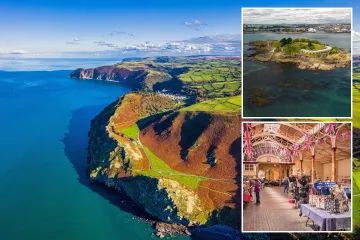
Appledore is a beautiful village in north Devon. It is hoping to showcase all it has to offer to even more visitors when its Clean Maritime Innovation Centre opens later this year
Appledore is a picturesque village in north Devon(Image: Getty Images)
A small coastal village steeped in history and a rich shipbuilding heritage, with a vibrant seafood scene and colourful cottages, is hoping a futuristic, million-pound project will put it firmly on the map.
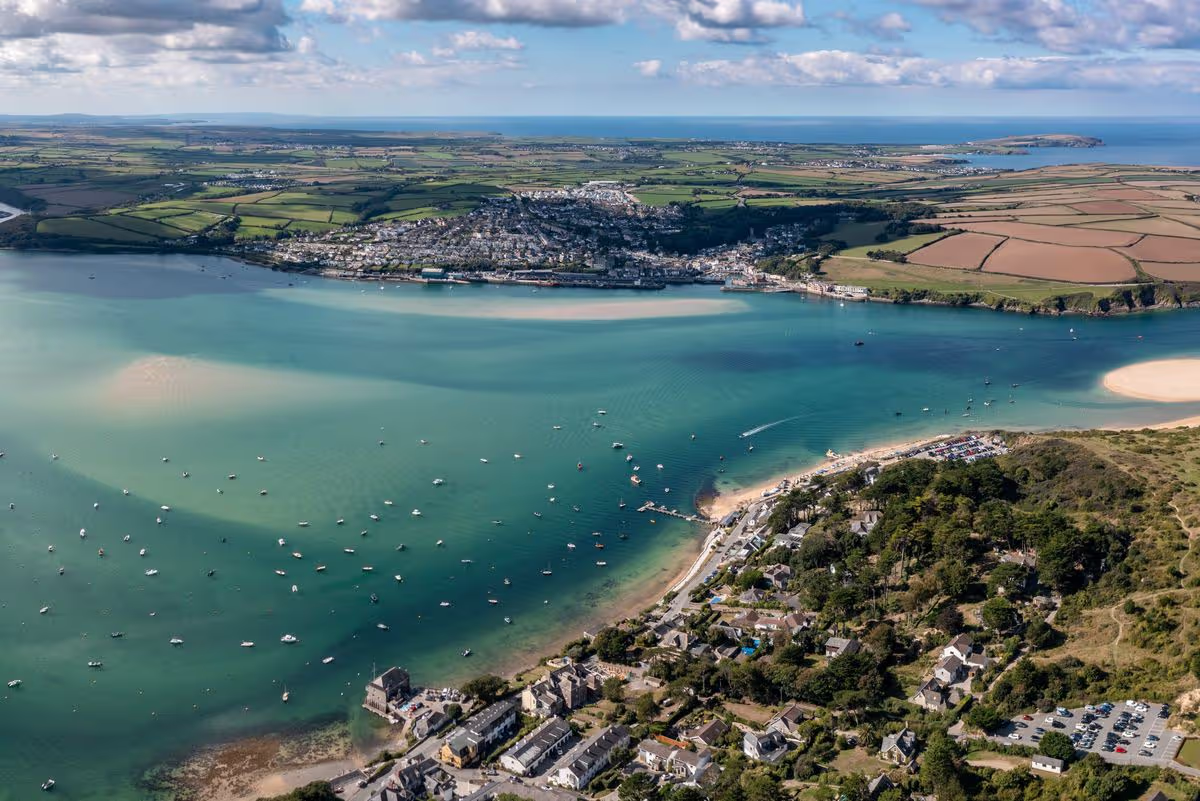
The tiny village of Appledore isn’t one of the most well-known places in Devon, but can certainly be characterised among the most beautiful, with narrow, winding lanes, a bustling quayside to explore, and pastel-coloured houses and coastal views. Its estuary shore is suitable for beachcombing and exploring rock pools.
Located in north Devon at the meeting of the Rivers Torridge and Taw, the village is built on the centuries-old traditions of shipbuilding and fishing.
Renowned for its maritime heritage and vibrant seafood scene, Appledore is also celebrated for its art and creativity, hosting regular arts festivals and resident craftspeople showcasing ceramics, photography, jewellery and more in independent shops and markets.
But while the village has a multitude of offerings for those already in the know, Appledore is hoping to boost its popularity among people outside the local area with the opening of its Clean Maritime Innovation Centre later this year.
The global innovation centre has received £15.6million in government funding and aims to support research in clean propulsion, autonomous vessels and marine sustainability.
Due to open in late 2026, the centre will also provide a base for floating offshore wind activity in northern Devon, with the electricity generated able to power approximately three million homes and create 3,000 jobs.
The maritime sector has played such a significant role in Appledore’s history and this project will be a real opportunity for the village to move into a national maritime future. The project is being delivered with funding support from the UK government through the Levelling Up Fund, the Community Regeneration Partnership, and the Devon and Torbay devolution deal. Devon County Council is overseeing the financial management.
Initial construction involves enhancements to the wall along New Quay Street, with full-scale building work set to start in the autumn. Preliminary works began in April, including the creation of a new quay to improve estuary access.
Councillor Ken James, leader of Torridge District Council, said: “This is a very exciting step in the journey of this project, not just for Appledore, but for the wider district. We hope that the delivery of this centre will put Appledore and Torridge at the forefront of innovation and investment in clean maritime energy. By getting as many local tradespeople involved in the build as possible, we hope that this will be just the start of future job creation and investment in the area.”
Reviews of Appledore praise the villages colourful look and picturesque charm.
One reviewer wrote: “Appledore is a lovely place with lots of interesting nooks and crannies with brightly-coloured houses. It’s a lot less busy and touristy than some of its bier neighbours.”
Another said: “Appledore is great – very pretty with small craft shops, cafes, restaurants and is incredibly dog-friendly. Would definitely visit again.”