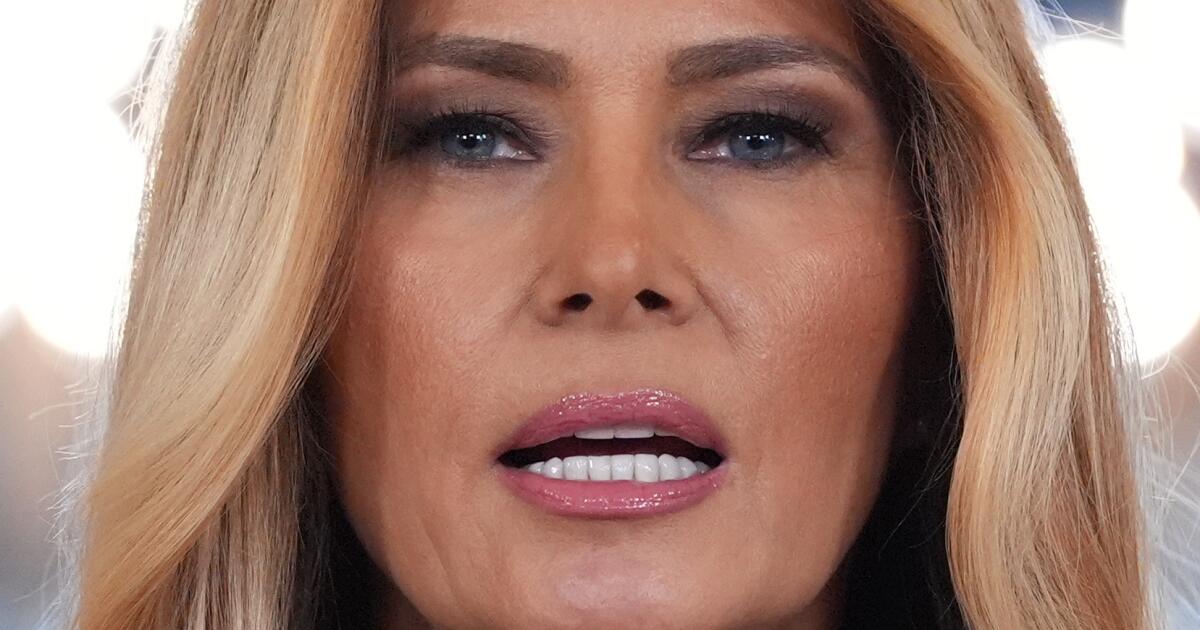
WASHINGTON — First lady Melania Trump is denying ties to Jeffrey Epstein and knowledge of his crimes, saying Thursday that the “stories are completely false” and calling online accusations that she was somehow involved “smears about me.”
“The lies linking me with the disgraceful Jeffrey Epstein need to end today. The individuals lying about me are devoid of ethical standards, humility and respect. I do not object to their ignorance, but rather I reject their mean-spirited attempts to defame my reputation,” she said.
Reading an extraordinary statement at the White House, she denied any association with Epstein and said, “My attorneys and I have fought these unfounded and baseless lies with success.”
The first lady also called on Congress to hold a public hearing centered on survivors of Epstein’s crimes, with a chance to testify before lawmakers and have their stories entered into the congressional record.
“Each and every woman should have her day to tell her story in public if she wishes,” she said. “Then, and only then, we will have the truth.”
Her out-of-the-blue message came just as her husband, President Donald Trump, and his administration had finally appeared successful in moving beyond the Epstein controversy, which had sent shockwaves through the nation’s politics for months.
The case had begun to be overshadowed by the war in Iran and other major issues — but the first lady’s comments might push it back into the political spotlight.
The first lady said she was not friends with Epstein or Maxwell but was in overlapping social circles in New York and Florida. She described an email reply she sent to Maxwell as “casual correspondence” without elaborating.
“My polite reply to her email doesn’t amount to anything more than a trifle,” she said.
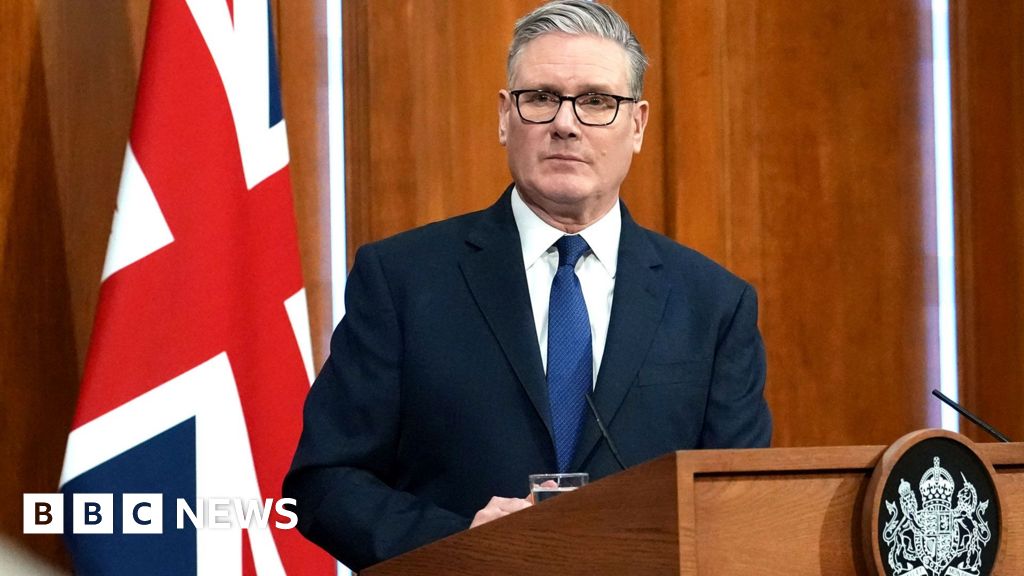
The Ukrainian leader’s visit comes after Kyiv agreed to cooperate on defence with Qatar, Saudi Arabia and the United Arab Emirates.
Published On 29 Mar 202629 Mar 2026
Ukrainian President Volodymyr Zelenskyy has arrived in Jordan as he continues his tour to bolster defence ties in the Gulf amid the ongoing United States and Israeli war on Iran.
Zelenskyy announced his arrival in a post on X on Sunday and stated that an “important meeting” was going to take place.
Recommended Stories
list of 3 itemsend of list
“Today in Jordan. Security is the top priority, and it is important that all partners make the necessary efforts toward it,” Zelenskyy said.
The Ukrainian president has been seeking support from the Gulf states as the Russia-Ukraine war continues, with no end in sight. More than four years since Russia launched a full-scale invasion, Kyiv is struggling to cover its budget deficit and fund domestic weapons production.
Still, Ukraine has intensified retaliatory attacks on Russian infrastructure, including refineries, oil depots and ports, arguing that they were justified targets to sever revenues funding Russia’s offensive.
On Sunday, a drone strike that Ukraine claimed triggered a fire at Russia’s Baltic port of Ust-Luga, which was hit for the second time in several days.
According to the Russian regional governor, Alexander Drozdenko, damage was sustained at the port, the fire is now under control, and there were no casualties from the attack.
He added that 36 drones were destroyed overnight in the region.
But Zelenskyy’s visit comes after Ukraine has agreed to cooperate on defence with Qatar, Saudi Arabia and the United Arab Emirates.
Kyiv’s anti-drone experts have also been deployed to all three countries as Iran targets infrastructure there using drones that Russia has also used during its war with Ukraine.
A senior Ukrainian official told the AFP news agency, on condition of anonymity, that a Ukrainian team is also in Jordan, without elaborating.
In repelling the drones, Ukraine uses a mix of cheap drone interceptors, electronic jamming tools, and anti-aircraft guns.
RABAT, Morocco — A Moroccan court sentenced a rapper known for his criticism of the country’s ties with Israel and accusations of government corruption to eight months in prison, the latest in a string of penalties against young musical artists.
Souhaib Qabli’s songs sharply criticize Morocco’s 2020 decision to normalize ties with Israel in an accord brokered by the first Trump administration. His lyrics also call out problems with public services and restrictions on freedom of speech, grievances also voiced by Morocco’s Gen Z protesters last year.
The judge ruled Thursday that Souhaib Qabli, a 23-year-old rapper, was guilty of insulting a constitutional body, his attorney Mohamed Taifi told the Associated Press. Qabli, who is a member of Al Adl Wal Ihsane, a banned but tolerated Islamist association, was also fined $106.
“The court did not clarify what it meant by a constitutional body. No specific party was identified in the case file, and there are many constitutional institutions,” Taifi said.
The attorney said that his client is appealing the verdict. He also said Qabli was cleared of other charges, including insulting public officials and disseminating false allegations.
Before the public hearing, dozens of supporters gathered outside the court in Taza, a city in north-central Morocco about 160 miles from the capital, Rabat, holding banners calling for Qabli’s release. Rights groups in the North African kingdom have described the case as a political measure aimed at curbing freedoms.
Qabli, known by the stage name L7assal, was arrested earlier this month and remained in custody until the court delivered its verdict. He was studying refrigeration and air conditioning at a vocational training institute in addition to his music career.
His attorney said that Qabli was questioned in court about his songs and social media posts. Qabli said he had no intent to insult any constitutional body and was expressing his views through his music.
His songs include “No to the Normalization,” referring to Morocco’s decision to normalize ties with Israel in the U.S.-brokered Abraham Accords in 2020, in exchange for Washington’s recognition of Morocco’s claim to the disputed Western Sahara territory.
The move was criticized by Morocco’s pro-Palestinian supporters and sparked large protests in several cities. While authorities allowed the rallies, they have arrested activists who criticized the decision.
Morocco’s constitution generally guarantees freedom of expression, and the country is seen as relatively moderate compared with others in the Middle East. Yet certain types of speech can trigger criminal charges, and Morocco has seen tightening restrictions on dissent, including against journalists and activists.
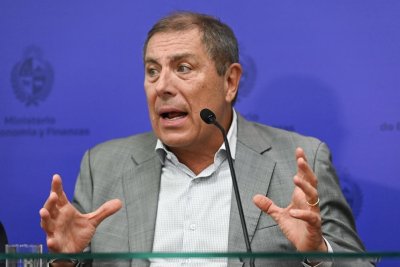
Uruguay’s Minister of Economy and Finance Gabriel Oddone said the pressure by the United States to break trade ties with China is applied daily and channeled through different areas of the bilateral relationship. File Photo by Federico Gutierrez/EPA
March 27 (UPI) — Uruguayan Minister of Economy and Finance Gabriel Oddone said the United States is exerting “unimaginable” and “unsustainable” pressure on his South American country to break its trade relationship with China, according to remarks made at a private meeting.
The comments during a session with business leaders were reported by the local weekly Búsqueda.
With about 3.5 million inhabitants and a territory comparable to the state of Florida, Uruguay has had China as its main trading partner for more than 14 years, accounting for about 26% of its exports.
Oddone said the pressure is applied daily and channeled through different areas of the bilateral relationship.
According to attendees at the meeting with the Confederation of Business Chambers, the minister said that if Uruguay does not comply with Washington’s demands, its trade relationship with the administration of President Donald Trump “will not improve and could get worse.”
The remarks came Tuesday during a meeting at the Technological Laboratory of Uruguay, attended by more than 20 business representatives, along with the director of the Office of Planning and Budget, Rodrigo Arim.
The meeting lasted more than two hours and addressed economic and trade issues in a context described as “very complex.”
China is the main destination for key exports, such as beef, soybeans and cellulose. The pressure from the United States comes amid growing geopolitical rivalry between Washington and Beijing, which is affecting countries with trade ties to both powers.
According to attendees cited by Búsqueda, Oddone acknowledged that the government has “little room for maneuver” due to the fiscal situation inherited from the previous administration and internal differences within the ruling coalition over advancing economic reforms.
On the domestic front, the minister defended the country’s economic performance despite lower-than-expected growth.
Uruguay’s gross domestic product grew 1.8% in 2025, below the official projection of 2.6%, while analysts have already cut expectations for 2026 to around 1.6%.
Facing criticism from the private sector over the size and slow pace of the state, Oddone urged business leaders to also consider positive aspects.
“We should not only see the glass as half-empty,” he said, noting that the economy continues to grow despite an adverse international environment in which Uruguay is “swimming in dulce de leche,” a colloquial phrase interpreted as meaning it is difficult to move quickly.
The minister also ruled out improving competitiveness through a depreciation of the exchange rate.
“Uruguay is not going to become a cheap country,” he said, adding that improvements will come from microeconomic changes to reduce costs and streamline foreign trade.
Asked by Búsqueda, the minister declined to comment publicly on the meeting, as it was a private event. Some participants described it as useful, but with “mixed” feelings, while others said they valued explanations from the economic team.
At the close, Oddone adopted an optimistic tone.
“Believe me, we will do well,” he said, highlighting the country’s institutional and economic strengths to face an international scenario marked by trade tensions and regional slowdown.
The meeting held in Washington, DC reviewed the ‘close strategic cooperation’ between Doha and Washington, Qatar’s foreign ministry said.
Published On 27 Mar 202627 Mar 2026
Qatar’s prime minister has held talks with senior US officials in Washington, DC, amid the ongoing US-Israeli war on Iran and fallout across the Gulf.
Sheikh Mohammed bin Abdulrahman bin Jassim Al Thani, who also serves as Qatar’s foreign minister, met US Vice President JD Vance and US Secretary Scott Bessent, Qatar’s Ministry of Foreign Affairs said on Friday.
Recommended Stories
list of 4 itemsend of list
They reviewed ways to strengthen the “close strategic cooperation” between Doha and Washington, “especially the defence partnership in light of the conditions the region is experiencing”, the ministry said.
Both sides stressed “ensuring the sustainability of energy supplies and maintaining the continued flow of liquefied natural gas from the State of Qatar to global markets”, in a way that “supports global energy security”, it added.
Vance hailed the “robust strategic partnership”, praising Qatar’s “active role in promoting regional stability and enhancing global energy security”.
The Gulf has been in a state of heightened tension since February 28, when the US-Israeli war on Iran began, which has killed more than 3,000 people across the region, a vast majority of them in Iran and Lebanon.
Tehran has since launched drone and missile attacks aimed at Israel, as well as Jordan, Iraq, and Gulf states. Iran insists it is targeting US assets in the Gulf, but the region’s leaders have urged Iran to cease attacks as they endanger civilians.
The war has created an unprecedented global energy crisis as Iran has effectively closed off the Strait of Hormuz, through which one-fifth of the world’s oil passes.
Meeting with Hegseth
On Thursday, Sheikh Mohammed also held a meeting in Washington with US Secretary of Defense Pete Hegseth, the Foreign Ministry said.
“The meeting took place in Washington on Thursday and focused on ways to support and develop defence and security collaboration amid regional challenges,” it added.
“Both sides stressed the importance of continued coordination and consultation on regional issues to promote security and stability locally and internationally.”
On Wednesday, the Qatari Cabinet renewed its condemnation of Iranian attacks on Qatar and its neighbours, calling for an immediate halt.
Beirut, Lebanon – The accusation from Lebanon’s prime minister that Iran’s Islamic Revolutionary Guard Corps (IRGC) is in charge of Hezbollah’s operations against Israel comes as relations between the Shia group and the Lebanese government are at their lowest in years.
But, according to analysts, that animosity does not mean that Prime Minister Nawaf Salam was incorrect in his analysis of the situation.
Recommended Stories
list of 3 itemsend of list
In comments made on Sunday to the Saudi Arabian television station al-Hadath, Salam said that the IRGC – a branch of Iran’s military that answers directly to that country’s supreme leader – was directing Hezbollah in its fight against Israel, and in launching drones at Cyprus from Lebanon.
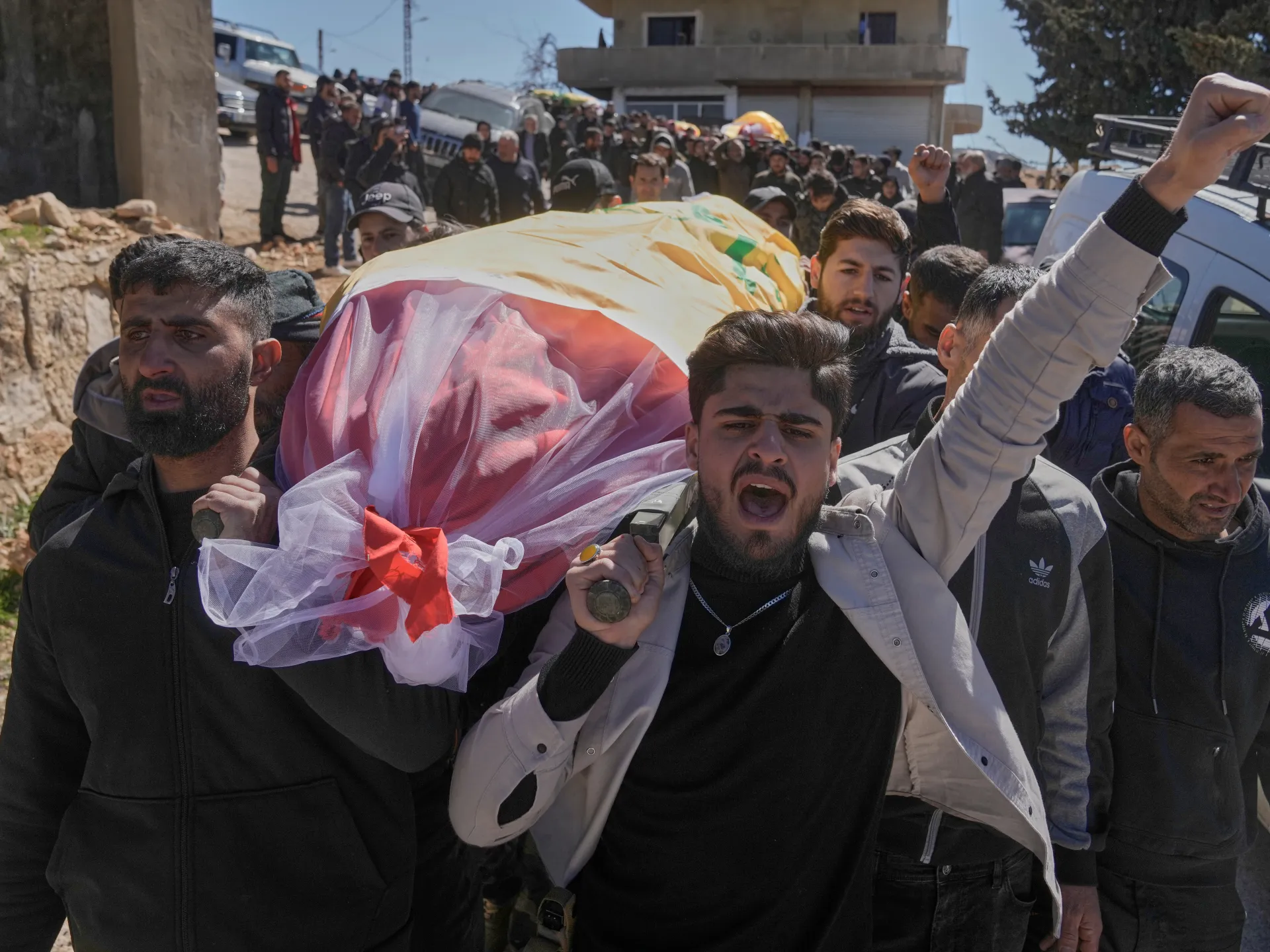
Israel’s latest attacks on Lebanon have, since they started in early March, killed more than 1,000 people and displaced at least 1.2 million, more than 20 percent of the country’s population. Human Rights Watch researchers say the mass displacement alone could amount to a war crime.
While Salam’s claims might be hard to definitively prove, analysis from experts and reporting suggest that the IRGC has played a crucial role in Hezbollah’s preparations for reentering the war waged against Lebanon since 2023.
IRGC calling the shots
In his interview with al-Hadath, Salam accused the IRGC of “managing the military operation in Lebanon” and of firing a drone at a British Air Force base in Cyprus, earlier this month. He accused IRGC officials of entering Lebanon with false passports.
On March 2, Hezbollah fired six rockets across the border. The group said that it was in response to the assassination of Iran’s Supreme Leader Ali Khamenei on February 28, and a response to more than a year of unanswered Israeli aggression on Lebanon, which had killed hundreds.
The move shocked much of Lebanon’s population and political establishment, after Hezbollah had reportedly given assurances to its allies in government, including Parliament Speaker Nabih Berri, that it would not enter the war in support of Iran, its close ideological ally.
The Lebanese government – which had already been moving to disarm Hezbollah – responded by banning the powerful group’s military activities and asking some Iranians believed to have links to the IRGC to leave. But the action has had little impact on the ground, where Hezbollah continues its war efforts against Israel, including battling the Israeli military on the ground in southern Lebanon – the fight that Salam believes is managed by the IRGC.
Ties between the IRGC and Hezbollah are longstanding.
Hezbollah was founded in 1982, three years after the Islamic revolution in Iran. The group was created in coordination with the IRGC and has since counted Iran as its benefactor and spiritual guide.
Immediately after a November 2024 ceasefire between Hezbollah and Israel, Iran sent IRGC officers to Lebanon to conduct a post-war audit and restructure, according to reporting by the Reuters news agency.
Hezbollah’s chain of command was reportedly restructured from a hierarchical one to smaller cells with greater decisional autonomy, something also practised by the IRGC and known as the “mosaic” defence.
Nicholas Blanford, a nonresident senior fellow with the Atlantic Council, said that sources in Hezbollah and the Lebanese government had told him that the original Hezbollah rocket attack on March 2 was conducted by the Islamic Resistance, Hezbollah’s military wing, possibly in direct coordination with the Quds Force, the IRGC’s foreign unit. Hezbollah’s senior leadership may not have been aware of the plans for the attack.
“I think the IRGC is calling the shots,” Blanford told Al Jazeera. “They are working together.”
Lebanese government out of options
On Tuesday, Lebanon’s Foreign Minister Youssef Rajji declared the Iranian ambassador to Lebanon a persona non grata and gave him until Sunday to leave the country.
The move indicates that Lebanon is trying to counter Iranian influence in Lebanon and came just hours after Israel’s Defence Minister, Israel Katz, announced that his country’s military would create a “security zone” in southern Lebanon stretching to the Litani River, roughly 30km (20 miles) north of the Israeli border – essentially an illegal occupation of the area.
But analysts and experts said there is little Lebanon can do before the war with Israel ends.
The Lebanese government had worked under heavy international pressure to disarm Hezbollah during the ceasefire period from November 2024 until earlier this month. But Israel violated the ceasefire more than 10,000 times, according to UN peacekeepers in Lebanon. For any progress to be made on disarmament, analysts said, Israel cannot continue attacking Lebanon.
“What the Lebanese government was supposed to do was a gradual disarmament of the party, which is also something that many Lebanese would like to happen,” Ziad Majed, a Lebanese political scientist, told Al Jazeera. “However, it cannot happen while Israel is bombing.”
However, the attacks don’t seem likely to cease in the short term. US President Donald Trump said that his envoys, Steve Witkoff and Jared Kushner, had engaged in talks with Iran on Monday over a possible end to the war. Iran subsequently denied that talks took place.
Many in Lebanon believe that Israel’s campaign in Lebanon won’t be included in any potential agreement between Iran, the US, and Israel to end the war. Katz’s statement on Tuesday seems to suggest Israel plans to carry on its invasion of southern Lebanon until its forces reach the Litani River.
Hezbollah’s threats
The government’s efforts to retake control of southern Lebanon may be even more difficult now that it is dealing with a reemboldened Hezbollah.
Mahmoud Qamati, deputy head of Hezbollah’s political council, compared the Lebanese government to France’s World War II Vichy government, which collaborated with the Nazis. Qamati was criticised for his comments, but later said they were misinterpreted.
More ominous comments came from Wafiq Safa, who was until recently the head of Hezbollah’s Liaison and Coordination Unit. He sent a message to the Lebanese government during a recent press interview.
“We will force the government to backtrack on the decision to ban the party’s military activities after the war, regardless of the method,” he said.
Colombia’s President Gustavo Petro has been named in two separate criminal investigations led by prosecutors in the United States.
The New York Times was the first to report the existence of the two probes on Friday, citing sources familiar with the proceedings.
Recommended Stories
list of 3 itemsend of list
Media reports indicate that Petro is not personally the target of the investigations, which focus on drug-smuggling in Latin America.
But according to the Times, US attorneys in Brooklyn and Manhattan are looking into whether Petro met with drug traffickers and solicited donations from them for his 2022 presidential campaign. Al Jazeera has not independently verified the Times report.
By Friday afternoon, Petro had issued a statement denying the claims, which threaten to reopen the rift between the US and Colombia.
“In Colombia, there is not a single investigation into my relationship with drug traffickers, for one simple reason: I have never in my life spoken with a drug trafficker,” Petro wrote on the social media platform X.
He added that he told campaign managers to never accept donations from bankers or drug traffickers.
The investigations in the US, he argued, would ultimately exonerate him, and he blamed Colombia’s right-wing opposition for stirring controversy.
“So, the proceedings in the US will help me to dismantle the accusations of the Colombian far right, which is indeed closely linked to Colombian drug traffickers,” Petro said.
Petro has not been charged with any crimes, and the investigations are in their initial stages, according to the Times.
But experts say the timing of the report is significant, as it comes barely two and a half months before Colombia is set to hold a closely watched presidential election on May 31.
“If this would have happened a week before the first round, it would be election interference,” Sergio Guzman, director at Colombia Risk Analysis, a security think tank, told Al Jazeera.
“This seems to be more of a warning that shows how the US could influence the outcome of the election.”
Petro, Colombia’s first left-wing president, is limited to a single term in office, but the election is likely to be a referendum on his four years in office.
It will also be a test for Petro’s Historic Pact coalition, whose candidate, Ivan Cepeda, is currently leading in the polls.
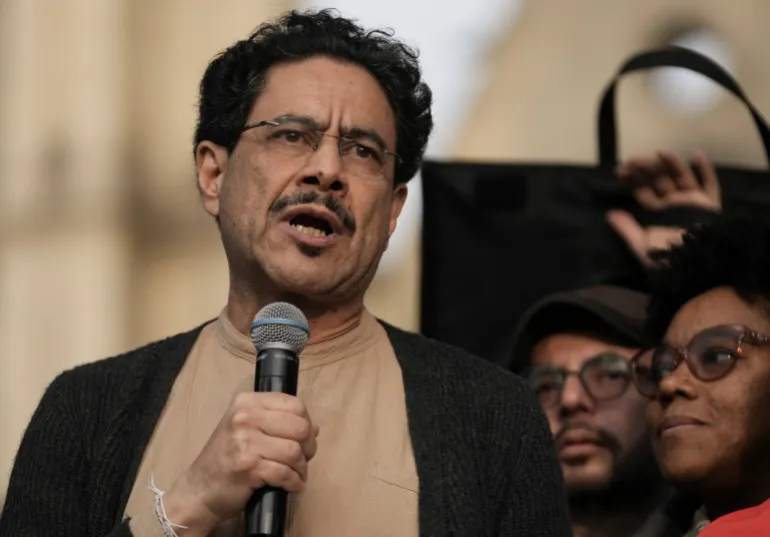
Colombian presidential candidate Ivan Cepeda speaks at a rally in support of current President Gustavo Petro on February 3 [Nathalia Angarita/Reuters]
But United States President Donald Trump has repeatedly sought to boost the prospects of right-wing candidates in Latin America. He and Petro have been at loggerheads since Trump returned to office in January 2025.
Their feud came to a head in January after the US attacked Venezuela and abducted its president, Nicolas Maduro.
Shortly afterwards, a reporter asked if the US would take military action against Colombia. Trump replied: “It sounds good to me.”
To cool tensions, Trump and Petro held a call afterwards and agreed to meet.
Petro then visited the White House in early February to mend his often-combative relationship with Trump. While there, the Colombian delegation interacted with their counterparts, including Secretary of Defense Pete Hegseth and Secretary of State Marco Rubio.
Republican Senator Bernie Moreno, a longtime critic of Petro’s government, was also in attendance. Guzman believes the senator’s presence was significant.
“We don’t have a lot of straightforward answers about what were the commitments during that meeting, but Bernie Moreno did say that he wanted Petro not to be as involved in elections,” Guzman told Al Jazeera.
“And guess what? Petro is fully involved in the elections.”
The meeting also addressed collaborative efforts to combat drug trafficking, an issue core to Trump’s foreign policy.
Both presidents walked away from the meeting in good spirits, with Petro sharing a photo signed by Trump that read, “Gustavo – a great honor. I love Colombia.”
But Petro and Trump have long been at odds over how to tamp down on narcotics smuggling.
Colombia, the region’s largest producer of cocaine, has been criticised by the Trump administration for what it sees as soft-on-crime policies, including negotiations with armed groups.
Petro, meanwhile, has denounced the US for its lethal tactics, calling them tantamount to murder.
The US, for instance, has bombed at least 46 alleged drug boats and vessels in the Caribbean Sea and eastern Pacific Ocean. Some of the 159 people killed were Colombian citizens.
The US has also floated the idea of conducting military attacks in Latin America against suspected drug traffickers, and it recently began joint operations against gangs in Ecuador, Colombia’s neighbour.
A screen shows Colombian President Gustavo Petro and US President Donald Trump shaking hands at Plaza Bolivar in Bogota, Colombia, on February 3 [Nathalia Angarita/Reuters]
Analysts say actions like these have Latin American leaders on edge.
Trump’s aggressive manoeuvres suggest that the US president is willing to jeopardise “the sovereignty and peace of every nation” in his campaign against illicit drugs, according to Rodrigo Pombo Cajiao, a constitutional law professor at the Pontificia Universidad Javeriana.
Pombo Cajaio pointed to the US abduction of Venezuelan President Nicolas Maduro on January 3. Maduro was a longtime adversary of Trump, and he is currently being held in prison in New York on drug-related charges.
“Every political leader in the region has been put on notice” after that abduction, Pombo Cajiao said.
“As the world’s leading producer of cocaine, Colombia found itself at high risk of judicial prosecution” from the US, he added.
Currently, Petro’s Historic Pact is leading May’s presidential race. A GAD3 poll released this week suggested Cepeda is ahead in the polls with 35 percent voter approval, ahead of far-right candidate Abelardo de la Espriella, who had 21 percent.
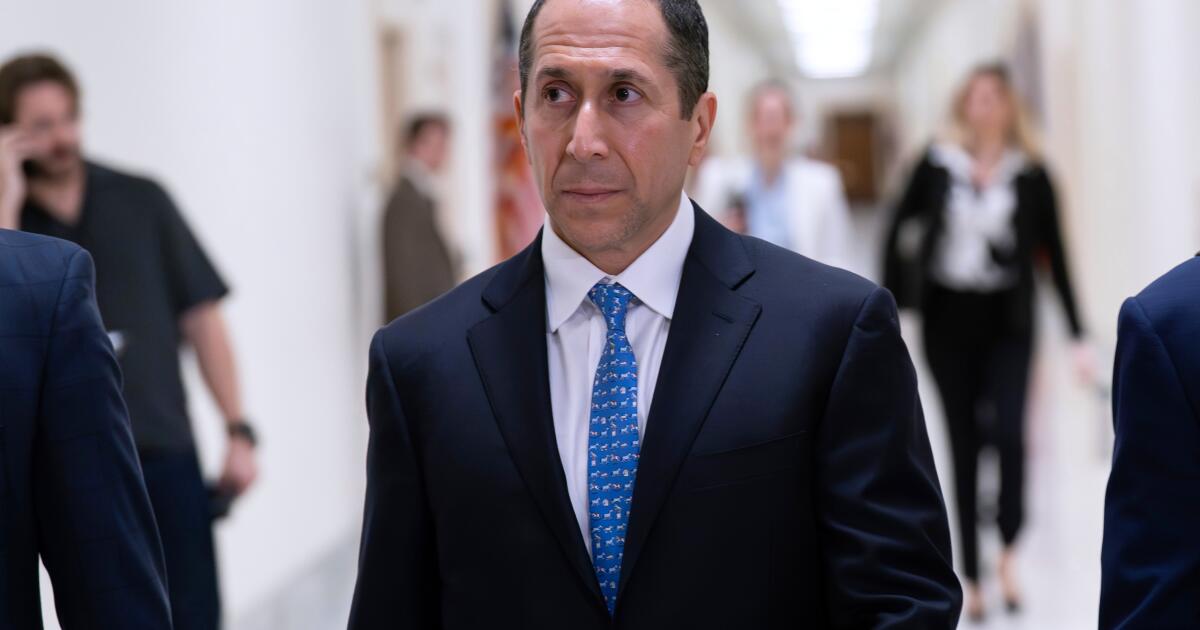
WASHINGTON — House lawmakers were digging into Jeffrey Epstein’s sprawling financial portfolio on Wednesday as a committee deposed his former accountant and tried to understand his connections to some of the world’s wealthiest men.
Richard Kahn, who worked closely with Epstein for years and now serves as an executor of his estate, appeared for the closed-door deposition on Capitol Hill. He told lawmakers that he had not personally seen evidence of Epstein’s sexual abuse, but provided a fuller picture of how Epstein acquired his wealth. The wealthy financier made hundreds of millions of dollars over two decades, during which he struck up friendships with some of the world’s most powerful men.
Kahn “was under the impression that Epstein made his money as a tax advisor and a financial planner,” said Rep. James Comer, the Republican chair of the House Oversight Committee. Lawmakers argued that a fuller picture of Epstein’s finances could help the public understand how, for years, he was able to get away with trafficking and sexually abusing underage girls.
“Jeffrey Epstein’s sex trafficking ring would not have been possible without Richard Kahn, who managed Epstein’s money for years, authorized payments, including payments to victims and survivors,” said Rep. James Walkinshaw (D-Va.), who added that Kahn told them he was unable to recall details of some of the transactions and communications that he was asked about.
Kahn has said that he was unaware of Epstein’s sexual abuse and had not seen any of his victims.
Comer (R-Ky.) also said that lawmakers confirmed during the deposition that Epstein received significant amounts of money from former retail shopping chain executive Les Wexner, hedge fund manager Glenn Dubin, tech entrepreneur Steven Sinofsky, investor Leon Black and the Rothschilds, a wealthy banking family.
None of those people have been accused of wrongdoing in their relationships with Epstein, but Democrats on the committee argued that anyone with ties to the wealthy financier should be scrutinized. Wexner was deposed by the committee last month, and Comer has also called on Black, among several others, to appear for transcribed interviews.
Kahn also told lawmakers that Epstein had financial ties to Ehud Barak, who was the prime minister of Israel from 1999 to 2001, according to Democratic Rep. Suhas Subramanyam. Barak has not been accused of wrongdoing and has said he regrets his friendship with Epstein.
Comer also said Wednesday that the committee has reviewed over 40,000 documents that it subpoenaed from JPMorgan Chase and Deutsche Bank. Epstein was connected to at least 64 business entities, according to Comer.
Republican President Trump has strongly denied any wrongdoing in his own ties to Epstein, and Comer said that Kahn had never seen any financial transactions between Epstein and Trump. Comer said that Kahn is the latest witness to testify that they had never seen Trump doing anything wrong with Epstein.
“The investigation’s about getting the truth to the American people, trying to figure out how the government failed, answer questions we all have,” Comer said.