thursday

Joy Behar steps back from ‘The View,’ as she takes her play to London

Joy Behar is trading her usual spot at “The View’s” roundtable for the spotlight in one of London’s West End theaters.

The comedian, who is one of the talk show’s longest-running hosts, is taking a temporary leave from the daytime program to take her play, “My First Ex-Husband,” overseas for the first time. The 83-year-old TV personality announced her break on Tuesday, on the podcast, “Behind the Table,” a companion program of “The View.”

“I fly to Paris this week, and then I go take the Chunnel to London after a week, and I’ll be in London a second week doing my play, ‘My First Ex-Husband,’ at the Boulevard Theatre in the West End,” Behar said on the podcast.

Behar confirmed she has already pre-taped several installments of “The Weekend View,” ahead of her absence. She will miss the next two weeks of tapings. Her last appearance on the weekday edition of the show is Thursday.

In Behar’s absence, several “View” regulars will step in. Brian Teta, the show’s producer, said on the podcast that Sheryl Underwood, Kara Swisher and Ana Navarro will make appearances in the coming weeks. Whoopi Goldberg, another one of the talk show’s staple personalities, will also be coming in on Fridays, which is her usual day off.

“I don’t think she knows yet, but I’ll let her know that she’s going to be here,” Teta joked of Goldberg’s new responsibility.

Behar’s play, “My First Ex-Husband,” first debuted off-Broadway in New York in 2025. The comedian wrote the show over the span of 12 years. The story follows a rotating cast who tell chaotic stories about past relationships. The play is set to debut in the coming weeks, according to Behar. She and Jackie Hoffman will be two American narrators for the show, while two British actresses perform the scenes.

Source link

Kelsey Plum scores season-high 38 points, leads Sparks past Aces

Kelsey Plum scored a season-high 38 points, Erica Wheeler hit the go-ahead three-pointer late in the fourth quarter, and the Sparks defeated the Las Vegas Aces 101-95 on Saturday night.

A three-pointer by Wheeler capped an 8-0 run for the Sparks in the first minute of the fourth quarter that gave the Sparks a 80-73 lead. The Aces battled back and tied it at 90 on a jumper in the lane by Chelsea Gray and again at 94 on two free throws by A’ja Wilson.

Wheeler then took a pass from Plum and hit a 27-foot three-pointer with 1:15 remaining, giving the Sparks a 97-94 lead. The Aces missed a couple of three-pointers and a free throw on their final possessions while Dearica Hamby and Plum sealed the win with two free throws each.

Hamby and Cameron Brink each scored 16, Ariel Atkins had 11, and Rae Burrell added 10 for the Sparks (3-3). Wheeler had 10 points, seven rebounds and six assists, and Plum had nine assists.

Wilson scored 24 points and grabbed 15 rebounds for the Aces (4-2). Carter scored 23 points off the bench. NaLyssa Smith added 22 points, Gray 12 and Jewell Loyd 10.

A three-pointer by Smith gave the Aces a 57-48 lead early in the third quarter but Plum rallied the Sparks with five points and three assists as the Sparks surged ahead 60-57. Neither team led by more than three points the rest of the quarter and Las Vegas took a 73-72 lead to the final period.

Las Vegas, the reigning WNBA champions, saw a four-game winning streak end. The Aces had won 20 of their last 21 regular-season games after finishing the 2025 regular season on a 16-game winning streak.

Up next

Aces: at Dallas on Thursday.

Sparks: at Washington on Friday.

Source link

Kyle Busch dead: Legendary NASCAR driver was 41

Kyle Busch, a two-time champion of the NASCAR Cup Series and the winningest driver in the association’s history, has died at age 41.

“We are saddened and heartbroken to share the news of the passing of Kyle Busch, a two-time Cup champion and one of our sport’s greatest and fiercest drivers,” NASCAR said in a statement Thursday afternoon. “We extend our deepest condolences to the Busch family, Richard Childress Racing and the entire motorsports community.”

No cause of death has been disclosed.

Earlier on Thursday, Busch’s family posted a statement on the driver’s X account saying that Busch had been hospitalized with a “severe illness” and would not be participating in this weekend’s NASCAR events at Charlotte Motor Speedway — including the Coca-Cola 600, a race Busch won in 2018.

According to the Associated Press, Busch became unresponsive on Wednesday while testing in the Chevrolet racing simulator in Concord and was transported to a Charlotte hospital.

In response to a request for information about Busch’s death, the Cabarrus County Sheriff’s Office emailed The Times a 911 call asking for an ambulance to come to the address of the General Motors Charlotte Technical Center at around 5:32 p.m. Wednesday.

“I have got an individual that [has] shortness of breath, [is] very hot, thinks he going to pass out and is … coughing up some blood,” said the caller, who added that the person was awake but “on the bathroom floor right now.”

Busch is not identified by name as the person experiencing the symptoms.

NASCAR officials confirmed that the Coca-Cola 600 will be held as scheduled. When Busch’s hospitalization was announced earlier Thursday, Richard Childress Racing said Austin Hill would drive the No. 8 Chevrolet Camaro ZL1 in his place. Speedway officials indicated that Busch would be honored at the race.

During a Cup Series race on May 10 at Watkins Glen International in Dix, N.Y., Busch told his crew on the radio that he would need medical aid and a shot after the race. The TV broadcast mentioned that Busch had been dealing with a sinus cold all week. He ended up finishing in eighth place, his best Cup Series finish of the season.

Last week at Dover Motor Speedway in Delaware, Busch finished 17th in the Cup Series exhibition All-Star race but won his second Truck Series race of the year.

“Absolutely cannot comprehend this news,” Denny Hamlin, NASCAR driver and former Joe Gibbs Racing teammate, posted on social media. “We just need to think of his family during this time. We love you KB.”

Busch raced in NASCAR’s top division for 22 full-time seasons, winning the Cup Series championship in 2015 and 2019 and the series regular-season championship in 2018 and 2019. He won 63 Cup Series races, 69 in the Truck Series and 102 in the XFinity Series, making him the winningest driver in NASCAR’s top three series combined.

The last time Busch missed a Cup Series race was in 2015, when he was recovering from a compound leg fracture and broken foot and was unable to take part in the first 11 events that season.

“A future Hall of Famer, Kyle was a rare talent, one who comes along once in a generation,” NASCAR said in a separate statement released Thursday, also on behalf of the Busch family and Richard Childress Racing.

“He was fierce, he was passionate, he was immensely skilled and he cared deeply about the sport and fans. Throughout a career that spanned more than two decades, Kyle set records in national series wins, won championships at NASCAR’s highest level and fostered the next generation of drivers as an owner in the Truck Series.

“His sharp wit and competitive spirit sparked a deep emotional connection with race fans of every age, creating the proud and loyal ‘Rowdy Nation.’ … NASCAR lost a giant of the sport today, far too soon.”

Born May 2, 1985, in Las Vegas, Busch was surrounded by racing. His father, Tom, was a mechanic and local racer who had relocated from Illinois with his wife, Gaye. Busch’s brother, Kurt, was seven years older and an eventual Cup Series champion (2004) and NASCAR Hall of Fame inductee.

Working his way up from go-karts in cul-de-sacs and parking lots to full-bodied Late Model competition, Busch earned the respect of his older brother early on.

“You think I’m a pretty good race car driver?” Kurt Busch said in 2001, four years before his younger sibling’s rookie season. “Wait until you see my brother. He’s the best driver in the family.”

Busch made his O’Reilly Series debut for Hendrick Motorsports on May 24, 2003, with a second-place finish at Charlotte Motor Speedway. Entering the series as a full-time driver the next year, Busch won five races and finished second overall to Martin Truex Jr.

Around that time, Busch started what would become his signature celebration, a showman’s bow after each win.

Known as “Rowdy” and “Wild Thing” for his postrace fights and feuds with other drivers, Busch first reached the Cup Series in 2004 before his full-fledged rookie campaign the following season. The 2005 rookie of the year, Busch became the series’ youngest winner in his 31st start, one of four wins during his three full seasons at Hendrick.

Busch joined the Gibbs team in 2008 and remained there until switching to Childress and taking over the No. 8 Chevrolet in 2023.

After his win at Dover this month, Busch was asked how many races he wanted to win before he stopped racing.

“You take whatever you can get, man,” Busch said. “You never know when the last one is going to be, so cherish them all — trust me.”

Busch is survived by his wife Samantha, son Brexton, 10, and daughter Lennix, 4.

The Associated Press contributed to this report.

Source link

GOP senators balk at Trump’s $1.8-billion ‘anti-weaponization’ fund, force delay in key vote

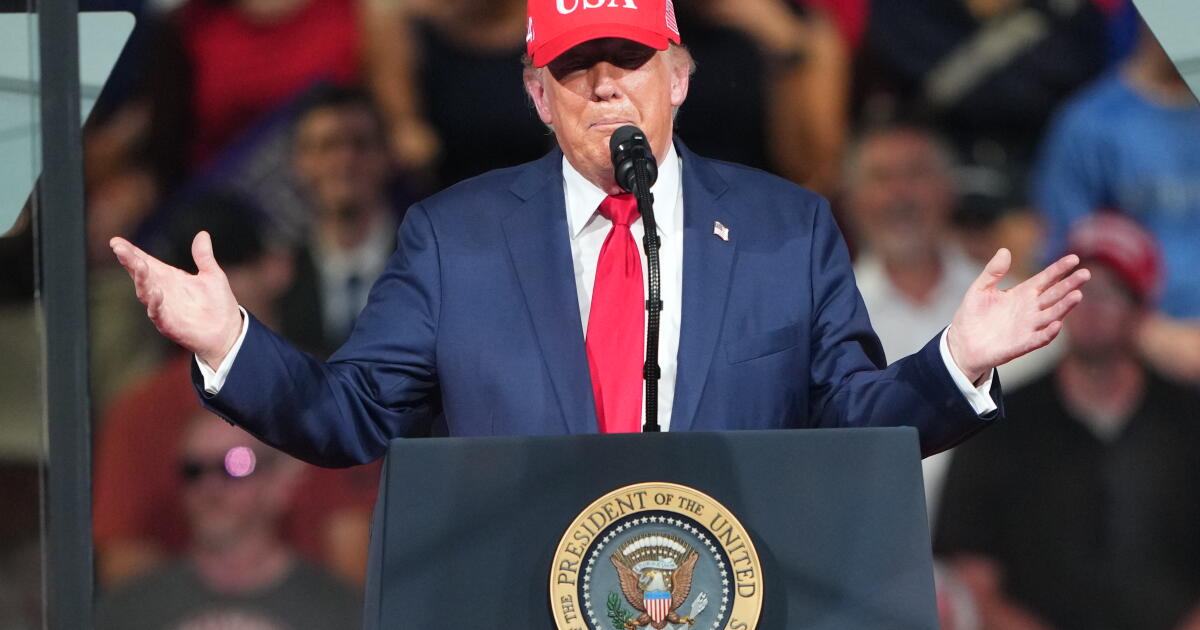
President Trump’s grip on his party slipped on Thursday as anger boiled over among Senate Republicans about a growing list of issues.

In a striking display of defiance, GOP senators abruptly derailed plans to vote on legislation to fund Trump’s immigration crackdown amid deep disagreements over security funding for a White House ballroom and a $1.8-billion fund to pay people who claim to have been politically persecuted.

The discontent had been building for weeks. Many senators had grown frustrated over Trump’s decision to endorse candidates running against longtime Republican incumbents.

Others, worried about rising costs as a result from the war in Iran, had aired concerns ahead of the midterm elections. But the breaking point came when the Justice Department, with little warning, pushed to create what it termed the “anti-weaponization fund.”

Senate Majority Leader John Thune (R-S.D.) acknowledged the concerns over the fund Thursday after a reportedly contentious private meeting about it between Senate Republicans and acting Atty. Gen. Todd Blanche. He also conceded midterm politics had added to the tension.

“It’s hard to divorce anything that happens here from what’s happening in the political atmosphere around us,” Thune told reporters. “You can’t disconnect those things.”

A day earlier, Sen. Bill Cassidy, a Louisiana Republican who lost his primary race on Saturday to a Trump-backed challenger, expressed strong disagreement with the creation of the fund, which would be controlled by appointees without congressional oversight.

“People are concerned about paying their mortgage or rent, affording groceries and paying for gas, not putting together a $1.8 billion fund for the president and his allies to pay whomever they wish with no legal precedent or accountability,” Cassidy wrote on X. “If there needs to be a settlement, the administration should bring it to Congress to decide.”

Sen. Mitch McConnell (R-Ky.) also had harsh criticism for the fund.

“So the nation’s top law enforcement official is asking for a slush fund to pay people who assault cops? Utterly stupid, morally wrong — take your pick,” he said in a statement.

The discord was striking, partly because Republicans have largely steered clear of checking the president’s power, and Congress has been largely sidelined under the second Trump administration on the war in Iran and other issues.

“I don’t think the Republicans had any choice but to pull the plug until we come back in June, because they’re facing a bit of a mutiny within their conference,” Sen. Adam Schiff (D-Calif.) told The Times, saying he had heard that the meeting between Blanche and Republicans “didn’t go well.”

As tension simmered on the background, Trump seemed unbothered by the group of Republicans’ public rebellion against his agenda. When asked whether he was losing control of the Senate, he said he didn’t know.

“I only do what is right,” he told reporters in the Oval Office.

However, he expressed annoyance at lawmakers who would not support $1 billion in federal funding for security costs related to the ballroom project. He said the structure is being privately funded by him and other “great patriots.”

“We are making a gift to the United States,” Trump said. “This is being made as a gift from me and other people that are great patriots and spent a lot of money. We are building what will be the finest ballroom anywhere in the world.”

The $1 billion for security funding would be “very much a good expenditure,” he said. If Congress does not sign off on the money, Trump said the “White House won’t be a very secure place.”

Trump did not immediately comment on Thursday about the Senate’s delaying of the funding bill. The White House declined to comment on the matter.

Trump’s second-term actions have frequently tested the loyalty of Republican lawmakers, who have largely stayed in line. The settlement fund, with its ethical questions, appears to have crossed a line for some senators in a party that has traditionally opposed wasting taxpayer funds.

The money comes from the judgment fund, which is a Congress-approved ongoing appropriation that allows the Justice Department to settle cases and make payments.

Stephen Miller, a top aide to Trump, told reporters at the White House that the $1.8-billion settlement was “just a small measure of the justice” that many people are owed after being targeted by the federal government. Miller declined to say whether the White House was reaching out to senators to ease concerns about the fund.

Republicans in Congress decried the use of similar third-party settlements during the Obama administration, with House lawmakers repeatedly passing a bill aimed at stopping settlement slush funds, noted Molly Nixon, a senior fellow at the Cato Institute.

Though the Trump administration’s plan is novel because the settlement money isn’t going to a third party, the general concept has been offensive to Republicans in the past; the Republican-controlled House Judiciary Committee termed it an abuse in 2017.

“If you’re taking a consistent view, you’d be at least equally as opposed to this settlement,” Nixon said of Republican lawmakers.

That could be driving some of the opposition now, along with concerns about who is going to get the money and whether it could be distributed to people who wouldn’t have been able to make a successful case before a court of law, Nixon said.

“The fund is going to plaintiffs who were victims of lawfare or weaponization. … Those are pretty ambiguous terms. They’re sort of in the eye of the beholder,” Nixon said. “It’s pretty easy to see how this could very easily become a quiet political claims process.”

Police officers who defended the U.S. Capitol during the Jan. 6, 2021, riot have already filed a federal lawsuit seeking to block the creation of the fund, arguing in part that it would compensate extremist convicted of committing violent crimes.

“The fund’s mere existence sends a clear and chilling message: those who enact violence in President Trump’s name will not just avoid punishment, they will be rewarded with riches,” the lawsuit says.

When Trump returned to office in January 2025, one of his first acts was pardoning or commuting the prison sentences of the 1,500 people who were charged in connection with the attack. Vice President JD Vance on Wednesday did not rule out that settlement money could go to those rioters, saying the money would be given out on a “case-by-case basis.”

Thune told reporters on Thursday that the Justice Department would have to come up with some guardrails to ease concerns among senators.

“We need to get some clarity,” he said.

Though the number of Republicans angry with Trump is significant enough to make or break legislation, the caucus appeared far from falling apart.

Senate Republicans blocked an attempt by Sen. Alex Padilla (D-Calif.) on Thursday to pass a bill to prohibit federal funds from reaching Jan. 6 rioters, an attempt to prevent the fund from being used to compensate them.

“I’m encouraged hearing some of my Republican colleagues agreeing with me,” Padilla said on the Senate floor. “Let’s stand up for congressional oversight as a unified Senate.”

Sen. Tommy Tuberville (R-Ala.) objected to Padilla’s bill, later writing on X: “PROUD to object today to Senator Padilla’s RIDICULOUS bill and stand up for ALL FREEDOM-LOVING AMERICANS.”

Schiff, who is working on an amendment that would target the fund, said other Republican colleagues he spoke to Wednesday evening were unhappy with the position Trump has put them in. He said Trump’s actions have helped underscore Democrats’ arguments against his party.

“All [it’s] doing is helping us make the case that the Republicans couldn’t care less about people’s cost of living … that there’s plenty of money for golden ballrooms for the president, there’s plenty of money for the president’s cronies, but there’s no money for the average family,” Schiff said.

Source link

Ducks forward Troy Terry to have hip surgery, no return date set

Anaheim Ducks forward Troy Terry needs hip surgery that could endanger his availability at the start of next season.

Terry has a chronic hip impingement, the Ducks revealed Thursday in their postseason injury report. Anaheim’s first postseason since 2018 ended last week in the second round with a six-game loss to the Vegas Golden Knights.

The Ducks haven’t finalized a date for Terry’s hip surgery or a definite time frame for his recovery.

Terry has been Anaheim’s most consistent offensive player for the past half-decade, scoring at least 19 goals and 50 points each year. He scored 57 points last season before adding three goals and eight assists in 12 playoff games — the first postseason contests of his career.

The team also confirmed that goal-scoring forward Cutter Gauthier played with two fractured vertebrae in his back during the postseason. Gauthier was hurt in late March, but only missed five games before returning and eventually scoring 12 points in the postseason.

Captain Radko Gudas sprained his ankle in the Ducks’ playoff opener and didn’t return to the lineup, but he would have been available if Anaheim had advanced to another round. So would forward Ryan Poehling, who has been cleared after incurring a concussion from an illegal hit by Vegas defenseman Brayden McNabb, who was suspended for a game.

Defenseman Pavel Mintyukov sprained a ligament in his knee, but he will be ready for training camp.

Source link

Facing intense internal pressure, DNC releases postelection autopsy that criticizes Kamala Harris

Kamala Harris “wrote off rural America” during the 2024 presidential campaign and failed to attack Donald Trump with sufficient “negative firepower,” according to a long-awaited post-election autopsy released on Thursday by the Democratic National Committee.

The committee’s chair, Ken Martin, shared the 192-page report only after facing intense internal pressure from frustrated Democratic operatives concerned with his leadership. Martin had originally promised to release the autopsy, only to keep it under wraps for months because he was concerned it would be a distraction ahead of the midterms as Democrats mobilize to take back control of Congress.

On Tuesday, Martin apologized for his handling of the situation and conceded that the report was withheld because it “was not ready for primetime.”

Although the autopsy criticizes Democrats’ focus on “identity politics,” it sidesteps some of the most controversial elements of the 2024 campaign. The report does not address former President Joe Biden’s decision to seek reelection, the rushed selection of Harris to replace him on the ticket or the party’s acrimonious divide over the war in Gaza.

“I am not proud of this product; it does not meet my standards, and it won’t meet your standards,” Martin wrote in an essay on Substack on Thursday. “I don’t endorse what’s in this report, or what’s left out of it. I could not in good faith put the DNC’s stamp of approval on it. But transparency is paramount.”

A spokesperson for Harris did not immediately respond to a request for comment.

The initial reaction from Democratic operatives was a mix of bafflement and anger over Martin’s handling of the situation.

“Why not say this in 2024, or bring in more people to finish it, instead of turning this into the dumbest media cycle for 7-8 months?” Democratic strategist Steve Schale wrote on social media.

Report says Democrats don’t ‘listen to all voters’

The postelection report, which was authored by Democratic consultant Paul Rivera, calls for “a renewed focus on the voters of Middle America and the South, who have come to believe they are not included in the Democratic vision of a stronger and more dynamic America for everyone.”

“Millions of Americans are suffering from poor access to healthcare, manufacturing and job losses, and a failing infrastructure, yet continue to be persuaded to vote against their best interests because they do not see themselves reflected in the America of the Democratic Party,” the report says.

The autopsy points to a reduction in support and training for Democratic state parties, voter registration shifts and “a persistent inability or unwillingness to listen to all voters.”

Thursday’s release comes as Martin confronts a crisis of confidence among party officials who are increasingly concerned about the health of their political machine barely a year into his term. Some Democratic operatives have had informal discussions about recruiting a new chair, even though most believe that Martin’s job wasn’t in serious jeopardy ahead of the midterm elections.

Were Democrats too nice?

The report found that Harris and her allies failed to focus enough on Trump’s negatives, especially his felony convictions. This was part of a broader criticism that Democrats’ messaging is too focused on reason and winning arguments, “even in cycles when the electorate is defined by rage.”

“There was a decision in the 2024 Democratic leadership not to engage in negative advertising at the scale required,” the report states. “The Trump campaign and supportive Super PACs went full throttle against Vice President Harris, but there was not sufficient or similar negative firepower directed at Trump by Democrats.”

The report continues: “It was essential to prosecute a more effective case as to why Trump should have been disqualified from ever again taking office. The grounds were there, but the messaging did not make the case.”

Trump’s attack on Harris’ transgender policies were cited as a key contrast.

Specifically, the report suggested the Democratic nominee was “boxed” in by the Trump campaign’s “very effective” ad that highlighted Harris’ previous statement of support for taxpayer-funded gender-affirming surgeries for prison inmates.

Democratic pollsters believed that “if the Vice President would not change her position – and she did not – then there was nothing which would have worked as a response,” the report said.

‘The math doesn’t work’

The report criticized Harris’ outreach to key segments of America while condemning the party’s focus on “identity politics.”

“Harris wrote off rural America, assuming urban/suburban margins would compensate. The math doesn’t work,” the report says. “You can’t lose rural areas by overwhelming margins and make it up elsewhere when rural voters are a significant share of the electorate. If Democrats are to reclaim leadership in the Heartland or the South, candidates must perform well in rural turf. Show up, listen, and then do it again.”

The report also references Democrats’ underperformance with male voters of color.

“Male voters require direct engagement. The gender gap can be narrowed. Deploy male messengers, address economic concerns, and don’t assume identity politics will hold male voters of color,” it says.

Peoples writes for the Associated Press.

Source link

Higher fuel prices have Americans scaling back travel plans

As someone who is “not the best person with bugs and stuff,” Stephanie Bernaba never imagined herself becoming an outdoorsy mom.

But the mother of three is getting more daring as gas prices and other travel costs make vacations more expensive. Bernaba, 47, has been steering her family toward local beaches, bike rides and hiking trails near their home in coastal Rhode Island instead of the faraway trips they once took.

“I’ve been trying to do more of that because one, it’s quality time. Two, it’s fresh air. And three, we’re not spending an arm and a leg,” she said.

That kind of calibration is shaping the summer travel season, which gets its traditional start in the U.S. with the long Memorial Day holiday weekend. Higher fuel prices resulting from the Iran war and other inflationary pressures are making most forms of travel costlier as people in many parts of the world form their plans.

The U.S. Travel Assn. expects annual travel spending to grow by a modest 1% this year, powered largely by domestic leisure travel despite the FIFA World Cup giving soccer fans from other countries a reason to visit the U.S. Airfares have climbed around the world along with the price of jet fuel as the war constrains global oil supplies.

Sticking closer to home may not cushion the sticker shock. The nonprofit Institute on Taxation and Economic Policy estimated Americans would collectively spend an extra $3.5 billion on gasoline over the holiday weekend. The average price for a gallon of regular gas in the U.S. was $4.56 on Thursday compared to $3.18 a year ago, according to the motor club AAA.

Other travel expenses have gone up too. The latest consumer price index showed airfares were 20.7% higher in April from a year earlier, the cost of intracity transit, such as buses and subways, rose 5.6%, lodging cost 4.3% more, and eating out got 3.6% pricier.

Changing travel patterns

Despite elevated prices, industry forecasts suggest Americans still want to get away, even if it means replacing long trips with long weekends, choosing destinations closer to home and finding ways to cut costs by cooking meals or using buses and trains instead of driving.

AAA predicted that 45 million U.S. residents would travel at least 50 miles from home between Thursday and Monday. The Transportation Security Administration said it expects to screen 18.3 million passengers from Thursday to next Wednesday.

Many households are planning summer vacations but making tradeoffs such as shorter trips or cheaper lodging, according to Bank of America analysts. Mastercard said in a recent report that consumers appeared increasingly focused on value and were adjusting their destinations and timing instead of not going away at all.

“Generally, it’s certainly more of a demand reshuffling than a demand softening,” David Tinsley, a senior economist at Bank of America Institute, said.

For the Bernaba family, that has meant trading a big vacation for a shorter trip nearby this summer. Their scaled-back itinerary still is pricey: more than $400 for a ferry to Martha’s Vineyard for their car and passengers, and about $800 a night for each of the two hotel rooms the family of five needs.

Another family that had planned to join them backed out after seeing the price tag.

“The pinch is being felt all the way around,” Bernaba said.

Analysts have increasingly described travel spending as “K-shaped,” with higher-income households continuing to spend while lower-income families pull back or opt out entirely. Bank of America said lower-income households were significantly more likely to report having no summer travel plans this year.

Travelers are confronting other stressors besides cost.

Airlines around the world have canceled flights and trimmed routes to save on fuel and operating costs, leaving passengers with fewer options. Recent U.S. government shutdowns — which caused major flight disruptions and long security lines — are likely still fresh in travelers’ minds. The conflict in the Middle East and broader geopolitical tensions add another layer of concern, especially for those considering trips abroad.

The various factors impacting travel right now have made planning trips more mentally taxing and may be pushing people toward simpler and more accessible vacations that feel easier to manage, said Marta Soligo, a tourism sociologist at the University of Nevada, Las Vegas.

“The keyword here is unpredictability,” Soligo said. “Tourists don’t like unpredictability.”

Quality over quantity

Jim Wang, a personal finance blogger who lives in Maryland with his wife and four children, said his family’s original plan to travel to Spain to see a full solar eclipse in August began to unravel once they looked at the logistics.

Beyond thousands of dollars in airfare, the trip would have required multiple connecting flights, plus a car rental to reach northern Spain, where the path of totality is expected to pass.

“It’s like, ‘Oh, I don’t know if I want to see the eclipse that much,’” Wang said.

Instead, Wang’s family plans to head this summer to the Lake Tahoe area straddling California and Nevada, where they can stay at a relative’s cabin for free, hike and enjoy a slower pace with limited cellphone service. His wife’s parents and sister expect to join them.

“We’re still going to travel. It’ll just be different,” Wang said. “The vacations are no longer as grand for the adults. But for our kids, it’s still exciting.”

Nancy McGehee, a Virginia Tech hospitality professor who studies consumer behavior, said travelers are increasingly focusing more on the “why than the where” when it comes to vacations.

“What we’re seeing is people are saying, ‘All right, we can’t do that big splashy trip we wanted to do, but what else can we do?’” McGehee said. “It’s more quality over quantity that we’re seeing people go for.”

Back in Rhode Island, Bernaba has accepted that travel may look different for her family for a while.

“I think that’s probably why my mind has gone to doing more nature-y things,” she said. “Let’s learn how to use the earth to enjoy ourselves because that’s not going to cost as much money.”

Yamat writes for the Associated Press.

Source link

Contributor: Trump has left himself only bad options on Iran

Nearly three months after the United States and Israel launched their large-scale bombing campaign against Iran and about six weeks since the April 8 ceasefire took effect, President Trump faces an inflection point. Does he return to war? Maintain the ceasefire and U.S. blockade on Iranian ports in the hope of cutting a deal on American terms? Or drop his maximalist negotiating stance?

Sen. Lindsey Graham (R-S.C.), an informal foreign policy advisor for the White House, continues to press for more aggressive U.S. military action. Trump’s political advisors would prefer that the war end as soon as possible to minimize political repercussions against the Republican Party in a midterm election year.

Trump seems conflicted. Despite weeks of U.S. bombardment and an ongoing naval blockade, Tehran is as protective of its nuclear program today as it was before the war began. “For Iran, the Clock is Ticking, and they better get moving, FAST, or there won’t be anything left of them,” Trump wrote on Truth Social over the weekend. A day later, Trump took to the social media platform again to announce he suspended planned U.S. attacks on Iran to give talks more time.

Unfortunately for Trump, he’s proved to be his own worst enemy on this subject. Iran’s stockpile of highly enriched uranium and Tehran’s effective control of the Strait of Hormuz, the regime’s two biggest cards, are a byproduct of Trump’s own policy decisions.

The first is a clear indictment of Trump’s first-term order to withdraw the United States from the Obama-era Joint Comprehensive Plan of Action, a highly technical accord that put Iran’s nuclear work in a box by restricting the number and quality of centrifuges it could use, capped the amount of enriched uranium it could produce and compelled Tehran to ship 97% of its stockpile out of the country. When the Trump administration scrapped that hard-won deal, Iran responded by enriching more nuclear material at a faster pace and accumulating the very stockpile the Trump administration is now seeking to neutralize.

The Strait of Hormuz, Iran’s second card, would not even be an issue today if the Trump administration had refrained from going to war in the first place. On Feb. 27, the day before the conflict began, more than 150 tankers and vessels traveled through the strait. The international waterway was open for business.

Not so today. On Thursday, a grand total of three crossings were registered in the waterway. This collapse of commerce is a consequence of Iran’s ability to harass civilian tankers so much that shipping companies no longer view the journey as worth the cost. As Adm. Brad Cooper, the top U.S. commander in the Middle East, testified to the Senate Armed Services Committee on Thursday: “The Iranian capability to stop commerce has been dramatically depleted through the strait, but their voice is very loud. And those threats are clearly heard by the merchant industry and insurance industry.”

By virtue of his own actions, Trump is now left with a series of policy options that range from least bad to terrible. None of them are ideal, and all of them carry some risk.

For starters, Trump could resume the war. Any renewed U.S. bombing campaign would probably expand the U.S. military’s original set of targets to include a portion of Iran’s energy infrastructure, which Trump has threatened repeatedly to hit. A U.S. invasion of Kharg Island, where 90% of Iran’s oil processing takes place, might also be up for discussion. The aim would be to destroy Iran’s remaining military capabilities and further squeeze its oil revenue until Tehran’s strategic calculus on the war shifts to Washington’s liking.

Yet there are no guarantees that doubling down on military force will work. Trump’s entire strategy has relied on a baseline assumption: The more punitive the United States is, the more likely Tehran will be to cave. Yet that simply hasn’t occurred. If anything, Iran is more dug in now than it was in the opening days of the conflict. For the regime, capitulating to Trump is as dangerous as losing the war. Why would more bombing succeed where previous bombing failed?

The risks of additional U.S. military action are considerable as well. Before the ceasefire, Iran was launching ballistic missiles and attack drones across multiple gulf Arab states, hitting Qatar’s largest natural gas processing facility, Saudi Arabia’s east-west oil pipeline and Dubai’s luxurious high-rises. As the Iranians have stated, such attacks will not only resume if Trump orders a resumption of the war but will expand to new targets, including desalination facilities and nuclear power plants. Such strikes would raise global oil and gas prices to even more absurd levels, adding to the extra $40 billion the American people are already paying for fuel since the war began.

What about continuing the status quo? While this contingency would be less costly than another round of bombing or a U.S. ground invasion, it’s unclear whether it would help or hurt negotiations toward a settlement. There’s a possibility that extending the U.S. blockade of Iranian ports could merely reaffirm the regime’s earlier decision to preserve its own shutdown of the strait. Iran is now urging Washington to end its blockade before talks on the nuclear file can be held. And it’s a mystery whether Trump’s blockade is working anyway; the U.S. intelligence community assesses that Iran could withstand this pressure point for three to four more months, which may be too long for Trump to sustain given the oil disruptions that are bound to get worse.

Striking an agreement to end the war, return the strait to open traffic and restrict Iran’s nuclear program would be the most beneficial policy for the United States with the least amount of cost attached — not quite undoing the harm from Trump’s first-term decision to scrap the nuclear deal and his second-term decision to start a war. U.S. and Iranian negotiators are passing proposals back and forth as we speak. But as of now, Trump can’t stomach agreeing to a deal that covers some of Iran’s terms, including but not limited to a shorter suspension of enriched uranium and some kind of Iranian role in the management of the strait. Even if Trump did reassess his position, he would be forced to confront the hawks in his political coalition who would consider anything short of Iran’s total surrender a failure.

In short, Trump is in an unenviable position. He’s got nobody to blame but himself.

Daniel R. DePetris is a fellow at Defense Priorities and a syndicated foreign affairs columnist.

Source link

High school baseball: Southern Section playoff results, schedules

SOUTHERN SECTION BASEBALL PLAYOFFS

FRIDAY’S RESULTS

SECOND ROUND

DIVISION 1

Pool A

#8 Sherman Oaks Notre Dame 4, #1 Norco 0

#9 Ayala 7, #16 Maranatha 6

Pool D

#4 Orange Lutheran 9, #5 Corona 6

#13 Corona Santiago 8, #12 Etiwanda 4

Pool C

#6 St. John Bosco 4, #3 Sierra Canyon 3

#11 Cypress 8, #14 Oaks Christian 2

Pool B

#2 Harvard-Westlake 6, #10 Huntington Beach 5

#15 La Mirada 9, #7 Temecula Valley 2

FIRST ROUND

DIVISION 3

Mira Costa 8, Arlington 6

Redondo Union 8, Ridgecrest Burroughs 7

Dos Pueblos 14, Burbank Burroughs 8

Edison 5, Damien 1

Palos Verdes 7, Orange County Pacifica Christian 1

Warren 8, West Ranch 3

Cajon 4, San Dimas 0

St. Francis 4, Crescenta Valley 1

Agoura 4, Oakwood 0

Garden Grove Pacifica 7, Chino Hills 0

Corona del Mar 2, Bishop Amat 1

Fullerton 8, San Juan Hills 3

Beckman 2, Charter Oak 1

Millikan 2, South Torrance 1

Summit 7, La Canada 6

Arcadia 3, Simi Valley 2

DIVISION 5

Citrus Valley 2, Paloma Valley 1

Irvine 4, Moreno Valley 2

Cathedral 4, Calvary Baptist 2

Long Beach Poly 3, Sunny Hills 2

Quartz Hill 12, Tahquitz 0

Kaiser 6, Oak Hills 5

Paramount 15, Heritage Christian 1

Santa Barbara 5, Loara 4

Long Beach Wilson 3, Montebello 0

Jurupa Hills 3, Santa Fe 0

Temescal Canyon 8, Arrowhead Christian 5

Riverside Prep 7, Capistrano Valley Christian 3

Culver City 8, Cerritos Valley Christian 6

St. Bonaventure 1, Mayfair 0

Bishop Montgomery 5, Cerritos 0

St. Bernard 4, Rancho Verde 3

DIVISION 7

New Roads 5, Palmdale 4

Carpinteria 2, Flintridge Prep 1

North Torrance 5, Baldwin Park 1

Grace 6, Beverly Hills 0

Santa Paula 5, Pasadena Poly 4

Fontana 13, Milken 12

Patriot 11, Viewpoint 10

Victor Valley 9, Placentia Valencia 3

Hemet 2, Riverside Notre Dame 0

South El Monte 3, Buena Park 2

Golden Valley 5, University Prep 1

Jurupa Valley 3, Campbell Hall 0

Arroyo 2, Miller 1

Carter 10, Adelanto 1

Garden Grove 1, Nogales 0

Norwalk 8, San Jacinto Valley 1

DIVISION 9

Dunn 16, Redlands Adventist Academy 4

Lennox Academy 18, Santa Monica Pacifica Christian 8

Crossroads Christian 16, Downey Calvary Chapel 7

St. Monica Academy 4, Coastal Christian 3

San Bernardino 17, Mesa Grande 5

Ojai Valley 16, San Luis Obispo Classical 0

Webb 10, Loma Linda Academy 5

Yucca Valley 8, Santa Maria Valley Christian 7

Rolling Hills Prep 18, Lucerne Valley 5

Ambassador Christian 5, United Christian Academy 4

Riverside Bethel Christian 11, Desert Hot Springs 10

Westminster 11, Anza Hamilton 1

Temecula Prep 25, Pomona 1

Cobalt 9, Environmental Charter 5

Garden Grove Santiago 17, Gorman Charter 1

St. Pius X-St, Matthias Academy 20, Animo Leadership 1

TUESDAY’S SCHEDULE

(Games at 3:15 p.m. unless noted)

THIRD ROUND

DIVISION 1

Pool A

Norco at Ayala

Pool D

Corona at Corona Santiago

Pool C

Sierra Canyon at Cypress

Pool D

Huntington Beach at La Mirada

SECOND ROUND

DIVISION 2

Elsinore at Santa Margarita, 2:30 p.m.

South Hills at Ganesha

Newport Harbor at Great Oak

Gahr at Aquinas

Servite at Foothill

Royal at Yucaipa

Chaminade at Loyola

Westlake at Aemany

DIVISION 3

Mira Costa at Redondo Union

Dos Pueblos at Edison

Palos Verdes at Warren

Cajon at St. Francis

Agoura at Garden Grove Pacifica

Corona del Mar at Fullerton

Millikan at Beckman

Arcadia at Summit

DIVISION 4

Saugus at San Marino, 3:30 p.m.

Rio Mesa at Claremont

Glendora at Katella, Wednesday

Upland at Anaheim Canyon

La Quinta at Marina

Palm Desert at Grand Terrace, 4 p.m.

Woodbridge at Laguna Beach

Moorpark at Monrovia

DIVISION 5

Citrus Valley at Irvine

Long Beach Poly at Cathedral

Quartz Hill at Kaiser

Paramount at Santa Barbara

Long Beach Wilson at Jurupa Hills

Riverside Prep at Temescal Canyon

St. Bonaventure at Culver City

St. Bernard at Bishop Montgomery

DIVISION 6

Brentwood at Ontario

Canyon Springs at Foothill Tech

Troy at Trinity Classical Academy

El Rancho at Northwood

Savanna at Western Christian

Covina at Alhambra

Muir at Santa Ana Calvary Chapel

Crossroads at Lakewood, 4 p.m.

DIVISION 7

New Roads at Carpinteria

Grace at North Torrance

Fontana at Santa Paula, 3:30 p.m.

Patriot at Victor Valley

Hemet at South El Monte

Golden Valley at Jurupa Valley

Carter at Arroyo

Norwalk at Garden Grove

DIVISION 8

Edgewood at Rancho Alamitos

Chadwick at Pasadena Marshall

Rio Hondo Prep at Wildomar Cornerstone Christian

Rosemead at Oxford Academy, Monday

Duarte vs. Santa Clarita Christian at Hart Baseball Complex, 7 p.m.

Nordhoff vs. Nuview Bridge at Mystic Field, Nuevo

Artesia at Magnolia

Anaheim vs. Schurr at Rio Hondo College

DIVISION 9

Dunn at Lennox Academy

St. Monica Academy at Crossroads Christian

San Bernardino at Ojai Valley

Webb at Yucca Valley

Rolling Hills Prep at Ambassador Christian

Westminster at Riverside Bethel Christian

Temecula Prep at Cobalt

St. Pius X-St. Matthias Academy at Garden Grove Santiago

Note: Quarterfinals in all divisions May 22; Semifinals in all divisions May 26; Finals in all divisions May 29-30.

Source link

Dave Roberts made the right call giving Shohei Ohtani a day off

Didn’t hit. Didn’t pitch.

But that didn’t make Shohei Ohtani not the story.

On the contrary. Seeing him chillin’ in a Dodger-blue hoodie — and not dressed for success in his white home uniform top — was the most striking part of the Dodgers’ 5-2 victory over the San Francisco Giants on Thursday at Dodger Stadium.

Back on Tuesday, before the Dodgers’ fourth consecutive loss, with Ohtani having recorded just four hits in 36 at-bats, manager Dave Roberts announced plans to bench baseball’s best player.

To get him some R&R — rest and reset. “A good spa day,” Roberts would joke Thursday.

Of course, it’s Ohtani, so much is being made of the much-needed breather.

Dodgers two-way player Shohei Ohtani rounds the bases after hitting a solo home run Tuesday at Dodger Stadium.

Dodgers two-way player Shohei Ohtani rounds the bases after hitting a solo home run Tuesday at Dodger Stadium.

(Eric Thayer/Los Angeles Times)

Maybe you hate it. Maybe you hate it for him. Maybe you think a $700 million contract doesn’t account for days off. Maybe you were among the unfortunate 51,048 paying customers who came to watch the Dodgers even their series with the Giants without Ohtani’s help, and you’re sad about it.

Maybe, though, you should give Roberts the benefit of the doubt. Maybe you should remind yourself Ohtani isn’t actually a unicorn. Not a myth, but a man.

“Mentally, the days that he does pitch, it’s tougher on him [to also hit],” Roberts said Thursday. “Physically, it’s the day after.”

And so the manager wasn’t joking; he wasn’t juking. Even after Ohtani homered for the first time in 53 plate appearances in Tuesday’s 6-2 loss, Roberts stuck with the plan and gave his superstar a whole day off Thursday after having him only pitch the night before.

Only. As in that he only pitched seven scoreless innings, only struck out eight and only lowered his ERA to a major-league leading 0.82. Yes, he only teed up the Dodgers for a 4-0 victory. An honestly exceptional day’s work for anyone else.

Then on Thursday, Ohtani contributed only vibes.

Which was weird. Which was good.

Instead of swinging a bat, Ohtani served as the welcoming committee after Will Smith led off the game with a home run. Ohtani was later an accessory to Smith’s prank filling Yoshinobu Yamamoto’s hood with wrapped pieces of bubble gum. And still, for the second consecutive game without him in the lineup, the Dodgers (26-18) finished the job.

For all of their recent scuffing and shuffling, these loaded, baseball-ruining Dodgers should be able to survive an Ohtani skip day every so often.

Even without Ohtani or Mookie Betts, a lineup with Smith, Freddie Freeman, Kyle Tucker, Andy Pages, Max Muncy and Teoscar Hernández should be able to overpower the lowly Giants, who have been outscored by 45 runs and now are 18-26.

Dodgers pitcher Shohei Ohtani laughs with teammates while sitting in the dugout before a game against the Giants.

Dodgers pitcher Shohei Ohtani laughs with teammates while sitting in the dugout before a game against the Giants Thursday.

(Ryan Sun / Associated Press)

But maybe you think: Here the Dodgers go again, making it too complicated, being too cute. They’re back to being too cautious, too careful.

But don’t think of it as load management. Consider it asset management.

The Dodgers are going to protect their personnel from as much wear and tear as possible — and from themselves.

Obviously, Ohtani — who came into the season appearing to really covet the Cy Young award — is capable of multidimensional greatness. He’s the Him who closed out the National League Championship Series with a wildest-dream-exceeding, 10-strikeout, three-home run game.

But it’s important that the Dodgers don’t let the 31-year-old burn himself out.

“The thing is with all players, once you get to a point where you’re exhausted and tired and that’s in the middle of the summer, it’s tough to recoup,” Roberts said. “So you kind of have to know how to push them but not get to the red line point. If we can kind of hold and get a good rhythm, which I think we’re getting a good grasp on now, then we’ll have more of a base, a foundation to push him when the time is right. It’s certainly not right now.”

Roberts said Ohtani is sharing in these decisions. If there are days that Roberts feels like Ohtani would benefit from a day off, he’s given the manager his blessing.

Sometimes less is more, even for the guy who can do it all.

Source link

Top takeaways from final governor’s debate: Knives out for Becerra

As Californians cast ballots in the most unsettled governor’s race in recent history, former U.S. Health and Human Services Secretary Xavier Becerra, a Democrat surging in the polls, once again took most of the heat during a contentious debate among the top candidates for California governor.

Becerra’s rapid rise as the top Democrat in the race was greeted on stage by a fusillade of political attacks from rival Democrats and Republicans, notably regarding his former campaign manager’s guilty plea to federal corruption charges hours before the clash.

Then came accusations that he wavered on support for single-payer healthcare, and failed to stem healthcare and unemployment fraud while serving as California’s attorney general.

“This is what happens when you take the lead in the polls and you’re ahead of everyone else. They all come at you,” Becerra said. “I get it. So they have to try to beat you down. This is a great Trump tactic that’s used. I didn’t expect it to come from fellow Democrats.”

“With friends like that, who needs enemies?” Becerra later said.

The face-off took place at a critical moment before the June 2 primary. Republican voters appear to be consolidating behind Hilton, who was endorsed by President Trump, while Becerra and billionaire hedge fund founder Tom Steyer are favored most by Democrats.

Xavier Becerra, right, listens to Antonio Villaraigosa, second from right, during a break

From left, Katie Porter, Chad Bianco, Antonio Villaraigosa and Xavier Becerra at Thursday’s debate.

(Godofredo A. Vásquez / Pool via Associated Press)

Up for grabs

As ballots land in mailboxes, California voters are finally tuning in to the race to lead the nation’s most populous state and fourth-largest economy in the world. Thursday’s 90-minute CBS debate may have been the final opportunity for candidates to directly address large numbers of voters.

Until now, scandal drew the most attention to the contest, as former U.S. Rep. Eric Swalwell (D-Dublin), once an establishment favorite and nominal front-runner, dropped out in April amid allegations of sexual assault and misconduct

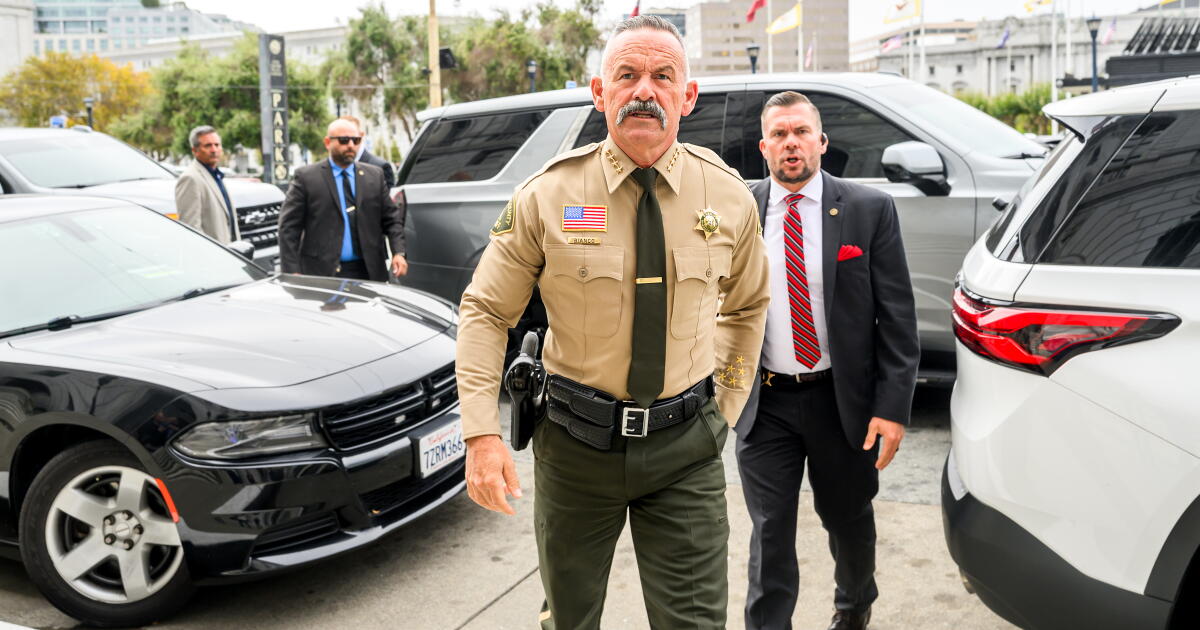
Five Democrats — Becerra, Steyer, San José Mayor Matt Mahan, former Orange County Rep. Katie Porter and former Los Angeles Mayor Antonio Villaraigosa — and two Republicans — Riverside County Sheriff Chad Bianco and former conservative commentator Steve Hilton — clashed about affordability, housing, public safety, climate, education and healthcare. State Supt. of Public Instruction Tony Thurmond, a Democrat, failed to reach the polling threshold to qualify for the debate.

CBS News Bay Area reporter Ryan Yamamoto, CBS News Los Angeles reporter Tom Wait, and San Francisco Examiner Editor-in-Chief Schuyler Hudak Prionas moderated the face-off in front of nearly 200 people at the historic Julia Morgan Ballroom in San Francisco’s Financial District, with sweeping views of the city.

The opulent Beaux-Arts venue contrasted with the tense confrontations among the candidates that underscored Becerra’s swift rise among Democrats in the field after Swalwell dropped out of the race. Even before the face-off, his Democratic rivals began ramping up their focus on Becerra.

Becerra under attack

The candidate faced a barrage of attacks over a string of unfavorable publicity this week, including a widely circulated exchange with a KTLA reporter in which the Democratic candidate asked, “This is a profile piece, this is not a gotcha piece, right?”

Earlier Thursday, his former campaign manager Dana Williamson, who also spent time as Newsom’s chief of staff, pleaded guilty to federal corruption charges alleging she and Becerra’s former top advisor were among those who illegally siphoned $225,000 from Becerra’s campaign accounts.

Although Becerra has not been accused of wrongdoing, that did not temper criticism from his political rivals during Thursday’s debate. They questioned his judgment and said Becerra should have noticed where his money was going.

Hilton said Becerra should be preparing his own criminal defense, rather than running for governor. Porter warned that damning evidence against Becerra could come out later — which, if he finishes as the top Democrat in the primary election, could undercut his campaign and lead to a Republican being elected California’s next governor.

Becerra defended himself, pointing out that federal prosecutors never accused him of being involved and stated that none of the candidates for governor were implicated in scandal.

Democrats also painted Becerra as a leader who allowed fraud and mismanagement to fester under his watch.

“He wasn’t minding the shop” as state attorney general, Mahan said, pointing to fraudulent unemployment and hospice claims early in the COVID-19 pandemic. “I mean, the Biden administration had to sideline him during COVID. This is not good leadership.”

Matt Mahan, left, is polling in the single digits and made a last-ditch effort to leave an imprint during Thursday's debate.

Matt Mahan, left, is polling in the single digits and made a last-ditch effort to leave an imprint during Thursday’s debate.

(Godofredo A. Vásquez / Godofredo A. Vásquez/pool Ap Via Ap)

Major focus on kitchen table issues, a critical concern among voters

Affordability was a major theme in the debate, which included an introductory video of a single mother struggling to fill her gas tank and buy groceries.

Steyer said he would reduce costs by taking on special interests and bringing about structural change and breaking up monopolies.

“I am the person who will tax the billionaires like me, and the big corporations so we can afford to make the changes” to pay for healthcare and great education, he said.

Mahan said the answer was to “put more money in people’s pockets by bringing down costs,” and that that would not occur under either Steyer or Hilton.

“Tom Steyer’s structural change sounds to me more like socialism. His plans literally would double the size of state government,” Mahan said. “That’s not going to drive affordability. Steve Hilton is touting his Donald Trump endorsements. You’ve got tariffs and wars driving up costs.”

Hilton returned fire: “I love the way Matt talks about how he’s going to lower costs when his city was recently rated the most expensive, the least affordable for housing, in the world.”

Daylight between Republicans about climate change

The Republican candidates avoided attacking each other during the debates, offering compliments instead. But the two split when asked about whether climate change was having a real-world impact.

Bianco said California is destroying itself with its environmental policies.

“Of course we can say that temperatures are increasing,” he said, but he also said he was not “naive” enough to think that humans can affect or control the climate, which has been changing since he was a child, and that California has to stop all the environmental regulations that are “activist related” and destroying the state’s economy.

Tom Steyer spoke Thursday of affordability, a hot-button issue: "I am the person who will tax the billionaires like me."

Tom Steyer spoke Thursday of affordability, a hot-button issue: “I am the person who will tax the billionaires like me.”

(Godofredo A. Vásquez / Pool via Associated Press)

Hilton said he believes in climate change but that California needs to have “common sense” on the issue rather than ideological responses. He said it is “of course” right to want clean water and air but that policies in California are not working — as has been made clear by the recent “mega-fires” in the state.

The Democrats on stage were closely aligned on the need to respond to the climate crisis and ensure that environmental protections are not dismantled by the Trump administration.

Last-ditch efforts by struggling candidates

Candidates in the crowded field who have struggled to break through — centrist Democrats Mahan and Villaraigosa, who have languished in the single digits in the polls — made a last-ditch effort to leave an imprint during Thursday’s gathering.

Mahan went after nearly every candidate on the stage in the opening moments of the debate.

“The change we need is rooted in accountability for results,” Mahan said. “It’s not the change billionaire Tom Steyer’s offering, which is higher taxes and bigger government. It’s not the change Fox News talking head Steve Hilton’s offering — fear, division and more Donald Trump. And let’s be honest, Xavier Becerra is not offering change; he’s the embodiment of the status quo.”

Villaraigosa leaned heavily into his experiences leading Los Angeles and in the state Assembly to argue that he was most qualified to lead the state while castigating his fellow Democrats’ policies.

“This is a state with big challenges, the challenge of affordability, the challenge of healthcare, homelessness, and dirty streets and crime-filled streets,” Villaraigosa said. “The fact is, I’m the only candidate on this stage who, in addition to hitting Donald Trump, which I do, have challenged us, challenged this party, and said, ‘Hold it, a lot of the problems that we face have come from Sacramento policies.’ We need someone with the courage to take on Donald Trump, but also take on our friends when they’re wrong. I’ve had a record of doing that.”

Mehta reported from Los Angeles and Nixon from San Francisco.

Source link

A former Becerra aide pleaded guilty in a fraud case. I still have questions

Dana Williamson, one of the political heavyweights at the center of a financial scandal involving gubernatorial candidate Xavier Becerra, looked shell-shocked Thursday morning in a federal courtroom in downtown Sacramento, as most folks do when bad choices collide with the hard realities of the justice system.

A thousand-yard stare in her eyes, Williamson responded “guilty” three times in a voice that required a microphone to be heard as the judge walked her through a plea deal reached days before with the U.S. Department of Justice. She likely won’t be sentenced until fall (possibly close to the general election) but will — again, just a likely here — at best face home confinement and at worst upward of three years in prison.

It’s a colossal fall for a woman who wasn’t so much a consultant as a political operative to Becerra, Gov. Gavin Newsom, former Gov. Jerry Brown and a slew of companies including Meta and PG&E. She was known at the Capitol as a woman who got things done, sometimes with finesse, sometimes not.

It was her savvy and ability to deliver whatever was needed through her deep connections and knowledge of the complicated structures — official and cultural — that govern the California halls of power that make her predicament all the more confounding. Especially because, far from stealing money for self-enrichment, she actually paid money to be part of this scheme.

That alone, to me, raises questions.

Though Williamson’s guilty plea may seem like an ending to the saga, it shouldn’t be, because there’s still a lot lurking in the dark corners of this deal.

If Becerra makes it past the primary, which seems (I’ll use that word again) likely, voters have a right to know.

Here’s the simple backstory, according to court documents. Becerra’s close aide, Sean McCluskie, took a pay cut to remain with his boss when he moved to Washington to become President Biden’s secretary of Health and Human Services.

Strapped for cash, McCluskie asked Williamson to receive money from Becerra’s dormant campaign account — which Becerra was legally not allowed to manage while holding federal office — and pass it through a bunch of other accounts before giving it to McCluskie’s wife as payment for a nonexistent job.

Williamson’s attorney, McGregor Scott, said Thursday that Williamson received $7,500 each month from the Becerra account and added $2,500 from her own funds before sending it on to ultimately reach McCluskie — for a total of $10,000 a month.

McCluskie was “living on a government salary,” Scott said Thursday after court. “Wife is home with the kids. They didn’t have enough money, and that’s where this all originated. [Williamson] was simply trying to help a friend in a pinch as best she could.”

Scott, a former Bush and Trump United States attorney, managed to get Williamson’s original 23-count indictment knocked down to the Becerra account issue, along with lying to the FBI and filing a false tax return.

McCluskie entered his own guilty plea in the case last November and is scheduled to be sentenced, along with the third lobbyist, in June.

Becerra, who is a slim-margin front-runner for governor, was the victim in this case — or more precisely, his state campaign bank account was, according to court documents.

There has never been any indication that Becerra was investigated as a participant, and he has forcefully denied wrongdoing, calling it a “gut punch” that his advisers allegedly betrayed him.

That, of course, hasn’t stopped the other candidates from using the case against him.

“My opponents have spent millions spreading lies to purposefully mislead voters,” he wrote Thursday on social media. “Today confirms what I have said from day one: I did nothing wrong. Case closed.”

Meanwhile, Scott, the attorney, also said Thursday that Williamson assumed, based on her conversations with McCluskie, that McCluskie had spoken to Becerra about the concept of the money transfer. Text messages in court records show a brief and ambiguous exchange between McCluskie and Williamson that backs that up.

Scott said that Williamson never spoke directly with Becerra about the scheme.

That leaves the distinct possibility that Williamson believed Becerra knew what was happening — but never asked him. Dumb? Maybe. But Williamson isn’t usually dumb.

“The understanding that McCluskie conveyed to my client was it was OK to proceed,” Scott said.

Becerra has repeatedly said he believed the $10,000 a month was a legitimate fee being paid to manage the funds in the dormant account while he could not — though that is an amount above what is usual for such work, as my colleague Dakota Smith has reported.

Becerra has also repeatedly used some variation of the “case closed” line, seemingly hoping to move past this scandal without further answers.

But at the very least, it deserves some kind of mea culpa from Becerra or lessons learned, a more robust conversation than the brush-off it’s been getting. Because either McCluskie is one heck of a con man who rolled both Becerra and Williamson, making both believe what was happening was kosher with entirely different tales, or someone isn’t being entirely honest.

Did Becerra never question why an account with almost no activity was costing so much to manage? Did he never wonder what Williamson was doing to earn all that money? Should he, with his decades of legal and political experience, have seen red flags, even with a trusted adviser? Or is Williamson, facing sentencing, just trying to paint herself in a sympathetic light?

“I’m not trying to paint my client as a victim,” McGregor said. “She’s accepted responsibility today for what she did by pleading guilty. She’s now a felon. So you know, we’re not trying to do anything to dance away from that.”

Williamson may be done dancing, but the music’s still playing, and the fancy footwork of politics continues.

Source link

Becerra’s consultant to plead guilty to skimming campaign funds

A veteran California political consultant has agreed to plead guilty in a scheme to steal campaign funds from Xavier Becerra, now a leading candidate for governor, when he served in the Biden administration, according to filings in her criminal case on Thursday.

Dana Williamson will plead guilty to three counts, including bank fraud and lying to authorities. In exchange, the federal government will dismiss 20 other counts against her related to her tax filings and a federal COVID-era loan she received.

A court hearing is scheduled Thursday morning.

Williamson, a former chief of staff to Gov. Gavin Newsom, was arrested in November and pleaded not guilty. The government secured guilty pleas in December from two advisors who worked with alongside her to skim money from Becerra.

The case against her and a looming plea deal have taken center stage in the California governor’s race as rivals seek to tie the charges to Becerra, who is a Democratic front runner. He hasn’t been charged, and prosecutors paint him as a victim.

Prosecutors say that Williamson, Becerra’s then-chief of staff Sean McCluskie and lobbyist Greg Campbell took part in a scheme to siphon money from Becerra’s dormant campaign account and funnel it to McCluskie.

McCluskie needed the money, according to prosecutors, so he could afford to fly home frequently to see his family in California while working for Becerra, who was Biden’s health secretary, in Washington, D.C.

As part of the scheme, Williamson and another consultant charged Becerra’s account up to $10,000 a month to manage one of his dormant state campaign accounts.

Becerra approved the payments, even though he had never paid such a high amount for a similar job. He told The Times that McCluskie told him to pay the fees.

Becerra’s rivals in the governor’s race are hammering him over his decision, arguing he should have known something wasn’t right. Becerra has said that he didn’t know about the criminal behavior and has called the charges a “gut punch.”

Known as an hard-nosed and aggressive operator, Williamson’s career in politics also included working for former governors Jerry Brown and Gray Davis and mentoring other women.

McGregor Scott, Williamson’s attorney, told reporters last year that federal authorities initially approached Williamson about helping them with a probe into Newsom. She refused, he said, and was subsequently charged.

Details contained in the indictment and other public records suggest that federal authorities were looking into the state’s handling of alleged sexual harassment at Activision Blizzard Inc., a video game company.

Source link

Newsom offers early peek at rosy budget projections

Hours before Gov. Gavin Newsom is expected to present his budget plan on Thursday, his office released new projections of a $16.5-billion state revenue windfall over three years and offered a rosy outlook on California’s fiscal position during his final year in office and the year after.

Newsom’s office provided few details about his plan to reduce spending or other adjustments that he would need to propose in combination with the increase in revenue to eliminate projected deficits from 2026-27 through 2027-28.

The unusual early look at his budget proposal comes as Newsom begins to wind down his time at the state Capitol and considers a run for president in 2028.

Two weeks ago, the Legislative Analyst’s Office issued an analysis of state spending that said California could not, in the long term, afford to pay for existing services and the new programs that Newsom and Democratic lawmakers have enacted since he took office in 2019. State spending has outpaced California’s strong revenue growth by about 10%, creating a perennial budget shortfall, defined as a structural deficit.

California’s spending problem threatens to define Newsom’s fiscal legacy and could provide ripe fodder for his critics. If projections of the unexpected tax windfall, which analysts attribute to stock market interest in artificial intelligence companies, bear out, the upswing could mark a lucky break for Newsom.

The governor has largely resisted adopting new across-the-board tax increases or sharply curtailing his expensive policy proposals in order to align state spending with revenue.

His budget proposal includes a call to increase taxes on corporations by limiting state tax credits to no more than $5 million, or 50% of a company’s tax liability, beginning in the tax year 2027. No estimates were offered to explain how much revenue the new cap would bring in to support the state budget.

The preview of his budget has several new spending proposals, including providing $300 million to help low-income Californians keep $0 monthly premiums on healthcare coverage through the Affordable Care Act in response to cuts by the federal government, as well as $100 million to help wildfire victims afford construction loans to rebuild their homes. Two days before Mother’s Day, Newsom also introduced a plan to provide 400 free diapers for every California newborn at select hospitals beginning this summer.

Newsom is expected to present his budget in more detail late Thursday morning in Sacramento.

Source link

Missouri’s U.S. House map goes to court; 2 other states weigh new maps

President Trump’s push to redraw the nation’s U.S. House districts received mixed results Tuesday as South Carolina senators defied his desires, but Missouri’s top court upheld a new map that could help Republicans win an additional seat in the November midterm elections.

Rather than waning, a national redistricting battle that began 10 months ago has intensified — inflamed by a recent U.S. Supreme Court ruling that weakened the federal Voting Rights Act and provided grounds for states to try to eliminate voting districts with large minority populations.

Republican lawmakers in Louisiana are wrestling with how politically aggressive to be when redrawing House districts after the U.S. Supreme Court invalidated a majority-Black district as an illegal racial gerrymander.

The ripples of the Louisiana ruling already have led to new U.S. House districts in Tennessee and have extended to Alabama, where Republican Gov. Kay Ivey announced an Aug. 11 special primary for four of the state’s seven congressional districts. That came after the U.S. Supreme Court on Monday overturned an order mandating use of a map with two largely Black districts. The state plans to switch to a map passed in 2023 that has only one majority-Black district.

Republicans think they could gain as many as 14 seats from new House maps enacted so far in Texas, Missouri, North Carolina, Ohio, Florida and Tennessee. Democrats, meanwhile, think they could gain six seats from new maps in California and Utah. The Virginia Supreme Court last week struck down a redistricting effort that could have yielded four more winnable seats for Democrats.

Missouri map splits Kansas City district

Missouri was the second Republican state, after Texas, to redraw its congressional districts at Trump’s urging last year. Since then, numerous other states have joined the redistricting battle.

During arguments earlier Tuesday, attorneys for voters challenging Missouri’s new map focused on changes to a Kansas City-based district long represented by Democratic U.S. Rep. Emanuel Cleaver, who previously was the city’s mayor, the first Black person to hold the post.

The new map takes a compact urban district that covered 20 miles and two counties and stretches it 200 miles over 15 counties, distorting it “into a sprawling behemoth that cuts clear across the state to unite territories that share nothing in common,” said Abha Khanna, an attorney who has represented Democrats in voting and redistricting cases across the country.

A lower court ruled in March that the map as a whole satisfied the compactness requirement, even though the Kansas City district is less compact. No Missouri court has ever struck down a congressional map for not being compact, said attorney John Gore, who defended the districts on behalf of the Republican Party.

A second case heard by the high court centered on whether the new map took effect in December, as asserted by Republican Atty. Gen. Catherine Hanaway and Republican Secretary of State Denny Hoskins, or whether it should have been suspended when referendum signatures were submitted.

To suspend the map before validating the signatures would let activists temporarily undercut laws by submitting boxes of fraudulent signatures, Missouri Solicitor Gen. Lou Capozzi argued.

But to not immediately suspend the map “would dilute the referendum right, if not destroy it altogether,” said attorney Jonathan Hawley, arguing for voters who sued.

Republican officials contend the new districts can be suspended only after Hoskins determines the petition meets constitutional requirements and has enough valid signatures. Hoskins has until Aug. 4, the day of Missouri’s primary elections, to make that determination. The Supreme Court upheld the decision of a state judge in March who agreed with Republicans’ position.

Louisiana hearing leads to death threats

Louisiana state Sen. Jay Morris, a Republican who drafted redistricting bills that would eliminate one or both of the state’s majority-Black districts, told lawmakers Monday that he received death threats after Friday’s contentious hearing in which he told members of the public to “shut up.”

Morris acknowledged the outburst but denied the Louisiana Democratic Party’s assertion — blasted across social media and in a news release — that he also used the derogatory term “boy” toward its executive director, Dadrius Lanus, who is Black.

State Sen. Gary Carter, one of three Black Democrats serving alongside six white Republicans on the Senate committee overseeing redistricting, told the Associated Press on Tuesday that he had withdrawn from the committee “to help restore the decorum and focus that this moment demands” after shouting at Republicans during Friday’s hearing. Carter publicly apologized Monday to Morris and his Senate colleagues for having “lost my temper” and for any remarks that were taken as “personal attacks.”

Carter is the nephew of U.S. Rep. Troy Carter, a Democrat who represents New Orleans and is at risk of losing his seat in the redistricting process. Gary Carter is being replaced on the committee with state Sen. Royce Duplessis, a Democrat representing New Orleans.

South Carolina weighs political risks of redistricting

The Republican push for South Carolina to join the national redistricting battle by redrawing its U.S. House map fizzled Tuesday as an initial vote in the state Senate fell short.

Trump had urged South Carolina to redraw its congressional districts ahead of the November elections in an attempt to help Republicans win another seat in the closely divided chamber. The state House had voted in favor of letting lawmakers return after the regular session ends this week to consider redistricting, and had proposed a new map that could eliminate the state’s only Democratic-held seat.

But the Senate had to give permission to take up redistricting, too.

The 29-17 vote failed, with just two votes short of the two-thirds needed. Five Republicans joined all the Democrats in the chamber to reject the proposal.

Trump said Monday on social media that he was closely watching the redistricting vote, urging South Carolina senators to “be bold and courageous” and to delay the House primaries so new districts can be drawn.

Although Republicans have a supermajority in the chamber, some GOP senators weren’t sure the proposed map would guarantee the party could unseat longtime Democratic U.S. Rep. James E. Clyburn. They also said it could push enough Democrats into other districts to backfire, resulting in a 5-2 or even a 4-3 Republican split.

Republican Senate Majority Leader Shane Massey acknowledged the pressure from Trump, but said he doesn’t like being asked to bend to someone’s will instead of doing what’s best for his state.

“I got too much Southern in my blood,” Massey said. “I’ve got too much resistance in my heritage.”

Lieb, Collins, Brook and Chandler write for the Associated Press. Brook reported from Baton Rouge, La.; Chandler from Montgomery, Ala.; Collins from Columbia; and Lieb from Jefferson City, Mo.

Source link

Prep talk: Villa Park pitching duo will be tough in Division 2 playoffs

There are lots of coaches in the Southern Section Division 1 baseball playoffs glad to see that Villa Park is in the Division 2 playoffs because of the Spartans’ strong pitching.

Villa Park, the No. 1 seed in Division 2, has a terrific one-two starting duo in junior Logan Hoppie (10-1, 1.28 ERA) and senior Jack McGuire (6-2, 1.62 ERA).

McGuire is 6 feet 5 and has 82 strikeouts in 60 2/3 innings. He had a 16-strikeout performance this season. Hoppie has a two-hit shutout of Crestview League champion Cypress on his resume.

Villa Park finished the regular season at 19-8-1 under veteran coach Burt Call and in second place in league. If the Spartans can get some hitting help, the pitchers will handle the rest. Villa Park opens the playoffs on Thursday at home against Elsinore.

This is a daily look at the positive happenings in high school sports. To submit any news, please email eric.sondheimer@latimes.com.

Source link

Man who sprayed vinegar at Rep. Ilhan Omar during town hall pleads guilty to assault

A man who sprayed vinegar at Democratic U.S. Rep. Ilhan Omar at a town hall meeting in Minneapolis pleaded guilty to assault Thursday in federal court after reaching a deal with prosecutors.

Anthony Kazmierczak, 55, is awaiting sentencing.

Kazmierczak, dressed in bright orange jail clothing, gave only a fragmentary explanation Thursday of the Jan. 27 assault, which came as the city was already on edge after the fatal shootings of two people by federal agents during a White House crackdown that brought thousands of immigration officers to Minnesota.

After being asked what he remembered of the assault, he told U.S. District Judge Joan N. Ericksen: “It’s fuzzy.”

Kazmierczak, who was in the audience during Omar’s January town hall, leaped up when the representative called for the ouster of then-Homeland Security Secretary Kristi Noem. He sprayed liquid from a syringe as court documents say he shouted that Noem would not resign and that Omar was “splitting Minnesota apart.”

Security officers tackled Kazmierczak, who told them the liquid was vinegar.

“I didn’t want anybody to think she was in danger,” he said Thursday.

Omar, who was not injured, continued with the town hall after the arrest.

Authorities later determined he’d sprayed her with a mixture of water and apple cider vinegar. He was charged with assaulting a U.S. officer.

Court documents say Kazmierczak, a critic of Omar who has made online posts supportive of President Trump, told a close associate several years ago that “somebody should kill” her.

Omar, a refugee from Somalia, has long been a target of Trump’s anti-immigrant rhetoric. After she was elected seven years ago, Trump said she should “go back” to her home country. He has described her as “garbage” and said she should be investigated.

Trump has also accused Omar of staging the attack, telling ABC News, “She probably had herself sprayed, knowing her.”

On Thursday, Kazmierczak told Ericksen that he was being treated for Parkinson’s disease, and that he’d been diagnosed with ADHD, or attention-deficit/hyperactivity disorder, and a form of post-traumatic stress.

After his arrest, his then-attorney said that he did not have access to the medications he needed for Parkinson’s and other serious conditions.

Minnesota court records show that Kazmierczak, who was convicted of felony auto theft in 1989, has been arrested multiple times for driving under the influence and has had numerous traffic citations. There are also indications he has had significant financial problems, including two bankruptcy filings.

In social media posts, Kazmierczak had criticized former President Biden and referred to Democrats as “angry and liars.” Trump wants the U.S. to be “stronger and more prosperous,” he wrote.

Threats against members of Congress have increased in recent years, peaking in 2021 following the Jan. 6 attack on the U.S. Capitol by a mob of Trump supporters before dipping slightly, only to climb again, according to the most recent figures from the U.S. Capitol Police.

Sullivan writes for the Associated Press.

Source link

Louisiana urges Supreme Court to block abortion pills sent by mail

Louisiana’s state attorneys on Thursday urged the Supreme Court to stand aside for now and to uphold an appeals court ruling that would stop the mailing of abortion pills nationwide.

They blamed former President Biden for undermining the state’s strict bans on abortion and the Trump administration for slow-walking a study on the federal regulations that permit sending the pills through the mail.

The justices are likely to act soon on emergency appeals filed by two makers of mifepristone. They argued the pills have been shown to be safe and effective for ending an early pregnancy.

But last week, the conservative 5th Circuit Court of Appeals in New Orleans ruled for Louisiana and revived an earlier regulation that would require women to obtain the pills in person from a doctor.

The three-judge panel also took the unusual step for putting its order into effect immediately. On Monday, Justice Samuel A. Alito, who oversees the 5th Circuit, issued an administrative stay that will keep the case on hold through Monday.

The justices have to decide whether Louisiana had standing to sue over the federal drug regulations, and if so, whether judges have the authority to overrule the Food and Drug Administration.

Two years ago, the Supreme Court by a 9-0 vote dismissed a similar challenge to the abortion pills that came from the 5th Circuit. And Chief Justice John G. Roberts has said in the past that judges should usually defer to the federal agency that is responsible fo regulating drugs.

In response to anti-abortion advocates, Trump’s Health and Human Services Secretary Robert F. Kennedy Jr. agreed to have the FDA review the safety record of mifepristone.

It was approved in 2000 as safe and effective for ending early pregnancies. And in the past decade, the agency had relaxed earlier restrictions, including a requirement that pregnant women visit a doctor’s office to obtain the pills.

But the FDA said last month its review is far from complete.

In October, Louisiana Atty. Gen. Liz Murrill decided to bypass the FDA review and went to federal court seeking a ruling that would prevent the pills being sent by mail.

A federal judge refused to decide on the issue while the FDA was undertaking its review. But the 5th Circuit chose to act now. The Louisiana state attorney put the focus on the Biden administration.

When the Supreme Court was considering the Dobbs case, which overruled Roe vs. Wade and the right to abortion, “the Biden Administration was preparing a plan that predictably would undermine that decision,” she wrote in Thursday’s response.

“Although Louisiana law generally prohibits abortion and the dispensing of mifepristone to pregnant women, out-of-state prescribers—freed from the in-person dispensing requirement — are causing approximately 1,000 illegal abortions in Louisiana each month by mailing FDA-approved mifepristone into the state,” she said.

The Trump administration has yet to tell the court of its views on this case.

Source link

NCAA to expand March Madness fields to 76 teams

The NCAA announced Thursday that it will expand its two March Madness tournaments by eight teams each next season, a long-expected move that will drop more games into the first week of the highly popular and lucrative showcase without substantially changing its overall form.

The new, 76-team brackets will jam eight extra games — for a total of 12 involving 24 teams — into the front half of the first week of the men’s and the women’s tournaments. It will turn what’s now known as the First Four into a bigger affair that will now be called the “March Madness Opening Round.”

The 12 winners will move into the main 64-team bracket that will begin, as usual, on Thursday for the men and Friday for the women.

It is the first expansion of the tournaments in 15 years, when they were bumped to 68 teams each.

The NCAA said it will distribute more than $131 million in new revenue to schools that make the tournament. That money will come via expanded TV advertising opportunities for alcohol, the likes of which were previously restricted. It said the value of the rights agreement will increase $50 million each year on average over the course of the six years.

Most of the eight new slots are expected to go to teams from the power conferences that were already commanding the lion’s share of entries in the bracket. Two years ago, the Southeastern Conference placed a record 14 teams in the men’s bracket. Last season, the Big Ten had nine.

Keith Gill, the chairman of the Division I men’s basketball committee, called the expansion “a nice way to create some access but make sure we have the bracket we all love when we start Thursday at noon.”

The move is a product of the times, which includes massive expansion — the Atlantic Coast Conference, for instance, has grown from nine to 17 teams since 1996 — and the reality that mid-major schools with top-notch players will often see them plucked away by programs with bigger budgets and the ability to pay them through revenue sharing.

Cinderella? There will still be room for those stirring runs in the tournaments, though not a single mid-major advanced past the first weekend of either tournament the last two seasons.

This is hardly a concern of the decision-makers anymore, who will point to TV ratings that traditionally spell out fans’ preference for the likes of Duke and North Carolina over St. Peter’s and San Diego State, especially once the Sweet 16 starts.

What matters more to the biggest schools is that their teams have a chance to compete in what remains the best postseason in college sports and that they aren’t iced out by lower conference champions who earn automatic bids.

“You’ve got some really, really good teams who are going to end up in that 9, 10, 11 [seed] category that I think should be moved into the” 64-team bracket, SEC commissioner Greg Sankey said last year in discussing how he favored expansion.

Also, the money. The new beer and wine money will add to what the NCAA can distribute in “units” that are earned for placing teams in the bracket and then for every round those teams advance. Last year, that amounted to about $350,000 per unit for the men’s tournament. The Big Ten made nearly $70 million from both tournaments, won by conference members Michigan [men] and UCLA [women].

Leaders in the SEC, Big Ten, Big 12 and ACC have all acknowledged that smaller programs help make March Madness what it is, all the while steadily expanding their own power in NCAA decision-making. That brings with it the tacit threat of fracturing the single thing the NCAA does best — the basketball tournament.

This move might forestall that. What it isn’t expected to do is drastically change the TV deal beyond the advertising.

The current deal for the men’s tournament is worth $8.8 billion and runs through 2032. Adding a few extra games between mid-level Power Four teams on Tuesday and Wednesday won’t change that much.

One reason this took as long as it did was the NCAA negotiations with CBS and TNT, which themselves have been in negotiations over their own ownership.

The more drastic option of expanding the tournament to 96 teams or beyond would involve adding an extra week to a tournament that has thrived in part because of the symmetry of a six-round bracket that gets whittled down over three weeks.

That basic shell began in 1985, with only slight tweaks, the latest of which came in 2011 when it was upped to 68.

Source link

Mira Costa to face JSerra in Southern Section girls’ beach volleyball final

It’s time for Mira Costa to try to wipe away the disappointing memory from last season’s Southern Section Division 1 girls’ beach volleyball final, where the Mustangs lost to Redondo Union 3-2.

Mira Costa faces JSerra at 1:30 p.m. Saturday at Long Beach City College in this season’s championship game.

Key returnees for Mira Costa are Lily Vandeweghe, Lily Enfield, Harper Terry and Izzy Elston.

JSerra has succeeded in breaking up the Mira Costa-Redondo Union beach volleyball domination. Those teams had met in the final for the previous three years.

The Mustangs swept San Marcos 5-0 in the semifinals on Thursday. JSerra eliminated No. 2-seeded Redondo Union 3-2.

Venice won the City Section title over Taft on Friday.

This is a daily look at the positive happenings in high school sports. To submit any news, please email eric.sondheimer@latimes.com

Source link

Redistricting battle intensifies in states after Supreme Court ruling on Voting Rights Act

A Supreme Court decision striking down a majority Black congressional district in Louisiana has amplified an already intense national redistricting battle by providing Republican officials in several states new grounds to redraw voting districts.

Louisiana has suspended its May 16 congressional primary to allow time for lawmakers to approve new U.S. House districts. Meanwhile, President Trump is pressuring other states to redistrict — potentially still ahead of the November midterm elections that will determine whether Republicans maintain control of the closely divided House.

Trump urged Texas Republicans last year to redraw U.S. House districts to give the party an advantage. Democrats in California responded by doing the same. Then other states joined the battle. Lawmakers, commissions or courts have adopted new House districts in eight states.

That total could grow following the Supreme Court’s decision that significantly weakened a provision in the federal Voting Rights Act.

Here’s a look at how some states are responding to the Supreme Court ruling:

Louisiana

Current House map: two Democrats, four Republicans

Early in-person voting was to begin Saturday for Louisiana’s primaries. But Republican Gov. Jeff Landry moved quickly Thursday to postpone the congressional primary while allowing elections for other offices to go forward.

A federal lawsuit filed later Thursday, on behalf of a Democratic congressional candidate and voter, asked a court to block Landry’s order and allow the House primary to occur as originally scheduled. Among other things, the lawsuit asserted that tens of thousands of absentee ballots already have been mailed to people and a substantial number have been filled out and returned.

Separately, a three-judge federal court panel that heard the case that was appealed to the Supreme Court also issued an order Thursday suspending Louisiana’s congressional primary.

Republican state House and Senate leaders said they are prepared to pass new U.S. House districts — and set a new primary election date — before their legislative session ends in a month.

Alabama

Current House map: two Democrats, five Republicans

Alabama officials on Thursday filed an emergency motion with the Supreme Court seeking an expedited review of a pending appeal in a redistricting case.

A federal court in 2023 ordered the creation of a new near-majority Black district in Alabama, resulting in the election of a second Black representative to the U.S. House. Alabama is under a court order to use the new map until after the next census in 2030.

An appeal pending before the Supreme Court argues that the map is an illegal racial gerrymander, a claim similar to that made in Louisiana.

The state is seeking to lift an injunction blocking the use of the 2023 map drawn by the Republican-controlled Legislature that did not include the new district.

The state’s primaries are set for May 19. Republican Gov. Kay Ivey said Wednesday that the state is “not in position to have a special session at this time” on redistricting.

Florida

Current House map: eight Democrats, 20 Republicans

Hours after the Supreme Court’s decision, Florida’s Republican-led Legislature approved new U.S. House districts that could help the GOP win up to four additional seats in November.

Republican Gov. Ron DeSantis called a special legislative session without knowing when the Supreme Court would issue its opinion in the Louisiana case. But DeSantis expressed confidence that the court would rule as it did. Among other things, the new map reshapes a southeastern Florida district that DeSantis said was created to help elect a Black representative in an attempt to comply with the federal Voting Rights Act.

A Florida constitutional amendment approved by voters in 2010 prohibits districts from being drawn to deny or diminish the ability of racial or language minorities to elect the representatives of their choice. DeSantis said he considers that amendment a violation of the U.S. Constitution. That question is expected to be decided by the courts.

Tennessee

Current House map: one Democrat, eight Republicans

The Tennessee General Assembly recently ended its annual session. But pressure is growing to bring lawmakers back to revise the state’s congressional districts.

Trump posted on social media Thursday that he had spoken with Republican Gov. Bill Lee, who he said would work hard for a new map that could help Republicans gain an additional seat. Democrats currently hold only one seat, a district centered in Memphis, which is majority Black.

Tennessee House Speaker Cameron Sexton, a Republican, said he is in conversations with the White House and others while reviewing the court’s decision.

The state’s candidate qualifying period ended in March. The primary election is scheduled for Aug. 6.

Mississippi

Current House map: one Democrat, three Republicans

Mississippi held its U.S. House primaries in March. But the Supreme Court’s decision could affect elections for other offices.

Republican Gov. Tate Reeves announced previously that he would call a special legislative session to redraw voting districts for the state Supreme Court that would begin 21 days after the U.S. Supreme Court ruled in the Louisiana case. That would put the special session’s start at around May 20.

A federal judge last year ordered Mississippi to redraw its Supreme Court voting districts after finding that they violated the Voting Rights Act by diluting the power of Black voters. Mississippi lawmakers had been waiting on a decision in the Louisiana case before moving forward, but their legislative session ended in April.

Reeves said in his proclamation that the Supreme Court’s decision would provide guidance to lawmakers on whether “race-conscious redistricting” violates the U.S. Constitution.

Georgia

Current House map: five Democrats, nine Republicans

Early in-person voting began April 27 and continues for the next few weeks ahead of Georgia’s primary elections on May 19.

Republican Gov. Brian Kemp said it’s too late for Georgia officials to try to change congressional districts for this year’s elections, because voting already is underway. But he said the rationale in the Supreme Court’s decision “requires Georgia to adopt new electoral maps before the 2028 election cycle.”

Lieb writes for the Associated Press. AP writers Jeff Amy and Kim Chandler contributed to this report.

Source link

Judge grants protective orders to Taylor Frankie Paul and Dakota Mortensen

In a hearing about competing protective order filings from reality TV star Taylor Frankie Paul and her ex-boyfriend Dakota Mortensen, a Utah judge granted Thursday that both orders go into effect, though he delayed making a decision on a custody arrangement.

The orders, which were issued by third district court commissioner Russell Minas, are in place for three years and require Paul and Mortensen to stay at least 100 feet away from each other. He also warned that they both could be subjected to criminal charges if there’s a violation of the orders.

“I do think it’s important that there be mutual orders,” Minas said. “I am just concerned that if I don’t order both of them to stay away from each other, there’s going to be some additional problems.”

Addressing Paul and Mortensen, Minas said: “I’m hoping that you’re not people who just thrive on the drama and the conflict … I do want to work with both of you to try to restore some sense of normalcy. I just think right now, you two need to stay away from each other and there needs to be orders that will result in consequences if you attempt to try to engage each other because I still think you have this attraction to each other, physical or otherwise.”

“The Secret Lives of Mormon Wives” star, 31, and Mortensen, 33, both appeared in Utah court for the hearing, which was livestreamed, the first time they’ve been seen in the same room together since news broke last month that they were involved in domestic violence investigations involving multiple allegations.

In the weeks leading up to the ruling, the judge had granted Mortensen custody of their son, with up to eight hours per week of supervised visitation for Paul, known as one of the stars of Hulu’s “The Secret Lives of Mormon Wives.” That arrangement will stay in place until the judge offers his recommendation on parent time on or before May 11.

A man in a suit holds his hand in a fist covering his mouth.

Dakota Mortensen in the courtroom on Thursday.

(Bethany Baker / Associated Press)

A review hearing is set for June, once mental health and domestic violence assessments of Paul and Mortensen ordered as part of the safety plan by child protective services have been completed and processed.

Paul’s attorney, Eric M. Swinyard, described the hearing as a “significant step forward.”

“Taylor was incredibly candid with the Court that she is not perfect and owned her faults,” read part of his statement. “She looks forward to continuing to cooperate with the Court to make progress in the custody case.”

The Times also reached out to Mortensen for comment.

Paul and Mortensen had been under investigation by both the Draper City Police Department and West Jordan Police Department regarding a series of allegations each made that the other had acted violently during altercations in February, as well as an incident that took place in 2024. After the February allegations made headlines, a video of Paul in 2023 that led to her arrest was leaked; it showed the reality star throwing bar stools at Mortensen while her daughter was present. (Paul pleaded guilty in abeyance to aggravated assault following that incident and her probation in that case will be up in August.) Amid the investigation, Mortensen and Paul filed competing protective orders against each other.

The Salt Lake County district attorney’s office and the Draper City prosecutor both declined to file charges against Paul in April, citing insufficient evidence to prove allegations beyond a reasonable doubt.

The situation between the embattled exes also resulted in the pausing of filming of “Mormon Wives” Season 5. The show has documented the pair’s tumultuous relationship since it’s launch in 2024. It also led to the shelving of Season 22 of ABC’s “The Bachelorette,” which featured Paul as its heroine.

But Thursday’s ruling on the orders comes a week after reports surfaced that “Mormon Wives” has resumed production on its fifth season, without Paul and Mortensen’s involvement — though, Paul reportedly has the option to return. The fate of the unaired season of “The Bachelorette” remains unclear.

Alexandra Del Rosario contributed reporting.

Source link