









thousands

Hundreds of flights cancelled at short notice in Europe with thousands of Brits hit

BRITS flying to or from a popular holiday destination in Europe will face delays and cancellations today.

Major flight disruptions are expected today on Lufthansa Group flights which includes Lufthansa and short-haul carrier CityLine, as pilots and cabin crew strike.

Lufthansa airplanes parked at Munich airport during a strike.
Lufthansa has cancelled numerous flights to/from Frankfurt and MunichCredit: EPA

While Lufthansa has not provided cancellation numbers, German airport association ADV estimated that more than 460 flights will be cancelled – affecting 70,000 passengers.

Sun Travel found that 14 flights from Frankfurt Airport to the UK today have been cancelled from Frankfurt Airport.

Lufthansa often uses aircraft for these routes that have between 150 and 180 passengers.

If 165 passengers are travelling in each flight, then the total number of people impacted by the cancellations could be more than 2,000.

Read more on travel inspo

ALL IN

I found the best value all inclusive London hotel… just £55pp with free food & booze


TAKING OFF

I’ve visited 50 countries & this much-loathed budget airline is the world’s best

Ten flights from London Heathrow to either Frankfurt or Munich have been cancelled.

One flight to Munich and one flight to Frankfurt have been cancelled from Birmingham Airport.

Two flights to Frankfurt have been cancelled from Manchester Airport.

German pilots’ union VC (Vereinigung Cockpit) called the 24-hour strike on Tuesday, to demand more generous retirement benefits.

A spokesperson for Lufthansa said the announcements were “extremely short-notice” and “disproportionate”, adding that they would hit passengers hard.

The spokesperson continued: “Sustainable solutions can only be found through dialogue; strikes must always remain a last resort.

“We therefore call on the unions to resume talks with us.

“We are ready to do so at any time.”

The spokesperson also said that passengers would be notified if the strike impacted their flight.

The strike action comes just three days after Lufthansa City Airlines officially commenced flight operations from Frankfurt Airport, which is also the Lufthansa Group’s largest hub.

Sun Travel has contacted Lufthansa for comment.

Flight compensation rules

A look at your rights if a flight is delayed or cancelled, when your entitled to compensation and if your travel insurance can cover the costs.

What are my rights if my flight is cancelled or delayed?

Under UK law, airlines have to provide compensation if your flight arrives at its destination more than three hours late.

If you’re flying to or from the UK, your airline must let you choose a refund or an alternative flight.

You will be able to get your money back for the part of your ticket that you haven’t used yet.

So if you booked a return flight and the outbound leg is cancelled, you can get the full cost of the return ticket refunded.

But if travelling is essential, then your airline has to find you an alternative flight. This could even be with another airline.

When am I not entitled to compensation?

The airline doesn’t have to give you a refund if the flight was cancelled due to reasons beyond their control, such as extreme weather.

Disruptions caused by things like extreme weather, airport or air traffic control employee strikes or other ‘extraordinary circumstances’ are not eligible for compensation.

Some airlines may stretch the definition of “extraordinary circumstances” but you can challenge them through the aviation regulator the Civil Aviation Authority (CAA).

Will my insurance cover me if my flight is cancelled?

If you can’t claim compensation directly through the airline, your travel insurance may refund you.

Policies vary so you should check the small print, but a delay of eight to 12 hours will normally mean you qualify for some money from your insurer.

Remember to get written confirmation of your delay from the airport as your insurer will need proof.

If your flight is cancelled entirely, you’re unlikely to be covered by your insurance.

In other aviation news, there are 37 new flights launching from a major UK airport this year including budget routes to Asia and Jet2’s first ever.

Plus, a woman’s plane was hit by birds – blood splattered the windows and it had to do an emergency landing.

Illustration of a close-up of an airport departure board showing multiple flights to various international destinations, all marked as "CANCELLED" in red text.
The strike comes as pilots and cabin crew demand more generous retirement benefitsCredit: Getty

Source link

Thousands gather in Libya for funeral of Saif al-Islam Gaddafi | Muammar Gaddafi News

Authorities investigating killing of Saif al-Islam Gaddafi, once seen as de-facto PM under father’s iron-fisted rule.

Thousands of people have attended the funeral of Saif al-Islam Gaddafi, the late Libyan leader Muammar Gaddafi’s most prominent son, who was shot dead this week.

The burial took place on Friday in the town of Bani Walid, some 175 kilometres (110 miles) south of Tripoli.

Recommended Stories

list of 3 itemsend of list

Nearly 15 years after the elder Gaddafi was toppled and killed in a 2011 NATO-backed uprising, thousands of loyalists turned up to mourn his son, who was once seen as the former leader’s heir apparent.

Saif al-Islam Gaddafi was killed on Tuesday in his home in the northwestern city of Zintan. His office said in a statement that he had been killed during a “direct confrontation” with four unknown gunmen who broke into his home.

The office of Libya’s attorney general said investigators and forensic doctors examined the 53-year-old’s body and determined that he died from gunshot wounds and that the office was working to identify suspects.

“We are here to accompany our beloved one, the son of our leader in whom we placed our hope and our future,” said Waad Ibrahim, a 33-year-old woman from Sirte, nearly 300km (186 miles) away from Bani Walid.

Divided country

Saif al-Islam Gaddafi was once described as the de facto prime minister under his father’s iron-fisted 40-year rule, cultivating an image of moderation and reform despite holding no official position.

Championing himself as a reformer, he led talks on Libya abandoning its weapons of mass destruction and negotiated compensation for the families of those killed in the bombing of Pan Am Flight 103 over Lockerbie, Scotland, in 1988.

But that reputation soon collapsed when he promised “rivers of blood” in response to the 2011 uprising, which led to his arrest that year on a warrant issued by the International Criminal Court for alleged crimes against humanity.

In 2021, he announced he would run for president, but the elections aiming to unify the divided country under a United Nations agreement were indefinitely postponed.

Today, Libya remains split between Prime Minister Abdul Hamid Dbeibah’s UN-backed government based in Tripoli and an eastern administration backed by Khalifa Haftar.

The killing of Gaddafi, seen by many as an alternative to the country’s power duopoly, occurred less than a week after a reported January 28 meeting in France’s Elysee Palace, which brought together Haftar’s son and advisers to Dbeibah.

Source link

Tens of thousands of Californians pay more for health insurance this year after subsidy cuts

For Mikayla Tencer, being self-employed already meant juggling higher taxes, irregular income and the constant pressure of finding her own health insurance. This year, it also meant rethinking how often she could afford to see a doctor.

The 29-year-old content creator in San Francisco paid $168 a month last year for a Blue Shield health plan through Covered California. This year — without enhanced federal subsidies that expired at the end of December — that same plan would have cost $299 a month, with higher copays.

“People assume that because I’m young, I can just pick the cheapest plan and not worry about it,” Tencer said. “But I do need regular care, especially for mental health.”

Tencer is among tens of thousands of middle-class Californians facing steep increases in health insurance costs after Congress allowed enhanced federal subsidies for Affordable Care Act plans to expire Dec. 31.

Those extra subsidies were enacted in 2021 as part of temporary, pandemic-era relief, boosting financial help for people buying coverage on state-run insurance marketplaces such as Covered California. The law also expanded eligibility to people earning more than 400% of the federal poverty level, about $62,600 for a single person and $128,600 for a family of four.

Mikayla Tencer records a TikTok video featuring eyeliners.

Mikayla Tencer records a TikTok video featuring eyeliners. Her blog showcases Bay Area attractions and local businesses.

(Paul Kuroda/For The Times)

With the expiration of the enhanced subsidies, people above that income threshold no longer receive federal assistance, and many who still qualify are seeing sharply higher premiums and out-of-pocket costs. On top of the loss of the extra federal benefits, the average Covered California premium this year rose by 10.3% because of fast-rising medical costs.

To lower her monthly bill, Tencer switched to the cheapest Covered California option, bringing her premium down to about $161 a month. But the savings came with new costs. Primary care and mental health visits now carry $60 copays, up from $35.

When she showed up for a psychiatric appointment to manage her ADHD and generalized anxiety disorder, she said, she learned her doctor was out of network.

“That visit would have been $35 before,” she said. “Now it’s $180 out of pocket.”

Because of the higher costs, Tencer said she has cut therapy from weekly to biweekly sessions.

“The subsidies made it possible for me to be self-employed in the first place,” Tencer said. “Without them, I’m seriously thinking about applying for full-time jobs, even though the market is terrible.”

For another self-employed Californian, the increase was even more dramatic.

Krista, a 42-year-old photographer and videographer in Santa Cruz County, relies on costly monthly intravenous treatments for a rare blood disorder. She asked that her full name not be used but shared her insurance and medical documents with The Times.

Last year, she paid about $285 a month for a Covered California plan. In late December, she received a notice showing her premium would rise to more than $1,200 a month. The rise was due to her loss of federal subsidies, as well as a 23% increase in the premium charged by Blue Shield.

“It terrified me. I thought, how am I ever going to retire?” she asked. “What’s the point?”

Krista ultimately enrolled in a plan costing about $522 a month, still nearly double what she had been paying, with a $5,000 deductible. She said she cannot downgrade to a cheaper plan because her clinic bills her treatment to insurance at roughly $30,000 a month, according to medical statements.

To cut costs and preserve the ability to save for retirement and eventually afford a place of her own, Krista decided to move into an RV on private land. The decision came the same week she received notices showing a rent increase and a steep jump in her health insurance premiums.

Mikayla Tencer, a marketing influencer, with her elder dog, "Lucky" at Alamo Square Park.

Mikayla Tencer, a marketing influencer, with her elder dog, “Lucky” at Alamo Square Park.

(Paul Kuroda/For The Times)

Krista said she had been planning for more than a year to find a long-term living situation that would enable her to live independently, rather than continue paying more for an apartment.

“Nobody asks to be sick,” Krista said. “No one should have their life ruined because they get diagnosed with a disease or break a leg.”

Jessica Altman, executive director of Covered California, said that about 160,000 Californians lost their subsidies when the enhanced federal assistance expired because their incomes were higher than 400% of the federal poverty level.

Although overall enrollment in Covered California this year has held steady, Altman said, she worries that more people will drop coverage as bills with the higher premiums arrive in the mail.

Those fears are already playing out.

Jayme Wernicke, a 34-year-old receptionist and single mother in Chico who earns about $49,000 a year, said she was transferred from Medi-Cal to a Covered California Anthem Blue Cross plan at the end of 2023. Her premium rose from about $30 a month to $60, then jumped to roughly $230 after the subsidies expired.

“For them to raise my health insurance almost 400% is just insane to me,” Wernicke said.

Her employer, a small family-owned business, does not offer health insurance. Her plan does not include dental or vision care and, she said, barely covers medical costs.

“At a certain point, it just feels completely counterintuitive,” she said. “Either way, I’m losing.”

Wernicke dropped her own coverage and plans to pay for care with cash, calculating that the state tax penalty is less than the cost of premiums. Her daughter remains insured.

Two other Californian residents told The Times that they also decided to go without coverage because they could no longer afford it. They declined to provide their full names, citing concerns about financial and professional consequences.

Under California law, residents without coverage face an annual penalty of at least $900 per adult and $450 per child.

One, a 29-year-old self-employed publicist in Los Angeles requires medication for epilepsy. Last year, she paid about $535 a month for a silver plan through Covered California. This year, the same plan would have cost $823.

After earning about $55,000 last year, she calculated that paying for care out of pocket would cost far less. Her epilepsy medication costs about $175 every three months without insurance, and her annual doctor visits total roughly $250.

“All of that combined is still far less than paying hundreds of dollars every month,” she said.

Another, April, a 58-year-old small-business owner in San Francisco, canceled her insurance in December after her quoted premium rose to $1,151 a month for a bronze plan and $1,723 for a silver plan, just for herself. Last year, April said she paid $566 for both her and her daughter. This year, her daughter’s premium alone jumped from $155 to $424.

The bronze plan also carried a $3,500 deductible for lab work and specialist visits, meaning she would have had to pay thousands of dollars out of pocket before coverage kicked in, on top of the higher monthly premium.

“The subsidies were absolutely what allowed me to sustain my business,” April said. “They were helping me sustain my financial world and have affordable care.”

She rushed to complete medical tests before dropping coverage and hopes to go a year uninsured.

“The scariest part is not having catastrophic coverage,” she said. “If something happens, it can be millions of dollars.”

Tencer, the content creator in San Francisco, believes that in order to make the nation healthier, affordable healthcare should be universal.

“Our government should be providing it.” she said. “People can’t go to the doctor for routine checkups, they can’t get things checked out early, and they can’t access the resources they need.”

Source link

Thousands march in Venezuela to demand US free President Maduro, wife | Nicolas Maduro News

Thousands of people marched through Venezuela’s capital, Caracas, demanding the release of President Nicolas Maduro and his wife, Cilia Flores, exactly one month since US forces abducted the couple in a bloody nighttime raid.

“Venezuela needs Nicolas!” the crowd chanted in Tuesday’s demonstration, titled “Gran Marcha” (The Great March).

Recommended Stories

list of 4 itemsend of list

Thousands carried signs in support of the abducted president, and many wore shirts calling for the couple’s return from detention in a US prison.

“The empire kidnapped them. We want them back,” declared one banner carried by marchers.

Nicolas Maduro Guerra, the detained president’s son and a member of Venezuela’s National Assembly, addressed the crowds from a stage, stating that the US military’s abduction of his father on January 3 “will remain marked like a scar on our face, forever”.

“Our homeland’s soil was desecrated by a foreign army”, Maduro Guerra said of the night US forces abducted his father.

The march, called by the government and involving many public sector workers, stretched for several hundred metres, accompanied by trucks blaring music.

A supporter of Venezuela's government holds placards during a rally to demand the release of ousted President Nicolas Maduro and his wife, Cilia Flores, one month after their capture by the U.S. during recent U.S. strikes on the country, in Caracas, Venezuela, February 3, 2026. REUTERS/Maxwell Briceno
A demonstrator holds a placard during a rally to demand the US releases abducted Venezuelan President Nicolas Maduro and his wife, Cilia Flores, in Caracas, Venezuela [Maxwell Briceno/Reuters]

Local media outlet Venezuela News said the march was part of a “global day of action” to demand the couple’s release. Protesters showed their solidarity around the world, demonstrating under banners with slogans like “Bring them back” and “Hands off Venezuela”.

The international event united voices “from diverse ideological trends”, who agreed “that the detention of President Maduro and Cilia Flores represents a flagrant violation of international law and a dangerous precedent for the sovereignty of nations”, the news outlet said.

“We feel confused, sad, angry. There are a lot of emotions,” said Jose Perdomo, a 58-year-old municipal employee, who marched in Caracas.

“Sooner or later, they will have to free our president”, he said, adding that he also backed Venezuela’s interim leader, Delcy Rodriguez.

Rodriguez has been walking a thin line since taking over as acting president, trying to appease Maduro’s supporters in government and accommodating the demands being placed on Caracas by US President Donald Trump.

Trump has said he is willing to work with Rodriguez, as long as Caracas falls in line with his demands, particularly on the US taking control of Venezuela’s vast oil reserves.

Striking a conciliatory tone with Washington, and promising reform and reconciliation at home, Rodriguez has already freed hundreds of political prisoners and opened Venezuela’s nationalised hydrocarbons sector to private investment.

Earlier on Tuesday, hundreds of university students and relatives of political prisoners also marched in the capital, calling for the quick approval of an amnesty law promised by Rodriguez that would free prisoners from the country’s jails.

Legislation on the amnesty has not yet come before parliament.

Source link

Relief for patients leaving Gaza as Rafah opens, but thousands still wait | Israel-Palestine conflict News

Khan Younis, Gaza – The headlines read that Israel has finally reopened the Rafah crossing between Gaza and Egypt, allowing injured Palestinians desperate for medical aid to leave.

However, the reality is that on the first day of the opening, on Monday, Israel only allowed five patients to exit Gaza via the crossing, forcing hundreds, if not thousands, of others to wait.

Recommended Stories

list of 3 itemsend of list

Mohammed Abu Mostafa is one of the lucky five. The 17-year-old travelled on Monday with his mother, Randa, to southern Gaza’s Khan Younis, and then on to Rafah, which has been closed by Israel for two years as it waged its genocidal war on Gaza, killing more than 70,000 Palestinians.

Randa told Al Jazeera that she had received a phone call on Monday morning informing her that Mohammed had been included in the first list of wounded patients scheduled to travel, and that they were instructed to head immediately to the Red Crescent Hospital in Khan Younis.

The reopening of Rafah, Gaza’s only land crossing that does not go through Israel, has been much touted as evidence of the progress of the second phase of the United States-backed Gaza “ceasefire” deal.

But events on Monday revealed a different reality, marked by strict security restrictions, complex procedures, and limited numbers being allowed to cross, falling far short of expectations and the scale of Gaza’s accumulated humanitarian needs.

Each of the five patients being allowed to leave was accompanied by two people as per Israeli orders, bringing the total number of travellers to 15, according to information provided to Gaza’s health authorities.

Mohammad Abu Salmiya, the director of Gaza’s al-Shifa Medical Complex, told Al Jazeera that this was the only group that departed, despite prior plans with the World Health Organization (WHO) – the body overseeing coordination between Egypt and Israel – for the departure of 50 patients daily.

Egyptian official sources have told Al Jazeera that 50 Palestinians were also permitted to return to Gaza via the Rafah crossing, though no information is yet available on whether they have actually reached the Palestinian side.

Ismail al-Thawabta, the director of Gaza’s Government Media Office, highlighted just how low these numbers are compared with the approximately 22,000 people needing to leave Gaza for treatment abroad. Meanwhile, about 80,000 Palestinians who left Gaza during the war want to return, he said.

Eye injury

Mohammed was injured in an Israeli air attack a year and a half ago, near where his family had been displaced in al-Mawasi, Khan Younis, Randa said. He sustained a direct injury to his eye, severely affecting his optic nerve and ability to see.

“My son has been suffering immensely since his injury. Day after day, his condition kept worsening, and there is no treatment available for him in Gaza,” Randa said, while waiting in the hospital courtyard alongside other patients and their relatives.

Despite her joy at finally being able to accompany her son on his journey, Randa feels a sense of anguish at having to leave four of her six children behind, as she was only permitted to take one child as a second companion.

“What matters to me now is that my son regains his sight and can see again with his own eyes. That is my only concern at the moment,” Randa said.

“I also hope to return to Gaza soon after my son recovers, that the blockade will be lifted, and that all patients will be able to travel, just like my son.”

Israeli restrictions

In the Red Crescent Hospital courtyard, dozens of patients on travel waiting lists expressed frustration over the first-day restrictions at Rafah.

Several patients, including those with amputations, gathered at the hospital, hoping to be permitted to travel to Egypt for treatment.

Despite patients and their families arriving early in the morning with high hopes, Israeli authorities refused to permit more than five patients to leave, leading to widespread dissatisfaction with the complex mechanisms accompanying the crossing’s partial reopening.

The multi-stage security procedure of Palestinians moving through the Rafah crossing begins with the preparation of daily lists of candidates for travel, which are then referred to the Israeli side for pre-travel security screening.

No one is allowed to pass through the crossing or enter it without explicit Israeli approval. The European Union Border Assistance Mission deployed to Rafah is limited to monitoring the process and verifying identities.

Arrivals in Gaza, after initial identity verification at the crossing under European supervision, are subject to additional inspection procedures at checkpoints located in areas under Israeli military control.

Raed al-Nims, the Gaza Red Crescent’s head of media, told Al Jazeera that the organisation was still waiting for updates regarding the transfer of more patients for treatment through the crossing.

He added that a group of patients was successfully transferred to Israel on Monday through the Kerem Abu Salem crossing, in coordination with the WHO.

Desperate need

Ibrahim Abu Thuraya was also one of the five patients allowed to leave Gaza on Monday.

Ibrahim was injured in the early months of the war, sustaining wounds that led to the amputation of his left hand and an injury to his left eye, where shrapnel is still embedded.

“Day after day, my eye condition is deteriorating, and I feel severe pain, especially since the shrapnel is lodged behind it and there are no medical capabilities in Gaza to deal with it,” he said from Khan Younis, before he travelled to Rafah. “Doctors told me that I need to travel abroad.”

Ibrahim was informed on Monday morning by the WHO and Gaza’s Ministry of Health that he had been approved for travel. He will be accompanied by his wife, Samar, and their son.

“I have suffered greatly for two full years just to be able to leave for treatment, and there are thousands of wounded like me,” he said. “I hope the crossing will be opened permanently.”

Source link

Amazon cuts thousands of jobs amid AI push | E-Commerce News

Wednesday’s cuts are the second mass layoffs in three months at the e-commerce giant.

Amazon is slashing 16,000 jobs in a second wave of layoffs at the e-commerce giant in three months, as the company restructures and leans on artificial intelligence.

Wednesday’s cuts follow the 14,000 redundancies that the Seattle, Washington–based company made in October. The layoffs are expected to affect employees working in Prime Video, Amazon Web Services, and the company’s human resources department, according to the Reuters news agency, which first reported the cuts.

Recommended Stories

list of 4 itemsend of list

Amazon confirmed to Al Jazeera that all the cuts to the company will affect corporate-level employees.

In a memo to the employees, shared with Al Jazeera, Amazon said workers in the United States impacted by the cuts will have a 90-day window to find a new role in the company.

“Teammates who are unable to find a new role at Amazon or who choose not to look for one, we’ll provide transition support including severance pay, outplacement services, health insurance benefits [as applicable], and more,” Beth Galetti, senior vice president of People Experience and Technology at Amazon, said in the note provided to Al Jazeera.

The announced reductions come amid a broader restructuring effort at the company. Earlier this week, Amazon announced it would close its brick-and-mortar Amazon Go and Amazon Fresh grocery stores, accounting for more than 70 locations across the US.

Some of those physical stores will be converted into Whole Foods Market locations. Amazon acquired the Austin, Texas–based grocery chain in 2017, and it has since grown by 40 percent.

The cuts come alongside increased investment in AI. In June, CEO Andy Jassy touted investment in generative AI and floated the possibility of redundancies.

“We expect that this will reduce our total corporate workforce as we get efficiency gains from using AI extensively across the company,” Jassy said in a blog post at the time.

According to the AFL-CIO CEO PayWatch tracker, Jassy made 43 times more than the median employee at the company.

Amazon’s stock tumbled in midday trading and was down 0.7 percent. Overall, however, the stock is up 7 percent year to date.

Wave of cuts

Amazon is the latest company in a wave of redundancies hitting the tech sector at the start of the year. Earlier this week, Pinterest announced it would cut 780 jobs as the social media company reallocated resources amid increased investment in AI. Last week, Autodesk said it would cut about 1,000 jobs, also tied to AI.


Layoffs.fyi, a website that tracks redundancies in the tech sector, shows that more than 123,000 tech workers lost their jobs in 2025 as companies, including Salesforce and Duolingo, doubled down on AI investments.

But it is not just the tech sector facing redundancies. On Tuesday, UPS also announced job cuts. The shipping giant said it would eliminate 30,000 jobs and close 24 facilities as it reduces deliveries with Amazon.

UPS stock was down more than 1.2 percent in midday trading.

Source link

Tens of thousands flee northwest Pakistan’s Tirah over fears | Gallery News

More than 70,000 people, mostly women and children, have fled from Tirah, a remote region in northwestern Pakistan bordering Afghanistan, as fears grow of an imminent military offensive against the Pakistan Taliban, according to local residents and officials.

Pakistan’s Defence Minister Khawaja Muhammad Asif has contradicted claims made by locals and provincial authorities, insisting no military operation is occurring or planned in the Khyber Pakhtunkhwa province town.

During an Islamabad news conference, he attributed the mass migration to harsh weather conditions rather than military actions, despite residents fleeing for weeks over fears of an impending army operation.

The exodus began after mosque announcements in December last year urged residents to vacate Tirah by January 23 to avoid possible conflict. This follows Pakistan’s August military campaign against Taliban forces in the northwestern Bajaur district, which displaced hundreds of thousands.

Shafi Jan, a provincial government spokesman, blamed federal authorities via social media for the displaced people’s hardships, accusing the Islamabad government of changing its position regarding military operations.

Meanwhile, Khyber Pakhtunkhwa Chief Minister Sohail Afridi, from imprisoned former Prime Minister Imran Khan’s party, has opposed military intervention and pledged to prevent a full-scale operation in Tirah.

Military officials maintain they will continue targeted intelligence operations against Tehrik-e-Taliban Pakistan (TTP). They claim many TTP fighters have found refuge in Afghanistan since the Afghan Taliban’s 2021 return to power, with hundreds crossing into Tirah and using residents as human shields during raids.

Nearly half of population

Local government administrator Talha Rafiq Alam reported that approximately 10,000 families – about 70,000 people – from Tirah’s 150,000 population have registered as displaced. The registration deadline has been extended from January 23 to February 5, with assurances that residents can return once security improves.

Zar Badshah, 35, who fled with his family, said mortar explosions in villages recently killed one woman and injured four children in his community. “Community elders told us to leave. They instructed us to evacuate to safer places,” he said.

At a Bara government school, hundreds waited in registration lines for government assistance, many complaining about slow processing. Narendra Singh, 27, explained that members of the Sikh minority also fled Tirah due to food shortages worsened by heavy snowfall and security concerns.

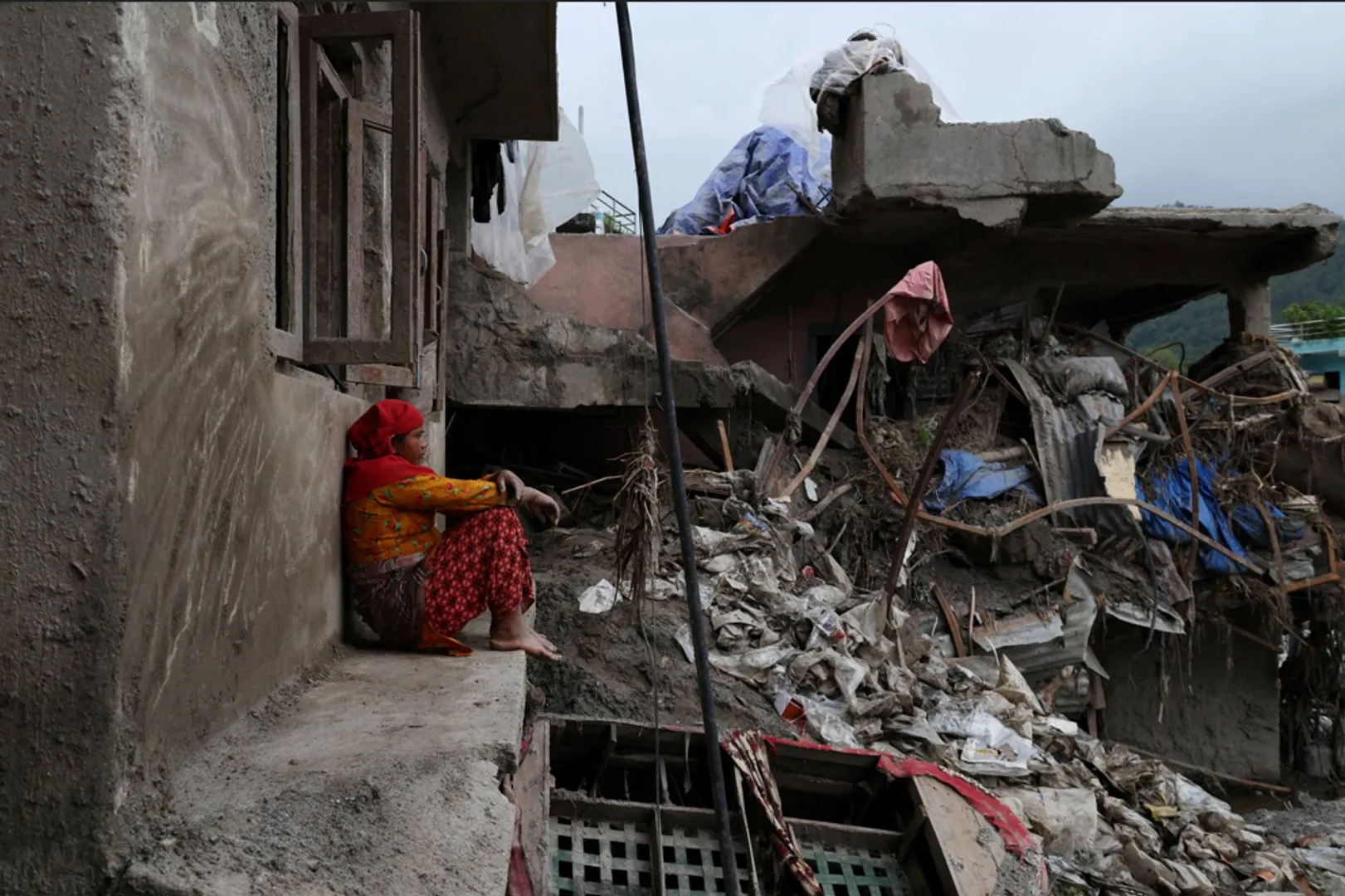
Tirah gained national attention last September after an explosion at an alleged bomb-making facility killed at least 24 people. While authorities claimed most casualties were TTP-linked fighters, local leaders contested this account, stating civilians, including women and children, were among the dead.

Source link