The Strait of Hormuz

Arab News | Hormuz shipping traffic remains below 10-day average at weekend, data shows

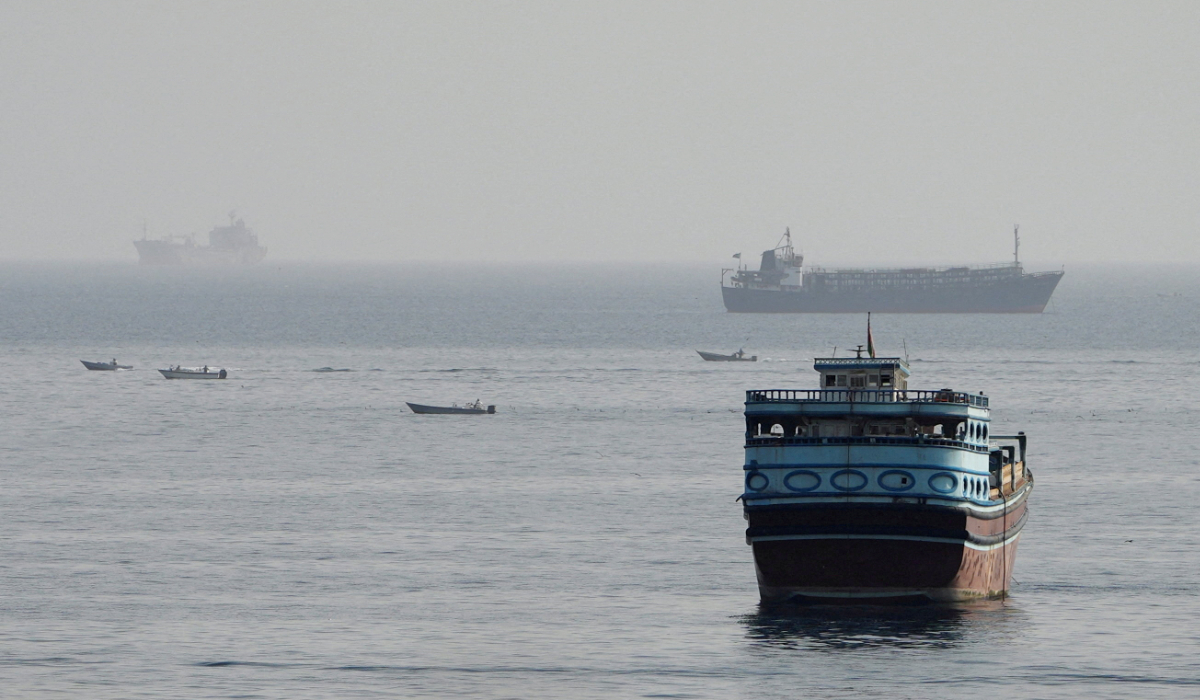
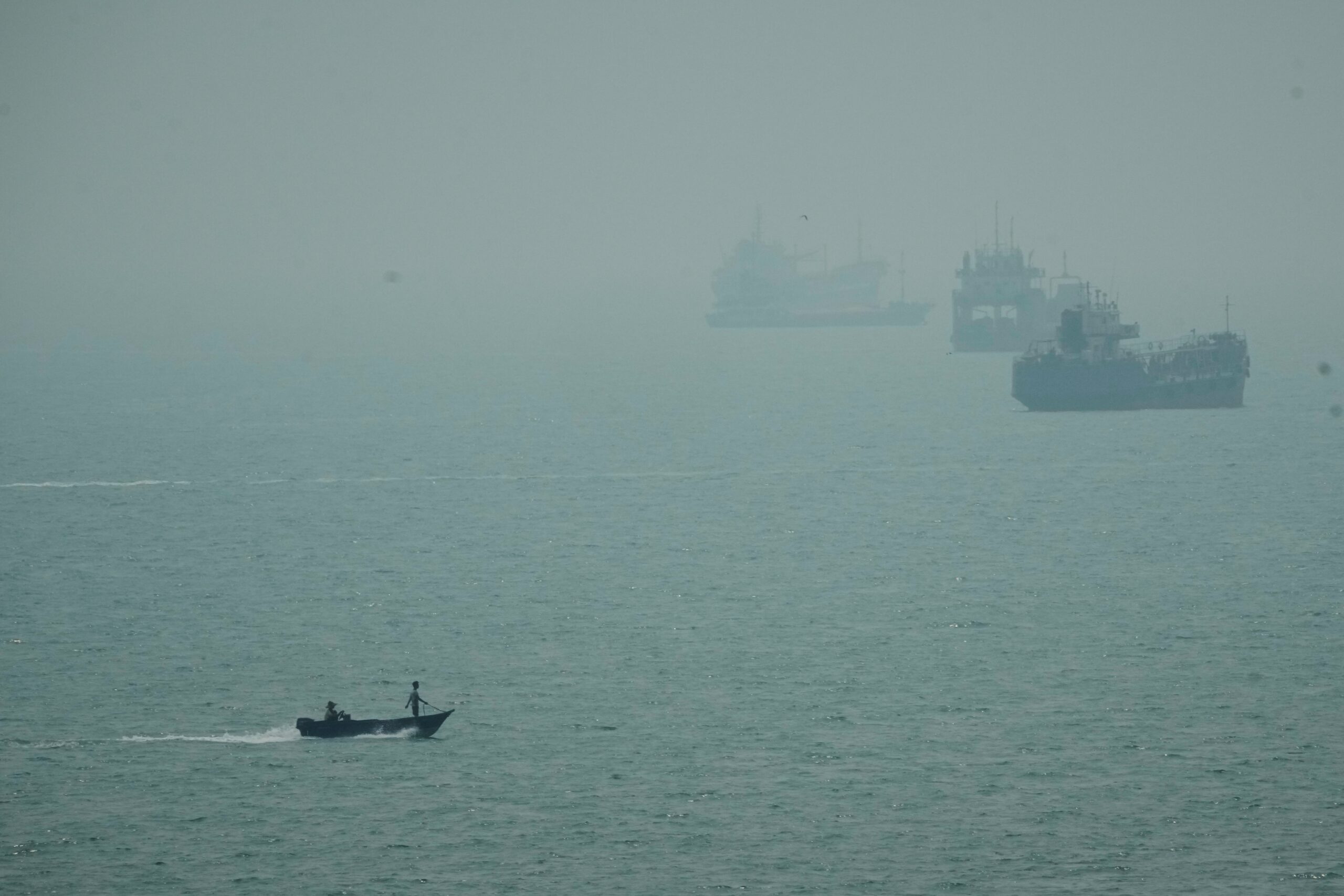
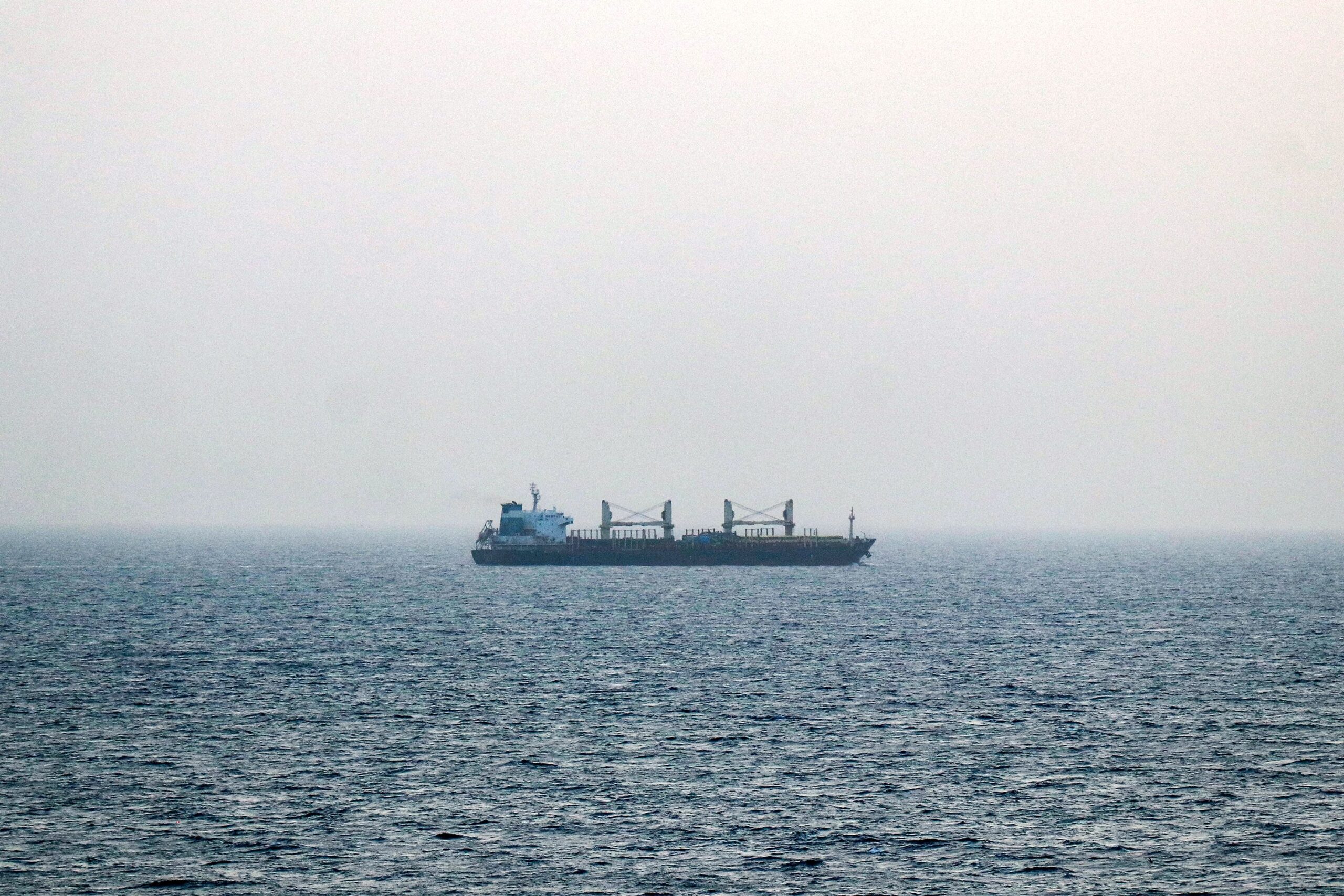
SINGAPORE: Commodity vessel ‌transits through the Strait of Hormuz fell to a single digit per day at the weekend, preliminary shiptracking data showed on Monday, well below a 10-day average of 14.

Over the weekend, four vessels exited the Gulf through the strait, including a Handysize vessel sailing in ballast, a Handy vessel carrying LPG, a Supramax carrying fertilizer and a Suezmax laden with crude or condensate.

Ten vessels entered the Gulf, ‌including a ‌mini-bulker carrying minor bulk commodities, a Handymax ‌carrying grain, a Panamax carrying metals and a Supramax carrying dry bulk cargo, the data showed.

The figures exclude any vessels that might have crossed the strait with their Automatic Identification System transponders turned off to avoid detection.

A vessel was struck by an unknown projectile while transiting the Strait of Hormuz, the United ‌Kingdom Maritime Trade Operations said ‌early on Sunday.

It said the crew’s status, damage assessment ‌and environmental impact were unknown.

Meanwhile, the vital East-West ‌oil pipeline in Saudi Arabia, which has helped relieve the logjam in the Strait of Hormuz, was temporarily shut down by a drone attack coming from Iraq, ‌Saudi officials said.

Before the Iran war started on February 28, the strait typically handled about 125 large, commercial vessels per day, including tankers, gas carriers, bulkers and container vessels, accounting for some 20% of the world’s daily crude oil and liquefied natural gas supply.

A US blockade of Iran-related shipping has halted Iranian crude oil exports since it was reimposed in mid-July. In the Bab el-Mandeb strait, 24 and 27 commodity vessels travelled through respectively on Saturday and Sunday, tracking data showed, compared with an average of around 27 ships over the last 10 days.

Source link

Arab News | Somalis rethink trade routes as Houthis disrupt established shipping channels

MOGADISHU, Somalia: Somalia’s business community is seeking alternative shipping routes due to disruptions and security concerns around the Bab Al-Mandab Strait and the Strait of Hormuz after Iran-backed Houthis captured a key port city and an island, sending thousands of Yemenis fleeing to neighboring Djibouti.

Companies have traditionally imported goods from Asia through Gulf countries, such as the United Arab Emirates, Oman, and Saudi Arabia. Now, some are trying a more direct approach.

“The latest tensions in the Bab Al-Mandab Strait, as well as those in the Strait of Hormuz, have negatively impacted us,” said Mohamed Ali Nur, director of Mogadishu Seaport. “But we have also taken measures to avoid that disruption.”

Nur said his port has worked with exporters to find alternative routes.

“For the first time, we brought a ship carrying sugar directly from Sri Lanka,” Nur said. “This could be a strategy we developed because of these tensions.”

Yemen’s internationally recognized government and Saudi Arabia have been battling the Houthis for 12 years.

The recent escalation has ended a ceasefire that had largely stopped civil war across Yemen since 2022.

Now the number of people from Yemen fleeing the fighting is soaring.

On Sunday, the International Organization for Migration said over 85,000 people have been displaced since the beginning of the month. More than 2,000 people have reached Djibouti, which neighbors Somalia, the agency said.

At Mogadishu’s busy seaport, cargo ships continue to unload food and other commodities. Somalia is particularly dependent on maritime trade for many of the goods its people use every day.

For ordinary Somali consumers, changes in shipping routes can eventually be felt in the markets, where imported food and other goods are sold. Longer or more complicated journeys can mean higher transportation costs and delays in getting products onto store shelves.

Capt Ali Jemdi, who is originally from Syria and ships cargoes of sugar, said uncertainty in the region is already creating concerns for ships operating along the routes.

“There is some trouble over there because of the war,” he told The Associated Press, referring to the Arabian Gulf and surrounding waters. “The Bab al-Mandab may also have some issues for the vessel.”

He said the instability could make maritime transportation and trade more difficult.


Source link

Arab News | Iran’s Guards say attacked two US vessels and eight oil tankers: state media

Iran’s Revolutionary Guards said Wednesday they attacked two US vessels, eight oil tankers and 10 “non-compliant vessels” trying to pass through the Strait of Hormuz, state media reported.

“Two US vessels, eight oil tankers, and 10 non-compliant vessels attempting to pass through the prohibited and unsafe zone of the Strait of Hormuz were targeted,” the Guards said in a statement published by the official IRNA.

Meanwhile, six cargo ships transited the Strait of Hormuz yesterday, Tuesday, compared to nine ships the previous day and an average of about 12 ships over ten days, according to shipping data released today, Wednesday.

These numbers may change, as some ships typically choose not to operate their transponders during the voyage.

Preliminary data from Kpler at 0200 GMT showed that five of the six ships entered the strait while one exited, and the group included a Panamax-sized tanker and a medium-sized tanker.

The US-Israeli war on Iran escalated yesterday, Tuesday, as Houthi militia in Yemen, allied with Tehran, launched attacks on Saudi cities, further involving the kingdom in the conflict.

Simultaneously, US forces targeted several Iranian oil tankers, while Iran struck a US base in Jordan.

Meanwhile, 25 cargo ships transited the Bab El-Mandeb Strait yesterday, Tuesday, with 11 ships entering and 14 exiting the other vital Middle Eastern waterway.

This compares to an average of about 27 ships transiting the Bab El-Mandeb Strait over the past ten days.

Among the ships that transited the Bab El-Mandeb Strait were two Suezmax tankers, eight Aframax tankers, and a Very Large Crude Carrier.


Source link

Arab News | Ship transits through Strait of Hormuz below average in 10 Days

SINGAPORE: Six cargo ships transited the Strait of Hormuz yesterday, Tuesday, compared to nine ships the previous day and an average of about 12 ships over ten days, according to shipping data released today, Wednesday.

These numbers may change, as some ships typically choose not to operate their transponders during the voyage.

Preliminary data from Kpler at 0200 GMT showed that five of the six ships entered the strait while one exited, and the group included a Panamax-sized tanker and a medium-sized tanker.

The US-Israeli war on Iran escalated yesterday, Tuesday, as Houthi militia in Yemen, allied with Tehran, launched attacks on Saudi cities, further involving the kingdom in the conflict.

Simultaneously, US forces targeted several Iranian oil tankers, while Iran struck a US base in Jordan.

Meanwhile, 25 cargo ships transited the Bab El-Mandeb Strait yesterday, Tuesday, with 11 ships entering and 14 exiting the other vital Middle Eastern waterway.

This compares to an average of about 27 ships transiting the Bab El-Mandeb Strait over the past ten days.

Among the ships that transited the Bab El-Mandeb Strait were two Suezmax tankers, eight Aframax tankers, and a Very Large Crude Carrier.


Source link

Arab News | Iran military vows ‘more severe’ reprisals if US attacks continue

TEHRAN: Iran said Sunday that its forces attacked a US naval drone trying to enter the Strait of Hormuz, hours after targeting ships in retaliation for American strikes on three oil tankers.

The latest round of clashes, which began with US raids last week, comes amid a deadlock in their six-month war.

Iran has maintained its stranglehold on the strategic Strait of Hormuz while Washington continues a counter-blockade of Iranian ports.

Washington is also seeking to choke Iran’s economy, rolling out sanctions on entities with financial links to the Islamic republic in a bid to force it into submission.

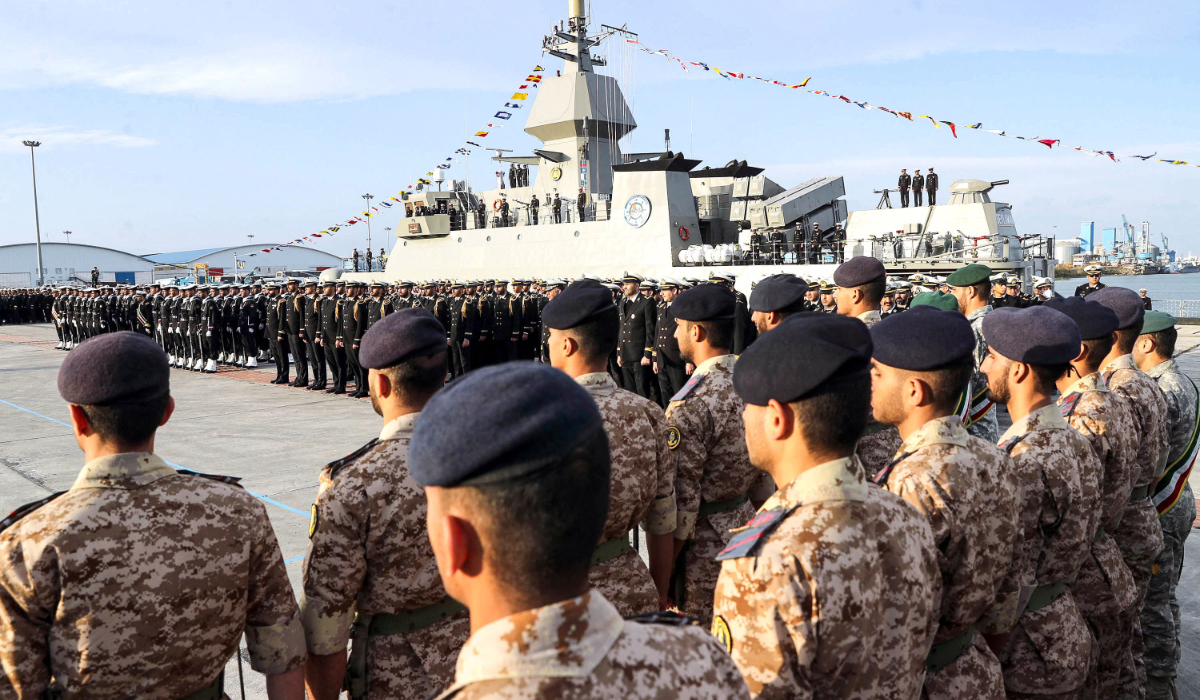
The Islamic Revolutionary Guard Corps, the ideological arm of Iran’s military, said Sunday it “attacked an American military unmanned surface vessel” attempting to enter the strait, according to a statement carried by state television.

Hours earlier, the IRGC said its naval forces “targeted three oil tankers on the unauthorised route of the Strait of Hormuz and three vessels affiliated with the child-killing America in other areas”.

Iran’s top negotiator Mohammad Bagher Ghalibaf threatened on Sunday to launch swifter and more forceful responses to US attacks.

“The Americans must have understood that the era of proportionate responses has come to an end,” said Ghalibaf in a speech carried by state media, adding that “any aggression against Iran’s interests and security will receive a faster, more intense and more painful response”.

It warned ships not to attempt to transit by unapproved routes.

On Saturday, US Central Command (CENTCOM), which oversees American military operations in the region, said it struck tankers linked to the Iranian Guards, accusing the most powerful arm of the Iranian military of unsuccessfully firing at American warships.

“Following Iran’s failed attacks, CENTCOM permanently disabled the IRGC crude oil carriers M/T Downy off the coast of Kharg Island and M/T Stark 1 near Jask,” it said.

“American forces also completely destroyed the unladen crude oil carrier M/T Kylo… in the Gulf of Oman, striking the vessel in multiple critical locations to render it inoperable after the crew was directed to abandon ship.”

Video posted by CENTCOM showed large fireballs and billowing flames after projectiles slammed into the ships.

The three vessels were “part of a multibillion-dollar shadow network that funds the IRGC and its regional proxies”, it said.

‘Higher economic cost’

The Guards meanwhile claimed the two American warships they targeted had been “forced to retreat” after “suffering damage”, but CENTCOM said those ships successfully evaded Iranian attacks.

CENTCOM commander Admiral Brad Cooper said after the operation: “If you shoot at two of our ships, we will impose an even higher economic cost — taking out three of yours.”

The Iranian foreign ministry hit out at Washington over the strikes on oil tankers, calling them “illegal and aggressive actions”.

A correspondent for Iranian state TV in Jask in the southern province of Hormozgan said one of the tankers was empty and the second was carrying oil. The crews were transported to shore on lifeboats, they said.

Another state TV correspondent on Kharg Island said the attack there caused no casualties.

Iran’s Khatam-al Anbiya central military command warned that if the US continued its attacks, then Tehran’s retaliation against US warships would be “more severe than before, and there is a possibility of their expansion”.

The administration of US President Donald Trump has tried to downplay the significance of the six-month conflict, which has proven increasingly unpopular at home as midterm elections near.

US Vice President JD Vance went so far as to say that he “wouldn’t call it a war”.

Trump reiterated that view on Friday, calling the war “small potatoes” for Washington.

Iran’s Security Chief Mohsen Rezaei warned this week that the Islamic republic had adopted a “new strategy” against Washington that “will shatter your foundations”.

The US has been trying to step up pressure on Tehran in a bid to wrestle control of the Hormuz strait, through which one-fifth of world oil supplies previously flowed.

A fragile ceasefire between the two sides collapsed in July after attacks on commercial ships in the strategic waterway.

Trump has in recent weeks repeatedly threatened to claim sovereignty over the strait, even posting a map showing it as “new US territory”.

Vance has insisted the US will not reopen talks with Iran until it ends attacks on commercial shipping in Hormuz.

Source link