A man from the UK has vanished 5,000 miles away from home after missing his flight back. Bailey Singh did not board his scheduled flight back home.
The 20-year-old’s phone is now reportedly off, and he has not been in contact with family for days. He was reported missing on October 5 and was last seen at Suvarnabhumi Airport, Bangkok, Thailand.
Bailey’s family is now pleading for anyone to come forward with information on his whereabouts. His sister Chardonnay said he may have travelled to the Pattaya area – a hotspot for Brits abroad and expats.
He is described as around 5ft 11 with dark brown eyes, curly brown hair and a goatee beard. Bailey is known to have two distinctive tattoos, including a jigsaw on his left inner arm and one behind his left ear which says ‘eleven’.
It is believed that at the time he vanished, he was wearing a blue tracksuit, a blue top and grey trainers. The family says they have contacted the UK Embassy in Thailand.
They state that they were unable to confirm whether he had been arrested or reported injured. Pleas have been shared across social media and amongst local Thai travel groups.
Mother Lisa Ely said: “He’s in Thailand and not heard from him in two days and his phone is off and his location, which is not like him.”
Chardonnay Ely said: “He has been missing for over a week in Bangkok and have suspicions he’s now in Pattaya. If anyone has any information on him please contact me.
“Me and my family are very worried and concerned for him and just want to make sure he is safe.”
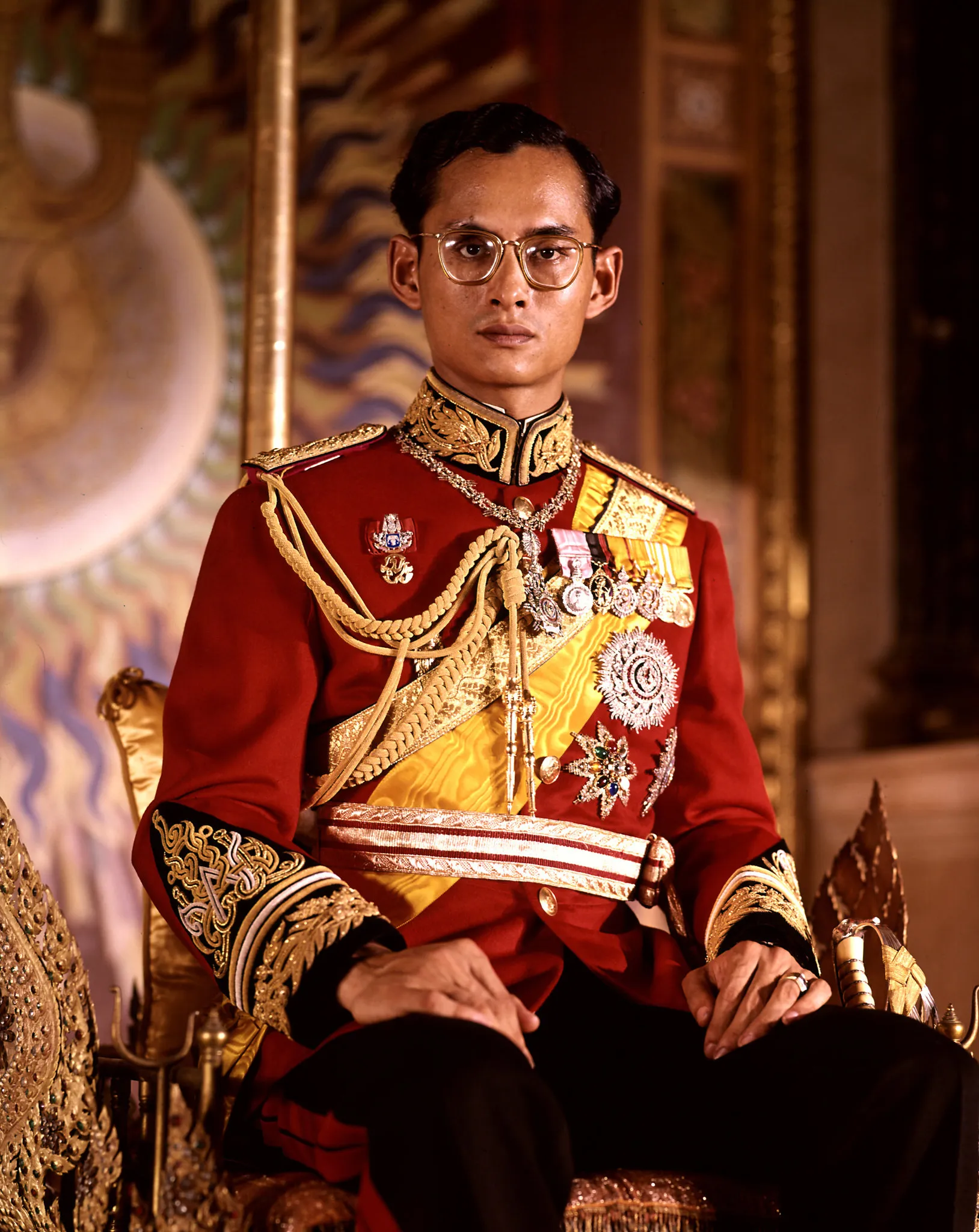
Known as Rama IX, he reigned Thailand since June 9th 1946 until his death on October 13th 2016, making him the longest-reigning monarch ever in Thailand’s history.
Despite being a constitutional monarch, and not legally being allowed a role in politics, Bhumibol made several decisive interventions in the Thai political sphere and has been credited with helping facilitate Thailand’s transition to democracy in the 1990s.
Foreign Office issues updated Thailand travel guidance for Brits on Monday
11:12, 12 Oct 2026Updated 14:38, 12 Oct 2026
Thailand is hugely popular among UK holidaymakers(Image: ANDREY DENISYUK via Getty Images)
The UK’s Foreign, Commonwealth and Development Office (FCDO) has revised its travel guidance for those planning a trip to Thailand.
The South East Asian destination is growing increasingly popular with British holidaymakers, with over a million making the journey every year. On top of this, tens of thousands of UK nationals live, work, or retire in Thailand – in locations such as Bangkok, Chiang Mai, Hua Hin, and Phuket. To enter Thailand as a tourist, your passport must have an ‘expiry date’ at least 6 months after the date you arrive and have at least one blank page.
The FCDO warns: “You will be denied entry if you do not have a valid travel document or try to use a passport that has been reported lost or stolen.” As of September 15, 2026, if you enter Thailand on a British passport, under the visa exemption scheme, you can stay for up to 30 days for tourism only.
This does not extend to business travel, including attending conferences, meetings or other business activities. Those travelling for business purposes should secure the appropriate visa prior to departure.
New Foreign Office Thailand alert issued
New FCDO Thailand advice, issued on Monday, reads: “Visa-exempt entry for tourism through land-border immigration checkpoints is normally limited to two entries per calendar year. This restriction does not generally apply to arrivals by air.
“If you frequently enter Thailand as a tourist, immigration officials may ask for evidence of your onward travel, accommodation, or sufficient funds, and may refuse entry if they believe you are not a genuine visitor.”
All overseas nationals travelling to Thailand, whether by air, land or sea, are required to complete a digital arrival card online prior to their arrival. Travellers are able to register for an arrival card up to three days before they land.
Should you overstay your visa, you face a penalty of 500 Thai baht (around £11) per day, rising to a maximum of 20,000 baht (around £449). You also risk being detained, deported at your own cost, and banned from returning to Thailand for as long as 10 years.
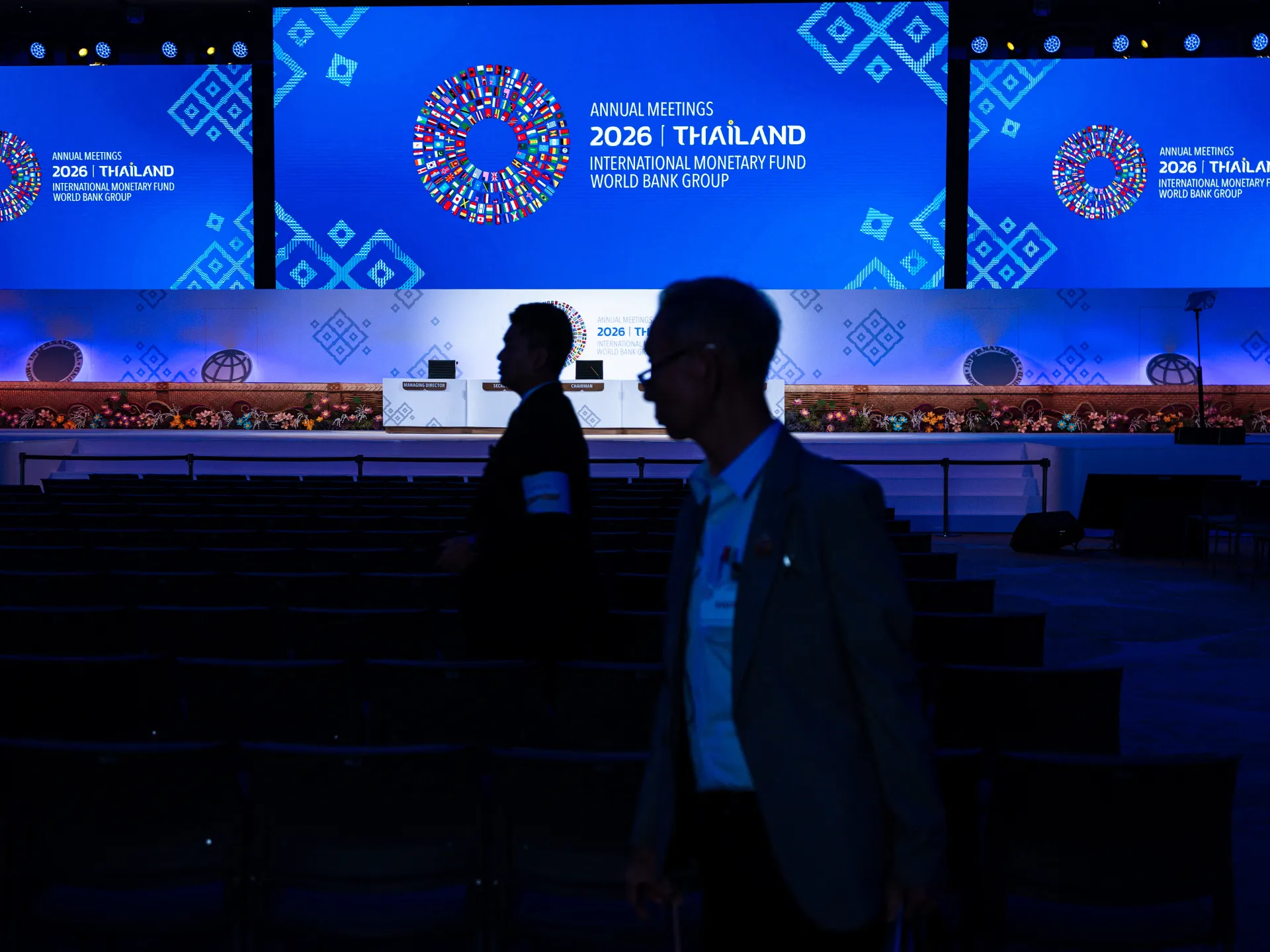
Finance officials from around the world will gather in Bangkok this week under the shadow of a widening war in the Middle East, the biggest-ever energy supply shock and rising interest rates that together pose daunting risks to already-sluggish global economic growth.
The US-Israel war on Iran, now in its eighth month, and its inflationary impact are slated to dominate the agenda and sideline conversations during the annual meetings of the International Monetary Fund (IMF) and World Bank, held outside Washington for the first time in three years.
Recommended Stories
list of 4 itemsend of list
IMF Managing Director Kristalina Georgieva told Reuters News Agency that 18,000 people were registered to attend the meetings, 4,000 more than the last off-site meetings held in Morocco in October 2023.
Notably absent will be United States Treasury Secretary Scott Bessent, who dispatched two senior officials in his stead while he handles some “domestic engagements”, a US official said. Federal Reserve Board Chairman Kevin Warsh will attend and is slated to participate in a public event with Georgieva on October 16.
Several other finance ministers were also staying home due to domestic budget and election duties, but most central bankers would attend, Georgieva said.
Bessent’s decision to skip the high-profile gathering and a meeting of the Group of 20 (G20) major economies, which the US leads this year, may frustrate counterparts amid rising tensions over the Iran war, Ukraine’s battle against Russia’s invasion, and the US move to impose sanctions on the International Criminal Court.
Fossil energy reserve release
The Group of Seven (G7) countries have agreed to release 100 million barrels of diesel and crude oil from emergency reserves under pressure from US President Donald Trump, who is keen to see lower petrol prices before November elections that could see his Republican Party lose control of Congress.
Trump on Friday announced a deal with Russia that would provide even more diesel to global markets and a temporary waiver of US sanctions designed to deprive Moscow of revenues for its war on Ukraine. The move drew swift criticism from Ukrainian President Volodymyr Zelenskyy.
More than one billion barrels of oil have been released, mainly from onshore commercial inventories, since the start of the war on February 28. But industry executives say the amount of oil in storage that is accessible to the global market is running low, making the market more fragile and fuelling pressure on prices.
The IMF has signalled little change in its forecast for three percent global growth in 2026, and may edge its forecast for next year slightly higher. But some countries will see downgrades, including Ukraine, now in its fifth year of war against Russia’s invasion, and Gulf countries hit by Iranian strikes and sharply reduced energy exports.
IMF research released on Tuesday showed that sharp spikes in food and energy prices are an increasingly common source of crises that drive inflation expectations higher for longer, worsen poverty and threaten economic stability.
One headache for policymakers is the growing public debt burden that is sapping growth and adding inflationary pressures. The IMF says public debt is at the highest level since World War II and will exceed 100 percent of gross domestic product (GDP) before 2030.
Advanced economies, led by the US, have the highest debt-to-GDP ratios, but emerging markets and low-income countries are particularly vulnerable, given a perfect storm of challenges: capital outflows in search of higher US rates, weather extremes triggered by the El Nino climate phenomenon, and a lack of investment in artificial intelligence (AI), which has mitigated negative supply shocks in the US and other rich countries.
Developing countries are particularly vulnerable given high public debt levels that will have to be renegotiated at higher interest rates. Together, they face $400bn in debt payments to external creditors in 2026, and interest payments already exceed 10 percent of revenue on average.
Many lower-income countries are worried about new IMF recommendations for loan programmes that call for fewer but deeper reforms as a condition for approving lending, a change that many fear will lead to painful austerity measures.
SEARCHING for sun in November but don’t know where to find it? Here are five great options with temperatures well over 20C.
Whether you’re after short-haul breaks or lengthy holidays, check out these destinations where you’ll certainly get a healthy dose of vitamin D.
Thailand is a popular spot for autumn and winter sun thanks to its high temperaturesCredit: AlamyMorocco has bustling cities and some are on the coast if you fancy a beach breakCredit: Alamy Stock Photo
Morocco
For a bit of autumn sun that isn’t far or breaks the bank, Morocco is a solid option.
Brits can get there in less than three hours and the country basks in highs of 24C in November, while the UK average highs of between 10-12C.
Sign up for the Travel newsletter
Thank you!
Marrakesh is one of the most popular cities with Brits with vibrant markets, souks, palaces and pretty hotels.
Essaouira on the other hand sits on the Atlantic Coast and has sandy beaches if you fancy heading for a beach break.
Meanwhile, the city’s capital of Rabat is another coastal spot that’s considered an ‘understated seaside gem’ and has enormous royal palaces.
In November, return flights to Essaouira and Rabat can be as little as £28.
Holidays are affordable too for a quick break – two adults can check into Las Palmeras in Marrakesh for four-nights from £279pp or £34.87pppn.
This includes return flights to London Gatwick, a full board stay at the four-star hotel which has an outdoor swimmingpool, on-site restaurant and wellness area with treatments available.
Thailand
Bangkok has just been named the ‘world’s best city’Credit: Alamy
Thailand is a popular autumn and winter destination for Brits seeking some sun and it has highs of 34C in November.
There’s something for everyone from its bustling cities to beautiful coastlines and incredible islands.
Thailand’s capital, Bangkok was recently named the best city in the world by Conde Nast Traveller being praised for its “buzzy markets, glittering palaces and captivating religious sites unite – street food sellers dishing up tasty food between them all, of course.”
If getting out of your city and lazing about on a beautiful island is more your bag, it’s very easy to get from the mainland across to the likes of Phuket, and Koh Samui.
The likes of Eva Air and Thai Airways offer direct flights from London Heathrow to Bangkok in November from around £831.
If you opt for a stopover – these can be much cheaper with some dropping to almost half the price.
Air Arabia offers a roundtrip from London Gatwick to Bangkok International Airport from £484 with a two hour layover at Sharjah International Airport.
With Expedia, 10-day package holidays to Bangkok are around £800 – including direct return flights and accommodation, breaks to the neighbouring island of Koh Samui package breaks here with Expedia around £760.
Dubai, UAE
Dubai has luxury hotels, street food markets and enormous waterparksCredit: Alamy
Thanks to its hot desert climate and very little rainfall, Dubai is ideal for autumn sunshine.
From its luxury five-star hotels to beaches, incredible restaurants and shopping scene, Dubai is known for glitz and glamour.
However you can visit on a budget too as Deputy Travel Editor Kara Godfrey and Assistant Travel Editor Sophie Swietochowski when they visited the city.
They lots of tasty treats at the Grand Souk, like breads stuffed with cheese or Nutella for £1.22, or Iranian falooda — a sorbet-like dessert made of thin rice noodles and syrup — for £1.
When its time to cool off, head to one of Dubai’s many waterparks like Aquaventure World with day passes from £50 – but it is so huge, you’ll have to spent the day there.
With Thomas Cook, a 10-night stay for two starts from £720pp including return flights from London Gatwick departing on November 22.
The hotel has a swimming pool, beach volleyball set up, and bar a grill along with free shuttle buses to the theme parks – so there’s no need to hire a car.
Or if you’d rather a different holiday vibe, head to Boca Raton which Head of Sun Travel Lisa Minot called ‘Florida’s secret paradise‘.
THE top cities in the WORLD have been announced from far-flung Asia to the ‘city of love’ that has cheap UK flights.
Readers of Conde Nast Traveller voted for their “favourite urban sprawls across the planet” to decide which ones are the best and it might be time to book that bucket list trip to Thailand.
The best city in the world is Bangkok – you can pick up street food for as little as £1Credit: AlamyThe second best city in the world is Paris – which has £13 flights from the UKCredit: Alamy
Taking the number one spot on the list is Bangkok which was praised for its “buzzy markets, glittering palaces and captivating religious sites unite – street food sellers dishing up tasty food between them all, of course.”
When Assistant Travel Editor Sophie Swietochowski visited Bangkok she picked up tasty dishes for the equivalent of £1 – you can also pick up beer for as little as £1.14 according to Wise.
Sign up for the Travel newsletter
Thank you!
She said: “Within an hour of being in Thai capital Bangkok’s Chinatown we have sampled street food including noodle soup splashed with vinegar, fish sauce and sugar; crunchy corn parcels.
“A bowl of salty critters, displayed next to a row of scorpions on sticks; purple mashed potatoes shaped into doughy, salty balls; and traditional sweet luk chup, made with mung beans.”
She also visited Lebua Hotel’s Sky Bar, which was the filming location from 2011 buddy comedyfilm The Hangover 2 and it’s home to the “world’s highest open-air whisky bar”, Alfresco 64.
The city coming second on the list is much closer for Brits to visit, it’s Paris.
The French capital is said to have “topped bucket lists of international travellers for centuries thanks to an unrivalled food culture, grand monuments, world-class museums and subtly seductive atmosphere.”
From the UK it’s easy to reach the French capital either on the Eurostar or plane with one-way flights as little as £13.
There’s so much to do in Paris from sight-seeing landmarks like the Eiffel Tower or wandering around the Louvre.
When Travel Reporter Alice Penwill ventured to Paris for an extreme daytrip on the Eurostar she had some suggestions on how to spend time there.
Valletta in Malta came in fifth – and it gets 300 days of sunshine each yearCredit: Alamy
She said: “To start the morning off right, it would be a crime not to pop into one of Paris’ many bakeries, or boulangeries, for a croissant and a coffee.
“Take one to go and stroll along the Seine before heading into the Musée d’Orsay where you can see work by artists like Monet, Renoir and Van Gogh.
“Afterwards, head back along the Seine to see the beautiful Notre Dame which has now reopened to visitors. And if you’re a fan of books, pop across to the famous bookshop, Shakespeare And Company.”
Turkey’s capital, Istanbul was named the third best city in the world which was called “chaotic in all the best ways.”
The publication said: “Centuries of history sit alongside a vibrant contemporary culture, with new waves of artisans luring travellers into chic boutiques after tours of places like Topkapı Palace, the Blue Mosque and the sweet-scented Grand Bazaar.”
She described it as a “trendy pocket of an otherwise busy, but beautiful city.”
If you wander into Karaköy’s backstreets and climb towards neighbouring Galata, you’ll find that cobbled lanes and historic buildings lead to the landmark Galata Tower.
Istanbul came in third spot and is divided by the Bosphorus straitCredit: AlamySouth Africa’s Cape Town is a popular winter sun spots for Brits with no jet lagCredit: Getty
Head up for spectacular views across the Golden Horn, Bosphorus and historic peninsula – it’s especially beautiful in the late afternoon.
Valletta in Malta comes in at number five and it’s a popular spot for Brits thanks to its 300 days of annual sunshine.
Even in November it can see highs of 18C – and it’s reachable from the UK in just over three hours and flights are as little as £15.
It was voted last year’s top city thanks to its mix of ancient but also modern feel and architecture.
Other popular winter sun destinations that made the list include Cape Town in South Africa which in January and February has highs of 25C – while the UK shivers in highs of 8C.
There’s also no jet lag because Cape Town is either one or two hours in front of the UK – depending on the time of year.
When Head of Travel (Digital) Caroline McGuire visited, she saw Table Mountain, lots of wildlife, vineyards and was impressed with an area called Kalk Bay.
She said: “At the town’s upmarket Harbour House restaurant, we dined on seafood and good wine for the price of a Pizza Hut meal in the UK — all while watching seals swimming in the harbour.
“Our accommodation was the charming Chartfield Guesthouse, staying in a huge two-bedroom apartment. It was bigger than my house back home, and cost only £94 a night.
“Kalk Bay is a prime spot for visiting the endangered African penguins of neighbouring Simonstown – there must have been around 100 on the town’s shoreline.”
These are the top 20 cities according to Conde Nast Traveller…
Teenage athletes have headlined some of the biggest Asian Games triumphs, leading their countries to historic gold medals, breaking records and cementing their legacy as formidable forces in the field.
Far from being intimidated by competitors double or triple their age, these schoolchildren remained cool and unfazed as they cruised to gold at their Asian Games debut.
Recommended Stories
list of 4 itemsend of list
Many are already familiar with the pressure and expectations of the world stage and have dominated their sport all season.
Al Jazeera Sport looks at some of the stars who left their mark in Japan:
Yu Zidi, 13
China: Swimming
At just 13, Yu was named female Most Valuable Player (MVP), as she bagged three gold medals and broke as many Asian Games records in a fairytale debut.
The schoolgirl stormed to victory in the women’s 200m butterfly, 200m and 400m individual medley (IM) and had a comfortable lead over her competitors.
Her time of two minutes and 6.10 seconds (2:06.10) in the 200m IM stands as a world junior record and second-fastest time ever.
“I don’t think I am what people describe as a prodigy,” she said after being crowned MVP. “I will continue to train hard, push myself and work alongside young athletes across Asia to inspire more young people to love and take part in sports, especially swimming.”
Yu Zidi celebrates after winning the 400m Individual Medley [Atsushi Tomura/Getty Images]
Zhang Zhanshuo, 19
China: Swimming
Zhang held up seven fingers after his 400m freestyle win to count out his gold medals at the Games – the most at this edition, and more than what 27 of the 45 participating nations had in their medal tally at the conclusion of the event.
He set Games records in the 400m and 800m freestyle, an Asian record in the 200m, and helped power China to gold and Asian records in the men’s 4x100m and 4x200m freestyle relays.
But the 19-year-old has bigger victories in sight.
“The Asian Games is not the goal. I’m still aiming for the Olympics and competing with the best,” he said.
The teenager’s haul helped China sign off from swimming with 30 golds out of 41 medal events in the pool, with chief rival Japan a distant second with seven titles.
Zhang at the end of the men’s 400m freestyle [Andy Chua/Reuters]
Shin Ohashi, 17
Japan: Swimming
Ohashi broke the world record in the men’s 200m breaststroke (2:04.83) in front of a home crowd to become the first swimmer under the 2:05 mark.
The gold added to his title in the 100m breaststroke shared with China’s Dong Zhihao, bronze in the 50m breaststroke, and silver in the mixed and men’s 4x100m medley relays.
The teenager said he was surprised and honoured that Olympic champion Leon Marchand knew who he was, after the Frenchman described the 17-year-old as a “scary” prospect ahead of the 2028 Los Angeles Olympics.
“I respect him because I know just how strong he is. But if I want to win, he’s someone I know I’ll have to beat.”
Ohashi’s world record performance came just a week after the teenager recovered from COVID-19.
Shin Ohashi broke the world record in men’s 200m breaststroke [Atsushi Tomura/Getty Images]
Yan Ziyi, 18
China: Athletics
Yan was already javelin world number one and Asian record holder when she stepped onto the field for her Games debut – her first and only throw of 70.46 metres was enough for gold and a Games record.
It was the sixth-best of all time and well ahead of Olympic champion and home hero Haruka Kitaguchi’s 62.70m.
Yan is closing in on the world record of 72.28m set by Barbora Spotakova in 2008. In May, she hurled a world-leading, record-breaking 71.74m to open an unprecedented season.
Yan during the women’s javelin throw final [Mohd Rasfan/AFP]
Chen Yujie, 17
China: Athletics
Chen stormed to a new Games record in the women’s 100m en route to her first gold as she announced herself as the new sprint queen in Asia.
“I have no limits,” was her response when asked how much faster she hopes to run.
She followed up her podium finish with a silver in the 200m and gold in the women’s and mixed 4x100m relays.
Chen celebrates after winning the women’s 100m final [Mohd Rasfan/AFP]
Taiju Goto, 17
Japan: Athletics
Goto narrowly missed gold in the men’s 400m hurdles, but his 47.93s was enough for a world under-18 best time, Asian under-20 best time, and a new personal best.
The teen star has run sub-50 seconds eight times this season alone, an impressive feat for a 17-year-old. His Asian Games silver added to the World Under-20 one he bagged in August.
Bassem Hemeida of Qatar crosses the finish line to win the gold medal ahead of Japan’s Taiju Goto in the men’s 400m hurdles final [Yong Teck Lim/Getty Images]
Kumkum Mohod, 17
India: Archery
Mohod scripted history for India when she became the first Indian to win an individual recurve archery gold at the Games. The 17-year-old helped India to gold in the women’s team recurve, and partnered with Dhiraj Bommadevara for mixed team silver.
Mohod’s gold was no stroke of luck; she defeated South Korea’s reigning world champion and Olympic medallist Kang Chaeyoung in the quarterfinals before dominating China’s Zhu Jingyi in the semifinals.
“Ever since I’ve made it to the national team, I’ve been visualising this moment. I had visualised shooting an X, and that is exactly what happened,” she told reporters after the match, according to Indian media.
Kumkum Anil Mohod [Anushree Fadnavis/Reuters]
Anahat Singh, 18
India: Squash
World junior champion Anahat Singh has been India’s finest in the sport for several years now. Despite only being 18, Aichi-Nagoya was Singh’s second Asian Games outing after competing at Hangzhou 2023, where she won two bronze medals in the mixed doubles and women’s team events.
This time round, she won a silver in the women’s singles against world number five Sivasangari Subramaniam of Malaysia. However, her semifinal match against Japan’s Satomi Watanabe was what she called the “best win” of her career after producing a stellar comeback to defeat the world number six.
India’s Anahat Singh in action during the women’s singles gold medal match [Chalinee Thirasupa/Reuters]
Yuki Kurihara, 11
Japan: e-sports
At just 11 years of age, e-sports prodigy Kurihara became the youngest gold medallist in Asian Games history when he won Puyo Puyo Champions.
“I’m really happy. The gold medal is really beautiful, shiny and heavy,” Kurihara said after his final, where he barely broke a sweat.
Kurihara started playing Puyo Puyo in his first year of primary school – where he still studies – and soon started competing and winning in tournaments. He obtained his pro licence in April this year and regularly beats adults, often triple his age.
Yuki Kurihara of Japan poses on the podium [Toru Hanai/Getty Images]
Ku Yong-yan, 12
Taipei: Skateboarding
Ku took silver in the men’s skateboarding park with 87.33 points, and was just one of several teenagers – in his case, a pre-teen – who medalled in skateboarding at the Games.
Japan’s Izuru Nagahara, 15, took gold in the event. China’s Zhu Yuanling, also 15, won gold in the women’s street skateboarding competition.
China’s Cao Shiqi finished fourth in women’s skateboarding park and was the youngest athlete in China’s delegation at the Games.
Ku Yong-yan in action during the men’s park final [Andrew Couldridge/Reuters]
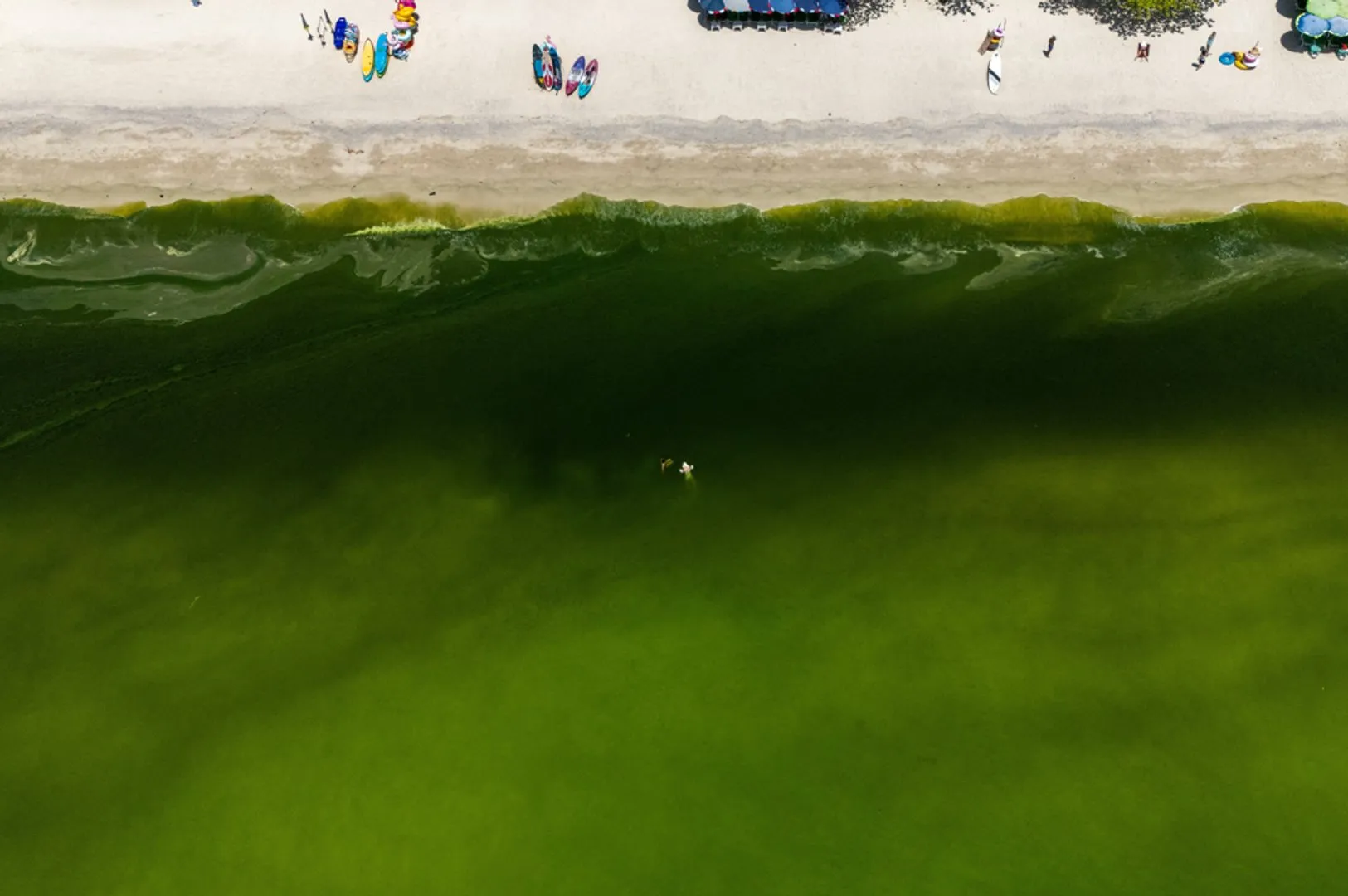
The water off Thailand’s Ko Lan island has turned a vibrant shade of green thanks to a plankton bloom, keeping many tourists out of the water. But scientists say the bigger concern may be what’s happening beneath the surface, where oxygen levels are falling.
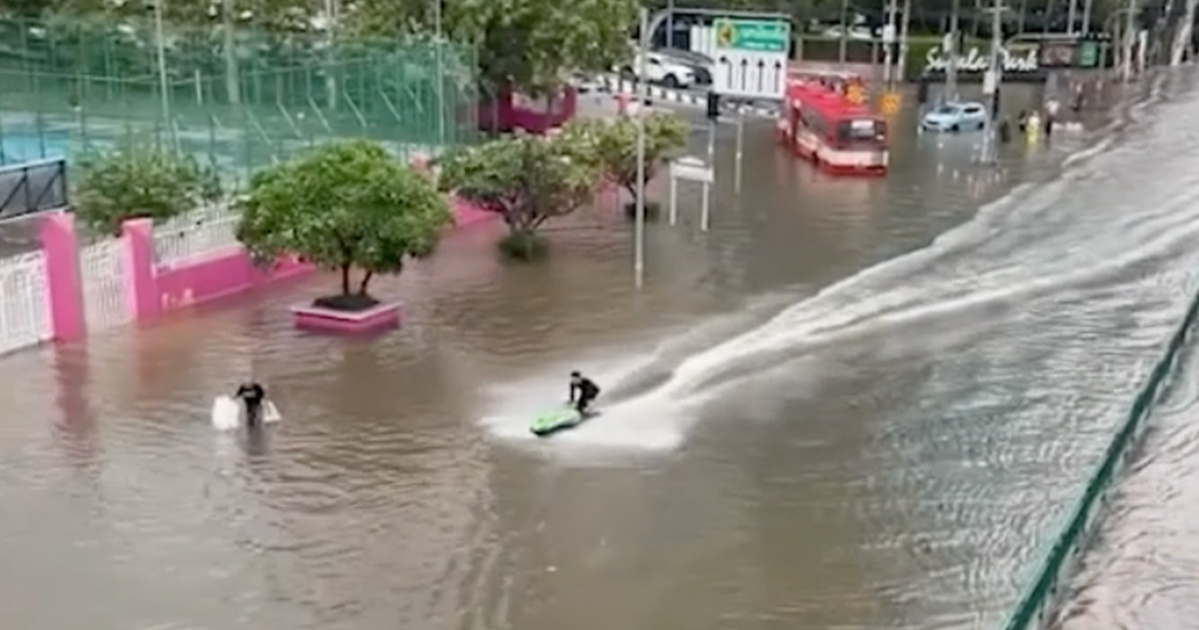
Thai police have arrested a jetskier for joyriding through a flooded street in Bangkok. Police charged the rider with causing a public nuisance and said they will ask a court to confiscate the jet ski.
A woman has been left with no feeling in her face after shattering her jaw in an accident while on holiday..
Tia Lockey was at the start of a dream trip through Asia when she was involved in a motorbike accident. The 22-year-old waved goodbye to her friends after volunteering to go first down to a remote beach.
Tia can now only remember the first few minutes of the journey before waking up on the jungle floor, concussed and in agonising pain. “My dream trip I had been planning for years had been stripped away from me because of a lift to the beach,” said Tia from Durham.
“I opened my eyes and I was on the floor in the jungle of Koh Tao, in the middle of nowhere covered in blood. I didn’t and still don’t remember the crash at all; it’s completely wiped from my memory. I definitely mourn the life I used to have.”
The marketing worker had organised a trip down to the beach in Koh Tao, Thailand in the early hours of the morning of March 14. A fellow traveller offered to take them down one by one as the ride would only take 10 minutes – and thinking nothing of it, Tia went first.
However, shortly after they had set off, they were involved in a horrific crash. Tia said: “My friend thought something must’ve been up and she had a bad feeling since the driver was meant to go back for her next but he still hadn’t come.
“Luckily I had shared my live location with her that night so she followed it and found me with all of my injuries. An ambulance came and the hospital told me I had shattered my jaw in two places, knocked two teeth out, and had very deep wounds on my face. I needed to be emergency speed-boated to a hospital in Koh Samui which was around three hours away.”
Tia was rushed to the hospital with her face completely bandaged up due to the gaping wounds on her upper lip, forehead, left eye, chin and scalp. For the next two weeks she was bedridden in hospital with her mouth wired shut following her jaw surgery.
The 22-year-old then returned back home to the UK as another jaw surgery was required. She said: “I needed to have another jaw surgery in May. I couldn’t chew for four months and because my jaw was so severely broken, they described it as cornflake bits, when I woke up from the eight hour surgery my teeth and bite were completely different.
“They no longer touched at the front, so I was left with an open bite and they said that this will just be my teeth from now on and there’s not a lot they can do to fix them. So now I struggle to eat anything with my front teeth.”
The crash completely changed Tia’s life, leaving her with crippling insecurities that stopped her from leaving the house. On top of the scars and teeth damage, nerve damage to her bottom lip and chin left them completely numb
.
Tia said: “I struggled a lot with going out and about with friends and family because I was so insecure about my teeth and scars. If I’m eating or brushing my teeth for example and I was to get toothpaste or food on my chin I would have no idea.
“My sisters have to give me a heads up when we’re out. I’m still being seen by the hospital for regular appointments and I still have missing teeth. I am hoping to finally have them fixed by the end of the year.
“My confidence and mood plummeted massively, there didn’t seem to be an end to my recovery.” S ix months on from the crash Tia has finally started to adjust to the changes.
Documenting her recovery journey has given her a new found purpose. Tia said: “It has also made me realise just how precious life is and never to take a single day for granted.
“I thought posting about it on TikTok would give me a purpose during recovery and it turned it into something more positive. The response I’ve received is just so overwhelming in the best way and I massively appreciate all the support and love I’ve been getting from everyone.
“I just hope it reminds people to stay safe, even when you feel invincible, because you never think it will happen to you until it does, and unfortunately I’m still paying the price for it.”
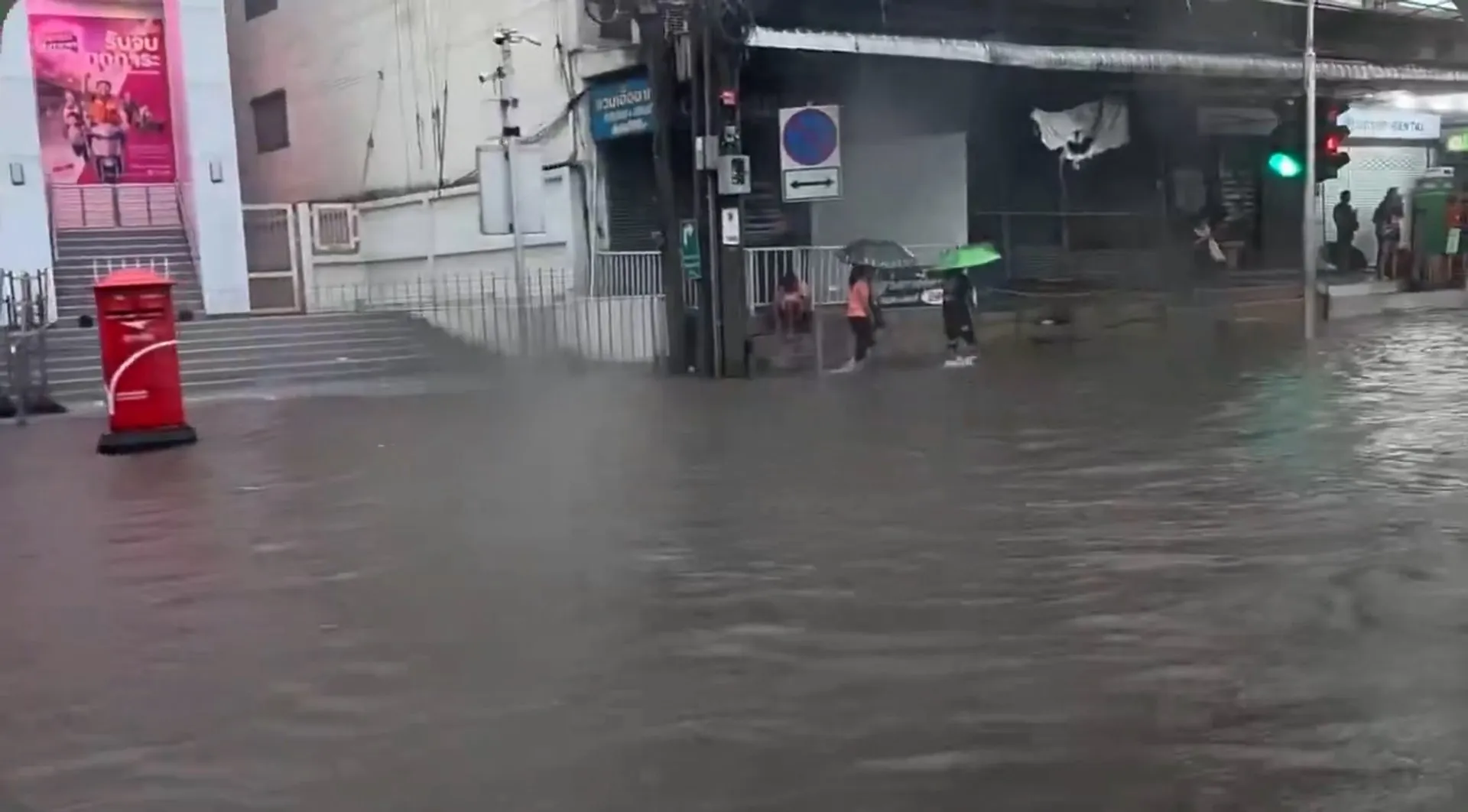
Bangkok has officially been declared a disaster zone after relentless rains triggered widespread flooding in the Thai capital. Up to 300 millimetres of rain fell in some areas overwhelming the city’s canals and drainage system.
Nonstop rain since Thursday has submerged Thai capital’s roads and canals, sending water into many homes and stores.
Published On 26 Sep 202626 Sep 2026
Bangkok authorities have declared a disaster zone across all 50 districts of Thailand’s capital after three consecutive days of rainfall caused heavy flooding.
The disaster designation, which gives local organisations authority to take action, came on Saturday after Governor Chadchart Sittipunt said almost 300mm (11.8 inches) of rain had fallen since Thursday afternoon.
Recommended Stories
list of 4 itemsend of list
The nonstop rain inundated roads and canals with water, sending water into many homes and stores alongside them, according to reports. Photos and videos showed major roads submerged and cars abandoned after drivers were unable to move through the rising water.
Chadchart said the east of the city was most impacted and warned that more rain was forecast again on Saturday. He added that flooding should recede once the rain subsides, as city officials work to drain floodwaters as quickly as possible.
“The rain keeps falling and we are doing our best. We are trying to pump the water out, but the water in canals are full,” he said on social media. “The risk areas are those who live near canals. Every canal is now filled.”
Later on Saturday, the government said the flooding situation had “stabilised” but added it would still take two or three days for the water to drain, as long as the rain held off. “If more rainwater doesn’t fall in the area, it will be solved,” he said.
People walk past abandoned vehicles on a flooded Phetchaburi Road in Bangkok on September 26, 2026 [Lillian Suwanrumpha/AFP]
Chadchart also advised residents to move their cars to higher ground, as Bangkok’s public transport authority offered free access to MRT train “park and ride” carparks to store their vehicles until October 2.
Reporting from a flooded street in Bangkok, Al Jazeera’s Tony Cheng said the Thai capital is no stranger to heavy rain during the monsoon season, but the continuous rainfall had locals worried.
“What usually happens is we get heavy downpours for a couple of hours, then you’ll see the street often flooded but it would flow away into the drains quickly, and it would only happen in isolated areas too,” he said.
“What’s happening here is … happening all across the city. This is not a flash flood; this is persistent heavy rain since Thursday evening, and it shows no sign of letting up.”
Somkid Pheuk-ngam, 67, a vendor who lives near a canal just north of central Bangkok, said she had to close her shop for two days.
“The water keeps coming in. It’s hard to go out now. It’s at my waist level,” she told the AFP news agency. “I cannot go anywhere,” she said, adding that this was “worse than the 2011 flood.”
Widespread flooding across Thailand in 2011 killed more than 500 people and damaged millions of homes.
The Department of Disaster Prevention and Mitigation has warned of low pressure across eastern, northeastern and central Thailand until Sunday, saying there was a risk of flash floods, forest runoff, mudslides and river overflow.
Persistent heavy downpours over a 48-hour period have triggered widespread flooding and severe traffic disruptions in Bangkok, Thailand. Authorities have issued red alerts in the worst affected areas.
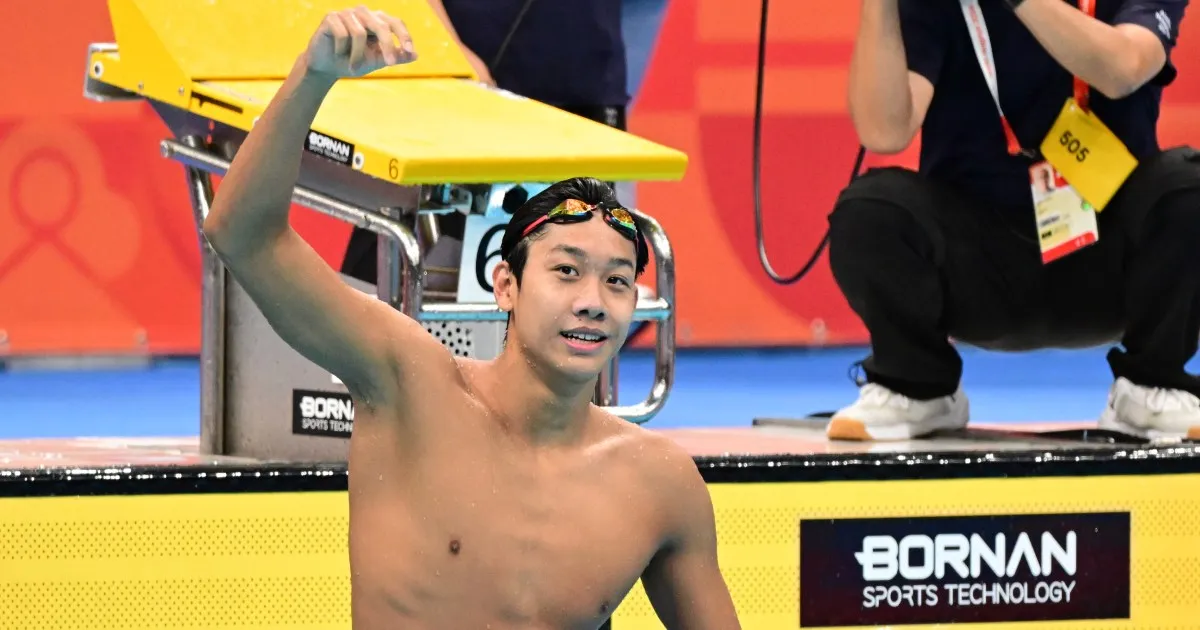
Towering teenager Zhang Zhanshuo became the first swimmer in history to win seven golds at a single Asian Games, while on the track, Thai sprinter Puripol Boonson powered to victory in the 100m.
China’s Zhang, 19, scorched to the men’s 400m freestyle title in the pool in Tokyo on Friday in a Games-record three minutes and 41.28 seconds.
He sat on the lane divider after the race and slowly counted off on his fingers all seven medals he had won.
Zhang also won individual golds in the 200m, 800m and 1,500m freestyle events, as well as three relays.
He said, after wrapping up a scintillating campaign, that it had been the “perfect week”.
“I think the most important thing is to stay grounded and focused, because the Asian Games are not my ultimate goal,” said Zhang, who stands 198cm (six feet, six inches).
With the Los Angeles Olympics less than two years away, China won 30 of the 42 golds in the pool this week.
Their 13-year-old phenomenon Yu Zidi was the undoubted superstar, taking home three individual golds and all in Games-record times.
Not to be outdone, Japan’s 17-year-old Shin Ohashi shattered the men’s 200m breaststroke world record on Thursday.
Swimming, equestrian and diving are taking place in Tokyo, but the city of Nagoya and the wider Aichi prefecture are the main Games host.
The men’s and women’s 100m sprints, the blue riband events in track and field, took place in front of rows of empty seats in Nagoya.
China’s Chen Yujie streaked to a comfortable victory in the women’s final in a Games-record 11.06 seconds.
The men’s was won by 20-year-old Puripol, who burst out of the pack in the final quarter of the race to win in 9.90 seconds, breaking his Games record from earlier in the evening.
It was Thailand’s first men’s 100m gold medal since Suchart Jairsuraparp on home soil at the 1978 Bangkok Games.
‘Today was a miracle for me’
On the last evening of gymnastics, Carlos Yulo won the men’s vault for his second gold of the Games.
The double Olympic champion won floor gold on Thursday to complete his collection of major titles.
“I can’t believe it,” the Filipino said.
“In this whole Asian Games, I felt really stressed, but at the same time, I enjoyed what I did today. I really did my part.
“Today was really a miracle for me.”
There’s little time to celebrate, however, with the world championships next month.
South Korea edged China 85-80 in the semifinals of the women’s basketball, and will face hosts Japan for gold.
China had their giant centre Zhang Ziyu, 19, but it was not enough.
Zhang Ziyu stands 223cm (seven feet, four inches) and scored 22 points.
“She was tough to guard,” said South Korea’s Kang Lee-seul.
“We couldn’t defend her, but we focused on fast breaks and shooting more three-pointers.”
North Korea’s women were again in record-setting form on the weightlifting dais.
Oh Kwang Ok set three world records on her way to women’s 57kg bodyweight class gold.
Oh lifted 104kg in the snatch and 134kg in the clean and jerk for a 238kg total – all world records to add to the two golds North Korea’s women won in the 49kg and 53kg classes this week.
North Korea has won four gold medals and two silvers in the six weightlifting events contested so far.













![TOKONAME, JAPAN - SEPTEMBER 26: Gold medalist Yuki Kurihara of Japan poses on the podium at the medal ceremony for the Esports Puzzle [Puyo Puyo Champions] on day seven of the 20th Asian Games Aichi-Nagoya at Aichi Sky Expo on September 26, 2026 in Tokoname, Aichi, Japan. Kurihara becomes the youngest gold medalist at the Asian Games at the age of 11. (Photo by Toru Hanai/Getty Images)](https://i0.wp.com/www.aljazeera.com/wp-content/uploads/2026/10/getty_6ac2424a21-1791115850.jpg?w=640&ssl=1)