Pietersen’s eyes roll slightly when he is asked about Ben Stokes’ recent comments comparing Harry Brook’s talents to his.
Pietersen, like Brook, was a maverick – a batter capable of incredible highs. Those highs mean the lows come with a disproportionate level of criticism.
“Where I can help him is playing situations, because there was a lot of method in my madness,” Pietersen says.
“Yes, occasionally, I got out to reckless shots and crazy shots in the ’80s and ’90s but there was a lot of structure to the way that I batted.
“I’ve still got notes on my phone on how I played in T20 cricket, one-day cricket, Test match cricket, and about hitting straight back at the stumps, and the techniques, and how I did it, and don’t play certain shots.
“That all-round structure is something I could potentially help him with because he’s so flipping good.
“It’s actually frightening how good he is and how good he can be.”
And Pietersen says he will not limit himself to working purely on white-ball cricket.
He has already spoken to new Test coach Stephen Fleming about how he can help the Test batters during his time with the white-ball squads.
Though he said he would not have time for a full-time role, he suggested he is open to working with the Test side before next summer’s home Ashes series.
“I have got a pretty mad schedule,” he says. “I wouldn’t say no.
“I don’t think that necessarily means I need to be in a dressing room.
“There is a lot of time in the lead up to an Ashes series and a tour of South Africa, when I will be with the Test batters.
“There are conversations I can have there.”
Who knows how long this will last. England may as well make the most of this second chance.
Scrum-half Seren Lockwood has been ruled out of Wales’ second WXV Global Series fixture, against USA in Cardiff on Saturday, after failing a head injury assessment.
Lockwood was taken off during the first half of Wales’ eight-try victory over South Africa and is now going through World Rugby’s return to play protocols.
It is a blow for Wales with Lockwood and Keira Bevan proving a promising half-back partnership in a new-look backline.
Her absence paves the way for Lleucu George to return at 10, with Bevan reverting to her usual position of nine at Cardiff Arms Park.
“It’s always sad to see an individual coming off, but the HIA is great to have on board, we’re looking after her,” said Wales head coach Sean Lynn.
“She’s not going to be available this weekend, but I’m super excited to see the half-back combination that we’ve got this week.”
Football fans were shown a “constant bombardment” of advertisements promoting junk food and drinks during matches at the 2026 Fifa World Cup, according to a new study.
Researchers at the University of Bristol and University of Oxford created an AI tool to analyse ads which were visible to television viewers during live play in the tournament’s 104 matches, mostly displayed on pitchside advertising boards and around stadiums in the USA, Canada, and Mexico.
They found that logos and products for brands that produce junk food and drinks – defined by the UK government as being high in fat, salt or sugar – were displayed 65,722 times in total.
And the study also found that those adverts were visible for 28.1 hours’ time across the tournament, or just over 16% of the total time that matches were being played.
The ads were all shown on the international feed of matches during play – meaning they were visible to every viewer in every country broadcasting matches – and do not include ads shown during pre-match coverage, half-time commercial breaks, or the controversial in-match hydration breaks.
The model used by the researchers estimated that there were an average of 576 visible ads for junk food and drink shown during each individual match.
Coca-Cola had the highest number (21,893), followed by McDonald’s (13,915), Powerade (12,777), and Lay’s – the crisps manufacturer known as Walkers in the UK – (12,087).
All four brands are official partners of world football governing body Fifa, with the Powerade energy drink owned by the Coca-Cola company.
In response to the findings, Fifa argued that the vast majority of its revenue is put back into football, including on projects promoting health and wellbeing in which thousands of people participate.
A Fifa spokesperson said: “Fifa works with a broad, global portfolio of partners, all of which are subject to its governance and compliance frameworks.
“Fifa’s social impact campaigns, including Be Active, delivered messages of unity, inclusion, health and friendship to audiences on an unprecedented scale throughout the World Cup”.
BBC Sport also contacted Coca Cola, McDonald’s and PepsiCo – which owns Lay’s – but did not receive a reply.
UCLA head coach Bob Chesney, offensive coordinator Dean Kennedy and starting quarterback Nico Iamaleava were all in alignment after UCLA’s Week 2 win over San Diego State.
The Bruins’ offense had to get better.
UCLA wasted no time following through on their promises, scoring 21 first-quarter points against Purdue — the most UCLA has scored in the inaugural quarter against a conference opponent since 2016 against Oregon State.
Sign up for UCLA Unlocked
A weekly newsletter offering big game takeaways, recruiting buzz and everything you need to know about UCLA sports — exclusive to L.A. Times subscribers. Free Members receive a partial preview of each edition.
By continuing, you agree to our Terms of Service, which include arbitration and a class action waiver. You agree that we and our third-party vendors may collect and use your information, including through cookies, pixels and similar technologies, for the purposes set forth in our Privacy Policy such as personalizing your experience and ads.
While the Bruins’ offense exploded, their defense imploded, giving up 38 points and 488 yards to the Boilermakers.
But in a homage to “Pac-12 After Dark,” it was only natural that UCLA outpaced Purdue, rumbling to a 52-38 win over the Boilermakers on Saturday night at the Rose Bowl in the Bruins Big Ten opener.
Here are three key takeaways from UCLA’s third win of the season, matching its victory total from last season in just three games.
Running backs are elite
UCLA running back Anthony Woods is hoisted up by offensive lineman Julian Armella after scoring against Purdue at the Rose Bowl on Saturday.
(Ronaldo Bolanos/Los Angeles Times)
UCLA has returned to its roots.
With a rich history of churning out premier tailbacks, including Maurice Jones-Drew, DeShaun Foster and Zach Charbonnet, the Bruin offense has lacked a formidable rushing attack the last few years and finished as the nation’s third-worst ground unit in 2024.
But the Bruins may have struck gold in 2026.
UCLA ranks third in the country in rushing yards, first in rushing scores and fourth in yards per carry. Leading the charge is fifth-year tailback Wayne Knight who has 345 rushing yards and eight touchdowns in just three games — matching the Bruins’ total rushing touchdown mark from last season. Knight finished with his third multi-touchdown game of the season against Purdue, reaching the end zone twice to go alongside 200 all-purpose yards.
Through three games, Knight is exceeding the yardage and touchdown output from Reggie Bush’s 2005 season and Mark Ingram’s 2009 campaign — both of which featured Heisman Trophy wins.
But what makes UCLA’s ground attack so special is that it is a four-headed monster. And the Bruins proved it for the third straight week against the Boilermakers.
All three starting running backs — Knight, fifth-year Anthony Woods and senior Jaivian Thomas — reached the end zone and averaged more than six yards per carry in at least nine rush attempts. And Iamaleava added 55 rushing yards of his own to the 369 total the offense tallied.
After three games of consistent rushing dominance, it is becoming less of a coincidence and more of a pattern — UCLA may have one of the most potent rushing attacks in the country.
And one of its most valuable assets is the ground game’s ability to open up the passing offense.
Iamaleava answers the call
UCLA quarterback Nico Iamaleava hurdles over Purdue defensive back Hudauri Hines during the fourth quarter at the Rose Bowl Saturday.
(Ronaldo Bolanos/Los Angeles Times)
Iamaleava challenged himself to play better after a shaky start to the 2026 season.
After failing to complete a touchdown pass while throwing two red zone interceptions during the first two games, Iamaleava and Chesney knew that the signal caller left plays on the table.
“It’s not his best game, he knows it’s not his best game,” Chesney said after beating San Diego State. “I just think that the grit and the toughness that he played with though when he needed to get a couple first downs that really, really mattered to keep drives alive and put his body on the line and you know peeled himself off that ground and just kept fighting for his teammates, that’s special. But there’s a whole lot we got to do there.”
Iamaleava responded Saturday night, going 19-for-31 through the air for 276 yards and three touchdowns.
Not only did Iamaleava light up the stat sheet, but more important, he also passed the eye test. After looking impatient against San Diego State, consistently leaving the pocket early and failing to let plays develop downfield, he looked like a totally different player Saturday night.
Iamaleava looked poised in the pocket, going through multiple reads and hitting pass catchers across the field in an array of spots and formations. He also protected the ball against a solid Purdue defense.
But what was most impressive from the Bruin signal caller was his resilience and toughness on the field. After taking some bruising hits during the Bruins’ first two games, Iamaleava was fearless on scrambles and designed quarterback runs against Purdue, taking big hits downfield to gain extra yards. He also looked willing to take hits in the pocket to make deep or layered throws.
Although some of the hits led to time off the field — he cut a finger on his throwing hand and later took a crushing hit to his throwing shoulder that left him lying on the turf for some time — he always returned to the game. Chesney said he repeatedly asked Iamaleava whether he was sure he could continue playing and the senior kept insisting on returning to the game once he was cleared by the UCLA medical staff.
“He’s just a straight dog, there really isn’t much to say about that,” Knight said. “He’s battling. He gets hurt and he gets back up. He plays the next play. He’s doing this for his brothers.”
Same defense, different opponent
Purdue quarterback Ryan Browne scrambles out of the pocket while being chased by UCLA players Saturday.
(Ronaldo Bolanos/Los Angeles Times)
Purdue’s offense revealed glaring holes the San Diego State offense could not expose.
Aztec quarterback Jayden Denegal only threw for 45 passing yards against UCLA, consistently missing open receivers downfield that had gained considerable separation on the Bruins’ cornerbacks. And even when he did find them, the receivers were not able to haul in catches.
Boilermakers quarterback Ryan Browne, on the other hand, had no problem picking apart the UCLA secondary. Browne went 19-for-30 for 378 yards and three scores, and while he did throw an interception to cornerback Rodrick Pleasant, it came with less than six minutes remaining when the Bruins were already up two scores.
Purdue’s slot receivers tore through the UCLA secondary, running through multiple layers of coverage. Receivers Asaad Waseem and Xavier Townsend combined for 14 receptions, 311 yards and two touchdowns.
Not only did the Purdue offense score five touchdowns, but the pace at which the team scored illustrated the lack of resistance the Bruins’ secondary gave the Boilermakers. Three of the five touchdown drives took less than two and a half minutes, with the first touchdown coming on one play — courtesy of completely broken coverage.
When asked about the impact of Purdue’s receivers Wednesday, defensive coordinator Colin Hitschler said he would have to wait for the game to answer certain questions.
“When you have 10 personnel and that many receivers that can catch the ball, it can create mismatches, and we play a lot of man, so who’s going to fold first?” Hitschler said. “Are we going to be able to man them up or are we having to play more zone? Those are questions that will play out as the game dictates by who’s winning the one-on-one matchups. It’s the chess match that always happens in any game.”
It was obvious who won the chess match.
Two forced fumbles from linebacker Sammy Omosigho and a formidable run defense that held tailback Fame Ijeboi to 2.8 yards per carry helped mitigate the defense’s problems.
How many games UCLA can win the rest of Big Ten play may rest on the defense’s ability to rebound from a brutal win over Purdue the way the Bruins’ offense did after an ugly win over San Diego State.
Few have felt the transformation quite as deeply as Iamaleava, who was the face of both teams.
“Shoot, it means everything,” Iamaleava said of the team’s 3-0 start. “I think that just speaks to the growth of the team and speaks to Coach Ches, of how he got us to buy into this process and his winning, his winning ways. It feels good to be 3-0, and we’ve got to keep going.”
Women’s soccer scores signature win
The UCLA women’s soccer team has take on grueling schedule, facing off with four teams ranked in the top 25 so far this season.
The No. 21 Bruins (5-3-1, 2-1-0 Big Ten) made the most of their fourth opportunity for a signature win, earning a 1-0 win at No. 5 Ohio State (6-1-1, 2-1-0) on Thursday night. It was the Buckeyes’ first loss this season.
Kara Croone set up Leena Powell for the game winner fired from just outside the box in the 25th minute. UCLA goalkeeper Daphne Nakfoor recorded five saves to maintain the shutout victory.
“Amazing performance for the girls,” UCLA women’s soccer coach Gof Boyoko said. “We needed a solid performance, and they did it. We scored a good goal, we didn’t concede, and we were strong defensively.”
UCLA alum Jordin Canada, who has dealt the ball with expert precision this season, had 11 points and 10 assists for the WNBA-playoff bound Dream.
UCLA alum Gabriela Jaquez, who has enjoyed a strong rookie season with a rebuilding Sky team, finished with 14 points, three rebounds, two steals and one assist. Chicago was eliminated from playoff contention, but Jaquez has been a bright spot for the team all season.
Bruins on deck
Here are all UCLA games scheduled to be played this week across all sports, with all times Pacific:
Monday, Sept. 21
Women’s golf at Canadian Collegiate Invitational, All day
Tuesday, Sept. 22
Women’s golf at Canadian Collegiate Invitational, All day
Do you have a comment or something you’d like to see in a future UCLA newsletter? Email newsletters editor Houston Mitchell at houston.mitchell@latimes.com. To get this newsletter in your inbox, click here.
Sports editor Iliana Limón Romero contributed to this report.
While Purdue is not projected to be a Big Ten juggernaut this season, UCLA coach Bob Chesney and his team expect to be challenged during their first game against Big Ten competition on Saturday at the Rose Bowl.
The Boilermakers’ defensive line features five high-impact players that are at least 6-foot-3, and a nose tackle who weighs in at 301 pounds and anchors a defensive front that ranks second in the Big Ten with 17 tackles for loss.
“They’re talented in who they’re as individual players, there are some game-wreckers in there,” Chesney said. “They are as vertical as can be, they jump out of their stances, they’re jumping snap counts and they’re violent. They pose a giant problem, and we are not going to be able to push them around, and we are not going to be able to find ourselves in a spot where they tire. This is going to be a battle on the inside throughout the entire course of that game.”
While UCLA’s ground attack has dominated through the first two games of the season — rushing for 277 yards and six touchdowns against California and 214 yards and four scores against San Diego State — it might be harder for the Bruins’ running backs to have their way against the Purdue defense.
Purdue held both Indiana State‘s and Wake Forest’s starting running backs to less than four yards per carry, and has conceded just two rushing touchdowns to those starters this season.
“There’s some things that I think Purdue does a really good job defensively, in terms of getting off the ball,” said UCLA offensive coordinator Dean Kennedy. “They have got a lot of length. They’re a very, very big team, it will probably be one of the biggest teams we will face, so we have to be prepared for that.”
However, the Boilermakers have struggled to stop quarterbacks on the run — allowing Indiana State’s Elijah Owens and Wake Forest‘s Gio Lopez to combine for 118 rushing yards and two touchdowns — giving Bruins senior quarterback Nico Iamaleava the opportunity to rely on his legs.
While Iamaleava should have wide receivers Landon Ellis and Brian Rowe Jr. back to full strength, fortifying the aerial attack, the signal-caller will be without Mikey Matthews, after the slot receiver went down with a lower-body injury against San Diego State.
“There’s a fine line. Understanding what the coverage is doing, when is it time to take off and go,” Kennedy said. “If you are going through your read, from a clock standpoint, and it’s not there, it’s a great time to take off and go. It’s our job as an offense to create explosives, whether it’s him taking off or it’s him creating a scramble drill. We look at scramble drills, that we have to create explosives, and that’s something we have to do a better job of.”
Defensively, the “Bruin Bullies” will be tasked with stopping running back Fame Ijeboi, who has run for 201 yards and four touchdowns on 5.3 yards per carry this season. Chesney said that Ijeboi has a “Wayne Knight” feeling to him, where he plays low to the ground, displays proficient body balance and leg drive, allowing him to be influential in the passing game and break tackles.
While UCLA has already faced formidable rushers in Cal’s Adam Mohammed and San Diego State’s Lucky Sutton, Ijeboi could be the most impactful yet. And no one knows that more than Bruin defensive coordinator Colin Hitschler, who went to the same high school as the Boilermaker running back.
“It’s been fun to watch his growth, following him through high school, and watching him earn those scholarships and opportunities,” Hitschler said. “Those first two games, he jumped off the tape. He’s got great potential and he’s going to go a long way. We have to do a good job putting a physical shoulder on him and knocking him down because he’ll run through contact and does a great job of finding the edges.”
If Ijeboi is unable to get it going, it will have to be up to Purdue quarterback Ryan Browne to generate offense.
While the signal-caller struggled last season — throwing nine touchdowns with 10 interceptions — Browne has looked like a new player in 2026, passing for 646 yards and four touchdowns.
Browne has benefited from the addition of two premier slot receivers in Florida Atlantic transfer Asaad Waseem and Iowa State transfer Xavier Townsend. They have combined for 25 receptions, 277 yards and one score.
“What makes them unique is there are a lot of them,” Hitschler said. “When you have 10 personnel and that many receivers that can catch the ball, it can create mismatches, and we play a lot of man, so who’s going to fold first?” Hitschler said. “Are we going to be able to man them up or are we having to play more zone? Those are questions that will play out as the game dictates by who’s winning the one-on-one matchups. It’s the chess match that always happens in any game.”
The Bruins’ defense will look to force turnovers, but that is no easy feat as the Boilermakers have yet to turn the ball over this season.
DELANO, Calif. — The rows of candies and nuts at the Guadalajara Meat Market — tamarindo con chile, seasoned pistachios, spicy paletas — sat mostly untouched as customers filtered through this carniceria in the late afternoon heat.
“You see a lot of people consuming the minimum, what they need to get by through the week,” said owner Carina Murillo, 31, as she checked out customers on a recent weekday. “Instead of buying six items, they’re buying three items.”
While customers bypass extras, like the snacks at the front counter, Murillo’s costs have gone up. Imported goods from Mexico and Canada have become more difficult to source and sometimes carry tariffs, she said. Transportation fees have risen as diesel prices respond to the war in Iran. The market’s insurance costs have risen by about a third. All of it has forced Murillo to increase prices.
“You see a lot of people consuming the minimum,” says Carina Murillo, owner of Guadalajara Meat Market. “Instead of buying six items, they’re buying three items.”
As the area struggles, Murillo, a college graduate who years ago felt motivated enough to door-knock for political causes, is among those who have become disillusioned. Those in Washington, she said, don’t understand the lives of the working people who keep the country running.
There have been “years where I feel completely overpowered to the point where I’m not motivated to take part,” said Murillo, who didn’t vote in 2024 but plans to do so in November. “That’s what happens when you feel discouraged or like nothing’s going to change.”
The economic strife plaguing Americans is clear in this rural, majority-Latino Central Valley congressional district, home to the state’smost competitive House race, the closely watched contest between Republican Rep. David Valadao and Democrat Randy Villegas.
Democrats hope the national economic angst will translate into big turnout in the midterm elections, but some in this region worry that years of financial struggle may depress voters’ desire to participate rather than motivate them.
Rep. David Valadao (R-Hanford) presides over a congressional hearing in March. The Republican is in a race against Democrat Randy Villegas that is considered a toss-up.
(Allison Robbert / Associated Press)
And Republicans, who rely on their party turnout beating that of Democrats in rural areas, also face the risk that frustration with the current political climate could dampen enthusiasm.
“Before they can think about Valadao, before Trump or Gavin Newsom or who’s going to run, families are concerned with the immediate: paying the rent, having the food on the table,” said Eliseo Gamiño, who heads the Central Valley Leadership Round Table, a coalition of Latino community leaders and elected officials. “You can’t be thinking about voting when your kids are hungry.”
Few voters who spoke to The Times in this swing district were decided on which party to support in November — or whether to vote at all. Such undecided voters will likely decide the election outcome, and persuading them is the key challenge for both parties as November nears.
Alexa Lopez sweeps up at closing time on a slower than usual Friday that saw one dress sold at Christina’s Fashion in Delano.
In a district that is the third-youngest in population in the country, the simmering uncertainty among Gen Z and millennial voters in particular could affect turnout or results.
Thirty-one percent of its voting-age population is 29 or younger, according to the Tufts University research center CIRCLE, which tracks youth civic engagement, making it among the top swath of House races in which young people could swing the outcome.
California’s swingiest district
The 22nd District, carved from the state’s agricultural epicenter, is one of fewer than two dozen toss-up races nationwide that will likely determine which party controls the U.S. House in the second half of President Trump’s current term. It is also among several high-stakes races nationwide that will test progressive candidates.
Valadao’s seat has long been considered a vulnerable one; Democrats added about 100,000 Fresno residents to the district under Proposition 50’s new map in a bid to help their chances. The boundaries include swaths of Kern, Kings and Tulare counties, along with a very small piece of Madera County.
“It’s going to be crucial in an area that is more purple, more bipartisan, where it’s very clear it can go either way … that these candidates make an effort to get those voters on their team,” said Brittany Martinez, a California-based Republican strategist.
Valadao, 49, who comes from a dairy farming family, is well known in the district and has repeatedly secured victory in close races, retaking the seat in 2020 after losing it in 2018’s blue wave. He saw a close race in 2022, then won by nearly seven percentage points in 2024, outperforming Trump.
His biggest vulnerability this time around may be his vote for the One Big Beautiful Bill Act, which included steep cuts to Medicaid. Local hospitals are bracing for funding cuts, though a carve-out may keep many valley residents from losing coverage. The district has the highest proportion of Medi-Cal recipients of any in the state, with 67% of residents enrolled as of 2025, according to the California Health Care Foundation.
Valadao spent part of the August recess touring the Central Valley for private meetings with local entities including a hospital, a housing program, a sawmill and a school district, and held a telephone town hall last week. Democrats have criticized him for not holding face-to-face voter events, including public town halls.
Democratic candidate Randy Villegas chats with residents during an August town hall in Hanford.
Villegas, 31, a professor and school board member who was endorsed by Sen. Bernie Sanders (I-Vt.) and is aligned with the Working Families Party, bested a Democrat backed by the party’s House campaign arm to win the nomination.
Villegas has banked on a more public-facing approach to win over swing voters — recently handing out popsicles from a pushcart he wheeled around a Labor Day event in Bakersfield, for instance — a strategy his campaign calls “going everywhere.” Republicans have criticized his record as too far left for the moderate district.
Both candidates have attempted to lean away from partisan narratives. Valadao rarely mentions Trump on social media and did not attend the president’s Republican convention in Dallas last week; Villegas has worked to frame the progressive issues he champions as an effort to help Central Valley voters rather than an ideology.
Trump carried the district as drawn now by less than 2 percentage points in 2024. Since then, residents say they have felt squeezed by housing, gas and grocery prices. The war in Iranhas pinched Central Valley farmers — already struggling withwater supply and other issues — by driving up fertilizer prices.
Ailyn Flores, center, picks up balloons for a party at Big Delano Discount store.
Tyler Stidham, 28, and her husband recently moved back to Lemoore from San José with their 1-year-old in order to live with family because they could no longer afford their own place.
“Rent got too high and having a family is expensive,” she said as the couple waited for their order from a food truck at the Hanford farmers market on a recent Thursday evening. They have cut out family trips and started meal-planning and budgeting to save money.
Stidham said she is planning to vote and hoping government leaders can make life more affordable. Her husband recalled a favorable impression of Valadao after once meeting him. Stidham isn’t sure who she’ll be casting her vote for.
“I haven’t done my research [yet],” she said.
Young voters said they felt frustrated waiting for a better economy that has yet to materialize.
“I feel like the government is playing in our face. I feel like everything is a show,” said Emma Woodward, 23, of Hanford.
The Sierra movie theater has closed down in Delano, Calif.
(Gary Kazanjian / For The Times)
A store manager at a coffee chain, Woodward bought a house last year to avoid throwing money at increasingly high rent payments, but it has been “hard to survive.” She got a roommate to help with costs, but the two of them sometimes find themselves using food drives for groceries. She has cut out “fun spending,” including concerts and travel.
Woodward said she wanted to vote in order to send the message to Congress that the economy needs improvement. She, too, wanted to research the candidates further; she leaned toward Villegas but was not yet convinced.
‘Whatever happens happens’
Valadao and Villegas must also battle to reach apathetic voters — those who may sit the election out or who are fed up with both parties. In one indication of voter fatigue, local organizers have found it a challenge to register new voters this year.
Dresses on display at Christina’s Fashion store after closing time on a quiet Friday night in Delano, Calif.
People who are unregistered often express mistrust in the government and the feeling that “nothing’s going to change,” said Biviana Camacho, 23, civic engagement program manager for Loud for Tomorrow, a youth organizing group based in Delano that runs voter registration events.
“A lot of folks have been in survival mode for such a long time,” she added, as the group worked on planning a fall event series on a recent afternoon. Their goal: 20 to 25 new registrations per event.
The group’s head of membership, Rosanai Paniagua, 28, agreed. “Here, there’s not a lot of hope because people haven’t seen what good policy could do for them,” she said. “A lot of apathy, for sure, because change hasn’t really happened here.”
Marco Estrada, 20, taking a break outside the Main Street barbershop where he works in Delano, said he wasn’t sure he could imagine anything Congress could do for him. He’s never voted and doesn’t plan to in November. His two co-workers said the same.
“Whatever happens happens,” Estrada said.
Valeria Valdez, a College of the Sequoias freshman, said she was planning to vote in her first election and said the government should help lower gas prices. The 18-year-old wasn’t sure, though, whether she would make a decision in the House race.
“It feels pretty far away from me, to be honest,” she said. “I just want to do what I can for our community and not focus on how corrupt the government is.”
That sentiment is part of what Villegas is aiming to target as he meets voters.
“It’s easy to feel cynical and apathetic in a moment where so many things seem stacked against us,” Villegas said in an interview. “But I tell people that … their vote and their voices do matter, otherwise we wouldn’t have billionaires and corporations spending millions of dollars trying to influence these election outcomes.”
A spokesperson for Valadao did not respond to a request for comment. Valadao said on a Washington Sun podcast in January that he “absolutely” worries about Republican voter enthusiasm, but noted it was a problem on both sides of the aisle. Earlier this month, he conveyed confidence about his race.
“I’ve won in these types of races. I can win again,” he told the Associated Press. “I think we should be fine.”
Inside Murillo’s market, business picked up as 5 o’clock neared. Murillo rang up tortillas, cuts of meat, and three-liter Mexican soda bottles. She advised a customer about treating a bug bite, helped a man wire money and cajoled a city worker about getting a sidewalk repair.
Congress should “definitely” be helping communities like hers, she said. She plans to research her voting options so she can participate in November. But trusting political candidates, she mused, can feel like a risk for voters.
“Whether they execute what they promise or not,” she said, “that’s shown with time.”
England overcome early tremors to win third Test against Pakistan by eight wickets, clinching a series whitewash.
Published On 12 Sep 202612 Sep 2026
Joe Root led from the front as England survived a major wobble to beat Pakistan by eight wickets in the third Test at Edgbaston on Saturday, sealing a 3-0 series whitewash.
The home team, chasing just 130 to win, were in deep trouble when openers Ben Duckett and Emilio Gay were dismissed in the first over, bowled by Mohammad Abbas.
Recommended Stories
list of 4 itemsend of list
Root, England’s record runscorer, edged his first ball, bowled by Razaullah, through the slips for four in a nervy start but settled and scored quickly to take the sting out of the situation.
England captain Joe Root bats during day four of the third Test at Edgbaston [Gareth Copley/Getty Images]
The skipper was given a huge reprieve when he chopped onto the stumps off Mohammad Ali, only for the umpire to signal a no-ball, leaving the bowler distraught.
Root, with Jordan Cox at the other end, had another let-off when he edged an Abbas delivery between first and second slip, with neither fielder moving.
But he reached his half-century off 57 balls with a cut for four, and Cox matched him shortly afterwards.
England reached their target in the 25th over, with Root unbeaten on 62 and Cox 59 not out.
Jordan Cox (left) and Joe Root of England leave the field after winning the third Test [Gareth Copley/Getty Images
Root, in his second spell as England skipper after the departure of Ben Stokes, admitted his team were not the finished article but said he was delighted with their series win.
“The amount of uncertainty, noise and I guess chaos there was coming into the series, the way the guys have dealt with that – being so clinical with what we’ve had in front of us – and be stood here with a 3-0 win is really pleasing,” Root told Sky Sports.
“It sets us up nicely looking ahead to the start of a new era with (new head coach) Stephen Fleming coming in.”
Pakistan woes
It is England’s first Test series win since 2024, while Pakistan have now lost 16 of their last 21 games and are bottom of the World Test Championship table.
Root’s men had appeared set for a quickfire win inside three days on Friday before debutant fast bowler Razaullah launched an audacious assault with the bat, clubbing nine sixes as he raced to 81 off 63 balls.
The 21-year-old number nine, who also took four wickets in England’s first innings, put on 121 for the ninth wicket with fellow paceman Abbas (42) as England floundered.
Pakistan’s Razaullah laughs after surviving an LBW on day three [Darren Staples/AFP]
“We had a little bit of pushback yesterday which, in a strange way, was quite a good thing for the group,” said Root.
“Fair play to Razaullah; he made things difficult for us. He played some wonderful shots and made it very difficult to set fields to. He struck the ball nicely – I don’t know how he didn’t pull a muscle, swinging the bat that hard.”
The tourists sent seven players home after their crushing defeat in the second Test at Lord’s and brought in seven replacements, with Razaullah among them.
They also sacked head coach Sarfaraz Ahmed and assistant Umar Gul as their tour plunged into chaos.
The Pakistan team leave the field after bowling out England during the second day of the third Test [Philip Brown/Getty Images]
Pakistan made four changes to their side for the third Test, and they put up a fight despite being dismissed for a paltry 133 in their first innings.
Captain Babar Azam admitted his team would have to take stock after a one-sided series.
“Before we came here, we had to think about different things and to decide our team,” he said.
“We had a couple of changes after losing two matches. Playing in England is very difficult. We were trying to do our best in the third match.
“We need to sit down and look hard at our mistakes, decide our playing XI.”
The 3-0 whitewash is a huge tonic for England, who were in turmoil just weeks ago following a series loss to New Zealand and the exits of head coach Brendon McCullum and captain Stokes.
But tougher challenges lie ahead, starting with a Test series in South Africa in December and January, while a home Ashes looms next year.
Captain Joe Root and Jordan Cox helped England fight back from an early scare as the hosts recovered from 2-2, to successfully chase down 130 and wrap up an eight-wicket win and a 3-0 series clean sweep against Pakistan at Edgbaston.
Work at a specialized underground weapons test site in New Mexico, contracted earlier this year, was linked to planning for a potential new operation targeting Iranian nuclear facilities, according to a report from CNN. The U.S. military has notably left Iran’s hardest-to-reach site under Pickaxe Mountain untouched so far, but President Donald Trump and other U.S. officials have been openly talking about striking it.
On February 27, the day before U.S. and Israeli forces launched their initial wave of strikes on Iran, the Pentagon’s Defense Threat Reduction Agency (DTRA) quietly announced it had awarded a sole-source deal to Pate Construction Co., Inc., for new construction at the so-called Alternate Seismic Hardrock in Situ Test (ALT-SHIST) site. The work was needed to support an upcoming classified live-fire test. ALT-SHIST is situated within the White Sands Missile Range (WSMR), a sprawling U.S. Army-managed complex in New Mexico’s Jornada del Muerto desert basin. DTRA is a relatively small and obscure organization that plays a leading role in U.S. military efforts to develop new and improved ways to respond to Weapons of Mass Destruction (WMD) threats.
WSMR and DTRA have come up in discussions about strikes on Iran in the past. The U.S. military’s heaviest conventional air-dropped weapon, the 30,000-pound-class GBU-57/B Massive Ordnance Penetrator (MOP) bunker buster bomb, has been extensively tested at multiple sites there in the past. DTRA was also directly involved in its initial development. MOPs made their combat debut during U.S. strikes last year on underground Iranian nuclear facilities at Fordow and Natanz as part of Operation Midnight Hammer. The possibility has been raised that a different site within WSMR may have been used to test the plan of attack against Fordow, which involved two ventilation shafts being hit with six GBU-57/Bs each. The bombs were dropped in rapid succession, with each one burrowing deeper and deeper into the facility below. WSMR also happens to contain the site of the first atomic bomb test in 1945.
A map showing the general location of White Sands Missile Range, with an inset giving a better sense of how expansive it is. Holloman Air Force Base, which juts into the southern end of the range complex, is also highlighted. Google Maps
“The plans for the test [at ALT-SHIST] were connected to the Iran war,” CNN said in its story, published yesterday, citing unnamed sources “familiar with the matter.” Beyond that, the planned testing was tied to a “need to develop a way to target Iran’s deepest-buried underground facilities and, likely, simulate U.S. strikes against specific nuclear facilities.”
CNN said it was unable to independently verify whether or not the test in question had occurred.
A formal justification for the sole-source contract to Pate Construction that DTRA released in February did not mention Iran or elaborate on the need for the new testing at ALT-SHIST, but stressed there was an urgent requirement critical to U.S. national security.
“The services required are the immediate and mission-critical enabling services for a ‘real-world’ national security ordinance [sic; ordnance] test. This is not routine construction; it is the highly specialized remediation and operational preparation of a unique, subterranean test facility at White Sands Missile Range (WSMR),” according to the justification document, which DTRA officials had approved on February 24. “The work is a critical path dependency for a live-fire test designed to validate classified capabilities against rapidly emerging threats.”
“As the incumbent contractor for over a decade, Pate Construction Co., Inc. possesses unparalleled and non-transferable tacit knowledge of this specific subterranean test facility. This is a unique Government structure with complex geological and security considerations, and Pate Construction Co., Inc.’s direct, hands-on experience is a tangible asset that no other source possesses,” the document adds. “Pate Construction Co., Inc. is the only contractor that currently maintains a fully mobilized presence at WSMR with the specific heavy equipment and security-cleared operators required.”
CNN‘s piece says apparent work at ALT-SHIST was visible in satellite imagery of the site between mid-February and mid-March, but the outlet said it was unable to confirm whether or not this was related to the contract with Pate Construction.
We reviewed satellite imagery showing work at a remote DTRA/STRATCOM test site that coincided with this contracting action, but we couldn’t confirm its purpose.
The Pentagon didn’t respond to our questions regarding the test, and we couldn’t independently confirm it occurred. pic.twitter.com/k8zyvqWy56
ALT-SHIST is an active test site, and any work observed there earlier this year could well have been linked to other projects. For instance, additional publicly available DTRA contracting documents offer details about planned work on a specific part of the ALT-SHIST site, called Tunnel 7, tracing back to last year, as part of a project nicknamed Millstone Willemite 6 (MW-6).
“This task requires the construction contractor to repair and address the damage to Tunnel 7 caused by prior incidents, in accordance with government-provided designs, specifications, and other contract documents,” according to one contracting document dated September 15, 2025. “The contractor will also be responsible for providing support during testing activities, as well as safing after each test and general support between tests. All tunnel construction must be completed by 15 June 2027.”
“The contractor shall repair a D-shape tunnel and overburden using the D-shape of 20 feet depth and width, inside the tunnel. The contractor shall remove and repair any damage to the ribs, crown, and invert to Tunnel 7,” that same document continues. “After the repair of Tunnel 7, the contractor shall provide general construction support to instrument the tunnel in preparation for testing and then safe the tunnel for re-entry post-testing.”
The schedule for the MW-6-related work indicates that it is separate from what Pate Construction was hired to do at the site back in February.
A view out into a mountainous part of the White Sands Missile Range complex. USACE
ALT-SHIST, which was first established in 1995, is also not the only site DTRA makes use of within WSMR. As its name indicates, it is an alternate to the original SHIST site, use of which began in 1993.
“There was a small addition made to the SHIST site, but that area has been heavily used since 2007,” according to an environmental impact study the U.S. Army Corps of Engineers (USACE) completed in 2015. “The granite bedrock at these sites has been fractured and damaged by extensive testing. There are no existing granite areas adjacent to those sites where similar testing can be performed.”
A map showing the relative locations of SHIST and ALT-SHIST, as well as other test sites, at the northern end of the WSMR complex. USACE
USACE conducted that study in support of the establishment of a new test site at WSMR, simply called the Granite Test Site, to succeed the original SHIST. The Granite Test Site is now in use. There are many more sites within the range complex designed to simulate underground and otherwise hardened targets. This is also just one aspect of the wide array of testing that occurs on a daily basis at WSMR.
However, the presence of large areas of undisturbed granite is a key factor here, as that is particularly relevant for testing weapons designed to penetrate into extremely deeply buried facilities. CNN‘s piece yesterday noted that Iran’s Pickaxe Mountain site is built underneath a granite mountain.
“The mountain in White Sands, they specifically picked mountainous areas that were solid rock, and they used state-of-the-art tunneling technology to make the kind of cavities in the mountain that you would put this kind of [Iranian nuclear] facility in,” Gary Stradling, a retired scientist who previously worked for the Department of Energy’s Los Alamos National Laboratory (LANL), told TWZ in an interview last year. “I think that there is a lot of work that DOD has done in these kinds of facilities that is highly classified, and I couldn’t talk to you about it. This is very sophisticated work. It is not casual, and it’s not speculative. These are real experts who are doing the work. Careful, technical, quantitative work to be able to deliver this kind of war-fighting capability to the services.”
TWZ spoke to Stradling, who did work tied to earth-penetrating munitions at various points during his lengthy career, in the wake of Operation Midnight Hammer.
Me, standing at the edge of a MOP crater on a mountain top at White Sands Test Range, where detailed studies of massive earth penetrators were studied for effectiveness against deeply buried targets by the Defense Threat Reduction Agency (DTRA) —formerly Defense Nuclear Agency.… pic.twitter.com/JYq1V2xO6q
The U.S. military notably did not strike Pickaxe Mountain, which is situated immediately to the southwest of Iran’s nuclear facility at Natanz, during Operation Midnight Hammer. The site also went untouched by Israel during last year’s 12 Day War. American and Israeli forces did not target it during major combat operations earlier this year, either. All of this underscores the targeting challenge the site presents, even for strikes using MOPs, which TWZ explored in detail earlier this year and that has continued to make it a point of particular discussion.
CNN‘s report yesterday was primarily focused on a new assessment of ongoing construction at Pickaxe Mountain from the Center for Strategic and International Studies (CSIS) think tank in Washington, D.C.
Satellite “images reveal more road activity at Pickaxe Mountain in 2026 than at any point in the site’s history,” according to a report CSIS published yesterday. “There is a clear surge in construction activity in 2026 that corresponds to the raising and hardening of the portal accesses, paving of the internal road network, reinforcement around access areas, and the flattening and removal of excavation spoil.”
“This assessment can neither refute nor substantiate the Israeli intelligence claim that Iran moved centrifuges into Pickaxe Mountain,” CSIS’s report also noted. “The continuous construction, the absence of an increased internal security posture, and the lack of observed nonconstruction vehicles and equipment suggest the underground facility is not yet capable of enrichment work, if that is the intended purpose. Further analysis of daily activity would be needed to establish the site’s pattern of life beyond its current construction footprint.”
This is in line with TWZ‘s own previous reporting on Pickaxe Mountain back in July, when there were already signs of growing activity following the establishment of a shaky ceasefire between the United States and Iran the preceding month. As we wrote at that time:
“As with the strikes on Fordow, multiple bombs could be dropped on the same impact point to try to penetrate further down into Pickaxe Mountain. Whether there might be similar ventilation shafts or other weak points that could be exploited at Pickaxe Mountain is unknown. …”
A graphic with details about the employment of MOPs on strikes at Fordow during Operation Midnight Hammer. DOD
“A strike ‘right in the front door’ on the tunnel entrances at Pickaxe Mountain would be another option to at least hamper access to the facility inside for a time. This could be combined with strikes aimed at sections of the tunnel networks that run deeper inside the facility, but that are still close enough to the surface to be reachable by available conventional munitions. For instance, MOPs may not be able to hit the main cavern areas, but they could possibly hit certain tunnels that might lead to them.”
“Even a combined strike on entrances and shallow tunnels at Pickaxe Mountain could still present certain challenges. Firm intelligence on exactly where the tunnels snake under the mountain could be limited, making it difficult to select the best impact points. This is exactly why the U.S. military has been investing heavily in advanced, void-sensing fuzes for MOP and other bunker buster bombs for decades now. These fuzes detect when a munition has penetrated into a sufficiently large space, such as a room or tunnel in an underground facility, to help maximize damage. Fuzes that can effectively ‘count’ floors also help to ensure the munition has burrowed sufficiently deep before detonating.”
…
“…the U.S. military could conduct follow-on strikes on the entry points at Pickaxe Mountain to disrupt any attempt to regain access, as well.”
“Destroying Pickaxe Mountain will be a scientific and targeting challenge,” CSIS also noted in its report yesterday. “It is an underground fortress buttressed by granite. It is one of the only facilities in Iran’s nuclear program that the United States has not yet struck. Structurally degrading Pickaxe Mountain requires more than just kinetic force – it takes actionable high-confidence intelligence and sophisticated mathematical modeling.”
With all this in mind, it is not at all hard to imagine how new testing at ALT-SHIST, as well as other sites, would be essential for exploring additional options for striking Pickaxe Mountain and/or other deeply-buried targets in Iran using MOPs and/or other munitions.
A US Air Force B-2 bomber drops a GBU-57/B MOP during a test. USAF
It’s also worth noting here that GBU-57/Bs are understood to be in relatively short supply, though it is unknown how many of them are currently in inventory. Furthermore, the U.S. Air Force’s B-2 Spirit bombers are currently the only aircraft certified to employ the huge MOPs operationally. There was a report in 2024 that prime contractor Boeing was working to expand its capacity to produce these bombs. A MOP successor, the GBU-76/B Next Generation Penetrator (NGP), is in development now, but prototyping work is expected to run through the end of Fiscal Year 2028.
President Donald Trump certainly has raised the prospect of a strike on Pickaxe Mountain publicly on several occasions since July. He has also repeatedly said that the site is being persistently surveilled, particularly from space.
“There’s another place called Pickaxe Mountain, another nice place. We may have to give them a shot there, too, because someone said there was a little movement at the site,” Trump said yesterday during a speech at a convention the Republican Party is hosting in Dallas, Texas, ahead of this year’s midterm elections. “We don’t need much. We see everything, you know, because of Space Force.”
“We may hit Pickaxe [Mountain] very soon,” the President also said while speaking to reporters at the White House last Friday.
Trump on Pickaxe Mountain: We may have to give them a shot there too. We see everything. We can the see tag on their coat. “Muhammad Al-Fayed” It’s never Muhammad Jones. pic.twitter.com/UQm939OruL
Whether growing activity at Pickaxe Mountain finally prompts a U.S. strike at the site, either alone or as part of a larger operation, remains to be seen. If and when such a mission is launched, past and future testing at sites like ALT-SHIST in New Mexico will all but certainly have played an important part.
BIRMINGHAM, England: Rain prevented England from putting Pakistan in a deeper hole than 52-2 and 268 runs behind on day two of the Edgbaston cricket test on Thursday.
Pakistan walked out after tea 320 runs behind to begin its second innings in gloomy, lights-on conditions perfectly suited for England’s four-man pace attack which has dominated the series.
Pakistan has yet to crack a 200 total, and Ollie Robinson was the man of the moment again.
Robinson got Saim Ayub to nick to the slips off the first ball and became only the fifth bowler in test history to twice take a wicket with the first ball of an innings in a series. The last person was Zaheer Khan for India against Bangladesh in 2007. Bill Voce was the only previous Englishman in 1937 against Australia.
Ayub was playing Twenty20s in the Caribbean 10 days ago but was summoned in mid-series in a panic call by the Pakistan Cricket Board to play his first test in 20 months. He bagged a pair.
Robinson struck again with his fourth ball, nicking off Abdullah Shafique.
That made Pakistan start 0-2 for the sixth time ever in tests and the second time against England. The other was at the same ground in 1982. The bowler was Ian Botham.
From 0-2, Azan Awais and Shan Masood dug out Pakistan to 52-2 in 12 overs. Awais had 29 and Masood 21 after being dropped on 13 by Ben Duckett off the luckless Gus Atkinson.
Wet weather came sooner than forecast and guaranteed Pakistan lived to fight at least one more day in a three-test series already lost. England, up 2-0, should complete the sweep on Saturday with no test going the distance.
Fifties and no hundreds again
England began the day already in front with a lead of 23 at 156-4.
In two sessions, 50 overs, they added 297 runs at a pacy 5.9, its fastest rate on any day all summer. Three more batters scored fifties to add to Emilio Gay’s gritty 60 and Harry Brook’s unbeaten 52 on Wednesday but the effort looked nothing like Bazball.
However, Brook, Dan Lawrence, Jamie Smith and less so Robinson would have thought a century was at their mercy.
The former trio spent more than two hours at the crease, three hours in Brook’s case, but all fell tamely and showed obvious frustration to miss out on a century on a fair pitch against a popgun attack.
Brook ran himself out on 75, Lawrence dragged on on 65, and Smith chipped back to fast bowler Razaullah Khan on 69.
Robinson’s breezy 50 from 47 balls highlighted the merciless contribution from the tailenders of 116 runs and 15 boundaries.
Brook resumed on a restrained 52 and Dan Lawrence on 5, and in sunny conditions they plundered seven runs per over in the first hour.
Brook then mistakenly took on Shan Masood at midwicket and has now been involved in five run outs in tests — only Virat Kohli (6) has been in more. Brook has gone 11 tests without a century but was still averaging more than 40.
Lawrence, filling Ben Stokes’ old spot, had in hand his third fifty in three tests when he chopped on. He gave up an agonizing “No” and Mohammad Imran’s first test wicket.
“Bitterly disappointed to get out in the 60s,” Lawrence said. “Something I’ve prided myself on this season is kicking on. I really wanted a big hundred today.
Pakistan still went to lunch with an air of resignation as Smith collected an unbeaten 47 of the 143 runs in the session.
Smith got his third 50 of the summer straight after lunch by crashing Razaullah through the covers, but Razaullah got him caught and bowled on 69.
No. 9 batter Robinson greeted the new ball by lofting Mohammad Abbas for six over cow corner and got his second 50 of the season from 46 balls. The entertainment was ended by a good catch from Masood in the covers.
Demoralised tourists reach 52-2 before rain ends play early on day two, needing 268 runs to make England bat again.
Published On 10 Sep 202610 Sep 2026
Ollie Robinson continued his outstanding summer with two wickets in his opening over as England pushed Pakistan towards defeat in the third Test at Edgbaston.
Robinson, man of the match in the first two Tests, struck with the first ball of Pakistan’s second innings on Thursday and again three deliveries later to leave England closing in on a 3-0 series whitewash.
The demoralised tourists reached 52-2 before rain ended play early on day two, needing 268 runs to make England bat again.
Robinson, 32, has been almost unplayable in this series, taking 21 wickets at an average of under seven runs each.
He continued in the same vein in Birmingham, removing Saim Ayub, who was dismissed for a duck in both innings, and then Abdullah Shafique to finish the day with figures of 2-10 from his six overs.
“He’s probably one of the most consistent bowlers in world cricket. He knows what he’s doing with the ball, and he wears you down a bit so it’s a challenge,” said Pakistan batting coach Mike Smith.
“He has bowled exceptionally well, and he’s in a little purple patch as a player. We need to find a way to combat that as well as we can.”
Shan Masood, who was dropped at slip by Ben Duckett off Gus Atkinson, was still there on 21 at the close, alongside opener Azan Awais on 29, but Pakistan’s position appears hopeless.
England, who led by 23 overnight, had earlier pressed the accelerator to extend their first-innings advantage to a daunting 320.
They made 453 with Harry Brook and Dan Lawrence extending their fifth-wicket partnership to 86 until Brook set off for an impossible single and was run out by Masood for 75 from 97 balls.
Lawrence went on to make 65 from 82 balls before dragging a wide ball onto his stumps to give Mohammad Imran his first Test wicket. It was a third Test half-century in a row for Lawrence, who was recalled after a two-year absence for this series.
“I’m really happy with how I’ve contributed,” said Lawrence. “I was feeling really good today, got on a bit of a roll with Brooky and went with it.
“I thought I was going to make a really big score, to be honest. It wasn’t to be, but I think if I’d been offered 65 at the start of the day, I’d have taken it.”
There was also a welcome half-century from the out-of-form Jamie Smith, who overcame an uncertain start and a finger injury, which caused him to hand over the wicketkeeping gloves to Jordan Cox, to strike 69 off 84 balls including one six and nine fours.
It was his highest Test score since a second-innings 88 against India on the same ground 14 months ago.
Robinson chimed in with a 50 of his own, which included a huge six into the Hollies Stand off Mohammad Abbas, before becoming Razaullah’s fourth victim.
The blooding of the 21-year-old, who had only played eight first-class games prior to his call-up, was one of the few positives for Pakistan.
While he was expensive – he conceded 148 runs off his 23 overs – he posed a threat with his pace and aggression.
Razaullah may represent a brighter future for Pakistan, but the present remains bleak for a team that has lost 15 of its last 20 Tests.
Jamie Smith reaches his half-century, becoming England’s fourth batter to score a 50 in the innings against Pakistan, helping them build a strong lead in day two of the third Test at Edgbaston.
US President Trump is headlining both nights of the Republicans’ first ever midterm convention. Even though delegates aren’t voting on anything, the RNC midterm convention serves as a rallying cry for Republicans attempting to keep the majority in Congress. Al Jazeera’s Emma Withrow has the highlights from the first day.
Hermeus is developing an expendable ramjet-powered aircraft, Ramjet-X, which will be air-launched from its reusable, F-16-sized Quarterhorse high-speed drone. The result aims to create a two-vehicle architecture intended to make high-speed flight testing less dependent on expensive, single-use test platforms. That would give Hermeus and potential customers a way to conduct repeated high-Mach flight tests without expending a large booster on every mission.
America didn’t lose ground in high-speed flight because of a lack of ideas. We slowed down because flight tests became too expensive, too rare, and too cautious.
Meet Ramjet-X. Air-launched from the Quarterhorse program, it’s a low-cost, repeatable test vehicle built to fly and… pic.twitter.com/rMed6NhcvD
The company unveiled the concept today. Hermeus says the Ramjet-X will be carried beneath Quarterhorse and released at a speed of around Mach 3, at which its ramjet can begin operating. The smaller vehicle will then accelerate, climbing to around 100,000 feet, and a speed in the region of Mach 4. Quarterhorse will then return to base and be available for another mission.
Imagery released by Hermeus shows a Quarterhorse carrying a Ramjet-X mounted on a pylon under each wing, indicating that two different high-speed tests can be carried out in a single sortie. Intriguingly, the Quarterhorse is shown with no fewer than six underwing hardpoints in all, suggesting that other kinds of external payloads are envisaged.
Hermeus has not released detailed performance specifications for Ramjet-X, including its range, payload capacity, or the critical expected cost per flight. We have reached out to the company for more information.
Images released by the company show a relatively compact, missile-like vehicle with delta wings incorporating prominent dihedral. There are no horizontal tail surfaces, but a conventional vertical fin is complemented by a ventral fin. Axiosreports that Ramjet-X is approximately 22 feet long and 7 feet wide.
In terms of appearance, and also thanks to its ramjet propulsion system, the vehicle is outwardly veryreminiscent of the Lockheed’s D-21 Tagboard supersonic spy drone. However, at more than 40 feet long and with a wingspan of 20 feet, the D-21 was significantly bigger. Overall, the entire concept recalls the Cold War-era D-21 and its M-21 mothership, on a smaller scale.
A D-21 drone. U.S. Air ForceM-21 and D-21 paired together. CIA
The basic concept aims to address a longstanding problem with ramjet flight testing. Unlike a conventional jet engine, a ramjet cannot provide useful thrust from a standstill. The vehicle therefore has to be accelerated to a sufficiently high speed before the ramjet can take over.
That acceleration can traditionally require another propulsion system, including an expendable rocket booster. Hermeus is proposing to substitute a reusable aircraft for that initial boost. It is unclear if the Ramjet-X vehicles are similarly recoverable, but we have asked Hermeus for more details here, too.
As it stands, flight-test programs of this kind are often constrained not only by the cost and availability of test infrastructure, but also by the limited availability of suitable airspace and range access. A reusable carrier aircraft could help address both challenges, allowing multiple Ramjet-X vehicles to be deployed from airports near a designated test range as required and launched only once the vehicle is within the approved test area. That flexibility could reduce the need for a new large booster for every experiment while also making it easier to conduct tests, including at shorter notice, within increasingly constrained airspace.
Hermeus says Ramjet-X is being designed not just for its own development work but as a potential test platform for outside customers. The company is calling the concept “Flight Test as a Service,” with customers able to fly payloads including sensors, communications equipment, computing and autonomy systems, materials, and propulsion hardware.
The program reflects a broader push toward increasing the availability of commercial high-speed flight testing that has attracted U.S. government interest.
Hermeus was also selected by the Defense Innovation Unit for work under its Hypersonic and High-Cadence Airborne Testing, or HyCAT, effort. That program is intended to use commercial flight-test capabilities to expand the government’s access to relevant high-speed environments.
The company is also pursuing its own increasingly ambitious Quarterhorse aircraft. Its Quarterhorse Mk 2.1 completed an uncrewed supersonic flight earlier this year, reaching Mach 1.21 on its third test flight. The company’s roadmap calls for subsequent Quarterhorse variants to progressively increase speed and address the thermal and propulsion challenges associated with high-Mach flight.
Quarterhorse Mk 2.1. Hermeus
Supersonic. Mach 1.21.
Quarterhorse Mk 2.1 is now the world’s first privately developed, unmanned supersonic jet and the fastest unmanned aircraft flying today.
This flight makes Hermeus the fastest company in aviation history to go from founding to supersonic flight – exactly… pic.twitter.com/wjoIcdiEOj
The imagery released for Ramjet-X shows a different Quarterhorse configuration than the 2.1 version, including beefed-up landing gear with twin nosewheels. The requirement for release of the Ramjet-X at Mach 3 suggests that its launch platform will be the Quarterhorse Mk 2.3, which will be the first to reach this kind of speed. This summer, Hermeus confirmed that its second supersonic aircraft, the Quarterhorse Mk 2.2, and the Mach 3-capable Mk 2.3 aircraft were under construction.
For its future Quarterhorse Mk 3, Hermeus has been developing Chimera, a turbine-based combined-cycle propulsion system. This is intended to transition from turbine operation to ramjet operation as speed increases.
Ramjet-X effectively separates part of that problem into another aircraft and the system could also be useful for experiments that do not require an entire hypersonic aircraft.
For example, an organization developing a high-temperature material might need to know how it behaves in an actual high-speed flight environment, rather than only in a ground test. The same could apply to weapons, sensors, communications systems, guidance hardware, onboard computers, or other components intended for high-speed vehicles.
So far, however, it’s not clear what kind of flight profiles Ramjet-X will provide. Hermeus has mentioned a cruise phase lasting “tens of minutes.”
The ramjet intake on the Ramjet-X. Hermeus
But a short-duration dash through a high-Mach regime is not equivalent to sustained flight at those speeds. The duration available to an experiment, thermal loads, acceleration, vibration, available electrical power, telemetry, maneuverability, and payload mass will all determine what can actually be tested.
The company says it is already testing the Ramjet-X propulsion system at its High Enthalpy Air-Breathing Test facility in Jacksonville, Florida. High-temperature structures are also under development at its El Segundo, California, headquarters. Integrated vehicle testing is currently planned for 2027.
The HEAT facility itself is part of Hermeus’ effort to establish high-speed propulsion test infrastructure. The company says the facility is being developed to eventually provide continuous high-Mach airflow for more flight-like ground testing.
Ramjet-X has yet to fly, but if it performs as intended, it could help lower one of the major barriers to obtaining real-world flight data at high Mach numbers. At the same time, the company is entering a market that is attracting growing interest from other aerospace firms, which are also expanding their high-speed flight-test capabilities, especially to capitalize on the broader hypersonics boom, including Stratolaunch.
There is fairly clear potential weaponization of this concept, for strike and surveillance missions, as well, although there has been no indication of that being in the works at this time.
The planned 2027 integrated testing should provide the first meaningful indication of whether the concept can progress to become a practical high-speed test capability.
BIRMINGHAM, England: Pakistan’s new-look team was unable to shake off old problems as it was bowled out for a paltry 133 after being put into bat by England in the third and final cricket test at Edgbaston on Wednesday, before Emilio Gay and Harry Brook carried the hosts further into the ascendancy.
Josh Tongue claimed 4-42 while Ollie Robinson and Jofra Archer shared six wickets as Pakistan’s shake-up since going 2-0 down in the three-match series had minimal impact.
Gay and Brook then made fifties to lift England to 156-4 at stumps on day one, leading by 23 despite captain Joe Root being out lbw for the 10th time in 13 innings.
Robinson conceded just 15 runs in 11 overs, as he went from 99 to 102 test wickets, while his average of 19.1 is the best post-war of any bowler with more than 100 dismissals.
England claimed a first breakthrough when the recalled Saim Ayub was trapped lbw for a duck to give quick bowler Robinson his 100th test wicket.
Jofra Archer then forced Azan Awais into offering mid-on fielder Josh Tongue a low, diving catch off a leading edge.
Abdullah Shafique was next to go, caught low down by Dan Lawrence at third slip off Robinson.
Shan Masood became the fourth wicket to fall when he lobbed the ball to mid-wicket off fast bowler Archer following a poor cross-bat stroke.
Fellow paceman Tongue then removed Pakistan captain Babar Azam before dismissing debutants Ghazi Ghori and Imran Randhawa, lbw and clean bowled respectively, before lunch.
Razaullah Khan, another debutant, fell for 11 in the afternoon session. Saud Shakeel, who made a fighting 97 in a losing cause at Lord’s, was the one shining light for Pakistan as he top-scored with 43 before being clean bowled by a sharp inswinging delivery from Tongue.
Archer took the final wicket when he had Mohammad Abbas caught in the slips for 21 to finish with figures of 3-25. Robinson picked up 3-15 in a miserly 11-over stint and Tongue 4-42.
Then, in England’s first-innings reply, Ben Duckett was removed by Mohammad Ali for 11 before Jordan Cox fell to Abbas for 4.
England took an unassailable 2-0 lead in the series after beating Pakistan by 194 runs at Lord’s.
Emilio Gay produces a gritty, determined innings to guide England out of early trouble as he hits 60 off 114 balls to help his side recover from 39-3 to 143-4 on day one of the third and final Test against Pakistan at Edgbaston.
The only thing gloomier than the leaden skies at lunch on day one of the third Test at Edgbaston will have been the mood in the Pakistan dressing room as things went from bad to worse.
Despite the shock treatment there was little sense the tourists will be sparked back to life to finish this series with a flourish as they slumped to 133 all out.
There may have only been 33.5 overs in the game but already their cause in Birmingham looks a forlorn one. If you have tickets, even for day three, it might be worth considering making other plans.
Former Pakistan captain Ramiz Raja said Pakistan’s “technique and mindset” were “pretty ordinary”.
“There’s mental fatigue and turmoil in the dugout, I can understand that,” he told Test Match Special.
“They have not been proactive at all. They have to have a plan. This is a flat pitch, it’s not a demon-like pitch, like the third day at Lord’s.”
In mitigation, CricViz’s bounce inconsistency rating had this pitch at 5.7 which is higher than at Edgbaston in 2025 (2.6 vs India), 2024 (3.2 vs West Indies) and 2023 (3.3 vs Australia).
England, of course, bowled well. Their four-pronged seam attack hitting their straps after Joe Root had won the toss in Autumnal conditions.
Former England captain Michael Vaughan said that Pakistan were “clearly shot for confidence” after such a disastrous morning.
“I feel for Pakistan because this is embarrassing with everything they’ve had to cope with in the last week,” he said.
Pakistan’s top five were all gone with the score on the Thwaite Memorial scoreboard showing just 48.
It meant unwanted history for the tourists.
It was the 12th time a team’s top five have all been out for single figures in a Test match – but the first time it has happened in the first innings.
They are closing in on a second record too.
A team has never started an innings worse than Pakistan during a series in England.
Their second wicket in this series has fallen with the score of 6 and 13 at Leeds, 16 and 7 at Lord’s and 14 when the second wicket fell on Wednesday.
That is a total of 56 runs for the first two wickets – an average partnership of 5.6 and 11.2 runs for the fall of the second wicket this series.
They are set to break a record set by Australia in 1888, who averaged just 16 for the fall of their second wicket in that series.
It’s hard not to feel some sympathy.
For example opener Saim Ayub, one of those called up for this Test, is playing in a first-class match for the first time since October 2025.
Facing Ollie Robinson in these conditions meant that his dismissal felt like a fait accompli from the moment the opener marked his guard.
Yet there was an end-of-term feel to some of the strokeplay from the Pakistan batters, too. At odds with the discipline they needed to show.
Four wickets down and Saud Shakeel and Babar Azam were extravagantly flashing their blades outside off stump. Two players into their thirties with plenty of experience, who should know better.
Pakistan’s false-shot percentage in the morning session was 40%, the second highest in the opening session of a Test since 2006.
Saud survived until lunch but Babar perished 40 minutes before the interval – bowled by Tongue – gesticulating at the pitch.
“He [Babar] disintegrated. It’s tough for him,” added Ramiz.
“He’s got to explain all this mayhem and then he has to look after himself and then he’s got to work with the lot that are more T20 in nature than Test cricket.”
There has only been two teams in a three-match series that have been bowled out six times for under 200 and they were both in the 19th century – the 1888 Australians and South Africa in 1895-96.
Pakistan need to find some resolve when they bat again to avoid joining them.
Nick Kyrgios is eligible to return to tennis after accepting a one-month ban for testing positive for cocaine.
The Australian, 31, was provisionally suspended on 4 August after a sample he submitted during the Mallorca Open in June was found to contain benzoylecgonine, a metabolite of cocaine.
Kyrgios told investigators from the International Tennis Integrity Agency (ITIA) that he used cocaine at a nightclub in Magaluf in the early hours of 20 June.
He played his first-round match at the Mallorca tournament two days later, losing in straight sets to compatriot Adam Walton.
The ITIA accepted he used cocaine outside of competition after consulting with an an independent expert.
Kyrgios could have faced a maximum three-month ban but it has been reduced to one month after he entered a treatment programme.
His one-month ban ended on Thursday, 3 September.
Kyrgios, who has fallen to 918 in the world rankings, will also lose his prize money of 6,570 euros (£5,650).
When the positive test was announced, Kyrgios said he would step away from social media and public life for the next 28 days to “focus on getting myself right”.
The former world number 13 has played just four singles matches this season, having struggled with knee and wrist injuries in recent years.
He last played in the men’s doubles at Wimbledon, where he and partner Alexander Bublik lost in the first round.
After his initial suspension was announced, Kyrgios said the past few years of injuries had taken “a huge toll on me, both mentally and physically”.
“My body hasn’t been able to do what my mind expects it to do,” he wrote in a lengthy statement on Instagram.
“Coming to terms with being near the end of my career has been harder than I ever imagined.
“None of that excuses what I did.”
Cocaine is classified as a stimulant and substance of abuse on the World Anti-Doping Agency’s prohibited list.
Kyrgios has long been a controversial figure in tennis.
His behaviour on court has been widely criticised and he has been given numerous large fines for smashing racquets, making audible obscenities and arguing with the umpire.
In 2023, he admitted assaulting an ex-girlfriend two years earlier. He avoided a criminal conviction.
He was criticised further for making a series of comments which have been considered misogynistic.
In 2024 he shared a post from controversial influencer Andrew Tate. He later said he had gone “to all lengths” to distance himself from the self-proclaimed misogynist.
Kyrgios was also critical of the handling of two high-profile anti-doping cases involving top players Jannik Sinner and Iga Swiatek, calling them “disgusting” for tennis.
Kyrgios has won seven ATP Tour singles titles and reached the Wimbledon final in 2022, losing in four sets to Novak Djokovic.
He and compatriot Thanasi Kokkinakis won the Australian Open men’s doubles title together in 2022.
Kyrgios has also spoken about his struggles with mental health, saying he “genuinely contemplated” suicide and spent time in a psychiatric hospital in London after losing at Wimbledon in 2019.
“You don’t take anything for granted,” said James Aldrete, a Democratic strategist in Austin, who’s watched for years as his party wandered fruitlessly in the campaign desert. “But there is beautiful native wildlife that grows in the desert, and it’s blooming right now.”
The question — for the moment, at least — is why California hasn’t budged while Texas has become a surprise battleground.
The answer involves individual personalities, demographics and political headwinds.
You’re reading the L.A. Times Politics newsletter
George Skelton and other analysts cover the insights, legislation, players and politics you need to know. In your inbox Monday and Thursday mornings.
By continuing, you agree to our Terms of Service, which include arbitration and a class action waiver. You agree that we and our third-party vendors may collect and use your information, including through cookies, pixels and similar technologies, for the purposes set forth in our Privacy Policy such as personalizing your experience and ads.
Of the two contests, the fight for Texas’ open Senate seat appears to be much closer. Election handicappers rate it a toss-up.
The Democrat, state Rep. James Talarico, is a highly gifted campaigner and prodigious fundraiser. But arguably the best thing he has going for his candidacy is his Republican opponent, Atty. Gen. Ken Paxton, whose history of scandal, shady dealings and moral lapses trail him like dirty footprints on a white carpet.
In the race for governor, Republican Greg Abbott is facing Democratic state Rep. Gina Hinojosa as he seeks an unprecedented fourth term — “a big ask of voters,” in the words of J. Miles Coleman, who analyzes elections at the University of Virginia’s Center for Politics. Sabato’s Crystal Ball, the center’s forecasting project, recently moved the gubernatorial race to “likely Republican,” a shift away from “Safe Republican.”
“One of the external factors that’s making Texas competitive is the degree of wind in Democratic sails,” said Jim Henson, director of the Texas Politics Project at the University of Texas in Austin.
Whether it’s anti-establishment anger, directed at the party in power, or frustration with Trump, his war-making and failure to deliver the sterling economy he promised, “when you think of the problems Republicans are having at the national level … that’s helping Democrats here as well,” Henson said.
Henson, who conducts polling statewide, said another reason Texas is more competitive than California is simple mathematics: “Democrats [haven’t] fallen quite as far in Texas as Republicans have in California.”
Texas doesn’t register voters by party. But weighting political surveys by demographics and following election results, Henson expects about a 10% Republican turnout advantage in November. By contrast, registered Democrats outnumber registered Republicans in California by nearly 2 to 1.
Yet another reason Texas appears to have grown more competitive is the apparent discontent of Latino voters, an increasingly important part of the state’s burgeoning electorate.
In recent years, as the country cleaved, California emerged as the unofficial capital of blue America, offering a political, social and cultural counterweight to Texas, the unofficial capital of red America. The two states anchor the Democratic and Republican parties, respectively, and are key to their financial well-being and the success of their candidates nationwide.
A Democratic toehold in Texas would instantly scramble long-standing political calculations, starting with the 2028 presidential race.
“It changes the narrative. It changes the demographic strategy,” Madrid said. “It changes the 270 [electoral college] map. It changes the whole strategy.”
In short, a November win would be more than symbolic, or gratification after years of Democratic futility. It would be a political earthquake.
Niger’s military government has contained an attempted mutiny in the capital, but the uprising has exposed tensions inside an army struggling to contain persistent attacks by armed groups.
It has also highlighted the changing nature of Niger’s security partnerships, with Russian personnel helping government forces contain the unrest.
The mutiny began on Saturday at Base 101, a military installation at Diori Hamani International Airport in Niamey, before fighting spread to other sensitive sites, including areas near the presidential palace and the state broadcaster.
Niger’s army said it regained control of the base after hours of fighting. State media reported that dozens of soldiers were killed or arrested, although Reuters said it could not independently verify the figures.
Russia’s Africa Corps was involved in the government’s response.
Russia’s ambassador to Niger, Viktor Voropaev, said Nigerien authorities requested the force’s assistance to neutralise the mutineers. The Associated Press reported that Africa Corps provided ground and aerial support to forces loyal to the government.
The intervention is significant because Russian forces were helping Niger’s military government confront an armed challenge from within its own military.
What happened in Niamey?
The unrest began with a hostage situation at the military base, according to the Associated Press. Soldiers took fellow servicemen hostage before opening fire and attacking what Niger’s Defence Ministry described as “sensitive” sites in the capital.
Gunfire and explosions were heard around the airport, while the state broadcaster was temporarily taken off air. The presidential palace was also targeted, according to Reuters and Al Jazeera.
Government forces eventually regained control of Base 101, while the Presidential Guard remained loyal to General Abdourahamane Tiani, who seized power in a July 2023 coup.
The precise size and leadership of the mutiny remain unclear. Nigerien state media said hundreds of soldiers were involved, but Reuters said it could not independently verify that figure.
Some of those involved were reportedly from areas including Ouallam, Tera and Dosso in southwestern Niger, where the army has suffered heavy losses fighting armed groups.
The uprising appears to be the most serious internal challenge to Tiani’s rule since he came to power.
Why are Niger’s soldiers under pressure?
The precise motives of the mutineers have not been publicly established.
But analysts and security sources have linked the unrest to frustration over worsening insecurity and heavy military losses.
Niger’s army has been fighting groups affiliated with al-Qaeda and ISIL (ISIS), particularly in the country’s west.
Reuters reported that an attack by an ISIL affiliate earlier this month killed 18 Nigerien soldiers. The airport complex where Base 101 is located was also attacked earlier this year, including in January by an ISIL affiliate and in June by Jama’at Nusrat al-Islam wal-Muslimin (JNIM), al-Qaeda’s Sahel affiliate.
The mutiny therefore came against the backdrop of the same security crisis that helped bring the military government to power.
Tiani and other officers who seized power in 2023 accused the elected government of failing to contain armed groups and promised to restore security. But the threat has persisted.
The unrest raises questions about the pressure facing front-line units as Nigerien forces continue to suffer casualties in their fight against armed groups.
Why did Africa Corps intervene?
Africa Corps is a Russian force operating under the Ministry of Defence that took over much of the Wagner Group’s role in Africa after Moscow reorganised its operations following the death of Wagner leader Yevgeny Prigozhin in 2023.
The force includes former Wagner personnel and operates under Russian state control.
Africa Corps personnel are stationed at Base 101, according to AP, which reported that the force has between 200 and 300 personnel in Niger.
Voropaev said Niger had requested Russian assistance during the mutiny.
AP reported that Africa Corps provided ground and aerial support after forces loyal to the government struggled to regain control of the base.
The episode does not establish that Russia controls Niger’s armed forces.
But it demonstrates that when Niger’s military government faced an armed challenge from within its own military, it was able to call on Russian forces already operating inside the country.
That underscores how significantly Niger’s post-coup security arrangements have changed.
What does Russia gain from Niger?
Niger’s relationship with Russia has deepened since the 2023 coup.
The military government pushed French forces out of the country, while United States forces later withdrew. Niger also joined Mali and Burkina Faso in forming the Alliance of Sahel States (AES), as the three military-led governments moved away from the Economic Community of West African States (ECOWAS).
Moscow has cultivated closer military ties with all three governments.
Nigerien soldiers patrol outside the town of Ouallam, Niger [Reuters]
Africa Corps is part of that wider security relationship, taking over much of Wagner’s former role while operating under Russian state control.
Its intervention in Niamey gives that partnership a new dimension.
Russia was not simply helping Niger fight armed groups. Its personnel were involved in helping the government respond to an armed challenge from within the military itself.
Whether that translates into greater Russian political influence over the military government remains unclear.
What role did Algeria play?
Russia was not the only foreign actor to support Niger during the crisis.
Niger’s presidential office said Algeria provided military assistance. Reuters reported that Algeria sent four fighter jets, a transport aircraft and a refuelling tanker.
The Alliance of Sahel States also backed Niger’s military government, while Turkiye expressed solidarity and called for restraint.
It was not immediately clear whether Mali or Burkina Faso provided direct military assistance. Their political support should therefore not be presented as evidence that their forces participated in suppressing the mutiny.
What does this mean for France and the UK?
The crisis highlights the reversal of Western military influence in Niger.
France had a major military presence in the country as part of its wider counterinsurgency campaign in the Sahel, but French forces withdrew after relations with the military government collapsed following the 2023 coup.
The US subsequently withdrew its forces from Base 101 and Niger’s other military installations.
Niger has since moved closer to Russia and strengthened its ties with Mali and Burkina Faso.
There has been no confirmed new French or British military response to this specific mutiny in the latest reporting.
France’s relevance is therefore primarily its withdrawal from Niger and the resulting shift in the country’s security partnerships. The United Kingdom had a much smaller military role in Niger than France.
Can Russia solve Niger’s security problem?
Africa Corps may have helped the military government contain the immediate threat, but its intervention does not resolve Niger’s wider security crisis.
Armed groups linked to al-Qaeda and ISIL remain active, while Nigerien soldiers continue to face heavy losses.
Tiani came to power promising greater security and sovereignty. Yet three years later, the armed-group threat persists, and soldiers have mounted an internal challenge to the government.
Russia can provide personnel and operational support. But there is no evidence from this episode that the Africa Corps can by itself resolve the insecurity driving Niger’s conflict or the pressures facing its military.
The immediate challenge to Tiani has been contained.
But the episode exposes a difficult contradiction for Niger’s military government: it seized power promising to make the country more secure, yet it continues to face a serious rebellion while confronting unrest within the armed forces.
For Russia, meanwhile, the crisis demonstrates the practical value of its growing security relationship with Niger.
When the government faced an internal military crisis, Africa Corps was already on the ground.
That does not mean Russia has replaced Niger’s own armed forces.
But it shows how far Niger’s security architecture has shifted since the 2023 coup, from one heavily reliant on Western partners to one in which Russian forces now have a visible supporting role.
One of the more remarkable streaks in the history of this nearly century-old racetrack is still alive.
It’s just not the one most people expected.
Gold Phoenix’s bid to join Kelso as the only horses to win the same major stakes race in North America in five straight years ended Saturday evening when the 8-year-old gelding finished fourth behind Test Score and two others in the $300,000 Del Mar Handicap.
“Got beat, I think less than a length, and got stopped there at the top of the lane,” trainer Phil D’Amato said. “That’s grass racing.”
More specifically, it’s grass racing at Del Mar against Graham Motion, the East Coast trainer who in recent years has been more successful here than a margarita concession stand.
Test Score was the eighth horse Motion has sent to Del Mar for a summer stakes race since 2022 — and the eighth to win.
“It’s crazy,” said assistant trainer Alice Clapham, who accompanied Test Score on his trip west. “It’s one of those things you just pinch yourself. You know it’s going to stop at some point but you just go along for the ride.”
Gold Phoenix’s owners know the feeling.
They never expected their gelding to win this race four straight times, an unprecedented feat at Del Mar, but each year since 2022 he found a way, prevailing three times by less than half a length and once by 1¼ lengths.
This time the 11-10 favorite found himself on the wrong side of a five-horse photo finish. He nosed out Mondego but was a head behind Atomic Age, who was half a length behind Atitlan, who was a neck behind Test Score. The winner, a son of Lookin at Lucky who is half Gold Phoenix’s age, paid $7.20 as the 13-5 second choice.
While disappointed, Gold Phoenix’s connections weren’t about to ask for condolences.
“We’re so grateful for everything that he has done, for all of us and the partners,” said Gary Fenton, managing partner of Little Red Feather Racing Stable. “He’s just a really, really special horse and today changes nothing.”
Said Billy Koch, Little Red Feather’s other managing partner: “It just didn’t work out the way we needed it to work out. He tries, though, every time. Can’t say anything but be proud of him.”
Koch said he had a feeling during the race that another win could be problematic. Gold Phoenix was near the back of the pack in the field of 11 until the far turn, when jockey Hector Berrios began urging him. The jockey had to hold him up just a bit as they came around the corner, though he had a clear run once he shifted toward the rail.
Test Score also rallied from behind but had a little smoother journey under Juan Hernandez and outdid the other closers.
“[Berrios] took a chance to go up in there,” D’Amato said. “It got a little tight but once he got through, he battled and we just got outrun.”
The final time of 2 minutes 14.76 seconds for 1-3/8 miles was the fastest since Gold Phoenix’s initial win (2:14.51). As part of the Breeders’ Cup Challenge Series, Test Score earned a fees-paid berth in the $5-million Breeders’ Cup Turf on Oct. 31 at Keeneland.
Fenton said the plan is to give Gold Phoenix another shot in that race, in which he’s finished fourth twice, fifth and 10th and earned $640,000 — about 25% of his career earnings of $2.6 million.
He won’t be the only Little Red Feather horse at Keeneland. Just a half-hour before Gold Phoenix’s race, Iron Man Cal pulled off an 8-1 upset in another Grade 2 race, the $250,000 Pat O’Brien. That win, in 1:22.02 for seven furlongs under Joel Rosario, guaranteed the 4-year-old gelding a berth in the Breeders’ Cup Dirt Mile.
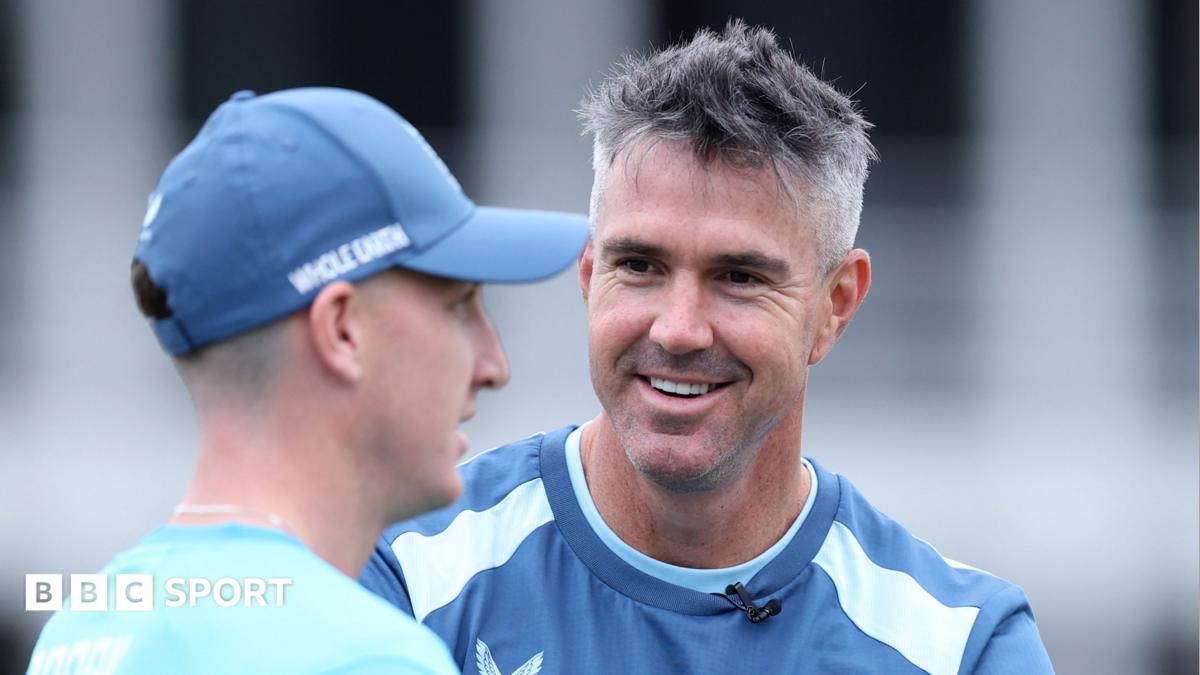



























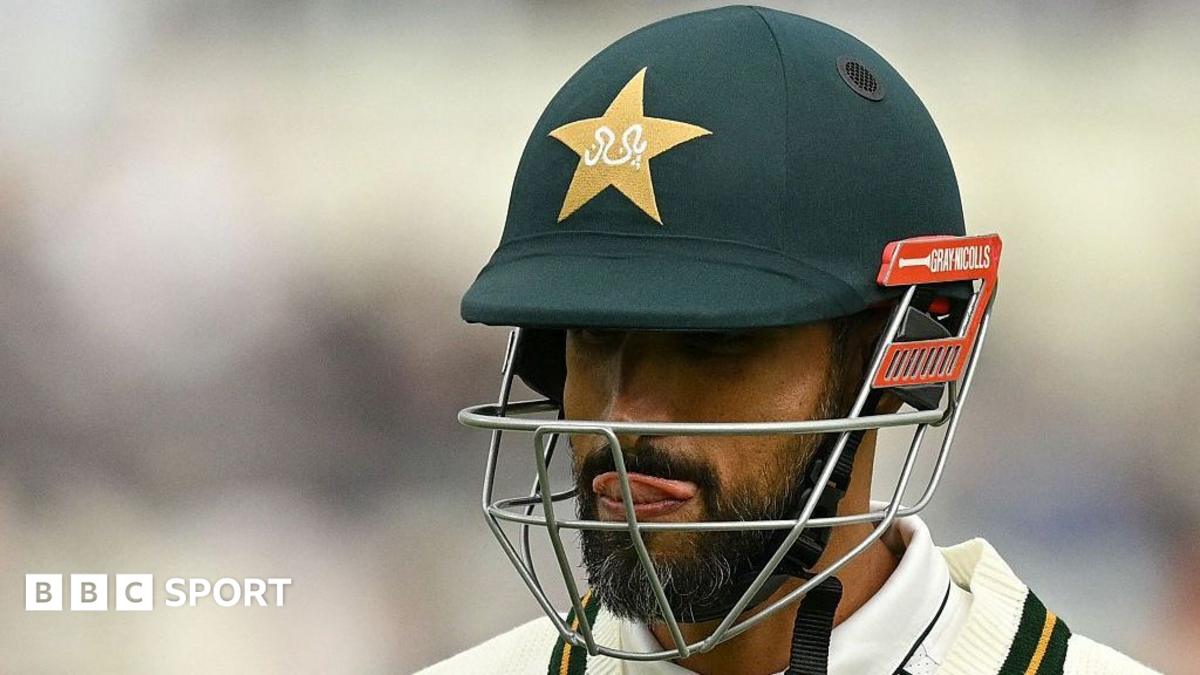
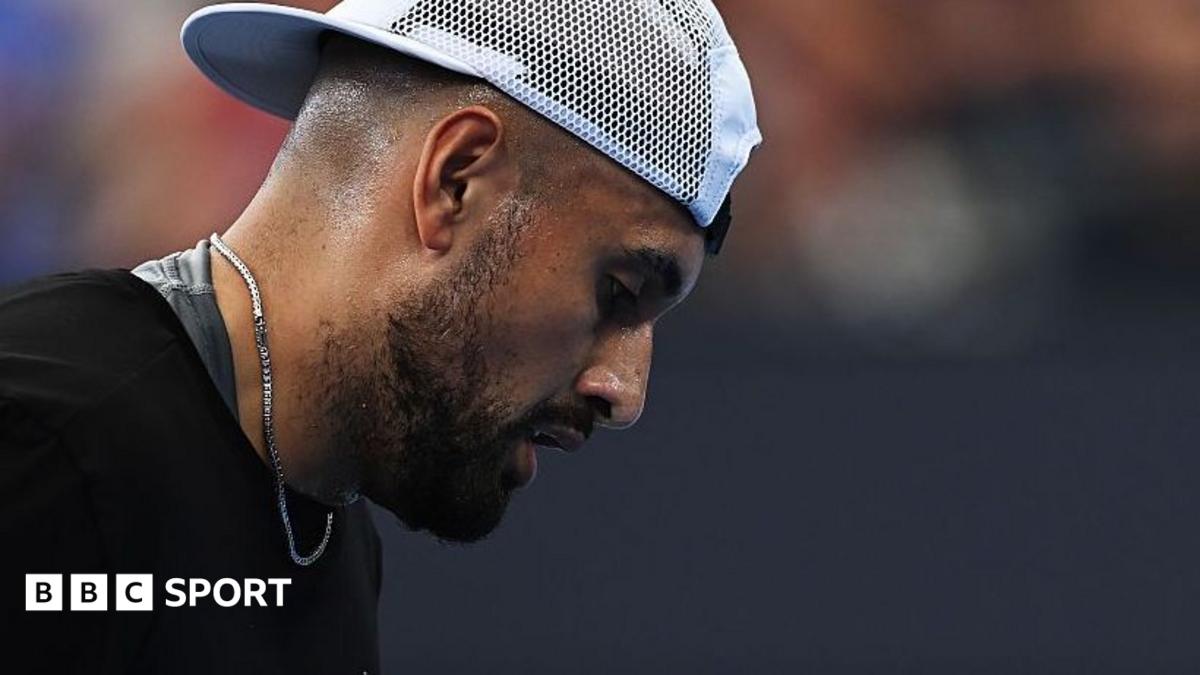


![Nigerien soldiers patrol outside the town of Ouallam, Niger [Reuters]](https://i0.wp.com/www.aljazeera.com/wp-content/uploads/2022/01/2021-10-08T050022Z_1003423593_RC22FO9GB76E_RTRMADP_3_AFRICA-ISLAMISTS-SAHEL-LEADERS.jpg?w=640&ssl=1)