Tesla

Roadblocks to Autonomy: Tesla’s Self Driving Ambitions Face European Doubt

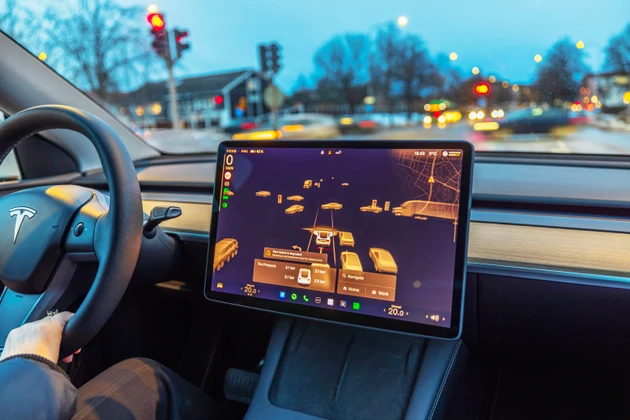
Tesla is encountering growing resistance in Europe as it seeks approval for its advanced driver assistance system known as Full Self Driving. While chief executive Elon Musk has expressed strong confidence that the technology will soon gain approval across the bloc, internal communications among regulators reveal a far more cautious and skeptical stance.

The system, currently marketed as Full Self Driving Supervised, allows vehicles to operate autonomously under certain conditions but still requires full driver attention. Approval in Europe is critical for Tesla as it attempts to recover market share lost over the past two years and expand its subscription based revenue model.

Early Approval and Wider Ambitions

The Dutch vehicle authority RDW granted initial approval for the system earlier this year. This decision has now been forwarded to the European Union for broader consideration, with discussions underway among member state representatives.

Tesla is aiming not only for approval of its current system but also for future deployment of fully autonomous robotaxis in Europe. Such ambitions depend heavily on regulatory trust in the safety and reliability of its technology.

Regulatory Concerns Across Europe

Despite the Dutch endorsement, regulators from several European countries including Sweden, Finland, Denmark, and Norway have raised serious concerns. These include the system’s tendency to exceed speed limits, its performance in icy and hazardous conditions, and the possibility that drivers may bypass safeguards designed to ensure attentiveness.

Officials have also questioned whether the branding of Full Self Driving could mislead consumers into overestimating the system’s capabilities. This concern reflects a broader issue in the automated driving industry, where terminology can blur the line between assistance and autonomy.

Safety, Environment, and Real World Challenges

European regulators are particularly focused on how the system performs under conditions that differ significantly from those in the United States. Winter driving, for instance, presents unique challenges such as icy roads, reduced visibility, and unpredictable obstacles.

Questions have also been raised about how the system would respond to unexpected hazards, including wildlife on roads. These concerns highlight the difficulty of deploying standardized automated driving technology across diverse geographic and environmental contexts.

Pressure, Perception, and Public Influence

Adding to regulatory unease is Tesla’s approach to public engagement. Officials have expressed frustration with the company’s encouragement of Tesla owners to lobby regulators for approval. In several cases, authorities reported being inundated with emails from supporters advocating for the technology.

While some regulators acknowledged that the system performed well in complex urban environments, others warned that public pressure could complicate an already rigorous evaluation process.

High Stakes Approval Process

For the system to gain EU wide approval, it must secure support from a qualified majority of member states representing a significant portion of the bloc’s population. No immediate vote is scheduled, but further discussions are expected in the coming months.

Approval is seen as a key factor in Tesla’s strategy to boost sales and profitability in Europe, especially as competition intensifies from other global and regional automakers.

Analysis

Tesla’s push for automated driving approval in Europe reveals a fundamental tension between technological ambition and regulatory caution. While the company frames its system as a breakthrough in safety and convenience, European authorities are prioritizing risk mitigation and consumer protection.

The skepticism is not merely bureaucratic hesitation but reflects deeper structural differences in regulatory philosophy. European institutions tend to adopt a precautionary approach, particularly in areas involving public safety and emerging technologies.

For Tesla, the challenge lies in bridging this gap. Securing approval will require not only technical validation but also greater transparency and alignment with regional expectations. For regulators, the task is to balance innovation with responsibility in a rapidly evolving sector.

Ultimately, the outcome of this process will shape not only Tesla’s future in Europe but also the broader trajectory of autonomous driving adoption across the continent.

With information from Reuters.

Source link

Tesla signals over $25B 2025-2026 CapEx as it targets Optimus production by late July/August and Robotaxi in a dozen states by year-end (NASDAQ:TSLA)

Earnings Call Insights: Tesla (TSLA) Q1 2026

Management view

  • Tesla framed 2026 as an investment-heavy year, with CEO Elon Musk saying, “We’re going to be substantially increasing our investments in the future so you should expect to see significant — a very significant increase

Seeking Alpha’s Disclaimer: This article was automatically generated by an AI tool based on content available on the Seeking Alpha website, and has not been curated or reviewed by humans. Due to inherent limitations in using AI-based tools, the accuracy, completeness, or timeliness of such articles cannot be guaranteed. This article is intended for informational purposes only. Seeking Alpha does not take account of your objectives or your financial situation and does not offer any personalized investment advice. Seeking Alpha is not a licensed securities dealer, broker or US investment adviser or investment bank.

Source link

Not a BMW, Audi or Tesla – the best car for a road trip revealed

The RAC has named the best cars on the market for a road trip in the UK, with an unexpected vehicle coming out on top thanks to its fuel efficiency and fun driving experience

Despite soaring fuel costs, motorists across the UK will still be eager to hit the open road this summer and enjoy a good old-fashioned road trip.

Whether it’s a group of mates touring Cornwall, tackling Scotland‘s legendary North Coast 500, or conquering the Welsh hills, there’s no shortage of thrilling routes to choose from.

With this in mind, the RAC has compiled a list of the finest road trip cars currently on sale in the UK. However, the top pick may well raise a few eyebrows – and so might the runner-up.

Taking the top spot is the £17,095 Kia Picanto city car which, while not an obvious choice, the RAC’s Lawrence Allan explained how its compact performance made it more exhilarating to drive than many far pricier and more powerful alternatives on the market.

He explained: “Road trips are rarely dull when you’re pushing a car to its limits, and you can do that in the little Kia and still be under the speed limit. You’ll sip fuel, too – a bonus with unpredictable fuel prices.

“What’s more, the Picanto is good fun to drive on the kind of tight, twisty roads that are found in most of our top 10 best road trips in the UK. Then, when you head into a nearby town for dinner, parking is a doddle.”

Pipped to second place behind the Kia Picanto was the electric variant of the Mercedes-Benz CLA, which Lawrence described as the ultimate electric vehicle for hitting the road.

Lawrence cited the primary reason for this as the distance the £45,615 car could cover on a single charge, boasting a range of up to 484 miles — sufficient to travel from London all the way to Dundee in Scotland.

He further noted that the vehicle impressed with its efficiency and rapid charging capability, making pit stops noticeably less lengthy than those required by other electric cars over the past decade.

Taking third place was the £34,875 Nissan Qashqai e-Power. Lawrence attributed its bronze position partly to its efficiency, which allows drivers to achieve over 770 miles from a tank of fuel, as well as its outstanding practicality.

While the Kia and Mercedes offer 255 and 407 litres of boot space respectively, the Nissan boasts a generous 504 litres. The Nissan also edges ahead of the Kia on fuel economy, with the Kia capable of 51.4mpg compared to the Nissan’s 64.2mpg — a crucial factor during a period of rising fuel costs.

On the subject of fuel, some experts have cautioned against filling up between 10am and 2pm, amongst them Interfuels’ Gordon Walllis.

He explained to the Express: “By late morning, many retailers have already adjusted their prices to reflect overnight changes in wholesale costs. That means drivers filling up around midday are often paying a premium.

“Late morning and early afternoon tend to be busy periods, with people stopping during errands, commutes or lunch breaks. When demand is steady, there is less pressure on retailers to keep prices low.”

Source link