Terrorism

UK holidaymakers in Turkey warned about security risks and entry requirements

Here’s everything UK holidaymakers need to know before heading there this summer, from entry requirements to taxi use and dress code

Turkey remains a firm favourite amongst British holidaymakers, with thousands of people flying out to the country each year. Anyone planning a trip there this year is strongly advised to familiarise themselves with all current travel guidance and any warnings in place.

The UK Foreign, Commonwealth and Development Office (FCDO) provides a wealth of information on its website, covering countries across the globe. It’s an invaluable resource for anyone with holidays booked or considering travelling abroad, reports Chronicle Live..

If you’re heading to Turkey, there are several important things to be aware of. We’ve outlined the key travel warnings and advice below.

The Foreign Office states: “If you choose to travel, research your destinations and get appropriate travel insurance. Insurance should cover your itinerary, planned activities and expenses in an emergency.” It also cautions: “Your travel insurance could be invalidated if you travel against advice from the Foreign, Commonwealth and Development Office (FCDO).”

Warning over Turkey- Syria border

The FCDO advises against all travel to within 10km of the border with Syria due to ongoing fighting and an increased risk of terrorism. The FCDO states: “Fighting in Syria continues in areas close to the Turkish border and there is a heightened risk of terrorism in the region. Due to the ongoing conflict in Syria, roads in Hatay Province leading towards the border may be closed at short notice.”

Entry requirements

To enter Turkey, your passport must have an ‘expiry date’ at least 150 days beyond the date you arrive and at least one blank page. If you’re entering at a land border, ensure officials stamp and date your passport at the border crossing.

The FCDO says: “Check with your travel provider that your passport and other travel documents meet requirements. Renew your passport if you need to. You will be denied entry if you do not have a valid travel document or try to use a passport that has been reported lost or stolen.” You can visit Turkey without a visa for up to 90 days within any 180-day period, for business or tourism purposes.

Political situation

The Foreign Office states: “Regular demonstrations and protests are currently taking place in Istanbul and other cities across Turkey. Demonstrations may become violent. The police response has included use of tear gas and water cannons.

“Events in Israel and Palestine have led to heightened tensions in the region and in locations across Turkey. Demonstrations continue to occur outside diplomatic missions connected to the conflict in major cities, particularly Israeli diplomatic missions in Ankara and Istanbul. Avoid all demonstrations and leave the area if one develops. Local transport routes may be disrupted.”

Drink and food spiking

The FCDO warns: “Be wary of strangers approaching you to change money, or to take you to a restaurant or nightclub. If strangers offer you food and drink these could be spiked. Buy your own drinks and always keep sight of them.”

Holidaymakers are being cautioned that there have previously been instances of severe illness caused by alcoholic beverages containing methanol in popular tourist destinations across the globe. The FCDO says: “In Turkey, including Ankara and Istanbul, people have died or suffered serious illness after drinking illegally produced local spirits and counterfeit bottles of branded alcohol.

“Even small amounts of methanol can kill. It is not possible to identify methanol in alcoholic drinks by taste or smell. See Travel Aware Drink Spiking and methanol poisoning for information about how to reduce the risks. Seek urgent medical attention if you or someone you are travelling with show the signs of methanol poisoning after drinking.”

Taxis The website says: “Accepting lifts from drivers of unofficial taxis is highly risky. Find a registered taxi, note the registration number before entering and ensure the fare is metered. App-based taxis and pre-booked taxis are also widely available.”

Carry your ID

It is illegal not to carry some form of photographic ID in Turkey. Always carry your passport or residence permit. In some busy areas, especially Istanbul, the authorities may stop people for ID checks. There are also several police checkpoints on main roads across Turkey. Cooperate with officials conducting checks.

Dress code

Holidaymakers are also given guidance on appropriate attire. The FCDO advises people to “dress modestly if you’re visiting a mosque or a religious shrine to avoid causing offence”.

Stray dogs

The Foreign Office says: “Most towns and cities have stray dogs. Packs congregate in parks and wastelands and can be aggressive. Take care and do not approach stray dogs. If you’re bitten, get medical advice immediately. Rabies and other animal borne diseases are present in Turkey.”

Rules over sale of antiquities

Purchasing or exporting antiquities is prohibited. You could face a fine and a prison sentence of 5 to 12 years. Certain historical items found at local markets and in antique shops may be sold within Turkey but are forbidden from being exported. Always verify the status of antique items before making a purchase.

Source link

Foreign Office advises Brits against all travel to this country

The Foreign, Commonwealth and Development Office (FCDO) has issued a warning to UK tourists

The Foreign Office has warned Brits against “all travel” to a particular country due to “risks and threats”. Travellers are advised to avoid Russia entirely owing to the ongoing invasion of Ukraine.

In an update published on its website on May 5 and reconfirmed on May 14, the Foreign, Commonwealth and Development Office (FCDO) stated it “advises against all travel to Russia”.

It said: “FCDO advises against all travel to Russia due to the risks and threats from its continuing invasion of Ukraine.” These include:

  • Security incidents, such as drone attacks, and Russian air defence activity
  • Lack of flights to return to the UK
  • Limited ability for the UK government to provide support

The FCDO added: “There is an increased risk of British nationals being detained in Russia, including if the Russian authorities suspect you of engaging in or supporting activities against Russian law, even if activities took place outside Russia.

“Russia has a track record of targeting foreign nationals and holding them in detention as leverage over other countries. FCDO’s ability to assist you in these circumstances is extremely limited.

“There is also a high likelihood terrorists will try to carry out attacks, including in major cities.”

On its safety and security page, the FCDO noted that terrorist attacks have occurred across Moscow, St Petersburg and other Russian cities in recent years. This includes an attack at Crocus City Concert Hall in Krasnogorsk near Moscow in 2024 in which 145 people were killed.

Limited UK government support

While the British Embassy in Moscow and British Consulate in Ekaterinburg remain operational, the FCDO cautioned that the situation “could change at short notice”.

“In-person UK government support in Russia is limited,” it stated. “It is very limited in parts of Russia because of the security situation and the size of the country, particularly in the North Caucasus.”

Should you find yourself in Russia requiring assistance, you can ring the FCDO’s 24-hour helpline on +7 495 956 7200 and select the option for consular services for British nationals. Alternatively, you can contact the Russian emergency services on 112.

It’s also crucial to be aware that your travel insurance may be rendered void if you travel against FCDO guidance. For further details, visit the FCDO website here.

Source link

The insurgencies challenging Mali’s military-led government

Mali’s government is facing difficulties in maintaining power following coordinated attacks by insurgents which killed the defense minister and targeted the main army base near the capital. These attacks involved collaboration between al Qaeda affiliates and a Tuareg rebel group, raising concerns about the government’s claim of restoring order.

The first main group involved is Jama’at Nusrat al-Islam wal-Muslimin (JNIM), which formed in 2017 from a merger of several militant groups after an ethnic Tuareg uprising began in 2012. JNIM is led by Iyad Ag Ghaly, who was previously the head of the Islamist group Ansar Dine. His deputy is Amadou Koufa from the Macina Liberation Front. JNIM has been active near Bamako for nearly a year and is focused on destabilizing the government more than capturing the city. The group had previously announced a fuel blockade as part of its strategy to encircle urban areas and has attacked Bamako before, including a significant assault in September 2024. JNIM is believed to have around 6,000 fighters and also operates in neighboring Burkina Faso and Niger.

The second group, the Azawad Liberation Front (FLA), arose from ongoing Tuareg rebellions that have plagued Mali since its independence in 1960. The Tuaregs seek an independent homeland called “Azawad. ” The National Movement for the Liberation of Azawad (MNLA) initially aimed for independence in 2012 but was overtaken by Islamist factions, prompting Mali to request French military support. In 2015, Mali and Tuareg separatists signed a peace agreement, but tensions reignited in 2024 when the military-led government withdrew from this agreement after expelling foreign forces. In July 2024, clashes resulted in numerous casualties among Malian and Russian troops, with suggestions of foreign involvement in the rebellion.

The third group, the Islamic State in the Sahel Province (ISSP), is an affiliate of the Islamic State that split from Al-Mourabitoun in 2015. ISSP is JNIM’s main rival, and since 2019, confrontations between the two have resulted in over 2,000 deaths. ISSP gained notoriety for the 2017 killing of four American soldiers and has recently escalated attacks in Niger, raising concerns over civilian safety. The group aspires to create an Islamic caliphate in the Sahel but is known to be less engaged with local populations compared to JNIM.

With information from Reuters

Source link

Foreign Office says ‘do not travel’ to Mali after airport closed

Terrorists have attacked at various locations and soldiers are ‘currently engaged in eliminating the attackers’

The Foreign Office this afternoon said people should not travel to Mali after a sderies of attacks today. Officials co-ordinated attacks have struck the country.

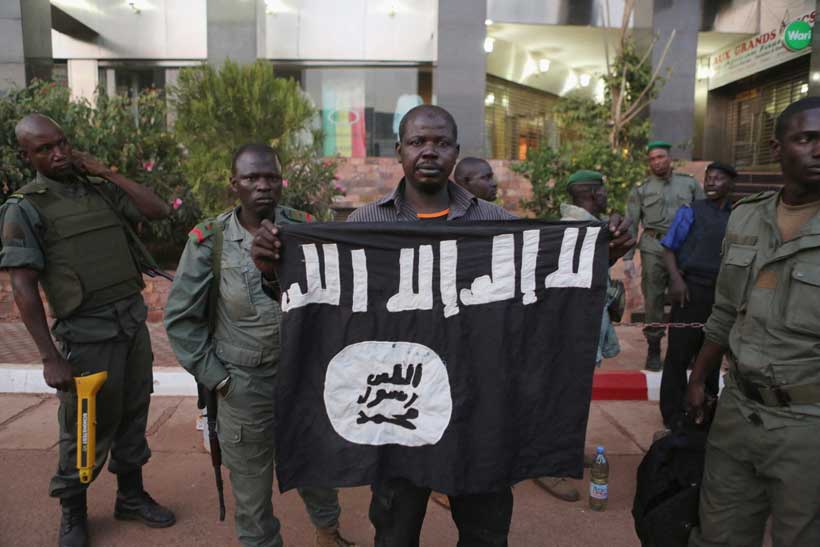
Gunmen attacked several locations in Mali’s capital and other cities early on Saturday in a possible co-ordinated assault, residents and authorities said. Mali’s army said in a statement “unidentified armed terrorist groups targeted certain locations and barracks in the capital”. It added that soldiers were “currently engaged in eliminating the attackers”.

The Foreign Office told British citizens today: “A series of coordinated attacks occurred in multiple locations including Kidal, Gao, Kati, Sevare and in the vicinity of Bamako International Airport on 25th April, which has temporarily closed.

“If you are in Mali, you should stay indoors where possible, avoid crowded places and areas of military or police activity, and follow guidance issued by local authorities. We continue to advise against all travel to Mali.”

Previously the Foreign Office told people to only leave via the airport as overland routes are ‘too dangerous.’ It added: “This is due to terrorist attacks along national highways.

“Terrorist group Jama’a Nusrat ul-Islam wa al-Muslimin (JNIM) has implemented blockades on key routes throughout Southern and Western Mali, including the capital city of Bamako. These blockades are targeting fuel trucks and are enforcing checkpoints for individuals attempting to pass through them. Attacks can occur at any time.

“There is a high threat of kidnapping and criminal activity across Mali, including in the capital, Bamako. If you choose to remain in Mali, you do so at your own risk. You should have a personal emergency plan that does not rely on the UK government.

Mali has been plagued by insurgencies fought by affiliates of al Qaida and the so-called Islamic State group, as well as a separatist rebellion in the north.

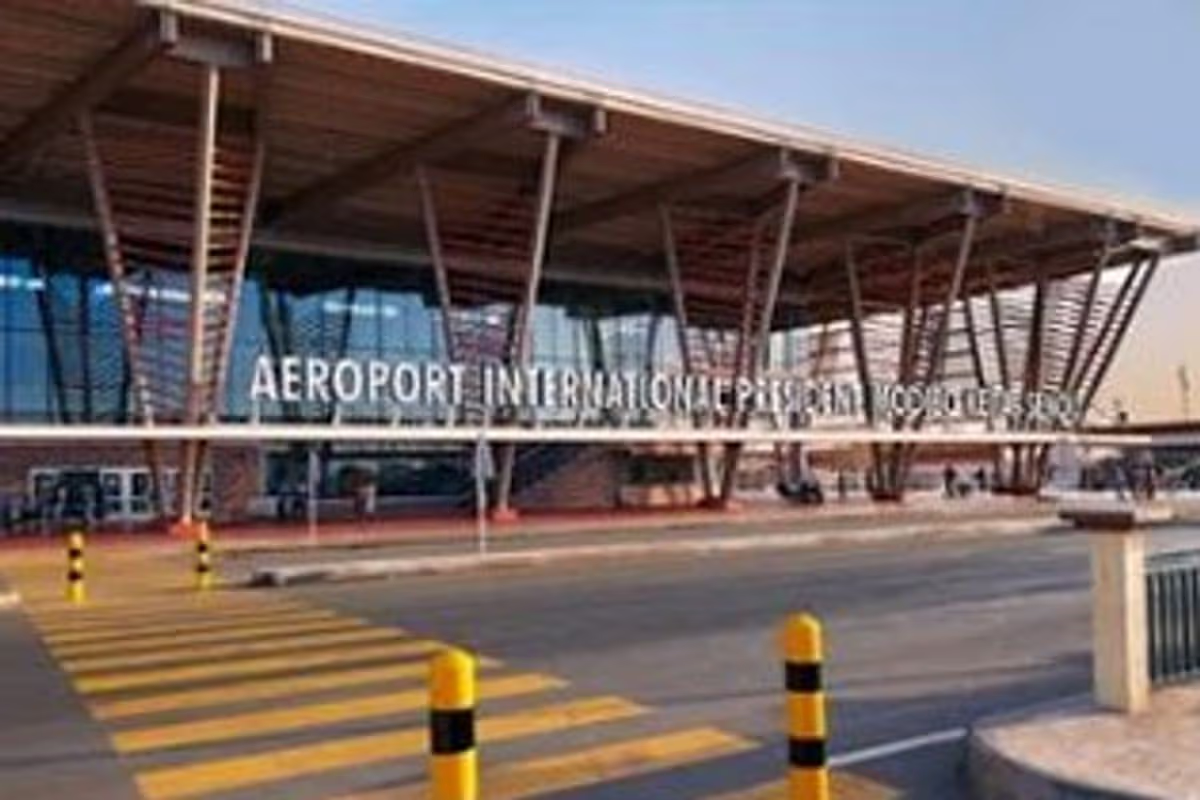
An Associated Press journalist in the capital Bamako heard sustained heavy weapons and automatic rifle gunfire coming from Modibo Keita International Airport, around 15km (nine miles) from the city centre, and saw a helicopter over nearby neighbourhoods.

The airport is adjacent to an air base used by Mali’s air force. A resident living near the airport also reported gunfire and three helicopters patrolling overhead.

Residents in other cities in Mali reported gunfire and blasts on Saturday morning, suggesting a possible co-ordinated attack by armed groups.

Gunmen entered the northeastern city of Kidal, taking control of some neighbourhoods and leading to gunfire exchanges with the army, a former mayor of Kidal told AP over the phone.

The Azawad separatist movement has been fighting for years to create the state of Azawad in northern Mali. They once drove security forces from the region, before a 2015 peace deal that has since collapsed paved the way for some ex-rebels to be integrated into the Malian military.

Mohamed Elmaouloud Ramadane, a spokesman for the Azawad Liberation Front, said on Facebook its forces had taken control of several areas of Kidal and Gao, another northeastern city. The AP could not independently verify his claim.

A resident of Gao said gunfire and explosions started in the early hours of Saturday and could still be heard in the late morning.

“The force of the explosions is making the doors and windows of my house shake. I’m scared out of my wits,” the resident told AP by phone. He spoke on condition of anonymity. The resident said the gunfire came from the army camp and the airport, which are next to each other.

A resident of Kati, a town near Bamako that is home to Mali’s main military base, also said he was woken up early in the morning by the sounds of gunfire and explosions.

General Assimi Goita, the leader of Mali’s military junta, lives in Kati.

In 2024, an al Qaida-linked group claimed an attack on Bamako’s airport and a military training camp in the capital, killing scores of people.

Mali, alongside neighbouring Niger and Burkina Faso, has long been battling armed groups affiliated with al Qaida and the Islamic State group, a fight that has escalated over the past decade.

Following military coups, the juntas in the three countries have turned from Western allies to Russia for help combating Islamic militants.

But the security situation in Mali, Niger and Burkina Faso has worsened in recent times, analysts say, with a record number of attacks by militants. Government forces have also been accused of killing civilians they suspect of collaborating with militants.

Source link

Two arrested in London synagogue arson case amid terrorism probe

April 20 (UPI) — British police overnight arrested two teens in connection with an attempted arson of a London synagogue, authorities said Monday as they investigate a rash of recent attacks targeting the Jewish community as possible terrorism.

A Metropolitan Police spokesperson told UPI in an emailed statement Monday that a 17-year-old boy and a 19-year-old man were arrested overnight in the London area for the weekend arson attack targeting Kenton United Synagogue in Harrow, northwest London.

The suspects, who were not identified, remained in police custody on Monday when authorities were expected to announce additional details.

The synagogue was attacked overnight Saturday, suffering only minor smoke damage to an internal room, according to Community Security Trust, a British charity with the mission to protect Britain’s Jewish community. It said in a statement that no injuries or significant structural damage were reported.

There have been at least five separate arson attacks in London since four ambulances used by the Jewish community in Golders Green were set ablaze March 23.

Police said there were three attacks over the weekend: the one targeting Kenton United, another targeting a communal block in Barnet and a third late Friday, targeting a row of shops in Hendon.

Several people have been arrested in connection with the various attacks, including a fourth person detained related to the Golders Green arson attack on Thursday.

The Met’s Counter Terrorism Policing unit is leading an investigation into all of these incidents, Deputy Assistant Commissioner Vicki Evans told reporters outside Kenton United in a Sunday press conference, stating that the “nature” of all the crimes has been similar — “arson attacks targeting Israeli- and Jewish-linked premises in London.”

Most of the attacks have been claimed online by Harakat Ashab al-Yamin al-Islamia, which translates to the Islamic Movement of the Companions of the Right, Evans said.

“This same group has claimed several incidents over recent months at places of worship, business and financial institutions across Europe. These locations all appear to be linked to Jewish or Israeli interests,” she said.

The attacks were committed amid the U.S.-Israeli war with Iran.

The Met said that, as the conflict continues, its Counter Terrorism Policing unit is aware the threat Iran poses to Britain and is investigating whether those who committed these arson attacks in London had been recruited by the group to carry out its crimes.

Those recruited often have no allegiance to Iran’s cause but are paid with “quick cash,” she said.

“To anyone even considering getting involved — my message to you would be this — the stakes are high — and it is absolutely not worth the risk for a small reward,” she said.

“Those asking you will not be there when you are arrested and face court. You will be used once and thrown away without a second thought.”

Ashab al-Yamin, a front group with suspected links to Iran, has claimed responsibility for several attacks in Europe targeting Jewish and Western institutions since March 9, according to a report published earlier this month by the Washington-based nonpartisan Foundation for Defense of Democracies research institute.

No deaths have been reported in the attacks that have spanned Belgium, the Netherlands, Greece and Britain, it said.

Source link