Gianni Infantino’s chances of being re-elected as Fifa president appear to have been given a major boost with potential rival Victor Montagliani set to remain as head of Concacaf.
The Canadian, 61, was widely seen as a possible candidate after Infantino’s failed plan to sell stakes in the World Cup to private investors sparked a global backlash.
However, Montagliani never confirmed he wanted to challenge Infantino, and according to sources, he has now told colleagues that he will instead seek a final term as head of the confederation which governs North and Central America and the Caribbean.
As first reported by the Guardian, it means he will not stand against Infantino, 56, who is seeking a fourth term in March’s presidential election.
The rebellion against him, spearheaded by European governing body Uefa, must now try to identify a unifying candidate by the deadline of 18 November.
Meanwhile, Aleksander Ceferin will stand for a fourth term as Uefa president.
Ceferin informed delegates of his decision at a meeting of all 55 national association chiefs in Berlin.
Uefa also reaffirmed its opposition to Infantino as it published a 14-point plan to reform world football’s governing body.
At that point Ceferin, who was initially elected in 2016, was embroiled in a row over Uefa changing its statutes to allow him to serve for a fourth term.
However, there had been a growing expectation the 58-year-old would stand.
This has only been made more likely since Uefa launched its efforts to oust Infantino, who scrapped his sell-off plan following widespread opposition.
“I want to thank the national associations for their trust,” Ceferin said.
“We have faced extraordinary challenges over the past years, and we have faced them as one team. There is still important work ahead, and I have therefore accepted their request.
“My ambition remains the same: to keep European football united, make our game stronger and leave Uefa ready for the next generation.”
Ceferin has ruled out standing against Infantino himself but is committed to finding a candidate around which the game can unite in March’s FIfa election.
STAYING in the UK for October half-term sounds like the smart, budget-conscious choice… until you sit down and crunch the numbers.
Between filling the fridge, shelling out for soft play, buying fuel for days out and those innocent-looking theme park trips that somehow cost £50 before you’ve even passed through the turnstiles, you could easily spend hundreds in a week.
Once you’ve added up food, petrol and activities for the week, a holiday abroad might not cost much moreCredit: On The BeachMagic Fantasy Hotel in Spain is one for the entire familyCredit: On the Beach Holidays
And that’s before the mental toll of cooking three meals a day, clearing up the constant mess and playing full-time entertainment director.
So, I did the maths on another option – cheap resorts with all-inclusive packages for October half-term, starting from £255pp or £51 a night.
With accommodation, meals and selected snacks and drinks included, as well as free childcare at some resort hotels, flying abroad starts to look like something worth pricing up against your half-term plans at home.
Here are the seven best-value resorts I’d be searching for this October half term – and someone else can handle the cooking.
7. Kusadasi, Turkey – from £433pp
Grand Blue Sky International has a fantastic All Inclusive offerCredit: On the Beach Holidays
Kusadasi gives families an all-inclusive holiday and a change of scenery from the usual Spanish resorts.
It also gives you plenty of scope for time outdoors, with an average October daytime high of 24C.
It has pools, (including a children’s pool), play areas and a club advertised for children aged four to twelve.
Breakfast, lunch and dinner are served buffet-style as part of its All Inclusive programme, with a later breakfast option if the family pulls off the rare miracle of sleeping in.
At £408pp, this is the priciest of the seven, but it gets you five nights at a mega-resort, with flights and meals included. Not bad.
6. Albufeira, the Algarve – from £378pp
Grand Muthu Forte da Oura has a pool and is right by the beachCredit: On the Beach Holidays
Albufeira is a good fit for an autumn break that mixes beach time with getting out and exploring.
The October daytime high is 23C, ideal for a walk along the beach or an afternoon in the brilliant bars of Albufeira’s old town.
Grand Muthu Forte da Oura is around 750 metres from Praia da Oura beach, with a main pool, children’s pool and playground.
And its stellar all-inclusive programme covers breakfast, lunch, dinner, afternoon snacks and selected locally produced drinks.
Lunch and dinner can be buffet-style or served from a set menu, but either way, having those meals accounted for makes your spending money easier to plan.
There is also free childcare year round – check availability before booking.
The five-night deal I found here was just £378pp, with flights, accommodation and all-inclusive food and drinks chucked in.
5. Callao Salvaje, Tenerife – from £330pp
Expect the warmest October temperatures at BLUESEA Callao GardenCredit: On the Beach Holidays
As you’d expect, Tenerife has the highest October average on this list.
With an average daytime high of 27C in October, Callao Salvaje is a strong pick when maximum warmth is what you’re after.
The apartment-style accommodation has three outdoor pools and activities including mini golf and table tennis.
Its all-inclusive board includes buffet meals, so there’s less need to hunt for somewhere to eat whenever somebody gets hungry.
And for all of this – guaranteed October heat, all you can eat and drink, return flights and your accommodation sorted – you’ll only need to part with £330pp.
4. Benidorm, Costa Blanca – from £325pp
Hotel Cuco is one for the Benidorm fansCredit: On the Beach Holidays
Benidorm makes family time in the sun easy – you’ve got massive beaches, promenades that aren’t a nightmare with a pushchair and plenty to see without committing to a full day’s excursion.
And the weather’s great too, with an average October daytime high of 25C.
I wouldn’t look much further than the highly-rated Hotel Cuco, just ten minutes’ walk from Poniente Beach.
Its buffet restaurant serves Mediterranean dishes with show cooking, and there’s a decent pool at the hotel too.
There’s a mini club for the little ones, as well as a rooftop pool bar which mum and dad might have more interest in exploring.
I found a deal for five nights this October for only £325pp, all-inclusive – that’s mega value for half-term.
3. Oropesa del Mar, Costa del Azahar – from £293pp
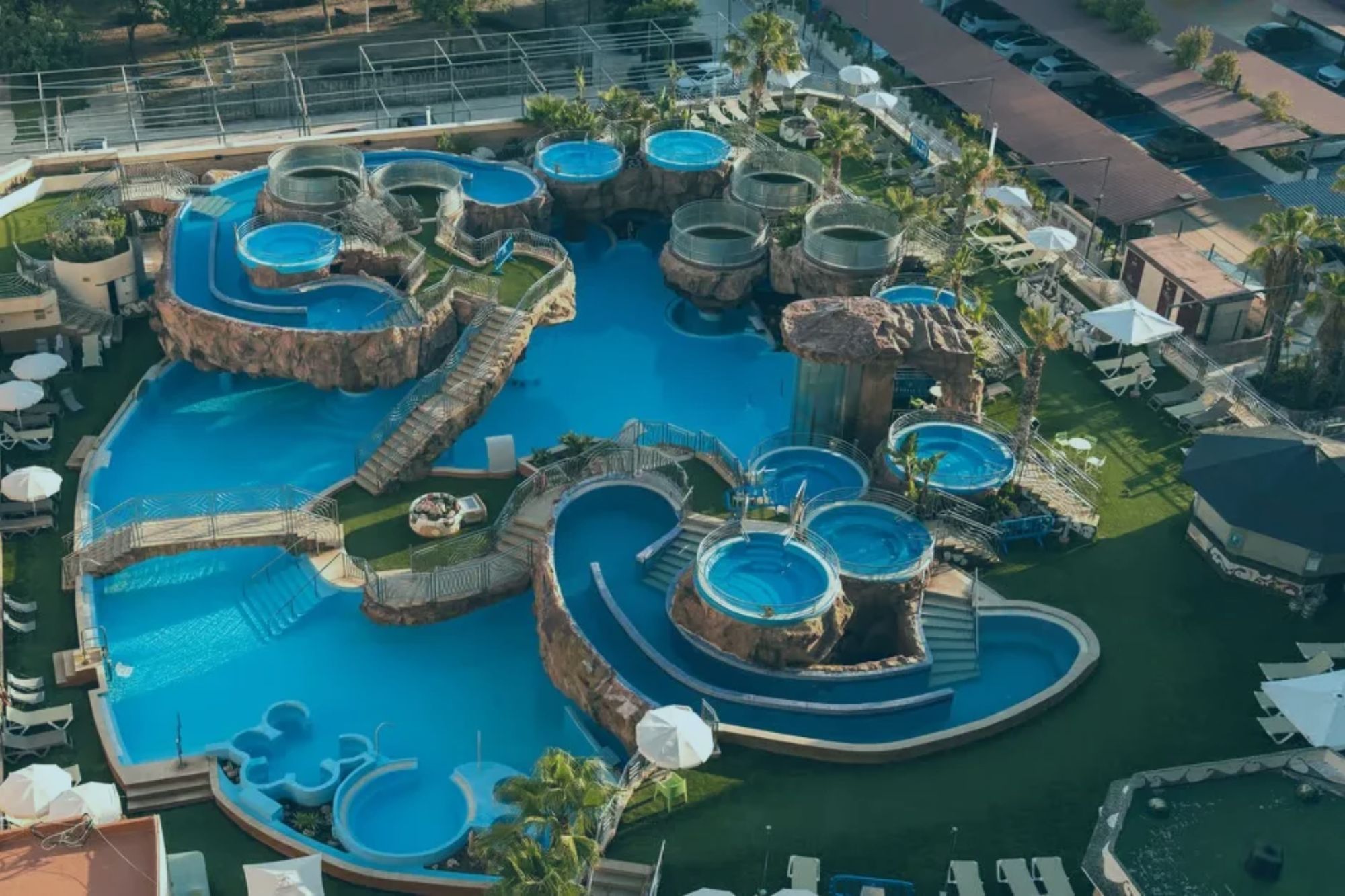
Crazy pools, pirate buffets – Magic Fantasy Hotel was made for familiesCredit: On the Beach Holidays
If your family wants proper entertainment rather than five quiet days by the pool, Oropesa del Mar could be the perfect pick.
With an average October daytime high of 24C, you get great conditions for getting out, topping up the Vitamin D and working on your tan.
And this hotel’s something special for both adults and kids too.
Magic Fantasy Hotel goes big on the family theme, with fantasy-inspired rooms and a Pirates Buffet serving Spanish and international food with a children’s section.
Over the October break there’s live entertainment, costume contests, and the waterparks fully open.
At £293pp for five nights all-inclusive, you’re getting flights, meals and plenty to get your teeth into for the week before you’ve planned a single day out.
2. La Pineda, Costa Dorada – from £283pp
Big pool, nearby beach and simply buffet food makes La Pineda an easy choice for the half termCredit: On The Beach
La Pineda makes family days super-straightforward.
Its long, flat beach gives everyone room to spread out, and the resort has an average October daytime high of 22C.
Not boiling, but that’s plenty of warmth for time on the sand, whether or not anyone fancies getting in the sea…
Gran Hotel La Hacienda is around 550 metres from the beach and has pools and a mini club for younger guests.
Meals are served buffet-style at its Riviera Maya restaurant, taking the daily “where shall we eat?” discussion off your hands, thank God.
PortAventura World is nearby too if you fancy a theme park day out, though tickets cost extra.
And the five-night all-inclusive package I found comes in at £283pp. Bargain.
1. Lloret de Mar, Costa Brava – from £255pp
Guitart Central Park Aqua Resort is our biggest bargain on the listCredit: On The Beach
My number one pick, Lloret de Mar, gives you beaches, coastal walks and a town to explore with the kids.
October’s average daytime high is around 22C.
That’s a comfortable temperature for a beach stroll or an afternoon exploring the Costa Brava without worrying about caking the kids in sun cream every ten minutes.
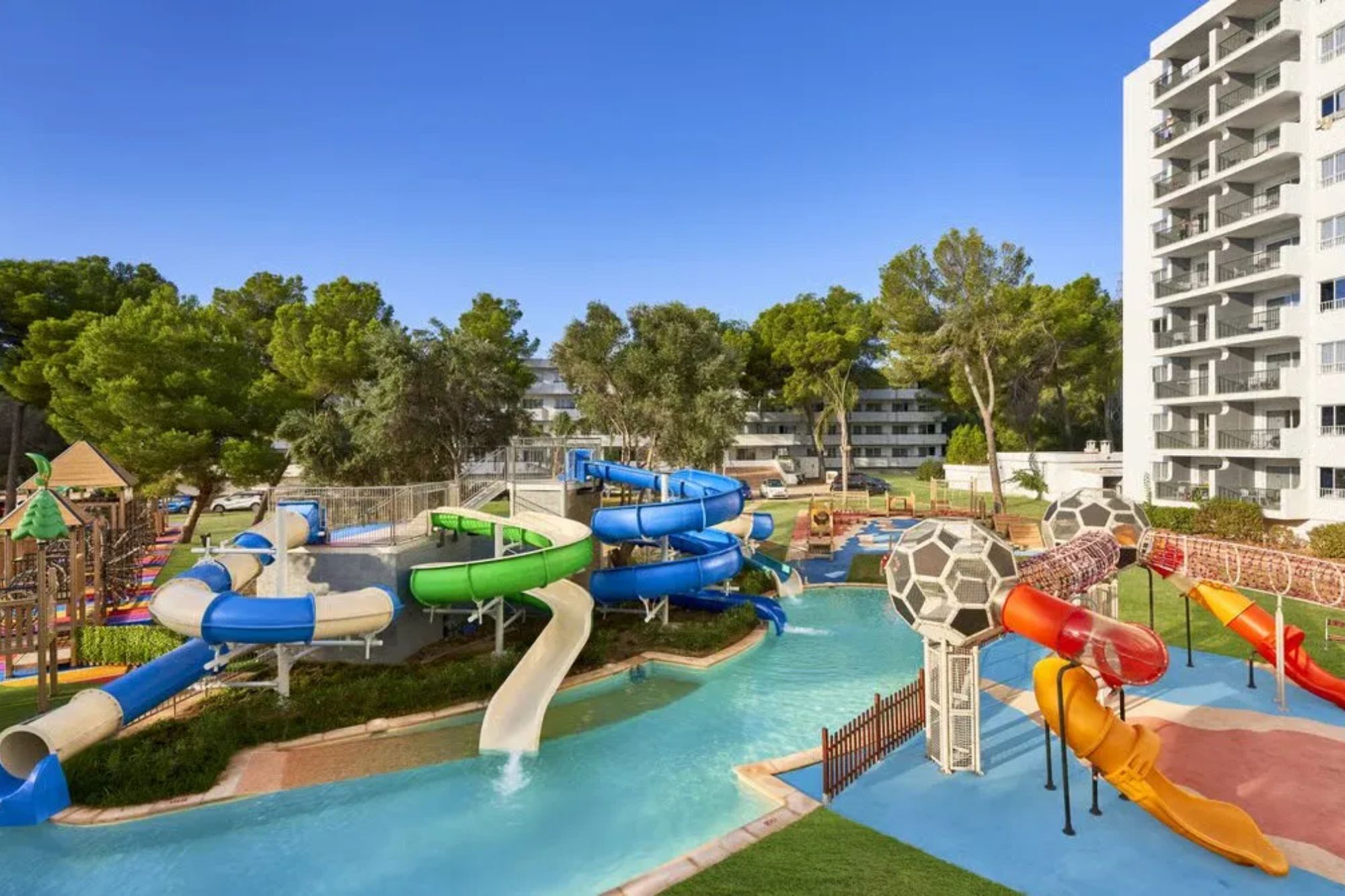
Guitart Central Park Aqua Resort has several pools, children’s clubs for different age groups and buffet restaurants serving Mediterranean, Italian and Catalan dishes, including loads of great options for children.
Its aquapark is the star of the show though with enough slides and features to keep the kids busy all week.
At £255pp, or £51 a night, this is the cheapest five-night all-inclusive deal I found too, and the one I’d personally be booking.
New rules have been introduced at some UK airports, and holidaymakers have been issued a warning ahead of the busy October half-term, as thousands are expected to jet off abroad
A travel warning has been issued to Brits jetting off abroad(Image: Getty Images/Stock Image)
Airports across the nation will be bracing for another busy travel season as we head towards the October half-term, with thousands of families set to jet off abroad on a sun-soaked getaway. But amid the excitement, holidaymakers have been issued a warning and advised to be well prepared for the new rules.
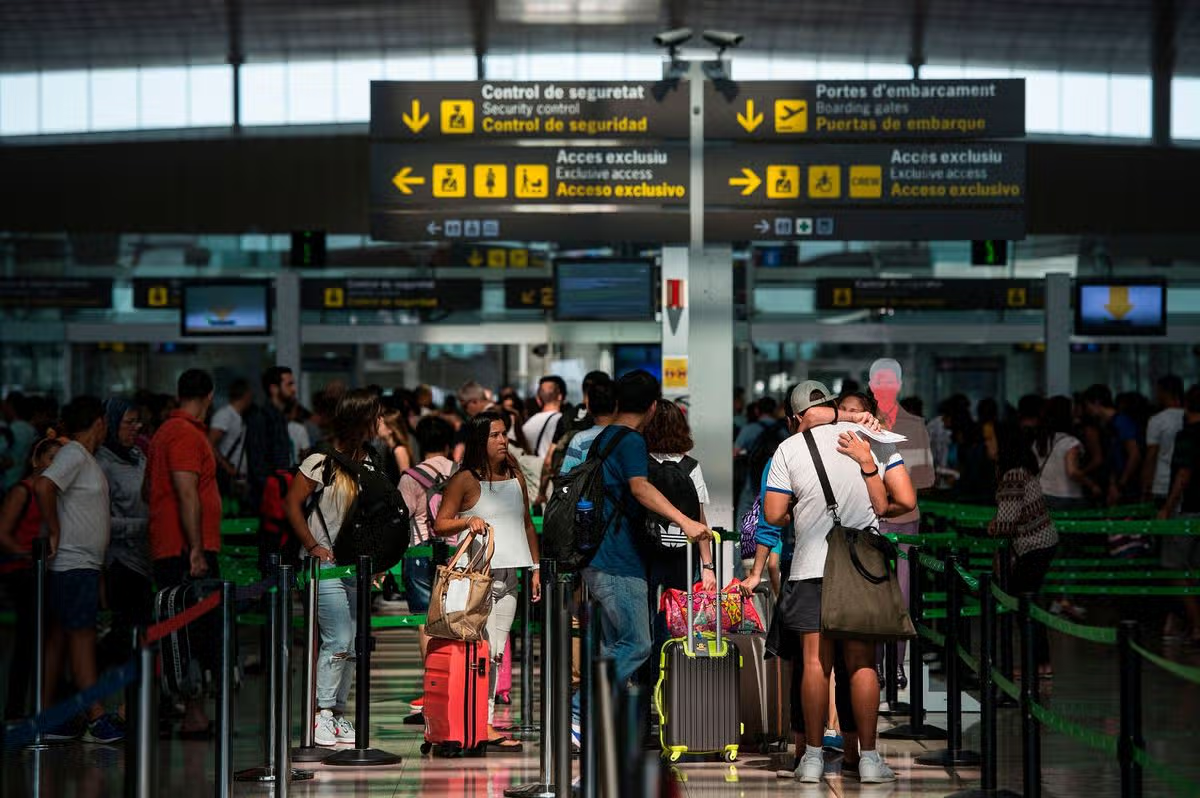
Some UK airports have upgraded their security scanners, meaning that travellers can carry up to 2 litres of liquid through security and no longer need to remove liquids from their hand luggage. Additional rules have also been introduced for security checks, which can vary from airport to airport, making it even more confusing when travelling abroad.
To ensure that holidaymakers are fully prepared before jetting off abroad in the coming weeks, Heathrow Airport issued an update to all travellers. Taking to X, formerly Twitter, the UK’s largest airport shared its “top tips” for going through security and warned: “Security requirements may vary by destination, both within and outside the UK.”
It comes as Heathrow has upgraded its security scanners. On the airport website, they confirmed: “You can now keep liquids and large electronic items in your cabin bag, so getting through security is quicker and easier”. They then outlined that passengers passing through Heathrow should:
Keep liquids in your cabin bag
Carry liquids in containers of up to 2 litres each
Empty metal and insulated bottles before security. You can refill them after security
Keep laptops, tablets and other large electronic items in your bag
The change is thanks to new CT scanners that provide security staff with detailed 3D images of bags, allowing travellers to keep their two-litre liquids in their hand luggage when passing through airport security. However, it’s important to understand that “not all airports use the same security equipment”, as Heathrow warned.
They said: “If you’re flying from another UK or international airport, check the local security rules before you travel. Liquid limits and security checks may be different.” They further explained that “many airports outside Heathrow still have a 100ml liquids limit” and it’s best to check the rules before travelling. This also applies to UK airports, with many still obtaining the 100ml rule.
UK airports that have ditched 100ml rule
Belfast International
Belfast City
Birmingham
Bournemouth
Bristol
Edinburgh
London Gatwick
London Heathrow
UK airports that still have 100ml liquid rule
Aberdeen
Bournemouth
Cardiff
East Midlands
Glasgow International
Glasgow Prestwick
Inverness
Isle of Man
Leeds Bradford
Liverpool
London City
London Stansted
London Luton
Manchester
Newcastle
Norwich
Southampton
Teesside
While many UK airports still have the 100ml liquid rule in place, some have relaxed measures. A number of airports no longer require travellers to store their liquids in a clear plastic bag, and they can also be kept in their hand luggage when going through security. However, as specific rules can vary, it’s best to check directly with the airport you’re flying from, especially in the run-up to the October half-term.
Do you have a travel story to share? Email webtravel@reachplc.com
Brits are continuing to face delays due to the EES system, and queues of five hours were reported just last week at a popular city break destination for those visiting from outside the EU
The long queues seen over the summer seem to be continuing for Brits(Image: JOSEP LAGO/AFP via Getty Images)
European Entry/Exit System (EES) continues for Brits with a major European airport confirming that non-EU visitors faced five hour queues last week.
The Brussels Times reports that non-European travellers, including Brits and Americans, were forced to go through staffed control posts leading the the huge queues. In a statement to the Belgian news outlet, the airport confirmed that additional police officers are being trained for the border control posts and they were seeking “structural solutions”.
When contacted for comment, a spokesperson from Brussels Airport said: “Since the introduction of the European Entry/Exit System (EES), border checks for travellers covered by this system have taken longer, as is the case at many other airports. In addition, passengers from certain non-EU countries can no longer use the e-gates. As a result, more passengers need to go through staffed border control points, which has increased waiting times.”
They added: “All parties involved continue to work together on long-term solutions.” The airport spokesperson confirmed the airport had added two extra border control booths for the Federal Police at departures, in addition to two booths that were added at arrivals before the introduction of EES.
They went on to say: “The Federal Police also increased staffing levels on a permanent basis during the summer, and further reinforcements have been planned. More police officers are also being trained to ensure sufficient staffing at border control points, and additional infrastructure needs are being assessed.
“In addition, 60 EES pre-registration kiosks have been installed. These allow non-EU travellers to submit some of their information in advance. The connection between the e-gates and the pre-registration kiosks is still being tested so that, in the future, passengers from certain non-EU countries may be able to use the e-gates again.”
EES launched nearly a year ago, on October 12 2025, before officially becoming operational on April 10 2026. However, over the summer months holidaymakers have reported a myriad of issues with the system.
But no sooner was it launched than countries started to pause, or even shelve the scheme, due to the huge queues snaking through airports. Nine countries have put full EES implementation on hold, despite the fact that the EU said there would be no extension to the deadline. Holiday hotspots such as Greece briefly made an exemption for British holidaymakers over the summer, which has now been reversed, putting them back in the queue.
Over on Reddit, a poster took to the R/Belgium sub with a post titled: “Brussels airport queues should be a national scandal”, asking: “Why are they so bad? EES isn’t new anymore. They hardly have anyone checking passports. Are people in Belgium aware that queuing for 1hr + isn’t normal?”
One poster replied: “If you’ve got a kid under 12 you have to go through a manual check and can’t use the kiosks, and while usually shorter than the all passports line, it can sometimes be long as well. We waited 20-30 minutes last Friday mid morning. The all passport line was all the way along the back of the security screening area. I don’t remember the last time I’ve seen more than 3 agents working and an all passport line shorter that didn’t back up into the arrivals corridor. “
Reviews of the airport on Google tell the same story. One visitor said: “The passport control situation at Brussels Airport is completely unacceptable. Every time I arrive and have to use the “All Nationals” queue, I face the same problem: an enormous line and an extremely long wait, sometimes lasting hours.”
They added: “This is an international airport and one of the main gateways to the capital of Europe. Yet the passport control capacity seems completely inadequate for the number of arriving passengers. Hundreds of people are forced to stand in line after long flights because there are simply not enough control points operating to process passengers within a reasonable time.”
Have a story you want to share? Email us at webtravel@reachplc.com
A travel expert has issued a crucial warning about the four key checks holidaymakers should make before jetting off abroad, including during the upcoming October half-term
08:58, 01 Oct 2026Updated 08:59, 01 Oct 2026
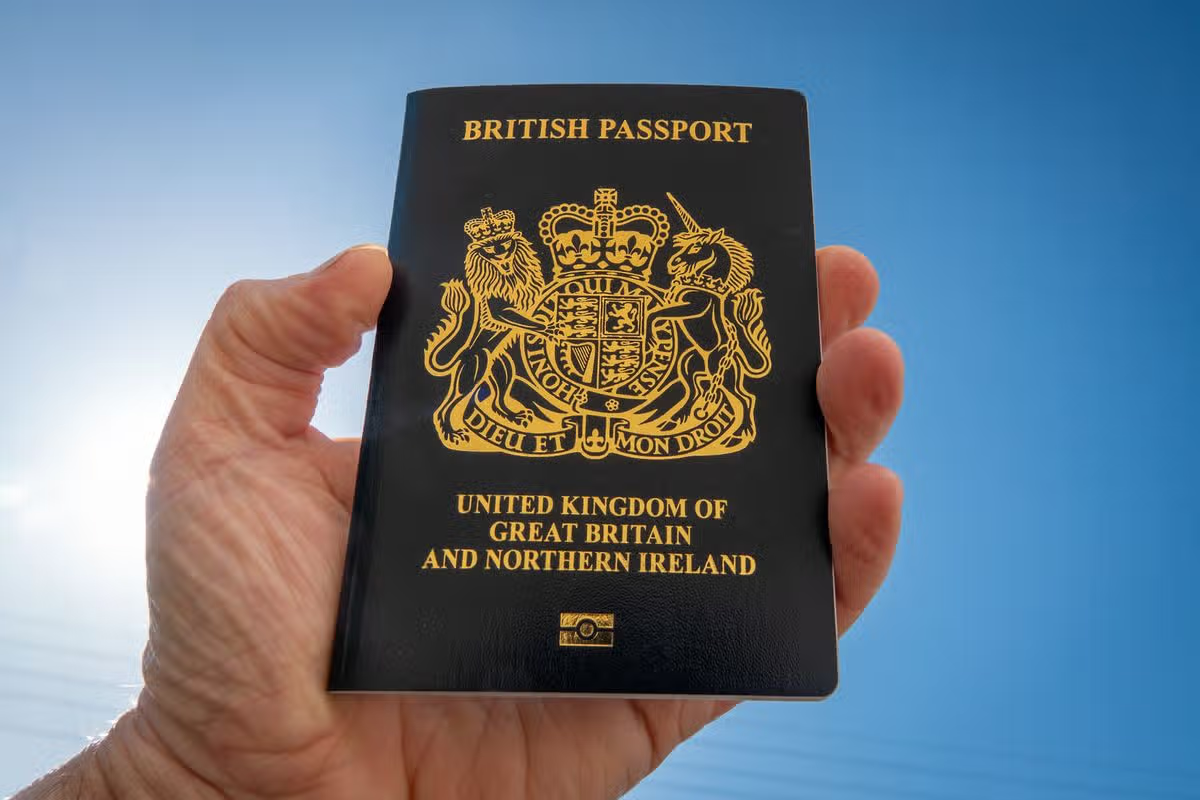
There are four crucial passport checks, and one isn’t always obvious (Image: Getty Images)
Jetting off abroad is always an exciting time, but it’s easy to get caught out at the airport by common passport mistakes. The passport’s expiry date is an obvious check, while the 10-year rule is equally crucial when travelling to the Schengen area.
However, holidaymakers must also be aware of blank pages in their passports and the overall condition of their travel document. Even the slightest defect in a passport can render it invalid, leaving the traveller unable to fly and missing their holiday altogether.
To help Brits feel prepared before jetting off abroad, particually ahead of the October half-term, a travel expert has issued a warning and highlighted the four key checks to make. It’ll take just a few minutes and could be the difference between soaking up the sun in Malta during that well-earned winter escape and being stuck indoors in the grizzly British weather, wishing you had just checked your passport sooner.
Four key passport checks
On what other crucial checks are required before jetting off abroad, Rhys Jones, travel insurance expert at Go Compare Travel, said: “It’s important to remember that passport rules are about more than expiry dates.” He advised: “Travellers should check whether their passport was issued within the accepted period for their destination, is valid for long enough after their trip, has enough blank pages where required, and is not too damaged to travel.
Brits travelling to countries in the Schengen area must make sure their passport was issued less than 10 years before the date they enter the country. They must also ensure that their passport is valid for at least three months after the day they plan to leave the country.
Passport damage
Inspecting for passport damage is an easy thing to forget to do, particularly by seasoned travellers, but it’s a crucial part of pre-holiday checks. Rhys warned: “A damaged passport can quickly become a much bigger problem than many travellers realise. Water damage is particularly risky because it can warp pages, blur personal details, affect stamps or visas, and make the passport harder to scan or verify. Even if it looks usable to you, airline staff or border officials may decide it is too damaged for travel.
“If you turn up at the airport with a passport that is visibly damaged, you could be refused boarding before you even reach border control. Airlines have to be confident that passengers will be accepted at their destination, so a passport with water stains, peeling laminate, torn pages, missing pages, unreadable details or a damaged chip can lead to serious disruption.”
He advised: “The key guidance is to check your passport well before departure, keep it dry and protected while travelling, and replace it if there is any doubt about whether it will be accepted.”
The expert added: “If you notice damage while you are still in the UK, the safest option is to replace the passport before you travel. But if you are already abroad and your passport is lost, stolen, damaged, full, recently expired or otherwise unusable, you may need to apply for an Emergency Travel Document (ETD). This is designed to help British nationals travel urgently from abroad when they cannot use their passport.
Can travel insurance help me?
It depends on what your policy says. Rhys said: “Travel insurance can sometimes help here, but it depends on the policy and the circumstances. Some policies include cover for lost or stolen passports abroad and may contribute towards the cost of an ETD, replacement documentation, or reasonable extra travel and accommodation costs if the issue disrupts the trip. However, cover limits, excesses and exclusions vary, and insurers will usually expect travellers to report the issue promptly, keep receipts, and take reasonable care of their documents. If your passport was lost because of your own negligence, it’s likely your insurer won’t pay out.”
QUIET beaches, cosy hot chocolates in the caravan, loads of rainy day activities for the kids: October half term is the perfect time for a family getaway.
Especially when you can head off on holiday for as little as £2.75pp a night.
Parkdean Resorts are running Halloween activities across 59 holiday parks this OctoberCredit: Parkdean Resorts
Rather than just offering a cheap bed for the week, these holiday parks are running action-packed Halloween activity schedules, with everything from monster talent shows to good-old pumpkin carving.
Plus we’ve purposely picked out spots with plenty more to do off-site, such as a scare fest takeovers at a seaside theme park and a Halloween steam train ride where kids go free.
Better yet, all of these affordable deals are for holidays within the October half term. Many of them begin from Friday night, meaning you collect the kids straight from school and head straight into half term fun.
From the misty Moray coast in Scotland to seaside Halloween fun in Skegness, here’s our favourite UK holiday parks to visit this October half term – from as little as £2.75pp per night.
Butlin’s October Half Term stays
Visit the fairground as it becomes the ‘Scareground’ this Halloween at Butlin’sCredit: Butlins
If you visit to Butlin’s this October half term, expect to find everything fully decked out for Halloween.
The fairground will become the ‘Scareground‘, where monsters lurk in thick fog and you can experience the rides at night in glowing neon green.
The classic ‘Night at Reds’ show held by the Butlin’s redcoats has been given a monster makeover, with Halloween-themed games, sing-a-longs and an ‘Eerily Silent Disco’.
Throw in a mega Halloween Welcome Party, character photo shoots, themed pottery painting and pumpkin-carving sessions, and you’ve got yourself a thoroughly spooky break.
Plus, new for 2026, you’ll find the Skyline Gang Monster Mash – a talent show starring the classic characters with a different winner each night.
We found a four night break at Butlin’s Minehead in a standard family room sleeping four for £44, which works out to £2.75pp per night.
Parkdean Heacham Beach, Norfolk
Let loose at the zombie rave at Parkdean Resorts Heacham BeachCredit: Facebook
Head to West Norfolk’s Heacham Beach holiday park for an autumn seaside break packed with plenty of spookiness.
Free themed activities include nighttime guided ghost walks around the park, and ‘Professor Slime’, where kids step into the slime lab to create their own concoctions.
In the evenings, settle down for the Quiz Nation Halloween Special where you can put your knowledge to the test against other holiday parks across the UK.
Or, if you come alive with energy at nighttime, stomp your way over to the Zombie Rave, where you can dance the night away.
If you fancy getting out and about, Church Farm Pumpkins sits on the edge of the village and is the perfect pumpkin patch for pictures and picking your own.
We found a three night stay from October 23 in a Bronze caravan sleeping six for £229, working out to £12.72pp per night.
Parkdean are running Halloween activities across 59 holiday parks between October 2 – November 1, with a more extensive activity program during the half term break.
If you’re looking to stay at another Parkdean resort, the following holiday parks won’t have the Halloween activities: Church Point, Fallbarrow, Gatebeck, Limefitt, and Todber Valley.
Haven Skegness
Make your own Halloween-themed bear on a Haven holiday this OctoberCredit: Haven
Whether you want to visit a seaside theme park for a creepy scare fest, or go ghost-hunting along the coast, Haven Skegness is ideal for a family Halloween break.
Haven are running loads of Halloween activities this year across their parks, including crafty activities like Halloween Make a Bear and build your own Halloween basket.
Even the food and drink will receive a Halloween twist, as grown-ups can grab a Ghoula Colada or Cursed Lagoon cocktail.
Make sure to step off-site to visit Fear Island, theme park Fantasy Island‘s scare fest where you can dip in and out of immersive zones like creepy cabins inhabited by clowns.
Fear Island takes place on the following dates: 17-18, 21-25 and 28 Oct October, as well as November 1. If you book ahead online you can save 10%.
We found a deal for a three night stay at Haven Skegness from October 23 in a Saver caravan sleeping four for £205, working out to £12.81pp per night.
Parkdean Node’s Point, Isle of Wight
There are special Halloween-themed character shows at Parkdean Resorts this HalloweenCredit: Facebook
This Isle of Wight holiday park isn’t just for visiting in the summer, it makes for a fantastic October break, too.
At Havenstreet Station, you can board the Isle of Wight Steam Railway for its magical ‘Witches, Wands and Whistles‘ event (17 – 31 October) where kids go free on a themed train ride (adults £26).
Or for a free afternoon out, go on a ghost hunt around the ancient stone walls of Carisbrooke Castle.
On-site, Milkshake Mornings will take a Halloween twist, with a spooky story time as well as themed arts and crafts.
Older kids can make Halloween tie-dye t-shirts, or take part in The Wizard Academy show.
We found a three night break in a Gold caravan sleeping eight for £259, working out to £10.79pp per night.
Haven Quay West, South Wales
Head off on a Halloween-themed nature trail at Haven Quay WestCredit: Haven
Take a trip to Haunted Haven in pretty South Wales this October with a stay at Haven Quay West.
The holiday park is putting on an ‘Eerie Entertainment’ series, with a fancy dress parade featuring giant pumpkins, spiders and ghosts, as well as a Halloween edition of the Seaside Squad show.
During the day kids can get creative with sand art, pumpkin carving and even a Halloween nature trail, where you’ll get up close to creepy crawlies.
This park is also in an ideal setting for breezy autumn walks, with a woodland trail that leads you directly down to the beach, where you may even spot wild dolphins.
If you time your trip for Halloween night, you can stroll down to the harbour for a huge, free fireworks display which lights up the sky over the waters of Cardigan Bay.
We found a four night break in a Saver caravan sleeping four for £265, working out to £16.56pp per night.
Park Holidays Silver Sands, Scotland
Take part in classic pumpkin carving at Park Holidays Silver SandsCredit: Haven
Take an autumn break to the misty Moray Firth coast in Scotland with a stay at Park Holidays’ Silver Sands resort.
If you don’t want to brave a brisk beach walk out in stunning Lossiemouth or Cairngorms National Park, you can stay on-site to make use of the indoor heated swimming pool.
During the October half term, there’ll be everything from ghost storytelling to costume contests and classic pumpkin carving.
During the day, kids activities start from 10am and include bead art classes, Segways and wax workshops.
In the evening, settle down to kids shows from the Krazy Krew or stay late for karaoke, cabaret and bingo.
We found a four night break in a Gold caravan sleeping six for £161, working out to £6.71pp per night.
SAN FRANCISCO — Stephen Curry has agreed to a two-year contract extension worth $116 million that would take him through the 2028-29 season, a person with direct knowledge of the deal told the Associated Press on Friday night.
The person spoke on condition of anonymity because the team had not announced the terms of Curry’s contract. Curry was eligible to command up to $136 million, so he is giving his team a discount as he backs up his longstanding commitment to finish his career with the Warriors.
Golden State general manager Mike Dunleavy said last month he was optimistic of getting something done with the two-time MVP and NBA career leader in three-pointers.
The 38-year-old Curry will complete a $62.6 million extension he signed for the 2026-27 season in August 2024 before the new contract takes him through 2029 — which would be his 20th season.
Curry averaged 26.6 points, 4.7 assists and 3.6 rebounds but was limited to 43 games last season because of injuries. He has won four NBA titles with Golden State, most recently in 2022.
October half-term has had a nasty habit in recent years of making holiday prices go even more silly than usual.
With summer getting more and more expensive, you end up competing with thousands of other families for the same handful of dates, the same flights and the same hotels that properly cater for families and children.
Holiday Expert Rob Brooks has rounded up his top holiday resorts for October half termCredit: Rob Brooks
So I went digging through our booking data to see where families were still getting decent value for the October school holidays.
And, as a dad of two young kids myself, I asked myself one more question: would I actually book it?
For me, a cheap family holiday isn’t much of a bargain if the flight times are horrendous, the hotel has nothing for the kids or you’ve got to spend half the holiday buying meals and snacks on top.
Every deal I found falls inside the school holidays, is all-inclusive for a family of four, still has availability for October half-term and comes with direct flights.
9. Melia Durres Albania, Albania – from £510pp
Melia Durres Albania is a sprawling, contemporary hotel that offers affordable all inclusive breaksCredit: On The Beach
I’ll start with the most expensive hotel on the list, but probably one of the best examples of why I wouldn’t judge these deals purely on the number at the bottom.
Melia Durres is a proper five-star resort, and it feels much more expensive than the price I’ve found.
You’re getting that big, contemporary resort feel, a huge pool running through the heart of the hotel and a beachfront location rather than a basic base for exploring.
Albania is also one of the destinations I’d be watching closely for family holidays.
It doesn’t yet have the familiarity of Spain, Greece or Turkey for British families, and that can create some really interesting value when the obvious half-term destinations become expensive.
At £510pp all-inclusive during the school holidays, I think this is the one for parents who were already expecting to spend a little more but want something that genuinely feels like an upgrade.
The direct Stansted flights also work nicely: out on Sunday 25 October and back on Friday 30 October, so you’re getting the break firmly inside half-term without eating into school days.
Book a five-night all-inclusive stay at Melia Durres Albania from 25 October, with direct return flights from London Stansted, for £510pp.
8. Duja Didim, Turkey – from £420pp
Duja Didim in Turkey is a five-star ultra-all-inclusive resort – but expert Rob found a stay for £420ppCredit: On The Beach
Turkey has become one of my go-to recommendations when families ask me how to make their budget work harder – and this is exactly why.
Duja Didim is a five-star ultra-all-inclusive resort with eight swimming pools, separate areas for children, a kids’ club for four to 12-year-olds and its own 250-metre private beach.
And even in October half-term, you can bag all of that for just £420pp.
This is the sort of hotel where, once you’ve checked in, you don’t really need a plan: pool, food, kids’ club, beach, another pool, repeat.
And that matters to me with young kids, because there’s a huge difference between a hotel that accepts families and one that’s been designed around keeping them occupied.
Didim also gives you another advantage at this time of year: you’re heading considerably further south than many of the other options on this list, which is worth bearing in mind when you’re chasing the last bit of proper heat before winter.
Book a five-night all-inclusive stay at Duja Didim from 25 October, with direct return flights from London Stansted, for £420pp.
7. Marrakech Ryads Parc & Spa, Morocco – from £410pp
Bag a five-night, all-inclusive stay at the Marrakech Ryads Parc & Spa from £410ppCredit: On The Beach
I love a wildcard holiday, and for this list, this is it.
When people think October half-term, I suspect plenty immediately start searching the Canaries, Spain, Portugal… but I wouldn’t ignore Marrakech.
For one thing, you’re buying yourself a much better chance of proper warmth without going long-haul.
And this hotel, Marrakech Ryads Parc, works particularly well if you like the idea of Morocco but aren’t quite ready to drag the kids around the medina from breakfast until bedtime.
It’s a resort-style property away from the busiest part of the city, with a big outdoor pool, kids’ club, daily activities, sports and all-inclusive food and drink.
So you can have the easy family resort holiday and still have Marrakech sitting there when you fancy actually going out and seeing something.
The other thing I like is the flight: direct from Manchester, with an 18:40 return flight, meaning you get a full extra day exploring Marrakech – a perfect pick for families with older kids.
At £410pp, I think this is a very strong half-term alternative to falling into the same trap of booking Spain again.
Book a five-night all-inclusive stay at Marrakech Ryads Parc & Spa from 27 October, with direct return flights from Manchester, for £410pp.
6. Tivoli Alvor Algarve Resort, Portugal – from £410pp
Stay at Portugal’s Tivoli Alvor Algarve Resort this October from £410ppCredit: On The Beach
This one’s the same price as Morocco, but for a very different holiday.
Tivoli Alvor is the hotel I’d show someone who says: “Yes, we need somewhere brilliant for the children, but I’d quite like it to feel like a holiday for me as well.”
This is a five-star all-inclusive resort with six swimming pools, four restaurants, two bars, a junior club, wellness centre and a shuttle into Alvor.
Some brilliant family hotels are essentially enormous children’s entertainment centres with bedrooms attached, but Tivoli feels far more suited to adults too, without sacrificing the things that make a family holiday easy.
Alvor itself is another reason I’d choose it, because you’re not trapped in an isolated resort: you’ve got a lovely Algarve town nearby if you fancy getting out for a wander.
And at £410pp for a family of four for a five-star all-inclusive school-holiday break, I think the hotel quality you’re getting for the money is excellent.
Book a five-night all-inclusive stay at Tivoli Alvor Algarve Resort from 24 October, with direct return flights from London Stansted, for £410pp.
5. Canvas by Mitsis Messonghi, Corfu – from £368pp
This package deal includes flights plus an all-inclusive stay at Canvas by Mitsis Messonghi for £368ppCredit: On The Beach
This is probably my personal favourite pick on the list.
Beach, pools, slides, an all-inclusive wristband… very little thinking required.
Canvas by Mitsis Messonghi has four outdoor pools, three children’s pools, a mini aquapark with waterslides and a kids’ club for four to 12-year-olds, alongside its beachfront setting.
That’s exactly the kind of combination I look for when I’m comparing family hotels because it gives you options.
If the children are bored of the main pool, there’s the aquapark.
And if they’re bored of you, there’s the kids’ club.
Or if everybody’s had enough of chlorine, you’ve got the beach.
And £368pp is where this list starts getting particularly tempting.
In the deal I found, you’re flying direct from Gatwick on Tuesday 27 October and returning Sunday 1 November, staying at a four-star Greek all-inclusive hotel – all for under £400pp.
Book a five-night all-inclusive stay at Canvas by Mitsis Messonghi from 27 October, with direct return flights from London Gatwick, for £368pp.
4. Puente Real, Torremolinos – from £330pp
This Torremolinos beachfront hotel has plenty of entertainment for kidsCredit: On The Beach
This is one I’d call the safe pair of hands.
Torremolinos isn’t going to win any prizes for being an undiscovered holiday destination.
But sometimes, particularly when you’re travelling with kids, being a known quantity is a selling point.
Puente Real sits right by the beach and has the stuff families actually use: pools, children’s entertainment and a kids’ club for ages four to 12.
Its all-inclusive package also includes meals, local drinks and snacks between restaurant sittings.
And because you’re in Torremolinos rather than a purpose-built resort in the middle of nowhere, you’ve got plenty around you when you fancy getting out.
The price is the headline for me, though: £330pp in October half-term, all inclusive, with direct Bristol flights.
Once you start looking at what families can easily spend on a UK break during the same week – before you’ve bought three meals a day – this deal starts to look very, very sensible.
Book a five-night all-inclusive stay at Puente Real from 27 October, with direct return flights from Bristol, for £330pp.
3. O7 Be Klub, Alcudia, Majorca – from £283pp
Enjoy an action-packed waterpark hotel in Majorca with a stay at O7 Be KlubCredit: On The Beach
This is our first hotel to come under the £300pp mark, so it’s officially time to start taking notes.
You might recognise this hotel by its old name, Bellevue Club, but it’s now O7 Be Klub – and the sheer scale of this place is a big part of the appeal for families.
The resort covers around 250,000 square metres and has 11 swimming pools, including pools specifically designed for babies, plus two children’s waterpark areas with slides, fountains and playgrounds.
That’s worth knowing because a three-star rating can sometimes make people scroll straight past a hotel, but I wouldn’t here.
If your priority is having loads for the kids to do rather than marble reception desks and fancy toiletries, this is exactly the sort of place where the star rating tells you less than the facilities list.
You’re also based in Alcudia at this hotel, which remains one of my favourite easy recommendations for families in Majorca because of the huge sandy beach and very family-orientated resort.
For £283pp all-inclusive in the school holidays, this is seriously cheap.
Book a five-night all-inclusive stay at O7 Be Klub from 27 October, with direct return flights from Birmingham, for £283pp.
2. Magic Sports, Oropesa del Mar – from £268pp
Rob describes Magic Sports in Costa Del Azahar as ‘the hotel I’d expect kids to pick themselves’Credit: On The Beach
This is the hotel I’d expect kids to pick themselves.
Magic Sports is Spain’s first sports-themed hotel, with rooms themed around sports including football, basketball, tennis and motorsport, plus a sports-themed waterpark with some properly substantial slides.
It doesn’t have the same instant name recognition as Benidorm, Salou or Alcudia, which is probably part of why bargains can still appear here.
But for families, there’s a huge resort and a long beachfront – without you paying purely for the destination name.
I’ve previously flagged Magic Sports as one of those under-the-radar Spanish family hotels worth knowing about, and this price only reinforces it.
Because I found a deal for a family of four, all inclusive during October half term, for just £268pp.
That’s flights and hotel for less than plenty of families could spend on accommodation alone for a UK staycation during a school holiday week.
Book a five-night all-inclusive stay at Magic Sports from 27 October, with direct return flights from London Gatwick, for £268pp.
1. Ohtels La Hacienda, La Pineda – from £263pp
PortAventura World is less than three miles from this Spanish hotel pickCredit: Supplied
I’ve been banging the La Pineda drum for a while now, and this hotel shows exactly why.
Ohtels La Hacienda is a four-star hotel in La Pineda, just 250 metres from the beach, with its own children’s waterpark, outdoor pools, spa, football and padel facilities.
And there’s another reason I really like the location for families: PortAventura World is less than three miles away.
So if you’ve got older children who need more than five straight days around the pool, you’ve got one of Europe’s biggest theme park resorts practically on your doorstep.
You don’t need to do it, obviously – the hotel has enough going on that this still works perfectly well as a straightforward all-inclusive break – but having the option is a massive plus.
A family of four can get away for £1,050 in total (£263pp), with direct Gatwick flights, during the school holidays.
That is the sort of half-term price I’d personally stop scrolling for.
Book a five-night all-inclusive stay at Ohtels La Hacienda from 27 October, with direct return flights from London Gatwick, for £263pp.
Byron Sher, a Stanford law professor-turned California legislator who wrote some of the state’s most far-reaching environmental laws, died Saturday. He was 98.
Cerebral and soft-spoken, Sher was the antithesis of politicians nowadays. He rarely issued press releases, didn’t convene news conferences, and disliked raising campaign money.
But he left an indelible mark on the environment, authoring legislation offering incentives to recycle, limiting advertisers’ inflated claims about products’ environmental benefits and combating water and air pollution.
He helped lead the effort to preserve ancient redwoods in Headwaters Forest in Humboldt County in 1999, pushing the state and federal government to buy it from Texas financier Charles Hurwitz, who owned Pacific Lumber Co. and was preparing to log it.
A decade earlier, in 1988, Sher authored legislation requiring that California take stock of the sources of greenhouse gases. It was the first time the legislature in California — or any other state — embedded the term “global warming” into a state law, and became the foundation for bills in later decades to combat climate change.
“The heat is on,’’ Sher said presciently, as quoted by the Sacramento Bee on May 5, 1989. “The state can either ignore what science is telling us, or we can respond to this challenge in a responsible way.’’
Because of his legislation, manufacturers today sell more products in spray bottles rather than aerosol cans, people can more easily dispose of televisions and other electronic waste, and underground gasoline storage tanks rarely leak and foul groundwater.
“Byron Sher built the legal and research foundation for California’s climate change regime and by extension helped shape how the world has tried to handle climate change,” said Joe Mathews, a Berggruen Institute fellow who is working on a book about the state’s legislative efforts to confront global warming.
Today, Sher’s 1989 legislation creating state wild and scenic rivers is a barrier to President Trump’s proposal to raise Shasta Dam north of Redding to increase water storage, an idea backed by Central Valley farming interests. His legislation protects the McCloud River, which feeds Shasta Reservoir. Raising the dam would inundate habitat along the McCloud.
That Sher placed such ideas into law reflected his ability to persuade and compromise. Gov. George Deukmejian, a Republican, signed the wild rivers legislation, and Sher’s Clean Air Act, which helped shape federal clean air legislation signed in 1990 by President George H.W. Bush.
Their partisan differences aside, Deukmejian viewed Sher as having “great personal integrity,” said Steve Merksamer, who was Deukmejian’s chief of staff.
“When Byron Sher wanted to come into the office and had the bill, would he get in? Absolutely. Would the governor listen to him? Yes,” Merksamer said.
Sher did fall short of convincing Deukmejian to sign one of his bills — a whimsical measure inspired by a Camp Fire girls and boys troop to proclaim the banana slug to be the official state mollusk. Deukmejian vetoed the bill, though Gov. Gavin Newsom signed legislation in 2024 designating the slimy yellow creature as the official state slug.
Sher was born in St. Louis in 1928, graduated from Harvard Law School in 1952, and joined the Stanford Law School faculty in 1957. He served on the Palo Alto City Council in the 1960s, got recalled in 1967 over his opposition to development and won back his seat in the 1970s. Sher was Palo Alto mayor in 1980 when he won an Assembly seat. He remained in the Assembly until 1996 when he was elected to the state Senate, serving until 2004 when term limits forced him to step aside.
Among the students who passed through his Stanford classrooms was Newsom’s father, William Newsom, who became a state court of appeals justice.
Sher and his aide and friend Kip Lipper attended a 2010 banquet in San Francisco at which the California League of Conservation Voters honored Justice Newsom with the Byron Sher Lifetime Achievement Award. In his acceptance speech, Newsom recalled that Sher was the only Sanford professor who gave him a C. When Lipper asked whether the story was true, Sher deadpanned, “He deserved it.”
“There aren’t a lot of tales to tell about Byron Sher,” said Bill Lockyer, who was Senate leader when Sher won a state seat in 1996. “He went home at night and tended not to get into the Capitol gossip.”
In 1996, Lockyer entrusted Sher to serve on a joint Assembly-Senate conference committee that produced landmark legislation that sought to deregulate California’s electricity system.
Sher added provisions expanding requirements that the state use renewable sources of electricity and called the legislation “an extraordinary result” given the issue’s complexity. Lockyer said Sher’s additions, while important, were “the cherry on top of the toxic sundae.”
The legislation was blamed for California’s electricity crisis in 2000 and 2001 when swashbuckling energy traders manipulated the markets, causing prices to spike, resulting in rolling blackouts, and fueling the 2003 recall of Gov. Gray Davis.
Sher was notable for measures he refused to support. With a few other liberal Democrats, nicknamed the Grizzlies, Sher would pick through turgid language of legislation looking for provisions that reflected the undue influence of special interests.
Sher voted against 1986 legislation that purported to open the way for a shrimp processing facility in West Sacramento. The bill turned out to be part of an elaborate FBI sting that resulted in 14 legislators, lobbyists and others being sent to prison.
“He wasn’t a comfortable politician,” said San Mateo County Supervisor Jackie Speier, a former Democratic congresswoman who served in the Legislature with Sher. “He didn’t speak up a lot. So, when he did, people listened.”
He displayed partisan side in 1994 when Republicans took a 41-seat majority in the 80-seat Assembly, and Republican Assemblyman Jim Brulte was in line to be elected speaker. But Democratic Speaker Willie Brown had a Republican supporter, Paul Horcher, who voted to retain Brown as speaker, plunging the two parties into a yearlong fight for control.
To wrest control from Republicans, Brown asked the professorial Sher to challenge one Republican’s right to remain in the Assembly. That Republican, Richard Mountjoy of the San Gabriel Valley, won two elections that November — one to the Assembly and the other in a special state Senate election to fill the seat vacated when the incumbent, Frank Hill, was sentenced to prison in the corruption scandal.
Sher reasoned that Mountjoy had to make up his mind — stay in the Assembly or move to the Senate. Facing term limits in the Assembly, Mountjoy joined the Senate in January 1995. The partisan battle went on all that year.
Brulte, who never did become speaker, was elected to the Senate in 1996, as was Sher. On Sunday, he called Sher “a wonderful man.”
“Everything in politics today is personal. It wasn’t personal,” Brulte said of Sher’s role in the speakership battle. “Somebody may have taken it personally, but I certainly didn’t.”
Sher retired to a pear orchard in the Sierra Nevada foothills and served on Tahoe Regional Planning Agency and Sierra Nevada Conservancy.
His wife of 62 years, Linda Bowser Sher, died in 2014. He is survived by three children, five grandchildren and a great-granddaughter.