‘Tents don’t protect us’: Rains flood displaced Palestinians in Gaza | Israel-Palestine conflict News
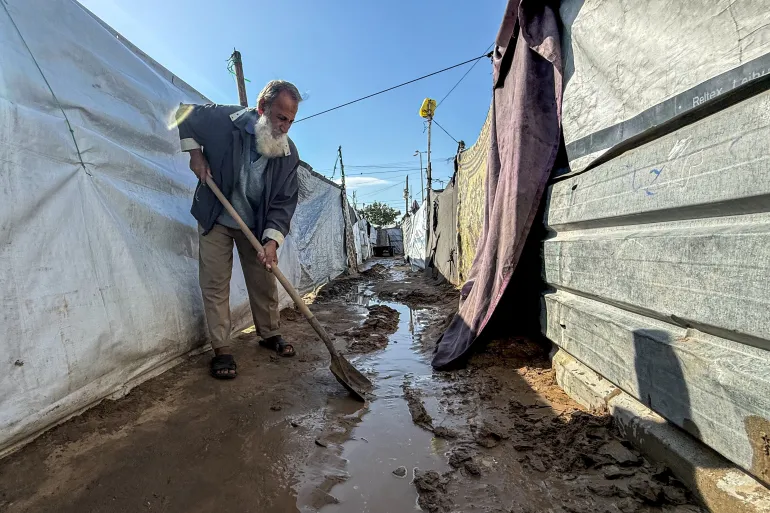
Az-Zawayda, Gaza Strip – On Saturday night, water began rushing into Jaber al-Kaseeh’s tent in central Gaza’s az-Zawayda area, waking him and his family as heavy rain swept across Gaza. Soon the tent’s floor was flooded, soaking mattresses, carpets, blankets and spoiling what little food the family had managed to keep.
“Everyone woke up and stayed awake, asking their neighbours about the extent of damage and inquiring about children,” Jaber, who is in his 70s, told Al Jazeera.
Recommended Stories
list of 4 itemsend of list
He described the area outside the displacement camp, where thousands of Palestinians have taken refuge, as a swimming pool.
More than 70,000 tents have been flooded since heavy rains began late on Friday, according to Gaza’s Government Media Office. Hundreds of thousands of displaced Palestinians are sheltering in locations considered “highly vulnerable” to more flooding.
More than a year after the so-called “ceasefire” deal was signed between Israel and Hamas, Israel has continued to flout the terms of the agreement, blocking the entry of goods into Gaza, including 60,000 mobile homes and 200,000 tents.
Only 20,000 tents have been allowed in, and mobile homes have remained parked on the Egyptian side of the border, many of them for more than two years.

Fourth winter in tents
This is the fourth winter for Jaber and his family living in a tent house in the az-Zawayda area. Originally from Beit Lahiya in northern Gaza, Jaber has been displaced several times, like most Palestinians since Israel launched its genocidal war on October 7, 2023.
More than 90 percent of Palestinians have been displaced, many of them multiple times, by the war that has attracted global condemnation.
Jaber says his camp was flooded three or four times last winter, forcing many families to leave. Around 40 tents still remain there, but the latest flooding has left them in even worse condition.
“All the tents are now damaged, torn and covered in mud,” Jaber told Al Jazeera.
“We urgently need tents, tarpaulins, plastic sheets, mattresses, blankets and carpets to protect us from the difficult days ahead.
“We keep hearing about tents and tarpaulins being distributed, but we have received nothing.
“We had hoped the mobile homes and temporary housing units promised under the ceasefire deal would allow us to rest and return to a life of safety and peace. But it was all just words in the air. We have seen nothing.”

Promised shelter, unmet needs
Jaber’s experience reflects the wider shelter crisis facing displaced Palestinians across Gaza. Despite the “ceasefire” agreement, which included provisions for temporary housing units, tents and heavy machinery to clear rubble, large numbers of families remain in makeshift shelters exposed to winter weather.
Under the first phase of the agreement, along with temporary housing units and tents, heavy equipment was also supposed to be allowed in to remove rubble and help restore damaged infrastructure.
But the arrival of mobile homes and heavy machinery has been delayed as Israel has found excuses to restrict their entry into the enclave of 2.3 million people.
Trucks carrying mobile homes and equipment have reportedly been waiting on the Egyptian side of the border while Palestinians live in misery in dilapidated tent camps.
According to the United Nations Office for the Coordination of Humanitarian Affairs (OCHA), Gaza requires approximately 121,000 tents and 561,000 tarpaulins, while available stocks remain far below what is needed.
For Om Hani Hamouda, a displaced woman from Beit Lahiya now sheltering in al-Zawayda, replacing her worn-out tent with a caravan has become a dream.
“We did not expect that the first rainfall would leave us in this condition,” she told Al Jazeera. “These tents do not protect us from the cold, storms or rain. Whenever winter comes, everyone holds their breath.”
Hamouda had hoped the ceasefire agreement would allow her family to return to northern Gaza or at least receive a caravan or building materials to secure better shelter. But she said there had been no sign of progress.
“We are asking for a dignified life. We want these tents to be replaced with caravans. Even a simple caravan would be better,” she told Al Jazeera.
Hamouda’s family has been displaced around 15 times during the war. She spent more than 15 years living and working in the United Arab Emirates before returning to Gaza nearly two years before the war began.
“My children cry because they miss the life we had there,” she said. “Life here is so difficult. There is no life in any sense.”

Families left exposed to the rain
Ramy Abdu, chairman of the Euro-Mediterranean Human Rights Monitor, told Al Jazeera that large quantities of tents, caravans, prefabricated housing units and shelter equipment remain stranded at Gaza’s borders because of Israeli restrictions.
He said that while more than 1.5 million displaced Palestinians were facing another winter in worn-out tents, even people living in houses and apartments remained exposed to the elements because of the extensive damage to homes and infrastructure.
“Today, we cannot even say that those living in houses and apartments are safe from extreme weather because, with around 85 percent of homes destroyed or damaged, every family is exposed to some degree of harsh weather conditions,” Abdu said, adding that Israel continues to reject shipments containing timber and emergency shelter kits, depriving families of the ability to repair homes that could otherwise accommodate them.
Abdu said Israel, as the occupying power, was legally obligated under the Fourth Geneva Convention to ensure essential supplies reached civilians and to facilitate humanitarian relief.
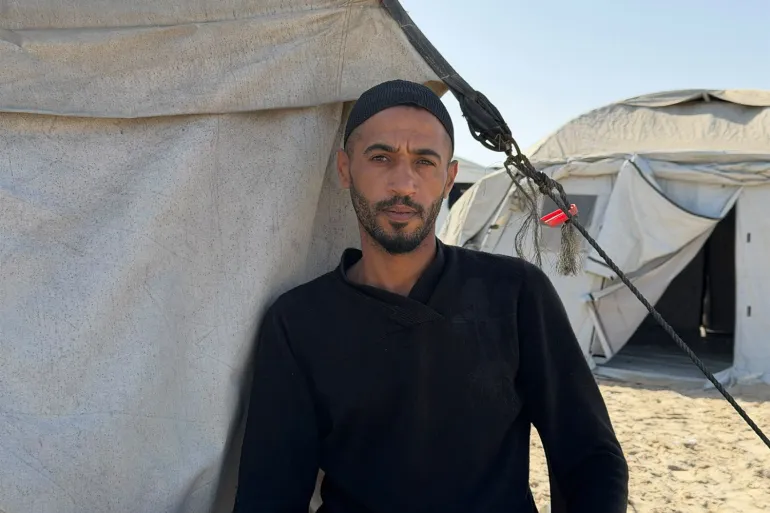
Jihad Dawwas, 51, says he felt helpless as he could not do anything as his children had nowhere dry to sleep amid the rains.
Water poured into the tents at the displacement camp where he is sheltering, while strong winds blew away many of the surrounding tents. His children ended up sleeping while standing, he said, after rainwater soaked their mattresses and the plastic sheets covering their shelter.
“They slept standing up. By morning, some of my children had become ill because of the cold and the storm,” he told Al Jazeera.
Dawwas, who was displaced from northern Gaza, is sheltering with seven of his own children and three orphaned children of his brother. He said he had bought the family’s tent with his own money and had received no tent from any charity or aid initiative.
“A tent cannot replace a home, not even by one percent,” he said. “We are living in what is left of our lives.”
He said he had seen no caravans or temporary housing units arrive to help displaced families, despite the expectations raised by the ceasefire agreement.
“Our lives are a daily hell. We are completely forgotten. There is no fair distribution of aid, and no one is really asking about us,” Dawwas said.
He questioned why even basic shelter supplies had become so difficult to obtain.
“Do tents and tarpaulins really need all this pressure and effort just to become something we can ask for?” he asked. “They should provide us with tents and tarpaulins, and give us at least a dignified life.”