What to know as Brazil prepares for tense presidential run-off | Elections News
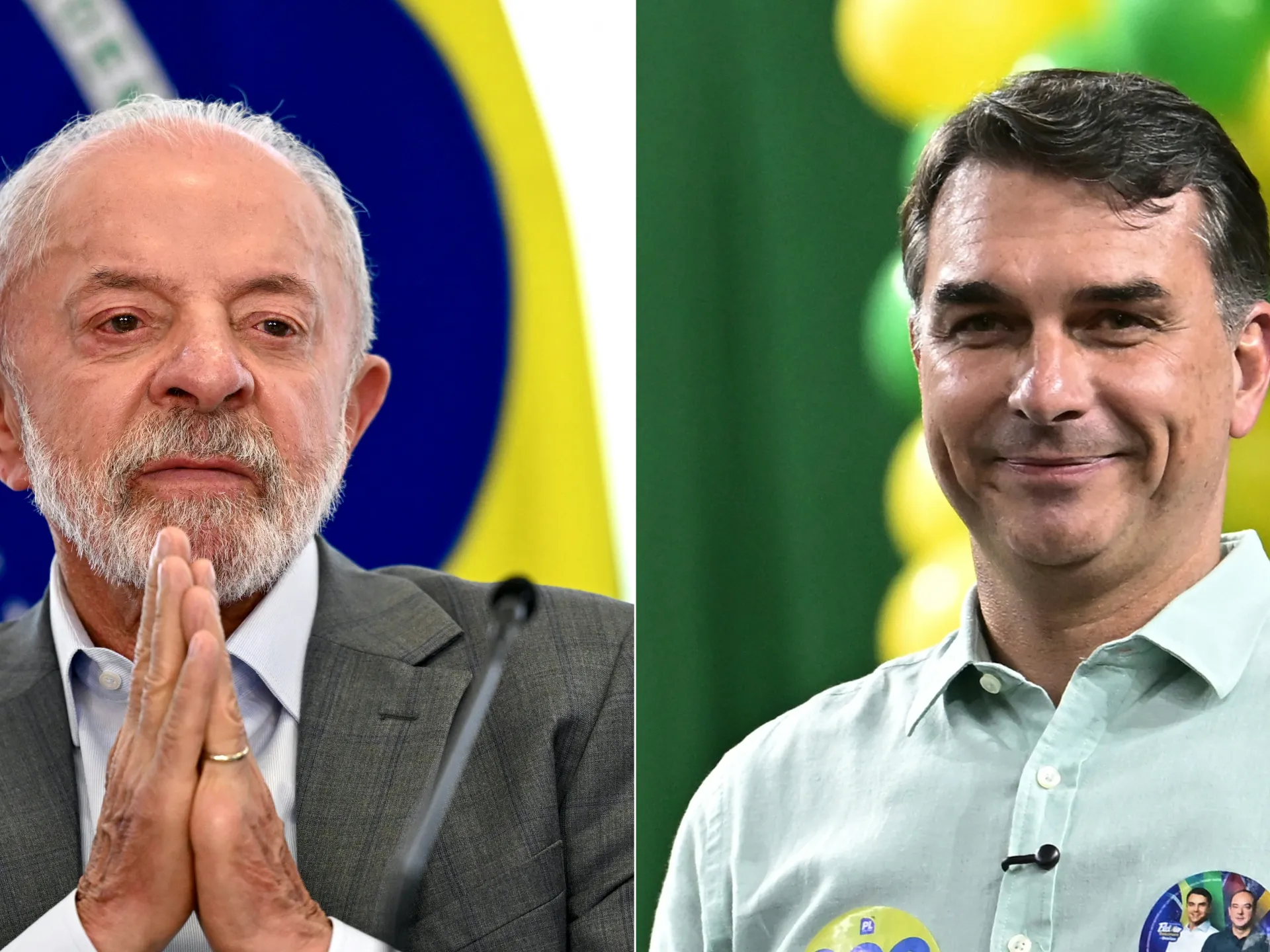
Voters in Brazil are headed to the polls for the second time in one month, as Senator Flavio Bolsonaro and President Luiz Inacio Lula da Silva square off in a run-off election to decide who will hold the presidency for the next four years.
While Bolsonaro outperformed expectations during the first round of voting on October 4, when he beat Lula by less than two percentage points but failed to secure the majority needed to avoid a run-off, the leftist president has sought to rally supporters ahead of the second round.
Recommended Stories
list of 3 itemsend of list
The vote on Sunday will decide whether Brazil joins a growing list of countries across Latin America that have handed victories to far-right candidates promising closer ties with the United States, a hard hand on crime and insecurity, and market-friendly economic policies.
Brazil under Lula has emerged as a key holdout against that shift, and a Bolsonaro victory on Sunday would galvanise conservatives in the region seeking to extend their winning streak to the largest country in Latin America.
When is the second round of voting?
The run-off will take place on October 25, 2026.
What happened during the first round?
The first round on October 4 saw Bolsonaro win 47 percent of the vote compared with just more than 45 percent for Lula, with the remainder of the votes distributed among several largely conservative candidates who did not advance to the next round.
While most polls had anticipated a close race that would go to a run-off, Lula had been slightly favoured to win the first round of voting. While Bolsonaro’s margin of victory was small, his overperformance indicated a level of enduring appeal for the political right that caught many Lula supporters off guard.
In addition to Bolsonaro’s success, even as his father, former far-right President Jair Bolsonaro, serves a 27-year prison sentence for his involvement in a coup plot following his loss to Lula in 2022, right-wing candidates also racked up wins in legislative races across the country.
Who is Lula?
Luiz Inacio Lula da Silva, simply referred to as Lula, is the incumbent president and the candidate for the Workers Party, or PT.
His time in office has been defined by an effort to pair political democracy with material improvement for the country’s poor and efforts to build ties between developing, non-Western countries on the global stage.
The 80-year-old is seeking his fourth, non-consecutive term, hoping that his record of popularity and support for social programmes, credited by supporters with transforming the country, will help stave off a Bolsonaro win.
Lula clinched a third term in 2022, marking a dramatic comeback following a stint in prison based on corruption charges that were later overturned following revelations of prosecutorial impropriety.
But a highly polarised political landscape has hindered Lula’s ability to usher in ambitious and sweeping reforms during his third term.
Notable successes, such as sharp drops in unemployment and poverty and tackling deforestation in the Amazon rainforest, have been countered by rising household indebtedness that has strained families across the country.
A corruption scandal centring on disgraced banker Daniel Vorcaro has also implicated powerful figures and institutions across the political spectrum, including Bolsonaro himself as well as several members of the country’s Supreme Court, a target of right-wing ire for the conviction and sentencing of the elder Bolsonaro.
Who is Flavio Bolsonaro?
Senator Flavio Bolsonaro is running as the candidate of the right-wing Liberal Party.
The 45-year-old has emerged as the de facto leader of the country’s political right, filling a role previously held by his father before his conviction for a plot to remain in power despite his loss to Lula in 2022.
The younger Bolsonaro has sought to project a more polished image than his father while pledging continuity with many of his beliefs and policy priorities and promising to fight for his release from prison if elected.
He has pledged a militarised approach towards crime and insecurity posed by organised gangs in close partnership with the administration of United States President Donald Trump, who has sought to expand US military involvement across Latin America through ties with right-wing allies in the name of combatting crime.
Bolsonaro has also promised to rein in inflation and government spending, with an adviser stating that he would implement a debt ceiling if elected.
In the days after the first round, Bolsonaro has said he would “redemocratise” Brazil by reforming the constitution. The constitution was put in place after Brazil’s return to democracy in the 1980s, and Bolsonaro’s father has long expressed open nostalgia for the dictatorship period. There’s heavy speculation that Bolsonaro could be seeking to reform the judiciary, after his father’s legal setbacks. He has also promised to restore tax cuts for the events sector.
What has happened since the first round?
While many members of the PT were despondent following Bolsonaro’s first-round victory, Lula quickly urged his supporters to rally for the run-off and threw himself into campaigning.
He has also taken credit for his party’s long-sought constitutional amendment to reduce the six-day work week and promised free public transport on weekends.
Pro-Lula demonstrations in cities across the country have attracted millions of people, helping galvanise the president’s voters and cut into Bolsonaro’s lead. Bolsonaro has held his own rallies, hoping to capitalise on momentum and consolidate support from other conservative parties.
The two candidates held a combative debate on October 18, exchanging insults and accusing each other of corruption.
Questions of outside intervention have also been a theme in the campaign’s closing days, with US social media giant Meta facing allegations that it restricted pro-Lula activity online in a bid to support Bolsonaro.
Concerns about foreign interference, in particular from the US, have loomed over the campaign since the beginning.
The Trump administration has repeatedly sought to intervene in Brazilian politics, previously introducing steep tariffs and penalties against judicial officials in a bid to have the case against the elder Bolsonaro tossed out and mirroring rhetoric on the Brazilian right to cast doubt on the reliability of the country’s voting system.
Trump has himself used false claims of widespread fraud to ignore unfavourable election results, and observers have expressed concern that the US could throw its support behind Bolsonaro based on such claims even if he were to lose the race.
What do polls show?
After his victory in the first round, Bolsonaro emerged as the race’s de facto frontrunner. But polls continue to show a close race, with Lula cutting into Bolsonaro’s lead but continuing to trail within the margin of error.
Speculation that Bolsonaro might pull ahead decisively following the first round, after other conservative candidates failed to advance to the run-off, has not yet appeared in new polls.
A Nexus poll released on Monday showed Bolsonaro winning 46.5 percent of the vote in the second round, with Lula taking 45.9 percent. A poll from the previous week had shown Bolsonaro with 47.9 percent and Lula with 45.1 percent.
Another poll by AtlasIntel and Bloomberg, also released on Monday, showed Bolsonaro with 49.8 percent versus 47.6 percent for Lula. An October 9 poll had shown Bolsonaro with 51.1 percent and Lula with 45.7.
A Quaest poll released on October 21 showed Bolsonaro’s lead continuing to drop, with Lula winning 44 percent and Bolsonaro 45 percent.