Refugee status becomes temporary in asylum shake-up
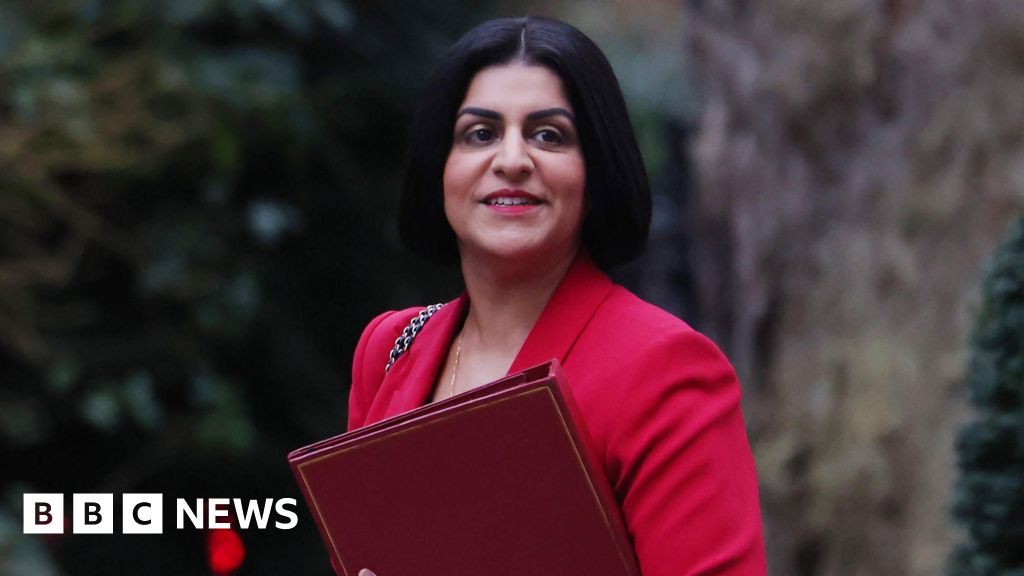
Adults and accompanied children claiming asylum will only receive refugee status for 30 months under the changes.
Source link
Adults and accompanied children claiming asylum will only receive refugee status for 30 months under the changes.
Source link
WASHINGTON — Immigrant advocates fear a Trump administration proposal released Friday amounts to an indefinite pause on new work permits for asylum seekers.
The draft regulation from U.S. Citizenship and Immigration Services would halt the acceptance of work permit applications when average processing times at the agency exceed 180 days.
The regulation also would extend the time asylum seekers must wait before becoming eligible to apply for a work permit, lengthening the period from 150 days to 365 days.
The proposal says USCIS expects that new work permit applications for asylum seekers “would be paused for an extended period, possibly many years.”
Conchita Cruz, co-executive director of the Asylum Seeker Advocacy Project, said the regulation would be catastrophic for asylum seekers, their families and U.S. communities.
“Forcing individuals who are working and living in the United States legally out of their jobs is not only cruel, but it is bad policy,” she said. “If this regulation goes into effect, it will hurt U.S. families, businesses and the U.S. economy.”
The proposed regulation change comes amid broad efforts by the Trump administration to end humanitarian benefits and restrict legal immigration.
For example, Homeland Security has sought to terminate Temporary Protected Status benefits that provided work permits and deportation protection to hundreds of thousands of immigrants. And in a memo released this week, the agency said agents are authorized to detain refugees who have not yet filed applications for lawful permanent residence after their first year in the U.S.
Under the first Trump administration, agency officials in 2020 similarly proposed increasing the employment eligibility waiting period to one year.
Colombia’s largest criminal group paused talks after President Gustavo Petro pledged to target its leader, Chiquito Malo.
Colombia’s government has announced it will resume peace talks with the powerful Gulf Clan, also known as the Gaitanist Self-Defence Forces (ECG), after the criminal group expressed concern about a recent deal with the United States.
Tuesday’s announcement addresses a temporary suspension the Gulf Clan announced earlier this month, in the wake of a meeting between Colombian President Gustavo Petro and his US counterpart, Donald Trump.
list of 3 itemsend of list
Faced with US pressure to crack down on drug cartels, Petro agreed to prioritise three “kingpins” his government considered “high-level targets”.
One of those targets was the leader of the Gulf Clan, Jobanis de Jesus Avila Villadiego, known as Chiquito Malo.
The Gulf Clan responded by pausing talks with the Petro government until it received clarity on the scope of the government’s actions.
In a joint statement on Tuesday, the two parties said they had “overcome” any hurdles to the talks.
They also explained that the ongoing talks would be mediated by the Catholic Church and the governments of Qatar, Spain, Norway and Switzerland.
The Gulf Clan is one of several armed groups that have jostled for control of territory as part of Colombia’s six-decade-long internal conflict, which has pitted criminal groups, left-wing rebels, government forces and right-wing paramilitaries against each other.
With approximately 9,000 fighters, the Gulf Clan is considered one of the country’s largest cartels. The US designated it a “foreign terrorist organisation” in December.
Trump has pushed the Petro government to take more aggressive action against drug trafficking overall. In January, he even threatened to attack Colombia, saying that Petro needed to “watch his a**”.
But relations between the two leaders have warmed in recent weeks, particularly since Petro’s visit to the White House on February 3.
Previously, Colombian governments had taken a more militarised approach to addressing the country’s internal conflict. Colombia has long been considered a top ally in the US’s worldwide “war on drugs”.
But upon taking office in 2022, Petro sought to take a different approach, bringing armed groups and criminal networks to the table for negotiations under a programme called “Total Peace”.
The peace talks, however, have faced a series of setbacks, particularly in the wake of new bursts of violence.
In January, for example, Petro granted himself emergency powers following an outbreak of violence near the border with Venezuela between various armed groups, including the National Liberation Army (ELN).
That violence resulted in the suspension of peace talks with the ELN.
Petro, the country’s first left-wing president, has also faced pressure from the right to assure justice is carried out on behalf of the victims of drug trafficking.
His government has repeatedly rejected allegations that it has not done enough to stem drug trafficking in Colombia, which has historically been the world’s largest producer of cocaine.
Petro has pointed to historic drug busts, including one in November that resulted in the seizure of 14 tonnes of cocaine, as evidence of his government’s efficacy.
Criminal networks and other groups have long jostled to gain control of drug-trafficking routes.
Those clashes saw a spike after a peace deal with the Revolutionary Armed Forces of Colombia (FARC), a leftist rebel group that agreed to disarm in 2016.
The group’s dissolution left a power vacuum that other drug-trafficking organisations have sought to fill.
How to address Colombia’s ongoing internal conflict is set to be a major election issue in May, when the country chooses a new president. Petro is limited by law to a single consecutive term and will therefore not be on the ballot.
Homeland Security Secretary Kristi Noem has determined it is safe for Yemenis to return to their country, despite ongoing conflict.
The United States government has ended the Temporary Protected Status (TPS) designation for Yemen, ordering the more than 1,000 Yemeni refugees and asylum seekers living in the country to leave within 60 days or face arrest and deportation.
The action on Friday came as part of US President Donald Trump’s broad immigration crackdown, which is impacting those who fled perilous lives in war-torn countries.
list of 4 itemsend of list
It will terminate TPS for roughly 1,400 Yemeni nationals who have had access to the legal status since September 2015 because of armed conflict in their country, Secretary of Homeland Security Kristi Noem announced on Friday.
“After reviewing conditions in the country and consulting with appropriate US government agencies, I determined that Yemen no longer meets the law’s requirements to be designated for Temporary Protected Status,” Noem said in a statement.
“Allowing TPS Yemen beneficiaries to remain temporarily in the United States is contrary to our national interest,” she said, describing the revocation as an act of “putting America first.”
Contrary to Noem’s determination, Yemen continues to be riven by years-long conflict in one of the world’s poorest nations.
The State Department currently advises against travel to Yemen, citing “terrorism, unrest, crime, health risks, kidnapping, and landmines”.
TPS allows narrow groups of people in the US to live and work in the country if they’re deemed to be in danger if they return to their home nations, because of war, natural disaster or other extraordinary circumstances.
While the protections are technically temporary, historically, presidents have continued to renew TPS statuses for refugees and asylum seekers rather than revoking them and rendering them undocumented.
The TPS for Yemen was last extended in 2024 and was set to expire on March 3 of this year.
Yemeni beneficiaries with no other lawful basis for remaining in the US have 60 days to voluntarily depart the country or face arrest, the statement said, offering a complimentary plane ticket and a $2,600 “exit bonus” for those who “self-deport”.
Since coming to office last year, Trump has ended the status for Venezuelans, Hondurans, Haitians, Nicaraguans, Somalis, Ukrainians and thousands of others.
The Trump administration has also expanded its travel restrictions since returning to power, imposing a total ban on citizens of 19 countries from entering the US, primarily targeting Muslim-majority and African nations, including Yemen, Somalia and South Sudan.
Citizens from a further 29 countries, including Nigeria and Senegal, are subject to partial bans.