Federal judge allows Paramount-Warner merger to move forward
A federal judge in Oakland has approved a settlement that allows Paramount Skydance Chief Executive David Ellison to finalize his $111-billion acquisition of Warner Bros. Discovery.
U.S. District Judge Araceli Martínez-Olguín on Wednesday signed a settlement agreement, effectively ending an antitrust lawsuit brought by California Atty. Gen. Rob Bonta and 11 other state attorneys general who initially fought the formation of a new Hollywood colossus.
The judge did not offer additional conditions to an agreement struck last week between Paramount and the states, instead allowing Paramount’s negotiated settlement terms to stand.
“The Court finds the proposed settlement agreement reflects a procedurally sound resolution,” Martínez-Olguín wrote in her order.
Ellison is aiming to finalize the merger early next week, capping his meteoric rise into one of the industry’s most influential figures. The Ellison family claimed Paramount and CBS last year, and will now add HBO, CNN, TBS, HGTV and the film and television studio with rights to Batman, Harry Potter, Fred Flintstone, “Friends” and “The Pitt” to its sprawling media and entertainment portfolio.
His father Larry Ellison, through his company Oracle Corp., also owns a substantial stake in the social media app TikTok and is among the tech giants supporting development of artificial intelligence.
The settlement agreement, which spans five years, requires the combined Paramount-Warner Bros. to release at least 30 films in theaters each year, commit an additional $1.5 billion to domestic film production and set aside $47.5 million for workers who may be adversely affected by the merger. It calls for the creation of a five-member panel to monitor editorial independence of CBS News and CNN, although critics note the Ellisons control board appointments, diminishing its independence.
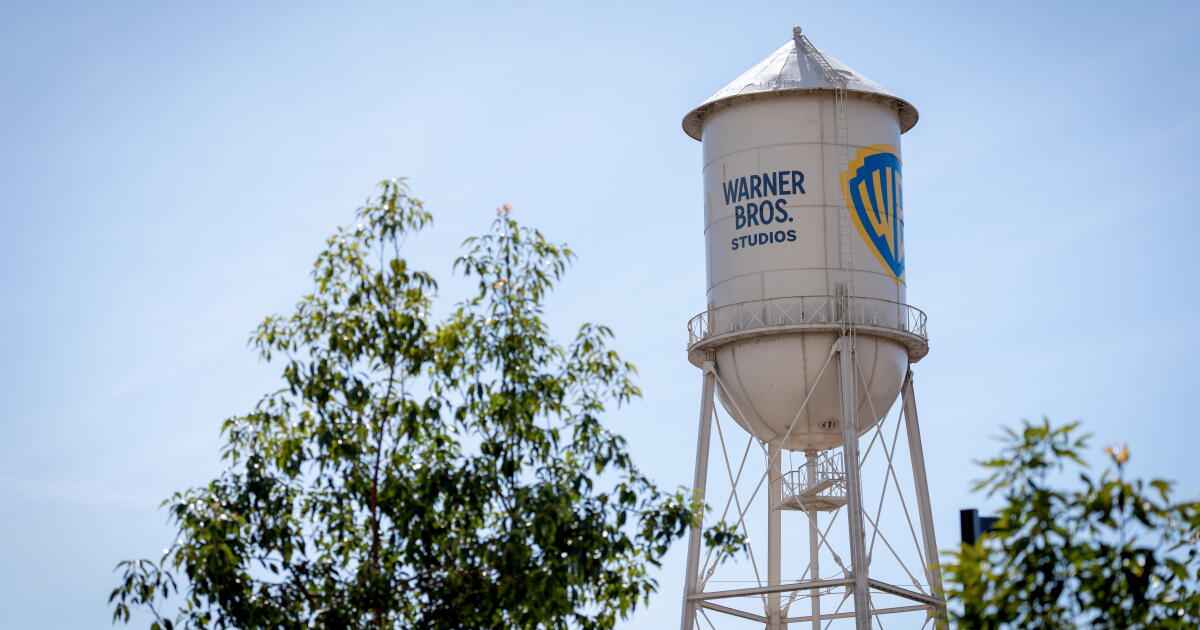
The agreement, known as a consent decree, also stipulates that Paramount won’t sell or close its Melrose Avenue campus in Hollywood or the larger Warner Bros. lot in Burbank. The combined company must instead operate the historic facilities “in a manner consistent with past practices” for at least five years.
Paramount will also face restrictions on how it wields clout during negotiations for distribution of its basic cable TV channels. An independent monitor is expected to oversee implementation of the settlement terms.
The merger has been unpopular in Hollywood and critics denounced the settlement as weak. Opponents accused Bonta, who led the negotiations with Paramount, of caving into pressure from Gov. Gavin Newsom and Los Angeles Mayor Karen Bass, who publicly urged Bonta to abandon his court fight.
“Our settlement with Paramount resolves our antitrust concerns in every market we brought in our case, protects competition and consumer choice, and centers the needs, concerns, and futures of California workers,” Bonta’s office said in a statement.
Los Angeles County’s Department of Economic Opportunity has estimated that the merger will result in the loss of 4,500 local jobs as Ellison seeks to integrate the two entities and cut costs. Paramount has promised investors that it will shave $6 billion in spending within three years.
“Allowing the Paramount Skydance-Warner Bros. Discovery merger to move forward with no meaningful structural remedies will cost jobs, mute creativity, weaken independent journalism, and damage our First Amendment rights,” the Block the Merger coalition said Wednesday in a statement.
Sen. Cory Booker (D-N.J.) last week urged Martínez-Olguín to order an independent review to evaluate the strength of the proposed settlement terms and determine whether the pact adequately addresses alleged violations of the Clayton Antitrust Act.
During a Thursday hearing, Martínez-Olguín questioned key deal tenets, including the five-year length of the agreement and the value of the Miramax film studio, which Paramount agreed to divest should the company fall short of its film goals. She also asked why the state attorneys general dropped so many of their initial demands in pursuit of a settlement with Paramount.
“In years to come, we’ll be able to point to this failure to put consumers over the monied interests of corporate consolidation as the tipping-point moment for media in this country,” the Block the Merger coalition said in its statement.
The judge noted that she recognized the deep disappointment by merger opponents, and heard their concerns about news independence and a potential lack of diversity in storytelling when the two studios consolidate.
“But these hopes and desires for the proposed consent decree to reach farther — to achieve more — do not rise to the level of legal violations upon which the Court can reject the parties’ negotiated resolution,” Martínez-Olguín wrote.
The lawsuit resolution ends months of acrimony over Ellison’s deal for Warner Bros. Discovery, which was stalled for two months after Bonta and 11 other state attorneys general sued, arguing the combination would violate U.S. antitrust law and thwart competition. The Writers Guild of America lobbed its own antitrust lawsuit in an attempt to foil the merger.
But Paramount dug in, and its lobbying reached a crescendo by early September. A parade of state and local politicians, including Bass and others, urged a settlement due to fears that Paramount might follow through on its threat to leave California unless Bonta retreated.
Bonta and his coalition then worked behind the scenes to hammer out a settlement with Paramount, which was announced Sept. 21.
Paramount’s bankers have since been pricing bonds and lining up loans needed to finance the buyout of Warner Bros. Discovery shareholders at $31 a share. Ellison’s team had hoped to price the offering months ago, and interest rates have since climbed.
Paramount is selling about $44 billion of bonds and $7.5 billion in loans to finance the takeover, according to Bloomberg, which said the combined company will have more than $87 billion of investment-grade and high-yield debt.
Larry Ellison has promised to guarantee $47.5 billion in equity that his son needs to close the deal. Three Middle Eastern sovereign wealth funds, representing royal families in Saudi Arabia, Abu Dhabi and Qatar have agreed to invest $24 billion in the merged company, giving them a substantial stake in the new Paramount-Warner Bros.
Paramount separately announced Wednesday that Mattel Chief Executive Ynon Kreiz would soon join the merged company as co-chief executive, running Paramount-Warner Bros. day-to-day operations. Friday will be Kreiz’s last day at Mattel.