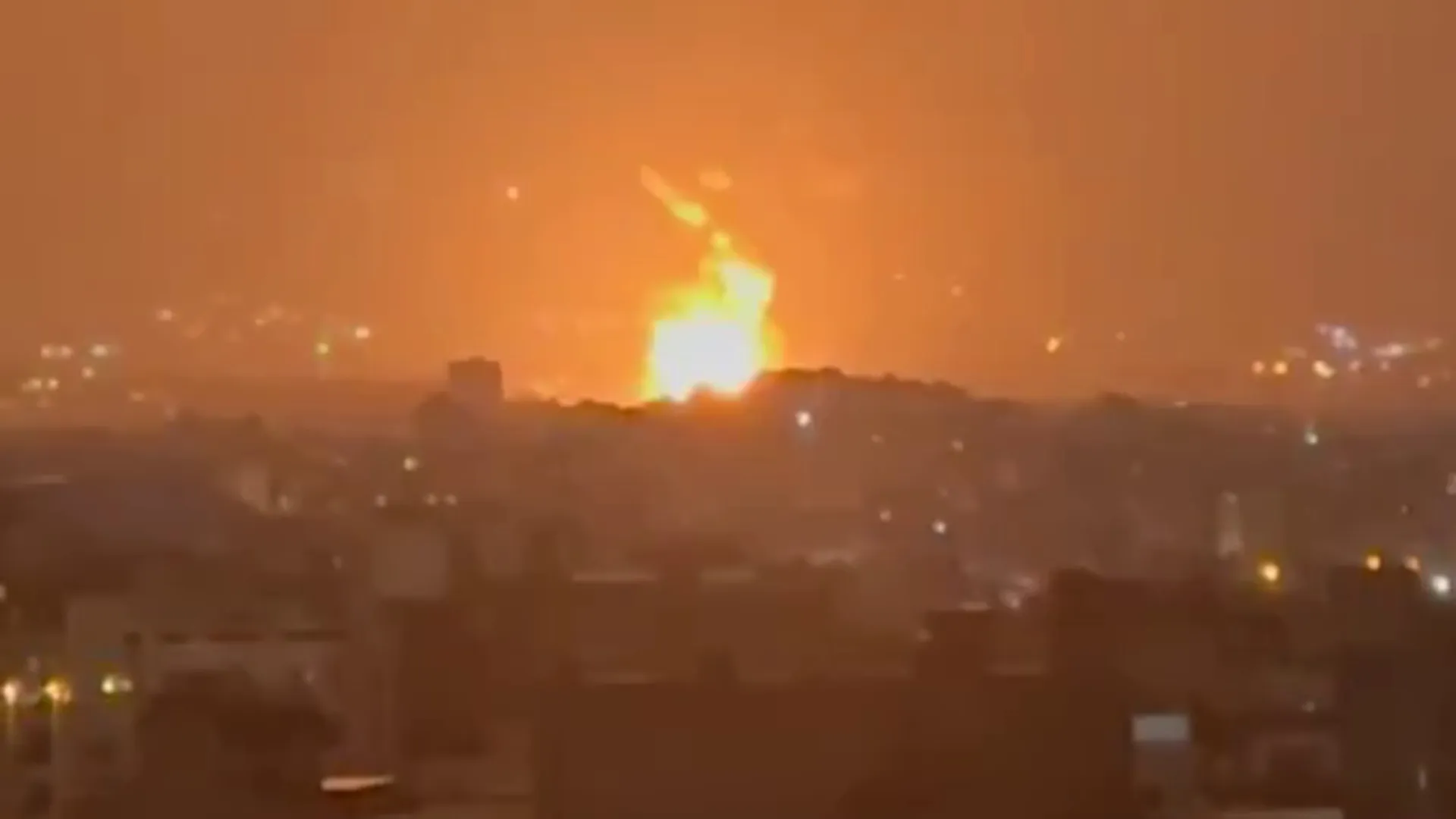
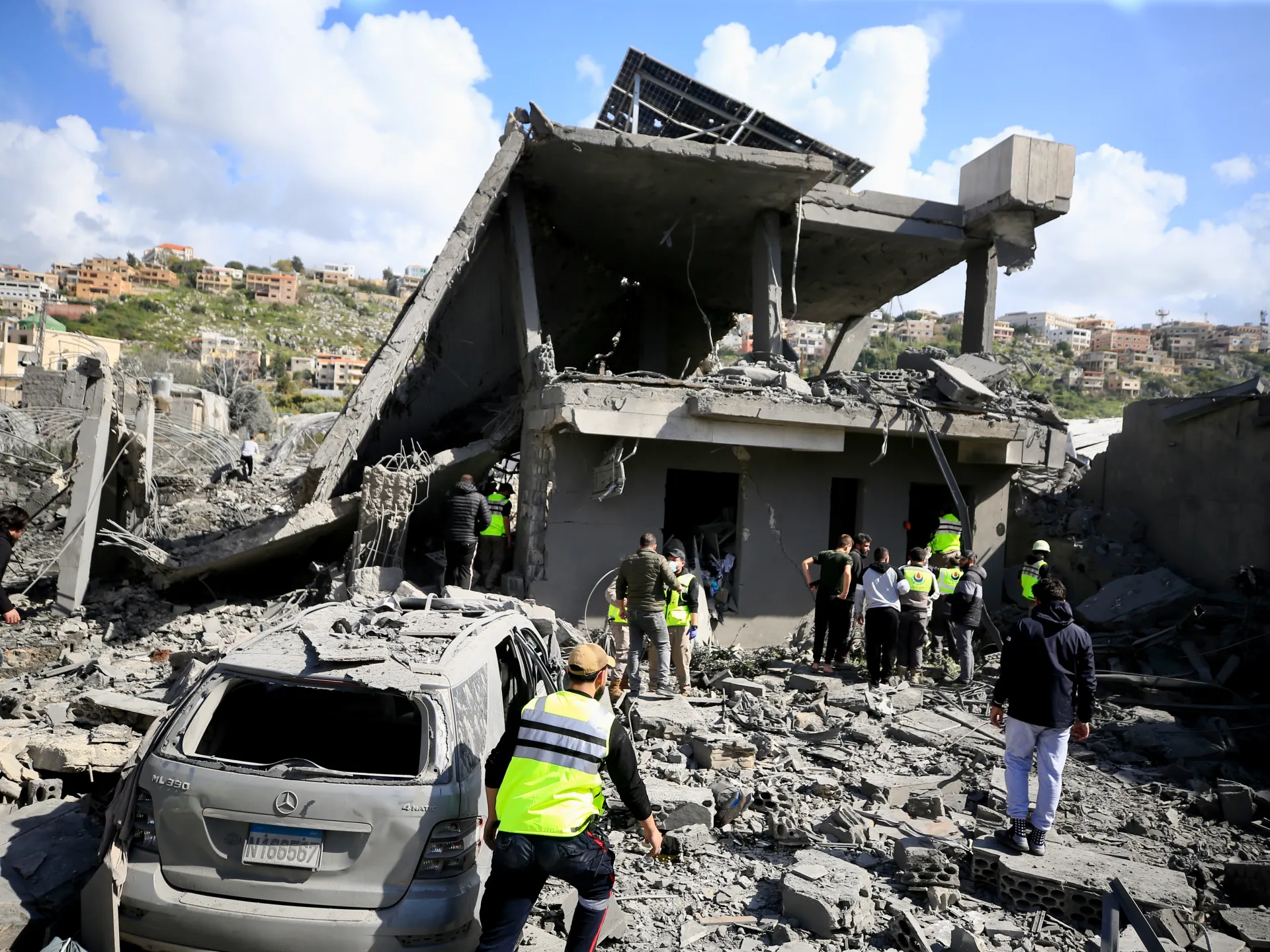
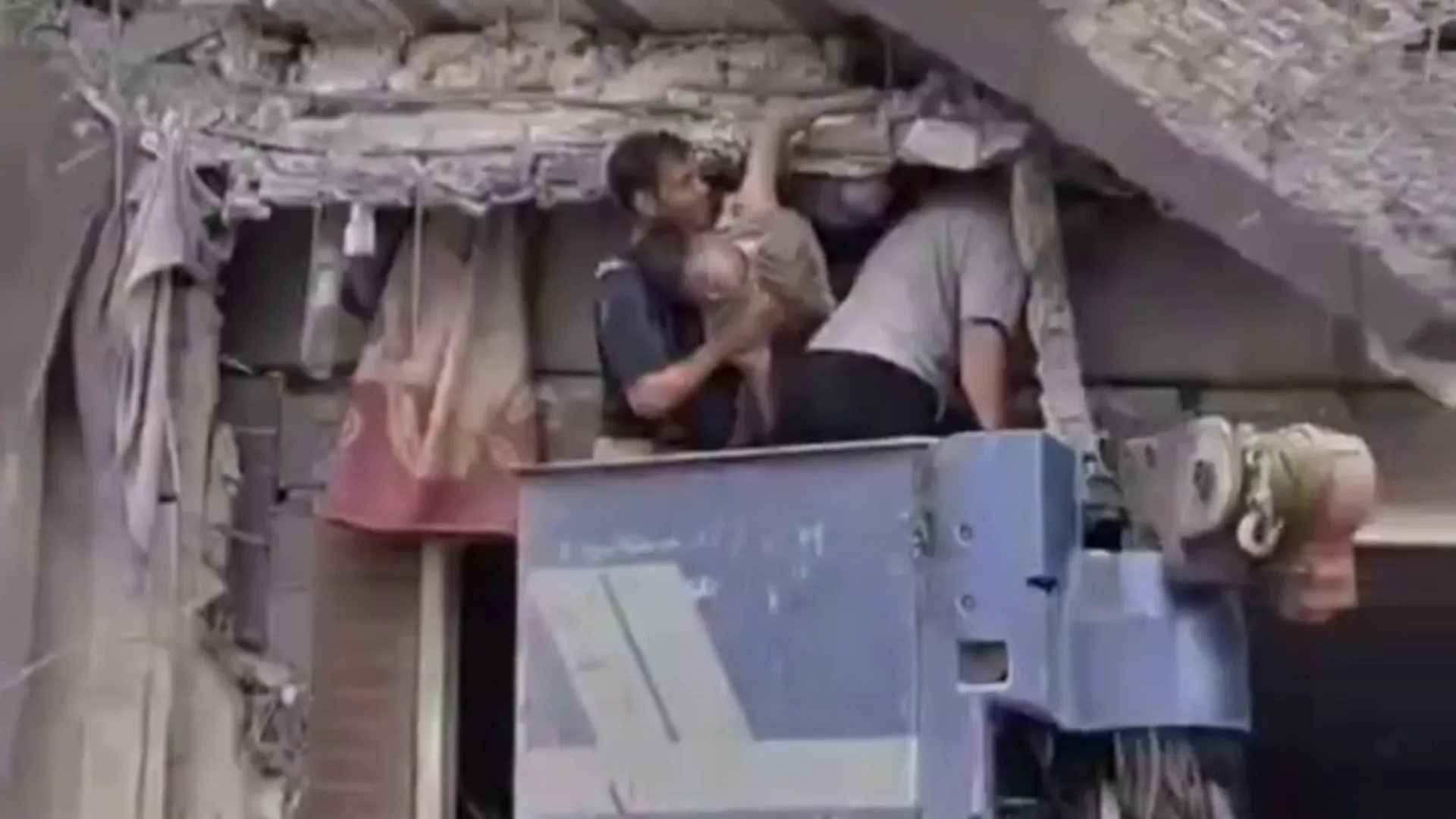
Antiwar protesters rally in Tel Aviv and US cities, as attacks kill a family of four in Iran’s Bushehr province and damage a water facility in Khuzestan.
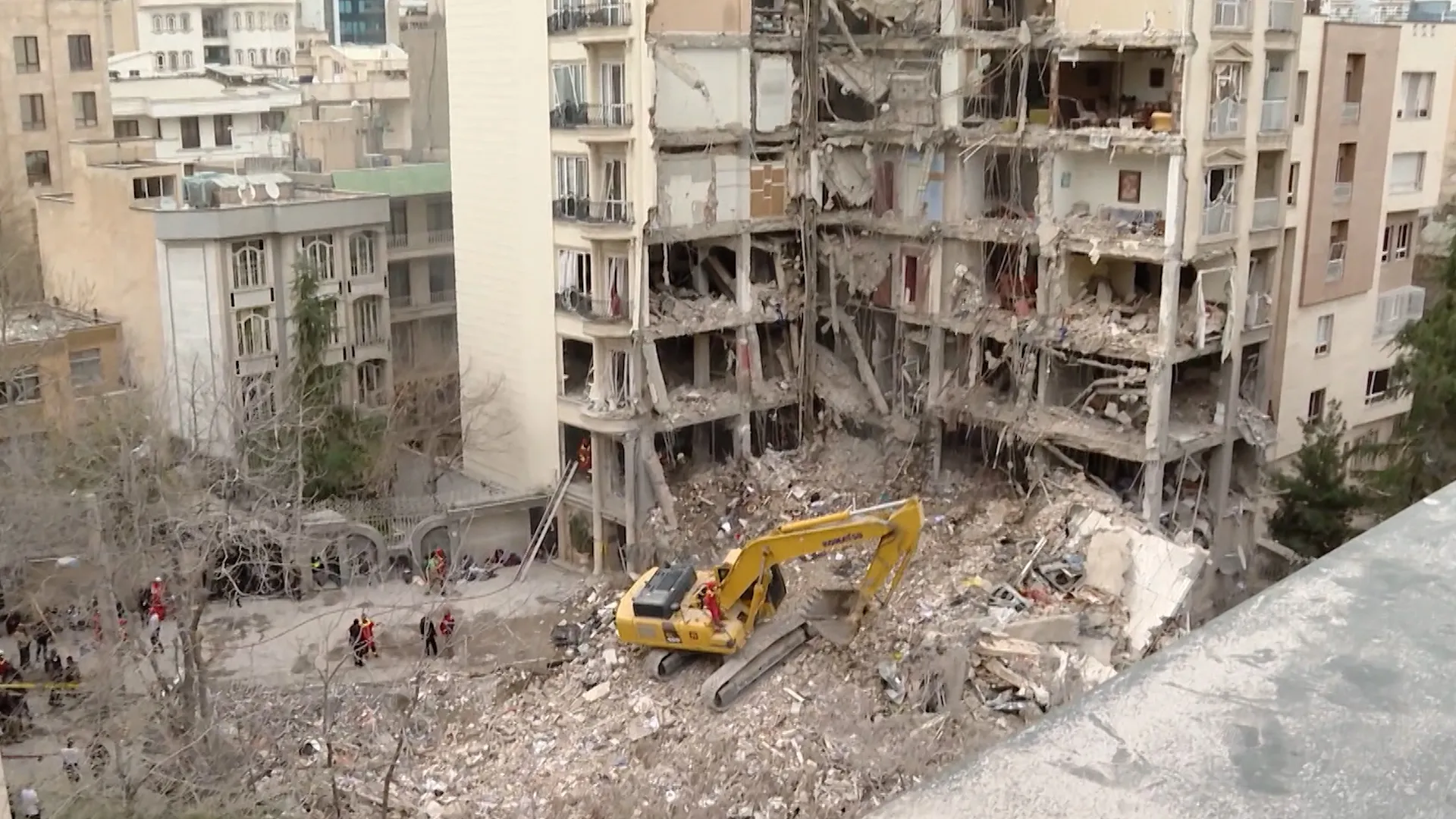
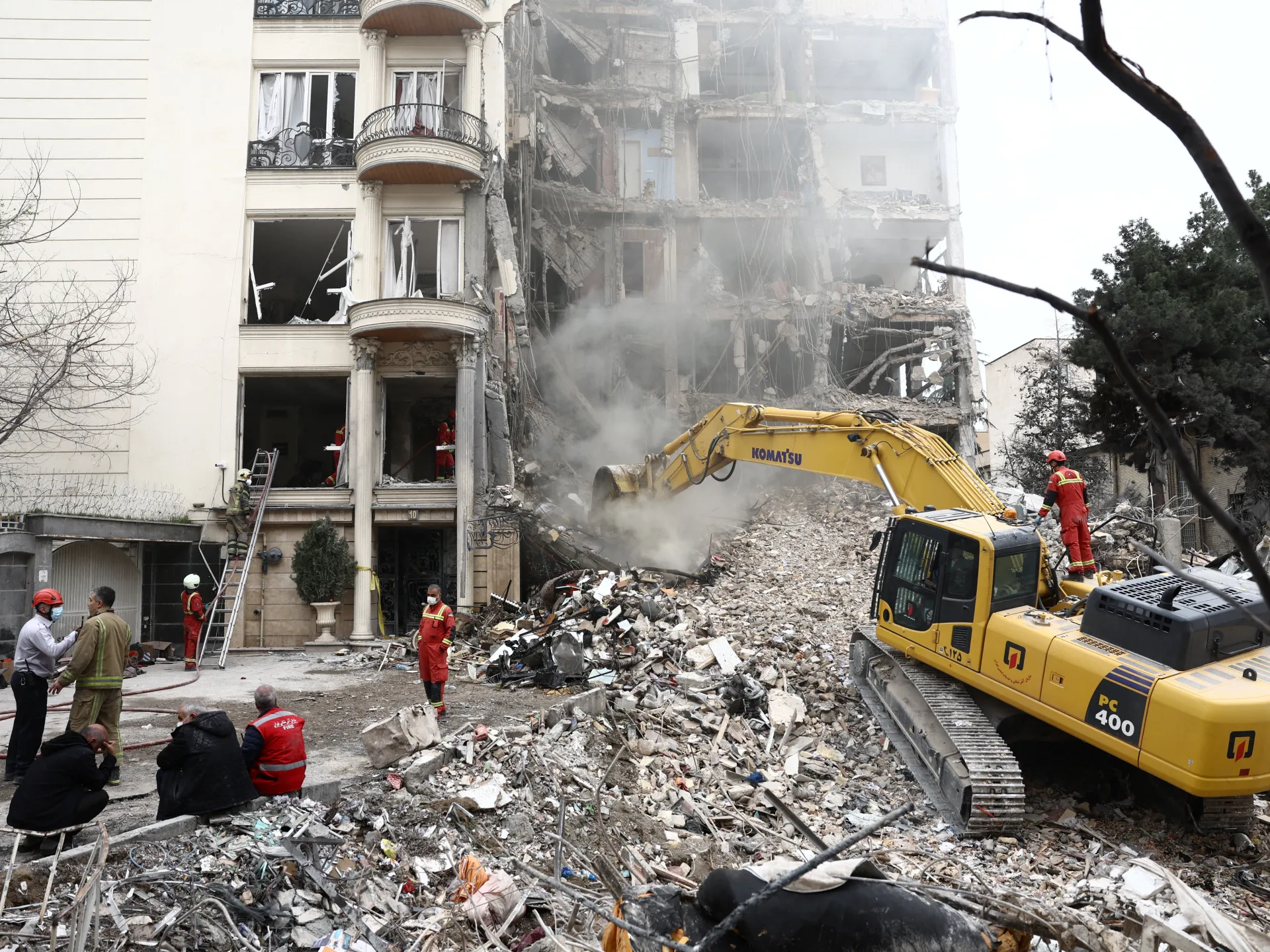
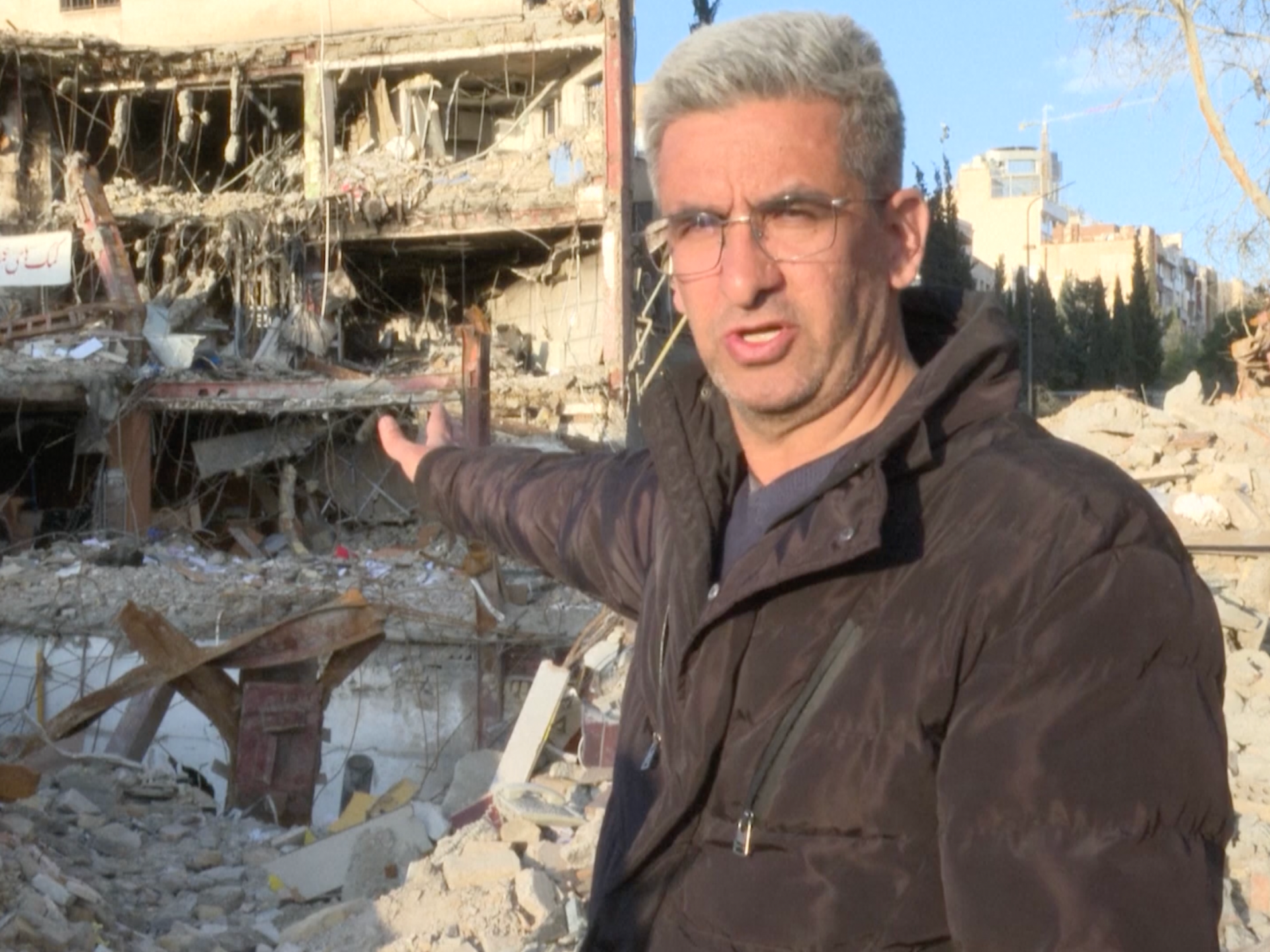
Iranian rescue workers have been pulling survivors and bodies out of a residential building in south Tehran after a US-Israeli missile strike. Al Jazeera’s Tohid Asadi was at the scene.
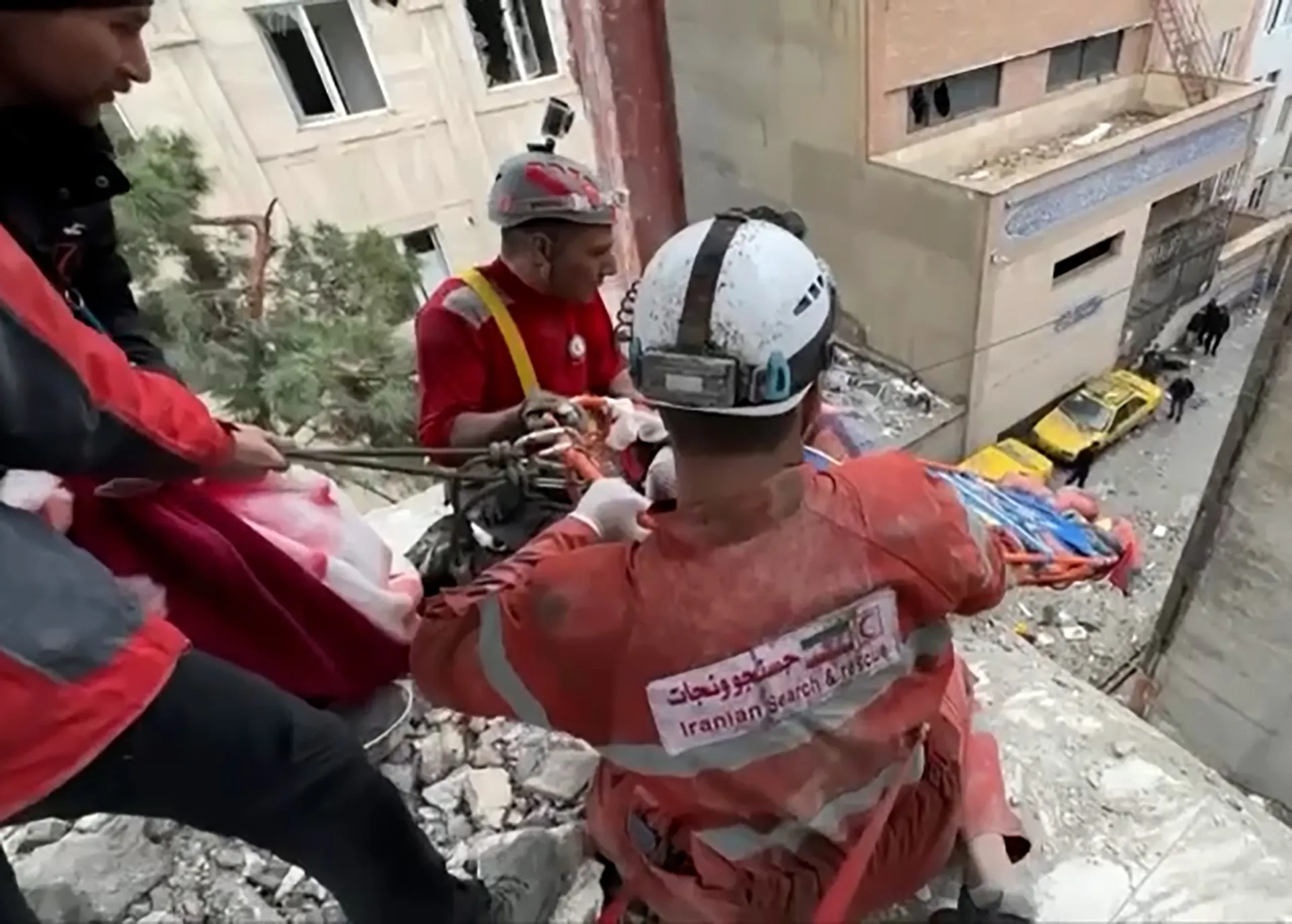
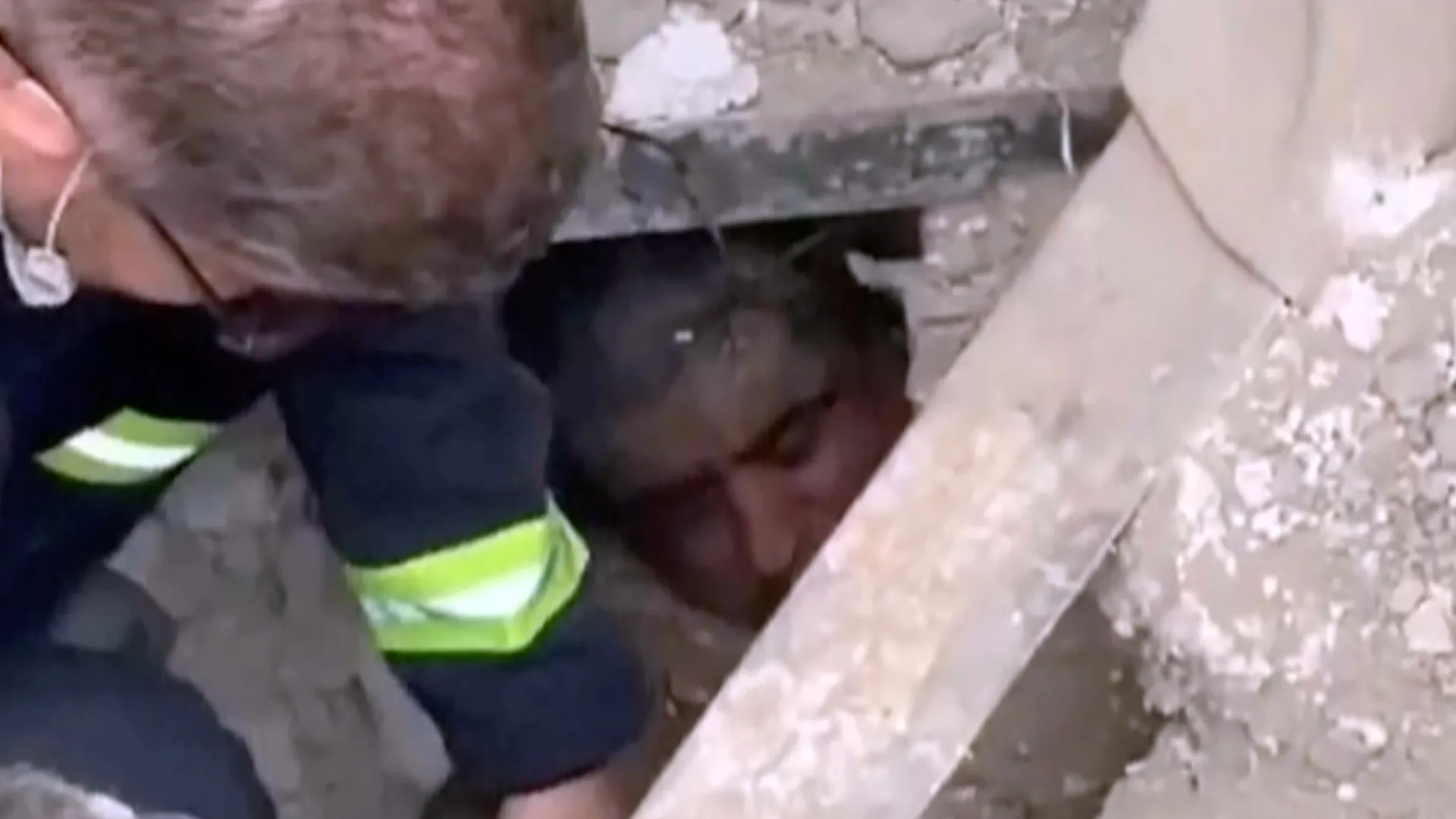
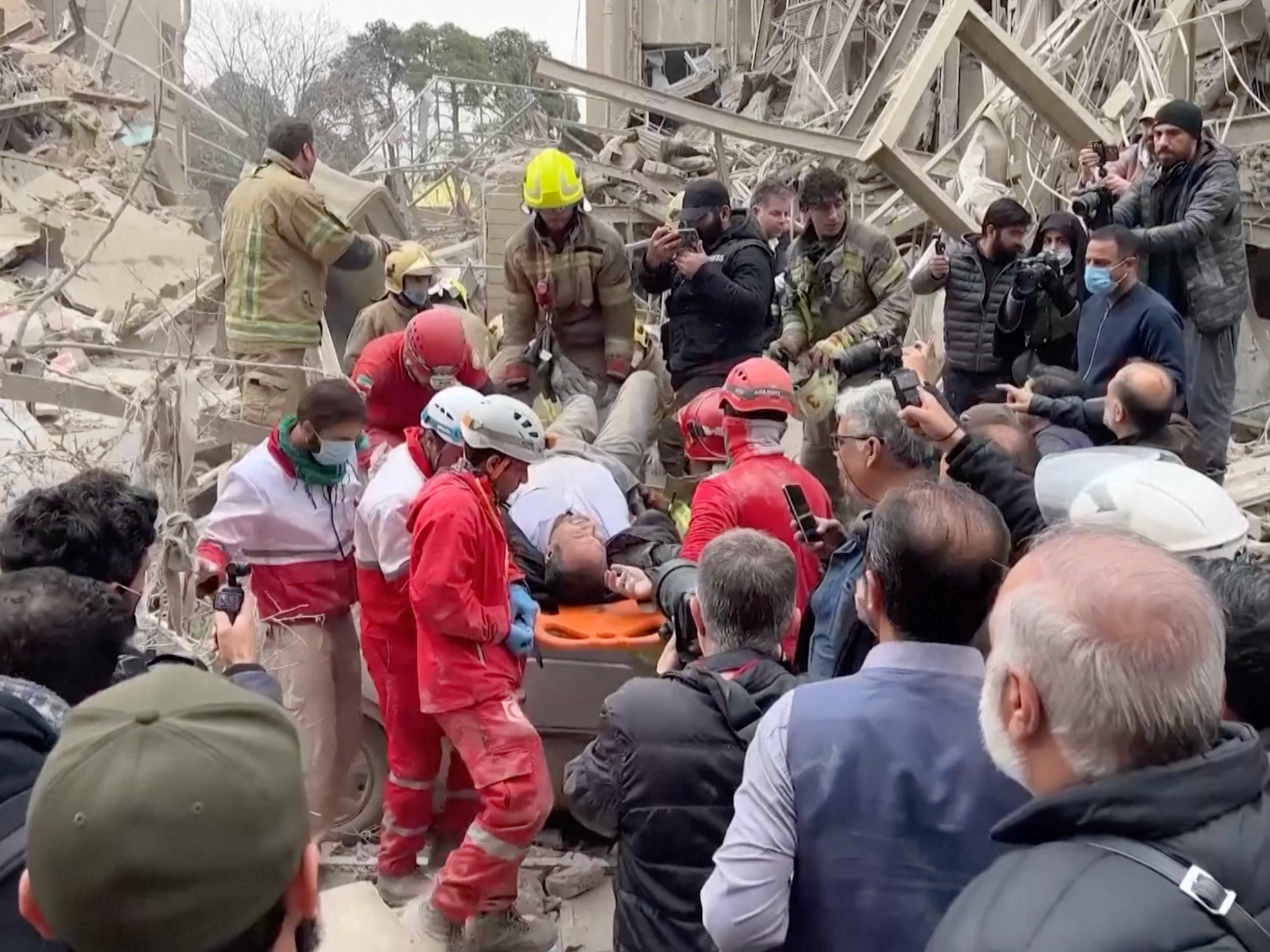
The Iranian Red Crescent Society released video showing rescuers in Tehran lowering a man strapped to a stretcher from the wreckage of a building severely damaged in an airstrike.
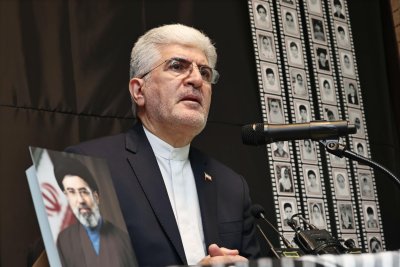
Iranian Ambassador to South Korea Saeed Koozechi speaks during a press conference at the Iranian Embassy in Seoul on Thursday. Photo by Yonhap
Iran’s top envoy to Seoul said Thursday South Korean ships can pass through the Strait of Hormuz, but only with prior coordination with Tehran, saying that his country has asked Seoul to provide details of the vessels stranded in the key waterway amid the ongoing conflict.
Iranian Ambassador to South Korea Saeed Koozechi made the remarks in a press conference, as 26 South Korean ships with about 180 crew members aboard remain stranded in the shipping lane effectively blocked by Iran following attacks by the United States and Israel.
Koozechi also said that Iran considers South Korea a non-adversarial country.
“There are no problems with the vessels,” he said through an interpreter. “But in order for them to pass through, you need coordination, prior consultations with the Iranian military and government.”
Koozechi went on to say that Tehran had asked Seoul to provide the details of the stranded ships during the phone talks between their foreign ministers on Monday, without specifying whether the request was meant to start negotiations on the ships’ passage.
“Iran is acting in good faith and is willing to allow South Korean ships to transit the Strait of Hormuz, but the process will depend on receiving the relevant information and the vessels list. Once they are provided, we will consider it,” he said.
When asked to confirm Iran’s request, Seoul’s foreign ministry said it was a request for cooperation on safety measures in the event of a humanitarian situation on the anchored vessels, and not related to their transit.
“We have not negotiated (with Iran) on (the passage) of vessels,” a ministry official said, adding that it has received no such request from Tehran, nor has it provided any details of the ships.
In the phone talks with his Iranian counterpart, Foreign Minister Cho Hyun called on Tehran to ease tensions and ensure safe navigation through the vital waterway for global energy supplies.
Cho also requested Iran’s cooperation regarding the safety of stranded South Korean vessels and their crew, but the issue of permitting their transit was reportedly not addressed.
While Iran sees South Korea as a non-hostile country, restricting activities of ships engaged in business with U.S. companies has been unavoidable as part of its self-defense measures, the ambassador said.
“Imposing restrictions on them is only natural,” Koozechi said. “Blocking their activities and enforcing economic restrictions is Iran’s right to self-defense.”
Thursday’s press event featured a photo exhibition and documentary screening at the Iranian Embassy in Seoul. The materials highlighted the impact of U.S.-Israeli attacks on Iran, including images of destroyed buildings and footage of children killed in an airstrike at an elementary school and their grieving families.
Copyright (c) Yonhap News Agency prohibits its content from being redistributed or reprinted without consent, and forbids the content from being learned and used by artificial intelligence systems.
Rescuers have pulled a man alive from the rubble after US-Israeli strikes hit a residential area on the outskirts of Tehran, the Iranian Red Crescent said. The US and Israel have continued to strike Iran, despite President Trump’s claims of diplomatic progress.
The US-Israeli war on Iran has destroyed over 80,000 civilian units leaving many causalities, according to Iranian officials. Al Jazeera’s Tohid Asadi reports from a residential building hit in a recent attack.
Iran’s Revolutionary Guard Corps calls Trump a ‘deceitful American president’, saying his ‘contradictory behaviour will not make us lose sight of the battlefront’.
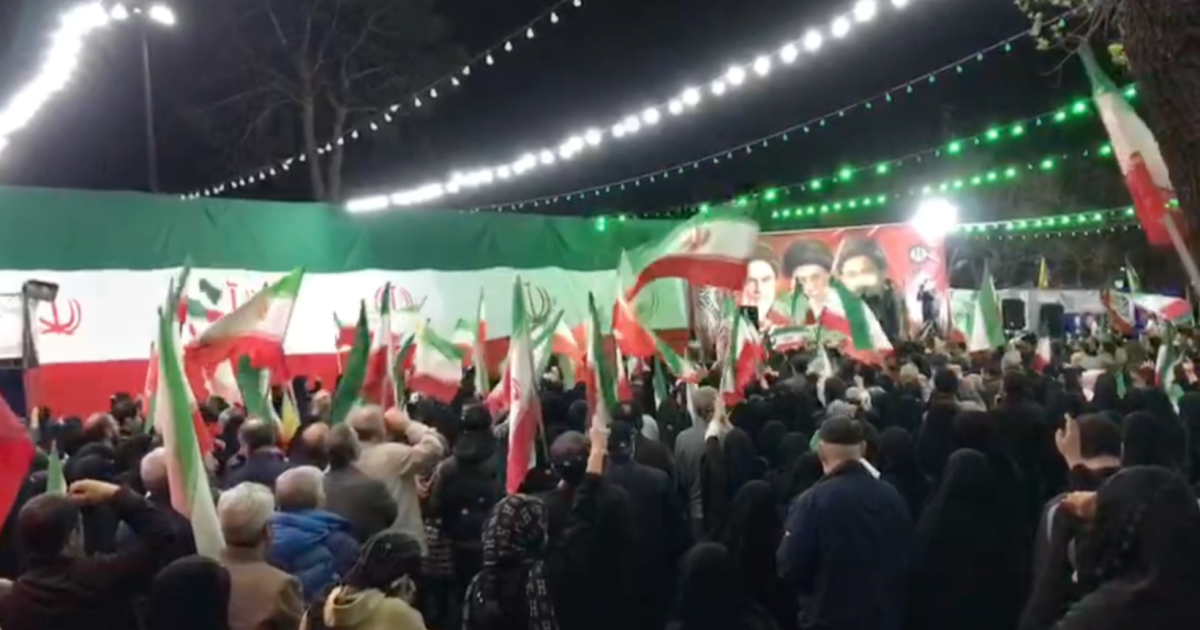
Videos show large demonstrations in Tehran, where crowds waved Iranian flags and chanted in support of the government. The rallies come as Iranian media highlights public backing amid the US-Israeli war on the country.
Five days after a strike destroyed a building in Tehran, Mahdi Mirzahosseini’s brothers are still searching through rubble for signs of their youngest sibling. They are holding onto hope of finding their brother who had gone to work insisting on serving customers for the Persian New Year.
Iran’s national football team returned to their war-torn nation after several of the players sought asylum in Australia.
Published On 20 Mar 202620 Mar 2026
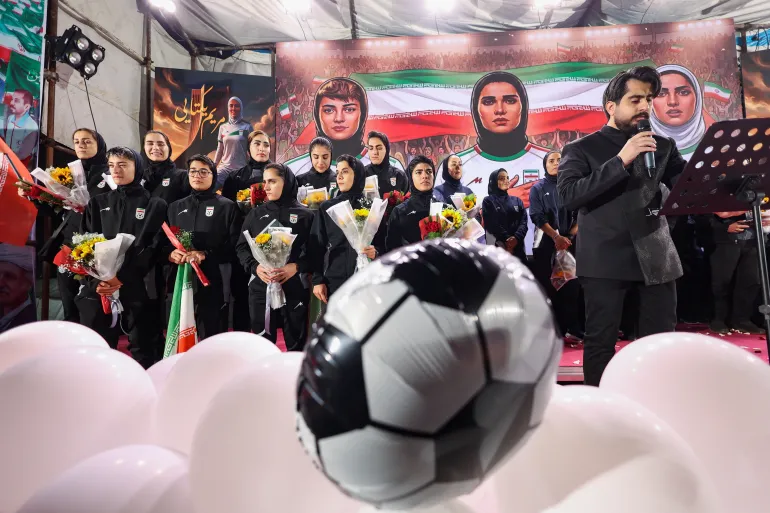
Iranian authorities on Thursday gave the national women’s football team a hero’s welcome after their return from Australia, where some had made and then withdrawn asylum claims, amid accusations Iran had pressured their families.
Six players and one backroom staff member who travelled to Australia for the Women’s Asian Cup sought asylum earlier this month after they prompted criticism from hardliners in Iran for failing to sing the national anthem before their first match.
Recommended Stories
list of 4 itemsend of list
Five of them later changed their minds and returned home along with the rest of the team, including captain Zahra Ghanbari, with their fate prompting international concern amid the US-Israel war on Iran.
Activists have accused Iranian authorities of pressuring the women’s families, including summoning their parents for interrogation, while Tehran has alleged that Australia sought to force the athletes to defect.
Several thousand people, many holding Iranian flags, turned out for the welcome ceremony on Thursday evening in Valiasr Square in central Tehran, where other pro-government rallies have taken place in recent weeks, state TV images showed.
“My Choice. My Homeland,” read a slogan on a giant billboard on the square that showed the players in their national kit and mandatory hijabs saluting the Iranian flag.
Flanked by team members, Iranian football federation President Mehdi Taj said on stage, “What is certain is that these athletes are loyal to the homeland, flag, leader and revolution.”
Iranian government spokeswoman Fatemeh Mohajerani, one of the most high-profile women in Iranian politics, told the team members: “All Iranians were waiting for you; welcome to Iran.”
Members of Iran’s women’s national football team in Tehran on March 19 [Alaa Al Marjani/Reuters]
‘Threatening their families’
As onlookers cheered the players, giant AI-generated images of the women were projected on a screen showing them pledging loyalty to the Iranian flag against a background of Iranian national landmarks.
Two squad members have remained in Australia, but the remainder of the team, including the five other women who initially applied for asylum, arrived in Iran on Wednesday after a long journey home via Malaysia, Oman and Turkiye.
Activists have accused Iranian authorities of pressuring these five women into changing their minds through intelligence agents putting pressure on their families at home.
“The regime in Iran started threatening their families and basically took their families hostage. Because of that, they were forced to withdraw their asylum and go back to Iran,” Shiva Amini, a former Iranian national football player, who now lives in exile and campaigns on women’s rights, wrote on social media.
But Farideh Shojaei, an Iranian football official who travelled to Australia, said the players had been offered “houses, cars, money, promises of contracts with professional clubs, as well as humanitarian visas”.
“Fortunately, the members of our team valued their national identity above all else and turned these offers down,” she told Iranian media.
Before their opening game, the Iranian team fell silent as the national anthem played, although they later sang it in subsequent matches. An Iranian state TV presenter branded the players “wartime traitors”.
A central feature of the welcome ceremony in Tehran was singing the national anthem of the Islamic Republic, with players and officials joining in.
Members of Iran’s women’s football team arrive by bus at the Gurbulak border crossing on the Turkish-Iranian border on March 18, 2026 [Ali Ihsan Ozturk/AFP]
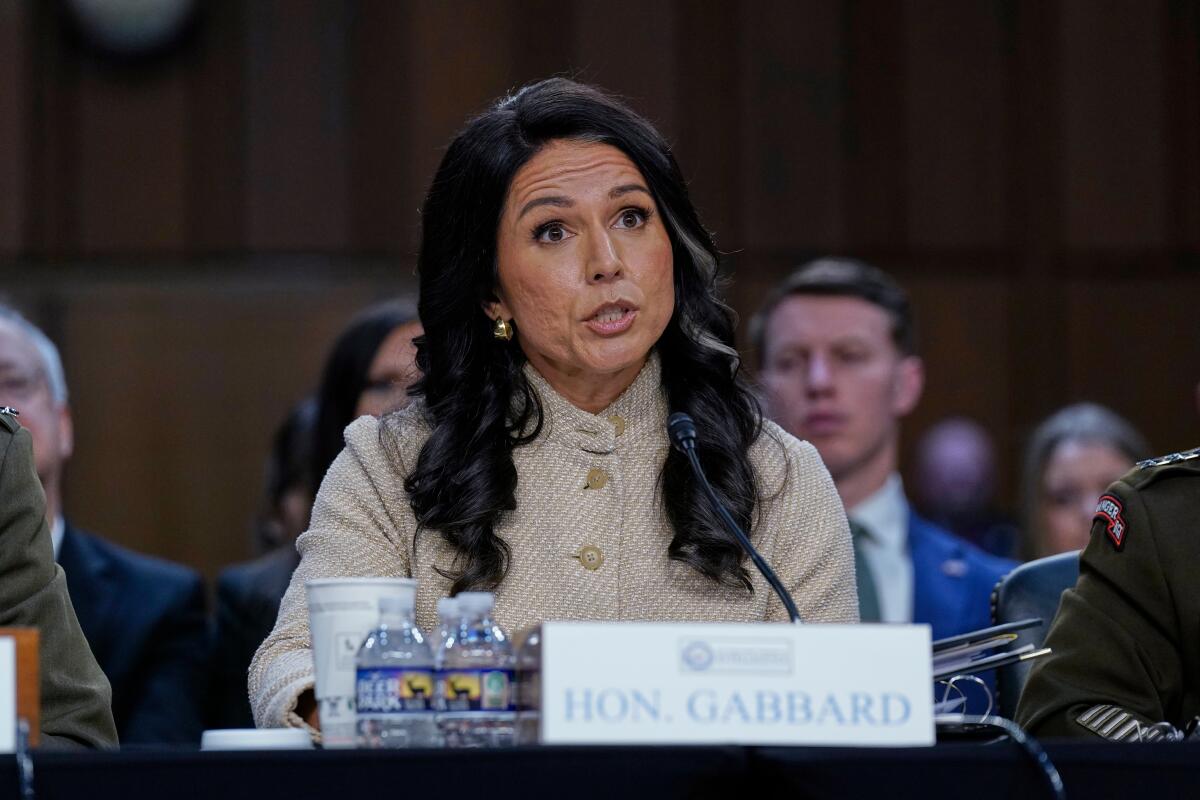
WASHINGTON — The Iranian government remains “intact but largely degraded,” National Intelligence Director Tulsi Gabbard told Congress on Wednesday, as Israel continued to hunt down the Islamic Republic’s leadership with an overnight airstrike that killed the nation’s spy chief.
The death of Intelligence Minister Esmail Khatib, announced Wednesday by Israel, was the third high-level assassination in roughly 24 hours in a series of strikes that have hollowed out Tehran’s leadership ranks.
Israel ordered strikes Tuesday that killed Iranian security chief Ali Larijani and Basij paramilitary commander Gholamreza Soleimani.
Additional senior Iranian figures could be targeted, Israeli Defense Minister Israel Katz said Wednesday. “Israel’s policy is clear and unequivocal: No one in Iran has immunity — everyone is a target,” Katz said.
Ayatollah Mojtaba Khamenei, Iran’s new supreme leader, issued a rare statement Wednesday addressing Larijani’s assassination.
“Undoubtedly, the assassination of such a person shows the extent of his importance and the hatred of the enemies of Islam towards him,” he wrote, according to the Associated Press. “All blood has its price that the criminal murderers of the martyrs must pay soon.”
Tehran responded with renewed missile and drone attacks on Israel and U.S.-aligned countries across the Persian Gulf, further disrupting strained energy infrastructure and shipping lanes. Fighting has halted oil and gas production throughout the region, as shipping was stalled through the Strait of Hormuz, a key artery for global oil supplies.
The war has triggered a severe global oil shortage that has destabilized electronics, agriculture, pharmaceutical and energy supply chains.
Exacerbating those disruptions, the U.S. and Israel carried out a coordinated attack on the South Pars natural gas field on Wednesday. The strikes drew swift condemnation from Qatar, a U.S. ally that shares the reservoir with Iran. The Qatari Foreign Ministry called the attack “dangerous and irresponsible” and “a threat to global energy security.”
The attack is a major blow to Iran’s supply of electricity too, as most of the country’s energy grid relies on gas, analysts said. The field accounts for about 75% of Iran’s natural gas production.
Tehran promised to respond with more attacks on its Mideast neighbors, the Associated Press reported.
Meanwhile, near-constant Israeli strikes in Beirut and southern Lebanon have displaced over 1 million people, and killed 968 civilians, according to the Lebanese Health Ministry.
With the war in its third week, deaths now number in the thousands across Iran, Israel and neighboring countries.
International reaction has sharpened as the fighting showed no sign of relenting. Russia condemned the “murder and liquidation” of sovereign leadership and called for an immediate ceasefire, while European leaders voiced growing alarm about the war’s trajectory and the risks of broader destabilization.
Director of National Intelligence Tulsi Gabbard testifies Wednesday before the Senate Committee on Intelligence.
(Jose Luis Magana / Associated Press)
All allies in the North Atlantic Treaty Organization have refused to heed President Trump’s call to send warships to the Strait of Hormuz, signaling a deepening rift in the world’s most powerful military alliance. Trump has sought to sever the U.S. from the alliance.
“We no longer ‘need,’ or desire, the NATO Countries’ assistance — WE NEVER DID! “ he wrote on social media Tuesday.
Trump on Wednesday signaled little appetite for de-escalation, floating the prospect of a decisive military endgame.
“I wonder what would happen if we ‘finished off’ what’s left of the Iranian Terror State,” he wrote on his social media website.
The president visited Dover Air Force Base in Delaware on Wednesday, where the remains of six U.S. service members killed in the crash of a refueling aircraft were returned to their families. The visit marks the second time since the Feb. 28 launch of the war with Iran that Trump has attended the solemn military ritual known as a dignified transfer, the Associated Press reported.
At a Senate Intelligence Committee hearing on “worldwide threats” Wednesday, Democrats grilled Gabbard and other intelligence leaders over their preparation for Iranian retaliation against Mideast energy infrastructure, civilian areas and American military sites and personnel.
Trump has maintained that the U.S. was caught off guard by Iran’s retaliatory strikes.
“Nobody expected that. We were shocked,” he said at a Kennedy Center board meeting Monday. Later in the day, when asked at an Oval Office news briefing whether he had been warned about the possibility of Iranian retaliation, Trump reiterated his surprise.
Last year, intelligence agencies testified to Congress that Iran was capable of inflicting substantial damage on an attacker, executing regional strikes and disrupting shipping, “particularly energy supplies, through the Strait of Hormuz,” Sen. Ron Wyden (D-Ore.) said at the hearing, reading from last year’s worldwide threats report.
“In other words, every problem we’re seeing now was not only foreseeable, but was actually predicted by the intelligence agencies,” Wyden told Gabbard. “It’s hard to see how you can sit here and say that the intelligence agencies couldn’t provide a clear warning that if attacked, the Iranians would respond by attacking our people.”
Gabbard refused to confirm whether intelligence agencies briefed the president on the subject, saying she “won’t divulge internal conversations.”
She also testified that U.S. strikes on Iran had “obliterated” the country’s nuclear enrichment program, including underground facilities, and said officials are now watching to see whether Tehran attempts to rebuild. So far, she said, Iran has not restarted the program.
But Sen. Jon Ossoff (D-Ga.) challenged that assessment, noting that Trump had used the same word — “obliterated” — to describe strikes just months before. He pressed Gabbard on how serious the nuclear threat was leading up to the February operation, given that timeline.
The intelligence community assessed that Iran “maintained the intention to rebuild and to continue to grow their nuclear enrichment,” Gabbard said adding that the “only person” who can determine what constitutes an imminent threat is the president.
“False,” Ossoff shot back. “It is precisely your responsibility to determine what constitutes a threat to the United States.”
A crowd celebrating Chaharshanbe Suri in Tehran were forced to flee after gunshots disrupted their event. Iranian security forces have reportedly been breaking up gatherings marking the Persian festival this week.
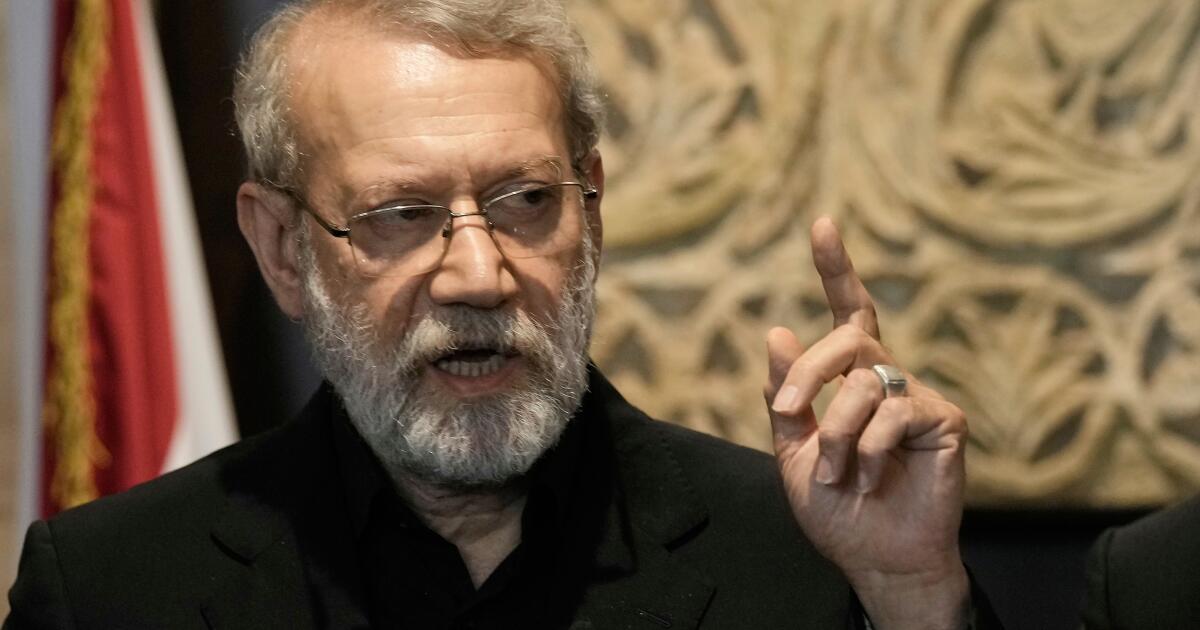
BEIRUT — Iran’s top security official, Ali Larijani, has been killed in an Israeli airstrike, a move that represents a palpable hit to an Iranian leadership that has shown little interest in compromise after almost three weeks of war with the U.S. and Israel.
Killing Larijani, who led Iran as de facto wartime leader after Supreme Leader Ayatollah Ali Khamenei died on the first day of the war, eliminates a veteran official seen as the consummate insider despite not having the religious credentials for the Islamic Republic’s highest offices. Israel, in an announcement Tuesday, said the attack occurred the night before.
For all his bellicose comments since the war began, Larijani was also seen as a pragmatist, and observers say his death might strengthen the resolve of what’s left of Iran’s leadership, rather than induce a willingness to compromise.
His post as secretary of Iran’s Supreme National Security Council gave Larijani control of the country’s top security body, where he tasked government forces with subduing anti-regime protests in January. Thousands of Iranians were killed.
Also killed in the Israeli strikes was Gen. Gholamreza Soleimani, the head of the Basij, the volunteer auxiliary wing of the Islamic Revolutionary Guard Corps and an integral part of the state’s ability to keep order.
“Larijani and the Basij commander were eliminated overnight and joined the head of the annihilation program, Khamenei, and all the eliminated members of the axis of evil, in the depths of hell,” Israeli Defense Minister Israel Katz said in a statement Tuesday.
Israeli officials have employed “axis of evil” to refer to Iran and its allies, including the militant groups Hamas and Hezbollah.
Larijani had served as parliamentary speaker for 12 years and became the point man on nuclear negotiations as well as relations with allies such as China and Russia. He often acted as the government’s representative in the media.
Iranian officials confirmed that Larijani and Soleimani had been killed. They said Larijani’s son, the head of his office and several guards were also killed in the strikes.
Soon after Katz’s announcement, Iranian authorities released an undated note said to have been written by Larijani in which he honored Iranian sailors killed in a U.S. attack. The image of the note was also posted to Larijani’s account on X.
There was no explanation why the note was released and whether it is signified Larijani was still alive.
“We are undermining this regime in the hope of giving the Iranian people an opportunity to remove it,” said Israeli Prime Minister Benjamin Netanyahu.
Netanyahu and President Trump have repeatedly called on ordinary Iranians to topple the government.
Though assassinating Larijani counts as yet another intelligence coup for Israel and the U.S., both may come to regret the loss of a figure who, despite his defiant rhetoric since the war began Feb. 28, was considered by some analysts as a realist.
His killing adds to the evisceration of Iran’s upper echelons, raising the question of who is left to negotiate an end to the war, or have enough influence to make Iran’s deep state accept compromise.
Some observers say that’s the point.
“Why did the Israelis take out Larijani in this moment? Because Netanyahu is focused on blocking Trump’s pathways for a ceasefire and follow-up negotiations with Iran,” said Ellie Geranmayeh, a senior policy fellow at the European Council for Foreign Relations, adding that “Larijani would have been the man to get that job done.”
Khamenei’s assassination, Geranmayeh said, had already empowered more hard-line figures in government, and Larijani’s death “could act as an accelerator to that path.”
“Israel seems to be turning its attention to targeting those that could push for a political solution to the current crisis,” she said.
Larijani’s death would add to the murkiness surrounding Iran’s leadership. After Khamenei was killed and it remained unclear who would replace him, Trump added to the uncertainty by saying that the country’s new leader would need his approval, but also that the U.S. had killed many of the leaders whom he would have deemed acceptable.
After Khamenei’s son, Mojtaba Khamenei, was named the new supreme leader, Trump expressed his displeasure but repeatedly dodged questions about what the transition under the younger Khamenei would mean for the U.S. war effort.
After the elder Khamenei’s death, Larijani emerged as a high-profile voice for Iran, saying that Trump must “pay the price” for the U.S. strikes on the country.
In response, Trump acted as if he didn’t know who Larijani was.
“I have no idea what he’s talking about, who he is. I couldn’t care less,” Trump told CBS News.
Benjamin Radd, a political scientist and senior fellow at the UCLA Burkle Center for International Relations, said Larijani was perceived to be “the last of the competent bunch” within the Iranian leadership — an intellectual who had a complex understanding of the geopolitical reality on the ground, who had negotiated with the U.S. in the past, and who was “adept at maneuvering” all the various parts of the Iranian power structure.
Radd said Larijani “lost that mantle of being the pragmatist” when he strongly backed the deadly January crackdown on protesters, for which he was “more responsible than anyone else.”
He “absolutely was responsible for a tremendous amount of carnage and death and destruction,” Radd said.
And yet, with his death, “all of that diplomatic, institutional experience” that he did have “is gone” from the Iranian leadership, Radd said.
Those left in power, he said, are “generally not the sharpest people, they’re not the people who understand the subtleties of diplomacy, of what negotiating with the U.S. is like.”
Bulos reported from Beirut and Rector from Colorado.
Rescuers have pulled civilians from the rubble after a new wave of US-Israeli strikes targeted Tehran. Residents said that a neighbourhood was attacked, leaving several people trapped under the destruction.
WASHINGTON — After two weeks of war with Iran, the Trump administration is being forced to temper its expectations of a swift end to the conflict, with U.S. intelligence and defense officials expressing doubt it can achieve the overthrow of Iran’s government and the destruction of its nuclear program through military means.
It was an outcome forewarned by analysts at the State Department, the CIA and the Pentagon, who together alerted the administration to the pitfalls full-scale war with Iran would bring before President Trump decided to proceed, two U.S. officials told The Times, granted anonymity to speak candidly.
Certain military goals of Operation Epic Fury laid out at the start of the war are still seen as achievable at the Pentagon, with U.S. and Israeli strikes making steady progress degrading Iran’s ballistic missile infrastructure, its drone program and its navy.
But a prewar U.S. intelligence assessment, that an air assault was unlikely to topple the Islamic Republic, still holds, with the intelligence community now casting doubt the assault had any more political effect than to radicalize a government already devoted to the destruction of Israel and harming the United States.
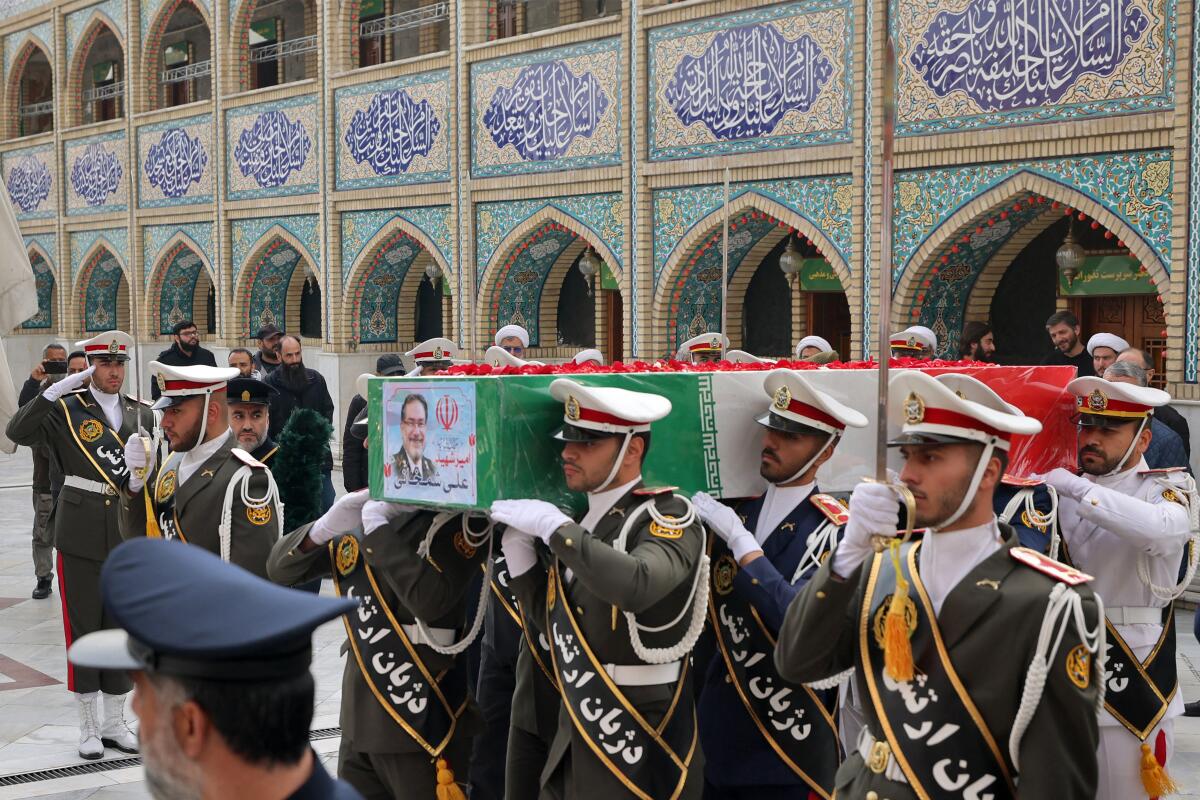
A military procession in Tehran carries the casket of Ali Shamkhani, political advisor to Iran’s last Supreme Leader Ayatollah Ali Khamenei, who was also killed in U.S.-Israeli attacks.
(Atta Kenare / AFP/Getty Images)
Concern has only grown that Iran’s new government will make the fateful strategic decision to build a bomb after the war, unless Trump decides to escalate the conflict with a perilous ground invasion. And the White House now contends with a new mission imperative, created by its decision to launch the war itself, of reopening the Strait of Hormuz to vital shipping traffic that carries 20% of the world’s daily oil and liquid natural gas supply.
The foreign policy strategy Trump publicly laid out as his playbook for the conflict — to come down hard on the government, decapitating its leadership, and hope the remnants would seek mercy — has not worked, with Tehran looking for new ways to expand the war and maximize pain for the U.S. administration.
Trump has minimized the conflict as an “excursion” that would end “very soon,” while also calling it a war, vowing to take the time he needs to “finish the job.” He says it will conclude whenever he decides to end it.
It remains possible that a declaration from Trump that the fighting is over results in a ceasefire, as it did in June of last year, when Trump demanded an end to 12 days of war between Iran and Israel. But the Iranians have a vote, too — and senior leadership in the Islamic Republic have made plain they plan to continue fighting this time whether Trump likes it or not.
On Friday, the Pentagon announced that an additional expeditionary unit of 2,500 Marines was being deployed to the region to support the effort.
“Starting wars is an easy matter,” Ali Larijani, secretary of Iran’s Supreme National Security Council, wrote on social media. “Ending them does not happen with a few tweets.
“We will not leave you until you admit your mistake and pay its price,” he added.
It is a sore lesson for a president whose decade in public life has been distinguished by an exceptional ability to warp reality to his liking.
“The White House has created a dilemma for America: If it declares victory and ends the war, it leaves in place a weakened Iranian government with the means and renewed motivation to pursue nuclear weapons,” said Reid Pauly, a professor of nuclear security and policy at Brown University.
“If it presses on with the war,” Pauly added, “it risks the kind of mission creep that may eventually find American boots on the ground.”
In a news release last week, the White House said that, “from the opening hours of this historic campaign, the objectives were clear: obliterate Iran’s ballistic missile arsenal and production capacity, annihilate its navy, sever its support for terrorist proxies, and ensure the world’s leading state sponsor of terrorism will never acquire a nuclear weapon.”
Yet, at the start of the operation, Trump issued a promise to the people of Iran that, at the end of the U.S.-Israeli campaign, Iran’s military and paramilitary infrastructure would be so badly hobbled that a rare, generational opportunity would emerge for them to take their government back.
“To the great proud people of Iran, I say tonight that the hour of your freedom is at hand,” Trump said. “Stay sheltered. Don’t leave your home. It’s very dangerous outside. Bombs will be dropping everywhere. When we are finished, take over your government. It will be yours to take. This will be probably your only chance for generations.”
Trump said in the days that followed he would need to have a say over the next ruler, after assassinating the country’s longtime supreme leader, Ayatollah Ali Khamenei. But the Iranian system of clerics and militants defied the president, selecting in Khamenei’s son a man viewed as even more hostile to the West than his father was.
Israeli leadership, too, set out regime change as a goal of the war. Yet even their officials now say that a substantial leadership change in Tehran is an unlikely result.
Trump would go on to insist on the “unconditional surrender” from the Iranian government, a demand that he later said would be satisfied by the incapacitation of Iran’s military.
Repeating his conviction that the war will end soon, Trump told Fox News’ Brian Kilmeade in an interview Friday that he would order an end to the fighting “when I feel it. When I feel it in my bones.”
“The problem with the administration’s approach is that it has constantly shifted its goals. Some are achievable, such as degrading Iran’s conventional force. Others are not, such as picking the next leader of Iran,” said Ray Takeyh, a scholar on Iran at the Council on Foreign Relations.
“The mixed messages have led to confusion at home,” Takeyh added, “and lack of planning for oil shortages and getting the Americans out of the region shows that process and personnel can actually matter.”
Mark Dubowitz, CEO of the Foundation for Defense of Democracies, said the joint U.S.-Israeli campaign was always designed to unfold in three phases: degrading Iran’s ability to wage war, reducing Iran’s ability to repress democratic forces inside the country, and finally, encouraging the Iranian people to rise up.
“The president controls the strategy, but no president fully controls the endgame because the regime gets a vote,” Dubowitz said. “The endgame is not a scripted political transition directed from Washington. It is a regime under simultaneous military, economic, and internal pressure — to strip of its war-making and repression capabilities — and whether that produces succession, fracture, or collapse will ultimately be decided in Tehran.”
Whether the conflict will achieve the destruction of Iran’s nuclear program is an equally grave question in Washington, where officials are debating over a list of stark options on how to physically destroy, bury or retrieve the fissile material that Tehran could use to build a nuclear weapon — a threat seen as only more grave under the stewardship of an angry and vengeful government.
“The war was publicly justified, to the extent it was justified at all, in terms of destroying Iran’s nuclear program. Very few strikes have been directed against nuclear-related targets, however — almost certainly because those that survived last June’s attacks are invulnerable to air attack,” said James Acton, co‑director of the nuclear policy program at the Carnegie Endowment for International Peace.
“Unless the U.S. and Israel attempt high-risk special forces operations or a ground incursion,” he added, “Iran will end the war with its surviving nuclear infrastructure largely intact and greater incentives to build the bomb.”
Pauly agreed it is unrealistic to expect the United States and Israel can destroy Iran’s nuclear program through air power alone. The U.N. International Atomic Energy Agency believes Iran has roughly 440 kilograms — about 970 pounds — of 60% highly enriched uranium, possibly spread across multiple facilities.
“Securing this material will require either U.S. ground troops or, after some coercive bargain is reached, international inspectors,” Pauly said.
In an exchange with reporters last week at the Pentagon, Defense Secretary Pete Hegseth had few details to offer on what U.S. options were to remove or eliminate an accessible uranium stockpile, enriched to near weapons grade, that had been buried in a U.S. operation last year intended on obliterating the nuclear threat.
Diplomacy, he suggested, might be required to secure the material.
“I will say we have a range of options, up to and including Iran deciding that they will give those up,” he told reporters, “which of course we would welcome.”
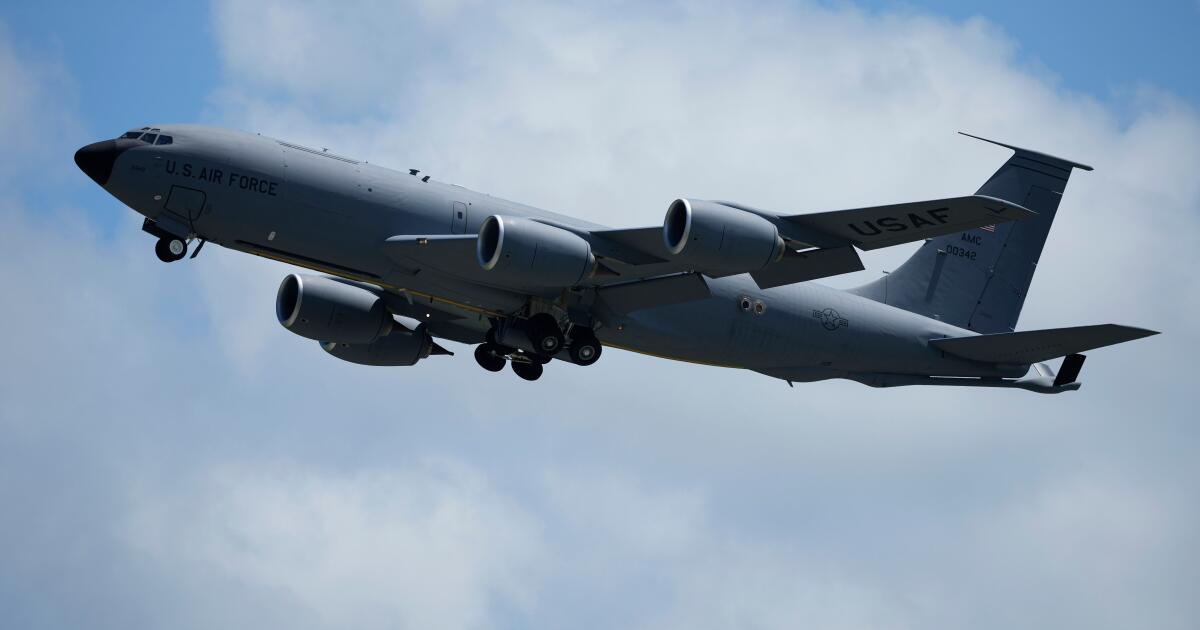
WASHINGTON — Six American airmen deployed to operations against Iran were killed after their refueling aircraft crashed in western Iraq, U.S. Central Command said Friday, bringing the U.S. death toll in the war to 13, as Defense Secretary Pete Hegseth announced the heaviest day of strikes yet.
The crash involved two aircraft in “friendly airspace,” the Pentagon said, adding that the other plane landed safely. The downed KC-135 refueling tanker is the fourth U.S. aircraft to crash during the war against Iran.
“American heroes, all of them,” Hegseth said at the Pentagon on Friday. “We will greet those heroes at Dover and their sacrifice will only recommit us to the resolve of this mission.”
Central Command said the incident is under investigation but was “not due to hostile or friendly fire.”
During the briefing, Hegseth described the Iranian leaders as “desperate” and “cowering” underground like rats. He said Iran’s Supreme Leader Ayatollah Mojtaba Khamenei “is wounded and likely disfigured,” but gave no intelligence to support the claim.
Khamenei has not been seen in public since he rose to leadership, but issued his first public statement Thursday vowing retaliation against U.S. and Israeli attacks, promising that Tehran will continue to choke off the world’s most crucial oil route — the Strait of Hormuz.
“Our revenge will be never ending, not only for the late supreme leader, but also for the blood of all of our martyrs,” he said.
The defense secretary said Friday would see Iran hammered with the heaviest round of air strikes yet seen in the two-week U.S.-Israeli operation that has razed buildings, complexes and factory lines all across Iran, killing at least 1,348 civilians, according to Iranian officials.
“No quarter, no mercy for our enemies,” Hegseth said.
And while Hegseth insisted that fighting will cease when the U.S. defeats Iran’s naval, missile, and nuclear weapons capabilities, President Trump’s public statements continue to sow doubt that the White House and Pentagon are aligned on the objectives of the mission.
Asked Friday by Fox News when the war might end, Trump said, “When I feel it — feel it in my bones.”
Iran’s blockade of the strait remains Tehran’s foremost leverage against its Western adversaries, and a serious political bane for Trump. The International Energy Agency warned Thursday that conflict has created “the largest supply disruption in the history of the global oil market,” which has sent oil prices surging 40% to $95 a barrel since Feb. 28.
Some 1,000 ships remain stranded in the Persian Gulf, many of them energy tankers that have been unable to carry oil and gas shipments from the Middle East to importers across the globe. Vessels that have attempted to traverse the embattled channel have been destroyed in Iranian attacks. Hegseth described Tehran’s strategy as “an act of desperation.”
The United Kingdom Maritime Trade Operations on Friday reported 20 incidents affecting vessels operating in and around the Arabian Gulf, Strait of Hormuz and Gulf of Oman in March.
Drone and missile attacks continue to assail gulf states, threatening to draw more players into the conflict. Thick black smoke was seen rising over Dubai’s skyline Friday after debris from an intercepted Iranian drone strike caused a fire and minor damage to a building within the Dubai International Financial Centre, according to the Dubai Media Office.
Europe has become increasingly involved, too. U.S. long-range bombers have begun flying offensive missions from British airbases, even as U.K. Prime Minister Keir Starmer explicitly permitted U.S. forces to use the bases “for defensive purposes only.” Starmer initially refused to cooperate in American hostilities in any capacity, but changed his approach after he drew criticism from Trump, who said, “He’s no Winston Churchill.”
The U.K., France, and Italy each deployed naval assets to the Eastern Mediterranean island of Cyprus, situated just 125 miles from Lebanon, after Iranian drone strikes hit U.K. bases. The island has emerged as a strategic — and exposed — nerve center in the U.S. offensive against Iran.
Meanwhile, Israel said Friday its strikes are “continuing and intensifying” in Lebanon and Iran. The Israel Defense Forces issued new evacuation orders in southern Lebanon on Thursday after overnight airstrikes in Beirut triggered retaliatory missile and drone attacks by the Iran-backed militant group Hezbollah.
Eight civilians were killed and nine others were wounded in attacks on the Lebanese city of Sidon on Friday, according to Lebanon’s Health Ministry. More than 100 children have been killed in the Israeli assault, the ministry said.
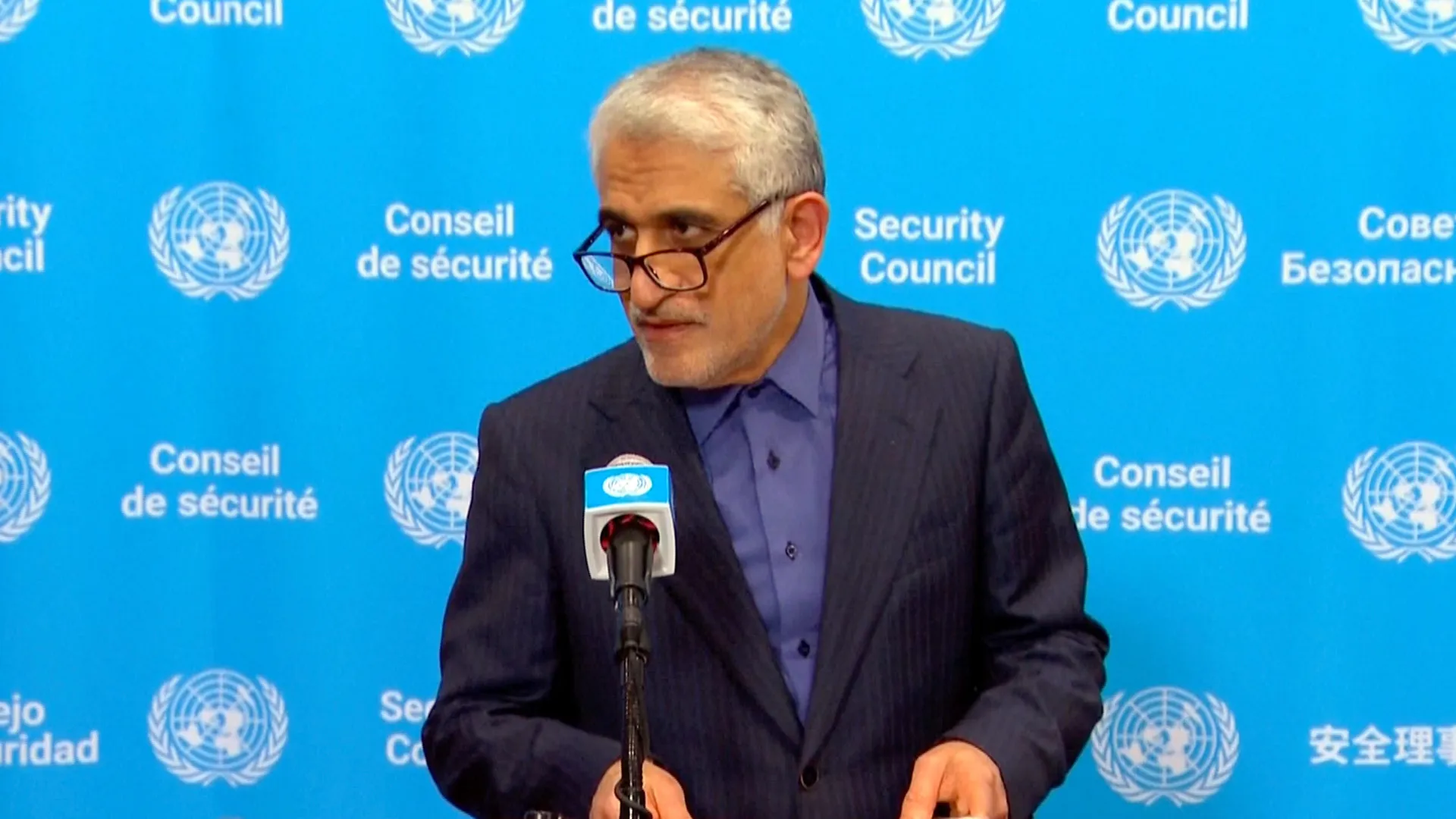
Iran’s UN ambassador Amir Saeid Iravani said Tehran will not close the Strait of Hormuz and remains committed to freedom of navigation. His remarks came after Supreme Leader Mojtaba Khamenei said the waterway would remain closed to pressure Iran’s enemies.
Multiple explosions have been reported across Iran’s capital, Tehran, and other cities as United States-Israeli attacks and Iranian retaliation continue.
As the conflict saw its 13th day on Thursday, Iran’s representative to the United Nations, Amir Saeid Iravani, said at least 1,348 civilians have been killed.
The humanitarian toll continues to mount with more than 17,000 injured in Iran since the US and Israel launched their war on February 28. UNICEF described the situation as “catastrophic”, noting that more than 1,100 children have been reported injured or killed.
The Office of the UN High Commissioner for Refugees (UNHCR) estimated that up to 3.2 million people have been displaced within Iran since the conflict began. “This figure is likely to continue rising as hostilities persist, marking a worrying escalation in humanitarian needs,” UNHCR said in a statement.
Meanwhile, in Lebanon, Israeli attacks since March 2 have killed at least 687 people, including 98 children, according to Information Minister Paul Morcos.