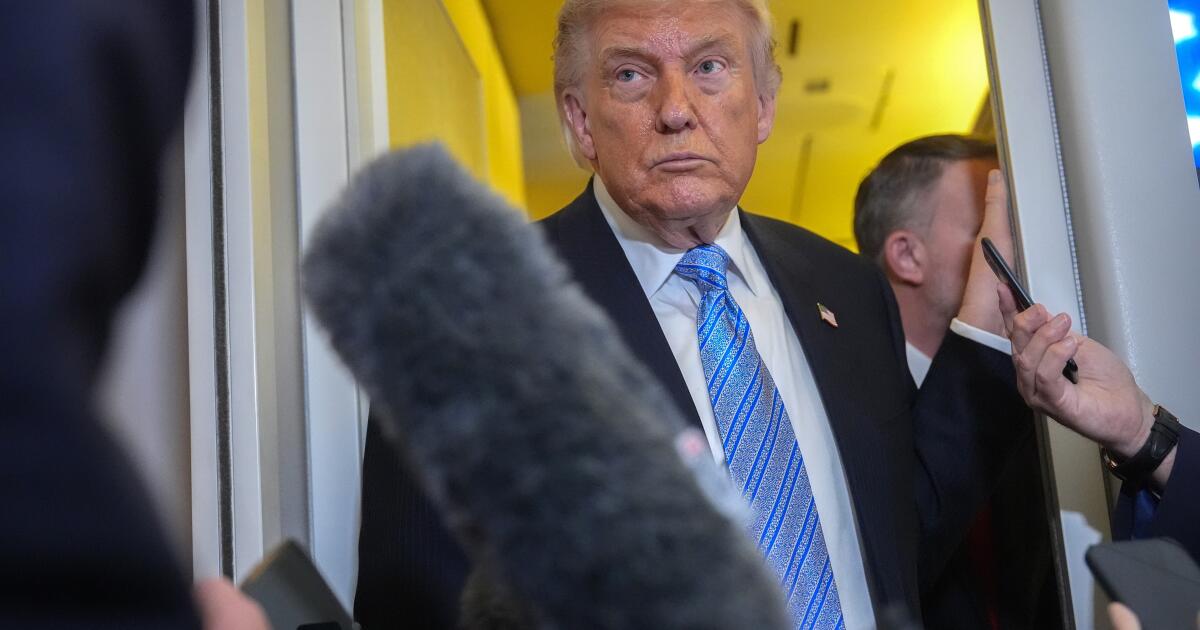
WASHINGTON — More than $350 million from President Trump’s “big, beautiful bill” has been quietly directed to White House security, an allotment that Democrats warn appears to be helping fund his new ballroom project — despite the president’s insistence that no taxpayer dollars would be used.
The apportionment of funds, which the White House’s Office of Management and Budget made late Friday, comes from two accounts that were intended to provide the U.S. Secret Service with extra money for hiring and training in the aftermath of last year’s assassination attempts on the president, according to Democrats on the Senate Budget Committee. The shift was made days after Congress rejected a $1-billion request for the White House in a Homeland Security bill that Trump signed into law and as the ballroom project is tangled in legal challenges.
Senate Judiciary Committee chairman Chuck Grassley, whose panel initially drafted the security funding, said Thursday he was unaware of the allocations.
“The president said that it was all going to be paid for with private money,” said Grassley (R-Iowa). “And that’s what the country expects.”
Sen. Jeff Merkley of Oregon, the top Democrat on the Senate Budget Committee, charged that Trump’s actions are potentially illegal.
“After repeatedly telling the American people that zero taxpayer dollars would be spent on his gold-plated ballroom boondoggle, now Trump appears to be using a smoke and mirrors tactic,” Merkley said in a statement.
“Trump has proven that he can’t be trusted to follow the law,” Merkley said. “He only cares about wasting taxpayer money on his vanity projects.”
Ballroom project hits setbacks
Trump has faced setbacks in his attempts to build the ballroom on the White House grounds, where he ordered the demolition of the storied East Wing to make way for it.
Touring the construction site last month, Trump called the development a “gift” to the American people. He has repeatedly said that it is being paid for by donations — which has also run into ethics questions from watchdogs concerned about potential corruption and conflicts of interest.
Congress refused the Trump administration’s request for $1 billion for the ballroom last month. The administration wanted the money as part of a Homeland Security bill, but Republican and Democratic lawmakers rejected efforts to tack it on. It became politically toxic at a time when Americans are reeling from inflationary high costs of living.
The Washington Post reported earlier this week that the price tag for the project has ballooned to $600 million, according to a project summary prepared by the contractor, with more than half of that funding coming from taxpayers. Roll Call first reported on the apportionment of new funds for White House security.
At its core, arguments are swirling over how much of the White House project is to bolster security underground, with bomb shelters and a medical facility, and how much of the costs are related to the president’s promised 999-seat ballroom on top.
White House says Trump and donors are paying for the ballroom
A spokesman for the White House said that Trump and donors are funding some $400 million for the ballroom development, and that the coordination with the Secret Service had been noted in the initial announcement of the project.
“The East Wing Modernization Project is inextricably tied to the security of the President, the White House grounds and the certain security infrastructure assets,” said White House spokesman Davis R. Ingle in a statement.
He said the events over the past weekend, including an alleged attack plan targeting the UFC Freedom 250 event at the White House, proves why the project is needed.
“President Trump and generous American patriots are funding the ballroom to the tune of approximately $400 million, which will be a secure and appropriate venue for Presidents for generations to come,” he said.
Government lawyers have argued that the project includes critical security features to guard against a range of threats, such as drones and missiles.
The White House has said in court documents that the East Wing project would be “heavily fortified,” including bomb shelters, military installations and a medical facility underneath the ballroom. The Secret Service told senators last month that $220 million of the White House’s $1-billion request would go to harden the ballroom addition, with bulletproof glass, drone detection technologies, chemical and other systems.
The rest of the money would go for other security improvements, according to a document provided to Senate Republicans, including $180 million for a new, “long overdue” White House visitors screening facility.
Congress holds power of the purse
The shifting funds are certain to ignite growing concerns in Congress over the separation of powers, and the president’s use of federal funds allocated by lawmakers.
The money comes from Trump’s big tax breaks and spending cuts bill that the president signed into law last summer. It provided more than $1 billion for Secret Service resources, including “personnel, training facilities, programming, and technology; and performance, retention, and signing bonuses.”
The provision was uncontested at the time, even as Democrats voted against the broader bill. Democrats said they did not challenge this section or try to strip it out from the package.
Under the Constitution, only Congress has the specific authority to allocate funds across the federal government, including the executive and judicial branch operations.
While the president holds the power to sign — or veto — those appropriation bills, once the funding becomes law, it largely must stand.
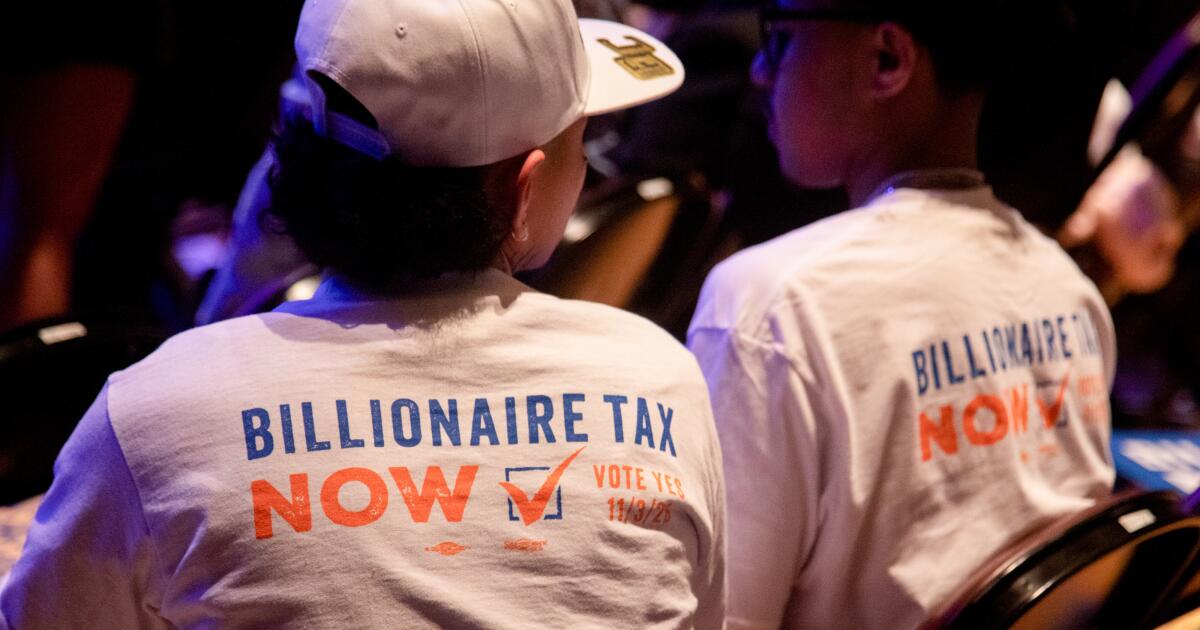
A controversial proposal to tax California billionaires to fund healthcare has tenatively qualified for the November ballot, setting the stage for a more intense and expensive battle over whether the state should squeeze the ultra-rich.
Supporters say the proposed tax is crucial to compensate for federal healthcare funding cuts, approved by President Trump and the Republican-controlled Congress, that will harm millions of the state’s most vulnerable residents.
In April, supporters of the billionaire tax submitted nearly 1.6 million signatures, roughly double the number needed to qualify. The California secretary of state’s office on Wednesday declared that enough valid signatures were submitted. The initiative will officially qualify for the Nov. 3 ballot on June 25 unless the proponents withdraw it beforehand.
The initiative would impose a one-time tax of up to 5% on taxpayers and trusts with assets valued at more than $1 billion, with some exceptions, such as property. The levy could be paid over five years. Ninety percent of the revenue would fund healthcare programs, and the remaining funds would be spent on food assistance and education programs. The proposal would cost the state’s richest residents about $100 billion if a majority of voters support it.
Opponents of the measure say the proposal is an ineffective attempt to address the long-term effects of the healthcare cuts and would destroy California’s economy and budget.
The state budget in California is already largely dependent on income taxes paid by its highest earners. Because of that, revenues are prone to volatility, hinging on capital gains from investments, bonuses to executives and windfalls from new stock offerings, and are notoriously difficult for the state to predict.
The proposal already triggered a fierce debate, accentuating the divide between the rich and poor in a state that’s expensive to live in.
The Service Employees International Union-United Healthcare Workers West and other supporters of the billionaire tax say that it would raise $100 billion, offsetting federal funding cuts to healthcare as well as funding education and state food assistance.
But supporters face strong opposition from billionaires with deep pockets. Tech executives and other business leaders oppose the idea and have threatened to move to other states. Opponents say taxing billionaires would harm California’s economy while not addressing underlying financial issues.
The proposal also has divided politicians within the Democratic Party. California Gov. Gavin Newsom spoke out against the billionaire tax, expressing fears that billionaires would move out of the state. But U.S. lawmakers such as California Rep. Ro Khanna and Vermont Sen. Bernie Sanders have backed a billionaire tax, saying the rich should pay their fair share to fund essential services.
Business executives have already poured millions of dollars into groups that oppose the billionaire tax or are promoting alternative solutions to wealth inequality.
Tech executives, venture capitalists and business leaders have donated roughly $118 million to a nonprofit called Building a Better California, according to data on the secretary of state’s website. Most of the funding comes from Google co-founder Sergey Brin, who has given more than $82 million to the group. Executives from DoorDash, Ripple, Stripe and other companies also have contributed.
The group says it supports policies such as expanding access to affordable housing, protecting innovation, requiring government transparency and securing more stable education funding.
PayPal and Palantir co-founder Peter Thiel has contributed $3 million to the California Business Roundtable, which opposes the tax. Former Google Chief Executive Eric Schmidt donated $1 million to that group as well.
California would probably collect tens of billions of dollars from the wealth tax if it passed, but it could also lose other tax revenue, a December letter from the state legislative analyst’s office said. The office also mentioned that it’s tough to predict the exact amount the state would collect because of factors that can affect a billionaire’s wealth such as fluctuating stock prices.
California billionaires who were residents of the state as of Jan. 1 would be affected by the ballot measure if it passes. Some wealthy residents announced plans to moves out of state. On Dec. 31, venture capitalist David Sacks announced that he was opening an office in Austin, Texas, the same day Thiel publicized his firm had opened a new office in Miami.
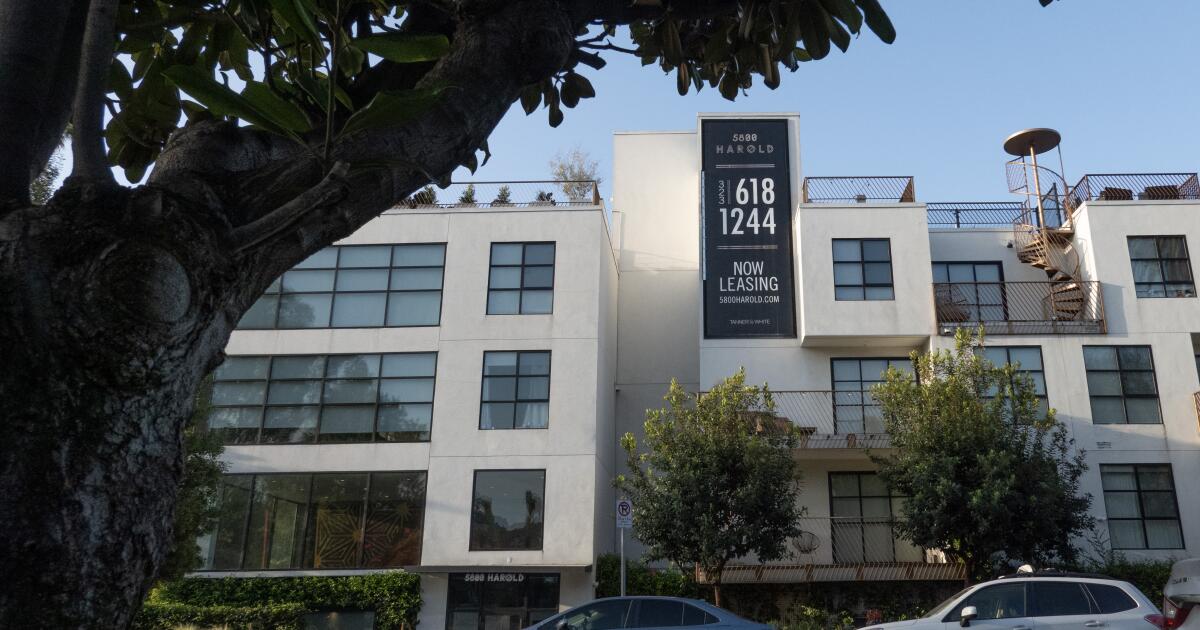
An effort to exempt new apartment buildings in Los Angeles from the so-called mansion tax moved forward Wednesday, amid concerns that the tax is suppressing housing construction and making the affordability crisis worse.
In a 9 to 5 vote, the City Council directed the City Attorney to draft a ballot measure that would ask voters to change Measure ULA, which funds subsidized housing construction and homeless prevention efforts by taxing nearly all property sales over $5.3 million.
Once the proposal is drafted, it must come back to council for a final approval to make it onto the November ballot.
Wednesday was the deadline for the council to take the vote and stay on track to make the ballot this fall, said Councilmember Katy Yaroslavsky, who introduced the proposal along with Councilmember Tim McOsker.
“We should protect what is working and fix what’s not,” Yaroslavsky told colleagues before the vote. “If we fail to act today, that door closes.”
The ULA tax, approved by voters in 2022, is known as the mansion tax but applies a 4% tax to nearly all properties — whether they are mansions or not — if they sell for more than $5.3 million, increasing to 5.5% for sales at or above $10.6 million.
Under the proposed ballot measure, the ULA tax wouldn’t apply to multifamily buildings sold within 10 years of construction. There would also be some more technical changes put before voters, including to allow ULA money to be spent on temporary housing for homeless people.
Since ULA passed, apartment construction in Los Angeles has plummeted. Some studies have found that the additional tax on property sales has played a big role in the drop-off by adding extra costs for developers.
That’s led to fears that the tax, in some ways, is making the affordability crisis worse by suppressing new supply.
A coalition of business groups and pro-development activists have been pushing the council to amend ULA, in part hoping that the effort will blunt another possible measure on November’s ballot that would cancel ULA and other similar taxes altogether.
ULA supporters, however, have fought the exemption for new construction and say that other factors — like high interest rates — are the reasons for the multi-year construction drop-off. They also point to a surge in new building during the first three months of this year to argue that it’s too early to know ULA’s long-term impact.
Also on Wednesday, the council, in a unanimous vote, directed the City Attorney to draft a separate ballot measure that would exempt homeowners impacted by the Palisades fire from paying the ULA tax for five years, retroactive to Jan. 7, 2025.
“ULA has been an impediment to the Palisades recovery, leaving properties sitting empty and people mired in tax and regulatory hell,” City Councilmember Traci Park, who represents Pacific Palisades, told colleagues before the vote. “We need to move forward with this exemption.”
Similar to the broader ULA changes, the Palisades changes must receive a second council approval to make the ballot.
Muhammadu Mahe wasn’t at home when terrorists came for him one rainy night. It was during the rainy season in 2023. He had travelled to sell livestock and spent the night in the Shinkafi area of Zamfara, North West Nigeria.
The following morning, his brother, Alhaji Usman, rang his phone.
“Dan Hajiya, Yan Bindiga came looking for you last night,” Usman said over the phone. The term, Yan Bindiga, is what most rural residents call terrorists in the area. Muhammadu, who is known as Dan Hajiya in his Ruwan Bado village in the Maradun Local Government Area (LGA), did not fully grasp the message, so he asked, and his brother explained succinctly.
Six armed men on three motorcycles had stormed the village and gone straight to Muhammadu’s house. When they were told he was not around, the terrorists asked one of his children to let them know when he returned. They neither fired a single shot nor abducted any of his three wives and 13 children.
“Normally, they would have abducted a family member to force me to look for them, but they didn’t. It was very surprising,” Muhammadu told HumAngle on the afternoon of June 4 in a town in Zamfara, where he now lives with his family.
Hearing about the terrorists’ visit, he wanted to rush home to check if any of his children had been hurt. He had thought the terrorists were targeting him for more extortion. However, his brother advised him to stay in Shinkafi for at least two more days until they could determine the reason the terrorists were looking for him.
Muhammadu now works as a labourer on other people’s farms. Photo: Muhammad Babangida Mafara/HumAngle.
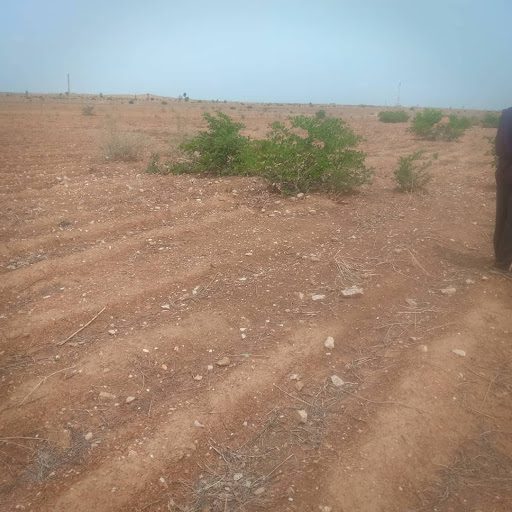
Muhammadu had paid a ₦1.5 million “farming tax” to a terrorist group led by Jamilu, a loyalist of the notorious criminal mastermind, Halilu Sububu, who was killed by the military in 2024. Halilu, originally from Maradun, maintained several camps in the forest reserves in the Sububu/Tubali, Bakura, and Kaya axes. One of such camps is now controlled by Jamilu. Ruwan Bado, Muhammadu’s village, sits not far from Janbako and Faru, two bigger villages in the Talata Mafara town. Terrorist groups routinely attack communities and motorists on the road, a situation that forced several farmers to abandon their farms.
The lingering crisis engulfing northwestern Nigeria began as a farmer-herder clash in Zamfara over a decade ago. Thousands of people have since been killed, with over a million displaced. Motorcycle-riding terrorists invade communities, schools, farmlands, and roads to abduct people for ransom. Terrorist attacks have persisted in the region despite kinetic and non-kinetic approaches.
Amid the ongoing armed violence, farmers are severely affected as terrorist attacks disrupt their agricultural activities. Each year, with the onset of the rainy season, terrorists intensify their attacks on rural communities to intimidate farmers, ultimately seeking agreements that often lead to residents paying millions as taxes. Funds collected from farmers help finance their terrorist activities. Farmers who fail to pay are forced to flee their communities for fear of being attacked by the terrorists. However, even paying the tax does not guarantee safety, as seen in several cases, especially in Zamfara State.
Of recurring attacks and farming taxes
Before the violence escalated in his community, Muhammadu said he had always wondered what he would do without his farms. He is a farmer like his father and grandfather. Everyone in his family is a farmer, including those who have taken government jobs or other businesses. Everyone had a farm before terrorists began to invade their communities.
The day the terrorists came looking for him was not their first time in the village. Before the rainy season in 2023, Muhammadu said, terrorists attacked the village in broad daylight. “I’ll never forget that attack,” he says as he unravels how the ugly event unfolded. And even before then, there were about three attacks.
A little before 3 p.m. on a Friday, he was sitting down outside the mosque with friends and relatives when terrorists barged into the community, shooting sporadically. He didn’t remember much of what happened immediately after he heard the gunshots, but he ran outside the village. “I ran for several minutes and decided to lie down on my stomach,” he says. His wives and some of his children who were at home also ran out.
The attack didn’t last long. When he returned, people had converged on the village square close to the mosque, with three dead bodies lying on the ground. “It was one of the saddest days of my life. My nephew, Haladu, was one of those killed. His mother is my elder sister. Malam Abubakar Jijji and Malam Usman were also killed in that attack.”
The violent incident changed Muhammadu’s life and that of several others in the community. “Our vigilante members said they got information that the terrorists vowed to turn our community upside down if we didn’t cooperate with them. They said what they did was a warning attack,” he says. Cooperating with the terrorists literally means paying taxes to them before farming.
The community leaders would later meet to discuss how to negotiate with the terrorists for peace to reign. “We decided to pay the money. We had no option,” Muhammadu says. The terrorists said anyone with more than one farm must pay ₦1.5 million.
Illustration: Akila Jibrin/HumAngle.
Payment for one farm ranged from ₦400,000 to ₦600,000, depending on the number of acres. His brother, Usman, paid for one farm. The terrorists said the community should not pay the money in a lump sum, but whoever was ready should go and pay their own.
Muhammadu said he sold some of his livestock to raise the “farming tax”. He had volunteered to take the money to the terrorists in the forest. He took his money and that of another villager, Alhaji Sani, who contributed ₦2 million, resulting in a total of ₦3.5 million. The terrorists asked him to wait on the main road after the Faru community. A few minutes after he arrived, two terrorists on a motorcycle emerged from the shrubs, collected the money, and sped off.
That same night, Jamilu, the leader of the terrorists, called to inform them that the money had been collected. He instructed them not to go to their farms and to wait for further instructions. While the residents awaited the next directive, the terrorists arrived looking for Muhammadu.
On the run
Muhammadu didn’t wait in Shinakafi for two days, as his brother suggested.
The following morning, he took the first car from Shinkafi to Boko, and from there, another car to Talata Mafara. He disembarked in Janbako, a community neighbouring his village. He said he was being careful because of informants lurking nearby. While waiting for someone to pick him up, his brother called again, asking him to head to Maradun instead because “they got information that the terrorists would kill me”.
Get our in-depth, creative coverage of conflict and development delivered to you every weekend.
Subscribe now to our newsletter!
He spent three days in Maradun and later sneaked back into his village, Ruwan Bado. At home, he gathered his family members, including his daughters, who were already married, and told them about the situation he had found himself in.
“They all agreed that I should leave,” Muhammadu says. “One of my daughters thought it was suicidal to return to the community. So, I left for Talata Mafara in the morning.”
The choice of Talata Mafara was intentional as the town sits on the edge of the Bakalori dam with sprawling farmlands where residents engage in year-round farming. From Colony via Rini down to Gora on one side and River Bobo inside Mafara town down to Tumfafiya to the boundaries of Danbaza, stretches of water lie abundant for irrigation farming.
“I was wrong. I didn’t know that farmers were also fleeing the Rini (in Bakura) and Gora (in Maradun) axis due to incessant attacks. Most of the farms are now abandoned,” he recalls. He moved farther down to the other side of Mafara town, this time to Tsakuwa, a suburb on the road to the communities of Sauna, Garbadu, Morai, and Kagara in southern Mafara.
However, these communities also face terrorist attacks, making the roads and the farms on both sides of the road very vulnerable. This situation compounds Muhammadu’s problems.
“Since then, I’ve not gone back to Ruwan Bado. My family joined me here after three months.”
Even after three years, Muhammadu says he has not looked back because several people he knows have left the community. His elder brother, Usman, has also left for Maradun town with his family because Ruwan Bado and the communities around it have continued to witness terror attacks.
“Even some months back, people were killed in our community as the attacks continued,” Muhammadu says. “I don’t know whether the Yan Bindiga (bandits) are still looking for me, but I think it’s unsafe to go home.” Only a few families remain in Ruwan Bado.
Sani, the person whose farming tax Muhammadu took to the terrorists alongside his, has also left the community for Mafara town. “Even after collecting our money, the terrorists kept returning. There was a time they attacked the community and stole our livestock. I lost more than 10 cows to that attack,” the 63-year-old man told HumAngle.
Muhammadu said he heard about the attack last year and advised Sani to leave the community. Sani was one of the three well-to-do people in the area. Life was good to him; he had three wives and 17 children, some of whom were already married. Aside from owning five farm fields, he was a trader and livestock merchant before the violence consumed his property. He sold some of his livestock out of fear of cattle-rustling terrorists and retained only the animals he used for ploughing on his farms.
“I encouraged our people to accept the terrorists’ demand for farming tax, believing that we would be allowed to go to the farm. But after we paid, the terrorists allowed us to start working, after which they continued attacking us. It was very unsafe for me to continue living in the community,” Sani, who now lives with his family in a rented apartment in Mafara, said. He has tried, to no avail, to gather the remnants of his wealth to start a business in the town but he said “it’s frustrating because the capital is too small and I don’t even know where to start from.”
As Muhammadu continues to flee, many farmers in the region are suffering from terrorist attacks, especially with the onset of the rainy season in the core northern states. The situation in communities like Ruwan Bado is worsened by a lack of adequate security agents to protect residents. Since there is an absence of conventional security forces in most of the communities, residents pay a farming or protection tax as requested by terrorists to avoid being attacked.
‘There was only a road checkpoint for soldiers on the Colony – Boko road, which is even farther away from us. Without adequate security agents, it’ll be difficult for us to go to farms or markets. When the terrorists attack, it’s only the vigilante group members who fight them back,” Muhammadu said. HumAngle learnt that the Zamfara State government recruited operatives for its Community Protection Guards (also known as Askarawa) and posted them to all communities facing security challenges in the state. But Muhammadu, who left Ruwan Bado in 2023, couldn’t confirm if there are Askarawa in his community now.
James Barnett, a conflict researcher at Hudson Institute, believes terrorists are using the vacuum created by the absence of governance in some of the rural communities in North West Nigeria. The terrorists believe it’s easier and more profitable to enforce levies than to attack communities. “Communities that have no protection from the state often have no choice but to submit to bandit demands in order to be allowed to farm—and survive,” he said.
“The regions where bandits are strongest are the sorts of areas where there has been almost no meaningful state presence in years—roads, schools, clinics and the like. Bandits have essentially filled a vacuum in those parts of rural Nigeria that the state has neglected,” Barnett, who has written extensively on the banditry conflict in the North West, added.
The consequences of this reality are evident in communities, where residents say concerns about survival and security now overshadow everyday economic worries.
“Many villages in Tsafe are no longer thinking about where to get the cheapest fertiliser; instead, they are worried about how to access their farms safely. In some communities, despite paying ransoms and levies to the terrorists, locals are still not confident that their lives will be spared,” Abubakar Bala, a resident of Tsafe in Zamfara, told HumAngle.
Ryanair is threatening to withdraw five aircraft and cancel 20 routes
The move could happen as early as this winter(Image: Michael Mulkens via Getty Images)
A major Ryanair move could impact millions of passengers, with 20 routes axed and around 150 jobs lost.
The budget airline could withdraw planes from its Charleroi base as soon as this winter if Belgium goes ahead with plans to double its tax on airline tickets. “But we are not going to completely close the Charleroi base,” said Ryanair CEO Michael O’Leary during a press visit to the company’s headquarters in Dublin. The federal government is looking to double the airfare tax on flights exceeding 500 kilometres from next year, pushing it up from 5 to 10 euros.
This would bring the levy in line with that applied to short-haul flights, although the tax on these is also set to rise to 11 euros. Finance Minister Jan Jambon made clear this week that he has no plans to reverse the decision.
As a result, Ryanair would remove five of its 19 aircraft currently operating out of Charleroi from this winter. Twenty routes would be scrapped, 15 at Charleroi and five at Zaventem representing a loss of two million passengers per year, Mr O’Leary confirmed.
Ryanair warns that scaling back its Charleroi operations would also put approximately 150 jobs at risk, though affected pilots and cabin crew, many of whom are foreign nationals, would be offered positions at alternative bases. However, “we want to grow in Belgium,” Mr O’Leary said.
“Ryanair aims to increase passenger numbers from 208 million in 2025 to 300 million in the coming years. We want to achieve some of this growth at Charleroi and Zaventem, but for that to happen, the tax on airline tickets must be eliminated, and airport fees must be reduced.”
According to Ryanair’s chief executive, if the tax on airline tickets is not raised, no aircraft will be withdrawn from Charleroi Airport and the situation will remain unchanged. Should the tax be scrapped entirely, it would open the door to further expansion across Belgium.
Ryanair has put forward a growth strategy projecting almost 50% more passengers in Belgium by 2030, pushing the total to 16 million. The Irish carrier would then reopen its base at Brussels Airport, a hub it continues to operate from but where it no longer stations any aircraft, and would even weigh up flights to and from Liège.
This ambitious expansion plan will only come to fruition, however, if all of Ryanair’s demands are met, most notably a loosening of restrictions on night flights in Brussels. On the flip side, any hike in the airline ticket tax would result in a scaling back of operations.
The closure of the Charleroi base isn’t under consideration, though. “Normally, we would never close Charleroi,” said O’Leary. “We’re not going to threaten to close Charleroi. It’s one of our largest bases, and we’ve invested a lot of time and effort in developing this airport over the last thirty years. But in the long term, we could reduce the base to, say, 10 aircraft.”
O’Leary also touched on the soaring cost of aviation fuel, a result of the conflict in the Middle East. The airline has locked in 80% of its fuel requirements until next March at an average cost of $67 per barrel, while the current rate stands at $100 or above.
“We aren’t hedging for the following period yet, as we anticipate prices falling in the coming months. But we could be wrong. If prices haven’t fallen by September, we’ll start to worry.”
With consumer uncertainty prevailing, O’Leary doesn’t expect any fare rises this summer. “Fares should remain stable. We need to incentivise people to travel by offering slightly lower prices” than the 3% to 5% increase that had been forecast.
Supporters of a new Los Angeles County half-cent sales tax rallied Wednesday to celebrate what they framed as a historic win for the region’s cash-strapped healthcare system.
After a rocky election night that showed the tax lagging, supporters claimed victory Tuesday after the latest vote tally pushed Measure ER further over the 50% margin needed to pass. The measure would impose a new half-cent sales tax countywide, with the proceeds going toward local hospitals and clinics hit by federal funding cuts.
Jim Mangia, the chief executive of St. John’s Community Health who helped craft the measure, summed up the campaign as “grueling and expensive.”
“We had to ask an already overtaxed community — in the midst of runaway inflation and [an] affordability crisis — to tax themselves yet again,” he told a crowd of supporters Wednesday.
L.A. County already has a sales tax of 9.75%, and some cities add their own on top. Measure ER passing would raise the countywide sales tax to 10.25%, with some individual cities having a sales tax of more than 11%, according to the California Department of Tax and Fee Administration.
Despite a recent winning streak for sales taxes in L.A. County, some political observers had forecast doom for the measure, which came at a time of skyrocketing gas prices and cost-weary voters.
The largely informal opposition had consisted mainly of local cities that warned another sales tax would disproportionately burden the poorest residents and force shoppers across the county border in hopes of finding lower costs. Some city leaders had also dinged the county for misusing homelessness money generated from a previous sales tax and argued this new pot of dollars would be handled no better.
But supporters were able to eke out a narrow victory, according to the latest election returns, by emphasizing looming hospital closures and the temporary nature of the tax, which is set to sunset in five years.
“It’s a lifesaver to carry us through the storm we’re all in,” said county Supervisor Holly Mitchell, who led the push within the Board of Supervisors to get the measure on the ballot.
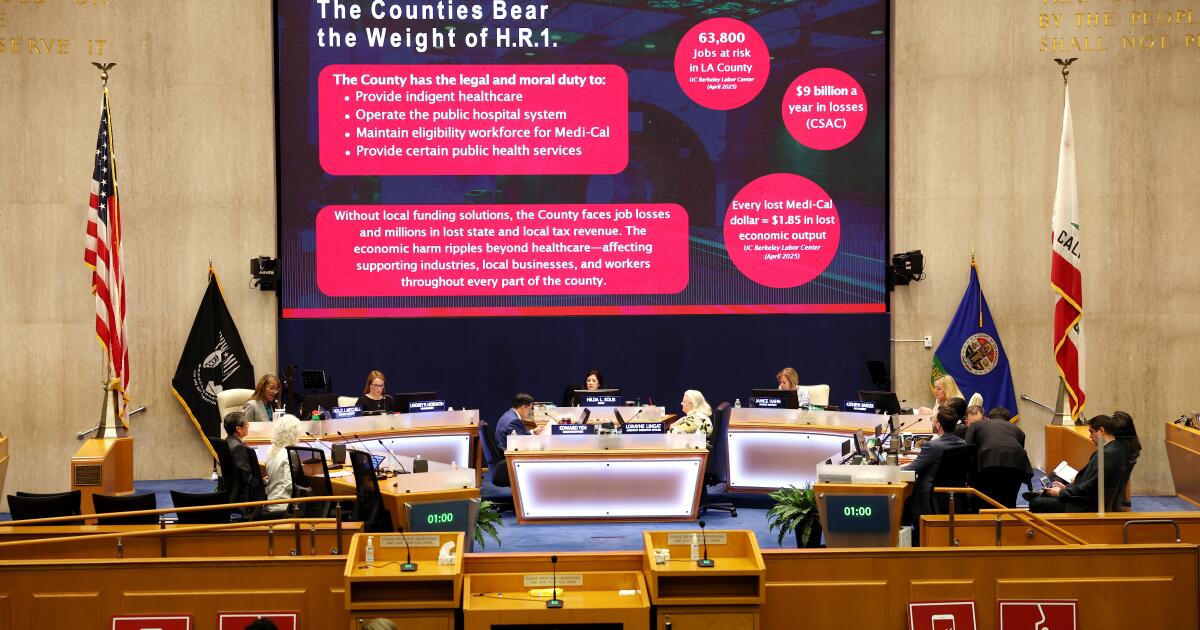
County leaders in February voted 4-1 to put the tax on the ballot after federal legislation threatened to pull health insurance from the poorest residents, leaving the already cash-strapped county to foot the bill for their care. Officials say cuts in the One Big Beautiful Bill Act are expected to slash more than $2 billion from the county’s budget for health services over the next three years.
“It’s disgusting what’s going to happen to our residents,” said Supervisor Hilda Solis, who championed the measure alongside Mitchell.
The tax, which begins Oct. 1, comes at a time of budget-tightening for the county amid rising labor costs and a $4-billion sex abuse settlement that is set to be paid out over the next five years.
Officials estimate the tax will bring in about $1 billion per year, which will go to clinics, hospitals and Planned Parenthood services that supporters say are at risk of closure without a new source of cash.
A similar proposed healthcare sales tax in Contra Costa County, meant to generate $150 million a year, was soundly rejected with about 57% of voters opposing the measure, according to votes tallied as of Wednesday.
Supporters of a half-cent sales tax proposed to help fund health services in Los Angeles County declared victory Tuesday after days of steadily gaining ground as more ballots were counted.
The latest results show the “yes” camp ahead by a slim margin, with just more than 50% of the vote. The measure needs a simple majority to win.
“Today, Angelenos sent a clear message: we take care of each other,” said Jim Mangia, chief executive of St. John’s Community Health and a spokesperson for the campaign, in a statement. “For months, we watched Washington make decisions that stripped healthcare away from hundreds of thousands of our neighbors — and today, Los Angeles County answered.”
The campaign said it would be organizing a news conference Wednesday to celebrate the “historic win.”
The proposal, on the ballot as Measure ER, had gained traction since election night, when results showed the tax had failed to gain a majority of support among early voters. Voters have not rejected a sales tax hike in L.A. County since 2012, when a transportation measure fell just short of a needed two-thirds majority with 66.1% support.
Approval of Measure ER would impose a new sales tax of half a penny of every dollar spent in the county, with the proceeds going to local hospitals and clinics that say they’re bleeding funding after federal cuts. Officials anticipate it will bring in $1 billion annually to patch the holes in the health services network.
The tax, which was championed by a coalition of healthcare advocates, takes effect Oct. 1 and will last for five years.
The administration of US President Donald Trump has proposed new tariffs of up to 12.5 percent on imports from 60 economies after determining they had failed to curb trade in goods made with forced labour, an assertion that was rejected by US trading partners.
The proposal from the Office of the United States Trade Representative (USTR), issued late on Tuesday, comes from a Section 301 unfair trade practices investigation designed to help rebuild US President Donald Trump’s emergency tariffs, struck down by a US Supreme Court decision in February.
Recommended Stories
list of 4 itemsend of list
Despite laws banning them, the products of forced labour are deeply embedded in supply chains across the world. European lawmakers bristle at the accusation that the region is less effective than the US at curbing the trade in such goods, with one describing the US findings as “utterly absurd”. Business leaders said the US move created more confusion for companies.
The USTR proposed 10 percent additional duties on imports from Canada, Ecuador, the European Union, Indonesia, Mexico, Pakistan, Argentina, Bangladesh, Cambodia, El Salvador, Guatemala, Malaysia, Taiwan and Britain. The USTR said all had plans or partial schemes in place.
The trade agency said it would impose additional duties of 12.5 percent on the remaining 45 countries that it investigated. These include China, India, Nigeria, Japan, South Korea, Vietnam, Australia and New Zealand.
“The failure of our most important trading partners to address the importation of goods made with forced labour is unacceptable,” US Trade Representative Jamieson Greer said in a statement. “This creates a dynamic where American workers are forced to compete globally on an unlevel playing field.”
The USTR said it would accept public comments on the proposed tariffs and other remedies through July 6, with a public hearing scheduled for July 7.
The announcement comes ahead of the July 24 expiration of a 10 percent temporary tariff imposed by the Trump administration on February 20, the day the Supreme Court struck down Trump’s tariffs under the International Emergency Economic Powers Act. It also shows how determined the Trump administration is about building a wall of tariffs around the US economy, the world’s largest, despite repeated setbacks in court.
After the loss in the Supreme Court, Trump turned to another law to impose temporary 10 percent tariffs globally. But those stopgap levies expire July 24. And a specialised trade court ruled last month that they, too, were illegal – though the government can continue collecting them while that case works its way through the courts.
Unjustified tariffs
The European Commission said the tariffs were unjustified and reiterated its commitment to the trade deal sealed with Washington last year.
Bernd Lange, the chair of the European Parliament’s trade committee, which voted on Tuesday to accept that trade deal, said the new tariffs were expected, but said the results of the US investigation were still “utterly absurd” given a 2024 EU law to ban imports of forced labour products.
“The impression is increasingly emerging that a tariff measure is sought first, and only then is a suitable legal justification found,” he said. However, he added that the key question would be whether the additional tariffs would exceed those agreed between both sides last July.
The US’s largest trading partner, the EU, agreed last July to accept tariffs of 15 percent on a broad range of its exports. In its report, the USTR said the EU anti-forced labour measures only came into force in December 2027 and lacked key elements.
It was unclear whether the proposed tariffs – which the US release described as “additional duties” – would come on top of levies agreed in bilateral deals signed with the US.
Britain said it was in regular talks with the US and was taking action to tackle forced labour. It added that the preferential access to US markets that it had negotiated for UK businesses remained in place.
Mexico said that goods that were compliant under the United States-Mexico-Canada Agreement (USMCA) would be exempt from the new tariffs.
Taiwan said it was “hopeful and confident” that the final results would reflect agreements already reached, securing relatively preferential treatment.
Beijing, facing 12.5 percent tariffs, said that it opposed all forms of unilateral tariffs and that there was no forced labour in China. India, confronted with the same rate, said it was engaged with Washington on the Section 301 proceedings, noting the proposed tariffs were not final.
“There will be deep concerns in the international business community that the US [forced labour law could] become a global template,” said Andrew Wilson, deputy secretary general of the International Chamber of Commerce.
“Anyone can make a claim, get a shipment impounded and the company has to prove no forced labour in supply chain.”
Certain exemptions
The USTR said it would exempt from tariffs products including energy, rare earths and some other metals, beef, coffee, certain fruits and vegetables, pharmaceuticals, organic chemicals and aircraft parts.
It also said it was proposing a textile mechanism that would allow for a certain volume of apparel and textile imports to enter the US at a reduced tariff rate, without giving details.
The ICC’s Wilson said the list of exemptions, stretching for more than 76 pages, suggested sensitivities over the potential cost-of-living hit to food and other goods with known forced-labour risks.
“It doesn’t make sense if the object of this is to enhance controls on modern slavery,” he said.
The move will see passengers pay ’65 per cent’ less tax on a number of routes in a bid to make them more ‘affordable’
Robert Rowlands Deputy editor, money and lifestyle, content hub and Maria Ortega
15:24, 03 Jun 2026
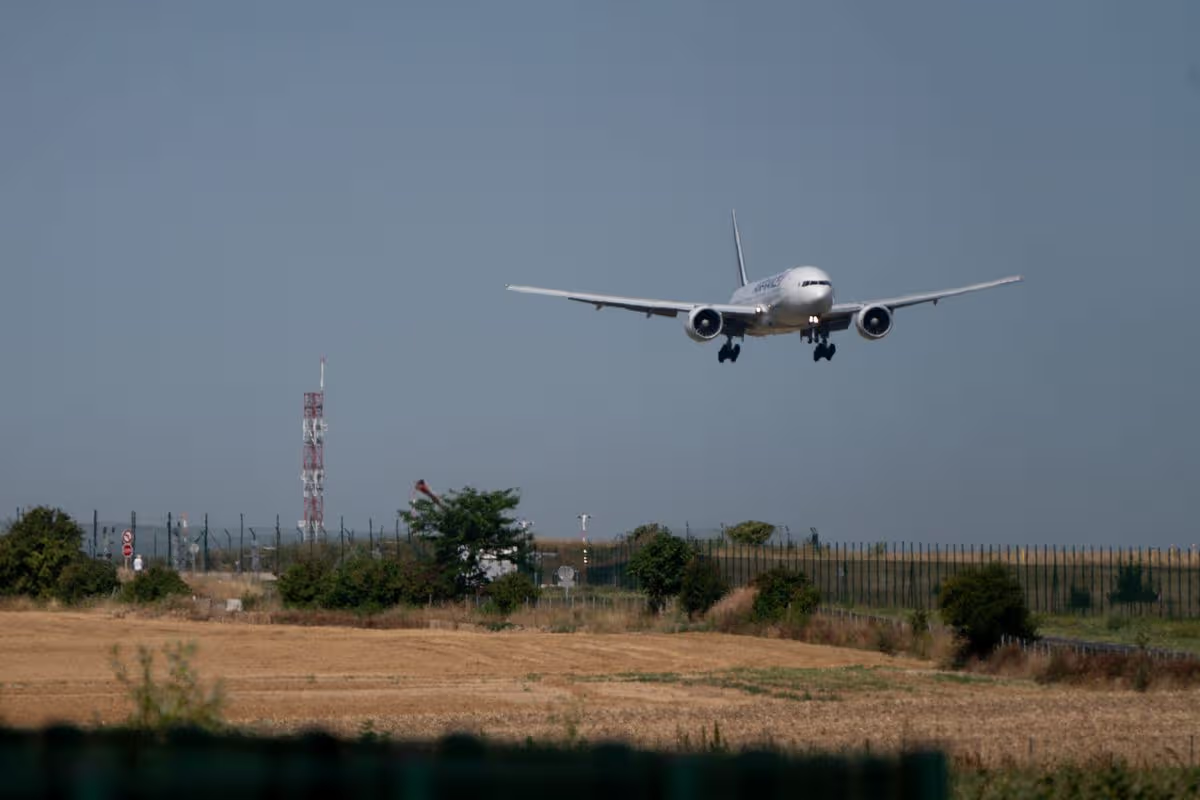
An aircraft landing at the Paris Charles de Gaulle Airport in Paris(Image: Getty)
The prices of tickets for a number of flights in a holiday destination for British travellers will be lowered in a bid to make them more affordable. The move will see flights on 26 specific routes cut in price as tax is reduced on many flights in France, which gets around four million visits from UK travellers every year.
The move was introduced on June 1. Philippe Tabarot, minister at the French Ministry of Transport, confirmed the update this week, and it will affect some international flights as well as trips to some of France’s biggest cities.
Travellers in the UK heading for holidays to France from Heathrow and Gatwick could benefit. Air France, for instance, travels to Paris Charles de Gaulle, while Manchester airport and Birmingham airport also daily flights to both Paris and Lyon, and Newcastle, Edinburgh and Southampton airports also have regular Paris flights.
The move is due to a change in the so-called solidarity tax on airplane tickets (TSBA). French media website 20 Minutes reports that the TSBA had been raised in March 2025 for all flights departing from France.
Local media say the amount rose from €2.63 to €7.40 per passenger. Now passengers flying on certain routes will see the figure returne to the original rate of €2.63.
The Ministry of Transport says this represents a 65% reduction in the tax. That amounts to a saving of €4.77 per ticket.
The flights in France to be affected by the TSBA change
This discount applies to the following routes:
Calvi-Marseille
Ajaccio-Paris (Orly)
La Rochelle–Lyon
Ajaccio-Nice
Brive–Paris
Rodez–Paris
Strasbourg–Madrid
Strasbourg–Munich
Bastia-Nice
Figari-Paris (Orly)
Tarbes–Paris
Calvi-Paris (Orly)
Calvi-Nice
Brest–Ouessant
Bastia-Paris (Orly)
Limoges–Lyon
Figari-Nice
Poitiers–Lyon
Aurillac–Paris
Bastia-Marseille
Strasbourg-Copenhagen
Limoges–Paris
Figari-Marseille
Ajaccio-Marseille
Castres–Paris
Le Puy–Paris
The minister said: “By making these routes more affordable, this measure reflects the government’s commitment to supporting connectivity in the least well-served regions and to reducing the cost of air travel to and from these destinations.”
The move is designed to support routes officials believe are sometimes poorly served by other means of transport. While the flights are almost all domestic, Brits travelling around the country could benefit.
There are also international connections to Strasbourg that are included, as well as most of the links between the French island of Corsica and the mainland. These routes have a special status as ‘public service’ routes because they are in areas where other transport options are limited, or where flying represents the only fast connection, The Local reports.
The eco tax was originally added to plane tickets under Jacques Chirac’s government in 2005, French media reports say. It was doubled in 2024 in a move that Ryanair blamed for its withdrawal from some regional French airports.
The tax is added as an extra fee to each plane ticket bought. It is charged at a sliding rate based on the length of the flight and whether the ticket is standard class, business or first.
Los Angeles County’s half-cent sales tax to fund healthcare services was trailing Tuesday, with early returns showing a majority of voters rejecting the measure.
The tax — a half-penny of every dollar spent in the county — is meant to prop up local hospitals and clinics that are hemorrhaging funding after recent federal cuts.
The sales tax, which needs a simple majority to pass, would take effect Oct. 1 and last five years. Officials say it would pull in $1 billion annually to help plug the budget holes hitting local hospitals and clinics.
L.A. County health officials anticipate the One Big Beautiful Bill Act, signed into law by President Trump last summer, will slash more than $2 billion from the county’s health services budget within the next three years. Due to eligibility changes, the county will no longer be able to get reimbursements for many Californians who have lost Medi-Cal.
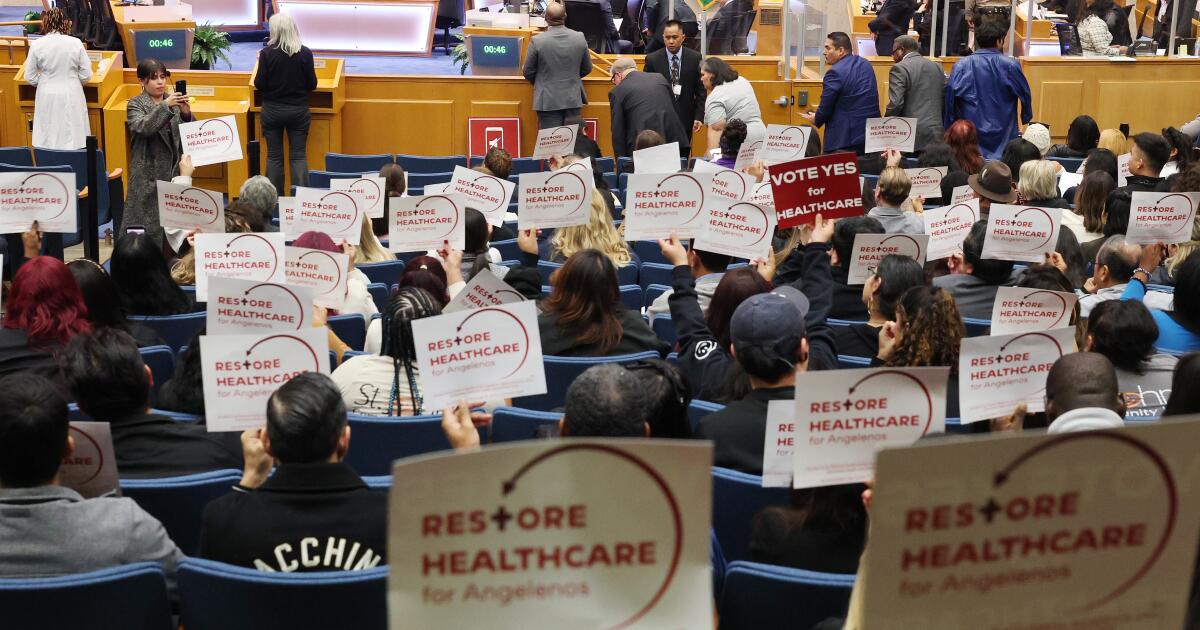
The measure was championed by a coalition of healthcare advocates called Restore Healthcare for Angelenos who warned that mass layoffs and emergency room closures could be imminent if new funding didn’t come fast. The Department of Public Health recently closed seven clinics — a grim sign, supporters said, of service cuts to come.
Voters haven’t rejected a sales tax hike since 2012, when a transportation measure fell just short with 66.1% support. It needed 66.7% to pass.
A majority of county supervisors had supported the new tax proposal, voting 4 to 1 this February to put it on the ballot. But the measure faced significant opposition from local cities, with opponents arguing the sales tax hike would unfairly burden the poorest county residents and encourage people to spend their dollars across the county line.
Supervisor Kathryn Barger, the board’s lone opponent of the tax, said she was concerned it was a “general” tax, meaning the money wouldn’t be earmarked for healthcare costs. Instead, she argued, politicians would have final say over how the money gets spent.
The supervisors have created a plan for spending the tax money, with the largest chunk of the money meant to cover the costs for patients without insurance. The measure also asked voters to sign off on a nine-member oversight committee.
The county currently has a base sales tax rate of 9.75%, and cities impose local taxes on top of that.
Geraldine Noel was a lawyer in the UK when she accidentally found herself relocating to Malta, a sun-drenched Mediterranean island where English is an official language
Malta is becoming more popular as a Mediterranean destination(Image: Getty Images)
It was a complete twist of fate that led high-flying lawyer Geraldine Noel to swap her life for a Mediterranean paradise where English is spoken as a first language.
She said: “I never would have thought adopting a rescue dog and being banned from bringing it into the UK would have led me to settling in Malta, but I love my life here in the sun and wouldn’t change a thing.”
Born in south-west London, Geraldine was offered a position at a Maltese bank. This was before Brexit, she explains, when it was considerably easier for British citizens to live and work across EU nations.
She told the I newspaper how property prices on the sun-soaked island have shifted dramatically since she first arrived 16 years ago: “I’m very fortunate. I was able to purchase a property in the north of the island in St Paul’s Bay 13 years ago. So I’ve been able to avoid the year-on-year increase of property prices that we are currently dealing with.”
Soaring property prices are being driven by a significant surge in demand. Malta’s population is currently estimated to sit at around 580,000 – with much of the growth attributed to American retirees, drawn in by the Mediterranean haven’s warm climate and straightforward access to Italy, Greece, and North Africa. The single largest expat community in Malta, however, remains British – with roughly 15,000 Brits calling the island home.
Geraldine continued: “When I moved, a two-bedroom in St Paul’s Bay would have cost between £150,000 and £250,000 and now that same property would be worth between £200,000 and £350,000.”
This surge in property demand has sparked a construction boom, with new homes and extensions springing up across the island. The downside, Geraldine notes, is increased traffic and noise.
Yet it’s Malta’s tax system that proves most enticing to British expats, she explains: “Tax efficiency is one of the most appealing things about living here. Malta still has the British non-dom regime and a variety of tax breaks that include a 15% rate on income remitted to the country, and no capital gains or inheritance tax.”
Sadly, moving to Malta from the UK has become more complicated in recent years: “The curse of Brexit, though, means it’s so much harder for young people to move over – you have to have a work permit or be on a residency programme,” Geraldine said.
That said, she points out, skilled tradespeople – plumbers, carpenters or electricians – will find abundant opportunities thanks to Malta’s construction surge.
Ultimately, Malta offers an exceptional quality of life, Geraldine insists. She cultivates tropical fruit in her garden and lives just a five-minute stroll from the beach, while still enjoying familiar home comforts for nostalgic Brits: “There are so many things that make Malta appealing to British nationals,” Geraldine says.
“English is an official language, there are British pubs galore that do roasts with all the trimmings, red post boxes, Marks & Spencer. You can get Waitrose and Iceland-branded products in certain supermarkets. I actually have Greggs sausage rolls in the freezer right now.”
Malta remained under British rule until it achieved independence in 1964. As a result, English is one of the island’s two official languages, alongside Maltese.
Critics of the current system say it doesn’t reflect reality
The Treasury has issued an update about rule changes affecting air travel(Image: Getty)
The Government has issued an update about tax changes affecting UK air travel. The policy update could impact journeys with major airlines such as Ryanair and EasyJet. The ministerial response comes after major concerns were raised about the current system, which campaigners branded “completely unfair”.
The Treasury has issued a response to a petition to Parliament that garnered more than 10,000 signatures calling for a review of the scale rate expenses paid to employees who travel outside the UK, such as airline cabin crew. These scale rate payments are where a business provides an employee with a set amount of cash, to cover business expenses such as travel and meals, so the worker does not have to provide receipts for each item. The petition called for ministers to “review and increase” the expenses rates. The campaign said: “We feel the rates are not reflective or the real costs for people whose work takes them abroad, and that the way they are put into blocks of 5/10 or 24 hour blocks is completely unfair.
“We want these rates to be reviewed by HMRC so they are up to date with the current cost of living.” These time blocks refer to the fact there are different rates that apply depending on the length of time the expenses relate to. There are different rates for a period of more than five hours but less than 10 hours, another one for more than 10 hours but less than 24 hours, and still another rate for a period of more than 24 hours.
The petition goes on to make the case why the current system is unfair: “If a flight is delayed by an hour this can mean dropping from the 24 hour payment down to the 10 hour payment so essentially working 12 hours without a payment. This is a common occurrence in air travel, hence crew being penalised for something out of their control.
Drivers with older cars may face HMRC struggle
“We believe the scale rates need to provide a wider range of rates and time blocks so that if you fall between rates you are not penalised.” Just over 11,000 people have pledged their support for the petition at the time of writing. If a petition reaches 10,000 signatures, the Government is obliged to pen a response.
You can read the petition in full
Government response
The Treasury has now issued a reply. On the question of whether there could be changes to HMRC’s policies in this area, the group said: “The Government keeps all taxes under review as part of the policy making process.
“Any decisions on future changes in this area will be taken in the context of the wider public finances.” The group also set out the reasoning behind the current scale rates system.
The Treasury said: “Overseas scale rates (OSR) allow employers to reimburse overseas travel costs without receipts. Where costs exceed rates, receipts can be used. The Government keeps OSR under review. The Government recognises that employees who travel overseas for work, including cabin crew, incur additional costs and that employers need practical ways to reimburse those costs fairly.
“HMRC’s overseas scale rate system is intended to support this by providing a consistent, evidence based framework for tax free subsistence payments where employees are travelling abroad as part of their role.” The Government body went on to explain that the scale rates are not intended to reflect a person’s expenses in every case, but instead provide a “standard set of benchmark amounts” that employers and employees can use.
Bespoke rates
Further explaining the rules, the response set out: “Employers are not required to use HMRC’s published scale rates if they believe these do not reflect their employees’ circumstances. Employers can agree bespoke rates with HMRC based on evidence of actual costs, or they can reimburse the actual costs incurred where receipts are available.
“These alternatives allow employers greater flexibility where working patterns, disruption or sector specific issues mean the standard rates are not appropriate.” You can sign the petition on the website.
SACRAMENTO — Gov. Gavin Newsom has threatened to tax 100% of the money Californians receive from President Trump’s “anti-weaponization” fund for his political allies.
Trump’s Justice Department had announced last week that it would establish a $1.776-billion fund to compensate allies of the president who claim they have “suffered weaponization and lawfare” under the Biden administration’s Justice Department.
“Anyone from California that receives any of those funds, we want to tax 100% of those proceeds,” the governor told reporters Thursday.
“That’s an action the state of California can take …[and] it’s an action we look forward to taking.”
Just how Newsom would do so remains unclear. He indicated that he would need action from the Democratic-led California Legislature to impose the new tax. If adopted, the measure would likely face legal challenge.
The fund has prompted outrage from Democrats and some Republicans — including Sen. Mitch McConnell (R-Ky.), who said in a statement that the “slush fund,” which would “pay people who assault cops,” was “utterly stupid.”
Newsom’s remarks about Trump’s settlement fund came on Thursday as he signed a bill designed to prevent election interference ahead of Tuesday’s primary.
The bill, Senate Bill 73, restricts law enforcement agencies and officers — including those from federal agencies — from interfering with state and local election officials, such as confiscating ballots, voter rolls or voting machines without a warrant.
The governor said the bill is meant to address “legitimate anxiety” over threats to election integrity after Riverside County Sheriff Chad Bianco’s decision to seize ballots from the county’s voter registrar as part of a fraud probe. Bianco, a long-time Trump supporter, is one of the top Republicans running to succeed Newsom after the end of his second and final term as governor.
Newsom also pointed to ICE and Border Patrol’s decision last November to stage an event near Dodger Stadium, calling it a “show of force designed to intimidate free expression and free speech.”
“That’s why we have to step up and we have to draw the line,” Newsom said. “We have to clarify the rules of engagement… there are fines associated with this, criminal fines and jail time of three years, so that’s a warning [to] the folks out there that think they can do the bidding of the Trump administration.”
Newsom said he expects Trump to interfere with the upcoming election — noting that the president has falsely claimed that he “won” California in the last election.
“Every single thing that Donald Trump is saying only suggests that he will do more, not less, to intimidate and to impact the outcome of this election,” Newsom said. “I absolutely expect the worst again, because we’ve been on the receiving end of it.”
Shakira’s long tax-fraud nightmare has ended with the government of Spain on the hook to refund nearly $70 million to the Colombian-born singer after prosecutors failed to prove she spent enough time in that country to owe it a chunk of her earnings.
Since 2018, the singer has been accused of defrauding the Spanish government in three cases, for the tax years 2011, 2012-2014 and 2018. Over the years, deals were offered, rejected and accepted; charges were dropped, other charges were filed; and an eight-year prison sentence was threatened.
Shakira maintained her innocence, saying in 2022 that “Spanish tax authorities saw that I was dating a Spanish citizen and started to salivate,” referring to her relationship with Barcelona-born footballer Gerard Piqué, the father of their sons Milan and Sasha. Piqué and the singer, who met in 2010 when she did “Waka Waka,” the official song of that year’s FIFA World Cup, separated in 2022.
A representative for the singer, whose full name is Shakira Isabel Mebarak Ripoll, did not respond immediately to The Times’ request for comment on the court decision.
However, despite there being no fraud, Shakira told People on Monday in a statement that “for nearly a decade, I was treated as guilty. Every step of the process was leaked, distorted, and amplified, using my name and public image to send a threatening message to the rest of the taxpayers.”
She added, “Today, that narrative crumbles, and it does so with the full force of a court ruling.”
Everything revolved around how many days Shakira spent in Spain in the years in question. With her legal residence in the Bahamas before she declared Spain her fiscal home in 2014, she had to spend more than half the year outside of her beau’s home country to avoid paying taxes there.
“They knew I wasn’t in Spain the required time, that Spain wasn’t my place of work or my source of income, but they still came after me, with their eyes on the prize,” Shakira told Elle in 2022, adding that she was confident that justice would prevail in her favor at trial. “I have enough proof.”
The amount the Spanish government owes her includes fines and interest in addition to the money she handed over, despite having no legal obligation to pay it.
Democratic lawmakers blast move, which follows the establishment of a controversial ‘Anti-Weaponization Fund’.
Published On 20 May 202620 May 2026
United States President Donald Trump, his family, and his businesses have been granted immunity from any ongoing audits into their tax affairs, according to a directive by the Department of Justice.
The move on Tuesday came as an addendum to Trump’s agreement a day earlier to settle a $10bn lawsuit against the Internal Revenue Service (IRS) over the leak of his tax information to media outlets between 2018 and 2020.
Recommended Stories
list of 4 itemsend of list
In a one-page document, signed by acting Attorney General Todd Blanche, the Justice Department said authorities would be “FOREVER BARRED and PRECLUDED” from “prosecuting or pursuing” tax claims against Trump, members of his family, and his businesses.
The document, which was posted on the Justice Department’s website without any official announcement or press release, stipulates that the waiver applies to inquiries that are “currently pending or that could be pending,” including any related to tax returns filed by Trump before Monday’s settlement.
Democratic lawmakers immediately blasted the move.
Senator Adam Schiff of California accused the Trump administration of engaging in corruption and “self-dealing”.
“The tax-dodging President gets himself and his whole family a tax break, thanks to Todd Blanche,” Schiff said in a statement on social media.
Richard Painter, the chief White House ethics lawyer under former President George W Bush, said that exempting Trump from any tax obligations would be unconstitutional.
“If the president or his family owe the IRS money, this is a violation of the domestic emoluments clause of the US Constitution, which specifically says that the president cannot receive any profits or advantages from the US government other than his salary appropriated by Congress,” Painter told Al Jazeera.
The Justice Department and the Trump Organisation did not immediately respond to requests for comment.
The Justice Department’s directive marks a dramatic expansion in Trump’s settlement, which established a so-called “Anti-Weaponization Fund” to compensate people who claim to have been victims of politically-motivated “lawfare”.
Critics have likened the initiative to a “slush fund”, warning that it is likely to be used to reward Trump’s allies.
Decisions on distributing money from the $1.776bn fund will be made by a five-member commission, four of whom will be directly appointed by Blanche, a Trump appointee who formerly acted as his personal lawyer.
In heated exchanges with Democratic senators on Tuesday, Blanche denied that Trump had directed him to establish the fund or that it would be used in a partisan manner.
“Anybody in this country is eligible to apply if they believe they were a victim of weaponisation,” Blanche said.
WASHINGTON — The U.S. government will permanently drop tax claims against President Trump, according to a settlement document that is part of a deal to resolve Trump’s $10 billion lawsuit against the Internal Revenue Service over the leak of his tax returns.
As part of the settlement agreement, the U.S. is “forever barred and precluded” from examining or prosecuting Trump, his sons and the Trump organization’s current tax issues, according to a one-page document posted to the Justice Department’s website on Tuesday.
The settlement, which marks an extraordinary use of executive power, goes beyond resolving litigation and effectively helps shield the president from further examination of his finances and legal conduct.
The move comes after the Trump administration announced Monday the creation of a nearly $1.8 billion fund to compensate allies of the Republican president who believe they have been unjustly investigated and prosecuted, an arrangement that Democrats and government watchdogs derided as “corrupt” and unconstitutional.
The “Anti-Weaponization Fund” of $1.776 billion will allow people who believe they were targeted for prosecution for political purposes, including by the Biden administration Justice Department, to apply for payouts, creating what acting Atty. Gen. Todd Blanche called “a lawful process for victims of lawfare and weaponization to be heard and seek redress.”
Blanche, who was grilled by lawmakers on Capitol Hill on Tuesday, would not rule out the possibility that people who carried out violence during the Jan. 6, 2021, riot at the U.S. Capitol will be considered for payouts from the new fund.
Democratic lawmakers and ethics watchdogs slammed the creation of the fund, saying it was corrupt, opaque and had the potential to become a “slush fund” for the president and his allies.
Sen. Ron Wyden, D-Ore., said Democrats intend to “fight every element of this self-dealing settlement.”
“Not only is this another heinously corrupt act by the most corrupt administration in history, it’s clearly a violation of the law that prohibits interference by executive branch officials in IRS audits.”
The fund was announced after Trump, his sons Eric Trump and Donald Trump Jr., and the Trump Organization agreed to drop their lawsuit against the IRS and the Treasury Department. The lawsuit alleged that a leak of confidential tax records caused them reputational and financial harm and negatively affected their public standing, among other allegations.
According to a separate settlement agreement posted to the Justice Department website Monday, Trump will receive a formal apology from the U.S. government but “will not receive any monetary payment or damages of any kind,” from the settlement.
Trump told reporters at the White House on Monday that the fund is dedicated to “reimbursing people who were horribly treated.”
WASHINGTON — President Trump on Monday moved to withdraw his $10 billion lawsuit against the Internal Revenue Service over the leak of his tax returns after reports that his administration was poised to create a fund to compensate some of his allies.
The disclosure was made in a filing in federal court in Florida, where the lawsuit was filed last year.
ABC News first reported last week that Trump was prepared to drop his lawsuit as part of a deal that would create a $1.7 billion fund to pay allies of the president who believe they were wrongly investigated and prosecuted.
The court filing did not mention terms of any potential deal.
News that the Trump administration was contemplating a fund to pay Trump allies drew an immediate backlash from Democrats, including Rep. Jamie Raskin, who called the idea “unconstitutional.”
“This, of course, is a political grievance fund that Donald Trump can use to pay off his friends,” Raskin, the top Democrat on the House Judiciary Committee, said in an interview Sunday on ABC’s “This Week.”
“If these people have a valid cause of action, they should bring it to the court like every other American does, and use the system of due process, and proving things by clear and convincing evidence, or a preponderance of evidence, go and prove it. But the idea that Donald Trump can just pass it out like a pardon is absurd,” he added.
It was not immediately clear who precisely will stand to benefit from the fund but its creation reflects Trump’s long-running claims that the Biden administration Justice Department was weaponized against him.
He has cited as proof the since-dismissed criminal charges he faced between his first and second terms of conspiring to overturn the results of the 2020 presidential election he lost and of retaining classified documents at his Mar-a-Lago estate in Florida. Several aides of his were also prosecuted, as were hundreds of Trump supporters who stormed the U.S. Capitol on Jan. 6, 2021.
Merrick Garland, who served as attorney general during the Biden administration, has repeatedly denied allegations of politicization and has said his decisions followed facts, the evidence and the law. His Justice Department also investigated Biden for his handling of classified information and brought separate tax and gun prosecutions against Biden’s son Hunter.
Nonetheless, Trump’s current Justice Department has actively pursued the president’s retribution campaign and grievances, bringing criminal charges against some of his perceived adversaries and initiating a wide-ranging investigation that aims to establish a years-long conspiracy between law enforcement and intelligence officials to destroy Trump’s political prospects and keep him power.
No charges have been brought in that investigation and it is not clear that any ever will be.
Trump filed a lawsuit earlier this year in a Florida federal court, alleging that a previous leak of his and the Trump Organization’s confidential tax records caused “reputational and financial harm, public embarrassment, unfairly tarnished their business reputations, portrayed them in a false light, and negatively affected President Trump, and the other Plaintiffs’ public standing.”
The president’s sons, Donald Trump Jr. and Eric Trump, are also named plaintiffs in the suit.
Hussein, Tucker and Richer write for the Associated Press.
Popular budget airline is to cancel routes in 2026 after a row with officials
Ryanair is shutting down a European base, with 12 routes set to be axed.(Image: Getty)
Ryanair has given bad news for passengers going to 12 destinations. The airline regularly keeps customers with bookings in the loop regarding travel updates and on its website has explained that the routes are being chopped.
It said that 12 routes are being cut – with the result that 700,000 seats are effectively being lost to air gtravel. The issue has arisen around its Thessaloniki base – meaning it’s closing for the three aircraft based there. It said: “This devastating loss in off-peak winter connectivity is the direct result of the hopelessly uncompetitive costs charged at the German-run Fraport Greece monopoly and Athens Airport.
“The Greek Govt. made the wise decision to reduce the Airport Development Fee (ADF) by 75% (from €12 to €3 per passenger) from November’24, which should have directly stimulated year-round connectivity and tourism across Greece. However, most Greek airports, particularly those run by Fraport Greece, refused to pass the tax cut onto passengers and instead have pocketed the tax cut for themselves. Since then, Fraport Greece have continued to increase charges, which are now +66% above their pre-Covid levels. Likewise, Athens Airport will hike charges this Winter.
“Consequently, Greek airports are no longer competitive in the off-peak shoulder and Winter months, when the tourism industry’s reliance on low-fare connectivity is most acute. Ryanair has therefore been left with no choice but to reallocate capacity to more competitive countries like Albania, regional Italy, and Sweden where airports have passed on the savings from Govt. tax reductions. “
Ryanair said it presented an ambitious growth plan to the Greek government in what it said would grow traffic to 12m passengers per annum, base 10 additional aircraft and launch 50 new routes over the next 5 years. It said it would carry out the plan if airport charges were frozen and the 75% Airport Development Fee reduction is passed on to passengers at all airports.
Ryanair Chief Commercial Officer, Jason McGuinness said: “Ryanair regrets to announce the closure of our Thessaloniki base and reductions in Athens for Winter ‘26, resulting in the loss of 700,000 seats and 12 routes across Greece, as well as the suspension of operations at Chania and Heraklion during the off-peak months. These preventable traffic reductions are a direct result of the airports’ failure to pass through the ADF reduction, particularly in Thessaloniki where the Fraport Greece monopoly have hiked airport charges +66% since 2019.
“The removal of 3 based aircraft, 500,000 seats (-60% vs. Winter ‘25) and 10 routes from Thessaloniki for Winter ‘26 will be devastating for the city and region, as Ryanair provided 90% of international capacity to Thessaloniki last Winter. Unfortunately, there will now be less low-cost air fares for Thessaloniki’s citizens and visitors, and year-round tourism will be harmed as a result. These aircraft will be reallocated to Albania, regional Italy and Sweden, where airports have passed on their Govt’s aviation tax savings – resulting in more connectivity, tourism and jobs this Winter in those regions.
“There is an opportunity for Greece to secure significant year-round traffic growth however, this investment can only be realised once the German-run Fraport Greece monopoly fully passes through the Greek Govt.’s sensible tax cut from November’24 – allowing airlines such as Ryanair, to deliver the connectivity required to reduce Greece’s chronic seasonality.”
The cancelled routes:
Thessaloniki to Berlin
Thessaloniki to Chania
Thessaloniki to Frankfurt-H
Thessaloniki to Gothenburg
Thessaloniki to Heraklion
Thessaloniki to Niederrhein
Thessaloniki to Poznan
Thessaloniki to Stockholm
Thessaloniki to Venice-T
Thessaloniki to Zagreb
Athens to Milan-M
Chania to Paphos
Ryanair has also pulled its aircraft from Chania and Heraklion.
Fraport, which runs 14 airports in Greece said Ryanair’s decision is “exclusively related” to the airline’s commercial strategy and profitability considerations. “Any claims linking this decision to airport charges or the airport development fee imposed by the Greek state are entirely unfounded,” it adds. Fraport Greece has invested over €100 million (£86 million) to upgrade Thessaloniki, the statement added.
Meanwhile, Ryanair has announced the closure of its Berlin operating base and a 50% reduction in its winter schedule to the German capital, citing escalating aviation taxes in the country. The Irish budget airline confirmed that relocating seven aircraft to alternative hubs would see its Berlin passenger numbers drop from 4.5 million to 2.2 million annually.