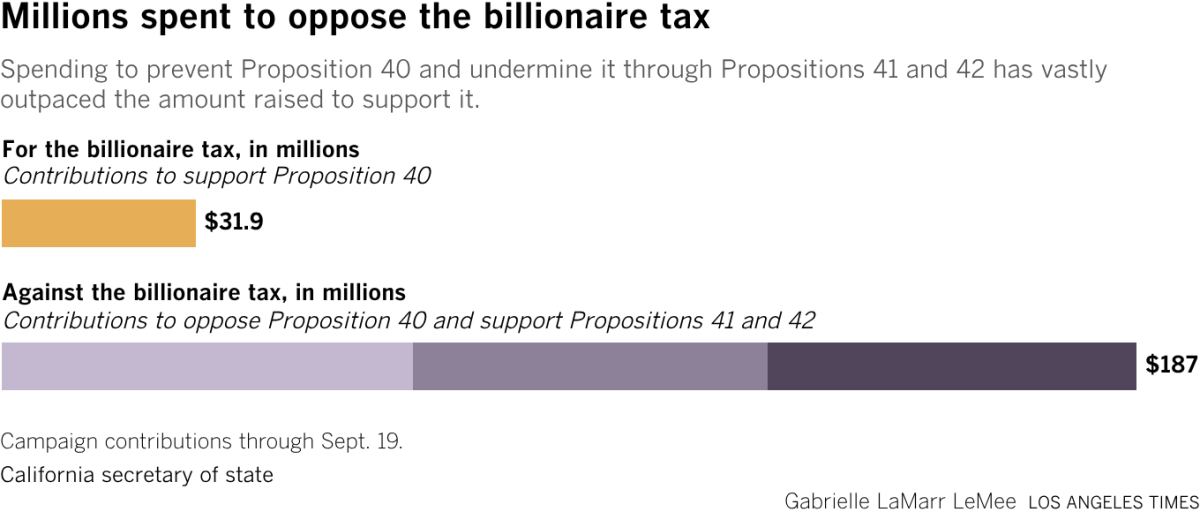
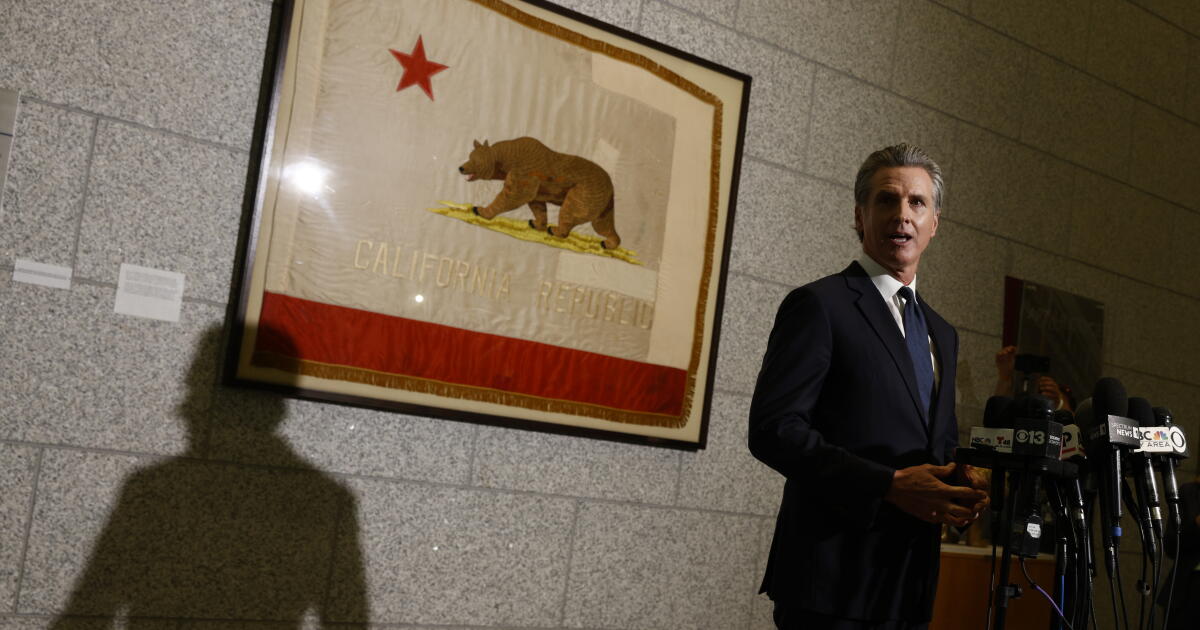
Opponents of the billionaire tax on the November ballot have vastly outraised the proposal’s supporters, with the anti-Proposition 40 effort and the backers of two other ballot measures crafted to nullify it raising $187 million compared to the $32 million raised by boosters of the wealth tax, according to campaign finance documents filed with the state.
The reports, filed Thursday, account for donations through Sept. 19 and do not include several million dollars that have poured into campaign coffers in recent days. The numbers are expected to vastly increase before the Nov. 3 election.
The bulk of the money raised by the proponents of Proposition 40, which would enact a one-time 5% tax on California billionaires’ assets, appears to have been spent on gathering signatures to qualify the measure for the November ballot. The campaign had only $207,000 in the bank, according to the latest campaign finance reports.
A leader of the union that crafted the proposal accused wealthy Californians who are spending heavily against the measure of lying to voters. The measure is designed to offset $100 billion in impending federal healthcare funding cuts expected to impacts millions of Californians.
“The billionaires take and take — tax break after tax break — and now they’re spending that money to deceive voters and avoid paying their fair share,” said Suzanne Jimenez, the chief of staff of the Service Employees International Union-United Healthcare Workers West. “Voters want their money back from the billionaires and want local emergency rooms to stay open. California does not need more tax breaks for billionaires. California needs emergency rooms for patients, hospitals that stay open, and healthcare people can access and afford.”
Opponents of the billionaire tax argue that it would do more harm than good.
“The more Californians learn, the more they see Proposition 40 for what it is — a harmful tax scheme that permanently damages the state’s budget and economy with zero accountability or safeguards to ensure funding actually improves care or lowers costs for patients,” said California Medical Assn. President Dr. René Bravo, the leader of one of the groups opposing the billionaire tax.
Proposition 41 would nullify the billionaire tax if, in the event that both measures are approved, it receives more “yes” votes. Proposition 41 would prohibit any new state tax from being excluded from a voter-approved cap that restricts how much tax revenue the state can spend each year.
“Californians deserve better results for their hard-earned tax dollars,” said Molly Weedn, a spokesperson for the Proposition 41 campaign.
Proposition 42 would prohibit new taxes on personal property, intellectual property, retirement accounts and other assets, and would limit situations in which a ballot measure or state lawmakers can impose or raise taxes retroactively — both of which are essential parts of Proposition 40. If both measures pass and Proposition 42 receives more “yes” votes, it would nullify the wealth tax.
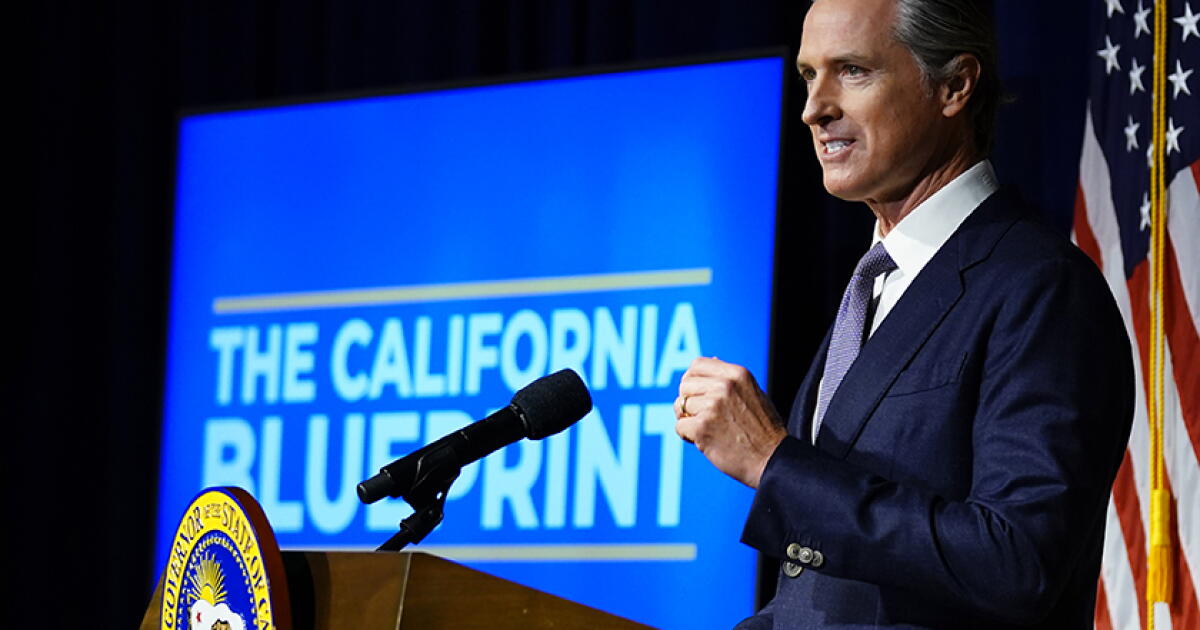
The proposed billionaire tax has divided California Democrats, with Gov. Gavin Newsom opposing it while the state Democratic party supports it.
In recent polling, a majority of likely voters did not support any of the three proposals.
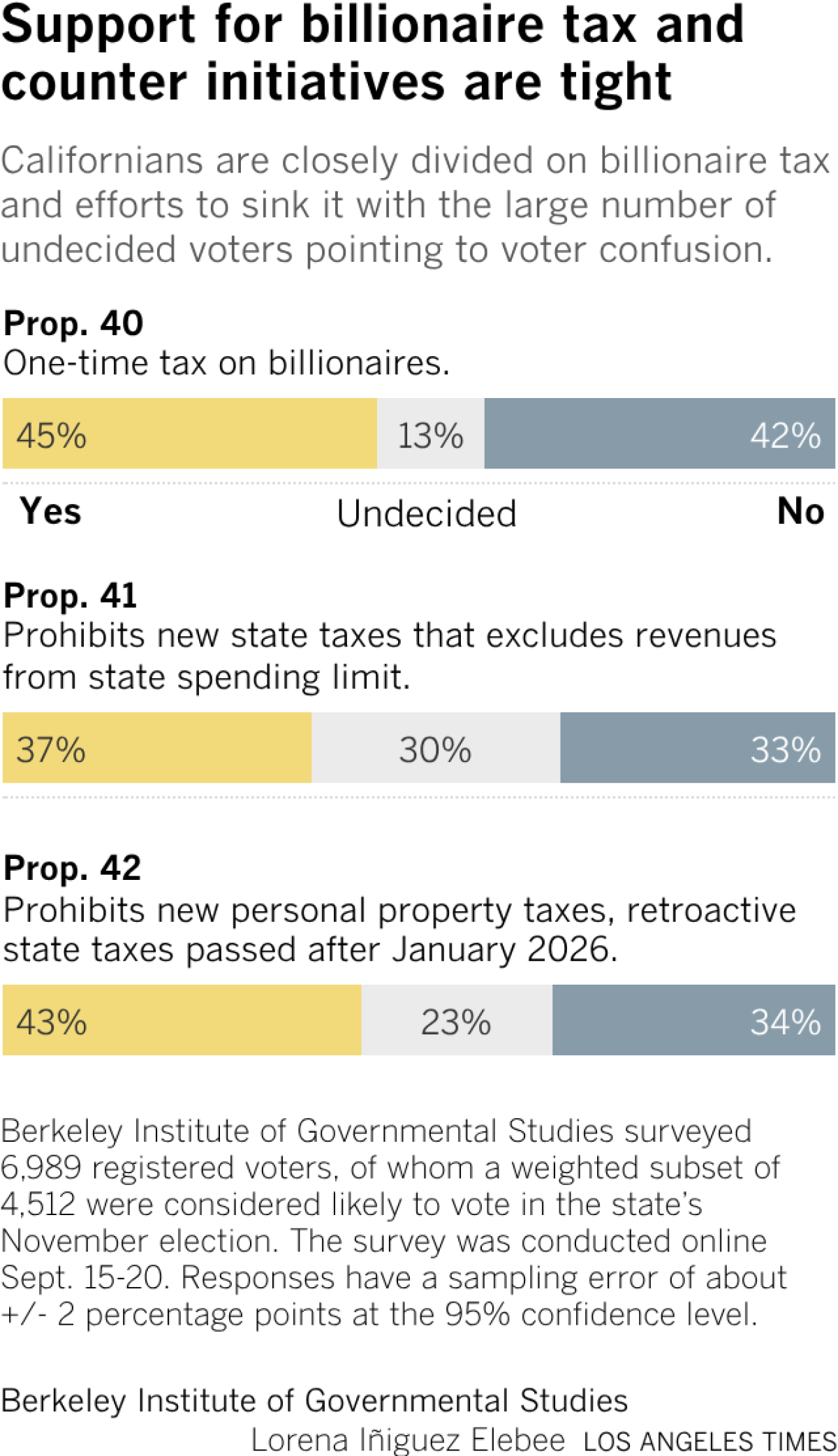
While 45% of likely voters supported the billionaire tax, 42% opposed it, according to a poll released Friday by UC Berkeley’s Institute of Governmental Studies and co-sponsored by the Los Angeles Times. Voters also are torn about the two ballot measures designed to nullify it.
The other measure receiving great attention, Proposition 39, which would require voters to show government-issued ID to cast ballots, faces a similar financial disparity. Opponents to the measure have raised $39.3 million compared to $15.6 million garnered by supporters.
Fifty-two percent of likely California voters oppose the voter ID proposal, while 39% support it and 9% are undecided, according to the Berkeley poll.
In the race to replace Newsom, Democratic former Biden cabinet member Xavier Becerra has raised $35.8 million, while his GOP rival, conservative strategist and television commentator Steve Hilton, has raised $22.3 million.
Becerra remains the front-runner in the governor’s race, which is not surprising since Democratic voters outnumber Republicans nearly 2 to 1. In last week’s Berkeley poll, the Democrat had the support of 58% of likely voters, while 33% backed the Republican.
The slate of statewide measures on the Nov. 3 ballot provides voters two opportunities to tax the rich, which in past years has proved tantalizing to California’s left-leaning electorate.
Only one of those measures has strong voter support, however, and it’s not the proposition that’s attracted nationwide attention, ignited a nearly quarter-billion-dollar political slugfest and created a rift among top leaders in the Democratic Party.
Likely voters expressed middling support for Proposition 40, a one-time 5% tax on billionaires’ assets intended to compensate for an impending $100 billion in federal healthcare funding cuts. They were far more likely to back Proposition 3, a ballot measure that would make permanent a tax increase on the wealthy that funds schools and healthcare, according to a poll released Friday by UC Berkeley’s Institute of Governmental Studies that is co-sponsored by The Times.
Proposition 3 appears to be a much less controversial endeavor, which may explain why it has more voter support. The ballot measure would extend a tax enacted in 2012 on individuals who earn at least $360,000 a year that is set to expire in 2031. Proposition 40 proposes a brand-new tax on billionaires and is opposed by Gov. Gavin Newsom, who fears that it could hurt the state’s finances in the long run.
“When you’re going about taxing the billionaires’ assets, I mean that’s something kind of new and different, and it’s risky, and the governor’s against it, and you know a lot of people are expressing caution about it,” said Mark DiCamillo, director of the poll.
Voters are deeply concerned about income disparity but also skeptical about the unusual approach of the billionaire tax.
Proposition 40 has drawn the greatest attention and campaign spending of the 14 ballot measures voters will decide on Nov. 3.
In the poll, 45% of likely voters support the proposal, while 42% oppose it and 13% are undecided. That’s a decline in support compared with six weeks ago, when 48% of likely voters supported it while 41% opposed it, and comes after nearly $100 million of spending on television ads, social media messages and mailers, largely from opponents.
The billionaire tax was crafted by a healthcare union in response to legislation passed by congressional Republicans and signed by President Trump last year that could result in millions of Californians losing Medi-Cal coverage, rural hospitals shuttering and other healthcare services being slashed unless a new funding source is found.
The proposal would retroactively apply to billionaires who lived in California as of Jan. 1, prompting some to preemptively move out of the state. Ninety percent of the revenue would fund healthcare programs, and the remaining funds would be spent on education programs and food assistance.
There are two counterproposals on the ballot that would nullify the wealth tax if either receives more votes than Proposition 40, and they have raised $144 million. Voters are torn about Proposition 41, which would prohibit any new state taxes from being excluded from a voter-approved cap that restricts how much tax revenue the state can spend each year. The billionaire tax would have such an exclusion. Voters also are divided on Proposition 42, which would prohibit new taxes on personal property, intellectual property, retirement accounts and other assets and would limit situations in which a ballot measure or state lawmakers can impose or raise taxes retroactively — both of which are essential parts of the billionaire tax initiative.
Proposition 42 has greater support, with 43% backing it, 34% opposing it and the remainder undecided, according to the poll. Even more voters were uncertain about Proposition 41: 3 in 10 said they were undecided, while 37% said they supported it and 33% said they planned to vote against it.
The large number of undecided voters this close to the election points to voters being overwhelmed by the sheer number of statewide ballot measures, DiCamillo said.
“It’s confusion,” he said, adding that many voters may make a decision once they receive more ballot information.
That said, the fact that none of these proposals has the support of more than 50% of likely voters doesn’t bode well for their prospects, DiCamillo said.
Ballots will begin arriving in the mailboxes of the state’s 23.2 million voters in days.
Democratic voters outnumber Republicans by nearly 2 to 1 in California, but the party’s leaders are deeply divided about the billionaire tax, given the volatile state budget’s reliance on the wealthy. Newsom, who is pondering a 2028 presidential campaign, and the two men vying to replace him — Democrat Xavier Becerra and Republican Steve Hilton — oppose it. Rep. Ro Khanna (D-Fremont), a potential 2028 White House contender, supports it, as does the California Democratic Party.
Additionally, Dave Regan, president of Service Employees International Union-United Healthcare Workers West and architect of the ballot measure, has come under scrutiny. Regan has been accused of threatening and intimidating women who worked for the union’s parent organization, and of physically assaulting one, according to reporting by The Times. He was also accused of trying to extort SEIU’s state council, suggesting that it could face an investigation over “governance issues” if it did not support Proposition 40, according to an investigation commissioned by SEIU.
Regan has denied these claims, describing them as a “smear” campaign orchestrated by Proposition 40 opponents.
Much less attention has been paid to Proposition 3. Californians who earn more than $360,000 now are subject to a 10.3% tax, while those who earn more than $721,000 face a 12.3% levy. The vast majority of the billions raised through this tax go to K-12 schools, while the remainder is spent on community colleges and healthcare.
The other ballot measure that is receiving national attention is Proposition 39, which would require voters to present a government-issued identification document to cast a ballot or provide a PIN or the last four digits of their Social Security number when submitting mail-in ballots.
The measure also would require the California secretary of state and county election officials to verify that registered voters are U.S. citizens by “using government data,” which according to supporters could include information in the federal Social Security Administration database, jury summons information and other government records.
The proposal comes as Trump has continued to make claims that elections, notably in California, are being rigged by Democrats. Americans are increasingly alarmed about the security and sanctity of voting, and growing fears about intimidation efforts at polling places in the midterm elections.
Fifty-two percent of likely California voters oppose the voter ID proposal, while 39% support it and 9% are undecided, according to the poll.
“It doesn’t look like it’s in a strong position,” DiCamillo said, noting that while voters have opposed it in prior polls, the opposition has grown.
Nearly one-third of voters were undecided about two other propositions:
Likely voters were evenly split about Proposition 4, which would repeal a ban on public funding of campaigns, with 35% supporting it and 35% opposing it, and the remainder undecided.
Four out of 10 likely voters opposed Proposition 43, which would increase the threshold necessary to pass local taxes from a simple majority to two-thirds, while 31% supported measure and 29% were undecided.
Voters will also face questions about environmental policy, housing, recall elections and other matters, as well as statewide, congressional and local elections. Californians are fatigued by the length of the ballot.
The Berkeley IGS/Times poll findings are based on an online survey in English and Spanish of 6,989 registered California voters, 4,512 of whom are considered likely voters, on Sept. 15-20. The results are estimated to have a margin of error of about 2 percentage points in either direction in the overall sample, and larger numbers for subgroups.
LAS VEGAS — Susan Gonzalez plans to pay off her credit card now that she no longer needs to pay taxes on the dollar bills that she stashes away at the end of long shifts pouring beers and mixing cocktails in a smoky sports bar.
Thanks to President Trump, “there’s more money in our pockets,” the registered Republican said. The Iran war might have spiked gas prices, but Gonzalez is still confident that the U.S. economy is getting stronger.
The Jackpot Bar & Grill, located about 4 miles from the Las Vegas Strip, is in the heart of Nevada’s 3rd Congressional District, where Democratic Rep. Susie Lee is trying to fend off a challenge from Republican candidate Marty O’Donnell. The state has the highest concentration of tipped workers in the country because its economy is driven by the hospitality and tourism industries, making Trump’s “no tax on tips” policy a critical part of his party’s midterm pitch here.
The question for Nevada voters is whether they’re seeing more benefit from lower taxes or more pain from the country’s economic troubles, such as energy costs and declining tourism.
Lee’s district is a top target for the Republican Party in its fight to maintain control of the House. With a mix of working-class and high-income neighborhoods, it’s the most competitive of Nevada’s four congressional seats. In 2024, both Lee and Trump won the district.
Lee has held the seat since 2019, campaigning as a moderate and highlighting her bipartisan record. O’Donnell, a composer known for his work on the “Halo” video game series, became his party’s nominee this year with help from Trump and a $3 million personal loan.
The race has caught the attention of Trump-aligned super PACs. Safety and Affordability, an offshoot of MAGA Inc., committed this month to spending almost $3.2 million on advertising to help O’Donnell, according to the ad-tracking firm AdImpact. The total effectively matches the $3.1 million O’Donnell’s campaign has already spent on advertising reservations through November.
The heavy commitment puts pro-O’Donnell forces ahead by more than $1 million in the ad spending race in the district, where Lee’s campaign has spent $2.9 million and the Democratic House leadership super PAC House Majority Fund has put in $2.3 million.
Nevada is the birthplace of ‘no tax on tips’
Trump first announced his policy proposal at a June 2024 campaign event in Nevada, and he has repeatedly said that he was inspired by a Las Vegas server who suggested the idea.
“So we’re eating, and this beautiful young lady walks over, and I said, ‘How are you doing, everything good?’” Trump said in August. “‘Sir, they’re taxing me to death.’ I said, ‘Really? What are they taxing?’ ‘They’re taxing my tips. Sir, they should have no tax on tips.’”
The proposal was included in a sweeping package of tax breaks, social-services cuts and immigration enforcement that Trump signed into law last year.
O’Donnell has centered his attack against Lee for her vote against that bill.
“When she had an opportunity to vote for things that would actually help the people of the district, she said no,” O’Donnell told The Associated Press.
Lee attributed her vote to what she says were harmful and unpopular policies in the package. She also noted that the “no tax on tips” part of the legislation expires at the end of 2028.
“More importantly, they came at the cost of cutting Medicaid and SNAP and healthcare,” Lee told the AP at a recent canvassing launch in Las Vegas.
She and other Nevada Democrats support a separate proposal that would make permanent “no tax on tips” while also fixing what they say are issues with the current policy.
Slump in tourism lessens ‘no tax on tips’ impact
Lee said the tax cut isn’t helping because tourism is falling off.
“When people are feeling the pinch at home all across this country, the first thing they cut is their trip to Vegas,” Lee said.
Nevada’s tourism fell 7.5% from 2024 to 2025, according to Las Vegas Convention and Visitors Authority CEO and President Steve Hill. Las Vegas hosted the Super Bowl and the second annual Formula 1 Grand Prix in 2024.
At a recent economic forum, Hill said high rollers are continuing to visit the city but lower-income visitors are not. The number of international visitors has also dropped significantly, especially Canadians who watched Trump feud with their country over trade and other issues.
O’Donnell said Las Vegas tourism is on the “comeback.” He said Trump’s tariffs served as a necessary way to negotiate with countries “that have been absolutely ripping us off.”
The composer blames the high cost of living on Democrats. He recently told a crowd at the Republican midterm convention in Dallas that one good job used to be enough to raise a family, buy a house and “live a comfortable, fulfilling life while getting ahead.”
“Somewhere along the way, that deal got broken,” he said. “Now many need two incomes just to tread water, and we’re still digging our way out of Biden’s inflation crisis.”
Nevada’s powerful labor unions are backing Lee
While O’Donnell has help from Republicans’ national war chest, Lee has the support of the political powerhouse that is the Culinary Workers Union, representing 60,000 hospitality workers in Nevada.
Secretary-Treasurer Ted Pappageorge said the current “no tax on tips” policy brings some relief but is “deeply flawed.” A married couple filing jointly can deduct only up to $25,000 of their tipped income, Pappageorge said. The policy also does not apply to automatic gratuities that are charged to large parties, he said. Lee and other Nevada Democrats want to fix that, he said.
“There’s a history of our Democrats here fighting for fair taxation,” Pappageorge said.
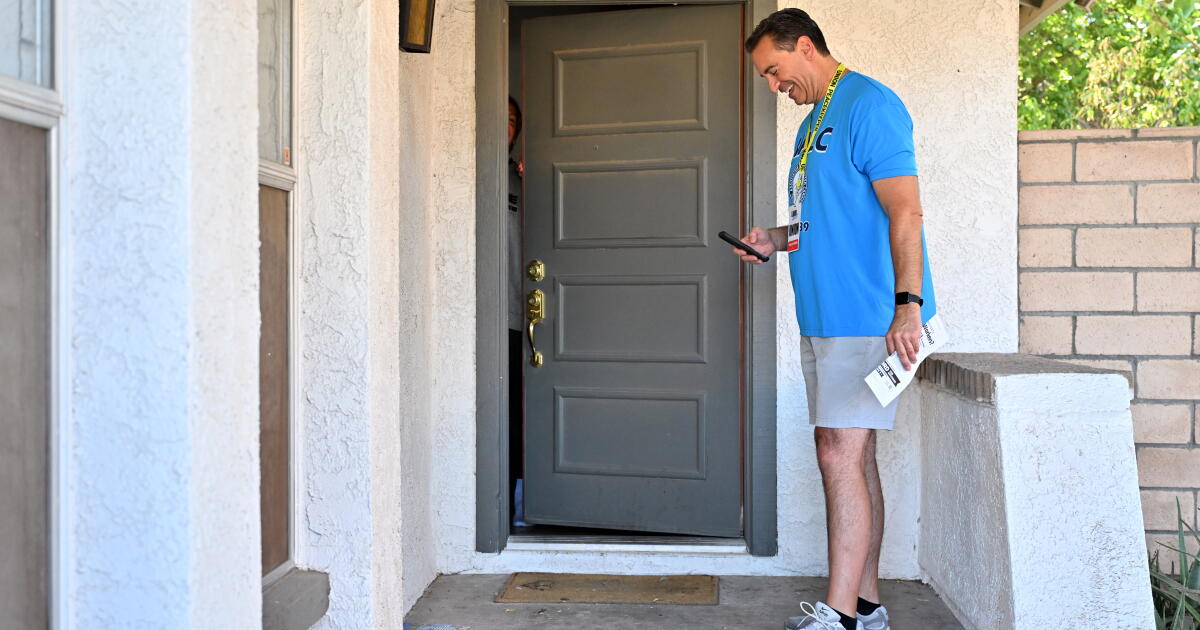
On a recent weekend in Lee’s district about 50 days before the election, members from the Culinary Union, the American Federation of Labor and the Congress of Industrial Organizations knocked on voters’ doors, hoping to sway those still undecided.
Paul Peterman, president of the local chapter of the National Association of Letter Carriers, wearing a blue union T-shirt, a lanyard and shorts, walked to union households, carrying flyers supporting Lee and other Democrats. He asked a resident who he planned to vote for. “All Republican,” said the man, hidden behind his screen door. Peterman asked if he could leave a non-Republican flyer, and the man said, “No.”
“Sorry to bother you,” Peterman said as the door closed.
At the next door, the voter identified as an independent but said he’d vote for Lee. A voter at another house said who he plans to vote for was private. Nobody answered at the next few doors.
Peterman has been canvassing these neighborhoods for years, describing it as important union work.
“It sends a message that we’re all united, and you also need every hand on deck, too, to be successful in what you want to achieve,” Peterman said.
California is considering Proposition 40, which would impose a one-time 5% tax on its billionaires. This initiative is seen as a way to generate funds for healthcare, education, and food assistance, given that California is home to around 250 billionaires worth over $2 trillion. However, political analysts suggest that the proposition’s chances of passing are uncertain, especially with rising debates around income inequality and the implications for the state’s economy.
Opinion polls indicate a divide in support for the tax. A UC Berkeley poll from August showed 48% of likely voters in favor while 41% opposed, and a September poll showed support at 52%. However, historically, California ballot measures need strong initial support to succeed, and undecided voters often lean towards rejecting measures. Critics of the proposition argue it might drive billionaires out of the state, lowering potential tax revenue in the future.
Notable figures, including billionaires like Sergey Brin, are actively campaigning against Proposition 40, with Brin sharing his personal experiences to express concerns about socialism and its effects. Additionally, Governor Gavin Newsom opposes the measure and is advocating for a federal wealth tax instead.
California’s history with ballot initiatives reveals a complex relationship with taxation. While the state has a history of direct democracy, it has only approved about a third of citizen initiatives in the past. A recent attempt to raise taxes on high earners, Proposition 30 in 2022, was rejected, reflecting that even in a predominantly Democratic state, voters may not support aggressive tax increases on the wealthy.
The uniqueness of this initiative lies in its retroactive tax structure, which could limit billionaires’ ability to avoid the tax by relocating. However, supporters like economist Emmanuel Saez argue that the tax will not significantly deter wealthy individuals or tech startups, stressing California’s attractive qualities, such as its universities and infrastructure, which he believes outweigh potential tax burdens.
Overall, Proposition 40 encapsulates the ongoing conversation about wealth inequality in America and the contentious debate surrounding the taxation of the ultra-rich, making it a critical issue for California voters in the upcoming election on November 3.
The Labour Party chair has said Sir Jim Ratcliffe loses “the moral high ground” by making statements about the UK while living in tax exile.
Speaking to Sunday with Laura Kuenssberg, Bridget Phillipson said she would take the billionaire businessman’s comments that the UK was “on the slide” with a “pinch of salt”.
Sir Jim, the founder of petrochemical giant Ineos and Manchester United’s co-owner, told the BBC he has lost confidence in the UK due to a combination of high taxes and high immigration.
He has been a tax resident in Monaco since 2020 and said “things would have to get better” in the UK for him to return.
When questioned over the remarks, Phillipson said Sir Jim loses “the moral high ground” by “making these kinds of pronouncements while choosing to make decisions, that he is within his rights to make, to become a tax exile”.
Pushed on whether it bothers her that people who create jobs and pay a lot of tax were leaving the UK, the minister said she was “optimistic about our country’s prospects”.
Other high profile billionaires have left the UK, including including steel tycoon Lakshmi Mittal and most recently the UK’s third biggest taxpayer, hedge-fund boss Chris Rokos.
But, Philipson argued the country was in a good position ahead of the Budget next month, and Andy Burnham has shown a “sense of hope and optimism whilst recognising that many families are still struggling and there is more to do.”
“Of course, there are challenges, including big international headwinds, but I fundamentally believe that we are in a strong position going into this budget because of the decisions taken over the last two years, and I believe our country’s best days lie ahead of us,” she said.
Philipson declined to speculate over whether there would be tax rises in the Budget on 28 October, and said the government remained committed to being disciplined about its spending rules.
The new incentive is aimed at bringing back jobs for the industry’s editors, sound mixers, composers and visual effects artists. It will allow a 35% to 50% credit on qualified expenses related specifically to post-production work done in California, and unlike the state’s existing film and TV credit, it doesn’t require productions to shoot here.
“This legislation protects the extraordinary people who make this industry possible and makes it unmistakably clear: California is still the future of film and television,” said Gov. Newsom in a statement. “We have the talent. We have the infrastructure.”
The bill, AB 2319, was authored by Assemblymember Nick Schultz (D-Burbank) and introduced earlier this year. It cleared the state Senate 33 to 5 on Aug. 30, and the Assembly approved the final version 72 to 2 the same day. Schultz originally sought $100 million for the program. It is expected to start in January with $10 million, according to the Assemblymember Schulz’s office.
“It’s a historic moment for California’s post-production community. But it’s also just the beginning of what we really need to do to to fight for our industry,” said Marielle Abaunza, president of the California Post Alliance, a group advocating for the bill. She said the group is readying its strategy to get more funding for the program next year.
As Hollywood productions continue chase tax credits to other states and countries, much of the post-production work is going with them. California’s share of U.S. post-production employment has fallen from 53% to 42% over the last 13 years, according to CVL Economics, an economic consulting firm tied to California Post Alliance. The state had about 12,000 post-production jobs last year, per CVL Economics.
Ben Urquhart, 51, spent 18 years as a post-production executive at NBCUniversal. The Culver City resident hasn’t been able to find work in the two and a half years since he was laid off.
“It’s grim and it’s hard. There are jobs, but we have a large amount of extremely qualified people competing for every level of job,” Urquhart said. “When I was a kid, I was a [production assistant] in the 90s, and you could get a job within a couple of weeks. But when I got laid off a couple of years ago, I realized that is certainly not the case at all anymore. It’s been a large-scale transformation.”
Urquhart said the new incentive would help California compete with jurisdictions that already offer these credits and “level the playing field.”
Last year, California expanded its film and TV tax credit program, more than doubling the old $330-million cap to $750 million through June 30, 2030. The existing program already covers post-production, but only if 75% of filming or the overall budget is spent in the state.
Newsom also signed a bill that would strengthen the current tax incentive program overall. In June he revealed a state budget measure that capped how much in tax credits a business can claim each year, a limit industry groups warned would undercut the expanded program. But the new Senate Bill 186 enhances refundability for the industry and exempts independent productions from the credit limits, starting next year.
A federal film and television tax credit could boost U.S. production spending by $125 billion and add more than 143,000 jobs by 2035, according to a new study commissioned by the Motion Picture Assn.
The analysis, released Tuesday morning, is expected to bolster Hollywood’s push for a federal production incentive, which the industry says is necessary to compete with the generous credits offered abroad. Sixty-five nations now offer them, the study said.
The effort has been quietly building for more than a year. It got a major boost last month when President Trump posted on Truth Social backing a proposed credit.
Details are still being worked out,, but the study assumed a transferable credit with a minimum rate of 20% on qualified spending for U.S. resident labor — broadly what industry groups have supported. It also assumed add-ons of 5% for independent production companies and 5% for labor costs in areas the Federal Emergency Management Agency has declared disasters.
If the incentive took effect Jan. 1, 2027, U.S. production spending would reach $277.5 billion through 2035, the study said, compared with $152.2 billion without it.
A coalition that includes the Motion Picture Assn., industry unions, producers’ groups and small production businesses, along with Democratic and Republican lawmakers, is expected to press the case at a virtual news conference Tuesday.
“A federal incentive would be a gamechanger for our industry,” Charles Rivkin, chairman and chief executive of the Motion Picture Assn., said in a statement. “This study tells us that we can bring more opportunities to life for people in all 50 states who bring great stories to life.”
SACRAMENTO — President Trump and the Republican Congress have unintentionally provided California state government with the financial means to subsidize — help save — endangered local news reporting.
Now it’s up to Gov. Gavin Newsom to capitalize on the unanticipated gift.
He can sign or veto legislation to end state tax breaks for large corporations paying top executives $1 million-plus salaries and, instead, provide tax breaks for struggling California news outlets employing local reporters.
The state legislation would conform California law to a little-known provision of Trump’s “Big Beautiful” tax bill that eliminated corporate deductions for execs’ compensation exceeding $1 million.
Expert columnists cover the insights, legislation, players and politics you need to know.
By continuing, you agree to our Terms of Service, which include arbitration and a class action waiver. You agree that we and our third-party vendors may collect and use your information, including through cookies, pixels and similar technologies, for the purposes set forth in our Privacy Policy such as personalizing your experience and ads.
I’ll admit to feeling a bit squeamish about this.
First, it’s a conflict of interest, arguing that a governor — whom my colleagues and I write about often — should shovel public dollars into our profession.
Second, why should state government and taxpayers be asked to subsidize a private enterprise that’s flailing in the marketplace? Especially one that prides itself in being an impartial watchdog over government actions and politicians’ behavior. The dog shouldn’t be begging for food from the critters it watches.
OK, but subsidizing local news reporting is investing in democracy. Robust coverage of city halls, school boards, Sacramento politicians and the like is essential for self-government.
And that journalism is in free fall all across America as exploding technology and social media opportunism have altered news consumption, mostly bypassing local communities and often spewing misinformation.
So this legislation, AB 2222 by Assemblyman Christopher Ward (D-San Diego), reaches far beyond just helping the troubled news industry. It’s about more than providing media outlets with financial incentives to retain and hire local reporters. It’s bolstering democracy.
Independent journalism is a pillar of democracy, providing citizens with reliable, fact-based information about how their elected representatives are performing their duties, fulfilling their campaign promises and cozying up to special interests.
You’re not going to glean that information from the politicians. You’re going to get mostly self-serving spin — government propaganda — whether it emanates from the White House, the state Capitol or the local mosquito abatement district.
That’s why the nation’s Founders protected press freedom in the Constitution’s 1st Amendment.
Thomas Jefferson famously wrote: “Were it left to me to decide whether we should have a government without newspapers, or newspapers without a government, I should not hesitate a moment to prefer the latter.”
Of course, that was early in Jefferson’s political career, before he became vice president and later president. He ultimately turned into a harsh press critic. For example: “Nothing can now be believed which is seen in a newspaper. Truth itself becomes suspicious by being put into that polluted vehicle.”
Jefferson, like countless politicians ever since, apparently carried a huge chip on his shoulder because of reporting on his job performance that ticked him off.
Newsom is a master at attracting friendly national news coverage, especially on cable TV. But he naturally shudders at more critical coverage by Sacramento beat reporters.
As of this writing, the governor hadn’t publicly disclosed how he feels about the local reporter tax credit bill.
His finance department, which crafts the state budget, opposed the measure when legislators were considering it. The state would “not [be] receiving any incremental economic benefit to justify the expenditure,” its analysis read.
Again, even if that were true, citizens and democracy would benefit.
Also, the analysis contended, the tax credit would likely “provide windfall benefits” for news media owners “rather than encourage new hiring activity.”
That’s not quite accurate. Anyway, it could discourage layoffs and save reporters’ jobs.
Late last week, the McClatchy newspaper chain — owner of the Sacramento Bee and several medium-sized California papers, plus dozens across America — announced massive newsroom layoffs.
Since 2002, more than 12,000 local journalism jobs have been lost in California, according to the bill’s sponsor, the advocacy group Rebuild Local News. More than 3,500 newspapers have closed nationwide.
Many communities have become “news deserts.”
When that happens, fewer citizens turn out to vote, tax money gets spent more carelessly and political corruption increases.
Under the legislation, California media outlets — big and small — would be granted modest tax credits for each employee covering state and local news. There’d be $20,000 for up to five full-time positions and $15,000 for each of the rest. On top of that, there’d be an additional $15,000 for every new full-time job that’s created. Part-timers would be entitled to $7,500.
“National news outlets would be excluded. So would partisan ‘pink slime’ sites controlled by political action committees,” says Matt Pearce, policy director for Rebuild Local News, a former Los Angeles Times reporter and newspaper guild leader.
It would be the most ambitious program of its kind in the country. New York, Illinois and New Mexico currently offer local news subsidies.
“It’s about civic infrastructure and the foundation of democracy. We’re teetering toward autocracy,” says former state Sen. Steve Glazer (D-Orinda), an ex-mayor who has long pushed for stronger local news coverage.
This bill won’t save local newsrooms. But it may give them breathing room while the big thinkers try to concoct a more profitable business model for democracy’s watchdog.
SACRAMENTO — SEIU United Healthcare Workers West President Dave Regan allegedly tried to “extort” an SEIU state council endorsement of the billionaire tax ballot measure from other California union leaders, according to an investigation commissioned by Service Employees International Union.
The investigation and a second inquiry conducted on behalf of SEIU California found that Regan allegedly threatened and intimidated women who worked for the state council, and in one instance, physically assaulted a former executive director of the labor organization.
Regan, in an interview with The Times, denied the allegations that he attempted to extort from union officials. He also denied assaulting the executive director and said he did not threaten female labor leaders. He repeated a counterclaim he made to the union: The allegations against him are retaliation for his advocacy for Proposition 40, the proposed wealth tax that will be on the Nov. 3 ballot.
“They are internally contradictory, they are fundamentally biased, and maybe most importantly, they are politically motivated,” Regan said about the probes.
The law firm hired by the national union investigated Regan’s claim of retaliation but found the allegation could not be substantiated.
David Huerta, the president of SEIU United Service Workers West, and three other labor leaders filed a rare formal union charge against Regan in February.
The national union of SEIU has ultimate authority to resolve charges filed under its constitution and hired the New York labor law firm Cohen, Weiss and Simon to independently investigate the claims. The firm interviewed 18 current and former SEIU leaders and others in the California labor movement over nearly three months, according to its report.
The law firm’s report, reviewed by The Times, supported Huerta’s claim that on Dec. 3 Regan suggested the state council could be investigated for “governance issues” if the council did not endorse the billionaire tax on the November ballot. Huerta was then president of SEIU California.
“During the investigation, Huerta reported that he left the conversation with Regan feeling ‘extorted’ and believing that Regan might report unspecified governance concerns to the U.S. Department of Labor, which is known to be unfriendly to labor unions under the Trump administration, if state council did not support the billionaire tax,” the report said.
The law firm’s investigation substantiated an allegation that on the same day, Regan threatened Tia Orr, executive director of SEIU California, over the council’s position on the ballot measure. The SEIU probe found an allegation that Regan also assaulted one of Orr’s predecessors in the job, Courtni Pugh, in 2009, to be credible.
“SEIU California leaders filed charges against Dave Regan alleging a pattern of bullying, threats, abuse, harassment, physical violence and attempted extortion,” Christopher Calhoun, a spokesperson for SEIU California, said in a statement. “Initial investigations pertaining to these charges substantiated most of SEIU California leaders’ allegations.”
State union officials have temporarily banned Regan from the offices of SEIU California, a council of union leaders that coordinates political operations for all SEIU-affliated unions in the state, to protect female employees, according to the state council’s report.
Democratic National Committee delegate Courtni Pugh speaks at the California Democratic Party breakfast in Chicago on Aug. 20, 2024.
(Myung J. Chun / Los Angeles Times)
“Sufficient evidence was also found to substantiate that Regan has engaged in a pattern of subjecting former and current SEIU California female directors to intimidating and threatening physical behavior and verbal abuse,” the report commissioned by the state council said.
Leaders and workers within the labor movement describe Regan’s alleged behavior as an open secret at SEIU, which represents more than 2 million members nationwide and is the largest union in California.
The law firm hired by SEIU submitted its investigation report on July 28. Regan remains in his job as an administrative process moves forward with hearings. Regan will get a chance to make his case before SEIU determines any appropriate disciplinary action.
SEIU President April Verrett has the power to temporarily suspend Regan as the process plays out.
“SEIU is deeply committed to the safety and well-being of all people, including our members, staff, and the public, and takes these matters seriously,” said Dan O’Sullivan, a spokesperson for SEIU. “As soon as these concerns were raised, we initiated a deliberate and thorough process and retained independent, outside investigators to look into these allegations. Our process is active and ongoing, and the next steps include appointing a hearing officer and holding an evidentiary hearing through which all parties will be afforded due process.”
At a California Federation of Labor event on Dec. 3, Regan told Orr that “state council better endorse this measure by Jan. 1 or I’m coming for you,” she told investigators in both probes.
Regan rode to the airport with Orr and sat next to her on the plane “as part of a continued effort to intimidate her into providing state council’s support for the billionaire tax,” Orr told the investigators. As they left, Regan tapped his watch to suggest her time was running out, the report stated.
Regan told investigators that he learned last year that Orr was working behind the scenes to undermine his billionaire tax proposal. If approved by voters, the measure will retroactively apply a one-time 5% tax on the net worth of billionaires who were residing in California as of Jan. 1, 2026.
Regan denied that he threatened Orr, calling the claims “completely fabricated.”
“And again, the source of that is somebody who is not in favor of Proposition 40, and somebody who has not been leading the state council with practices of good governance,” Regan said in an interview.
Regan also denied intimidating Orr to investigators hired by the national union, but offered a different perspective on the SEIU California executive director. He said he traveled with Orr as a friend that day, had previously supported her professionally and offered her a job, according to the report.
The law firm said Orr believed that Regan was a “bully” who mistreated women of color and made it difficult for them to do their jobs at SEIU and had even “fought someone” when he didn’t “get his way.” Regan denied those allegations, including that he mistreated women of color.
“Orr therefore took Regan’s statement that he was ‘coming for’ her as a threat to her job security and her physical safety. She contemporaneously shared this fear with a colleague. Moreover, her response to Regan’s statement is reasonable because three interviewees — both current and former employees of state council — corroborated that Regan has verbally berated and at times physically intimidated or assaulted former state council executive directors,” the report stated.
The investigation commissioned by the national union concluded that UHW then launched a “fishing expedition” into the state council’s finances under Orr’s leadership, but did not substantiate a claim that Regan defamed her to allies of the labor movement.
The SEIU investigators also wrote that the claim that Regan assaulted Pugh was substantiated.
Pugh told investigators that Regan kicked open her office door and “jacked” her against the wall, according to the investigative report. While she was “pinned,” Regan pressed his finger into her chest and screamed that she was a “dumb ass,” the report said.
When he left her office, Pugh fell to the ground and began to hyperventilate, according to the report. Two colleagues found her, helped her breathe into a paper bag and walked her home, the report said.
Regan denied the allegation.
“It is a complete fabrication and a fiction made by somebody who has all of the incentive possible to critique or trash or criticize UHW generally, and me specifically, and no, there was no mention of it for 17 years,” he said.
The report also concluded that Regan recently threatened to sue SEIU Local 221 President Crystal Irving in an attempt to silence her from warning others about the alleged assault against Pugh.
Regan said the national union’s investigation was “fundamentally flawed” because it stated that Pugh “had nothing to gain from sharing her story” with Irving. Pugh, now a political consultant, has worked against the billionaire tax ballot measure, something Regan said gave her a reason to lie about him.
Pugh called Regan’s response “offensive to the women” who she said objected to his behavior. She said she detailed the alleged incident at the time to board members who oversaw her work and SEIU leadership. The encounter, she said, was well-known.
“I told my colleagues and organization leaders when it occurred,” Pugh said in a statement. “I was asked to participate in the later investigation because so many people had heard about the 2009 incident over the years. I chose to participate in the investigation because I saw that his behavior had continued and in hopes that no one else would have to endure this kind of treatment from him.”
Regan, in his interview with The Times, also denied the allegation that he attempted to force the state council to support the billionaire tax.
David Huerta, president of SEIU-USWW, speaks during a Memorial Day action in Los Angeles on May 21.
(Kayla Bartkowski / Los Angeles Times)
“Huerta then asked Regan if it was his intention to initiate an investigation,” according to the report. “Regan replied, ‘I don’t have to; there are others who would.’ In that conversation, Regan demanded a full endorsement of the billionaire’s tax initiative measure by the state council by Jan. 1.”
Regan told investigators he raised governance issues with Huerta and could not remember if he demanded the council’s support for the billionaire tax during the conversation, though he said he had been seeking the endorsement for months, according to the national union’s report.
“The investigation found that Regan likely suggested he would cause the DOL to investigate state council,” the report said. “According to Regan, he did discuss with Huerta that an investigation was possible.”
The executive board of SEIU California later voted in July to remain neutral on Proposition 40, marking a blow to Regan’s efforts to overcome an onslaught of opposition from California Gov. Gavin Newsom, billionaires and liberal groups concerned that the measure could backfire and reduce state tax revenue collected from the ultra wealthy.
Regan filed a counterclaim with SEIU in April, alleging that the state council initiated the complaint and launched its own investigation into him as a retaliatory “character assassination” for his advocacy for the billionaire tax, something the SEIU report said was not substantiated.
The investigative report submitted to the national union raised questions about Regan’s tactics to earn support for his causes.
Investigators said their probe “revealed that Regan has been associated with similar extreme efforts to secure political endorsements in the recent past.”
The firm reported that it reviewed text and email messages in which a representative for Regan offered to drop part of his counterclaim “in exchange for the state council’s endorsement of Tom Steyer for governor.”
“In an email response to that offer, a State Council representative stated they have ‘no interest in a behind-the-scenes trade involving dropping internal charges of misconduct in exchange for the making of a political endorsement.’”
The person working with Regan who sent the offer denied to the law firm that the conversation constituted extortion.
“This denial is not credible,” the firm wrote in the report. “The Regan Offeror stated that they were ‘extremely careful’ with their language when conveying Regan’s offer, as they were aware that what they said could be misconstrued as extortion. That the Regan Offeror took such care suggests that the offer was likely extortion.”
Regan also denied the claim, which he called a “complete fabrication.”
A second investigation by the Los Angeles law firm Barboza & Associates, which was hired by SEIU California, found sufficient evidence to substantiate a complaint that Regan bullied Jessica Bartholow, the council’s government relations director.
Bartholow reported to her superiors at SEIU California that Regan stood uncomfortably close and hovered over her at the bar at a fundraiser for the state Senate leader in San Diego in March as tensions flared over the billionaire tax. He then screamed an expletive at her in front of a crowd of lawmakers and lobbyists when she walked away from him, according to the state council’s report.
“Bartholow was scared and her heart was pounding,” investigators wrote in the report for the state council that was reviewed by The Times. “Bartholow had heard that Regan could be violent, and she did not know what he was going to do.”
Regan told investigators and The Times that he swore at Bartholow but denied that he physically intimidated her. Regan said he was upset with her over an allegation that she previously threw “four staff members of UHW out of the state council office.” The report commissioned by the state council discredited his claim and said “Bartholow did not throw UHW staff out of the SEIU California office or treat them rudely or disrespectfully.”
Lawyers hired by the state council said Regan intimidated another woman within the union during their investigation.
The state council investigation included an allegation that Regan physically and verbally intimidated Susan Li, an assistant director of external organizing for SEIU Local 721, on April 30 after a meeting with the Assembly Speaker’s Office and the California Primary Care Assn. Regan was allegedly upset with David Green, president of SEIU Local 721 who had just left for the airport, and began randomly screaming at Li, according to the investigative report on the probe commissioned by the state council.
Regan described the encounter as a conversation and said he did not scream at Li.
The state report said Regan “attacks female staff members instead of taking his concerns to the individuals who had the authority to make decisions.”
“Time and again, Regan unleashed his hostility toward the women who worked for SEIU California, and one from Local 721, in a physically intimidating and verbally abusive manner,” the report concludes.
Regan vigorously denied this assertion.
The state council report said Regan often berated Pugh when she worked at SEIU.
“Every week it was, ‘What the f— were you doing in this meeting? Why did you say that? You dumb ass bitch,’” the SEIU state report said. “Every time Regan called Pugh, she put him on speaker phone so everyone could hear him call her a f—up and tell her to f— off. Not one person said anything.”
Pugh told investigators hired by the national union that Regan continued to belittle her in meetings until she eventually resigned from the state council. She said she believed he formed a coalition to force her out of her job and that she would have been fired if she had not stepped down.
Terry Brennand, director of pensions, revenue and budget at SEIU California, told investigators that he and Mary Gutierrez, now deceased, heard Pugh sobbing in her office after Regan allegedly assaulted her.
“Brennand believed Pugh was in shock and traumatized,” the state SEIU report stated. “Pugh seemed frozen, terrified and not quite clear-headed. It was not the usual Pugh, who was direct, thoughtful and expressive. She was shaking and clearly traumatized.”
Three current and former SEIU California executive directors, all women of color, told Brennand that Regan had bullied them, the report said.
“That’s his forte,” Brennand said to investigators. “That’s his wheelhouse.”
Regan denied that he has a problem with women, or women of color.
“It is 100% false,” he said.
Lorena Gonzalez, president of California Labor Federation, said Regan’s union is overwhelmingly composed of women and women of color, who just reelected him to a position he’s held for 16 years.
“Ultimately they have the ability to make this determination of whether he’s an appropriate leader, which they just made again,” she said. “I think what’s most important is that we have to keep our eyes on the fact that Medi-Cal is being cut and we have no solution but the billionaire’s tax to fill that cut.”
Times staff writer Kevin Rector contributed to this report.
SACRAMENTO — Labor leader Dave Regan claimedFriday that he was the victim of a “smear” campaign orchestrated in part by wealthy Californians and said he has been falsely accused of attempting to “extort” an endorsement of the billionaire tax ballot measure and of physically assaulting a female union leader.
Investigations commissioned by the Service Employees International Union and SEIU California, and conducted by outside law firms, determined the allegations against Regan were credible, along with reports that he threatened and intimidated other female labor leaders. Regan, who is president of SEIU-United Healthcare Workers West, vehemently denied the allegations, which were first reported by The Times Friday morning.
During a video news conference hours after the allegations were published, Regan claimed the probes were launched by opponents of Proposition 40 — the billionaire tax measure he helped place on the Nov. 3 ballot — as well as members of the SEIU California labor council with whom he had clashed in the past.
Regan, joined by other SEIU-United Healthcare Workers West union leaders and members, also criticized Gov. Gavin Newsom for opposing the proposed one-time 5% tax on billionaires’ assets.
Newsom is “trying to curry favor with the richest people in the state to fund [his] presidential campaign,” Regan said. “That is shameful behavior.”
Newsom and other opponents of the measure, including Democratic gubernatorial candidate Xavier Becerra, Planned Parenthood Affiliates of California and the California Teachers Assn., have expressed concern that Proposition 40 could push many of the state’s biggest taxpayers to relocate and destabilize state finances.
“The Governor supports a national tax on billionaires and is proud to stand with teachers, firefighters, reproductive health clinics, and others in opposing this poorly written state measure that will harm California,” said Newsom’s spokesperson Izzy Gardon.
Regan also criticized The Times’ reporting on the allegations, and an editorial opposing Proposition 40. He alleged that Dr. Patrick Soon-Shiong, the Times’ owner, influenced coverage about the measure because he is a billionaire.
“We stand by our reporting,” said a Times spokesperson.
David Huerta, president of SEIU-United Service Workers West, and three other labor leaders filed a rare formal union charge against Regan in February. The SEIU investigation report, which was reviewed by The Times, supported Huerta’s claim that in December, Regan suggested the state council could be investigated for “governance issues” if the council did not endorse the proposed billionaire tax. Huerta was then president of SEIU California, which along with their national arm, did not endorse Proposition 40.
In July, the executive board for SEIU California voted to take a neutral position on the proposed wealth tax.
The investigation and a second inquiry conducted on behalf of SEIU California substantiated allegations that Regan threatened and intimidated women who worked for the state council. The investigation also determined an allegation that Regan physically assaulted a former executive director of the state labor organization, Courtni Pugh, in 2009, was credible.
Regan called the allegation that he assaulted Pugh a “complete fabrication.” Regan and other SEIU-United Healthcare Workers West members downplayed Pugh’s allegations against him because of her political consulting firm’s role opposing Proposition 40.
Pugh called his remarks “offensive” to the women who participated in the independent investigation.
“My testimony and the testimony of the other women were substantiated by investigators,” she said. “His claims were not.”
Regan remains in his job as the SEIU administrative process moves forward with hearings. Regan will get a chance to make his case before SEIU determines any appropriate disciplinary action.
Times Staff Writer Phil Willon contributed to this report.
BRITISH families could be charged up to an extra £100 to holiday in England, as Andy Burnham has announced plans to let England’s 14 regional mayors impose anuncapped levy on overnight stays.
But while it will be unwelcome news among cash-strapped Brits, there could be ways to avoid it depending on where you choose to staycation.
Plans for a new ‘tourist tax’ have been backed by Prime Minister Andy BurnhamCredit: AlamyIt means that for Brits, holidays could get more expensive by up to £100Credit: Alamy
Yesterday, the PMannounced revealed the tourist tax could be charged on overnight stays across the UK at hotels, B&Bs and holiday lets.
Labour’s regional mayors in England have pledged to cap a new fee on visitors’ overnight stays at 5 per cent.
However, there are ways to get round it – the tax isn’t set to be introduced for another two years, and there are some places that might not implement it at all.
England is split into 14 regions with different mayors looking after each – and the tourist tax will be added at their discretion.
It’s likely that all Labour mayors will add the tax, and some of the places where there is support are Greater London, the West Midlands, Liverpool City Region, Greater Manchester, West Yorkshire, South Yorkshire, York and North Yorkshire and the North East.
Therefore cities within those regions like Birmingham, Leeds, Manchester and Newcastle will all introduce the extra charge – including surrounding towns.
Where there are Reform UK and Conservative mayors ,the levy may not be introduced at all, as both parties have criticised plans for the optional levy.
For example, the mayor of Greater Lincolnshire has said that she won’t be introducing a tourism tax – where many of The Sun’s £9.50 Holiday parks are based.
She went on to warn that it could “drive out” people from visiting the region.
However there are some regions that don’t plan on introducing the taxCredit: Alamy
Dame Andrea Jenkyns (Reform UK) has reiterated that she won’t be introducing the levy as she fears it could discourage visitors.
Dame Andrea Jenkyns said: “The Government’s made more announcements about devolution powers that I completely welcome – having more powers and ensuring that your voice is heard here in our region.
“But one thing I won’t be implementing is the visitor levy. I can see how our hospitality industry has been quite frankly hammered over the years – the B&Bs, the hotels, the pubs and restaurants.
“I do not want to drive out people from visiting our region, so I will not be implementing it.
“People are struggling anyway, so don’t worry, your seaside holidays, the local businesses, I’ve got your back.”
Conservative Mayor of Tees Valley Ben Houchen also ruled out introducing any tourist tax last year.
Paul Bristow, the Mayor of Cambridgeshire and Peterborough, wrote on X that “this is not the time to put extra costs on staying overnight in #Cambridgeshire and #Peterborough“.
While at the moment these regions have either said or implied that they won’t be introducing tourist tax, it could change if there are local elections and the ruling party switches.
The mayor of Greater Lincolnshire says she won’t introduce the tourist taxCredit: AlamyAndy Burnham is keen to introduce the levy for popular regions for staycations, like CornwallCredit: Alamy
Another question mark is on the places that do not have an elected regional mayor – for example Cornwall.
Cornwall does not have a mayor for the whole county, but is looking for a way to set up a foundation strategic authority (FSA) so it could be set up by 2028.
During a visit this summer, Burnham said an overnight levy could be a “major game changer” for Cornwall and wanted to start discussions about it “sooner rather than later”.
Other places like Cheshire and Warrington are setting up mayoral authority and will hold elections next year.
Parts of Scotland have a tourist tax – it first started in Edinburgh in July 2026.
Aberdeen is also planning adding a new levy in 2027with a stay thecitypotentially costing an extra £4.90 per night.
FOURTEEN British cities are eyeing up a new “tourist tax” meaning tourists and Brits heading on staycations will face paying hundreds more for their trip.
This comes as Andy Burnham approved the plans yesterday (September 10) to add five per cent to overnight stays.
Manchester is one UK city that has already implemented a city-wide charge – but the new tourist tax would replace itCredit: Alamy
Yesterday, the prime minister announced plans to allow mayors to impose an uncapped charge on overnight stays, although Labour mayors have pledged to cap the new fee at 5 per cent or below.
The additional fee would be added to hotel bills, and apply to those staying overnight in hotels and holiday lets including Airbnb and guesthouses.
Sign up for the Travel newsletter
Thank you!
All visitors, regardless of nationality and reason for visit, will have to pay it. It will be uncapped, meaning mayors can choose how much to charge.
The money would then be used to fund local amenities such as public transport and infrastructure.
Cities and regions that may soon introduce the additional charge include London, Liverpool, Bristol and Bath.
As well as cultural hubs such as Durham, Manchester, York and Newcastle.
Earlier, the government had promised to protect budget holidays “by making sure low-cost accommodation always pays lowest levy” and said the extra cash would be invested in high streets.
However, the chief executive of UKHospitality, Allen Simpson, warned the BBC that the new charge could add nearly £100 to £120 to the average cost of a UK family holiday.
This also comes at a time where the hospitality industry has already suffered from rises to Employer National Insurance and the minimum wage, costing the sector billions.
However, these would not be the first regions in the UK to implement the new charge – which could come as early as 2028.
In Manchester, a “city visitor charge” of £1 per room per night already applies to some hotels, however the new tourist charge would replace it.
14 UK cities that may soon introduce a tourist charge
Hollywood’s film and TV post-production workers took their case directly to Gov. Gavin Newsom on Thursday, urging him to sign a bill that would create the state’s first standalone post-production tax incentive.
Workers such as editors, singers and sound supervisors joined bill author Assemblymember Nick Schultz (D-Burbank) and Mayor Karen Bass at a news conference Thursday morning in front of the Television Academy’s headquarters in North Hollywood.
The bill, AB 2319, is aimed at supporting the industry’s editors, sound mixers, composers and visual effects artists. It passed the state Senate 33 to 5 on Aug. 30, and the Assembly approved the final version 72 to 2 the same day. Newsom, who has not taken a public position on the measure, has until Sept. 30 to sign or veto it.
Bass urged supporters not to let up before then.
“We need our industry in full force,” Bass said. “It’s all a part of making our city more affordable. We know that this is one of the biggest issues in our city, and so having a strong, robust industry helps Angelenos across the board.”
The incentive would allow a 35% to 50% credit on qualified expenses relating specifically to post-production in California. The state’s existing film and TV tax credit program already covers post-production, but only if 75% of filming or the overall budget is spent in the state. The new credit doesn’t require productions to shoot in California.
Even if Newsom signs the bill, the program would start small. Schultz initially proposed $100 million to fund the effort, but the Legislature’s end-of-session budget sets aside $10 million to launch it.
“When you think about production, it’s easy to think about the actors, the directors and the writers; you don’t think about all that happens when the camera stops rolling,” Schultz said. “What’s changed is that they’re now telling their story about the struggles they’re facing.”
For industry veteran Karen Baker Landers, the decline in local post-production work is impossible to overlook. A two-time Oscar-winning supervising sound editor, Baker Landers is vice president of California Post Alliance, the group sponsoring the bill.
“It’s affecting people in huge ways, like losing their health insurance. I get people calling me asking to get just two weeks of work to qualify for coverage,” said Baker Landers. “It’s really difficult.”
Despite the state’s bigger bet on the industry — and this summer’s fight over the cap — L.A. City Councilmember Adrin Nazarian, whose district includes North Hollywood, argued at the press conference that this is the right moment to keep asking for more.
“It’s that exact momentum that we need. When you double down on something, you’re giving more than hope, and you’re saying welcome back. Please come and do your work. Don’t stop doing this,” Nazarian said.
For years, Hollywood has talked about a federal film and television tax credit that could help the industry combat the growing number of productions fleeing overseas.
This week, the entertainment business got a glimmer of hope.
After more than a year of quiet work from California lawmakers, industry lobbyists and Hollywood unions to build a bipartisan coalition, President Trump endorsed the effort in a post on Truth Social, providing a major boost to the issue.
If passed, a federal incentive is expected to help draw some productions back to the Golden State, industry experts and advocates said. While it probably won’t immediately end Southern California’s production crisis — as many states now have established film hubs stocked with experienced crews and more generous tax breaks — an added federal credit could certainly help make California more competitive, they said.
“I will put our crews and our talent against any talent anywhere in the world,” said Rep. Laura Friedman (D-Glendale), a former producer who has been pushing for a national film tax credit. “If we have a level playing field upon which to shoot, where we are not much more expensive than other locations, productions will come back to Los Angeles.”
Trump’s Truth Social post came after a meeting with actor Jon Voight, one of the president’s designated Hollywood ambassadors who has played a key role in lobbying for the film industry and advocating for a federal tax credit. Though Trump has had frosty relations with Hollywood, particularly since many heavyweights did not support his presidential campaign, the industry’s jobs push aligns with his focus on re-shoring work, marking a rare moment of agreement.
Speaking to reporters in the Oval Office, Trump said Wednesday that he has done “a lot of work” in the last week to get something done on federal tax incentives for the film and television industry.
Trump said he has spoken to streaming giant Netflix; Ari Emanuel, chief executive of TKO Group Holdings Inc.; and “many others,” and that he is hopeful there will be a bipartisan push to revive productions in Hollywood with “big subsidies and big credits.”
“We don’t give anything and we should,” Trump said, referring to proposed tax breaks for U.S. productions. He added that he wants legislation to “match” what other countries are offering.
Now, lawmakers must hammer out the details of that legislation.
The bill will have a Republican sponsor from a state known for film and TV production, but Friedman declined to name the person, saying she was waiting for Republicans to make their internal decision about that lead lawmaker.
The bill is likely to go through the House Committee on Ways and Means. While exact provisions are still being negotiated, the expectation is that the credit will be stackable with states’ incentives — similar to how Canada’s tax credit works. A 20% federal tax credit on all labor costs — including for salaries of actors and crew members — is being discussed.
An earlier proposal from Sen. Adam Schiff (D-Calif.) had called for a baseline labor-based tax credit of 15% to 20%, in addition to bonus add-ons for indie productions among others, a Schiff spokesperson said.
Schiff has previously noted that 45% of all U.S. films and scripted TV shows were shot internationally last year, up from about 33% in 2022.
Having Schiff and Trump on the same side of this national tax credit is emblematic of the odd bedfellows the effort has gathered.
The Motion Picture Assn. studio lobbying group has released a statement backing the proposal, as have unions such as the Screen Actors Guild — American Federation of Television and Radio Artists, the Directors Guild of America and the International Alliance of Theatrical Stage Employees.
“I am in strong agreement with the President,” Schiff wrote Monday in a post on X. “Congress should immediately take up and pass a federal film tax incentive to bring back these good-paying jobs that we’ve lost to other countries.”
Production incentive experts say any national film tax credit will need to have a seamless process, one with minimal red tape.
One idea is to make the national production incentive an overlay that’s attached to states’ incentives, so the federal government doesn’t need a separate agency to vet the same criteria, which could slow the process, said Peter Marshall, managing principal of media insurance services at Epic, an insurance broker and consultant.
Parameters will also need to be clear, and the program easy to access, said Kathleen Thompson, vice president of tax incentives at payroll service Cast & Crew.
“There is an excitement and an energy and a hopefulness right now from the production community,” she said. “I’ve certainly gotten notes from clients, potential clients and industry colleagues that are very excited about the possibility of this passing and becoming a reality.”
“California is still the leader in production,” said Joe Chianese, senior vice president at Entertainment Partners, which tracks production incentives worldwide. “Producers would like to stay home if they can, but it boils down to the math.”
But even with the improvements to California’s film and TV tax credits, the state’s program still has limitations.
California has an annual funding cap of $750 million, has designated application windows and does allow the cost of actors’ salaries — a major driver of movie budgets — to be counted toward the tax breaks.
Beyond the program, the Golden State is just more expensive than other U.S. locales, and some filmmakers have criticized the red tape that makes shooting in L.A. more difficult.
“Can we be more competitive with a federal incentive? Absolutely,” Thompson said. “Can it completely turn the tide? I don’t know, but I hope so for our industry and our state.”
Industry stakeholders say they are hoping for quick movement on the issue, particularly since it will probably take more than a year after any tax credit is passed for producers to start making plans to move filming back to the U.S. due to lengthy production timelines for movies and TV shows.
“There is a ticking clock,” said Marshall of Epic. “If something isn’t done by the end of the year or in sight, there will be a further solidification of offshoring.”
For Peter Max-Muller, owner of The Ruby, a North Hollywood contemporary clothing rental business, the loss of film and TV shoots in L.A. is one of many threats his business faces, in addition to the use of AI production.
His sales typically mirror the production data from the nonprofit FilmLA, which recorded a 13% drop in shoot days in L.A. County in the second quarter over the same period a year ago.
The goal of a federal incentive, Max-Muller said, “is that we get that runaway production back.”
It’s why Friedman said she is pushing to get the tax credit legislation done as soon as possible.
“The film industry is deep in the identity of Los Angeles,” she said. “And it’s worth saving.”
Staff writer Ana Ceballos contributed to this report.
WASHINGTON — President Trump on Monday urged Congress to approve federal tax incentives aimed at reviving American film and television productions, saying Hollywood has been hollowed out by productions moving to Canada and other countries.
In a social media post, Trump said he met with actor Jon Voight, whom he has designated as “Hollywood Ambassador,” and concluded there is “no incentive” to work in Hollywood anymore and that it is “hurting California very badly.”
“Jon, and many others in the Industry, are suggesting we do Federal Tax Incentives in order to Make our Movie and Television Production Business GREAT AGAIN, Perhaps GREATER THAN EVER BEFORE!,” Trump said wrote on Truth Social.
Trump said meetings are already being set up to talk to lawmakers from both parties, noting that he wants to the discussions to be bipartisan, “especially since so much money is being lost in California, and other largely Blue States.”
“I am going to suggest that Republicans and Democrats get together, and immediately craft Legislation to save the Movie, Television and Entertainment Business in America,” he said.
There are few details about what these incentives would look like at this time, but Trump said “the amount of money spent” on tax breaks will be made up “tenfold by the money pouring into the Treasury’s coffers.”
Charles Rivkin, chairman and chief executive of the Motion Picture Assn., applauded Trump’s announcement, and, in a statement, added that “for over a century, American studios, casts, and crews have produced the films and series that the world wants to see.”
“A federal incentive,” Rivkin added, “would be a landmark step toward bringing more production to local communities in all 50 states, strengthening our nation’s economy, and making our country a more competitive place to produce, create, and tell great stories.”
Trump’s push comes as production has continued to shift overseas. Last year, 45% of all U.S. films and scripted television shows were shot internationally, up from about 33% in 2022, an issue that has worried California lawmakers such as Sen. Adam Schiff (D-Calif.).
California and other states have bolstered their production incentive programs, but Schiff has said in the past that it is not enough. He, too, has made the case for a federal tax credit.
“State programs cannot simply substitute for the kind of global, federal and competitive tax incentives that are needed to bring production back to American soil and stop its offshoring,” Schiff said at an event in March. “The urgency could not be greater.”
Trump has previously floated more aggressive measures, including a threat to impose tariffs on foreign-made films, but that idea did not gain traction.
State lawmakers have approved a series of modest changes intended to bolster California’s film and TV tax credit program.
Among the key revisions, independent filmmakers would be exempted from the $5 million state corporate tax credit cap that was approved earlier this year as part of Gov. Gavin Newsom’s state budget.
Film industry advocates lobbied hard for a carve-out, saying the cap would undercut gains made under the current film and TV tax credit program at a time when Hollywood has been reeling from job losses.
The bill includes other changes intended to help Hollywood, such as allowing companies to carry forward older tax credits for up to 15 years (the old limit was nine) and reducing the discount they are charged when they opt to seek a cash refund on unused credits.
Producers will also be able to collect their refund money more quickly — within two years instead of five.
California offers tax credits of up to 35% on qualified expenses, which can be applied to any tax liabilities the production companies have in the state. The program allocates $750 million annually in film and TV tax breaks.
The budget trailer bill was introduced to the Senate on Friday by Assemblyman Rick Chavez Zbur (D-Los Angeles), chair of the Assembly Democratic Caucus and Senator Ben Allen (D-Santa Monica).
The new cap, issued by Gov. Newsom, would have undermined the “competitiveness” of the current California Film and Television Jobs Program, said the Entertainment Union Coalition, an advocacy group that supports the bill. But with these new modifications, the group — which represents the Directors Guild, SAG-AFTRA, IATSE and more — said the program will be able to continue to “support the fragile recovery of our industry here in California.”
“Most importantly, we want to recognize the major role our members played in today’s success as advocates for their industry in California,” Rebecca Rhine, the coalition’s president, said in a statement. “They sent an unprecedented 450,000 letters to the California legislature, making clear the negative impact that SB 122 [the new cap] would have on their livelihoods, their families, and their communities.”
Over the program’s first full year in its expanded $750-million form, the California Film Commission says it delivered $6.6 billion in direct production spending and $4.3 billion in qualified expenditures, supporting nearly 35,000 cast and crew jobs across 6,630 filming days statewide.
The bill cleared the Assembly floor by a vote of 68-2, with the Senate approving its companion measure by a vote of 32 in favor, 8 against the same day. It now awaits Gov. Newsom’s signature.
“It’s a good day that we took steps to strengthen the program and while we have to do more next year, this was a crucial first step,” Zbur said in an interview.
Zbur said he believes everyone in the state’s film and TV tax credit program should have been exempted from the corporate tax credit cap and he plans to look at that within the context of next year’s budget.
“There were budget implications to doing that, so we really did all the things that are viable to do in this legislative session,” Zbur said.