Tariffs

Canada announces new support for lumber, steel industries hit by tariffs | Trade War News

The new plan comes amid stalled trade talks between Ottawa and Washington.

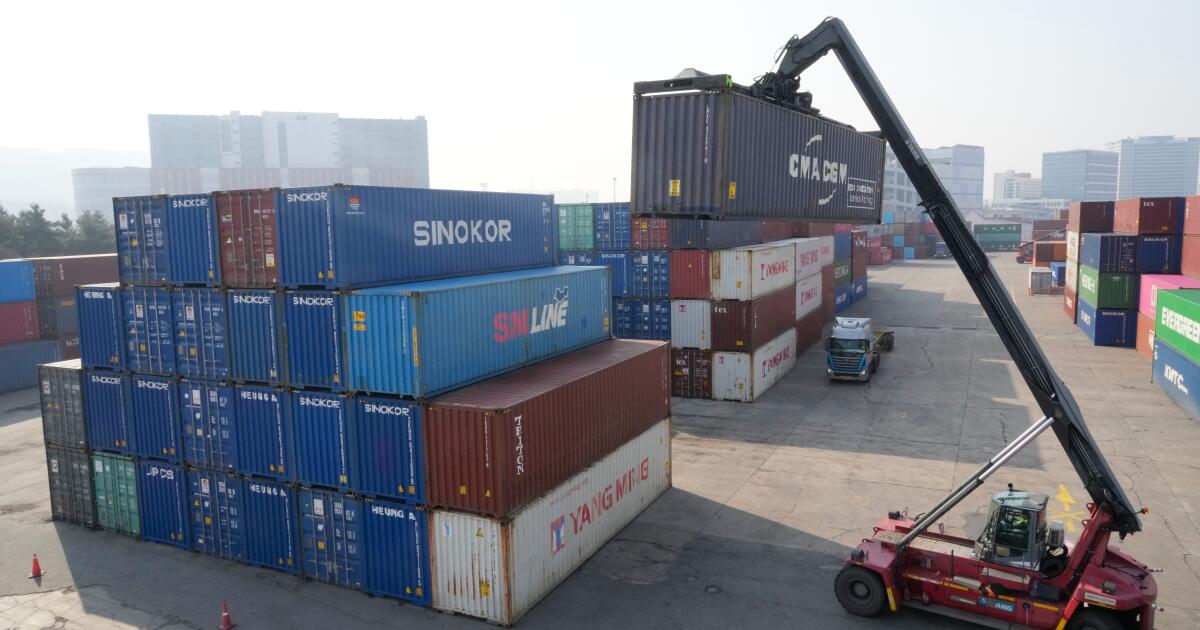
Canada will offer more support to help the steel and lumber industries deal with United States tariffs and create a domestic market, as well as ramp up protections for steel and lumber workers.

Prime Minister Mark Carney outlined the new plan on Wednesday in a news conference.

Recommended Stories

list of 4 itemsend of list

Ottawa will reduce the quota for steel imports from countries that do not have a free trade agreement with Canada to 20 percent from 50 percent of 2024 levels, Carney said.

Countries with a free trade agreement (FTA) with Canada will see their quotas cut to 75 percent from 100 percent of the 2024 level. This does not include the US and Mexico, which are bound by the United States-Canada-Mexico free trade deal.

Canada will also impose a global 25 percent tariff on targeted imported steel-derivative products, and incorporate border measures to combat steel dumping.

In July, Ottawa set a quota of steel imports at 50 percent of the 2024 level from non-FTA countries in a bid to stop the dumping of foreign steel into Canada.

The measures are being tightened to open up the domestic market for Canadian-produced steel, said a government official.

The steel industry contributes more than 4 billion Canadian dollars ($2.8bn) to Canada’s gross domestic product (GDP) and employs more than 23,000 people directly. It is, however, one of the two sectors hit hardest by US President Donald Trump’s 50 percent tariffs on steel imports from Canada.

Trump has imposed 50 percent tariffs on steel, and softwood lumber, long subject to US tariffs, is currently taxed at 45 percent after the Trump administration’s hike last month.

Carney said the decades-long process of an ever-closer economic relationship between Canada and the US is now over.

“As a consequence, many of our strengths have become vulnerabilities. Last year, more than 75 percent of our exports went to the United States. Ninety percent of our lumber exports, 90 percent of our aluminium exports, and 90 percent of our steel exports, all bound for a single market,” Carney said.

Ottawa will work with railway companies to cut freight rates for the inter-provincial transfer of Canadian steel and lumber by 50 percent, beginning in early 2026.

“We will make it more affordable to transport Canadian steel and lumber across the country by cutting freight rates,” Carney said.

The government said it would also support the use of locally made steel and lumber in homebuilding, and financial aid for companies dealing with tariff-related impacts, such as on their workforce, liquidity crunch, and for restructuring operations.

Trump tensions

Trump cut off trade talks with Canada last month after the Ontario provincial government ran television advertisements in US markets that criticised Trump’s tariffs by citing a speech by former US President Ronald Reagan.

Carney said he would be in Washington for the final draw on December 5 for the FIFA World Cup 2026 tournament. He said he would speak to Trump then and said he spoke briefly to the president on Tuesday.

“We are ready to re-engage on those talks when the United States wants to re-engage,” Carney said.

Carney’s announcement comes even as there is increased pressure on US businesses reeling from Trump’s tariffs.

Deere & Co, the maker of John Deere tractors, said on Wednesday that it expects a bigger hit from tariffs in 2026. The company expects a pre-tax tariff hit of around $1.2bn in fiscal 2026, compared with nearly $600m in 2025.

Source link

US to cut steel tariffs only if EU agrees to soften digital rules enforcement in return

Published on
24/11/2025 – 18:20 GMT+1

US Commerce Secretary Howard Lutnick said that Washington can reduce duties on EU steel and aluminium but only if the Europeans agree to ease the implementation of digital rules following a meeting in Brussels on Monday.

Lutnick, who is a close ally of President Donald Trump and negotiated on his behalf a trade deal with the EU over the summer introducing 15% tariffs, said that European should reassess the way they implement their flagship policies on digital regulation if they want further tariff relief. Lutnick did not call to remove the rules but did say the way in which they are applied should be “more balanced” for American tech companies.

Brussels is desperately seeking to obtain a reduction of the 50% tariffs that the Trump administration imposed on European aluminium and steel in June under pressure from the industry.

The US does want the EU “to put these rules away, but find the balanced approach that works for us,” he told reporters in Brussels. “Then we will, together with them, handle the steel and aluminium issues.”

“The enforcement is quite aggressive at times”

Lutnick and US trade representative Jamieson Greer were in Brussels meeting with EU27 trade ministers and Commission boss Maroš Šefčovič for a working lunch.

The implementation of the trade deal signed over summer was at the center of the discussion, which was “open and direct,” according to an EU diplomat.

The EU and the US clinched a trade deal in July in which the US tripled tariffs on EU while Europeans agreed to cut tariffs for most US industrial goods at 0%. US tariffs on EU steel and aluminium remain stuck at a much higher rate of 50% despite the deal.

Lutnick and Greer also met EU Tech Commissioner Henna Virkkunen who stressed in a statement the importance of the Digital Market Act (DMA) and the Digital Services Act (DSA), the two landmark digital regulations applied in the EU. The comments suggest the Commission is not ready to water them further for the time being.

To counter the US offensive on its digital legislation, EU Trade Commissioner Šefčovič said that the EU is working hard to explain its legislation to the US and stressed that there no discriminatory practices applied to US companies. The rules, he argued, are the same for everyone operating in the EU single market regardless of their origin.

Still, the US insists that is not the case and American Big Tech is being punished.

“The enforcement is quite aggressive at times,” Greer said about EU tech rules, adding that the US government wants to make sure their companies do not see their global revenues “affected” by foreign rules. In his comments, Greer’s tone was severe.

Brussels recently launched investigations against Amazon and Microsoft under the DMA which prevents big platforms from abusing their dominance in the tech market. It also hit Google with a €2.95 billion over antitrust rules despite the threats from the US.

Source link

Tea tariffs once sparked a revolution. Now they are creating angst

A tax on tea once sparked rebellion. This time, it’s just causing headaches.

Importers of the prized leaves have watched costs climb, orders stall and margins shrink under the weight of President Trump’s tariffs. Now, even after Trump has given them a reprieve, tea traders say it won’t immediately undo the damage.

“It took a while to work its way through the system, these tariffs, and it will take a while for it to work its way out of the system,” says Bruce Richardson, a celebrated tea master, tea historian and purveyor of teas at his shop, Elmwood Inn Fine Teas, in Danville, Ky. “That tariffed tea is still working its way out of our warehouses.”

While some bigger firms are behind the biggest supermarket brands, the premium tea market is largely the work of smaller businesses — family farms, specialty importers and a web of little tea shops, tea rooms and tea cafes across the U.S. Amid an onslaught of tariffs, they have become showcases for the levies’ effects.

On their shelves, selection has narrowed, with some teas missing because they’re no longer viable products to stock with the steep levies. In their warehouses, managers are consumed with uncertainty and operational headaches, including calculating what a blend really costs, with ingredients from multiple countries on a roller coaster of tariffs. And in backrooms where the wafting scent of fresh tea permeates, owners have been forced to put off job postings, raises, advertising and other investments so they can have cash available to pay duties when their containers arrive at U.S. ports.

“If I were to add up all the money I’ve spent on tariffs that weren’t there a year ago, it could equal a new employee,” says Hartley Johnson, who owns the Mark T. Wendell Tea Co. in Acton, Mass.

Johnson’s prices used to stay static for a year or longer. He ate the tariff costs before being forced to respond. His most popular tea, a smoky Taiwanese one called Hu-Kwa, has steadily risen from $26 to $46 a pound.

He knows some customers are reconsidering.

“Where is that tipping point?” Johnson asks. “I’m kind of finding that tipping point is happening now.”

That tipping point already came for one tea company in the City of Commerce.

International Tea Importers, already under financial strain from climate change and the COVID-19 pandemic, said that tariffs were the final blow, creating an untenable cash flow crunch and forcing its closure after 35 years in business.

“We just became over-leveraged financing — not just the inventory, but also the tariffs,” says the company’s chief executive, Brendan Shah.

Despite the other financial challenges, if not for the tariffs, Shah says, it may have survived.

“Unpredictable tariff policies,” he wrote to customers in announcing the company’s closure, “have created the final, insurmountable barrier.”

Though Trump backed off some tariffs on agricultural products last week, many in the tea trade are wary of celebrating too soon and caution tea drinkers shouldn’t either. Much of next year’s supply has already been imported and tariffed, and the full impact of those duties may not have fully spilled downhill.

Meantime, other tariff-driven price hikes persist. All sorts of other products tea businesses import, such as teapots and infusers, remain subject to levies, and costs for some American-made items, like tins for packaging, have spiked because they rely on foreign materials.

“The canisters, the bamboo boxes, the matcha whisks, everything that we import, everything that we sell has been affected by tariffs,” says Gilbert Tsang, owner of MEM Tea Imports in Wakefield, Mass.

Though globally tea reigns supreme, imbibed more than anything but water, it has long been overshadowed by coffee in the U.S. Still, tea is entwined in American history from the very beginning, even before colonists angry with tariffs dumped tons of it in Boston Harbor.

Boston may run on Dunkin’ today, but it was born on tea.

The 1773 revolt that became known as the Boston Tea Party rose out of the British Parliament’s implementation of tea tariffs on colonists, who rejected taxation without representation in government. After an independent United States was born, one of the new government’s first major acts, the Tariff Act of 1789, ironically set in law import taxes on a range of products including tea. In time, though, trade policy came to include carve-outs for many products Americans rely on but don’t produce.

For more than 150 years, most tea has passed through U.S. ports with little to no duties.

That began to change in Trump’s first term with his hard-line approach to China. But nothing compared to what came with his return to the White House.

In July, the most recent month for which the U.S. International Trade Commission has tallied tariff numbers, tea was taxed at an average rate of over 12%, a huge increase from a year earlier when it was just under one-tenth of a percent. In that single month, American businesses and consumers paid more than $6 million in tea import taxes, amassing in just 31 days more tariffs than any previous full year on record.

“All over again, taxation without representation,” says Richardson, an advisor to the Boston Tea Party Ships & Museum. “Our wants and needs and our voices are not being represented because Congress is avoiding the issue by simply allowing the president to act like George III.”

All told, tea importers paid about $19.6 million in tariffs in the first seven months of 2025, nearly seven times as much as the same period last year.

It’s all been confounding to those steeped in the world of tea, on which the U.S. depends on foreign countries for nearly all of the billions of pounds Americans brew each year. Though a number of small tea farms exist in the U.S., they can’t fill Americans’ cups for more than a few hours of the year.

Said Angela McDonald, president of the United States League of Tea Growers: “We don’t have an industry and we can’t produce one overnight.”

Sedensky writes for the Associated Press.

Source link

U.S. to lower tariffs in new trade deal with Switzerland

Cargo shipping containers sit at Port Jersey container terminal in Jersey City, N.J., on April 10. The Swiss government said it reached a deal with the United States to lower tariffs. File Photo by Angelina Katsanis/UPI | License Photo

Nov. 14 (UPI) — The Trump administration has agreed to lower tariffs on Swiss goods imported to the United States, a statement from the Swiss government said Friday.

The agreement drops tariffs on Swiss imports from 39% to 15%. The higher rate went into effect in August after President Donald Trump raised tariffs on dozens of trading partners to correct what he described as a trade imbalance.

The United States had a $38 billion trade deficit with Switzerland in 2024, according to U.S. Commerce Department data cited by CNN.

“Switzerland and the U.S. have successfully found a solution: U.S. tariffs will be reduced to 15%,” the Swiss government said in a post on X.

“Thanks to President Trump @POTUS for the constructive agreement.”

The announcement came after Swiss officials met with U.S. Trade Representative Jamieson Greer. The Swiss government said further details about the agreement would be announced at 4 p.m. CET.

“They’re going to send a lot of manufacturing here to the United States — pharmaceuticals, gold smelting, railway equipment — so we’re really excited about that deal and what it means for American manufacturing,” Greer said in an appearance on CNBC’s Squawk Box.

He said the deal had been in the works since April.

President Donald Trump signs the funding package to reopen the federal government in the Oval Office of the White House on Wednesday. Photo by Bonnie Cash/UPI | License Photo

Source link

Consumers to pay less as Trump lowers tariffs on ag products

Nov. 14 (UPI) — President Donald Trump lowered but did not eliminate reciprocal tariffs and beef, fruits, coffee and other foods in an effort to lower food prices for consumers.

The president announced the reduced tariffs a day after securing trade agreements with Argentina, Ecuador, El Salvador and Guatemala, although a 15% tariff remains in effect for Ecuador, according to The Hill.

“Today’s order follows the significant progress the president has made in securing more reciprocal terms for our bilateral trade relationships,” the White House announced Friday in a news release.

“President Trump’s deals have had and will continue to have broad impacts on domestic production and the economy as a whole, including enhanced market access for our agriculture exporters.”

The other nations will continue to have a 10% tariff in effect, but they could be lowered or eliminated for certain products.

Certain agricultural products won’t be subject to reciprocal tariffs, including tropical fruits and fruit juices, beef, cocoa and spices, bananas, oranges, tomatoes and fertilizers, according to the White House.

Consumers are paying more for coffee, beef and other foods since Trump initiated his reciprocal tariffs policy in April to offset tariffs being charged on U.S.-produced goods in respective nations, CNN reported.

The Consumer Price Index shows people are paying about 20% more for coffee than they did a year ago due to the president’s 50% tariff on coffee imported from Brazil, which is the nation’s largest supplier of the beloved caffeinated beverage.

Tomatoes also are costing more and will continue to have a17% tariff when imported from Mexico after a trade agreement between that nation and the United States expired in July.

Bananas and other food products that are not produced in the United States also are subject to tariff reductions.

Source link

What has US Supreme Court said about Trump’s trade tariffs? Does it matter? | Trade War News

The US Supreme Court has questioned US President Donald Trump’s authority to use emergency powers to impose sweeping tariffs on trading partners around the world.

In a closely watched hearing on Wednesday in Washington, DC, conservative and liberal Supreme Court judges appeared sceptical about Trump’s tariff policy, which has already had ramifications for US carmakers, airlines and consumer goods importers.

Recommended Stories

list of 3 itemsend of list

The US president had earlier claimed that his trade tariffs – which have been central to his foreign policy since he returned to power earlier this year – will not affect US businesses, workers and consumers.

But a legal challenge by a number of small American businesses, including toy firms and wine importers, filed earlier this year, has led to lower courts in the country ruling that Trump’s tariffs are illegal.

In May, the Court of International Trade, based in New York, said Trump did not have the authority to impose tariffs and “the US Constitution grants Congress exclusive authority to regulate commerce”. That decision was upheld by the Court of Appeals for the Federal Circuit in Washington, DC, in August.

Now, the Supreme Court, the country’s top court, is hearing the issue. Last week, the small business leaders, who are being represented by Indian-American lawyer Neal Katyal, told the Court that Trump’s import levies were severely harming their businesses and that many have been forced to lay off workers and cut prices as a result.

In a post on his Truth Social Platform on Sunday, Trump described the Supreme Court case as “one of the most important in the History of the Country”.

“If a President is not allowed to use Tariffs, we will be at a major disadvantage against all other Countries throughout the World,” he added.

What happened in Wednesday’s Supreme Court hearing, and what could happen if the court rules against Trump’s tariffs?

Here’s what we know:

What was discussed at the Supreme Court on Wednesday?

During a hearing which lasted for nearly three hours, the Trump administration’s lawyer, Solicitor General D John Sauer, argued that the president’s tariff policy is legal under a 1977 national law called the International Emergency Economic Powers Act (IEEPA).

According to US government documents, IEEPA gives a US president an array of economic powers, including to regulate trade, in order “to deal with any unusual and extraordinary threat, which has its source in whole or substantial part outside the United States, to the national security, foreign policy, or economy of the United States, if the President declares a national emergency with respect to such threat”.

Trump invoked IEEPA in February to levy a new 25 percent tax on imports from Canada and Mexico, as well as a 10 percent levy on Chinese goods, on the basis that these countries were facilitating the flow of illegal drugs such as fentanyl into the US, and that this constituted a national emergency. He later paused the tariffs on Canada and Mexico, but increased China’s to 20 percent. This was restored to 10 percent after Trump met Chinese President Xi Jinping last month.

In April, when he imposed reciprocal tariffs on imports from a wide array of countries around the world, he said those levies were also in line with IEEPA since the US was running a trade deficit that posed an “extraordinary and unusual threat” to the nation.

Sauer argued that Trump had imposed the tariffs using IEEPA since “our exploding trade deficits have brought us to the brink of an economic and national security catastrophe”.

He also told the court that the levies are “regulatory tariffs. They are not revenue-raising tariffs”.

But Neal Katyal, the lawyer for the small businesses that have brought the case, countered this. “Tariffs are taxes,” Katyal said. “They take dollars from Americans’ pockets and deposit them in the US Treasury. Our founders gave that taxing power to Congress alone.”

What did the judges say about tariffs?

The judges raised another sticking point: Also, under the US Constitution, only Congress has the power to regulate tariffs. Justice John Roberts noted that “the [IEEPA] statute doesn’t use the word tariff.”

Liberal Justice Elena Kagan also told Sauer, “It has a lot of actions that can be taken under this statute. It just doesn’t have the one you want.”

Conservative Justice Amy Coney Barrett, who was appointed by Trump during his first term as president, asked Sauer, “Is it your contention that every country needed to be tariffed because of threats to the defence and industrial base?

“I mean, Spain, France? I could see it with some countries, but explain to me why as many countries needed to be subject to the reciprocal tariff policy,” Coney Barrett said.

Sauer replied that “there’s this sort of lack of reciprocity, this asymmetric treatment of our trade, with respect to foreign countries that does run across the board,” and reiterated the Trump administration’s power to use IEEPA.

Liberal Justice Sonia Sotomayor took issue with the notion that the tariffs are not taxes, as asserted by Trump’s team. She said, “You want to say that tariffs are not taxes, but that’s exactly what they are.”

According to recent data released by the US Customs and Border Protection agency, as of the end of August, IEEPA tariffs had generated $89bn in revenues to the US Treasury.

During the court’s arguments on Wednesday, Justice Roberts also suggested that the court may have to invoke the “major questions” doctrine in this case after telling Sauer that the president’s tariffs are “the imposition of taxes on Americans, and that has always been the core power of Congress”.

The “major questions” doctrine checks a US executive agency’s power to impose a policy without Congress’s clear directive. The Supreme Court previously used this to block former President Joe Biden’s policies, including his student loan forgiveness plan.

Sauer argued that the “major questions” doctrine should not apply in this context since it would also affect the president’s power in foreign affairs.

Why is this case the ultimate test of Trump’s tariff policy?

The Supreme Court has a 6-3 conservative majority and generally takes several months to make a decision. While it remains unclear when the court will make a decision on this case, according to analysts, the fact that this case was launched against Trump at all is significant.

In a recent report published by Max Yoeli, senior research fellow on the US and Americas Programme at UK-based think tank Chatham House, said, “The Supreme Court’s outcome will shape Trump’s presidency – and those that follow – across executive authority, global trade, and domestic fiscal and economic concerns.”

“It is likewise a salient moment for the Supreme Court, which has empowered Trump and showed little appetite to constrain him,” he added.

Penny Nass, acting senior vice president at the German Marshall Fund’s Washington DC office, told Al Jazeera that the verdict will be viewed by many as a test of Trump’s powers.

“A first impact will be the most direct judicial restraint at the highest level on Presidential power. After a year testing the limits of his power, President Trump will start to see some of constraints on his power,” she said.

According to international trade lawyer Shantanu Singh, who is based in India, the global implications of this case could also be huge.

One objective of these tariffs was to use them as leverage to get trade partners to do deals with the US. Some countries have concluded trade deals, including to address the IEEPA tariffs,” he told Al Jazeera.

After the imposition of US reciprocal tariffs in April and again in August, several countries and economic blocs, including the EU, UK, Japan, Cambodia and Indonesia, have struck trade deals with the US to reduce tariffs.

But those countries were forced to make concessions to get those deals done. EU countries, for example, had to agree to buy $750bn of US energy and reduce steel tariffs through quotas.

Singh pointed out that an “adverse Supreme Court ruling could bring into doubt the perceived benefit for concluding deals with the US”.

“Further, trade partners who are currently negotiating with the US will have to also adjust their negotiating objectives in light of the ruling and how the administration reacts to it,” he added.

Other countries including India and China are currently actively engaged in trade talks with the US. Trade talks with Canada were terminated by Trump in late October over what Trump described as a “fraudulent” advertisement featuring former President Ronald Reagan speaking negatively about trade tariffs, which was being aired in Canada.

What happens if the judges rule against Trump?

Following Wednesday’s Supreme Court Hearing, US Treasury Secretary Scott Bessent, who was at the court with Secretary of Commerce Howard Lutnick, told Fox News that he was “very optimistic” that the outcome of the case would be in the government’s favour.

“The solicitor general made a very powerful case for the need for the president to have the power,” he said and refused to discuss the Trump administration’s plan if the court ruled against the tariff policy.

However, Singh said if the Supreme Court does find these tariffs illegal, one immediate concern will be how tariffs collected so far will be refunded to businesses, if at all.

“Given the importance that the current US administration places on tariffs as a policy tool, we can expect that it would quickly identify other legal authorities and work to reinstate the tariffs,” he said.

Nass added: “The President has many other tariff powers, and will likely quickly recalibrate to maintain his deal-making efforts with partners,” she said, adding that there would still be very complicated work for importers on what to do with the tariffs already collected in 2025 under IEEPA.

During Wednesday’s hearing, Justice Coney Barrett asked Katyal, the lawyer for the small businesses contesting Trump’s tariffs, whether this process of paying money back would be “a complete mess”.

Katyal said the businesses he’s representing should be given a refund, but added that it is “very complicated”.

“So, a mess,” Coney Barrett stated.

“It’s difficult, absolutely, we don’t deny that,” Katyal said in response.

In an interview with US broadcaster CNN in September, trade lawyers said the court could decide who gets the refunds. Ted Murphy, an international trade lawyer at Sidley Austin, told CNN that the US government “could also try to get the court to approve an administrative refund process, where importers have to affirmatively request a refund”.

What tariffs has Trump imposed so far, and what has their effect been?

Trump has imposed tariffs of varying rates on imports from almost every country in the world, arguing that these levies will enrich the US and protect the domestic US market. The tariff rates range from as high as 50 percent on India and Syria to as low as 10 percent on the UK.

The US president has also imposed a 50 percent tariff on all copper imports, 50 percent on steel and aluminium imports from every country except the UK, 100 percent on patented drugs, 25 percent levies on cars and car parts manufactured abroad, and 25 percent on heavy-duty trucks.

According to the University of Pennsylvania’s Penn Wharton Budget Model, which analyses the US Treasury’s data, tariffs have brought in $223.9bn as of October 31. This is $142.2bn more than the same time last year.

In early July, Treasury Secretary Bessent said revenues from these tariffs could grow to $300bn by the end of 2025.

But in an August 7 report, the Budget Lab at Yale University estimated that “all 2025 US tariffs plus foreign retaliation lower real US Gross Domestic Product (GDP) growth by -0.5pp [percentage points] each over calendar years 2025 and 2026”.

Meanwhile, according to a Reuters news agency tracker, which follows how US companies are responding to Trump’s tariff threats, the first-quarter earnings season saw carmakers, airlines and consumer goods importers take the worst hit from tariff threats. Levies on aluminium and electronics, such as semiconductors, also led to increased costs.

Reuters reported that as tariffs hit factory orders, big manufacturing companies around the world are also struggling.

In its latest World Economic Outlook report released last month, the International Monetary Fund (IMF) said the effect of Trump’s tariffs on the global economy had been less extreme.

“To date, more protectionist trade measures have had a limited impact on economic activity and prices,” it said.

However, the IMF warned that the current resilience of the global economy may not last.

“Looking past apparent resilience resulting from trade-related distortions in some of the incoming data and whipsawing growth forecasts from wild swings in trade policies, the outlook for the global economy continues to point to dim prospects, both in the short and the long term,” it said.

Source link

Trump’s Tariff Powers Face Supreme Court Challenge, Raising Fears of Trade Turmoil

The U.S. Supreme Court’s skeptical questioning of former President Donald Trump’s global tariffs has fueled speculation that his trade measures may be struck down, potentially upending the already fragile trade landscape.

The case centers on Trump’s use of the 1977 International Emergency Economic Powers Act (IEEPA) to impose sweeping tariffs on imports. The law grants presidents broad authority to regulate trade during national emergencies but makes no mention of tariffs, raising constitutional questions about the limits of executive power.

During oral arguments on Wednesday, justices across the ideological spectrum except Samuel Alito and Clarence Thomas appeared doubtful that Trump had legal authority to levy such blanket global tariffs.

Trade experts now warn that if the court invalidates Trump’s tariff policy, it could trigger a new wave of economic uncertainty, as the administration is expected to pivot quickly to other trade laws to reimpose duties.

Why It Matters

The outcome of this case could reshape U.S. trade policy for years. Businesses have paid over $100 billion in IEEPA-related tariffs since 2025, and a ruling against Trump could open a complex refund battle or force the White House to seek alternative legal pathways for its protectionist agenda.

Corporate leaders, already weary of erratic trade shifts, say a ruling either way offers little stability. “Even if it goes against IEEPA, the uncertainty still continues,” said David Young of the Conference Board, who briefed dozens of CEOs after the hearing.

Trump Administration: Faces potential legal defeat but can pivot to Section 232 (Trade Expansion Act of 1962) or Section 122 (Trade Act of 1974), both of which allow temporary or national security-based tariffs.

U.S. Supreme Court: Balancing presidential powers with statutory limits on trade actions.

Businesses & Importers: Risk being caught in regulatory limbo over refunds and future duties.

Federal Reserve: Monitoring potential economic fallout from prolonged trade instability.

Refunds Could Get “Messy”

Justice Amy Coney Barrett raised concerns about how refund claims would be handled if the tariffs are ruled illegal, calling it “a mess” for courts to manage.
Lawyer Neal Katyal, representing five small businesses challenging the tariffs, said only those firms would automatically receive refunds, while others must file administrative protests a process that could take up to a year.

Customs lawyer Joseph Spraragen added that if the court orders refunds, the Customs and Border Protection’s automated system could process them, but he warned, “The administration is not going to be eager to just roll over and give refunds.”

Economic and Policy Repercussions

Analysts expect the administration to rely on alternative statutes if IEEPA tariffs are overturned. However, implementing new duties under those laws could be slow and bureaucratic, potentially delaying trade certainty until 2026.

Natixis economist Christopher Hodge said such a ruling would be only a “temporary setback” for Trump’s trade agenda, predicting renewed tariff rounds or trade negotiations in the coming year.

Meanwhile, Federal Reserve Governor Stephen Miran warned the uncertainty could act as a drag on economic growth, though it might also prompt looser monetary policy if trade instability dampens business confidence.

What’s Next

A Supreme Court ruling is expected in early 2026, leaving companies in limbo over the future of U.S. tariff policy.
If Trump’s powers under IEEPA are curtailed, analysts expect a new wave of trade maneuvers potentially invoking national security provisions to maintain his “America First” economic approach, prolonging the climate of global trade unpredictability.

With information from Reuters.

Source link

Trump’s worldwide tariffs run into sharp skepticism at the Supreme Court

President Trump’s signature plan to impose import taxes on products coming from countries around the world ran into sharp skepticism at the Supreme Court on Wednesday.

Most of the justices, conservative and liberal, questioned whether the president acting on his own has the power to set large tariffs as a weapon of international trade.

Instead, they voiced the traditional view that the Constitution gives Congress the power to raise taxes, duties and tariffs.

Trump and his lawyers rely on an emergency powers act adopted on a voice vote by Congress in 1977. That measure authorizes sanctions and embargoes, but does not mention “tariffs, duties” or other means of revenue-raising.

Chief Justice John G. Roberts Jr. said he doubted that law could be read so broadly.

The emergency powers law “had never before been used to justify tariffs,” he told D. John Sauer, Trump’s solicitor general. “No one has argued that it does until this particular case.”

Congress has authorized tariffs in other laws, he said, but not this one. Yet, it is “being used for a power to impose tariffs on any product from any country for — in any amount on any product from any country for — in any amount for any length of time.”

Moreover, the Constitution says Congress has the lead role on taxes and tariffs. “The imposition of taxes on Americans … has always been a core power of Congress,” he said.

The tariffs case heard Wednesday is the first major challenge to Trump’s presidential power to be heard by the court. It is also a test of whether the court’s conservative majority is willing to set legal limits on Trump’s executive authority.

Trump has touted these import taxes as crucial to reviving American manufacturing.

But owners of small businesses, farmers and economists are among the critics who say the on-again, off-again import taxes are disrupting business and damaging the economy.

Two lower courts ruled for small-business owners and said Trump had exceeded his authority.

The Supreme Court agreed to hear the appeal on a fast-track basis with the aim of ruling in a few months.

In defense of the president and his “Liberation Day” tariffs, Trump’s lawyers argued these import duties involve the president’s power over foreign affairs. They are “regulatory tariffs,” not taxes that raise revenue, he said.

Justices Sonia Sotomayor and Elena Kagan disagreed.

“It’s a congressional power, not a presidential power, to tax,” Sotomayor said. “You want to say tariffs are not taxes, but that’s exactly what they are.”

Imposing a tariff “is a taxing power which is delegated by the Constitution to Congress,” Kagan said.

Justice Neil M. Gorsuch may hold the deciding vote, and he said he was wary of upholding broad claims of presidential power that rely on old and vague laws.

The court’s conservative majority, including Gorsuch, struck down several far-reaching Biden administration regulations on climate change and student forgiveness because they were not clearly authorized by Congress.

Both Roberts and Gorsuch said the same theory may apply here. Gorsuch said he was skeptical of the claim that the president had the power to impose taxes based on his belief that the nation faces a global emergency.

In the future, “could the President impose a 50% tariff on gas-powered cars and auto parts to deal with the unusual and extraordinary threat from abroad of climate change?” he asked.

Yes, Sauer replied, “It’s very likely that could be done.”

Congress had the lawmaking power, Gorsuch said, and presidents should not feel free to take away the taxing power “from the people’s representatives.”

Justice Amy Coney Barrett said she was struggling to understand what Congress meant in the emergency powers law when it said the president may “regulate” importation.

She agreed that the law did not mention taxes and tariffs that would raise revenue, but some judges then saw it as allowing the authority to impose duties or tariffs.

Justices Brett M. Kavanaugh and Samuel A. Alito Jr. appeared to be leaning against the challenge to the president’s tariffs.

Kavanaugh pointed to a round of tariffs imposed by President Nixon in 1971, and he said Congress later adopted its emergency powers act without clearly rejecting that authority.

A former White House lawyer, Kavanaugh said it would be unusual for the president to have the full power to bar imports from certain countries, but not the lesser power to impose tariffs.

Since Trump returned to the White House in January, the court’s six Republican appointees have voted repeatedly to set aside orders from judges who had temporarily blocked the president’s policies and initiatives.

Although they have not explained most of their temporary emergency rulings, the conservatives have said the president has broad executive authority over federal agencies and on matters of foreign affairs.

But Wednesday, the justices did not sound split along the usual ideological lines.

The court’s ruling is not likely to be the final word on tariffs, however. Several other past laws allow the president to impose temporary tariffs for reasons of national security.

Source link

Supreme Court’s conservatives face a test of their own in judging Trump’s tariffs

The Supreme Court’s conservatives face a test of their own making this week as they decide whether President Trump had the legal authority to impose tariffs on imports from nations across the globe.

At issue are import taxes that are paid by American businesses and consumers.

Small-business owners had sued, including a maker of “learning toys” in Illinois and a New York importer of wines and spirits. They said Trump’s ever-changing tariffs had severely disrupted their businesses, and they won rulings declaring the president had exceeded his authority.

On Wednesday, the justices will hear their first major challenge to Trump’s claims of unilateral executive power. And the outcome is likely to turn on three doctrines that have been championed by the court’s conservatives.

First, they say the Constitution should be interpreted based on its original meaning. Its opening words say: “All legislative powers … shall be vested” in Congress, and the elected representatives “shall have the power to lay and collect taxes, duties, imposes and excises.”

Second, they believe the laws passed by Congress should be interpreted based on their words. They call this “textualism,” which rejects a more liberal and open-ended approach that included the general purpose of the law.

Trump and his lawyers say his sweeping “Liberation Day” tariffs were authorized by the International Economic Emergency Powers Act, or IEEPA.

That 1977 law says the president may declare a national emergency to “deal with any unusual and extraordinary threat” involving national security, foreign policy or the economy of the United States. Faced with such an emergency, he may “investigate, block … or regulate” the “importation or exportation” of any property.

Trump said the nation’s “persistent” balance of payments deficit over five decades was such an “unusual and extraordinary threat.”

In the past, the law has been used to impose sanctions or freeze the assets of Iran, Syria and North Korea or groups of terrorists. It does not use the words “tariffs” or “duties,” and it had not been used for tariffs prior to this year.

The third doctrine arose with Chief Justice John G. Roberts Jr. and is called the “major questions” doctrine.

He and the five other conservatives said they were skeptical of far-reaching and costly regulations issued by the Obama and Biden administrations involving matters such as climate change, student loan forgiveness or mandatory COVID-19 vaccinations for 84 million Americans.

Congress makes the laws, not federal regulators, they said in West Virginia vs. Environmental Protection Agency in 2022.

And unless there is a “clear congressional authorization,” Roberts said the court will not uphold assertions of “extravagant statutory power over the national economy.”

Now all three doctrines are before the justices, since the lower courts relied on them in ruling against Trump.

No one disputes that the president could impose sweeping worldwide tariffs if he had sought and won approval from the Republican-controlled Congress. However, he insisted the power was his alone.

In a social media post, Trump called the case on tariffs “one of the most important in the History of the Country. If a President is not allowed to use Tariffs, we will be at a major disadvantage against all other Countries throughout the World, especially the ‘Majors.’ In a true sense, we would be defenseless! Tariffs have brought us Great Wealth and National Security in the nine months that I have had the Honor to serve as President.”

Solicitor Gen. D. John Sauer, his top courtroom attorney, argues that tariffs involve foreign affairs and national security. And if so, the court should defer to the president.

“IEEPA authorizes the imposition of regulatory tariffs on foreign imports to deal with foreign threats — which crucially differ from domestic taxation,” he wrote last month.

For the same reason, “the major questions doctrine … does not apply here,” he said. It is limited to domestic matters, not foreign affairs, he argued.

Justice Brett M. Kavanaugh has sounded the same note in the past.

Sauer will also seek to persuade the court that the word “regulate” imports includes imposing tariffs.

The challengers are supported by prominent conservatives, including Stanford law professor Michael McConnell.

In 2001, he and John Roberts were nominated for a federal appeals court at the same time by President George W. Bush, and he later served with now-Justice Neil M. Gorsuch on the U.S. 10th Circuit Court of Appeals in Denver.

He is the lead counsel for one group of small-business owners.

“This case is what the American Revolution was all about. A tax wasn’t legitimate unless it was imposed by the people’s representatives,” McConnell said. “The president has no power to impose taxes on American citizens without Congress.”

His brief argues that Trump is claiming a power unlike any in American history.

“Until the 1900s, Congress exercised its tariff power directly, and every delegation since has been explicit and strictly limited,” he wrote in Trump vs. V.O.S. Selections. “Here, the government contends that the President may impose tariffs on the American people whenever he wants, at any rate he wants, for any countries and products he wants, for as long as he wants — simply by declaring longstanding U.S. trade deficits a national ‘emergency’ and an ‘unusual and extraordinary threat,’ declarations the government tells us are unreviewable. The president can even change his mind tomorrow and back again the day after that.”

He said the “major questions” doctrine fully applies here.

Two years ago, he noted the court called Biden’s proposed student loan forgiveness “staggering by any measure” because it could cost more than $430 billion. By comparison, he said, the Tax Foundation estimated that Trump’s tariffs will impose $1.7 trillion in new taxes on Americans by 2035.

The case figures to be a major test of whether the Roberts court will put any legal limits on Trump’s powers as president.

But the outcome will not be the final word on tariffs. Administration officials have said that if they lose, they will seek to impose them under other federal laws that involve national security.

Still pending before the court is an emergency appeal testing the president’s power to send National Guard troops to American cities over the objection of the governor and local officials.

Last week, the court asked for further briefs on the Militia Act of 1908, which says the president may call up the National Guard if he cannot “with the regular forces … execute the laws of the United States.”

The government had assumed the regular forces were the police and federal agents, but a law professor said the regular forces in the original law referred to the military.

The justices asked for a clarification from both sides by Nov. 17.

Source link

US Tariffs Slam Manufacturing Giants

In October, manufacturing economies worldwide faced challenges, particularly due to weak demand in the U. S. and tariffs imposed by President Donald Trump. Factories in the U. S. struggled with lower new orders and strained supply chains, leading to a decline in manufacturing activity for the eighth consecutive month. Manufacturers expressed concerns about the unpredictable tariff situation affecting future costs and the ability to expand production.

In the Eurozone, factory activity stagnated, with flat new orders and reduced workforce. Germany, a key player, showed minimal recovery, experiencing a slowdown in production growth. Engineering orders in Germany dropped sharply, while France’s manufacturing sector remained weak and Italy saw a slight contraction. Spain was the exception, with its factories performing better than in September. Analysts noted that growth in the Eurozone was primarily driven by strong domestic demand, but foreign orders remained a concern, especially from France and the U. S.

In Britain, outside the EU, factories reported their best month in a year, largely due to the resumption of production at Jaguar Land Rover following a cyberattack. Meanwhile, manufacturing activity in China grew at a slower pace, and South Korea saw a decline in exports amid cautiousness over U. S. demand. China’s official PMI indicated a seventh straight month of falling factory activity, with economists suggesting the economy lost momentum in October. Despite a recent agreement between Trump and Chinese President Xi Jinping to ease tariffs, deeper trade tensions persist.

In Asia, India experienced a boost in factory activity driven by strong domestic demand, in contrast to some declines in Malaysia and Taiwan, while Vietnam and Indonesia saw improvements in their manufacturing sectors.

With information from Reuters

Source link

GM Korea’s sales plunge amid high U.S. tariffs

The Chevrolet Trax Crossover manufactured by General Motors Korea. The automaker suffered a downturn last month amid high U.S. tariffs. Photo courtesy of GM Korea

SEOUL, Nov. 3 (UPI) — General Motors Korea saw its sales plunge more than 20% in October from a year earlier due to a slump at home and abroad amid high tariffs under the United States’ Trump administration.

GM Korea, based west of Seoul, said Monday that it sold 50,021 vehicles last month, down 20.8% year-on-year. The company’s domestic sales dropped 39.5%, while exports declined 20%.

Citing statistics from the Korea Automobile & Mobility Association, GM Korea Vice President Gustavo Colossi offered an optimistic view about its performance this year.

“Despite the production losses in the third quarter, demand for Chevrolet vehicles remains strong both domestically and globally, as evidenced by the Chevrolet Trax Crossover ranking No. 1 in domestic passenger car exports from January to September this year,” he said in a statement.

However, some observers remain worried about the future of GM Korea.

“Most of GM Korea’s turnover comes from exports to the United States. But the 25% tariffs have weighed on the company this year. Even if the duties go down to 15%, the struggle is feared to continue,” Daelim University automotive professor Kim Pil-soo told UPI.

“Worse, its domestic sales accounted for only about 3% in October, with just over 1,000 units sold. If the situation continues, speculation about GM’s withdrawal from Korea is unlikely to fade,” he added.

Originally, South Korean automakers did not pay any tariffs when exporting their cars to the United States, thanks to the bilateral free trade agreement that went into effect in early 2012.

The Trump administration imposed tariffs of up to 25% on Korean-made automobiles earlier this year, although Washington agreed to reduce the rate to 15% late last month in return for Seoul’s promise to make major investments in the United States.

GM Korea has denied rumors that it plans to leave South Korea.

Source link

Trump’s Tariffs Put Africa’s Key Economies at Risk

US tariffs are hitting African exports hard. Now, governments and businesses must devise a Plan B to expand trade and grow their economies.

US President Donald Trump is not an Africa enthusiast; he has mocked Lesotho as a place “nobody has ever heard of ” and has never set foot on the continent.

In July, however, Africans were hopeful that Trump was mellowing. At a summit in Washington with the presidents of five African nations, he announced a shift from “aid to trade” in US efforts to strengthen ties with the continent.

Pivoting US-Africa relations toward trade and investment to foster self-reliance and mutual prosperity and move away from traditional aid dependency was critical, Trump said. He had already dismantled USAID, the principal US foreign aid agency, leaving a trail of negative social effects on the continent.

Many took this seeming pledge to expand trade with skepticism. And a few weeks later, Trump unveiled the Reciprocal Tariff Rate, sending shockwaves across 22 African nations suddenly slapped with duties ranging from 15% to 30%, that started on August 7.

South Africa, Algeria, and Libya were the worst hit, their tariffs set at 30%, while Tunisia got a rate of 25%. Tiny Lesotho and crisis-ridden Chad and Equatorial Guinea were not spared as their new rates hit 15%.

Bintu Zahara Sakor, a doctoral researcher at Norway’s Peace Research Institute Oslo (PRIO), notes the contraction of promising more trade with Africa and then imposing punitive tariffs that are bound to be damaging to the continent.


“Diversification could empower Africa to dictate its trade narratives.”

Zahara Sakor, PRIO


“This mixed messaging creates uncertainty for African businesses and investors,” she says. The endgame is stifling the very trade the US purports to promote.

The Biggest Economies In The Crosshairs

While targeting only about half of the continent’s countries, two of its biggest economies, South Africa (30%) and Nigeria (15%), are on the list. Most of the others are grappling with extreme poverty and challenges of job creation. Among them is Botswana (15%), whose economy is in a recession.

By the numbers, African exports to the US are not substantial, accounting for only 1.5% of the continent’s collective GDP. Africa’s $34 billion of exports to the US are a mere 1.2% of total US imports and a drop in the ocean when juxtaposed with Washington’s $3.2 trillion global trade volume.

But the numbers don’t tell the whole story. For the past 25 years, US-Africa trade relations were defined primarily by duty-free access under the African Growth and Opportunity Act (AGOA). With his new tariff schedule, Trump has discarded AGOA, damaging the prospects for future exports cutting across automobiles, machinery, textiles, apparel, minerals, and agricultural products, among others.

“What we are witnessing under Trump is US imperialism,” argues Patrick Bond, professor of sociology at South Africa’s University of Johannesburg. The damages the tariffs inflict on the continent will be immense, he predicts.

Case in point is South Africa. The US is its second-largest trading partner after China, and its agricultural and automobile manufacturing industries bear the brunt of the tariffs. According to data from NAAMSA, South Africa’s auto industry lobbying group, the US is the third-largest destination for the country’s auto exports. South Africa shipped approximately $1.9 billion worth of vehicles to the US market in 2024, accounting for 6.5% of total exports. Owing to tariffs, however, auto exports have plummeted by an average of 60% this year.

South Africa is warning that a staggering 100,000 jobs are at risk from the new duties, devastating for a country with a 33% unemployment rate and where crime is among the highest globally. The only bright spot is the exemption of platinum, gold, and other minerals, which will continue to be zero-rated.

The situation is worse in Lesotho, which ranks among the poorest nations in the world with youth joblessness at 48%. The government has declared a “state of disaster,” reckoning the US tariffs will devastate the textile and apparels industry, which employs 40,000 people.

Lesotho is one of Africa’s largest garment exporters to the US, thanks to the AGOA. In 2024, it exported goods worth a cumulative $237.2 million to the US market, 75% of that garment exports. The industry accounts for roughly 20% of GDP.

Devising A Plan B

Trump’s tariffs call for “swift policy responses” to safeguard the continent’s long-term economic prospects, Sakor urges. The AGOA was set to expire on September 30; while Congress holds the power to renew it, the current administration is not concealing its aversion to the pact. With the new tariffs, the era of regional duty-free market access under the AGOA is over. In its place, Washington wants a shift toward bilateral deals that extract concessions like market access for US goods or alignment on geopolitical issues.

“US-Africa trade relations may become more fragmented and conditional, focusing on select ‘friendly’ nations with lower tariffs or new free trade agreements [FTAs],” Sakor says. Countries like Morocco, which has a binding FTA with the US, and Kenya, which is currently negotiating one, were among those spared the backlash.

Bintu Zahara Sakor, a doctoral researcher at PRIO

With the US playing hard ball, Africa is at a point where it must devise a Plan B for future trade policy. One starting point could be deepening intra-Africa trade by accelerating implementation of the African Continental Free Trade Area (AfCFTA).

On paper, AfCFTA has the potential to boost intracontinental trade to 53% from around 18% currently, growing the manufacturing sector by $1 trillion, generating income worth $470 billion, and creating a whopping 14 million jobs by 2035, according to the African Export-Import Bank (Afreximbank).

Six years after the agreement was signed, however, the continent has yet to record any tangible benefits. Last year, trade was valued at $208 billion, a 7.7% increase from 2024, according to Afreximbank. Compounding the difficulties are disintegrating regional economic community blocs and rising non-tariff barriers.

“AfCFTA is encouraging in theory, but has not yet delivered mutually advantageous market opportunities,” observes Bond. For this reason, Africa could be forced onto a different course of action: strengthening trade ties with China while exploring opportunities in other global markets.

Over the past 25 years, China has risen to become Africa’s largest trading partner. Last year, trade with the people’s republic was valued at $294.3 billion, a staggering increase from $13.9 billion in 2000, according to Chinese government data. The amount dwarfs US-Africa twoway trade, which was valued at $104.9 billion in 2024.

Chinese engagement has been a mixed blessing. Beijing has flooded Africa with cheap goods, rendering nascent industries uncompetitive. This, combined with the lessons of Washington’s volatile behavior, suggests that the continent needs to cultivate balanced and reciprocal agreements with multiple trading partners.

“Diversification could empower Africa to dictate its trade narrative,” Sakor says, arguing that this is critical if the continent is to foster sustainable growth outside of unilateral preferences like AGOA. The European Union, Russia, India, Japan, South Korea, and the Middle East are some of the markets that offer Africa opportunities for deeper trade ties, Sakor notes.

Africa must decide whether to accept the higher US tariffs as the cost of doing business, build its ties further with China and Russia, or take a more diverse approach. The latter two, obviously, would only alienate the continent further from Washington.

Source link