Hiking on the roof of North Africa: a trek to Morocco’s tallest peak | Morocco holidays
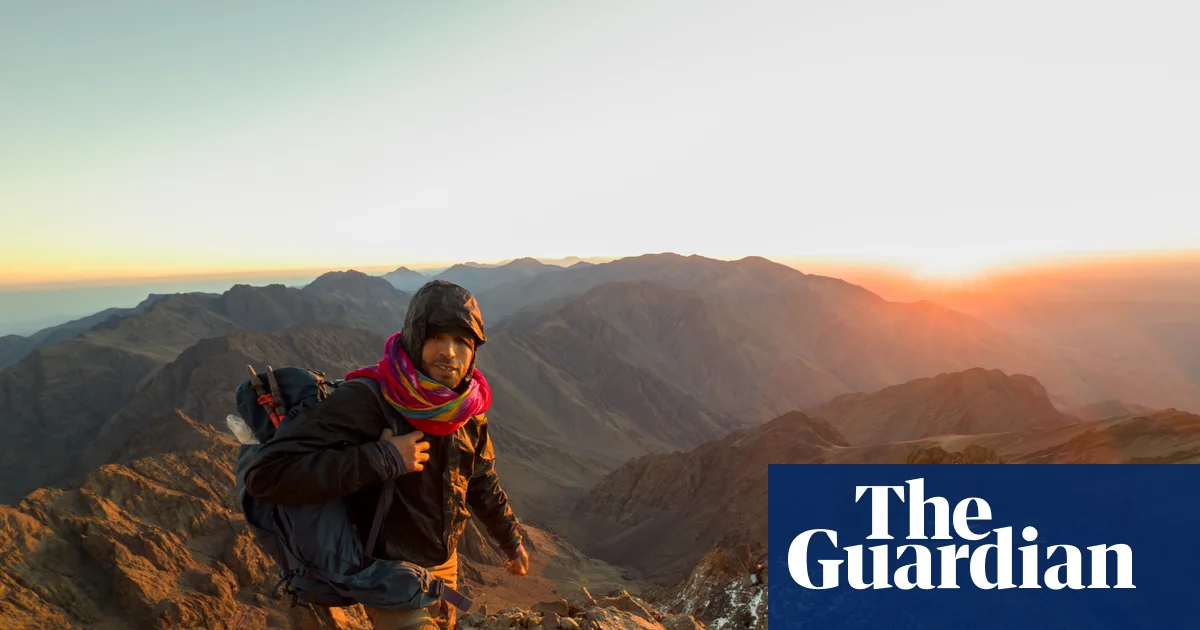
Coming up the footpath from Imlil, Hussein and I step aside to let a laden mule go past and I look back. On the wooded lower slopes of the valley are clusters of tall houses, some plumed with wood smoke. There appears to be a lot of building work going on, some of it to repair the damage caused by the 2023 earthquake. The sound of a concrete mixer comes cutting through the cool mountain air mixed with birdsong and human voices. Turning back to face south, I can see the Atlas mountains, austere and aloof, a few snow patches on the upper slopes. That’s where we are going, to the top of Toubkal at 4,167 metres, the highest peak in North Africa.
Hussein has been a guide in this beautiful Moroccan valley all his adult life. “Most people here work in tourism now,” he says, waving a greeting to a muleteer who is passing us. The man is clutching the tail of his animal to steady himself up the steep track. “Twenty years ago everyone grew walnuts and subsistence food,” Hussein says. “Now we’ve still got walnuts, but we’ve also planted apple trees as a cash crop. It leaves time for the tourist work.”
Is all the change good? He nods, confidently.
Not everyone likes change, of course, and it’s possible that a country such as Morocco, where half the population is under 30, has an advantage in this respect. There just isn’t so much dewy-eyed, middle-aged, nostalgia for the past.
We move up the mountain, passing the little holy shrine of Sidi Chamharouch where the cafes sell freshly squeezed orange juice and the tumbling river is almost pristine, but not quite. I take off my boots and wade into the cold water to grab some discarded plastic bottles. Hussein and two other guides jump in to help. “City people,” they complain.
“You might think that in a holy place, they would try to be clean,” I observe, which makes one man laugh.
He says: “My grandfather told me that the shrine used to be an animal shelter and they built the dome over a dead donkey.”
Morocco always surprises me with its bracing honesty, never afraid to make a joke about anything. Even the haggling in the markets has a gritty element of truthfulness: a face-to-face negotiation that arrives at a price agreeable to both parties. The previous evening, down in Imlil market, I had bought a bag of amlou, a mix of almonds, honey and argan oil – Moroccan trail mix. I got to taste it before buying, at the seller’s insistence: “It’s the best in all Morocco!” Then we discussed the price, settling on an extra scoop of walnuts to seal the deal. It’s not a system that would work in Tesco, but it does make shopping fun.
I had spent that first night in the Kasbah du Toubkal, a gorgeous boutique hotel that sits on a plug of rock a 15-minute walk from the nearest road. Once a citadel belonging to a notorious feudal chieftain, it had fallen into ruin, only to be spotted in the 1970s by British traveller Mike McHugo and his brother Chris. Together with local guide Hajj Maurice, they transformed the place into a celebrated haven for all things Moroccan, bringing school and university groups to experience the magic, too. Mike’s love for the place has never wavered and he’s still often found in the expansive dining lounge, chatting to staff and guests.
Back on the mountain, Hussein and I reach the overnight hut Les Mouflons – actually a complex of buildings built to cope with the rise in tourist numbers. Toubkal, for better or worse, has become one of those Instagram peaks, attracting many visitors. Hussein, characteristically pragmatic, sees the benefits: “Lots of guides and muleteers needed.” And he has a solution for anyone who doesn’t like crowds: “Go somewhere else.”
There are, in fact, several peaks nearby that top the 4,000-metre mark. “I like Ouanoukrim,” he says. “It’s only a few metres lower than Toubkal and you hardly see anyone up there.”
For a moment, I am tempted. These alternative peaks are also accessible from Les Mouflons, but like everyone else, the thought of standing on the highest summit is irresistible for me. At 4am the next morning, we join the snail trail of head torches heading up the last thousand metres. The wind, cold and altitude sap some energy and we pass a few people slumped over their rucksacks. You need good boots, warm clothes and a reasonable level of fitness for this, but no technical climbing is involved. The summit is large, easily coping with everyone, and offers great panoramas of the Atlas range.
We take an alternative route down; Hussein wants to show me something. In a rocky col, we leave our bags and scramble up to a second mountain at 3,900 metres. Here, a surprise awaits us, an aircraft engine embedded in the peak. This strange, tragic site marks a little piece of African history. In November 1969, a Lockheed Constellation aircraft set off from Portugal for Biafra, the breakaway war-torn region of Nigeria. By that time, a terrible famine was gripping the rebel state and its struggle looked doomed, but an international airlift was delivering food and guns via São Tomé island. This particular plane smashed into the peak of Tibhirine, killing all eight people on board and leaving one engine embedded in the rock, plus a trail of destruction all down the mountain.
Back at Kasbah du Toubkal, after the long trudge down, the hammam is absolute bliss. The appearance of an ancient, traditional room, however, is deceptive. Most of the Kasbah had to be rebuilt after the earthquake. “No one here was hurt,” says Mike, “but the buildings were damaged. We took the chance to move things on a bit. The lives of the people here in the valley had been changing and it was time.”
The hotel now has a swimming pool and underfloor heating. Some things, however, remain the same: the convivial atmosphere where guests and staff chat and the energetic climb on foot from the village high street (there is still no drivable road to the door). The educational connection continues, too: it still hosts school and university fieldwork groups and, through a small levy on visitors, supports the work of improving girls’ school opportunities in remote mountain villages.
Next day, I manage to hobble down to the town. Change is very evident here. You can buy all kinds of second-hand mountain equipment, even skis. Traditions live on, however. I admire the woven rugs and buy more amlou from the trader who seems like an old friend now. Then I wander up the valley through a forest of pines and out on to a rounded peak. There are dozens of treks here, many which you can have to yourself. And sitting there, alone on a minor summit, listening to the echoes of voices from below, I have to admit a sneaking regret that I hadn’t taken Hussein up on the offer of Ouanoukrim. Next time I will.
The trip was provided by Kasbah du Toubkal lodge, which organises packages that can include trekking, painting and yoga. Its five-night supported mountain trek, including the ascent of Toubkal, is €1,188pp; doubles from €200 B&B. In Marrakech, Riad Les Yeux Bleus has doubles from €170 B&B