



US and Iran talks begin as fears of direct conflict continue
The US has built up its military presence in the Middle East in response to Iran’s violent crackdown on protests.
Source link
The US has built up its military presence in the Middle East in response to Iran’s violent crackdown on protests.
Source link
US and Iranian officials are holding talks in Muscat amid escalating tensions and a US military buildup in the Gulf.
Friedrich Merz said concerns about a further escalation with Iran have dominated his trip to the Gulf region.
German Chancellor Friedrich Merz has warned of the threat of a military escalation in the Middle East before talks between Iran and the United States in Oman on Friday.
Speaking in Doha on Thursday, Merz said that fears of a new conflict had characterised his talks during his trip to the Gulf region.
list of 3 itemsend of list
“In all my conversations yesterday and today, great concern has been expressed about a further escalation in the conflict with Iran,” he said during a news conference.
Merz also urged Iran to end what he called aggression and enter into talks, saying Germany would do everything it could to de-escalate the situation and work towards regional stability.
The warning came in the run-up to a crucial scheduled meeting between officials from Tehran and Washington in Muscat.
Mediators from Qatar, Turkiye and Egypt have presented Iran and the US with a framework of key principles to be discussed in the talks, including a commitment by Iran to significantly limit its uranium enrichment, two sources familiar with the negotiations have told Al Jazeera.
Before the talks, both sides appear to be struggling to find common ground on a number of issues, including what topics will be up for discussion.
Iran says the talks must be confined to its long-running nuclear dispute with Western powers, rejecting a US demand to also discuss Tehran’s ballistic missiles, and warning that pushing issues beyond the nuclear programme could jeopardise the talks.
Reporting from Washington, DC, Al Jazeera’s Kimberly Halkett said the US is eager for the talks to follow what they see as an agreed-upon format.
“That agreed-upon format includes issues broader than what the US understands Iran is willing to discuss in this initial set of talks,” she explained.
US Secretary of State Marco Rubio said on Wednesday that talks would have to include the range of Iran’s ballistic missiles, its support for armed groups around the Middle East and its treatment of its own people, in addition to its nuclear programme.
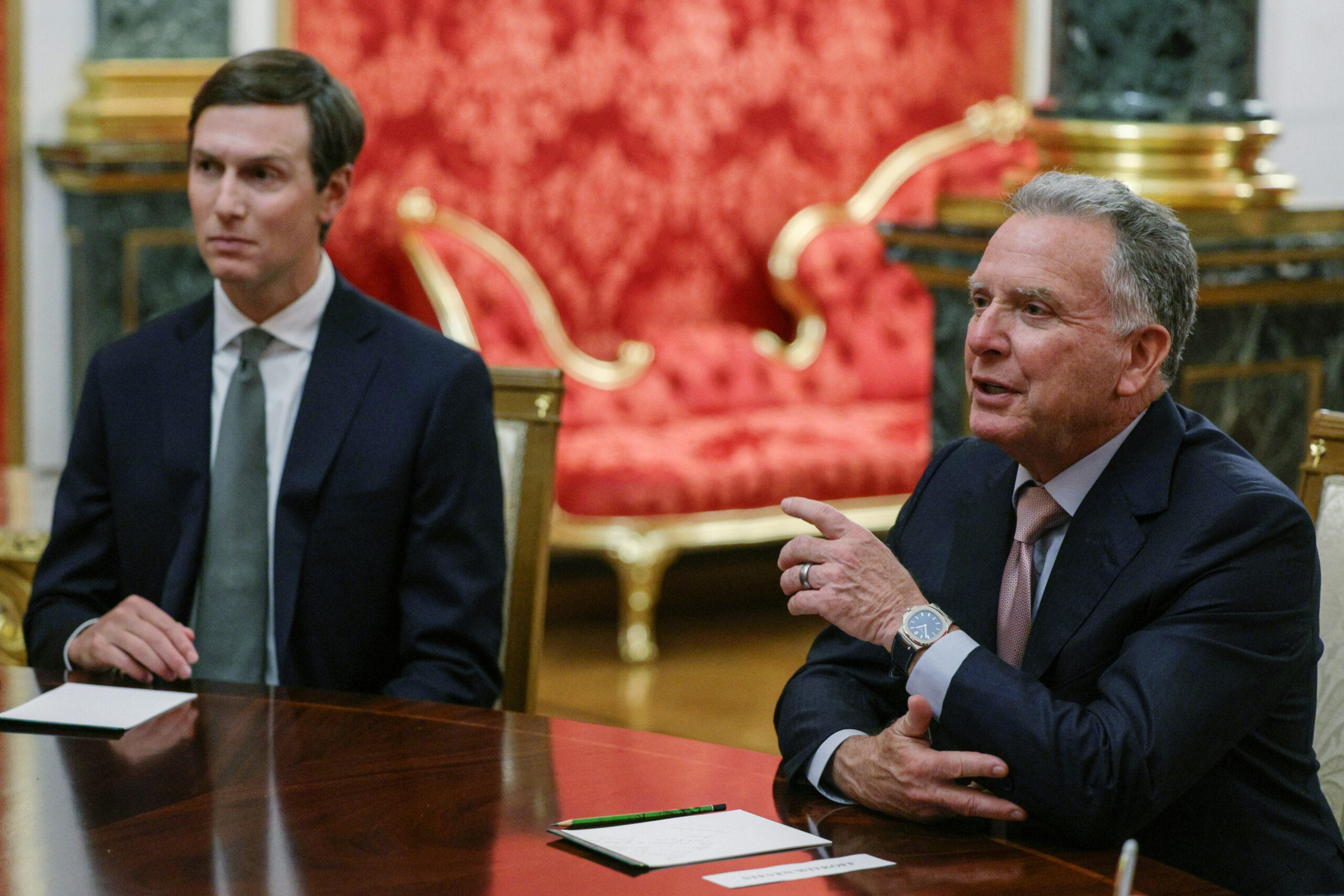
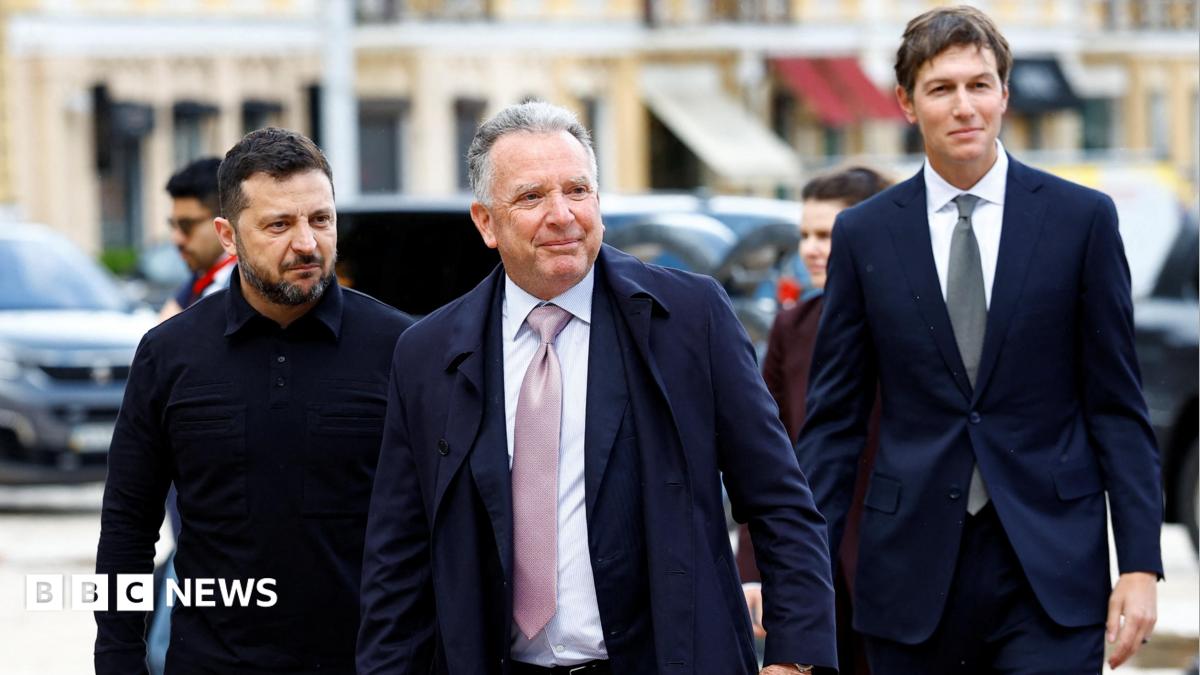
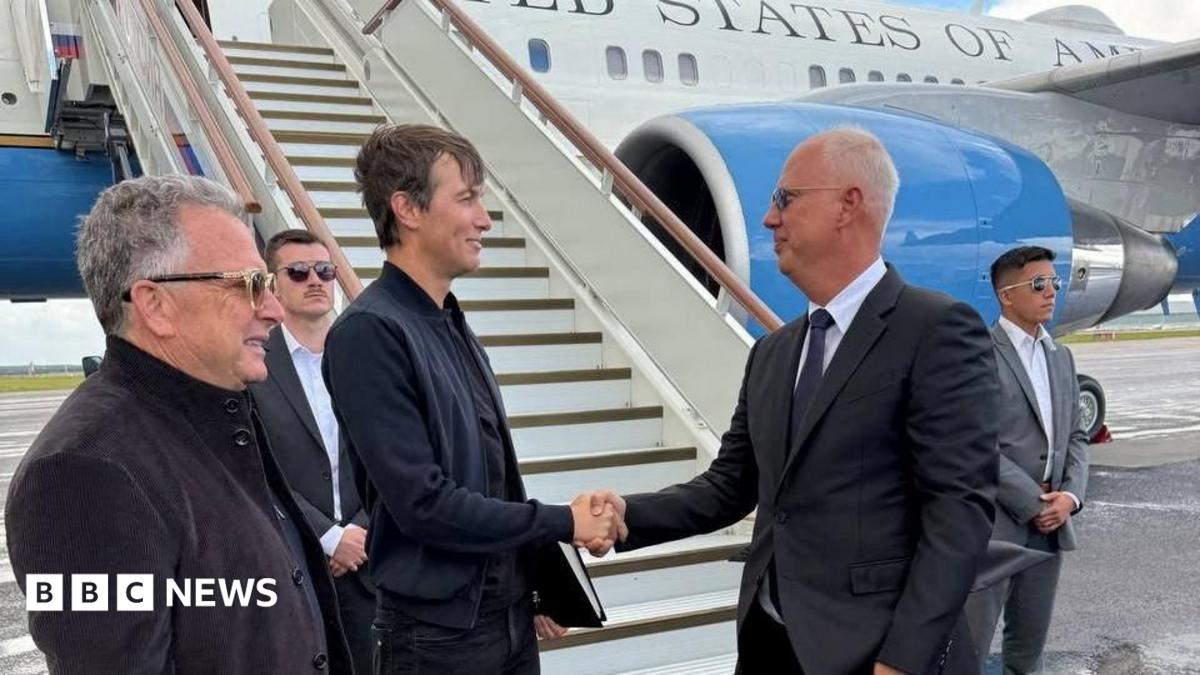
A White House official has told Al Jazeera that Jared Kushner, US President Donald Trump’s son-in-law and a key figure in his Middle East policy negotiations, and Steve Witkoff, Trump’s special envoy, have arrived in the Qatari capital, Doha, in advance of the talks.
Halkett said that Qatar is playing an instrumental role in trying to facilitate these talks, along with other regional US partners, including Egypt.
“We understand, according to a White House official, that this is perhaps part of the reason for the visit – to try and work with Qatar in an effort to try and get Iran to expand and build upon the format of these talks.”
The talks come as the region braces for a potential US attack on Iran after US President Donald Trump ordered forces to amass in the Arabian Sea following a violent crackdown by Iran on protesters last month.
Washington has sent thousands of troops to the Middle East, as well as an aircraft carrier, other warships, fighter jets, spy planes and air refuelling tankers.
Trump has warned that “bad things” would probably happen if a deal could not be reached, ratcheting up pressure on Iran.
This is not the first time Iranian and US officials have met in a bid to revive diplomacy between the two nations, which have not had official diplomatic relations since 1980.
In June, US and Iranian officials gathered in the Omani capital to discuss a nuclear agreement, but the process stalled as Israel launched attacks on Iran, killing several military leaders and top nuclear scientists, and targeting nuclear facilities. The US later briefly joined the war, bombing several Iranian nuclear sites.
Zelenskyy expects talks to soon lead to another prisoner exchange.
Ukrainian and Russian officials have wrapped up their first day of United States-mediated peace talks and are set to reconvene Thursday, according to Kyiv’s chief negotiator.
Rustem Umerov, the head of Ukraine’s National Security and Defence Council, described Wednesday’s negotiations in Abu Dhabi as “substantive and productive”. Talks are due to continue into a second day, his spokesperson Diana Davityan said, though no major advance towards ending the nearly four-year war was announced.
The positive outlook came despite fears the talks would be marred by a new wave of Russian attacks on Ukraine. Ukrainian authorities said the latest strikes included one that killed seven people at a crowded market, while others further damaged Kyiv’s power infrastructure amid freezing temperatures.
Nevertheless, the talks “focused on concrete steps and practical solutions”, said Umerov.

Ukraine’s President Volodymyr Zelenskyy, in an evening address, said it was imperative the talks yield concrete results and that he anticipated a prisoner exchange “in the near future”.
“People in Ukraine must feel that the situation is genuinely moving toward peace and the end of the war, not toward Russia using everything to its advantage and continuing attacks,” Zelenskyy said.
The Kremlin said that the “doors for a peaceful settlement are open,” but that Moscow will continue its military assault until Kyiv agrees to its demands.
The central hurdle in ending the war is the status of embattled eastern Ukraine, where Russia continues to make slow, painstaking advances.
Moscow is demanding that Kyiv withdraw its forces from large parts of the Donbas, including heavily fortified cities atop vast natural resources, as a precondition to any deal.
It also wants the world to recognise Russian sovereignty over territory it has seized in the war.
Kyiv is instead pushing for the front lines to be frozen at their current positions and rejects any unilateral troop withdrawal. Polls show that the majority of Ukrainians oppose a deal that hands Moscow more land.
“I think that Ukraine doesn’t have any moral right to give up our occupied territories … because my friends were fighting for that and they died for that,” Sofiia, a resident of Ukraine’s Poltava region, told Al Jazeera.
US Secretary of State Marco Rubio said it would likely take time to achieve a diplomatic breakthrough but claimed the administration of President Donald Trump had helped “substantially diminish” the number of unresolved issues between the warring parties.
“That’s the good news,” Rubio told reporters Wednesday. “The bad news is that the items that remain are the most difficult ones. And meanwhile the war continues.”
Ukraine’s Ministry of Foreign Affairs spokesperson Heorhii Tykhyi said Kyiv was “interested in finding out what the Russians and Americans really want”.
He added that the talks – only the second direct engagement between Ukrainian and Russian officials in more than three years – focused on “military and military-political issues”.
Russia occupies about 20 percent of Ukraine’s national territory, including Crimea and parts of the eastern Donbas region seized before the 2022 invasion.
Zelenskyy on Wednesday said that the number of Ukrainian troops killed since the start of the war stood at about 55,000, with a “great number” also missing in action.
Total wartime casualties, including both killed and wounded, are estimated to extend into the hundreds of thousands for both sides.
The Gaitanist Army of Colombia (EGC), the country’s largest criminal organisation, has announced it will temporarily suspend peace talks in Qatar after Colombian President Gustavo Petro reportedly pledged to target its leader.
In a social media post on Wednesday, the EGC, sometimes referred to as the Gulf Clan, indicated the suspension would continue until it received updates from the Petro administration.
list of 3 itemsend of list
“By order of the Joint Chiefs of Staff, the EGC delegation at the negotiating table will temporarily suspend talks with the government to consult and clarify the veracity of the information,” the group wrote in a statement on X.
“If the media reports are true, this would be a violation of good faith and the Doha commitments.”
Colombia’s Defence Minister Pedro Sanchez confirmed the reports later on Wednesday, sharing a list of three drug “kingpins” that Petro’s administration would prioritise as “high-level targets”.
Among the three targets was the EGC’s leader, Jesus Avila Villadiego, alias Chiquito Malo. A reward for his capture was set at 5 billion Colombian pesos, equivalent to $1.37m.
The other two “kingpins” included top rebel commanders identified only by their aliases: Ivan Mordisco and Pablito.
The public announcement echoes a private one cemented during a closed-door meeting on Tuesday at the White House, when Petro met United States President Donald Trump in person for the first time.
For months, Trump has pressured the Petro administration to take more “aggressive action” to combat narcotics trafficking out of Colombia.
In response, Petro and his team presented the Trump administration on Tuesday with a dossier on their counter-narcotics operations titled, “Colombia: America’s #1 Ally Against Narcoterrorists”.
The presentation featured statistics on cocaine seizures, programmes to eradicate coca crops, and the high-level arrests and killings of drug lords.
But the commitment to collaborate with the US in the pursuit of Chiquito Malo’s arrest has thrown negotiations with the EGC into peril.
It has also raised questions about the future of Petro’s signature policy, “Total Peace”, which was designed to open talks with rebel groups and criminal networks in an effort to halt Colombia’s six-decade-long internal conflict.
The EGC is a major criminal group with almost 10,000 members, according to a recent report by the Ideas for Peace Foundation.
In December, the US also designated the group as a “foreign terrorist organisation”, as part of its ongoing efforts to crack down on drug trafficking.
The EGC has been engaged in high-level discussions with the Colombian government in Doha since September 2025. The two parties signed a “commitment to peace” on December 5, which outlined a roadmap to the EGC putting down arms.
The first step towards demobilisation was for the group to gather its forces in temporary zones, beginning in March. The government had suspended arrest warrants in December for EGC commanders, including Chiquito Malo, who were due to move to these areas.
But the government’s plans to detain the drug lord, declared yesterday at the White House, destabilised this process, according to analysts.
“[The EGC] interpret this as a direct threat where, if any commander who has arrest warrants … goes to the temporary zones, he runs a high risk,” said Gerson Arias, a conflict and security investigator at the Ideas for Peace Foundation, a Bogota-based think tank.
The Colombian Supreme Court in January approved Chiquito Malo’s extradition to the US in the eventuality of his capture, but the final decision to extradite him resides with the president.
By declaring the drug lord a “target” at the White House, Petro signalled support for capturing and extraditing the EGC commander.
Potential US involvement in the operation also appears to have unsettled the criminal organisation, according to experts.
“It is very different for Chiquito Malo to be pursued solely by the Colombian government than for him to become a target of joint strategic value involving US intelligence,” said Laura Bonilla, a deputy director at the Peace and Reconciliation Foundation, a Colombian think tank.
Although the EGC suspended its peace talks on Wednesday, it stressed that it remained open to resuming negotiations.
“It should be clarified that the suspension is temporary, not permanent, which indicates that they [the talks] will resume shortly,” a lawyer for the group told Al Jazeera, on condition of anonymity.
The representative added that, for talks to continue, the EGC requires that “legal and personal security guarantees” and “the commitments agreed upon in Doha, Qatar, are fulfilled”.
US President Donald Trump has said that talks with Iran are continuing to try to de-escalate tensions in the Gulf, even as the US military announced shooting down an Iranian drone that approached its aircraft carrier in the Arabian Sea.
Published On 4 Feb 20264 Feb 2026
Share
The TWZ Newsletter
Weekly insights and analysis on the latest developments in military technology, strategy, and foreign policy.
Jordan on Monday became the latest Arab nation to proclaim that it won’t let its territory be used in a war against Iran. Last week, we noted that Saudi Arabia and the United Arab Emirates also told the White House that their bases and airspace will be off limits for any attack on Iran. These decisions, if they hold, could greatly affect how the U.S. conducts any offensive actions against Iran. Meanwhile, reports have emerged that the U.S. and Iran might hold talks in Turkey on Friday. More on that later in this story.
“I held a phone call with His Excellency the Iranian Foreign Minister, Dr. Abbas Araghchi, discussing the situation in the region and the efforts being made to de-escalate tensions,” Jordan’s Deputy Prime Minister and Foreign Minister Ayman Safadi explained on X. “I emphasized the necessity of adopting dialogue and diplomacy as the path to reaching a peaceful resolution for the nuclear issue and ending the tension. I also reaffirmed Jordan’s steadfast position on the necessity of respecting the sovereignty of states, and that Jordan will not be a battlefield for any party in any regional conflict, or a launchpad for any military action against Iran, and it will confront with all its capabilities any attempt to breach its airspace and threaten the safety of our citizens.”
بحثت مع معالي وزير الخارجية الإيراني الدكتور عباس عراقجي في إتصال هاتفي الأوضاع في المنطقة والجهود المبذولة لخفض التصعيد. أكدت ضرورة اعتماد الحوار والدبلوماسية سبيلا للتوصل لحل سلمي للملف النووي وإنهاء التوتر. كما أكدت موقف الأردن الثابت في ضرورة احترام سيادة الدول، وأن الأردن لن…
— Ayman Safadi (@AymanHsafadi) February 2, 2026
Such a move could further limit Trump’s military options in the region. Muwaffaq Salti, in central Jordan, has been a critical base housing U.S. tactical jets and other aviation assets for years. F-15E Strike Eagles based there played a key role in defending against a massive Iranian missile and drone barrage on Israel in April 2024. Over the past few weeks, Muwaffaq Salti has also seen an influx of at least 12 additional F-15E Strike Eagles and air defense systems amid mounting pressures with Iran. These join F-15Es already there, as well as A-10 Thunderbolt II close support jets and possibly American F-16 Vipers. Taking these assets out of the fight, or not allowing overflights by other aircraft, reduces the U.S. and allies’ ability to strike targets in Iran. It is unlikely to factor into the possibility of defending against the large number of missiles and drones Iran could fire in retaliation for any attack.
There is also the possibility that his statements are for consumption by a home audience wary of war with Iran, especially if that means fighting on the side of the Israelis. It’s also possible that messaging is intended to keep them from being struck by Iran in a massive retaliatory strike, but U.S. access to basing and airspace may be clandestinely allowed, even if to a limited degree. We just don’t know. Regardless, these are possibilities we suggested after Saudi Arabia and UAE made their comments about not getting involved.

As we predicted, a flight of six E/A-18 Growlers landed at the Jordanian base on Jan. 31. They arrived after a journey from Puerto Rico, where they had taken part in the operation to capture Venezuelan dictator Nicolas Maduro. You can read more about what the Growlers would bring to the table for any conflict with Iran here.
The U.S. is sending additional Patriot and Terminal High Altitude Area Defense (THAAD) systems to the Middle East for increased protection from any Iranian attack, The Wall Street Journal reported. Now the flight appears to be heading from Kadena Air Base in Japan, which has an air defense unit operating Patriots. Online flight trackers suggest that the cargo jets are moving some of that equipment to the Middle East.
U.S. air defenses are far more limited in capacity than many realize and we have seen these exact kinds of reshuffling of assets unfold prior to a crisis erupting multiple times before in the region. You can read more about the limited supply of Patriot and THAAD batteries in our past report here and what measures are being taken to at least begin to rectify this problem here. Just how much airlift work it is to move these batteries around is pretty daunting in itself.
US Air Force C-17A Globemaster III #AE07FD as RCH850 is en route to Isa AB, Bahrain (OBBS) from Spangdahlem AB, Germany (ETAD).
This aircraft picked up its cargo in Kadena AB, Japan (RODN) on the 31st.
Similar to what we saw last spring, it appears that air defenses are being… pic.twitter.com/kW96WyKL2T
— TheIntelFrog (@TheIntelFrog) February 2, 2026
#USAF United States Air Force – Middle East Activity
2 February 2026 – 1320zU.S. Air Force Airlifter activity appears to be shifting from Robert Gray Army Airfield (Fort Hood) to Kadena Air Base, Japan. There are currently six in-progress flights originating from Kadena, and… https://t.co/OuXPiP0gGI pic.twitter.com/gPixbzKJgx
— Armchair Admiral 🇬🇧 (@ArmchairAdml) February 2, 2026
There also appears to be a flight of six Vermont Air National Guard F-35A stealth fighters headed to the region. The jets moved east from the Caribbean, where they also took part in the Maduro capture. We were the first to report that they landed in Lajes, Portugal, and were possibly slated to head to Jordan. However, the F-35s were diverted to Rota, Spain, and it remains unclear when they will leave or where they will go.
Even if the F-35s are bound for the East, there still has not been the kind of influx of tactical aviation needed to sustain any operation of scale. There also doesn’t appear to be any immediate bolstering of aircraft at Diego Garcia, as we have seen in prior tensions with Iran and its Houthi proxies in Yemen.
Recent satellite imagery shows three Air Force KC-135 Stratotanker aerial refueling jets, a Navy P-8A Poseidon maritime patrol jet, and perhaps two Air Force Special Operations Command MC-130J Commando IIs. Satellite imagery from today shows many of these assets have moved on or were on missions away from the base, with just what appeared to be a pair of P-8s and a heavy airlifter, possibly a C-5, present. However, the buildup at the Indian Ocean island could accelerate at any time.
Activity at Diego Garcia in the Indian Ocean is heating up showing 3 US Air Force KC-135 Stratotankers, a US Navy P-8A Poseidon and 2 possible MC-130J Commando IIs.
A P-8 was deployed there for the majority of the summer while USAF B-2s idled nearby.
Diego is a used by DoD on a… https://t.co/SSSfYQM6wP
— TheIntelFrog (@TheIntelFrog) February 1, 2026
Complicating the move of materiel to the Middle East, a KC-46 Pegasus aerial refueling tanker reportedly suffered a mishap at Moron Air Base in Spain. That jet was one of several refuelers scheduled to gas up the F-35s as they flew east. Videos emerged showing the crew aborting the flight shortly after.
The Pegasus appears to still be on the runway, which has backed up logistics. We have reached out to U.S. Air Forces Europe-Air Force Africa (USAFE) for more details about the mishap, the status of the aircraft, and the extent to which this is causing delays in getting military supplies to the Middle East.
The buildup of naval forces continues as well. Late last week, the Arleigh Burke class guided missile destroyer USS Bulkeley arrived in the eastern Mediterranean, a U.S. Navy official told us, joining the Arleigh Burke class USS Roosevelt in that body of water. The destroyers can serve as air and missile defense pickets against incoming Iranian missiles.
Last week, we were the first to report that the Arleigh Burke class guided missile destroyer USS Delbert D. Black arrived in the Red Sea, becoming the 10th ship in the CENTCOM region. It joins the aircraft carrier USS Abraham Lincoln and its three escort Arleigh Burkes, two independently deployed Arleigh Burkes, and three Littoral Combat Ships. You can read more about these moves and what they could mean for a possible attack on or from Iran in our story here.
Israel’s IDF said today that “a joint exercise was conducted between a U.S. Navy destroyer and Israeli Navy vessels. The drill was held as part of the ongoing cooperation between the Israeli Navy and the U.S. 5th Fleet in the Red Sea arena. The destroyer docked at the port as… pic.twitter.com/Nl1XlYJJRA
— Seth Frantzman (@sfrantzman) February 2, 2026
Many Middle East developments over the past week as the U.S. military buildup continues:
– Additional strike assets en route (F-35As in Rota, EA-18Gs in CENTCOM)
– NSA Bahrain cleared out: all forward-deployed ships (LCS, USCG) got underway
– Deploying THAAD battery + Patriots
-… pic.twitter.com/PwRC7bXCwb— Ian Ellis (@ianellisjones) February 2, 2026
The exact position of the Lincoln CSG is unclear at the moment; however, the Iranians have been flying one of their drones over the Strait of Hormuz and Gulf of Oman to surveil U.S. warships in the region.
✈️ An IRGC drone identified as SEP2501, continues its mission to conduct live monitoring of the U.S. Navy fleet in the Sea of Oman.
Additionally, it was reported that last night also an IRGC drone was deployed over the Arabian Sea to observe U.S. Navy activities. #Iran #US pic.twitter.com/re7vCTJ9X7— IWN (@A7_Mirza) February 2, 2026
While a lot of aircraft are heading toward the Middle East, it looks like there is one less E-11A Battlefield Airborne Communications Node (BACN) jet in the region. Last week, it was reported that a BACN was heading to Souda Air Base in Crete, a common route for deployments to the Middle East. However, flight trackers reported that another E-11A forward deployed to the Middle East has left.
There may be another E-11A heading to the Middle East now, though it is too early to say just where it might end up.
USAF: E 11A BACN 22 9047 BLKWF01 now heading east.
The E 11A it acts as an airborne communications relay, linking aircraft and other forces pic.twitter.com/HrQlyfoMxb
— Open Source Intel (@Osint613) February 2, 2026
E-11As are highly specialized communications gateway nodes. You can find out more about BACN and its history in this past War Zone feature. It’s also worth mentioning that the BACNs spent many years exclusively deployed to the Middle East during the Global War on Terror.
Trump on Monday told reporters that talks with Iran were ongoing
“We have ships heading to Iran right now, big ones … and we have talks going on with Iran,” Trump told reporters at the White House. “We’ll see how it works out.”
Washington and Tehran are also still working toward negotiations. White House envoy Steve Witkoff and Iranian Foreign Minister Abbas Araghchi “are expected to meet on Friday in Istanbul together with representatives of several Arab and Muslim countries to discuss a possible nuclear deal,” Axios reported, citing sources. The talks, if they happen, mark a rare face-to-face exchange between the two sides in the wake of President Donald Trump’s threats against the Iranian regime.
The U.S. leader demands that Iran end its nuclear program and ship its enriched uranium out of the country, limit its ballistic missile capabilities, and sever ties with armed proxies in the Middle East. In return, the United States will not attack Iran and remove crippling sanctions.
The Istanbul summit “will focus on trying to put together a package deal that prevents war. The official stressed the Trump administration hopes Iran will come to the meeting ready to make the needed compromises,” Axios added.
Iran’s foreign ministry says it is reviewing the terms for resuming talks with the United States, after both sides signal readiness to revive diplomacy over the nuclear issue.
Iran’s foreign ministry says it is reviewing the terms for resuming talks with the United States, after both sides signal readiness to revive diplomacy over the nuclear issue.#Iran #US pic.twitter.com/sR7iIkbC5W
— Al Arabiya English (@AlArabiya_Eng) February 2, 2026
Iran may even agree to suspend or shut down its nuclear program to ease tensions, The New York Times reported.
Iran is willing to suspend or shut down its nuclear program to ease tensions, but prefers a U.S.-backed plan for a regional nuclear power consortium.
Officials said Ali Larijani recently delivered a message from Ayatollah Ali Khamenei to Vladimir Putin, offering to send Iran’s… pic.twitter.com/5WvOKgyw1J
— Clash Report (@clashreport) February 2, 2026
Though they have expressed a willingness to negotiate, the Iranians have thrown up a major roadblock. Top Khamenei advisor Ali Shamkhani stated that Iran will not ship its stockpile of enriched uranium out of the country. That stance, if it holds, could render discussions moot.
First Ali Bagheri, Larijani’s deputy at the SNSC, and now Ali Shamkhani, Khamenei’s representative on the Defense Council, says #Iran‘s regime will not ship its stockpile of enriched uranium out of Iranian soil. If this is the Iranian position, the talks will be over before they… https://t.co/fS7cCd4XCi
— Jason Brodsky (@JasonMBrodsky) February 2, 2026
One reason Iran may be open to talks is that it is “increasingly worried a U.S. strike could break its grip on power by driving an already enraged public back onto the streets, following a bloody crackdown on anti-government protests,” Reuters reported, citing six current and former officials. “In high-level meetings, officials told Supreme Leader Ayatollah Ali Khamenei that public anger over last month’s crackdown — the bloodiest since the 1979 Islamic Revolution — has reached a point where fear is no longer a deterrent.”
The unrest began in Iran on Dec. 28 over rising prices and a devalued currency that saw the rial crater now to basically nothing, as well as a devastating drought. The ongoing harsh treatment from the regime fanned the flames. By some estimates, as many as 30,000 protestors have been killed.
Khamenei is blaming the massive uprising against him on Trump, who last month urged that the protests continue and said, “help is on its way.“
“The fact that we call the recent sedition #American Sedition is not just because of the complex hidden security information; what makes it clear that this was an American move is the statements of the President of the United States himself,” he stated on X. “First, he referred to the few thousand rioters as the people of Iran. Then he said, ‘Go forward, go forward, I’m coming!’”
اینکه به فتنه اخیر میگوییم #فتنه_آمریکایی، فقط بخاطر اطلاعات امنیتی مخفی پیچیده نیست؛ آنچه واضح میکند این حرکت آمریکایی بود، سخنان خود رئیس جمهور ایالات متحده است.
اولاً که به چندهزار اغتشاشگر میگفت مردم ایران. بعد هم گفت بروید جلو، بروید جلو من دارم میآیم!— KHAMENEI.IR | فارسی (@Khamenei_fa) February 1, 2026
Meanwhile, the rhetoric from Khamenei’s military leaders continues to be heated.
The Islamic Republic “is fully prepared to confront and give a revengeful blow to the enemy, in case of any military mischief against the country’s sovereignty and territorial integrity,” Chairman of the Chief of Staff of Iran’s Armed Forces Major General Abdolrahim Mousavi said, according to official Iranian media. “Escalation in the region will have grave consequences for the US and its allies,” he added, emphasizing that “Iranian forces only think of victory, without any fear of the enemy’s rumbling and apparent arrogance.”
Still, Iranian authorities on Sunday walked back announced plans for live-fire exercises in the Strait of Hormuz, Reuters reported.
“The naval forces of Iran’s Revolutionary Guards have no plan to carry out as reported by some media outlets earlier this week,” an Iranian official told the news outlet.
The walkback happened after U.S. Central Command issued a warning to Iran over the exercise.
“CENTCOM will ensure the safety of U.S. personnel, ships, and aircraft operating in the Middle East,” the command stated on X. “We will not tolerate unsafe IRGC actions including overflight of U.S. military vessels engaged in flight operations, low-altitude or armed overflight of U.S. military assets when intentions are unclear, highspeed boat approaches on a collision course with U.S. military vessels, or weapons trained at U.S. forces.”
In Jerusalem, Israeli Prime Minister Benjamin Netanyahu said his country remains on high alert and is prepared for a strike from Iran.
Israel “is ready for every scenario,” Netanyahu said in a speech to the Knesset in response to Iranian threats. “Whoever attacks us will face unbearable consequences.”
Prime Minister Netanyahu on Iran: “There are still challenges ahead of us. Whoever attacks us will bear consequences that are unbearable for them.” pic.twitter.com/u8dzYT9nEa
— Open Source Intel (@Osint613) February 2, 2026
While Trump has shown a willingness to negotiate, it should be noted that the White House was in talks with Iran ahead of last June’s Operation Midnight Hammer attack on Iran’s nuclear weapons facilities. It remains to be seen whether a new round of face-to-face negotiations takes place, but the buildup for a potential conflict does not seem to be stopping.
Contact the author: howard@thewarzone.com
Iran examines regional proposals to ease tensions with the US as it expects a framework for talks in the coming days.
Iran has said that it expects progress on a framework to restart nuclear talks with the United States as unverified reports suggest the country’s president has ordered the revival of the negotiations.
Tehran said on Monday that it is examining several diplomatic processes pitched by countries in the region to ease tensions with Washington, adding that it expects a framework for talks in the coming days.
list of 3 itemsend of list
The announcement came as Tehran and Washington appear to be pulling back from the threat of military action.
US President Donald Trump sent warships to the Middle East after Iran violently put down mass protests in January, but he then called for Tehran to make a deal to resume talks on its nuclear programme, which were abandoned in June when Iran was attacked by the US and Israel.
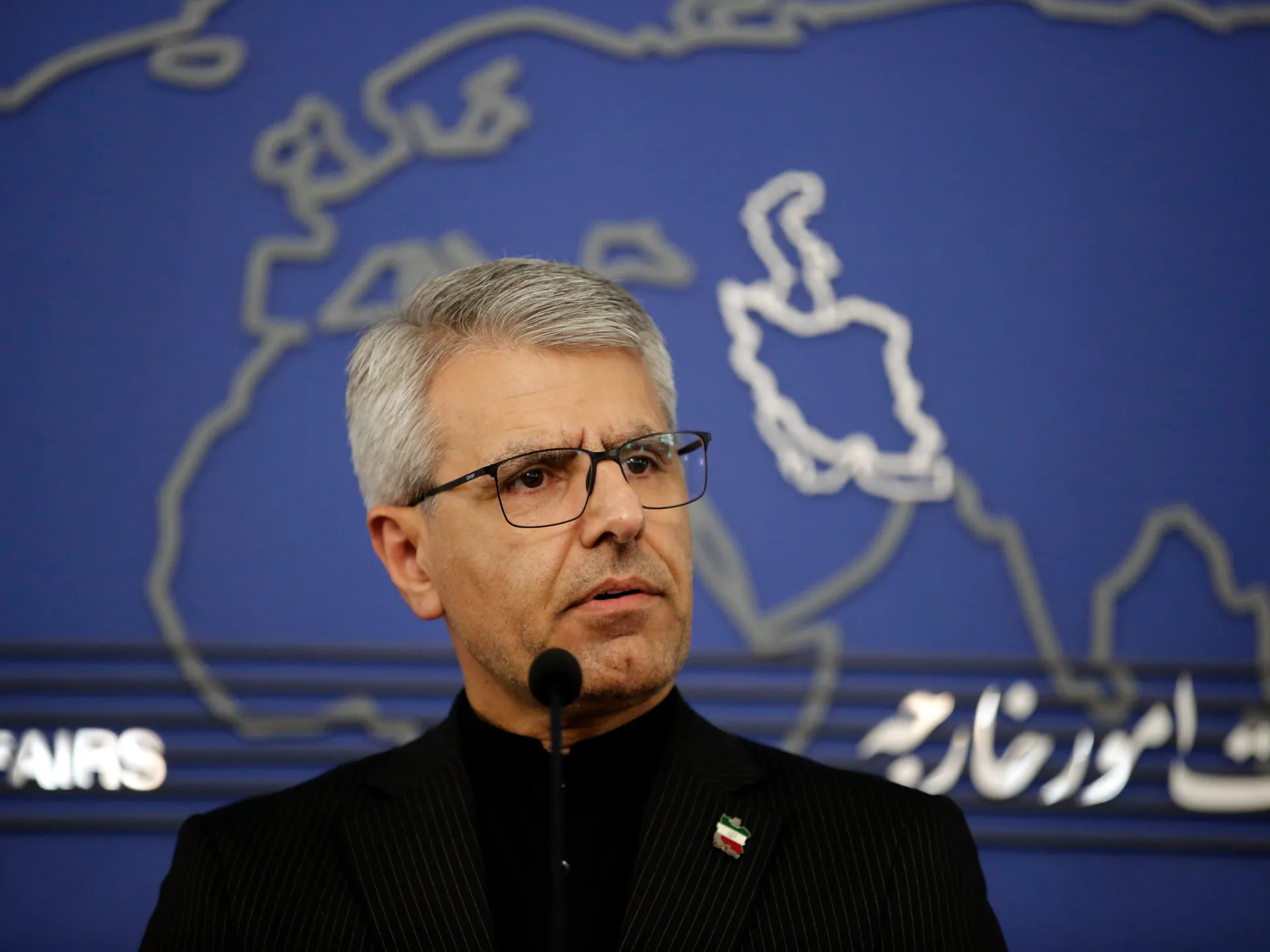
On Sunday, Trump said the US is talking with Iran. Tehran’s Ministry of Foreign Affairs spokesman Esmaeil Baghaei has now confirmed indirect negotiations are ongoing.
“Countries of the region are acting as mediators in the exchange of messages,” he said on Monday without giving details on the content of the negotiations.
“Several points have been addressed, and we are examining and finalising the details of each stage in the diplomatic process, which we hope to conclude in the coming days.”
The state news agency IRNA reported that Foreign Minister Abbas Araghchi had telephone calls with Saudi Arabia, Egypt and Turkiye to discuss the latest developments.
Later, the Fars news agency quoted an unnamed source as saying Pezeshkian had ordered the resumption of nuclear talks.
“Iran and the United States will hold talks on the nuclear file,” Fars reported without specifying a date. The report was also carried by the government newspaper Iran and the reformist daily Shargh.
Araghchi is due to meet US envoy Steve Witkoff for negotiations against this backdrop, Iranian news agency Tasnim also reported on Monday. Neither Tehran nor Washington has verified a meeting has been arranged.
The reports out of Tehran came as the region has been braced for a potential US attack as an aircraft carrier and fighter jets are sitting in the Indian Ocean close enough to assist a strike.
Trump threatened Iran in the wake of mass protests there in which thousands of people were killed in January. The demonstrations, which were triggered by economic distress and the collapse of the country’s currency, morphed into a direct challenge to the government.
However, Trump’s approach has since transformed into a demand for a nuclear deal as the US and European Union are concerned that Iran is seeking to develop nuclear weapons. Tehran insists its programme is strictly civilian.
While Iran suggested on Monday that it is moving closer to agreeing to reopen talks, it is understood that the US has set some conditions.
Iranian sources told the Reuters news agency that for talks to resume, Trump has demanded that Iran agree to end enrichment of uranium, curtail its missile programme and halt support to its network of allied armed groups in the region.
In the past, Iran has shown flexibility in discussing the nuclear file, but missiles and regional allies have long been treated as nonnegotiable.
It is not clear whether Iran would change its position now that the country urgently needs sanctions relief to improve the economy and stave off future unrest.
In June, American and Iranian officials had kicked off negotiations in Oman, but the process stalled after Israel attacked Iran and then the US bombed Iranian nuclear facilities.
On Sunday, Trump said Iran was “seriously talking” with the US but insisted, “We have very big, powerful ships heading in that direction.”
Iranian Supreme Leader Ali Khamenei has also maintained a defiant tone, warning on Sunday that any attack would result in a “regional war”.
As officials in the region geared up their diplomacy to avoid another confrontation, the EU last week designated Iran’s Islamic Revolutionary Guard Corps as a “terrorist organisation”.
On Monday, Iran said it had summoned all EU envoys in recent days over the move, adding that it was considering “countermeasures”.

Kim Jeong-kwan, South Korea’s minister of trade, industry and energy, speaks to reporters upon arrival at Incheon International Airport after returning from tariff talks in Washington. Photo by Yonhap News Agency
Feb. 1 (Asia Today) — South Korea’s efforts to head off a proposed 25% U.S. tariff increase stalled after trade talks in Washington ended without agreement, prompting the auto industry to accelerate investment plans in the United States.
Trade, Industry and Energy Minister Kim Jeong-kwan returned to South Korea after two days of discussions with U.S. Commerce Secretary Howard Lutnick on President Donald Trump’s proposed reciprocal tariff hike. The talks, held Wednesday and Thursday in Washington, concluded without concrete results, the ministry said.
During the meetings, Kim stressed that South Korean companies were prepared to expand U.S. investment and said the government was coordinating with the National Assembly to swiftly pass a special law aimed at supporting large-scale Korean investment in the United States.
The proposed legislation is intended to reduce uncertainty for Korean firms and institutionalize strategic economic cooperation between the two countries. Seoul argued that the bill would boost U.S. job creation and economic growth.
U.S. officials, however, reportedly questioned whether the Korean government’s position would translate into concrete action, signaling that legislative intent alone would not be sufficient.
The stalled talks have heightened concerns in South Korea’s auto industry. Hyundai Motor Group, a major exporter to the U.S., is expected to adjust its existing investment strategy to accelerate the pace of spending.
Hyundai Motor President José Muñoz told The Wall Street Journal on Friday that he believes President Trump understands Hyundai’s commitment to the U.S. market and said the company is focused on speeding up its investment plans.
Hyundai previously announced plans to invest $26 billion (about 37.7 trillion won) in the United States by 2030, with a goal of locally producing 80% of the vehicles it sells there.
Industry analysts expect uncertainty surrounding the proposed tariff hike to continue until at least mid-March, as South Korea’s National Assembly plans to process the U.S. investment bill in late February or early March.
Democratic Party policy chief Han Jeong-ae said the bill would first be reviewed by the National Assembly’s finance and economy committee, adding that passage is likely within that timeframe.
The Trump administration has previously indicated it would not discuss tariff reductions until the legislation is approved, suggesting that negotiations on easing the proposed 25% tariff may resume only after the bill’s passage.
Some experts described the tariff threat as a temporary pressure tactic. Kim Pil-soo, a professor of automotive engineering at Daelim University, said the move appears aimed at showcasing policy achievements ahead of U.S. midterm elections, adding that continued investment and passage of the bill could eventually lead to a resolution.
— Reported by Asia Today; translated by UPI
© Asia Today. Unauthorized reproduction or redistribution prohibited.
Original Korean report: https://www.asiatoday.co.kr/kn/view.php?key=20260201010000191
Second round of talks to follow negotiations last month that appeared to make little progress on key issue of territory.
Ukrainian President Volodymyr Zelenskyy says a second round of trilateral talks on ending the war with Russia will take place in Abu Dhabi this week as the fate of a temporary energy ceasefire hangs in the balance.
Zelenskyy, whose country’s energy system has come under relentless attack in one of the coldest winters in years, said envoys from the United States, Russia and Ukraine would meet in Abu Dhabi on Wednesday and Thursday.
list of 3 itemsend of list
“Ukraine is ready for a substantive discussion, and we are interested in ensuring that the outcome brings us closer to a real and dignified end to the war,” he said on Sunday amid continuing US pressure to reach a deal with Russia after almost four years of war.
The first round of trilateral negotiations took place in late January but appeared to make little progress on the vital question of territory. Moscow still is demanding Kyiv cede a fifth of the Donetsk region that it still controls, which Zelenskyy’s government is refusing to do. The next round had been scheduled to take place on Sunday but may have been delayed because of the US-Iran crisis.
US President Donald Trump, who has said he wants to be remembered as a “peacemaker”, has repeatedly said a deal to end the Ukraine war is close and on Thursday announced that Russian President Vladimir Putin had agreed to stop strikes on energy targets for a week due to cold weather.
The terms of his agreement with Putin were not clear, but the Kremlin said on Friday that it had agreed to halt strikes on energy infrastructure until Sunday. Ukraine appeared to believe the suspension was supposed to last until the following Friday.
Meanwhile, US envoy Steve Witkoff said on Saturday that he held constructive talks with Russian envoy Kirill Dmitriev in Florida.
US Treasury Secretary Scott Bessent, Trump’s son-in-law Jared Kushner and White House senior adviser Josh Gruenbaum also attended the talks. Witkoff said afterwards that he was “encouraged by this meeting that Russia is working toward securing peace in Ukraine”.
On Sunday, former Russian President Dmitry Medvedev praised Trump as a “peacemaker”, telling the Reuters news agency that Russia would “soon” achieve a military victory in the Ukraine war.
“But it is equally important to think about what will happen next. After all, the goal of victory is to prevent new conflicts. This is absolutely obvious,” said the hawkish former president, who now serves as deputy chairman of Russia’s Security Council.
Neither Ukraine nor Russia have reported major strikes on their energy infrastructure in recent days although Zelenskyy said Russia was trying “to destroy logistics and connectivity between cities and communities” through air attacks.
In southeastern Ukraine, two people were killed overnight in a drone strike on a residential building in the city of Dnipro, and six people were wounded in an attack on a maternity hospital in Zaporizhzhia, regional officials said.
There is a misconception about Pimenta that she has stepped into the role left by Mino Raiola’s untimely death in April 2020.
Pimenta did work closely with one of football’s most controversial characters but right from the start, she was her own woman; it was one of the main reasons Raiola wanted to work with her, and tracked her down in her native Brazil after an earlier encounter when, as a qualified lawyer, she was asked to act as an interpreter on a deal.
“He said I was the only one who said no to him and because all the others just wanted his money, they would say yes to the craziest projects,” she recalls.
“I thought it would last five minutes. It lasted 35 years.”
Sadly, not all her experiences in that time were positive, especially when it comes to gender inequality.
“When I was doing this years ago, there were very few women in deciding positions,” said Pimenta.
“There was Marina [Granovskaia] at Chelsea but overall, you could count them on your fingers.
“What I would see were many women working in clubs doing lots of things that were decision-making but not being recognized.
“It was a sort of a corridor, and it would always be the same. Scouting, technical, secretary, decision-maker. You would walk past everybody and get to the last door. Behind the last door would be a man.”
Pimenta says she was helped in her own career by women who responded to the fact she gained entry to the final ‘door’.
However, the response of the men whose domain she was entering was often negative.
“We have come a long way from a first meeting I had with a sports director who said to me, ‘you really exist, I thought you were a hooker from Brazil’, to where we are today but many men still use gender to unbalance you.
“They might talk behind my back to make me feel I’m fragile or have less power.”
Pimenta recounts a story from two years ago, she haggled over a contract with a club in the presence of a lawyer she hired purely for his expertise in writing the language she was negotiating in.
Once the deal was struck, the club official said to the lawyer ‘you taught her well’.
“The guy meant it as a compliment,” said Pimenta. “He was trying to be nice. It was unbelievable.”
The talks come just a day before a second round of US-mediated talks between Russia and Ukraine in Abu Dhabi.
United States special envoy Steve Witkoff has said he held “productive and constructive meetings” with Russian special envoy Kirill Dmitriev in Florida, as President Donald Trump’s administration presses to end Russia’s nearly four-year war in Ukraine.
“We are encouraged by this meeting that Russia is working toward securing peace in Ukraine,” wrote Witkoff in a post on X following Saturday’s talks.
list of 3 itemsend of list
US Treasury Secretary Scott Bessent, Jared Kushner, Trump’s son-in-law, and White House adviser Josh Gruenbaum also attended the talks.
Neither side released details of what was discussed.
Dmitriev also met Witkoff and Kushner in January on the sidelines of the World Economic Forum in Davos, Switzerland.
He also held talks on the Ukraine war with US negotiators in a visit to Miami in December.
Saturday’s meeting comes before Ukrainian and Russian negotiators are expected to hold a second round of talks with US mediators in Abu Dhabi to discuss a US-backed plan to end Russia’s war.
Ukrainian President Volodymyr Zelenskyy later appeared to suggest that the meeting would not take place on Sunday, saying in his nightly address that Ukraine was waiting for more information from the US about further peace talks and expected new meetings to take place next week.
A first US-mediated meeting was held in the United Arab Emirates’s capital last week, marking the first direct public negotiations between Moscow and Kyiv since the early weeks of the war.
Trump told reporters in the Oval Office this week that he believes “we are getting close” to a deal to end the war.
Trump announced on Thursday that his Russian counterpart, Vladimir Putin, had agreed to his request not to attack Ukraine’s energy infrastructure for a week amid extreme cold weather, which he said was “very nice” of the Russian president.
The Kremlin confirmed on Friday that Putin had received the request, with spokesperson Dmitry Peskov telling Sky News the Russian leader had “of course” agreed to the proposal.
Zelenskyy wrote on X that the issue of a ceasefire on energy infrastructure attacks had been discussed during last week’s talks, and that he expected the agreements to be implemented. “De-escalation steps contribute to real progress toward ending the war,” he added.
On Friday, the Ukrainian leader said in his nightly address that neither Moscow nor Kyiv had conducted strikes on energy targets from Thursday night onwards.
Several sticking points over the US-backed plan to end the war remain, including Russia’s demand for Ukrainian forces to withdraw from about one-fifth of the Donetsk region, and the potential deployment of international peacekeepers in Ukraine after the war.
Ali Larijani says efforts to get a framework for negotiations are advancing, as a US naval deployment in the Gulf fuels concerns.
Iran’s top security official has said progress is being made towards negotiations with the United States, even as the Iranian foreign minister again accused Washington of raising tensions between the two countries.
Ali Larijani, the head of Iran’s Supreme National Security Council, said in a social media post on Saturday that, “unlike the artificial media war atmosphere, the formation of a structure for negotiations is progressing”.
list of 3 itemsend of list
Larijani’s post did not provide further details about the purported framework for talks.
Tensions have been rising between Iran and the US for weeks amid US President Donald Trump’s repeated threats to attack the country over a crackdown on recent antigovernment protests, and his push to curtail the Iranian nuclear programme.
The Trump administration has also deployed a naval “armada” to Iran, led by the USS Abraham Lincoln aircraft carrier, escalating fears of a possible military confrontation.
Senior Iranian leaders have said they are open to negotiations with Washington, but only once Trump stops threatening to attack the country.
Earlier this week, Trump said the US vessels being sent to Iran were ready to use “violence, if necessary” if Iran refused to sit down for talks on its nuclear programme.
US Central Command (CENTCOM) also warned Iran’s Islamic Revolutionary Guard Corps (IRGC) on Friday over its plans to hold a two-day naval exercise in the Strait of Hormuz, a Gulf maritime passage that is critical to global trade.
“Any unsafe and unprofessional behavior near US forces, regional partners or commercial vessels increases risks of collision, escalation, and destabilization,” CENTCOM said in a statement.
Iranian Minister of Foreign Affairs Abbas Araghchi hit back on Saturday, saying in a social media post that the US military, operating off Iran’s shores, “is now attempting to dictate how our Powerful Armed Forces should conduct target practice on their own turf”.
“CENTCOM is also requesting ‘professionalism’ from a national military the U.S. Government has listed as a ‘terrorist organization’, all while recognizing the right of that same ‘terrorist organization’ to conduct military drills!” Araghchi wrote.
The US designated the IRGC, an elite branch of the Iranian military, as a “terrorist” organisation in 2019, during Trump’s first term in office.
Araghchi added, “The presence of outside forces in our region has always caused the exact opposite of what is declared: promoting escalation instead of de-escalation”.
Reporting from the Iranian capital, Tehran, Al Jazeera’s Tohid Asadi said the situation remains “quite fragile and delicate” amid the US military buildup in the region.
Still, he said that Saturday’s statement by Larijani, the Iranian security official, about progress being made on efforts to hold negotiations was a “positive” sign.
“Diplomatic [efforts] are [on]going,” Asadi said, noting that senior Iranian officials have held talks with allies in recent days amid a push to prevent a confrontation between Washington and Tehran.
The Qatari Ministry of Foreign Affairs said Prime Minister Sheikh Mohammed bin Abdulrahman bin Jassim Al Thani met with Larajani in Tehran on Saturday to discuss “efforts to de-escalate tensions in the region”.
Sheikh Mohammed reiterated Qatar’s “support for all efforts aimed at reducing tensions and achieving peaceful solutions that enhance security and stability in the region”, the ministry said of the talks in a statement.
“He also stressed the need for concerted efforts to spare the peoples of the region the consequences of escalation and to continue coordination with brotherly and friendly countries to address differences through diplomatic means,” the statement added.

A clerk sorts 100 US dollar banknotes at the headquarters of Hana Bank in Seoul, South Korea, 15 April 2025. File. Photo by YONHAP / EPA
Jan. 30 (Asia Today) — South Korea’s presidential office said Friday that financial authorities are in close communication with the U.S. Treasury Department after Washington redesignated South Korea on its foreign exchange monitoring list.
The office said the Treasury reaffirmed in its latest currency report that the recent weakening of the won was not consistent with South Korea’s economic fundamentals.
At the same time, the office said it understood the redesignation was made in a “mechanical” way based on the Treasury’s evaluation criteria.
South Korea was removed from the monitoring list in November 2023 after being listed since April 2016, but was added back in November 2024 and remained on the list in the latest report, according to the office and South Korean media reports.
The Treasury cited South Korea’s sharply larger current account surplus and its expanded goods and services surplus with the United States as reasons it continues to warrant monitoring, the report said.
In the January report, the Treasury said its monitoring list includes 10 economies: China, Japan, South Korea, Taiwan, Singapore, Thailand, Vietnam, Germany, Ireland and Switzerland.
— Reported by Asia Today; translated by UPI
© Asia Today. Unauthorized reproduction or redistribution prohibited.
Original Korean report: https://www.asiatoday.co.kr/kn/view.php?key=20260130010013828
Iran’s foreign minister says missile programme not up for negotiation as Trump says he’s sending more ships to the region.
Iran’s foreign minister says the country is ready for “fair and equitable” talks with the United States amid soaring tensions, as US President Donald Trump refused to rule out taking military action against Tehran.
On a visit to Turkiye on Friday, Iranian Foreign Minister Abbas Araghchi told reporters that, “Iran has no problem with negotiations, but negotiations cannot take place under the shadow of threats”.
list of 3 itemsend of list
“I should also state unequivocally that Iran’s defensive and missile capabilities – and Iran’s missiles – will never be the subject of any negotiations,” Araghchi said during a news conference alongside his Turkish counterpart, Hakan Fidan.
“The security of the Iranian people is no one else’s business, and we will preserve and expand our defensive capabilities to whatever extent is necessary to defend the country.”
Tensions have been rising for weeks between Tehran and Washington amid Trump’s repeated threats to attack Iran over a recent crackdown on antigovernment protests and his push to curtail the Iranian nuclear programme.
Earlier this week, the US president said a “massive armada” – led by the USS Abraham Lincoln aircraft carrier – was moving towards Iran and was ready to use “violence, if necessary” if Iranian leaders did not agree to negotiate a nuclear deal.
Speaking to reporters at the White House on Friday, Trump said his administration was sending “a larger number of ships” to Iran.
“And hopefully we’ll make a deal,” he said. “If we do make a deal, that’s good. If we don’t make a deal, we’ll see what happens.”
Reporting from Washington, DC, Al Jazeera’s Kimberly Halkett noted that Trump said he gave Iran a deadline, but “only Iran knows what that deadline is”.
“So he’s left the world in waiting, trying to determine what the next steps will be,” Halkett said.
Trump, who in 2018 unilaterally withdrew from a previous deal that saw Iran agree to curb its nuclear programme in exchange for a lifting of international sanctions, has been pressuring Iran to halt all uranium enrichment.
Washington has accused Tehran of seeking a nuclear weapon – a claim Iranian leaders have repeatedly denied.
Amid the latest tensions, senior officials in Tehran have repeatedly said they are open to negotiations, but only once Trump ends his military threats against the country.
They also have stressed that Iran’s armed forces are ready to respond if attacked.
Meanwhile, regional allies including Turkiye, the United Arab Emirates and Saudi Arabia have been engaging in diplomatic efforts to try to prevent a military confrontation between Washington and Tehran.
Turkish President Recep Tayyip Erdogan earlier on Friday told his Iranian counterpart Masoud Pezeshkian in a call that Ankara was ready to play a “facilitator” role between the two sides.
Fidan, the Turkish foreign minister, also said he had long discussions on the issue with US special envoy Steve Witkoff on Thursday and would keep lines open with Washington.
Speaking alongside Araghchi on Friday, Fidan said US-Iran nuclear negotiations must restart and would pave the way to lifting sanctions on Iran.
“We call the parties to the negotiating table” to address the issues “one by one”, he said.

Jan. 30 (UPI) — President Donald Trump on Thursday night said he was decertifying all Canada-made aircraft and threatened a 50% tariff on all planes sold to the United States, further deepening the fissure in U.S.-Canada relations created under Trump’s second term in office.
Trump made the threat in a post on his Truth Social platform, stating the threat was in response to Canada’s alleged refusal to certify several Gulfstream jet series.
“We are hereby decertifying their Bombardier Global Expresses and all Aircraft made in Canada, until such time as Gulfstream, a Great American Company, is fully certified, as it should have been many years ago,” Trump said.
“Further, Canada is effectively prohibiting the sale of Gulfstream products in Canada through this very same certification process. If, for any reason, this situation is not immediately corrected, I am going to charge Canada a 50% Tariff on any and all Aircraft sold in the United States of America.”
By law, aircraft certification, which includes safety and airworthiness determinations, is governed by the Federal Aviation Administration, and it was not clear if the president has the power to decertify already approved aircraft by presidential action.
UPI contacted the FAA for clarification and was directed to speak with the White House, which has yet to respond to questions about decertification and its process.
Bombardier, the Montreal-based aerospace company, said it has “taken note” of Trump’s social media post and is in contact with the Canadian government.
“Our aircraft, facilities and technicians are fully certified to FAA standards and renowned around the world,” Bombardier said in a statement.
Bombardier said it employs more than 3,000 people across nine facilities in the United States and creates “thousands of jobs” there through its 2,800 suppliers. It said it is also “actively investing” in expanding its U.S. operations.
Relations between the United States and Canada have precipitously dropped since Trump returned to the White House in January 2025.
Trump’s threats to annex Canada, impose unilateral tariffs and take Greenland — territory of a NATO ally — by force if needed has prompted Ottawa to pivot toward Europe and Asia.
The announcement comes on the heels of reports stating that the Trump administration has been in talks with the Alberta Prosperity Project separatist organization.
According to The Financial Times, the first to report on the development Thursday, separatist leaders in the western Canadian province met with U.S. officials in Washington three times since spring.
The APP has said that its leadership has taken “several strategic trips” to Washington, D.C., to foster discussions on Alberta’s potential as an independent nation.
Jeffry Rath, a separatist supporter who participated in the talks, said U.S. officials are “very enthusiastic about Alberta becoming an independent country,” according to the APP.
The meetings were swiftly and widely condemned in Canada.
“I expect the U.S. administration to respect Canadian sovereignty,” Prime Minister Mark Carney of Canada told reporters on Thursday.
“I’m always clear in my conversations with President Trump to that effect, and then move on to what we can do together.”
Premier David Eby of British Columbia called the meetings “treasonous activity.”
“I’m not talking about debates that we have inside the country among Canadians, about how we order ourselves, our relationships between the federal government, the provinces, referenda that might be held. I’m talking about crossing the border, soliciting the assistance of a foreign government to break up this country,” Eby said during the same press conference.
“And I don’t think we should stand for it.”
PORTLAND, Maine — U.S. Sen. Susan Collins of Maine said Thursday that immigration officials have ceased their “enhanced operations” in the state, the site of an enforcement surge and more than 200 arrests since last week.
Collins, a Republican, announced the development after saying she had spoken directly with Secretary of Homeland Security Kristi Noem.
“There are currently no ongoing or planned large-scale ICE operations here,” Collins said in a statement, referring to U.S. Immigration and Customs Enforcement. “I have been urging Secretary Noem and others in the Administration to get ICE to reconsider its approach to immigration enforcement in the state.”
The announcement came after President Trump seemed to signal a willingness to ease tensions in Minneapolis after a second deadly shooting there by federal immigration agents.
Collins said ICE and Border Patrol officials “will continue their normal operations that have been ongoing here for many years.”
An email seeking comment was sent Thursday to the Department of Homeland Security.
Collins’ announcement comes more than a week after immigration officers began an operation dubbed “Catch of the Day” by ICE. Federal officials said about 50 arrests were made the first day and that roughly 1,400 people were operational targets in the mostly rural state of 1.4 million residents, 4% of whom are foreign-born. ICE said more recently that more than 200 people have been arrested since the operation started.
In Lewiston, one of the cities targeted by ICE, Mayor Carl Sheline called the scale-down welcome news, describing the agency’s operations as “disastrous” for the city and others.
“ICE operations in Maine have failed to improve public safety and have caused lasting damage to our communities. We will continue working to ensure that those who were wrongfully detained by ICE are returned to us,” said Sheline, who leads a city where the charter requires the mayoral position to be nonpartisan.
Homeland Security Assistant Secretary Tricia McLaughlin last week touted that some of the arrests were of people “convicted of horrific crimes including aggravated assault, false imprisonment, and endangering the welfare of a child.” Court records painted a slightly different story: While some had been convicted of felonies, others were detainees with unresolved immigration proceedings or who were arrested but never convicted of a crime.
Collins, a veteran senator, is up for reelection this year. Unlike a handful of Republican senators facing potentially tough campaigns, Collins has not called for Noem to step down or be fired. She’s also avoided criticizing ICE tactics, beyond saying that people who are in the U.S. legally should not be the target of ICE investigations.
Democratic Gov. Janet Mills, who announced her Senate candidacy in October and could face Collins in the general election, has challenged immigration officials to provide judicial warrants, real-time arrest numbers and basic information about who is being detained in Maine. She also called on Collins to act after the House’s GOP majority defeated Democrats’ efforts to curtail ICE funding.
Mills’ office did not immediately respond to an Associated Press email seeking comment on Collins’ announcement.
Meanwhile, first-time Democratic candidate Graham Platner — who is running against Mills in the primary — has criticized both Mills’ and Collins’ handling of ICE and has demanded the agency be dismantled. Platner organized a protest Thursday outside Collins’ office in Portland, Maine, where dozens of supporters held signs and sang along with him.
Platner said he would host a separate protest later outside Collins’ Bangor, Maine, office.
Several prominent Maine Democrats expressed guarded optimism about the ICE drawdown while also criticizing the agency’s actions.
“If these enhanced operations have in fact ceased, that may reduce the visible federal presence in our state,” said U.S. Rep. Chellie Pingree, who represents the Portland area. “But I think it is important that people understand what we saw during this operation: individuals who are legally allowed to be in the United States, whether by lawful presence or an authorized period of stay, following the rules, and being detained anyway.
Whittle and Kruesi write for the Associated Press. Kruesi reported from Providence, R.I. AP writer Kathy McCormack in Concord, N.H., contributed to this report.