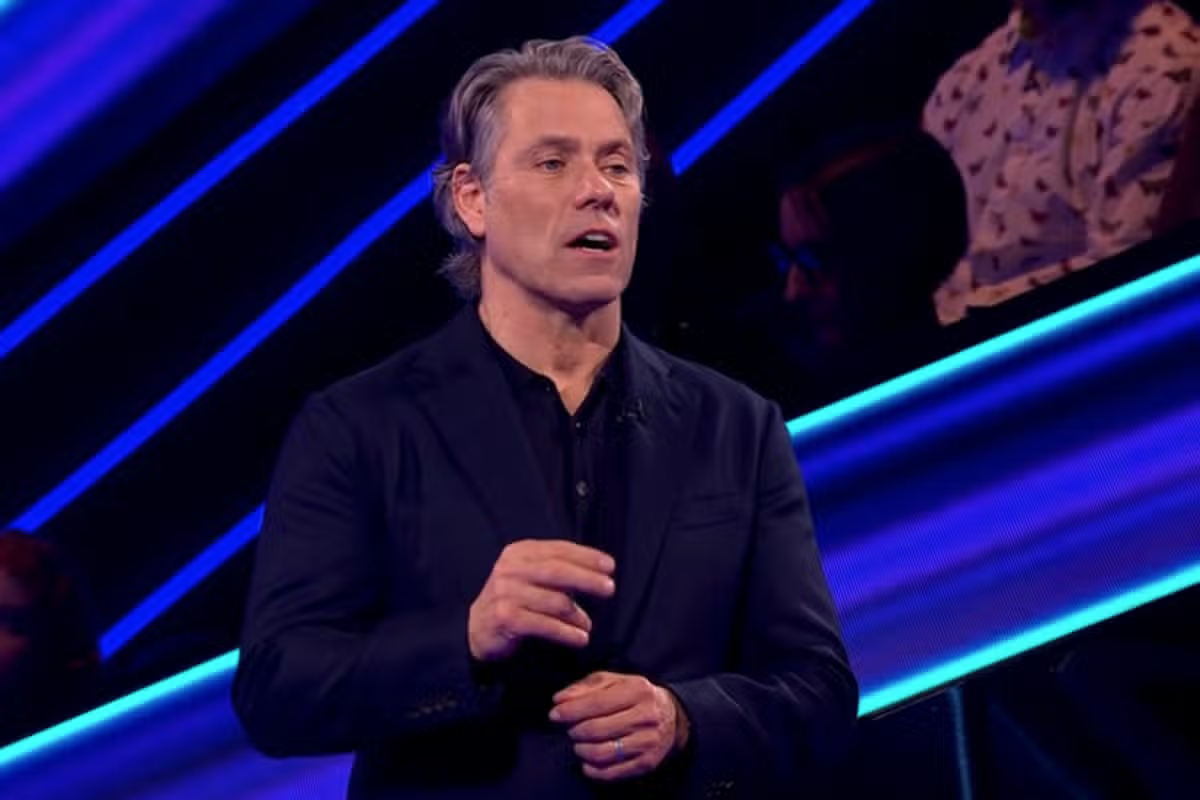
John Bishop Wisdom of the Crowd mades its debut over the weekend and some BBC viewers were left turning off the gameshow

Wisdom of the Crowd made its debut on BBC One over the weekend(Image: BBC)
BBC’s Wisdom of the Crowd has left fans divided after just one episode.
The new gameshow, hosted by comedian John Bishop, kicked off on Saturday (September 19) night and is inspired by a remarkable scientific discovery.
Over 100 years ago, a scientist called Francis Galton visited a farmers’ fair where a competition was being held to guess the weight of an ox. Over 800 people entered and the person with the best guess won the ox.
The scientist looked at all the guesses and what he saw blew his mind: The average guess of everyone put together was so accurate that it was even better than the best individual guess.
He called his discovery The Wisdom of the Crowd and the theory transformed the worlds of politics, economics and philosophy and now this science is about to be put to its use as a new big-money Saturday night game show.
In each show, individual contestants get three chances to beat the Wisdom of the Crowd. The whole studio is asked a question and if the contestant’s guess is better than the average guess of the Crowd then they win £10,000.
If the Crowd win, then the contestant gets another chance. If the contestant doesn’t manage to beat the Crowd on their third attempt, they’re out of the game and leave with nothing.
The £10,000 is then put in the CROWD FUND and, at the end of the show, everything left in that CROWD FUND will be shared equally by the Crowd which gives the contestants in a dilemma.
Before they’re knocked out, they can give in, forfeit the £10,000 and take a seat in the Crowd in the hope of taking a smaller share of the winnings at the end of the show.
The first episode left viewers watching at home divided with some switching off in minutes. Taking to X, formerly known as Twitter, one fan penned: “#WisdomOfTheCrowd I gave up after 20 minutes generally I thought it was boring @BBCOne.”
Another added: “This show’s all over the place, I completely lost the thread of what was happening #WisdomOfTheCrowd.” A third person said: “lasted 3 minutes and changed channels. Pish with a capital P #wisdomofthecrowd.”
However, some viewers enjoyed the programme with someone else writing: “Think #WisdomOfTheCrowd is great. Biggest compliment that it feels like an established show already. Fun & playable.” Another agreed: “I will say that #WisdomOfTheCrowd feels like its been on for years. Loving it.”
Speaking to the BBC about the new show, John previously said: “I like the idea of doing a Saturday night show that all the family can watch. Since I started in television, the landscape has changed quite a bit but one of the things that remains constant is that if you’re ever going to get the family together, it’s on a Saturday night and the format of Wisdom attracted me as an opportunity to do that.
“A lot of the questions took me by surprise because you’re always going to get random answers. If you say to people how many mobile phones does the average person have, you’re always going to get someone say something daft at either end.
“But what struck me was when you’ve got a group of people together how unified the answers were. I think that says that as a nation, we’ve got more in common with each other than we think. We all think in a certain parameter.”
Wisdom Of The Crowd continurs on Saturday, September 26 at 8.45pm on BBC iPlayer and BBC One