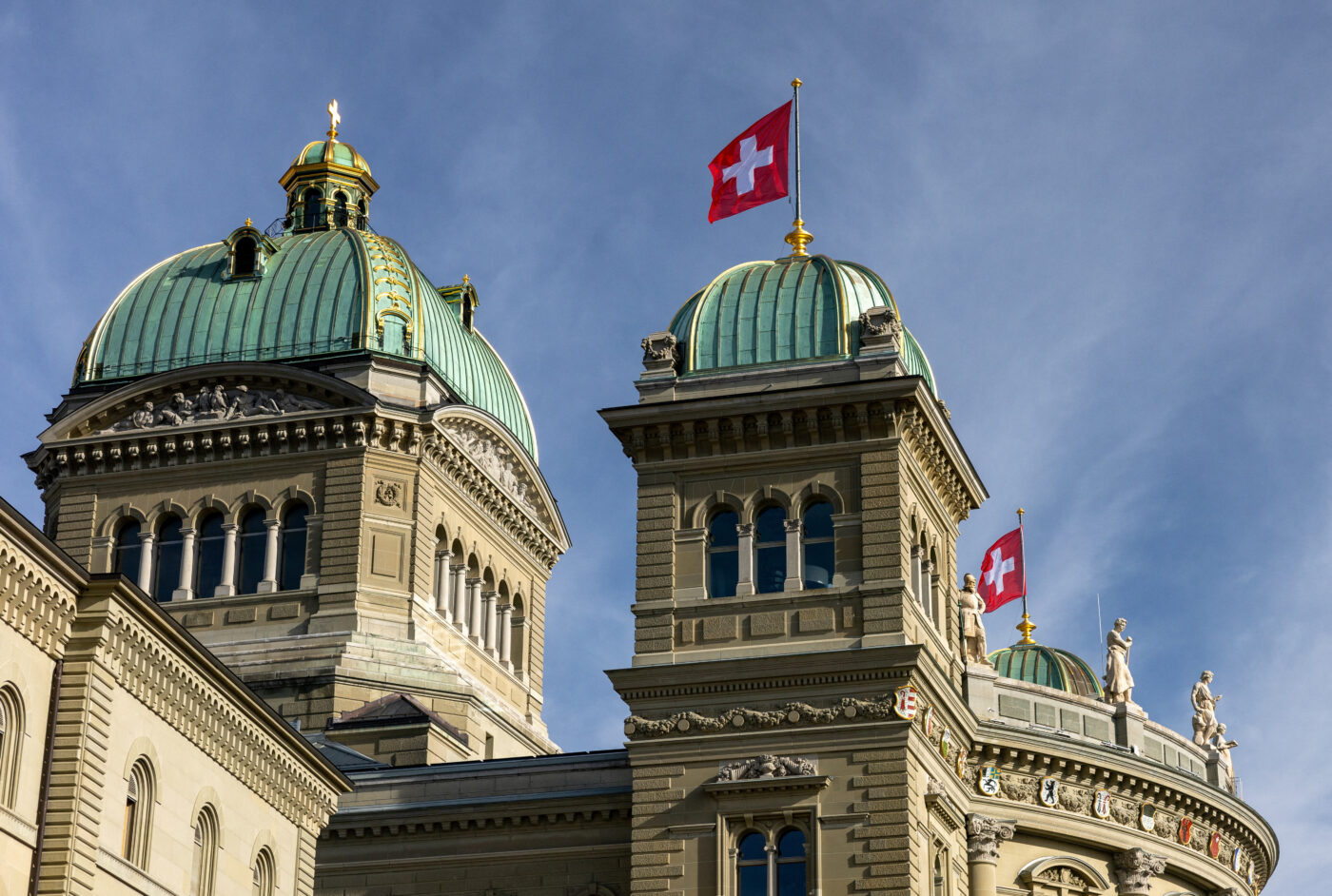
Swiss

Olympic dreams on hold: Swiss bobsledder opens up about cancer fight

World-class athletes, thrilling events, stirring medal ceremonies, I will remember all of those from the Winter Olympics. But what I experienced Sunday on my 45-minute bus ride from my hotel to Cortina will stay with me longer.

There was a young woman sitting across the aisle. She looked to be in her mid-20s, about the age of my daughter, and was wearing a knit cap with a Switzerland logo. Her dark hair was in long, thin braids and framed her friendly face.

“How’s it going?” I asked, setting down my backpack.

“Nervous,” she said with a faint smile.

That started the conversation, one that would have me repeatedly wiping my eyes with my sleeve.

Her name was Michelle Gloor. She’s 25 and from a small town outside of Zurich. Her boyfriend, Cedric Follador, is pilot of the Swiss bobsled team and has races throughout the week. She was heading to watch him practice.

Michelle knows all about the sport. In fact, she had been the brake woman on the Swiss national team and had hoped to be competing in these Olympics herself. She grew up as a track-and-field athlete, a sprinter, and only took up bobsled in 2022.

Women’s bobsled — or bobsleigh, as Europeans call it — is a two-person operation with a pilot in front and brake woman in back.

“The first responsibility is pushing the sled as fast as I can, together with my pilot,” she said in a German accent and near-flawless English. “I have to sit still and count the curves until we reach the finish line, when I have to pull the brakes. I’m responsible that the sled won’t crash into something.”

Her best friend had made the transition from track to bobsled, was looking for a brake woman, and convinced Michelle to give it a try.

“My first bobsleigh ride was in St. Moritz and I was so nervous,” said Gloor, a third-year law student at the University of Zurich. “I think I was crying in the back of the sled because I’d never felt anything like that, all the G-forces and you don’t have any cushion in the sled. It all hurts.

“But after the second run, I felt the adrenaline and it was great. It caught me from then. It took me two runs.”

She was 22 and the future was bright. They entered the Swiss championships and won. Michelle got serious about her new sport, training every day, eating right, building muscle.

Immersed in that world, she met Cedric but for the first 1½ years they were just casual friends. Their conversations were all bobsled-related.

“Then in spring 2024 he texted me and asked, ‘How are you?’” she said. “More personal stuff.”

They had been dating for about six months when a discovery would dramatically change their lives.

In November 2024, during a routine check-up, a gynecologist found evidence of cancer in Michelle’s ovaries. If there were signs she was ill, Michelle hadn’t noticed them. She had been tired the prior summer, yes, but she attributed that to her training.

“It was pretty advanced,” she said of the cancer. “I went to the women’s doctor every year and they couldn’t explain why they couldn’t see it earlier. I don’t know. I’m not questioning that anymore. It’s just … yeah.”

There was no time to wait. By December, she was in surgery. Doctors opened her abdomen from her breast bone down, looking for more growths. They deemed the operation a success, and six months of chemotherapy began in February.

“I lost my hair,” she said. “I had long, black hair. Losing that wasn’t bad. But I lost the hair on my face — my eyebrows, my eyelashes — that was hard. But I always knew it just had to be.”

Her doctor told her her cancer was Stage 3.

“That means it’s on the other organs too,” she said. “But the difference between Stage 3 and Stage 4 is it’s not in my lungs. It’s in my tummy area but not more upwards.”

“Women or even men my age, you live in your world, you are following your dreams. And you don’t think about something happening in your life.”

— Michelle Gloor, on being diagnosed with cancer at a young age

Cedric was by her side.

“I asked him after the diagnosis if he wants to join me in this journey or not,” she said. “I can understand if he won’t because we were together not even half a year, and I can understand if he said, ‘Hey, it’s too much for me. I can’t do that.’

“Then he took time for himself, and he came back and said he wants to stay with me. He wants to support me in every imaginable way.

“He drove me to therapy when he was in town because he had a bobsleigh season going on from November until March, in my toughest time. Every time he was home, he was there for me. When he wasn’t there, we were phoning every day. He was there all the time, even when he wasn’t there physically.”

Her parents and younger brother were there for her too, of course, but she wanted to give them some time to themselves. Cedric was her rock.

There are elements in his job as a driver that both help him in his sport, and her in her disease.

“As a driver, you really need to focus on what’s going on straight ahead of you,” she explained. “You can’t really switch away your thoughts. You have one minute of full concentration. I think you can compare it to Formula One because you only see the next curve in front of you.

“He’s very calm and I think that helps him in a sporting way to not overreact emotionally and stuff like that. But also for me as a partner, I’m very emotional. When I’m too excited or too sad or too angry, he can calm me down to a normal level. On a stress-less level, and to be stress-free is very important for someone who has cancer.”

Switzerland's Cedric Follador, right, and Luca Rolli compete in two-man bobsled at the Milan-Cortina Olympics on Monday.

Switzerland’s Cedric Follador, right, and Luca Rolli compete in two-man bobsled at the Milan-Cortina Olympics on Monday.

(Richard Heathcote / Getty Images)

Michelle, petite and pale, has lost about 40 pounds over the past year. Mostly muscle.

“I was avoiding sugar in the beginning of the illness,” she said. “You read so much stuff. But after losing so much weight, doctors told me just eat what you want to eat. Because having energy is more important than eating too much sugar.”

In August, doctors discovered more cancer in her. Another surgery to open her abdomen.

“They said it’s still there,” she said. “Those microcells which they couldn’t remove because they couldn’t see them, they grew. But once all those microcells have grown up and been removed, or have been killed by therapy and medication, there won’t be any new cells because the ovaries have been removed, so they don’t produce any more.”

She tries not to Google her illness anymore. It doesn’t help her frame of mind. She’s changed in other ways, too.

“I was a very direct person before my illness,” she said. “Now I’m even more direct and straight-forward. I say no, and I don’t explain myself. If I don’t want to do something, I don’t have to. I just say no.

“Before that, I had a bad feeling about myself and explained myself just because I say no. I don’t do that anymore.”

In December, she began radiation. She has another scan after the Olympics.

There are times she just can’t believe this is happening.

“Women or even men my age, you live in your world, you are following your dreams,” she said. “And you don’t think about something happening in your life. I only know young people in Switzerland, so I can only speak for them. But they don’t talk about that.

“They are not sensible about what can happen, and that’s why it’s important for me to speak out about it. For example, with a women’s doctor, you have to go. It can happen to anyone.

“I’m a young woman. I do sports since I’m 10 years old. I don’t drink alcohol. I don’t smoke. But it still can happen.”

Her illness has shined a spotlight on her friendships. Lots of her old friends showed concern at first, then went on with their lives. A handful checked in on her frequently. Some are new.

“I got in touch with a woman during chemotherapy, she was there too,” Michelle said. “She has breast cancer. She saw my cross necklace, and we were talking about faith and how it helped in those hard times.

“We are still in contact now. We are writing letters to each other. We’re not texting or phoning, just writing letters and sending postcards. She’s as old as my mom, but it’s very cool to have someone with almost the same story.”

How will that story end? Michelle has her hopes, this fearless young woman who took to bobsledding on her second time down the track.

“My goal is to be in the Olympics in four years,” she said. “I’ll be 29 by then. The age is still good — even better than now for a bobsleigh athlete. And I have a great team. My bobsleigh pilot is very supportive and she said she always has a place for me in the sled.”

This week, Michelle is supporting Cedric — just a sliver, she said, of the way he has supported her. They got engaged in December. It happened at sunset in his little hometown in the Swiss Alps.

“He was talking about himself and us, and then he proposed to me,” she said. “I said yes. Of course.”


Source link

Slow train to Turin: a winter journey through the Swiss Alps to Italy | Turin holidays

Is there a better sensation for a traveller than when a train speeds out of a tunnel? The sudden flood of light, that howling rush of air. Clearly, it’s not just me who thinks trains are the new (old) planes, with 2025 having seen a 7% rise in UK train travel, and more Europeans than ever looking to hit the rails.

It’s late December, and I’m heading out on a slow-train journey across the historic railways of the Swiss Alps and the Italian lakes. It’s a trip of roughly 1,800 miles (2,900km), crossing five countries, almost entirely by scenic daytime trains.

What is clear from the off is how easy, and slightly disorientating, this type of train travel can be: drifting through stations, across platforms and over borders, it’s hard to believe we’ve hit three countries in less than a day – the UK, France and Switzerland – such is the ease of each passport stop. Gone are the sweaty finger scans of airport border control, replaced by the most polite immigration police I’ve ever encountered. “You’ve travelled a lot,” one says, with a wry smile and a German shepherd, to which I reply “legally”, just to cover my back.

Jonnie Bayfield took the spectacular Gotthard route. Photograph: Jakub Korczyk/Alamy

Outside, the French countryside soon blurs into Swiss hills, all behind a thin veil of white, wintry light. The fields, with their clumps of bare trees, seem suspended in mid-freeze, as though bracing for the full blast to come. As we roll into Zurich, we catch our first glimpse of the milky Alpine peaks.

This is the thrill of train trips: the steadily shifting scenes, the rise and fall of the landscape, leavened like fresh bread. Next morning, we’re greeted with crisp blue skies for our mountain ascent via one of Europe’s most historic train routes, the Matterhorn Gotthard railway. The original line opened in 1882 and was the railroad that changed Europe, slicing a path through inhospitable mountains and isolated villages.

We catch one of the historic trains (the IR46) – keen to avoid anything routed through the Gotthard base tunnel, which bypasses the beauty. In summer, a tourist train – with bigger windows and a bigger price tag – takes the exact same route, famously depicted by JMW Turner and described in awed terms by Goethe. “Here,” he wrote, “it is necessary to submit to nature.” Though it’s the cafe car selling Swiss coffee at eye-watering prices that forces me to revise Goethe: here, it is necessary to submit to inflation.

JMW Turner’s painting of the Devil’s Bridge, St Gotthard Pass. Photograph: Alamy

Phones duly on charge (as is slow-train travel etiquette), we sit back and gawp out of the window for three hours, eating Swiss truffles as the tracks snake the mythic Alps via the famous Gotthard “spirals” – corkscrew tracks built inside the mountains for a steady ascent. It’s the stuff of oil paintings all right – vertiginous gorges, frothing rivers and snow-capped peaks.

At Göschenen, we opt for a lunch stop via a short, even steeper rack-and-pinion route high into the former garrison town of Andermatt, now reinvented as a chic ski retreat. Up here, the snow is thick. Between that and the dark Alpine stone, it’s as though we’ve stepped out into a monochrome photograph. A comforting lunch at the excellent Biselli, along with several glasses of Swiss Ticino red (liquid lunch being another perk of slow-train travel) takes the edge off a dense mist that has crept over the rest of the day’s rail route. Thankfully, Italy soon pushes back, with clear skies and terracotta valley towns, and – just like that – another border is crossed, bringing with it a welcome drop in the cost of a cappuccino (from €5 to €2), enjoyed while skimming the edge of the ice-blue Lake Lugano.

By dusk, we’re at Lake Como. Bags dropped, we catch the last of the light with an easy passeggiata (stroll) round the perimeter of the famous lake, mercifully lacking its high-season crowds. Ornate street lamps line the water’s edge like washed-up pearls and, in the distance, the funicular up to the hillside town of Brunate shines with a string of golden lights that dangle down the slope like lost jewellery. It’s hard to imagine Como any other way.

Next morning, having got into the swing of slow-train transience, we pack up in record time and take coffee at the station. For our final stop, we’re heading in the direction of a much-needed metropolis. Ditching Milan – Italy’s least interesting city – we roll into Turin, one of its most underappreciated.

Stepping off the rickety regional train at Torino Porta Susa, what we find is a vibrant, easygoing student city that appears contentedly trapped in some kind of temporal ragu; a place where 1920s art deco neon signs cling to 18th-century baroque buildings that house vintage shops run by students dressed as if they are in the 1990s.

Miraculously, all this gels, and the student cohort rub along just fine with their more conservative elders, united beneath the impressive porticos that run, unbroken, for more than 18km and are lined with boutiques and historic coffee bars. We round out our first night with an aperitivo at the classic art-school haunt Caffè Università, with its frayed edges and charmingly outmoded daily buffet.

Next morning, Turin’s enviable portfolio of museums and galleries beckon, most free to enter with the Torino card. Here, the time-warp vibes continue within the soaring spire of the 19th-century Mole Antonelliana, now housing the superb Museo Nazionale del Cinema – surely, the only neoclassical building that’s home to an xenomorph egg from the film Alien? Likewise, another repurposed building, the Lingotto complex, boasts an even more outlandish upcycle: the famous Fiat test track on its roof has been reimagined as La Pista 500, a panoramic garden walk, where art installations live alongside the historic skidmarks. Proof that Turin is not interested in simply preserving history, but also evolving.

The cupola and spire of the Mole Antonelliana in Turin. Photograph: Steve Tulley/Alamy

With a chill in the air, we duck in for a perfect meal at the unassuming yet excellent Osteria Rabezzana, part of the Mangébin circuit that promotes Piedmontese cuisine. The brasato al barolo (beef braised in barolo wine) and local agnolotti del plin (beef- and cabbagestuffed pasta) are excellent. This family-run restaurant and winery opened just after the second world war, and judging by the convivial atmosphere – full of local people on office festive outings – it has served the city well ever since.

Next morning, we are up and out to catch the 7.36 TGV all the way back to Paris. Drifting in and out of sleep, we take in a last glimpse of the Italian Alps. By the time we reach our Parisian pit stop, day is folding in on itself, and soon enough, we’re slumped back on the Eurostar, flanked by bags of clinking wine bottles cushioned by crushed panettone. Homebound and heady, we reluctantly plunge back into the black of the Channel tunnel, leaving all that light behind us.

Transport was provided by Interrail; passes allowing seven days of travel within one month are £255 youths, £339 adults, £305 seniors (under-12s travel free). Return Eurostar from London to Paris starts from £78. Accommodation was provided by The Home Hotel Zurich (from £165B&B), Hilton Lake Como (from €270 B&B), NH Collection Torino Piazza Carlina (from £203 B&B) and 25hours Terminus Nord in Paris (from €179 room-only ).


Source link

Death toll from Swiss New Year Alpine bar fire increases to 41 | Police News

The latest victim succumbing to injuries was an 18-year-old Swiss national.

A teenager injured in the fire that engulfed a Swiss Alpine bar during New Year celebrations has died in hospital, according to Swiss authorities, increasing the death toll of one of the worst disasters in the country’s modern history to 41.

Saturday’s death was announced a month after the inferno at the ski resort of Crans-Montana. Another 115 were injured, most of whom remain in various hospitals.

Recommended Stories

list of 3 itemsend of list

“An 18-year-old Swiss national died at a hospital in Zurich on January 31,” the Wallis canton’s public prosecutor Beatrice Pilloud said in a brief statement.

“The death toll from the fire at Le Constellation bar on January 1, 2026 has now risen to 41.”

Pilloud said no further information would be released at this stage by her office, which is investigating the incident.

Those killed in the disaster were aged 14 to 39, but the majority were teenagers. Only four were aged over 24.

Among the dead are 23 Swiss nationals, including one French-Swiss dual national, and 18 foreigners.

Public prosecutors believe the fire started when revellers raised champagne bottles with sparklers attached too close to sound insulation foam on the ceiling of the bar’s basement.

Authorities are looking into whether the foam conformed to regulations and whether the candles were permitted for use in the bar. They say fire safety inspections had not been carried out since 2019.

Swiss prosecutors have opened a criminal investigation into the owners – French couple Jacques and Jessica Moretti – on suspicion of negligent homicide, negligent bodily harm and causing a fire by negligence.

The court of compulsory measures in the southwestern Valais region on January 12 ordered three months of pretrial detention for Jacques Moretti, but on January 23 ordered his release on bail.

The Crans-Montana municipality’s current head of public safety and a former Crans-Montana fire safety officer are also under criminal investigation.

Following the fire, seriously wounded patients were airlifted to various hospitals and specialist burns units throughout Switzerland and four other European countries.

Switzerland’s Federal Office for Civil Protection told the AFP news agency on Friday that at its last count, as of Monday, 44 patients were being treated abroad.

The Wallis health ministry told AFP that 37 patients were still in Swiss hospitals, as of Monday.

The picture is constantly changing, with patients moving between hospitals for different stages of their treatment, and some patients being readmitted. Some remain in intensive care.

The fire has tested relations with neighbouring Italy, which lost nationals in the blaze and has protested the release on bail of the bar’s owner.

Swiss authorities earlier this week said they would grant the Rome Public Prosecutor’s Office access to evidence gathered.

Source link