Sur

Mexico has chance to test more of roster in group stage finale

With first place in Group A secured after two wins in two matches, the Mexican national team heads into its final group stage match against Czechia on Wednesday at 6 p.m. on Fox and Telemundo without pressure and is preparing to play some of its reserves.

The situation is quite different for Czechia, which has just one point after losing 2-1 to South Korea and drawing 1-1 with South Africa. The European team needs a win against Mexico at Azteca Stadium in Mexico City to advance to the next round — either as the group runner-up or as one of the best third-place finishers.

“The Czechs are incredibly tough; they’re a very physically demanding team,” Mexico coach Javier Aguirre said. “We watched them in their two matches against their group opponents, and it’s not going to be easy.”

Aguirre will have to strategize with an eye toward what lies ahead in the next round, which is a single-elimination format. Mexican American midfielder Brian Gutiérrez enters this final group stage match with an accumulated yellow card, so Aguirre likely will not play him to avoid risking suspension for the round of 32 game. FIFA rules clear all cards after the group stage ends.

The match could mark the return of César Montes, who was sent off against South Africa and missed the South Korea game.Goalkeeper Guillermo “Memo” Ochoa, in his sixth World Cup, could see some playing time as a sort of tribute to his career, but Raúl Rangel had an extraordinary performance against South Korea, so it remains to be seen whether Ochoa will get playing time.

“Obviously, it would be something extraordinary; it would be really cool for Memo. He’s a legend in Mexico and on the national team. He’s always been a player willing to give his all for the national team,” Mexico forward Alexis Vega said. “In the end, I think [Aguirre] will make the decision. I believe that all 26 of us here will give it our all if given the opportunity. Whoever gets the chance will do their best.”

Erik Lira, Johan Vásquez, Jesús Gallardo and Roberto Alvarado are the Mexican players who have covered the most ground for the national team in both matches, making them candidates for rest. Gallardo has a strong replacement available in young AZ Alkmaar player Mateo Chávez.

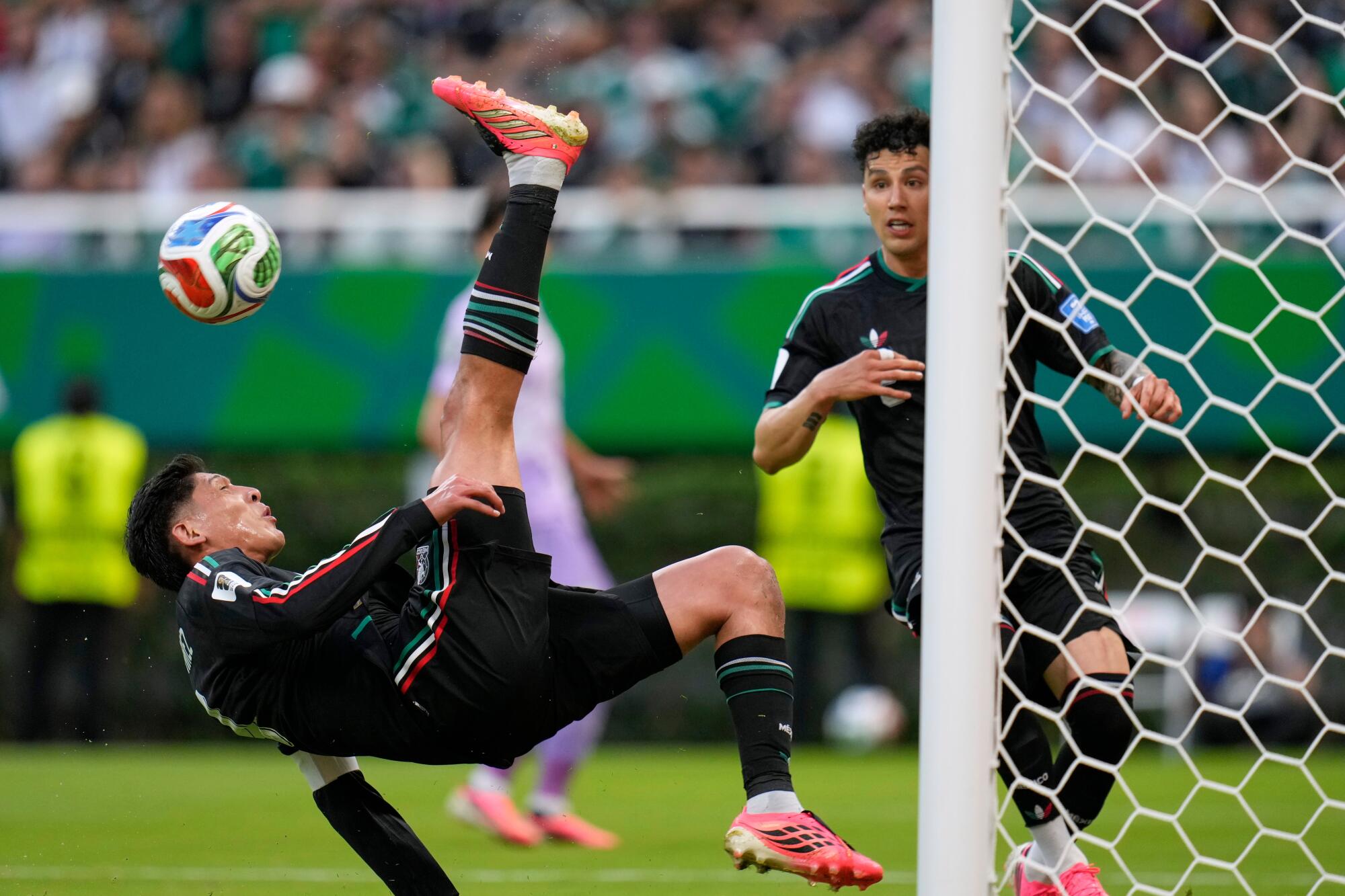
Mexico's Edson Álvarez clears the ball away from the goal during the first half against South Korea at the World Cup.

Mexico’s Edson Álvarez clears the ball away from the goal during the first half against South Korea during a World Cup match.

(Ricardo Mazalan / Ap Photo/ricardo Mazalan)

Edson Álvarez, who had a strong performance against South Korea, is likely to start again.

Another player who could see action is Santi Giménez, the AC Milan forward, who has been recovering from an injury and played only 10 minutes against South Korea. Gilberto Mora, Mexico’s youngest World Cup player at age 17, could start the game.

“We have to treat the game against [Czechia] like a final. We know [Czechia] needs this win, but we’re preparing ourselves. Getting used to winning goes a long way,” Giménez said in an interview on Wednesday with TV Azteca.

Mexico does not yet know its opponent in the next round, which will be one of the best third-place finishers. Its opponent will not be determined until the eight best third-place teams that advance to the round of 32 are identified.

On the Czech side, coach Miroslav Koubek favors a disciplined and physical approach, with Patrik Schick and Adam Hložek leading the counterattack that will seek to capitalize on any Mexico mistakes.

“We know that Mexico is one of the best teams in our group, and it will be tough for us on their home turf. But we believe we can get a good result and finish the group stage on a high note,” said Michal Sadilek, a midfielder for the Czech team.

Since Czechia needs a win to advance, that suggests the team will attack more aggressively, which will be dangerous for the Mexico defense but will also leave more space for the home team to exploit the counterattack. Czechia has shown this World Cup it is particularly dangerous on set pieces.

Fellow Group A teams South Korea and South Africa will face off at the same time as the Mexico-Czechia match — 6 p.m. Thursday — in Monterrey. The South Koreans, with three points, are looking to secure second place and a round-of-32 game at SoFi Stadium, while South Africa needs a win to compete for a spot as the second-place finisher or a berth among the best third-place teams. A South Korean loss combined with a Czech victory over Mexico would knock LAFC’s Son Heung-min and his South Korea teammates out of the tournament.
Source link

Mexico coach Javier Aguirre answers critics by advancing

Before the World Cup, critics and fans of the Mexican national team debated whether Javier Aguirre’s third stint as head coach was the right decision. Two games later, the coach has led Mexico to the tournament’s knockout round.

Thursday’s 1-0 victory over South Korea at Guadalajara Stadium made the World Cup co-host the first in the tournament to advance while also clinching the top spot in Group A with one group play game remaining. After South Korea’s goalkeeper fumbled a ball, Luis Romo scored the goal that gave the Mexicans six points and pushed them to the top of the standings.

El Tri will close out the first round against Czechia (6 p.m.) at Azteca Stadium on Wednesday.

During his post-match news conference, Aguirre spoke less about the result and more about the journey that led him to this moment. At 67 and having coached Mexico in three World Cups, he explained that his experience allowed him to approach a match he described as eminently tactical.

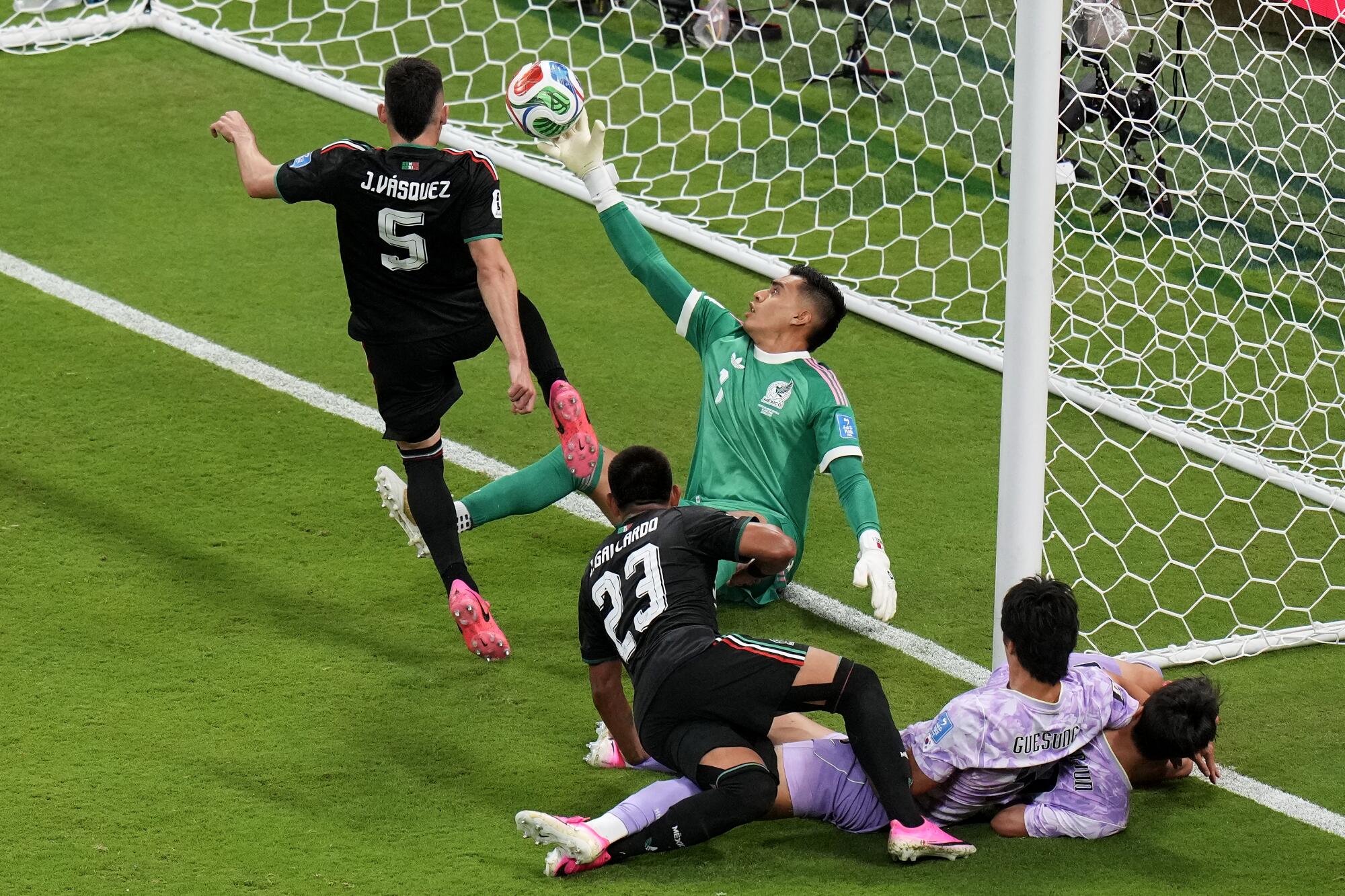
Mexico goalkeeper Raul Rangel reaches back to stop the ball from entering his goal during his team's 1-0 World Cup win.

Mexico goalkeeper Raul Rangel reaches back to stop the ball from entering his goal during his team’s 1-0 World Cup win over South Korea Thursday.

(Silvia Izquierdo / Associated Press)

“I’ve always tried to get my team to play well and to help the players and the national team develop,” Aguirre said.

For the coach, advancing to the knockout round represents the culmination of more than three decades of work on the sidelines and the support of a group of players who rose to the occasion under the most demanding circumstances.

The coach also acknowledged that advancing to the next round has eased the tension surrounding the team after the doubts that existed before the World Cup. Without mentioning personal vindication, he noted that soccer tends to judge solely based on the most recent result.

“If you win, you’re the best; if you lose, you’re the worst,” Aguirre said.

Aguirre said he remains calm because he believes his approach to coaching hasn’t changed and that the team was rewarded Thursday night against South Korea in a match marked by limited space and a high degree of tactical discipline.

With qualification secured, Aguirre said he will not alter his soccer philosophy during Mexico’s final group stage match even though it no longer faces the pressure of securing a spot in the next round.

He said Czechia will enter the game with a different competitive need and a drive to advance, while Mexico will work to maintain a high level of performance that allowed it to record two consecutive wins and keep two clean sheets at the start of the tournament.

On the South Korean side, coach Hong Myung-bo avoided making excuses and focused his analysis on the play that decided the match. Although he explained that he had not yet reviewed the goal sequence in detail, he knew the team made a series of small errors in an area of the field where he had previously warned that losing possession could prove decisive.

Mexico goalkeeper Raul Rangel blocks a shot by South Korea's Son Heung-min during the World Cup match on Thursday.

Mexico goalkeeper Raul Rangel blocks a shot by South Korea’s Son Heung-min during the World Cup match on Thursday.

(Natacha Pisarenko / Associated Press)

The coach said that one of the central focuses of their preparation had been avoiding turnovers near South Korea’s box in the face of Mexico’s high press.

Myung-bo said that during the pre-match talk, he emphasized that the first 20 minutes would be crucial and believed his players had executed that part of the plan. He said that as the minutes passed, South Korea managed to create chances and was gaining strength until its critical turnover.

“After the momentum of the match shifted in our favor … both in terms of overall pressure and the play itself, we were able to create many opportunities,” Myung-bo said. “Although it ended up being a very frustrating match and we’re left with a bitter taste in our mouths over the lost possession, there’s no time to dwell on it. We have one last match ahead of us, so we’ll prepare well.”

Source link

With Highway 1 open, Big Sur braces for its busiest summer in years

On a 75-mile cliff-hugging stretch of highway in California, traffic is way up, despite soaring gas prices. And locals expect the busiest summer in years.

The road is Highway 1 in Big Sur, which reopened in January after three years of repair and reconstruction following a pair of landslides. Drivers can once again embark on the state’s most famous road trip, covering the 100 miles between Cambria to the south and Carmel to the north without leaving the two-lane coastal highway. And they’re heading out in big numbers.

Caltrans estimates that as of May, Big Sur restaurant and retailer guest counts are up 40% from last year, and that northbound traffic at Ragged Point, the southern gateway to Big Sur, has risen 900% year-over-year.

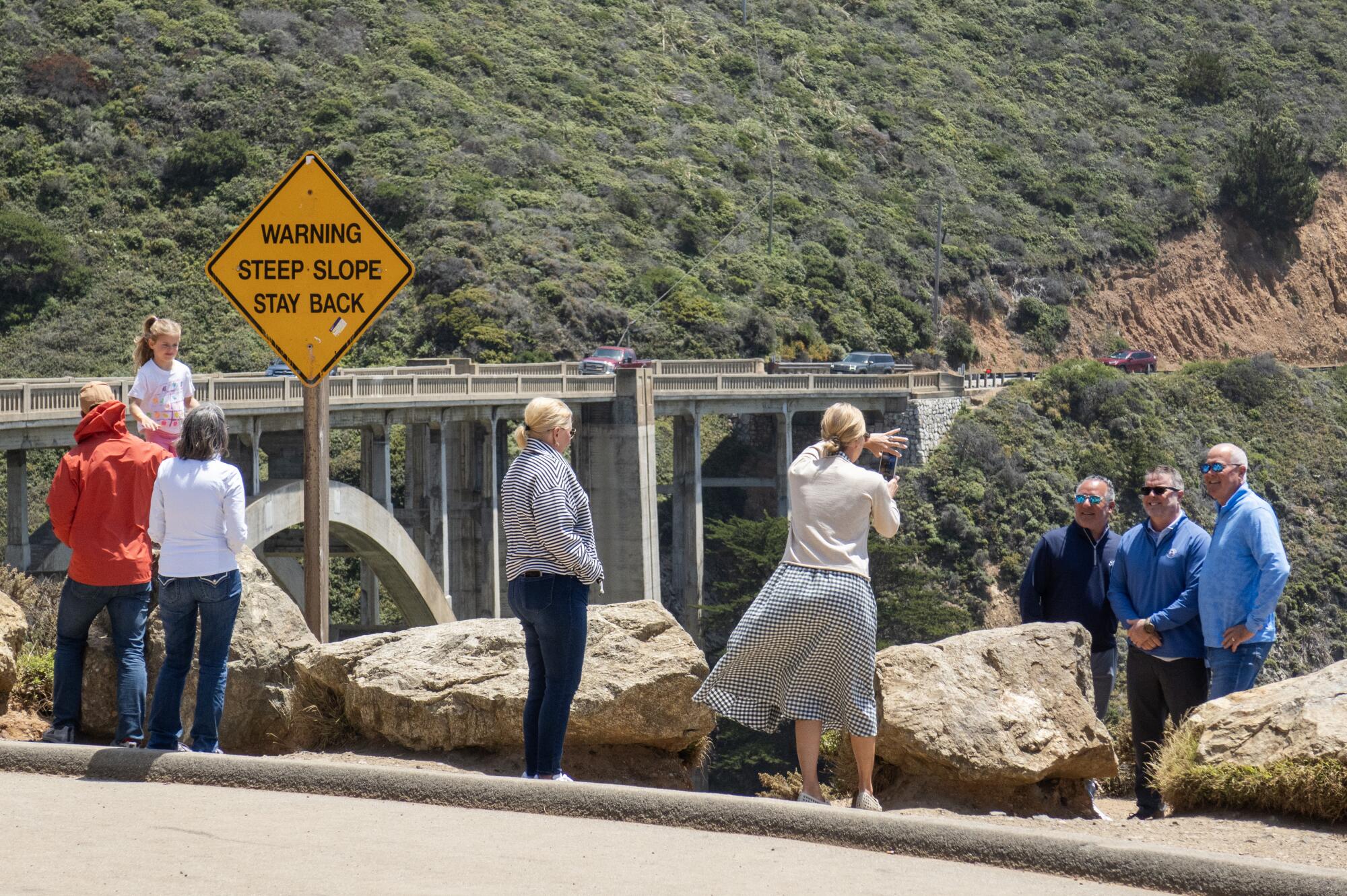
People pose for photos near Bixby Bridge.

People pose for photos near Bixby Bridge. Monterey County’s Board of Supervisors voted to explore a 12-month ban on parking around the bridge.

Safety cones prevent parking along Coast Road near the Bixby Bridge.

Safety cones prevent parking along Coast Road near the Bixby Bridge.

“Take your time,” said Kirk Gafill, co-owner of the popular Nepenthe restaurant and president of the Big Sur Chamber of Commerce, offering advice to travelers. “You’re going to be sharing the road with a number of people.”

As travelers rediscover the road, the cost of driving has been shooting skyward. California’s average gas price ($6.11 per gallon as of May 26) is up 26% from the year before. In early April, rates hit $9.99 at the isolated gas station in the Big Sur community of Gorda.

For spring and summer travelers, these numbers would seem to pose a stark question: Stay home and save money, or head for the coast because the road is finally open and it’s still cheaper than flying?

So far, the latter answer is winning big.

Fog lingers off the coast of Highway 1.

Fog lingers off the coast of Highway 1.

“We are definitely seeing a huge uptick in our reservations,” said Megan Handy, assistant general manager at the upscale Treebones resort. She estimated that bookings are 30% or more ahead of last year, and rates are unchanged since then. But “it’s still not feeling super crowded, which is nice. Everything still feels kind of calm.”

But added traffic has raised some anxiety. On May 19, Monterey County’s Board of Supervisors voted to explore a 12-month ban on parking at Bixby Bridge, one of the region’s top photo spots.

Over the years, the number of cars parking near the bridge — often illegally, sometimes impeding emergency vehicles — has risen. The proposed parking moratorium won’t take effect until the supervisors discuss it further.

  • Share via

Busy as things are, several business owners pointed out that many international travelers have not yet returned — perhaps because most make their plans more than six months ahead, perhaps because of global politics, perhaps a little of each.

The biggest challenge for businesses during this resurgence? “Restaffing and retaining,” said Handy at Treetops.

At Nepenthe, Gafill said his business has seen a 45% boost in guest volume since the road’s reopening. Gafill said he would have expected a 35% pickup, “simply by virtue of reopening the highway.” The additional 10%, he said, might be “all that pent-up demand,” aided by “a very beautiful and very dry winter,” followed by a mild spring.

A lunch crowd dines at popular restaurant Nepenthe.

A lunch crowd dines at popular restaurant Nepenthe.

Another possible factor: Nobody can be sure how long the road will remain open.

To cope with the influx of people, Gafill said, “everybody is trying to recruit and retain their existing staff.”

At the Ragged Point Inn, where rates dropped as low as $149 nightly last fall, rates are back over $200 and staffers are suggesting that customers book at least six months ahead. The inn has reopened its snack bar for the first time since early 2023, and management is investing in capital upgrades and staging live music on weekends throughout the summer.

Business “is up over 100%,” said Diane Ramey, whose family owns the inn. “I know not all of our neighbors are having the same lift, but everybody is doing better.”

Traffic approaching Bixby Bridge.

A visitor poses in an oversized chair at Big Sur River Inn.

A visitor poses in an oversized chair at Big Sur River Inn.

Even at the New Camaldoli Hermitage, a Benedictine monastery above Lucia, the road’s reopening and coming summer season have made a difference. Bookings are up an estimated 30% at the hermitage, which rent rooms and cottages (for two nights or more) to visitors who agree to its requirement of silence.

Big Sur business owners advise visitors to travel on weekdays for less traffic and the best hotel rates, and to get on the road as early as possible.

Since its opening in 1937, the highway has been vulnerable to landslides and shifting ground, operating on a longstanding cycle of landslide, closure, repair, reopening and then another landslide, or sometimes a fire. The U.S. Geological Survey has identified the Big Sur coastline as one of the most landslide-prone areas in the western United States. The 2023-2026 closure was the longest in the highway’s history.

Over time, road crews have used increasingly sophisticated strategies. In the most recent efforts, Caltrans said, it used drones to help survey the slopes and remotely operated bulldozers and excavators to reduce risks to workers.

During the closure, no traffic was allowed on 6.8-mile span from just north of Lucia until about a mile south of the Esalen Institute. Drivers detoured inland by way of U.S. 101.

Source link