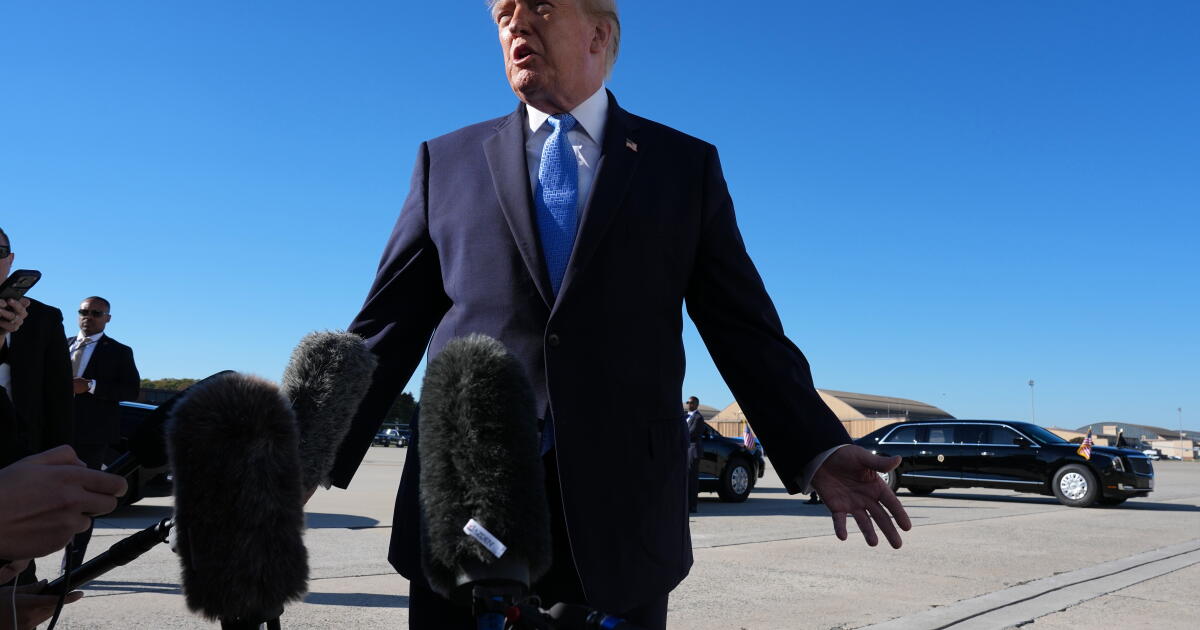
WASHINGTON — President Trump offered $1 million Monday to anyone who reports voter fraud that leads to an arrest and conviction, escalating his efforts to cast doubt on the midterms as Republicans risk losing control of Congress.
“Anybody reporting Voter Fraud in the past Elections, or the upcoming 2026 Midterm Election, will be paid $1,000,000 upon the arrest and conviction of those that created the Fraud!” Trump posted on Truth Social.
Trump did not say how the tips should be submitted to the federal government or who would decide whether a claim qualifies for a reward. The White House declined to comment beyond Trump’s social media post.
Last week, the administration launched a separate program that is meant to pay people for providing information to the administration to combat fraud. When announcing it, Trump said he would personally decide who gets paid.
“I will be the arbitrator of all of these decisions,” Trump told reporters in the Oval Office. “In other words, I’ll determine whether or not the person is deserving, and I’ll determine, and I will be very generous.”
It is unclear whether Trump, who has spread false claims about the nation’s voting systems and routinely questions the integrity of the elections, intends to play a similar role over the voter fraud tipping system.
In the lead up to the midterms, Trump has tried to assert more control over the elections, calling on Republicans to “nationalize” voting and pushing for restrictions on mail-in ballots. Trump has also cast doubt over the integrity of California’s primary election, claiming without evidence that Democrat cheated — an allegation that was investigated by the U.S. attorney’s office in Los Angeles, which is run by a Trump loyalist.
Even as Trump says he wants “honesty in our elections,” the president told supporters at the Republican Party convention in Dallas in September to “cheat like hell, like they do.”
Trump’s efforts to cast doubt over voting come as polls show Republicans facing headwinds heading into the Nov. 3 election as Trump’s popularity sags amid voter concerns over the economy.
More than $351 million in political donations has been poured into a high-stakes contest about a proposed wealth tax on the November ballot, making it one of the most costly campaigns in California history.
About 90% of the money is being spent to defeat a statewide initiative to impose a new tax on the assets of billionaires, a multifaceted opposition effort bankrolled primarily by ultra-rich Californians being targeted by a measure that supporters call an economic reckoning.
The billionaire tax, Proposition 40, would levy a one-time, 5% tax on many assets of California billionaires who lived in the state as of Jan. 1.
Millions of dollars continue to flow into the campaigns of three intertwined ballot initiatives at the center of the debate: Proposition 40, and Propositions 41 and Proposition 42, which would neuter the Proposition 40 through strategic, esoteric tax law changes.
“The pro-40 campaign picked a fight and then came to that fight with a butter knife against a nuclear arsenal,” said GOP strategist Rob Stutzman, who is not involved in any of the wealth-tax-related ballot measures. “Because they’re so well funded, in today’s multifaceted media world, they are able to show up everywhere from network TV to inside video games. That is a very, very large advantage few campaigns ever get to have.”
But, Stutzman warned, money does not guarantee a win.
In the most expensive ballot measure fights in California history, $463 million was spent on two gambling proposals 2022. The initiatives pitted some of California’s most successful Native American tribes with gaming interests against gambling corporations, including online sports gaming companies DraftKings and FanDuel. Both side’s measure failed.
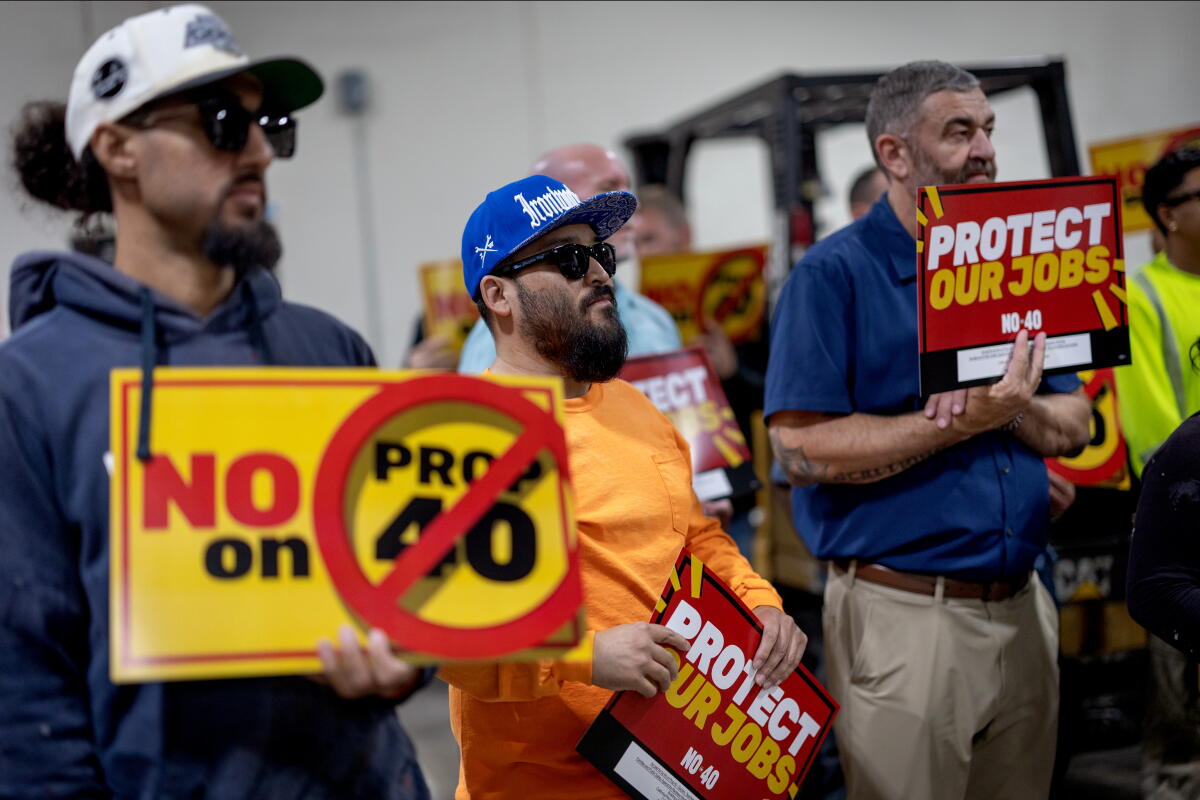
People attend a rally against Proposition 40 at the Iron Workers Apprenticeship Training Center on Oct. 5 in La Palma.
(Eric Thayer/Los Angeles Times)
The tax measure was crafted by Service Employees International Union-United Healthcare Workers West in response to federal healthcare funding cuts signed by President Trump last year that are expected to reduce California’s healthcare budget by $100 billion, burdening the state’s most vulnerable residents.
“Trump’s ‘Big Beautiful Bill’ slashes healthcare funding, with major coverage cuts scheduled to hit after the midterms,” said Suzanne Jimenez, the union’s chief of staff. “More than 3 million Californians could lose their health insurance. Hospitals and emergency rooms face closure. Patients will die unnecessarily when the care they need is no longer there. Proposition 40 is an emergency response to that looming disaster.”
The proposition’s supporters raised $34.3 million, nearly all of it from Jimenez’s union.
The two other measures, Propositions 41 and 42, would nullify the billionaire tax if either receives more votes.
Proposition 41 supporters say the measure aims to cut wasteful government spending by requiring audits for new state special taxes and would bar new state taxes that exempt their revenue from a state spending limit. Backers of Proposition 42 argue it would prohibit new taxes on retirement holdings, individually owned assets and other forms of personal savings.
Advocates for the billionaire tax say both are well-financed smokescreens to undercut Proposition 40.
Opposition campaigns to the wealth tax as well as the two countermeasures have received enormous donations from several of the state’s billionaires. But Building a Better California, the main funder of efforts to defeat the wealth tax, noted that its allies included Democratic and Republican politicians, prominent labor groups and business leaders.
“It’s rare for such a broad coalition to unite around any single cause in California, but it reflects the potentially devastating impact of this measure on healthcare, education, and our state’s economy,” the group said in a statement.
Among the largest donors opposing the wealth tax are billionaires Sergey Brin, a co-founder of Google who has donated more than $100 million to anti-wealth-tax efforts, and former Google leader Eric Schmidt and venture capitalist L. John Doerr, who each kicked in $40 million.
Brin, Schmidt and Doerr did not respond to requests for comment.
US tech entrepreneur Sergey Brin and Gerelyn Gilbert-Soto arrive for the 2026 Met Gala celebrating “Costume Art” at the Metropolitan Museum of Art in New York in May.
(ANGELA WEISS/AFP via Getty Images)
The spending disparity also reflects a divide among Democrats and their allies, many of whom support wealth taxes, but argue that the way Proposition 40 was written is disastrous to California’s volatile budget, which is dependent on the state’s wealthiest residents.
Jodi Hicks, chief executive and president of Planned Parenthood Affiliates of California, said that while her organization would support a nationwide or a California wealth tax, their primary concerns are about 40’s impacts on the state budget and healthcare in the state.
“We are opposed to this particular proposal because we think it does more harm than good,” she said, adding that after what her organization “faced last year having to scramble for dollars because of [federal funding cuts] we are committed to work with the stakeholders facing cuts and not harming the budget and finding revenue in a smart way.”
The cash imbalance between supporters and opponents of the billionaire tax is vast. Those opposed to the measure raised $316.7 million, while proponents raised nearly $34.3 million.
The Fair Games Coalition, made up of community leaders, labor organizations and advocates, announce the launch of the Overpaid CEO Tax Initiative in front of the Tesla Diner in West Hollywood in January.
(Genaro Molina/Los Angeles Times)
The supporters of the wealth tax spent nearly all of their money gathering signatures to place the measure on the ballot. They had $1.6 million on hand as of Oct. 17.
Now, as voters cast ballots, their campaign appears reliant on public events and media coverage, such as of Sen. Bernie Sanders’ (I-Vt.) recent rally in support of Proposition 40 in downtown Los Angeles.
“What you are showing people from coast to coast and all over is that, yes, we can take on the greed of the oligarchs,” he said, calling it the most important ballot measure in the country. “Yes, we can create an economy and a government that works for all of us, not just the 1 percent.”
Facebook creator and Meta chief Mark Zuckerberg was among the California billionaires Sanders name-checked in his remarks. After Zuckerberg told company leaders that he planned to leave the state to avoid his control over the company substantially reduced by being forced to sell enough of his stock in the social media giant to pay the proposed levy, the company on Wednesday announced the creation of a new, non-voting type of stock that would allow Zuckerberg to sell enough shares to pay the proposed tax while retaining his voting power in exchange for him agreeing to remain in the state for eight years.
Meta CEO Mark Zuckerberg listens as President Trump speaks to reporters at the White House on Sept. 29.
(Jacquelyn Martin / Ap Photo/jacquelyn Martin)
The pro-wealth-tax campaign is sending voters emails and texts and has an online presence.
“Remember: it’s not enough to vote YES on 40. You also need to vote NO on 41 + 42,” read an email sent to voters on Tuesday. “Don’t be fooled: Props 41 and 42 are billionaire-funded initiatives designed specifically to undermine Prop 40, the California Billionaire Tax.”
Meanwhile, the anti-40 and pro-42 campaigns are inundating voters on television, streaming services, in mailboxes, through online influencers and even in digital video games such as Sim City.
Jimenez said voters will see through the blizzard of campaign messaging.
“The billionaires think voters are stupid. They think they can bury the facts under millions of dollars in advertising and disguise Prop. 42 … as protection for ordinary taxpayers,” she said. “Their spending also makes our case for us. When billionaires can afford to spend millions a day protecting their fortunes, voters can see that billionaires have plenty of money to spare.”
Sheri Sadler, a veteran Democratic media buyer, questioned how much voters were hearing about the rationale for the proposed billionaire tax.
“The yes side is severely lacking in getting their message through while the no side is dipping into different kinds of pockets,” she said.
Jessica Levinson, an election law professor at Loyola Law School, said that beyond voter confusion about the competing ballot measures, it is certain to face legal challenges, notably about the retroactive nature of the tax, which would apply to any billionaire who lived in California as of Jan. 1. She described that as “the biggest legal pressure point.”
“It’s kind of a mess,” she said.
Times staff writer Gabrielle LaMarr LeMee contributed to this report.
It was less than a month before the Nov. 3 election when Los Angeles city attorney front-runner Marissa Roy realized she’d missed her lucky manicure.
A deputy attorney general in the California Department of Justice, she had scarcely slept since her team clinched its historic $17-billion settlement with Meta in August. She’d been canvassing hundreds of voters and sounding out scores of deputy city attorneys in her bid to transform the troubled office where she’d launched her career in 2017 into the “largest public interest law firm” in L.A.
Between filming TikTok spots and prepping for formal debates, Roy has been fine-tuning her plans to avenge exploited tenants and claw back stolen wages, tame runaway civil liability, protect victims of child abuse and domestic violence, and join other elected attorneys in lawsuits against the Trump administration.
Nails didn’t make the cut.
“There’s just been too much to do,” Roy said of the chrome gel ritual she inaugurated as a volunteer for Eunisses Hernandez in 2022.
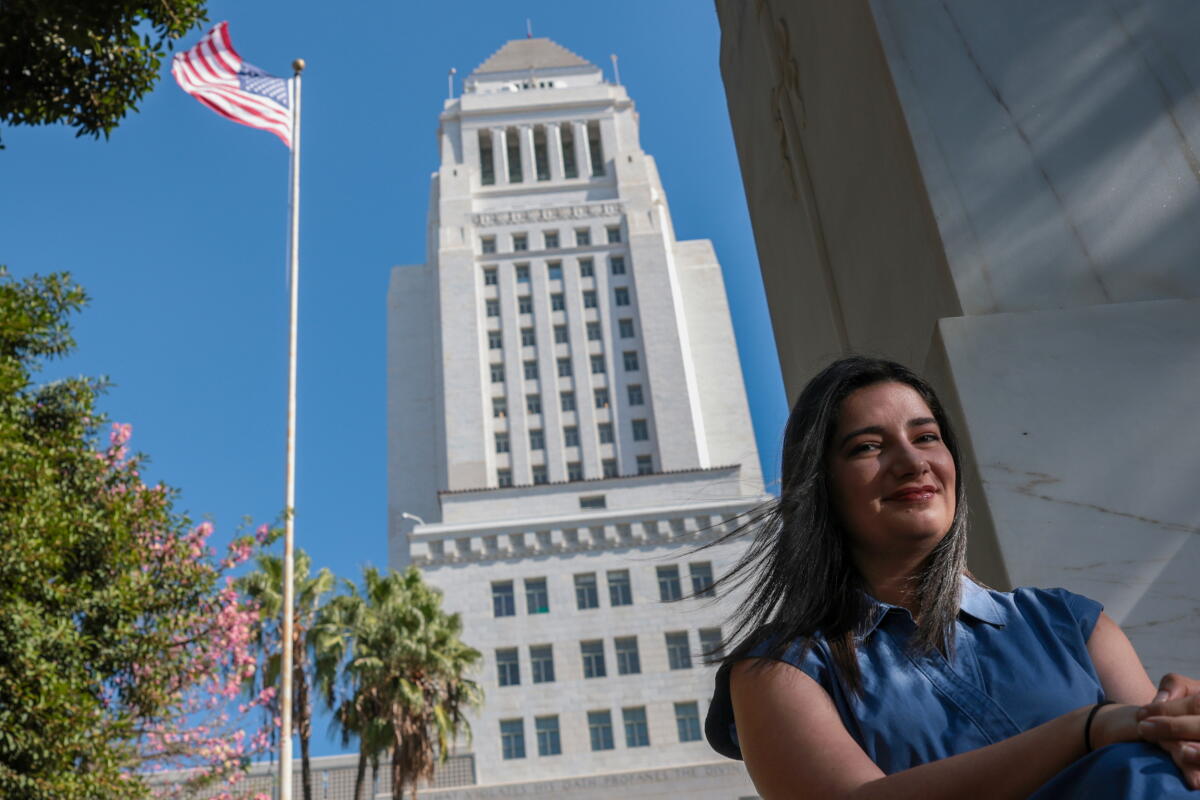
Marissa Roy outside L.A. City Hall. “I wanted the slogan ‘let’s sue it’ — that was violently nixed,” she said of her campaign.
(Robert Gauthier / Los Angeles Times)
Seen one way, Roy’s talismanic manicure is an object lesson for her fiercest critics: all flash and no substance, evidence the 34-year-old lacks the “gravitas” to be among the state’s most powerful elected lawyers.
But like the iridescentglitter in her campaign-matched chrome polish, the meaning shifts with the viewer’s perspective.
To supporters on the city’s restive left and the clique of California city attorneys eager to add Roy to their group chat, it’s a winking show of solidarity burnished through years of knocking on doors for fellow up-and-coming progressives. It was metallic blue for Hernandez, silver for Ysabel Jurado and ultraviolet for her own historic primary upset in June. Her backers see fierce loyalty reflected in the polish, a ritual she started while hunting salon wage thieves to sue.
“I wanted the slogan ‘let’s sue it’ — that was violently nixed,” Roy said of her campaign.
With her Democratic Socialists of America sass, bright amethyst blazers and Bollywood needle drops on Instagram, the lifelong Angeleno cuts a stark contrast to her rival, Deputy Dist. Atty. John McKinney, 58, who leapfrogged to a second-place finish in the primaries amid a stoic, law-and-order campaign that sometimes slipped into Spencer Pratt-style dystopian imagery.
McKinney’s boosters point to his extraordinary biography — from penniless orphan to director of special prosecutions in the country’s largest district attorney’s office — and celebrated courtroom prowess as evidence he is better suited to handle the 120,000 violations referred to the city attorney for potential charges every year.
“John has the experience, stature, reputation, and gravitas to do the job and will be both effective and respected,” said former Los Angeles City Atty. Burt Pines. “I do not have the same confidence in her.”
Campaign materials for the Los Angeles city attorney candidate at a canvassing event in Silverlake.
(Gary Coronado / For The Times)
Roy’s allies counter that prosecuting misdemeanors is only a third of the city attorney’s job — and typically the less complex part. Whereas McKinney has never worked a civil case, Roy has managed multicity litigation and shares the credit for legal victories no attorney could secure alone. In the Meta case, Roy and her team had argued that the social media giant had intentionally designed its products to hook young children and repeatedly misled the public about known risks.
“She was one of the original four team members in California that stayed up until 2 a.m. filing the [Meta] complaint,” said California Atty. Gen. Rob Bonta. “She helped develop our legal strategy, particularly our deception theory, which was our core theory of legal liability for the case.”
Similarly, while McKinney’s camp paints a lawman of singular personal ability, Roy supporters describe her as brilliant, driven, and eager to lift the best and brightest around her.
“She is tenacious and works around the clock,” said San Francisco City Atty. David Chiu.
She’s also infamously bubbly: When a canvasser door-knocked 9th Circuit Judge Richard Paez, for whom Roy had clerked, he reportedly asked the volunteer to give her a hug.
“She has a natural enthusiasm about her that is infectious,” said Mark Ramos, chair of Los Angeles County Democratic Party. “She’s [always] shown up, and showing up matters.”
Which matters more — individual virtue or collaborative ingenuity — now in effect divides the race for the most abstruse job in local politics: Four of L.A’s former city attorneys have endorsed McKinney, while California’s current top elected lawyers have largely lined up behind Roy.
A head-to-head match with McKinney was not what Roy envisioned last year when she launched her campaign to unseat the incumbent city attorney, Hydee Feldstein Soto. After charming L.A.’s major power brokers, she had hoped to win the primary outright and avoid a runoff so she could focus exclusively on the Meta trial in August.
“I had been planning for things to end in June,” she said.
Feldstein Soto was bogged down by scandal and soaring civil liability costs for the city. She also faced criticism for ducking challenges to President Trump’s policies, including the deployment of military troops to Los Angeles last year, a fight the city joined but did not lead.
By early spring, Roy had racked up endorsements from the state’s legal elites and leftist kingmaker Sen. Bernie Sanders (I-Vt.). She earned the imprimatur of the city’s powerful Democratic clubs and its influential labor unions, while enjoying widespread support from a democratic socialist base.
Marissa Roy, left, candidate for Los Angeles city attorney, and Alyssa Acevedo, with Service Employees International Union canvass in Silverlake.
(Gary Coronado / For The Times)
L.A. voters want “the transformational leadership that they’re seeing in [New York Mayor Zohran] Mamdani, and also in Mayor [Daniel] Lurie in San Francisco,” said L.A. County Supervisor Lindsey Horvath, a longtime friend of Roy’s and among her earliest endorsers. “Angelenos are increasingly impatient in wanting to see that change come to their city, too.”
Then, in April, Feldstein Soto slipped from unpopular to politically radioactive after hackers stole thousands of LAPD files from her office. That inspired a late-breaking police union endorsement and a surge of corporate cash for McKinney, boosting him to a second-place finish and knocking out Feldstein Soto in a historic rout.
McKinney touts the city attorney’s prosecutor role as a means to stem quality-of-life crimes and curb homelessness. Roy has promised to keep more Angelenos housed and protect their livelihoods through “affirmative litigation” — suits brought against slumlords and exploitative corporations under the state’s Unfair Competition Law.
“When you file these suits, you have complete discretion,” said Pines, the former city attorney who successfully lobbied the state to extend Los Angeles that power in 1977 and watched in dismay as Feldstein Soto left it to whither.
In recent years, affirmative litigation has become an essential tool for defending against punitive federal policy and recovering public funds, Pines and others said.
Seeing the San Francisco city attorney’s office sue to overturn California’s ban on gay marriage — a law that would have stymied her gay younger brother — inspired Roy to give up her elementary school dream of decoding ancient texts to pursue the law.
“Childhood Marissa spent recesses in the library buried in books about ancient Egypt,” Roy said. “It was San Francisco suing — that was when I began to become aware of the power of lawyers.”
Unlike her opponent, Roy grew up comfortably in Monrovia, largely shielded from the sacrifices her family made to afford her an elite education. The daughter of an Indian immigrant mother and a white American father, she graduated from Flintridge Prep and attended University of Southern California on scholarship.
While studying law at Yale, she interned in the affirmative litigation department in the San Francisco city attorney’s office — a program Chiu lauded as “an essential training ground for the next generation of government lawyers” in a recent law review article.
Roy and her supporters say those early experiences cemented her commitment to teamwork, which is central to the less glamorous, more costly side of the city attorney’s job: serving as general counsel for myriad city agencies and legal advisor to City Hall.
“There’s absolutely more collaboration and it’s more significant given the things we’re up against,” said San Diego City Atty. Heather Ferbert, a close ally of Roy’s.
John McKinney, a Los Angeles County prosecutor running against Marissa Roy to become L.A. city attorney, speaks during a news conference on May 5, 2026.
(Kayla Bartkowski/Los Angeles Times)
Ferbert and others pointed to a surge in lawsuits against municipalities over everything from sidewalk trip-and-falls to police misconduct — cases that can lead to seven- or eight-figure payouts.
“If it’s not extremely unusual, it doesn’t make it to the city attorney’s desk,” said Oakland City Atty. Ryan Richardson, who endorsed Roy.
As a deputy city attorney, Roy spearheaded a trio of major wage-theft suits just a month after she was admitted to the bar. Independent expenditure groups supporting McKinney spent more than $350,000 trying to strip her of that title because she was paid by a nonprofit — an common arrangement employed by government law offices across the U.S. — while the city attorney’s office itself gave her permission to use it, and lists her as such in its court filings.
McKinney has since sought to paint Roy as the second coming of George Gascón, the polarizing district attorney who was drubbed in 2024 — a move that assumes most voters are still thinking about Gascón, or are likely to see the graying “godfather of progressive prosecutors” in a raven-haired deputy attorney general.
“The only way you disprove that is by putting your head down and doing the work 10 times harder,” Roy said. “Voters are smarter than that. People in the coalition see these tactics and are tired of them too.”
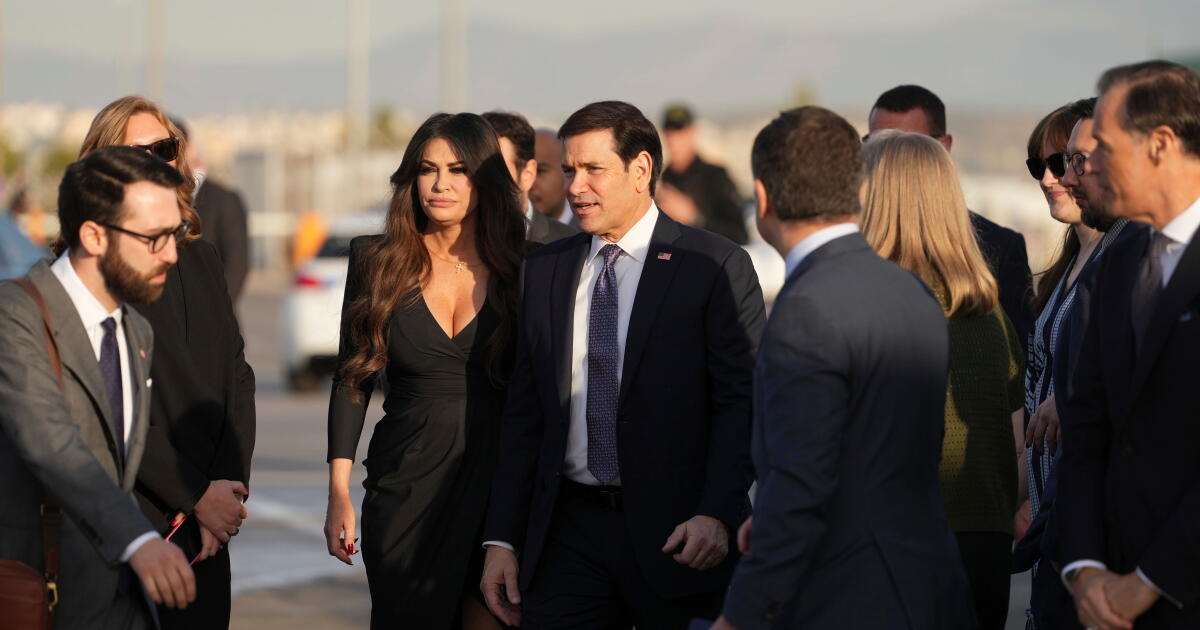
ATHENS, Greece — U.S. Secretary of State Marco Rubio flatly refused to comment on a new report alleging that U.S. Ambassador to Greece Kimberly Guilfoyle engaged in improper and possibly illegal conduct before taking up her post.
Rubio told reporters that he would not discuss the allegations contained in a Wall Street Journal story that said Guilfoyle had asked a donor and supporter of President Trump to pay a $100,000 credit card bill just before her confirmation hearing, promising him access to administration officials if he did.
He spoke before leaving Greece, where he delivered a speech calling for European countries to return to what he described as their civilizational roots.
Rubio said he was aware of The Wall Street Journal’s report, which was published late Wednesday, but had no idea if it was true and he would not address it.
“You guys walk around thinking that because some source told you something and you reported it, it’s the gospel. It’s not the gospel. It’s not the gospel for me. That’s not the way we do things,” he said at the foot of his plane as Guilfoyle, who was there to see him depart Greece, looked on.
At a joint news conference with the Greek foreign minister on Wednesday, Rubio said he would not address the allegations while visiting a foreign country, but added, “Suffice it to say our embassy here is doing a great job. Our ambassador has been a strong ambassador here.”
The top two Democrats on the House Foreign Affairs and Senate Foreign Relations committees have called for an investigation into Guilfoyle, but Rubio would not say if he was prepared to open one.
Congressional Democrats already were looking into claims reported last month by the Wall Street Journal that Guilfoyle acted improperly while serving as the top U.S. envoy to Greece.
The Journal reported that Guilfoyle told guests at a reception that the U.S. could undermine the Greek government if it chose to, promoted the business interests of one particular Greek construction and energy company, and allowed its lobbyist into private diplomatic meetings.
Guilfoyle, a former Fox News Channel host and California prosecutor who was once engaged to Trump’s son Donald Jr., has denied any wrongdoing and Rubio has defended her before.
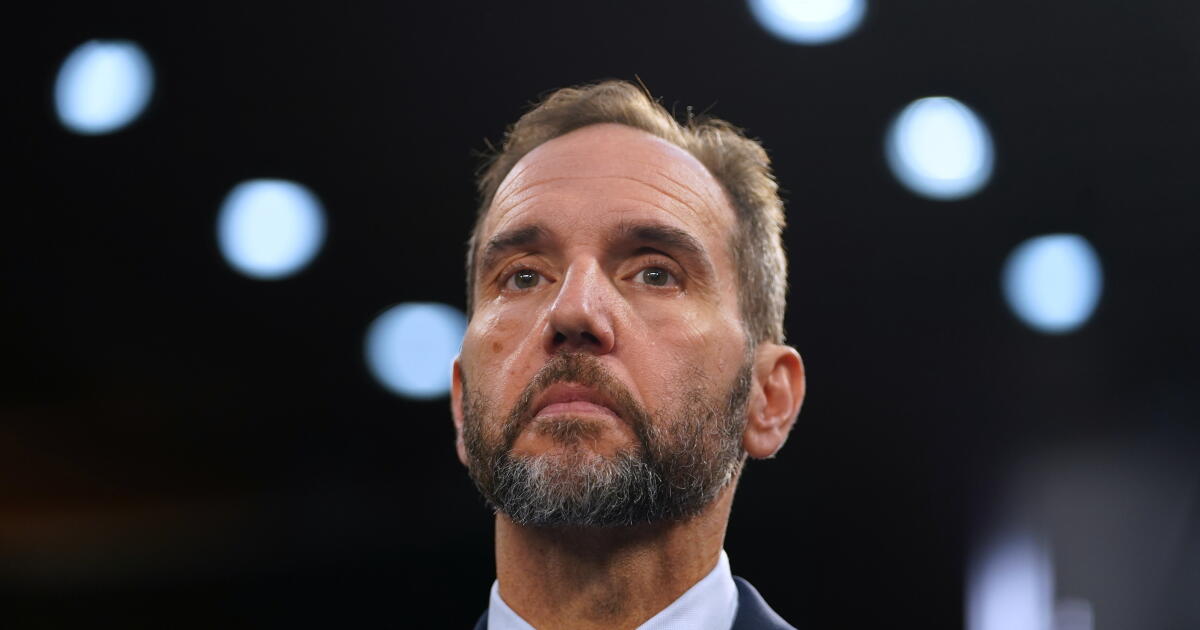
WASHINGTON — Former Justice Department special counsel Jack Smith, who brought two federal indictments against President Trump, told lawmakers on Tuesday that he “will not be silenced by continued threats of prosecution” from the Trump administration and that he believes the rule of law is being threatened like never before.
Smith also told the Senate Judiciary Committee that he stands behind the criminal cases he brought against Trump, a Republican, and that he and his team acted without regard to politics.
“I made those decisions without regard to President Trump’s political association, activities, beliefs or candidacy in the 2024 presidential election,” Smith said. “Our investigation developed proof beyond a reasonable doubt that President Trump engaged in serious crimes against our nation. If asked whether to prosecute a former president today based on the same facts, I would do so regardless of whether that president was a Republican or a Democrat.”
Republicans sought to cast the prosecution as a political fishing expedition, accusing Smith of bending ordinary procedures in an overzealous pursuit of the president.
“The Smith election case ultimately wasn’t just about Trump,” said Republican Sen. Chuck Grassley of Iowa, the chairman of the committee. “It was about partisan agents and prosecutors mapping out the Republican apparatus.”
Sen. Dick Durbin of Illinois, the top Democrat on the committee, accused Republicans of spreading “baseless conspiracy theories” about Smith’s investigations as part of an effort to “whitewash” the history of Trump’s 2020 election loss and the Jan. 6, 2021, attack by a mob of Trump’s supporters on the U.S. Capitol.
“President Trump demonstrated a wanton disdain for the laws of the United States, the will of the people and our national security,” Durbin said. “The aspersions cast on Mr. Smith, nonstop, are petty, personal and political. They are nothing but a smoke screen to distract from the president’s own clear, unlawful conduct.”
The hearing is expected to focus on subpoenas for phone records
Even as Smith defends his investigations, he is expected to be pressed anew by Republican senators about his team’s access to the phone records of GOP lawmakers as prosecutors investigated Trump’s efforts to overturn his loss to Democrat Joe Biden.
In previous testimony, Smith has stood behind subpoenas that prosecutors issued for the phone records of Republican members of Congress who were in touch with Trump when violent supporters of the president rioted inside the U.S. Capitol on Jan. 6, 2021. He has said that such subpoenas are a “common practice” in investigations and were necessary in this instance to understand the “scope of the conspiracy” between Trump and his Republican allies.
Nonetheless, the revelation that Smith’s team secretly obtained the phone records during his investigation has animated some Republican lawmakers, who point to it as proof of overreach by the Biden administration Justice Department and a hard-charging prosecutor.
In July, the Republican chairman of the House Judiciary Committee, Rep. Jim Jordan of Ohio, referred Smith to the Justice Department for potential prosecution on allegations that he lied at a previous hearing about his collection of the records — something Smith’s attorneys have vigorously disputed.
“I stand by my testimony before the House of Representatives,” Smith said. “I will not be silenced by the continued threats of prosecution from the president or others.”
Grassley, the Senate committee chairman, first disclosed last year that Smith’s prosecutors had obtained what’s known as “toll records” — data that reveals the date, length and time of phone calls between two parties but not the content of the communications.
Smith has repeatedly justified the move as necessary to document any contact that Trump or surrogates may have had with lawmakers on Jan. 6, 2021, as the president beseeched his supporters to halt the certification of the election results.
“My office didn’t spy on anyone,” Smith said during a hearing in January.
Smith is the subject of a criminal referral from Republicans
Smith was appointed in 2022 by then-Atty. Gen. Merrick Garland to take over investigations into Trump’s efforts to reverse his election loss and Trump’s retention of classified documents at his Mar-a-Lago estate in Palm Beach, Florida. Both investigations resulted in felony indictments, but Smith abandoned the cases after Trump won back the White House in 2024, citing longstanding Justice Department opinions that say sitting presidents cannot be federally indicted.
Smith has remained a top target of retribution for Trump and his administration, which last year announced that it would revoke the security clearances of the lawyers representing the former special counsel. The Office of Special Counsel, an independent watchdog agency responsible for enforcing a law against partisan political activity by federal employees, also announced last year an investigation into Smith.
Jordan’s referral to the Justice Department centers on a December 2025 exchange in which Smith was asked about subpoenas that prosecutors had issued for the toll records.
Smith said the records he requested did not include the content of the communications. But Jordan maintains that answer was misleading in light of records released by Grassley showing that Smith had obtained the contents of 44 lawmakers’ text messages in a separate subpoena to the National Archives and Records Administration that sought the communications of various Trump advisers and aides.
In response, Smith’s lawyers called his answers “unimpeachably truthful” and noted that he was responding to questions explicitly about toll records, which did not include the contents of any text messages.