
UAE said to have injected $8B to support banking system
UAE said to have injected $8B to support banking system
Source link
UAE said to have injected $8B to support banking system
Source link

WASHINGTON — Less than a week after he and other House Republican lawmakers rejected a Senate plan to fund the Department of Homeland Security — but not its immigration enforcement operations — Speaker Mike Johnson has made a complete about-face.
Johnson’s embrace of a two-track Senate bill marks a sharp reversal, after he had derided it as a “joke,” and said he was “quite convinced that it can’t be that every Senate Republican read the language of this bill.”
But now that Johnson appears to be fully on board, securing support from his own conference could prove more difficult after a sizable group of House Republicans blasted the Senate-passed bill last week.
President Trump said Thursday he will sign an order to pay all Homeland Security employees who have gone without paychecks during the partial government shutdown that has reached a record 48 days.
Trump used a similar maneuver to resume pay for the Transportation Security Administration after many employees had called out from work, resulting in long delays at airport security lines for travelers. Trump’s latest intervention is expected to apply to other non-law enforcement employees at the department, including many employees at the Federal Emergency Management Agency, U.S. Coast Guard and the agency responsible for coordinating federal cybersecurity efforts.
Despite that unilateral move announced in a social media post, the funding lapse for some Homeland Security needs is likely to stretch into next week as the House contemplates passing the very same Senate plan it previously rejected.
There was no legislative resolution Thursday after both the House and Senate met for just a few minutes in pro forma sessions. Nonetheless, the Republican leadership and Trump have coalesced around a plan to fully fund Homeland Security as part of a two-step process. The agreement puts the congressional leaders on the same page for ending the impasse after they had pursued separate paths that resulted in Congress leaving Washington for its spring recess without a fix.
During the brief sessions, Senate Majority Leader John Thune (R-S.D.) put aside the House plan to fund the entire department for 60 days. Then the House met briefly without taking up the bipartisan Senate plan that had been worked out with Democrats, though Thune is looking toward eventual passage.
“I don’t know the particulars around what the House will do with it,” Thune told reporters. “My assumption is, at some point, hopefully, they’ll move it.”
Johnson (R-La.) and Thune announced Wednesday that they would return to the Senate measure, which funds most of Homeland Security with the exception of U.S. Immigration and Customs Enforcement and U.S. Border Patrol. Republicans will try later to fund those agencies through party-line spending legislation that could take months to finish.
Neither outcome is guaranteed, and the strategy could potentially still face opposition from the GOP’s ranks even though Trump has given his support.
House Republicans held a conference call later Thursday to discuss the next steps. The GOP leadership indicated to lawmakers that it does not expect to recall them to Washington during the spring recess; they are due back April 14.
Public backlash was swift after lawmakers left Washington last week without a resolution, with the tabloid website TMZ posting paparazzi-style photos of members at airports and out of town. The regularly scheduled break, while drawing criticism, is typically used by lawmakers to reconnect with constituents and travel abroad.
Lawmakers also heard from White House budget director Russ Vought. The White House is expected to release Trump’s 2027 budget proposal on Friday.
Democrats in both chambers were aligned last week with the Senate’s plan, and Senate Democratic leader Chuck Schumer of New York blamed House Republicans on Thursday for taking no action on it during the brief morning session.
“The deep division and dysfunction among House Republicans is needlessly extending the DHS shutdown and hurting federal workers who are missing another paycheck,” Schumer said.
Johnson will look to persuade the most conservative lawmakers within his conference to go along with the two-step approach agreed upon with the president, and Trump’s latest social media post could help. The president thanked Thune and Johnson for their work, and sought to project Republican unity.
“Republicans are UNIFIED, and moving forward on a plan that will reload funding for our FANTASTIC Border Patrol and Immigration Enforcement Officers,” Trump wrote.
Many in the GOP conference have taken the stance that ICE and the Border Patrol need to be included as part of any funding agreement.
“Let’s make this simple: caving to Democrats and not paying CBP and ICE is agreeing to defund Law Enforcement and leaving our borders wide open again,” Rep. Scott Perry (R-Pa.) posted on X. “If that’s the vote, I’m a NO.”
Meanwhile, the budget package that Trump wants voted on by June 1 is expected to fund ICE and Border Patrol through the remainder of Trump’s term, as a way to try to ensure those agencies are no longer at risk from Democrats objecting to his immigration enforcement agenda.
Thune acknowledged the potential hurdles to that route, such as efforts to expand the scope of the bill. He said the goal is to keep it “as narrow and focused as possible” in order to pass it “with haste.”
The vast majority of Homeland Security employees have reported to work during the shutdown, but many thousands have gone without pay. As more Transportation Security Administration agents called out from work, there was increasing frustration for air travelers confronted by long waits at some airport security lines. Those bottlenecks appeared to be clearing this week as agents began receiving backpay after Trump signed an executive order.
About 10,000 FEMA workers are being paid because their wages come out of the non-lapsing Disaster Relief Fund. At least 4,000 FEMA employees are furloughed or currently working without pay.
Freking and Cappelletti write for the Associated Press. AP writer Lisa Mascaro contributed to this report.

SACRAMENTO — Strong majorities of California voters believe American democracy is under attack and, in the wake of U.S. Supreme Court rulings narrowing federal protections, support enacting a new state Voting Rights Act to prohibit discrimination and efforts to suppress the ability to cast a ballot, a new poll showed.
The survey showed a sharp partisan divide over increasing voting rights protections, with Democrats and political independents overwhelmingly in favor and a majority of Republicans opposed. Fears that American democracy was either under attack, or at the very least being “tested,” were shared across political allegiances, according to a new poll released Thursday by the UC Berkeley Institute of Governmental Studies.
“I think that it suggests that the California voters, especially Democrats and independents, are very worried about some of what they’ve seen going on in Washington, both the court decisions and the Trump administration,” said Eric Schickler, the institute’s co-director. “They see it as threatening kind of core American values.”
That anxiety comes after years of baseless claims by President Trump that the 2020 election was stolen from him, as well as Republican-led efforts to restrict the use of mail-in ballots and impose new requirements for voters to show identification and proof of citizenship.
Trump earlier this week signed an executive order to place new federal controls on voting by mail in states such as California, an action that Democrats called unconstitutional and vowed to challenge in court.
Schickler said Republican concerns about the fate of American democracy may stem in large part from allegations about voter fraud hyped by Trump and his supporters, including unfounded claims that droves of undocumented immigrants are swaying elections.
The survey found that 67% of California voters believe American democracy is under attack, including 84% of Democrats, 40% of Republicans and 64% of voters registered as “no party preference” or with other political parties. An almost equal number of Republicans, 38%, believed democracy was being “tested” but not under attack, compared with 13% of Democrats and 26% of independents. The remainder of those surveyed said American democracy is in no danger.

The partisan divide was more pronounced when voters were asked if they wanted California to enact its own Voting Rights Act after decisions by the Supreme Court limited federal protections against discrimination and unequal access to ballots, the poll found.

Overall, 66% of California registered voters backed adopting new state voter protections, with 88% of Democrats supporting new laws compared with 25% of Republicans and 66% of voters who are political independents or belong to other parties. Support for new state laws was strongest among Black voters — 72% — who historically have been targeted with discriminatory voting policies, including Jim Crow-era laws such as literacy tests and poll taxes.
The federal Voting Rights Act of 1965 banned those policies, ensuring that the right to vote cannot be denied because of race. The law also ensured that Black Americans and other communities of color had the opportunity to participate in all parts of the political system and elect the leaders of their choosing, influencing how political districts are drawn. The act was reauthorized by Congress in 2006 by an overwhelming bipartisan majority.
“Now it has come to the point where the president has tried to convince people that somehow equal voting rights is bad, because, in his words, ‘The wrong people are voting right,’” said Matt Barreto, faculty director of the UCLA Voting Rights Project, referring to Trump. “You have super majorities, very large percentages of Californians, who want the state to do more to protect voting rights, I think, because of the very tenuous climate right now, with the president constantly going after states for vote by mail and trying to get their voter rolls and these other sorts of things.”
Recent rulings by the conservative-leaning Supreme Court also have rolled back federal protections under the Voting Rights Act. A pending case, Louisiana vs. Callais, which involves the drawing of congressional districts, may overturn some of the remaining protections, Barreto said.
“I think people should be extremely nervous this court has not shown a lot of support for voting rights, and that’s the reason why California has an opportunity to pass its own state laws,” he said.
Among the laws California legislators could adopt, Barreto said, would be protections for early voting, banning onerous requirements on voters to prove citizenship and provide identification, and ensuring that congressional and other political districts are created to allow minority groups to elect representatives of their choice.
The Berkeley poll also found widespread support among California voters for requiring that the top three financial backers supporting and opposing ballot measures be listed in official ballot voter guides. A majority of Californians also supported expanding access to translation and interpreter assistance for populations that make up at least 5% or 5,000 voters in a county.
The Berkeley IGS poll surveyed 5,109 California registered voters online in English and Spanish from March 9 to 15. The results are estimated to have a margin of error of 2.5 percentage points in either direction in the overall sample, and larger numbers for subgroups.
Funding for the poll was provided to IGS by the Evelyn and Walter Haas, Jr. Fund, a private foundation based in San Francisco that aims to increase civic participation and improve the state’s democratic processes.
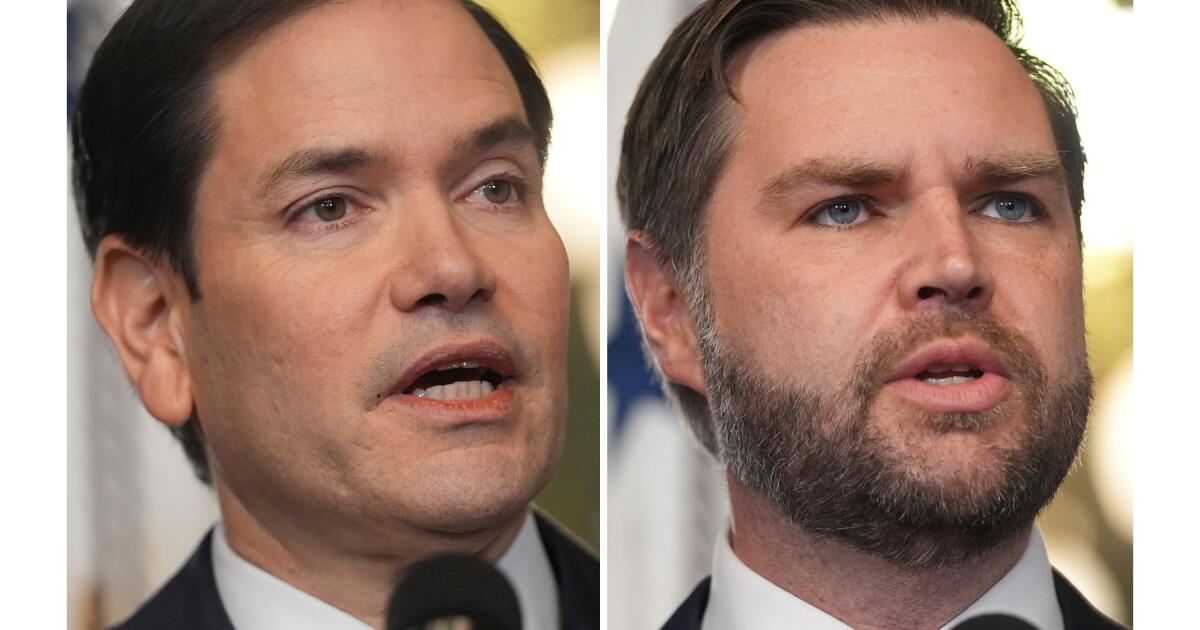
WASHINGTON — As President Trump assembled his Cabinet last week, he asked Secretary of State Marco Rubio and Vice President JD Vance to give an update on the Iran war.
Rubio, known for his hawkish views, gave an impassioned defense of the war, calling it “a favor” to the United States and the world.
Vance, who has long pushed for restraint in U.S. military intervention overseas, was more sedate. He said that the U.S. now has “options” it didn’t have a year ago and that it is important Iran does not get a nuclear weapon — before redirecting his remarks toward wishing the troops a happy Easter.
The exchange was a distillation of their diverging postures toward the war that their boss has launched in Iran. And it comes as some would-be Republican presidential candidates begin quietly courting officials in key states like New Hampshire in the early stages of the GOP’s next nomination fight.
With Vance and Rubio seen as the party’s strongest potential candidates in a 2028 primary, the two have to balance their roles in the Trump administration with their future political plans.
“It’s very obvious from the way that Rubio talks about Iran and the way that Vance talks about Iran that they are of different casts of mind,” said Curt Mills, the executive director of “The American Conservative” magazine and a vocal critic of the war. The Cabinet meeting episode was telling, he said, because it seemed as though Vance, discussing Easter, was “literally trying to talk about anything else other than the war.”
The White House addressed the Rubio-Vance relationship on Wednesday in an unsolicited statement after the initial publication of this article.
“President Trump has full confidence in both Vice President Vance and Secretary Rubio, who continue to be trusted voices within the administration,” said White House spokesperson Anna Kelly. “He values both the vice president and the secretary’s opinions and wealth of expertise.”
It’s too soon to forecast how Republican voters might feel about the war next spring, when the 2028 contest is expected to begin in earnest, but the risks for both Vance and Rubio are acute. Rubio’s full-throated support for the war could come back to haunt him depending on how the conflict develops. Vance, meanwhile, would risk accusations of disloyalty if he were to stray too far from Trump, but struggles to square an appearance of support for the war with his past comments.
Vance, who served in the Marines in the Iraq war, has said that Iran cannot have a nuclear weapon, but he’s long been skeptical of foreign military interventions.
Trump seemed to allude that Vance may have held onto that position in private discussions about Iran, telling reporters that Vance was “philosophically a little bit different than me” at the outset of the conflict.
“I think he was maybe less enthusiastic about going, but he was quite enthusiastic,” Trump said.
Though Vance has been careful in how he speaks about the war, what he’s not saying has been conspicuous. On a March 13 trip to North Carolina, he was twice asked by reporters if he had concerns about the conflict. Each time, he said it was important that Trump could have conversations with advisers “without his team then running their mouths to the American media.”
A few days later at the White House, when Vance was again asked if he had concerns, he accused the reporter of “trying to drive a wedge between members of the administration, between me and the president.”
For Rubio, long before he became the country’s chief diplomat, he voiced support for muscular foreign policy and American intervention abroad.
Days into the war, he told reporters that it was “a wise decision” for Trump to launch the operation, that there “absolutely was an imminent threat” from Iran and that the operation “needed to happen.”
State Department spokesperson Tommy Pigott pointed to last week’s Cabinet meeting as evidence that “the entire administration is in lockstep behind President Trump.”
“Secretary Rubio is proud to be on the team implementing President Trump’s policies, and he has a great relationship, both professionally and personally, with the entire team,” Pigott said.
The apparent split between Rubio and Vance on the Iran war is emblematic of the divide starting to cleave within the Republican Party. A recent survey from The Associated Press-NORC Center for Public Affairs Research found some divisions within the GOP on Iran, with about half of Republicans saying the U.S. military action has been “about right.” Relatively few Republicans, about 2 in 10, say military action has not gone far enough, while about one-quarter say it’s gone too far.
While some conservatives have described the war as a betrayal, many other Republicans have cheered on the president’s actions.
Alice Swanson, a 62-year-old who attended Vance’s event in North Carolina, said she wants Vance and Rubio to run together in 2028 but favors the vice president.
“I think he fully believes and supports exactly what his convictions are,” Swanson said.
Swanson acknowledged, nonetheless, that Vance has been an outspoken opponent of interventionist policy but has been quieter on the subject since the war. “I can see both sides,” Swanson said after expressing full support for Trump’s decisions.
Tracy Brill, a 62-year-old from Rocky Mount, spoke highly of Rubio, but declared, “I love JD Vance.”
She made it clear she sides with the president, calling the course he’s taken “spot on.” But she defended the vice president if he seems at odds with his past statements, noting politicians do it frequently. “They’ve all changed their positions at one point or another,” she said.
However, Joe Ropar, attending the Conservative Political Action Conference last week, said Rubio’s unequivocal support for the Iran war helped crystallize his preference for the secretary of state for 2028.
“I’m not looking at JD Vance for president, and it’s for stuff like that,” said Ropar, a 72-year-old retired military contractor from McKinney, Texas. “I don’t 100% trust him.”
Benjamin Williams, of Austin, Texas, said at CPAC that both Trump and Vance are “tied to this war.” The 25-year-old marketing specialist for Young Americans for Liberty is looking elsewhere for a candidate.
Whether the war becomes a political problem for Vance and Rubio depends on who ultimately enters the GOP’s next presidential primary.
While Vance and Rubio are currently considered the overwhelming front-runners, former New Hampshire Gov. Chris Sununu expects a half dozen high-profile Republicans to enter the contest.
Sununu and former RNC Committeewoman Juliana Bergeron told The Associated Press that multiple Republican presidential prospects have reached out to them in recent weeks to discuss the political landscape in the state that traditionally hosts the opening presidential primary; they declined to name them.
Republican strategist Jim Merrill, a top New Hampshire adviser for Rubio’s 2016 presidential bid, predicted that Iran would become a flashpoint in 2028 — just as the Iraq war was for Democrats in 2004 and 2008.
“If for some reason things don’t go as anticipated, there will be contrasts drawn,” he said.
Still, Sununu is doubtful that Iran would become a meaningful dividing line in a prospective Vance-Rubio matchup given their status as prominent members of the Trump administration. Both will likely take credit if the conflict ends well, and both would look bad if it does not, he predicted.
“They’re tied together with the success or failure of Iran. It doesn’t really separate one versus the other, at least I don’t think that’s how the electorate will see it,” Sununu said.
Price and Peoples write for the Associated Press. Peoples reported from New York. AP writers Matthew Lee in Washington, Bill Barrow in Rocky Mount, N.C., and Thomas Beaumont in Grapevine, Texas, contributed to this report.
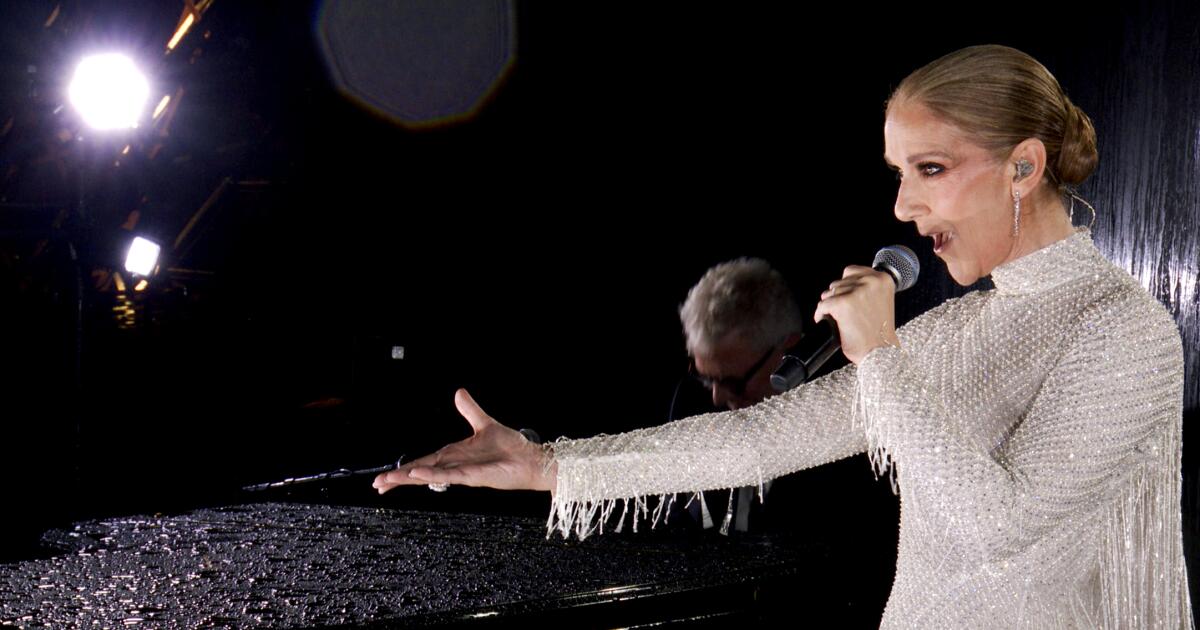
Céline Dion is officially coming back to the stage.
The singer announced on Instagram that she will return to the stage this fall, performing 10 shows at the Paris La Défense Arena. In 2022, Dion canceled her North America tour due to muscle spasms. She was later diagnosed with stiff-person syndrome, an autoimmune neurological disorder, which prevented her from performing.
The concert announcement comes after speculation last week by fans in Paris who spotted posters around the city referencing Dion’s songs, including “Power of Love” and “Pour Que tu M’aimes Encore.”
Dion, who turned 58 on Monday, called this news “the best gift” of her life.
“I’m so happy. I’m so ready to do this. I’m feeling good. I’m strong,” Dion said. “I’m feeling excited, obviously. Of course, a little nervous, but most of all, I am grateful to all of you. I can’t wait to see you again.”
While Dion performed at the opening ceremony of the 2024 Olympics in Paris and at an Elie Saab fashion show in Saudi Arabia, she has not headlined her own concert since her Courage World Tour in 2020. In her video, Dion thanked her fans, who supported her in the “most difficult times.”
“Over these last few years, every day that’s gone by, I felt your prayers and support, your kindness and love,” Dion said. “You’ve helped me in ways that I can’t even describe, and I’m truly so fortunate to have your support. I’ve missed you so much.”
Dion will perform twice a week — on Wednesdays and Saturdays — from Sept. 12 to Oct. 14. In a press statement, Frédéric Longuépée, president of La Défense Arena, called Dion’s residency a major milestone for the venue, which opened in 2017.
Fans can register for presale tickets until April 2, and general ticket sales will go on sale April 10.
Dion discussed her battle with stiff-person syndrome in her 2024 documentary, “I Am: Celine Dion.” In the film, the singer explained how SPS causes a vocal strain that makes it difficult for her to perform. Before her 2022 diagnosis, she had already experienced symptoms for 17 years.
While SPS has no known cure, Dion did not lose motivation to continue performing.
“If I can’t run, I’ll walk. If I can’t walk, I’ll crawl, but I won’t stop,” Dion said.

WASHINGTON — Buried in the fine print of the massive deficit-reduction bill is–of all things–a brand new social program.
The new program will cost $1 billion over the next five years–somewhat less than the Clinton Adminstration had requested, but still a substantial sum in this era of tight budgets.
Supporters, including Health and Human Services Secretary Donna Shalala, insisted that some provisions in the new program actually would save the government money in the long run. Even many of the program’s supporters questioned that assertion, however, although they insisted that the money is worth spending in any case.
The family preservation and support program–along with expanded spending for childhood immunization, tuberculosis prevention, food stamps, “empowerment zones” intended to help inner cities and the earned income tax credit for low-income workers–represents the flip side of the massive budget cutting and tax-raising efforts of the bill. All told, those social programs–aimed in large part at helping families with children–will receive an additional $29 billion from the bill.
“The President’s long-term investments for kids and families have been very well supported by this bill,” said Shalala.
The social-program funds not only were key to keeping some of President Clinton’s policy initiatives alive, they were crucial to winning support for the budget in the heavily Democratic House, where liberal Democrats and members of the Congressional Black Caucus had threatened to vote against the budget bill unless it contained money to back up at least part of Clinton’s promise to “invest” in programs for the poor.
“There are a number of important features in this bill that represented the basis for many liberal and progressive Democrats to feel they could support the overall budget,” said Rep. Henry A. Waxman (D-Los Angeles).
The survival of the family preservation program, which at several points during the long budget negotiations seemed likely to die, would mark the end of a long legislative road. The program would give money to the states for early intervention and support programs for troubled families. It has passed the House three times and was approved by both chambers last year as part of another piece of legislation ultimately vetoed by then-President George Bush.
Supporters of the program argued that, by intervening early, social workers can help troubled families before their situations deteriorate so much that the state has to place children in costly foster care programs.
Skeptics, including Senate Finance Committee Chairman Daniel Patrick Moynihan (D-N.Y.), argued that the ability of social workers to accomplish those goals has never been proven. At one point during budget talks, Moynihan derided the program as “welfare for social workers,” several participants said.
But other legislators argued that, even if the program does not save money by avoiding foster-care placements, it will provide badly needed help for children. “This creates early intervention to keep children from being abused,” said Rep. Robert T. Matsui (D-Sacramento), who was the program’s chief sponsor in the House.
The program “has been pared down a good deal, but at least we got it,” Matsui said.
The birth of this new program is an object lesson in how legislators and Administration officials can use the arcane rules of the budget-cutting process to advance other items on the legislative agenda.
Over the years, Waxman has become a master at that art. This time around, he engineered a new $200-million program to expand the number of tuberculosis patients who can receive federal Medicaid benefits over the next five years. He also played a key role in winning money for the Administration’s proposed child immunization program, which would receive $585 million under the budget bill.
Although immunization has been a high priority for Clinton and First Lady Hillary Rodham Clinton, Waxman and other supporters of the program had to overcome opposition not only from congressional conservatives but from some White House officials who were willing to accept much lower dollar amounts for the program as they sought to hit their deficit-cutting goals, according to Administration and congressional sources.
Under the tuberculosis program, people who are poor but not otherwise eligible for Medicaid–primarily single men without children–and who have active tuberculosis can receive government-supplied out-patient services if the state they live in decides to participate. Public health officials said they hope that the additional money will reduce the rapid spread of the disease by targeting a group of people who often do not receive care.
The immunization program has two major components. The first part will provide $500 million over the next five years to pay for vaccinations for 2.6 million children whose families lack insurance. The money also will cover the 6.5 million children now covered under Medicaid, relieving the states of a financial burden.
The second part of the bill, which has drawn howls of outrage from drug manufacturers, would allow all states to buy vaccines in bulk at the price manufacturers provide to the federal Centers for Disease Control and Prevention–something 11 states now do. The CDC has negotiated steep discounts from the prices that drug companies charge private pediatricians.
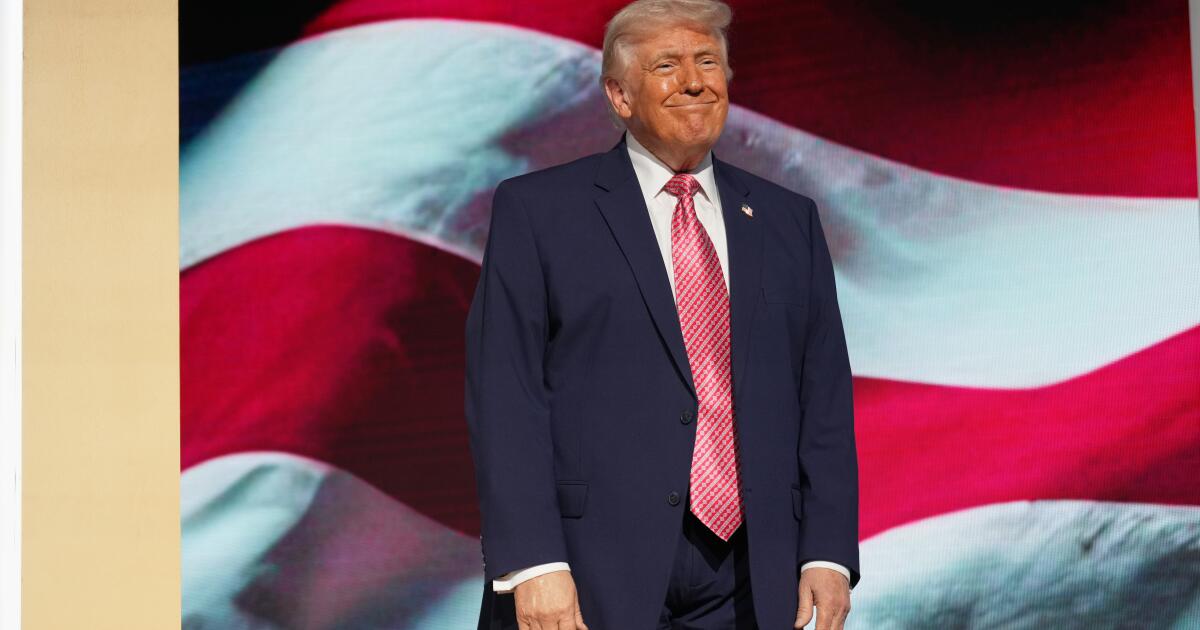
WASHINGTON — With the Iran war in its fifth week, support for President Trump is at its lowest point ever, with a growing body of recent polling showing him losing ground with key voting blocs that helped power his 2024 victory.
While public dissatisfaction is evident among many groups surveyed, the decline in support for the president has been most pronounced among Latino voters.
A Reuters/Ipsos poll released March 24 found 36% of voters approve of the president’s job performance, the lowest it has been during his second term. The poll found 62% disapproved.
Other polls, such as the AP-NORC poll, placed the figure at 38%.
In all, the president is underwater on almost every single public policy issue. With the exception of crime, which sits around 47% approval, he has recorded no gains in any polled category, according to experts.
On immigration, the president’s marquee issue, approval fell from roughly 45% in late 2025 to 39% in February, according to Reuters.
About 1 in 4 respondents approved of Trump’s handling of the economy, Reuters found, as domestic gas prices surged by more than $1 per gallon after fighting commenced last month. The share of Republicans who disapprove of his handling of cost-of-living issues rose 7 points in one week to 34%.
The shift comes amid growing economic unease and amplified backlash over the war in Iran. About 1 in 3 Americans approve of the military operation, according to a Reuters survey.
And a growing divide among prominent conservatives has emerged over the U.S. involvement in the Middle East.
The clashes have played out in public and are exposing tensions within the Republican Party, with conservative commentators such as Megyn Kelly openly questioning whether the war is in America’s best interest.
“This is not a foreign policy that makes sense and it is not what Trump ran on. It is, in many ways, a betrayal of his campaign promises, what he sold himself as and of his MAGA base,” Kelly said earlier this month.
Other conservative pundits, including Candace Owens, Tucker Carlson and Nick Fuentes, are also opposed.
But the real damage is showing up in the one place Trump can’t afford to lose: his base.
Trump entered his second term buoyed by historic gains with Latino voters. Exit polls indicated he improved his standing with them by more than 20 percentage points in 2024 compared with his 2016 victory, fueling widespread narratives that the demographic was undergoing a durable shift toward Republicans. In all, 48% of Latinos gave him their support in the last election.
Since then, his approval among Latino voters has plummeted to 22%, according to a March 2026 analysis by the Economist.
In a bipartisan poll by UnidosUS released in November, 14% of Latino voters said their lives were better after Trump took office, while 39% said they had gotten worse.
The president’s rapport with Latinos reflects a deep dissatisfaction with economic conditions, according to Mike Madrid, a veteran California Republican political consultant and expert on Latino voting trends.
“Overwhelmingly, this is a function of the economy and affordability,” he said. “Latino voters moved away from Biden-Harris for the exact same reasons that they’re moving away from Donald Trump right now.”
Research and polling suggests Latino voters prioritize cost-of-living issues — such as housing, wages and inflation — over immigration, a topic often emphasized in national messaging.
“It’s not even close,” Madrid said. “Immigration is not even a top 5 issue for Latino voters.”
Madrid suggested the demographic rallying is less a “reversion” and more a reflection of a rapidly changing electorate.
“Latinos have emerged as the only true swing vote in America,” he said. “And they’re rejecting whichever party is in power.”
These volatile, double-digit voting shifts directly contrast more stable voting patterns among other major demographic groups, including the Black and white electorates, where shifts from cycle to cycle tend to be just a few points.
The reason: dramatic turnout fluctuations. Who decides to show out or stay home on election day tends to change by the year. It’s compounded by the fact that there are far more first-time Latino voters than in any other category.
Polling this month suggests Trump is also losing ground among young voters, another group that contributed to his 2024 gains.
More than half of men under the age of 30 supported Trump in that election, helping him turn several swing states.
In just a year, that demographic has cratered by 20 points.
“Trump won in 2024 because of men. They are abandoning him right now,” CNN senior data analyst Harry Enten said Tuesday.
The reversals could have massive implications for the November midterm elections, particularly in competitive congressional districts where small swings could determine control of the House.
Republicans have warned that if they lose hold of their narrow congressional majority, Trump is likely to face a third impeachment.
UCLA political scientist Matt Barreto said movement away from Republicans is already visible in real-world election outcomes, not just polling.
“We’ve already seen in the Virginia and New Jersey legislative and gubernatorial elections really large shifts in the Latino vote, 25 points back to the Democratic Party,” Barreto said. He added that similar patterns have emerged in places such as Miami and Texas, where Democratic candidates have outperformed expectations with strong Latino support.
Latino Democrats who sat out the 2024 election are returning to the electorate, while some Latino Republicans are disengaging, he said.
That dynamic could prove decisive in November. There are more than 40 congressional districts where the number of registered Latino voters exceeds the margin of victory in 2024, Barreto said. Many of them are closely divided between the parties.
“At the district level, the Latino vote is going to make a huge impact,” he said.
Do newspaper endorsements for president still matter? Certainly not as much as they once did, but that doesn’t stop most newspapers (including this one) from exercising their 1st Amendment right to spout off about their choice of candidate, and it doesn’t stop the presidential campaigns from breathlessly reporting each and every endorsement as if it were handed down by the Oracle of Delphi.
So who’s winning the endorsement race?
That all depends on how you look at it.
According to Editor & Publisher, the longtime bible of the newspaper business, the tally as of Saturday was 112 for Republican Mitt Romney and 84 for President Obama. That list didn’t include papers from Sunday, when many delivered their endorsements, but it suggested a shift from 2008, when E&P;’s final tally showed daily newspapers — which historically have skewed Republican — endorsing Obama over Republican John McCain by a better than 3-2 margin, 296 to 180
The American Presidency Project at UC Santa Barbara has also been tracking endorsements, but it limits its list to the 100 largest newspapers. On average, they tend to have more liberal editorial pages, presumably reflecting their locations in Democratic-leaning big cities. As of Sunday, the project showed 33 endorsements for Obama and 27 for Romney. (Although most newspapers have issued their endorsements by now, a significant number are apparently waiting for the final week of the campaign.)
The tally reflects some notable gains for the GOP, however. According to the American Presidency Project, nine of the 100 top newspapers have switched sides from Obama to Romney since 2008, whereas only one went the other direction.
Among those abandoning the president was his Arlington Heights, Il., Daily Herald in his home state, which cast its lot — albeit a bit hesitantly– with Romney on Sunday.
“We believe that Barack Obama and Mitt Romney are good and decent men who care about the country,” the newspaper wrote. “We believe each possesses extraordinary skills and talent. But, philosophically, it is clear that one trusts government too much; the other appears to trust it too little.” The editorial went on to criticize “the tone of Obama’s relentless insinuations that wealthy Americans refuse to pay their fair share. That tone is divisive and damaging for the nation and for our economy. It creates villains and victims, and unfairly so.” That, it said, was, “ultimately, the point where we must break with him.”
The San Antonio Express-News was the only one of the big papers to go the other way. It had endorsed McCain in 2008. This year, it said that while Obama has “had his failings,” such as a failure to pursue immigration reform and to tackle the debt crisis, “These shortcomings … don’t justify a change in leadership, particularly when many of Mitt Romney’s proposals — such as an across-the-board 20 percent cut in taxes and the elimination of unspecified itemized deductions — invite skepticism.”
Concluded the Express-News: “No candidate has all the right policies — that includes Barack Obama. But having weathered the challenges of the last four years, we believe he is in a better position to guide the nation over the next four years — and has earned from voters the privilege to do so.”
It is probably in the nature of newspaper editorials to stop short of adulation and unbridled enthusiasm. That certainly is the case with virtually all the endorsements of Obama and Romney, very few of which are wholehearted.
The Chicago Tribune (owned by the Tribune Co., which also owns The Times) endorsed Obama, but its editorial page editors said, “On questions of economics and limited government, the Chicago Tribune has forged principles that put us closer to the challenger in this race, Republican Mitt Romney. We write with those principles clearly in our minds. Romney advocates less spending, less borrowing — overall, a less costly and less intrusive role for government in the lives of the governed.” So why not just endorse Romney? The Trib concluded that he had been “astonishingly willing to bend his views to the politics of the moment: on abortion, on immigration, on gun laws and, most famously, on healthcare.”
And several newspapers that did endorse Romney expressed the hope that, if elected, he would turn out to be the moderate Romney, not the “severe” conservative he presented himself to be in the Republican primaries.
“Let us stipulate,” said the Houston Chronicle, the largest newspaper to switch from Obama in 2008 to Romney this year. “The Mitt Romney we are endorsing is the Massachusetts moderate who worked successfully alongside an 88 percent Democratic majority in the state Legislature to produce what the Obama administration says became its model for national healthcare reform.”
Not everyone was so equivocal. The New York Post, never known for mincing words, did not choose this occasion to begin.
“Four frustratingly long years ago, a war-weary and economically battered America took a flier on a savior,” the Post wrote.
Next paragraph, in full: “It didn’t work out.”
Some newspapers that endorsed candidates in 2008 decided not to pick anyone this year. The Oregonian, in Portland, supported Obama four years ago, during a campaign in which he held one of his largest rallies in that city. The paper sounded a bit miffed this year when it said it wasn’t endorsing anyone this time around because the candidates hadn’t campaigned in Oregon. “The access and close observation that inform our endorsements for state and local offices and Congress do not apply in a national race; our CNN-level view of the presidential race is similar to everyone else’s,” the paper said.
The New York Times was the largest of the nation’s newspapers to endorse a candidate. It concluded Saturday that Obama “has formed sensible budget policies that are not dedicated to protecting the powerful, and has worked to save the social safety net to protect the powerless.” Romney, it said, “has gotten this far with a guile that allows him to say whatever he thinks an audience wants to hear. But he has tied himself to the ultraconservative forces that control the Republican Party and embraced their policies, including reckless budget cuts and 30-year-old, discredited trickle-down ideas.”
The two largest newspapers in the country, the Wall Street Journal and USA Today, do not usually issue formal endorsements, although the Journal has made no secret of its strong preference for Romney.
The Los Angels Times, for what it’s worth, endorsed Obama and followed up with an explanation from Editorial Page Editor Nick Goldberg of why the newspaper endorses anyone at all, given its mandate to be nonpartisan and unbiased in its news articles. The article contained one reminder of the historically less-than-awesome power wielded by newspaper endorsements: The Times’ first endorsement, in 1884, was for Republican James G. Blaine.
Remember him?
mitchell.landsberg@latimes.com
Twitter: @LATlands
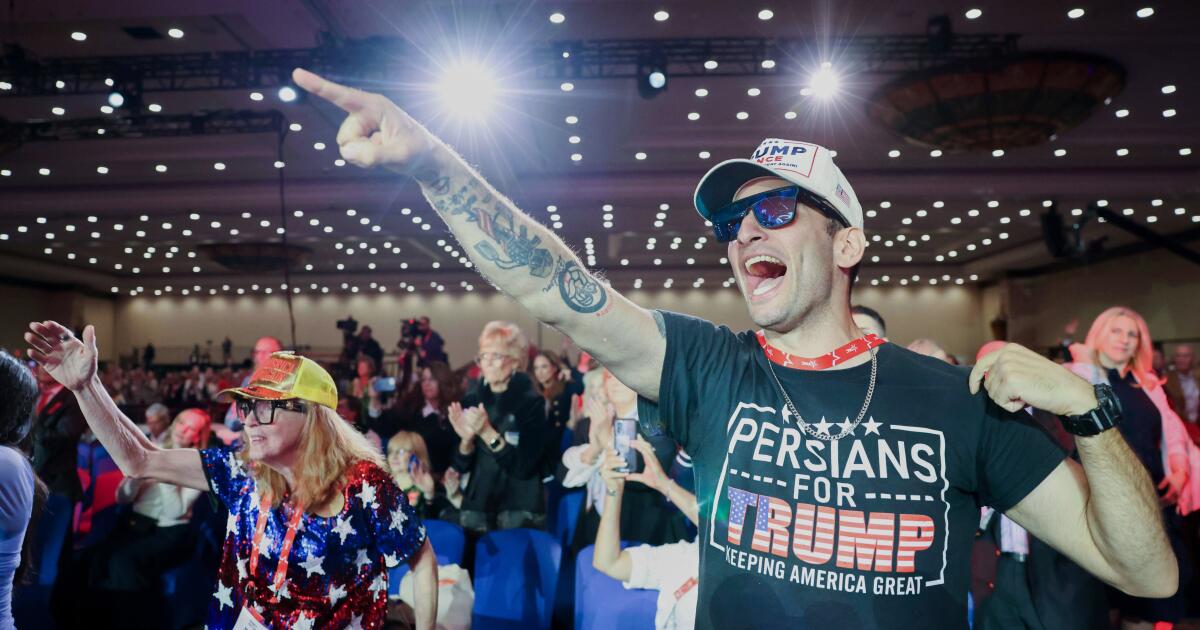
GRAPEVINE, Texas — A generational divide over the Iran war surfaced between older attendees and their political heirs at this year’s Conservative Political Action Conference, as the group’s leaders pleaded for unity in a challenging midterm election year for Republicans.
Younger conservatives at CPAC, which concluded Saturday, spoke of disappointment and even betrayal over President Trump’s war against Iran, saying in interviews with the Associated Press that the president’s actions run counter to his many pledges to oppose foreign entanglements.
Meanwhile, older conservatives were looking past Trump’s campaign criticism of military action to achieve regime change, arguing that the war in Iran is a pragmatic act necessitated by threats to the United States.
The bright dividing line emerged in conversations with a dozen participants on either end of the age spectrum who gathered this week for the annual meeting of conservatives, being held outside Dallas. That split could reflect flagging enthusiasm for Trump among some younger voters, a potentially troubling sign for Republicans heading into midterm elections and for the conservative movement as it looks beyond Trump’s tenure.
“We did not want to see more wars. We wanted actual America-first policies, and Trump was very explicit about that,” said Benjamin Williams, a 25-year-old marketing specialist for Young Americans for Liberty. “It does feel like a betrayal, for sure.”
Williams, from Austin, Texas, said he worries about his friends in the military, especially his Air Force officer brother. More broadly, he sees the war as an unnecessary disruption to the stability in the Middle East that could have long-term negative effects on the U.S. economy.
“Trump’s rhetoric was very important for people of my generation,” Williams said.
Auburn University sophomore Sean O’Brien’s support for Trump has slipped, especially with his talk of sending U.S. ground troops into Iran. “I’m not happy,” he said.
Sending troops into Iran, he said, “would be full betrayal.”
With at least 1,000 troops from the 82nd Airborne Division deploying in the Middle East, O’Brien said, “That’s what keeps me up at night.”
Older CPAC participants were far more supportive of the war effort, describing Trump as wisely responsive to what they described as the threat Iran posed. Several suggested that Trump did not initiate the war, but that Iran had decades ago.
“I don’t believe he started a new war. He was acting in response to a 40-year-old war by Iran,” said 70-year-old retired defense contractor Joe Ropar of McKinney, Texas. “How long were we supposed to wait? I think he did what he had to do when he had to do it.
“Do nothing? I’m not on board with that,” Ropar said.
Echoing a common theme from older participants, Kelle Phillips said Trump’s decision was a pragmatic reaction to a real threat that overrules the best hopes of campaign rhetoric.
“You campaign on what you want to do and then the world’s dynamics happen,” said Phillips, a 61-year-old author and religious instructor from Frisco, Texas. “I think the difference is if you have someone in the Iranian regime who wants to destroy America, you can’t reason with them.”
Trump’s goals in Iran, James Scharre believes, are short-term and not a concern for those adverse to a long slog overseas.
Scharre, 61, also interprets Trump’s steadfast campaign opposition to regime change as a preference, not an ironclad promise.
“I think he said he was against it,” he said. “Trump is a wise leader. He does what works. And I’m for it.”
Cracks in the conservative coalition began appearing early in the war, led by influential opinion leaders like podcaster Tucker Carlson, a staunch opponent of the Iran war.
Joe Kent recently quit his post as Trump’s director of the Center for Counterterrorism at the Department of Homeland Security, saying in his departure statement that “I cannot in good conscience support the ongoing war in Iran” and that “Iran posed no imminent threat to our nation.”
Right-wing podcaster Stephen K. Bannon, a longtime Trump advisor and former White House aide who is expected to speak at CPAC, has worried aloud that a protracted Mideast military engagement would cost Republicans support by pushing some conservatives to sit out the November midterms.
This comes at a time when Republicans’ hold on the U.S. House is in jeopardy and the GOP’s thin Senate majority is not as secure as it appeared just a few months ago.
A recent survey from the Associated Press-NORC Center for Public Affairs Research indicates that while Trump’s approval rating is low but holding steady, the conflict could be turning into a major political liability for his administration. About 59% of Americans say U.S. military action in Iran has been excessive, the poll found.
CPAC Chairman Matt Schlapp acknowledged conservatives were divided over Iran and said the convention’s annual straw poll will include a question about it. The results were to be released later Saturday.
“Any consensus is still to be determined. I think people trust President Trump, so I don’t think there’s been any shaking of his support,” Schlapp told the AP. “But I think underneath there’s concern about where does this lead.”
Tiffany Krieger, a 20-year-old sophomore at the University of Pittsburgh, said her onetime level-10 support for Trump has dipped to 5 over the war.
“It seems like the love for him is plateauing. We see our party splitting apart and we’re supposed to be united,” said Krieger, of Harrisburg, Pa. “I think this issue with the war has put a line through the conservative movement.”
Almost if addressing Krieger directly, Mercedes Schlapp, senior fellow for the CPAC foundation, opened Thursday’s session of the conference in Texas with a direct appeal.
“We cannot divide from within,” she told an audience of hundreds from the stage at the convention center. Referring to political opponents, she added: “Let’s stay united. They want us divided.”
Beaumont writes for the Associated Press.
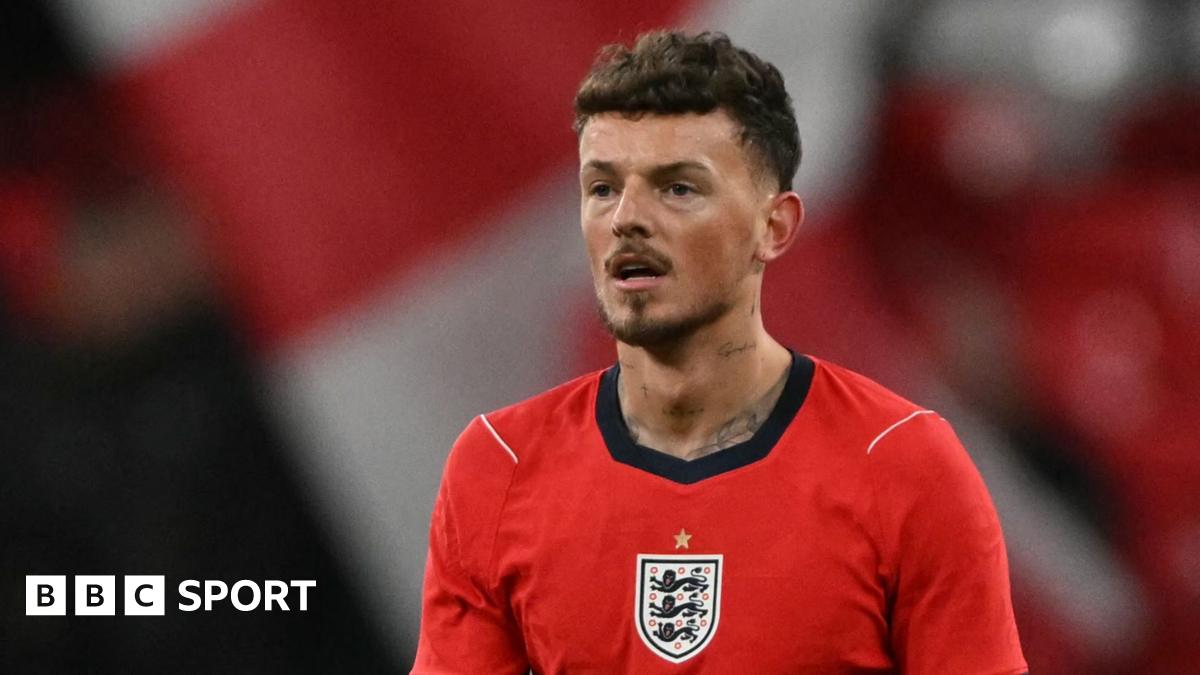
John Murray, BBC Radio 5 Live football correspondent
What that match will be remembered for is Ben White.
That’s the only match I have ever seen when an England player has scored his first international goal for England at Wembley and was booed by, I would say, a sizeable minority of the crowd.
When he left the squad in Qatar and went home for what was described as personal reasons – we’ve never really got to the bottom of what it was.
There were stories that there was a fall-out, something happened involving Steve Holland, Gareth Southgate’s assistant. But that was never confirmed by Gareth Southgate.
I thought last night might have been the perfect opportunity for Ben White to put his head above the parapet. He’s made his comeback, he’s just scored his first goal. But, as Thomas Tuchel was saying in advance of the match – and we kind of know this already – he described him as quite introverted, quite shy, and maybe he just doesn’t feel comfortable to do that.
But probably at some stage he will have to grasp the nettle and talk about it.

Iranian Red Crescent says more than 92,600 civilian units were damaged across the country in US-Israeli attacks.
Source link
She was also charged with publishing or distributing written material, and using words that were threatening, abusive or insulting intending thereby to stir up racial hatred or having regard to all the circumstances was reckless as to whether racial hatred would be stirred up, in breach of the Public Order Act 1986.

EU lawmakers on Thursday approved the EU-US trade deal struck in Turnberry, Scotland, in 2025, while attaching a set of conditions to the agreement.

A broad majority of political groups backed the deal, which cuts EU tariffs on most US industrial goods to zero, with 417 votes in favour, 154 against, and 71 abstentions.
The European Commission and Washington had pushed for the deal’s implementation, but MEPs delayed backing it until last week amid tensions over Greenland and fresh US trade investigations that raised fears Washington could undermine the deal with new tariffs.
Initially criticized by MEPs as unbalanced and defended by the Commission as the best possible outcome, the deal sets US tariffs on EU goods at 15%, while the EU eliminates duties on most US industrial products.
MEPs introduced safeguards to rebalance the pact in the event of future threats from US President Donald Trump or violations by the United States.
“Of course, that’s imbalanced, but if we could improve it, maybe we can live with it,” Socialist German MEP Bernd Lange said ahead of the vote.
The European Parliament will now work with EU member states to find a common position and enable the tariff cuts, with the attached safeguards expected to be the main point of contention.
These include a “sunset clause” under which the deal expires in March 2028 unless both sides agree to extend it. It also includes a “sunrise clause” which would make tariff preferences conditional to the US respecting its Turnberry commitments.
Lawmakers moved to shield the deal from fresh US tariffs after the Supreme Court struck down 2025 US tariffs in February, prompting the White House to impose new duties on EU goods and launch an investigation into alleged unfair trade practices that could lead to further tariffs.
MEPs also linked the tariff cuts on steel and aluminium to equivalent actions by the US.
WASHINGTON — Californians may be forced to put their ballots in the mail well before election day to be certain they will be counted.
That’s the likely outcome of a Republican challenge to mail ballots that came before the Supreme Court on Monday.
The court’s six conservatives sounded ready to rule that federal law requires that ballots must be received by election day if they are to be counted as legal.
In the 19th century, Congress set a national day for federal elections on a Tuesday in early November, but it did not say how or when states would count their ballots. The Constitution leaves it to states to decide the “times, places and manners for holding elections.”
California and 13 other states count mail ballots that were cast before or on election day but arrive a few days late. And most states accept late ballots from members of the military who are stationed overseas.
By law, California counts mail ballots that arrive within seven days of election day. In 2024, more than 406,000 of these late-arriving ballots were counted in California, about 2.5% of the total.
Other Western states — Washington, Oregon, Nevada and Alaska — also count late-arriving mail ballots.
But President Trump has repeatedly claimed that voting by mail leads to fraud, and the Republican National Committee has gone to court to challenge the state laws that allow for counting the legally cast ballots of citizens which are postmarked on time but arrive late.
GOP lawyers argued that the phrase “election day” has always meant ballots must be in the hands of election officials on that day. In their questions and comments, all six conservatives agreed.
Justice Samuel A. Alito Jr. saw a real prospect of fraud. There could be “a big stash of ballots” that arrive late and “flip the outcome,” he said.
Democrats and election law experts say that the proposed new rule conflicts with more than a century of practice, because most states allowed for some people to vote by mail if they were traveling on election day. They argued that election day is like the federal tax day of April 15. While tax returns must be postmarked then, the tax returns are legal even if they arrive at the Internal Revenue Service a few days later.
The GOP filed its challenge in Mississippi, which accepts ballots that arrive up to five days after election day. A district judge rejected the claim, but a 5th Circuit Court panel with three Trump appointees ruled that ballots are illegal if they are not received by election day.
The case before the court is Watson vs. Republican National Committee.
California has been criticized for taking weeks to count all the votes, but that issue was not raised in this case.

Residents in Indian-administered Kashmir are donating their gold possessions and cash to support Iranians impacted by the US-Israeli war. Iran’s embassy in India has acknowledged the gesture, saying their kindness ‘will never be forgotten’.
Published On 22 Mar 202622 Mar 2026
Share
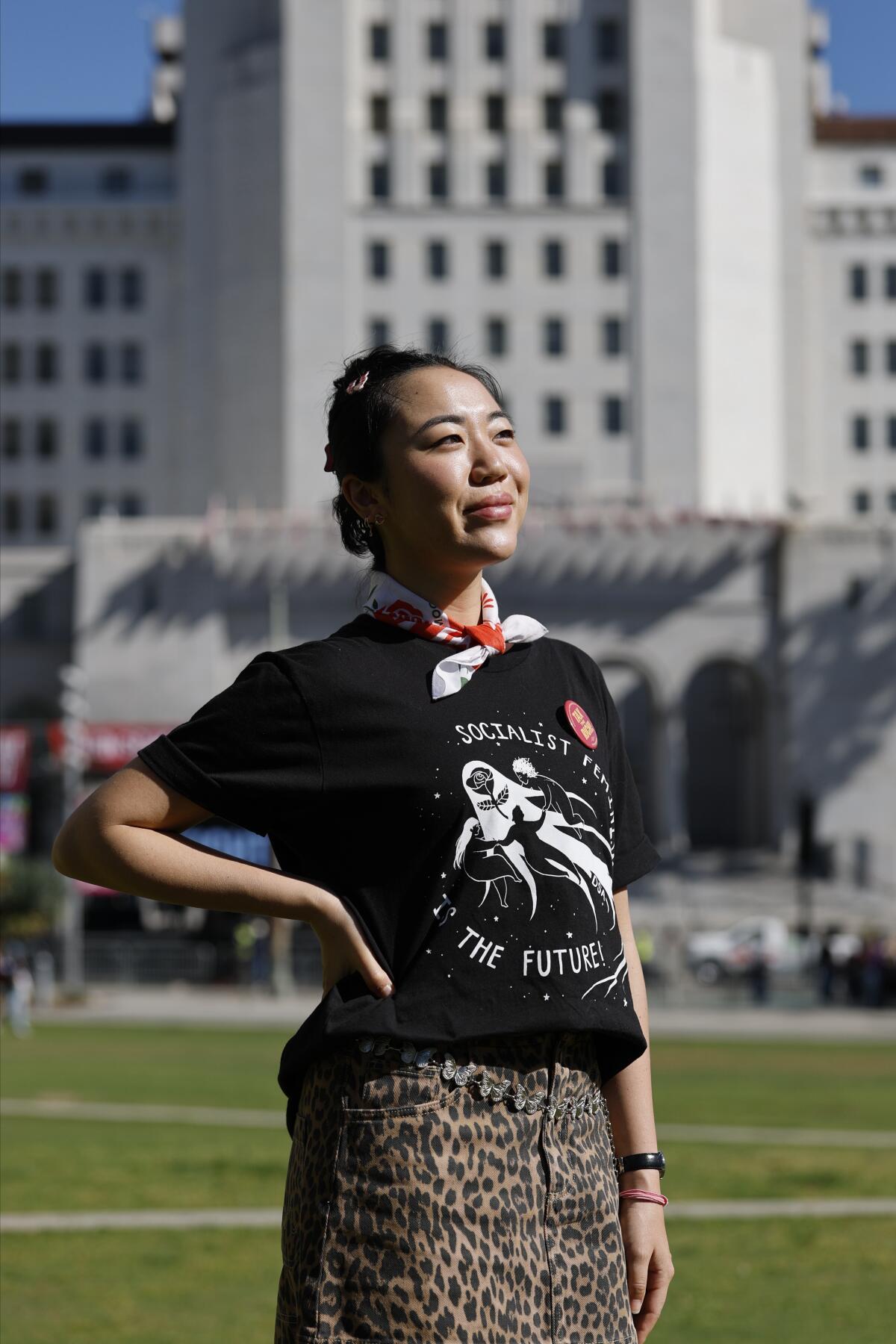
The same day she announced her surprise bid for mayor, Los Angeles City Councilmember Nithya Raman called a member of the local Democratic Socialists of America chapter.
She wanted to meet with the group’s leadership to explain her late-breaking decision to challenge Mayor Karen Bass, her longtime ally, which took just about everyone in the city by surprise.
Two days later, Raman gathered at her Silver Lake home with leaders of DSA-LA, which has endorsed her two runs for City Council but has been at odds with her on some issues.
Leslie Chang, a co-chair of the 5,000-member chapter, recalled Raman saying, “‘The media is going to paint me as a DSA candidate, and I have a relationship with you, and I’m interested in maintaining that relationship. So let’s talk.’”
DSA-LA, which had declined to endorse in the mayor’s race, will decide on Saturday whether to reopen its endorsement process.
Some members believe that a mayoral endorsement would take valuable phone-banking and door-knocking resources away from the slate of six local candidates they have already endorsed.
If the process moves forward, the question would then be whether to back Raman or Rae Huang, a housing activist viewed by some members as more aligned with socialist principles, while others see her as less electable. The group could also decide not to endorse either candidate.

Leslie Chang, co-chair for the Los Angeles chapter of the Democratic Socialists of America, at a rally at Molina Grand Park in Los Angeles on March 18.
(Gina Ferazzi / Los Angeles Times)
Going to bat for a mayoral candidate would be the highest-profile drive the local organization has run in a city where its influence has expanded since it knocked on doors for Raman’s first council campaign in 2020. In addition to Raman, three other DSA-backed politicians now occupy seats on the 15-member City Council.
In New York, DSA member Zohran Mamdani was recently elected mayor on a platform of rent freezes and free city buses.
“It would be a major coup for DSA to have one of their candidates be elected mayor [of Los Angeles],” said Sara Sadhwani, a politics professor at Pomona College.

The Rev. Rae Huang, who is running for mayor of Los Angeles, joined the Fair Games Coalition to announce the launch of the Overpaid CEO Tax Initiative in front of the Tesla Diner in West Hollywood on Jan. 14.
(Genaro Molina / Los Angeles Times)
As a city council member, Raman has delivered several major wins celebrated by DSA members, including strengthening renter protections and passing the first reform to the city’s rent stabilization ordinance in decades.
But she has sometimes been out of step with the group, approving budgets that increased police spending and seeking to revise Measure ULA, also known as the city’s “mansion tax,” to offer a 15-year exemption to developers of multifamily and commercial projects.
Raman’s most visible split with DSA occurred over the Oct. 7, 2023, Hamas attack that killed more than 1,200 Israelis.
DSA released a statement saying “this was not unprovoked.” Raman called the statement “unacceptably devoid of empathy for communities in Israel.”
In early 2024, DSA censured Raman for seeking and accepting an endorsement from Democrats for Israel-Los Angeles, a liberal Zionist group, chiding her for “accepting support from [DSA’s] enemies.”
“Why are people wary of endorsing Nithya for mayor? A lot of people who were in leadership at the time are hesitant because of that situation,” said Noah Suarez-Sikes, a member of DSA-LA’s steering committee.
In a statement to The Times, Raman called herself an “independent leader.”
“While I share the DSA’s emphasis on uplifting the working class and those who have been left behind by the political establishment, I don’t always agree with my allies on how to accomplish our goals,” she said.
Some DSA members see Huang, who has little citywide name recognition or political experience, as more connected to the group’s platform than Raman. Huang has called for “Fast and Free Buses” as well as for more public input on the city budget.
Huang highlighted her support for keeping the “mansion tax” as is, also telling The Times that she would reduce the Police Department budget and the number of officers.
Raman has said she believes the Los Angeles Police Department should maintain its current staffing of around 8,700 sworn officers.
Konstantine Anthony, a DSA member and Burbank City Council member who gathered signatures to reopen the endorsement window, is supporting Huang.
“She is the exact candidate DSA across the country should be running for every seat,” he said.
Keshav Kundassery, a DSA member since 2019, supports Raman.
While he called Huang’s campaign for mayor “inspiring,” Kundassery said he does not think that she can get enough support.
“DSA should be in the business of running campaigns to win,” he said.
DSA-LA has already endorsed in four city council races, backing incumbents Hugo Soto-Martínez and Eunisses Hernandez; Faizah Malik, who is running against incumbent Traci Park on the Westside; and Estuardo Mazariegos for an open South L.A. seat.
The group is also backing Marissa Roy, who is challenging City Atty. Hydee Feldstein Soto, and Rocío Rivas, an incumbent L.A. Unified school board member.
“Any consideration we make now we will make understanding the balance of resources of our six candidates and a potential seventh,” said Chang, the DSA-LA co-chair.
Times staff writer David Zahniser contributed to this report.
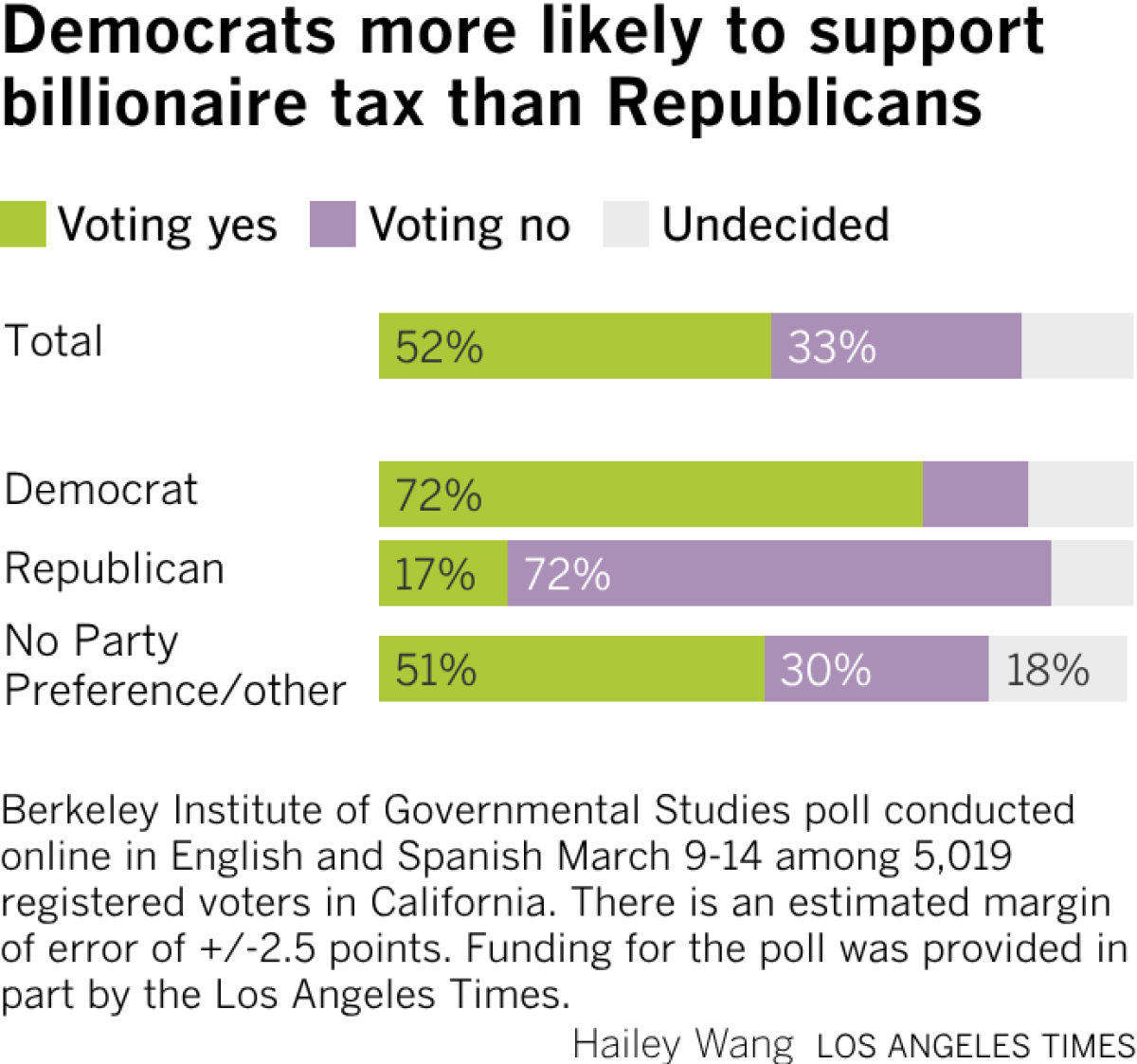
SACRAMENTO — A new poll shows California voters are sharply divided over two brewing statewide ballot measures stirring up the nation’s partisan and economic divides: a one-time tax on billionaires to pay for mostly healthcare and a voter ID mandate that includes citizenship verification.
The survey conducted by UC Berkeley’s Institute of Governmental Studies and co-sponsored by The Times showed 52% of registered voters supported the billionaire’s tax, while 33% said they opposed it. Fifteen percent were undecided.
Support for the voter ID measure was more evenly split, with 44% of voters in support, 45% opposed and the remainder undecided.
The pair of statewide proposals, which have yet to qualify for California’s November ballot, emanated from opposite sides of California’s political spectrum. Organized labor and progressives are pushing hard for a new wealth tax in response to Republican cuts to federal healthcare programs, and the GOP-led call for additional voter restrictions comes in the wake of President Trump’s baseless claims that the 2020 election was stolen from him.
Poll director Mark DiCamillo said he “was a little surprised” by the results given how much attention each measure has already received.
“Just from reading the press accounts of these initiatives, I thought they would both be well ahead. There’s been a lot of discussion about them and advocates seem to be very confident in their chances of passage, but the polls seem to indicate otherwise,” he said.
The divisions over each measure fell largely along partisan and ideological lines.
On the billionaire’s tax initiative, 72% of Democratic voters said they would support the measure if the election were held today — and the same percentage of Republicans oppose it. A slim majority — 51% — of voters who are unaffiliated or registered with another party support the wealth tax, while 30% said they oppose it, with the remainder undecided.

Republican voters overwhelmingly support the voter ID initiative, with 91% saying they would vote for it. More than two-thirds of Democratic voters, 68%, said they would oppose the measure. No party preference voters appeared evenly split.

Neither ballot measure has officially qualified for the November ballot thus far, though proponents of the voter ID measure said this month that they turned in 1.3 million voter signatures to elections officials, well above the 875,000 required to qualify. Proponents of the new tax on billionaires have until June 24 to submit signatures to elections officials.
The billionaire tax has generated national news coverage and widespread debate over whether it would benefit low-income Californians or end up hurting the state’s tax base as billionaires move out of the state to avoid paying it.
The proposal is backed by the Service Employees International Union-United Healthcare Workers West, which represents 120,000 workers in California. Union leaders say that the tax would raise $100 billion to backfill steep cuts to federal healthcare programs under a sweeping tax and spending bill approved by the Republican-controlled Congress and signed in the summer by Trump.
The measure would impose a one-time 5% tax on the assets of California residents who are worth $1 billion or more, with options to pay it over multiple years.
According to SEIU-UHW, the new tax would apply to around 200 people in the state, though several wealthy tech leaders have made moves to change their residences and avoid paying the tax should it pass. In recent months, Meta Chief Executive Mark Zuckerberg, Google co-founders Larry Page and Sergey Brin and others have bought up lavish beachfront estates and new commercial office spaces in South Florida.
Some of those billionaires are also ponying up to defeat the measure. Brin, who according to Forbes is the world’s third-richest person, has contributed $45 million to a new ballot measure committee called Building a Better California, which is pushing an alternative statewide ballot measure that could scrap the billionaire’s tax.
Brandon Castillo, a veteran ballot measure campaign strategist who is not working on either of the two measures, said even though it’s currently polling above 50%, the billionaire’s tax is starting out “in a really shaky position.”
“This is not a very strong place to start,” he said. “That’s not to say they can’t keep this thing over 50%, but when you’re starting just barely above 50% and you have a tsunami of money and a huge campaign against you, it’s really hard to keep yourself at that level.”
Though previous public opinion polls at the state and national levels have shown broad support for requiring proof of citizenship to vote in elections, even among Democrats, the new Berkeley poll showed liberal voters are skeptical of the measure.
Proponents of voter ID contend that such laws prevent election fraud and, along with proof of citizenship mandates, prevent noncitizens from voting. Opponents say ID requirements threaten the fundamental constitutional rights of Americans who do not have the documentation readily available, and that the restrictions are unnecessary given that voting by noncitizens is rare and already outlawed in the U.S.
Under current law, Californians are not required to show or provide identification when casting a ballot in person or by mail. They are required to provide identification when registering to vote, and must swear under penalty of perjury, a felony, that they are eligible to vote and a U.S. citizen.

The poll showed that slim majorities of predominantly Spanish-speaking voters, voters who were born in another country and first-generation immigrants support the voter ID measure. A plurality of Latino voters also favor it, with 44% in support and 41% opposed.
But DiCamillo cautioned against reading too much into those numbers, noting that awareness of the measure is still relatively low.
“I’ve always seen in my history of measuring Latino voters’ support that they are relatively late deciders on most ballot measures,” he said. “How they break will be critical. I would say we’ll have to look at how they feel when we do our final preelection poll.”
Voter ID laws are also a top priority of Trump, who has pressured the Senate into taking up the SAVE Act, which would impose nationwide requirements for proof of citizenship to vote and already has passed the House of Representatives.
Castillo said Trump’s support could sway Democratic and liberal-leaning independents to vote against the measure.
Both DiCamillo and Castillo noted that with the November election still seven months away, voters are not paying much attention and those on either side of each ballot measure have not launched major campaigns yet.
“I suspect by the time election day comes around, these awareness numbers on the billionaire’s tax certainly are going to be much higher,” Castillo said. “You’re going to see 80-90% of voters familiar with it, just because they’re going to be inundated with advertising and earned media between now and November.”
The Berkeley IGS/Times poll surveyed 5,019 registered California voters online in English and Spanish from March 9 to 14. The results are estimated to have a margin of error of 2.5 percentage points in either direction in the overall sample, and larger numbers for subgroups.
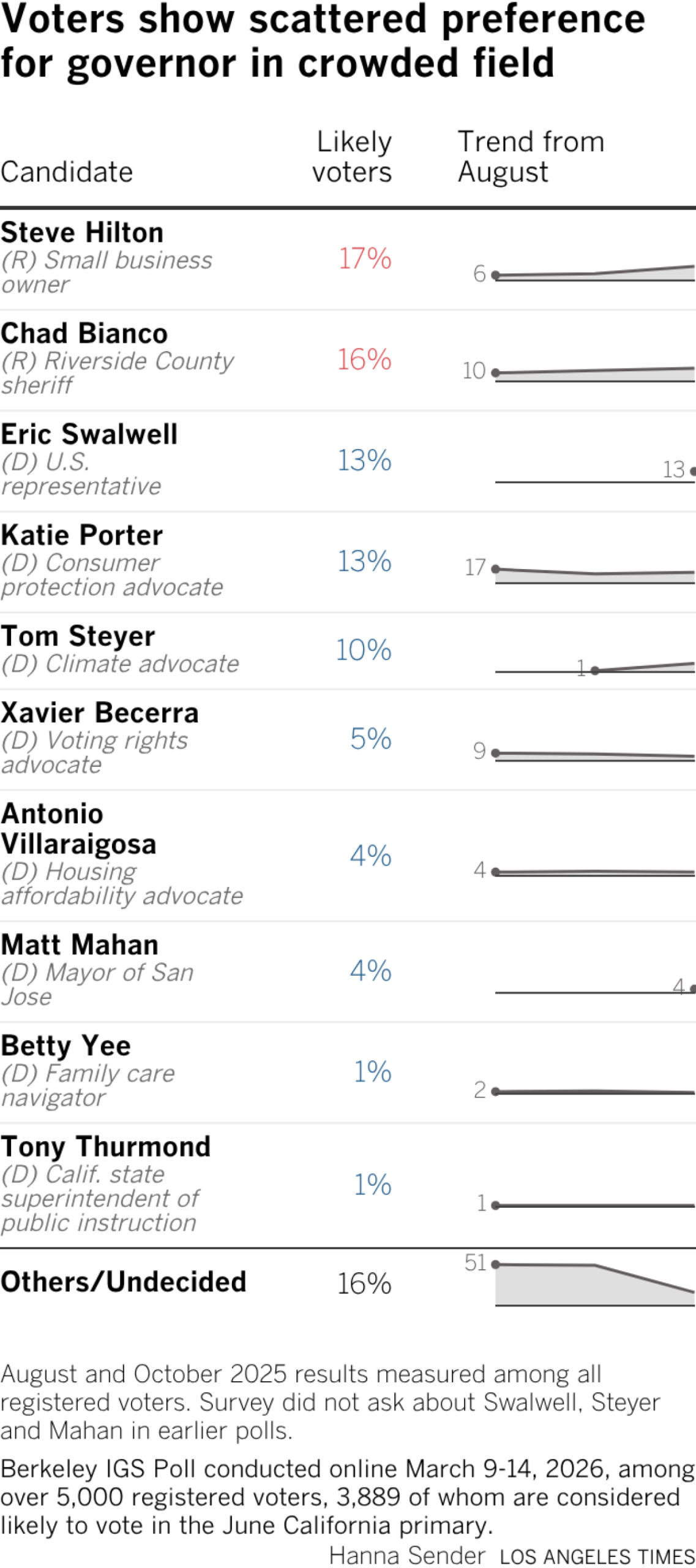
Despite a long, entrenched Democratic reign over California politics, a new poll shows two Republicans leading by slim margins in the state’s 2026 race for governor as the June primary election fast approaches.
The confounding results appear to be mostly due to the state’s left-leaning electorate feeling uninspired by any single candidate in the crowded field of eight top Democrats. Because of California’s top-two primary rule, that lethargy could lead to Democrats being shut out of a November election that will determine the next leader of the largest state in the union, though that is still considered unlikely.
Conservative commentator Steve Hilton had the support of 17% of likely voters and Riverside County Sheriff Chad Bianco had the backing of 16%, according to a poll released Wednesday by UC Berkeley’s Institute of Governmental Studies and co-sponsored by The Times.

Following closely behind were Democrats Rep. Eric Swalwell of Northern California and former Orange County Rep. Katie Porter, both of whom had support from 13% of the likely voters surveyed. Aside from billionaire hedge fund founder and environmental activist Tom Steyer, who registered at 10% support after plowing tens of millions of dollars into his campaign, no other Democrat had won support from more than 5% of likely voters, the poll showed.
Mark DiCamillo, director of the poll, said he was stunned by how fractured voters are and how little knowledge they have about the candidates less than 60 days before ballots start arriving in Californians’ mailboxes.
“This is historic for me, and especially given that none of the candidates have really a positive image rating with voters, also startling. I mean, perhaps one of the reasons why voters are disengaged, they’re just not enthusiastic about any of the candidates,” he said. “They’re kind of sleepwalking to this election.”
Swalwell and Porter both hew toward the progressive wing of the party and rose to national prominence as frequent guests on cable news shows and as combative, at times theatrical, committee members during congressional oversight hearings. That notoriety prompted attacks from Republicans and the far right and increased their popularity among the Democratic base — both pivotal for voters seeking a strong candidate to challenge President Trump.
Porter slightly rebounded after a dip in polling in the fall after videos emerged of her berating an aide and a reporter. She also has the highest favorable rating of any candidate in the field at 34%.

According to the survey, Steyer’s support from likely voters increased to 10% from just 1% in Berkeley’s October poll. The momentum comes after Steyer spent about $50 million airing television ads since December, according to an analysis by data expert Paul Mitchell for Capitol Weekly.
Among the other top Democrats in the race: former U.S. Health and Human Services Secretary Xavier Becerra was backed by 5% of likely voters; former Los Angeles Mayor Antonio Villaraigosa and San José Mayor Matt Mahan by 4%, and former state Controller Betty Yee and state Supt. of Public Instruction Tony Thurmond by 1%.
The poll found that 16% of likely voters were either undecided or backed other, lesser-known candidates.
The splintered support for the Democrats hoping to become the state’s next governor has surfaced in other ways as well. On Monday, the powerful California Federation of Labor voted to endorse four gubernatorial candidates — half the Democratic field.
DiCamillo said he believes the poll’s inclusion of the candidates’ titles that voters will see on their ballots is crucial in a low-information contest.
“That really matters in a race where voters don’t have much information, or they say they don’t know much about the candidates,” he said, adding that it could particularly help Bianco, the Riverside County sheriff. “His job title is kind of impressive, and that voters think, well, that’s credible, so let me consider him.”
The fear of two Republicans winning the top two spots in the June 2 primary prompted California Democratic Party Chair Rusty Hicks to urge low-polling candidates to consider their viability and drop out if they didn’t see a path forward earlier this month.
Some candidates bristled, arguing that party leaders were in effect telling every candidate of color to leave the race. Aside from one candidate, all of the top Democrats in the race responded by quickly filing their campaign documents with the secretary of state’s office, meaning that their names will appear on the ballot.
The two candidates who receive the most votes in the primary are the only ones who advance to the November general election — regardless of their political party.
The odds that a Republican will become California’s next governor appear slim. No Republican has won a statewide election in California since 2006, the year Hollywood movie star Arnold Schwarzenegger was elected to a second term as governor. Democratic registered voters in the state outnumber Republicans by nearly 2 to 1.
Compared with prior gubernatorial races that had well-known Democratic front-runners, none of the candidates of either party are particularly well known by voters. Large numbers of voters have no opinion about any of the candidates — including roughly two-thirds of those asked about Mahan, Yee and Thurmond.
Voters were far more tuned in to the issues that they believe are most important for the state’s next governor to tackle.
Affordability was dominant among all voters, regardless of political ideology, the poll found. Four out of 10 voters said reducing the cost of living in California is among the top issues the next governor should prioritize, and smaller numbers also highlighted building affordable housing and lowering gas prices and utility rates.

Affordability “is the top issue for voters, both here in California and across the country. There’s no question,” DiCamillo said. “Perhaps it’s even of greater urgency here in California, just given our cost of living is higher than in most other places.”
Building new housing, paring back regulations to allow such construction quickly and to reduce the cost of buy a home, disincentivizing private firms from buying homes and reducing gas prices are among topics candidates frequently speak about on the campaign trail and in debates.
A notable split was evident among voters when asked about cutting waste, fraud and political corruption in state government, the poll found. Nearly 50% of Republicans said this was a top priority, compared with 10% of Democrats and a little over a quarter of voters who do not state a party preference.
DiCamillo said this sentiment aligns with President Trump’s messaging and what his administration has been pursuing in the federal government. Trump has repeatedly painted California as teeming with waste, fraud and abuse. On Monday, when he launched a task force to fight fraud that will be led by Vice President JD Vance, California was among the states he singled out as having insufficient oversight of federal funds.
GOP voters in California share similar sentiments, DiCamillo said.
In Washington, D.C., “they’re cutting back, trying to make government smaller, and … just cut the waste as well,” he said. California “Republicans, given the fact that Democrats have been controlling things for so long, they think … more of that is needed now here in California as well.”
The Berkeley IGS/Times poll surveyed 5,019 California registered voters online in English and Spanish from March 9 to 14. The results are estimated to have a margin of error of 2.5 percentage points in either direction in the overall sample, and larger numbers for subgroups.
The United Farm Workers said it would not participate in celebrations of its founder Cesar Chavez amid what the labor union described as “troubling allegations” against the iconic Chicano figure.
The union, in a statement released Tuesday, did not detail the accusations against Chavez but said they were concerning enough for the organization to take action. But several events around the country honoring Chavez including events in Tucson, Houston, Corpus Christi, San Antonio and San Bernardino have been canceled in recent weeks, with little explanation given by organizers.
The claims against Chavez “are incompatible with our organization’s values. Some of the reports are family issues, and not our story to tell or our place to comment on. Far more troubling are allegations involving abuse of young women or minors. Allegations that very young women or girls may have been victimized are crushing. We have not received any direct reports, and we do not have any firsthand knowledge of these allegations,” the union said.
Canceling events, the union said, would “provide space for people who may have been victimized to find support and to share their stories if that is what they choose.”
Chavez is a towering national figure credited with organizing and raising the lives of migrant farmworkers in California and beyond and giving voice to the struggles of Mexican Americans.
Bursting into national prominence in the mid-1960s in the San Joaquin Valley, Chavez galvanized public support on behalf of them after organizing community groups across Central and Southern California. For decades, agricultural laborers had lived in substandard housing and were paid terrible wages. Efforts to organize migrant laborers were usually crushed violently by farmers and local law enforcement.
Chavez and his associates joined a grape pickers’ strike in 1965 launched by Filipino organizers centered around Delano, the heart of California’s table grape crop. Those early years were marked by bitter and sometimes brutal incidents involving picketing farmworkers who screamed “Huelga!” — “Strike!”—and growers who vowed never to give in to Chavez and his movement.

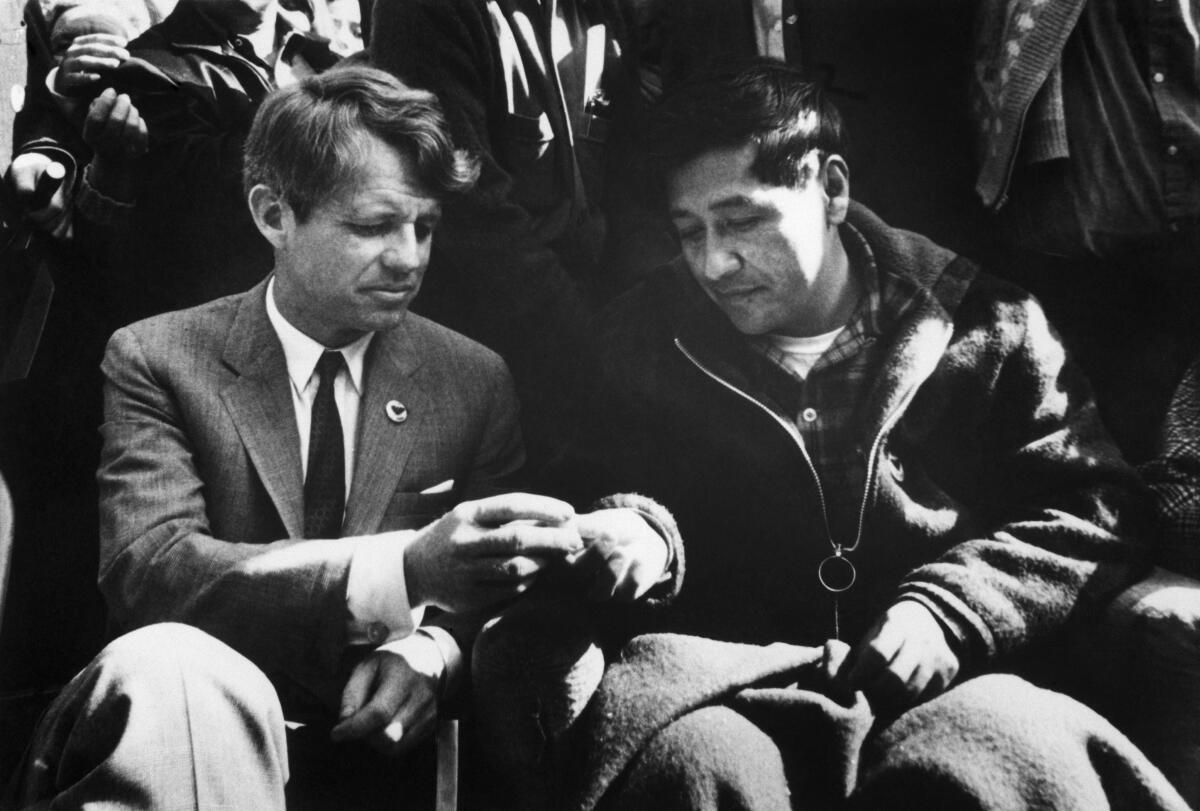
Sen. Robert Kennedy and Cesar Chavez as Chavez ended a 25-day fast.
(Bettmann Archive)
That eventually transformed into a boycott that earned international attention. Chavez, drawing on his Catholic faith, fasted for 25 days in 1968 to draw attention to the violence swirling around the effort, ending it by sharing bread with then-presidential candidate Robert F. Kennedy. Two years later, the UFW was able to secure contracts for more than 10,000 grape pickers.
Those successes made Chavez an almost mythic figure. The UFW flag — a stylized black Aztec eagle against a red background — became synonymous with the Chicano movement that was emerging at the same time. Posters and murals featuring Chavez’s beatific face sprouted in the Southwest and beyond. He traveled across the United States espousing his philosophy of nonviolence, union and dignity for farmworkers.
A 1983 poll of Latinos by The Times found Chavez to be the most admired leader.
But Chavez’s legacy became increasingly tarnished as the years went on. Labor victories became fewer and fewer. His fierce criticism of illegal immigration — Chavez argued that they undercut his unionization efforts — put him at odds with immigration activists. A 2006 Times investigation detailed how dozens of former associates and workers left the UFW because of what they described as Chavez’s increasingly autocratic ways.

Cesar Chavez talks to striking Salinas Valley farmworkers.
(Sakuma / Associated Press )
When the Los Angeles County Board of Supervisors decided to change the name of Brooklyn Avenue in East Los Angeles and Boyle Heights to Cesar Chavez Avenue after the labor leader’s death in 1993, many in the community opposed it, citing the economic burden businesses would undergo to update their addresses and the erasure of the community’s history on the street.
Yet his standing among Latinos nationwide was such that schools, streets and parks were renamed in his honor in the years after his death. In 2012, President Obama went to tiny Keene, Calif. — where Chavez had set up both his home and the operational headquarters of the United Farm Workers — to dedicate the César E. Chávez National Monument.
It’s unclear the source of the new allegations or when they might become public. But there has been rumbling for weeks among activists that something about Chavez was coming.
A Corpus Christi march was called off last week after labor leader Dolores Huerta withdrew, the San Antonio Express-News reported.
Huerta is not commenting on the issue at this time, said Eric Olvera, spokesperson for Huerta.
The news comes two weeks before Cesar Chavez Day, observed March 31.
Local organizers in Los Angeles haven’t announced whether they will cancel their events.
The UFW was vague about the claims but suggested they were serious enough for extreme action.
“These allegations have been profoundly shocking. We need some time to get this right, including to ensure robust, trauma-informed services are available to those who may need it.
“We understand this will be tremendously painful for many and we encourage our community to seek mental health support if they experience distress.”
Tuesday morning, the Cesar Chavez Foundation said in a statement that it had “become aware of disturbing allegations that Cesar Chavez engaged in inappropriate sexual behavior with women and minors during his time as President of the United Farm Workers of America.”
The foundation said it was working with leaders in the farmworker movement to be responsive to these allegations and support the people who might have been harmed.
“In partnership with the UFW, we are establishing a safe and confidential process for those who wish to share their experiences of historic harm, and, if they choose to, participate in efforts toward repair and reconciliation,” the statement said. “In addition, we are investing time and resources to ensure the Foundation promotes and strengthens a workplace culture that is safe and welcoming for all.”
In the 48 hours before the UFW and Cesar Chavez Foundation made their statements, La Unión del Pueblo Entero, a community-based union and nonprofit in the Rio Grande Valley of Texas, which was founded by Huerta and Chavez, erased the names and affiliation with the leaders from its website.
The new allegations could have implications beyond Chavez’s place in history. If he has been accused of sexual abuse, a legal expert said it could spark legal claims against the union he ran for so long.
In California, Assembly Bill 250 opened a two-year window to file sex assault claims beyond a previous statute of limitations. The Catholic Church, Scouting and public school districts, as a result, have been hit hard with lawsuits.
“It is [a] matter [of] who knew what and when,” said John Manly, a sexual abuse attorney, adding that Chavez’s leadership role could create liability for the UFW.

WASHINGTON — An advocacy group hoping to expand support for child and elder care is planning to spend $50 million to back Democrats in congressional races, tying the costs of caregiving to the nation’s affordability debate.
The Campaign for a Family Friendly Economy, created a decade ago, aims to make caregiver issues more salient in elections. The announcement comes as the cost of child care continues to rise and as waiting lists for federal child-care subsidies, which support working families in poverty, continue to grow.
Sondra Goldschein, executive director of the campaign and its political action committee, said child care and elder care are important to the affordability conversation, especially as child-care costs exceed what families pay for housing. Then there is the pressure on the “sandwich generation,” composed of middle-aged people who are caring simultaneously for their own children and parents.
“When child care can cost more than your rent or a mortgage, or you have to sacrifice a paycheck in order to be able to take care of a loved one,” that can motivate how people vote, said Goldschein. “Each election cycle, we see candidates recognizing that more and more.”
She hopes the message will resonate as families face a slew of rising costs, including climbing gas prices driven by a war in Iran that is unpopular with many voters.
The campaign plans to pour support for Democrats into Senate races in North Carolina, Georgia, Michigan, Maine and Ohio and into House races in Iowa and Pennsylvania. It is also slated to dispatch volunteers to talk with voters about caregiving.
The National Republican Congressional Committee did not immediately respond to a request for comment.
Republicans have begun to back child care as an issue crucial to growing the workforce, but their proposals tend to be less dramatic than those offered by Democrats. Last year, through President Trump’s One Big Beautiful Bill, Republicans made an estimated 4 million more families eligible for a child-care tax credit. The law also increased child-care aid for military families and tax credits for employers who provide child care to their workers.
Before 2020, many candidates rarely spoke about child care. But the COVID-19 pandemic laid bare the child-care industry’s precarity and necessity. Preschools and child-care centers were pressed to stay open so parents in front-line jobs — such as those in healthcare — could return to work.
Then-President Biden successfully persuaded Congress in 2021 to pass $39 billion in aid for child care, allowing states to offer support to more families and subsidizing wages for child-care workers. Later that year, Biden sought to create nationwide universal pre-kindergarten and to vastly expand child-care subsidies for families so that none would pay more than 7% of their household income for care. But the proposal narrowly failed in Congress. Since then, the pandemic aid has dried up and families are feeling the pinch of rising costs.
Now, several candidates have centered their campaigns around child-care affordability. New York Mayor Zohran Mamdani, a democratic socialist who won election after pledging to make the city more affordable for middle-class residents, ran on universal child care. Democratic Gov. Mikie Sherrill of New Jersey and Gov. Abigail Spanberger of Virginia won elections after pledging to expand child-care subsidies.
Candidates this election cycle are running on universal child-care pledges. They include Democrats Janeese Lewis George, who is running for mayor in Washington, D.C., and Francesca Hong, a gubernatorial candidate in Wisconsin. New York Gov. Kathy Hochul, who is up for reelection this year, has pledged to support Mamdani’s ambitions and eventually to expand universal child care statewide.
Neither the White House nor the Department of Health and Human Services, which oversees federal child-care programs, responded to requests for comment. In his 2024 campaign, during an address to the Economic Club of New York, Trump said increasing foreign tariffs would “take care” of the expense of child care. That plan, thus far, has not materialized.
In Trump’s current term, the administration has largely focused on cracking down on fraud, after a viral video alleged Somali-run child-care centers in Minneapolis were billing the government for children they weren’t caring for.
While there have been prosecutions stemming from child-care subsidy fraud, the Minneapolis video’s central claims were disproven by state inspectors. Nonetheless, the Trump administration attempted to freeze child-care funding for Minnesota and five other Democratic-led states until a court ordered the funding to be released.
Balingit writes for the Associated Press.
BROOKLYN Beckham was offered a public show of support by Sir Elton John — who made him a VIP guest at his Oscars party.
The 27-year-old, locked in a family feud, was seen at the bash alongside wife Nicola Peltz deep in conversation with the singer, 78.
We revealed last year that the I’m Still Standing singer has been acting as a peacemaker between Brooklyn and estranged parents David and Victoria.
And the VIP invitation to Sir Elton’s Academy Awards viewing party in West Hollywood on Sunday night showed his continued love and support for his godson.
A source said: “Elton has seen Brooklyn all adrift without his biological family and he’s stepped up for Brooklyn.
“Inviting him and Nicola to the party was a public show of support for him.
READ MORE ON BROOKLYN BECKHAM
“Elton doesn’t want to get involved in the row — as far as he’s concerned that’s between Brooklyn, David and Victoria.
“But he has been watching everything that has unfolded over the past ten months.
“Brooklyn lives in Los Angeles and when Elton is in town, he’ll often touch base with him.
“Brooklyn knows he has Elton’s ear and support.”
Brooklyn and US actress Nicola, 31, were among a string of celebs at the Elton John Aids Foundation bash, co-hosted by the singer and his husband, David Furnish.
They were photographed with Sharon Osbourne and her I’m a Celebrity star son Jack, while singer Dua Lipa and her actor fiancé Callum Turner were also there.
A source added: “Brooklyn and Nicola had a fantastic time with Elton and David.
“He just wants to move on with his life and is happy to have the support of Elton and David, who have always looked out for him.”
Sir Elton, who has two sons Zachary and Elijah with his hubby, has been very close friends with Posh and Becks for several years.
They asked the singer to be godfather to their first-born son Brooklyn in 1999, and they did the same with Romeo three years later.
Former Spice Girl Victoria was also a guest at Sir Elton’s Oscars party in 2009.
But they have not been pictured together in public since August 2019, when the Beckhams joined Sir Elton and David on a yacht during a holiday in the South of France.
Victoria posted pictures of their trip on Instagram with the caption: “Happy Summer with friends. Kisses @davidfurnish @eltonjohn. We love u both and your boys so much.”
In May 2023, David and Victoria supported Elton on the final night of his Farewell Yellow Brick Road tour and shared videos and photographs from a box at London’s O2 Arena.
Last summer The Sun revealed that Sir Elton had reached out to Brooklyn and Nicola amid their family feud — and invited them to lunch to talk in the South of France.
A source said at the time: “Elton wants everyone to be happy.
“There is no side-taking as such; he simply adores his godson, and really has a laugh with Nicola who he thinks has a great sense of humour.
“He wants to look after them in his role as ‘spiritual adviser’ as a godfather.
“It’s a role he takes seriously.”
We revealed yesterday that Brooklyn snubbed Victoria on Mother’s Day — while posting a birthday message to “the best mother-in-law”.
He told Nicola’s mum, Claudia, “Love u so much”, as she turned 71.

One Battle After Another ran away with the night with six Oscars, while Sinners, which was nominated for a record-breaking 16 awards, came away with four. See the full winners list below:
Best Picture: One Battle After Another
Best Actress: Jessie Buckley, Hamnet
Best Actor: Michael B. Jordan, Sinners
Supporting Actress: Amy Madigan, Weapons
Supporting Actor: Sean Penn, One Battle After Another
Directing: One Battle After Another, Paul Thomas Anderson
Adapted Screenplay: One Battle After Another, Paul Thomas Anderson
Original Screenplay: Sinners, Ryan Coogler
Documentary Feature: Mr. Nobody Against Putin
Documentary Short: All the Empty Rooms
Animated Feature: KPop Demon Hunters
Animated Short: The Girl Who Cried Pearls
Cinematography: Sinners, Autumn Durald Arkapaw
Costume Design: Frankenstein, Kate Hawley
Film Editing: One Battle After Another, Andy Jurgensen
International Feature: Sentimental Value – Norway
Life Action Short:
The Singers (TIED)
Two People Exchanging Saliva (TIED)
Makeup and Hairstyling: Frankenstein, Mike Hill, Jordan Samuel and Cliona Furey
Original Score: Sinners, Ludwig Goransson
Original Song: Golden, KPop Demon Hunters
Production Design: Frankenstein, Tamara Deverell and Shane Vieau
Sound: F1, Gareth John, Al Nelson, Gwendolyn Yates Whittle, Gary A. Rizzo and Juan Peralta
Visual Effects: Avatar: Fire and Ash, Joe Letteri, Richard Baneham, Eric Saindon and Daniel Barrett
Casting: One Battle After Another, Cassandra Kulukundis

Households have faced a sharp rise in the cost of heating oil since the outbreak of the US-Israeli war with Iran.
Source link

