Former supermarket delivery driver Joe Dean has continued a whirlwind year by earning a place on the PGA Tour.
Englishman Dean, 32, was ranked 2,930th in the world rankings two years ago as he worked part time to help fund his golf career.
In July he earned a place at The Open after winning the inaugural Last-Chance Qualifier, but things really took off for him in August when he claimed the British Masters title – his first DP World Tour win in his 70th event.
He finished tied for 27th place at the season-ending World Tour Championship on Sunday, which meant he secured enough points in the Race to Dubai rankings to secure his PGA Tour card and ensure he can compete for more lucrative prize money.
He almost missed out, as his final round two-over-par 74 meant he dropped out of the qualification spots, but a last-hole bogey by Mikael Lindberg moved Dean back into the 10th and final qualifying place.
Dean’s British Masters win saw him claim £440,000 in prize money, more than he had earned in total from his previous 19 tournaments in the 2026 season.
Despite his impressive rise over the last year, Dean recently admitted in an interview with Today’s Golfer than he can find the sport stressful.
“A lot of people are probably going to hate me for saying this, but if I could earn a better living doing something else, I probably would,” he said., external
“Even in the moment when I’m playing well, it’s not fun. It’s stressful. There’s a ton of pressure and I don’t find that fun. I find being sat by a fishing lake or cleaning my car fun and no pressure. But that’s just personal to me.”
Hackers have twice taken control of supermarket fridges across Europe in less than a month, sparking fires and spoiling millions of euros’ worth of food.
On October 11 and 12, attackers heated units at about 700 French stores to as high as 50C (122F). On November 2, a second wave of suspected cyberattacks affected supermarkets and food businesses in at least nine European countries, including Belgium, Estonia, Finland, Ireland, Italy, Luxembourg, the Netherlands, Portugal and Sweden.
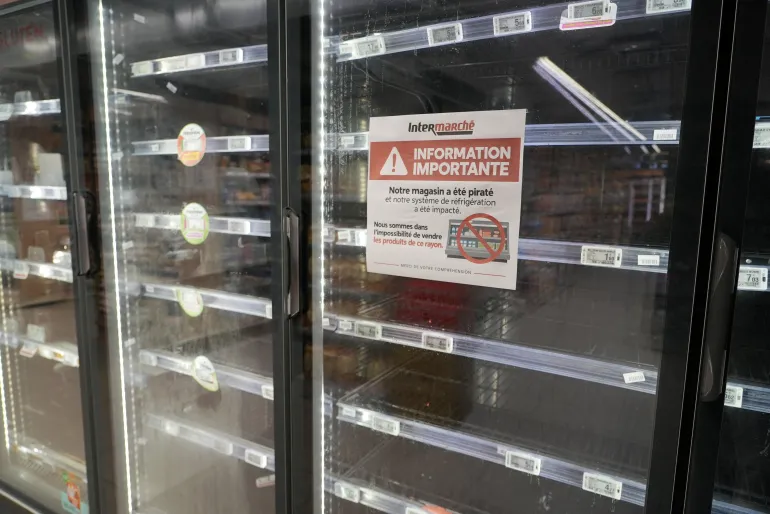
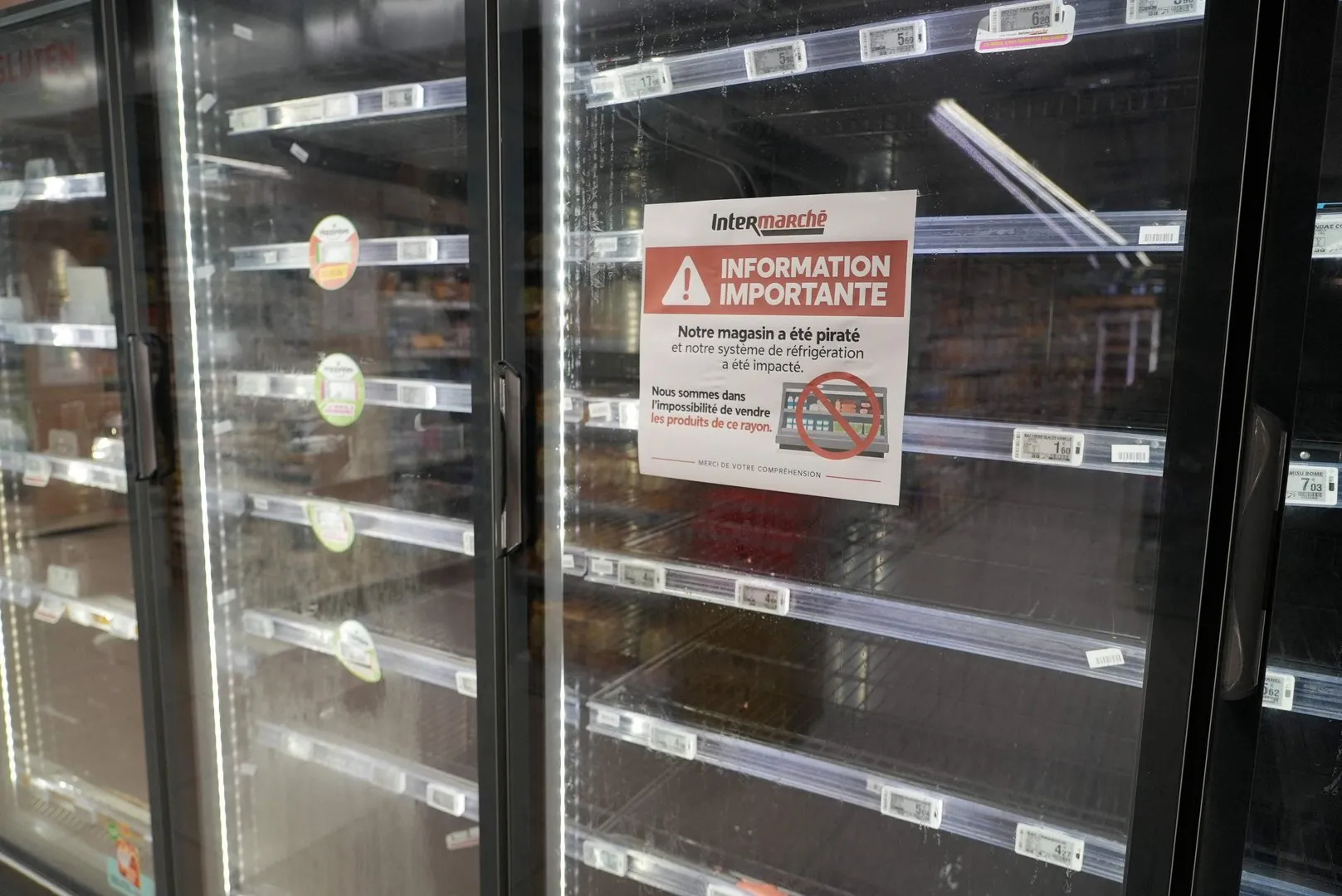
Empty freezers at a Paris supermarket after the October 2026 cyberattack on French stores’ refrigeration systems. The sign reads: ‘Our store has been hacked, and our refrigeration system has been affected.’ [Lucien Libert/Reuters]
France has since blamed the first attack on Shahid Kaveh, a cyberunit affiliated with Iran’s Islamic Revolutionary Guard Corps (IRGC), calling it the first large-scale sabotage cyberattack on French soil. It is not yet clear who was behind the second wave.
The attacks have raised concern about how exposed internet-connected equipment has become, from industrial machinery to household appliances. Al Jazeera illustrates the devices at risk in your home and the essential services you rely on, and what you can do to protect yourself.
How can a fridge be hacked?
A supermarket’s fridges and freezers are run from one control panel, which is connected to the internet so contractors can manage it remotely. Home smart fridges connect the same way, through Wi-Fi, an app or a cloud service.
The attackers reportedly found the supermarket systems using Shodan, a search engine for internet-connected devices. According to Vincent Strubel, head of France’s National Cybersecurity Agency (ANSSI), they got in through basic security failures:
Exposed: The equipment was directly connected to the open internet with no extra protection.
Weak passwords: Many systems were protected only by weak or default logins.
Outdated: Many units were old models that no longer get security updates.
Once inside, hackers can switch a fridge off, raise its temperature or steal account details. In France, they simply used the controllers’ own defrost function. A poorly protected fridge can also be a doorway to other devices on the same network, from laptops to smart locks.
Speaking to the French Senate on October 21, Strubel warned that the healthcare sector uses the same type of equipment to store vaccines and hazardous materials, from research laboratories to pharmacies.
How hackable is your home?
Essentially, anything connected via the internet could potentially be hacked.
There are about 21 billion short-range connected devices, such as smartwatches, worldwide and 5.4 billion long-range ones, such as remote monitoring systems, according to Kepios’s Digital 2027 Global Overview Report. US internet households now have an average of about 18 connected devices, nearly double the number a decade ago, according to Parks Associates.
Routers are among the biggest targets because they are always online. In April, the UK’s National Cyber Security Centre (NCSC) warned that hackers linked to Russia’s GRU military intelligence were hijacking home and small business routers. By tampering with their DNS settings, which turn website names into IP addresses, the hackers redirected users to fake websites to steal passwords and personal details.
Smart TVs can be hacked without their owners knowing. In June, researchers found that more than a third of apps on LG and Samsung smart TVs could let strangers secretly use a household’s internet connection, hiding their own activity behind that home’s IP address.
Robot vacuums can expose even more. Earlier this year, a programmer reportedly found he could control almost 7,000 DJI Romo robot vacuums with a PlayStation 5 controller. Using Claude Code, an AI coding tool made by Anthropic, to work out how the vacuums talked to DJI’s servers, he gained access to their live camera feeds, audio and floor plans of people’s homes.
What vital services can be hacked?
The same weaknesses that expose a fridge can affect power plants, water supplies, banks and hospitals.
Many of these services are run by industrial computers that can be reached online. Since the US-Israel war on Iran began, US agencies have warned that Iran-affiliated hackers are attacking these systems.
In July, a cyberattack in the US state of Minnesota targeted more than 30 community water systems, according to the state’s IT agency. Officials suspected Iran-aligned hackers, and the FBI and CISA warned that water and wastewater systems were increasingly being targeted, with facilities in 12 states affected at the time.
That same month, a cyberattack attributed to Iran-linked hackers forced a small British power plant offline for four days. It was reported as the first successful attack of its kind on UK energy infrastructure.
The US Cybersecurity and Infrastructure Security Agency (CISA) lists sectors it considers critical infrastructure. The graphic below shows some of the key ones, and what a hack on each could mean for you.
Banks are targets, too. In late September and early October, hackers stole personal data from at least seven South Korean financial firms, affecting about 68,000 people. Yegaram Savings Bank and Shinhan Bank were hit hardest, with about 40,000 and 25,000 customers affected, respectively.
According to The Wall Street Journal, the attacker used ARTEX, an open-source AI tool developed in China to test networks for weaknesses. US cybersecurity firm CrowdStrike said the attacker was likely a China-based individual who also used Claude Code, an assessment it made with moderate confidence.
Which industries are most politically targeted?
The European Repository of Cyber Incidents (EuRepoC), a research database tracking political cyberattacks worldwide, logged 4,932 major incidents between January 2000 and November 2026.
The number of incidents has grown sharply in recent years, peaking at 795 in 2024. About two-thirds of all incidents recorded since 2000 have occurred since 2022.
Governments are the biggest target. State institutions account for nearly 40 percent of all targets, led by the civil service and government ministries, followed by the military, police, political parties and legislatures.
Critical infrastructure is the second most targeted sector, led by health, finance, telecommunications, transport and energy, followed by defence firms, manufacturing, research and digital service providers. Companies, schools, civil society groups and media outlets make up most of the rest.
EuRepoC tracks only politically significant attacks, a fraction of all cyberattacks. Beyond these, hackers often target individuals and companies with scams.
How to protect oneself?
Hackers rely on weaknesses such as weak passwords and devices that no longer receive updates.
Awais Rashid, a professor of cybersecurity at the University of Bristol, told Al Jazeera that as infrastructure becomes more digitised, the risk of disruption from cyberattacks has risen. But, he added, “the world works because cybersecurity works effectively”.
The UK’s NCSC also advises people to turn off features they don’t use, such as remote camera access.
If a power plant or water system is hacked, there is little individuals can do. The UK’s Be Ready campaign, launched last month partly in response to cyber-threats, urges households to keep a three-day supply of water, food, medicine, cash and torches.
The graphic below shows five simple steps you can take to protect yourself from hackers.
The French government said it is seeking tough sanctions to deter further cyberattacks across Europe.
Published On 10 Nov 202610 Nov 2026
France says it has summoned Iran’s ambassador to Paris “to lodge a very strong protest” after it accused Tehran of carrying out a major cyberattack targeting supermarket fridges last month.
“It marks the first large-scale cyberattack aimed at sabotage on our national territory, and it constitutes a major attack on the nation’s interests and the security of the French people,” Foreign Minister Jean-Noel Barrot said on Tuesday.
Recommended Stories
list of 3 itemsend of list
“I can also tell you that we rule nothing out and will take all measures – including those we may not disclose publicly – that we deem proportionate and necessary to deter any further attacks,” he added.
Barrot, speaking on France Info television, said the government would push for European Union sanctions in response to what he called an “attack of unprecedented scale and aggression in our country”.
He said firm measures would be taken “to deter anyone who might be tempted, in Iran or elsewhere, to do it again”.
On Monday, Barrot said Iran’s Islamic Revolutionary Guard Corps (IRGC) was behind cyberattacks targeting more than 700 French supermarkets on October 11 and 12, when refrigerators were remotely accessed “to initiate abnormal, indefinite defrost cycles”.
Raised temperatures in fridges forced the supermarkets to throw away all perishable food.
Millions of euros’ worth of food was spoiled, according to retailers. In some cases, the raised temperatures sparked fires or melted equipment.
French supermarket groups E-Leclerc, Intermarche, Carrefour, Monoprix and Cooperative U were all hit.
Paris prosecutor Laure Beccuau said on Monday she had opened an investigation into Shahid Kaveh, a cyber unit of the IRGC, over the attacks.
The prosecutor’s office has requested international arrest warrants be issued for two Shahid Kaveh officials.
Boxes of perished goods outside an Intermarche supermarket after a cyberattack targeted refrigeration systems on October 13, 2026 [Lucien Libert/Reuters]
Similar incidents have since been reported in other European countries.
In a suspected cyberattack on November 2, temperature spikes were recorded in stores in Belgium, Estonia, Ireland, Luxembourg and Sweden.
Jody Westby, chief executive of Global Cyber Risk LLC, said tracking down the group directly responsible for the attacks is “very difficult” because of poor cooperation on international cybercrime investigations.
“It’s been a problem for 20 some years, and now it’s a little better, but only marginally so,” Westby told Al Jazeera. She said that it was difficult to track and trace the origin of such attacks “because of the nature of packet switching”.
In recent days, European air traffic has also been disrupted by false bomb alerts against dozens of flights, although the origin of those threats has yet to be determined.
French Foreign Minister Jean-Noël Barrot has blamed the Iranian Islamic Revolutionary Guard Corps for the cyberattack on France’s supermarket fridges, an incident that occurred in October. The attack affected fridges in hundreds of stores nationwide.
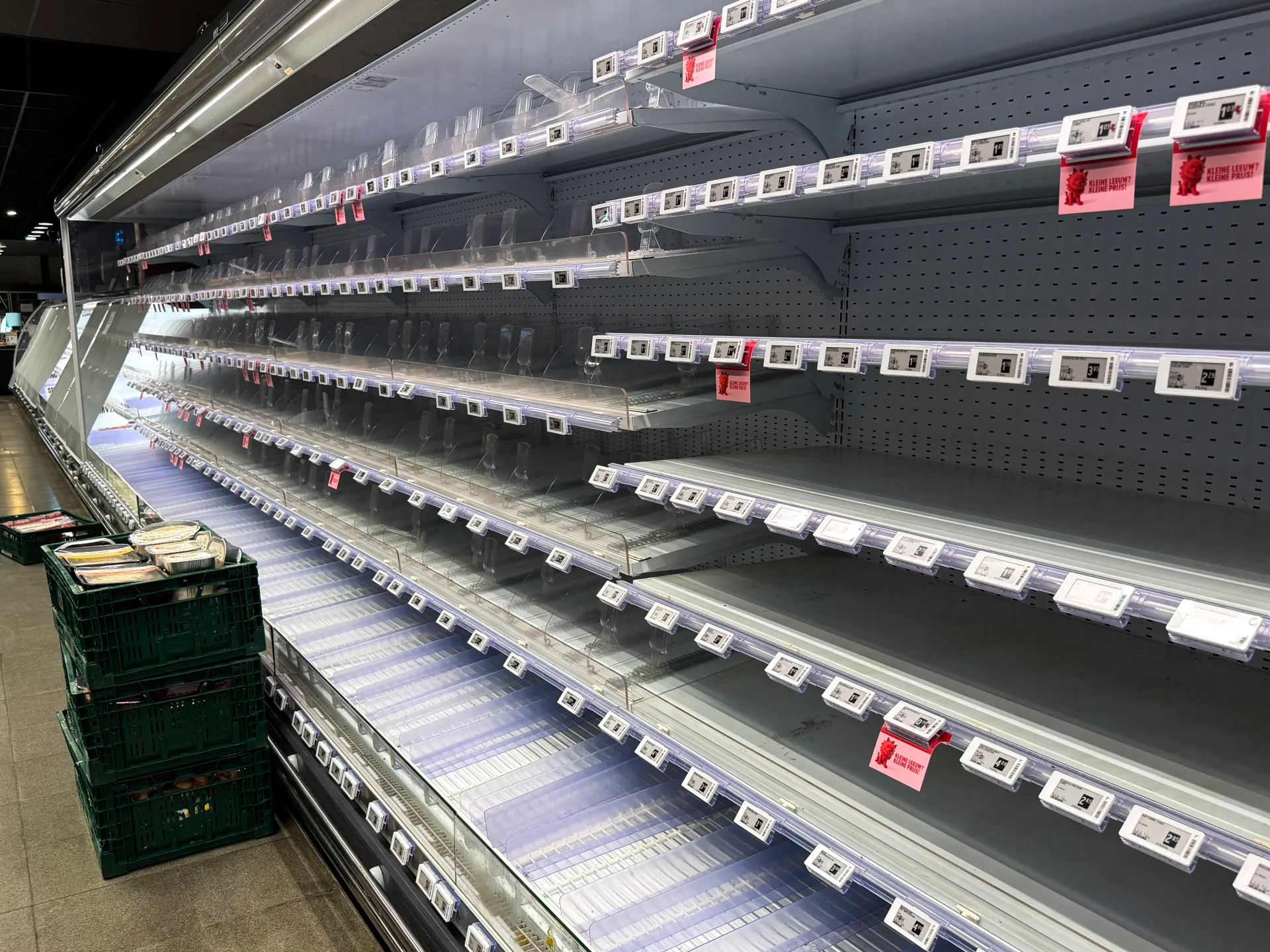
Supermarket refrigerators and freezers across Europe have been targeted by a cyberattack that raised the temperature of internet-linked units, destroying and damaging large quantities of food.
On Monday, fridges and freezers at more than 100 shops in several European countries ran hot. Cyberattacks on supermarkets began last month, when hundreds of French supermarkets were left with spoiled food and damage to units which had overheated, costing millions of euros.
Recommended Stories
list of 4 itemsend of list
So far, it remains unclear why hackers targeted the supermarkets, but attacks have spread across the continent and even to the United States.
Here’s what we know:
Which countries in Europe have been targeted?
On Monday, several supermarkets in Europe were affected, including the following:
Dutch supermarket operator Delhaize said dozens of its shops in Belgium and Luxembourg were hit by an “IT incident”.
French retailer Carrefour said about 15 of its 700 Belgian locations were hit by refrigeration problems.
The Colruyt group, which runs Spar stores in Belgium as franchises, said five of its shops were affected.
Swedish Coop said cooling systems at seven of its 800 stores were affected, with disruptions ranging from complete shutdowns to partial operation.
Swedish furniture retailer IKEA, which also operates restaurants at its stores, said one site in Mons, Belgium, had been affected by a cyberattack.
De Laet & Van Haver, the Belgian butchery chain, said the temperature in its fridges at its store in Hove, south of Antwerp, was raised as high as 18 degrees Celsius, ruining meat worth about 15,000 euros ($16,764).
The food wholesaler Musgrave said a cyber-incident affected refrigeration systems in 13 of its SuperValu stores in Ireland.
In October, hundreds of French supermarkets suffered cyberattacks, spoiling tonnes of food, causing fires and melting parts of refrigeration units.
What has happened in the US?
In August, freezers at a market in Fort Huachuca, an Army base in Arizona, went into defrost mode, spoiling all the frozen food they contained, according to a post on Facebook by the base.
The same month, the naval station in Newport, Rhode Island, reported on Facebook that its refrigeration system was affected, leaving only dry goods were available for purchase.
The Pentagon considered the freezer malfunctions on the military bases to be a suspected hack, the Reuters news agency reported late last month, citing four officials close to the matter.
One official said Pentagon investigators were communicating with the French authorities about the issue.
How are cyberattackers targeting fridges and freezers?
Hackers can access the controls of fridges and freezers which use internet software and raise their temperature in order to spoil frozen food.
In some cases, hackers have increased the temperature of appliances to as high as 50C (122F) in European supermarkets, causing them to melt or even catch fire.
Awais Rashid, a professor of cybersecurity at the University of Bristol in the UK, explained that many supermarket refrigeration systems which are remotely managed and, often by third parties, have not been given necessary software updates to prevent hackers.
“In line with established cyber security practices, these systems should be managed via secure networks. However, this is not the case in these incidents and they are accessible on the Internet,” Rashid told Al Jazeera.
“A remote managing party can access a web server on the controller to configure the system including temperature changes and maintenance. There are known vulnerabilities in several controllers (many of which are past their end of life),” he said.
Rashid added that vulnerabilities include “easily guessable” passwords, which would mean anyone could gain access.
Why are hackers doing this?
The motive behind the attacks is unclear, but authorities believe it may be a deliberate attempt to disrupt food supplies.
On Monday, the European Commissioner for Agriculture and Food, Christophe Hansen, said the attacks on fridges were a “deliberate attempt to disrupt” the bloc’s food supply and to undermine consumer confidence.
He added that while “food security is not currently at risk … the food waste and impact on businesses are real”.
Rashid said that while there are few details about who may be behind the attacks or what their motives are, it is likely that these are “the motive here is likely disruption”.
“This has financial impacts on the supermarkets but also societal impacts in terms of security of the food supply chain. Critically, this risks undermining trust in infrastructures on which people rely daily,” he said.
Who is behind the attacks?
On Monday, Belgium’s prosecutor’s office announced that it had opened a criminal investigation into the latest fridge cyberattacks. But so far, no one has taken responsibility.
Theories have emerged linking state actors to cyberattacks generally, with North Korea most recently accused of being behind last week’s $6.3bn Binance cryptocurrency heist, which forced the crypto group to freeze accounts.
European intelligence officials have also warned that Russia is escalating its shadow war on the continent amid the ongoing conflict with Ukraine, with cyberattacks among the methods it uses.
On Tuesday, the UK’s National Cyber Security Centre warned that Britain needs to be prepared for an artificial intelligence (AI)-powered cyberattack on its critical national infrastructure within the next two years.
“By 2028, it is highly likely that Russia, China and other nation states will routinely use AI-cyber to achieve their geopolitical goals, with the UK facing an increase in scale and speed of sophisticated cyberattacks,” the NCSC said in a report.
The report comes shortly after the UK launched its “Be Ready” campaign, calling on citizens to stockpile enough tinned food, bottled water and cash to last three days in the event of a cyberattack or national emergency.
Rashid said that as our infrastructure becomes increasingly digitised, the risk of disruption from cyberattacks, especially “cyber-physical infrastructures such as refrigeration systems”, has risen.
“However, we should also note that a lot of our digital infrastructures operate safely everyday because good security practices enable that. The world works because cyber security works effectively. So it is important that all businesses follow good cyber security practices,” he said.