Sun-drenched holiday destinations with £1.50 pints, free attractions and stays from £8.62pp

IF you’re dreaming of a sun-soaked getaway without blowing through your savings, we’ve got good news.
While some popular hotspots, like Mykonos and Positano, often charge eye-watering prices, there are plenty of lesser-known, wallet-friendly spots in Europe and beyond for a sunny getaway.
And, with pints from £1.50, plus free attractions that the whole family will love, you don’t need a huge budget to enjoy your time abroad.
Whether you want White Lotus vibes in a cheap spot in Sicily, sun-drenched Spanish cities, or French countryside spots where local wines cost €2.50, we’ve got you covered.
Here are the Sun Travel team’s favourite cheap and sunny holiday destinations to book right now.
Fuengirola, Costa del Sol, Spain
Head of Travel, Lisa Minot
Yearning for the glitz and glam of the Spanish celeb magnet that is Marbella but don’t have the dosh?
Just half an hour along the coast, fabulous Fuengirola offers the same sun-soaked shores without the A-lister prices.
You’re guaranteed sizzling sunshine – more than 300 days a year – and the 7km stretch of wide, golden sands leading down to gently-shelving, family-friendly waters is the star of the show.
Los Boliches Beach is a Blue Flag-clean favourite and you’ll be paying far less than in other Mediterranean beach resorts for sunbeds, with prices from just £12 a day for two loungers and a sun shade.
All along the coast are chiringuitos – beachside bars – serving up cheap plates of grilled sardines on skewers for just a few euros, and a pint of chilled beer will set you back around £4.
Shopaholics should save their pennies for the sprawling Tuesday Street Market – one of the largest on the coast – with bargain leather bags, clothes and souvenirs.
Book a holiday: Fuengirola
If you click on a link in this box, we will earn affiliate revenue
Sporty types will love the Higueron Hotel Malaga – Curio Collection by Hilton – that sits in the hills above Fuengirola and Benalmadena.
As well as a stunning rooftop infinity pool and restaurant, there’s multiple padel, tennis and beach volleyball courts to keep you fit and healthy as well as a stunning spa.
And when you’re saving on going out to eat and drink, and for all of the activities, why not spend the extra cash on somewhere nice to stay?
Rooms start at £233 per night.
Tirana, Albania
Travel Reporter, Cyann Fielding
When you think of a sunny destination, your first thought probably isn’t Albania, let alone its capital Tirana.
But in fact, the city can reach 35C in July and is one of the sunniest cities in Europe with more than 2,500 hours of sunshine each year.
So there really couldn’t be a better holiday spot to sit back and sink a refreshing pint. It won’t even set you back much either, costing as little as £1.50.
One thing I really love about the city is it still feels completely undiscovered by Brits, lacking crowds and the typical souvenir shops on each corner that tend to come with that.
In the heart of the city, visit Skanderbeg Square, where you’ll be able to get a clear view of the surrounding architecture – a mix of traditional Albanian villas and Soviet grey concrete buildings.
If you want to earn your pint, climb the city’s very own pyramid, which has spectacular views of the mountains that border the capital.
Make sure to also look out for ‘pillbox’ bunkers which are littered across the city – many of which have been turned into vibrant and quirky bars and cafes.
Book a holiday: Tirana
If you click on a link in this box, we will earn affiliate revenue
Hilton Garden Inn Tirana has stays from £87 per night during the school summer holidays.
Occitanie, France
Assistant Travel Editor, Sophie Swietochowski
This jaw-dropping region in southern France is crammed with off-grid holiday spots, and petite villages that showcase authentic French history, cuisine and mannerisms… By that, I mean brush up on your linguistic skills before venturing into the rural parts.
Your efforts attempting to blend in with the locals will be rewarded with shockingly affordable food and drink of the highest quality – the French, after all, are the master innovators in the winemaking industry.
Head to the historic commune of Albi, where a glass of house wine will set you back around €2.50 – it’s good stuff, too.
The “Red City” has some of the most gorgeous medieval streets, with some immaculate palace gardens that are completely free to explore.
It’s best to fly into Toulouse so that you can pop over to some of the gorgeous villages nearby.
Saint Cirq Lapopie is frequently voted one of the most beautiful in France and it’s not hard to see why, with cobbled streets and wonky cafes that feel stereotypically French.
Book a holiday: Occitanie
Seville, Spain
Deputy Travel Editor, Kara Godfrey
As one of Spain‘s most southern cities, you can always expect great weather in Seville (outside of summer of course – unless you like 40C days).
When it comes to wining and dining, you’re spoilt for choice, so I’d recommend trying a Secret Food Tour (from £65) which takes you around the local-loved spots. I had everything from churros and vermouth to pig cheeks and omelette along the way.
If you want a quick, cheap breakfast, go to Bar Alfalfa for a coffee and tomato toast for a few euros, or have a drink at El Rinconcillo, the city’s oldest bar.
The city is famed for its flamenco, but rather than forking out for a show, I simply headed to the parks where you can usually catch a live street performance for free.
Instead, save your money to see the city’s two top attractions – the moorish Royal Alcazar Palace and Cathedral de Sevilla, the world’s largest gothic church.
Book a holiday: Seville
If you click on a link in this box, we will earn affiliate revenue.
Stay in the Only U hotel, where rooms can start from as little as £120 a night. It feels much fancier than the price thanks to its private heated swimming pool, on-site florist, bakery and chic bedrooms.
Cefalu, Sicily
Head of Travel, Lisa Minot
Want White Lotus vibes on a budget?
Sicily’s coastal seaside resort of Cefalu has the same stunning coastline that featured in the smash hit show.
While the hotel scenes were shot at the Four Seasons San Domenico Palace in Taormina, the opening beach scenes and swimming spots were filmed at Spiaggia di Cefalu in the town itself.
There’s a broad stretch of golden sands backed by a maze of cobbled streets and hidden lanes full of medieval architecture.
While meals in the restaurants in town are still great value, for a real bargain, do as the locals and pick up some street food to eat on the beach.
Arancini – deep fried risotto balls stuffed with ragu – or sfincione – thick slices of Sicilian pizza – will cost between £1 and £3.50.
Seeing the historic sites also won’t cost a lot. Head to the Piazza del Duomo to admire the twin-towered Norman cathedral – entry to admire its stunning mosaics is free.
And for just £4.30 you can hike up the craggy mountain of La Rocca that looms over the town and be rewarded for your efforts with jaw-dropping, picture-postcard views across the entire coastline.
Book a holiday: Cefalu
If you click on a link in this box, we will earn affiliate revenue
The Palazzo Villelmi in Cefalu’s Old Town is right on Piazza del Duomo, facing the Cathedral and just 150 metres from the beach. Rooms from £154 per night.
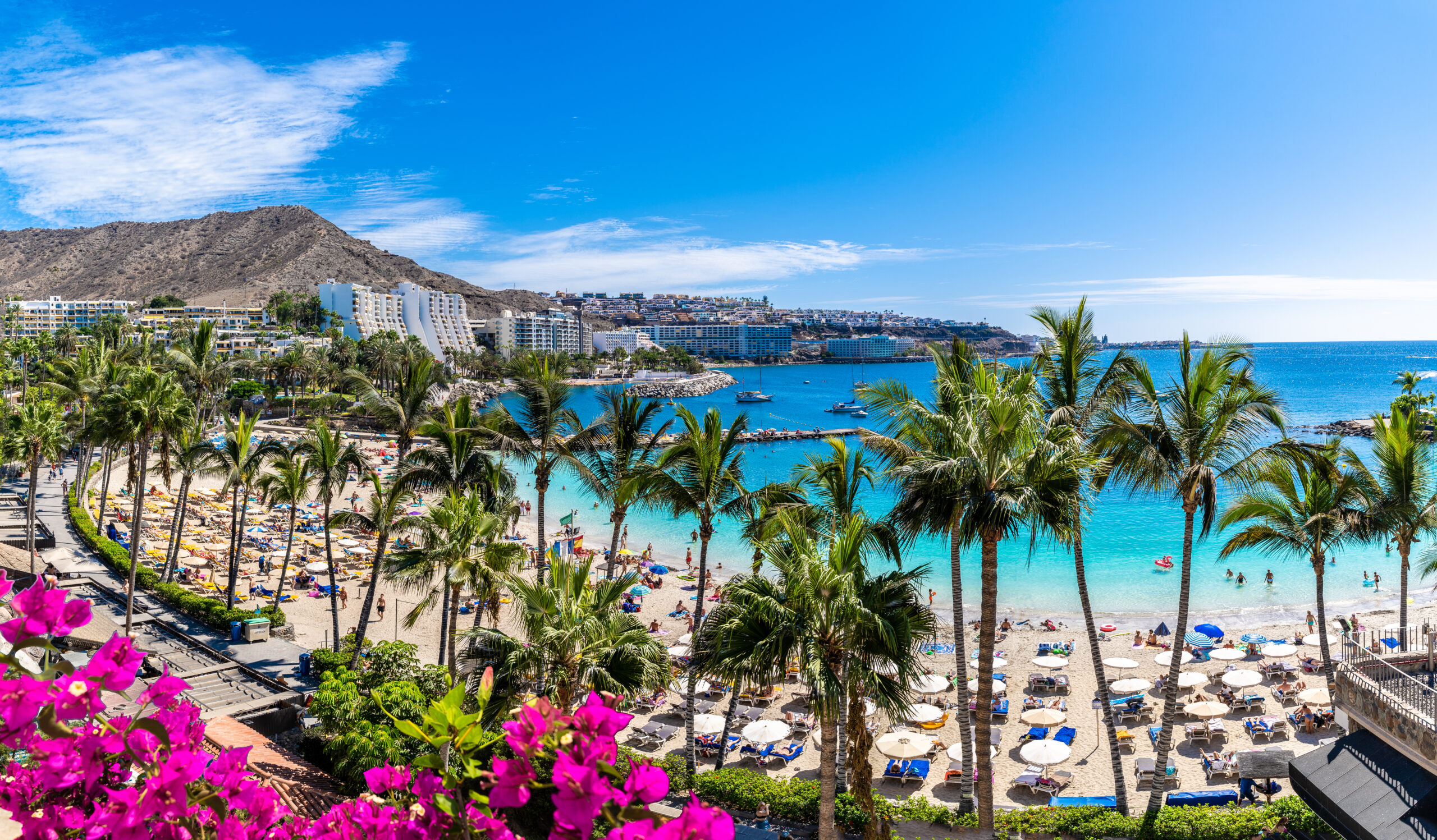
Maspalomas, Gran Canaria
Assistant Travel Editor, Sophie Swietochowski
Seeking something cheap and cheerful with guaranteed sun? Few places fit the bill better than Gran Canaria.
The Spanish island’s proximity to the northwest coast of Africa (around 150 kilometers) means that balmy temperatures are practically guaranteed year round, especially in the south of the island, with the northern mountains acting as a protective barrier.
While it may not initially spring to mind as a budget destination, you can find some incredible value package offers.
Its popularity among Brits means that you’ll have your pick of deals with a huge variety of tour operators to pick from and some competitive prices.
A package holiday is exactly what you should book when heading here, too, as its resorts are completely geared up for fly and flop holidaymakers.
The last time I visited, I splashed out on an all-inclusive deal so that I could have pina coladas delivered to my sunlounger on a rotating basis, flopping between the pool and restaurants, barely lifting a finger. Talk about R&R.
Book a holiday: Maspalomas
If you click on a link in this box, we will earn affiliate revenue
Seven nights’ B&B at the 4* Sunprime Atlantic View starts from £369pp, including flights from Stansted on September 30.
Lake Garda, Italy
Travel Reporter, Cyann Fielding
Italy will always have a fond place in my heart and when it comes to Lake Garda it has everything you could wish for, for a sunny family holiday.
In the 28C July heat, the lake is the perfect place to head for a swim which you can do from a number of beautiful beaches dotted around the perimeter, including Jamaica Beach.
If I had to pick one spot in particular around the lake that is really special, it would be Limone – a small cliff side town known for its historic lemon houses, waterfront promenade looking out at the clear lake, tonnes of citrus trees and even lemon-themed shops.
Make sure to head to Spiaggia Tifu beach in the town, which has lots of nearby amenities and calm waters making it ideal for families.
You can also hop on a ferry ride to a number of other villages and towns that sit around the lake.
And thanks to the abundance of restaurants and cafes around the lake, it won’t be hard to find a pretty spot to enjoy a pint, which will cost you around £4.20.
Book a holiday: Lake Garda
If you click on a link in this box, we will earn affiliate revenue
Book in for a five-night stay for four at Eurocamp’s hu Altomincio Village for four from £172.40 total, which works out to £8.62pp per night.
Milan, Italy
Deputy Travel Editor, Kara Godfrey
The Italian city of Milan often gets a bad rap when compared to the likes of Rome, Florence and Venice – but you can still find some less-touristy gems if you know where to look.
Of course, you have to visit the Galleria Vittorio Emanuele II, which is free and one of the world’s oldest shopping arcades, as well as the famous Duomo.
But after this, leave the main city centre for Navigli, a canal-side neighbourhood lined with restaurants and cafes and crisscrossed by arched bridges.
Iter is a great bar with friendly staff and fantastic wine, while the nearby Pizza AM is cheap and cheerful (and comes with a free glass of fizz).
Film buffs should head to Bar Luce, a retro-style cafe designed by filmmaker Wes Anderson.
Book a holiday: Milan
If you click on a link in this box, we will earn affiliate revenue
NYX Hotel Milan is a great, affordable option. It has a lobby bar DJ and rooftop terrace, and stays from £131 per night.
Prices correct at the time of publication.