Overhead hung the Pakistan Muslim League-Nawaz’s (PMLN) green tigers. Further down, Pakistan Peoples Party’s (PPP) red and black flags bearing the party’s arrow encircled the clock tower at Lal Chowk, a square near Muzaffarabad’s main market, built to honour the original Lal Chowk across the Line of Control in Indian-administered Kashmir’s Srinagar.
Recommended Stories
list of 4 itemsend of list
Muzaffarabad, the capital of Pakistan-administered Kashmir, does not look like a city in the grip of a crisis. It looks like a city preparing for an election.
Both are true.
Since early June, the territory has witnessed weeks of protests and sit-ins that have killed dozens. The protests are tied to elections for the region’s provincial legislature that were scheduled for July 27, but that on Monday were divided into voting now to be held on three separate days. Voting in the region’s Mirpur division will continue as planned on July 27. Elections in Poonch division, which has been the hotbed of protests, will now be held on August 10.
Voting in Muzaffarabad and for 12 other seats reserved for refugees from Indian-administered Kashmir who now live elsewhere in Pakistan will be held on August 2, the region’s Chief Election Commissioner Justice (retired) Ghulam Mustafa Mughal told Al Jazeera, citing security concerns arising from the unrest as the reason for the changed schedule.
It is those reserved seats for refugees that are at the heart of the agitation, with protesters demanding that they be scrapped, arguing that only those living in Pakistan-administered Kashmir should now be eligible to contest in elections to the regional legislature.
And it is in the backdrop of those tensions that the region is now readying to vote.
“I have never joined them, I never participated in their protest,” a 60-year-old driver, bespectacled and bearded, said of the Jammu Kashmir Joint Awami Action Committee (JKJAAC), commonly known as JAAC, the movement whose protests have dominated the politics of Pakistan-administered Kashmir, particularly Poonch division, in recent months.
“But my only reason to support them is that all the people in this movement are poor people, my sympathies are with them. They are the ones fighting and demanding for my rights,” the driver, who requested anonymity, told Al Jazeera, as he finished his lunch at a roadside hotel in Muzaffarabad on July 20.
When it came to the election, however, he was unequivocal: he would not vote.
“We should be part of the democratic process, but the person you want to vote for isn’t allowed on the ballot,” he said, referring to the JAAC, which was banned in June. “A vote is a responsibility, and it should only be given to those who deserve it. Right now the candidates on offer are all corrupt, and I will not be giving my vote.”
An election amid unrest
The Kashmir region, a scenic but disputed Himalayan territory, has been at the centre of multiple wars between Pakistan and India since both gained independence from British rule in 1947.
Government officers leave a polling station on Monday after early polls for government officials began [Abid Hussain/Al Jazeera]
While both countries claim the region in full, they administer separate parts of it.
Home to more than four million people, Pakistan-administered Kashmir, locally known as Azad Jammu and Kashmir (AJK), has a semi-autonomous government with its own president, prime minister and Supreme Court.
The election was always going to be shaped by the latest crisis, JAAC’s fifth major mobilisation since the movement was founded in September 2023.
But Mughal, AJK’s chief election commissioner, said Poonch was the only division where, he said, “we have a bit of security-related concern”.
He is not the only official insisting the electoral process remains on track.
In Muzaffarabad, Deputy Commissioner Munir Qureshi pointed to bustling markets, heavy traffic and an active campaign trail as evidence that daily life continues largely uninterrupted.
“It is not our job to tell people to go and vote,” he said. “If they decide, for whatever reason, not to show up, it is their democratic right.”
The city, he added, has five constituencies and 890 polling stations, with additional security personnel requested ahead of polling day.
What neither official addressed directly, however, is the absent party hanging over the election.
The banned JAAC is absent from the ballot in any form. Some of its members who attempted to contest as independents had their nomination papers rejected.
The movement’s sit-ins have entered their second month across Rawalakot, Sudhnoti and other parts of Poonch division, closer to the Indian border, while its leadership has openly urged the public to boycott the vote.
How the region votes – or not – will tell whether the election carries legitimacy in the eyes of the people of AJK.
A movement outside the ballot box
The protests that have shaped this election began more than two years ago over prices.
A large number of supporters present at the sit-in in Rawalakot in Poonch division last week [Courtesy Joint Awaami Action Committee]
JAAC was formed in 2023 around 10 demands, including subsidised wheat, cheaper electricity, and a government commitment to curb the perks and pensions enjoyed by AJK officials and elected representatives.
The Pakistani government intervened in May 2024, agreeing to provide subsidies, while a charter of demands signed by the AJK government in October that year was intended to resolve most of the movement’s concerns.
By this June, however, JAAC’s focus had shifted to the 12 assembly seats reserved for Kashmiri refugees settled in Pakistan, which it wants abolished.
The group argues the seats give outsiders influence over AJK’s governance and budget, while residents themselves have no say over who occupies them.
On June 5, the AJK government declared JAAC a proscribed organisation under anti-terrorism legislation ahead of a planned June 9 protest, just weeks before the election.
Within days, police had arrested dozens of JAAC members and supporters, including the movement’s leader and public face, Shaukat Nawaz Mir.
What followed was the deadliest period of unrest AJK has witnessed in years.
The death toll remains disputed by JAAC and the authorities, but even conservative estimates place it at nearly 30 people since early June, including protesters and law enforcement personnel.
Access to Pakistan-administered Kashmir was also restricted, with entry into Poonch division almost entirely blocked for weeks, disrupting supplies of flour and other essential goods to a region dependent on routes from Muzaffarabad and Mirpur.
Banks remained closed for two weeks, leaving residents without access to cash. Mobile and fibre internet services have also remained suspended across almost the entire territory, with exceptions only for banks and a handful of government offices, including district administrations and the Election Commission.
And the Election Commission itself has become an institution whose role faces questions from the JAAC.
Sardar Amanullah, a JAAC member from Sudhnoti district in Poonch division, more than 155km (96 miles) south of Muzaffarabad, said he had submitted nomination papers as an independent candidate, only for them to be rejected.
“I don’t think these are free and fair elections,” he said. “When you cannot let people’s representation out there, the government keeps finding ways to reject our papers,” he told Al Jazeera.
Chief Election Commissioner Mughal offered a different account.
“There were only two or three people who submitted their nomination papers, who claim to be affiliated with JAAC, and their papers were rejected by the returning officer since their names were mentioned in FIRs and the Fourth Schedule,” he said, referring to police reports and Pakistan’s anti-terrorism watchlist.
Abid Shaheen, a JAAC core committee member from Bagh district, was more blunt. With the group now proscribed, he described the vote as “a selection, not an election”.
A dozen seats, one dispute
Of the AJK Legislative Assembly’s 45 general seats, 12 are reserved for Kashmiri refugees who settled in Pakistan after 1947: six linked to Jammu and six to the Kashmir Valley.
PPP supporters were gathering near the Lal Chowk at night to prepare for a corner meeting [Abid Hussain/Al Jazeera]
The arrangement dates back to legislation introduced in the 1960s and was later entrenched in AJK’s 1974 Interim Constitution.
In June, the AJK Supreme Court, ruling on a presidential reference, held that the seats could only be abolished through a formal constitutional amendment passed by the assembly, not through public protest.
AJK’s electorate has grown from just over 3.2 million in 2021 to more than 3.8 million this year, according to Election Commission figures.
Within that, the 12 refugee constituencies alone have expanded from about 405,000 voters to nearly 439,000. JAAC argues that the increase has further amplified the influence of seats that were never intended to carry such political weight.
Since AJK adopted its current parliamentary system in 1975, all 10 general elections have produced governments aligned with the party in power in Islamabad.
Zulfiqar Ali, a Muzaffarabad-based political analyst, argued that the seats themselves have rarely determined who governs AJK.
“Across all the governments AJK has had, these 12 seats have played no significant role in actually making or breaking a government,” he said. “That role has always belonged to native AJK politicians, or whichever party holds federal power in Islamabad.”
Islamabad, meanwhile, has shown little interest in rethinking the refugee seats.
Defence Minister Khawaja Asif told the National Assembly last month that abolishing the seats under pressure from street protests would amount to “sabotaging the electoral process”.
The campaign that resumed late
For the parties actually on the ballot, the crisis all but wiped out campaigning in June.
“Frankly speaking, the campaigning was dead due to the protests all June,” said Iftikhar Gillani, a PMLN candidate contesting from Muzaffarabad.
“The campaign only picked up in the last few days,” Gillani told Al Jazeera after meeting supporters at a polling station on July 20, where government officials were casting advance ballots.
Dressed in a white shalwar kameez and repeatedly wiping his face with a tissue on a severely humid Monday afternoon, Gillani argued that many Kashmiris distinguish between supporting JAAC and participating in the election, even if some committed supporters may stay away from the polls.
“People here are cognisant of the importance of the election and understand that they don’t have to mix their support for JAAC with their responsibility to participate in the polls,” he said. “But there is obviously no denying that there is a chunk of the population which fully believes in JAAC, and they might not cast their votes.”
A 28-year-old PMLN activist, who requested anonymity to speak candidly, said the internet shutdown had forced campaign workers to abandon social media in favour of door-to-door canvassing and loudspeakers mounted on vehicles to publicise the party’s manifesto.
But, he added, the election had also exposed social divisions unlike any he had witnessed before, fuelled by the JAAC-led protests.
“Families are divided over this,” he said. “Those who don’t support JAAC are being called supporters of our oppressors.”
The PPP, which currently governs Pakistan-administered Kashmir, has maintained the more visible street presence.
Its flags dominate Lal Chowk, and a Saturday night corner meeting near the square drew a crowd of supporters waving the party’s arrow banner close to midnight.
But Sardar Mukhtar, a PPP candidate in Muzaffarabad, acknowledged the changed mood.
“The campaign environment is not like previously. I personally feel that turnout might not be as strong as in the past,” he told Al Jazeera from his camp office, where party workers crowded in to catch a glimpse of the candidate.
The party’s clearest position has come from its chairman.
In a letter to JAAC’s negotiating committee last week, Bilawal Bhutto Zardari proposed establishing a Truth and Reconciliation Commission to “examine the present situation, establish the relevant facts, consider the grievances and positions of all sides”.
He also urged JAAC to suspend its protest once such a commission was agreed, while calling on the state to halt further action pending its findings.
Bilawal is scheduled to address a public rally in Muzaffarabad on July 24.
AJK’s Prime Minister Faisal Mumtaz Rathore, the PPP’s most senior leader in the territory, has been more measured on the campaign trail, telling reporters after the revised election schedule was announced only that “the current environment is not suitable for the state” and that “problems can only be solved through dialogue”.
In the region’s legislature, he has previously said that the JAAC bears “the primary responsibility for this situation,” while conceding that “we have not absolved ourselves of responsibility as a government”.
What the election can’t fix
For Ali, the Muzaffarabad-based political analyst, the real issue lies not in the vote itself but in everything that has unfolded over the past few years.
Election campaign posters plastered outside the government office compound in Muzaffarabad [Abid Hussain/Al Jazeera]
He pointed to commitments the government made to JAAC in October 2024 that remain unfulfilled, including promises to devolve development budgets to local councillors and eliminate the perks and privileges enjoyed by politicians.
“However, people will vote,” he told Al Jazeera. “Because the entire system is designed in a certain way, tying government jobs and small favours to elected representatives. So turnout will be fine, but it will not resolve people’s fury and anger.”
Ershad Mahmud, a Canada-based researcher and author of Poonch: Identity, Politics and Resistance, sees the problem differently, arguing that the election is diminished by who is missing from the ballot.
“PTI did win last time, and they have significant following, as well as JAAC,” he said, referring to Imran Khan-founded Pakistan Tehreek-e-Insaf, which ruled Pakistan from 2018 to 2022 before being ousted through a vote of no confidence.
PTI also formed the AJK government after the 2021 election, but since 2023 the territory has had four prime ministers.
Mahmud argued that with two major democratic forces absent from the contest, many voters will stay away as well.
“I don’t think this election will be seen as legitimate. The distance from Muzaffarabad to Islamabad is more than 120km [75 miles]. But the mental distance is now 1,000km [621 miles],” he told Al Jazeera.
An uncertain verdict
However, not everyone has reached the same conclusion.
Muhammad Ramzan, a property dealer from Mirpur division in the south of the territory, supported JAAC when its demands centred on subsidised wheat and lower electricity prices.
His support cooled once the movement shifted its focus to abolishing the 12 refugee seats, a campaign he considers disconnected from the concerns of residents and his own livelihood.
“Even I am curious,” he said. “Earlier they asked for roads or electricity or school, but now that they have changed their focus to 12 seats, I am flabbergasted why would they do that.”
He intends to vote, although he expects turnout to fall, with much of the boycott driven by younger voters aged between 18 and 35 who remain committed to JAAC.
“There are a lot of people like me,” he said, describing his gradual drift away from the movement.
But he remains doubtful that the election will resolve the crisis.
“I fear that things will go bad,” he said quietly.
Before Devlin had even departed, there was a new head coach in charge. The process to appoint Vrancken was quick and initial signs were promising.
Here was a man who had been named Belgian coach of the year, had taken Racing Genk to within minutes of the title, and had been linked with Anderlecht and Burnley.
As well as a glowing CV, his previous style of play in Belgium was highlighted. It was not quite labelled all-out attack, but it was certainly going to be the style of football fans want to see.
Explaining his tactics in an early supporter forum, the man himself said he wanted “chaos within a structure”.
In his first match in charge it was mostly chaos, not so much structure.
However, the 4-0 scoreline does not feel truly reflective of the game itself. The attacking stats showed Hearts did not lag behind their Austrian hosts by any means.
They created two chances in the first half that should have been buried, but Pierre Landry Kabore shot straight at the keeper and Alexandros Kyziridis nudged his effort wide when one-on-one.
By the time it came to creating any more, they were already 4-0 down. Inefficient in attack, torn apart at the back. It was a nightmare beginning.
“Early impressions are that Hearts have got a really good head coach,” said Hearts Standard editor Joel Sked on a recent Scottish Football Podcast. “At the same time, just with everything that’s happened, there will have to be some patience.”
Patience is in short supply in football these days. For every Ange Postecolgou, there’s a Wilfried Nancy. For every Jens Berthel Askou, a Russell Martin.
It is too soon to tell in which camp Vrancken will fall, but for the most part, Hearts fans remain cautiously optimistic.
They’ve been through it all in the past two months, nothing can surprise them. Not even this.
THE UK’s aviation watchdog has issued a new travel warning as thousands of families will jet off on their summer holidays this week.
The UK Civil Aviation Authority (CAA) has updated its travel warnings about common packing items that could delay your travels – or even see them cancelled.
Holidaymakers need to think twice about packing certain items this summerCredit: Getty Anything with a lithium battery – like a vape, needs to be in hand luggageCredit: Getty
The CAA has warned that incidents involving lithium batteries are on the rise – so it’s important to pack certain gadgets correctly.
It’s well-known now that items like vapes and power banks have to go in hand luggage, but lots of other ones fall under the same category.
Sign up for the Travel newsletter
Thank you!
The CAA has named another eight items that you may not have realised are powered by lithium batteries.
All of these items should be taken onboard as hand luggage.
This is so that if an incident occurs – like a power bank overheating – the cabin crew can react quickly.
The CAA said that on average, passengers carry four lithium battery devices each which works out as four million gadgets taking to the skies every day.
If any are packed incorrectly, it increases the likelihood of delays and or cancellations to flights.
For example back in May, an easyJet flight was forced to divert when a passenger informed crew during the flight that the portable charger was in the hold of the aircraft.
The flight had been heading to London Luton from Hurghada in Egypt but had to land in Rome as a ‘precaution’.
Other items like electric fans should go into the cabin – not in checked-in luggageCredit: Getty
In another case, a Hong Kong Airlines flight was forced to make an emergency landing after a fire broke out in one of the overhead bins.
Giuseppe Capanna, product safety engineer at Electrical Safety First, had some further advice: “Before you head to the airport, give your devices a quick once-over. If a battery is bulging, swelling, changing shape, overheating or showing any other signs of damage, don’t take the risk.
“Instead, safely dispose of it as soon as possible at a local recycling centre with dedicated facilities for electronics and batteries and never put it in your general waste.
“Battery safety starts before you even step foot on an aircraft, starting with where you shop.
“When shopping for your summer getaway, the best way to protect yourself and those around you is to stick to a reputable high street retailer you know and trust to ensure your power bank or any other lithium-ion battery product you’re taking away with you is safe.”
FORGET racing round the sights – the best Spanish holidays begin the second you stop asking what happens next.
That’s the idea behind San Miguel’s Spanish Summer – less a checklist, more a state of mind: warm, curious and always ready for a “shall we?” that turns into the best bit of the trip.
You know the signs – your phone disappears into the beach bag, lunch drifts gloriously late and nobody remembers who ordered the extra plate, but everyone is reaching for it.
Start with a small rebellion against routine.
Sign up for the Travel newsletter
Thank you!
In Benidorm, swap the pool for a barefoot morning on Poniente beach, then wander into the Old Town without checking a single review.
Take the street that looks busy. Take the one that doesn’t.
In Majorca, drive the road that curls away from the coast – it may lead to a pine-framed cove, a village square or a bakery window stacked with warm ensaimadapastries.
The point is not to get lost but to give up needing to know exactly where you are the whole time.
Remember: “si” opens doors, whether you’re saying yes to a volcanic rock pool in the Canary Islands or an Ibizan stallholder who insists that patterned shirt is totally you.
Even just agreeing to join your friend in Malaga who’s become “captain” of a boat trip booked 20 minutes ago.
New experiences don’t have to be huge.
Sometimes discovery is ordering the thing you cannot pronounce, taking the table with the wobble but the view, or walking one more street because there is music around the corner.
In Malaga, follow the smoke to a beach chiringuito and order espetos – sardines skewered and cooked by the fire until they taste of salt, sea and, yes, summer.
In Majorca, share pa amb oli, the island’s simple genius of bread, tomato and olive oil.
And in the Canaries, pass round papas arrugadas con mojo while everyone claims they are “not that hungry” as they keep going back in.
Nobody has their own plate for long – that shared-table feeling is where Spanish summer comes alive: sunglasses pushed into hair, sandy feet under the chair, a cold San Miguel on the table and three conversations happening at once.
Then the light begins to soften.
Benidorm turns gold as the beach crowd spills on to the promenade.
Ibiza gets that famous hum as sunseekers gather by the water and the first beat slips into the evening.
Stay salty. Keep the flip-flops on. Let sunset become dinner and dinner become whatever happens next.
Ibiza may tempt you from a hippy market to a cove and then into a night of music.
Malaga can carry you from sea air to rooftop lights without making the day feel over.
In Majorca, a village fiesta can pull you in before you know what is being celebrated.
The best local traditions are often the simplest ones: join the evening paseo, and watch families reclaim the streets when the heat drops.
Notice how every generation seems to fit around the same table.
In the Canary Islands, linger over one more story.
In Benidorm, follow the laughter.
That is why the memories that last are rarely the ones you scheduled – they are the accidental swim; the sunset nobody spoke through.
The song that became the holiday anthem or the waiter who remembered your name.
The stranger who took the group photo who “must have been a professional”.
San Miguel’s Spanish Summer guide offers the spark: places to eat, swim, listen, wander and wonder across five Spanish escapes.
But leave gaps in the plan because that is where summer gets really interesting.
Spanish Summer is not about seeing everything – it is about being open to anything.
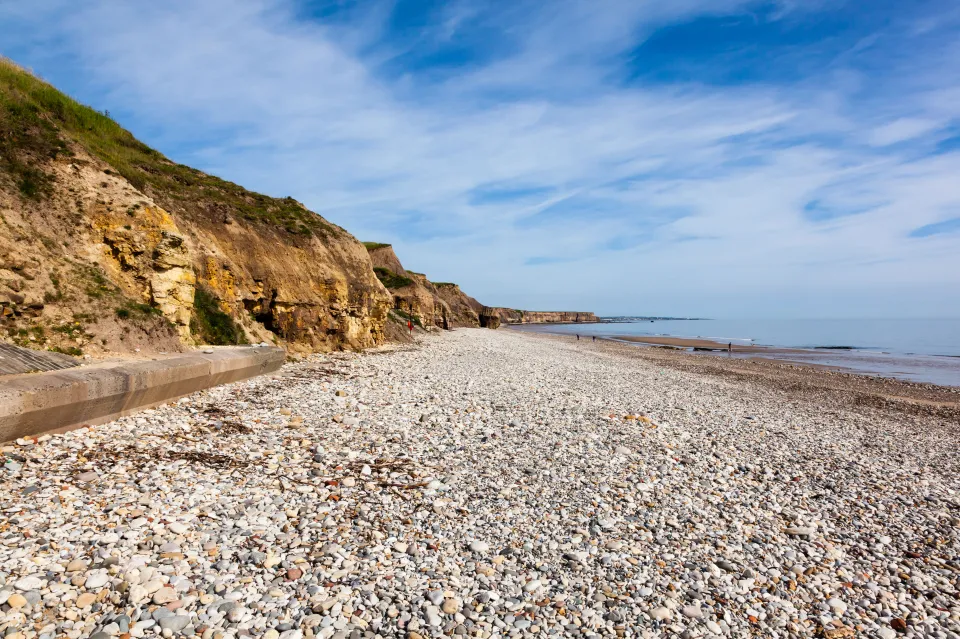
Under this act, it is against the law to take natural materials from the UK seafronts.
This includes materials such as sand, shells and pebbles.
The law can in turn be enforced by the local council and lead to a fine of up to £1,000.
While popping a pebble in your pocket on a beach stroll may feel harmless, mass numbers of materials disappearing from the beach can worsen the effects of coastal erosion.
This occurs when land located near the sea is worn away by the water.
The coast is better protected when there are more pebbles on the shore, which is why beach-goers are discouraged from taking home a memento.
Natural materials found on the beach also provide habitats for wildlife and protect the area from flooding.
Cumberland Councillor Bob Kelly, who is the executive member for Cumberland Policy and Regulatory Services, said: “I understand people’s reluctance to follow this guidance, as I have been a collector of shells myself.
“But taking a pebble or a shell from a beach can in fact damage the environment.
“Pebbles and other natural matter act as a natural sea defence against coastal erosion, natural flood defences and wildlife habitats, which many experts warn has become even more of an issue due to climate change.
“We are asking people to leave the pebbles, shells and sand as we all want to ensure that our beaches remain vibrant and intact for future generations.”
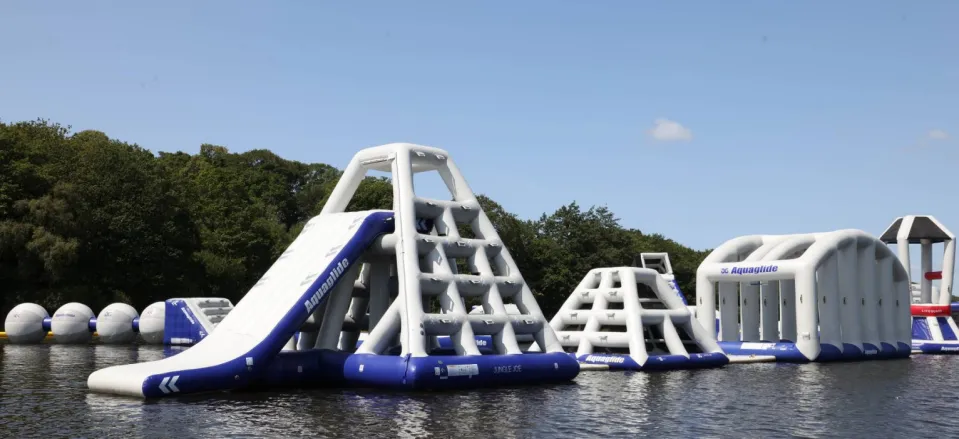
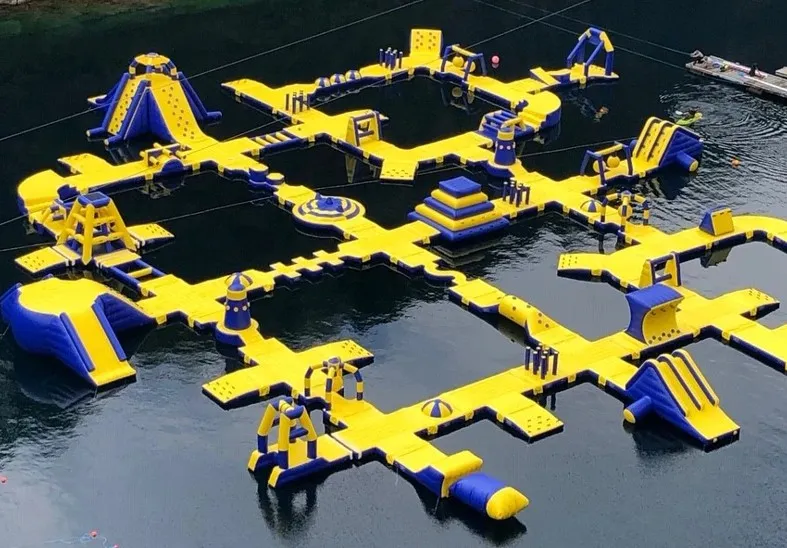
A BRAND new aquapark that is the “biggest in the region” is set to open this summer.
Featuring slides, climbing walls and an obstacle course, the inflatable waterpark is expected to attract thousands of visitors.
The park opens on August 3 and promises a full-day of water-based funCredit: MEN MediaThe North West Aqua Park is set against the stunning backdrop of Lower Rivington Reservoir in LancashireCredit: MEN Media
Located at Anderton Centre near Bolton and Chorley, the brand new North West Aqua Park will be open to the public from August 3.
It is set against the stunning backdrop of Lower Rivington Reservoir, a mid-19th century lake in Lancashire.
Sign up for the Travel newsletter
Thank you!
The inflatable park promises a day out full of water-based fun, including slides, balance beams, climbing walls and splash zones.
Aimed at visitors aged six and over, the water attraction will have a full-time, fully qualified lifeguard team on site.
Visitors are able to pre-book online now, and the park expects demand to be high throughout the summer.
Tickets for a one-hour session cost £20.
Jason Pendlebury, chief executive of the Anderton Centre, said: “We are incredibly excited to open the North West Aqua Park and welcome our first visitors on August 3.
“This has been a project that has involved a huge amount of planning, partnership working and commitment from many people, and we’re immensely proud to see it become a reality.
“We believe the Aqua Park will become one of the North West’s premier outdoor attractions, bringing new visitors to the area while encouraging people of all ages to get active, enjoy the outdoors and create lasting memories with family and friends.
“We can’t wait to welcome everyone to experience it for themselves.”
When Sebastian Dollinger and his colleagues first drove into Yosemite National Park, they felt like they were entering the world at its finest — a prehistoric beauty of hulking rocks with every waterfall flowing in the valley.
It reminded Dollinger, who lives in Sweden, of the Swiss Alps in summer.
The moment didn’t last long.
As the group, in the park in early May for a fashion shoot for California luxury brand Robert Talbott, neared Mirror Lake in Yosemite Valley, Dollinger’s party felt like it had been overtaken by a massive swarm of bees as droves of other tourists buzzed around them, he said.
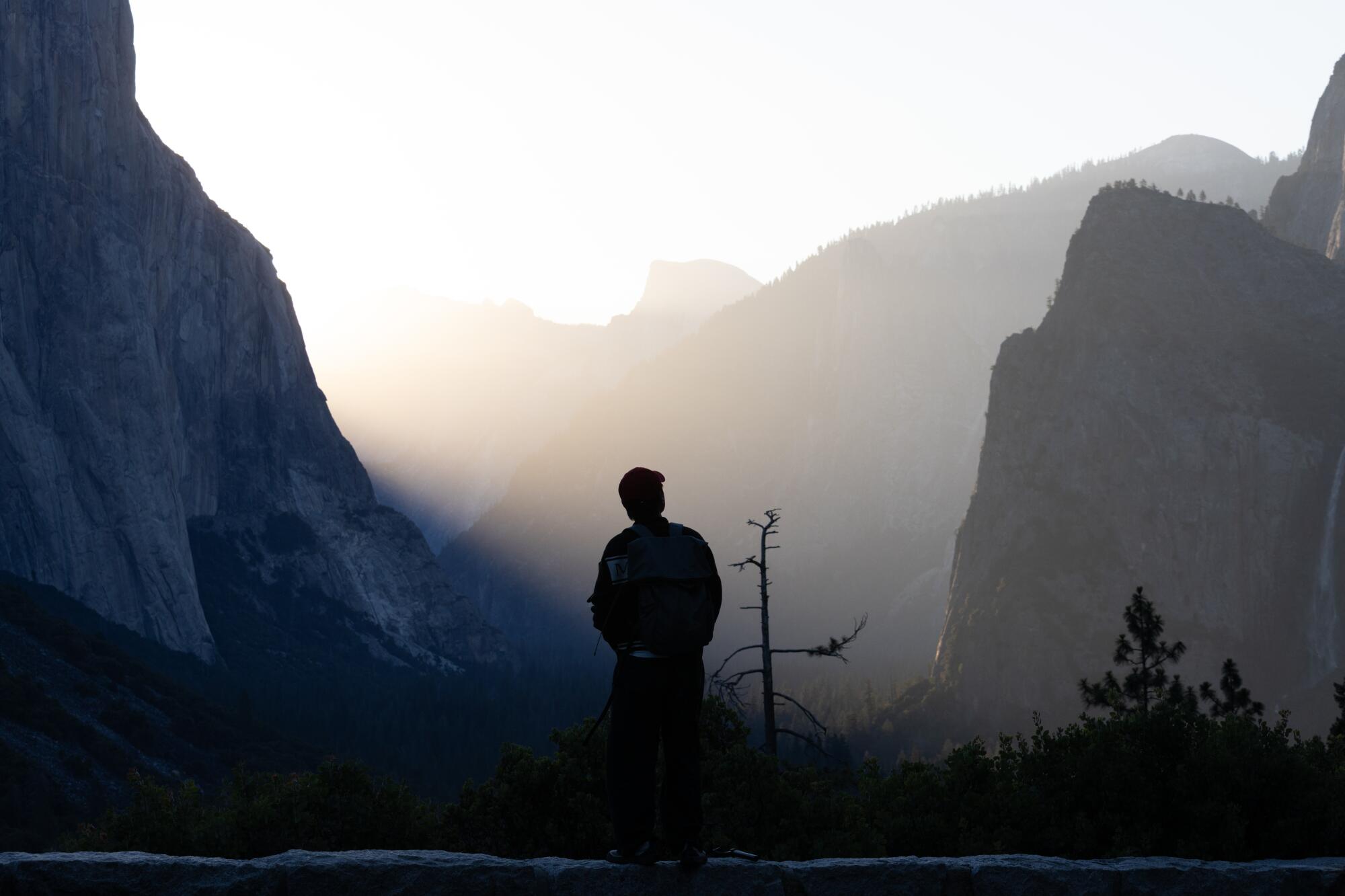
A tourist stands in front of an overlook near Yosemite Valley during a sunrise in mid-June in Yosemite National Park.
Tourists wait at the Yosemite Falls bus stop.
“I could have taken up climbing and gone up El Capitan just to escape the people,” Dollinger said, referencing Yosemite’s famous rock wall, “but I’m just a creative director.”
This summer, Yosemite is seeing a significant uptick in visitation, driven by the park’s internationally known splendor, its popularity on social media and a lack of its politicized reservation system. As droves of tourists flock to Yosemite, it raises the question: Is it still possible to have a fun time there despite the crowds?
Hopefully, yes, but that answer comes with a few heavy asterisks. Park-goers and local business owners say it’s crucial for those venturing into Yosemite this summer to plan their excursions outside peak times to avoid the worst of the crowds, and even then, pack their patience. The best-laid plans can still result in visitors facing significant lines at the park’s gate and restaurants, crowded hiking trails and a relentless search for parking.
By the end of June, Yosemite had seen at least 183,000 more visitors than last year, according to preliminary park visitor data. Just over 2 million people visited the park by the end of June, a 10% increase compared with last year’s visitation data.
Crowds pose for photos on the Mist Trail.
The increase in visitors is, in part, because the National Park Service is not using a timed-entry reservation system this year.
The National Park Service announced in February — after the agency under the Biden administration studiedextensively how to best implement a reservation system — that officials would instead use “targeted management.” This has included sending congestion alerts to visitors’ mobile phones and encouraging visitors to venture outside the valley, as it represents only a fraction of its almost 1,200 square miles of parkland.
When asked how the agency planned to address overcrowding in Yosemite this summer, a National Park Service spokesperson who declined to give their name to The Times said in an emailed statement that temporary traffic delays can occur during peak times but aren’t evidence of “operational failure.”
“They reflect the reality of managing one of the nation’s most visited national parks while keeping visitors safe and protecting park resources,” the spokesperson said. “Claims of widespread ‘overcrowding’ are not an accurate characterization of current park operations. Visitors have benefitted [sic] from expanded access for months now, and we are seeing operational efficiency from managing traffic only when and where necessary, rather than blanketing the park with restrictions for entire seasons.”
Dozens of tourists hike their way up the Mist Trail in mid-June, one of the more popular trails in Yosemite National Park.
Visitors like Dollinger say this new approach is not working.
“After we hiked for about three hours, we met a couple from Japan, and when I talked to them they were almost in tears,” said Dollinger, who has visited other state and national parks in California. “They saved for five years to do this trip, flew to San Francisco from Tokyo, stayed in San Francisco and hired a car, and went to the park for five days, which I can only describe as hell.”
Not every Yosemite visitor that The Times spoke to for this story had as bad of a time as Dollinger, but no one disputed crowds being an issue.
Chidumebi Ajaero, who lives in L.A., said he was “very concerned” when he and his friends left for their trip in mid-April over how crowded the park would be.
It was Ajaero’s first time to visit Yosemite after moving to California about 2½ years ago from Houston. He has been to other national parks and said he knows they can get “quite chaotic” when busy.
Tents set up in Upper Pines Campground on a June weekend in Yosemite National Park.
Ajaero and his friends arrived in Yosemite on a Friday afternoon and were surprised to find there was no line to enter the Big Oak Flat entrance.
They set their campsite up at Upper Pines, a campground in the valley, and headed out early on the Mist Trail, which takes hikers to Vernal and Nevada falls via its large stone steps. There were a considerable amount of people on the trail with them, he said.
“It’s not until you get to the waterfall itself and you have the steps, and everybody is taking pictures,” Ajaero said. “There’s actually a line to move up. You’re just waiting for your turn to step up” to capture the waterfall.
Ajaero said he’s glad he went before Memorial Day, when visitation started to increase more significantly.
But because of how curated Yosemite Valley is, with a grocery store, souvenir shops and restaurants, Ajaero said it felt more like an amusement park than his trips to Joshua Tree National Park, where visitors are far more on their own.
Hikers walk on a boardwalk designed to prevent erosion in sensitive meadows.
“I didn’t love it as much as the other because of the commercialized feeling of it, and just the fact it never felt you were alone in Yosemite,” he said. “I think there’s too much going on.”
How developed Yosemite should be for its visitors has been a debate since the park’s existence.
Michael W. Childers, author of “The Mountains Are Calling: Tourists and the Unmaking of Yosemite National Park” (Nebraska), said people often use the metaphor of not wanting to turn the park into Disneyland, but a more apt comparison is how closely Yosemite resembles a resort.
Concessionaires have been in Yosemite since its beginnings, as the federal government didn’t have the money to construct its own amenities in the 1850s, he said. Yosemite Hospitality, a subsidiary of hospitality giant Aramark, manages much of Yosemite’s lodging, dining and activities (including the park’s Starbucks inside the valley).
Childers, an associate professor of history at Colorado State University, said his concern is that, since the late 1970s, conservative intellectuals have pushed to privatize the park even further.
He said the chaos being created by the Trump administration through cutting park staff and ending the reservation system is “very intentional” in the quest to argue the only way to manage the park is to privatize Yosemite.
“If you privatize the entirety of a national park, that means that your only one measuring stick is profit, and arguably, national parks are not solely designed for profit,” said Childers, an environmental historian of the American West. “They’re for experience. They’re for democracy. They’re for preservation of natural resources.”
Vehicles stop to pay the fee at the El Portal entrance gate.
Vehicles line the road near El Capitan in Yosemite National Park.
One of park officials’ most significant management challenges started when tourists began entering Yosemite by automobile. Since 1913, people could enter in a personal vehicle, but visitation numbers remained reasonable until 1926 when the “All Year Highway,” a segment of the 140 Highway, opened.
This new thoroughfare created an easy and direct route to reach the park by car that avoided steep mountain roads, according to park history. The road’s opening resulted in a near doubling of total cars visiting the park in just one year, park staff said in an Instagram post.
“The summer of 1927 has clearly demonstrated that parking is one of the most urgent, menacing problems of the entire Yosemite Valley,” said Don Tresidder, president of the Yosemite Park & Curry Co., that year, according to the park.
And has thus remained for 100 years.
The first attempt in recent years to get a handle on car traffic was the reservation system, implemented initially to spread guests out during the COVID-19 pandemic in 2020 but rolled out in 2021, 2022 and 2024 as the park service tested how to best employ it to cut down on traffic and help more visitors enjoy the park.
“Over the past decade, many parks have seen significant increases in visitation and crowding in popular areas, especially during peak seasons,” the agency wrote in 2024 as it sought public comments on park management. “In some parks, the level of demand is exceeding the capacity for which infrastructure was designed or is outpacing the National Park Service’s ability to sustainably support visitation.”
The park service planned to use visitor feedback and research to guide how reservations would be rolled out in 2025. Environmental and park advocates argued for the reservation system, saying that it not only protected the wildlife and land, but also that it waspopular among guests.
But when Trump started his second term in office, not only did park management strategy change, so did the way the federal government viewed the park service. Hundreds of park workers were laid off, although some got their jobs back. Others took buyouts, and overall there was a 24% decline in permanent workers, according to the National Parks Conservation Assn.
One of the reservation system’s biggest critics is Rep. Tom McClintock (R-Elk Grove), who said the system was decimating the economies of local gateway communities, the term used for the small mountain towns around Yosemite.
Parking lots are filled to capacity during peak hours, creating traffic congestion in Yosemite National Park.
“This is not to say that crowding in the valley hasn’t been a big problem, but the solution is better management and more capacity, not restricting access,” McClintock said on the House floor in June, noting the park had more parking, rooms and campsites before the 1997 flood destroyed infrastructure that he said wasn’t replaced.
Under the timed-entry system, visitors could still enter the park without a reservation if they arrived early — before 6 a.m. in 2021 and 2022 and 5 a.m. in 2024 — or after 4 p.m., and would be required to pay an entry fee for a three-day pass allowing them to reenter outside of peak hours.
But entering the park early or late in the day still wasn’t doable for everyone, including Ronny Shields, a father of two children from Ventura.
Shields, a lifelong Southern California resident, struggled to book a reservation when Yosemite implemented the system until he finally snagged one in 2024. His family had a great time and was eager to return.
In early June, Shields, his wife and kids, ages 4 and 7, made the trek back to Yosemite, staying outside the park at Tenaya at Yosemite in Fish Camp. Shields had researched and found information online suggesting the nearby southern entrance was less crowded.
His family arrived on a Saturday afternoon and entered the park without a wait. They found the valley was quieter than they’d ever seen it as people left.
Tourists stand in a meadow with a perfect view of Yosemite Falls.
For the rest of their trip, they entered the park before 8 a.m. or after 3 p.m., except for one day when they entered later in the morning and waited 40 minutes to enter. The other times, they found no wait.
Once inside the park before 8 a.m., their first stop was the Bridalveil Fall Trail, a short trek that takes visitors right to the base of the thundering cascade. When Shields and his family left the trail about 9:30 a.m., they noticed other guests couldn’t find parking.
They faced the same problem after they went to get food and then tried to park near the Lower Yosemite Falls trailhead. After 20 minutes, they found a spot — and joined the masses.
The trail “doesn’t feel like a hike — it feels like you’re in a crowded mall, but I think that’s the nature of the beast because it’s very short and very scenic,” Shields said.
Comparing his two visits to Yosemite, Shields said he preferred not having to deal with the reservation system, but that came with some caveats. He noticed far more visitors, although he’d expected even more. He saw more trash, several guests going off trail and trampling plant life, and far fewer park rangers to tell them to stop.
He said he didn’t see any park staff in the outdoor areas, and instead, he and his wife made sure to take their kids into the park’s buildings so they could speak to the rangers.
Tourists swim and play in the Merced River in Yosemite National Park.
“It’s nice for the kids to be able to ask questions and learn from people that love it,” Shields said. “Even I learned something.”
Jennifer Liu, a Moreno Valley resident, was at the park the same time frame as the Shields family and was able to mostly avoid the crowds on her backpacking trip through the park’s backcountry.
Liu meandered through the park using a few different trails, including the Sunrise Lakes route, to reach her ultimate destination: Half Dome on her birthday. She left her backcountry campsite about 4:30 a.m. to reach Half Dome by 6 a.m., catching the sunrise at 8,800-feet elevation from the granite monolith.
“I got lucky — the clouds cleared out and there was a nice sunrise,” she said.
Not in a hurry, Liu stayed at the top for four hours. Her fellow hikers sang her happy birthday, and she witnessed a couple get engaged.
Sunset over the Half Dome lookout in Yosemite National Park.
“By 10, when I headed back down, that’s when the crowd was starting to pick up,” Liu said, adding that she was grateful there was still space to navigate the dome’s cable system without being rushed by others.
As a means of crowd control, the National Park Service has attempted to funnel people out of the valley, where the majority of tourists spend their time and into its less frequented locations.
Park officials have tried to rebrand Hetch Hetchy, a massive reservoir surrounded by glacier-carved rock walls, by claiming that “many have compared Hetch Hetchy’s grandeur to the more well-known Yosemite Valley,” according to a recent update on the park’s website. (Previous versions of the Hetch Hetchy page made no such claim, according to archived versions of the website viewed through the Internet Archive.)
The park service doesn’t cite a source for such claims. California naturalist John Muir compared the two valleys’ beauties, but that was before Hetch Hetchy Valley was transformed by the O’Shaughnessy Dam into a massive reservoir.
“John Muir lost the fight over Hetch Hetchy, and the dam was built. And people who live in San Francisco today drink the water of Hetch Hetchy,” historian William Cronon said in the Ken Burns national parks documentary. “Muir died feeling that he’d been defeated by that, and that was a great tragedy at the end of his life.”
Still, Hetch Hetchy has long been whispered among Yosemite regulars as a place to find a little quiet.
That’s changed too.
An empty road under El Capitan in Yosemite Valley National Park.
“We used to have these secret spots we could tell people about,” said Elisabeth Barton, owner of Yosemite Basecamp in Groveland, which offers lodging, trips by local outfitters, gear and more. “‘Go to Hetch Hetchy,’ you’d say quietly and look over your shoulder. ‘Go to this waterfall’ or ‘Do this hike.’ … One of the things we’re noticing is, very quickly on a weekend, [the park] is sending out that alert that Hetch Hetchy is full or that Hetch Hetchy has ‘extreme visitation.’ It’s weird.”
Barton, whose company runs a visitor center in downtown Groveland, said there’s not much she and her team can recommend for people coming Thursday through Sunday into the park. It will be crowded regardless.
On a recent Saturday, Barton met a hiker who was devastated he couldn’t easily enter the valley without dealing with crowds. Barton let him in on a less popular trip that involved a great swimming hole, fish tacos at Whoa Nellie Deli, an adventure around Mono Lake and a drive through a stunning mountain pass. She recommended that he take a long way to reenter the park, enabling him to see the valley at a time he’d miss the crowds.
He called her a week later and told her to never recommend that to anyone ever again. He’d had a great day until he tried to reenter the park and instead waited four hours at the Tioga Pass in a line that stretched for miles. “You’re right, it was beautiful,” he told her, “but to what end?”
“I just wasn’t prepared for that,” Barton said. “It just broke me.”
Even sacred sites — with signage directing visitors away from the area — have been trampled by crowds.
The American Indian Council of Mariposa County, also known as the Southern Sierra Miwuk Nation, fought for decades to establish Wahhoga Village, which is an ancient village site and the last place that Indigenous people lived in Yosemite Valley before being driven out by the National Park Service.
Today, Wahhoga Village includes a traditional roundhouse, traditional cedar bark houses known as umachas and the only cabin that the park service didn’t burn when it evicted the remaining families from the site in 1969.
Wahhoga is not listed on Yosemite maps and is not intended to be used by those who aren’t either authorized or invited by the council to be there, said Deborah Tucker, a council member whose father advocated for years for Wahhoga.
But, Tucker said, in recent weeks, tourists have been found picnicking in the site. Hikers were tromping right through the middle of the village, led by a user-generated route on a popular outdoors adventure app, she said.
And while there, someone peed all over the village’s grinding stones, which are used for processing acorns into flour, along with other foods, said Tucker, whose father is Paiute and Shoshone and her mother was Choinumni, a branch of Yokut, tribes indigenous to the region.
Tourist beat the heat and float on tubes in a river in Yosemite National Park.
Under the current administration, “it’s a free-for-all,” Tucker said. “You can come up there and do what you want, park where you want and you’re disrupting not just sacred sites but other park sites that the park service has [established],” leading to littering and other pollution, noise that harms the birds and speeding cars that threaten the safety of bears and other wildlife.
Tucker said because the current administration seems fixated on money over conservation, she hopes that when people visit the park this summer, they will at least hold themselves accountable, showing respect for the land and its inhabitants.
“Clean up after yourself, maybe clean up after one another, and don’t take anything home with you that you didn’t bring,” Tucker said when asked what she’d say to the park’s visitors. “Enjoy that experience, and [you’re] welcome to come back again.”
The hotel features 22 air-conditioned apartments, with kitchenettes and smart TVs.
Near the hotel, you can head to Mosque-Cathedral of Córdoba or even a Roman Temple just two minutes away.
You’d fly from Bournemouth Airport on July 31 and land at Malaga, and then return on August 5, costing £159 per person.
Rhodes, Greece
Or if you’d prefer to head to Greece, you could stay on Rhodes for less than £230ppCredit: loveholidays
On Rhodes, you could stay at the Kassandra Family Aparthotel & Spa. All rooms at the aparthotel have their own balcony, as well as a kitchenette and dining area.
As for things to do on site, there aren’t one but two outdoor pools, with loungers and there is even a smaller pool for little ones.
Parents needing some R&R can head to the spa too, where they will find a sauna, steam room and hot tub.
There’s also Greek-themed evenings for the family with karaoke and the beach is less than a 10 minute walk away.
You’d fly from Edinburgh Airport to Rhodes on August 10 and return to Glasgow Airport on August 15, for £229 per person.
Madrid, Spain
For a city break, head to Ramada by Wyndham Madrid Tres Cantos in MadridCredit: loveholidays
Ramada by Wyndham Madrid Tres Cantos is a great spot for those wanting to explore the Spanish capital, while staying out of the hustle and bustle.
The centre of Madrid is a 22-minute drive away, so it’s not too far.
But at the accommodation you can enjoy air-conditioned rooms, an on-site restaurant with a continental breakfast each morning and even a coffee shop.
For families seeking some fun, there are a number of sports facilities including tennis, volleyball and mini golf.
You’d fly from London Luton Airport on July 31 and land at Madrid, and then return on August 5, costing £219 per person.
Crete, Greece
For another Greek island, you could visit Valentina Apartments on CreteCredit: loveholidays
If you fancy a Greek island, you could head to Valentina Apartments on Crete, which are surrounded by olive groves. Each room has its own kitchenette as well as balcony or terrace.
You can head to the swimming pool area, where you will also find loungers and a poolside bar.
The hotel also boasts a restaurant and weekly barbeque nights.
And if you fancy a beach day, it takes just 10 minutes to walk there – the same amount of time it takes to walk to the town centre where you’ll find restaurants and bars.
You’d fly from Liverpool Airport to Heraklion on July 31 and return to Manchester Airport on August 5, for £299 per person.
Majorca, Spain
Popular holiday spot Majorca even has some offers still availableCredit: On the Beach
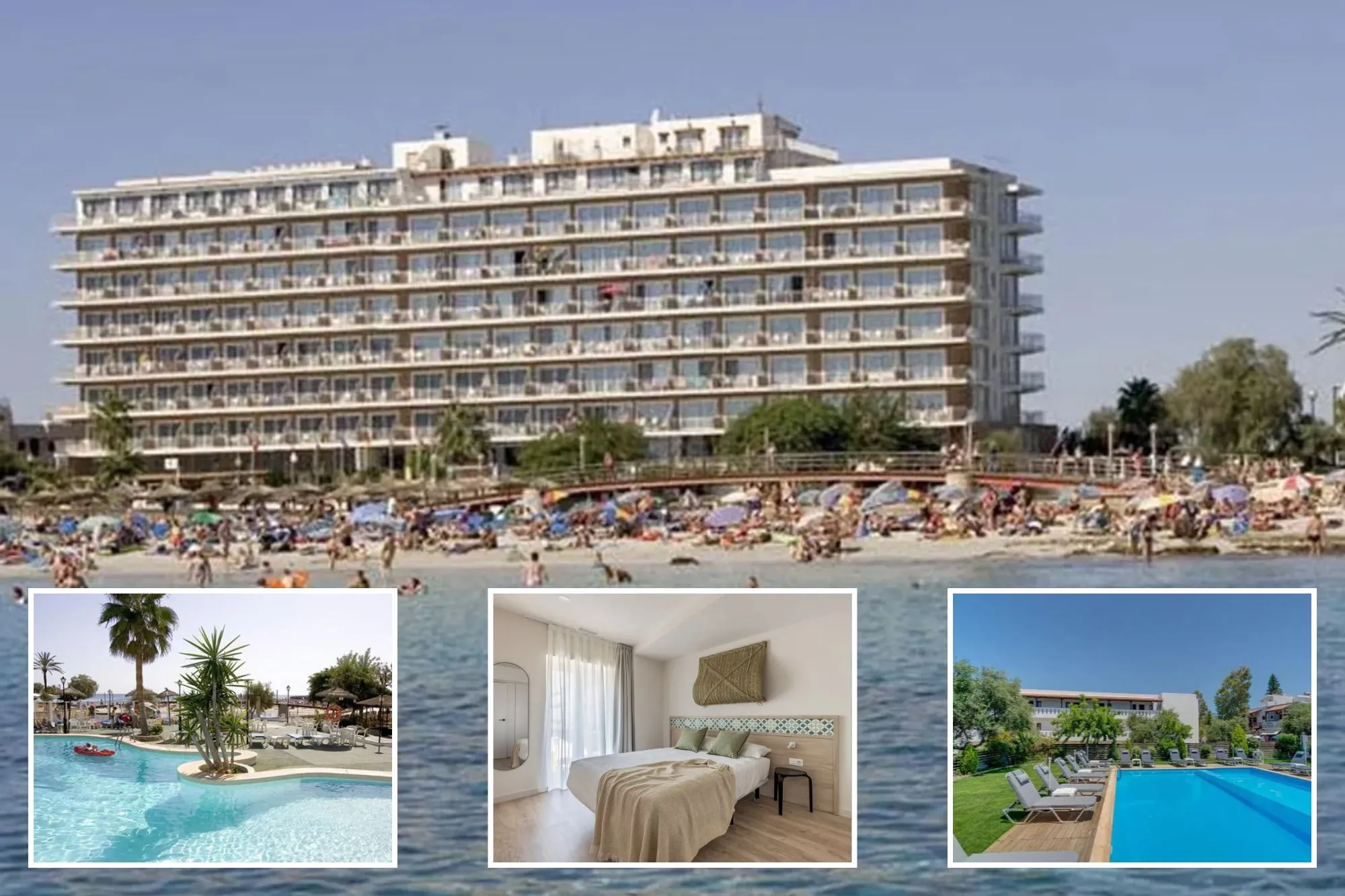
For a trip to Majorca, you could stay at Playa Moreia, which overlooks the sea.
The hotel boasts a large pool, as well as a playground and onsite entertainment.
Rooms have a separate living room area, and most have a balcony as well.
You’d fly from Bournemouth Airport to Palma on July 30 and return on August 4, for £240 per person.
Corfu, Greece
Or in Corfu, you could stay at an aparthotel right by the beachCredit: loveholidays
For another Greek break, you could head to the Oasis Beach Club aparthotel in Corfu. The beach is just a short walk away, ideal for soaking up the sunshine.
As for the accommodation itself, there are 32 rooms as well as an outdoor freshwater pool for a dip and then a poolside bar and even BBQ facilities for when you want a bite and a tipple.
Then for families looking for an activity, there are also table tennis tables and darts at the hotel.
The centre of Kavos is a few minutes away as well, where you’ll find more restaurants, bars and cafes.
You’d fly from Manchester Airport to Corfu on July 31 and return on August 5, for £289 per person.
Tenerife, Spain
Tenerife also still has availability with one spot less than 500 metres from the beachCredit: On the Beach
Or perhaps you want to go to Tenerife? Well, then you could book into Parque Carolina.
The apartment complex boasts its own pool and the beach is less than 500 metres away.
In the surrounding area, you can also head to a waterpark.
You’d fly from Glasgow Prestwick Airport to Tenerife South on August 26 and return on September 2, for £170 per person.
IF you’re yet to book your holiday this summer, then there are a bunch of islands that are set to be the next big thing.
Expedia has launched its 2026 Island Hot List list – not based on their temperatures, but the ones that are trending right now.
St Lucia has seen an of 125 per cent in interest by holidaymakersCredit: Getty
Expedia created its Island Hot List from the spots around the world that have seen the biggest increase in traveller interest between September 2025 and March of this year.
At the very top of that list, is beautiful St Lucia in the Caribbean.
Sign up for the Travel newsletter
Thank you!
Over the past year, the island has seen a huge 125 per cent increase in searches.
It’s no surprise really, as St Lucia is a tropical paradise with stunning scenery from jungles to volcanoes and its mix of white and black sand beaches.
One Sun Writer who visited a few years ago hiked through its rainforests and sunbathed on the golden sands of Reduit Beach.
He added: “With beautiful scenery, indulgent food and plenty of adventure, it’s not hard to see why St Lucia has stolen the hearts of the young and old as well as families and honeymooners.”
For anyone who wants to visit, the best time to visit is between February to May – and there are some affordable winter packages.
It’s not just far-flung islands that topped the list – plenty in Europe did well too.
Second on the list is Porto Santo, a small Portuguese island in Madeira.
Expedia said it’s “a quieter alternative to Funchal and mainland Europe’s busiest beach destinations, known for its golden sands and relaxed pace.”
Syros in Greece came fourth on Expedia’s Island Hot ListCredit: AlamyThe Lofoten Islands in Norway are said to have inspired Disney’s FrozenCredit: Alamy
It’s been called a ‘golden oasis‘ by Visit Madeira and has enormous sandy beaches – despite being the smallest inhabited island on the archipelago.
It also has sea coves and the waters are great for diving and snorkelling.
To get to Porto Santo, Brits will have to fly directly to Funchal and then it’s a quick 25-minute flight to the neighbouring island.
Also in the top 10 is Syros, a Greek island that’s much lesser-known than its neighbour, Mykonos.
There’s lots to do there from exploring its main town of Ermoupoli, to the village of Kini, which is known for its seafood restaurants.
Of course there are plenty of beautiful beaches too.
The Lofoten Islands still have beautiful beaches – and the sun doesn’t set for three monthsCredit: Expedia Porto Santo in Madeira also made the listCredit: Expedia
It might not be the hot escape that’s usually associated with islands around the world, but the Lofoten Islands are a trip worth considering.
The main islands include Austvågøya, Gimsøya, Vestvågøya, Flakstadøya, and Moskenesøya.
In fact the Lofoten Islands are so beautiful that with its frozen backdrop, colourful fishing villages, and craggy mountains that it’s said to have inspired the landscape for Disney‘s film Frozen.
From mid-May to the end of July, the sun doesn’t set there – it’s called Midnight Sun, when the sun doesn’t drop below the horizon.
Other islands soaring in demand include Praslin which is the second-largest island in the Seychelles.
Here, interest has increased by a whopping 80 per cent.
Here’s the full list of Expedia’s ‘Island Hot List 2026’…
I’m one of those rare Mexicans who never cared for soccer.
My family is from the north-central Mexico state of Zacatecas, where baseball is king and even volleyball was more popular in the ranchos of my parents than futbol. The childhood sports idols for my generation of cousins were Dodgers pitcher Fernando Valenzuela and boxing champion Julio César Chávez, not Mexican soccer legends Hugo Sánchez and Jorge Campos. Our dads bought us hats and bats to occupy our summer, not kits and cleats. I don’t even remember any of us ever owning a soccer ball — and I have nearly 100 cousins.
The first World Cup I remember was the 1994 edition hosted by the United States. I remember reading a huge Times special preview section on the affair and collected some of the commemorative pins that McDonald’s sold. But the matches were background noise in our living room during family parties as we splashed around in the swimming pool at our Anaheim home. When the tournament finale happened at the Rose Bowl, my favorite cousins and mutual best friend instead caught a baseball game at Angel Stadium and knew about Brazil’s victory over Italy only because the people above us in a private suite let us know.
As a sports fan, I paid enough attention to soccer as the decades passed to know who was who and what team was what and which sides kept winning — and that was mostly because I enjoyed EA Sports’ excellent video game version of it. What made playing soccer on consoles so fun — an exponential number of domestic leagues and international tournaments, the fact that every English-language match seemed to have a Scottish color commentator, the seeming aimlessness and formlessness on the pitch broken up by flairs of beauty — made it a slog when watching in real life.
As a reporter, I knew enough about soccer culture to file stories from watch parties across Southern California’s cornucopia of diasporas every World Cup. As a Mexican American, I cared enough about Mexico’s perpetually heartbreaking El Tri squad to watch their runs and sigh about how we’ll always have it harder than most. But I never bothered to tune in to other matches even as soccer leagues from across the globe have stormed network, cable and streaming channels in recent years.
I never hated the sport — it just never moved me. But when the final whistle blew on this year’s World Cup finale and three-quarters of the packed house at Chapter One: The Modern Bistro cheered wildly, I realized I was finally, truly a soccer fan.
Over 104 games, a bunch of questionable VAR calls, another heartbreaking downfall by Mexico, a bizarre Tom Cruise pregame monologue in the last match and the brilliant goal by Ferran Torres in extra time that let Spain squeak by Argentina 1-0, I slowly learned and felt why soccer is the world’s most popular sport, why a billion-plus people watched alongside me Sunday afternoon, and why this Cup kept setting viewership records in the United States and beyond until the end.
Who wouldn’t be moved by the heroic performances of underdog countries against the game’s traditional powers, such as tiny Cape Verde and ancient Egypt? Who couldn’t feel the thrill of seeing young stars meet the hype around them and exceed it — Erling Haaland of Norway, Lamine Yamal of Spain, Mexican midfielder Gilberto Mora, to name the most fabulous? Who didn’t want to interact with fan bases that distilled the best of their side’s cultures and traditions and showed it off to everyone and anyone — I’m doing Norway’s Viking Row even as I type.
Who can’t learn from the life lessons soccer offers — and I’m not talking about the obvious geopolitical metaphors? I knew some of them, yet I never really absorbed them until I decided to make Chapter One my gustatory church for the Cup and watch as many games there as possible. I caught so many that I effectively became a walking Manhattan cocktail for the summer, and while my liver won’t forgive me for a while, my heart and soul absolutely have.
The one thing I always admired about domestic leagues — well, except Major League Soccer — is the relegation system, where the bottom teams in one league swap places with the top teams in a lower-ranked league at the end of each season. For national tournaments, the corollary is how poorer countries always have to match up against richer ones for regional face-offs and qualifiers that culminate in the quadrennial dream that is the World Cup.
That makes soccer a beacon of hope and possibility that few other team sports can offer, especially in an era where top teams try everything possible to keep everyone else out of their riches (which is why relegation will probably never come to MLS). In a world where the haves are grinding down the have-nots, soccer is a reminder that anything truly is possible for anyone — you just have to keep at it.
The Chapter One gatherings quickly taught me how the long lulls broken up by spurts of passion that I once found a drag were actually as stirring as a religious experience. It’s impossible not to feel this watching even one game — but a succession of them have the effect of a full conversion.
Cheers and chants turned into prayers. Boos against opponents and bad referees and yells at your side to do better was the Spirit moving you to testify. Text threads among friends became daily missals. When your side scored, it was like the gift of life itself — I’ve never been in a louder environment than when Mexico scored against England, a roar that rivaled a jet engine.
When your side lost, like Mexico eventually, inevitably did, it was a reminder that we all must at some point — but that we shouldn’t dwell on defeat because while eternal glory isn’t guaranteed, it can happen. And that’s why soccer teaches we must continue no matter how bad our team performed, no matter how terrible things get or how hopeless life seems.
After every Mexico match, downtown Santa Ana became the most wonderful expression of happiness I’ve ever been lucky enough to join — fireworks, conga lines, street takeovers or just standing among thousands of strangers and soaking it all in. It was the revival of a people whom a year early were angrily protesting on those same city blocks if they weren’t sheltering in place because ICE was running roughshod over Southern California.
Only soccer could’ve caused such a joyous revolt. We should all channel some of that magic into our daily lives.
And in the middle of all this emotion, I actually watched what was going on. I saw talented teams such as South Korea collapse under pressure and my beloved Mexico valiantly fall against an English squad that was taller, faster and just better — for now. Haaland’s singularity was a testament to how humanity seeks heroes — but Spain’s ultimate triumph via crisp passes and selfless teamwork offered a stirring, convincing collective counterpoint.
Soccer probably won’t supplant my love for baseball, football, basketball and hockey — but I can now mention it in the same breath as them.
International and professional soccer is rife with corruption and avarice and increasingly embraces the worst tendencies of late-stage capitalism. And yet fans suspend their cynicism for a few hours — for a tournament, for a season — because they know that the communion that soccer offers is pure and holy.
Now that the Cup is over, my mind is racing with what club teams I should start to follow and continue my World Cup experience. I already kind of like Bayern Munich because that was the side I chose in EA Sports FIFA 18 (to show how retrograde my soccer knowledge remains, I still think James Rodriguez, Thomas Müller and Robert Lewandowski play for them), but who will I root for in Premier League? I can’t do Arsenal even though Chapter One is the official Orange County home for Gooner fans because that would be too obvious. Maybe Crystal Palace, about which I know nothing other than that was also the name of the Bakersfield music hall owned by country legend Buck Owens?
Zacatecas has never had a successful club team — baseball still rules there, after all — so I think I’ll root for Pumas UNAM to honor all my Mexico City friends who urged me forever to give soccer a true chance. I don’t really know any La Liga squads besides Real Madrid, Atlético Madrid and FC Barcelona, so I have a lot of studying to do there. And between the Galaxy and LAFC? Well, time for me to catch a home-and-home El Tráfico and let their support groups court me.
One team I know I’ll now follow: Angel City, the L.A. women’s soccer side brilliant enough to rebrand itself “Immigrant City Football Club” last summer in the midst of President Trump’s deportation deluge while the city’s other professional sports teams stayed quiet. And I’m already counting down the months before Brazil hosts the Women’s World Cup a year from now and Chapter One becomes my Cheers anew.
Soccer: it’s been a long time coming between you and me. But here I am! Drop those hydration breaks, and you’ve got a fanático for life.
Afterwards, the regional government temporarily stopped vehicles heavier than five tons from the road.
Now, the Province of Salerno has signed a total and permanent ban on all these large vehicles – including tourists buses.
The nearby village of Ravello which sits high on a hilltop at over 1,000 feet has since opposed the ban.
For years, coaches have ferried visitors up winding roads to the village, and the ban has not been well-received as it heavily relies on tourism.
Small villages rely on the buses to get tourists thereCredit: AlamyRavello worries about the loss of income if tourists can’t easily visitCredit: Alamy
Instead, it has asked for road repairs, speed limits and permission for service vehicles and public transit to use the roads.
Talking about the ban, Paolo Vuilleumier, the mayor of Ravello, said: “It is unsustainable and doesn’t take into account the dramatic repercussions it will have on the community.
“Blocking scheduled vehicles means denying the right to mobility to students, workers and residents, as well as decreeing a total halt to international tourism that chooses our destination.”
Ravello is often considered the quieter neighbour to Amalfi and Positano but still sees around three million visitors each year.
He said choosing the wrong option could automatically add 10 per cent to what you should be paying
Simon Calder issued the warning to Brits preparing to travel this summer(Image: ITV)
A travel expert has warned Brits going away that they are going to be ‘ripped off’ unless they make the right decision when paying for things on holiday. Simon Calder, who is a travel expert at the Telegraph, said it was essential that people going away paid for things in the local currency rather than pounds if they were using their credit card.
He said choosing the wrong option could automatically add 10 per cent to what you should be paying. It is something which catches out many travellers, with people unsure of which option to choose when given the choice between paying in pounds or the local currency.
Mr Calder explained why you should choose pounds, and why it can cost you if you choose the wrong option. He said: “Just at the start of the summer rush, I need to warn people about dynamic currency conversion.
“You’re in a foreign country, you’ve got your credit card, you come to pay, the shop assistant, the waiter says, ‘Okay, here’s the card terminal and look, do you want to pay in Euros or in good old British pounds?’
“And you might be tempted for thinking, ‘Well, I’ll pay in Sterling of course, then I’ll know how much it costs’. The one thing you will know is that you are going to be ripped off to the tune of typically 10 per cent.
“So, on a £20 lunch, you pay an extra £2, which you will never get back. Leave it for the waiter instead. So, just remember, paying by credit card, always pay in local currency.”
Content cannot be displayed without consent
Withdrawing money abroad
The dynamic currency conversion (DCC) that Mr Calder is warning people about is also a topic money-saving expert Martin Lewis has discussed. However, he used a similar example at ATMs, urging people to use the local currency when abroad.
He said that when an ATM or card terminal enquires whether you wish to pay in pounds or euros, it is essentially asking you who should perform the currency conversion.
“If it’s euros, do you want your card company to do the conversion? If it’s pounds, we will do the conversion for you and then charge your card,” Martin said.
According to consumer group Which?, DCC permits foreign retailers and ATM operators to convert a transaction into pounds at the point of sale, yet the exchange rates on offer are frequently far worse than those provided by banks and card issuers.
Mr Lewis even warned that ATMs abroad often try to convince the individual to use pounds due to the unfavourable exchange rate and even added withdrawal fees.
“I want euros, please. Are you sure? We won’t do the conversion. Are you absolutely sure? Yes, I want euros,” he said. “The ATM… they are desperate to persuade you to let them do the conversion because they make a lot of money from it.”
With the summer holidays set to be one of the busiest travel periods, everyone needs to be aware of the different rules when it comes to taking a nifty gadget on board flights
You must be aware of these travel rules before heading to the airport(Image: Getty Images/Stock Image)
Before jetting off abroad this summer, it’s vital to understand the little-known gadget rule that varies by airline.
For most of us, packing a power bank for our holiday is top of the list, whether it’s to use at the airport or while exploring a new city. But there are strict rules for carrying the nifty gadget onboard.
Earlier this year, the International Civil Aviation Organisation amended its rules on passengers carrying power banks, along with lithium cells or batteries, onboard any aircraft. The changes came into effect on 27 March, limiting how travellers pack and use their power banks, with a cap on the number that can be taken on board.
The amended rules from the ICAO stated that power banks:
Must be carried in carry‑on baggage
Must be individually protected when not in use
Must not be recharged on board the aircraft
Should not be used to charge other portable electronic devices on board the aircraft
Maximum of two power banks per person
There have been various reports of power banks causing hazardous issues onboard, with safety experts at the UK Civil Aviation Authority (CAA) explaining that lithium batteries found in power banks can be dangerous on planes, primarily because they can enter “thermal runaway.” This is a process in which a battery experiences a rapid, uncontrollable temperature surge, potentially leading to fires, explosions, and the release of toxic fumes.
In accordance with International Civil Aviation Organisation rules, most airlines allow passengers to carry two power banks per person on board. However, they cannot be used during the flight and must be taken on board in their hand luggage.
What airlines allow two power banks?
Asiana Airlime
British Airways
Cathay Pacific
China Airlines
easyJet
EVA Air
Jet2
Lufthansa
Korean Air
Loganair
Qantas
Ryanair
Singapore Airlines
Starlux Airlines
TUI Airways
United
Vietnam Airlines
Wizz Air
While these airlines allow two power banks on board, they also outline their own additional rules, including the permitted watt-hours and the required device condition. So it’s vital to check your airline’s specific power bank rules before jetting off abroad.
What airlines only allow one power bank?
While most airlines allow travellers to take two power banks on board, Emirates restricts customers to just one power bank per person. They state that it must be under 100 watt-hours, carried in hand luggage, and cannot be used to charge devices on board.
The airline also outlines that the power bank should not be placed in the overhead lockers, but must be placed in the seat pocket or in a bag underneath the seat in front. For full details on Emirates’ power bank rules, visit their website.
What airlines allow more than two power banks?
Meanwhile, Virgin Atlantic permits passengers to carry up to five power banks or spare batteries per person. However, it depends significantly on their watt-hour (Wh) rating.
They also need to be stored in hand luggage and cannot be used during the flight. For full details on Virgin Atlantic’s power bank restrictions, visit their website.
Do you have a travel story to share? Email webtravel@reachplc.com
ANOTHER family missed their flights home and were forced to spend nearly £2,000 due to massive airport queues abroad.
Matthew Wilson, his wife and their son were travelling home to Manchester from Milan back in April.
The Wilsons missed their flights home after long queues at EESCredit: Getty
They were returning to the UK after a nine-night holiday when they got stuck huge passport queues due to the new European entry rules.
Talking to the iPaper, Matthew said that despite easily getting through security, they were then stuck in another queues for 90 minutes, in which they only moved about 10m in that time.
Sign up for the Travel newsletter
Thank you!
Frustratingly, he family were then told by ground staff that their luggage had been removed from the plane as the flight was going to depart while they still stuck in the queue.
They were then forced to wait three hours before easyJet, who the family were flying with, offered the family a flight back home – but this was six days later than the original flight.
Rather than waiting, Matthew spent £1,969 on new flights from Barcelona, taxis, food and accommodation.
This was on top of the money they had already paid on the flight they missed which had cost £377.
Not only that, but their travel insurance provider also said they were unable to recuperate his costs.
Matthew said: “It was very stressful – we will think twice before travelling in Europe again.”
The family then spent £2,000 to get home after the delaysCredit: AlamyThe operator of Milan Airport apologised saying EES ‘requires longer processing time’Credit: Getty
The airport operator apologised, adding that EES “requires more complex operations than before and longer processing times”.
Not only that, but it said that on the day the Wilsons were due to fly home (April 12), there were malfunctions at the automatic gates due to issues connecting to the border systems.
This resulted in “particularly long waiting times” as passengers had to be manually checked at passport control.
The flight to Manchester had been held for nearly an hour “but it had to then depart due to crew reaching their safety regulated operating hours”, explained easyJet.
There have been warnings over wait times because of EES – and it’s only set to get worse.
Rafael Schvartzman – the vice-president forEuropeat the International AirTransportAssociation (Iata) – warnedqueue timescould stretch to as much as six hours this summer.
Mr Schvartzman said: “What we are seeing is a very hard risk of really challenging times or waiting times, talking about expectations of three, four, five, six hours which is unacceptable.
“We know for a fact there are many cases where people have lost flights or their connectivity.”
Romanian authorities at the airport said that the woman’s departure hadn’t been properly recorded after a visit to Amsterdam in April 2026.
The problem was that she hadn’t been to Amsterdam – but her identical twin sister had.
EES appeared to have confused the twins despite taking biometrics.
The woman was questioned for about 15-minutes but was ultimately allowed to fly home.
Around 12,000 sets of twins are born in the UK every year, so this could cause problems for thousands of people.
Asking experts what could have caused the flaw in the system, Niovi Vavoula, chair in cyber policy at the University of Luxembourg, gave two possible explanations.
The British traveller was questioned by authorities in the airportCredit: AFPShe was mistaken for her twin sister who had travelled to AmsterdamCredit: Getty
The first suggestion is that there may have been an improperly registered exit for the twin in Amsterdam.
The second they explained could have been down to the Romanian authorities in Cluj.
Niovi Vavoula told Politico, “It appears that the authorities are not well trained to distinguish between different processes and rely on facial images as the sole identification method.
“The fact they didn’t check the passport details in the EES, nor take into account that the EES is still fresh and there are various problems, shows what is called anchoring bias — when you rely on the first piece of evidence and disregard everything else.”
Romanian Border Police responded in a statement that said that EES had functioned properly at the time.
But that data in the system had to be “corrected” by border staff, who it added had not followed “applicable operational procedures.”
They added “we emphasise that this is an isolated incident and should not be considered representative of the overall performance of the [EES] system.”
People looking to book a European getaway this summer are spoilt for choice with destinations and options but one island has been branded the best of the bunch thanks to its impressive architecture, beautiful beaches and more
A European hotspot has been branded the “perfect” holiday destination (stock image)(Image: Getty Images)
A Spanish island has been branded “the perfect holiday experience” thanks to its “picturesque” setting and “spectacular” views.
Spain is a popular destination for millions of holidaymakers on the quest for a European getaway thanks to its reliable, year-round sunshine, world-class culinary scene with everything from delectable, bitesized – and budget-friendly – tapas dishes, to Michelin-star options and more. Spain is also home to more than 600 Blue Flag beaches where it boasts a rich and diverse history and culture, with UNESCO World Heritage sites like the Alhambra in Granada, the Sagrada Familia in Barcelona, and plenty more well worth seeking out.
The country’s art and architecture is equally renowned, while the diversity of adventures and landscapes ensures it remains a desirable destination no matter what kind of getaway people may be craving.
There’s hiking options galore, particularly on the rugged north coast, as well as skiing available in the Sierra Nevada mountains.
If you’re keen to rest, relax and soak up the sunshine, then there’s no shortage of beaches on offer, while the Balearic Islands seamlessly blend golden sands, wellness, thriving nightlife, markets, history, nature and plenty more.
With all that in mind, it might be quite tricky deciding where to go if you’re craving a holiday in Spain this summer.
Where to go in Spain
Many people turn to social media looking for advice and recommendations from seasoned travel experts to passionate novices alike.
On TikTok, it’s Mallorca that’s been making waves and drawing praise. Popular account Spain Reels shared an assortment of clips cut together to highlight all the area has to offer, from impressive architecture and travel options to beautiful beaches and more.
Text added over the top of the footage simply reads: “I’m not saying you need to visit Mallorca… but look at this.”
In the caption, Spain Reels launched into further detail: “Mallorca right now is one of the most beautiful summer destinations in Europe.
“From breathtaking mountains and charming villages to some of the clearest turquoise sea in the Mediterranean, this Spanish island offers the perfect holiday experience.”
Content cannot be displayed without consent
It continued: “Explore the stunning Serra de Tramuntana mountains, discover picturesque villages, and experience why Mallorca remains one of the world’s most searched travel destinations.
“Valldemossa is famous for its beautiful stone streets and mountain scenery, while Deià offers spectacular views and authentic Mediterranean charm.”
Spain Reels added: “A visit to Sóller is a must, with its historic tram, charming old town, and incredible landscapes. Sa Calobra impresses visitors with dramatic cliffs, turquoise water, and one of the most breathtaking coastlines in Europe.”
Other things to see and do in Mallorca
See Mallorca echoes these views. On its official website, it states: “Imagine an island with turquoise blue waters, secret coves, soft golden sands, lush green foliage, rugged mountains, picturesque villages and a vibrant capital city.
“Now drop that island in the sea only a couple of hours flight from most European cities… that’s Mallorca (also known as Majorca) in a nutshell.
“The island and its capital, Palma, are overflowing with character, while its beaches are famous all around the world, making it one of the most sought-after summer destinations.”
HEADING abroad can be stressful, from packing all the essentials to leaving for the airport at the crack of dawn.
To make it as easy as possible, take a look at all of the new rules for a smooth-sailing holiday this summer.
Heading on your summer holiday soon? Make sure you read all these new rules firstCredit: Alamy
EES
The Entry/Exit System (EES) is a new system that has been implemented across 29 European countries in the Schengen Area.
These include holiday hotspots like Spain, France, Italy, Greece, Portugal and Germany.
Sign up for the Travel newsletter
Thank you!
EES tracks when you enter and leave European countries by using biometrics and eventually it will replace passport stamping.
Essentially Brits will have to register at a machine and scan their passport – the good news is that you then you don’t have to do it again for another three years.
If you want to find out more on the step-by-step process – head here.
Something else to be aware of about EES is that it has resulted in long queues, so it’s wise to leave extra time when heading abroad.
There have been reports of up to six- hour delays outside of peak travel time at border control at multiple airports.
During the summer, you might experience queues in the arrivals hall, but there have also been travellers who have missed flights on their way home too.
Brits now have to register with EES before heading to the Schengen AreaCredit: AFPThere have been reports of incredibly long queues at border controlCredit: Getty
eGates
There are new rules at UK airports for children which is actually good news for families.
Now, children aged eight and over can now use eGates when accompanied by an adult – they also need to be at least 120cm tall.
The height restriction is in place as kids need to be able to see and be captured by the biometric screens at the eGates.
The rule change impacts 13 airports across the UK that currently use eGates, including:
London Heathrow
London Gatwick
London City
London Luton
London Stansted
Manchester
Birmingham
Bristol
East Midlands
Newcastle
Cardiff
Edinburgh
Glasgow
Passports
Brits heading on holiday are STILL being caught out by passport rules, so it’s worth reminding yourself beforehand.
Passports must be only be valid for 10 years, with any months rolled over from previous passports no longer allowed.
Figures have shown up to 100,000 holidaymakers a year face being turned away atairportsif their passport is more than a decade old.
Make sure your passport is in date before you travelIf you have a burgundy passport – this is likely to run out of date soonCredit: Alamy
For example, if a passport has June 2016 start date but a November 2026 expiry, it has technically expired.
Alongside the requirement to have between three to six months left on it, enforced by a number of countries, it is still causing confusion for travellers.
Most places in Europe only want three months left on a passport, but places like the UAE, Egypt, and Chile require six months in total.
Another passport rule to be aware of only affects those with dual nationality.
A rule that came into effect at the beginning of 2026 means that you can no longer use your foreign passport to enter the UK.
Instead, you have to use a valid British passport.
If you don’t have this, you can apply for a certificate of entitlement, which costs £589.
Visas and travel requirements
Luckily for Brits, citizens can visit more than 170 countries in the world without a visa.
When heading on holiday, families can enter with just their passport to the Schengen Area and most European countries.
In most destinations, you can travel for up to 90 days within any 180-day period – so if you’re going to the likes of Spain for a two-week break, you’re covered.
But there are certain countries where an additional entry requirement is needed.
Most countries in Europe don’t require an ESTA for British citizensCredit: GettyAnyone heading to the USA for a holiday will need a valid ESTACredit: Alamy
Be sure to check the entry requirements in advance as some take a few weeks to come through – although most holiday visas are approved quicker.
For example, if you’re headed to Florida for a theme park getaway to Orlando, then you’ll need to apply for an ESTA.
It costs around £30 per application and can be approved in as little as 72 hours.
Countries where you’ll need a visa or other travel requirement include India, Australia and parts of Egypt.
Until December 31, 2026, UK passport holders can visit China for up to 30 days without a visa.
Conducted in partnership with TUI, the research looked into the average price of ten typical getaway items for a family of four in some of the most popular short-haul holiday destinations.
Sign up for the Travel newsletter
Thank you!
These items included a cup of coffee, a bottle of beer/lager, a can of cola, a glass of wine, a large bottle of water, sun cream, insect repellent, children’s pizza or pasta, a two-course lunch for two adults and a three-course family meal with wine and soft drinks.
Overall, the Algarve was shown to be the least damaging to wallets with a total cost of £139.65 for all the above items.
This is a 2.7 per cent dip in overall costs from the previous year, pushing the sun-soaked region ahead of Bulgaria’s notoriously affordable Sunny Beach on the budget scale.
Sunny Beach still came in second place overall, however, despite a staggering 9.3 per cent hike in costs since 2025, with all ten holiday items coming in at a total of £142.16 — just a few quid more than the Algarve.
It is still the most affordable place for a meal out, though.
According to the research, dinner for a family of four will set the average holidaymaker back around £73, compared with £78 in the Algarve.
In general, the report looks promising for Brits who love Spain’s gorgeous costas and islands, too.
On the whole, the country was shown to be widely affordable with six destinations making it into the top ten most budget-friendly regions for 2026.
It was shown to be the cheapest spot for both a bottle of beer (£2.18) and adult lunch (£15.73), although some items like sun cream were found to be a bit more pricey.
Menorca, the Costa Brava and Tenerife came in fourth, fifth and sixth place on the list, with overall holiday item costs of £151.28, £155.02 and £158.31 respectively.
Each of these Spanish hot spots is new to the barometer for 2026, with TUI reporting increased demand for these destinations and Western Europe on a whole this year.
In all three holiday regions, a glass of wine was shown to be under £4 on average, with tipples in the Costa Brava and Tenerife costing less than they would in the Algarve.
On the other hand, if you’re a family with multiple hungry mouths to feed, you may want to set your sights on Marmaris, which came in seventh place overall.
The Canary isle of Lanzarote came in third place with overall costs of £147.42Credit: Getty
TOP TEN BARGAIN DESTINATIONS
The Algarve, Portugal (£139.65)
Sunny Beach, Bulgaria (£142.16)
Lanzarote, Spain (£147.42)
Menorca, Spain (£151.28)
Costa Brava, Spain (£155.02)
Tenerife, Spain (£158.31)
Marmaris, Turkey (£158.33)
Costa del Sol, Spain (£163.17)
Costa Blanca, Spain (£173.41)
Paphos, Cyprus (£177.18)
According to the report, this Turkish destination has the most affordable kids meals of all 22 spots, setting holidaymakers back £10.24 on average for pizza or pasta for two kids.
That’s over £3 cheaper than in the winning budget destination, the Algarve, and could make a huge difference on a week-long getaway.
Laura Plunkett, head of Post Office Travel Money, said: “It is more important than ever to do some research before heading off on your holiday to inform how much holiday cash you’ll need for meals, drinks and other tourist staples.
“For those families who haven’t already booked and are looking for a late deal, the low resort prices in Portugal and Spain make these countries great value for money, while Bulgaria’s Black Sea resorts are strong contenders, too.”
At the opposite end of the scale, Italy’s Sorrento appeared to be the most expensive of all 22 destinations, with all ten of the holiday essentials costing £268.23 in total — almost double the price of the same items in the Algarve.
Holidaymakers visiting this Italian gem would be shelling out around £5.68 for a bottle of beer, £4.37 for a cup of coffee and a staggering £150.28 for a three-course family meal. Mamma Mia!
ACROSS the globe are lots of beautiful islands with incredible beaches, jungles, even mountains – and I’ve been lucky enough to visit the world’s best.
Off the coast of Thailand, Koh Samui is a tropical paradise with inexpensive luxury hotels along with cheap restaurants and cocktails for a few quid.
Koh Samui has been named the ‘world’s best island’ by Travel + LeisureCredit: Alamy
It was recently crowned the ‘Best Island in the World’ by Travel + Leisure.
Hundreds of thousands of readers voted for their top island destination to form the list of the 25 best.
Sign up for the Travel newsletter
Thank you!
Koh Samui took the crown and was praised for its “array of elevated accommodations, luscious jungles, and roaring waterfalls—has become a leading destination for self-care.”
While I can’t say I went to Koh Samui for self-care per se, I did feel incredibly relaxed when checking into one of its many gorgeous resorts.
During my stay last August, I checked into the beautiful the Anantara Lawana on the northeastern side of the island.
It did give serious White Lotus vibes, and with good reason as the cast of series three actually filmed bar scenes in its Singing Bird Lounge.
The five-star hotel is reasonably priced as well considering just how beautiful it is.
A seven-night stay for two at the Anantara Lawana Koh Samui Resort with Expedia starts from £1,131.24 or £95pppn.
This is in a Deluxe Lawana room with breakfast included, a garden view and a beautiful outdoor balcony.
However, you can actually book an Anantara Pool Suite – which has its own private plunge pool and an outdoor rain shower for an extra £160.
I visited Koh Samui last August and saw for myself its beautiful beaches and jungleCredit: Alice Penwill Silver Beach in Koh Samui is considered one of the prettiest beachesCredit: Alamy
The resort itself has its own beach which, while it’s not private, was incredibly quiet with sunloungers dotted about.
I found it to be perfect for a paddle after a long day in the sun as the sandbank made it incredibly shallow.
The hotel also has a spa and daily activities like sunrise yoga – there’s plenty to choose from at the buffet breakfast too which comes with an impressive ocean view.
When it comes to dinner, the on-site restaurants have lots of tasty meals like pineapple fried rice – which is served in an actual pineapple and Mai Tai cocktails.
While Koh Samui does have elements of luxury, I would say that venturing outside of these hotels is a whole other adventure.
It’s not the peaceful retreat you see in The White Lotus – instead, it’s scruffy and a tad chaotic with locals darting along the road in mopeds, hectic food markets and late night beach parties.
But having the best of both worlds is what makes it so brilliant.
Tucked away along the bustling streets are tiny restaurants with sticky tables and handmade menus serving up Pad Thai and spicy tom yum soup, with cocktails for £2.
Anantara Lawana Koh Samui Resort has stays from £95pppnCredit: AnantaraAnother popular spot is Choeng Mon Beach on the northeastern coast of Koh SamuiCredit: Alamy
Bars are constantly advertising happy hour too – so quite often I could even bag two drinks for this price.
One of the restaurants I popped into was a five-minute walk from the hotel, and while it didn’t look like much – in fact it still had Christmas decorations up in August, the food was delicious.
Mango sticky rice is a Thai staple and could be picked up all over the island for as little as £1.65.
Food wasn’t the only cheap thing I found on the island – for anyone wanting an authentic Thai massage, these were as little as £6 for an hour.
The island is known for having some of the most beautiful beaches too with either golden or powdery white sand and bright blue waters.
Chaweng is one of the most popular — but there are many pockets of coast where you’ll find secret sandy spots and likely be the only people around.
Other popular spots include Lamai Beach, Choeng Mon Beach and Thongtakian Beach.
From Koh Samui, it’s easy to visit other beautiful spots too like Koh Nangyuan, Koh Tao and the Instagram-worthy Mu Ko Ang Thong National Marine Park.
Here’s the full list of the ‘best islands in the world’…
Here are Travel + Leisure’s best islands in the world – and their scores out of 100…
A BRAND new aquapark is coming to a UK town just in time for the summer holidays.
The attraction spans 150 acres and will be open until the autumn.
A brand new aquapark is opening in Cambridgeshire this weekendCredit: OneleisureThe inflatable water attraction will be be in place till SeptemberCredit: Oneleisure
The massive new attraction features everything from slides and climbing walls to balance beams and splash zones.
Opening from today (Saturday, July 18), the inflatable waterpark will be running until autumn.
Sign up for the Travel newsletter
Thank you!
It is located at Hinchingbrooke Country Park in Cambridgeshire and is set to open daily for the rest of the summer.
Visitors aged six and over can pre-book online, with tickets costing £19 per person.
This price includes entry, as well as a buoyancy aid, helmet, and wetsuit hire.
Helmets and wetsuits are optional, however, participants must wear a buoyancy aid regardless of swimming ability.
Ticket-holders can visit the park anytime 10am to 5pm, with each session lasting an hour.
The new inflatable is part of a larger ongoing investment into Hinchingbrooke Country Park, improving its leisure activities and encouraging more visitors to the park’s large natural surroundings.
Executive member for Parks and Countryside, Waste and Street Scene, Cllr Julie Kerr, said: “We’re thrilled to be bringing this exciting new attraction to Hinchingbrooke Country Park.
“It’s a fantastic addition for residents and visitors alike, and part of our ongoing commitment to improving and evolving the park to enhance leisure and outdoor opportunities for users now and in the future.”
At the westernmost tip of the Gower peninsula, Rhossili Bay is a gloriously wide sweep of sand, backed by dunes and licked with waves perfect for bodyboarding and surfing. Wild ponies graze on the southern headland, while walkers time their trip across to the serpent-like Worm’s Head promontory to not get cut off by the tide.
In summer there’s an added draw: 100,000 sunflowers. A 20-minute walk from the Worm’s Head National Trust car park, the flowers hit their peak from late July into August. Across the site there are pick-your-own fields, a trail to follow between wooden animal structures and giant swings (for the photo ops as much as the fun). Entry to the sunflowers £4 weekdays, £4.50 weekends, rhossilisunflowers.co.uk
Fabulous forest play in Dorset
Forestry England’s play trail at Moors Valley country park.
Deep in the woods at Moors Valley country park are giant ant nests and snake pits, huge hawks and spiders, all stars of Forestry England’s play trail. It wiggles for a mile through the trees with tunnels to crawl through, slides to whiz down and crocodile-shaped balancing beams. There’s also the inclusive beehive with double-width slide and quiet areas for those requiring less stimulation.
New for this year is Woodland Rhapsody, a musical play structure with gravel-filled rain makers and drums to bang, and the Timber area, which tells the story of a forester’s job, with pulleys to sort seeds, timber tangles to climb and a big wooden harvester with steering wheel and levers to operate. Free (car parking charges apply), moors-valley.co.uk
A wine (and wildlife) hike in the Surrey Hills
The vineyard train at Denbies Wine Estate.
Wine hikes, with scenic trails linking vineyards, are often associated with mainland Europe, but here’s a great English alternative, using the North Downs Way.
Start at Albury Vineyard (take the 32 bus from Guildford train station), where the self-guided wildlife walk through the vines passes bat and barn owl boxes, bug hotels, beehives, wildflower meadows and a pond. It’s then a seven-mile stomp to Denbies Wine Estate to board the vineyard “train”, the carriages hooked up to the back of a Land Rover. Other shorter walking loops start and end at Denbies Estate, passing artist James Tunnard’s wavy wooden seat, Radius, and up Denbies Hillside, which is alive with butterflies and wild orchids – the perfect picnic spot. Albury Vineyard wildlife walk: free (suggested donation £10 a group to Surrey Wildlife Trust), alburyvineyard.com. Denbies vineyard train tour: £12.50 adults, £6.95 children, denbies.co.uk
Spot dolphins in the Moray Firth
Bottlenose dolphins from the most northerly colony in the world. Photograph: Andreas Berthold/Alamy
About 200 bottlenose dolphins live in the waters north of Inverness, the most northerly colony in the world. They are a hardy bunch, hunting and swimming around the Moray Firth and beyond all year, but sightings of them throwing fish and leaping from the water are more frequent in the summer months.
The Scottish Dolphin Centre at Spey Bay is not only a good place to get the binoculars out (there are plenty to borrow – keep an eye out for ospreys, seals and otters, too), but also a hub of marine learning. Housed in a former 18th-century fishing station, there are tours of the old ice house, an interactive dolphin exhibition with live wildlife cameras, plus river rambles and nature-themed holiday clubs during the Scottish school summer holidays. Free, holiday clubs £1.50-£3 per child, dolphincentre.whales.org
Celebrate David Hockney in West Yorkshire
The bookshop at Salt Mills.
The late David Hockney’s oil painting Salts Mill depicted the building’s Victorian facade glowing orange and the Yorkshire hillsides glinting emerald green. It was a present for Jonathan Silver, Hockney’s friend, who transformed this former textile mill into a cultural hub, and it hangs in the entrance to the building.
Upstairs there are more of Hockney’s works in the 20 Flowers for 2025 and Some Bigger Pictures exhibition, which runs until January 2027. It’s a free, inspiring space – perhaps pick up a sketch book and paints in the shop afterwards. Plus there are burgers and pizzas at Salts Diner for lunch, the Peace Museum (also inside the mill) to potter around, and a lovely walk along the canal to Bingley. Free, saltsmill.org.uk
Visit the Quentin Blake centre in London
Ever Feel Like… by Murugiah, one of the exhibits at the Quentin Blake centre. Photograph: Benedict Johnson
Revered illustrator Quentin Blake has been championing a museum of his craft for 20 years, and in June, aged 93, he opened the Quentin Blake Centre for Illustration, a permanent home for the art form in an 18th-century waterworks in Clerkenwell. Blake is most famous for his scribbly style, as seen in his illustrations for Roald Dahl’s stories, but all kinds of work is celebrated here, from comics to graphic murals. Plenty is free to wander: a library in the former Engine House, a cafe in the Boiler House, as well as the gardens.
Paid exhibitions delve into Blake’s extensive archive and spotlight contemporary illustrators. Budding artists can try out fabric painting and printmaking at the Creative Studio during the summer holidays (Wednesdays, 10.30am-12.30pm). Exhibition: £15 adults, £6 children, under-5s free, family tickets from £23 (1 adult + 3 children), qbcentre.org.uk
Count butterflies on the Hampshire Downs
Magdalen Hill Down is a great place for counting butterflies. Photograph: Sarah Womersley
The wildlife charity Butterfly Conservation predicts it’s going to be a bumper summer, thanks in part to a massive migration of painted lady butterflies from Africa. Its Big Butterfly Count runs until 9 August – the world’s largest butterfly survey – and last year 125,000 citizen scientists each spent 15 minutes outside noting numbers of butterflies and moths.
The organisation’s Magdalen Hill Down nature reserve on a chalk hillside just outside Winchester would be a good place to count – 46 hectares of chalk grassland, wildflower meadows and woodland, which are home to butterflies such as the adonis blue, chalk hill blue and brown argus. Free, butterfly-conservation.org
Monastic life on a Pembrokeshire island
Priory Beach on the car-free Caldey Island. Photograph: Whitcombe RD/Getty Images
The first monks arrived on Caldey Island off Pembrokeshire’s south coast in the sixth century. Today, the Cistercian order are as well known for their chocolate and lavender perfume-making as for their vow of nightly silence (with no unnecessary speech during the day). It’s 20 minutes by boat from Tenby to this peaceful escape, where paths wind through woodland and along cliffs to the working lighthouse, soft sands of Priory Beach and a chocolate and fudge kitchen.
This summer, there’s a new natural play area and the Monastic Story Hall, which charts the island’s history and explores monastic life, as well as highlighting the unique wildlife here, which includes red squirrels, hedgehogs, seals and Manx shearwaters. Adults £24.95, children £12.95 (under-4s free), family (2 adults + 2 children) £64.95, caldeyislandwales.com
Watch history come to life in County Durham
Epic battles are relived at Kynren.
Each summer, on Saturday evenings in Bishop Auckland, Boudicca battles against the Romans. Vikings invade, knights joust and a full-size steam locomotive chugs across a 7.5-acre stage as part of Kynren – An Epic Tale of England. With a 1,000-strong cast, the outdoor show whips through 2,000 years of history, and now has an equally dramatic daytime counterpart, Kynren – The Storied Lands.
The five daily shows offer a journey through time and legend, with immersive re-enactments and live-action storytelling, featuring swooping birds of prey, charging horses, ancient monsters from the deep, a Viking village and a maze-like Victorian imaginarium. From £30 adults, £20 children,18 July-12 September, kynren.com
A bat safari by punt in Cambridge
Searching for bats by punt on the River Cam.
Bats might have their big moment at Halloween, but the best time to see them fluttering around is the height of summer, just after sunset. One of the most atmospheric ways is on a Bat Safari Punting tour along the River Cam. The trips take place every Friday and Saturday evening in summer – departure times vary depending on dusk. Run by the local wildlife trust (with 50% of ticket sales going towards its work), guides use bat detectors to listen for the clicks and squeaks from pipistrelle and Daubenton’s bats along the riverbanks of Grantchester Meadows. In late July and early August there’s a chance to see the mothers and pups in tandem flight in the night sky. Family row for two £63, three £73, scudamores.com
Bathers at the six-lane Sea Lanes Canary Wharf, which floats in Eden Dock.
There has been talk of floating lidos and river swimming in London for years, and this summer a spot at Ham, in the west, became the capital’s first designated bathing water area on the Thames.
Elsewhere in London, Sea Lanes Canary Wharfopened a 50-metre six-lane pool in June, bobbing in Eden Dock and designed for swimming lengths, though over-8s who are strong swimmers are welcome. Plus, there’s a summer programme of free open-air cinema, mini golf and other fun around Canary Wharf for afterwards. For younger children, the free Royal Docks Summer Splash at Royal Victoria Dock has a paddling pool, deckchairs and sandpits. Sea Lanes: pay-per swim £10, sealanescanarywharf.co.uk. Summer Splash: free, 24 July–16 August, royaldocks.london
Waterworld in Staffordshire
The UK’s largest aqua park at Cliff Lakes.
North-east of Birmingham, Cliff Lakes is part of a series of human-made lakes along the River Tame, formed from former gravel pits and sand quarries. Today, the tranquil waters are home to a host of activities: open water swimming lanes (popular with training triathletes), boating and wakeboarding, a paddleboarding school and the UK’s largest aqua park with floating assault courses. The newest challenge this summer is the X Tower, a 12-metre-tall inflatable with six slides – four with kickers to send thrill-seekers high into the air before splashdown (age 12 and over). There’s a dedicated kids park for younger water babies, while Aqua Chimp is a high ropes course suspended above the water. £25pp (over-6s) including parking, wetsuit, aqua socks and buoyancy aid, clifflakes.co.uk
Henry Moore in London and Hertfordshire
Henry Moore’s sculpture Large Figure in a Shelter at his studio and gardens in Hertfordshire. Photograph: Min Young Lim
Henry Moore and his wife, Irina, moved to rural Hertfordshire from London in 1940 after their home was damaged in the Blitz. For the next 46 years the sculptor worked at Hoglands, creating some of his best-known works. The farmhouse and outbuilding studios have been preserved as the Henry Moore Studio & Gardens, his huge works sitting, as he envisioned them, among the lawns, orchards and woodlands. This year, the Sheep Field Barn reopened as a gallery with hands-on spaces for messy monoprinting sessions and collaborative sculpture workshops.
Kew Gardens in London is having its own Moore moment, displaying 30 of his sculptures for Henry Moore: Monumental Nature (until 31 January 2027), with a family trail including prompts for sketching and games. Henry Moore Studio & Gardens: £23 adults, £11 children, under-5s free, family tickets from £38, henry-moore.org. Kew Gardens: £24 adults, £2 children, under-4s free, kew.org
See osprey fledglings in Mid Wales
Telyn, Idris and their three chicks at the Dyfi Osprey Project. Photograph: Montgomeryshire Wildlife Trust
Ospreys disappeared from the UK in 1916, the victims of persecution and egg-collecting, but populations have been slowly recovering since the 1950s. In Wales there are now five breeding pairs that return each year to lay their eggs after wintering in west Africa. Telyn and Idris, one of these pairs, are now raising three chicks, which hatched at the end of May, at the Dyfi Osprey Project outside Machynlleth.
The centre’s YouTube channel has more than 20,000 subscribers following their progress. At the Cors Dyfi nature reserve, visitors get a front-row seat – the observatory tower less than 200 metres from the nest, and this summer those chicks will begin to fly, then learn to hunt for themselves. Adults £8, children £4, dyfiospreyproject.com
Biking in Robin Hood country
Sherwood Pines has a network of trails for all abilities.
Forestry England’s Sherwood Pines is an activity-filled corner of Sherwood Forest, north Nottinghamshire, more popular these days with mountain bikers than merry men. The 1,336-hectare (3,300-acre) woods has a network of trails for all abilities: advanced dirt jumps, single track downhills filled with berms and rollers, and the four-mile Maid Marion family loop for gentle off-road cycling (bike hire available). The new Pedal and Play trail allows the next generation of freeriders to learn on three loops of increasing skill, including one wide enough for adaptive bike users. King John’s Castle with its wobbly bridge, climbing tree and dungeon, is opposite for a post-pedal play. Free (parking charges apply), forestryengland.uk/sherwood-pines
A tidal swimming pool tour on the Fife coast
Swimmers in Cellardyke tidal pool, Fife. Photograph: Porridge Picture Library/Alamy
In the early 20th century, tidal pools were all the rage as bathers discovered the health benefits of salt water. Up and down the coast rugged lidos were created, which fill with seawater at high tide, offering a sheltered swim away from waves and currents. The pools at St Monans, Pittenweem and Cellardyke sit on the Fife coast and have been revamped in recent years by community-driven projects. Start at boulder-edged St Monans; then at Pittenweem add a round of mini golf which funds the pool’s upkeep; and after finishing at Cellardyke have wood-fired pizza and coffee. This stretch of East Neuk is strung with pretty fishing villages (each with top-notch fish and chips) linked by the beautiful Fife Coastal Path. Free, cellardyketidalpool.com, thewestbraes.co.uk, St Monans
Cosmic land art in Dumfries and Galloway
The Multiverse stone circle with the Andromeda and Milky Way hills behind at Charles Jencks’ Crawick Multiverse. Photograph: Makasana Photo/Alamy
A 400m-long path lined with giant standing stones cuts north to south across the gently rolling hillsides of southern Scotland. This isn’t the mysterious work of Neolithic man, but of American visionary land artist Charles Jencks.
The pathway splits his Crawick Multiverse down the middle: on one side are the spiralling mounds of the Milky Way and Andromeda; on the other, a semicircle of trees, boulders and rusted scrap collide in jagged formations, representing the birth of a billion new stars as galaxies slam into each other. The 22-hectare site was an abandoned opencast mine, and Jencks turned tonnes of excavated earth and rock into an otherworldly sculptural installation. Adults £8.50, children £5, crawickmultiverse.co.uk
Surf on a Blue Flag beach in North Shields
Tynemouth Longsands is a Blue Flag beach and home to Longsands Surf School.
Each year the Blue Flag awards (or equivalent Scotland Beach awards) recognise the cleanest, safest, most environmentally well-managed stretches of coast in the UK. In 2026, 144 made the cut, from the gorgeous curve of Gyllyngvase Beach near Falmouth to the remote Sands of Breckon in Shetland.
Among them is the dune-backed, mile-long Tynemouth Longsands, the north-east’s year-round surf hub, 50 minutes from Newcastle on the metro. Both Longsands Surf School and Tynemouth Surf Co offer board hire and lessons for all ages, and in summer the swell is also dotted with kayakers and paddleboarders. Head to Longsands Fish Kitchen for fish and chips after. Tynemouth Surf Co, kids’ lessons from £15 for 1.5 hours. Longsands Surf School, kids’ lessons from £22.50 for two hours.
Springwatch in County Fermanagh
Canoeing below the Crom Castle boathouse. Photograph: Brian Jannsen/Alamy
BBC’s Springwatch had a new home this year with Chris Packham and Michaela Strachan broadcasting live for the first time in Northern Ireland at the National Trust’s Crom Estate. Set along the shores of Upper Lough Erne, this is one of Ireland’s most important nature conservation areas, with a tapestry of habitats: ancient oak-tangled woodlands, reed-fringed wetlands and flower-filled meadows.
The programme followed the estate’s red squirrels, pine martens, otters and birds of prey across its 810 hectares, and throughout the summer young wildlife watchers can borrow a tracker pack to find some of the animals themselves. For older children there are guided canoeing sessions on the lough (over-12s), or hire a rowing boat for all the family to mess about on the water. Adults £9.50, children £4.75 (under-5s free), nationaltrust.org.uk
Thrills and red squirrels in the Cairngorms
The Cairngorms national park is great for outdoor adventures of all kinds. Head to the Landmark Forest Adventure Park near Carrbridge for action-packed attractions from a high-ropes course to a bouncy aerial net challenge, treetop trails, a water raft ride and a 10-metre climbing wall. Away from the high-tempo thrills, spot red squirrels among the Scots pines and climb the 105 steps of the forest tower to survey the Highland scenery through the telescope at the top. Adults from £31, children from £29 (under-3s free), landmarkpark.co.uk
Universal Studios Hollywood has long been slated to have the biggest theme park opening of 2026 with its new high-speed coaster, Fast & Furious: Hollywood Drift. But with no officially announced opening date, questions have started to intensify and rumors have begun to swirl as to what may be causing the park to go radio silent on what is expected to be its centerpiece attraction.
According to Universal, there is no need for concern.
Yet speculation has zeroed in on the potential noise of the coaster as being a problem for residents of the nearby of Toluca Lake. Rumors were fueled Friday by Fox 11 Los Angeles reporting, via a since-deleted post on social media network X that Hollywood Drift’s opening had been delayed at least until the end of year due to neighborhood complaints. Videos of audible screams of riders on the coaster have gone viral in recent weeks.
A spokesperson for Universal said reports that the coaster’s opening is postponed until the end of 2026 are “not accurate” and disputed the notion that the coaster has been delayed. Fast & Furious: Hollywood Drift, the spokesperson said, is still on target to open before the end of summer.
“We expect to announce an opening date soon,” read an official statement from the company. “The information online is incorrect.”
The summer season lasts through the end of September. The park begins its popular fall Halloween Horror Nights on Sept. 3. Tickets for the latter are currently on sale, and Universal is promising access to Hollywood Drift for those who purchase its line-skipping express pass, which starts at $259.
Sources familiar with the coaster’s operations have also disputed the notion that noise is a cause for the coaster having not yet opened, instead pointing to more routine mechanical issues that have arisen during its test and adjustment phase. One theme park insider, however, stressed that when Hollywood Drift does open, it will likely be considered a “top-5, or top-10 coaster, in the world.”
The view of Fast & Furious: Hollywood Drift from Universal Studios Hollywood’s Wizarding World of Harry Potter.
(Todd Martens / Los Angeles Times)
Fast & Furious: Hollywood Drift is unique in that it is a 72 mph ride with vehicles created to rotate 360 degrees through multiple inversions. Designed to mimic the feel of stunt cars, its four-seated vehicles will twist and turn through banks in the track in an effort to create a drifting sensation.
Universal’s own website earlier this summer posted June 26 as an opening date, and while that was once the targeted launch, the date was quickly removed from the site. Universal began hosting media for walkthroughs of the coaster in May.
Fast & Furious: Hollywood Drift has been in the works for than a decade. Built essentially on a cliff between the park’s upper and lower lots, the ride’s existence is a feat of engineering, and Universal has described it as among the most intense attractions in its global park portfolio.
Before land was moved, Universal began a series of tests to track how noise would travel through the surrounding neighborhood. Universal placed speakers on the old special effects and stunt buildings to see how ride screams traveled down the hill.
Ultimately, the tracks would be complemented with multiple sound walls and shields, the latter clear structures designed to block coaster rumbles and audience screams. And because the cars can rotate 360 degrees, Universal can in theory direct rider yells away from the studio below and the neighborhood nearby. The actual track has been filled with pea gravel, designed to minimize noise from any reverberations.
“It’s incredibly quiet,” said Jon Corfino, the lead creative at Universal Studios Hollywood. “We were able to do that by putting materials inside portions of the track to deaden the sound. I’m not sure we would have needed it, but it was important to do the right thing. It’s pea gravel and rocks. It’s quieter than I ever thought it was going to be.”
Fast & Furious: Hollywood Drift isn’t the only notable coaster slated to open in Southern California this year. Buena Park’s Knott’s Berry Farm initially intended to launch its reimagined Montezooma’s Revenge, now known as Montezooma: The Forbidden Fortress, on Monday. Late last night, the park indefinitely delayed its public unveiling, with a spokesperson citing additional fine-tuning that surfaced during its final days of testing.
The delay is not expected to be a prolonged one.
“We appreciate everyone’s understanding and look forward to welcoming media and guests in the coming days when we can showcase the attraction exactly as intended,” read a statement from the park. Montezooma: The Forbidden Fortress has been in development for the past four years.


![A large number of supporters present at the sit-in in Rawalakot in Poonch division last week [Courtesy Joint Awaami Action Committee]](https://i0.wp.com/www.aljazeera.com/wp-content/uploads/2026/07/IMG-20260719-WA0032-1784679834.jpg?w=640&ssl=1)