suing

Model suing Kanye West alleges he yelled ‘This is art’ during assault

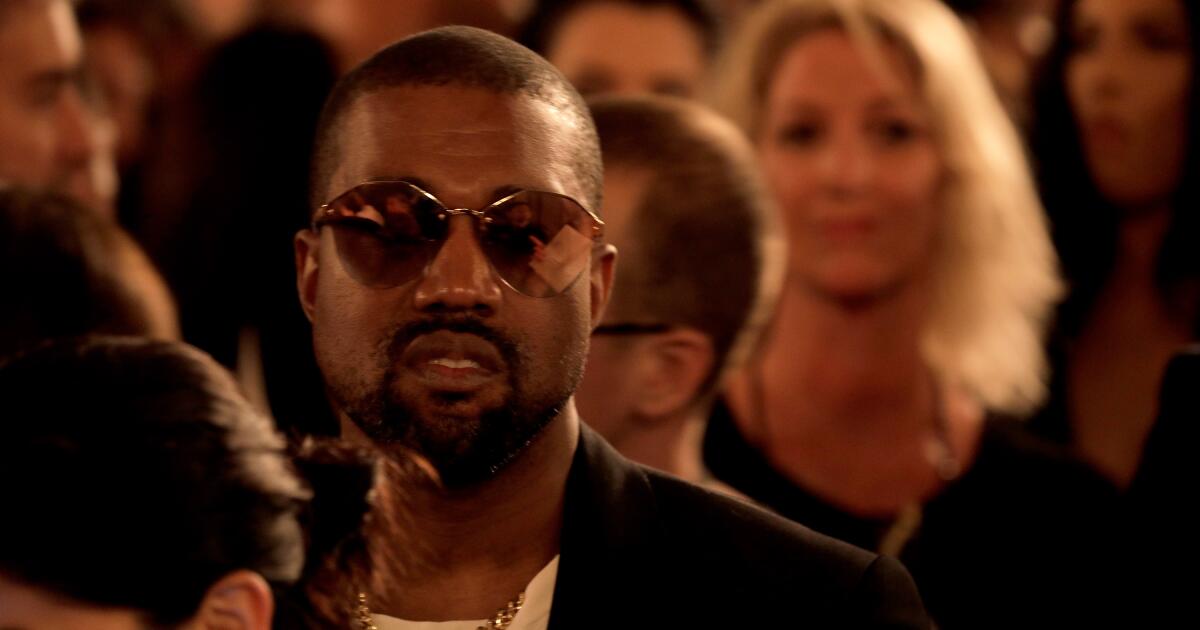
A model suing Kanye West is speaking out about the alleged assault that lawyers for the rapper argue was his 1st Amendment right.

Jennifer An, an actor and model who competed on the 13th season of “America’s Next Top Model” in 2009, detailed the alleged assault — that she says happened in 2010 — in a new interview with the BBC’s “Fame Under Fire” podcast that was released Wednesday. In 2024, An filed a lawsuit against the “Heartless” rapper alleging he choked her and used his fingers to simulate oral sex during a music video shoot for La Roux’s “In for the Kill.”

“He had me sit in the chair in front of the camera, and I didn’t know what was going to happen. I was given no direction,” An told the BBC. “I was just told to sit in this chair, and then playback started, and then all of a sudden he just reaches a hand out and starts choking me, and I’m just not sure what’s happening, and then he pulled his other hand out and starts choking me with both hands and then starts smearing my makeup all over my face and sticking his hands inside of my mouth, which simulated oral sex.

“I remember feeling so suffocated, unsure, scared,” she said. An said she was 24 years old at the time of the alleged incident, her first foray into the industry. She told the outlet that, as it was happening, she hoped someone on the production side would call a halt to it.

“I remember him looking at me, like really intensely, and licking his lips a lot, my face was like so close to his,” she continued. “He reached a point that — I assume — he was very happy with himself, and he yelled something like, ‘This is art! I’m Picasso.’”

La Roux said she insisted the alleged assault be left on the cutting room floor, and in a 2024 Instagram exchange with An, the artist said, “I could never forget that, it was horrific,” according to court documents.

During the podcast episode, the BBC correspondent Anoushka Mutanda Dougherty asks if she can see the direct-message exchange between An and La Roux. She then reads aloud a message in which La Roux said, “I was in the room behind the monitor, begging the directors and everyone else to do something, but everyone was scared of him and did nothing.”

La Roux told An that West whispered to her, “I bet you think I just put women back about 10 years.” She said that she responded, “You just put women back about 500 years.”

Representatives for La Roux did not immediately respond to The Times’ request for comment.

The case has not yet gone to trial. In a motion to dismiss the civil suit — which was filed under New York City’s Gender-Motivated Violence Act and remains pending — attorneys for West didn’t deny the incident took place but, rather, argued that it was an artistic performance and therefore protected by the 1st Amendment.

Attorneys representing An in the case, Melissa Berouty and Christine Hintze, told The Times in an emailed statement: “While we respect the importance of artistic expression and the protections afforded by the First Amendment, dismissing this case on that basis would set a dangerous precedent. It would effectively grant immunity to perpetrators of unlawful abuse so long as their conduct occurred under the guise of artistic expression or within an artistic setting.”

They further said that An’s claims are supported by affidavits and written communications from multiple eyewitnesses, including La Roux.
Source link

Artist suing FIFA over destruction of Dallas whale mural before World Cup

The artist who painted a giant mural on a building in downtown Dallas of life-sized swimming whales has filed a $25 million lawsuit against soccer’s international governing body and others, saying they illegally painted over his work to promote the city’s upcoming World Cup matches.

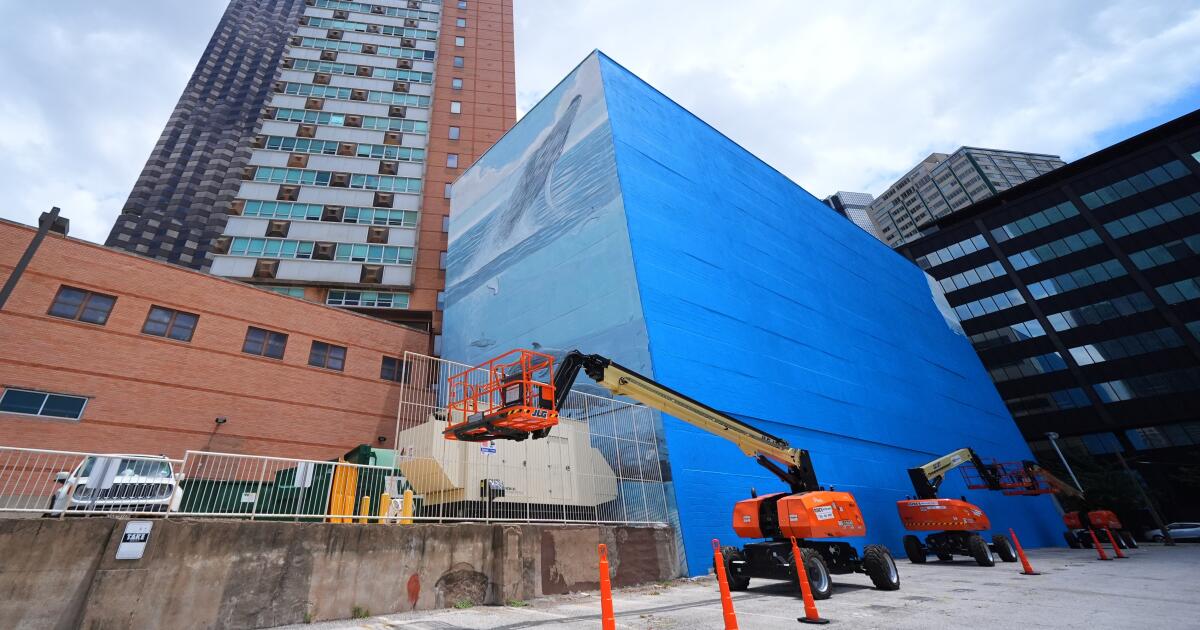
The artist Wyland says he hand-painted the sprawling mural that covered roughly 17,000 square feet across two of the building’s walls.

The mural stood for nearly three decades before workers began painting over it last month, causing an uproar among residents who admired the mural’s grand scale and message of ocean conservation.

The area’s World Cup organizing committee said in a statement that, in place of Wyland’s mural, new artwork is planned “that captures this current historical moment and reflects the energy, unity, and global spirit surrounding the World Cup 2026.” It said a portion of Wyland’s mural would be preserved.

Wyland filed suit Monday in U.S District Court in Dallas saying that World Cup organizers, along with the building’s owner and management company, painted over his mural without his consent or even notifying him. He says their actions violated a 1990 federal law passed to protect visual artists from destruction of publicly displayed works.

Wyland is seeking at least $25 million in damages. His lawsuit says world soccer’s governing body, FIFA, and other defendants “hastily and irrevocably destroyed a civic landmark” to promote the World Cup.

“Though FIFA claims they were working to develop art for the host city, in truth, they defaced an historic fixture of the host city,” the artist’s lawsuit says.

A FIFA spokesperson said Tuesday the federation “has no involvement in this whatsoever” and referred a reporter to the tournament’s local organizing committee.

A spokesperson for the North Texas FWC Organizing Committee declined to comment. The committee isn’t named as a defendant in the lawsuit.

A spokesperson for Slate Asset Management, which manages the building where the mural was painted over, said in a statement that local World Cup organizers asked Slate in March to donate the mural space for “a new public art installation.”

“Slate is not being compensated in any way for the use of the wall space and was told by the local groups that Mr. Wyland had been notified,” the management company’s spokesperson said in an email.

Dallas is hosting more World Cup matches than any of the other sites in the event co-hosted by the U.S., Canada and Mexico, with nine matches set to be played at AT&T Stadium in suburban Arlington, home of the Dallas Cowboys.

Wyland’s Dallas mural, titled “Whaling Wall 82,” was finished in 1999 and is among more than 100 similar murals known as Whaling Walls the artist painted around the world to promote the conservation of ocean life.

An online petition protesting the mural’s destruction and calling for protecting of public artwork in Dallas has received more than 2,600 signatures.

Wyland’s lawsuit alleges violations of the Visual Artists Rights Act, a 1990 federal law that protects artwork of “recognized stature” even if someone else owns the physical artwork.

A judge cited that law in 2018 when he ordered a property owner to pay a group of New York graffiti artists $6.7 million for whitewashing dozens of their spray-painted murals on buildings that once housed a factory in Queens. The ruling was upheld on appeal.

Bynum writes for the Associated Press. Bynum reported from Savannah, Ga.

Source link