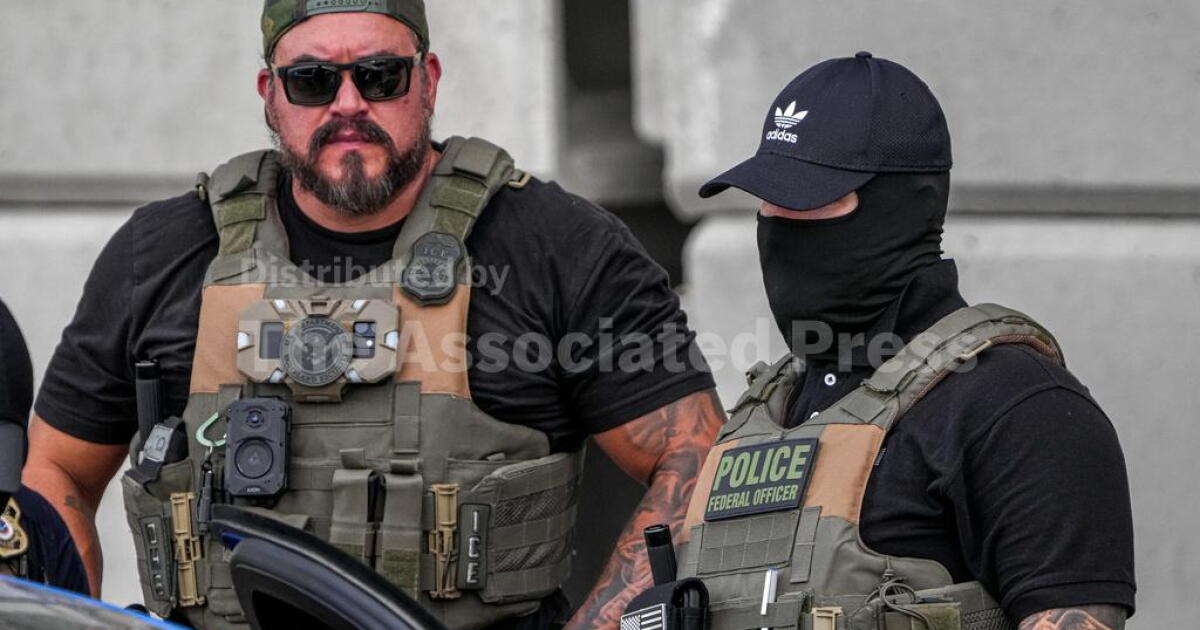
ICE rejects suggestion that its officers wear body cameras that automatically activate
WASHINGTON — Federal immigration officials need to ensure that body cameras worn by officers are uniformly activated when needed, a government report released Wednesday said, following a series of contentious shootings and aggressive arrests by ICE officers.
The agency rejected the recommendation, saying that using cameras that automatically activate when an officer pulls their weapon or activates a car siren could risk privacy concerns.
ICE has come under intense scrutiny after numerous incidents where officers have opened fire during enforcement operations and the agency has claimed they were under threat but officers weren’t wearing body cameras. Critics say the cameras could help hold officers accountable and promote transparency at a time when the agency is operating at a high tempo across the country and increasingly accused of excessive use of force. The report by the Government Accountability Office covers the period from February 2025 until September of this year. The report, conducted at the request of Democratic members of Congress, delves into policies governing the use of body-worn cameras by ICE and U.S. Customs and Border Protection and details improvements both agencies can make to improve their programs. But it did not go into any of the high-profile ICE-involved shootings that have focused attention on the agency’s body-worn camera usage, such as the shooting deaths of Renee Good in Minneapolis or Lorenzo Salgado Araujo in Houston.
A fatal shooting exposed gaps in ICE’s camera rollout
Former Homeland Security Secretary Kristi Noem announced in February that every Homeland Security officer on the ground in Minneapolis would be issued body-worn cameras. Noem, who was later fired by Trump, said officers across the country would receive them as funds became available.
The department later received $20 million from Congress to finish the ICE body-camera rollout plan. But then came a shooting in July of Salgado Araujo, when Immigration and Customs Enforcement officers shot and killed the Mexican man who lived in the U.S. for more than 35 years. Those officers were not wearing body cameras, raising questions about why the agency still hadn’t gotten the cameras out to officers in the field. Homeland Security said after Salgado Araujo’s death that body cameras had been deployed to more than half of ICE field offices and that the remainder would get them in the next 60 days. In the GAO report, DHS said all ICE offices had received the body-worn cameras as of Aug. 5 and that officers were being trained on their use.
In a statement Wednesday, DHS said that while they’d purchased devices for all ICE officers across the country, the required training was still ongoing and that they expected to be finished “soon.”
DHS rejects automatic recording, citing privacy concerns
The report recommended ICE take additional steps such as “automated camera activation” that it said would be particularly helpful in situations where “unexpected and unplanned incidents, unrelated to sensitive operations, result in use of force by or against personnel.” The report said this would improve transparency and public trust. But DHS disagreed, saying that cameras that automatically activate could result in “the unauthorized recording of sensitive interactions with informants or victims.” The agency said the body-worn cameras are required to be turned on at the beginning of pre-planned enforcement activities.
Confusion over camera rules kept one ICE office from using them
The report also said some of the officers they talked to at both ICE and CBP were confused as to when they should activate the cameras. For example, some officers told the GAO they didn’t know whether to activate the cameras during vehicle searches or when transporting detainees. The report noted that at one ICE office, staff was so uncertain about when they were supposed to use the cameras that they hadn’t begun using them even after they’d been trained.
The report also found that neither agency had updated the plans that oversee their body-worn camera programs even as their staff had grown significantly.
Santana writes for the Associated Press.