substance

FDA recalls millions of bottles of eye drops over possible ‘foreign substance’

July 9 (UPI) — The Food and Drug Administration on Thursday recalled more than 2.5 million bottles of eye drops because they may contain a “foreign substance.”

The nationwide recall was initiated by Lupin Pharmaceuticals on June 4 because of some type of foreign substance, though the company and the FDA have not identified it or how it got into the eye drops, MassLive and NJ.com reported.

The class II recall of the prednisolone acetate eye drops — used to reduce inflammation after eye surgery or for allergic and other conditions — is the second-highest risk recall for the agency because it may cause adverse consequences if used.

In a recall notice posted on its website on Thursday, the FDA said that the recall of more than 2.5 million bottles of Lupin’s prednisolone eye drops was because of the “presence of foreign substance.”

The affected bottles come in 5 mL, 10 mL and 15 mL quantities, and were produced by the India-based Lupin, which specializes in manufacturing generic pharmaceutical medications.

The FDA also cautions against simply pausing the use of these medications, suggesting that people who need to use them contact their eye doctor or pharmacist in order to properly react for their own conditions.

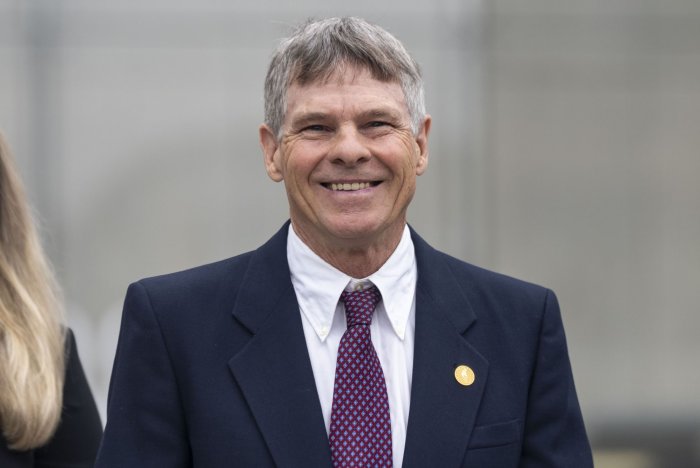
Olympic canoeist David Hearn departs the Moultrie Courthouse after pleading not guilty to damaging the Lincoln Memorial Reflecting Pool on Thursday. Hearn was indicted on July 2 on one count of destruction of property of more than $1,000 for allegedly damaging the Reflecting Pool, carrying a maximum penalty of 10 years in prison if convicted. Photo by Bonnie Cash/UPI | License Photo

Source link

Ex-Florida gubernatorial candidate Andrew Gillum arrested on drug possession charges

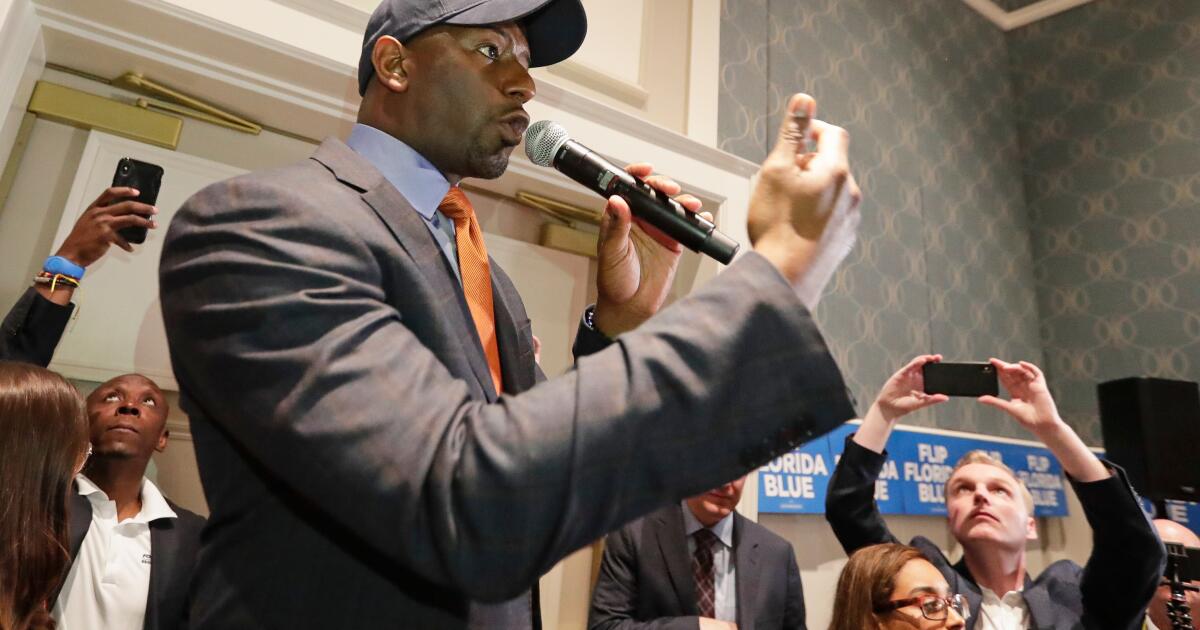
Former Florida gubernatorial candidate Andrew Gillum has been arrested on drug possession charges in Alabama after police say they pulled him over for erratic driving and found marijuana and meth in his vehicle.

It’s the latest legal trouble for the ex-Tallahassee mayor, who narrowly lost to Republican Ron DeSantis for governor in 2018 and was once considered a rising star of the Democratic Party.

Gillum, 46, was arrested on July 2 in Daphne, about 11 miles east of Mobile on Alabama’s Gulf Coast. He is charged with marijuana possession and unlawful possession of a controlled substance, the Daphne Police Department said. Jail records show he was released on July 3.

Court records for Gillum’s case were not yet available, the Baldwin County Clerk of Court’s office said. Information on a lawyer who could speak on his behalf wasn’t immediately available.

A message seeking comment was left for the local district attorney’s office.

Gillum is a co-host of the politically themed Native Land Pod, which won the NAACP Image Award for Outstanding News and Information Podcast in 2025. A message seeking comment was left for the podcast’s production company.

In a news release, the Daphne Police Department said officers stopped Gillum’s vehicle around 10:45 p.m. and initiated a probable cause search after one of them noticed a glass pipe on the center console.

They found several rolled marijuana cigarettes and three packages of a substance that tested positive for methamphetamine, police said.

Gillum, who served as mayor of Florida’s capital from 2014 to 2018, came within less than a percentage point of being elected the state’s first Black governor, losing to DeSantis by fewer than 34,000 votes.

In 2020, Gillum was found in a Miami Beach hotel room with a man who had apparently overdosed on drugs. Police said Gillum himself was too inebriated to talk about what happened.

The man survived and no one was ever charged with a crime for the overdose, but Gillum withdrew from public life for months afterward while seeking treatment for alcohol abuse and depression. Months later, he told a TV interviewer that he had to come to grips with what he had done.

“So much of my recovery has been about trying to get over shame,” Gillum said on the Tamron Hall talk show in September 2020.

In 2022, Gillum was indicted on federal conspiracy and wire fraud charges for allegedly funneling tens of thousands of dollars in campaign donations through third parties back to himself for personal use.

A 2023 trial ended in a hung jury on those charges and an acquittal on charges that Gillum lied to undercover FBI agents posing as developers who paid for a 2016 trip he took with his brother to New York, including hotel rooms, meals, a boat tour and a ticket to the hit Broadway show “Hamilton.”

Source link

Flawed but relentless Scotland show themselves as men of substance

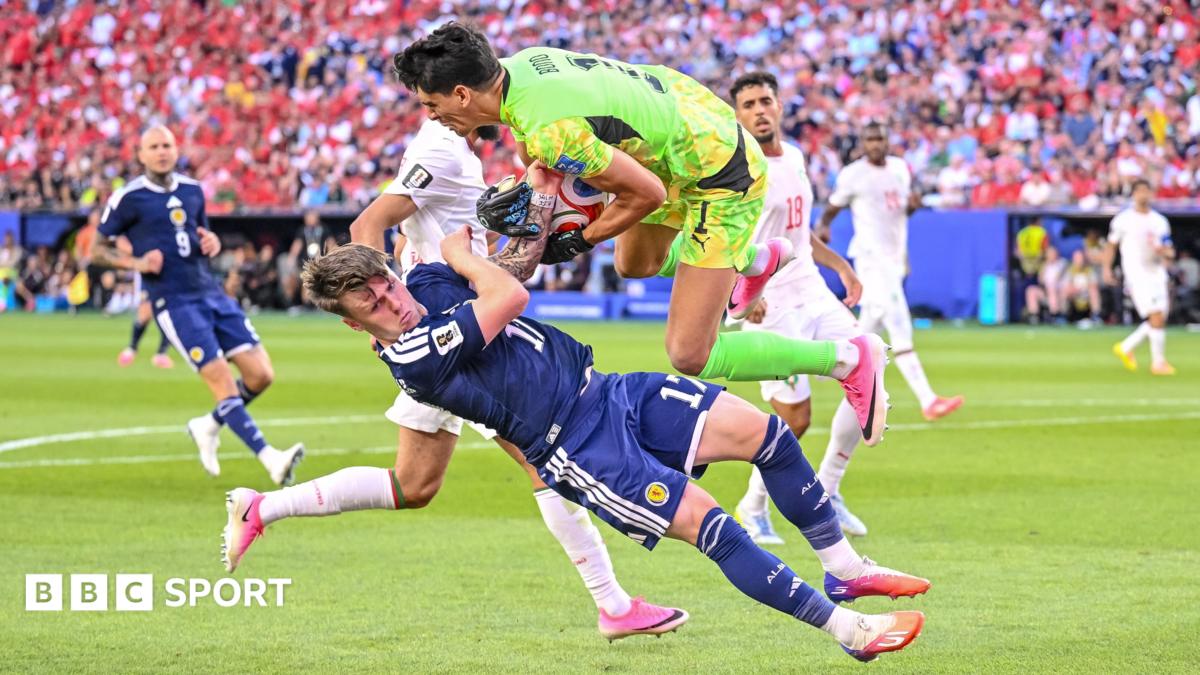
Clarke’s masterplan, so to speak, was playing Kieran Tierney ahead of Robertson on the left, two vastly experienced operators to deal with the threat of Hakimi and Brahim Diaz.

A risk, for sure. And so much for the thinking behind it. Just over a minute gone – Diaz assist, Ismael Saibari goal, the nightmare scenario come true.

The traffic cone guys weren’t letting such trifling issues dampen their day.

Everybody else had a haunted look about them, their noise and passion reduced to soft groans, the lusty pride they all displayed with another thumping rendition of Flower of Scotland now replaced with shrieks as Morocco ran amok.

Or threatened to run amok. Seventy seconds it took them to score. For much of the opening half they were like a cultured fighter, boxing the ears off an over-matched rival, bamboozling their punchbag with their movement before what felt like an inevitable knockout.

Scotland were on the ropes, covering up and praying that the punishment would stop. And minute by minute, it did.

Morocco’s intensity was wonderful for half an hour and they could have been two or three ahead by then, but they weren’t. They’re terrific footballers, very easy on the eye, but they’re not ruthless, not killers. Scotland’s resilience kept them in it.

When Morocco’s energy started to dissipate, it became a contest.

Scotland finished the opening half strongly, their confidence rising, those worried stares on the faces of their supporters giving way to blessed hope.

Source link

Drug users don’t lose their gun rights, Supreme Court rules

A unanimous Supreme Court ruled Thursday for gun rights and against drug laws.

In a 9-0 ruling, the justices struck down part of the longstanding federal gun control law that makes it a crime for an “unlawful user” of illegal drugs to possess a gun.

The Trump administration had urged the court to uphold the conviction of a Texas man who was investigated for alleged terrorist ties and admitted to being a regular user of marijuana.

Rejecting that claim, Justice Neil M. Gorsuch, speaking for the court, said the law was far too broad and overly harsh.

“The law automatically bans an individual from possessing a gun from the moment he becomes an unlawful user of any controlled substance until he ceases being one,” he wrote. “It doesn’t matter what controlled substance an individual uses, in what amounts he does so, or whether his drug use has ever made him a danger to himself or others.”

And it can lead to a 15-year prison term, he added.

He noted, however, the court was not ruling on “addicts” or people who were under the influence of drugs when they were arrested.

The American Civil Liberties Union welcomed the ruling.

“Today’s unanimous 9-0 decision makes it clear that the government cannot make it crime for people to own a gun, which the Supreme Court has held is a fundamental constitutional right, simply because they use marijuana,” said Cecillia Wang, legal director at the American Civil Liberties Union. “With nearly half of Americans reporting marijuana use at some point in their lives, this ruling protects the rights of millions and curbs the government’s ability to impose arbitrary and discriminatory penalties.”

Since 1968, federal law has prohibited gun possession by felons, fugitives and other persons deemed to be dangerous. Included was anyone who is “an unlawful user of or addicted to any controlled substance.”

But the 5th Circuit Court of Appeals ruled in a Texas case this restriction on guns violated the 2nd Amendment. It said “there is no historical justification for disarming a sober citizen not presently under an impairing influence.”

Appealing to the Supreme Court, the Trump administration urged the justices to uphold the law.

“Habitual illegal drug users with firearms present unique dangers to society—especially because they pose a grave risk of armed, hostile encounters with police officers while impaired,” said Solicitor Gen. D. John Sauer.

He asked the court to rule in the case of a Pakistani native who was investigated by the FBI for his suspected ties to the Islamic Revolutionary Guard Corps.

In 2020, Ali Danial Hemani and his parents “traveled to Iran to participate in a celebration of the life of Qasem Soleimani, an Iranian general and terrorist who had been killed by an American drone strike the month before,” the administration told the court last year.

The FBI obtained a warrant to search Hemani’s family home.

Agents found a Glock 9mm pistol, 60 grams of marijuana and 4.7 grams of cocaine.

Hemani said he used marijuana about every other day.

A federal grand jury in Texas charged him with possessing a firearm as an unlawful habitual user of marijuana.

Source link

Neal ElAttrache explains pointing Conor McGregor to steroid specialist

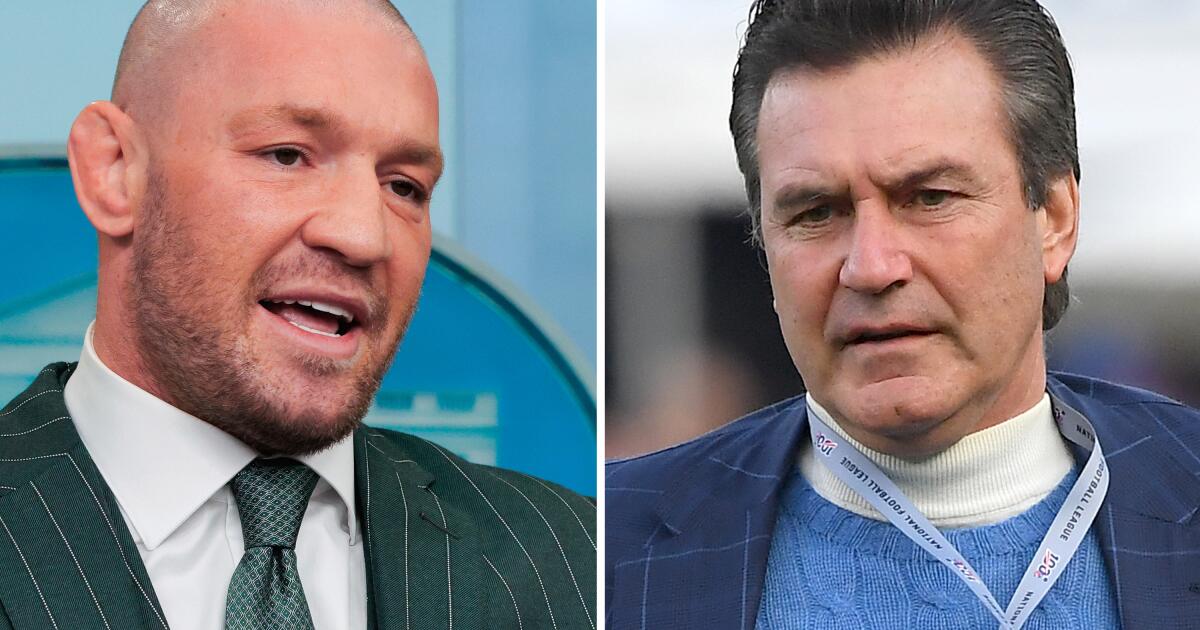
Dodgers and Rams head team physician Neal ElAttrache was questioned by Major League Baseball investigators Friday following a detailed report by the New York Times that the renowned surgeon and sports medicine expert supported the therapeutic use of performance-enhancing drugs by UFC star Conor McGregor.

MLB spoke with ElAttrache, according to a person familiar with the matter but not authorized to comment publicly. The league considered the interview informational, not an investigation. The NFL, Rams and Dodgers declined comment.

“I have spoken with MLB and I am very comfortable with the process that the league and I will complete to assure the public that I have followed every rule and regulation in my medical treatment of athletes without exception,” ElAttrache said in a statement to the Los Angeles Times. “My record is completely clean, including in this case. I will leave it to MLB officials to provide any further comment as they see fit.“

ElAttrache performed surgery on McGregor in July 2021, inserting a rod, plates and screws into his left leg after the fighter broke his tibia and fibula during a bout against Dustin Poirier in Las Vegas.

McGregor’s recovery was lengthy and arduous. ElAttrache told the New York Times that while he did not prescribe steroids for McGregor, he referred him to a specialist who did. Furthermore, ElAttrache wrote a letter supporting McGregor’s request for a therapeutic use exemption from UFC drug policies.

“I felt it would be appropriate to consult other physicians with expertise in bone healing/bone metabolism,” ElAttrache told the paper via text. “I recommended the consultations but not the course of treatment.”

ElAttrache said he told McGregor to check with UFC drug testers about prescriptions the consultant gave him. “I purposely wasn’t involved with his evaluation by the consultant nor with prescribing medication,” ElAttrache said.

The exemption request was denied by USADA (the drug testing organization the UFC used then), triggering a split between the two organizations. McGregor withdrew from the UFC anti-doping program shortly thereafter and was no longer required to undergo testing for banned substances.

ElAttrache, operating primarily out of the Cedars-Sinai Kerlan-Jobe Orthopaedic Clinic in Los Angeles, has performed elbow or shoulder surgeries on prominent current and former Dodgers including Shohei Ohtani, Clayton Kershaw, Tony Gonsolin and Walker Buehler as well as former Rams stars Cooper Kupp and Cam Akers.

Among the hundreds of surgeries performed over three decades by ElAttrache, his patients included the four 2024 MLB Most Valuable Player and Cy Young Award winners — Ohtani, Aaron Judge, Chris Sale and Tarik Skubal. ElAttrache’s patients include 18 of 29 players who won the MVP or Cy Young awards over the last 10 years.

Other prominent athletes who became his patients include former Lakers legend Kobe Bryant and star NFL quarterbacks Tom Brady, Aaron Rodgers and Joe Burrow.

ElAttrache was a boxer long before he became a renowned surgeon and team physician. He attended Notre Dame, where organized boxing was first introduced by Knute Rockne as a conditioning program in the 1930s. An intramural tournament known as the Bengal Bouts was formed and decades later ElAttrache became a champion, winning the 185-pound division in 1978.

Before world lightweight boxing champion Vasiliy Lomachenko returned from shoulder surgery to defend his title in 2019, ElAttrache counseled him against using his left hook because he wasn’t mentally ready to do so.

“When that arm goes into that position, the brain remembers that was the position where that dislocation occurred,” ElAttrache told the Los Angeles Times at the time. “It takes time to overcome that apprehension.”

It has taken McGregor five years since his injury to return to the octagon. He is scheduled to do so July 11 in a welterweight bout against Max Holloway at UFC 329 in Las Vegas as the main event of International Fight Week.

His recovery and startling physical transformation hardly a year after his injury became a frequent topic on social media. Fellow UFC fighter Anthony Smith said on Michael Bisping’s “Believe You Me” podcast in November 2022 that the reason McGregor pulled out of the UFC drug testing pool was obvious.

“There’s only one reason you would do that,” Smith said. “He’s looking jacked as s—. You keep seeing videos of him flexing in front of mirrors and screaming and he’s huge. He healed really fast. Like, really fast.”

On his show in December 2022, podcast host Joe Rogan noted McGregor’s impressive physique and the USADA testing loophole.

ElAttrache told the New York Times that he stopped treating McGregor after steering the fighter to someone who could obtain banned substances.

“I purposely wasn’t involved with his evaluation by the consultant nor with prescribing medication,” ElAttrache told the Times. He said “expert opinions” could help McGregor and “optimize his chance of solid union and healing of his fractures.”

Seeking the exemption, however, was viewed by USADA and some UFC officials as McGregor trying to find a way to use banned drugs. McGregor re-entered the drug-testing pool on Oct. 8, 2023, the same day UFC notified USADA that it would end the partnership.

Because McGregor had long been suspected of taking banned substances to revive his career, the mixed martial arts community reacted to the New York Times investigation with a measure of closure.

“OK, it’s confirmed now,” co-host Conner Burks on the popular MMA podcast “The Boys in the Back” said. “None of this came as a massive shock to me.”

“It seemed like the worst kept secret in combat sports,” co-host Eric Jackman said.

In a written response to a question posed by the New York Times, McGregor’s manager, Audie Attar, did not say whether McGregor had used banned substances. He said that “even with surgery there was a real risk Conor might not walk again, a high likelihood he would face numerous lifelong side effects that would limit his mobility and serious doubts he would ever return to the octagon.”

Attar said McGregor withdrew from the UFC drug-testing pool “to focus fully on his recovery” under the care of “his team of world-renowned physicians.”

“They oversaw a combination of a gruesome surgery, intense physical therapy and appropriately prescribed medicines,” Attar said. “It is an unfathomable breach of health and privacy protections that my client’s purported personal medical records would be disclosed.”

McGregor attempted to return to fighting in June 2024, but a scheduled bout against Michael Chandler was canceled because McGregor broke a toe during training.

Combat Sports Anti-Doping officials were unable to locate McGregor for testing on the day the fight was canceled, and he missed tests on two subsequent occasions. Under the UFC Whereabouts Policy, the three failures constituted an anti-doping violation equivalent to a failed drug test.

The UFC suspended McGregor in October 2025 for 18 months because of testing violations. The suspension expired in June, clearing him to compete.

Times staff writers Bill Shaikin, Sam Farmer and Gary Klein contributed to this report.
Source link