students

Clinton Tells Students Not to Jump Gun on Economy : Recession: The President-elect, speaking at a Chicago community college, focuses on long road of recovery.

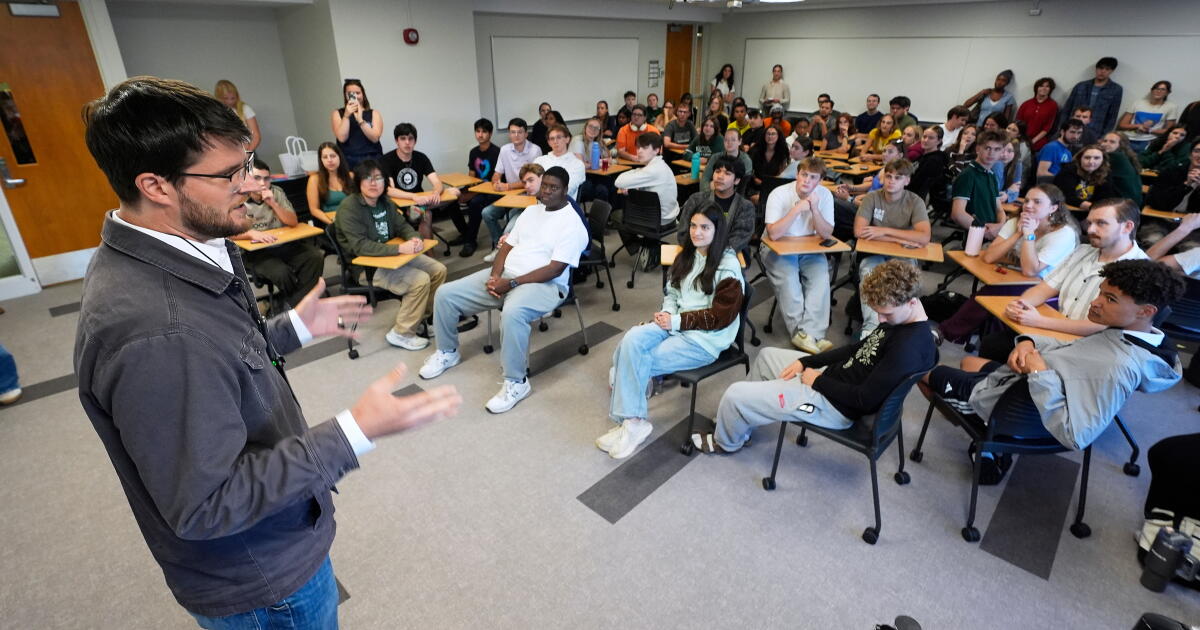
President-elect Bill Clinton used a community college in Chicago Monday to try out an updated economic message that Americans will be hearing frequently from him in the weeks to come: We’re not out of the woods yet.

“When you read that things are getting better with the unemployment rate, inflation rate, housing starts, things of that kind, that’s a good thing,” Clinton told an audience of some 150 students at Wilbur Wright Community College on this city’s northwest side. But, he warned, those improvements are merely part of the short-term business cycle.

“Underneath that,” he said, are “20 years of problems.”

“We may or may not be coming out of the recession,” Clinton said. “There are some good indicators that we are, but the long-term problems are there and that is what I have to address.”

Clinton’s statements reflect a basic dilemma that he faces: He relied on a bad economy to help him get elected. And while he would like to see improvements, he must rely on continued worries about the economy to get his programs enacted over what is certain to be fierce opposition from vested interests in Washington. In addition, of course, having defeated President Bush on the issue of the economy, Clinton would like to be able to say that economic improvements occurred on his watch, not on that of his predecessor.

With the economy showing steady signs of improvement, those factors have impelled Clinton and his aides to try with increasing diligence to focus public attention on the long-term trends of economic stagnation–and his long-term agenda to change them–rather than on talk of a short-term stimulus to help an economy that may well be moving out of recession on its own.

The emphasis on the long-term agenda will be central to the economic conference that Clinton plans to convene in Little Rock next week. Aides envision the conclave in large part as a tutorial to explain to Americans why the country needs Clinton’s agenda of raising taxes, revamping the health care system, and increasing spending on education, training and new technologies to reduce the deficit.

In answering questions from the students, Clinton provided the most detailed view since the election of how he intends to form a coherent agenda out of the many promises he made in the campaign.

Repeatedly he referred to two key proposals: His plan for a national service trust fund to let Americans finance their educations by borrowing money and paying part of it back through public-service work, and his plans to reform the nation’s health care system.

Changing the health care system is the one thing that he would do “if I could wave a magic wand,” Clinton said, reminding the students of the effect that rising health care costs have had on the ability of American companies to compete.

At the same time, the session with the students showcased a shift in Clinton’s rhetoric from the language of the campaign to the sterner realities of governing. During the campaign, Clinton struggled against his natural tendency to give four-part answers to all questions. Now he appears to have given up that fight.

And repeatedly, as the students asked Clinton for more federal money for program after program, the President-elect, mindful of the massive deficit he soon will inherit, responded with a polite version of “no.”

One woman asked if he would provide special incentives for minority students to attend college. No, Clinton said, the goal should be to make loans and scholarship funds broadly available and then recruit in minority communities. A nursing student asked about special incentives to encourage people to pursue nursing careers. No, Clinton replied, noting that nursing salaries have gone up because of shortages.

Still another noted that some of the classes he wanted to take have been canceled due to a lack of funds. Could the federal government help? he asked. “The federal government, with the huge deficits we are now facing, does not have the capacity to take over substantial funding of the community college system,” Clinton replied.

Despite that, Clinton seemed to win the student’s enthusiasm simply by having shown up.

“He could have just gone to Princeton or Yale and spoken in their auditorium. Instead he came here,” said Erika Marie Dimitrijevic, a 35-year-old mother who attends an ultrasound training program at the school. “I think he wants to get closer to the people.”

Dimitrijevic is in many ways representative of the school, whose average student is a 31-year-old woman. Roughly 50% of the 14,000 Wright students are white, while 20% are black and 30% are Latino. About 15% are women who head households.

The President-elect also used the occasion to score some points with the area’s political leaders, who were crucial in his battles to win his party’s nomination and to defeat President Bush. They will be equally important to whatever success he manages in the next four years. Clinton took time to meet with Chicago Mayor Richard M. Daley, along with Daley’s brother William, who has been touted in Chicago as a potential secretary of transportation in the Clinton Administration.

And in speaking to the students, Clinton made a point of praising their local congressman, Rep. Dan Rostenkowski, chairman of the House Ways and Means Committee, whose panel will have jurisdiction over much of Clinton’s economic and health care proposals and whose help Clinton has courted assiduously in recent weeks.

If he succeeds in changing the nation’s health care system, “it will be in no small measure because of Danny Rostenkowski’s leadership,” he said.

Later in the day, Clinton arrived in Washington and courted members of Congress by attending a reception for newly elected freshmen.

He will spend most of today on Capitol Hill, meeting with freshmen congressmen again as well as with congressional committee chairmen.

Clinton’s attempts to woo members of Congress, both the powerful and the new, are in sharp–and deliberate–contrast to the approach of Jimmy Carter, the last Democratic President, whose relations with Capitol Hill were tense and troubled. Clinton and his aides, by contrast, have taken every possible opportunity to try to bring members of Congress onto his team, an effort which is likely to include appointing several to his Cabinet.

The first of those expected Cabinet appointments are expected later this week.

As Clinton left the White House guest quarters at Blair House Monday night, en route to a party at the home of Washington Post Co. Chairwoman Katharine Graham, he was accompanied by several members of his transition team and Lawrence Summers, a World Bank economist, who is considered a possible choice for economic security adviser.

After a scheduled return to Little Rock tonight, Clinton likely will resign from the post of governor Wednesday, closing a 12-year chapter of his life. He is also expected to release new ethics guidelines for his Administration.

Researcher Tracy Shryer in Chicago contributed to this story.

Source link

Students in Caracas to demand release of political prisoners | Newsfeed

NewsFeed

Students from Venezuela’s leading universities blocked the main highway in Caracas to demand the immediate release of political prisoners. Demonstrators said more than 450 people remain imprisoned despite government promises of amnesty and reconciliation.

Source link

Hacked educational platform partially restored for millions of students | News

The hacker group, ShinyHunters, threatened to leak student data after breaching the educational platform Canvas.

An educational platform used by thousands of schools and universities has been partially restored following an international cyberattack that caused major chaos as students prepare for end-of-year exams.

ShinyHunters, a hacking group, claimed responsibility for crashing the web-based educational platform Canvas, created by tech firm Instructure.

Recommended Stories

list of 4 itemsend of list

The group said it had stolen 3.5 terabytes of data, including names, email addresses, student ID numbers and private messages, and threatened to release this if ransoms were not paid by May 12.

Instructure’s website said on Saturday that Canvas is now “available for most users” and no incidents were reported on Saturday. It is not clear if a ransom was paid.

The University of Sydney reported on Saturday that Canvas had been restored but was not yet “accessible to staff or students, as we need to complete checks”.

Canada’s University of Alberta said Canvas was partially restored with “reduced functionality”.

The countries that have been affected include the United States, the Netherlands, Sweden, Australia and the United Kingdom.

According to Canvas, about 30 million people across the globe use its system. The breach reportedly targeted close to 9,000 institutions across the globe.

Breach came at ‘worst time’

The Federal Bureau of Investigation said it was “aware of a service disruption” impacting a learning system, although it did not name Canvas, in a statement Friday.

“This disruption has impacted schools, educational institutions, and students across the country,” it said.

Al Jazeera’s correspondent in Florida, Phil Lavelle, said the hack could not have “come at a worse time” as many US schools are in the middle of exam season.

Institutions like Penn State, Harvard, Illinois, Columbia and Georgetown are all “scrambling” to extend or change exam deadlines, said Lavelle.

The Harvard Crimson, a student newspaper, said it could not access the platform since Thursday, with the University of Cambridge also saying it had “temporarily suspended access” to Canvas on Friday.

The Reuters news agency reported that, on May 5, the group posted a message saying Instructure had “not even bothered speaking to us” to prevent a data leak, and that their demand “was not even as high as you might think it is”.

Who are ShinyHunters?

The group is a global cybercrime syndicate that was established in 2019.

Over the years, they have claimed responsibility for cyberattacks, with the most recent data breach being Rockstar Games, a gaming giant that owns Grand Theft Auto.

“This goes to show how vulnerable schools are, how vulnerable other institutions are by individuals who seek to exploit or extort at the worst possible time – armed with just a keyboard and a mouse,” said Lavelle.

Source link

France introduces one‑euro canteen meals for all students | Newsfeed

NewsFeed

French universities are now offering 1 euro meals to all students, regardless of income, as part of a government-backed effort to ease financial pressure amid rising living costs. The move follows growing concern over student hardship, with surveys showing many young people in France have skipped meals because they could not afford food.

Source link

Supreme Court: Cheerleader can’t be punished for social posts

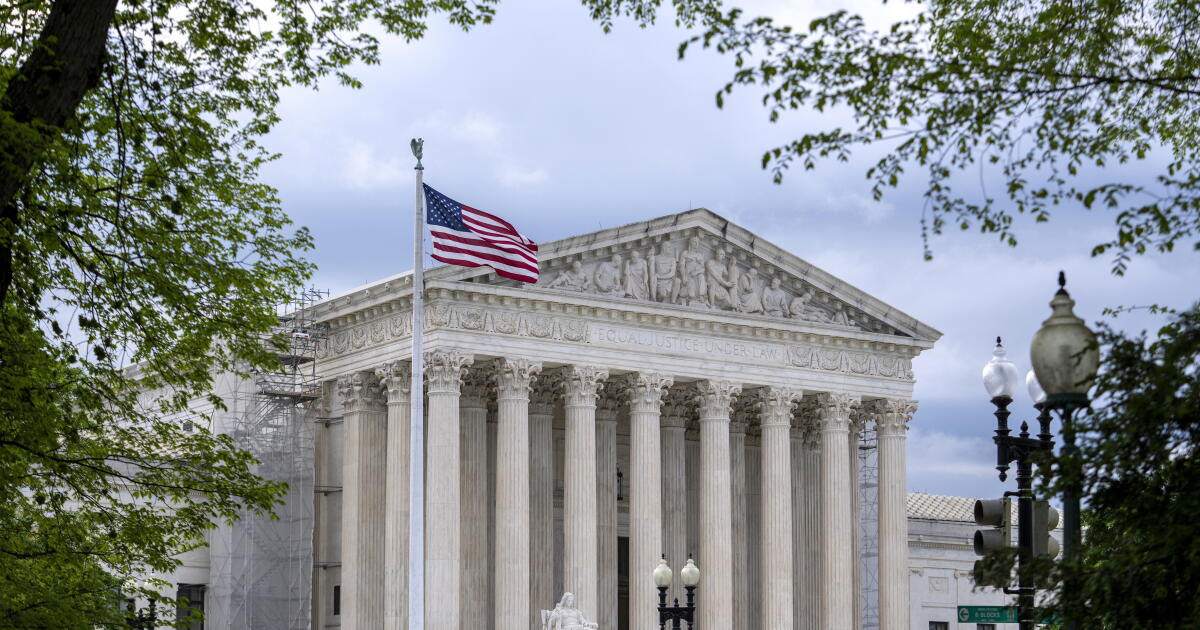
The Supreme Court on Wednesday gave students their biggest free speech victory in decades, ruling that a disappointed high school cheerleader could not be punished for a social media post on Snapchat that included profane words.

In an 8-1 decision, the justices said a Pennsylvania school district violated the 1st Amendment when it suspended Brandi Levy from the cheerleading team in response to her post.

The court in an opinion by Justice Stephen G. Breyer said her words may have offended school officials, but they did not otherwise disrupt the school. And he said courts should be skeptical of efforts to discipline students for what they say or post on their own free time.

“It might be tempting to dismiss B. L.’s words as unworthy of the robust 1st Amendment protections discussed herein. But sometimes it is necessary to protect the superfluous in order to preserve the necessary,” he wrote in Mahanoy School District vs. B.L.

Only Justice Clarence Thomas dissented and said he does not believe students and children have such protected rights.

American Civil Liberties Union lawyers who represented Levy welcomed the outcome.

“Protecting young people’s free speech rights when they are outside of school is vital, and this is a huge victory for the free speech rights of millions of students who attend our nation’s public schools,” said David Cole, legal director of the ACLU.

The incident in this case occurred in May 2017, when Levy was in ninth grade. She graduated in 2020 and is now a freshman in college.

“The school went too far, and I’m glad that the Supreme Court agrees,” Levy said in a statement. “I was frustrated. I was 14 years old, and I expressed my frustration the way teenagers do today. Young people need to have the ability to express themselves without worrying about being punished when they get to school. I never could have imagined that one simple snap would turn into a Supreme Court case, but I’m proud that my family and I advocated for the rights of millions of public school students.”

Her case posed a question that has divided courts in recent decades. Are students entirely free to say what they wish on social media — even if it includes vulgar, harassing or racist comments — or can they be disciplined by school officials?

During the Vietnam War, the Supreme Court ruled in 1969 that students retained their free speech rights when they went to school, so long as their protests did not cause “substantial disruptions” there. But that landmark ruling in Tinker v. Des Moines has provided little guidance for how to view a student’s posts on social media.

Breyer’s opinion did not set a clear rule or say students are always protected for what they post. But he said those from “off-campus will normally fall within the zone of parental, rather than school-related, responsibility. …When it comes to political or religious speech that occurs outside school or a school program or activity, the school will have a heavy burden to justify intervention.”

The case began when Levy learned she had been passed over for the varsity cheerleading team.

On a Saturday afternoon, she took a photo of herself and a friend with their middle fingers raised and posted it on Snapchat. She included a caption repeating the F-word for “school … softball … cheer … everything.”

The post could be seen by 250 of her friends, including other cheerleaders, and they in turn showed it to the two cheerleading coaches for Mahanoy High School in central Pennsylvania.

They decided she had violated team rules that required showing “respect” to others and avoiding “foul language,” and they suspended her for the year from the junior varsity squad.

She and her parents appealed the decision to school officials and the school board. And when that failed, they sued in federal court, alleging a violation of her 1st Amendment right to the freedom of speech.

A federal judge ruled for Levy, who said her Saturday afternoon posting did not disrupt her school. The U.S. 3rd Circuit Court of Appeals in Philadelphia agreed and ruled the school’s authority did not extend to off-campus speech.

Source link

DOJ sues New Jersey over tuition aid for some noncitizen students

May 1 (UPI) — Federal prosecutors are suing New Jersey for offering qualifying noncitizen residents in-state college tuition and state-funded benefits, the latest state the Trump administration has accused of discriminating against out-of-state Americans in its anti-immigration crackdown.

The Justice Department has brought nine lawsuits challenging states’ laws often called Dream Acts, which generally offer noncitizens who have lived in and attended high school in the state for several years the same college tuition that citizen residents are charged.

The Justice Department filed its lawsuit Thursday, asking the court to block New Jersey from enforcing two laws: one passed in 2013 that offers in-state tuition to eligible noncitizen residents, and another passed in 2018 that extends their eligibility to state financial aid programs and scholarships.

Federal prosecutors alleged in the lawsuit that the laws “blatantly discriminate in favor of illegal aliens over U.S. citizens from other states” and violate federal law, which bars states from offering postsecondary education benefits based on residency to people unlawfully present in the country unless U.S. citizens are eligible for the same benefits.

“Imagine being denied the opportunity of education in our own country. By granting illegal aliens in-state tuition, the state of New Jersey is doing just that,” Associate Attorney General Stanley Woodward said in a statement.

The lawsuit comes as the Trump administration carries out an aggressive anti-immigration policy that has included mass round-ups of noncitizens to revoking deportation protections for those from war- or catastrophe-torn nations.

Almost exactly a year ago, President Donald Trump signed the “Protecting American Communities from Criminal Aliens” executive order, which directed the attorney general to identify laws “favoring aliens over any groups of American citizens,” including state laws “that provide in-state higher education tuition to aliens but not to out-of-state American citizens.”

Of the nine lawsuits challenging these Dream Act laws to date, Texas, Kentucky and Oklahoma have resolved their cases either through agreements, consent decrees or joint motions.

Lawsuits are still pending in Illinois, Minnesota, Virginia, Nebraska, California and now New Jersey.

According to the Higher Ed Immigration Portal, 21 states and Washington, D.C., provide in-state tuition to undocumented students, while 18 and D.C. also provide access to state financial aid.

Artemis II pilot Victor Glover (L) and mission specialist Christina Koch meet with President Trump in the Oval Office of the White House on Wednesday. Photo by Graeme Sloan/UPI | License Photo

Source link

Best AI homework solver tools review for students

Homework can feel stressful when several subjects need attention at the same time. Students may have math problems, science tasks, writing assignments, and reading work all in one evening. Many learners need faster explanations, better organization, or extra practice after class ends. AI homework tools can help by saving time, explaining hard topics, and keeping tasks in order.

Still, the best results come when students use them with care instead of copying answers. A smart tool should support learning, not replace effort. If you are looking for the best AI homework helper, this guide can help.

The table below compares seven popular options by price, device support, and key strengths.

Tool Best For Free Plan Paid Plans Devices Main Strength
Edubrain Multi-subject homework help Yes From $3.99/week Web, mobile browser Step-by-step + extra study tools
Photomath Math solving Yes $9.99/mo iOS, Android Camera-based math help
Socratic by Google Quick subject help Yes None listed iOS, Android Photo questions across subjects
ChatGPT All-purpose homework support Yes $8 / $20 / $200 Web, iOS, Android Flexible explanations
Brainly Peer homework Q&A Yes From ~$2/mo Web, iOS, Android Community answers
Quizlet Revision and memorization Yes $7.99/mo Web, iOS, Android Flashcards and test prep
Chegg Study Textbook solutions No free full plan From $15/mo Web, mobile Structured academic help

Every tool solves a different student problem. Next, we review the best AI for homework in detail.

Edubrain

Edubrain is the strongest all around homework option for students who want one place for many school tasks. It works as a free homework helper with support for math, science, writing, and more. Users can get step by step solutions, answer corrections, formula display, and help through image or PDF uploads. It also includes the Edubrain chemistry AI tool for science tasks that need formulas or reactions. A student can use it in one evening for algebra homework, then switch to a written assignment without changing apps.

The free plan covers core tools, while AI Plus adds more features and deeper support. This makes it a smart choice for busy students who want one dashboard for daily study. Many users may also see it as a top homework helper because it covers several needs in one place.

Pros

  • Many useful features
  • Free access available
  • Supports image and PDF uploads
  • Broad help across subjects
  • Good for busy schedules

Cons

  • Many options may feel crowded at first
  • Weekly pricing may not suit everyone
  • Full tools may require upgrade

Photomath

Photomath camera based system lets users scan printed or handwritten problems with a phone and get answers in seconds. The app then shows step by step explanations with clear visual breakdowns, so students can follow each part of the method.

The free plan covers core solving tools, while Premium adds deeper learning tips and extra guidance. Photomath works best for algebra, arithmetic, and routine math practice that needs quick support. It is less useful for non math subjects, but it does daily math tasks very well.

Pros

  • Easy to use for most students
  • Fast results from camera scans
  • Clear math explanations
  • Good for worksheet checks

Cons

  • Mainly focused on math only
  • Premium needed for best features
  • Less useful for writing or science tasks

Socratic by Google

It works as a photo input assistant, so users can take a picture of a question and get support in seconds. The app covers math, science, literature, history, and other common school subjects. Socratic also connects users to educational resources, lessons, and short guides that can build understanding.

Its zero cost model makes it a smart choice for families on a budget. Many students also see it as useful free software for students because it helps with several subjects in one app. The tool focuses on speed and simple use rather than deep advanced study.

Pros

  • Fully free to use
  • Supports many school subjects
  • Trusted Google ecosystem
  • Fast photo question help

Cons

  • Lighter depth than paid tools
  • Limited advanced customization
  • Less suited for complex coursework

ChatGPT

ChatGPT is a flexible study assistant for students who need help in many subjects. It can support writing, summaries, explanations, and reasoning in one place. Plans include Free, Go, Plus, and Pro, so users can match cost to their needs. A student may use it for math one day and essays the next. Its key strength is chat based support with follow up questions. Many learners choose it as AI for studying because it fits many school tasks.

Pros

  • Highly versatile across subjects
  • Strong explanations and summaries
  • Useful for writing and study support
  • Good for many school tasks

Cons

  • Quality depends on prompts
  • Advanced plans cost more
  • Answers may need fact checks

Brainly

Brainly is a peer learning platform for students who want help from other people. Its Q and A system lets users post homework questions and get answers from students, tutors, and educators. This is useful late at night when quick help is needed. The platform covers math, science, writing, and more. Free access gives basic use, while paid plans add extra tools. Brainly suits learners who like shared ideas, short explanations, and different solution methods.

Pros

  • Fast answers for common questions
  • Active user community
  • Affordable paid tier
  • Helpful across many subjects

Cons

  • Answer quality can vary
  • Less structured than AI solvers
  • Some replies may lack full detail

Quizlet

Quizlet offers flashcards, quizzes, and practice modes that help students review key facts. A student can use it after homework to study vocabulary, history dates, or science terms before a test. Paid plans add ad free use and extra study tools. It works well beside solver tools because one app explains problems, while Quizlet helps store facts. Many students include it with other homework helper apps for full study support. Quizlet is best for exam preparation.

Pros

  • Strong memorization tools
  • Popular and trusted platform
  • Flexible practice modes

Cons

  • Not a direct solver
  • Some features behind paywall

Chegg Study

Chegg Study is a premium option for students who want structured academic support. It is known for textbook solutions and an expert Q and A model that helps with course questions. Paid tiers start around monthly plans, while Study Pack options may include math tools, writing help, and added study resources.

This can suit a college bound student who uses textbook heavy courses and needs regular support each week. The platform focuses on organized help rather than quick one line answers. Chegg Study is often most useful for students with steady workloads.

Pros

  • Strong textbook coverage
  • Access to expert help
  • Broader paid study ecosystem

Cons

  • Subscription cost may add up
  • Best value depends on usage frequency

AI homework tools work best when students use them with care. First, try the question on your own before you ask for help. This shows what you know and where you need support. Use the explanations to learn the method, not only the final answer.

For important homework, quizzes, or projects, double check answers with class notes or another source. Avoid copying full responses into your work, since this can hurt real learning. Use AI tools for review, planning tasks, and saving time during busy weeks. Parents can also guide students by setting clear study habits.

Conclusion

AI homework tools can lower stress and save time when school tasks build up. Each tool has a different purpose, so choose based on your needs. It is smart to start with free plans first. Use these tools in a balanced way that supports learning, practice, and better habits. For students and parents, the best choice is one that helps progress each week.

Source link

Did UK universities pay to ‘spy’ on pro‑Palestine students? | News

UK universities allegedly hired a security firm with military intelligence ties to monitor pro-Palestine students.

Twelve elite British universities are accused of hiring a private security firm with military intelligence ties to track pro-Palestine student protests. Students were reportedly flagged through social media monitoring without their awareness, sparking debate over surveillance and free speech in UK higher education.

Learn more about the campus accountability mapping project.

In this episode: 

  • Aaron Walawalkar (@AaronWala), Investigative Reporter, Liberty Investigations

Episode credits:

This episode was produced by Chloe K. Li and Sarí el-Khalili with Spencer Cline, Catherine Nouhan, Tuleen Barakat and our host, Malika Bilal. It was edited by Tamara Khandaker and Noor Wazwaz. 

Our sound designer is Alex Roldan. Rick Rush mixed this episode. Our video editors are Hisham Abu Salah and Mohannad al-Melhemm. Alexandra Locke is The Take’s executive producer. 

Connect with us:

@AJEPodcasts on X, Instagram, Facebook, and YouTube


Source link

French police arrest students protesting anti-Semitism law | Protests News

Police in France have arrested students at Sorbonne University, Sciences Po and Paris-Saclay University during a sit-in against a controversial anti-Semitism bill that could outlaw criticism of Israel. Lawmakers are set to vote on the ‘Yadan law’, named after a pro-Israel French MP who sponsored the bill, on April 16.

Source link