Stranger

Mum begs passengers after airline blunder leaves two-year-old daughter next to stranger

A family were left ‘defeated and frustrated’ after their two-year-old daughter was assigned a plane seat next to a stranger, despite ‘paying to book seats together’

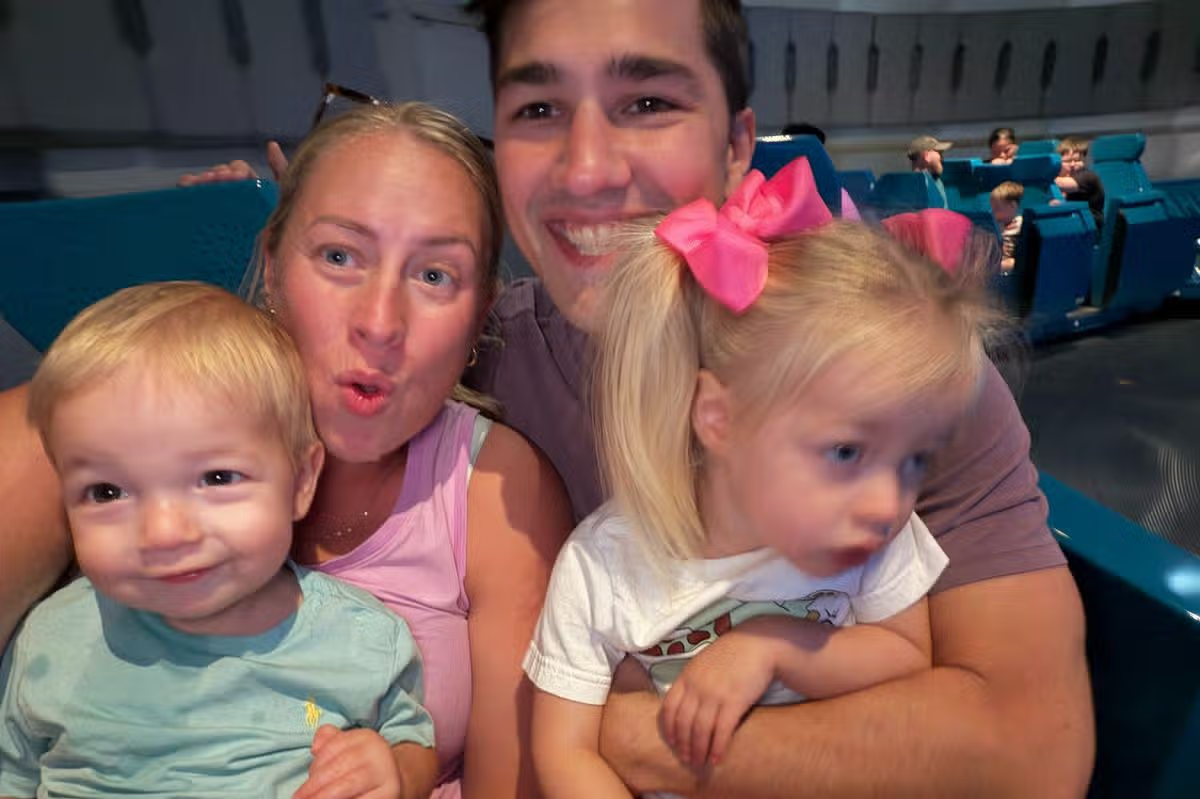
A mum was forced to ask passengers to swap seats on a plane after her toddler was seated next to a stranger, leaving both parents frustrated and upset by the ordeal.

Laura and her husband, Nate, were returning home from a family holiday to Walt Disney World Resort with their two children, a two-year-old daughter and a one-year-old son, on Sunday, 15 November, 2026, when they encountered issues with their assigned seats. Flying from Orlando to Atlanta with Delta Air Lines, the family specifically booked Comfort+ in January, a fare above standard economy that allowed them to choose their allocated seats together in advance, with their son as a lap infant.

When the original flight they had booked was changed, the family were reassigned different seats. However, their two-year-old daughter was left “without either parent directly beside her”, Laura told the Mirror. “I first realised we’d been split up at check-in, when I saw the new seats the day before departure.”

Laura said she flagged the issue to Delta employees, and they “all reassured” her the “gate agent would fix it”. The family headed to the gate, but were met with more uncertainty. “The gate agent had no solutions and refused to help, telling me to ask other passengers to switch after boarding,” the mum of two claimed.

“The gate agent kept rattling off seat numbers and explaining why she couldn’t move anyone. I was starting to panic and said, ‘The seat numbers you keep rattling off don’t mean anything. I just need to sit next to my two-year-old; please find a solution,’ and she replied, ‘There is no solution.’

“When I asked what she suggested, she told me to ask another passenger to move. I asked what the plan was if nobody agreed and raised whether this was even allowed under Delta’s own policy. I got no answer or escalation plan, just blank stares and zero empathy.”

Laura said she became “so overwhelmed” that she needed to walk away for five minutes as she fought back the tears. “My husband and I were flying home with two very tired kiddos, so getting everyone home was already a lot.”

Laura said another gate agent, who was also a parent, was “actually really kind” and said they’d “feel exactly the same way”. Regardless, Laura claimed that they weren’t given any solutions before boarding.

“I boarded the plane ready to negotiate with whoever was seated next to my daughter,” Laura said. “Waiting there for the stranger to board and for me to ask them to give up their seat made me feel sad and defeated. I knew this wasn’t right. I was the one who had to ask for a favour and feel like I owed someone an apology, all so I could sit next to my toddler, whom I had originally paid to sit next to.”

Thankfully, a passenger agreed to move so Laura could sit beside her daughter. And while Laura was grateful for the fellow passenger, she said: “My biggest concern is how a child this young could be assigned a seat away from both parents after we had booked seats together.

“I am deeply concerned that a child this young could be left without a parent beside her unless a stranger volunteers. She cannot independently manage her needs or respond to an emergency. What would have happened if nobody had agreed?”

Nate told the Mirror: “From my perspective, I was both confused and frustrated as to how Delta would A) expect a two-year-old to sit by herself on a plane and B) seemingly had no solution for us other than to go figure it ourselves with other passengers.

“It felt very unprofessional that they weren’t able to offer more support or do more to help us. I also question how this is even legally allowed, as to me it feels like it could be a huge liability for the airline should anything happen to a minor when they aren’t sat next to their parent or guardian.”

Delta had emailed the family about the schedule change on 26 July, but unfortunately they didn’t see it. “Maybe I should have caught the seat change on the July 26 email, but my husband and I both work full time with two very small children, and, transparently, I missed it. It also never crossed my mind that I’d need to be monitoring for this in any way, shape, or form. I also mainly use the Delta app and didn’t get a notification of seat changes,” Laura said.

The airline confirmed to Laura that the reassigned seats were due to an aircraft change prior to departure, which resulted in their daughter being assigned a seat away from both parents. They said it was “especially concerning given her age” and that Laura had “selected her seats months in advance” when making the booking.

In an email to the customers, Delta said it understood Laura’s “frustration” at the airport, and recognised that it “should not have been placed in the position of having to coordinate a seating solution”. “We understand the importance of seating young children with a parent or accompanying adult whenever possible and regret that this did not occur as intended in your case,” the email continued.

In the email, Delta promised it would “continue evaluating our processes related to family seating and the impact operational changes can have on existing seat assignments”. Delta also apologised for the “stress and uncertainty” the situation caused to the family.

The Mirror has contacted Delta Air Lines for comment.

The U.S. Department of Transportation (DOT) encourages all airlines to ensure that young children are seated next to an accompanying adult without charging an additional fee. However, there is no US rule requiring airlines to automatically seat parents next to their children, and most airlines charge an additional fee to do so.

Do you have a travel story to share? Email webtravel@reachplc.com

Ensure our latest travel stories always appear at the top of your Google Search by making us a Preferred Source. Click here to activate or add us as a Preferred Source in your Google search settings.
Source link

Sweet Antelope Supper Club: Why strangers are saying goodbye to loneliness at this L.A. dining event

A few weeks after the anniversary of her mother’s death, Ronni Minnis received an email invitation to Sweet Antelope, a storytelling-themed supper club. The evening’s theme was grief, a subject that felt especially poignant to Minnis as she continued to mourn her mother. After a meditation in an attic, she sat down to an elaborate candlelit dinner and shared stories of her grief with strangers. “It was extraordinary,” she says.

The experience left Minnis eager to return. Tonight, she’s back, this time with her husband, Michael Minnis, whose birthday she’s celebrating in an unusual way. She surprised him by bringing him to the supper club. “Surprise! You’re spending your birthday with strangers,” she jokes at the dinner table, where pink dahlias cut from the home garden fill the table.

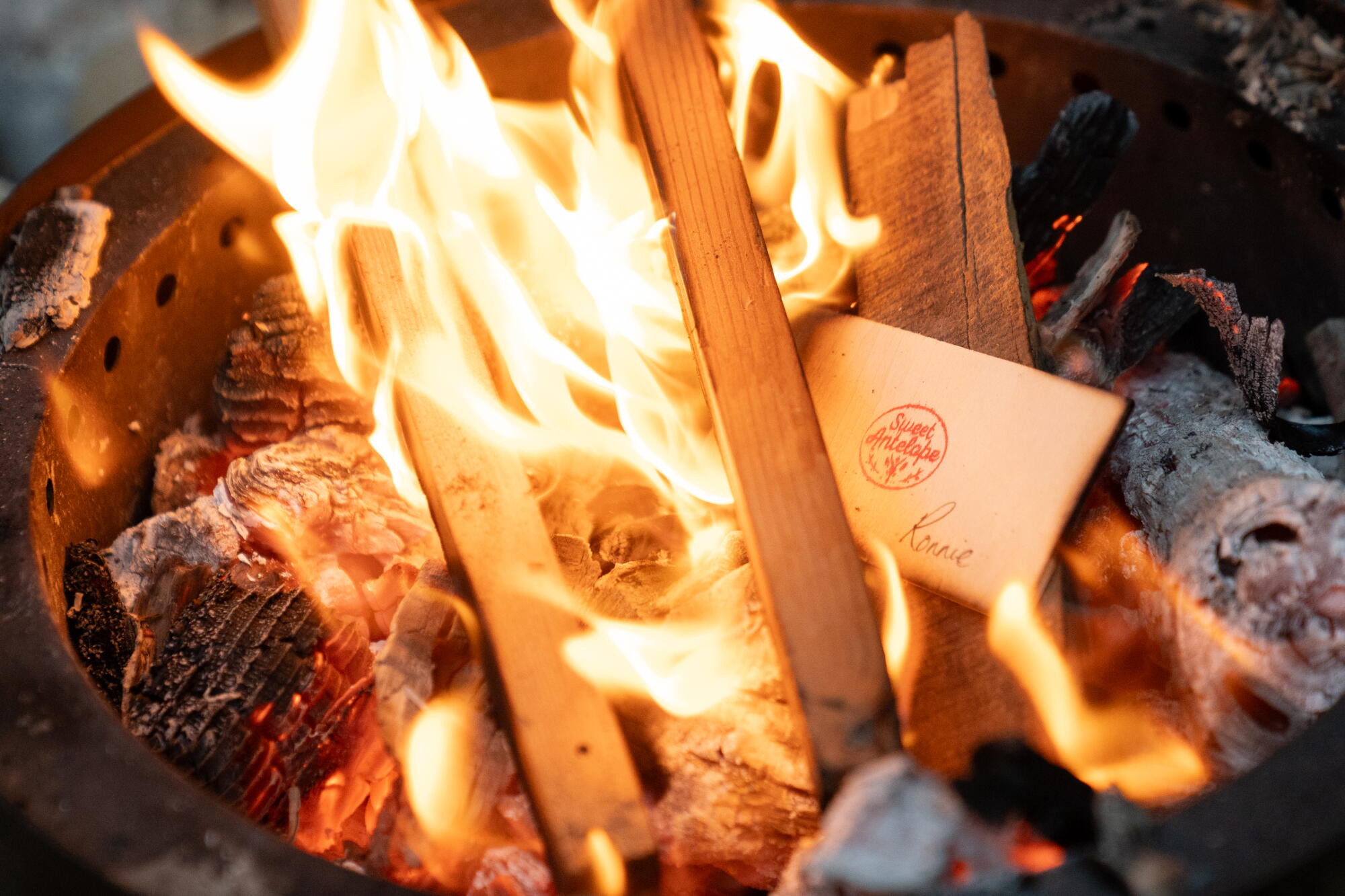
A card of intention burns in the fire at the Sweet Antelope supper club hosted by Kristina Robbins.

A card of intention burns in the fire at the Sweet Antelope supper club hosted by Kristina Robbins.

A guest reads a dinner placard.

A guest reads a dinner placard.

Tonight’s theme is “goodbye,” setting the stage for conversations that veer into the provocative and sentimental, moving beyond pleasantries and small talk.

Kristina Robbins created Sweet Antelope in 2023, hosting the storytelling-based supper club in her West Adams home. Each month, she invites mostly strangers to share personal stories over four-course meals prepared with ingredients from her garden and local farms. “All the herbs from last night were from my garden. All the flowers were from my garden,” she says.

Robbins has always loved throwing parties. When her children moved out, she began wondering where to direct her energy. Sweet Antelope became an outlet for her passion for hosting and an expression of her belief that people need deeper connections with one another through storytelling. The name originated from a nickname her husband gave her — an adorable little creature, yet one that still wields its horns.

Guests huddle by a fire in the backyard at the Sweet Antelope Supper Club.

Guests huddle by a fire in the backyard at the Sweet Antelope Supper Club.

“We’ve really forgotten that, as human beings, we are wired to ground ourselves through our connection to other people,” she says.

For Robbins, the dinners offer something beyond good food and conversation. At a time when she sees people becoming increasingly reluctant to talk to strangers, Sweet Antelope creates space for vulnerability that she believes many people’s lives lack.

“This was the most perfect expression of what I feel is missing from a lot of people’s lives, and I felt uniquely able to offer it,” she adds.

1

Guido Lois prepares dinner during the Sweet Antelope supper club.

2

Short ribs.

3

Seasonal soup.

1. Guido Lois prepares dinner during the Sweet Antelope supper club. 2. Short ribs. 3. Seasonal soup.

Guests arrive beneath bougainvillea vines bursting with vivid pink blooms and are ushered through Robbins’ historic Craftsman-style home, built in 1908 and owned by her family since 2014. In the kitchen, chefs prepare an elaborate four-course meal. Outside, guests sip blackberry tequila spritzes and explore the garden before joining a ritual tied to the evening’s theme: Each receives a wooden totem and tosses it into the fire pit as a symbolic goodbye to something in their life.

Eleanor Bigelow and Tom Paper traveled from San Francisco to attend the supper club. They had met Kristina 30 years earlier through an improv troupe in San Francisco. “She was super talented and the kind of person who you remember after 30 years,” says Bigelow.

Cards of intention are available for guests as they arrive.

Cards of intention are available for guests as they arrive.

As performers who had toured a show at the Edinburgh Fringe Festival, they were intrigued when they heard about an event that married a culinary experience with storytelling. “We decided to come here because we both are really into organic food and the idea of learning to be better storytellers,” says Bigelow.

Tonight’s featured storyteller is Madeline Walter, who co-runs the popular storytelling show “Essays” with her brother, Evan Walters. Robbins reached out to the siblings and invited Madeline to read at tonight’s supper club.

“It felt very similar to ‘Essays’ in that she is interested in building a community and an exciting live event that is just not what you see every day,” says Walter.

Before introducing the storyteller, Robbins explains that after she announces the theme, every guest will have a chance to tell their own story at dinner. The dinner, she says, is a chance to “connect with people over something other than what we do for a living and where our kids go to school.”

1

Guests listen to Madeline Walters read an essay.

2

Madeline Walters shares a story at Sweet Antelope.

1. Guests listen to Madeline Walters read an essay. (Lauren Justice/For The Times) 2. Madeline Walters shares a story at Sweet Antelope.

Madeline takes the stage and begins reading her essay about imagining her “Manhattan-feral” husband’s life in the event of her untimely death. She mainly envisions that her husband would not “know where we keep the majority of things in our home.” It elicits laughter from the dinner party guests. “I need to announce that I’m leaving to open myself up and remind myself that time is limited, and I can operate with a little more freedom,” she concludes.

After the reading, guests make their way to one of three candlelit tables inside the Craftsman home. Each person has an assigned seat and a number indicating when it’s their turn to share a story. A placard on the table offers prompts to start the conversation: “Tell us about a goodbye you’ll never forget.”

For Robbins, the moments that follow reveal something special about the gatherings. When strangers sit together and move beyond small talk, she says, unexpected connections can emerge. “We share experiences that become launching pads for conversation,” she says. “Some people go funny, some people go deep.”

No matter where guests sit, they’ll have a memorable conversation, Robbins explains. “At the end of the night, people will come up to me, and they’ll be like, ‘How did you know to seat me at that table?’ ” she says. “Everyone is convinced that they had the best table.”

Meanwhile, in the kitchen, chefs put the finishing touches on a melon, cucumber and tomato salad as guests prepare to share their own stories. What began as a small culinary operation has grown into a team of chefs who bring their own influences to the menu. “I hire on vibes — if they’re fun, have a great attitude and have a nurturing, calm presence, and are talented at what they do,” says Robbins.

Guests Nicole Montez, from left, Kerry Nicole and Terry Solomon have a good laugh.

Guests Nicole Montez, from left, Kerry Nicole and Terry Solomon have a good laugh.

Like the evening’s theme, the menu tells a story. From the melon salad to curried tomato soup and black garlic short rib (which one guest exclaims is “insane!”), each dish reflects a deliberate choice. “We are at the end of the melon season, so I definitely knew I wanted to do a melon dish before they disappeared,” says Robbins.

Her intimate dinners have garnered fans in the culinary world. Daphne Brogdon, who once co-owned the beloved Los Angeles restaurant Tar Pit and helped run operations at the legendary Campanile, is a longtime friend and one of tonight’s guests. “I think what she’s doing is even more important than ever,” says Brogdon, who believes that supper clubs can be an antidote to loneliness. “There’s a premium for being in real life.”

At the dinner tables, conversation flows freely, veering from cathartic discussions of women’s boundaries and dispatches from the psychic realm to memories of departed loved ones and a bizarre encounter with a disgraced rock star that elicits giggles and bewilderment. Fleetwood Mac plays softly in the background. Wine flows.

As the meal winds down, guest Katelyn Hindin says she doesn’t believe in goodbyes. “I think goodbyes are treated with reverence that they shouldn’t be,” she says before revealing a bittersweet story about a lost family member.

The supper club is hosted in a stunning L.A. Craftsman home built in 1908.

The supper club is hosted in a stunning L.A. Craftsman home built in 1908.

One of the dinner party guests, Mark Chervinsky, shares a story about receiving an organ transplant, which inspired him to start a nonprofit, Mark Here 4 Life, that advocates for organ donation after he connected with the mother of his donor.

Shortly afterward, Robbins floats through the room to invite guests into the garden for salted caramel pots de crème and lemon balm tea, “grown and dried here,” she adds.

Under the stars, guests swap numbers while sipping from toasty mugs. “The event was more profound than I ever expected, and a really wonderful way to get to know people very quickly,” says Jessica Hernández as she prepares to say her own reluctant goodbye.

Sweet Antelope’s next Storytelling Supper Club is Dec. 5, 5-9:30 p.m. Tickets are $185.

Source link

‘I asked stranger to stop talking to me on plane and his reaction said everything’

A woman has sparked debate after sharing an awkward encounter with a stranger on a flight, but some believe she was right to stand her ground rather than make small talk

When boarding a plane, most people worry about their seating arrangements and whether they’ll have enough legroom. But one traveller was left feeling uncomfortable after a man deliberately changed seats to sit next to her on a plane before striking up a conversation.

She had simply wanted to spend the flight relaxing and listening to music, rather than making small talk with a stranger for two hours. Taking to Reddit, she explained: “This happened on a flight last week and I still can’t stop thinking about it. I was flying by myself. I picked a window seat on purpose so I could sleep and avoid talking to anyone.

“I had my headphones on before I even sat down. The middle seat beside me was empty when we got on. Maybe ten minutes before take off, a guy who had an aisle seat a few rows back decided to switch and planted himself right next to me.”

She says the man didn’t ask whether the seat was available or if she minded him sitting there, instead making himself comfortable before immediately starting a conversation.

She continued: “He asked where I was going, how long the flight was for me, whether it was work or leisure.

“I answered the first two because he caught me off guard. Then I kind of turned back toward the window and put my headphones back on.”

However, the man allegedly continued trying to get her attention, even tapping her arm and insisting he was “only trying to be nice” and that chatting would help the flight go faster.

‘He went quiet and sulky’

She added: “I told him I was really hoping to sleep and wasn’t up for talking. He gave a little laugh and said, ‘come on it’s only two hours.’

“I said pretty plainly that I really didn’t want to chat and turned away again. After that he went quiet and sulky and I heard him mumble something about people being antisocial.”

When she arrived at her destination, she met up with a friend and explained what had happened – but their reaction left her questioning whether she’d been unreasonable.

She said: “The friend I was meeting at my destination said I was rude and could have just talked to him for a while.

“But I had my headphones in. He changed seats to sit next to me. He ignored the first hint. And he kept pushing after I was direct.

“I don’t think I did anything wrong but his huffy reaction made me doubt myself for a second.”

‘A stranger who won’t take a hint sounds exhausting’

Wanting to know whether others would have handled the situation differently, she turned to social media to ask for their opinions.

One user said: “The arm tapping after the headphones went back on is what really makes it creepy.

“At that point he knew the conversation was over and decided his need for company mattered more than someone else’s comfort.

“Two hours next to a stranger who won’t take a hint sounds exhausting. Is this conversation helpful so far?”

Another added: “‘Trying to be nice’ would have been his leaving the person alone who put out all the signals that they wanted to be left alone, and then used clear words to say so.

“They were being very rude and quite selfish, the exact opposite of what they purported being.”

A third user said: “I fail to see why your friend has to get involved in your perception of ‘I do not want to talk to this guy’. I would have cut him off faster.”

Ensure our latest headlines always appear at the top of your Google Search by making us a Preferred Source. Click here to activate or add us as Preferred Source in your Google search settings

Source link

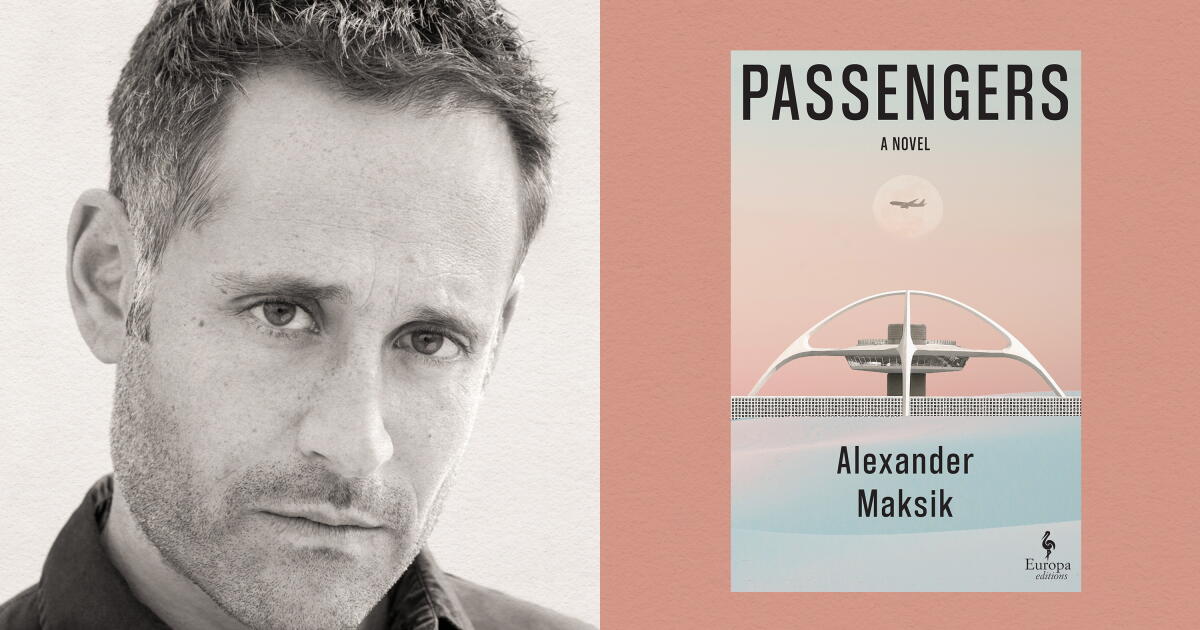
Alexander Maksik proves an LAX thriller can work in National Book Award contender ‘Passengers’

On the Shelf

Passengers

By Alexander Maksik
Europa Editions: 256 pages, $26

If you buy books linked on our site, The Times may earn a commission from Bookshop.org, whose fees support independent bookstores.

With its gridlocked terminals, infuriating delays and long lines for everything from security checks to coffee, LAX might be where patience goes to die. It’s a place most dream of escaping; instead L.A.-born novelist Alexander Maksik takes readers inside the airport to witness both the unease and shared humanity of people passing through.

Longlisted for the 2026 National Book Award in fiction, Maksik’s new novel, “Passengers,” unfolds within the airport’s sprawling concourses. The story centers on Ivan and Nina, a distant father and daughter meeting up for a flight to Paris. For 75-year-old Ivan, it’s a chance to show his daughter where he once lived. For 29-year-old Nina, it’s a free trip and an opportunity to finally understand a parent she barely knows. When their flight is delayed, and then delayed again, frustration shifts from the departure boards to the fault lines between them.

Maksik, speaking via video conference from his Parisian apartment, always planned that the book would be about a father-daughter pair. “When my daughter was born, like many new parents, I found I could only think in clichés, and I didn’t try to resist them,” he says. “But as time went by, I started to toy with the idea of writing a novel about a father and daughter in which the battle against cliché would become central, would take on huge, even life-saving, importance.”

The author also plays with the idea of nostalgia. “Nostalgia brings you close to the edge of real feeling without forcing you to confront the weight, power and terror of real feeling. It’s too easy to keep yourself wrapped up in the false ease of the past.” One of the things that airports remind us of, he says, is change. Restaurants and boutiques close and open regularly. In one era, people sought out bookstores; in another, they’re looking for headphones and portable chargers.

“For a long time, airports felt to me like places of civility,” says Maksik. “I remember having real conversations with strangers at a bar or in various waiting areas. There was promise and possibility and warmth in such interactions. Now an airport is just one more place to look at your phone.”

As Ivan and Nina walk, talk, do tequila shots and observe their fellow travelers, those travelers are also observing them. One of the most powerful conceits in the book occurs when the two leave an airport venue and readers get the perspective of a person who served or overheard them. For example, one character, “an elegant woman, long gray hair in a braid” thinks about her dead husband when she notices Ivan and Nina: “It was impossible for the woman to see two people together, really any two people, and not feel his absence.” There’s another man who thinks he can tell that father and daughter “were the kind always looking for a way around the rules, who think waiting is for suckers like him.” Each underscores the fact that strangers affect and can even change one another (like our own offspring do).

Something else Ivan and Nina share is physical labor. Ivan spent decades as a building contractor, while Nina is a masseuse who goes to clients’ homes, not liking “the idea of going to the same place again and again. She wanted to travel, to peer inside different lives.” Maksik himself held service positions for many years, experience that gave him a different outlook than some of his colleagues at the renowned Iowa Writers Workshop, which he entered at the relatively senior age of 38.

“At Iowa, I was drawn to those who were writing about worlds that were far away from literature and academia,” he says. “Maybe that’s because I’ve worked so many different jobs. I washed dishes. I was a bartender. I cooked. I delivered pizza. Those experiences were vivid and interesting and at least as formative to me as a writer as anything I learned in the classroom. To write well about work is something I admire a great deal.”

Of course, Maksik is writing fiction, and can write about any sort of life, including that of a teacher, as he did in his critically acclaimed 2011 novel “You Deserve Nothing,” about an affair between an American teacher and his French high school student. As he knows, there’s a shadow over that book because one of his students alleged that the story was about Maksik’s affair with her when she was 17 years old.

“I will aways have to acknowledge my own history, and how I came to write that novel,” he says. “And there will always exist people to whom this acknowledgment means nothing. Perhaps this is as it should be. I’m certainly not proud of that period of my life, and, frankly, I’m no longer particularly proud of the novel either. Nevertheless, it will always be part and parcel of my history, and I have no intention of pretending otherwise.”

As Ivan and Nina wrestle with their own emotional truths, which range from her mother Nora’s departure from their lives to Ivan’s clumsy recitations of Nina’s childhood antics, something alarming is afoot. Nina can’t make or receive calls on her phone. The pair notices that others can’t make calls, either; a restaurant loses its checkout interface; and everyone is snaking cords around to keep devices charged for the moment when service returns.

Something is definitely wrong, and no one seems to know what it is. Soon Nina sees that her father is tired and weak, despite a meal and plenty of water; she becomes convinced that he needs fresh air. When they try to exit the airport, they find barriers set up and armed soldiers who say no one is allowed to leave.

The sense of unease Maksik creates mirrors the sense of disconnection between all of the people stranded, from a brusque young woman in bunny slippers and giant headphones to an older couple huddled beneath racks of merchandise: “We’re trying to sleep … Can’t you see that?” one of them says. This LAX, unlike the island of civility and good manners Maksik remembers from childhood, fosters alienation and dread.

The author laughs ruefully when accused of his own version of nostalgia, admitting that the version of the airport he’s created feels closer to our present-day reality. As it happens, Maksik himself will be taking a flight soon, from France to Florida, taking part in his fellow author Lauren Groff’s First Editions Book Club. How does he feel about that?

“Our daughter was born in late 2019, and then there was the pandemic. Each day since then seems more dangerous than the previous one. I wouldn’t at all be surprised to find myself trapped in an airport, whether as a result of climate change, AI, or one of the many petulant maniacs who run the world.”

Patrick is a freelance critic and author of the memoir “Life B.”

Source link