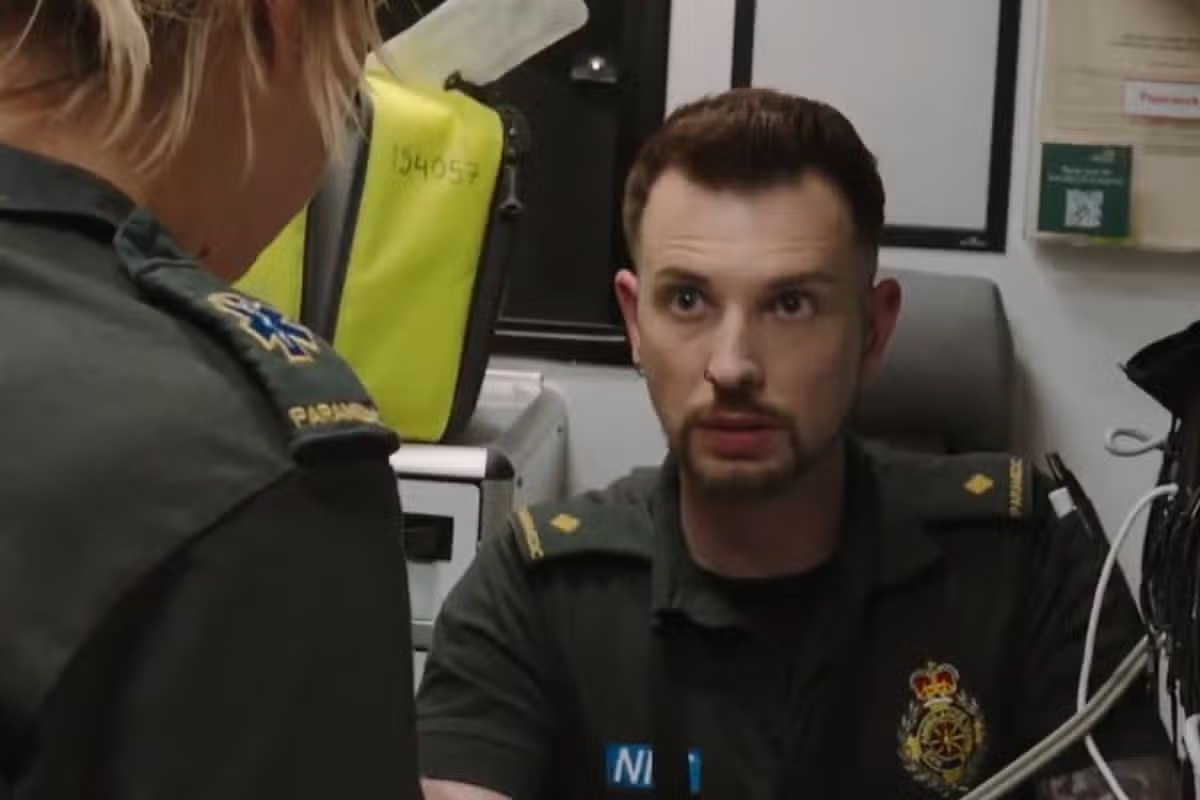
A team of paramedics battled to save a man’s life on 999: On the Frontline tonight, after his heart stopped beating twice, resulting in him requiring CPR
22:14, 11 Oct 2026Updated 22:43, 11 Oct 2026
LLoyd was one of the paramedics who battled to save Roy’s life (Image: Channel 4)
A 67-year-old man saved by paramedics after his heart stopped twice has appeared in the Channel 4 series 999: On the Front Line.
The incident was caught on camera for a new episode of 999: On the Front Line, which aired on Sunday (October 11) evening. South Western Ambulance Service paramedic Lloyd and colleague Charlie were called to an address in Bristol after a carer reported a man experiencing breathing difficulties.
“He’s not breathing,” the woman told the 999 operator, “He was struggling to breathe, and then he just started gasping for breath”. At that point, the operator instructed the caller on how to give the man chest compressions, as CPR was needed, while paramedics raced to the scene.
To see more of the stories you love from The Mirror and to find them easily in Google then make us your preferred source. Free and easy-to-do, just clickon the link hereto find more from The Mirror at the top of your feed.
The 67-year-old man named Roy, who is paralysed from a car accident 25 years ago, stopped breathing when the medics arrived.
Lloyd told the camera, “When we first saw Roy, it didn’t look good; he was not breathing, and as soon as we were at his side, we could tell he didn’t have a pulse, which told us, essentially, he is clinically dead.”
A second team of paramedics joined Charlie and Lloyd, and the team managed to successfully restart Roy’s heart as they all battled to keep him stable.
“It’s really important we act fast because every minute that passes, Roy’s chances of survival drop drastically,” Charlie said.
At one point, Roy managed to open his eyes as the ambulance crews were also joined by a doctor and a critical care medic from Great Western Air, who also arrived at the scene.
The team successfully removed Roy from his flat and safely into an ambulance. However, he soon lost consciousness once more as paramedics tried to save his life.
“For the second time tonight, the team gets Roy’s heart beating once again,” the show narrator told viewers while Roy was rushed into the hospital.
Roy made a full recovery after a blockage in his airway ultimately sent him into cardiac arrest. He spent 11 days in the hospital. I would like to say to everyone in involved in the whole process a very big thank you and well done to everyone.”
999 On The Front Line airs on More4 on Sundays at 9:00 PM, with past and current episodes available to stream on-demand via Channel 4
WHAT luck! We admire the northern royal albatross – his jet-black wings spanning more than three metres as he circles above our little tour boat.
“They love gliding on this south-westerly breeze,” says Rachel, captain of the Sootychaser.
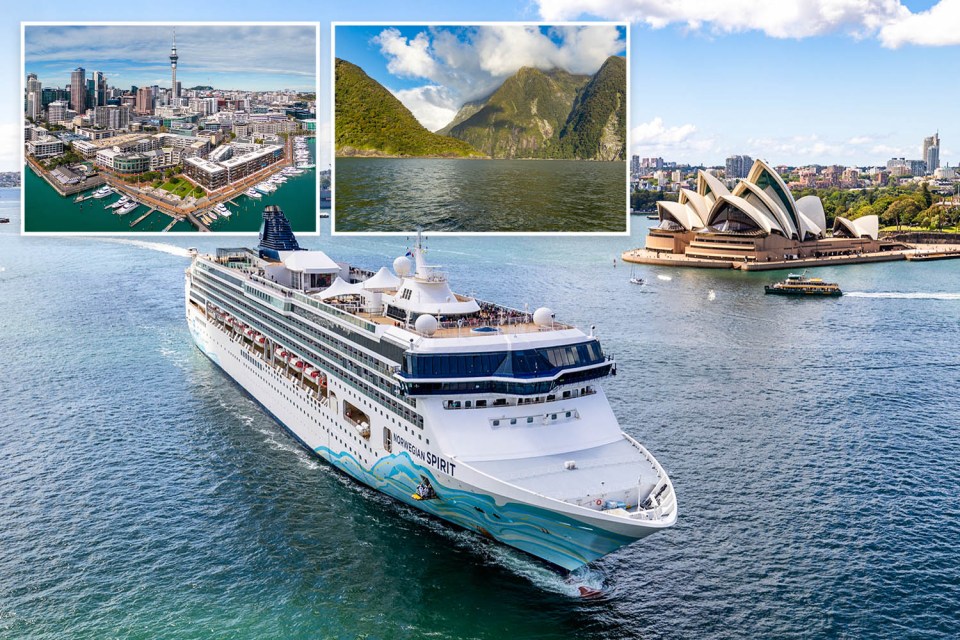
Norwegian Cruise Line offers an 11-day journey setting sail from Sydney, Australia and ending up in New ZealandCredit: SuppliedNew Zealand’s capital city of Auckland is the final stop on a truly epic cruise down underCredit: Getty
But within seconds our attention switches as Rachel spots some adorable blue penguins — the smallest in the world — on the other side of the boat.
With fur seals, oyster catchers, black swans and sooty shearwaters also ticked, this boat trip around Port Chalmers harbour in New Zealand’s South Island has turned into a wildlife adventure that keeps on giving.
Sign up for the Travel newsletter
Thank you!
Lady luck has been with me since I set out on a 12-night cruise from Sydney.
It was a bucket-list departure as we sailed past the Opera House on our way to Auckland on Norwegian Cruise Line’s ship, Norwegian Spirit.
The Tasman Sea was unusually calm as Captain Nordin navigated Spirit into Milford Sound, a deep fjord with steep cliffs and gushing waterfalls, the low mist clearing to reveal a cloudless blue sky.
Cruising New Zealand’s scenic fiordlands, a vast, wild area at the bottom of the South Island, always promised to be a highlight of the trip and didn’t disappoint.
It was spectacular. From Milford we sailed past the softer scenery in Doubtful Sound — so-named because when Captain Cook was passing in 1770 he didn’t think his ship would get into it.
Last up was Dusky Sound, named by Cook as he first saw it as the sun set. Port Chalmers is the nearest that most cruise ships can get to Dunedin, the Gaelic word for Edinburgh. “Scottish settlers travelled thousands of miles to this unknown land, but at least the weather was very familiar,” our guide Robert says with a laugh.
UNESCO world heritage site Milford Sound in Fjordland national park, New ZealandCredit: GettyA little blue penguin – the smallest in the world – are among the unique wildlife you can spot on the cruiseCredit: AFP
He’s not joking. We’re here in New Zealand’s summer, but the sky is grey and it is drizzling.
Things didn’t improve next day, when strong winds prevented Spirit getting into Lyttelton, the port for Christchurch.
Instead there was a day at sea with fabulous views as we sailed past snowy peaks.
I also worked up a sweat in Spirit’s thermal suite and followed up with an altogether different spirit — a margarita in Magnum’s, my favourite bar.
Built in 1998 and with room for just under 2,000 passengers, Spirit is NCL’s oldest and smallest ship, but looking very spruce after a £89million refurb in 2020.
They doubled the size of the spa, updated cabins, turned a waterpark at the back of Deck 10 into an adults-only area and added so many more places to eat and drink that it took me a week to try them all.
As NCL is the king of cruising casual, I booked whichever restaurant I fancied instead of being told when or where to eat, or what to wear. Jeans in the restaurant at dinner? No problem.
Steaks in Cagney’s, noodles in Silk, pasta in Onda by Scarpetta, stir-fry straight off the griddle in the fun Teppanyaki, and a superb Coq au Vin in the Bistro — I munched my way through the lot of them.
They were all really good (top marks went to the Bistro) and usually cost extra, but I paid nothing, thanks to NCL’s generous Free At Sea package.
It includes free meals in up to four speciality restaurants on cruises over nine nights (fewer nights nets fewer restaurants) as well as covering drinks and wifi and giving USD$50 (around £38) off the cost of shore excursions.
There were plenty of included places to eat as well.
Taste, one of two main dining rooms, was good, and I liked the outdoor seating at the Garden Cafe (a posh name for the buffet), but The Local was my favourite, for its salads, burgers, fish and chips and chicken wings.
Outside, the weather was getting better and better, with sunshine and blue skies as we explored New Zealand’s North Island. Wellington, the capital, stole my heart with its relaxed feel, clean streets and waterfront bars.
I rode a cable car to the top of the botanic gardens and wandered back to town, admiring the exotic plants and trees along the way.
In Napier the next day, I joined a hike and wine tour up the lofty Te Mata Peak with guides Helen and Anne.
“We’ve learned from experience it’s good to do the wine after the walk,” says Helen.
Wise words. What started as an easy path from the car park got steeper as we climbed — one foot wrong and you would be tumbling down the grassy bank.
Panting with exertion, it was a joy to finally dive into four tipples, including a cheery sweet rosé aptly named Fleurty.
Tauranga was different again — a beautiful beach resort, with miles of soft sand and stylish apartments that would look right at home on the French Riviera (but were a lot cheaper).
The next day, in Auckland, it was time to say goodbye to Spirit and New Zealand — but I’m not dis-Spirited because, with Lady Luck on my side, I’ll be back.
GO: NEW ZEALAND CRUISE
SAILING THERE: Norwegian Cruise Line offers an 11-day Melbourne, Milford Sound and Eden cruise from Sydney to Auckland departing on February 16, 2027, from £2,030pp for an ocean-view cabin.
Price includes Free At Sea package of drinks, four speciality restaurants, 150 minutes of wifi for one device at a time and USD$50 off shore excursions.
U.S. Immigration and Customs Enforcement officers have been ordered not to engage in high-speed car chases and to make vehicle stops only if they have completed specific training, under new internal guidance issued after several drivers were shot in encounters with ICE.
A memo sent to officers in ICE’s Enforcement and Removal Operations division and obtained by the Associated Press warned they are not any under circumstances authorized to chase vehicles that fail to pull over. Instead, officers should take down the vehicles’ information for further investigation, according to the memo signed by ICE’s executive associate director, Marcos D. Charles, and dated Wednesday.
The new guidance comes after ICE-initiated vehicle stops have repeatedly escalated when drivers have refused to cooperate or tried to flee. ICE agents have opened fire during more than a dozen such encounters since last year, killing at least four people and wounding several others.
President Trump’s administration has faced internal tension over how to handle traffic stops, which are seen as particularly high-risk encounters.
After fatal shootings of drivers in Maine and Texas in July, ICE officers were directed to temporarily pause most vehicle stops. But the next day, Trump went on social media to direct the agency to continue traffic stops, calling them “one of ICE’s most important and effective Crime Fighting tools.”
ICE has faced intense pressure from the White House to deport more people who are in the country illegally, and its arrests have reached record numbers. At the same time, the agency’s rapid hiring spree last year resulted in some poorly vetted and trained officers hitting the streets.
In a statement, ICE downplayed the significance of the memo, which said the new guidance was intended to replace and amend previous directives issued earlier this year, last year and in 2018.
“Occasionally, ICE leadership issues guidance reminders to law enforcement officers,” the statement said. “Vehicle stops and arrests of illegal aliens continue.”
The new memo outlines steps intended to improve the safety of vehicle stops for ICE officers, drivers they are targeting, their passengers and the public.
The memo told ICE’s field office directors that they must ensure vehicles used for traffic stops have lights and sirens that let the public know they are law enforcement vehicles when activated. Underthe guidance, all officers on the scenes of vehicle stops must wear and activate their body cameras.
In addition, only officers who have completed one of five specific agency training courses can conduct vehicle stops. Officers who have not completed the courses can participate in vehicle stops only “in a support capacity” as passengers and cannot be the drivers of any of the vehicles involved.
The guidance says ICE officers can continue to use a controversial technique known as pinning, which is defined as “using a vehicle or physical barrier to trap or stop a car,” but only if they have received special training. Similarly, only trained officers can use spike strips that deflate tires to prevent drivers from fleeing.
The memo came the day that courtroom testimony highlighted ways in which two ICE officers involved in a vehicle stop, pursuit and shooting that wounded a delivery driver in Austin last month would not have complied with the new guidance.
During a bond hearing for Wilber Rafael Garces Perez, testimony showed that the officer who shot him wasn’t wearing a body-worn camera. The ICE officer who did have a camera was driving in a separate car and turned it off during the pursuit.
Prosecutors presented surveillance video that showed an ICE agent chasing Garces Perez at high speeds through residential streets after he fled an initial traffic stop.
Garces Perez faces federal assault charges after investigators say he struck an ICE officer with his driver’s side mirror. That officer then shot into Perez’s vehicle, lodging a bullet in his back, officials say.
Attorneys for Garces Perez have called the charges against him “retaliation” and have argued that the camera footage was inconclusive because it didn’t fully capture the moment when he allegedly tried to flee.
Foley writes for the Associated Press. AP reporter Anna Wilder contributed to this report from Austin, Texas.
CENTRAL Cee and Yasmin Hadlow’s romance has ramped up a notch – as insiders tell me he’s going all out to make her his girlfriend.
Just weeks after revealing he fell for Yasmin, 23, after watching her cracking on inside the Love Island villa, the Sprinter star, 28, is using every tool in his armoury to get her interested.
Central Cee is pulling out all the stops to make Yasmin Hadlow his girlfriendCredit: GettyCentral Cee made a move on Yasmin earlier this summer while she was still dating her villa co-star Tommy StaggCredit: Getty
And the first is his bank balance.
Onlookers spotted the London-born rapper, real name Oakley Caesar-Su, in a very select part of Harrods on Friday with Yasmin, where he was overheard telling her: “Buy whatever you want.”
An onlooker said: “Cench seems he knows how to treat the ladies and Yasmin is no exception.
“Before they went on a date to his party at 77 London, he had organised a shopping experience for her.
“He had it all arranged to go to the private area of the store and told her to spend whatever she wanted and he’d pick up the bill.
“Cench wanted Yasmin to choose whatever she wanted for the date and more.
“She absolutely loved it. It seemed like no one had ever done anything like that for her before.
“You could tell he’s really into her because he was happy to spend thousands on her to make her feel special.
Onlookers spotted the Central Cee in Harrods telling Yasmin ‘buy whatever you want’Credit: GettyCentral Cee and Yasmin Hadlow can be seen alongside influencer Living PapiCredit: livingpapi/instagram
“They’re not officially dating but it seems like Cench was making a heavy play for her to want to see him as boyfriend material.”
We first revealed they were hooking up last week, after Yasmin was seen on a date with the Cee.
He made a move on Yasmin earlier this summer while she was still dating her villa co-star Tommy Stagg.
When asked if he had a celebrity crush, on 60 Seconds With Missy, Cench replied: “I do have one, I’ve got one I’m sure. Yasmin from Love Island.”
Helpfully, Yasmin and Tommy split not long after flying back from Mallorca – and Cee made his move.
Confirming their break up, Yasmin said: “Me and Tommy aren’t together anymore.
“It ended up being… It was just a lot to adjust to on the outside.
“We just ended up saying that we’ve got a lot going on. Our lives essentially weren’t aligning on the outside, but we’re still friends.”
Yasmin recently split from Tommy StaggCredit: Shutterstock EditorialCench seems he knows how to treat the ladies and Yasmin is no exception, revealed an onlookerCredit: Getty
Insiders said it was still early days between the pair but admitted Cee was smitten.
“He’s acting like he’s won the jackpot,” a source told me.
“Cench really fell for Yasmin after seeing her on the show and then on social media.
“Now he’s managed to get her on a date he is going all out to show Yasmin how special he thinks she is.
“It’s early days between them but Cench is absolutely mad for Yasmin.”