step

Big Brother housemates forced to step in as ‘meltdown’ leaves fans in tears

The drama continued in the Big Brother house on Thursday, as one star struggled to control their emotions

Emotions ran high during the latest episode of Big Brother.

It’s been a tense week in the house, following the results of the latest nominations. Yasmin was instantly put up for eviction after receiving a killer nomination this week. It was soon revealed that Twinks and Rob would be joining Yasmin in facing the public vote, after they each received six nominations from their fellow housemates.

During Thursday’s (October 15) episode, the house was transformed into Big Brother’s body, as part of this week’s shopping task. The housemates, who remained in their two teams, were tasked with keeping Big Brother’s body healthy and happy.

Team captains Rob and Samuel became Big Brother’s brain, and were able to hold all the power. All the other housemates became blue and red blood cells, and had to obey every command given by their side of the brain. The team that performed the best would be rewarded with a luxury shopping budget, while the other team would have to make-do with basic rations.

It later became too much for Harry, as he started to feel the pressure of being in the house. “I feel like all our lot have f***** off. I feel like we’re just left and even then, Rochelle just said, ‘What did you do to stand out?'” he said.

Rob tried to comfort his friend, saying: “This process is hard enough without people making it harder for each other. You can tell me to shut up if this is an overreach, but from a couple of people it feels there’s an assumption that you can’t do a challenge.”

Ensure our latest Big Brother stories always appear at the top of your Google Search by making us a Preferred Source. Click here to activate or add us as Preferred Source in your Google search settings

Several jibes from his fellow housemates later proved too much for Harry. During the task, Rochelle told Harry to “f****** concentrate”, adding: “It’s really annoying. He won’t be laughing when he’s got no f****** thing to eat next week.”

Harry didn’t take too kindly to Rochelle’s comments, as he was soon seen slamming the bedroom door and rushing into the bathroom. Philip and Lynx stepped in to try and calm Harry down by getting him to take a moment in the toilet cubicle.

Harry soon emerged in tears, saying: “I feel s*** man. Just can’t be a****.” Rochelle later apologised to Harry, and became emotional as she reflected on her behaviour.

“I’m desperate to get home and just hope that I’m more patient and just different. I can just be horrible and I have to be better,” she tearfully said to Yasmin and Rhianna. Meanwhile, in the kitchen, Rob and Samuel acknowledged that they needed to support Harry more during their time in the house.

After watching the emotional scenes, viewers were quick to share their concern on X, with one person writing: “That is my worst nightmare – having a meltdown and like 6 people surrounding me. LET HIM BREATHE.” Another added: “Harry has a beautiful soul. Rochelle needs to leave.”

A third said: “Sad to watch Harry be so emotional, he’s clearly hurting.” Someone else echoed the sentiment, saying: “Seeing Harry sad has genuinely upset me.”

Big Brother is available to stream on ITVX

Source link

Closed UK airport takes huge step to reopen after four years in £193million plans

IT’S GOOD news for travellers in the north as a regional airport left abandoned for four years is set to reopen.

Doncaster Sheffield Airport closed back in 2022 after becoming “commercially unviable” and has been left empty since.

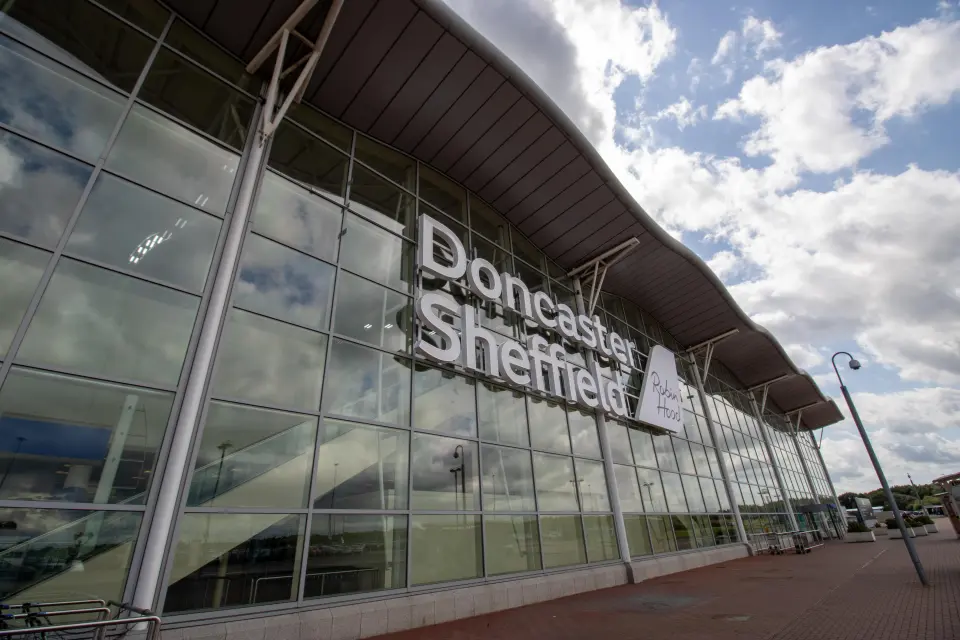
Front entrance of Doncaster Sheffield Robin Hood International Airport.
Doncaster Sheffield Airport is set to reopen in 2028 Credit: Alamy

But now the airport is set to reopen to passengers in 2028 as part of a £193million project.

The airport is home to one of the longest runways in Europe, measuring 2,893 metres, which means it could host big jets for long-haul routes.

Before it closed, the regional airport acted as a gateway to Europe for those living in the north.

Airlines that used to fly from the airport included TUI and Wizz Air.

Read more on travel inspo

CHEAP BREAKS

UK’s best 100 cheap stays – our pick of the top hotels, holiday parks and pubs


GO ON

All the little-known websites for cheap or FREE tickets to gigs, theatre & festivals

However, no airlines have been confirmed for the airport yet.

Christian Foster, Director of FlyDoncaster – the company set up to manage the airport – told Sun Travel: “It does feel like the world has changed post-Covid, whereas people were focused two weeks in Spain or Greece, nowadays we’re seeing a lot of people keen to take city breaks.

“We’d love to fly to places like Croatia, and other destinations that are a bit more quirky like Azerbaijan.

“We’re keen to look at emerging places to visit as well, like India.“

Aerial view of Doncaster Sheffield Airport, showing the terminal building, car parks, and passenger jets parked on the apron.
It closed back in 2022 and has been left abandoned since Credit: Alamy

Inside, there are plans to fill the airport terminal with local businesses instead of your usual Costa or Starbucks.

There would be a mixture of restaurants, bars and shops.

Back in July, the airport also gained approval was given by the Civil Aviation Authority (CAA) to move forward with a public consultation.

During the public consultation, locals can express their opinions on the reopening of the airport before October 4.

In the airport’s latest update, three fire appliances have also been ordered for the airport ahead of its reopening next year and before welcoming passengers in 2028.


Source link

U.S. removes Syria from arms export ban as Trump administration draws closer to new Syrian government

Matthew LeeAP Diplomatic Writer 

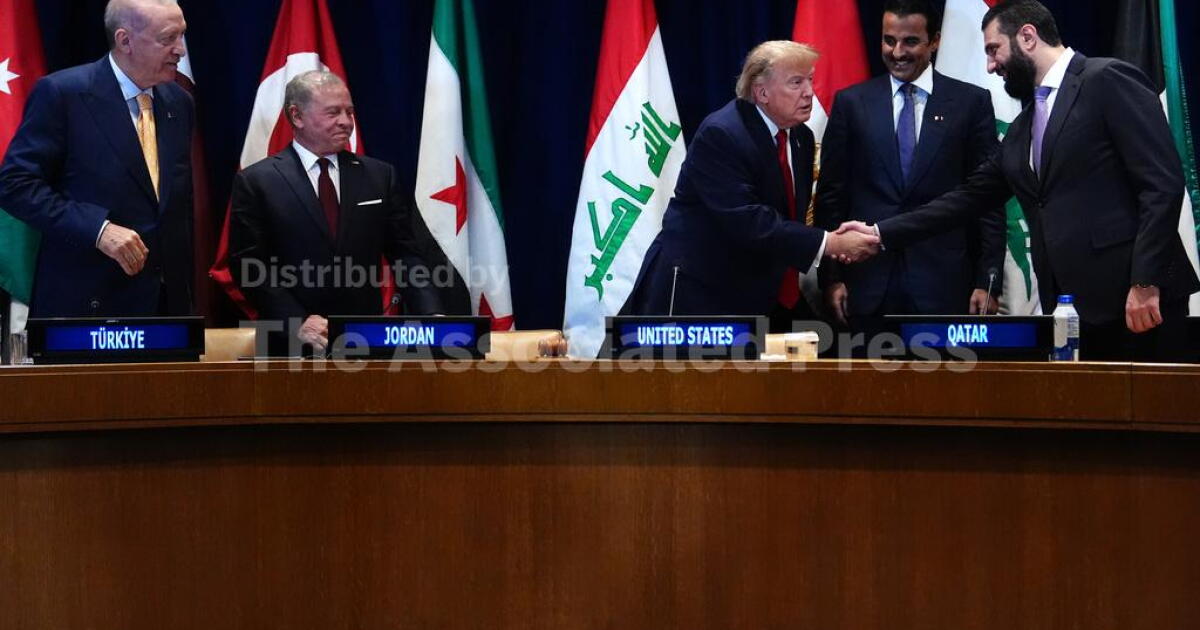
The Trump administration is removing Syria from a list of countries that are not allowed to purchase or import U.S. weaponry, a step that is part of a monthslong process of easing sanctions on the new government in Damascus and its leaders.

In a notice published Wednesday in the Federal Register, the State Department said it was amending its International Traffic in Arms Regulations, or ITAR, so that Syria no longer was among the nations subject to a policy of denial for licenses and other approvals needed for the sale of U.S. weapons and munitions.

The change effective Thursday means that arms sales requests from Syria will now be considered on a case-by-case basis.

President Donald Trump acted last year to ease economic sanctions on Syria that had been in place for decades during now-ousted President Bashar Assad’s rule. In August, Secretary of State Marco Rubio rescinded Syria’s designation as a state sponsor of terrorism, helping paving the way for the latest step in drawing closer to the current government.

The State Department has also announced plans to reopen the U.S. Embassy in Damascus. It has been closed for 14 years.

With Syria’s removal from the ITAR blacklist, only seven countries remain subject to the policy of denial for licenses for U.S. arms exports: Belarus, China, Cuba, Iran, Myanmar, North Korea and Venezuela.

Syria’s interim president, former rebel leader Ahmad al-Sharaa, overthrew the Assad government nearly two years ago and has embarked on a policy of change that has impressed the Trump administration. His moves have led to hopes of eventual stability in a country that was wracked by civil war and the Islamic State insurgency that engulfed northeast and western Iraq for years.

Wednesday’s withdrawal of U.S. forces from Iraq may mean that the Syrian government plays a greater role in preventing an IS resurgence.

Lee writes for the Associated Press.

Source link

Revolut’s CEO Says US Banks Are ‘Out of Step’ With Global Consumers | Global Finance Magazine Revolut US Bank Expansion: CEO Cetin Duransoy Interview

Home Banking Revolut’s CEO Says US Banks Are ‘Out of Step’ With Global Consumers

Revolut US CEO Cetin Duransoy reveals plans to target globally minded and “underbanked” Americans as it builds toward becoming a primary bank.

After receiving conditional approval from the U.S. Office of the Comptroller of the Currency for a national bank charter, Revolut Technologies Inc. appears ready to launch a full-scale challenge to traditional banks and fintechs in the United States.

After relatively quick growth in France, Spain, and Italy, Revolut aims to bring its superapp model to the U.S., where it doesn’t exist in quite the same form.

Revolut’s U.S. CEO, Cetin Duransoy, who has held senior roles at Raisin, Fundbox, Visa, and Capital One, spoke with Global Finance about Revolut’s plans for the American market. 

Global Finance: In the US, banks, fintechs, brokerages, travel products and payment apps are mostly separate. Does that surprise you? Do you see a genuine hole in the U.S. market for a company that combines all those relationships in one place?

Duransoy: It’s not surprising, given how complex these products are and how crowded and fragmented the U.S. market is. Layer on the regulatory process, and combining all these product suites—banking, brokerage, FX, crypto, travel, and more—into a single company or app becomes genuinely difficult and, for most companies, not worth the effort.

We believe you need a genuinely differentiated product to succeed in this market, and we have identified an opportunity here. By bringing all these products into one platform, we can remove the friction customers typically experience when cobbling together services from multiple providers.

GF: People often say, “The U.S. banking market is different.” Different how, exactly? And how might those differences affect Revolut?

Duransoy: The US’s fragmented, charter-based regulation can be more cumbersome than the EU’s passporting model, and U.S. customers tend to rely more on credit than their European counterparts. But the U.S. provides certain advantages, including the U.S. card network and interchange system, which subsidize rewards; FDIC insurance; and consumer-protection laws, which create a trust threshold.

Our broad product offering, 80-million-user global network, and strong global brand allow U.S. to cater to the distinct challenges of the U.S. market and understand the challenges of U.S. distribution costs. By obtaining a national bank charter, we will be on par with traditional banks, with direct Fedwire/ACH access and lending capability.

GF: When Revolut enters the U.S. market more aggressively, should Americans expect something close to the European Revolut experience—or will the U.S. product necessarily look much more like a traditional American bank competing on deposits, credit cards and lending?

Duransoy: We are always focused on product-market fit for our customers, and the U.S. will be no different. We’ve publicly shared that we will bring the best of what Revolut offers and provide the products U.S. customers want most, including checking accounts, credit cards, installment loans, FX, and stablecoins. We’ll continue innovating to deliver a distinct, more productive experience for U.S. customers.

GF: One of the things that makes Revolut unusual in Europe is that it sits at the intersection of finance, travel and lifestyle. Is that model central to how you think about the US, or is America more of a banking opportunity?

Duransoy: Yes. Combining our lifestyle products with the financial services that have made Revolut so popular remains central to our thinking. And they’re a key differentiator in many of our markets. We expect these offerings to help make us a top-of-wallet card and strengthen customer retention.

GF: Why should someone with Chase, Amex, Venmo, Robinhood, and a good travel card move meaningful parts of their financial life to Revolut? What can you offer that those companies, individually or collectively, do not?

Duransoy: We recognize that inertia is a strong force when it comes to financial services and that a customer’s bank holds critical parts of their financial life, such as their mortgage or direct deposit.

What we offer is the ability to consolidate multiple products and services into a single interface and remove the friction our customers find frustrating with other services. Revolut’s broad-based platform allows customers to seamlessly access multi-currency spending without foreign transaction fees, instant global P2P, a combined debit/credit product, budgeting, digital assets, and investing, all without transferring funds between platforms or managing multiple accounts. That’s especially valuable for people who travel internationally, have cross-border family ties, or are underserved by traditional credit underwriting.

GF: Which types of lending will Revolut prioritize in the US?

Duransoy: We intend to initially prioritize unsecured and secured credit cards and installment loans.

GF: What does Revolut understand about the consumer relationship that you think many American banks and fintechs still lack?

Duransoy: We treat our global app as the product. We iterate quickly, aim for gamified engagement, and offer frequent feature releases, in contrast to most U.S. bank apps, which have slower release cycles.

We also build for financial lives that span borders and currencies, rather than assuming a single-currency, single-country customer. American banks were largely built for a domestic customer, and that assumption is increasingly out of step with a more mobile, globally connected population.

GF: Do you think Revolut is underestimated in the US? If so, why? Among those who are aware, what do people in the U.S. most commonly misunderstand about Revolut right now?

Duransoy: “Underestimated” is probably right now, largely because our independent U.S. bank doesn’t exist yet. So we’re still seen as a “European neobank” by most Americans. That undersells what we’ll be once we have a full national charter, FDIC insurance, and our full lending capabilities live.

The most common misunderstanding among those who do know the brand is that we’re simply a fintech or a travel debit card, rather than a company with an 80-million-user global base—including 1.4M in the US—and banking licenses now spanning the UK, France, Australia, Mexico, and more.

GF: Are you coming to the U.S. to compete for a small slice of the market, or do you ultimately believe Revolut can change what Americans expect from a bank?

Duransoy: In the US, our near-term goal is to compete for market share. No new entrant can reshape what an entire country expects from a bank on day one. That takes years of trust-building, especially post-charter, when FDIC insurance and regulatory scrutiny are new territory for us.

What we’re looking to do is win the demographics best suited to us, namely the internationally minded, underbanked-by-incumbents, and digitally native users.

GF: On the corporate side, what are Revolut’s corporate banking plans?

Duransoy: Revolut Business exists—and is a core focus for us—in the U.S. We expect this to continue and are excited to launch merchant acquiring within the first years of becoming a bank.

GF: If we revisit this in three years, what would need to be true for you to say that Revolut has successfully become a major U.S. bank?

Duransoy: Within three years, we expect to be a fully operating bank with real momentum. We won’t share specific customer or product numbers today, but we’re building for scale and a sizable U.S. customer base that treats us as their primary bank, not a secondary account. That’s the bar we’re setting for ourselves.

Source link