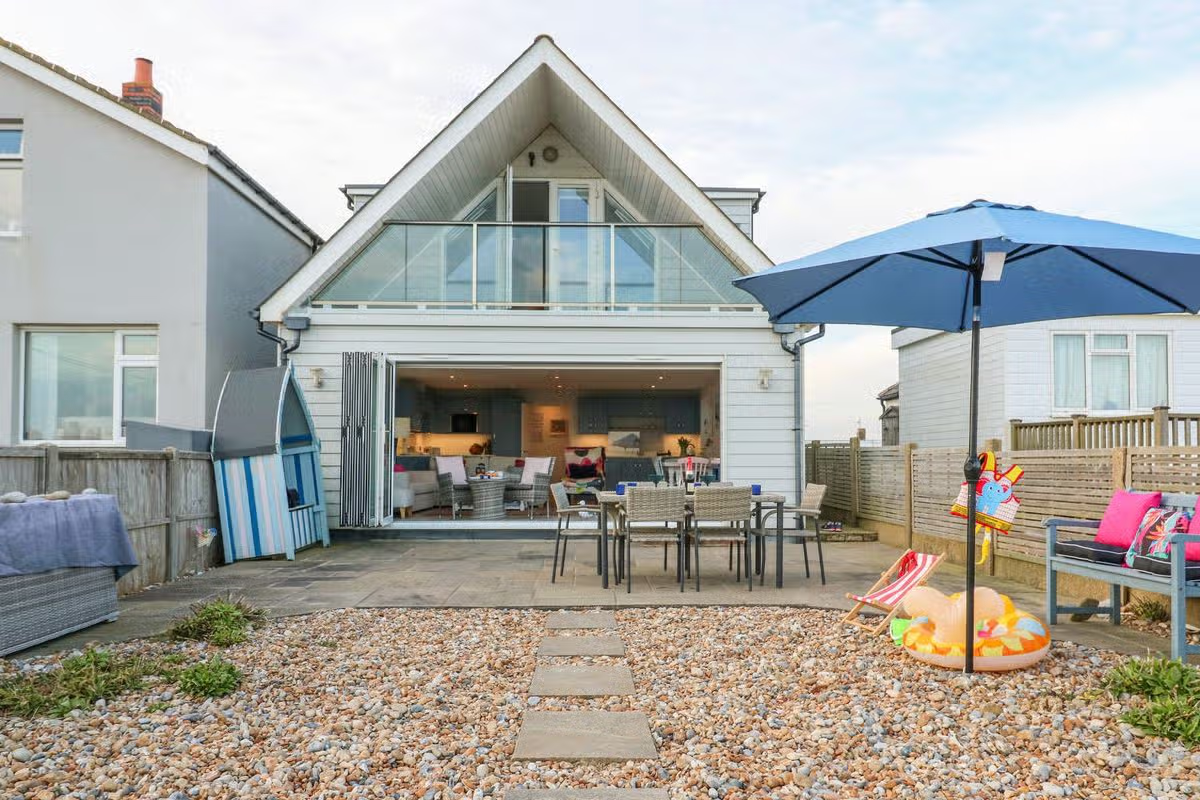
Sykes Holiday Cottages has crowned some of the UK’s best holiday cottages in its latest awards including best for young families, with the best views and pet-friendly properties
This article contains affiliate links, we will receive a commission on any sales we generate from it. Learn more
The UK is filled with beautiful holiday homes whether you’re after a cosy cottage for a romantic break, or a castle-turned-holiday-rental for a weekend away with a huge group of friends and family. The sheer amount of offer can sometimes make it a little trickier to unearth the hidden gems.
Luckily, Sykes Holiday Cottages have helped to narrow it down as they have unveiled the winners of their 2026 Sykes Gem Awards. I was a judge as part of a wider panel, with scores based on a number of factors including guest reviews, the quality of a property, amenities on offer, and even overall popularity.
This year’s winners have included a Grade II-listed lighthouse, a stay in the grounds of the historic Culzean Castle, a cosy glamping hut in the heart of Herefordshire, and a romantic bolthole on the Isle of Lewis.
You can check out the full list of winners here, but below are 12 properties which won gold that we think you’ll definitely want on your radar for your next UK holiday…
It’s not just Sykes Holiday Cottages that’s been serving up a dose of staycation inspiration. Earlier this year, HolidayCottages gave us plenty of UK holiday ideas when it unveiled its 2026 Showcase Awards with categories including winners for Most Iconic Design, Extraordinary Stays and the best in UK and Ireland.
Have you got a holiday story to share? Email us at webtravel@reachplc.com
JANE Austen knew what she was doing when she wrote her books in atmospheric locations.
And with a new movie based on her novel Sense & Sensibility coming out this weekend, the locations in the film are the perfect destination for a staycation.
The new Sense & Sensibility film used Dartmoor for several scenes – and having been hundreds of times I know the National Park very wellCredit: Cyann FieldingThe new film featuring Daisy Edgar-Jones is believed to have filmed in Princetown and TavistockCredit: YouTubeThey even shot a scene at Ditsworthy Warren House – which was also used in War HorseCredit: YouTubeThe National Park is around nine times the size of the City of ParisCredit: YouTube
I have visited Dartmoor National Park more times than I can count, including the spots used in the film – and I stand by that it is the best staycation spot in England.
The National Park spans 368 square miles and to put that into perspective, its around nine times the size of the City of Paris.
Sign up for the Travel newsletter
Thank you!
In fact, Dartmoor is so huge you could spend a whole week exploring it and you could still come back again and see new things.
But you won’t see skyscrapers and massive roads here – instead, rolling hills meet meandering rivers with winding country roads running alongside them.
The new Sense & Sensibility film starring Daisy Edgar-Jones as Elinor Dashwood and Esmé Creed-Miles as Marianne Dashwood, used the rugged and windswept landscapes of Dartmoor extensively to film scenes of the movie.
One location used was Gutter Tor – a large granite rock pile that makes for the ideal walk.
There is a small car park not too far away and after exploring the tor, head to Ditsworthy Warren House, just south of the tor, which was also used in film and it already featured in Steven Spielberg‘s film War Horse.
As a child and still now as an adult, I love searching for letterboxes on Dartmoor – a traditional hobby box with a rubber stamp inside and a visitor book.
Across the moors there are loads of places to explore, including Dartmeet where you can waddle through the riverCredit: Alamy
Obviously some are harder to find than others and while I haven’t found one at Gutter Tor, there are three officials ones in the area.
It is a great activity for kids, like the ultimate hide and seek.
You will usually find them in the crevices of the granite rocks, or even under some that are light enough to move.
Another spot the new blockbuster used as a filming spot was Princetown, which is one of the National Park’s villages.
The small village is home to the famous Dartmoor Prison, made entirely out of granite.
Many myths and folklore about Dartmoor originate at this prison and are usually about escaped prisoners.
I’d really recommend heading to the Dartmoor Prison Museum to learn more about the 200-year-old building.
And if you want to hear more about the folklore, book onto a Heart of Dartmoor Guided Walk, based in Princetown.
Gutter Tor is another spot used for filming – if heading on a walk to the Tor, make sure to look out for a letterboxCredit: AlamyThey aren’t regular letterboxes, but instead ones with a stamp in to say you were herein the guestbook.Credit: Alamy
For half a day (£40pp) or a full-day (£70pp) visitors head off on walks across open moorland and tracks with a guide who will share local folklore, history and hidden features.
Pop into Dartmoor Brewery’s shop as well and pick up some of their famous Jail Ales which have won numerous awards over the past few years.
The ales all come from the brewerynext door, which is England‘s highest brewery at 446.5 metres above sea level.
If you want to sit and enjoy a pint in a pub, then pop into the Plume of Feathers or the Prince of Wales.
The final Dartmoor filming spot was Tavistock – a historic market town on the edge of the National Park.
Known as the original home of the cream tea, it is well worth spending a day exploring.
The World Heritage status town is home to loads of independent shops, a famous pannier market and an award-winning farmers market.
The town has a heap of restaurants, pubs and cafes as well and if you want to extend your stay then book into the Cornish Arms for a night, costing from £124 per night.
Across the moors there are loads of award-winning pubs tooCredit: AlamyAnd you might see the famous Dartmoor poniesCredit: Alamy
Dartmoor has more to explore than just these filming spots though…
One of the most popular spots to visit – with good reason – is Haytor.
The towering tor at the edge of the moors provides the ideal walk for those who enjoy being outside but don’t want anything too rigorous.
By Haytor is also The Moorland Hotel, with stunning gardens and a large restaurant serving delicious comfort food.
Staying here is the perfect base to explore the National Park and what makes it even better is that it costs from just £80 per night – so £40 per person per night, with breakfast included.
And across the moors you will find more than 70 pubs in total, many of which have won awards for either their drinks or food.
For example, head to The Chagford Inn, which is recognised as a leading West Country gastropub and focuses on farm-to-table menus.
Tavistock was also used for filmingCredit: AlamyThe bustling town has lots of coffee shops as well as top restaurantsCredit: Alamy
Also in Chagford, drop into the Three Crowns which is the Gold Winner for Pub of the Year at the Visit Devon Tourism Awards and a Devon Life Food and Drink Awards finalist.
Another fun family spot – that is free to visit – is Dartmeet.
Here you can go for a dip in the river, head over a traditional clapper bridge and venture across giant stepping stones that span the river.
If all of this wasn’t enough, Dartmoor is actually the only place in England you can wild camp for free.
So, get your tent out and you’ll have free accommodation too.
A UK-based theme park has beaten competition from across the globe to be named the best in the world, and a brand-new ride that only opened this summer also scooped a major award
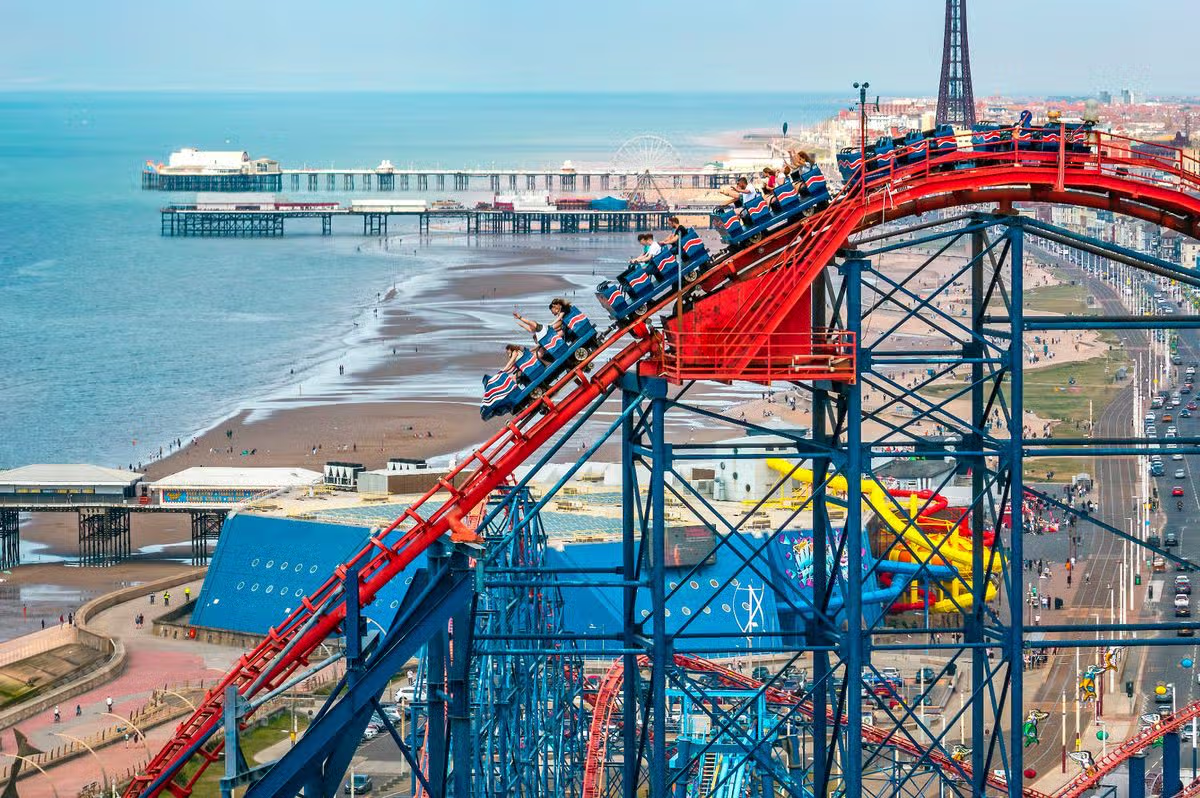
The park has thrilled seaside visitors for generations(Image: PR Handout)
The Park World Excellence Awards has named its top theme park picks for 2026, and the coveted Best of the Best award has been given to a British theme park that has beaten competition from across the world.
The north west resort scooped the prestigious prize at the awards ceremony held on Wednesday (September 23). The awards, which focus on parks in Europe, the Middle East and Asia, included categories from the Best Roller Coaster to the Best Water Park, and competition was stiff, with nominations for huge theme parks including PortAventura, Futuroscope, and Land of Legends.
Pleasure Beach Resort in Blackpool took the top prize, which was described as being awarded to “theme parks, rides, or tourist attractions recognised for excelling as the best of all time within its respected industry.” The Best of the Best award is given to parks that offer “the absolute pinnacle, reflecting everything that is great about our industry”.
Formerly known as Blackpool Pleasure Beach, the iconic theme park has been celebrating its 130-year anniversary in 2026, making it one of Europe’s oldest, and it is fourth-generation family-owned. It’s the first UK theme park to win the award, with former recipients including Germany’s Europa Park and Siam Park in Tenerife.
The theme park also scooped Best Ride of the Year for Aviktas, the largest ride of its kind in the UK, which swings passengers 138ft in the air on a rotating pendulum. Aviktas opened in May 2026 and was an £8.27 million addition to the park. Meanwhile, Valhalla, a Viking-themed attraction, was the runner-up in the Best Water Ride category. It’s the fifth time the water-based ride has been nominated in this category.
The Pleasure Beach Resort is also home to the UK’s only Nickelodeon Land, which includes SpongeBob SquarePants and PAW Patrol-themed rides for all the family.
It’s Halloween event, Journey to Hell, is set to open on October 17, just in time for half term. Described as an “immersive scare experience”, it’ll include three new scare mazes and a selection of rides that stay open until 9pm.
Amanda Thompson, managing director of the Pleasure Beach Resort, said in a statement: “To be named Best of the Best is a massive achievement for our park. Our industry is full of so much talent, so to be recognised among the best speaks volumes on the dedication and hard work that has kept us moving forward for 130 years.
“Avitkas has been a hugely valuable addition to the park and I’ve been delighted by its reception so far. If they haven’t already I’d absolutely encourage people to visit Pleasure Beach and give our ride, now recognised as one of the world’s best a go!”
Have a story you want to share? Email us at webtravel@reachplc.com
Autumn is the perfect time to explore what’s going on across the UK
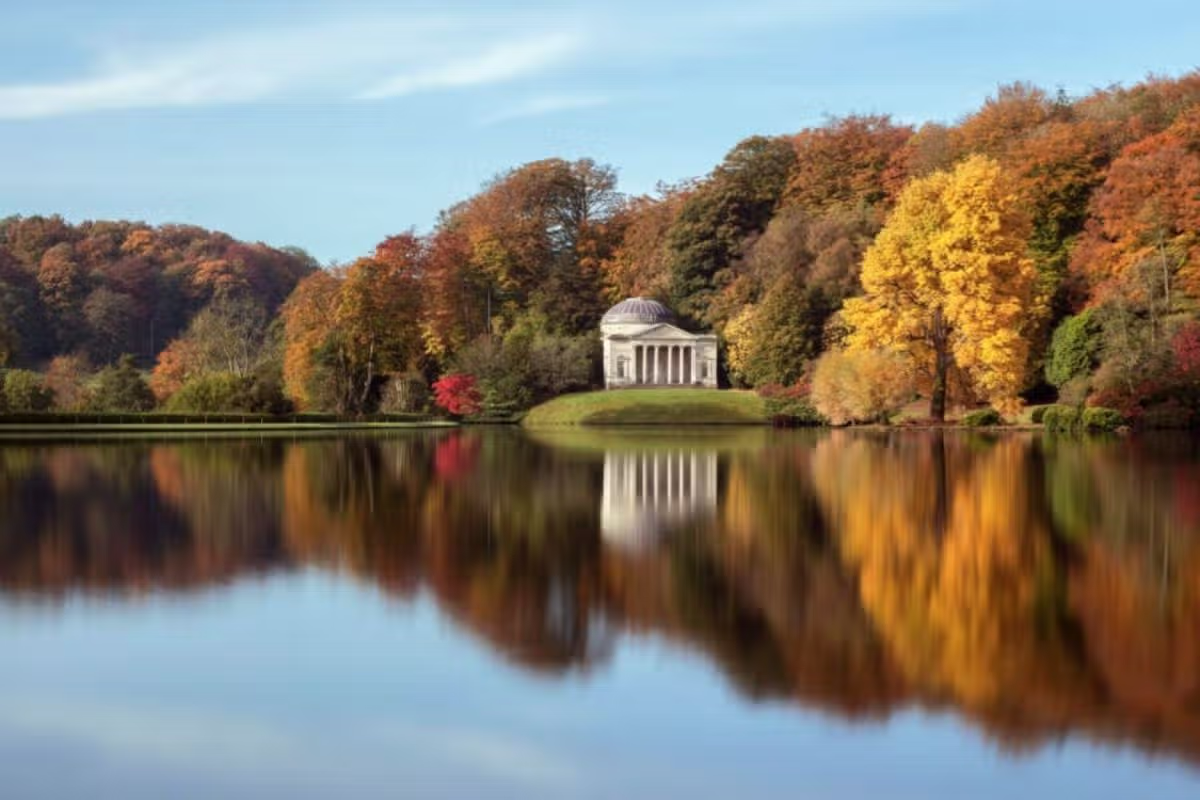
This gorgeous place is a must-see in autumn(Image: Western Daily Press)
Autumn is here, and this season is when the UK truly shines. On a crisp bright day there is nothing more beautiful than a country walk, soaking in the technicolour trees as their leaves change from green to all the red and orange shades of autumn.
The only thing that is better is the promise of a cosy pub at the end with a roaring fire, tucked away on a high street that’s teeming with independent shops. This situation might sound like a utopian dream – but there is one place in the UK where you can enjoy all of this.
If it’s the autumn colour you want, you need to start your day at Stourhead in Wiltshire.
This National Trust home and garden was one of the first grand Palladian style homes built in England, and has been kept beautifully preserved.
The home is set within 2,650 acres of lush English countryside with walking paths criss crossing the land.
There’s a vast lake on the ground and at its shores is a hidden grotto where you can look out over the water and see the bright fiery trees reflecting in the still water.
The gardens are also home to several Roman inspired temples, including temples of Apollo and Flora. Once you have enjoyed the house and the garden and maybe even stopped for a cup of tea in the cafe, you can head to the charming town of Mere.
The town is just a 15 minute drive from the property, and is a quiet haven away from the hustle and bustle of city life.
Mere is an historic town nestled beneath the South West Wiltshire Downs and close to the borders of Somerset and Dorset.
The charming high street has florists, antique stores and tea rooms, perfect for a weekend wander. There’s also a selection of pubs to choose from – and the oldest is one of the best.
The George Inn, located at the Square in Mere is the town’s oldest pub and dates back to the 16th century.
The main bar has a large, roaring log fire with cosy seating and the menu serves up classic pub food, perfect for warming up after a chilly autumn walk.
If you’re planning a weekend in Windsor with a trip to Legoland included, this fancy hotel is a treat for the grown-ups but still has everything you need for the kids
15:58, 15 Sep 2026Updated 16:03, 15 Sep 2026
This article contains affiliate links, we will receive a commission on any sales we generate from it. Learn more
(Image: Julie Delahaye)
“Oh no, this place looks fancy,” I told my partner as we drove up the winding path towards the De Vere Beaumont Estate in Windsor.
With its stately home feel and landscaped gardens, it had all of the makings of a lovely romantic getaway. Except we’d turned up with our two-year-old toddler, and now I worried that, despite promising to be a family-friendly hotel, this might be one of those properties where ‘family friendly’ means ‘as long as your kid sits quietly in the corner’. Thankfully, I was wrong.
De Vere Beaumont Estate is quietly family-friendly; at a first look it doesn’t feel like children are welcome, but once you actually settle in, it’s very accommodating.
The hotel may feel grandiose from the outside, but it’s not pretentious. It’s modern with quirky artwork, cosy armchairs, and a parlour bar serving an impressive array of drinks, with a large outdoor terrace.
My only quibble was the check-in process; there was a wedding onsite which caused a long queue at the reception. We actually gave up for a while and went to the bar for about an hour before returning, and even then we still had to wait 20 minutes.
Still, when we did get the keys to our room, it wasn’t disappointing. It was a decent size with a double bed, two armchairs and a table, a desk, and a large bathroom (shower only). If, like us, you’re travelling with a little one who still needs milk at night, be warned that rooms don’t have mini fridges – but we had prepared and packed an ice cooler.
The estate is very picturesque with large landscaped gardens, patches of woodlands, and a playground for older kids. It felt like we scratched the surface when we went for a wander, but there are some longer walks for those who aren’t tied to taking a pram along for the ride.
When it came to dinner, we decided to stick onsite at the hotel’s 1705 Restaurant & Bar. Again, at first glance I wasn’t sure if it would be stress-free with a toddler.
For a start, there wasn’t a children’s menu which had me instantly panicking about whether we’d need to convince our two-year-old that he did in fact want the likes of salad or soup for dinner, but thankfully the staff were incredibly accommodating when we asked if there was anyway we could get some sort of simple pasta dish, and they made us a special portion of mac and cheese.
The menu for grown-ups did tick all the boxes though. We went for the scallops and mozzarella salads as our starters, and steaks for the main. Prices range around £14-£35 per person so it’s not a particularly cheap meal, but the overall vibes, good food and friendly staff made it feel like a holiday treat.
With a toddler, it was time to head back to the room for an early night. However, after an hour of him resisting sleep, we admitted defeat, and headed back down to the terrace for a drink, taking the toddler in his pyjamas, in the pram. Nobody batted an eyelid, we easily found a table, and ended up enjoying some nice wine in the last of the sunshine.
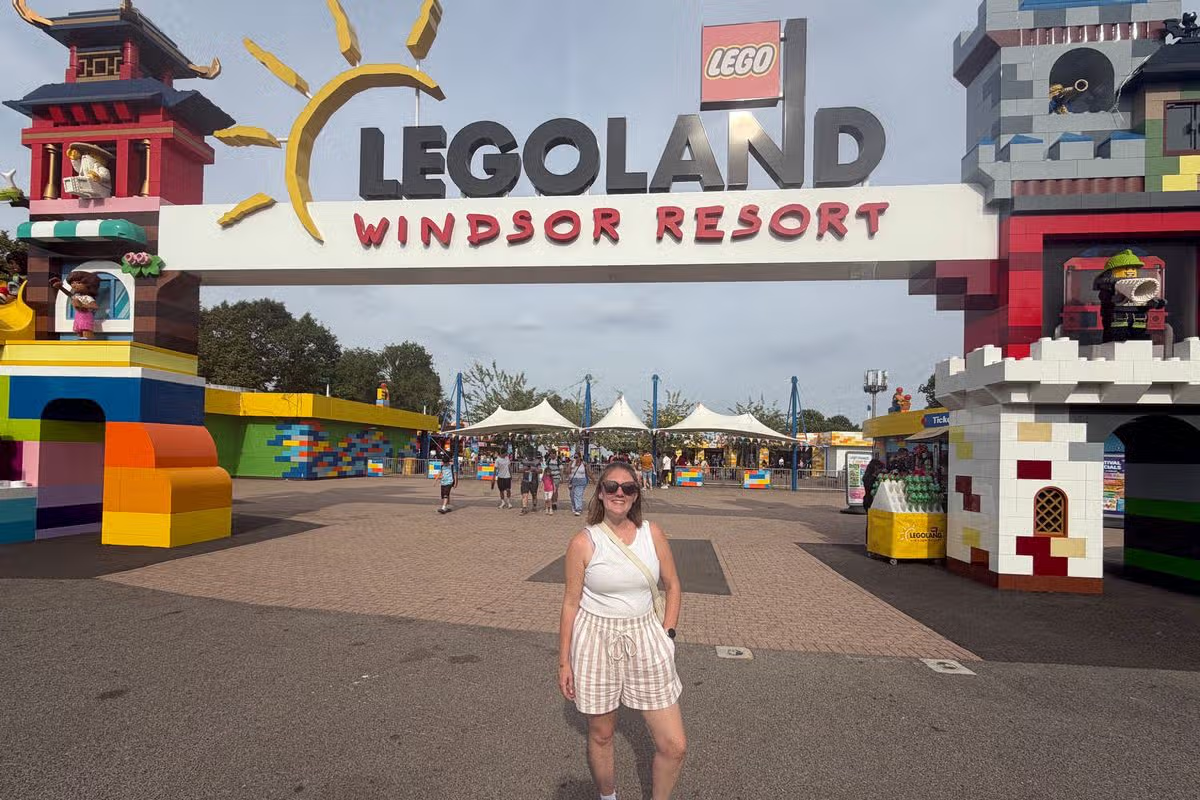
The next morning, after making the most of the hotel’s extensive breakfast and dropping off our room key in a very quick check-out process, we made the most of the hotel’s location just a 15-minute drive from LEGOLAND Windsor.
Our toddler was under 90cm which meant he could enter for free, but also meant he was too short for a few of the bigger attractions. Still we managed to tick off more than I expected including a submarine ride, a train, and the iconic Fairy Tale Brook boat ride. There were also heaps of playgrounds throughout the theme park. As for queues, the longest we saw was 35 minutes for a NINJAGO ride, but generally we were impressed at how quickly everything moved – a very welcome feature when you’re waiting around with a toddler.
The theme park allows you to bring your own food and drink in the park which was very helpful for snacks (our little one, like most his age, is spectacularly picky about what he will eat), but I wish we’d packed more for ourselves too as when we did decide to just get some nuggets and chips for lunch, as well as some ice creams, it set us back about £30.
Overall, De Vere Beaumont Estate proved an ideal base; a lovely space for us grown-ups to enjoy, and a handy location to one of the UK’s biggest attractions. It’s definitely one we’ll be returning to!
Rooms at the De Vere Beaumont Estate start from £129 a night based on two people sharing. Book at devere.co.uk.
LEGOLAND Windsor day tickets start from £32pp when booked online in advance at legoland.co.uk.
If you’re looking to add more magic to your life after watching Practical Magic 2, one woman has praised a village which feels like the real deal – and it’s in the UK
The charming village has a magical history, as the most famous witch used to live there (stock image)(Image: Thomas Faull via Getty Images)
The highly anticipated sequel to the cult classic film Practical Magic recently premiered in cinemas. But while it’s always magical to return to the universe of your favourite film, what if you could visit a real life Practical Magic village?
In the book and the film, the Massachusetts small town where the Owens family lives appears to be the idyllic small town. And with the added element of having witches living there, many fans dream of visiting. But one village in the UK also has a unique connection to witches, making it the perfect alternative.
One holidaymaker named Emma decided to share snippets of her visit to the Hampshire village, naming it a ‘real life Practical Magic village’.
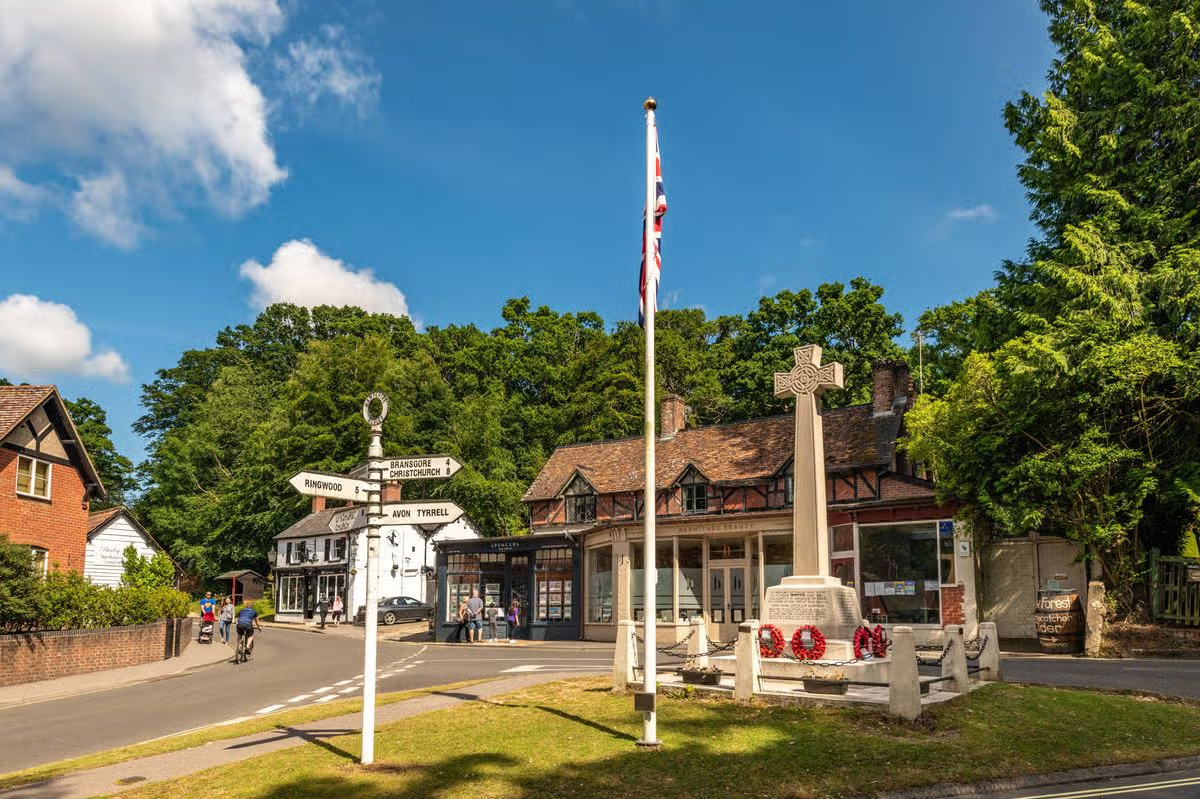
“POV: You found a real life Practical Magic village in England,” she wrote in the overlay text of the TikTok video, showing the various witchcraft and magic-inspired shops, as well as the wild horses that are known to explore the village of Burley.
Content cannot be displayed without consent
Burley is a small village in Hampshire, located in the heart of the New Forest. It’s famous for its associations with witchcraft, as it had a self-proclaimed witch living there in the 1950s. However, there is plenty of other things to do there with an opportunity for walking, cycling, and horse-riding trails, plus horse-drawn carriage rides through the forest.
Emma added in the caption of the post: “Today, the village is filled with cosy cafes, witchy boutiques, and wild horses roaming down the streets.”
The village still maintains the ancient New Forest tradition of “commoning,” meaning ponies, cattle, and donkeys wander freely through the streets.
“It genuinely feels like stepping straight into the Owens family hometown,” she said. “Gather your coven and save this for your next UK day trip.”
Why is Burley considered a ‘witchy’ village?
Burley is associated with witches primarily because it was home to a woman named Sybil Leek. The famous self-proclaimed “white witch” lived in the Hampshire village during the 1950s.
She became a media sensation by openly practicing witchcraft shortly after the UK repealed the final Witchcraft Act in 1951. She regularly walked through the village wearing a long black cloak with her pet jackdaw, Mr. Hotfoot Jackson, perched on her shoulder.
But as locals were upset by her presence, Sybil decided to move to America where she continued to study and write about the occult and astrology.
Burley has since embraced its witchy history, as there are several shops specialising in magic, including A Coven of Witches, which was not only named by Sybil but you can also find a portrait of her hanging above the fireplace.
If you want the perfect staycation weekend, this is one of the best
This article contains affiliate links, we will receive a commission on any sales we generate from it. Learn more
If you want the perfect staycation weekend, this is one of the best
England is beautiful in the autumn, the leaves come alight with colour, and the many cobbled lanes and cosy pubs scattered across the country begin to beckon to eager tourists. However, there is one place where the magic of autumn shines brightest of all.
It’s jam packed with heritage, atmosphere and charm and perfect for a weekend getaway. The historic city of York is one of the best places to see the seasons change.
Hazel Rickett, travel expert at small-group tour operator Rabbie’ssaid: “There’s something about York in autumn that’s hard to put into words.
“As the temperature drops and the evenings grow darker, the city takes on a wonderfully atmospheric quality, with its narrow cobbled streets, ancient walls and glowing pub windows creating the perfect backdrop for a seasonal escape.”
One of the best things about York is that it’s small and walkable – you don’t need to worry about how you’re going to get around, you can just wrap up warm and wander through its streets, soaking up the history.
York has got history in spades, from the towering Gothic Cathedral of York Minster to the beautifully preserved medieval lanes of The Shambles.
The Shambles are an iconic part of the city. This lane is flanked by timber-framed buildings, leaning so dramatically that they almost touch overhead. It’s packed with independent cafes, shops and boutiques, making it a fabulous place to get lost.
On its outskirts, there’s the city walls which encircle the city and date back to medieval times.
Hazel said: “York is encircled by the longest and most complete medieval city walls in England, tracing a roughly two-mile route around the historic centre. The walls offer a raised walk that takes in some of the city’s finest views.
“Visitors can stroll the ramparts between the historic gateways, known as bars, and look out over the Minster, the rooftops and the surrounding countryside as the trees turn shades of amber and gold.
“It’s one of the most rewarding ways to see the city and appreciate just how much history is packed into its streets.”
For the brave, the city comes alive after dark. Famously one of the most haunted places in Europe, the city is packed with spooky tales of ghosts. Those looking for a paranormal experience can join one of the many ghost tours offered in the city and learn more about the legends said to stalk its streets.
A Which? survey has named the best and worst holiday parks across the UK, and coming in dead last is a brand that was once a go-to resort for families but now only has one resort left in its portfolio
The chain once had 30 parks including this now-closed location in Prestatyn, Wales(Image: Christopher Furlong, Getty Images)
A holiday park that was once part of a chain of 30 sites and now stands as the brand’s last remaining location has been crowned the worst in the UK.
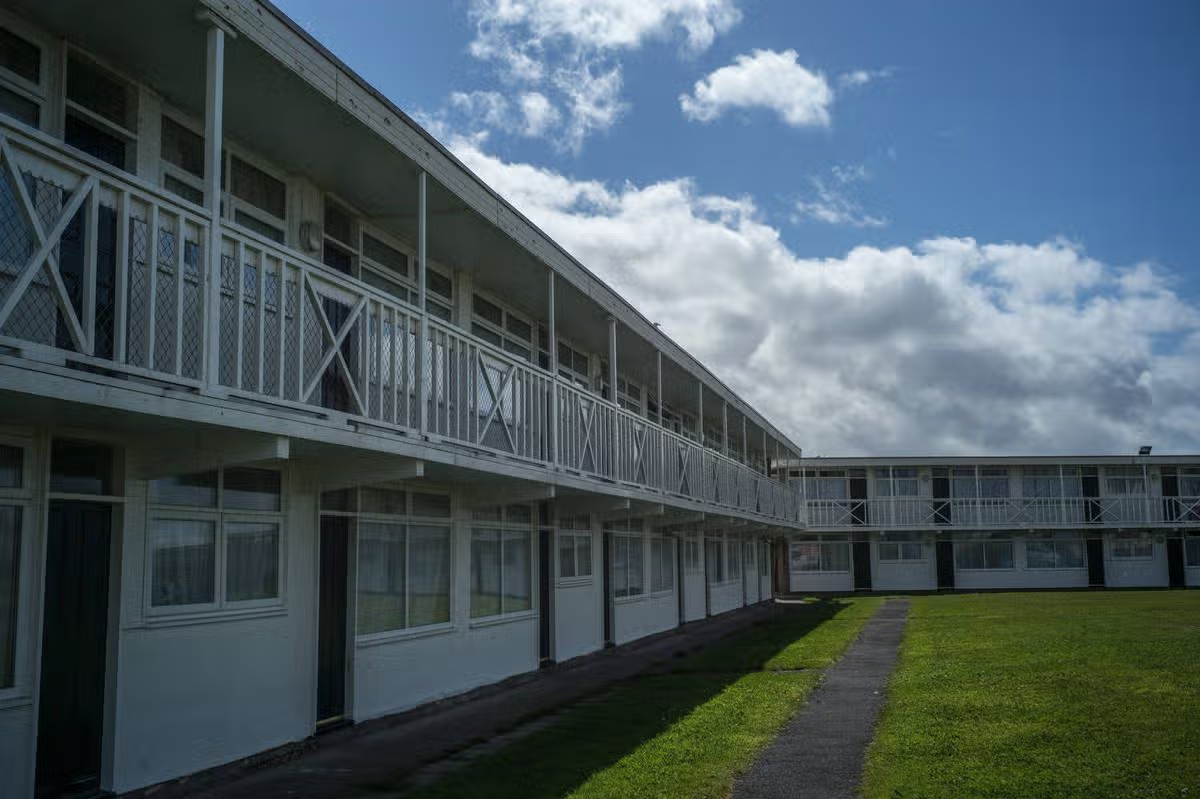
A Which? survey ranking the best and worst holiday parks across the country has placed Pontins firmly at the bottom, with its final remaining site in Weston-Super-Mare in Somerset being given the dubious honour.
Scoring a woeful 61% rating, Which? readers awarded the brand just two stars across customer service, accommodation quality, cleanliness, and food and drink. And despite being one of the most affordable options in the rankings, averaging £38 per person per night, it still only scraped two stars for value for money.
The dismal scores are a world away from Pontins’ glory days, when it was renowned for lively family getaways featuring its famous Bluecoats entertainers — a launching pad for the careers of Shane Ritchie and Bobby Davro. The brand was rescued from the brink of collapse 15 years ago when it was snapped up by Britannia Hotels, a chain Which? has repeatedly labelled the UK’s worst hotel chain.
Have a story you want to share? Email us at webtravel@reachplc.com
Its sole surviving site, Sandy Bay Holiday Village, is adults-only and appears to be actively distancing itself from the Pontins name, with no mention of the brand anywhere on its website. The park boasts a heated indoor pool, games room, live shows, and daily activities.
The park has received mixed reviews on Google, currently sitting at 3.6 stars out of five. One recent reviewer said: “The location is great, beach right in front of the resort, Weston only a 10 min open bus journey away”, also praising the accommodation for its cleanliness and upgraded room options.
Yet less favourable reviews tell a different story, with guests claiming “the rooms were filthy. We didn’t even have matching curtains!” and “dirty, smelly, run down! They may have changed their name, but they haven’t changed their shame.”
Prior to the closures, Pontins regularly made headlines as disgruntled customers reported grimy accommodation and poor facilities. In the now-closed Pontins Southport, guests complained of people smoking drugs and drunk parents roaming the park. A mum who visited the Brean Sands report alleged her children were left in tears after finding rubbish and dirt all over their room.
Another family, who visited Pontins Prestatyn in Wales dubbed it a “holiday from hell”. They claimed the room was yellowing from stains, the pool and restaurants were shut, and they “couldn’t even see out of the windows” due to grime.
At the opposite end of the rankings, Potters Resorts topped the table with its all-inclusive resorts in Norfolk and Essex, while Hoburne Holidays secured second place. Hoburne operates parks throughout the south and south west of the UK, including sites in the Cotswolds, Dorset, and Somerset.
Which? said: “This fifth-generation family business’s seven locations (in the south of England ) are all ideally situated, from a clifftop in coastal Dorset to a woodland retreat in the New Forest.”
It added: “There’s no tray jostling in sterile canteens either. Restaurants, like the lantern-adorned Pier House, with its sea-view terrace, source local, seasonal ingredients such as Brixham trout – earning the brand five stars for its food and drink. Activities make the most of each park’s unique surroundings, whether it’s guided bat walks or instructor-led kayaking on the wetlands of its Cotswolds site.”
The UK’s best and worst holiday parks
(Name of resort, overall customer score)
Potters Resorts – 83%
Hoburne Holidays – 81%
Darwin Escapes – 80%
Landal Parks – 80%
Waterside Holiday Group – 80%
Shorefield Holidays – 76%
Away Resorts – 75%
Bluestone Wales – 75%
Park Leisure UK – 75%
Highland Holidays – 74%
Lyons Holiday Parks – 74%
Largo Leisure – 73%
Park Holidays UK – 73%
Warner Coastal Villages – 73%
Forest Holidays – 72%
John Fowler Holidays – 72%
Center Parcs – 69%
Haven Holidays – 68%
Parkdean Resorts – 68%
Butlin’s – 63%
Pontins – 61%
Based on a survey of 2,221 Which? Connect panel members and general public conducted in February and March 2026.
The holiday park chain is one of the most popular in the UK, offering a vast array of activities and family fun, but there’s one common issue in reviews that has seen it criticised, especially by parents
12:29, 09 Sep 2026Updated 08:46, 10 Sep 2026
Its six holiday parks have serene lake and forest settings(Image: Center Parcs)
One of the UK’s most popular holiday park chains has been hit by a low score in a national ranking, with visitors particularly irked about one thing in particular.
Center Parcs has six holiday villages across the UK, and in a recent Which? survey, it was the most-visited holiday park on the list, especially popular for short breaks in its car-free forest locations.
Which? said: “You like that you know what you’re getting, from the acres of forest trails to the swimming pool in a heated glass dome – a subtropical paradise even in the soggiest of British summers. It also earned praise for appealing to all ages, whether that’s with the treetop aerial adventure or the thermal spa (with a volcanic steam room and an igloo-inspired ice cave).”
Have a story you want to share? Email us at webtravel@reachplc.com
The parks were also praised for their accommodation, with higher grades including facilities such as hot tubs, saunas, and games rooms, making it a solid “family favourite” according to Which?. But customers were particularly unhappy with one thing.
“However, it’s extraordinarily expensive, at more than twice the price of budget rival Haven. Activities cost even more on top, and you need to secure your preferred slots weeks in advance. The two-star rating for value for money is the joint lowest in our survey. You could save a fortune by choosing a better-rated rival,” the Which? survey noted.
In most aspects, Center Parcs performed well. It was awarded four stars for activities, entertainment and facilities, as well as quality of accommodation and cleanliness. It achieved three stars for customer service and food and drink. But its place in the rankings, fifth from the bottom, came due to its value for money score at just two stars. It was the third most expensive of all the holiday parks surveyed.
It’s not the first time the chain has been criticised for its high prices. In a viral social media post, one fed-up mum showed the difference in prices between a school holiday and September dates at the parks, commenting: “If anyone’s unsure when their kids return to school after the holidays, Center Parcs have this handy tool.” A four-night break in August was priced at £1,049, while the same holiday a week later, post-school holidays, was £529.
Even positive reviews of the parks often mention the price. One recent review of Center Parcs Woburn Forest said: “Amazing place to holiday. Personally, I felt the prices of things on-site were a little high, and that was even going outside of term-time; however, you cannot fault the fun and wonder of being at these parks.”
Another was more blunt: “Badly overpriced, we only paid £799 for a family of 4 and it still felt like a rip off. You get a good room, yes, but it’s nothing you can’t get at a hotel in the countryside for half the price. Every single other activity charged extra (except swimming which is decent but you can get a similar quality just slightly more warm out at Butlin’s for 1/10th of the price).”
Center Parcs has been contacted for comment.
The UK’s best and worst holiday parks
(Name of resort, overall customer score)
Potters Resorts – 83%
Hoburne Holidays – 81%
Darwin Escapes – 80%
Landal Parks – 80%
Waterside Holiday Group – 80%
Shorefield Holidays – 76%
Away Resorts – 75%
Bluestone Wales – 75%
Park Leisure UK – 75%
Highland Holidays – 74%
Lyons Holiday Parks – 74%
Largo Leisure – 73%
Park Holidays UK – 73%
Warner Coastal Villages – 73%
Forest Holidays – 72%
John Fowler Holidays – 72%
Center Parcs – 69%
Haven Holidays – 68%
Parkdean Resorts – 68%
Butlin’s – 63%
Pontins – 61%
Based on a survey of 2,221 Which? Connect panel members and general public conducted in February and March 2026.
If you’re on your annual Gilmore Girls re-watch and dreaming of an escape to Stars Hollow, without the long-haul flight, then this UK village gives seriously cosy vibes for a day out
The village has been compared to Stars Hollow by British fans of the show(Image: SWNS)
Gilmore Girls may just be the perfect autumn show, and when the weather starts cooling off, many fans find themselves binge-watching the comedy-drama about a quirky mother and daughter duo.
And anyone who has watched the show will no doubt have dreamed about visiting Stars Hollow, the cosy Connecticut town where the Gilmores live, full of unique characters, friendly local shops, and of course, great coffee. Sadly, Stars Hollow isn’t a real location – the pilot was filmed in Canada before a set was built on a studio backlot in Burbank, California – but many fans have been looking out for locations that give the same vibes.
If you don’t fancy the flight to New England, British Gilmore Girls fans have been debating where the UK’s answer to Stars Hollow can be found, and one village with long literary associations is often named as the best local dupe.
Content cannot be displayed without consent
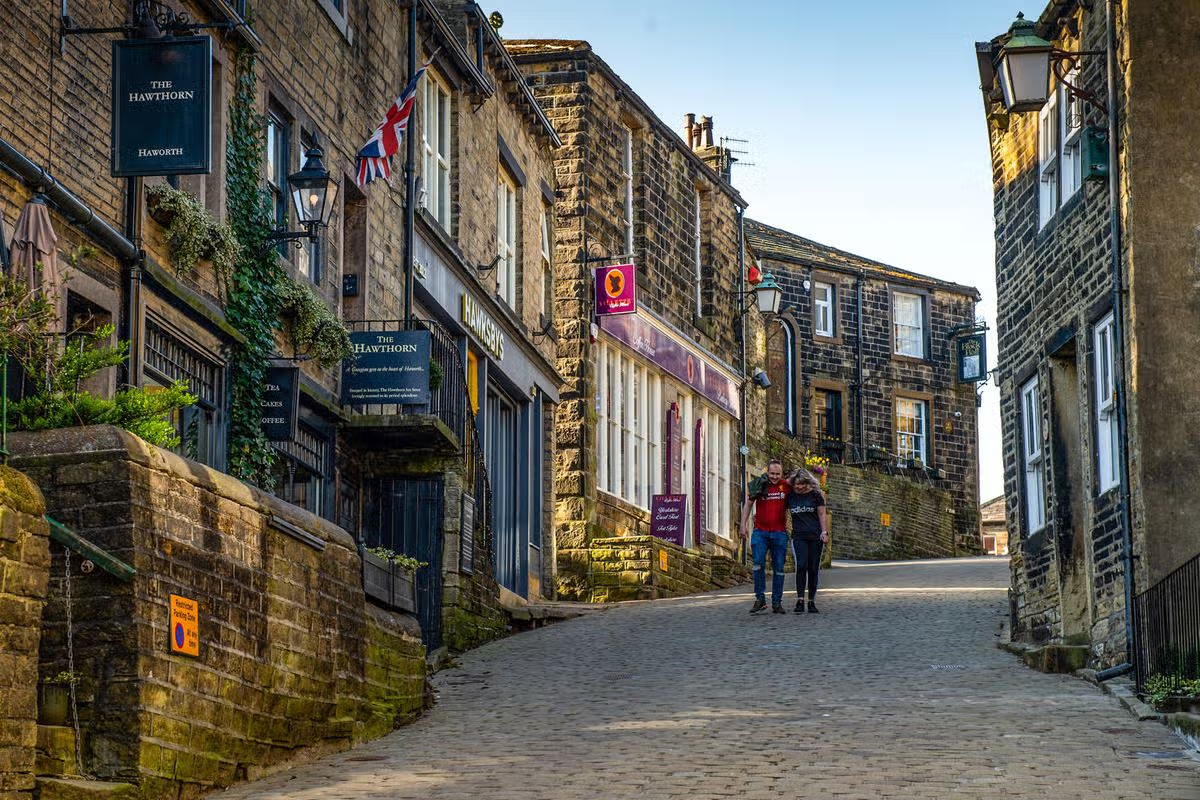
Taking to TikTok, travel creator @lilyjbet posted a video captioned: “pov: you just found the real-life Stars Hollow in England” showing footage of the quaint village of Haworth in Yorkshire. Her video shows a variety of eclectic shops, cafés, and bookstores that would thrill any Gilmore Girls fan.
Haworth has literary associations that Rory Gilmore would find fascinating. The Brontë sisters lived and wrote most of their novels here, and their former home is now the Brontë Parsonage Museum. Sitting atop a hill, it overlooks miles of countryside, and the view no doubt inspired the rugged backdrops of many of their famous works. Fans of gothic literature can walk to Top Withins, a remote farmhouse surrounded by moorland, which many believe helped inspire the gloomy setting of Wuthering Heights.
The museum is an incredible memorial to the literary sisters, many rooms still holding the original furniture and personal items, as if waiting for the family to return.
Many of the colourful independent shops in Haworth look like they belong in Stars Hollow. Wave Of Nostalgia, a vintage bookshop that also sells unique gifts, would certainly be a place the Gilmores would visit. Cabinet of Curiosities is a kind of old-school apothecary which could easily be from the Victorian era, while Spooks of Haworth, a ‘spiritual emporium,’ is the perfect stop for lovers of autumn and Halloween.
And of course, there are plenty of cafés where you can enjoy cosy mother-daughter chats or simply sit and read your book. Café Verde has a great location with outdoor tables on the cobbled streets, while Villette Coffee House and Bakery offers a range of freshly-baked pastries and Yorkshire specialities.
The perfect way to arrive in Haworth is by train. Not only because riding the vintage steam trains to your location feels like stepping back in time, but also because you can avoid needing to navigate the extremely narrow, steep roads that were built for a horse and carriage. The village is on the Keighley & Worth Valley Railway, a five-mile heritage railway that runs through the Yorkshire countryside, giving you stunning views on the way to your destination.
Fans of classic movies may also recognise the train line as being the setting of the 1970s adaptation of The Railway Children. In addition to standing in for the Edwardian railway hub, filming was completed around the village in locations including St Mary’s Churchyard.
Have a story you want to share? Email us at webtravel@reachplc.com
The Victorians’ love of seaside resorts inspired a developer to try and build a ‘mega resort’ for the rich and powerful of the time, but many of the plans for this seaside town never came to fruition
The seaside village is a lot smaller than was initially planned(Image: Getty Images)
Victorians loved the seaside. Time at the beach was the perfect antidote to the dirty, smoggy cities that were rapidly expanding, and the sea air was touted as a cure for everything from respiratory problems to exhaustion.
Another thing that was expanding at the time was Britain’s railway lines, and entrepreneurs were quick to build seaside resorts to accommodate Victorians’ love of beaches. One such visionary was Sir Robert Perks, a politician who looked at a stretch of Kent coast and decided it would make an incredible resort for the wealthiest in society at the time.
The spot was given the name Littlestone-on-Sea, named after a nearby headland called Little Stone, and initially it comprised of a home for Robert, accommodation called the Grand Hotel, a church, and some terraced houses. However, the Grand Hotel didn’t turn out nearly as grand as planned, and it was just the first project that didn’t quite live up to the vision.
Robert teamed up with a surveyor named Henry Tubbs to launch Littlestone Golf Course in 1888, which is still open to this day, and at one end there’s a distinctive local building the Littlestone water tower, which was supposed to supply fresh water to the golf course and the impressive seaside town that was envisioned.
Unfortunately, the water from the 120ft tall tower was too salty to use, and over time it was abandoned. However, in the Second World War, the structure found a new purpose. It became a lookout post that protected Kent’s shores, and the addition of platforms meant guards could keep lookout from many levels. Nowadays, it has been turned into a unique home.
Other plans for Littlestone included a large housing development, a lively promenade, and a favourite of Victorians – a pier. However, parts of the design for the pier were eventually used in Eastbourne, so it wasn’t a total waste of time.
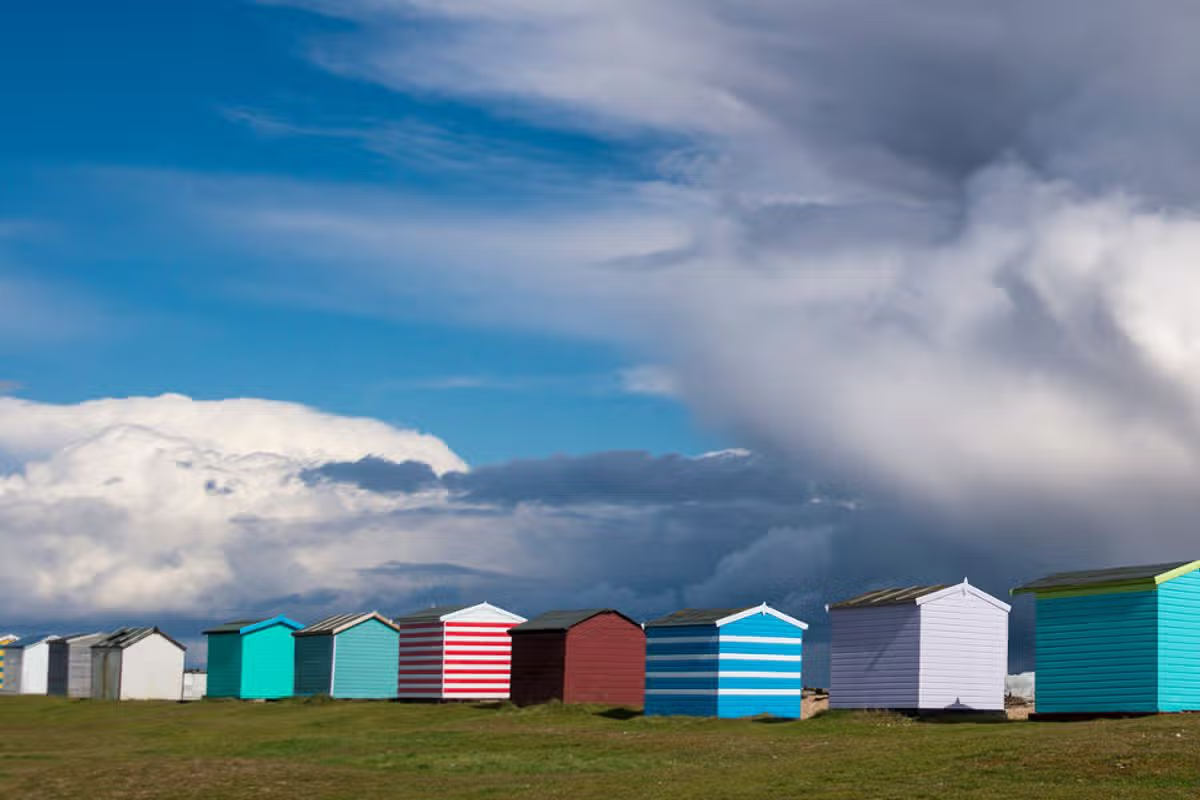
Nowadays, Littlestone is far from the bustling resort that was imagined by the Victorian entrepeneurs, but it certainly has its own charm. Its vast shingle beach is lined with colourful beach huts, and the long flat promenade is popular for families and dog walkers.
From the shore you can spot the Mulberry Harbour Phoenix Caisson, a temporary breakwater that was built during the D-Day Normandy landings in World War 2. Few of these structures remain, making it a popular site for those interested in military history.
The town itself has a handful of shops, cafés, and restaurants. There’s a small selection of seaside hotels, as well as a caravan park that’s much loved by families looking for a peaceful break at the seaside.
So, while Littlestone may not have become a playground for the rich, it developed its own character over time and is still much-loved by visitors who want a more low-key seaside experience.
Have a story you want to share? Email us at webtravel@reachplc.com